Monday, June 09, 2025


INPEX Starts Blue Hydrogen and Ammonia Demo Project Commissioning in Japan

Japan’s largest energy company, INPEX Corporation (TYO: 1605), has initiated commissioning operations at its groundbreaking blue hydrogen and ammonia demonstration project in Kashiwazaki City, Niigata Prefecture. The milestone marks the start of natural gas introduction into the integrated clean energy facility, a first-of-its-kind development in Japan aimed at showcasing a full-cycle hydrogen-ammonia value chain, including CO? capture and storage.

Project Overview: Decarbonizing Domestic Gas Use

The project uses natural gas sourced from INPEX’s Minami-Nagaoka Gas Field as feedstock to produce hydrogen. To curb emissions, carbon dioxide generated during production is injected into depleted gas reservoirs in the Higashi-Kashiwazaki Gas Field using Carbon Capture Utilization and Storage (CCUS) technology. This allows the hydrogen to qualify as "blue," supporting Japan’s net-zero goals.

The hydrogen will supply local electricity generation, while a portion will be synthesized into ammonia via a low-temperature, low-pressure process developed in partnership with Tsubame BHB. The ammonia will also be distributed to consumers in Niigata Prefecture

Strategic Backing and Timeline

The demonstration is subsidized by Japan’s New Energy and Industrial Technology Development Organization (NEDO) under its fuel ammonia R&D program and features a joint CO? storage assessment with the Japan Organization for Metals and Energy Security (JOGMEC). Construction began in July 2023, and commissioning is expected to wrap up ahead of demonstration operations starting in fall 2025, including CO? injection and monitoring.

A Pillar of INPEX Vision 2035

This project is a central piece of INPEX Vision 2035, announced in February, which outlines the company’s strategy to become a leader in lower-carbon energy solutions, with a focus on hydrogen, ammonia, and CCUS. The Kashiwazaki initiative is positioned as a proof-of-concept for deploying blue hydrogen at scale, enhancing INPEX’s decarbonization credentials while leveraging Japan’s domestic gas reserves.

Regional and Sector Implications

With Japan seeking to diversify its clean energy sources beyond solar and nuclear, this project has the potential to serve as a model for hydrogen hub development, carbon storage using existing gas infrastructure, and local energy resilience. It also strengthens domestic supply chains in an area historically dependent on fossil fuel imports.


Trump’s Coal Comeback Goes Global

In a move that fuses domestic revival with international strategy, the Trump administration has greenlit the expansion of Montana’s Bull Mountains coal mine—unlocking nearly 60 million tons of coal destined for key U.S. allies Japan and South Korea.

The approval, announced Friday by the Department of the Interior, comes under President Trump’s national energy emergency directive, signaling a bold return to coal as a cornerstone of U.S. energy policy and foreign leverage. The mine’s expansion, led by Signal Peak Energy, is expected to extend its life by up to nine years and inject over $1 billion into local and state economies.

“This is what energy leadership looks like,” said Interior Secretary Doug Burgum, adding that the move supports both American jobs and Indo-Pacific energy security. The timing is strategic: Japan’s crude imports are falling amid a refining sector under pressure, while South Korea is aggressively pursuing energy diversification.

Under Trump’s second term, the coal industry has gone from a political afterthought to a geopolitical asset. Since Day One, the President has declared war on what he calls environmental extremism, pushing executive orders to halt coal plant closures, expedite new construction, and reopen shuttered facilities.

And while critics focus on coal’s environmental cost, the administration is focused on grid reliability and foreign policy. Japan and South Korea—nations that import more than 80% of their energy—are viewed as critical frontlines in the battle for global energy dominance.

The Bull Mountains move is also a warning shot to China, whose coal-fueled growth has dwarfed Western capacity for years. By positioning U.S. coal exports as both an economic tool and a diplomatic lever, the Trump administration is signaling it won't cede the Indo-Pacific energy map without a fight.

Coal, long counted out, may be America’s most surprising comeback story yet.

By Julianne Geiger for Oilprice.com


CNOOC Installs Record-Breaking Offshore Oil Platform

CNOOC has installed the largest and heaviest offshore platform at a field in the Bohai Sea, the company said today, boasting the facility was 22.8 meters high and weighed over 20,000 tons.

The platform was installed at the Kenli field, at a depth of some 20 meters, which has proven reserves of some 100 million tons of crude oil.

In separate news, CNOOC said it had begun production at another field in the South China Sea. The Weizhou 5-3 development lies in a depth of some 35 meters, the company said, and features seven production wells, two water injection wells, and one gas injection well. Production is seen peaking at 10,000 barrels of oil equivalent daily, to be reached in 2026.

CNOOC, which specializes in offshore oil and gas developments in China and internationally, reported earlier this year that its net oil and gas production for 2024 was about 720 million barrels of oil equivalent—setting a record high for the sixth consecutive year. It also booked a profit jump of 11.4% for 2024, to $19 billion, on the back of the record-breaking production rate.

For 2025, the company lowered its production outlook and said it would keep capital expenditure at 2024 levels, but going forward, it said there were more record-breaking plans in production for the next two years. In 2025, the capital expenditure for exploration in China will mainly be directed to sustain crude oil reserves while expanding natural gas reserves, led by the construction of the three trillion-cubic-meters-level gas regions, CNOOC said in January, as it continues to follow China’s directive to state majors to boost domestic oil and gas reserves and supply.

The Chinese government has insisted that local energy majors do their best to boost local supply of energy commodities in order to reduce the country’s dependence on imports.

By Charles Kennedy for Oilprice.com


China’s Exports of Rare Earths Jump Despite Shipment Controls

Despite export controls and curbs on some rare earth elements, China’s overall rare earth exports jumped by 23% in May compared to April, Chinese customs data showed on Monday.

The exports for May, the second month following Chinese restrictions imposed in early April, were at their highest monthly level in a year.

The data doesn’t distinguish among the various rare earth minerals, so it’s too early to say how much the export curbs hit the elements that are part of the restrictions. Details will be available later in June.

However, exports of magnets already showed a significant decline, rippling through supply chains globally. Chinese exports of magnets halved in April from a month earlier.

At the beginning of April, China, which dominates the global rare earth and critical minerals supply chain, announced it would curb its exports of dysprosium, gadolinium, scandium, terbium, samarium, yttrium, and lutetium. These so-called “heavy” and “medium” rare earth elements are mostly used in automotive applications, including rotors and motors and transmission in electric vehicles and hybrids, as well as in the defense industry in parts of jets, missiles, and drones.

Last week, Germany’s automotive industry group VDA joined other carmakers to sound the alarm that the recently introduced curbs and controls on China’s exports of rare earth elements and magnets could disrupt and even idle manufacturing lines.

“If the situation is not changed quickly, production delays and even production outages can no longer be ruled out,” Hildegard Mueller, head of VDA, told Reuters this week, in yet another warning from the automotive industry about the impact of China’s policy on the global automotive supply chains.

Last month, the Alliance for Automotive Innovation – which represents GM, Toyota, Volkswagen and other major car manufacturers – warned of production reductions and even shutdowns of assembly lines without access to magnets and rare earth minerals.

By Tsvetana Paraskova for Oilprice.com


U.S. Solar Growth Faces Tax Credit and Tariff Challenges

CUTTING NOSE TO SPITE FACE

The United States just saw one of its strongest quarters in solar capacity additions on record, but growth will slow down going forward due to the federal trade and energy policies, the Solar Energy Industries Association (SEIA) said on Monday.

During the first quarter of the year, the U.S. solar industry installed 10.8 gigawatts direct current (GWdc) of capacity, down by 7% from Q1 2024 and a 43% decrease compared with Q4 2024, but still the fourth largest quarter on record, according to the quarterly report by SEIA and Wood Mackenzie.

Solar accounted for 69% of all new electricity-generating capacity added to the U.S. grid in January-March.

Moreover, the industry added 8.6 gigawatts of new solar module manufacturing capacity—this was the third-largest quarter for new manufacturing capacity on record.

Texas and Florida, as well as several other states that President Donald Trump won in the 2024 presidential election, were the leaders in solar power installations, the report showed.

Therefore, the association warned that if Congress fails to modify the changes to energy tax incentives passed by the House, “jobs, investments, and factories in Trump country will be hit the hardest.”

Solar’s success is at risk, SEIA president and CEO Abigail Ross Hopper said, adding that “If Congress fails to fix the legislation passed by the House – which would render the energy tax incentives unusable – lawmakers will trigger a dangerous energy shortage that will raise our electric bills and stop America’s manufacturing boom in its tracks.”

The base case forecasts in the report reflect the expected impacts of the latest U.S. tariffs, but they exclude potential tax credit changes or other provisions proposed in the most recent budget reconciliation bill.

“If Congress cuts energy tax incentives, SEIA’s analysis projects that energy production will fall 173 TWh and the United States will not be able to meet demand or compete with China in the global race to power AI,” the association warned.

By Tsvetana Paraskova for Oilprice.com

GOLDBUGS

US lawmakers push for comprehensive audit of Fort Knox gold

The US Bullion Depository, often known as Fort Knox. (Image courtesy of Wikimedia Commons.)

A group of Republican lawmakers has introduced a bill to initiate the first comprehensive audit of US gold reserves since the 1950s, citing the need for greater transparency over the nation’s bullion holdings.

The legislation, titled the Gold Reserve Transparency Act of 2025, was introduced Friday by US Congress member Thomas Massie (R-KY), alongside Troy Nehls (R-TX), Addison McDowell (R-NC) and Warren Davidson (R-OH) as co-sponsors.

If passed, the bill would require the Government Accountability Office (GAO) to conduct a full physical assay and inventory of America’s gold holdings within one year. It also mandates disclosure of all gold-related transactions over the past 50 years, including loans, leases, swaps, encumbrances, purchases and sales.

“The American people deserve to know whether the gold reserves are where they should be and whether they are being managed properly,” Massie said in a statement.

The US currently holds more gold in its reserves than any other nation at approximately 8,133 metric tons, according to Treasury Department data. The largest portion—more than 147 million ounces—is stored in Fort Knox, Kentucky. The remainder are held at West Point, the Denver Mint and the Federal Reserve Bank of New York.


Earlier this year, US President Donald Trump called for a visit to Fort Knox to verify that America’s gold reserves are still intact.

The Treasury, meanwhile, has maintained that an annual audit is performed, and all gold is “present and accounted for.”

‘Full disclosure’

The Gold Reserve Transparency Act proposes that similar audits be repeated at least every five years to ensure ongoing transparency and prevent lapses in record-keeping. It would provide “the full disclosure President Trump seeks,” Massie wrote on his X account.

The bill’s introduction comes a day after the viral social media clash between Trump and his former advisor Elon Musk, who first floated the idea of livestreaming a Fort Knox gold audit in February.

Proponents of the measure contend that independent oversight will help restore confidence in US financial stability amid growing global demand for gold and persistent conspiracy theories questioning the integrity of Fort Knox.

“The lack of proper audits of America’s gold is highly alarming and totally unacceptable — such shoddy procedures would never pass muster in the private sector,” stated Stefan Gleason, CEO of Money Metals Depository, in support of the bill.

“It’s been literally decades since actual inventories and assays have been conducted with respect to US gold reserves, and the Department of the Treasury has lost records, as well as failed to account for many occasions when vault compartments were inexplicably opened and resealed without new audits,” Gleason added.

Still, the proposal faces an uncertain future in the Senate, where Democrat backing would likely be required. If passed, the GAO would embark on its audit within a year and institutions would face recurring reviews thereafter.


Some miners “woefully unprepared” for cyberattacks, says ethical hacker


Stock image.

Perth-based cybersecurity specialist Matt Breuillac of Cyber Node Perth-based ethical hacker – or ‘white hat’ – is warning that some miners, mining contractors and energy companies and their service providers are currently easy to hack and they should be testing their protections against cyber-attack more rigorously.

Originally from France, Breuillac has worked as a chemical engineer in the nuclear industry as well as supervised the emergency procedures for uranium mines in Kazakhstan.

“Some mining companies (particularly tier two and tier three miners in Australia) are woefully unprepared in their cyber-security protections and many are a decade behind Europe,” Breuillac said in a news release.

“Cyber-attackers, as we know, can potentially cause havoc in operations of mining and energy companies,” Breuillac said.

Attackers can interrupt communications in remote locations, which could result in failures to accurately monitor correct supplies of fuel or other mine inputs.

“Remote vehicles and moving components of processing plants, including water supply, could also potentially be hacked and interrupted,” Breuillac said. “Basically, anything that is connected on a computer system can be interfered with by hackers. Hackers could be based in Australia or overseas.”

Hackers could be private individuals looking for ransom money or even acting on behalf of overseas countries such as China, North Korea or the US, Breuillac noted.

Cyber-attacks on mining companies are growing and costing the mining and energy industries millions of dollars. In 2023, Rio Tinto was hit by a large-scale leak of employee details on the dark web and Alamos Gold also experienced leaks of confidential documents.

In 2022, the Copper Mountain Mining Corporation was forced to shut its mill after a ransomware attack. In 2024, in Western Australia, rare earths producer Iluka Resources announced threat actors attempted to disrupt its external website through a denial of service (DoS) attack but they didn’t gain access to company data. Also in 2024, Northern Minerals announced it was subject to a ransomware attack by the Bian Lian ransomware gang.

The gang listed Northern Minerals’ stolen documents on its dark web site. In 2025, an Edith Cowan University professor in Western Australia told Australia’s Mining Monthly that if a cyber-criminal was to take out WA’s mining sector, then Australia’s annual revenue could be cut in half.

Breuillac says solid preparation now can, potentially, prevent millions of dollars being lost in future.

“We also know that cyber-attacks can impact your company’s bottom line as well as its stable growth, and social licence,” he said. “If you are slack with your cybersecurity hygiene – customers, investors and other important stakeholders – may desert your service or products. Over the long-term, cybersecurity preparedness builds trust and reputation.”

Watch the Horizon Power case study here.


LME acts to shield aluminum market from huge Mercuria bet


PHYSICAL COMMODITY MARKET (WAREHOUSES)


Credit: LME

The London Metal Exchange has compelled Mercuria Energy Group Ltd. to lend out its huge position in aluminum to other traders to reduce risks to the market, according to people familiar with the matter.

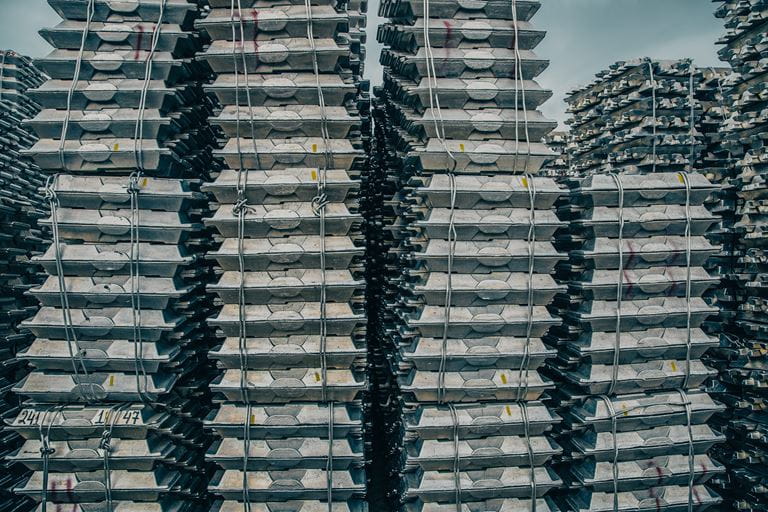
The LME took action after Mercuria’s position in the June contract was consistently far bigger than the aluminum inventories in the exchange’s warehouse system — most of which are also already owned by Mercuria, the people said. That means that if Mercuria were to hold the position to expiry, those on the other side of the market might struggle to find sufficient aluminum to deliver against their short positions.

The move shows how the LME is taking a more muscular approach to policing the market as it responds to a series of aggressive bets by energy trading houses expanding into metals. Mercuria’s trade comes after rivals Vitol Group and Gunvor Group recently rocked the LME aluminum market with their own large positions.

The LME’s actions in its markets are often controversial — both when it intervenes and when it does not. In 2022, it allowed a surge in nickel prices to become a potentially destructive runaway short squeeze, eventually taking the unprecedented and controversial step of canceling billions of dollars of trades.

While the LME has long-established rules designed to prevent traders from cornering a market, those rules only cover dominant positions in inventory and in contracts expiring in the next few days, rather than the LME’s much larger monthly contracts that expire on the third Wednesday of each month.

Instead, the LME has used its broad powers to prevent “undesirable” market situations to compel Mercuria to lend its position in the June contract, the people said. The LME’s rulebook gives the exchange’s special committee the power to take whatever steps it deems necessary to address “the development or likely development of a corner or undesirable situation or undesirable or improper trading practice.”

Mercuria took the huge position as a bet that any easing of sanctions against Russia would boost the value of its position, Bloomberg reported last month. Since then, however, there has been little sign that Russia and Ukraine are moving closer to a peace deal

There’s no suggestion that Mercuria’s position is in breach of any rules. And it’s not the first time that the LME has intervened by compelling a trader to lend out a position in its monthly contracts, the people said.

Still, Mercuria’s position is unusually large. Exchange data show that until Monday, one trader’s long position was equivalent to more than 40% of the open interest in the June contract — or more than 862,000 tons of aluminum. By Tuesday, the position had reduced to 30%-39% of the open interest, equivalent to between 600,000 and 800,000 tons.

That compares to total on-warrant inventories of just over 320,000 tons. As of Tuesday, more than 90% of those inventories were held by one trader, according to the exchange. In both cases, the trader is Mercuria, the people said.

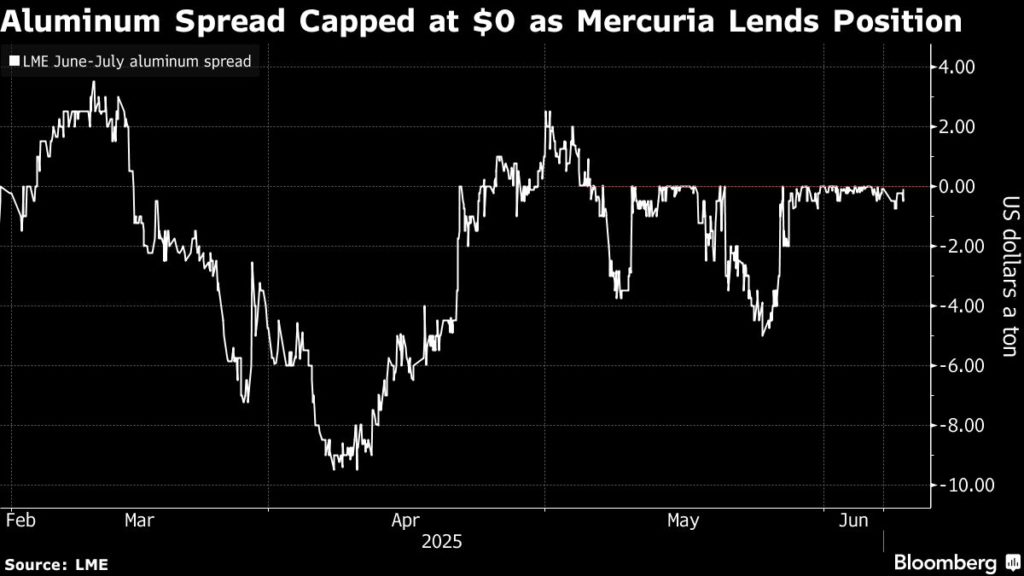
As a result of Mercuria’s lending, the market has been calm despite the huge position. The spread between the June contract and the July contract has remained in contango for the past month, with June trading either below July or “flat,” at the same price. That is the level at which the LME has required Mercuria to lend its June position, the people said.

The spread eased into a wider contango of as much as $6 a ton after Bloomberg reported on the LME’s intervention on Friday.

“The LME has a number of arrangements in place to guard against any undue influence of large or dominant positions, including lending rules, daily position reporting and accountability levels,” a spokesperson for the exchange said in response to questions. “The LME also routinely requests further position management information from market participants and has the power to require positions to be managed as appropriate.”

A spokesperson for Mercuria declined to comment.

Inventory battles

Traders taking large positions in the battle for ownership of inventory has long been a feature of the LME’s marketplace, but the rapid expansion of energy traders into metals in the past year has supercharged the dynamic.

The new entrants may be more likely to turn to the exchange to acquire metal to trade, because they don’t have the longstanding contracts with producers that more established metals traders have built up over the years. The burgeoning trade war is also creating flash trading opportunities in the physical metal markets, and fueling efforts to get hold of LME stock at short notice.

The large amounts of Russian metal in the LME’s stocks have also incentivized large positions: the Russian material is generally seen as the least valuable, so it is the first to be delivered against LME contracts. That means that if a trader wants to have a chance of picking up non-Russian metal, they need to take a large position.

Mercuria has argued publicly that an easing of Russian sanctions could increase the value of Russian metal on the exchange, driving up near-dated aluminum prices relative to later contracts.

It acquired its large position as a bet that that any easing of sanctions against Moscow would tighten the market, people familiar with the matter said last month.

Bloomberg also reported last month that the LME was discussing imposing position limits that would prevent traders from taking positions in the nearby month’s contracts larger than the total inventory. Responsibility for setting position limits on the LME is due to be transferred from the Financial Conduct Authority to the exchange from July 2026, but the intervention in aluminum shows that the LME is already effectively imposing limitations on positions in the nearby month.

(By Jack Farchy and Mark Burton)


Peru restores Nazca Lines protection after backlash over mining risk

Stock image.

Peru’s government has abandoned a plan that reduced the size of a protected area around the country’s ancient Nazca Lines, it said on Sunday, after criticism the change made them vulnerable to the impact of informal mining operations.

Peru’s Culture Ministry in a statement said it was reinstating with immediate effect the protected area covering 5,600 square kilometers (2162.17 square miles), that in late May had been cut back to 3,200 square kilometers. The government said at the time the decision was based on studies that had more precisely demarcated areas with “real patrimonial value”.

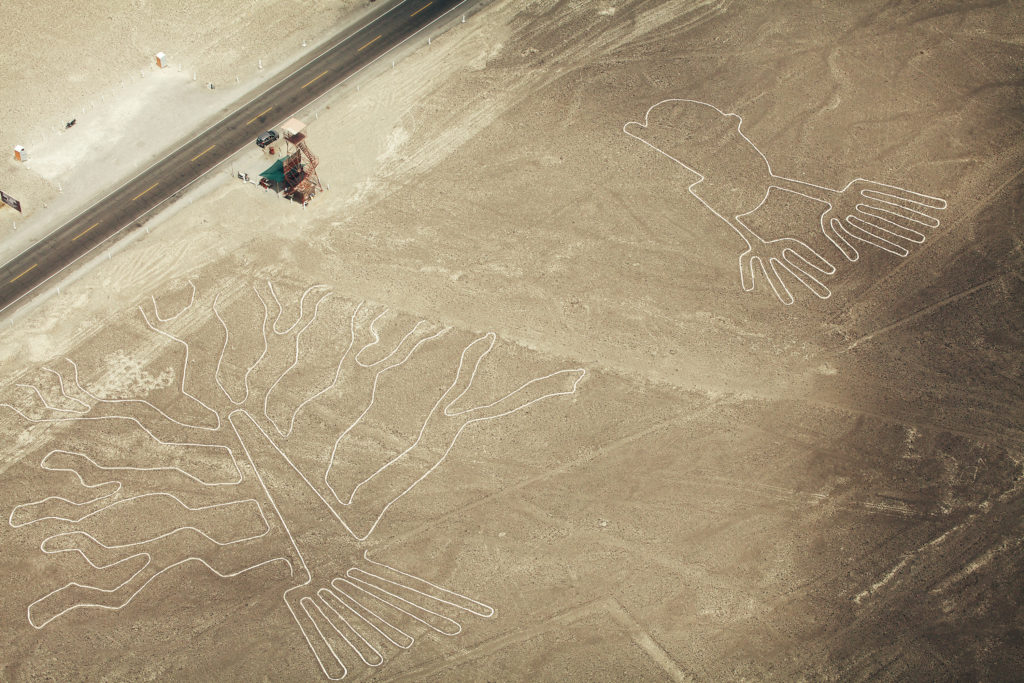
The remote Nazca region located roughly 400 km (250 miles) south of Lima contains hundreds of pre-Hispanic artifacts and its plateau is famous for the Nazca Lines, where over 800 giant desert etchings of animals, plants and geometric figures were created more than 1,500 years ago. UNESCO declared them a World Heritage site in 1994.

A technical panel of government representatives, archaeologists, academics and members of international organizations, including UNESCO, will work together to build consensus on a future proposal for zoning and land use in the area, the Culture Ministry’s statement said.

According to figures from the Peruvian Ministry of Energy and Mines, 362 small-scale gold miners operate in the Nazca district under a program to regularize their status. Authorities have previously conducted operations against illegal mining in the area.

(By Marco Aquino and Lucinda Elliott; Editing by Barbara Lewis)