Wednesday, June 11, 2025


Bolivia rejects Musk's Starlink in stand for digital sovereignty

Bolivia rejects Musk's Starlink in stand for digital sovereignty
Some analysts argue that Bolivia’s resistance to Starlink may also reflect its longstanding geopolitical alignment with Beijing. But the outdated Chinese-made satellites servicing the country are slow and nearing the end of their lifespan. / unsplash
By Alek Buttermann June 9, 2025

As satellite internet rapidly expands across Latin America, Bolivia has emerged as a notable exception. Despite having some of the region’s slowest internet speeds and vast rural areas with little to no coverage, the country has so far refused to grant operating rights to Elon Musk’s Starlink. While the service is up and running in neighbouring countries such as Brazil, Chile, and Peru, Bolivia has chosen a different path: one that officials argue is about protecting sovereignty and local infrastructure.

According to The New York Times, Bolivia is now one of the few remaining Latin American nations where the flamboyant billionaire's satellite internet provider has no legal presence.

Bolivia’s digital infrastructure remains underdeveloped, especially outside urban centres. As reported by the International Telecommunication Union, only about 56% of households have access to fixed broadband, with fibre optic available only in a few large cities. Over 90% of internet use occurs through mobile networks, yet high-speed mobile coverage reaches only about 10% of the national territory.

“In the Amazon, there’s no signal—people use walkie-talkies to communicate,” said geographer Patricia Llanos in an interview with The New York Times. “Even though we have a satellite in space, we still don’t have a way to connect.”

Launched in 2013, Bolivia’s only telecommunications satellite, Túpac Katari 1, was financed largely through a loan from China’s Development Bank and built by the China Aerospace Science and Technology Corporation. While it remains functional, its limitations are becoming more visible as satellite internet evolves globally.

Although Starlink is not authorised in Bolivia, it is far from absent. As detailed by Rest of World, thousands of users have begun acquiring Starlink kits through informal channels. These kits are either smuggled in from neighbouring countries or purchased online via intermediaries who offer delivery services from Chile and Peru.

One of them is Ricardo Guillén, a Bolivian content creator who purchased a Starlink terminal from a Peruvian seller. He told Rest of World that he estimates “around 10,000 kits” are already in use across Bolivia. He also claimed that users have formed Telegram groups to coordinate access and share updates on connectivity.

The grey market for Starlink has been expanding despite the legal risks. Because Bolivia is not an officially supported territory, SpaceX could shut down the service at any time. In practice, however, many users take advantage of the roaming capabilities in their kits, which allow for temporary connectivity even in countries where Starlink is not formally licensed.

Bolivian officials argue that admitting Starlink under its current model would undermine national regulatory frameworks. Iván Zambrana, director of the Bolivian Space Agency (ABE), told The New York Times that “it would be suicide to let them in without regulation.” According to Zambrana, Starlink’s technological edge would allow it to dominate the market quickly, pushing out local operators and weakening the state’s capacity to manage its digital infrastructure.

The impasse appears to have originated during negotiations in 2023, when SpaceX allegedly refused to accept Bolivia’s conditions for local partnerships and oversight. Zambrana stated that SpaceX wanted to sell directly to Bolivian users, bypassing national authorities—a proposition the government viewed as unacceptable.

Officials have also expressed concern over market concentration and foreign control. “We are not closed to foreign companies,” Zambrana said, “but they must comply with our laws and compete on equal terms.”

Some analysts argue that Bolivia’s resistance to Starlink may also reflect its longstanding geopolitical alignment with China. The Túpac Katari 1 satellite was not only financed and built by Chinese firms, but has also been framed as a symbol of Bolivia’s technological independence.

President Luis Arce’s government continues to strengthen ties with Beijing. According to The New York Times, Bolivia is currently in talks with Chinese company SpaceSail, which is planning to deploy its own low-Earth orbit (LEO) satellite network across Latin America. Government officials have also acknowledged preliminary discussions with other providers such as Amazon’s Project Kuiper and Canada’s Telesat.

These talks suggest that Bolivia may be exploring a multi-operator solution for future satellite connectivity, though no clear roadmap has been made public.

Even as the South American nation champions self-reliance, Túpac Katari 1 is approaching the end of its useful life. Engineers estimate that the satellite will run out of fuel between 2028 and 2030, according to statements cited by Rest of World. Although still operational, the satellite’s capacity is limited, especially compared to LEO alternatives like Starlink, which offer significantly lower latency and higher speeds.

Installation of supporting ground infrastructure remains costly. In many areas, small communities cannot afford the dishes and antennas needed to access Túpac Katari 1’s signal. In contrast, Starlink’s plug-and-play kits, although expensive by local standards, offer easier setup and broader reach.

Meanwhile, domestic pressure is mounting. Independent lawmaker Mariela Baldivieso has publicly demanded the legalisation of Starlink in Bolivia, calling internet access a fundamental right. She told Rest of World that her formal inquiries to the telecommunications authority (ATT) have gone unanswered.

Public sentiment is also shifting. In January 2025, US-based YouTuber IShowSpeed attempted to livestream from Santa Cruz, Bolivia’s largest city. The stream repeatedly glitched and eventually failed. Visibly frustrated, he told his 35mn subscribers: “There’s no internet in Bolivia.”

This kind of public embarrassment has amplified calls for digital reform. Yet the government maintains that it is not against Starlink per se, but rather wants all providers—foreign or domestic—to comply with national standards and protocols.

On its official coverage map, Starlink still lists Bolivia as “Coming in 2025.” Whether that timeline reflects renewed negotiations or mere placeholder optimism remains to be seen. Bolivian officials insist they remain open to partnerships, but only under conditions that reinforce state oversight and preserve regulatory sovereignty.

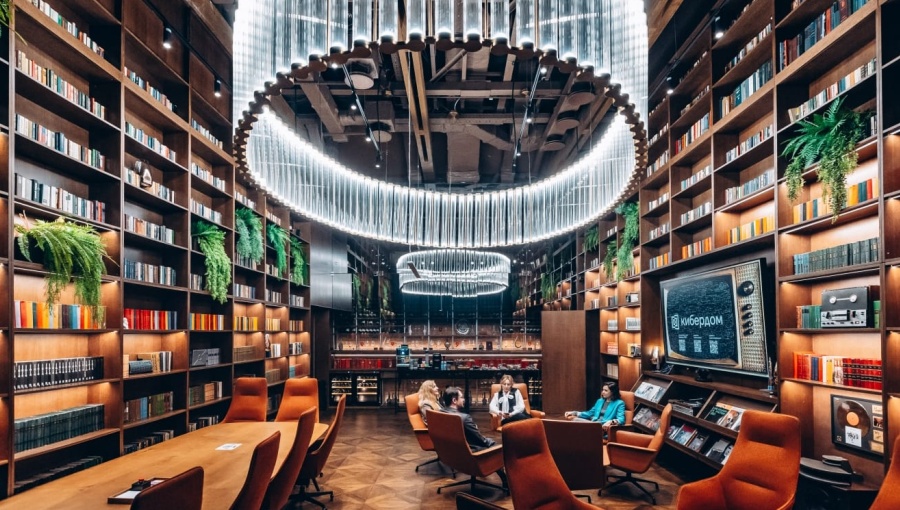
International cybersecurity development foundation Cyberus and Al-Adid Business set up “Cyberdom” development hub in Qatar

International cybersecurity development foundation Cyberus and Al-Adid Business set up “Cyberdom” development hub in Qatar
Russian cybersecurity firm Cyberdom has set up the Hackademy, a specialised cybersecurity training academy in Qatar. / bne IntelliNews
By bne IntelliNews June 6, 2025

Founded in Russia, Cyberus, an international cybersecurity development company, and Al-Adid Business signed a strategic partnership agreement to develop cybersecurity capabilities in Qatar, the company said in a press release.

“The establishment of Cyberdom Qatar and Hackademy highlights a growing trend in tackling modern day challenges of the digital world through joint efforts, international cooperation and cross-border exchange of expertise. In partnership with Al-Adid Business, we aim to cultivate local talent and reinforce Qatar’s cybersecurity infrastructure. Cyberdom Qatar is set to become one of the key hubs for cybersecurity professionals and companies in the region,” said Andrey Bardizh, managing director of the Cyberus Foundation and head of the export division.

The partners will establish Cyberdom Qatar, a comprehensive cybersecurity hub, and Hackademy, a specialised cybersecurity training academy. The initiative is intended to empower Qatari youth, cultivate homegrown digital expertise, and strengthen Qatar’s national cybersecurity infrastructure.

“Cyberdom is a unique project that brings together the cybersecurity community, society, business and government. It serves as a central hub for the development of Qatar’s tech industry and acts as its global ambassador on the international stage,” the company said.

Among the project’s goals are to create:

  • a permanent venue for innovation and collaboration;
  • infrastructure for training, simulation and cyber-drills;
  • exhibition and demo zones for cutting-edge cybersecurity technologies;
  • startup incubator and co-working areas;
  • spaces for hosting local and international cybersecurity events.

“Collaboration with the Cyberus Foundation is part of Cyberdom’s international expansion strategy. The new Cyberdom in Qatar will reflect the local cultural context, incorporate best practices from the Moscow hub, and, together with other Cyberdoms, form a unified network aimed at advancing the industry, technologies, and an outcome-driven approach to cybersecurity across the globe,” emphasizes Sergey Kalmykov, CEO of Cyberdom.

From l-r: Andrey Bardizh, managing director of the Cyberus Foundation and head of the export division; Dr. Ahmed Mustafa Al-Issawi, investment director of Al-Adid Business; and Sergey Kalmykov, CEO of Cyberdom.
Hackademy

Within Cyberdom Qatar, Hackademy will set up as a practical training centre aimed at developing essential cybersecurity skills. The academy will feature interactive labs simulating real-world cyber-threats and comprehensive certification programmes tailored for government officials, students and private-sector professionals.

“Cyberus and Al-Adid Business will jointly localise and deliver cybersecurity education aligned with Qatar’s national priorities. Educational content will be customised for various target groups, including government officials, students and private sector professionals,” the company said.

Cyberus is an international cybersecurity development foundation that unites technology developers, businesses and governmental entities to create an innovative, effective result-oriented approach to cybersecurity. The company develops cybersecurity products and essential technologies, facilitating the export of cybersecurity solutions worldwide.

"Digital sovereignty is a strategic priority for Qatar. The joint project with the Cyberus Foundation will strengthen national cyber-defence capabilities to train highly skilled professionals for a sustainable digital future for the country,” said Dr. Ahmed Mustafa Al-Issawi, investment director of Al-Adid Business.

Cyberus was founded by a group of private investors from IT and cybersecurity industries in 2022, led by Yury Vladimirovich Maksimov, who made his fortune in Russia and was listed among Forbes World's billionaires in July 2024, with a net worth of $1.2bn.

Born on in Fryazino, Moscow Oblast, USSR, Maksimov studied physics at Moscow State University, where he developed software for modelling and analysing information transmission systems. In 2002, Maksimov co-founded Positive Technologies alongside his brother Dmitry and Evgeny Kireev, which grew rapidly, establishing offices in countries including the UK, Italy, South Korea, India, the UAE, Tunisia and the US.

In December 2021, the company became the first Russian cybersecurity firm to go public, listing on the Moscow Exchange. He is recognised as one of the few Russian billionaires listed in Forbes who have amassed their fortune purely from developing software.

Cyberus remains active in Russia and recently recruited industry leaders to enhance collaboration with government agencies. In February 2025, the foundation appointed Sergei Belyakov, former managing director of Ozon, to oversee strategic projects and government relations. Belyakov said that cybersecurity is now integral to national security and sovereign IT development.

Additionally, Cyberus acquired key assets from the Russian cybersecurity firm F.A.C.C.T. (formerly Group-IB in Russia) in late 2024 which were integrated into F6, a newly established cybersecurity company.  This acquisition included technologies, intellectual property, and contracts, aiming to establish a new company focused on combating cybercrime and providing services to Russia-aligned foreign partners.

In April 2025, it signed a memorandum of cooperation with the Collective Security Treaty Organization (CSTO) to enhance cybersecurity among member states. The agreement focuses on protecting critical infrastructure, training specialists, and improving cybersecurity legislation.


Israeli police arrest 13-year-old Tel Aviv boy suspected of spying for Iran

Israeli police arrest 13-year-old Tel Aviv boy suspected of spying for Iran / bne IntelliNews

By bnm Gulf bureau June 10, 2025

Israeli police have arrested a 13-year-old Tel Aviv boy suspected of carrying out missions for Iranian agents, including spray-painting graffiti in exchange for money via the Telegram messaging app.

This latest incident follows an Iranian announcement that it had stolen large numbers of intelligence documents from Israel related to the country's hidden nuclear programme, which Israel has never admitted to having. 

The teenager was detained in a joint operation by Tel Aviv police fraud unit and Shin Bet security service on suspicion of performing tasks for Iranian operatives, Mako reported on June 10.

During questioning, the boy revealed that Iranian agents had contacted him through Telegram and asked him to complete several missions in exchange for payment.

The minor complied with their alleged requests and spray-painted graffiti at locations around Tel Aviv as instructed, receiving money in return. He was also asked to photograph Iron Dome defence systems but ultimately did not carry out this task.

"I didn't understand I was spying for the Iranians. They transferred hundreds of dollars to me in a digital wallet, I corresponded with them for weeks," the boy told investigators.

"I didn't understand the significance of what I was doing. I'm very sorry. Now I understand the severity of my actions."

The teenager's parents were reportedly shocked by his arrest. He was released to house arrest after questioning, with his parents kept informed throughout the investigation process.

Police and Shin Bet stressed to parents that "contact with foreign elements and carrying out missions for them is a serious offence with heavy penalties. You must show vigilance and caution to prevent the next case."

Earlier on June 9, Persian language media reported that Iranian security services had stolen large tranches of data and files from Israel as part of the ongoing low-level war between the two countries. 

IMPERIALIST PROVOCATION

US troops deploy to Panama for canal exercises amid sovereignty protests

US troops deploy to Panama for canal exercises amid sovereignty protests
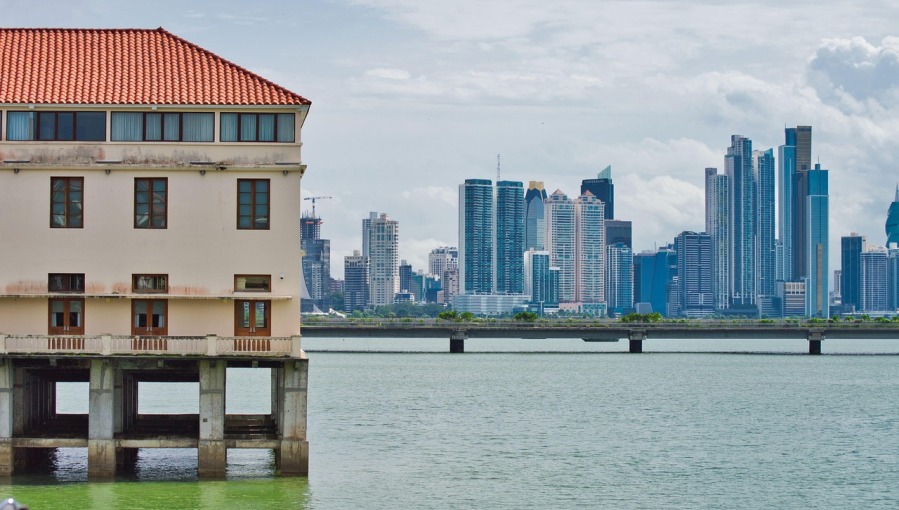
US forces are conducting jungle warfare training with local security personnel, according to a statement from the American embassy in Panama City . / pixabay
By bne IntelliNews June 10, 2025

US military personnel have commenced joint training exercises in Panama following a controversial bilateral agreement that has sparked widespread public opposition in the Central American nation.

The drills, which began earlier this month, represent the first deployment under a security pact signed in April that permits US forces to operate around the strategically vital Panama Canal. The arrangement allows American troops to train alongside Panamanian security forces whilst maintaining the host nation's constitutional sovereignty over its territory.

US forces are conducting jungle warfare training with local security personnel, according to a statement from the US embassy in Panama City cited by AFP. Each deployment requires explicit approval from Panamanian authorities, with officials emphasising that no permanent military installations will be established under the terms of the agreement.

The security pact emerged following pressure from US President Donald Trump, who has asserted that China wields excessive influence over the waterway and vowed to “take back” the Canal without ruling out military action. The canal, built by the US in 1914 and handed over to Panama in 1999, handles approximately 40% of US container traffic and 5% of global trade, making it a critical artery for international commerce.

Hong Kong-based conglomerate CK Hutchison Holdings, which controls two key terminals at the end of the canal, has bowed to pressure from the White House and moved to sell the ports to BlackRock as part of a $22.8bn agreement. But the deal has stalled following criticism from Beijing, which decried US interference and accused CK Hutchison of “betraying” Chinese interests.

In February, Panamanian President José Raúl Mulino also confirmed the country had pulled out of China's Belt and Road Initiative framework, which it joined in 2017, making Panama the first Latin American nation to exit President Xi Jinping's trillion-dollar infrastructure programme.

Mulino's administration has defended the military arrangement as necessary to combat organised crime and drug trafficking whilst ensuring the canal's uninterrupted operation. Officials maintain that Panama retains complete control over its military facilities and that the agreement operates within constitutional parameters.

However, the deployment has triggered significant domestic opposition. Trade unions and civic organisations have staged demonstrations, arguing the arrangement "violates national sovereignty" and represents a veiled return to the era of American military presence that ended in 1999 under the Torrijos-Carter Treaties.

Critics fear the exercises could pave the way for a gradual reintroduction of US bases, despite official assurances to the contrary. The protests reflect deep-seated concerns about foreign military presence in a country that achieved full control of the canal only 26 years ago.

Both governments have stressed the temporary nature of the arrangement and its importance for regional stability. The exercises continue a history of military cooperation between the two nations, including previous multinational training operations such as the Panamax exercises involving other Latin American countries.

The success of this arrangement will likely depend on whether Washington can demonstrate genuine respect for Panamanian sovereignty whilst addressing legitimate security concerns around one of the world's most important shipping routes. For Panama, the challenge remains managing domestic opposition whilst fulfilling its commitments to protect a waterway upon which global commerce increasingly depends.


Polish PM Tusk facing confidence vote after his candidate loses presidential bid

Polish PM Tusk facing confidence vote after his candidate loses presidential bid. / bne IntelliNews
By bne IntelliNews June 11, 2025

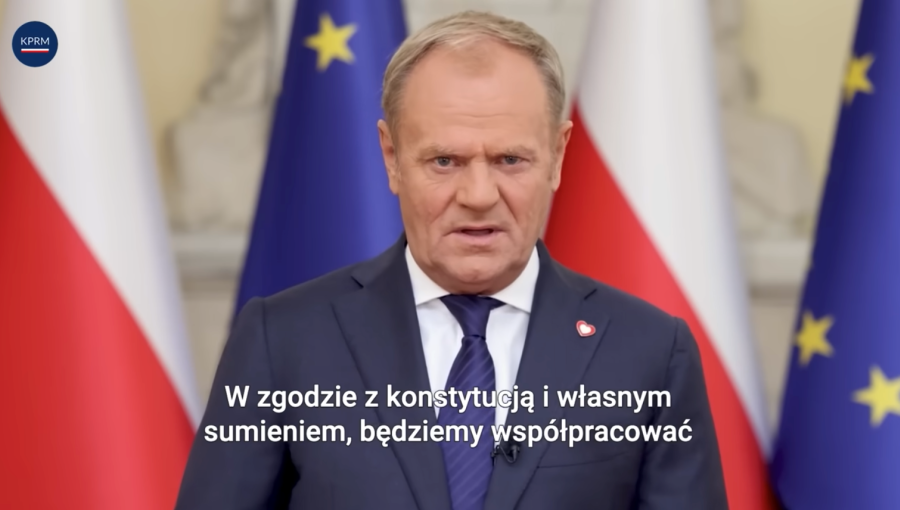
Polish Prime Minister Donald Tusk is about to face a vote of confidence in the Sejm on June 11, following the narrow defeat of his preferred candidate, Rafał Trzaskowski, by Karol Nawrocki in the presidential run‑off on June 1.

Tusk requested the confidence vote to reinforce his leadership and show unity in response to internal criticism sparked by the election loss.

His coalition – comprising his Civic Coalition party, the Third Way (itself a coalition of Polska 2050 and the Polish People’s Party) – currently holds 242 out of 460 seats in the Sejm, a majority of 12.

That majority is expected to ensure his survival in the vote, but Trzaskowski's failure to win the presidency has revealed cracks in the alliance.

Tusk has described the vote as “a new opening, not defensive,” aimed at reinvigorating his government’s agenda. His plan also includes a forthcoming cabinet reshuffle and renegotiation of coalition terms in July.

Nawrocki’s victory is expected to constrain Tusk’s reform plans, however, especially judicial and abortion-rights legislation, as the new president wields veto power. The coalition lacks votes to override a president's dissent.

Nawrocki is also expected to paint the government ineffective by using vetoes. That, in turn, could sway the public opinion in favour of the radical right-wing Law and Justice (PiS) party, which fielded him for president in early 2025.

Polls show only one‑third of Poles believe the government will last until 2027, the year of the next general election.


EU adds Lebanon and Algeria to anti-money laundering risk list

EU adds Lebanon and Algeria to anti-money laundering risk list / bne IntelliNews

By bna Cairo Bureau June 11, 2025

The European Union added Lebanon and Algeria to its list of high-risk nations requiring increased monitoring for anti-money laundering compliance, Shafaq News reported on June 10.

The European Commission said Algeria, Angola, Côte d'Ivoire, Kenya, Laos, Lebanon, Monaco, Namibia, Nepal and Venezuela have been added to jurisdictions subject to enhanced scrutiny regarding their AML frameworks.

Several countries, including the United Arab Emirates were removed from the list. Others delisted include Barbados, Gibraltar, Jamaica, Panama, the Philippines, Senegal and Uganda.

The changes follow a February announcement by a global anti-money laundering watchdog that the Philippines had been removed from its "grey list", while Laos and Nepal were added.

The Paris-based Financial Action Task Force evaluates efforts and legislation of more than 200 countries to combat money laundering and terrorist financing. Its grey list includes jurisdictions subject to enhanced due diligence.

Monaco, already listed by the FATF since mid-2024 alongside EU members Bulgaria and Croatia, is now also expected to appear on the EU list.

EU commissioner for financial services Maria Luís Albuquerque said the Commission had updated the EU list, "reaffirming our strong commitment to align with international standards, particularly those set by the Financial Action Task Force".

The updated EU list will be reviewed by the European Parliament and member states. If no objections are raised, the changes will come into force within a month, according to the Commission.

Monaco's government issued a statement acknowledging the expected inclusion and expressed its commitment to implementing necessary reforms to be removed from the FATF grey list "in the near term".


COMMENT: What Japan, Southeast Asia and the US can expect from South Korea’s new president

COMMENT: What Japan, Southeast Asia and the US can expect from South Korea’s new president
 / bno IntelliNews
By bno - Taipei Office June 11, 2025

The recent election of Lee Jae-myung as President of South Korea marks a significant political shift that could reverberate not just domestically, but throughout the wider East Asian region. Lee, the former governor of Gyeonggi Province and a figure associated with South Korea’s progressive bloc, secured a narrow but decisive victory, promising bold reforms and a more equitable society.

His presidency is poised to steer the country on a distinctly different course from that of his conservative predecessors, particularly in matters of economic justice, foreign policy and regional diplomacy.

Domestic policy

At the heart of Lee Jae-myung’s domestic agenda is a renewed emphasis on economic justice. Often described as a populist by critics and a pragmatic reformist by supporters, Lee has long championed a redistribution of wealth, fair taxation, and robust social welfare measures. His policy proposals include the introduction of a universal basic income  albeit slowly  and a more expansive welfare state.

While the feasibility of such reforms remains to be tested in such a conservative society, particularly under the scrutiny of a still largely fragmented National Assembly, Lee’s election has nonetheless rekindled a broader public discourse on inequality and the role of the state in addressing economic disparity.

Housing affordability, another critical issue for South Korean voters and especially the younger generation will also feature prominently in Lee's domestic agenda. He has pledged to stabilise the housing market through increased public housing supply and tougher regulations on speculative investment.

Unlike his conservative counterparts, who tended to favour deregulation, Lee appears much more inclined to pursue interventionist policies that align with his social democratic vision.

However, whether these plans can be implemented effectively will depend on Lee’s ability to negotiate with a potentially hostile legislature. His previous confrontations with party rivals and outspoken style may require tempering in favour of coalition-building and consensus politics.

Relations with Japan

The new president’s approach to neighbouring Japan is expected to be cautious but calculated.

While he has not shied away from criticising Tokyo, in particular over historical disputes such as WWII forced labour and territorial claims regarding the disputed Dokdo islets (Takeshima in Japanese), Lee has sensibly signalled a willingness to compartmentalise these issues in order to foster cooperation on trade, technology and regional security.

Unlike some of his progressive predecessors who were more overtly confrontational, Lee appears to understand the importance of stabilising South Korea-Japan relations, especially in light of growing regional tensions and the shared challenge of an assertive China.

To this end, regional analysts anticipate a dual-track policy: firm on historical memory and sovereignty, but open to diplomatic engagement and economic collaboration.

In particular, the semiconductor and battery supply chains offer fertile ground for cooperation, given both countries’ shared vulnerabilities in these sectors. Moreover, the rise of trilateral security coordination between Seoul, Tokyo and Washington will likely continue under Lee’s administration even if there may now be more emphasis on maintaining South Korean autonomy within the alliance framework.

The US alliance

Lee Jae-myung inherits a longstanding strategic alliance with the United States, which remains central to South Korea’s security posture. However, his rhetoric suggests a more nuanced and independent approach than that of his conservative predecessors who largely sat in the pocket of Washington on many issues. While he is unlikely to challenge the fundamentals of the alliance, Lee is expected to assert a greater degree of strategic autonomy, particularly in matters relating to North Korea and China.

During his campaign, Lee made clear that South Korea should not be expected to “automatically align” with US policies as more conservative presidents have, particularly those that might antagonise Beijing.

This in itself signals an important shift from the unambiguous pro-US stance of previous conservative administrations, towards a more balanced diplomacy aimed at avoiding entanglement in US-China rivalry.

That said, Lee is understood to be pragmatic enough to recognise the indispensability of the alliance, particularly in light of the North Korean threat. Joint military exercises, intelligence sharing, and technological cooperation in areas such as AI and cybersecurity are likely to remain cornerstones of bilateral ties.

North Korea: dialogue and deterrence

Unsurprisingly, inter-Korean relations are expected to occupy a central place in Lee’s foreign policy. Drawing from the legacy of the Sunshine Policy, Lee has voiced his support for re-engaging with Pyongyang, not as a concession but as a strategy for regional stability and eventual reconciliation. His stance combines a willingness to pursue dialogue with a commitment to maintaining deterrence  a delicate balancing act that successive administrations have struggled to manage.

Lee’s policy is thus likely to include renewed calls for humanitarian assistance, resumption of family reunions, and potentially the reopening of the Kaesong Industrial Complex, should the North show reciprocal goodwill. However, the geopolitical context has changed significantly since the Moon Jae-in years.

North Korea’s recent and ongoing missile tests and continued pursuit of nuclear capabilities complicate the prospect of dialogue. Any outreach effort by Lee will have to navigate not only the intransigence of Pyongyang but also the scepticism of Washington and Tokyo.

Southeast Asia

Further afield, an often overlooked but increasingly vital aspect of South Korea’s foreign policy is its engagement with Southeast Asia. Lee Jae-myung is expected to continue and possibly expand the "New Southern Policy" initiated under Moon Jae-in. This strategy aims to reduce over-reliance on the US and China by strengthening ties with ASEAN nations through trade, infrastructure, education and cultural exchange.

Under Lee’s leadership, analysts expect South Korea to double down on economic diplomacy in the region, promoting Korean technologies, green energy cooperation and digital infrastructure projects.

Furthermore, given his focus on inclusive growth and technological innovation, Southeast Asia offers a fertile landscape for win-win cooperation that aligns with both Lee’s domestic and foreign policy priorities.

Additionally, Lee may use ASEAN platforms to advance broader multilateral agendas, including climate change, pandemic preparedness and digital governance. By doing so, South Korea can position itself as a middle power that punches above its weight in the Indo-Pacific.


Nuclear Tensions Simmer As Iran, US Can’t Even Agree On When To Argue – Analysis

Iran and the United States. Credit: Tasnim News Agency


By 

By Kian Sharifi


(RFE/RL) — Diplomacy between the United States and Iran over the future of Tehran’s nuclear program has hit a new snag — not over uranium enrichment or sanctions, but over the simple matter of when to meet.

As US President Donald Trump insists the next round of talks is set for June 12, Iranian Foreign Ministry spokesman Esmail Baqaei maintains that negotiations will resume on June 15 in Muscat. Oman, which is mediating the talks, has not weighed in.

The scheduling dispute comes as Iran’s chief negotiator, Foreign Minister Abbas Araqchi, is slated to be in Norway on June 12 for the Oslo Forum, making a session that day with the US unlikely, but not impossible. Oman’s Foreign Minister Badr Albusaidi will also be in Oslo, so if White House envoy and nuclear negotiator Steve Witkoff travels to Norway, a meeting could take place.

Despite the calendar confusion, the stakes are clear: The sixth round of talks is shaping up to be a defining moment. Iran has formally rejected Washington’s proposal for a deal, calling it “unacceptable” and lacking in key areas, especially the removal of economic sanctions and recognition of Iran’s right to enrich uranium on its own soil.

Iran’s Counterproposal On Enrichment

Tehran says it will soon submit a counterproposal via Oman, a plan it describes as “reasonable, logical, and balanced” and which it urges Washington to take seriously.


While Iran has kept the details of its counteroffer under wraps, Deputy Foreign Minister Majid Takht-Ravanchi says it’s not a lengthy document but a “rational” proposal that “can’t be dismissed with a simple ‘no.'”

He describes it as a solid and acceptable basis for further discussion.

Iran’s counterproposal is expected to insist on the right to continue uranium enrichment — a non-negotiable point for Tehran — and demand effective and verifiable sanctions relief before any Iranian concessions.

Trump and other US officials, for their part, remain firm that any deal must see Iran halt enrichment, a position Iran’s Supreme Leader Ayatollah Ali Khamenei has flatly rejected as “100 percent contrary” to national interests.

Specter Of IAEA Resolution

This is all unfolding as the International Atomic Energy Agency (IAEA) Board of Governors meets in Vienna for its quarterly session, a gathering dominated by the Iran file.

The IAEA’s latest comprehensive report, released on May 31, concluded that Iran has failed to provide credible answers about undeclared nuclear material and activities at several sites, and that its cooperation with inspectors has been “less than satisfactory.”

The United States and its European allies — Britain, France, Germany, also known as the E3 — are now pushing a resolution that would formally declare Iran in noncompliance with its safeguards obligations for the first time in two decades.

If adopted, the resolution would not immediately escalate the matter to the UN Security Council, but it would give Iran a window to address the outstanding concerns. It would be a major step toward opening the door to the return of UN sanctions if Iran fails to comply.

Meanwhile, Iran has threatened to retaliate if the resolution is adopted, teasing that it may expand its nuclear program, including installing thousands of advanced centrifuges.

The “snapback” of UN sanctions is a provision under the now-defunct 2015 nuclear deal and the E3 wants to use it before it expires in October.

Whether the resolution is adopted could shape the tone of the next round of nuclear talks.

Adding to the volatility, Iran’s Intelligence Ministry claimed over the weekend that Tehran has obtained a “treasure trove” of sensitive Israeli documents, including material on Israel’s nuclear program and defense capabilities.

With Israel preparing to strike Iranian nuclear sites if the negotiations with the United States fail, the Supreme National Security Council said the alleged intelligence breach will allow Iran to retaliate to a potential attack “immediately” by targeting Israel’s “secret nuclear facilities.”

For now, the world is left waiting — not just for the substance of a deal, but for the negotiators to even settle on a time and place to argue.

  • Kian Sharifi is a feature writer specializing in Iranian affairs in RFE/RL’s Central Newsroom in Prague. He got his start in journalism at the Financial Tribune, an English-language newspaper published in Tehran, where he worked as an editor. He then moved to BBC Monitoring, where he led a team of journalists who closely watched media trends and analyzed key developments in Iran and the wider region.

RFE RL

RFE/RL journalists report the news in 21 countries where a free press is banned by the government or not fully established.

Cardinal Ambongo Appeals To Trump: ‘Africa Is Important To The US’

NOT A SHITHOLE COUNTRY A CONTINENT

Cardinal Fridolin Ambongo. Photo Credit: François-Régis Salefran, Wikipedia Commons

By 

By Madalaine Elhabbal


Cardinal Fridolin Ambongo is asking U.S. President Donald Trump to reinstate foreign aid to Africa. 

“Targeted humanitarian aid for Africa is urgently needed, morally good, and of great strategic value to the U.S,” Ambongo, the archbishop of Kinshasa in the Democratic Republic of Congo, wrote in a June 8 op-ed published in the Wall Street Journal. 

“​​President Trump has made clear that he will put the needs of his country and its citizens first before attending to the needs of the world. No leader of a nation as great as the U.S. could do otherwise,” the cardinal stated. “It would be a mistake, however, for Mr. Trump to forget about Africa.”

Ambongo highlighted Africa’s rich natural resources and “bright entrepreneurial and eager young people” as important assets to the U.S., emphasizing the utility of a relationship between Africa and the United States. 

American generosity toward Africa through USAID has “transformed millions of lives for the better” in the region, Ambongo said, pointing out that American aid has helped enhance African society and avert further political and economic crises threatening the continent’s development. In the process, he noted, American economic influence in the region has been strengthened.


With the freezing of critical aid to African countries, the cardinal described Africa as “a magnet for conflicts and fights over the natural resources so important to modern technology.” 

He also noted pervasive famine and poverty plaguing many parts of the region. 

While Ambongo acknowledged the need for the U.S. to be concerned about the use of its limited resources, he noted that international adversaries will replace the U.S. if it completely withdraws all aid to Africa.

“International politics won’t tolerate a vacuum,” he predicted. “Should the U.S. abandon Africa, its place will be taken by its adversaries: China, Russia, Iran, North Korea.”

The cardinal stressed that “it isn’t too late to turn the tide” and reach a mutually beneficial solution that does not exploit U.S. resources for ideological causes that run counter to African values by providing aid that supports abortion services and contraception in the region. 

“It’s unhelpful to tie aid to ideology — to abortion or ‘population control’ — that defies the values of many African cultures,” he said. “I believe that respect for African culture can coexist with humanitarian aid. Cultural colonization needn’t be the price exacted for a moral, strategic, and humanitarian partnership.” 

Ambongo’s remarks on the politicization of humanitarian aid come after the U.S. State Department announced its plans to destroy a reserve of artificial contraceptives that was previously set aside for distribution in developing countries through foreign aid programs. 

Pleading on behalf of bishops, priests, and laypeople in Africa, Ambongo urged Trump and his administration “to reconsider aid to his friends in Africa, who have been and will continue to be important partners of the U.S.” 

“We are eager to work closely with Washington to ensure that all such aid is used well, free of the fraud and mismanagement that has occurred in the past,” he concluded. “There is too much at stake — for Africans, for Americans, and for the world.”


CNA

The Catholic News Agency (CNA) has been, since 2004, one of the fastest growing Catholic news providers to the English speaking world. The Catholic News Agency takes much of its mission from its sister agency, ACI Prensa, which was founded in Lima, Peru, in 1980 by Fr. Adalbert Marie Mohm (†1986).