Wednesday, June 11, 2025


The 100 ways Elon Musk and his companies allegedly benefited from working with Donald Trump
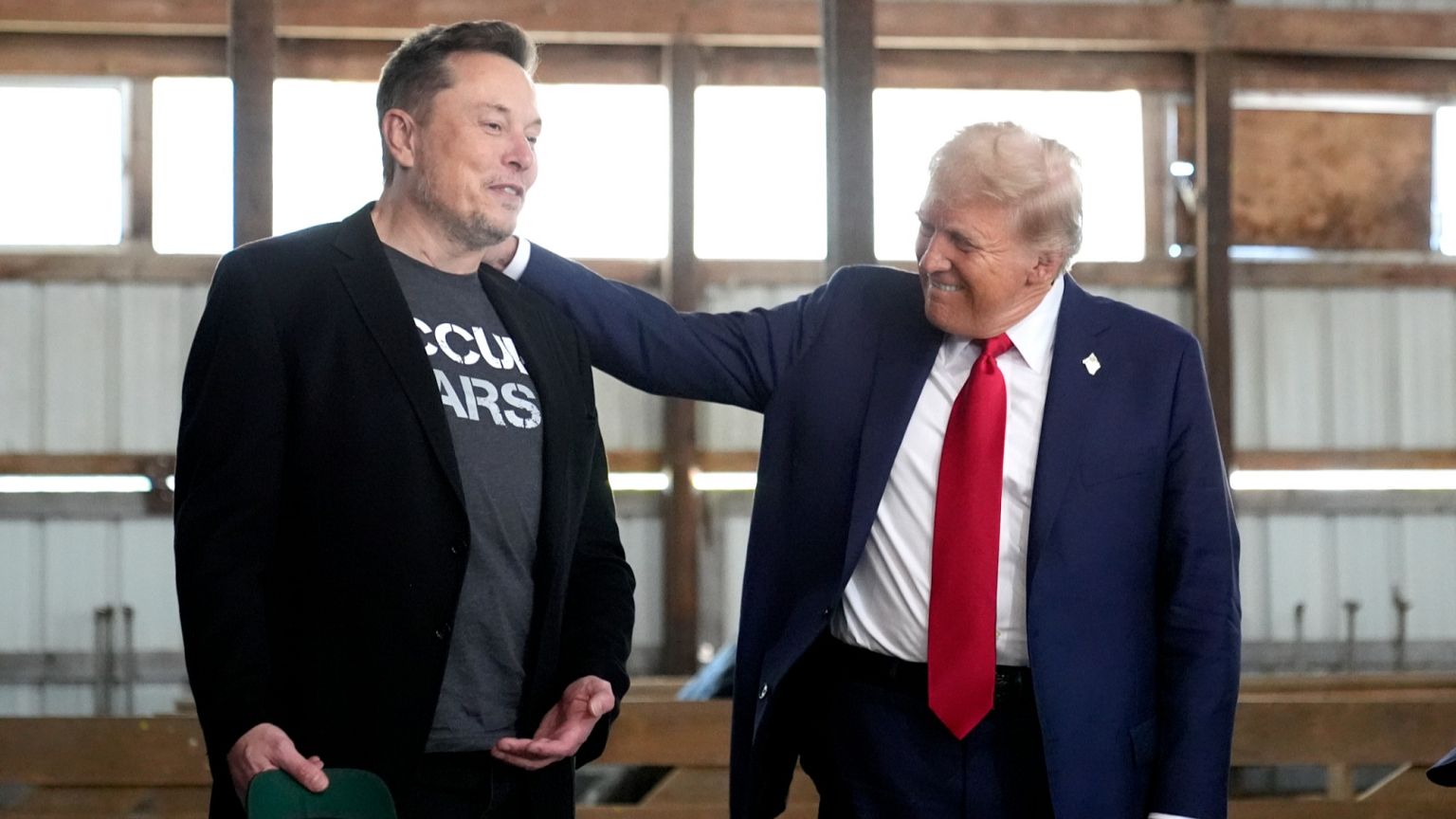
Then-Republican presidential nominee and now President Donald Trump, right, and Tesla and SpaceX CEO Elon Musk at a campaign event in 2024.
Copyright AP Photo/Alex Brandon, File


By Anna Desmarais
Published on 

A new report accuses Elon Musk and the Trump administration of taking over 100 actions to benefit Musk’s companies. Here's what the report outlined.

A new report published by a prominent American senator’s office this week sheds light on how the first 130 days of US President Donald Trump’s second term may have benefited Elon Musk, the world's richest man. 

Democratic senator Elizabeth Warren’s office compiled a 14-page document using a combination of media reports, White House statements, and think tank research to identify over 100 occasions where Musk’s companies and his own personal wealth benefited during his time with the unofficial Department of Government Efficiency (DOGE).  

A statement on Warren’s website describes the report as a list of actions where Musk or White House officials "broke ethics norms and precedent or may have violated laws regarding federal employees’ participation in matters in which they have a financial interest," while benefiting Musk’s business concerns.

The report alleges that these actions have increased Musk’s personal wealth by "at least" $100 billion (€85.4 billion) and wiped out a potential additional $2.37 billion (€2.07 billion) in business liabilities from Musk’s record. 

Warren’s report comes in the wake of a very public fallout this week between Trump and Musk, who left his role at DOGE earlier this month. 

USAID shut down to avoid probe into Starlink terminals

Warren’s report claims that Musk had conflicts with "at least 70 per cent" of the government departments that his new role came after. 

The report claims that President Trump fired the USAID Inspector General, who was set to inspect Musk’s satellite company Starlink for its role in providing services to Russia in its ongoing war against Ukraine. 

In one of the most controversial moves of his early presidency, the report claims that Trump then tried to shut down USAID in light of this pending investigation. 

Trump then announced a pause of US foreign development assistance programmes through USAID, creating a $60 billion (€55.3 billion) funding gap

Among the USAID cancellation repercussions is some non-profit funding to Ukraine that the EU told Euronews in February that it will not be able to meet the gap. 

Warren’s report also claims that Starlink either struck deals or is negotiating deals with at least a dozen countries, largely in Asia and Africa, “amid threats of tariffs”. 

Multiple investigations into Musk's companies buried

Regulators "have taken no public action on their investigations" in more than 40 federal agency matters regarding Musk’s companies "for several months or more," the report continued. 

Many of the stalled investigations highlighted in the report were focused on Tesla, Musk’s electric vehicle company. 

Citing NPR reports, Warren said that Trump fired the Director of the Consumer Financial Protection Bureau (CFPB) in the first round of DOGE cuts after it received over 300 consumer complaints about Tesla. 

Pending investigations and audits from the Occupational Safety and Health Administration and Labor Department’s Office of Federal Contract Compliance into Tesla were shut down by the Trump administration, the report continued.

The Securities and Exchange Commission (SEC), in charge of investigating market manipulation, limited staff authority to launch investigations as the body was investigating Tesla’s potentially false claims about self-driving vehicles.  

In a similar vein, the National Highway Traffic Safety Administration (NHTSA) laid off workers in DOGE cuts while it investigated Tesla crashes caused by the car’s “full self-driving” and remote control features. 

Trump’s administration also administered cuts and slowed down the work of the Environmental Protection Agency (EPA), the Federal Aviation Authority (FAA) and Fish and Wildlife Services (FWS) after these agencies launched investigations into SpaceX, Tesla and xAI  Musk’s artificial intelligence (AI) company behind chatbot Grok, for environmental violations. 

Billions in contracts for SpaceX

During his time at DOGE, Musk was able to put in motion or sign several government contracts worth billions of dollars for SpaceX, his space technology company based in Texas. 

Trump’s announcement of the Golden Dome project to guarantee security for the US, along with an initial $25 billion (€22 billion) investment, had already pegged SpaceX as a frontrunner for the project. 

The White House is now also reportedly calling for 13 per cent more spending for the Department of Defense, with SpaceX "considered likely to be the top recipient" of this funding, while the report alleges the company has already made over $7 billion (€6.15 billion) in contracts. 

The Federal Communications Commission (FCC) is expected to subsidise SpaceX’s broadband services in a reversal of a previous decision to give the company $900 million (€790 million). 

Musk also helped handpick many of the administration’s key personnel, including the initial selection of SpaceX investor Jared Isaacman as NASA’s top administrator and putting Michael Guetlein, a former SpaceX fellow, at the head of the Golden Dome missile program.

These picks also influenced a potential contract with the Pentagon where SpaceX would be paid to "transport military cargo around the globe". 

The report also alleges that DOGE infiltrated the Treasury Department’s Federal Payment System, which could give Musk the financial information of competitor companies that have been awarded contracts. 


World Bank: Economy set for worst run since 2008 outside of recessions

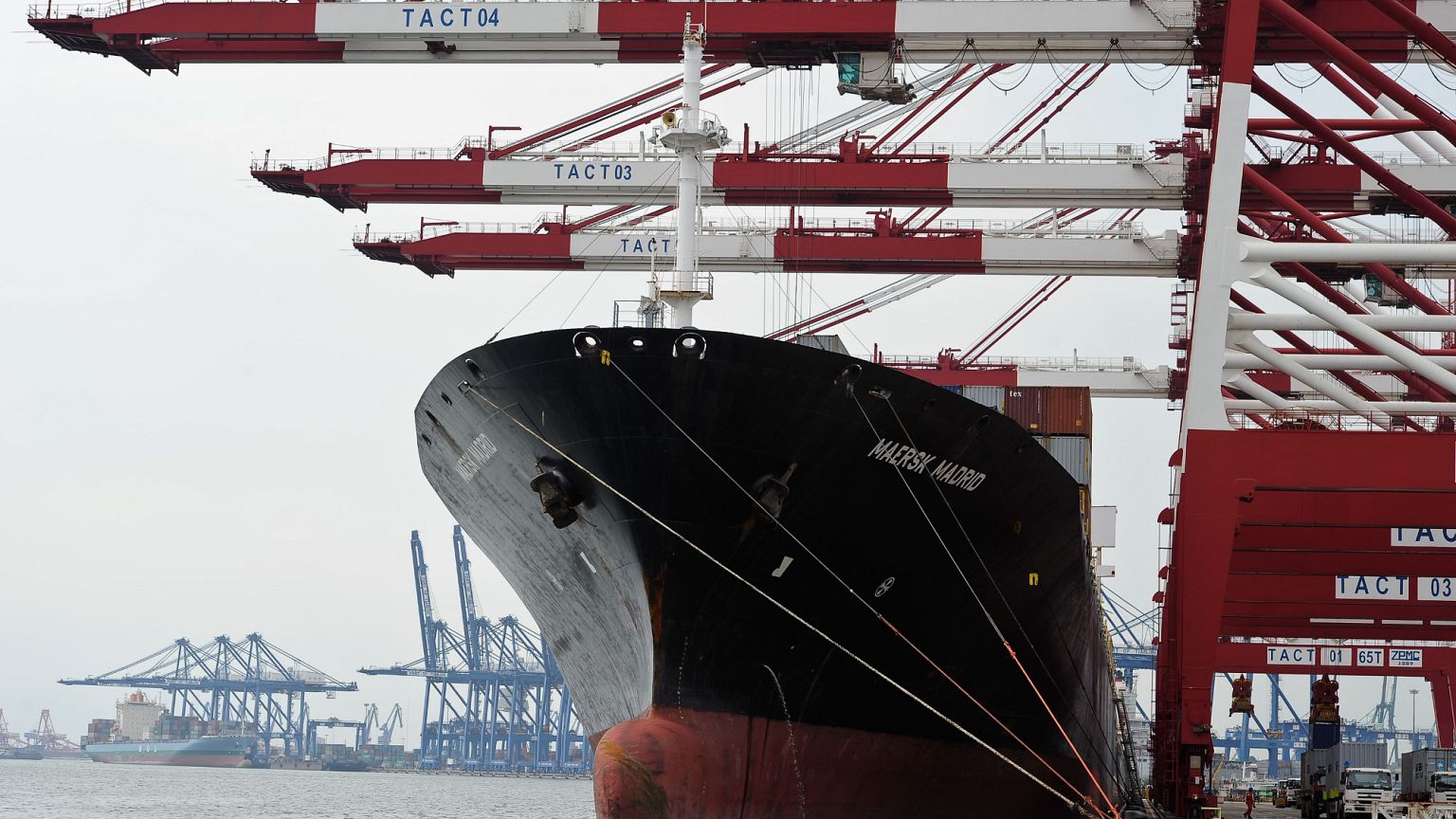
Containers are loaded onto a cargo ship at the Tianjin port in China. 5 Aug. 2010.
Copyright AP/Andy Wong


By Euronews
Published on 

The group has cut its growth forecasts in nearly 70% of all economies — across all regions and income groups.

Trade frictions and policy uncertainty, notably linked to US tariffs, are expected to drive global growth down this year to its slowest pace since 2008 outside of outright global recessions.

That’s according to the World Bank’s latest Global Economic Prospects report, released on Tuesday.

Although the world was nearing a post-pandemic “soft landing” just six months ago, the bank noted that “the world economy today is once more running into turbulence”.

The group cut growth forecasts in nearly 70% of all economies. When it comes to global expansion, this total is projected to slow to 2.3% in 2025, nearly half a percentage point lower than the rate expected at the start of the year. 

A global recession is not on the cards, but if forecasts for the next two years materialise, average global growth in the first seven years of the 2020s will be the slowest of any decade since the 1960s — according to the World Bank.

Aside from trade and policy uncertainty, barriers to global growth include rising geopolitical tensions, increasingly common extreme climate events, and slower-than-expected growth in major economies, which risks global spillovers.

“Outside of Asia, the developing world is becoming a development-free zone,” said Indermit Gill, the World Bank Group’s Chief Economist and Senior Vice President for Development Economics.

“It has been advertising itself for more than a decade. Growth in developing economies has ratcheted down for three decades—from 6% annually in the 2000s to 5% in the 2010s — to less than 4% in the 2020s. That tracks the trajectory of growth in global trade, which has fallen from an average of 5% in the 2000s to about 4.5% in the 2010s—to less than 3% in the 2020s. Investment growth has also slowed, but debt has climbed to record levels.”

Progress by emerging market and developing economies (EMDEs) in closing per capita income gaps with advanced economies and reducing extreme poverty is also anticipated to weaken, said the World Bank. The group called for more support to address long-standing challenges, including the effects of climate change.

Across EMDEs, governments should focus on containing inflation risks and strengthening fiscal resilience by reprioritising spending, said Tuesday’s report.

Global growth could rebound faster than expected if major economies are able to mitigate trade tensions, added the World Bank.

The analysis finds that if today’s trade disputes were resolved with agreements that halve tariffs relative to their levels in late May, global growth would be 0.2 of a percentage point stronger on average over the course of 2025 and 2026.


World Bank cuts growth forecast on trade tumult


By AFP
June 10, 2025


Germany's economy has struggled in recent years in the face of high production costs at home, increasingly fierce Chinese competition and growing global trade tensions fired by US President Donald Trump - Copyright AFP JULIEN DE ROSA


Beiyi SEOW

The World Bank slashed its 2025 global growth forecast Tuesday, citing trade tensions and resulting policy uncertainty, as US President Donald Trump’s wide-ranging tariffs strained ties and weighed on economic outlooks.

The bank lowered its projection for global GDP growth to 2.3 percent in its latest economic prospects report, down from 2.7 percent expected in January, the latest in a series of downgrades by international organizations.

“That’s the weakest performance in 17 years, outside of outright global recessions,” said World Bank Group chief economist Indermit Gill.

Global growth and inflation prospects for this year and next have worsened because of “high levels of policy uncertainty and this growing fragmentation of trade relations,” he added.

“Without a swift course correction, the harm to living standards could be deep,” Gill warned.

By 2027, the World Bank expects global GDP growth to average 2.5 percent in the 2020s, which would be the slowest rate in any decade since the 1960s.

The gloomier projections come after Trump imposed a 10 percent tariff on imports from almost all US trading partners in April — and higher rates on dozens of these economies, which he has since suspended until early July.

He also engaged in tit-for-tat escalation with China, although both countries have hit pause on their trade war and temporarily lowered these staggering duties. But a lasting truce remains uncertain.

– US slowdown –

The US economy is expected to grow by 1.4 percent this year, a sharp slowdown for the world’s biggest economy from a 2.8 percent expansion in 2024.

If US tariffs on imports rose another 10 percentage points, triggering proportional retaliation, the shock to international trade and financial markets could cut world growth by 0.5 percentage points this year, the report added.

While the World Bank’s overall growth downgrade was proportionately larger for advanced economies, the bank cautioned that less wealthy countries have tricky conditions to contend with.

Commodity prices are expected to remain suppressed in 2025 and 2026, Gill said.

This means that some 60 percent of emerging markets and developing economies — which are commodity exporters — have to deal with a “very nasty combination of lower commodity prices and more volatile commodity markets.”

By 2027, while the per capita GDP of high-income economies will be approximately where it was in pre-pandemic forecasts, corresponding levels for developing economies would be six percent lower.

“Except for China, it could take these economies about two decades to recoup the economic losses of the 2020s,” Gill cautioned.

Overall, although GDP growth expectations have been revised downwards, inflation rates have been revised up, he said. The bank also urged policymakers to contain inflation risks.

Despite trade policy challenges, however, Gill argued that “if the right policy actions are taken, this problem can be made to go away with limited long-term damage.”

He urged for the “differential in tariff and non-tariff measures with respect to the US” to be quickly reduced by other countries, starting with the Group of 20 which brings together the world’s biggest economies.

“Every country should extend the same treatment to other countries,” he added.

This month, the Paris-based Organisation for Economic Co-operation and Development also slashed its 2025 global growth forecast from 3.1 percent to 2.9 percent, warning that Trump’s tariffs would stifle the world economy.

This came after the International Monetary Fund in April cut its world growth expectations for this year too on the effects of Trump’s levies, from 3.3 percent to to 2.8 percent.

Emissions from Big Tech companies rose 150% in 3 years as AI booms, UN report found

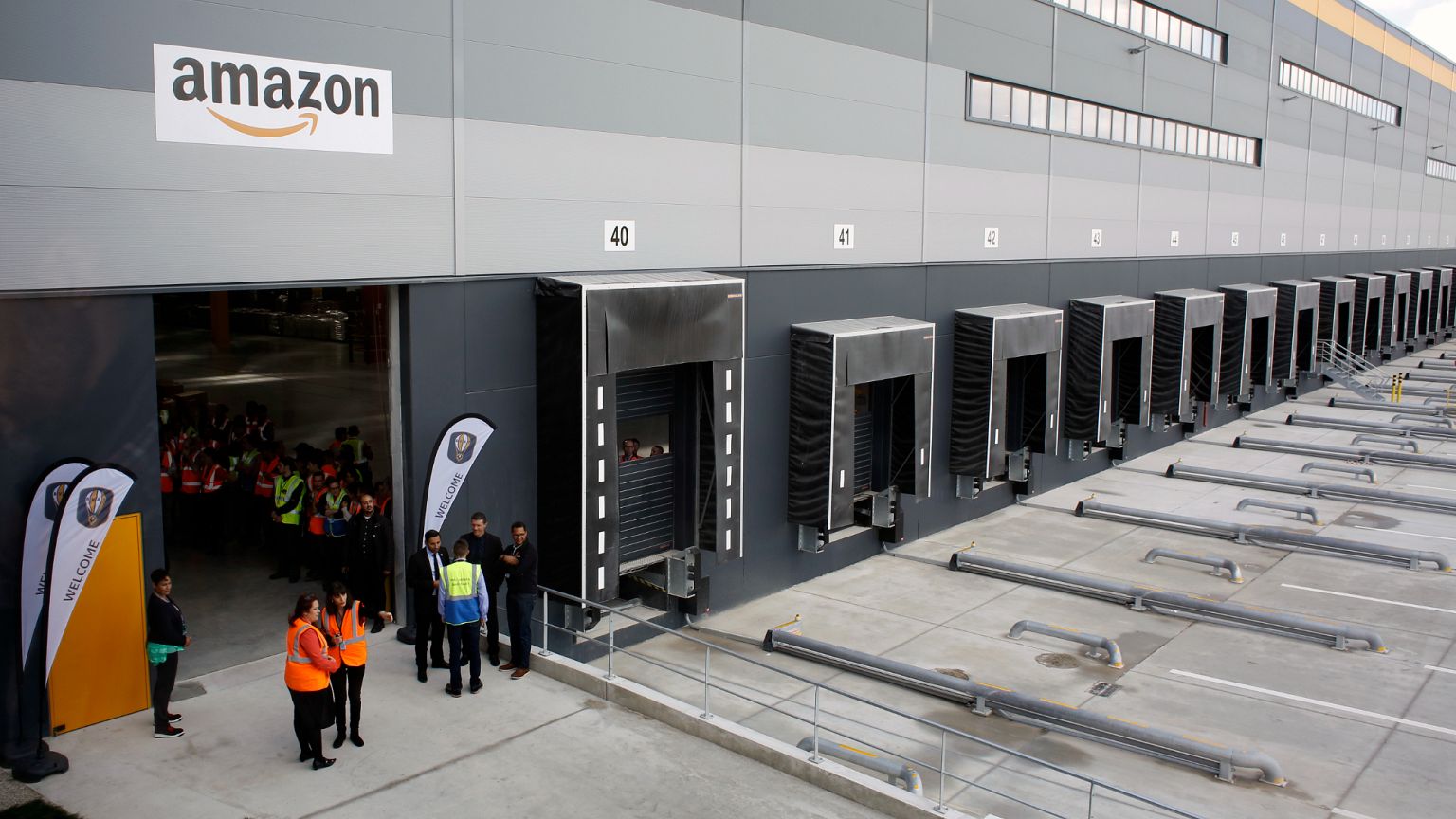
Employees wait for France's President Emmanuel Macron at new Amazon facility, in Longueau, northern France, Tuesday, Oct. 3, 2017
Copyright AP Photo/Thibault Camus

By Anna Desmarais
Published on 

The world’s biggest tech companies saw their indirect carbon emissions grow by 150 per cent from 2020 to 2023 as AI use expands, a new UN report found.

Four of the world’s biggest artificial intelligence (AI) companies saw the indirect carbon emissions of their work grow by over 150 percent in the last three years, according to a report from a United Nations agency for digital technolgoies. 

The International Telecommunications Union (ITU) tracked the emissions, energy use, and climate commitments of 200 leading digital companies between 2020 and 2023 using public databases. 

The report found that Amazon, Microsoft, Google’s parent company Alphabet, and Meta have seen a rise in emissions that is either produced or purchased by the companies because of "expanding data infrastructure and energy use".

Indirect emissions are those that come from purchased electricity, heat, steam, or electricity use, like in data centres, telecommunication networks, or office buildings. 

'Urgent need' to manage AI’s environmental impact

Amazon saw the highest emissions increase at over 182 per cent in 2023 compared to 2020, followed by Microsoft at 155 per cent, Meta at 145 per cent, and Alphabet at 138 per cent, according to the report. 

The consumption of data centres, which power the AI models that these companies are working on, also rose 12 percent year over year from 2017 to 2023, which is four times faster than global energy growth. 

The report "underscores the urgent need to manage AI’s environmental impact," the ITU said in a statement. 

Euronews Next reached out to the relevant technology companies regarding this report but did not receive an immediate reply. 

The report also found that half the assessed companies in their report had committed to reaching net-zero by at least 2050 if not earlier. 

Despite these actions, the report found that overall emissions still rose meaning that net-zero targets "have not yet translated into real-world reductions".

DEBT = AUSTERITY

Is debt justified to increase defence investments?

WELFARE NOT WARFARE


Copyright Euronews

By Isabel Marques da Silva
Published on 10/06/2025 -


First it was vaccines, then gas and now the EU will make joint purchases of defence equipment. This latest emergency is due to Russia’s war in Ukraine and the prospect of less investment by the US in Europe's protection. Is the new financial instrument Security Action for Europe up to the challenge?

The EU is planning to borrow €150 billion on the financial markets for its new lending instrument Security Action for Europe (SAFE). It is one of the pillars of the Readiness 2030 plan, which aims to mobilise €800 billion for defence investment by the end of the decade. 

"Russia's war in Ukraine and the EU's attempt to support Kyiv really highlighted the dependencies and shortcomings of the EU's defence industrial base and how ill-prepared we were in the event of being forced into a conventional war," said Alice Tidey, a Euronews reporter who covered the announcement. 

"SAFE is about firing up European weapons manufacturing lines by getting member states to buy strategically and together so that the industry becomes less fragmented and quicker to produce, and our armies, more crucially, become more interoperable. And of course, also, it's about putting prices down," she added. 

The investments should boost production and procurement of air and missile defence, artillery systems, missiles and ammunition, as well as other crucial military equipment to deal with security threats, including critical infrastructure protection and cyber, artificial intelligence and electronic warfare. 

©Euronews

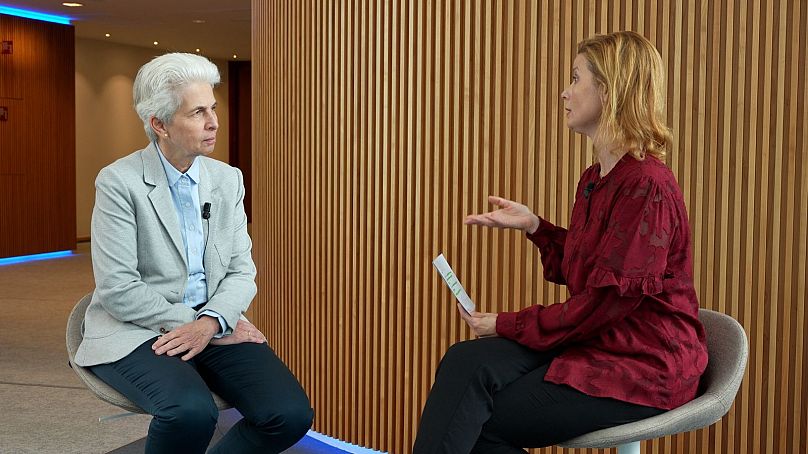
"It gives countries the possibility to find money to buy military equipment. It's a beginning and I think it's very good sign," said German MEP Marie-Agnes Strack-Zimmermann from the Renew group. 

The parliamentarian who chairs the European Parliament's Security and Defense Committee also highlighted that some of the technology could have dual use and be useful for civilian purposes.  

Euronews spoke to residents in Rome and opinions were divided. “We need to defend ourselves and the threat is at our doorstep,” said one . “They shouldn’t increase spending for a war that won’t happen. This is not our war,” said another resident in the Italian capital, referring to Russia’s invasion of Ukraine. 

In Berlin, the same divisions were evident: “If the aim is to start another arms race, then I’m not in favour,” said one resident of the German city. “I’m all for a joint European defence effort, but without going into debt,” said another. 

Partnerships with like-minded countries


©Euronews

Governments will have to repay over 45 years and they can also activate the Stability and Growth Pact’s National Escape Clause, which stipulates that budget deficits cannot exceed 3% of GDP.  

Under SAFE, governments can exceed this figure by 1.5% per year, provided that the amount is spent solely on defence. More than half of member states have requested activation from the European Commission. 

To receive loans, governments must meet certain conditions: 65% of the value of each piece of military equipment must be produced in one of the 27 EU member states, Ukraine and the European Free Trade Association (EFTA) members Iceland, Liechtenstein and Norway. 

The remaining 35% can also come from any third country in the world. The common procurement can include EU candidate countries, such as the Western Balkans, and third countries with bilateral security and defence partnerships, such as Japan, South Korea and the United Kingdom. 

However, the EU remains highly dependent on weapons purchased from the US and the increased investment could be a clear indication of the bloc’s commitment to becoming more autonomous, something that President Donald Trump has demanded in the framework of NATO. 

"I'm optimistic that the President of the US will realise what we are now starting to do," said Strack-Zimmermann. 

The EU is planning to raise more funds, with the European Commission proposing to use part of the Cohesion Funds, which are intended for regional development. The European Investment Bank will also try to mobilise private funds for this area for the first time. 

Watch the video here! 

Journalist: Isabel Marques da Silva 

Content production: Pilar Montero López 

Video production: Zacharia Vigneron 

Graphism: Loredana Dumitru 

Editorial coordination: Ana Lázaro Bosch and Jeremy Fleming-Jones 


LA REVUE GAUCHE - Left Comment: Search results for PERMANENT ARMS ECONOMY


World’s most popular TikTok star Khaby Lame leaves the US after being detained by ICE

World’s most popular TikTok star Khaby Lame deported from US after being detained by ICE
Copyright AP Photo

By David Mouriquand & AP
Published on 

Khaby Lame has allegedly overstayed his visa after arriving in the US on 30 April. He was detained by the US Immigration and Customs Enforcement (ICE). This comes amid Donald Trump's escalating crackdown on immigration, which has sparked days of protests against ICE.

Khaby Lame, the world’s most popular TikTok personality, has left the US after being detained by immigration agents in Las Vegas for allegedly overstaying his visa.

The Senegalese-Italian influencer, whose legal name is Seringe Khabane Lame, was detained Friday at Harry Reid International Airport but was allowed to leave the US without a deportation order, a spokesperson for US Immigration and Customs Enforcement (ICE) confirmed in a statement.

Lame, 25, arrived in the US on 30 April and “overstayed the terms of his visa,” the ICE spokesperson said.

His detainment and voluntary departure - which allows those facing removal from the US to avoid a deportation order on their immigration record, which could prevent them from being allowed back into the US for up to a decade - from the US comes amid President Donald Trump’s escalating crackdown on immigration. This includes raids in Los Angeles that have sparked days of protests against ICE, as the president tests the bounds of his executive authority.

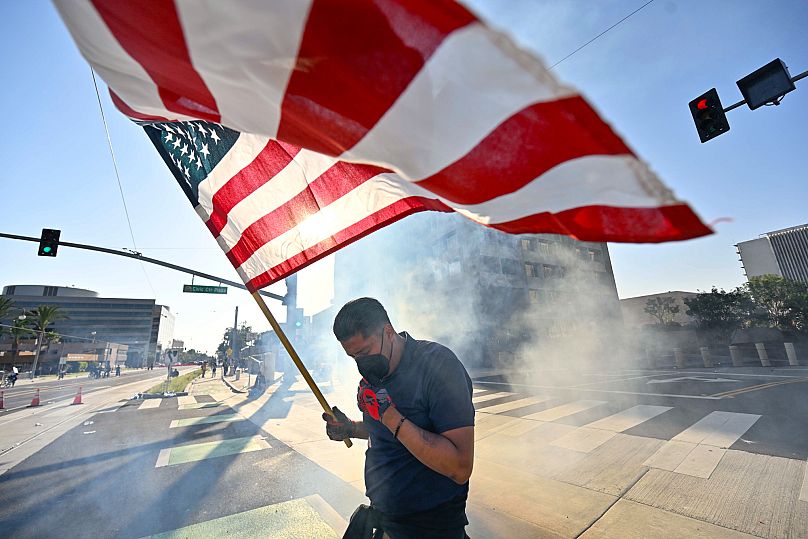
A protester raises the U.S. flag after police use tear gas and flash-bangs at the Federal Building in Santa Ana, California - Monday 9 June 2025
A protester raises the U.S. flag after police use tear gas and flash-bangs at the Federal Building in Santa Ana, California - Monday 9 June 2025AP Photo

Many from the world of entertainment have reacted to Trump’s deployment of the National Guard to LA, calling the actions as ”Un-American” and “a fucking disgrace”. Governor Gavin Newsom also announced his plans to sue the federal government over the National Guard deployment, calling it “an unconstitutional act.”

"This is exactly what Donald Trump wanted. He flamed the fires and illegally acted to federalize the National Guard. The order he signed doesn't just apply to CA (California). It will allow him to go into ANY STATE and do the same thing. We're suing him."

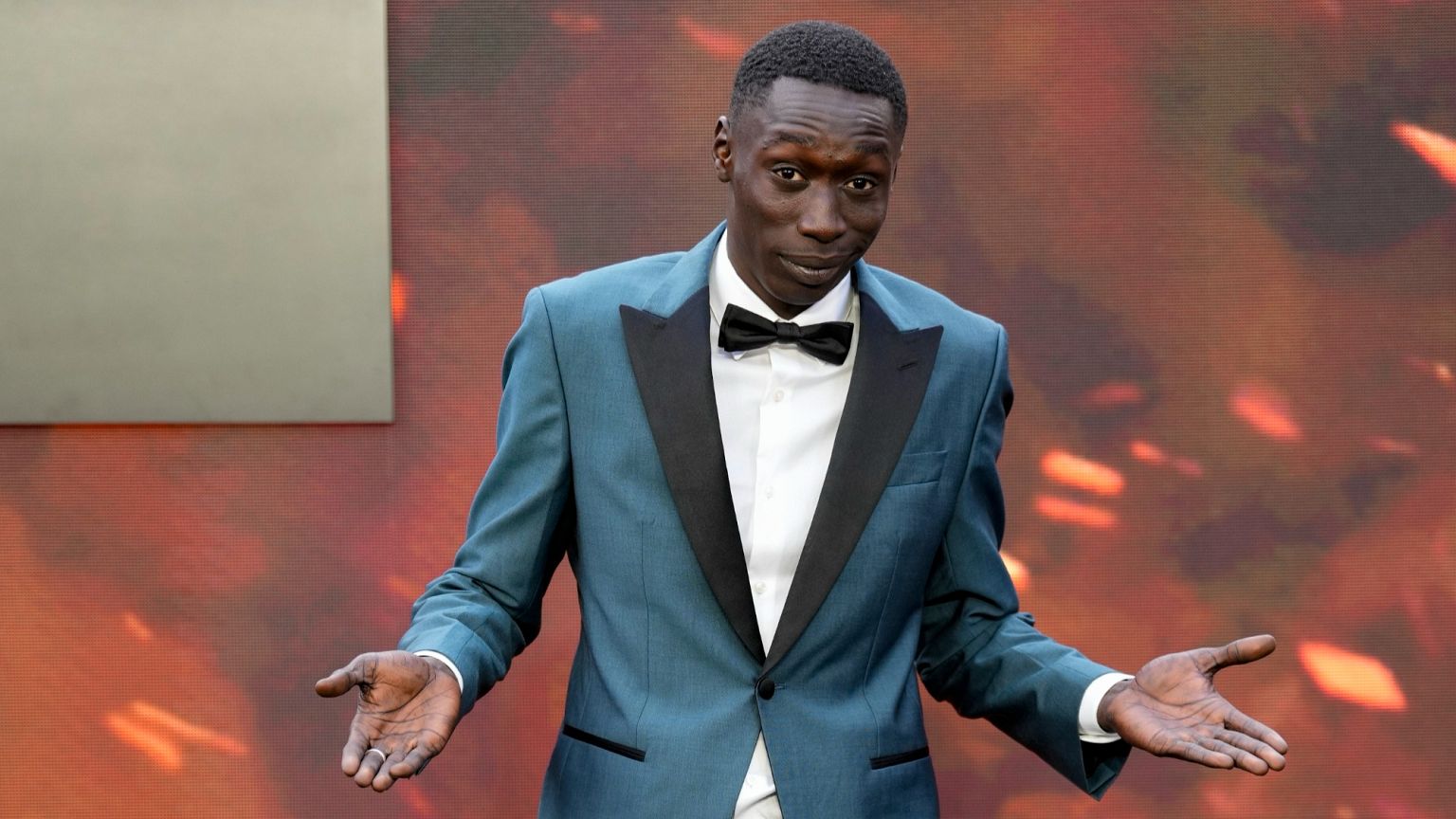
Khaby Lame after being named UNICEF Goodwill Ambassador in Dakar, Senegal - 31 January 2025
Khaby Lame after being named UNICEF Goodwill Ambassador in Dakar, Senegal - 31 January 2025AP Photo

Khaby Lame was born in Senegal then moved to Italy as a young child and was raised in a poor area of the town of Chivasso, outside of Turin. 

When COVID hit, the then 22-year-old lost his job in a factory and was forced, like millions of Italians, to stay home. 

Lame took to social media to pass the time and quickly rose to international fame without ever saying a word in his videos, which would show him reacting to absurdly complicated “life hacks." He has over 162 million followers on TikTok alone. 

His internet fame quickly evolved. He signed a multi-year partnership with designer brand Hugo Boss in 2022 – the same year he became an Italian citizen.  

In January, he was appointed as UNICEF goodwill ambassador

Last month, he attended the Met Gala in New York City, days after arriving in the US.


Hong Kong warns citizens over mobile game 'advocating armed revolution'

FILE: Police officers patrol in the Causeway Bay area on the eve of the 35th anniversary of China's Tiananmen Square crackdown in Hong Kong, June 3, 2024
Copyright AP Photo

By Kieran Guilbert
Published on 

Hong Kong authorities have said people who download or share the game Reversed Front: Bonfire could be prosecuted under national security laws.

Police in Hong Kong have warned citizens against downloading or sharing a mobile game that allows players to "overthrow the communist regime", saying that they could be punished under national security laws.

Authorities said that those who download the game Reversed Front: Bonfire "may be regarded as in possession of a publication that has a seditious intention".

Police have also warned people against providing funding to the developer of the mobile app.

"Reversed Front: Bonfire was released under the guise of a game with the aim of promoting secessionist agendas such as 'Taiwan independence' and 'Hong Kong independence,’ advocating armed revolution and the overthrow of the fundamental system of the People’s Republic of China," police said.

The warning, the first to denounce a video game, suggests that law enforcement is widening the crackdown that has followed anti-government protests in 2019.

Authorities have silenced many dissenting voices through prosecutions under the 2020 national security law imposed by Beijing and similar, homegrown legislation enacted last year.

The Beijing and Hong Kong governments insist the city's national security laws were necessary to return stability to the city following the protests.

Reversed Front: Bonfire was developed by ESC Taiwan, which has not directly commented on the police's warning. However, on the application's Facebook page, the developer posted about an increase in Google searches for the game's name and a Hong Kong broadcaster’s news report about Tuesday’s development.

According to the game's website, players can assume the role of Hong Kong, Tibet, Uyghur, Taiwan or Cathaysian Rebel factions, among others, to "overthrow the communist regime". They may also choose to lead the communists to defeat all enemies.

The website says the game "is a work of non-fiction. Any similarity to actual agencies, policies or ethnic groups of the PRC [People's Republic of China] in this game is intentional".

As of Wednesday, the game — which was released in April — could no longer be found on Apple's App Store from Hong Kong.

The developer last month said Google Play had taken the app down because it did not prohibit users from adopting hateful language in naming.

Apple, Google and Meta have not immediately commented.


Hong Kong warns downloading game could be national security crime


By AFP
June 11, 2025


Police said downloading the mobile game could be in breach of the national security law, which Beijing imposed on Hong Kong after huge pro-democracy protests -
 Copyright AFP/File Anthony WALLACE

Hong Kong police have warned downloading a mobile game in which players can attempt to overthrow a stand-in for China’s Communist Party could constitute a national security crime, as it vanished from Apple’s local App Store Wednesday.

Beijing is extremely sensitive to even subtle hints of dissent, and in 2020 imposed a national security law in Hong Kong that has effectively quashed any political opposition.

In “Reversed Front: Bonfire”, developed by a Taiwan-based company, users can “pledge allegiance” to entities including Taiwan, Hong Kong, Tibet and “Uyghur” to “overthrow the communist regime”.

Although the game takes place in a historically different universe, the description reads: “This game is a work of NON-FICTION. Any similarity to actual agencies, policies or ethnic groups of the PRC (People’s Republic of China) in this game is INTENTIONAL.”

On Tuesday police in Hong Kong said “Reversed Front” was “advocating armed revolution” and promoting Taiwan and Hong Kong independence “under the guise of a game”.

Downloading the game could see players charged with possessing seditious material, while making in-app purchases could be viewed as providing funding to the developer “for the commission of secession or subversion”, police warned.

Recommending the game could constitute the offence of “incitement to secession”.

Although players can choose to “lead the Communists to defeat all enemies”, the game description makes clear they are meant to be the villains.

The Communists are described as “heavy-handed, reckless and inept” and accused of “widespread corruption, embezzlement, exploitation, slaughter and defilement”.

Many of the other playing roles correspond to flashpoint issues for Beijing — including self-ruled Taiwan, which China claims as its territory, and Xinjiang, where it has denied accusations of human rights abuses against the minority Muslim Uyghurs.

Hong Kong’s vibrant civil society and political opposition have all but vanished since the imposition of the national security law, which was brought in after huge and sometimes violent pro-democracy protests in 2019.

OpenAI last week said it had detected and banned a number of “likely China-origin” accounts targeting “Reversed Front” with negative comments.

“The network generated dozens of critical comments in Chinese about the game, followed by a long-form article claiming it had received widespread backlash,” said OpenAI.

On Wednesday Apple appeared to have removed the game from the Hong Kong version of the App Store, after it had been available the day before, an AFP reporter saw.

It was not available on Hong Kong’s Google Play on Tuesday, local media reported.

But the game’s developer said it had seen a surge in searches since Tuesday’s police announcement, jokingly implying it was thankful to authorities for the visibility boost.

European fry-up: Two Spanish taverns battle for title of world’s oldest restaurant


Copyright Canva

By David Mouriquand
Published on 11/06/2025 -

The world's oldest restaurant, Sobrino de Botín, faces a challenge from another Madrid tavern that claims it is even older... Let the tavern wars begin.

Two households, both alike in dignity, in fair Spain, where we lay our scene...

A bastardised Shakespeare opening that suits the ongoing ‘rivalry’ between two family-owned taverns, who both claim to be the world’s oldest establishments.

There’s Madrid’s Sobrino de Botín, which holds the coveted Guinness World Record as the world’s oldest restaurant.

Founded in 1725 and located a stone’s throw from the famed Plaza Mayor, it is famed for its wood-fire oven and has attracted patrons like Truman Capote, F. Scott Fitzgerald and was immortalised by Ernest Hemingway in his book “The Sun Also Rises” - in which the author described Botín as “one of the best restaurants in the world."

It was awarded the Guinness accolade in 1987 and celebrated its 300 years of continuous service earlier this year.

Sobrino de BotínAP Photo

Then there’s Casa Pedro, located on the outskirts of Madrid. The rustic tavern has boldly claimed that they have a shot at the title.

The establishment has hosted Spanish King Juan Carlos I and current Spanish monarch King Felipe VI, and the owners assert their establishment endured the War of Spanish Succession at the start of the 18th century - therefore making Casa Pedro older than Botín.

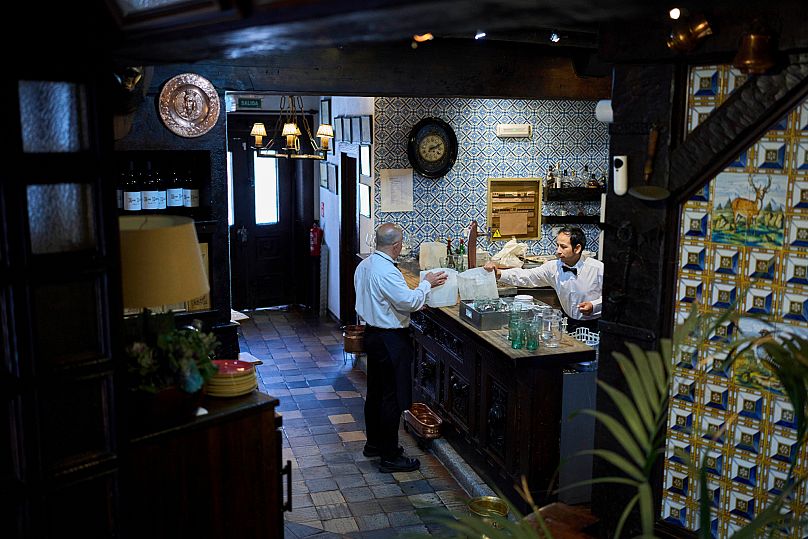
Waiters work at Casa Pedro restaurantAP Photo

“It’s really frustrating when you say, ‘Yes, we’ve been around since 1702,’ but... you can’t prove it,” says manager and eighth-generation proprietor Irene Guiñales. “If you look at the restaurant’s logo, it says ‘Casa Pedro, since 1702,’ so we said, ‘Damn it, let’s try to prove it.’”

Guiñales’ family has hired a historian and has so far turned up documents dating the restaurant's operations to at least 1750. She continues to hunt for records proving that Casa Pedro dates back to 1702.

Irene Guiñales, right, and Pedro Guiñales del Valle, owners and managers of Casa Pedro restaurant, review documents regarding the restaurant's opening date
AP Photo

The question remains: How can either restaurant claim the title?

Guinness provides its specific guidelines only to applicants, according to spokesperson Kylie Galloway, who notes that it entails “substantial evidence and documentation of the restaurant’s operation over the years."

Antonio González, a third-generation proprietor of Botín, states that Guinness required Botín show that it has continuously operated in the same location with the same name. The only time the restaurant closed was during the pandemic – much like Casa Pedro.

That criteria would mean that restaurants that are even older, like Paris' Le Procope, which says it was founded in 1686, aren't eligible for the Guinness designation.

To make matters dicier, an Italian trattoria located in Rome’s historic center, may pip both Sobrino de Botín and Casa Pedro to the post and steal the cake.

Nestled on Vicolo della Campana, La Campana claims “a taste of authentic Roman cuisine with a side of history” and more than 500 years of operation, citing documents on its menu and a self-published history. Its owners have said they have compiled the requisite paperwork and plan to submit it to Guinness.

The battle of tasty households continues... Let’s hope that chef blood won’t make chef hands unclean.


Austria's gun laws come under scrutiny after shooter at Graz school kills 10

Austria has the most liberal gun laws relative to the rest of Europe.
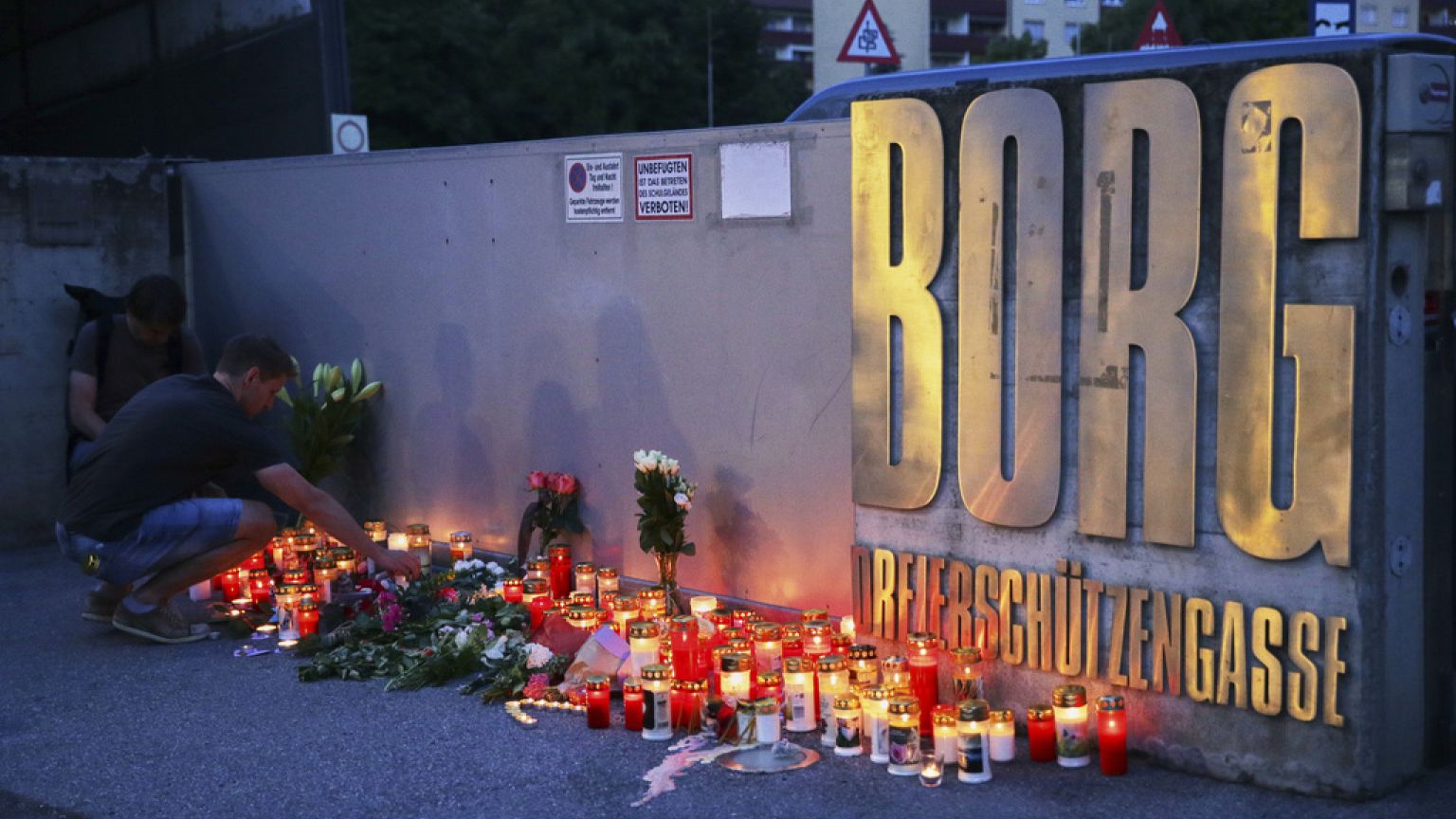
A man places a candle at the entrance of a school after a deadly shooting took place there, in Graz, Austria, Tuesday, June 10, 2025
Copyright Heinz-Peter Bader/Copyright 2025 The AP. All rights reserved


By Johanna Urbancik
Published on 

A debate about gun laws in Austria is gathering pace after a 21-year-old former student killed 10 in a shooting at a school in Graz on Tuesday.

A day after a gunman attacked a school in Graz and killed 10, including students, many in Austria were left questioning how such an act of violence could occur, turning attention to the country’s gun laws.

According to police, the 21-year-old attacker legally owned both weapons used in the assault on Tuesday: a Glock pistol and a shotgun.

According to Kleine Zeitung newspaper, the attacker had purchased one of the weapons just days before carrying out the attack. To acquire it legally, he was required to pass a psychological evaluation, Süddeutsche Zeitung reported, citing Austrian authorities.

Around 1.5 million weapons are registered in Austria - a country with a population of just over 9 million and more liberal gun laws relative to the rest of Europe.

After the attack, a debate on the country's laws is gaining pace, with Graz Mayor Elke Kahr calling for a ban on weapons in the private sector on Tuesday evening. In her opinion, gun licences are "simply issued too quickly".

Austrian newspaper Der Standard reported that there are approximately 400,000 more weapons in the Alpine country today than there were five years ago.

How liberal are Austria's gun laws?

Compared to other European countries such as Germany or France, Austria’s gun laws are considered to be somewhat more liberal, especially in how they allow for handgun ownership and cite self-defence as a reason to be able to carry weapons.

Austria's Weapons Act divides firearms into four categories: Prohibited weapons (category A), firearms subject to authorisation (category B), firearms subject to registration (category C) and other firearms (category D).

The possession of category B weapons — such as pistols or semi-automatic rifles — is only permitted with a firearms licence or a firearms pass. The latter also authorises the holder to carry the weapon in public.

Category C and D weapons — such as hunting rifles — may be purchased from the age of 18, but must be registered in the Central Weapons Register within six weeks.

In Austria, the basic requirements for legal possession of weapons include being of legal age, holding a permanent residence permit, and not having a weapons ban.

Depending on the weapon category, additional proof such as reliability, training, and evidence of justification may also be required.

Weapons and ammunition must be stored safely at home, usually in a gun cabinet, and may only be transported unloaded and in a locked container.

Austrian authorities have widely condemned the attack, said to be Austria's worst mass shooting since World War II.

Austria’s President Alexander Van der Bellen said the “horror could not be put into words”, while Chancellor Christian Stocker has declared three days of national mourning in response to the tragedy.


Mass held in Graz for victims of Austria's

deadliest mass shooting since World War II


Copyright Darko Bandic/Copyright 2025 The AP. All rights reserved

By Malek Fouda
Published on 11/06/2025 - 

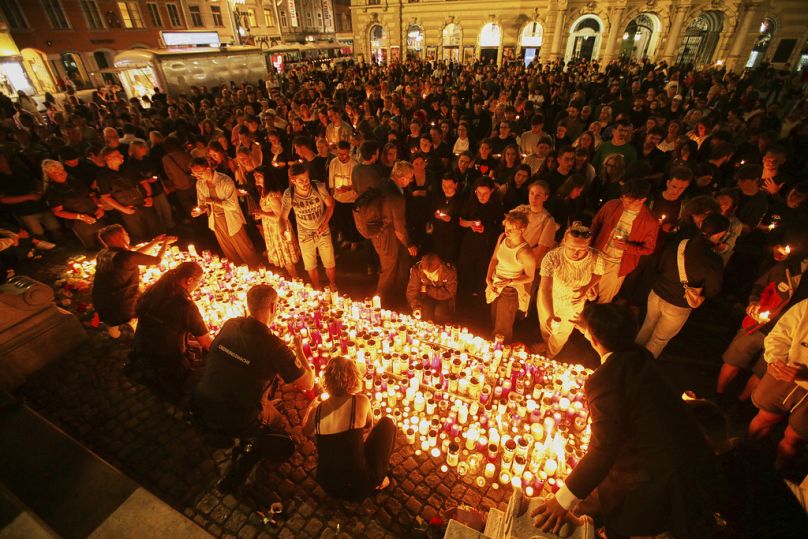
Residents of Graz gathered for a mass and a candle lit vigil to mourn the 11 victims who were killed after a former pupil opened fire in a school.


Several hundred people attended a Mass in Graz for the 10 victims of Austria's deadliest shooting in its post-war history on Tuesday evening.

Ten people, including students, were killed and others injured on Tuesday after a gunman opened fire at a school in Austria’s second-biggest city before killing himself, according to authorities.

There was no immediate information on the motive of the 21-year-old former student of the school, who had no previous police records.

Austria's Press Agency said the authorities seized a suicide note reportedly belonging to the attacker, which provided no clues as to why he carried out the attack.

He owned two weapons which he used to carry out the assault, both of which he legally owned.

Austria's Chancellor Christian Stocker, Vice Chancellor Andreas Babler and Foreign Minister Beate Meinl-Reisinger attended the Mass for the victims at Graz Cathedral.

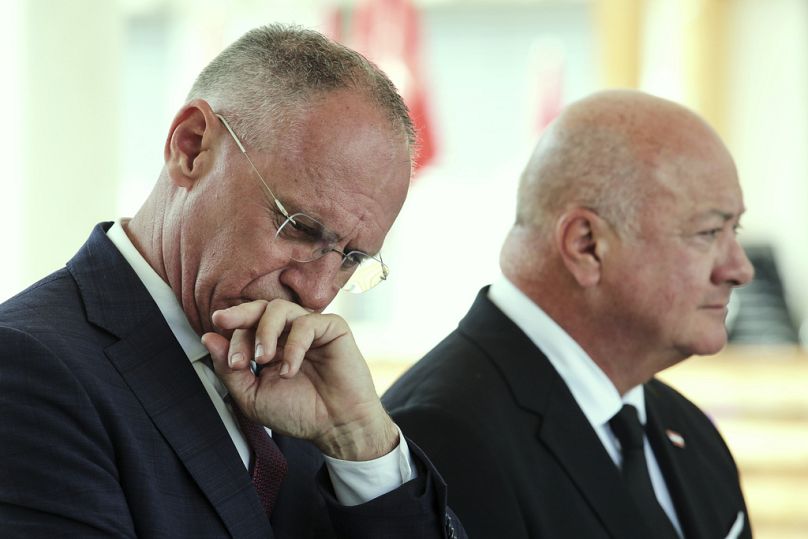
Austrian Interior Minister Gerhard Karner and Chancellor Christian Stocker attend a news conference following a shooting at a school, Graz, Austria, Tuesday, June 10, 2025Heinz-Peter Bader/Copyright 2025 The AP. All rights reserved

“Today is a dark day in the history of our country,” Stocker told reporters in the city of about 300,000 people in southern Austria and the capital of Styria.

The day was “a national tragedy that shocks us deeply”, he said as he declared three days of national mourning, with the Austrian flag lowered to half-mast at official buildings. A national minute of silence is to be held on Wednesday morning in memory of the victims.

Resident Elisabeth Schuster, who came to the Mass to show solidarity with the victims of the tragedy, said the incident "shocked me a lot like everybody else."

"I’m with them, feel for them. And I hope that together we can find a way, so that something like this never happens again," she added.

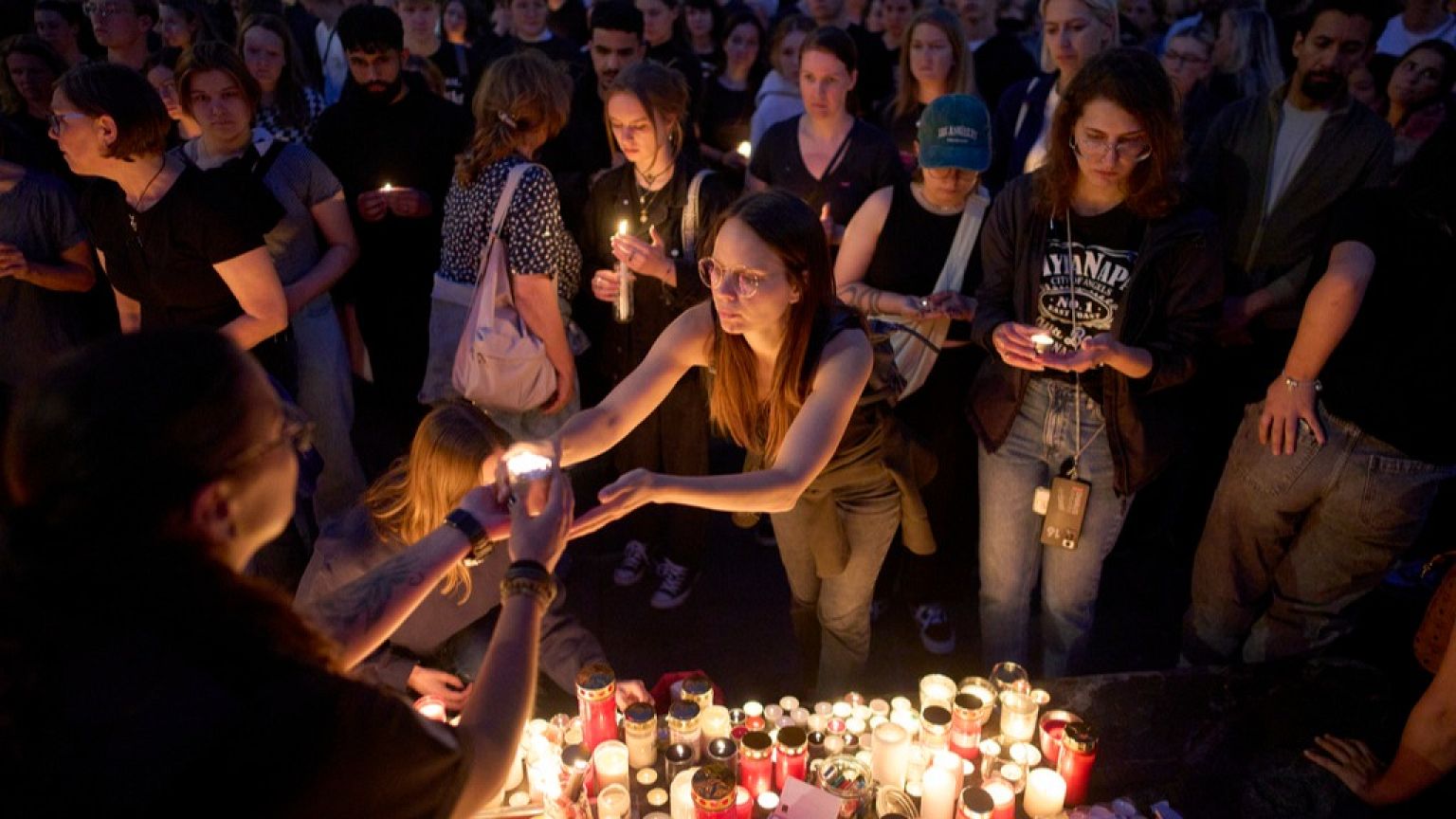
In Graz's main square people also gathered for a candle-lit vigil to mourn the victims of the fatal attack.

People light candles on the main square in the city center after a deadly shooting at a school in Graz, Austria, Tuesday, June 10, 2025
Heinz-Peter Bader/Copyright 2025 The AP. All rights reserved

Cobra special forces were among those sent as part of the first response team to the BORG Dreierschützengasse high school, about a kilometre from Graz’s historic centre, after calls at 10 am local time reporting shots at the building.

More than 300 police officers were also deployed to the scene, who helped evacuate students from the school. Footage from the scene showed students filing out quickly past armed officers. Police said security was restored in 17 minutes.

Interior Minister Gerhard Karner said the gunman had been a student at the school who had failed to complete his studies.

Austria has some of the more liberal gun laws in the EU.