Wednesday, June 11, 2025

Campaigners lament ‘glaring omission’ of fossil fuels in Macron’s opening remarks at UN ocean summit
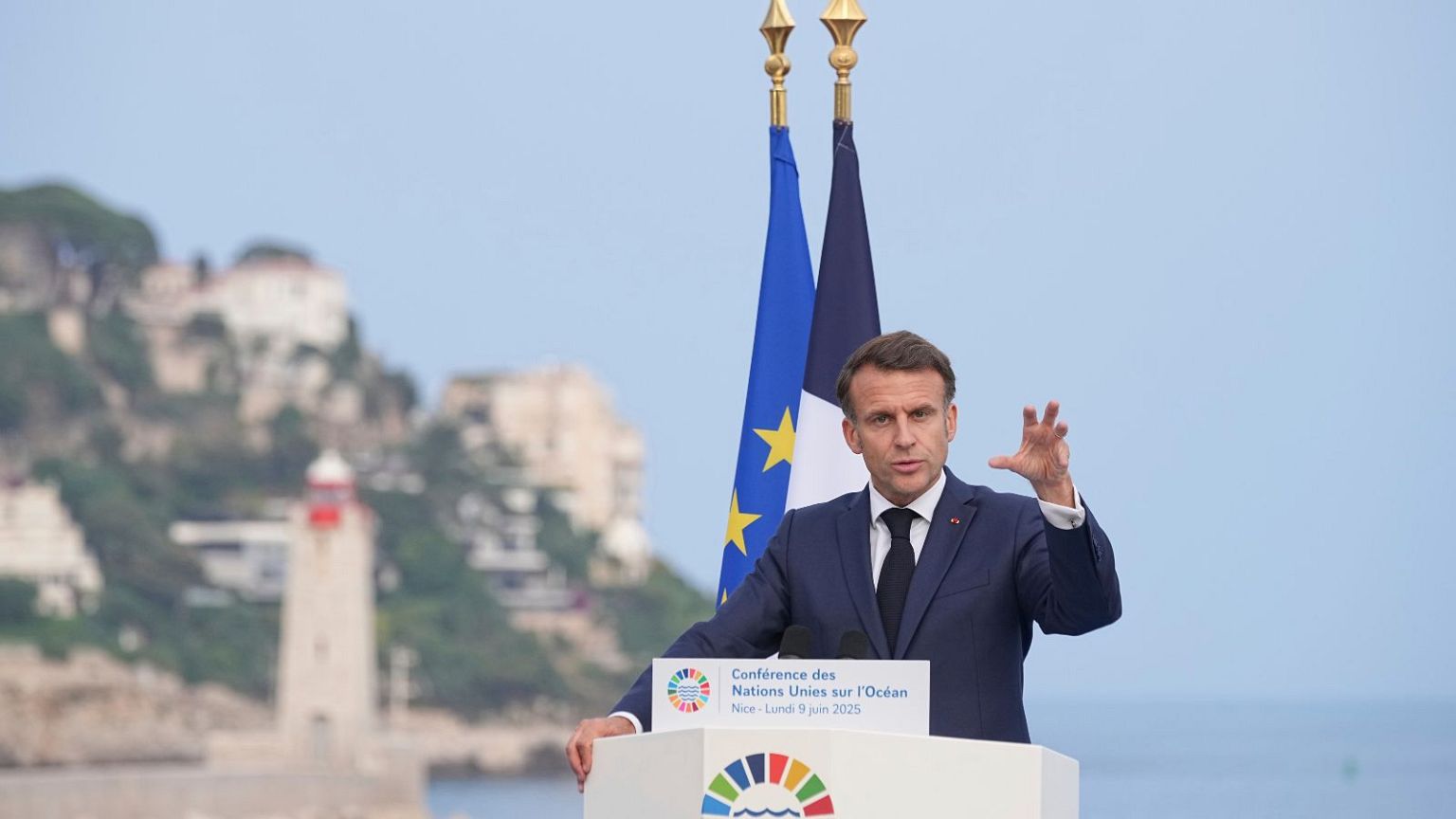
Macron speaks during UNOC3 in Nice, France, 9 June 2025.
Copyright AP Photo/Laurent Cipriani


By Euronews Green
Published on 

Oil and gas blocks cover an area the size of Argentina in just 11 ocean ‘frontier regions’, a new report shows.

French President Emmanuel Macron kicked off the United Nations Oceans Conference (UNOC) in Nice yesterday with a speech calling on world leaders to unite for ocean protection.

But there was one notable absence from the address, according to campaigners: fossil fuels.

The global expansion of offshore and coastal oil and gas development poses profound threats to marine ecosystems, as underscored by a new report from Earth Insight, a data analytics company that tracks fossil fuel and mining activities around the world.

“This glaring omission demonstrates that the impacts of fossil fuel extraction on marine biodiversity and coastal communities continue to be overlooked,” says Tyson Miller, Executive Director at Earth Insight.

“France has an opportunity to seize this historic moment and show leadership once again, as it did in 2015 with theParis Agreement, by calling on countries to end the expansion of offshore and coastal fossil fuel activities.”

A major focus of this third UNOC is the ratification of a High Seas Treaty, which will allow nations to establish marine protected areas in international waters for the first time.

Even at the UN climate summit last year in Baku (COP29), fossil fuels were scarcely addressed in key documents, despite their usage being the primary cause of the climate crisis. 

How is fossil fuel extraction jeopardising the oceans?

Burning fossil fuels is placing a huge burden on oceans, which absorb the excess heat, leading to a slew of dangerous consequences, from killing coral reefs to fuelling more hurricanes.  

The new report from Earth Insight exposes the vast physical presence of fossil fuel infrastructure in oceans and the destruction and pollution caused by its encroachment. 

Much of this expansion is taking place in ‘frontier regions’ - underexplored areas with significant potential for oil, gas and Liquefied Natural Gas (LNG) development. 

Looking at 11 case studies from around the world, the analysts find that oil and gas blocks cover over 2.7 million km2 in these frontier regions -  an area about the size of Argentina. 

Moreover, 100,000 km2 of these blocks overlap with protected areas, leaving 19 per cent of coastal and Marine Protected Areas (MPAs) at risk across the frontier regions. 

Coral reefs, seagrass meadows and mangroves are some of the vital ecosystems being threatened by fossil fuel companies. Approximately 63 per cent of seagrass meadows in the frontier case studies - from Barbados to Senegal - are overlapped by oil and gas blocks, the study warns. 

The researchers propose a range of solutions to tackle the environmental and social harm caused by fossil fuel extraction, starting with stopping expansion in environmentally sensitive regions and removing unassigned oil and gas blocks.

International treaties - like the Fossil Fuel Non Proliferation Treaty - should be strengthened to prohibit new coastal and offshore oil and gas expansion, they say. This is where international conferences like UNOC could be used to galvanise action. 


‘A key opportunity’: Brazil and France urge nations to boost ocean climate action ahead of COP30

Brazil's President Luiz Inacio Lula da Silva, left, and French President Emmanuel Macron in Paris.
Copyright AP Photo/Michel Euler, Pool

By Euronews Green
Published on 

Brazil explicitly included ocean-based actions for the first time in its most recently submitted national climate plan.

Brazil and France have just launched a new challenge to countries to put oceans at the centre of climate action.

On Monday, at the UN Ocean Conference, the two countries called on all nations to place ocean-focused action at the heart of their national climate plans - also known as Nationally Determined Contributions or NDCs - ahead of the UN climate summit COP30 it is hosting in November.

Alongside Brazil and France, an inaugural group of eight countries, including Australia, Fiji, Kenya, Mexico, Palau, and the Republic of Seychelles, has joined the initiative.

“For Brazil, the Blue NDC Challenge represents a key opportunity to strengthen ocean-related climate action and to emphasise the essential role of ocean-based solutions in achieving emission reduction targets,” says Marina Silva, Brazil's Minister for the Environment and Climate Change.

“Through this initiative, Brazil seeks to advance international cooperation on ocean climate action in the lead-up to COP30, and to underscore the need for all countries to fully integrate the ocean into their national climate strategies.”

Silva added that in its most recently submitted NDC, Brazil had explicitly included ocean-based climate actions for the first time. That includes commitments like establishing programmes for the conservation and restoration of vital marine ecosystems such as mangroves and coral reefs.

40 per cent of Brazil’s territory is located at sea, and it hosts marine ecosystems of global significance - including the only coral reefs in the South Atlantic and the world's largest contiguous mangrove belt along the Amazon coast.

Oceans-based actions are vital for wider climate goals

NDCs are the centrepiece of countries' efforts to reduce emissions and limit warming to 1.5°C under the Paris Agreement.

Countries remain largely off track for meeting the Paris goals, according to the most recent UN emissions gap report, with the next round of climate pledges needing to deliver a “quantum leap in ambition” to give the world a chance of limiting global warming to 1.5°C.

Nations were due to submit updated plans in February, but only 11 of the 195 Paris Agreement signatories made the formal deadline. As of early June, just 22 countries have so far delivered their enhanced NDCs.

Brazil is one of only five G20 countries that have submitted updated plans alongside the US under the Biden administration, the UK, Japan and Canada. The real deadline is now September, when the plans will be tallied up before COP30.

As the world prepares to celebrate the 10th anniversary of the Paris Agreement this year, the Blue NDC challenge is aimed at highlighting the role oceans can play in enhancing these plans.

“Ocean-based climate solutions can deliver up to 35 per cent of the emissions reductions needed to keep 1.5°C within reach,” says Tom Pickerell, global director of the ocean programme at the World Resources Institute and Head of the Secretariat for the High Level Panel for a Sustainable Ocean Economy.

“But we are running out of time to maximise the ocean’s potential. That’s why countries must place the ocean at the heart of their climate strategies.”

Industrial marine sectors and natural ecosystems are “underused tools” in addressing climate change, Wavel Ramkalawan, President of the Republic of Seychelles, one of the eight inaugural countries that joined the initiative, added.


Macron says High Seas Treaty could take effect from January after surge in support at ocean summit

French President Emmanuel Macron gestures as he speaks during the opening of the third UN Ocean Conference in Nice.
Copyright AP Photo/Laurent Cipriani, Pool

By Rosie Frost with AP
Published on 

The High Seas Treaty, adopted in 2023, would allow countries to establish marine protected areas in international waters.

Eighteen countries ratified the High Seas Treaty on Monday, bringing the total to 49 - just 11 short of the 60 needed for the landmark ocean agreement to enter into force.

At the UN Ocean Conference (UNOC) in Nice, 18 countries formally ratified the agreement to protect the high seas.

Guinea-Bissau, Liberia, Côte d’Ivoire, Solomon Islands, Tuvalu,  Malta, Vietnam, Jamaica, Albania, Bahamas, Belgium, Croatia, Denmark, Fiji, Mauritania, Vanuatu, Greece and Jordan now join the 31 countries plus the European Union, which formally ratified the High Seas Treaty, officially known as the Biodiversity Beyond National Borders agreement (BBNJ), before the summit.

“Today’s surge of ratifications for the High Seas Treaty is a tidal wave of hope and a huge cause for celebration”, said Rebecca Hubbard, Director of High Seas Alliance.

Hubbard said it was a "powerful victory" for those who have worked relentlessly to put the protection of the high seas at the heart of the global environmental agenda.

"With just 11 more ratifications needed for entry into force, it could be just a matter of weeks before the 60 is achieved.”

French President Emmanuel Macron said at the close of day one of the conference that the treaty has received sufficient support to take effect in early 2026.

He claimed that 55 countries' ratifications have been completed, around 15 are in progress with a definite date, and another 15 will happen before the end of the year.
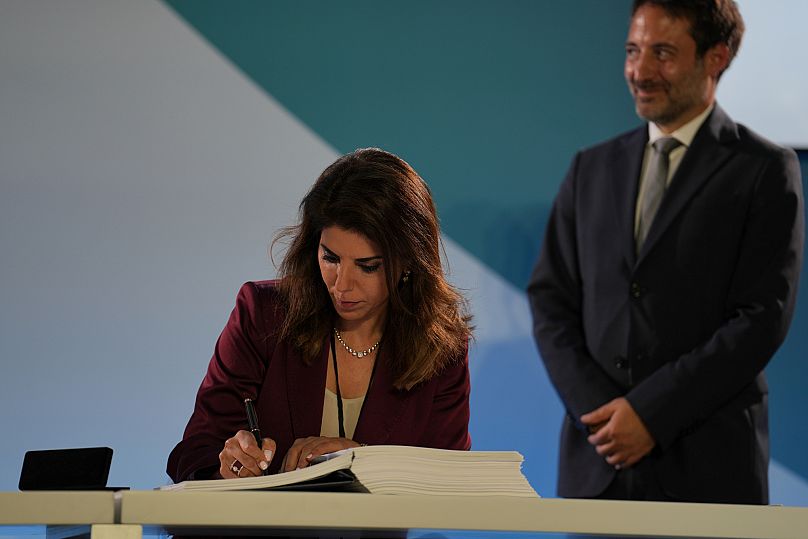

Diplomat Leena Al-Hadid, of Jordan, signs the High Seas Treaty during the UN Ocean Conference, Monday.AP Photo/Annika Hammerschlag

That would push the total above the 60 needed for the treaty to come into force.

"This means that this treaty will be able to enter into force on January 1 of next year, which means we would finally have an international framework to regulate and administer the high seas,” Macron said.

EU pledges €40 million to ‘bring the High Seas Treaty to life’

Ahead of UNOC, the EU and six of its member states announced their ratification of the treaty. Spain and France already did so earlier this year.  

At the opening of the summit on Monday, European Commission President Ursula von der Leyen said the EU had pledged €40 million in funding for the Global Ocean programme to “bring the High Seas Treaty to life”. 

This money will go towards supporting African, Caribbean and Pacific nations in their efforts to ratify and implement the agreement. 

“We all know the Treaty is a crucial instrument to protect our Ocean beyond borders,” she said.

“And indeed, we made it – the Treaty was agreed and adopted. And today, we are inches away from the 60 signatures for ratification.”

“The EU is proud to have ratified the BBNJ and it calls, jointly with Palau and Seychelles, all countries to join the High Ambition Coalition on BBNJ to support its ambitious implementation," Costas Kadis, European Commissioner for Oceans and Fisheries, said.

"The EU also stands with its partners to implement the BBNJ, including through the €40 million Global Ocean Program."

What is the High Seas Treaty and why does it matter?

The High Seas Treaty will allow nations to establish marine protected areas in international waters for the first time. 

Despite their remoteness, the high seas are under growing pressure from overfishing, climate change and the threat of deep-sea mining. Environmental advocates warn that without proper protections, marine ecosystems in international waters face irreversible harm.

“Until now, it has been the wild west on the high seas," said Megan Randles, global political lead for oceans at Greenpeace. "Now we have a chance to properly put protections in place.”

The high seas cover around two-thirds of the world’s oceans but are largely ungoverned. They are managed through a patchwork of regional fisheries agreements, shipping conventions and scattered marine protected areas.  

The agreement is intended to support the protection of these bodies of water that are outside of international jurisdictions. 

Officially adopted in 2023 after nearly two decades of negotiations, 60 ratifications are needed for the treaty to become binding international law - something France was hoping would happen before UNOC. The agreement will enter into force 120 days after the 60th ratification.

 

‘A golden opportunity’: UK unveils plan to ban bottom trawling in more marine protected areas

Conservation NGOs welcome UK government plan to ban bottom trawling in new areas.
Copyright Oceana/Juan Cuetos


By Lottie Limb
Published on 

It comes as pressure ramps up at UNOC in Nice, including with a satirical film featuring Stephen Fry and Theo James.

Conservationists are celebrating a proposal from the UK government to ban bottom trawling in dozens more marine protected areas (MPAs).

MPAs are sections of the ocean that a country aims to protect because they are of particular ecological importance. Bottom trawling - a destructive type of fishing that drags weighted nets across the seafloor - is allowed in many of these sensitive areas.

Currently, only four of the UK’s 377 MPAs are fully protected from bottom-towed fishing gear - an area covering 18,000 square kilometres. A new proposal announced at the start of the third United Nations Oceans Conference (UNOC) in Nice would see an additional 30,000km2 protected, with the ban extended to 41 MPAs. Size wise, that’s roughly half of English MPAs.

“Bottom trawling is damaging our precious marine wildlife and habitats. Without urgent action, our oceans will be irreversibly destroyed - depriving us, and generations to come, of the sea life on which we all enjoy,” Environment Secretary Steve Reed said in a statement this morning.

“The government is taking decisive action to ban destructive bottom trawling where appropriate.”

Its first step is a consultation, launching today (9 June) until 1 September, which will invite marine and fisheries stakeholders to share their views and give evidence about the proposed ban. 

If adopted, the measures would protect marine habitats ranging from subtidal sandbanks to gravels to muds, and support important marine species such as lobster, clams, soft corals and langoustines, the government says.

Blue NGOs welcome plans, but say protections must go beyond paper to reality

“Destructive bottom trawling has no place in marine protected areas. These proposals provide a golden opportunity to safeguard these vital marine sanctuaries from the most damaging fishing practices,” says Hugo Tagholm, Executive Director of the ocean advocacy group Oceana UK.

“If these whole-site bans are fully implemented, this could provide an invaluable and urgently needed lifeline for England’s seas, which are so crucial for wildlife and climate resilience.”

Joan Edwards, Director of Policy and Public Affairs at The Wildlife Trusts, also emphasises that properly protecting MPAs is “a win-win for both nature and the climate.”

“Removing this pressure is a great step forward towards protecting not only the wildlife and fish stocks within those sites, but also the carbon stored in the seabed muds beneath,” she says.

Still, conservationists are anxious to ensure promising words are backed by action, even after the spotlight of UNOC3 has dimmed.

“The government should now strengthen the ban to cover all parts of our marine protected areas, and other types of destructive industrial fishing like supertrawlers and fly-shooters. Only this will ensure our marine ecosystems are protected in reality - not only on paper,” comments Ariana Densham, Head of Oceans at Greenpeace UK.

Stephen Fry and Theo James star in film exposing horrors of bottom trawling

Clare Brook, CEO of Blue Marine Foundation, calls the announcement “highly encouraging and very welcome. If delivered (and remember this is a consultation) it will mean that England’s offshore MPAs are at last given the protection they claim.”

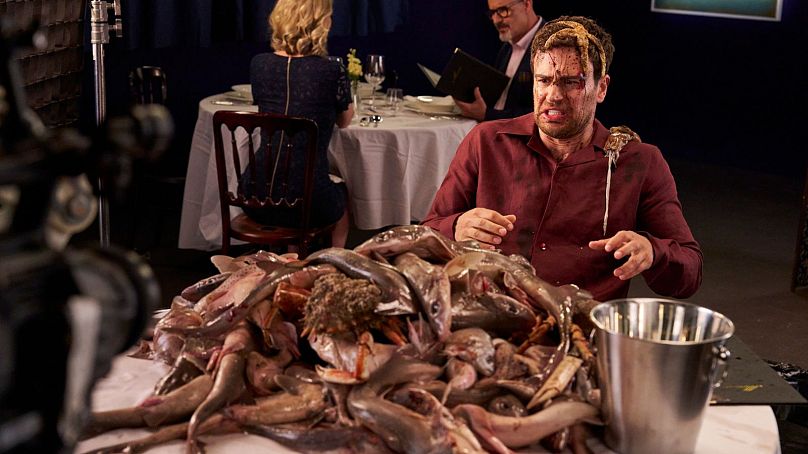
The ocean conservation charity is making waves with the release of its satirical short film featuring Stephen Fry and White Lotus star Theo James. The Bottom Line takes place in a fine dining restaurant, where James’s character is presented with the gruesome bycatch behind his “sustainable” hake order. 


Theo James in The Bottom Line, shocked by the bycatch from bottom trawling that his order comes with.Duncan Nicholls/Blue Marine Foundation

“As a keen diver, I’ve long been captivated by the ocean and been horrified by the impact humans are having on it. Having had a load of bycatch dumped on me, it really drove home just how grotesque and devastating the practice of bottom trawling is,” said James, who is an ambassador for the charity alongside Fry. 

"Conservation policy is awash with shiny new announcements and impressive sounding targets whereas what is needed is actual delivery,” Jonny Hughes, Senior Policy Manager at Blue Marine Foundation, said of today’s news. 

‘This, at first glance, seems to be about delivering conservation. We need to see the full details but initial reading is positive."

Where do other European countries stand on bottom trawling?

France’s stance on bottom trawling is also under review. The co-host of UNOC has announced strict protection measures for 4 per cent of its mainland waters (15,000 square kilometres), banning harmful human activities including bottom trawling.

But the announcement falls short of implementing a comprehensive ban on bottom trawling across all MPAs, environmental lawyers note. 

“This is an important turning point,” ClientEarth CEO Laura Clarke said of the UK and French updates. “We welcome these pledges at UNOC - and we would like to see more of them. We also need to see these bans effectively enforced.”

Last year, Greece became the first European country to announce a ban on bottom trawling in its protected areas, starting with its three national marine parks by 2026. Sweden has gone a step further by promising to ban the damaging practice in all its territorial waters as of next month.

The EU’s 2023 Marie Action Plan calls on member states to phase out bottom trawling in all MPAs by 2030. But recent research from NGOs Oceana, Seas At Risk and ClientEarth revealed that no EU country currently has a comprehensive plan in place to phase out destructive fishing practices in these protected areas. 

As momentum builds, environmental organisations are pressuring all European countries to follow suit. ClientEarth, Oceana, Danish NGO Danmarks Naturfredningsforening and the Seas at Risk coalition last week threatened legal action against Denmark, the Netherlands and Spain for allowing widespread bottom trawling in its MPAs.


‘Old statistics do not apply’: Record-breaking Arctic heatwave made 3C hotter by climate change

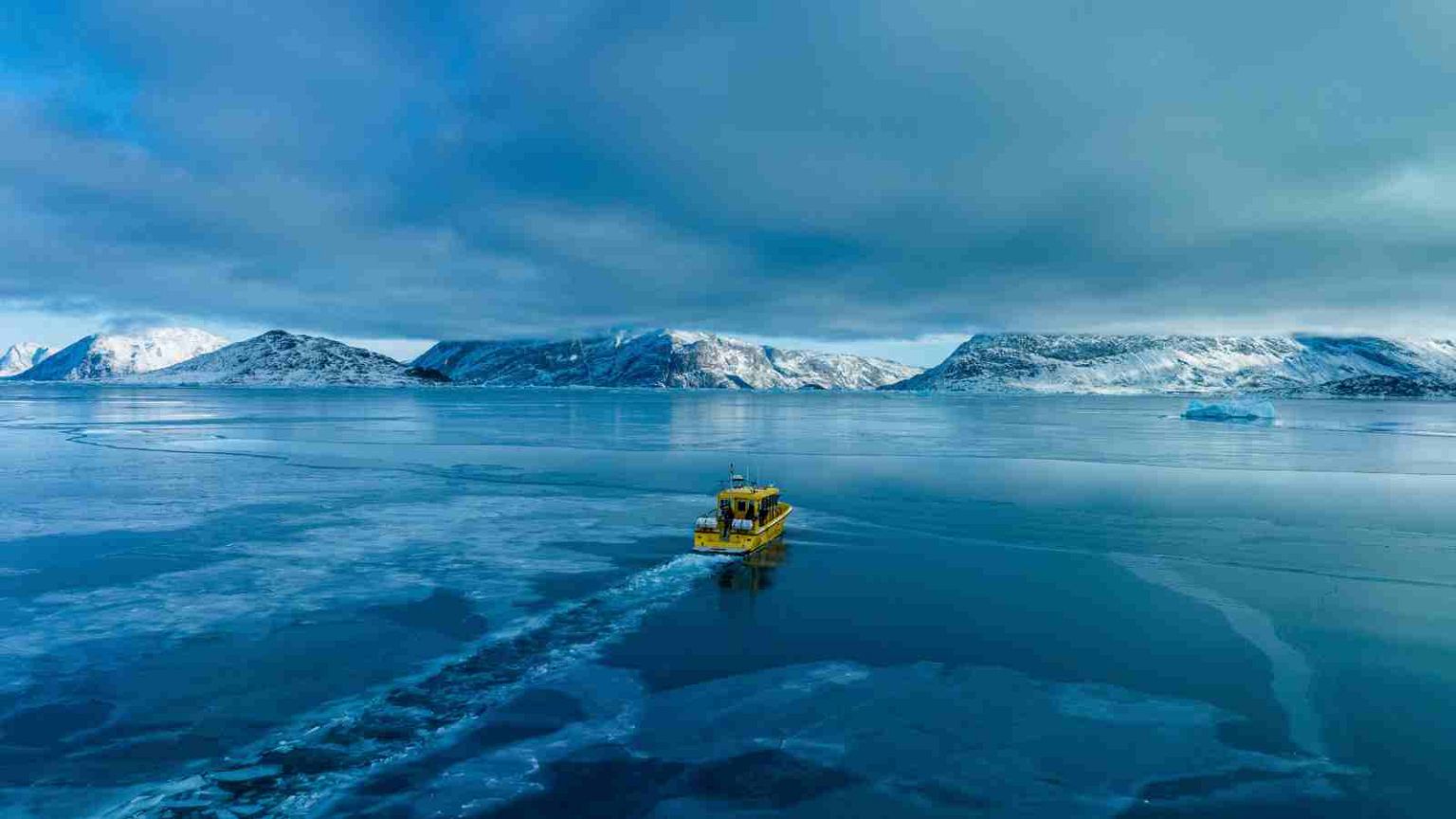
A boat rides though a frozen sea inlet outside of Nuuk, Greenland, 6 March 2025.
Copyright AP Photo/Evgeniy Maloletka


By Euronews Green
Published on 


Spring heat could be an emerging threat for vulnerable people in Iceland and Inuit communities in Greenland.

“People often think of countries like India, Italy and the US when we talk about climate change and heatwaves,” says Dr Sarah Kew, researcher at the Royal Netherlands Meteorological Institute.

But, as a new study from the World Weather Attribution (WWA) group shows, “even cold climate countries are experiencing unprecedented temperatures.”

A record-breaking heatwave in Iceland and Greenland last month was made around 3°C hotter due to human-caused climate change, the group of researchers has found.

On 15 May, the Egilsstaðir Airport station in Iceland recorded 26.6°C, a new national record for the month. Just days later, on 19 May, the Ittoqqortoormiit station in eastern Greenland reported 14.3°C, well above the monthly average of daily maximum temperatures of 0.8°C.

“To some, an increase of 3°C might not sound like much, but it contributed to a massive loss of ice in Greenland,” adds Dr Kew, one of 18 global researchers behind the new WWA study.

The climate change-driven heat from 15-21 May corresponded with around 17 times higher than average Greenland ice sheetmelting, according to preliminary analysis from the National Snow and Ice Data Center in the US.

Arctic communities are feeling the heat

“In the Arctic, local populations have built communities on weather conditions that have been stable for centuries,” says Maja Vahlberg, Technical Advisor at Red Cross Red Crescent Climate Centre. 

“However, heatwaves like these signal emerging risks in Greenland and Iceland that are warming much faster than other regions.”

The Arctic has warmed at a rate more than double the global average. This phenomenon, known as arctic amplification, is largely driven by melting sea ice: as the ice vanishes, it is replaced by an expanding area of dark ocean water that absorbs sunlight instead of reflecting it.

“Inuit communities face growing threats to traditional ways of life, while people in Iceland with existing health conditions are increasingly vulnerable to rising heat,” adds Vahlberg.

Although Iceland experiences very low rates of heat-related deaths compared to countries in southern Europe, the heatwave may have impacted people with underlying health conditions before they had time to acclimatise. 

Warnings of sunburn and softened roads in Iceland highlight how cold-climate countries are beginning to experience new climate risks that can catch people off guard, the researchers say. 

Sea ice loss is also impacting Inuit Indigenous communities, who make up 90 per cent of the population in Greenland. Reliable sea ice is vital for travel, but thinning ice is creating unstable conditions that cut off access to traditional hunting grounds. 

The loss of sea ice has also seen a rapid decline in the number of sled dogs in Greenland, which have been used by Inuit groups for thousands of years. 

Icelandic heatwaves set to become a further 2C more intense

An Arctic heatwave might still seem like an anomaly, but such events are becoming increasingly common.

“In recent years, my colleagues and I in the Climate Group at the Icelandic Meteorological Office have noticed unusual weather extremes, such as rainfall events that far exceed in rainfall duration and amount, anything expected based on prior data,” says Dr Halldór Björnsson, group leader at the Icelandic Met Office. “In short the old statistics do not apply.”

May’s heatwave broke records even in weather stations going back more than a century - including in Stykkisholmur, for example, where there is reliable data for more than 174 years. Dr Björnsson says the event was the largest May heat they’ve ever seen, with 94 per cent of weather stations setting new temperature records. 

“What we are witnessing is not just an isolated event, but a change in weather statistics,” she says.

If greenhouse gas emissions continue on their predicted course, and warming reaches 2.6°C by 2100, heatwaves are set to become a further 2°C more intense in Iceland.

For Greenland, the scientists analysed data from a weather station in the eastern part of the country. They found the hottest single day in May was about 3.9°C warmer than it would have been in the preindustrial climate. 

While this analysis did not include climate models, the scientists say it's likely that almost all of the increase was due to climate change.

How do Arctic heatwaves impact the rest of the world?

“What happens in the Arctic doesn’t stay in the Arctic,” warns Dr Friederike Otto, Associate Professor in Climate Science at the Centre for Environmental Policy, Imperial College London.

“The unusual heat would have accelerated ice melt and contributed to sea level rise, which is threatening the survival of communities on small islands, like Vanuatu, Kiribati and Tuvalu, as well as Indigenous peoples such as the Inuit.”

Greenland loses an average of 43 billion tonnes of ice per year, and a growing body of evidence suggests that continued warming could push the country past a tipping point where the melting of the ice sheet becomes irreversible. 

A recent study has warned that even 1.5°C of warming could trigger the loss of ice sheets in Greenland and Antarctica, potentially causing several metres of sea level rise over the coming centuries, which would threaten the existence of low-lying islands around the world. 

Another potential tipping point could have concerning consequences for Europe.  The melting of the Greenland ice sheet is known to slow down the Atlantic Meridional Overturning Circulation (AMOC), a vast ocean current that could weaken or collapse with further ice melt, potentially disrupting global climate patterns, causing severe weather changes worldwide and plunging Europe into a deep freeze

“We know exactly what is causing the warming and the melting - the burning of oil, gas and coal. The good news is we can stop extreme heat from getting worse and worse, which means shifting away from fossil fuels,” adds Dr Otto. 

“That does not require magic. We have the know-how and technology needed, but it does require recognising that human rights are for all, not just the rich and powerful.”