Saturday, June 14, 2025


CITIES IN PERIL: Boomtowns built on melting ground

CITIES IN PERIL: Boomtowns built on melting ground
An image from the EU's Copernicus Sentinel-2 satellite showing the Russian city of Norilsk on the Taymyr Peninsula. / European Union, Copernicus Sentinel-2 imagery
By bne IntelliNews June 12, 2025

When Russian settlers began building in what is now Yakutsk in the 17th century, they placed homes on wooden platforms to insulate the permafrost below from the warmth of habitation. Centuries later, Soviet planners employed a modernised version of this technique, erecting cities like Yakutsk and Norilsk on concrete piles to elevate buildings above the permafrost and prevent structural collapse.

This allowed major urban centres to emerge in some of the world’s harshest climates. In winter, temperatures in Yakutsk routinely fall below -50°C; it is the coldest major urban area in the world. Despite this, the city, which lies 450 km south of the Arctic Circle, has thrived. It is now home to over 300,000 people and is the largest city in the world built entirely on continuous permafrost.

Yet climate change is rapidly altering the physical foundations on which these cities rest. Rising global temperatures, especially in the Arctic where warming occurs at more than twice the global average, are causing the once-permanent permafrost to thaw.

Thawing permafrost threatens the structural integrity of homes, roads and vital infrastructure. Pipelines rupture, buildings crack, and entire settlements begin to slump into the ground. The costs – financial, social and ecological – are mounting.

According to data published by Nordic research institute Nordregio, as of 2017 nearly 5mn people lived in permafrost zones in and around the Arctic Circle, including in Canada, Alaska and much of northeast Siberia. These include major urban centres like Norilsk and Yakutsk, as well as dozens of smaller towns. Indigenous communities in these regions, whose traditional ways of life depend on frozen ground for stability and seasonal predictability, are among those most affected.

The Arctic warms 

Permafrost is soil that remains frozen for at least two consecutive years. In many Arctic regions, it has remained frozen for tens or even hundreds of thousands of years. But since the early 2000s, feedback loops of shrinking sea ice, snow loss and warming soils have triggered faster Arctic warming. In the winter of 2024-25, the Arctic experienced record high temperatures as warming accelerated again and is now running seven times faster in the North Barents Sea than the rest of the world, researchers have found, as bne IntelliNews reported. 

This acceleration is already having measurable effects. The UN Environment Programme in 2019 listed permafrost thaw as one of the top 10 emerging environmental threats. In 2000-19, glaciers lost around 267bn tonnes of ice every year, according to a study published by Nature. On March 22, Arctic sea ice reached its lowest maximum extent since satellite records began 47 years ago. Beyond the Arctic, the Himalayas, the Alps and other high mountain ranges are seeing dramatic glacial retreat, with projections from the International Centre for Integrated Mountain Development (ICIMOD) showing at least one-third of Himalayan ice could vanish by 2100.

Russia’s Arctic regions are warming even more rapidly. Since 1970, northern Russia has seen temperatures rise by over 3°C – nearly triple the global average. In 2020, the Siberian town of Verkhoyansk registered 38°C, the highest temperature ever recorded in the Arctic. 

Even under moderate emissions scenarios, thawing will continue. According to Nordregio, the number of people living on permafrost could shrink from 4.94mn in 2017 to 1.7mn by 2050 – less because of mass migration, than because the land itself will no longer be frozen. The number of affected settlements could fall from 1,162 to 628 under a moderate emissions scenario.

Russia’s industrial north 

The problem is especially acute in Russia, which has the world’s largest population living on permafrost. Nearly two-thirds of Russian territory is underlain by frozen soil. “Russia and Canada are the two countries in the Arctic most affected by melting permafrost because large proportions of their territories are underlain by frozen soil. Nearly two-thirds of Russia is underlain by permafrost, while half of Canada is,” said Mia Bennett, associate professor at the University of Washington. 

“Canada has dozens of small settlements underlain by permafrost, but only Russia, as the most industrialised and urbanised country in the Arctic, has cities with hundreds of thousands of people, which have been constructed atop permafrost," Bennett told bne IntelliNews. Those cities are Norilsk, a city built up around an enormous nickel mine, and Yakutsk, the capital of the Sakha Republic. Other smaller cities like Vorkuta, whose population is nearly equivalent to that of all of Greenland, also sit on permafrost.” 

Yakutsk, the capital of the Sakha Republic – a vast, resource-rich region comprising a fifth of Russian territory – has continued to grow, fuelled by mining and buoyed by its role as a scientific and cultural hub. But the risks are rising. As permafrost thaws, the delicate balance that allowed these cities to flourish is beginning to unravel. Without drastic action to slow emissions and adapt infrastructure, the future of life on the thawing tundra looks increasingly uncertain.

Buildings crack, roads buckle 

The effects of thawing permafrost are already visible across the Russian Arctic. In Yakutsk, Norilsk and other cities built on what was once permanently frozen ground, cracks are appearing in buildings that have stood for decades, roads are buckling and sinkholes are opening up beneath once-stable infrastructure.

“As global temperatures rise, Arctic warming is affecting permafrost thaw and damaging infrastructure in Arctic cities,” Pavel Devyatkin, senior associate at The Arctic Institute, told bne IntelliNews by email. “In the Russian Arctic city of Norilsk, the subsidence of permafrost has caused buildings to sink or collapse.”

In response, authorities have allocated funds to artificially cool building foundations in Norilsk in an attempt to slow the melt and protect infrastructure. But such efforts are only a stopgap.

Aside from the damage to buildings, Norilsk, the largest Arctic city in Russia, has already suffered one of the region’s worst environmental disasters when thawing ground contributed to the 2020 spill of 20,000 tonnes of diesel fuel on the Taymyr peninsula. The accident, which turned the Ambarnaya river red, was compared by Greenpeace to the 1989 Exxon Valdez oil spill. Satellite footage showed the permafrost beneath the fuel tank had been subsiding, though metals major Norilsk Nickel was also accused of negligence by watchdog Rostekhnadzor.

Beyond the cities, the landscape is transforming. Lakes in permafrost regions are merging into each other, giant sinkholes are appearing, and land is being lost of the Arctic coastlines year after year. In Alaska, the ground beneath the runway at Nome airport, a vital regional link, has thawed, demanding costly repairs. In Norway’s Spitsbergen, hundreds of homes have been destroyed as the soil shifts beneath them.

“In all of these locations, hundreds of buildings built in previous decades, when temperatures were significantly colder and permafrost more reliably frozen, have been damaged and deformed by thawing permafrost. The slumping ground leads their foundations to crumble and crack,” said Bennett. “Many of these buildings have had to be abandoned. Infrastructure outside of cities is also threatened, from roads to runways and military bases.”

Infrastructure at risk 

By 2050, thawing permafrost could damage 20% of Russia’s commercial and industrial buildings, 19% of critical infrastructure valued at $84.4bn, and over half of residential properties worth $20.7bn. The cost of mitigation could range from 0.1% to more than 3% of Russia’s GDP, depending on climate outcomes.

One study using future climate scenarios projected that by mid-century, up to 44% of Arctic roads, 34% of railways, and 17% of buildings could be affected. Melting permafrost will damage 69% of the infrastructure in Russia’s frozen wastes by 2050, causing $275bn worth of damage and affecting the lives of over 3.6mn people, according to a study published in Nature.

Much of this infrastructure was designed with the assumption of stable ground – an assumption that no longer holds. This is a dangerous situation given that permafrost regions (especially in Russia) are not only home to oil and gas fields, but also nuclear power plants and hazardous waste sites. As permafrost loses its load-bearing capacity, the danger of structural failure grows.

Nearly 45% of Russia’s Arctic oil and gas fields lie in zones highly susceptible to thawing. Thousands of kilometres of key pipelines – including the ESPO oil line and future projects like Power of Siberia 2 – must traverse unstable terrain.

The Arctic also hides an industrial time bomb. Between 10,000 and 20,000 contaminated sites – abandoned bases, toxic sludge pits, mining waste – have relied on permafrost to contain their hazards, according to a paper published by the World Wildlife Fund (WWF). Thawing ground threatens to release these into surrounding ecosystems. In 2016, the Yamal Peninsula saw its first anthrax outbreak in 75 years, triggered by thawed reindeer carcasses. Over 2,000 reindeer died and dozens of human infections followed.

Transport disrupted 

“We are getting collapses of building and bridges, problems with roads and railways. It’s a huge problem, costing millions of dollars, especially if you look at northwest Siberia, where there are already a lot of infrastructure problems. Thawing ice-rich soils in the far north threaten buildings, runways and infrastructure, causing ground shifts and major disruptions for residents,” said Brown University professor Amanda Lynch, in an interview with bne IntelliNews

She warned that travel is becoming more difficult. Communities that rely on frozen rivers and lakes for winter transport find them increasingly unreliable. The ‘transition zone’ between frozen and unfrozen ground is expanding and moving north. 

"At the moment it’s much easier to build an ice road and transport things in winter than to maintain roads and railways over discontinuous permafrost,” she said. 

The most unstable zones are those that freeze and thaw each year, warping roads and buckling rail lines. “It’s very expensive to maintain land based transport infrastructure in that transition zone,” said Lynch. 

“If you go to 2100 everything is thawed and it’s a much simpler problem. But from getting from here to there is very messy.” 

In the meantime, many small settlements may become inaccessible – or at least it will become prohibitively expensive to maintain road connections, although those on navigable rivers will be easier to access. 

Within the next 25 years, an estimated 3.3mn residents risk losing their homes as thawing permafrost undermines the ground beneath them. Across the region, roads, pipelines and buildings that serve more than 4mn people are being damaged. Indigenous communities, in particular, face the erosion not only of their homes but of traditions that have been shaped by the frozen ground for centuries.

In Russia, those displaced are often relocated to cities. There have also been relocations in Alaska and Canada. In Alaska, the village of Newtok has been eroding so rapidly that residents have begun a managed retreat to Mertarvik – making them one of the first Indigenous communities to complete a climate-forced relocation.

Yet relocation is a costly and deeply fraught solution, according to Lynch. “Governments and companies may think in terms of financial costs, but for Indigenous and traditional communities, there are values other than money to take into account,” she said. 

Boomtowns 

By contrast, some Arctic towns are booming as warming temperatures and technological advances open access to oil, gas and mineral reserves. Russia’s Arctic zone alone is believed to hold huge amounts of natural gas, oil, gold, silver and rare earths, making these territories critical to its economy. Gas companies Novatek and TotalEnergies are already operating (liquefied natural gas) LNG megaproject on the Yamal peninsula. In May this year, Russian oil company Rosneft took over Vostok Engineering LLC, which holds the license for Tomtor, one of the world's three biggest rare earth metal deposits, in Yakutia.

Economic activity in the Arctic has accelerated sharply. Until recently, most oil and gas extraction in the region took place onshore. Now, as summer sea ice declines – potentially vanishing entirely by 2035 – the Arctic is opening up to offshore development and expanded shipping. The US Geological Survey (USGS) estimates that 30% of the world’s undiscovered gas and 13% of undiscovered oil lie north of the Arctic Circle. The US Congressional Research Service puts the value of the region’s mineral wealth at around $1 trillion.

Infrastructure is following. In Alaska, work is under way to develop a new deepwater port at Nome, while Russia is investing into its ports at Murmansk, Arkhangelsk and Sabetta. 

"In order to efficiently use the Trans-Arctic shipping route's potential and turn it into one of the main transport lanes in the country, it is important to ensure the development of port infrastructure along its entire length,” said Kremlin aide and Maritime Board chairman Nikolai Patrushev in April, as reported by Interfax.

Lynch noted that Russia is “massively” expanding its Arctic infrastructure. “Russia is leaning in, they see climate change as a net benefit. They are looking at a certain future of warm water deepwater ports.” 

Between 2013 and 2024, the number of unique ships entering the Arctic Polar Code area shot up by 37%, according to the Protection of the Arctic Marine Environment Working Group of the Arctic Council. This included a variety of traffic including tourist vessels through the Northwest Passage, cargo movements through the ‘GIN’ corridor (Greenland, Iceland, Norway), and traffic along Russia’s Northern Sea Route. 

Russia shifts to the East

Since the outbreak of war in Ukraine, Arctic shipping has increased further. “The volume of trade has increased. The war in Ukraine accelerated it because a lot of the shipping up there was always Russian. They operated year round, with a massive ice-breaker fleet,” said Lynch. “With sanctions, the trade relationship with China has become very important.” That has hiked demand on routes such as Subeta to Shanghai. 

As Arctic activity intensifies, so too does the need to manage the risks posed by thawing permafrost. Engineering solutions are emerging to stabilise foundations and protect infrastructure. 

“There are several engineering options for adapting to melting permafrost, including geotextiles, embankments, and other solutions that help to lower the temperatures and insulate the ground to prevent further melting,” says Bennett. “Some of these solutions are being developed outside of the Arctic in places like China, where 40% of the Tibetan Plateau is underlain by permafrost.” 

According Devyatkin, these innovations include reinforced buildings, thick foam pads beneath roads, and expanded monitoring networks. "Governments are developing policies and regulations to work with construction on permafrost, such as mandates on permafrost-specific surveys and assessments before construction begins. There is a political will to address issue and this issue is especially getting more attention in regional and subnational governments.” 

Russia is expected to unveil a strategy later this year to secure its Arctic infrastructure. But despite new engineering and regulatory approaches, experts warn that technical fixes are only part of the solution. The most effective way to mitigate permafrost damage is by curbing global warming.

There is also a dangerous feedback loop at play: as permafrost melts, it releases greenhouse gases – not just carbon dioxide but the much more damaging methane – accelerating global warming. The Intergovernmental Panel on Climate Change (IPCC) has warned that hundreds of gigatonnes of carbon dioxide could be released into the atmosphere as earth that has been frozen for hundreds of thousands of years thaws.

This article is part of a series on the impact of the Climate Crisis on major cities around the world. 

The other articles in the series are: 

Cities confront the rising tide of climate change

Taipei’s climate countdown

Accra under water

Jakarta’s sinking villages

Droughts and heatwaves grip Tehran

Two decades of change are testing Tokyo’s resilience

Rising seas threaten India’s coastal cities

Adapting the concrete heart of São Paulo to a changing climate

Mexico's Acapulco still rebuilding as climate disasters mount


Delays In India’s Projects In Sri Lanka Inevitably Raise Suspicions – Analysis

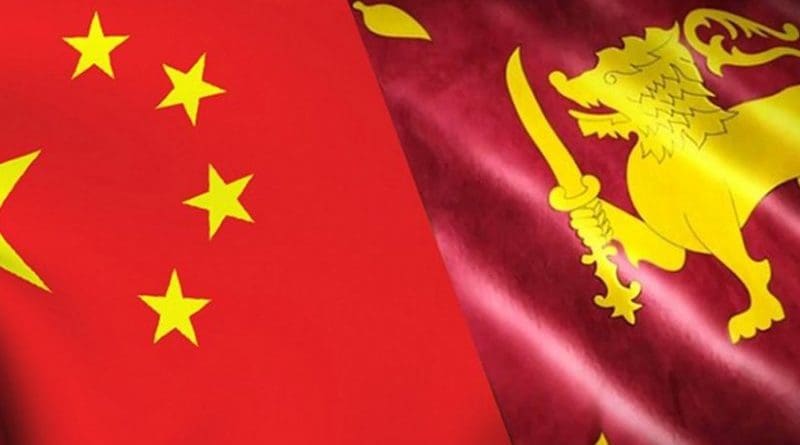
China and Sri Lanka flags


By 

Sri Lanka’s policy towards India remains ambiguous, reflecting its ongoing struggle to balance relations with both India and its strategic rivals. During his official visit to New Delhi following his electoral victory, JVP leader Anura Kumara Dissanayake affirmed, “We don’t want Sri Lanka to be sandwiched, especially between China and India.” Nevertheless, recent policy trends and diplomatic manoeuvres from Colombo suggest a gradual drift towards a “sandwich state” posture, wherein Sri Lanka risks being positioned between competing spheres of influence.


Sri Lanka had reached a state of economic bankruptcy, prompting India to step in and provide $4 billion in unconditional assistance. In this context, if Colombo were truly committed to rapid economic recovery, it would be expected that India’s proposed initiatives would have been implemented swiftly. The fact that these plans have not advanced as anticipated reinforces suspicions that there may be deliberate delays in the execution of Indian-backed projects.

India’s External Affairs Minister has previously expressed apprehension about what he suspected to be “a Chinese hand in slowing down or stopping all India-led initiatives, including a longstanding request to develop and operate more oil tanks in the Trincomalee facility.” Such suspicions gained traction when the Gotabhaya Rajapaksa administration cancelled the Eastern Terminal agreement with India. These recurring concerns underscore how Colombo consistently chooses to walk a diplomatic tightrope in managing its bilateral relationships, especially with its two Asian powers.

While several Indian-backed projects in Sri Lanka’s Northern and Eastern provinces have been progressing slowly, China has recently made a significant diplomatic and economic push. The Chinese Commerce Minister’s visit to Colombo, accompanied by a 115-member delegation from 77 companies, was widely reported in Sri Lankan media. The delegation, comprising representatives from four major Chinese chambers of commerce, aimed to strengthen economic ties and explore new investment opportunities in sectors such as infrastructure, renewable energy, logistics, and tourism.

During this visit, President Anura Kumara Dissanayake met with Minister Wang, praising China’s advancements in economic development, science and technology, and infrastructure. President Dissanayake reaffirmed Sri Lanka’s willingness to expand cooperation under the Belt and Road Initiative (BRI) and to attract further Chinese investment.

Notably, President Dissanayake’s first official overseas visit after taking office was to New Delhi, signalling a diplomatic outreach to India and intent to dispel previous misgivings, particularly those associated with the Janatha Vimukthi Peramuna (JVP)’s historical posture toward India. However, questions remain as to whether the India-Sri Lanka Joint Statement, issued during that visit, is being implemented as agreed.

The 2024 Joint Statement outlined several areas of cooperation, including:

– The supply of LNG from India to Sri Lanka;

– The establishment of a high-capacity power grid interconnection between the two countries;

– Trilateral cooperation among India, Sri Lanka, and the UAE to implement a multi-product pipeline for affordable and reliable energy;

– Joint development of offshore wind power potential in the Palk Straits, with a commitment to environmental protection.

Both leaders also expressed support for developing Trincomalee as a regional energy and industrial hub. A key aspect of the agreement was the timely implementation of these initiatives. Nevertheless, delays, such as the recent retreat regarding the Mannar Wind Farm project, have cast doubt on the pace of progress for Indian-backed ventures in the northern and eastern provinces of Sri Lanka.

For example, in February 2023, the Sri Lankan Board of Investment approved a $442-million wind power project by Adani Green Energy. However, during the presidential campaign, NPP leader Anura Kumara Dissanayake stated that a National People’s Power (NPP) government would cancel Adani’s 450 MW wind power project, citing concerns over alleged corruption and unfavourable terms. If the NPP raises questions about the integrity of foreign investments, it may also need to review numerous projects launched during previous administrations, particularly those from the Rajapaksa era.

In 2016, when the Maithripala Sirisena–Ranil Wickremesinghe government decided to lease the Hambantota port to China for 99 years, the JVP opposed the move and urged President Sirisena to reverse the decision. As a member of parliament, JVP leader Anura Kumara Dissanayake called for the postponement of the signing and threatened to block its implementation. Now, there is relative silence on Hambantota.

Another example is the Indian government’s offer of a US$62 million grant for the development of Kankesanthurai port—a project that remains in limbo pending further feasibility studies, as recently highlighted by a Northern Province parliamentarian. He questioned whether the NPP government is deliberately postponing the implementation of India’s projects in the north and east of Sri Lanka.

Given these developments, several critical questions emerge: What is the current government’s policy toward Indian projects in Sri Lanka’s north and east? Does its past anti-Indian political rhetoric constrain the NPP government, or is it strategically considering Chinese initiatives as a means to balance India’s influence?

While some observers argue that China is emerging as a counterweight to India in South Asia, it is widely recognised that antagonising India would not be conducive to Sri Lanka’s economic development. Navigating these complex relationships with nuance and foresight remains essential for Sri Lanka’s future stability and prosperity. Simply put, if Sri Lanka antagonises India, it risks jeopardising its future.


A. Jathindra

A. Jathindra is a Sri Lankan-based independent political analyst and head of a think tank, Centre for Strategic Studies -Trincomalee (CSST).


By 

By Peng Maosheng


Recently, the global financial sector, particularly the banking industry, has shown multiple signs of distress. These developments involve not only regional financial institutions but also several internationally renowned banks. It is evident that anxiety is mounting across the global banking landscape, potentially signaling the emergence of systemic risks in the industry.

Some notable recent indicators of risk within the banking sector include:

First, several regionally significant financial institutions have reported substantial losses. For example, Norinchukin Bank of Japan, which has a history spanning over a century, recorded a net loss of JPY 1.8078 trillion in fiscal year 2024, the largest loss in its history. In its annual report, the bank attributed the loss to heightened uncertainty in the market outlook caused by the Trump administration, which has kept long-term interest rates elevated in global bond markets. Due to a misjudgment that interest rates would decline, the bank made erroneous bets on U.S. and European bonds. Over the past year, it was forced to sell more than JPY 10 trillion worth of these bonds, resulting in massive losses. This issue is not confined to Japan. The volatility in long-term bond yields has affected other regions as well. These developments highlight not only the vulnerability of traditionally perceived “safe haven” assets like sovereign bonds in times of economic uncertainty, but also indicate the deep interconnectedness of today’s global financial markets. The Federal Reserve, on one side, has maintained a firm stance against cutting interest rates, signaling a clear divergence from the Trump administration’s position. On the other side are the major purchasers of U.S. Treasuries, including banks, who had been anticipating rate cuts. The increasingly tense standoff between a Fed unwilling to ease and a Trump administration pushing for lower rates has exacerbated risks in the bond and interest rate markets, prompting many participants to exit.

Secondly, there are growing concerns about a potential downturn in the U.S. economy, and several major institutions have openly expressed a pessimistic outlook. For instance, JPMorgan Chase CEO Jamie Dimon criticized both the U.S. government and the Fed for excessive fiscal spending and quantitative easing, warning that the bond market is “bound to crack” under the mounting pressure of rising debt. At the same time, Citigroup CEO Jane Fraser outlined a three-phase impact of Trump’s tariff policies on the U.S. economy. The first phase involves consumers and businesses rushing to make purchases in anticipation of price increases due to tariffs. The second phase, which Fraser believes the U.S. is currently entering, is characterized by heightened uncertainty that causes businesses to pause investment and hiring. In the third phase, as the Trump administration’s tariff policies become more clearly defined, the adverse effects on consumers are expected to become even more pronounced.

Thirdly, several influential global banks have increased their credit loss provisions, even in cases where their financial performance has exceeded expectations. This clearly shows that these institutions are cautious amid economic uncertainty. For example, JPMorgan Chase, which reported first-quarter revenue and profits above market forecasts, still set aside USD 3.3 billion in loan loss provisions, a 75% increase compared to the same period last year. As CEO Jamie Dimon noted during a conference call, the bank holds capital well above regulatory requirements and maintains ample liquidity. Similarly, HSBC raised its expected credit losses by USD 202 million in the first quarter of 2025. The bank also forecasted that global loan demand would remain weak throughout the year. This conservative stance is driven by growing uncertainty, market volatility, and a deteriorating economic outlook influenced by rising tariffs and escalating geopolitical tensions. HSBC Group CEO Georges Elhedery stated that the bank has conducted multiple rounds of stress testing on its income streams and credit portfolio to assess the potential impact of a deeper economic downturn triggered by tariff-related shocks.


It is worth noting that the concentration of the U.S. banking sector has increased significantly over the past decade. While this consolidation has improved efficiency, it may also amplify financial risks. If even a single giant bank were to encounter serious trouble, it could trigger a shockwave across the entire global financial system.

According to the Financial Times, in the first three quarters of 2024, the four largest U.S. banks, namely JPMorgan Chase, Bank of America, Citigroup, and Wells Fargo, accounted for 44% of the entire U.S. banking sector’s profits, the highest share since 2015. This trend of increasing concentration shows no sign of slowing. Former Barclays CEO Bob Diamond once remarked that the number of U.S. banks could decline by more than half over the next three years. Therefore, if a financial crisis were to occur and any of these major banks were to experience serious issues, the consequences could be severe.

The recent failures of Silicon Valley Bank and First Republic Bank have already served as a wake-up call, highlighting the critical role large banks play in the financial system. If a similar crisis were to impact one or more of these banking giants, it could very well trigger a broader systemic shock.

Although the aforementioned risks are currently concentrated in other countries, China too must remain highly vigilant and work to mitigate potential threats before they escalate .

On the one hand, bond yields in China are currently at low levels. However, when fiscal stimulus is implemented in the future, the country could face a scenario similar to what is currently unfolding in the U.S. and Europe, that is, a rise in government bond yields, which could in turn lead to losses for financial institutions holding those bonds. In fact, early signs of this have already emerged. In late May, during the auction of 50-year government bonds, the winning yield reached 2.10%, exceeding the valuation of 2.025% for the same maturity. This triggered a rise in yields across long-term bonds of various durations on the same day. Hence, China’s future monetary policy will need to be forward-looking and carefully managed to guard against sharp interest rate fluctuations driven by fiscal expansion, which could undermine the stability of the financial system.

On the other hand, it is essential for it to remain alert to the risk of foreign economic shocks spreading into China. According to the latest customs data, China’s exposure to foreign trade remains substantial. At the same time, as the country continues to deepen its opening-up, foreign capital has become increasingly involved in China’s financial markets, particularly in sectors such as lending, insurance, and securities. Therefore, if the U.S. or Europe were to fall into recession, China could face negative impacts on its exports, credit markets, and capital flows. In response, China must not only utilize a range of policy tools to stabilize the domestic economy and leverage its comparative advantages amid global turbulence, but also work to strengthen the resilience of its financial institutions in order to mitigate the drag of international financial risks. Recent initiatives, such as the Ministry of Finance injecting capital into major state-owned banks, local governments recapitalizing regional banks, and mergers among small and mid-sized banks, are all significant steps in this direction.

Overall, major international banks have shown a lack of confidence and a rather cautious outlook on the global economic future. This growing sense of uncertainty is particularly concerning given the current context of a sluggish global economy and intensifying geopolitical tensions, raising the risk of a potential new wave of systemic financial crisis. For China’s policymakers, the situation presents a dual challenge, namely managing both domestic and external risks. On one hand, it is essential to deploy an effective mix of policies to stabilize the economic fundamentals and strengthen the resilience of the financial system. On the other hand, it is equally important to turn crises into opportunities within a complex international environment and potentially gain greater strategic initiative in the evolving global competitive landscape.

Final analysis conclusion:

Recently, numerous financial institutions have shown a range of not-so-optimistic signs, which we interpret as early warning signs of a potential crisis. These concerns are not confined to regional entities but also involve globally significant banks, underscoring the need for heightened vigilance. In the case of China, it would be crucial for it to adopt a forward-looking approach and take proactive measures to guard against emerging risks.

  • Peng Maosheng is a researcher at ANBOUND, an independent think tank.


Anbound

Anbound Consulting (Anbound) is an independent Think Tank with the headquarter based in Beijing. Established in 1993, Anbound specializes in public policy research, and enjoys a professional reputation in the areas of strategic forecasting, policy solutions and risk analysis. Anbound's research findings are widely recognized and create a deep interest within public media, academics and experts who are also providing consulting service to the State Council of China.


The hidden cost of Indonesia’s nickel ambitions

The hidden cost of Indonesia’s nickel ambitions
/ Erick Morales Oyola - Unsplash
By bno - Jakarta bureau June 12, 2025

Indonesia ranks among the top global producers of nickel, a critical component in electric vehicle batteries, smartphones, and wind turbines - making the country central to the global shift toward clean energy. To secure access to this strategic mineral, major economies like China, the US, and the EU have deepened investment ties with Indonesia.

Yet, this boom comes with a stark contradiction. While the nation reaps economic gains, nickel mining is placing growing pressure on vulnerable ecosystems, particularly in eastern regions like Raja Ampat in Southwest Papua. Gag Island, part of this biodiverse archipelago, has become a focal point in the clash between environmental preservation and industrial growth.

The beginnings of nickel mining in Raja Ampat

Investment in the nickel sector contributed over 62% of the total mineral sector investment, which reached IDR245.2 trillion ($15bn) between January and December 2024, as reported by Media Nikel Indonesia. For instance, nickel exploration on Gag Island was initiated by PT Gag Nikel, a subsidiary of PT Aneka Tambang (Antam) Tbk, under a Contract of Work granted in 1998. However, mining activities were halted in 2005 when Gag Island was designated a national marine conservation priority. According to Tempo, this conservation status led to a temporary suspension of permits. PT Gag later reapplied for environmental clearance following revisions to regional spatial planning and received approval from the Ministry of Environment and Forestry (KLHK) in 2017.

Why Gag island matters

Gag Island, spanning less than 2,000 km², technically falls under the protection of Law No. 1/2014 on Coastal and Small Island Management, which prohibits mining on small islands. However, Kompas reports that an exception was granted because PT Gag Nikel’s Contract of Work was issued before the law came into effect. Hukumonline highlighted how this legal loophole has enabled mining operations to continue - often at the expense of environmental protections.

While PT Gag Nikel is the most high-profile operator, it is far from the only one. Companies like PT Anugerah Surya Pratama (ASP), PT Anugrah Surya Indotama (ASI), and PT Kawei Sejahtera Mining (KSM) have also been linked to contentious activities in Raja Ampat. Notably, PT ASI has been accused of operating in defiance of a governor-issued moratorium, allegedly under the shield of military backing. PT KSM, one of the first to export nickel from the region in 2008, sparked fierce opposition from residents of Kawe Island. These incidents point to a troubling pattern: corporate interests frequently sidestep regulatory safeguards, often with little to no accountability.

Experts warn that Gag Island’s fragile karst ecosystem is especially vulnerable to the impacts of open-pit mining, which can lead to deforestation, polluted groundwater, and sedimentation that endangers coral reefs and marine life.

Public resistance

Opposition from local Indigenous communities continues to intensify. BBC Indonesia reports that the Maya Indigenous group, whose ancestral lands encompass parts of Gag Island, feels their customary rights (hak ulayat) have been violated. They claim they were not properly consulted, with some residents alleging pressure to accept mining projects under the guise of development. The Maya people, who have long relied on the island's ecosystems for their livelihoods and cultural practices, fear that mining will endanger their access to clean water, traditional food sources, and the preservation of their culutural identitiy. Female leaders and community elders have been particularly vocal, raising concerns over intergenerational impacts on their way of life. 

Greenpeace Indonesia has emphasised that the resistance to nickel mining in Raja Ampat is not an isolated case. During their protest at the 2025 Indonesia Critical Minerals Conference, activists criticised Indonesia’s nickel strategy for prioritising downstream industrialisation at the expense of local communities and ecosystems.

The Indonesian Forum for the Environment (WALHI) echoed these concerns, citing similar cases in Wawonii, Halmahera, and Southeast Sulawesi. In Halmahera, open-pit mining and waste disposal have reportedly polluted rivers and displaced Indigenous communities, according to Mongabay. On Wawonii Island, nickel concessions have clashed with farming areas and residential zones, sparking years of protest and even arrests of local farmers. And in Morowali, Sulawesi, rapid industrial development tied to nickel smelters has raised alarm over air and water pollution, labour exploitation, and loss of biodiversity.

These patterns point to a broader national issue: resource extraction often outpaces environmental governance, with communities left to bear the social and ecological costs.

Unequal gains and regulatory gaps

Tempo reports that PT Gag Nikel asserts its compliance with licensing protocols and claims to hold a valid Environmental Impact Assessment (AMDAL). But according to Greenpeace and WALHI, the permitting process has lacked adequate public participation and fails to uphold the principle of Free, Prior and Informed Consent (FPIC) for Indigenous peoples.

There are also growing questions about the transparency of royalty distributions and the tangible benefits for local communities. Past experiences elsewhere suggest that economic gains are often captured by a handful of local elites or contractors, rather than reaching those most affected by mining activities.

The Mining Advocacy Network (JATAM)’s latest mapping highlights that Southwest Papua, with Gag Island at the forefront, has become a prime target for extractive industry expansion. In this context, policy inconsistencies are glaring: the protection of Raja Ampat’s world-renowned biodiversity appears negotiable when weighed against investment priorities.

Government steps in 

In early June, Indonesia cancelled four mining licences in Raja Ampat due to environmental concerns and the area’s ecological significance. The decision, led by Minister Bahlil Lahadalia under President Prabowo’s directive, followed on-site inspections and revealed that the permits overlapped with protected zones. The revoked licences belonged to PT Nurham, PT Anugrah Surya Pertama, PT KW Sejahtera Mining, and PT Mulia Raymond Perkasa.

Only PT Gag Nikel, operating since the 1970s, remains active, with limited land cleared and some areas already restored. Officials emphasised that no mining is taking place near key tourist spots like Paynemo. Authorities plan to rehabilitate affected sites and encourage a shift towards sustainable industries such as tourism and community-based fishing.

This is a positive and necessary move to protect a globally important ecosystem. Still, real progress will depend on consistent follow-through, not just policy announcements. Ongoing public involvement is crucial, as Indonesia has seen policies with good intentions lose their impact when oversight fades. That’s why environmental protections must also be extended to other islands that could face similar risks from mining activities in the future.

The unfolding situation in Raja Ampat highlights Indonesia’s broader struggle: how to lead the global green energy push without sacrificing its own environment - much like what has already happened in Halmahera, Wawonii, and Morowali, where the environmental cost of nickel extraction is being deeply felt.

Raja Ampat, with its unique marine biodiversity and cultural heritage, risks becoming the next casualty if current mining models are applied there.

Yes, nickel is essential for electric vehicles and batteries. But is it worth the ecological destruction? In the short term, EVs may benefit those with access. But once Indigenous land is lost, or reefs are destroyed, they are not easily restored - if ever. Sustainability must not come at the cost of the very ecosystems and communities we claim to protect.