Saturday, June 14, 2025


CENTRAL ASIA BLOG: Tajikistan plays role as one of world’s pre-eminent water diplomats at glacier summit, but Rogun dam remains a hard sell

CENTRAL ASIA BLOG: Tajikistan plays role as one of world’s pre-eminent water diplomats at glacier summit, but Rogun dam remains a hard sell
The melting of Tajikistan's glaciers poses a water security threat to all of Central Asia. / Canva, World Meteorological Org. press release
By bne IntelliNews June 9, 2025

In Dushanbe’s gilded, chandelier-adorned hall of Kokhi Somon, the “crème de la crème” of the world’s glacier experts gathered to discuss the melting of giant ice sheets in mountain ranges around the world, brought about by the climate crisis.

Some 2,200 participants from 65 countries and 70 international organisations, including heads of state from every continent, vice-presidents, ministers, scientists and representatives of the United Nations and civil society, gathered in the Tajik capital between May 29 and 31 to attend a major event, the High-Level International Conference on Glaciers' Preservation.

Such a special occasion is a rare thing in Tajikistan, a small, poor and mountainous country in Central Asia, and a country where the glacier crisis is already all too real.

Tajikistan is indeed one of the most impacted countries in the world when it comes to melting glaciers. It had as many as 14,000 glaciers or more—but around 1,000 have disappeared over the past 150 years. Looking at the past 50 to 60 years, the ice giants in the Tajik mountains have shrunk by 20% in volume and 30% in area.

The reason for the glacier destruction was immediately clear to conference participants when they stepped off their planes at the end of May in the 30-degree heat of Dushanbe: the country's average annual temperature has been rising steadily, and has warmed by between 0.7 and 1.9°C in 65 years.

Tajikistan’s glaciers are melting inexorably, yet they are supposed to supply water to over 70mn people in Central Asia. Sentences to the effect of “projections indicate a loss of more than half of them by 2050” were heard over and over again during the three-day conference. This plight faced by Tajikistan and Central Asia was as good a starting point as any other.

Two decades of water conferences

The growing crisis very much explains why Tajikistan has put so much effort into raising concern for glaciers, and for water security in general.

For this conference, which sounded the alarm bells for both water and food security in various geographies, Tajikistan pulled out all the stops. Throughout the city of Dushanbe, billboards and posters displayed the blue-and-white conference logo, side by side with the portraits of President Emomali Rahmon—the leader who has been in power since the country's independence in 1992—that decorate the streets.

Celeste Saulo, secretary-general of the UN's World Meteorological Organization, with Emomali Rahmon, President of Tajikistan, at the glacier summit (Credit: WMO).

His activism on glaciers was in fact nothing new: as early as 2003, Rahmon pushed for the UN to declare that year the “International Year of Freshwater”. Also on Dushanbe's initiative, a number of conferences have been organised on the disappearance of glaciers, during which Tajikistan's vision of water management and regional cooperation has been presented to participants.

In 2010, the International Conference on Water Cooperation was held in Dushanbe as part of the International Decade for Action 'Water for Life' 2005-2015”. In 2018, the Tajik government initiated the International Decade of Action “Water for Sustainable Development 2018-2028”.

"What they've managed to do is quite exceptional; they're almost competing with the Netherlands, another country strong in water diplomacy, for geographical reasons; it's literally built on water. The initiatives launched by Tajikistan over the last 20  years have been very successful at the United Nations level," said Filippo Menga, associate professor of Geography at the University of Bergamo in Italy, and editor-in-chief of the journal Political Geography. Menga has long worked on Tajikistan's water issues.

Behind water concerns, the Rogun project

Menga also noted that “there are a lot of economic interests behind all this diplomacy”. According to him, the “Tajik government started to get active [in international water issues], because it wanted to build the world's biggest dam”, which is none other than the Rogun hydroelectric dam, a titanic project with a current estimated cost of around $8bn, or more than half the Tajikistan's annual GDP.

The support of international donors and foreign public and private players is indispensable to the Rogun megaproject. From the Italian company “We Build” (formerly Salini) to French, Austrian and Iranian companies, plenty of actors are involved in the implementation and studies. Significant financial support seems set to come from international financial institutions (IFIs) including the World Bank, the Asian Development Bank (ADB) and others, while the European Investment Bank (EIB) is also working on plans to invest.

But Dushanbe still hasn't secured enough money to complete the financing. So during water summits and conferences, Dushanbe constantly reminds people of its flagship project.

At various stands in the Kokhi Somon Palace for the glacier conference, between stands displaying interactive maps of glaciers, outlining technologies and plans for preserving their environment, a massive place was reserved for the Ministry of Energy. In front of running promotional videos for the Rogun hydropower plant (HPP), ministry officials were there to explain to conference participants this “multilateral project, which will produce 100% green energy, enabling the country to achieve energy sufficiency”. 

A “blue washing” strategy for Tajikistan ? 

The project is particularly close to the heart of President Rahmon: a whole patriotic culture, and even songs, have grown up around the giant ambition, which if realised to the full extent would be the crowning achievement of Rahmon's reign.

However, the Rogun dam is nothing if not controversial, according to several studies, and seemingly goes against the spirit of what the Tajik government itself is promoting in terms of sustainable water management.

Experts point to the exorbitant cost of the project in relation to the country's GDP, and the disastrous consequences that could be witnessed in the event of an earthquake or accident: as many as two million people could be drowned if its 13.3bn cubic metres of reservoir water were to be released in a surge into the wild.

On February 24, two citizens from Uzbekistan and Turkmenistan, accompanied by the environmental coalition “Rivers without boundaries” based in Kazakhstan, filed a request for inspection against the World Bank, which has approved a feasibility study for the project. The plaintiffs pointed out that the implementation of the Rogun dam would reduce the flow of the Amu Darya River by 25% given the size of the reservoir, and that this reduction could aggravate desertification and soil salinisation in downstream agricultural areas, affecting between eight and 10 million people in Turkmenistan and Uzbekistan.

“It's extremely good that Tajikistan is organising such events [as the glacier conference]," reflected a member of a Central Asian NGO working on water issues, who preferred to remain anonymous. “These things are a step in the right direction. But it's always the same: little comes out of these conferences and the fine speeches. What's more, where there's a disconnect with what the country is saying and doing, is the lack of consideration internally for renovating irrigation canals. We can see that this crucial issue is not taken seriously enough".

According to a Eurasian Development Bank study published in 2023, "it is crucial to organise rigorous water accounting at the level of inter-farm canals and farms, with the participation of water user associations (WUAs).

“In Central Asia, around 40% of the water taken from rivers is lost through filtration in the canal network; a third is lost in the main and inter-farm canal networks, and two-thirds of losses occur in the farm canals”. 

Meanwhile, Rahmon continues to showcase his “blue diplomacy” around the world. He’s attending the UN World Water Conference in Nice, France, between June 9 and 13.


‘The ocean is not a backdrop’: MEPs and experts say oceans must be prioritised at COP30

Copyright AP Photo/Laurent Cipriani

By Kira Taylor
Published on 14/06/2025 - 

Campaigners, MEPs and experts made pleas from UNOC3 for oceans to be protected at the climate summit in Brazil.


The ocean is essential to limiting global temperature rise. It captures about 30 per cent of all carbon dioxide emissions, and 90 per cent of the excess heat generated by these, but has been overlooked in the conversation about how to curb climate change.

This is increasingly concerning as oceans suffer from the results of excess carbon dioxide, including acidification and rising sea temperatures. These have significant impacts on ecosystems, the communities that rely on them, and the ocean’s role as a climate regulator.

“The globe is burning. Our oceans are boiling. Scientists speak of effects that we're having, heatwaves even in our oceans, and as we have the rising sea levels, submersion threatens us,” said French President Emmanuel Macron at the opening plenary of the United Nations Ocean Conference (UNOC) in Nice this week.

The conference saw what Macron called “unprecedented mobilisation” for oceans, with over 120 countries, 50 world leaders and 10,000 people in attendance. It also included a strong push to start including oceans in climate and biodiversity talks, including the COP30 climate conference to be held in Brazil in November.


Related

That would mark a big change from previous discussions. Even the Paris Agreement - the landmark treaty that aimed to keep global warming below 1.5C - has just one mention of the ocean, noting the importance of ensuring the integrity of all ecosystems.

“We're very, very late. We’re at UNOC3 - the climate COPs are at COP30. Unfortunately, the climate COPs, much like other conferences of the like, have not really properly integrated the ocean. So on the science, we're picking up, but on the political side of things, it's still very, very much catching up,” says Louis Lambrechts from the Oceano Azul Foundation.

Ocean discussions ahead of COP30

Speaking at the beginning of the summit, Marcon pointed to the ocean’s carbon capture potential and its role as a climate regulator, highlighting the need to act to protect this, particularly ahead of COP30. Lambrechts tells Euronews Green that it is crucial to create coherence between climate, biodiversity, and ocean silos.

“What should come out of this conference [...] should be very clear messages towards the next climate COP happening in Brazil later this year, about why it's so critical that the ocean should be properly addressed and considered in the debates,” he says.

“Any objective or action we're trying to have on climate would be completely unrealistic if the ocean wasn't there to play the game with us,” he adds.

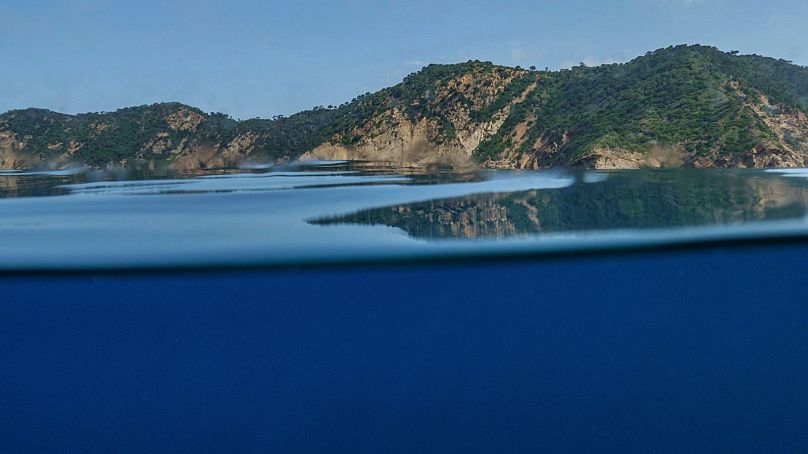
Mountains are reflected in the waters of France's Port-Cros National Park ahead of the UN Ocean Conference, 7 June 2025.AP Photo/Annika Hammerschlag

Isabella Lövin, former Swedish climate and environment minister and now Green member of the European Parliament described how, during her time in government, she fought to get oceans into the climate conversation, but said this shift has taken a long time.

“People have so much to think about - what's happening on land and with the forests and the atmosphere and the cryosphere and so on, but the oceans are really one of the two major climate regulators, so we need to have much more conversations on how we can preserve the ocean in order to stay below 1.5C,” she explains.

Similarly, Ana Vasconcelos, a member of the European Parliament with centrist group Renew Europe, warned that, politically, ignoring the ocean in climate and economic negotiations is a failure.

Europe must go to COP30 with a clear message: the ocean is not a backdrop - it’s a frontline climate actor.
Ana Vasconcelos
MEP

“Europe must go to COP30 with a clear message: the ocean is not a backdrop - it’s a frontline climate actor. I want the UNOC to produce real and concrete commitments that reflect the scale of the crisis and the ocean’s role in solving it,” she says.

That includes establishing clear and actionable guidelines for global ocean governance, recognising that the ocean is a common resource that needs to be safeguarded through global cooperation, she adds.

Ahead of COP30, France and Brazil also launched the Blue NDC Challenge, calling on countries to place the ocean at the centre of their plans to reach the goals of the Paris Agreement. Countries need to submit updated versions of these plans by September ahead of COP30.

Related


Why are oceans under threat?


The ocean’s role as a climate regulator is increasingly being chipped away.

At the start of the conference, on 8 June, scientists released the first Starfish Barometer - an assessment of ocean health aimed at providing reliable evidence to inform policymakers and track the restoration of ocean health. It warned of rising sea levels, record temperatures, and rapid acidification.

This is worrying given the climate disaster the ocean has, so far, held back.

If the ocean wasn't there, it could be 50C warmer on land, but you don't get anything for free in this world...
Robert Blasiak
Associate Professor at the Stockholm Resilience Centre

“If the ocean wasn't there, it could be 50C warmer on land, but you don't get anything for free in this world, and the ocean is changing as a result of all of that excess heat going into it, and its capacity to continue absorbing heat is not something we can count on into the future,” says Robert Blasiak, Associate Professor at the Stockholm Resilience Centre.

Lambrechts likens the ocean warming to a kettle boiling: taking a long time to warm up - much longer than the air - but staying hot for a long time.

The world is heading towards that boiling point, he says, creating dead zones where marine life cannot survive, hindering ecosystems’ ability to store carbon, as well as affecting fish populations and impacting those communities who rely on them.
RelatedNearly 100 countries call for ambitious global treaty to end plastic pollution at UN ocean summit

Action to protect the ocean

While some damage to the ocean may take centuries to recover from, there are measures we could take today to help prevent further harm.

Banning bottom trawling and deep sea mining would be decisions with immediate results, says Lévy. These damage ocean ecosystems and, in the case of deep sea mining, a lot of the potential impacts are still unknown.

The EU's 2023 Marine Action Plan called on member states to phase out bottom trawling in all marine protected areas by 2030, due to the importance of the seabed for healthy marine ecosystems and climate change mitigation.

While 37 countries, including 15 EU nations and the UK, have signed a pause on deep sea mining as part of a political effort to prevent the practice until the implications of it are understood.

Related

According to Lövin, the most important thing to consider when protecting the ocean is the precautionary principle - the idea of avoiding activities that might cause harm that is not yet known.

“We need to really take the precautionary approach seriously because we are the decision makers. We are the ones that are going to be held accountable. We have the responsibility for future generations,” she tells Euronews Green.

Vasconcelos also called on the EU to take a “central and credible role” in International Seabed Authority (ISA) negotiations in July to ensure that ocean governance aligns with its climate and geopolitical priorities.

Ahead of UNOC, the European Union released its Ocean Pact, pledging €1 billion to support ocean conservation, science and sustainable fishing. It also announced that it will propose an Ocean Act in 2027 aimed at strengthening and modernising maritime spatial planning to help achieve the pact’s priorities, like restoring ocean health, building a blue economy, and advancing research and knowledge.

While it was not as ambitious as some would have liked, with Vasconcelos saying it is unclear where the €1 billion will come from and leading ocean NGOs saying it lacks concrete protection measures, it has been widely welcomed as a way of bringing oceans back into the conversation and linking different ocean policies.

However, not everyone is on board. One of the notable absences from the conference was the US government, which under President Trump has pulled out of the Paris Agreement and is unilaterally trying to push ahead with deep sea mining.

Lövin called the lack of US presence a scandal, contrasting it with the efforts of the EU and other world leaders to work against planetary collapse and pointing to the need to work together to protect the world for future generations.
Ocean Summit 2025

UN Summit advances ocean protection, vows to defend seabed

A global oceans summit wrapped up Friday with world leaders taking major steps toward marine protection and vowing a showdown when nations meet to negotiate rules for deep-sea mining next month.


Issued on: 14/06/2025 - RFI

There are four major threats to the ocean's immense ecosystem and they all have one and the same cause: human activities. © RFI

But as a cacophony of ship foghorns sounded the close of the UN Ocean Conference in France, a lack of funding pledges and the total omission of fossil fuels disappointed some observers.

The summit was just the third -- and largest yet -- dedicated entirely to what the United Nations calls an "emergency" in the world's oceans.

More than 60 heads of state and government joined thousands of business leaders, scientists and environmental campaigners over five days in the southern city of Nice.


Treaty tide
 

There was unanimous praise for efforts to ratify the high seas treaty designed to protect marine life in the 60 percent of oceans that lie beyond national waters.

Some 19 countries formally ratified the pact at Nice, taking the overall tally to 50 -- but 60 nations are needed to bring the treaty into force.

France's oceans envoy, Olivier Poivre d'Arvor, said the numbers would be reached by September and the treaty should take effect by January, 2026.

Olivier Poivre d'Arvor, at a press conference in Nice at the Third UN Ocean Summit, 13 June 2025. © Géraud Bosman-Delzons/RFI

Rebecca Hubbard, director of the High Seas Alliance, welcomed the "incredible progress" but urged "all remaining nations to ratify without delay".

The summit sought a collective lift for oceans even as countries brace for tough talks over deep-sea mining in July and a plastic pollution treaty in August.

More than 90 ministers called in Nice for the treaty to enshrine limits on plastic production -- something fiercely opposed by oil-producing nations.

The summit also rallied behind a defence of science and rules-based oversight of common resources -- most notably the unknown depths of the oceans -- in a direct rebuke of US President Donald Trump.

Trump was not present in Nice and rarely mentioned by name, but his shadow loomed as leaders thundered against his unilateral push to mine the ocean floor for nickel and minerals.

Seabed row

France and like-minded countries vowed to block any effort to permit deep-sea exploration at negotiations over a mining code at the International Seabed Authority next month, said Poivre d'Arvor.

"Nobody knows what is there in the deep sea... you cannot launch recklessly down this path," he said in a closing address.


UN Secretary-General Antonio Guterres urged caution, warning against turning the deep sea into "the wild west".

Leaders "made it unmistakably clear: deep-sea mining is one of the biggest threats facing our ocean, and the world is saying no", said Sofia Tsenikli from the Deep Sea Conservation Coalition.

But for all the rhetoric, a global alliance opposed to deep-sea mining only attracted four new members at Nice, rising to 37 nations.
Missing billions

Greece, Samoa and Colombia were among 14 nations who unveiled plans for vast new marine protected areas, taking the share of the world's oceans under conservation to more than 10 percent.

Some also announced restrictions on bottom trawling, a destructive fishing method captured in grisly detail in a new David Attenborough documentary.

Activists had pushed for a total ban on this kind of trawling, which uses heavy weighted nets dragged across the ocean floor.

The Greenpeace ship Arctic Sunrise heads out to sea on August 31, 2022, loaded with the boulders of Portland limestone to disrupt bottom-trawling in protected areas around the Uk coastline. AFP - QUENTIN TYBERGHIEN

Developing nations hoping their larger and wealthier counterparts would open the chequebook in Nice were disappointed.

Small island nations in particular have long complained they lack the finances required to build seawalls against rising tides and protect their waters from illegal fishers.

While private donors pledged around 8.7 billion euros ($10 billion) over the next five years, the UN says $175 billion a year is needed for sustainable ocean development.

Fossil fuels -- the main driver of climate change, ocean warming and the acidification of the seas -- were notably absent for a summit dedicated to marine protection.

"Ignoring the imperative of phasing out offshore oil and gas is not just an injustice: it is inadmissible," said Bruna Campos from the Center for International Environmental Law.

The summit closed with the unanimous adoption of a political statement, negotiated over many months, that contained no mention of coal, oil and gas.

"We must all reckon with the reality that you cannot protect the ocean without confronting the biggest root cause bringing it to the breaking point," former US special climate envoy John Kerry said in a statement.

(With newswires)


Nations vow to cut shipping noise as sea life struggles to be heard

Marine mammals struggling to feed their young are abandoning key habitats as underwater noise from human activity grows louder – a threat that's now been recognised by dozens of countries in an international push for quieter oceans.


13/06/2025 - RFI

Species like belugas and narwhals, which rely on sound to survive, are changing their behaviour as oceans grow louder. © OceanCare

By: Amanda Morrow

At the UN Ocean Conference in Nice this week, 37 countries led by Canada and Panama signed the first global declaration devoted solely to reducing human-caused ocean noise.

The effort targets the growing din from ships and industrial activity that is disturbing marine life around the world.

“We’re aware of about 130 different marine animals that are negatively impacted by underwater noise,” Mollie Anderson, senior campaign strategist at Canadian NGO Oceans North, told RFI in Nice.

“In some instances, they’re leaving areas altogether where noise is sustained and consistent.”

Sound travels more than four times faster in saltwater than in air, reaching vast distances and interfering with how marine animals communicate, hunt and navigate.


07:21


Arctic under pressure

The problem is especially acute in the Arctic, where melting sea ice is opening new shipping lanes in waters that were once among the quietest in the world.

“In the Northwest Passage alone, there’s been a 30 percent increase in ship traffic since 2016,” Anderson explained. “That is having a significant impact on the marine ecosystem in the Arctic.”

Species like belugas and narwhals, which rely on sound to survive, are already changing their behaviour.

“These specied are having a hard time communicating with each other, performing bottom dives and other essential functions to feed themselves and to take care of their babies,” she said.

The disruption is not only ecological – it’s also affecting people. As noise drives marine mammals away from their usual habitats, indigenous communities are finding it harder to hunt the animals they have long depended on.

“Many of our Indigenous people, particularly Inuit in the Canadian Arctic, are reliant on marine mammals for food security and cultural continuity,” Anderson said.

Simple steps, urgent need


The new declaration – known as the High Ambition Coalition for a Quiet Ocean – is voluntary, but calls for quieter ship design, noise limits in marine protected areas and shared access to sound-monitoring technology.

It also aims to help countries with fewer resources to monitor and manage ocean noise.

Some of the most effective changes are also the simplest, Anderson said. “Even a reduction in speed of a few knots can make a big decibel difference.”

Other measures include re-routing ships away from sensitive zones, using more efficient propellers and switching to electric or hybrid engines.

In a recent pilot project, Oceans North measured the sound of an electric vessel using hydrophones – underwater microphones – and found it was significantly quieter than a conventional ship.

Ocean’s survival hinges on finding the billions needed to save it

From promises to policy

While some ports have introduced voluntary guidelines, regulation is needed. “There’s lots of voluntary measures that procurement and ports can adopt, but there’s no real regulation right now,” Anderson said.

“We regulate the roads that we drive on. I don’t see why it should be different for ships in certain areas. They should go faster or slower ... That just seems like practical and good public policy to me.”

Panama Environment Minister Juan Carlos Navarro said the issue has been “sidelined in global environmental discourse” for too long.

The coalition, he said, signals a commitment to “act decisively" to protect marine biodiversity from what he called an "invisible yet powerful threat".


UN ocean summit ends with boost for marine conservation, no mention of fossil fuels


Nice (France) (AFP) – The UN Ocean Conference in the southern French city of Nice concludes this Friday with countries taking steps towards marine protection and declaring a battle over deep sea-mining, but slammed for leaving fossil fuels off the agenda – the key driver of ocean warming. Nations hoping for new financial pledges to help with battling rising sea levels and overfishing were also left disappointed.

13/06/2025 - 
By: FRANCE 24


France is hosting world leaders scientists, business leaders and marine conservationists for a global oceans summit. © Valéry Hache, AFP


A global oceans summit concludes Friday with nations taking major steps towards marine protection and vowing a showdown over deep-sea mining, but criticised for leaving fossil fuels off the agenda.

Countries hoping for new financial pledges to assist with combating rising seas and overfishing were also left disappointed at the UN Ocean Conference in France.

More than 60 heads of state and government joined thousands of business leaders, scientists and environmental campaigners over five days in the southern city of Nice.

The United Nations says the world's oceans are facing an "emergency" and the Nice gathering was just the third – and the largest yet – dedicated entirely to the seas.


Treaty tide


Activists unanimously praised concrete progress toward ratifying a landmark pact to protect marine life in the 60 percent of oceans that lie beyond national waters.

"This week's ratifications of the high seas treaty mark a major milestone for ocean action," said Rebecca Hubbard from the High Seas Alliance.

Some 19 countries formally ratified the treaty at Nice, taking the overall tally to 50. Sixty nations are needed to enact the treaty.


France's special envoy for the oceans, Olivier Poivre d'Arvor, said the numbers would be ready in time for a formal ratification ceremony in September in New York.

The treaty should then take effect in January 2026, he added.

Plastic push

The conference sought to rally global action on marine protection as countries prepare to tussle over global rules for deep-sea mining in July and a plastics treaty in August.

More than 90 ministers issued a symbolic call in Nice for the hard-fought plastics treaty to contain limits on consumption and production of new plastics, something opposed by oil-producing nations.

Elephant in the room

The summit rallied a defence of science and rules-based oversight of common resources – most notably the unknown depths of the oceans – in a direct rebuke of US President Donald Trump.


Trump was not present in Nice and rarely mentioned by name but his spectre loomed large as leaders backed the global multilateralism he has spurned.

In particular, leaders condemned Trump's push to fast-track seabed mining, vowing to resist his unilateral efforts to exploit the ocean floor.

Seabed row

Leaders "made it unmistakably clear: deep-sea mining is one of the biggest threats facing our ocean, and the world is saying no", said Sofia Tsenikli from the Deep Sea Conservation Coalition.

French President Emmanuel Macron called it "madness" while Brazil's Luiz Inacio Lula da Silva warned against a "predatory" race for critical minerals.

But a global alliance opposed to deep-sea mining, and spearheaded by France, only attracted four new members during the summit, taking the total to 37 nations.

Poivre d'Arvor said the alliance would flatly reject any call at a meeting of the International Seabed Authority next month to permit deep-sea exploration.

The authority, backed by the UN, has 169 member states.

Overfishing

Many nations took the opportunity to unveil plans to create vast new marine protected areas and restrict bottom trawling, which was recently captured in grisly detail in a new David Attenborough documentary.

Activists had wanted countries to go further, advocating for a total ban on the destructive fishing method that sees heavy nets dragged across the ocean floor.

Missing millions


Some 8.7 billion euros ($10 billion) was committed over the next five years by philanthropists and private investors for the sustainable development of ocean economies.

But pledges were less forthcoming from wealthy governments, with France announcing two million euros for climate adaptation in Pacific Island nations.
Flat finish

The summit will close later Friday with a joint political statement, negotiated over many months between nations, that critics slammed for omitting any reference to fossil fuels – the key driver of ocean warming.

Laurence Tubiana, CEO at the European Climate Foundation, said Nice showed global co-operation was still possible "but let's not confuse signatures with solutions".

"No communiqué ever cooled a marine heatwave," she said.

Former US special climate envoy John Kerry, who was present in Nice, said in a statement that it was impossible to "protect the ocean without confronting the biggest root cause bringing it to the breaking point: the pollution from unabated fossil fuels pumped into the atmosphere".

(FRANCE 24 with AFP)


‘Survival’ at stake as Vanuatu uses ocean summit to press ICJ climate case

Vanuatu is using this week's UN Ocean Conference in Nice to demand climate justice ahead of a landmark legal opinion from the world's top court – with climate minister Ralph Regenvanu telling RFI that faster action to hold big polluters accountable is "a matter of survival" for his people.


Issued on: 12/06/2025 - RFI

Vanuatu Climate Minister Ralph Regenvanu speaks to RFI during the UN Ocean Conference in Nice on Wednesday 11 June 2025. His country is calling for faster climate action and legal accountability. © Amanda Morrow / RFI

By:Amanda Morrow

The Pacific island nation is asking the International Court of Justice to clarify what countries are legally required to do to tackle climate change – and what the consequences should be when they fail.

“We want a 1.5 aligned world... because the science tells us that’s what we need to stay within the livable bounds for our people,” said Regenvanu.

The ICJ opinion, expected as early as next month, was requested by the UN General Assembly and backed by more than 130 countries.

While not legally binding, it stands to carry significant weight and set a precedent for future legal action, including in national courts.

Legal pressure, not pledges


Julian Aguon, Vanuatu’s legal counsel for the case, said it would be a mistake to dismiss the opinion simply because it is not enforceable.

“Even if it’s not a binding judgment, the right way to think about it is that it’s authoritative legal guidance for all countries,” Aguon said.

“Unlike a ruling that only applies to two parties, this opinion will clarify the obligations of every state under international law.”

Vanuatu is one of the world’s most climate-exposed nations. Sea levels in parts of the Pacific are rising faster than the global average of 4.3 centimetres per decade, and warming oceans are causing widespread coral bleaching, acidification and biodiversity loss.

“The single greatest cause of the destruction that’s happening in the oceans... is the heating of the ocean, which is caused by greenhouse gas emissions,” Regenvanu said.

“So it’s the single greatest threat to the ocean right now.”

The ICJ case builds on long-standing frustration with slow progress at climate summits.

“We’ve been involved in the UNFCCC process, the COPs, for like 30 years. And we’re not seeing the right ambition and change in the international community," Regenvanu said.

"We are looking to speed that up, to raise that ambition, to get things to happen faster.”

Children play on the beach on Efate Island, Vanuatu. The country is pushing for climate accountability through a landmark case it has brought to the International Court of Justice. AP - Nick Perry

Defining the consequences


At issue is whether countries have violated existing international laws – not just climate treaties, but also human rights law, the law of the sea and key environmental principles such as the duty to prevent harm and act with due diligence.

“Climate change is not occurring in a legal vacuum,” Aguon explained. “It is governed by a wide body of international law.”

The court has been asked not only to clarify those obligations, but also to outline the consequences when they’re breached.

“This case does, in fact, represent a watershed moment in legal accountability for climate change,” Aguon said.

“We can move into a new era of binding obligations and the consequences for failure to take those obligations seriously.”

Asked whether Vanuatu is seeking "reparations" for the damage already done, Regenvanu emphasised that the case is about climate justice – holding those who caused the crisis responsible for fixing it.

“Justice means if you cause a problem, you are responsible for dealing with it and making up for it,” Regenvanu said. “And I think reparations is a word you could use. It is to do with fixing the problem you created.”

A strong opinion delivered by the ICJ could open the door to a new wave of legal challenges and lay the groundwork for countries like Vanuatu to pursue compensation through national or regional courts.

“It becomes a legal precedent that can be used in any court. So even a municipal court, a city court... we can expect to see greater climate action being achieved through cases that are won on the back of what this court says,” Regenvanu explained.

The ICJ heard arguments on the case in December, with 99 countries and more than a dozen organisations taking part – the largest number ever.


Ireland moves to ban Israeli imports, as university severs ties with Israel

Dublin – Ireland has made moves to become the first European Union country to ban trade with Israeli-occupied territories, while its prestigious university Trinity College has cut all ties with Israel. Its long-held continuing support for the Palestinian people has roots in the country's own history – and these latest measures have crystallised tensions with Israel.

Students at Trinity College Dublin rally in support of Palestinians in Gaza, 4 May, 2024. © Clémence Penard / RFI

Ireland's prestigious Trinity College Dublin said on Wednesday, 4 June that it would cut all ties with Israel in protest at "ongoing violations of international and humanitarian law" – the first first Western university to make such a move.

The university's board informed students by email that it had accepted the recommendations of a taskforce to sever "institutional links with the State of Israel, Israeli universities and companies headquartered in Israel".

The recommendations would be "enacted for the duration of the ongoing violations of international and humanitarian law," said the email, sent by the board's chairman Paul Farrell and seen by French news agency AFP.

The taskforce was set up after part of the university's campus in central Dublin was blockaded by students for five days last year in protest at Israel's actions in Gaza.

US slams sanctions by UK, allies on far-right Israeli ministers

Jenny Maguire, president of Trinity's student union, told RFI's Dublin correspondent Clémence Pénard: "Last year, the university threatened to fine the union €250,000 for our protests. But today, we are gathered here, in a better Trinity, a Trinity free of apartheid."

Among the taskforce's recommendations approved by the board were pledges to divest "from all companies headquartered in Israel" and to "enter into no future supply contracts with Israeli firms" and "no new commercial relationships with Israeli entities".

The university also said that it would "enter into no further mobility agreements with Israeli universities".

Trinity has current Erasmus+ exchange agreements with two Israeli universities: one with Bar Ilan University, which ends in July 2026, and one with the Hebrew University of Jerusalem, which ends in July 2025, the university told AFP.

The board said that the university "should seek to align itself with like-minded universities and bodies in an effort to influence EU policy concerning Israel's participation in such collaborations".

Eoghan, a student at the university, said: "Not so long ago, under British colonisation, we too experienced oppression that we recognise in what the Palestinian people are suffering. In Ireland, we cannot remain silent in the face of this. Maybe others can, but not us. And we will make sure that our voices are heard."

French dockers refuse to load cargo of machine gun parts bound for Israel

Import ban

In the previous week, on 27 May, the Irish government introduced a bill to ban the import of goods from Israeli settlements considered illegal under international law – an unprecedented move for a European Union member.

The bill would affect only a handful of products – including oranges, dates and olives – and is largely a symbolic measure, but one that would make Ireland the first European country to restrict trade with Israeli settlements.

The move comes after the International Court of Justice last year said Israeli occupation of the West Bank, East Jerusalem and Gaza Strip was illegal under international law – an advisory opinion which the Irish government said guided its decision.

"The government has agreed to advance legislation prohibiting trade in goods with illegal settlements in the occupied Palestinian territory. It is the government's view that this is an obligation under international law," a foreign ministry spokesperson told AFP.

Foreign Minister Simon Harris told reporters he hoped other EU countries would follow Ireland's lead.

Palestinian leader pledges 'unprecedented' reforms ahead of Paris conference

Scars of colonisation

Ireland has long been at the forefront of the fight for Palestinian rights. The country has often compared its own past, marked by British colonisation, to that of the Palestinian people. The sense of a shared history with Palestine is widespread, and there is a political consensus across all Irish political parties to defend the rights of the Palestinian people.

As far back as 1980, Ireland affirmed its support for the principle of a Palestinian State and last May, alongside Spain and Norway, it officially recognised the State of Palestine.

For many, this formal recognition was an essential first step towards a two-state solution. Some even hope that the island of Ireland, split in two between the Republic of Ireland and Northern Ireland, which remains part of the United Kingdom, could serve as a model for peace in the Middle East.

Ireland has been among the most outspoken critics of Israel's response to the 7 October, 2023 attacks on southern Israel by Hamas militants, which sparked the war in Gaza. Polls since the start of the war have consistently shown overwhelming pro-Palestinian sympathy in Ireland.

French left demonstrates in support of Gaza-bound aid boat

Ireland has also joined South Africa in bringing a case before the International Court of Justice in The Hague accusing Israel of committing genocide in Gaza – charges angrily denied by Israeli leaders.

In December, Israel's Foreign Minister Gideon Saar ordered the closure of the country's embassy in Dublin, citing what he called Ireland's "extreme anti-Israel policies".

The Irish President, Michael D. Higgins, has been described as anti-Semitic by Israeli officials. He responded: "When the government of Israel resorts to such a defamatory insult, it undermines and devalues the very meaning of anti-Semitism."

(With AFP, and partially adapted from this article and this article by RFI's French service)

Trump says power plants don't add to air pollution. Climate scientists say it’s 'nonsensical'

More than a dozen climate scientists said the Trump administration’s assertions were factually incorrect.


Copyright Joshua A. Bickel/AP Photo

By Euronews with AP
Published on 12/06/2025 

The Trump administration is facing backlash from climate scientists who say the US government is bungling basic facts about the impact of industrial emissions on air quality.

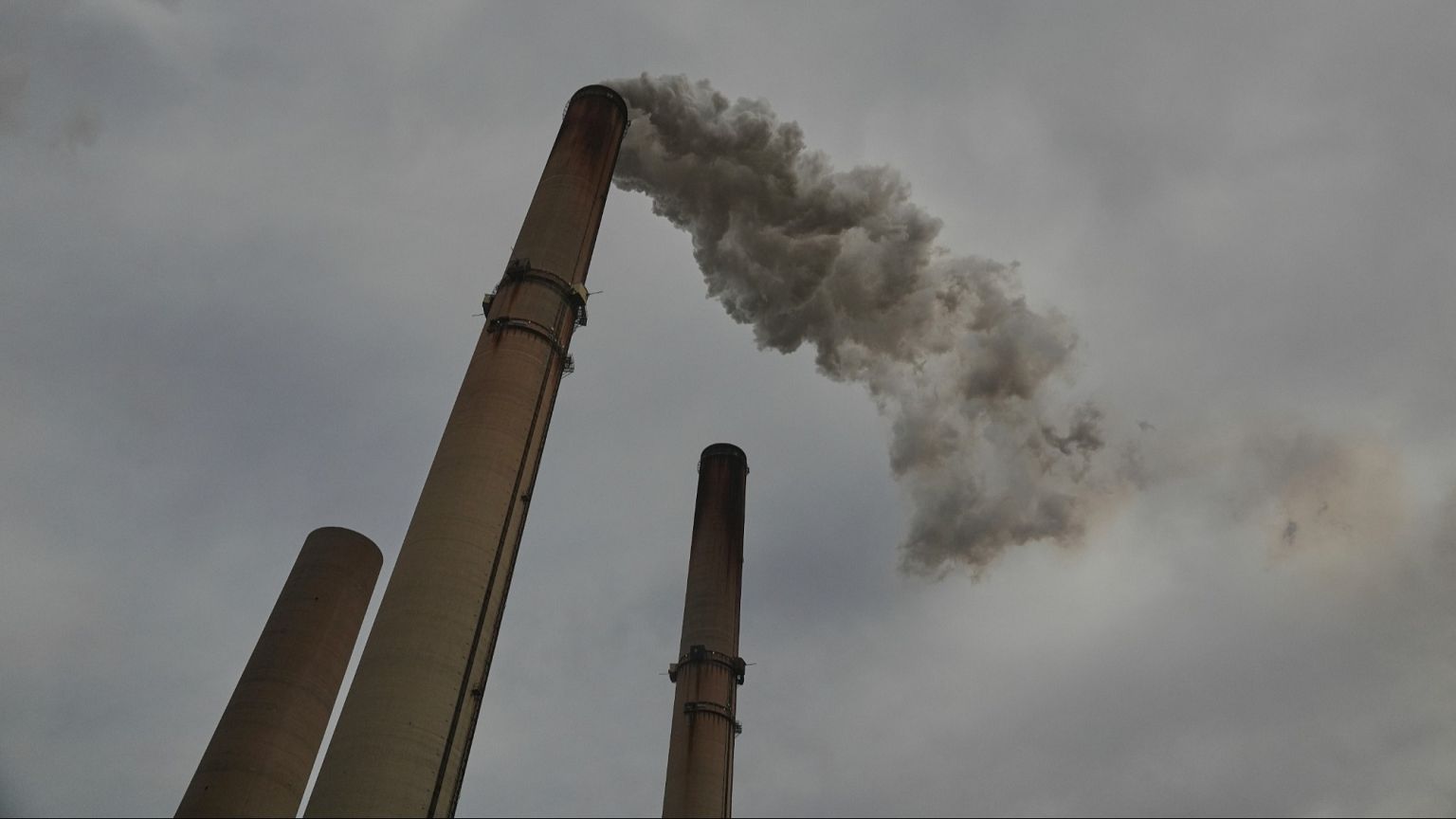
The US Environmental Protection Agency (EPA) issued a new proposal this week that would roll back restrictions on greenhouse gas emissions and other pollutants for power plants that rely on fossil fuels.

The agency claimed in the proposal that heat-trapping carbon gas emissions "from fossil fuel-fired power plants do not contribute significantly to dangerous air pollution".


But 19 scientists – experts in climate, health, and economics – told the Associated Press the agency’s statement was scientifically incorrect. Many of them called it disinformation.


Here's what five of them said.

'It's basic chemistry'

"This is the scientific equivalent to saying that smoking doesn’t cause lung cancer," said climate scientist Zeke Hausfather of the tech firm Stripe and the temperature monitoring group Berkeley Earth, adding that the administration’s conclusion was "utterly nonsensical".

"It’s basic chemistry that burning coal and natural gas releases carbon dioxide, and it’s basic physics that CO2 warms the planet. We’ve known these simple facts since the mid-19th century," said Philip Mote, an Oregon State climate scientist.

Dr Howard Frumkin, former director of the US' National Center for Environmental Health and a retired public health professor at the University of Washington, said "coal-and gas-fired power plants contribute significantly to climate change," which "increases the risk of heat waves, catastrophic storms, infectious diseases, and many other health threats".


‘These are indisputable facts,” he added.

"Their statement is in direct conflict with evidence that has been presented by thousands of scientists from almost 200 countries for decades," University of Arizona climate scientist Kathy Jacobs said.


Stanford climate scientist Chris Field, who coordinated an international report linking climate change to increasingly deadly extreme weather, summed it up this way: "It is hard to imagine a decision dumber than putting the short-term interests of oil and gas companies ahead of the long-term interests of our children and grandchildren".


‘Forever chemicals’ exposure before birth raises the risk of high blood pressure in teenage years

Teenagers who had been exposed to higher levels of PFAS before they were born were more likely to have high blood pressure, a new study found.


Copyright Canva

By Gabriela Galvin
Published on 13/06/2025

“Forever chemicals” may be taking their toll on our health before we are even born, new research suggests.

Per- and polyfluoroalkyl substances, or PFAS, are a group of chemicals used in everyday products like food packaging and non-stick cookware. They’re known as “forever chemicals” because they don’t degrade easily and can build up in the environment – and in our bodies.

Scientists have detected PFAS in people’s blood, breast milk, semen, livers, and even brains. They suspect these chemicals harm human health, with studies linking them to higher cholesterol, some cancers, and fertility problems, among other issues.

The new research adds another complication to that list: high blood pressure during adolescence.


The analysis followed more than 1,000 children in the US. It used maternal plasma collected shortly after they were born to identify their level of prenatal PFAS exposure, and matched it to doctors’ records up until their 18th birthdays.

Prenatal exposure to PFAS was linked to a higher risk of developing high blood pressure later in childhood, particularly in the teenage years, according to the study published in the Journal of the American Heart Association.

The findings indicate that “these forever chemicals can have long-lasting and potentially harmful effects that may only become apparent years after birth,” Zeyu Li, the study’s lead author and a researcher at Johns Hopkins University in the US, said in a statement.

The risk of elevated blood pressure was even higher for boys and Black children with higher PFAS levels at birth, the study found.


In a surprise to researchers, a handful of forever chemicals were actually linked to lower diastolic, or bottom number, blood pressure in early childhood, though that changed when they entered their teenage years.

Difficult to gauge forever chemicals’ impact

Evidence on the health effects of PFAS has been mixed so far.

While researchers believe these chemicals pose risks, it’s difficult to pinpoint their exact impact because there are thousands of PFAS that could all interact in different ways, and because people’s exposure changes over time.

Even so, Li said the latest study underscores the need for researchers to track people’s health and their PFAS levels over a long period of time, from early childhood to adolescence and beyond.


Meanwhile, Mingyu Zhang, the study’s senior author and an assistant professor at Harvard Medical School, said stronger environmental protections are needed to protect people from PFAS, given they are so ubiquitous that people cannot meaningfully limit their exposure on their own.

That could include phasing out forever chemicals from consumer products and in industrial settings, he said, as well as better surveillance and limits on PFAS in water systems.


“This is not something individuals can solve on their own,” Zhang said.
The Mashouf sisters are transforming CO₂ into textiles with enzyme technology

Neeka and Leila Mashouf have created a breakthrough enzymatic process that turns CO₂ into cellulose-based fibres for textiles and beyond, offering a sustainable alternative to conventional production.


Copyright EPO
By Elise Morton
Published on 13/06/2025 

Every year, the global textile industry contributes billions of tonnes of CO₂ to the atmosphere. In response, twin sisters Neeka and Leila Mashouf, 28, have developed an innovative process that transforms carbon emissions into biodegradable fibres, creating a sustainable alternative to traditional manufacturing.

Their startup, Rubi, is built around a proprietary enzymatic system that mimics how trees absorb CO₂ and turn it into cellulose – only here, the process happens in a chemical reactor. Their breakthrough has won them a place among the Tomorrow Shapers of the Young Inventors Prize 2025, awarded by the European Patent Office.


Reinventing supply chains with climate-positive materials

“Our invention uses a special sequence of enzymes, which are like nature’s chemical engineers, to transform CO₂ into stringy polymers like cellulose, which we use to make fibres, yarns and fabrics,” says Neeka. “We developed this technology to solve what we saw as the most important global problem.”

Unlike conventional carbon conversion technologies that rely on fermentation or thermochemical systems – both of which are energy intensive and costly – Rubi’s method is scalable and low-impact. The enzymes operate under ambient conditions and require ten times less energy, enabling CO₂ to be converted into material inputs with minimal environmental strain. These inputs can then be integrated into existing textile supply chains, helping brands lower their carbon footprints without overhauling their infrastructure.

The company is already piloting its materials with Walmart, Patagonia, and H&M, demonstrating a market-ready application that could transform not just fashion, but multiple industries reliant on cellulose-derived products.


Fostering a more sustainable future for manufacturing


Raised in California’s San Francisco Bay Area, the sisters grew up surrounded by nature – and entrepreneurship. Their early exposure to the fashion industry, combined with a deep passion for science, laid the foundation for Rubi. By the age of 15, they were already publishing scientific research and working in university labs. Neeka pursued materials science and business, while Leila earned a medical degree from Harvard, focusing on bioengineering and enzymatic systems.

In 2021, they brought their disciplines together to found Rubi, with the mission of making manufacturing compatible with the planet. “Rubi is creating a new paradigm where manufacturing can thrive while preserving natural resources and advancing climate goals,” Leila explains, adding that, at a basic level the enzymes are “like a little Pacman”. “They eat molecules and spit them out into something a little bit different,” she describes.

Unlocking carbon’s potential across industries

The impact of Rubi doesn't stop with the fashion industry. The potential for CO₂-derived cellulose reaches across sectors – packaging, pharmaceuticals, cosmetics, food applications, and even building materials – where carbon-intensive methods dominate. By licensing their technology, the Mashouf sisters aim to scale rapidly and empower other manufacturers to shift toward sustainable production.

“We’ve proven that CO₂ can be a valuable resource rather than a harmful waste product,” says Neeka. “I’m honoured to work together with my sister as we pioneer the next era of abundance with reinvented manufacturing systems.”

In the hands of the Mashouf sisters, carbon is no longer just a challenge, but a raw material for change.


In partnership with