Saturday, June 14, 2025

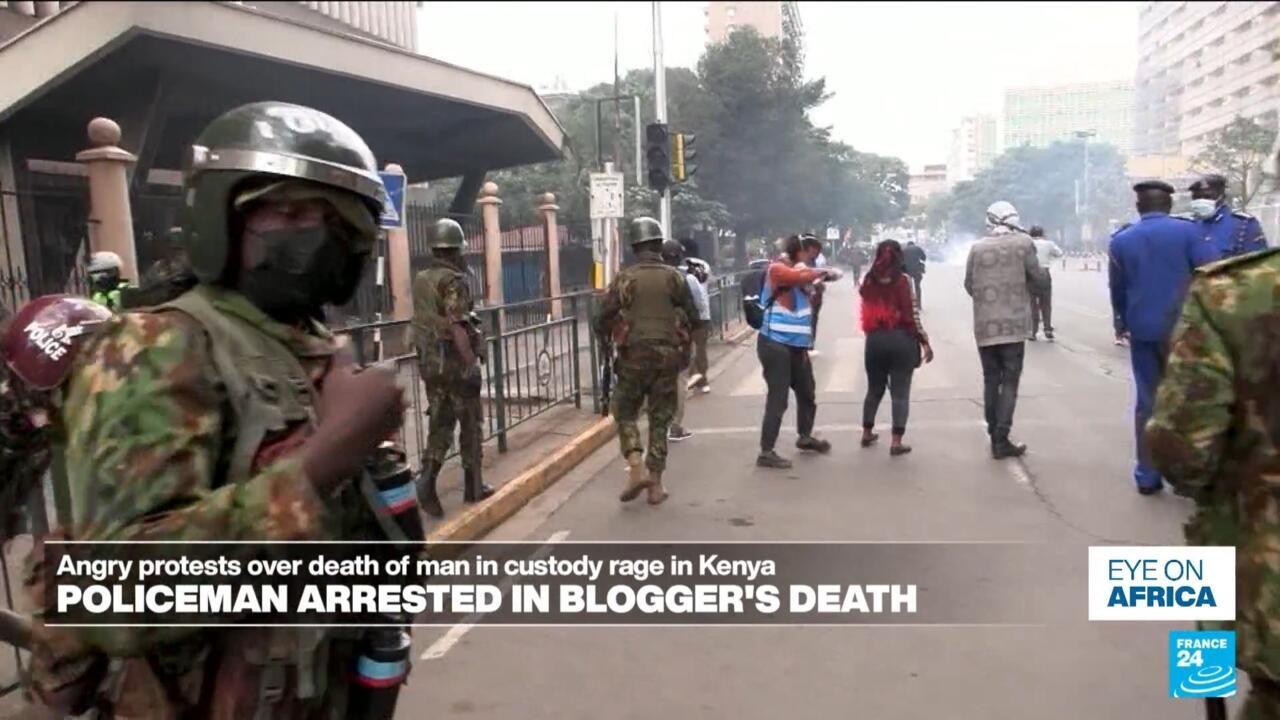
Kenyan policeman arrested in blogger's death as hundreds protest


EYE ON AFRICA © FRANCE 24
Issued on: 12/06/2025 - 

In tonight's edition: Kenyan authorities arrest a police constable over the death of a political blogger in custody, as angry protests rage in Nairobi. Also, Gambians have been growing increasingly worried by the devastation being caused by a growing fishmeal processing industry on their shores. Plus Nigeria's cost-of-living crisis has reached the relatively affluent class of dog owners, who are struggling to feed their pets because of soaring food costs.


15:21 min
From the show
EU courts international scientists, but is Europe attractive enough?


Issued on: 13/06/2025 

The EU says science is the key to its future. But is it putting its money where its mouth is? Earlier this year, the French government agreed to cuts in the country's research budget and over the past year, science powerhouses such as Germany, Italy and the Netherlands have proposed or implemented cuts in their research sectors. Those working in universities and research centres say there is a stark gap between the way the EU is presenting itself as a magnet for global talent – the pitch that the French government and the European Commission made at their "Choose Europe for Science" conference in Paris in early May – and the reality.


To make Europe more attractive, the EU executive says a €500 million package will be proposed for the 2025-2027 period. Part of that outreach is aimed at American researchers, who say their work is being jeopardised by the Trump administration's cuts. But the €500 million sum is the equivalent of just a fraction of the yearly endowment of a top US university such as Harvard or Yale.

We delve into the issue with two MEPs.

Programme produced by Perrine Desplats, Isabelle Romero and Luke Brown

Our guests
Martin SCHIRDEWAN
German MEP, Co-chair of The Left group

Ivars IJABS
Latvian MEP, Renew Europe


11:35
TALKING EUROPE © FRANCE 24
Climate change disrupting species’ habitats and altering both productivity and seasonality


Issued on: 12/06/2025 -


The high seas treaty could be law by the end of the year, affording protection to marine life in the vast swathes of ocean that belong to no one. The treaty was adopted by UN member states in June 2023. It has been ratified by 49 nations plus the European Union, according to the UN, and comes into force 120 days after its 60th ratification. Activities that could come under regulation include transport and fishing. For in-depth analysis and a deeper perspective, FRANCE 24's François Picard welcomes Manuel Barange, Biologist, Assistant Director General of the Food and Agriculture Organization of the United Nations and Director of its Fisheries and Aquaculture Division.

Video by: François PICARD


'Protecting our oceans: Behavioural change comes from laws and changing of the system'


Issued on: 11/06/2025 -

The international treaty on the high seas, which focuses on conservation of maritime areas beyond national jurisdictions, has received sufficient support to take effect early in 2026, French President Emmanuel Macron said on Monday. Speaking at the third United Nations Oceans Conference in Nice, Macron said 55 countries' ratifications of the treaty have been completed, around 15 are in progress with a definite date, and another 15 will be completed by the end of the year, meaning that the required 60 will be achieved. FRANCE 24's Mark Owen welcomes Merijn Tinga, activist, biologist and world-renowned "Plastic Soup Surfer".

Video by: Mark OWEN

DEI

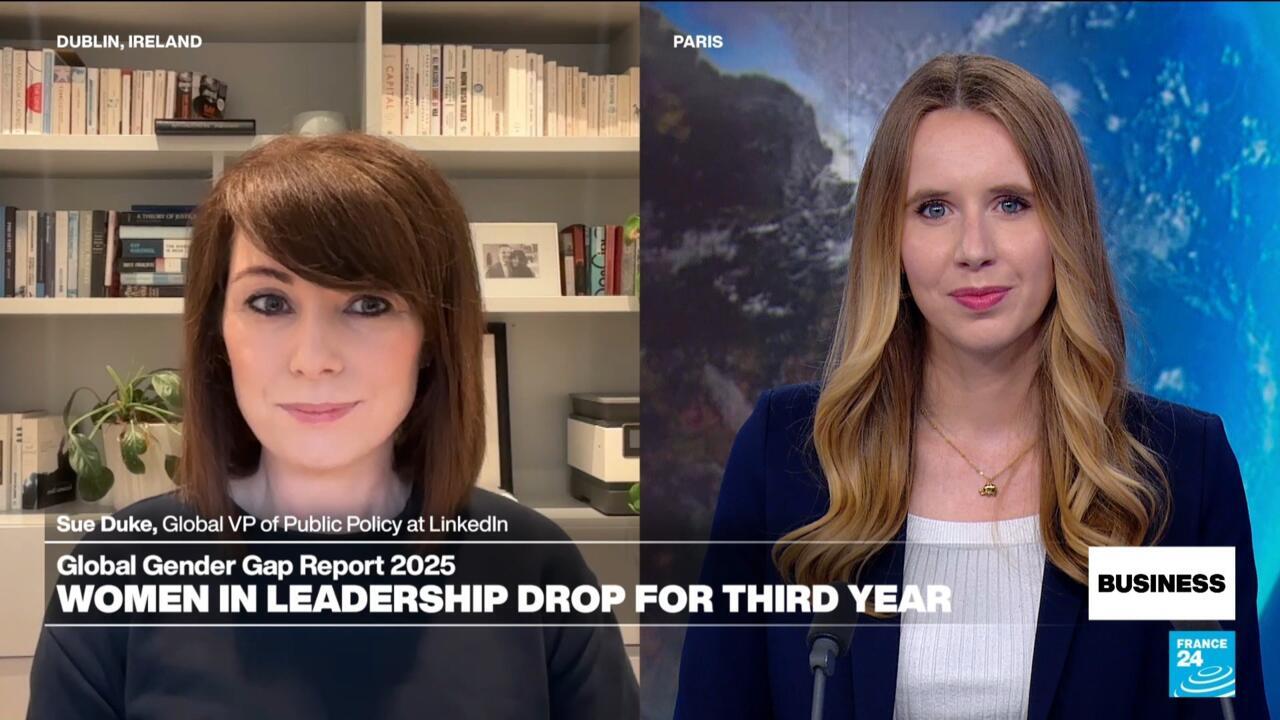
Rate of women hired into top jobs falls for third year running


BUSINESS © FRANCE 24
Issued on: 12/06/2025 - 

Fresh analysis from LinkedIn shows the rate of women hired into leadership positions has slowed for the third year in a row, leaving the hiring rate back where it was in 2020. The data shows women are being shut out of senior positions, holding less than a third of top roles despite making up almost half of the global workforce. Sue Duke, LinkedIn's Global VP of Public Policy, discusses some of the solutions that would help reverse this decline.

Play (05:54 min)
How AI is reinventing misogyny


THE 51 PERCENT © FRANCE 24
Issued on: 13/06/2025 - 

As artificial intelligence continues to transform societies worldwide, The 51 Percent asks
what does its rapid development mean for women and girls. A surge of AI-powered systems has misogyny baked into their very core, placing women and girls at risk worldwide. We report on how men can now create perfect AI girlfriends. Also how a video, created by AI, was posted to TikTok by the French government to celebrate the 80th anniversary of French women getting the vote in 1945. However, there's been uproar as the images are mainly of men without even an actual shot of a woman casting her ballot. Plus Annette Young talks to UK feminist author, Laura Bates, about a highly disturbing visit to a Berlin cyber brothel.


12:33 min
From the show


International investigation reveals Wagner Group's secret prisons in Mali

A collaborative investigation by international media outlets has uncovered secret prisons run by Russian Wagner mercenaries in Mali, where abuse and torture are carried out with impunity. Reporters with the Forbidden Stories consortium – which includes RFI's sister channel France 24 – reveal how the Wagner paramilitary group duplicated methods it has used in Russia and Ukraine.


Issued on: 12/06/2025 - RFI

This undated photograph provided by the French military shows Russian mercenaries in northern Mali. © French Army via AP

Since arriving in Mali in 2021, Russian Wagner mercenaries have arrested, imprisoned and tortured hundreds of civilians in former United Nations bases and military camps shared with the Malian army, according to the Forbidden Stories investigation published on Thursday.

Forbidden Stories and its partners (including IStories, Le Monde and France 24) identified six military bases where Malian civilians were detained and tortured by Wagner paramilitaries between 2022 and 2024 – Bapho and Nampala in the Ségou centre-south of the country, Sévaré and Sofara in the central Mopti region and Kidal and Niafunké in the Kidal and Timbuktu regions in the north.

A Malian aid worker tortured on 5 August, 2024 in the Nampala camp recounts that his torturers played Russian music at every interrogation, and the waterboarding he and two others were subjected to.

"They did it to me three times, until I couldn’t breathe anymore," he said. The guards alternated waterboarding with beatings, sometimes with batons or electric cables. “It was like they were killing dogs."

The aid worker had been arrested with other men from his village when Malian soldiers and Wagner operatives came looking for a walkie-talkie used by members of the al Qaeda-linked Group for the Support of Islam and Muslims (Jnim).

The location of the six detention centres in Mali identified by Forbidden Stories and its partners. © Anouk Aflalo Doré / Forbidden Stories

Another civilian victim, a Tuareg care assistant, was also apprehended during a raid on the market in Kita, near Dioura – an area of major Jnim activity. He remembers the arrival of the helicopters, the deadly gunfire and the looting of shops.

Taken with a group of men to the Sévaré camp, he escaped torture – but a less fortunate prisoner who welcomed him told him: "Pray to God that you don't suffer the same thing as us."


Civilians viewed as collaborators

Mali’s ruling junta enlisted the services of Wagner fighters following two coups led by Colonel Assimi Goïta in 2020 and 2021.

The group has supported Malian military operations against jihadists and Tuareg separatists.

Their deployment was made easier by France’s military withdrawal, finalised in 2022, after nine years of military operations against terror groups in Mali, and the end of the UN peacekeeping mission (Minusma) in December 2023.

The Wagner Group has been repeatedly accused of committing crimes against civilians while operating alongside the Malian Armed Forces (FAMa) in central and northern Mali.

"Civilians have been deliberately targeted since Wagner’s arrival," said Yvan Guichaoua, a researcher at the Bonn International Centre for Conflict Studies. "Security forces tend to view populations living in jihadist-influenced areas as collaborators," he told the investigation.

Earlier this month, Malian diplomatic and security sources said Wagner had left Mali and its units had been taken over by the Africa Corps, a Russian paramilitary group managed by the Russian government.


'FAMa has no say'

The Wagner Group is also known for its bloody track record in Ukraine, Syria and the Central African Republic (CAR).

The investigation showed that Wagner mercenaries duplicated methods it used in occupied Ukraine and in Russia – kidnappings, arbitrary arrests, cutting off contact with the outside world and systematic torture, sometimes to the point of death.

The civilians abducted and detained outside any legal framework in the Mali camps included shepherds, shopkeepers and truck drivers.

In Kidal and Niafunké, prisoners were crammed into containers once used to hold equipment belonging to Minusma. In addition to beatings and lack of food, the prisoners suffered from the heat and overcrowding.

A Malian officer, who asked to remain anonymous, said that FAMa was unable to rein in its Russian partners.

“Wagner arrests people independently. FAMa has no say,” the officer told Le Monde, a member of the investigative consortium.

Mali’s Ministry of Defence, Russia’s Defence Ministry, the Russian Embassy in Mali and Wagner mercenaries have not responded to requests for comment, Forbidden Stories said.
Harare goes green: capital city leads Zimbabwe’s climate fight with bold urban solutions

Harare, Zimbabwe – Harare, the capital of Zimbabwe, is fast becoming a key player in the battle against climate change, developing innovative approaches to tackle waste management, restore degraded ecosystems, and promote sustainable urban planning. Like many other cities across the globe, Harare faces significant environmental challenges - yet it is also a site of remarkable community-driven solutions and government-led initiatives aimed at securing a greener, more sustainable future.


Issued on: 12/06/2025 - RFI

Waste being turned nto organic compost for farming near Harare.
 © RFI/Gift Msipa

By: Gift Msipa in Harare

As cities are increasingly recognised as both contributors to and potential mitigators of climate change, Harare’s efforts reflect a growing awareness that urban areas must act locally to address global environmental issues.

The world continues to experience the effects of climate change and weather pattern disruptions that are severely impacting livelihoods, particularly in vulnerable nations. This has led to increased international scrutiny of environmental policies and practices, with emphasis on developing sustainable, inclusive responses that begin at the community level.

Despite being a city in a developing country, Harare’s actions underscore the importance of involving all sectors of society - from municipal authorities to grassroots organisations - in transforming harmful behaviours and practices into climate-positive solutions.

Transforming waste into opportunity

One of Harare’s most pressing challenges has long been waste management. Piles of uncollected rubbish, illegal dumping, and encroachment on protected wetlands have plagued the city for years. However, in recent times, Zimbabwe’s Environmental Management Agency (EMA) has taken major steps to reform this situation through targeted initiatives.

Leon Mutungamiri, Harare provincial manager for EMA, explains: “We’re actively promoting integrated resource recovery through the establishment of waste drop-off and transfer centres across the city. Currently, we have transfer centres in Mabvuku-Tafara, Showgrounds, Budiriro, and Highfields. A new centre is also being planned for Epworth.”

Waste at a collection station in Harare. © RFI/Gift Msipa

Beyond these measures, EMA is also tackling ecosystem degradation by restoring wetlands—natural assets that are essential for biodiversity and water management.

“As we speak, Monavale Vlei is now protected,” Mutungamiri adds. “We’re working closely with communities to ensure these areas are preserved for future generations.”

Harare has also become the testing ground for one of Zimbabwe’s most ambitious waste management projects: Geo Pomona. Situated on the site of the former Pomona dumpsite, the project involves the construction of a recycling facility and a waste-to-energy plant, designed to reduce landfill dependency and generate renewable energy from urban waste.

Cliff Chivanga, chief operations officer of the Zimbabwe Sunshine Group - an organisation of environmental activists - describes the group's involvement:

“We provide real, community-based solutions such as the creation of community waste transfer stations. These are designed to serve as first points of contact for waste generated at the household level.”

He stresses that the group’s initiatives are tailored to empower disadvantaged communities:

“When households separate their waste, recyclable materials are sent to local recyclers, and non-recyclables are directed to national projects like Geo Pomona. This way, every piece of waste is given a purpose.”

Greening Harare: buildings, compost, and youth involvement


In line with Zimbabwe’s national green policy, Harare is also exploring environmentally sustainable architecture. The city’s Eastgate Building stands as a pioneering example of climate-responsive design that uses natural ventilation to reduce energy use.

Eastgate building in Harare uses a passive-cooling approach with cavities and air passages. © RFI/Gift Msipa

Harare city architect, Tobias Chombe, highlights ongoing collaboration with the Green Building Council of Zimbabwe:

“We are working to ensure that all building plans submitted to the city include green considerations from the start - this includes energy efficiency, sustainable materials, and site impact. It’s part of a wider effort to green Harare through compliant, environmentally friendly construction.”

Meanwhile, grassroots efforts are continuing to flourish. The Sunshine Group, for instance, supports local beneficiation under Zimbabwe’s national ‘Zero Waste Movement’, launched in 2024. This includes turning organic waste into compost for climate-smart agriculture like Pfumvudza - a zero-tillage programme aimed at increasing food security while preserving soil health.

Chivanga elaborates: “There was previously little local value addition with plastic waste - it was often exported in raw form. Now, we’re working to change that by creating value chains that keep resources and benefits within our communities.”

Harare resident Shylen Chikwava, a 59-year-old widow, shares her experience of the new system: “I used to throw all my waste into the bin and wait for the municipal truck to collect it. Now I sort it, and I’ve seen how the recyclable materials are put to good use. It feels good to be part of something that helps the environment.”

Young people are also getting involved. Melissa Takudzwa Murwira, executive director of Young Volunteers for the Environment, says that empowering youth is a crucial part of the city's environmental mission: “We’re working with young people in various communities to raise awareness and mobilise action. Young people are not just the future - they are key decision-makers of the present.”


Planning for a resilient urban future

Urban planning in Harare is being re-evaluated to include green buffers, open spaces, and the protection of sensitive ecological zones. Town planner Laison Mukarwi believes that safeguarding the city’s environmental future requires firm standards:

“When planning any urban settlement, we should ensure that at least 5% of the land is allocated for breathing spaces - areas with vegetation that provide ecological balance.”

He also calls for designated green spaces along roads and mandatory buffer zones around rivers:

“These features are not luxuries - they are necessities. Communities also need to play their part in protecting these spaces, and we must educate them on their value.”


Harare has seen some areas fall prey to illegal sand mining and land barons, with authorities stepping in to reverse damage in some cases. While these issues reflect the pressures facing the city, they also highlight the urgency and importance of a cohesive, well-enforced urban environmental strategy.

As part of its commitments under the United Nations Framework Convention on Climate Change (UNFCCC) and the Paris Agreement, Zimbabwe - including Harare as its capital - has adopted policies to promote both climate mitigation and adaptation. These include localised action plans that aim to make cities like Harare more liveable, more resilient, and more sustainable.

Harare’s efforts show that while global climate solutions require international cooperation, it is at the local level - through the combined work of residents, authorities, and activists—that meaningful change often begins.
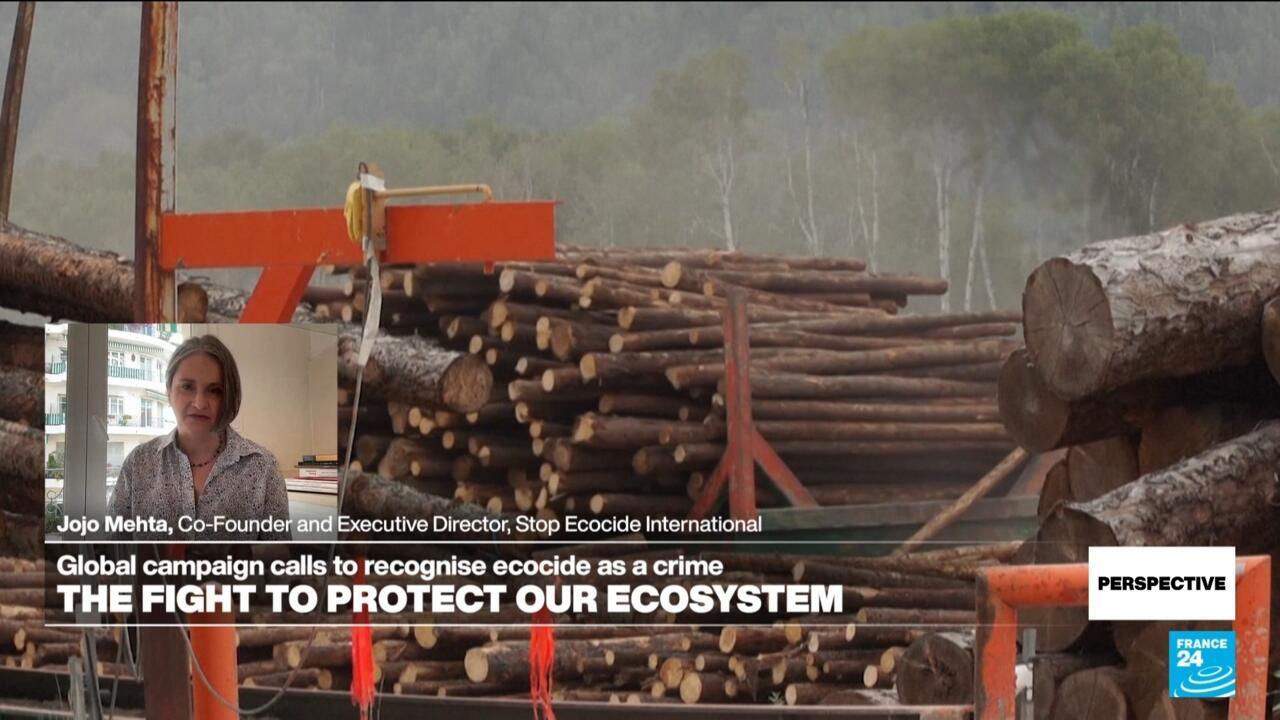
'We want to add ecocide to the list of international crimes': Head of Stop Ecocide International


PERSPECTIVE © FRANCE 24

Issued on: 12/06/2025 - 

The head of Stop Ecocide International has spoke to FRANCE 24 from the UN Ocean Conference in the south of France about the need to legally recognise crimes against the environment as serious crimes. Jojo Mehta jointly founded the organisation back in 2017 with the aim of using the law to make destructive practices illegal. She says we don't take damage to the environment seriously enough, and that her aim is to be able to hold individuals accountable for their environmental crimes. She spoke to us in Perspective.


05:49 min
From the show

Startups show off ocean-preserving tech at Paris trade fair


By AFP
June 13, 2025


Experts warned against using innovation to increase fishing hauls - Copyright AFP/File Philip FONG

Mona Guichard

Harnessing ocean currents to boost fuel efficiency of vessels, or tracking whales using sensor data and AI — startups at Paris trade fair Vivatech have been showing off the latest innovations aimed at protecting the environment.

Recently developed AI programs capable of learning from vast datasets have boosted projects trying to understand and predict real-world phenomena, several company founders told AFP.

“We have to use AI because in the natural world there are too many variables” to deal with manually, said Emily Charry Tissier, a biologist and founder of Canadian startup Whale Seeker, which is developing technology to track sea mammals.

Powered by “neural network” systems that ape the functioning of the human brain, the learning systems behind today’s AI models “can calculate a weather forecast 1,000 times faster than a standard digital model running on a supercomputer”, agreed oceanographer Alexandre Stegner.

He flagged an AI model developed by his firm, Amphitrite, that he said could predict ocean currents by crunching “several layers of satellite data corresponding to different physical variables”.

It can forecast currents up to 10 days in advance, he said, offering sea captains “a simple way to save fuel” by slightly changing course and using currents to gain a speed boost of up to four knots.

That could save operators money on fuel, reduce the carbon emissions from shipping, and avoid the classic solution of telling sea captains to reduce their speed.

– Global protection push –

Technologies like these were being shown off in the halls of Vivatech as the UN Ocean Conference (UNOC) drew to a close hundreds of kilometres to the south in French Mediterranean city Nice.

The conference has pushed a treaty to protect 60 percent of the world’s oceans closer to becoming law, with 55 signatures — just five shy of the number required for its enactment.

New technologies could be “a very good thing” for the oceans, said Andre Abreu, International Affairs Director at the Paris-based Tara Ocean Foundation.

But he warned that innovation should not be harnessed to allow more fish to be caught.

“That would mean shooting ourselves in the foot” on goals like preserving marine biodiversity, he said.

That ambiguity can be seen in technology from OceanEyes, a Japanese startup using AI analysis of satellite data to predict sea conditions.

The company hopes to cut the time fishing boats spend tracking down a catch.

“A big problem in Japan is the efficiency of the fishery operations. Many fishers spend a lot of time searching for fish in the water,” said boss Yusuke Tanaka.

With less fuel burnt, operators will save money and greenhouse emissions can be slashed.

Anticipating concerns about overfishing, OceanEyes said it also aimed to help vessels comply with recently updated Japanese regulations that oblige fishers to “ensure sustainable use of marine resources”.

– ‘Can’ vs ‘should’ –

Whale Seeker’s Tissier said technology could be used in a considered way to find sustainable solutions.

“I’d like the market to recognise its own limits — not the limits of what we can do, but what we should do,” she told AFP.

That attitude pushed her to refuse to work with a company that wanted to use whale detection to identify nearby fish to catch.

But startups cannot grow without funding and, in the context of oceans, investments are likely to come from big firms keen to make a saving — from fishing and ship management companies to haulage and logistics giants.

This could well limit their ability to stand on principle.

Stegner called for “regulations that would push the maritime sector to reduce carbon emissions”.

But Charry Tissier said the initiative could come from business.

“Technology is developing so much faster than regulation… what I’d like is for big companies to decide for themselves to be responsible,” she said.
In Kazakhstan, Caspian Sea is disappearing at alarming pace


FOCUS © FRANCE 24
Issued on: 13/06/2025 - 

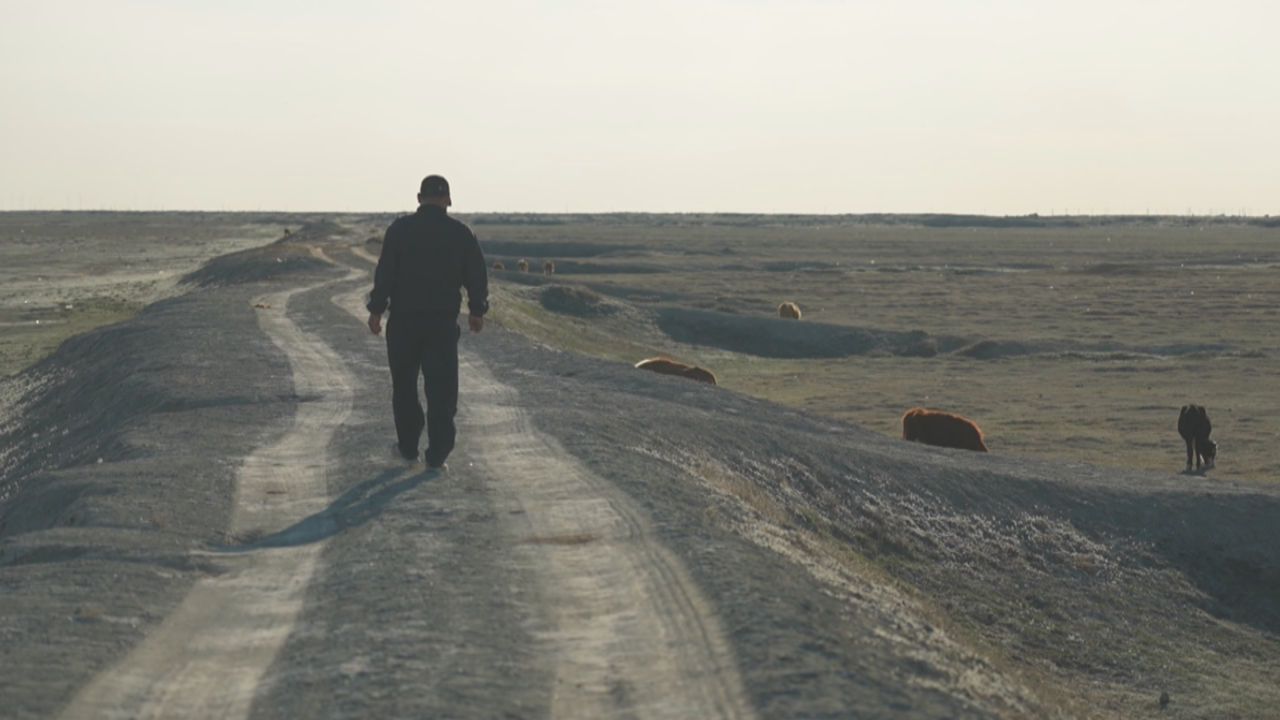
The world's largest landlocked body of water, the Caspian Sea, is evaporating at an alarming pace.


 Since the 1990s, its level has fallen by more than 3 metres. With ports drying up, fishing in decline and the economy in turmoil, Kazakhstan is bearing the brunt of the consequences. Like the Aral Sea before it, the Caspian could dry up almost completely if no action is taken. That would be an ecological disaster with massive consequences for the whole country. FRANCE 24's Lucie Berbey and Mathieu Beaudouin report, with Anna Hartley.

05:31 min
From the show
FOCUS