Sunday, June 15, 2025

Curbing Methane Emissions Thanks To Targeted Measurements
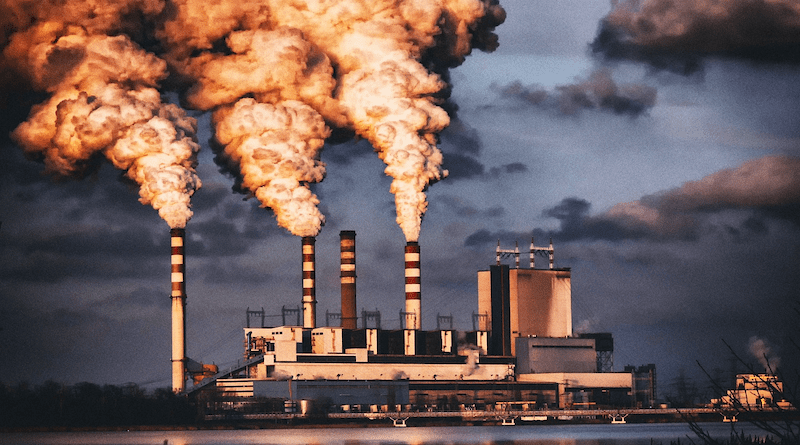
Power Station Combined Heat And Power Plant Chimneys Pollution


By 

Methane damages the climate – in the first 20 years after it is released, it is around 80 times more harmful than CO₂.


At the same time, the short-lived greenhouse gas offers enormous potential for climate mitigation, particularly in the oil and gas industry. This is because leaks can often be eliminated quickly, cost-effectively and permanently with “no-regret” measures. What would otherwise escape unnoticed can instead be captured, burned or reused. A study by Empa based on two international measurement campaigns in southern Romania shows that measurements are effective: After the first campaign in 2019, the companies responded to the identified leaks – and repaired their infrastructure.

“When we measured again in 2021, many of the leaks had disappeared,” says the study’s lead author Gerrit Kuhlmann from Empa. Depending on the scenario, methane emissions in the region have fallen by up to 60 %.

Super emitters are key to reduction

In the EU, around a third of energy-related methane emissions are attributable to oil and gas production. A significant proportion of emissions are produced in Romania – although the official figures are based on calculations, not direct measurements. To close this gap, the ROMEO campaign (ROmanian Methane Emissions from Oil and gas) was launched in 2019: Using mobile measuring devices, drones and aircraft, international research teams collected independent data for the south of Romania for the first time. A study carried out by Utrecht University showed that the measured methane emissions from southern oil production were not only significantly higher than previously assumed. They were even two to three times higher than the officially reported values for the entire oil and gas sector in Romania.

Particularly striking: Just 10% of the emitters caused around 70% of methane emissions. “These so-called super emitters have a disproportionately high impact – and are therefore particularly important for climate mitigation measures,” explains Kuhlmann. As it is hardly possible to use conventional measurement methods to specifically search an area the size of Switzerland with several thousand sites for super emitters, a new measurement campaign followed in 2021 – this time exclusively from the air: The AVIRIS-NG instrument was able to determine the emissions directly for each potential source within two days. The imaging method creates maps of methane in the atmosphere with a resolution of around five meters, allowing methane leaks to be detected from several kilometers up.

Emissions significantly reduced

The researchers used the measuring instrument to fly over around 80% of the oil and gas infrastructure in the southern region of Romania in a short space of time. However, they discovered significantly fewer super-emitters than expected. “We informed the relevant companies about the biggest leaks of 2019 – and many of them have apparently been repaired,” says Kuhlmann. Subsequent on-site visits revealed that leaks had been sealed or the escaping methane was being burned in a controlled manner. The latter is around 80 times more climate-friendly than simply letting it escape. In addition, sources that were overlooked in 2019 were identified for the first time. These are vent pipes that discharge excess gas into the atmosphere away from the actual facilities for safety reasons.


In order to compare the data from the first ROMEO measurement campaign in 2019 with the new measurements from 2021, the researchers developed four scenarios. This is because AVIRIS-NG provides precise data, but only above 10 to 100 kilograms of methane per hour. Smaller leaks therefore remain invisible. While the most pessimistic scenario for the measurement region in southern Romania assumes a purely “visible” reduction of around 20%, the most optimistic scenario assumes that smaller emission sources have also been reduced to yield a reduction of around 60%.

Making emissions visible

“We assume that the real emissions are somewhere in between,” says Kuhlmann. It is not possible to precisely quantify the reduction, as there are no additional ground measurements, and daily fluctuations – for example due to maintenance work during the day – influence the results. But one thing is clear: If you want to effectively reduce methane emissions, you first have to make them visible. This is the only way to identify the actual sources, understand their causes and realistically assess the progress of reduction measures.

The ROMEO campaign is supported by the International Methane Emissions Observatory (IMEO) of the United Nations Environment Programme (UNEP). The initiative has a clear objective: to uncover emissions, inform companies – and thus facilitate concrete measures. “With robust and actionable data, operators can reduce methane emissions and have a real impact on the climate. Romania has huge mitigation potential, and we look forward to continuing our work with government and industry leaders to ensure they have the data needed to seize this opportunity,” says Andreea Calcan, Methane Science Studies Coordinator IMEO.

A new measurement campaign in southern Romania is already planned for 2026 – this time with the successor instrument AVIRIS 4, which has a significantly lower detection limit and can also detect smaller leaks. Initial test flights were promising – and open the possibility of systematically monitoring more countries and regions in the future.


Eurasia Review

Eurasia Review is an independent Journal that provides a venue for analysts and experts to disseminate content on a wide-range of subjects that are often overlooked or under-represented by Western dominated media.

New Lithium Mines Could Cut EU Imports By Half

NIMBY 
NOBODY WANTS THEM IN THEIR COUNTRIES
ASK THE SERBS

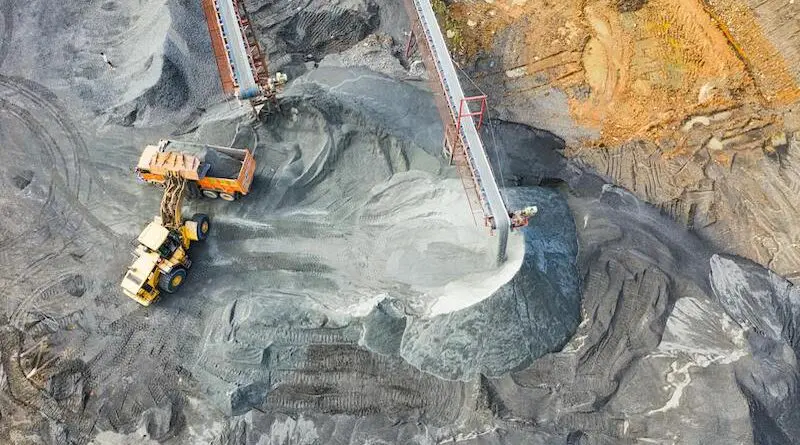
file photo mining mine

By 

The most important mineral in today’s electric car batteries is lithium. China completely dominates the market, with no extraction taking place in Europe. However, a new study shows that there is great potential for European lithium production, which would bring improvements in competitiveness, the climate and security. The study also points out that there are complex international trade dependencies that affect supply and demand.


European car manufacturing, which currently accounts for six per cent of the European Union’s GDP, risks becoming a thing of the past unless Europe is able to start producing its own electric cars and batteries. Twenty per cent of new cars currently produced in Europe are electric. The EU is aiming to phase out internal combustion engines in vehicles by 2035.

Lithium is the most important mineral in modern electric batteries, which are used in consumer electronics (phones, power tools, watches) and vehicles. Other metals such as cobalt and nickel can be substituted, but not lithium. While research on primarily sodium (salt) is underway, those batteries have lower performance and the path to commercialisation is uncertain. In other words, whoever owns the mining and refining of key metals has a strong hand. It is China who holds those cards.

“The Chinese state has been providing strategic support funding to Chinese green technology companies for many years. The EU has a goal of boosting its own production and may have to do something similar in order to catch up. The investment cost and risk are too high for individual countries,” says André Månberger, a researcher and expert on critical metals at Lund University in Sweden. 

André and former visiting doctoral student Qifan Xia have mapped out trade dependence on the coveted mineral. The results confirm China’s dominance and verify the intricate interdependencies between the countries of the world, especially as supply is not only about extraction but also about refining, component manufacturing and, ultimately, battery production itself. 

“The risk of China’s dominance is not only that Europe will lose its domestic automotive industry and thus its prosperity, but also that we could become a target for blackmail in the event of global conflicts,” says André Månberger. 


In a new study published in Cell Reports Sustainability, he and Qifan summarised the deposits identified by geologists in Europe, China and the United States that have the potential to be mined. A few have been identified in Europe, but commercial extraction is yet to begin. The deposits are mainly found in Spain, Portugal, Germany, France, Serbia and Finland. 

Månberger concludes that if these were to be exploited, the EU could more than halve its future import dependence. The researchers compared the EU’s lithium needs in the 2030s with the amount the mines could produce in that period. In weight terms, this amounts to 325,000 tonnes of lithium carbonate around the year 2030.

However, the path to large-scale lithium mining across Europe is fraught with conflicting objectives. These include investment costs, opposition from local residents, the risk of chemicals leaking into groundwater, the impact on nature and various liability issues. 

“Promising technologies are being tested in Germany where lithium extraction is recovered from geothermal energy sources. When hot water is pumped up for use in gheating, lithium comes up too as a “free gift.” New membrane technologies can filter this lithium out and it can then be used. This method reduces the impact on nature and the risk of conflict with neighbours, but unfortunately these deposits are only a small part of the projects and conventional mines will also be needed if Europe is to reduce its dependence on imports.”

André Månberger hopes his study will demonstrate the significant potential of extraction in Europe. 

“The significant potential within Europe may mean that not all deposits need to be developed and hopefully this knowledge can contribute to a discussion about how different objectives are prioritised.” 

Import independence is not an end in itself, he emphasises, and more studies are needed that also examine other possibilities such as diversifying imports and reducing the growth in demand by using materials more efficiently. 

But does Europe really have a chance of getting domestic production of electric batteries off the ground? China’s products are so cheap, and there is even talk of them dumping goods in Europe, especially if the US tariffs go through.

“It will not be easy. The EU is now working on several levels to develop entire battery value chains within the EU, with the aim of increasing competitiveness. Battery know-how could play an important part in the development and production of the electric vehicles of the future. If the energy transition results in Europe losing significant industries, it remains to be seen whether the acceptance of ambitious climate targets will endure.”


Eurasia Review

Eurasia Review is an independent Journal that provides a venue for analysts and experts to disseminate content on a wide-range of subjects that are often overlooked or under-represented by Western dominated media.

IAEA’s Grossi ‘Deeply Concerned’ After Israel Attack On Iran Nuclear Facilities

International Atomic Energy Agency (IAEA) Director General Rafael Mariano Grossi. Photo Credit: Dean Calma / IAEA

By 

The International Atomic Energy Agency Director General Rafael Mariano Grossi has told the agency’s board of governors “nuclear facilities must never be attacked, regardless of the context or circumstances, as it could harm both people and the environment”.


In a statement on Friday evening he said: “We are currently in contact with the Iranian nuclear safety authorities to ascertain the status of relevant nuclear facilities and to assess any wider impacts on nuclear safety and security. Iran has confirmed that … the Natanz Fuel Enrichment Plant site has been attacked in today’s strikes. This facility contains the Fuel Enrichment Plant and the Pilot Fuel Enrichment Plant.

“At Natanz, the above-ground part of the Pilot Fuel Enrichment Plant, where Iran was producing uranium enriched up to 60% U-235, has been destroyed. Electricity infrastructure at the facility (electrical sub-station, main electric power supply building, emergency power supply and back-up generators) has been destroyed.

“There is no indication of a physical attack on the underground cascade hall containing part of the Pilot Fuel Enrichment Plant and the main Fuel Enrichment Plant. However, the loss of power to the cascade hall may have damaged the centrifuges there.

“The level of radioactivity outside the Natanz site has remained unchanged and at normal levels indicating no external radiological impact to the population or the environment from this event. However, due to the impacts, there is radiological and chemical contamination inside the facilities in Natanz. The type of radiation present inside the facility, primarily alpha particles, is manageable with appropriate radiation protection measures.

“At present, the Iranian authorities are informing us of attacks on the other facilities, the Fordow Fuel Enrichment Plant; and Esfahan site, where a fuel plate fabrication plant, a fuel manufacturing plant, a uranium conversion facility and an enriched UO2 powder plant are located. However I have to inform that at this moment we do not have enough information beyond indicating that military activity has been taking place around these facilities as well which initially had not been part of military operation.”


Grossi said: “This development is deeply concerning … such attacks have serious implications for nuclear safety, security and safeguards, as well as regional and international peace and security.”

He noted previous IAEA general conference resolutions on the topic of avoiding military attacks on nuclear facilities and said: “As Director General of the International Atomic Energy Agency, and consistent with the objectives of the IAEA under the IAEA Statute, I call on all parties to exercise maximum restraint to avoid further escalation. I reiterate that any military action that jeopardises the safety and security of nuclear facilities risks grave consequences for the people of Iran, the region, and beyond.”

Grossi added: “Yesterday, the Board of Governors adopted an important resolution on Iran’s safeguards obligations. In addition to this, the Board resolution stressed its support for a diplomatic solution to the problems posed by the Iranian nuclear programme. The IAEA continues to monitor the situation closely, stands ready to provide technical assistance, and remains committed to its nuclear safety, security and safeguards mandate in all circumstances … in accordance with its Statute and longstanding mandate, the IAEA provides the framework and natural platform where facts prevail over rhetoric and where engagement can replace escalation.”

According to Iran’s official Islamic Republic News Agency (IRNA) at least five nuclear scientists were known to be among those killed in the strikes, including Fereydoun Abbasi-Davani – who headed the Atomic Energy Organisation of Iran from 2011 to 2013 – and Mohammad Mehdi Tehranchi, president of Azad University. Israel said that its actions had been a pre-emptive move targeting what it called Iran’s programme to develop nuclear weapons and to “neutralise an immediate and existential threat to our people”. 

Iran says that its nuclear programme is peaceful and condemned what it called the IAEA board’s “anti-Iran resolution”. According to an IRNA report a joint statement by the Ministry of Foreign Affairs and the Atomic Energy Organization of Iran on Thursday said that in response to the resolution, a new uranium enrichment facility had been ordered in a “secure location” and “first-generation centrifuges at the Fordow enrichment site would be replaced with sixth-generation machines”.

According to World Nuclear Association’s Information Paper on Iran, the country has one nuclear power reactor operating, with construction of a second Russian-designed unit at the Bushehr site taking place. According to a presentation at the IAEA general conference last September, first concrete was expected on a third unit by the end of 2024, with another unspecified unit under construction, and further power units planned.

The nuclear power plants have not been listed among the targets of the attacks on Friday.

Iran’s enrichment facilities

Unenriched, or natural, uranium contains about 0.7% of the fissile uranium-235 (U-235) isotope. (“Fissile” means it’s capable of undergoing the fission process by which energy is produced in a nuclear reactor). The rest is the non-fissile uranium-238 isotope. Most nuclear reactors need fuel containing between 3.5% and 5% U-235 – known as low-enriched uranium, or LEU. Advanced reactor designs that are now being developed – and many small modular reactors – and research reactors, which are often used to produce medical radioisotopes, amongst other things – will require higher enrichments still – typically up to 20%.

Enrichment increases the concentration of the fissile isotope by passing the gaseous uranium hexafluoride (UF6) through so-called cascades of gas centrifuges, in which a fast spinning rotor inside a vacuum casing makes use of the very slight difference in mass between the fissile and non-fissile isotopes to separate them.

But the same technology that is needed to enrich uranium for use in nuclear power or research reactors could also be used to enrich uranium to the much higher levels (90% U-235 and above) that could be used in nuclear weapons. This means that uranium enrichment is strategically sensitive from a non-proliferation standpoint, so there are strict international controls to ensure that civilian enrichment plants are not used in this way.

Iran is known to operate enrichment plants at Natanz, about 80km southeast of Qom, and Fordow, 20km north of Qom.

According to World Nuclear Association, there are two enrichment plants at Natanz: the Pilot Fuel Enrichment Plant, with two cascades designated for production of uranium enriched up to 20% U-235, ostensibly for the Teheran Research Reactor, and R&D purposes; and the Fuel Enrichment Plant, which is built underground.

In a quarterly report, published on 31 May, the IAEA verified that cascades at the Fuel Enrichment Plant were being fed with natural UF6 to produce material enriched up to 5% U-235. It verified that Iran was testing some centrifuges and feeding both natural and depleted UF6 into others in the various R&D production lines at the Pilot Fuel Enrichment Plant.

According to the IAEA’s quarterly report, as of 27 May some 82 cascades were operational at the Fuel Enrichment Plant, with seven operational cascades at the Pilot Fuel Enrichment Plant. The Fuel Enrichment Plant had produced an estimated 2671.3 kg of UF6 enriched up to 5% since its previous report. The pilot plant had produced 19.2 kg of uranium enriched up to 60%, about 243 kg with up to 5% enrichment and 453 kg with enrichment up to 2% U-235.

The Fordow Fuel Enrichment Plant has 13 operating cascades, according to the IAEA, where over 166 kg of UF6 enriched up to 60% U-235 were produced since the agency’s previous quarterly report, as well as 67 kg of material enriched up to 20%, 724.5 kg enriched up to 5%, and nearly 369 kg of up to 2% enrichment.

The agency said that Iran’s total inventory of enriched uranium as of 27 May stood at 2221.4 kgU of material with an enrichment of up to 2%; 5508.8 kgU up to 5%, 274.5 kgU up to 20% and 408.6 kgU with up to 60% enrichment.

The UF6 feedstocks – natural and depleted UF6 – have low levels of radioactivity, but significant chemical toxicity, so have to be handled appropriately, as does the enriched uranium product. The materials themselves are stored in purpose-built cylinders to provide the necessary physical protection.


World Nuclear News

World Nuclear News is an online service dedicated to covering developments related to nuclear power. Established in 2007, WNN has grown rapidly to welcome over 40,000 individual readers to the website each month, while its free daily and weekly emails both reach more than 16,000 people. These figures represent a broad audience that includes not only nuclear professionals but also journalists, researchers, opinion leaders, policy-makers, and the general public.

ICYMI

Hong Kong Bans Gaming App That Police Say Incites ‘Armed Revolution’ Against China


An image from the website of the online game "Anti-United Front: Fire of War" makes reference to June 4 Tiananmen Square and Chinese army tanks. (ESC Strategic Communications Team)

By 

The app makers call it a “war saga” where gamers can choose a rebel faction from Hong Kong, Taiwan and even Tibet and then play at fighting Chinese communist forces – or if they choose, fight for the communist side instead.


But it seems like whichever side you choose, it could get you into trouble in Hong Kong.

This week, the city’s police issued a stark warning against downloading the mobile app “Reversed Front: Bonfire” on the grounds that the game is “advocating armed revolution and the overthrow of the fundamental system of the People’s Republic of China.”

The police force’s National Security Department, or NSD, said in a statement Tuesday that any person who shares or recommends the app, or makes in-app purchases, may be violating articles of the city’s draconian national security law that punish incitement to secession and subversion. A person who downloads the app would be in possession of a publication with a “seditious intention.”

The statement concluded that such acts are “extremely serious offences” and that police would strictly enforce the law.

“Members of the public should not download the application or provide funding by any means to the relevant developer. Those who have downloaded the application should uninstall it immediately and must not attempt to defy the law,” it said.


Welcome to Hong Kong in 2025, where even gaming apps are in the cross-hairs of authorities.

Until a few years ago, the city was famed for its vibrant civic society and freedoms which had persisted since the territory came under Chinese control in 1997.

“It’s absurd that the government fears this game, especially when players are free to choose any faction—including the Red Army,” one gamer who goes by the alias Fu Tong told Radio Free Asia. “Their reaction just reflects an authoritarian regime’s deep fear of freedom and how brittle the system really is.”

Widening crackdown

The warning, apparently the first issued in Hong Kong against a gaming app, was the latest sign of a widening crackdown on basic freedoms that has ensued since massive anti-government protests that broke out six years ago. That movement was followed by the passage of the 2020 national security law imposed by Beijing and a law enacted by the Hong Kong legislature 2024. 

The app’s developer, ESC Taiwan, did not immediately respond to an RFA request for comment on Tuesday’s police statement. 

ESC has described itself as a civilian volunteer group that was set up in 2017 to “coordinate with overseas anti-Communist organizations and assist foreign allies with outreach and organizing efforts.” It doesn’t disclose who its members are but says they are mostly Taiwanese, with a few Hongkongers and Mongolians.

The game’s first online version was released in 2020, and a board game version launched in the same year. At the time, China’s state-run Global Times published a critical editorial accusing the game of promoting “Taiwanese independence” and “Hong Kong separatism.”

According to a person familiar with the operations of ESC, who requested anonymity because of the sensitivity of the issue, the developers had raised over HK$6 million (US$760,000) via crowdfunding in Taiwan and Hong Kong in 2019 to develop the game, and a portion of the game’s revenue is donated to anti-China Communist Party organizations abroad. 

Players of “Reversed Front: Bonfire” can assume the role of rebels from places such as Hong Kong, Tibet, Mongolia, Manchuria, Taiwan and the Uyghur region trying to overthrow the communist regime. 

“Or you can choose to lead the Communists to defeat all enemies and resume the century-long march of the Communist revolution to the other side of the land and sea!” ESC says in its promo for the app.

For the Hong Kong option, numerous game characters are inspired by the city’s past protest culture. For example, one character, “Ka Yan,” hails from Yuen Long – a town in Hong Kong’s western territories – and wears blue-and-white striped tape often used by Hong Kong police. Another, “Sylvia,” wears a gas mask and a uniform printed with the slogan, “Liberate Hong Kong, Revolution of Our Times.” 

The game’s dialogue is also steeped in Hong Kong culture and includes an instrumental version of “Glory to Hong Kong,” a banned anthem that was popular during 2019 pro-democracy protests.

While the police statement on Tuesday appeared to boost interest in the game, The Associated Press in Hong Kong reported that the app was not available in Apple app story by Wednesday morning. It remains available in the United States.

One gamer, Andy, said that after the statement was issued Hong Kong-themed player groups within the game quickly cleared their chat logs fearing they could be trawled by authorities. 

He praised the game as reflecting current geopolitical realities, including China’s approach to Taiwan – the self-ruling island that Beijing claims as part of China. 

Supporting this game, Andy added, also allows players to symbolically “defend Hong Kong territory.”


RFA

Radio Free Asia’s mission is to provide accurate and timely news and information to Asian countries whose governments prohibit access to a free press. Content used with the permission of Radio Free Asia, 2025 M St. NW, Suite 300, Washington DC 20036.