Saturday, June 21, 2025

Americans more vulgar online than Brits, Aussies — study
DW
20/06/2025 - 

Linguists analyzed websites and blogs to determine where vulgarity was most common. They found Americans swear more on the internet than other English-speaking groups.


Almost two billion words — just under 600 of them swear words — were carefully assessed, and the United States then handed the dubious honor of being the most cursing country in the English-speaking world, at least online.

For the Australian duo behind the research, it came as a surprise that the inhabitants of their own country did not lead the way, such is the stereotype that Aussies are easy-going and relaxed, in actions and words.

But Australians were only the third-most likely citizens to drop a swear word in conversation online.

The reason that America — viewed by some to be a more conservative and polite culture among English-speakers — is the most profane community online may be the anonymity of the screen, according to the study's co-author Martin Schweinberger, a linguist at the University of Queensland, Australia.

"Especially when you're not tied to what you write with your name, for example," said Schweinberger. "There are also cultural differences on what is allowed in social situations."

"Different cultures have different norms on when and what is permitted. It seems as if the Americans, basically, are more forgiving online," he said.

Choice rudeness from billions of words

Schweinberger and collaborating linguist Kate Burridge evaluated 1.7 billion words used in online news stories, company websites, institutional publications, blogs and other web sources, across 20 English-speaking regions.

From these sources, they created a list of around 600 obscenities, including modified words and abbreviations, like "WTF", and dozens of variations of the "F" and "C" words and other vulgarities.

They then analyzed how frequently those vulgarities appeared in the documents they had found online.

In their results, Americans topped the list with a curse word appearing 0.036% of the time. That is equivalent to 36 curse words in a 100,000-word text.

The British were next, with 25 curses per 100,000 words. Then the Aussies with 22, Singaporeans with 21 and New Zealanders with 20.

Bangladeshis are the politest among English-speakers — just seven vulgarities per 100,000 words.

Polite in the real world, rude online

While a broad range of internet sources were used for the study, social media was excluded from the dataset.

That was done deliberately, said Schweinberger, because social platforms require more "weeding" of material that is not suitable for analysis.

However, he said they have analyzed the use of vulgarities on social media — compared to face-to-face interactions — in a separate study.

The results, which have yet to be published, are quite different: On social media, New Zealanders top the list, ahead of the Irish and Australians, said Schweinberger.

And in face-to-face interactions, the American stereotype for conservatism is evident. "Face-to-face, the Americans are way down the list," Schweinberger said. "But social media basically had the same pattern that we find in general online data."


What's the value in understanding swearing in culture?

For linguists, a data-rich analysis of the use of language online provides insight into how humans behave and interact.

Andrea Calude, a linguist at the University of Waikato, New Zealand, who was not involved in the study, said it was important to have a scientific approach to how words are used.

"Sometimes you think you know things which you don't, so you have to look at [the] data," said Calude. "We think of English as one thing — one language — but look at how different English [is used] around the world," Calude said.

In particular, the context in which speakers use vulgarity is a useful way to help non-native speakers integrate into a new environment.

"Even in this connected world, we each have our own idiosyncratic way of speaking locally," said Calude. "If you break those patterns, you identify yourself as not one of the locals. It speaks to this idea that there are local communities, even when you have a globalized world."

Schweinberger, who hails from Germany, knows it from personal experience. He once used a vulgarity in the company of American colleagues and said he "could see their faces shift completely, as if I'd said something really horrible. I just wasn't aware of these cultural constraints."

Analyzing vulgarity, he said, was not only a valuable tool for linguists but for people in all walks of life.

"When we think of these bad words or bad language, it's not that you need to avoid it, it's to learn when to use it appropriately," Schweinberger said, "and then it can be really effective for improving your communication style and skills."

Edited by: Zulfikar Abbany


King of the cursers  INFOGRAPHIC

Number of profanities per 100,000 words in the Global Web-Based English Corpus by English-speaking region

Pope Leo warns leaders about pitfalls of AI

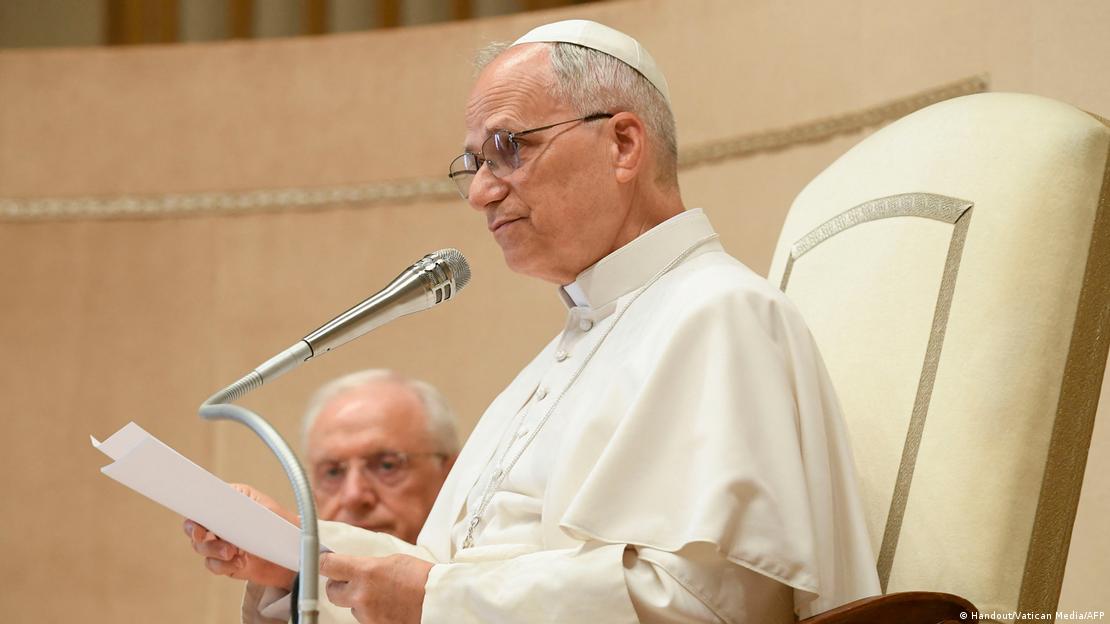
Pope Leo XIV told politicians in Rome not to forget that artificial intelligence is a tool. He warned, "our personal life has greater value than any algorithm."


'The task set before you is not easy,' Leo told political leaders, 'but it is one of vital importance'
Image: Handout/Vatican Media/AFP

DW
(with KNA, Reuters)
20/06/2025 - 

Pope Leo XIV has renewed calls for a deeper consideration of the potential impact of artificial intelligence (AI) on humanity, voicing concern for the development and well being of children and youths.

The recently installed pontiff made his remarks on Saturday, when he welcomed Italian Prime Minister Giorgia Meloni and parliamentary delegations from 68 further nations to the Vatican for the Second Annual Rome Conference on Artificial Intelligence.

"In particular, it must not be forgotten that artificial intelligence functions as a tool for the good of human beings, not to diminish them or even to replace them," said Leo, who added that AI's "static memory" could not match the "creative, dynamic" power of human memory.

"Our personal life has greater value than any algorithm, and social relationships require spaces for development that far transcend the limited patterns that any soulless machine can pre-package," he told attendees.


Pope warns AI is a threat to how humans process reality

Although the pontiff acknowledged the unquestionable advantages such computing offers, he nevertheless warned of the threat it poses to how we understand life and the world around us.

"AI, especially generative AI, has opened new horizons on many different levels, including enhancing research in healthcare and scientific discovery; but also raises troubling questions on its possible repercussions on humanity's openness to truth and beauty, on our distinctive ability to grasp and process reality."

Leo, who has repeatedly addressed the issue of AI and its impact on society since becoming pope in May, urged "serious reflection" on the "inherently ethical dimension of AI," noting that respect for the uniqueness of human existence was an essential element of any discussion about its use and regulation.

"All of us, I am sure, are concerned for children and young people, and the possible consequences of the use of AI on their intellectual and neurological development," he said.

"Our youth must be helped, and not hindered, in their journey towards maturity and true responsibility," he added, calling young people "our hope for the future."


'Our youth must be helped, and not hindered, in their journey towards maturity and true responsibility,' said Pope Leo XIV on Saturday
Image: Handout/Vatican Media/AFP

'True meaning of life' vs. 'availability of data'


For all of the praises that AI proponents sing, claiming, among other things, that it allows more access to information and that if computers are allowed to perform the tasks of workers, former laborers will then be able to pursue other more fulfilling creative tasks, Leo warned of the dangers of mistaking "access to data" for actual intelligence. "Authentic wisdom," he said, "has more to do with recognizing the true meaning of life, than with the availability of data."

The pontiff also underscored AI's potential for "misuse for selfish gain at the expense of others, or worse, to foment conflict and aggression."

"Society's well-being," said Leo, "depends upon their [young people] being given the ability to develop their God-given gifts and capabilities, and to respond to the demands of the times and the needs of others with a free and generous spirit.

"This entails taking into account the well-being of the human person not only materially, but also intellectually and spiritually. It means safeguarding the inviolable dignity of each human person and respecting the cultural and spiritual riches and diversity of the world's peoples," according to Leo.


AI, the Catholic Church and 'the future of our human family'


Leo has said the Catholic Church is keen on contributing to a peaceful and thoughtful public discussion about the advent of AI "and the future of our human family."

A final concern brought up by the pontiff addressed the strains AI puts on relations between young people and the elderly, pointing to what he called the "necessary intergenerational apprenticeship that will enable young people to integrate truth into their moral and spiritual life, thus informing their mature decisions and opening the path towards a world of greater solidarity and unity."

Leo ended by reminding lawmakers of the need to protect "healthy, fair and sound lifestyles, especially for the good of younger generations," admonishing, "the task set before you is not easy but it is one of vital importance."


Edited by Sean Sinico


Israel-Iran conflict ‘drives the final nail into the coffin’ of postwar world order

Western support for Israel’s right to strike Iran backs up a pattern of “pre-emptive” violence that critics say is further eroding international law and the rules-based order put in place in the wake of World War II, ushering in a “law of the jungle” in which might takes precedence over right – with dire consequences for global stability and co-operation.

Issued on: 19/06/2025 - 
FRANCE24
By: Benjamin DODMAN

The attack on Iran is the latest in a series of “pre-emptive” military operations undertaken by Israel, shielded from accountability for its actions by the US and other Western powers. © AP file photo


On October 12, 2023, as Israel and its allies reeled from the carnage wrought just days earlier by Hamas militants in southern Israel, the then Pentagon chief was asked whether Washington would place any conditions on its hugely expanded security assistance to its Middle East ally.

Lloyd Austin’s answer to reporters was a straightforward “no”, based on the assumption that Israel’s military would “do the right things” in its war against the Tehran-backed militia.

Twenty months on, Israel has flattened Gaza, bombed swathes of Lebanon, seized further territory in Syria, and now launched a direct attack on Iran as it pursues what it describes as an “existential” fight against the Islamic Republic and its allies in the region.

Throughout the fighting, its ultra-nationalist leaders have dismissed the mounting evidence of war crimes committed in Gaza, which led the International Criminal Court to issue an arrest warrant for Prime Minister Benjamin Netanyahu in November 2024.


Senior cabinet members have openly advocated the forced removal of Gaza’s population, which would amount to a genocidal crime, and the dismemberment of Syria. Netanyahu himself has discussed the possibility of assassinating Iran’s head of state and precipitating “regime change” in the Islamic Republic in interviews with US media.

Ironically, such rhetoric brings Israel closer in line with the inflammatory bluster typical of its arch-foe Iran – with the important difference that Israel does possess nuclear weapons and a military capable of backing up its increasingly provocative statements.

The extraordinary escalation is a “natural consequence of the impunity that has prevailed in the region over the past two years", says H. A. Hellyer, a senior research fellow at the Royal United Services Institute for Defence and Security Studies (RUSI) in London.

“The fact that Israel has faced no consequence for repeatedly infringing international law sends a very clear signal: that if it chooses to do more, it can,” he explains. “And it can count on the most powerful actors in the international community simply not doing very much or actually empowering and emboldening it.”

Read more


‘It's the civilians who will pay the price’: Iranians prepare for the worst after Israeli strikes

The most immediate consequence of Israeli impunity in the Middle East is the immense suffering inflicted on civilian populations, nowhere more so than in Gaza, where Israel’s ongoing military campaign has killed more 55,000 people, according to local health officials, and rendered the narrow strip of land largely uninhabitable.

Another consequence, with more far-reaching implications, is the further erosion of the rules-based order in place since World War II, says Karim Emile Bitar, a Middle East expert at Beirut’s Saint-Joseph University and visiting professor at Sciences-Po Paris.

“Recent events have driven the final nail into the coffin of international law and of what has been referred to as the liberal international order,” he says. “The message to the world is that if might is on your side, you can break all the rules, trample on international law and all the standards that have been in place since 1945, and there will be absolutely no accountability.”

‘A new Middle East’


Netanyahu has described Israel’s actions as ushering in a “new Middle East”, a phrase that has haunted the region at least since the 2003 Iraq War, when the US and its allies sought to remodel it – with catastrophic consequences.

“There has been a lot of jubilation (among critics of Iran), imagining that these are the ‘birth pangs’ of some sort of new Middle East. On the contrary, this is a spiral of violence, fostered by an environment of impunity that allows for vigilante action to take place without repercussions,” says Hellyer.

“Nobody needs to be a fan of the Iranian regime, or Hezbollah or Hamas, to see that this activity is incredibly destabilising for regional order and security,” he adds. “It also has massive repercussions for international order and international security, because it means that there isn't a rules-based order at all. It becomes the law of the jungle. And that should be quite concerning to all of us.”

12:50© France 24


Bitar notes that few people in the Sunni Arab world will be “shedding a tear” for the Iranian regime – “and for good reason, given the disruption and suffering caused by Tehran’s regional proxies".

However, he adds, “they are also alarmed by an increasingly unbridled Israel, which – unlike Iran – has the means to wipe out entire cities, and whose senior ministers now openly advocate ethnic cleansing in Gaza".

An immediate consequence is likely to be a regional arms race to try to narrow the gap with Israel. In Iran’s case, analysts point to the likelihood of a fresh push to go nuclear, thereby achieving the exact opposite of the stated goal of Israel’s military operation.

“Israel's attack is making Iran feel very vulnerable. Their conventional deterrence has failed, and I think we’re going to see more and more calls from within the country to pursue nuclear weapons,” says Daryl Kimball of the US-based Arms Control Association, noting that contrary to Israeli claims, Western intelligence assessments have so far concluded that Tehran is not currently pushing to militarise its nuclear programme.

Kimball says there are already voices in Iran calling for the country to withdraw from the Nuclear Non-Proliferation Treaty, which prohibits states that don’t have nuclear weapons from pursuing them.

“Bombing (Iran) simply makes sure they will try a hundred times more because they will assess there is no rules-based order, there is simply the threat of force and mutually assured destruction,” adds Hellyer.

‘Anticipatory’ self-defence

The phrase “birth pangs of a new Middle East” was famously used by former US secretary of state Condoleeza Rice to refer to the 2006 Israel-Hezbollah war, one of many conflicts with roots in the regional upheaval caused by the US invasion of Iraq.

“Back then, there was at least a stated aim to promote democracy and human rights in the region, even if it was largely a smokescreen,” says Bitar. “Now there is no such pretence. We’re back to Bismarckian power politics, in which might precedes right, and a world governed by nationalist authoritarian leaders in the mould of Putin and Trump.”

In the present climate, he adds, “the dwindling number of people who talk about respect for international law are regarded as hopeless idealists disconnected from reality".

While Israel’s attack on Iran has drawn condemnation around the world, the messaging from Western leaders has been far more mixed, with talk of Israel’s “right to defend itself” often taking precedence over references to international law.

Hours after Israel launched the first wave of attacks, French President Emmanuel Macron, whose planned summit on a two-state solution to the Israeli-Palestinian conflict was scuttled by the outbreak of war, put the blame squarely on Iran and said France stood ready to defend Israel if necessary.

Germany’s Chancellor Friedrich Merz went a step further, arguing that Israel was “doing the dirty job for all of us” by taking on in the Iranian regime – prompting outcry in a country where the emphasis is normally on de-escalation.


Read more  What does Israel really want in Iran?

In an op-ed published by the Guardian, Sydney-based international law professor Ben Saul argued that support for Israel’s “right to self-defence" had no legal grounding in the present conflict and set a dangerous precedent.

He described Israel’s attack on Iran as “part of a pattern of unlawful ‘anticipatory’ violence against other countries”, along with its recent destruction of Syrian military bases and equipment, despite “the absence of any attack by the new Syrian authorities on Israel”.

“The risk of abuse of ‘anticipatory’ self-defence is simply too great, and too dangerous, for the world to tolerate,” Saul wrote, noting that Russia claimed to invade Ukraine “in part because it speculatively feared NATO expansion”. He added: “Many countries have hostile relations with other countries. Allowing each country to unilaterally decide when they wish to degrade another country’s military, even when they have not been attacked, is a recipe for global chaos – and for the unjustified deaths of many innocent people.”
‘One pillar of the post-war order is attacking another’

In an interview with Middle East Eye, Sir Richard Dalton, a former British ambassador to Tehran, noted that past US administrations had refused to countenance a large-scale Israeli attack on Iran, but that Netanyahu “has obtained more leverage over the US (since Donald Trump’s return to power) and Israel is more of a law unto itself”.

Dalton said other Western countries had been “incredibly limp in not holding Israel to account” for its conduct over the past 20 months, a stance he attributed in part to their growing disregard for international law.

“They don’t look at the legal issue. They won’t look at the circumstances in international law when a pre-emptive strike against a potential enemy is lawful and when it is not,” he said. “Israel’s strike was an illegal aggression. But we’re prepared to talk frankly in those terms about Russia but not about Israel.”

11:50© France 24


While Western powers have failed to rein in the violence, the institutions they helped found decades ago to uphold the rules-based order have not sat idle.

Since the start of the Gaza war, both the ICC and the International Court of Justice (ICJ) have moved with urgency, the latter issuing successive rulings last year to warn of the risk of genocide in Gaza and order an end to Israel’s military operations in the south of the enclave. Neither court, however, has the capacity to enforce international law if world powers refuse to comply.

When the ICC issued its arrest warrant for Netanyahu, former US president Joe Biden described the move as “outrageous”. His successor at the White House has gone a step further, issuing an executive order in January to authorise sanctions on the court over its “illegitimate” actions against the US and its “close ally Israel”.

The Trump administration has also withdrawn the US from several UN bodies and slashed the organisation’s funding, creating a situation in which “one pillar of the post-war order is attacking another”, according to Brian Brivati, visiting professor of contemporary history and human rights at Kingston University.

“The leading founder of the UN is now undermining the institution from within, wielding its security council veto to block action while simultaneously starving the organisation of resources,” Brivati wrote on The Conversation earlier this week.

“The combination of a powerful state acting with impunity and a superpower disabling the mechanisms of accountability marks a global inflection point,” he added. “Other global powers, including Russia and China, are taking this opportunity to move beyond the Western rules-based system.”

The breakdown of the system could have catastrophic consequences for global stability, warns RUSI’s Hellyer, pointing to the need for international rules and co-operation to tackle a host of global challenges.

“There will always be new crises and conflicts, not least of which dealing with the climate emergency,” he says. “And we need international law and the rules-based order to at least mitigate their consequences.”

What does Israel really want in Iran?


Prime Minister Benjamin Netanyahu has maintained that preventing Iran from developing a nuclear weapon is the main goal of Israel’s military offensive. But Israeli defence forces have also carried out strikes on Iranian energy infrastructure and military sites, raising questions about Netanyahu’s real end game: Is regime change in Iran a realistic goal for Israel?


Issued on: 17/06/2025 -
FRANCE24
By: Sébastian SEIBT

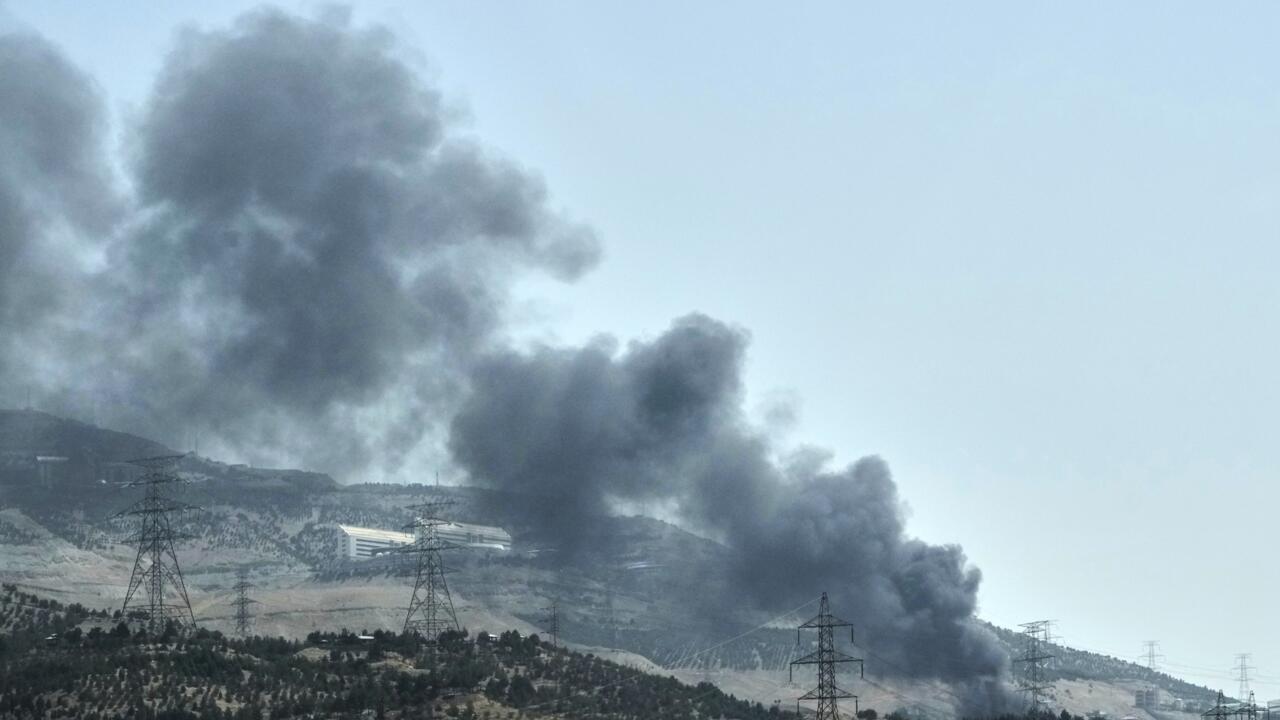
Smoke rises from an oil storage facility after it appeared to have been struck by an Israeli strike on June 16, 2025. © Vahid Salemi, AP

When Prime Minister Benjamin Netanyahu laid out his goals after launching strikes on Iran on Friday last week, he said that the Islamic Republic's nuclear weapons and existing ballistic missiles were the primary targets of the Israeli operation. The goal was to end the “existential threat” Israel says it faces from Iran, which has long denied Israel’s right to exist. But the latest air strikes seem to tell a different story.

Israeli attacks targeted an Iranian foreign ministry building and the defence ministry in Tehran on Sunday. Police headquarters in the city centre were also hit by Israeli jets that same day.

On Monday, Israel said it had struck the command centre of Iran’s Quds Force, the branch of the elite Revolutionary Guards that coordinates operations outside the country and reports directly to Supreme Leader Ayatollah Ali Khamenei.

These new targets are much more closely tied to the heart of the Iranian regime’s military and political decision-making fulcrum than to its nuclear programme.

Priorities


Israel on Saturday also targeted the massive South Pars gas field, which is the world’s largest reservoir of natural gas.

“The logic [for the Israeli government] is incremental. There is a priority of targets,” explained Clive Jones, professor of regional security at Durham University's School of Government and International Affairs.

The first is to significantly slow down – or potentially end – Iran’s nuclear programme. “The second is to target military delivery systems and the leadership that controls them,” Jones said.

Jones believes the second priority was the reasoning behind Israel’s attacks on the gas field.

“If you look at the strikes Israel has conducted, what they’ve tried to do is hit fuel plants that supply the Iranian military – those associated with their rockets programmes, for example, or refuelling tankers,” Jones said.

“They’ve not yet really hit civilian energy infrastructure. That may be something that comes later, depending on what happens next.”

Other targets might be chosen for shock value, according to Middle East expert Filippo Dionigi of the University of Bristol.

Attacks on buildings linked to the regime or the targeted assassinations of officials can be seen as an attempt by Israel to “shock the enemy and try to subvert its chain of command and create chaos, so that it slows down its capacity to react”, Dionigi said.

01:33© France 24

The Octopus Doctrine


Israel’s multi-pronged strategy is also known as the “Octopus Doctrine”, which was first established by former prime minister Naftali Bennett in 2021, said Veronika Poniscjakova, an expert on conflicts in the Middle East at Portsmouth University.

“Iran is the octopus with tentacles all around the Middle East,” Poniscjakova said, with proxies like Hezbollah in Lebanon or Hamas in Gaza.

Its new approach means that Israel will “no longer go after the tentacles of the octopus, [targeting these groups] or carrying out covert attacks on Iran’s nuclear facilities [as with] the Stuxnet computer virus, but go for the octopus’s head directly … striking at the source of the threat – the regime itself”.

Iranian nuclear sites in Israel's crosshairs © FRANCE 24 graphic design studio

But the scope of Israel’s strikes on Iran could suggest the country has broader geopolitical goals, some analysts believe.

“Israel is aiming for a regime collapse in Iran. That is the only reason they would attack energy infrastructures, to increase social unrest against the Islamic Republic by the Iranian people,” said Shahin Modarres, director of the Iran Desk at the International Team for the Study of Security Verona.

And if Israel decides to target civilian energy infrastructure exclusively, power cuts across the country could become more frequent, widespread, and eventually “undermine the trust the population has in its leaders”, Dionigi said.

The Iranian health ministry has said that 90 percent of casualties so far are civilians.

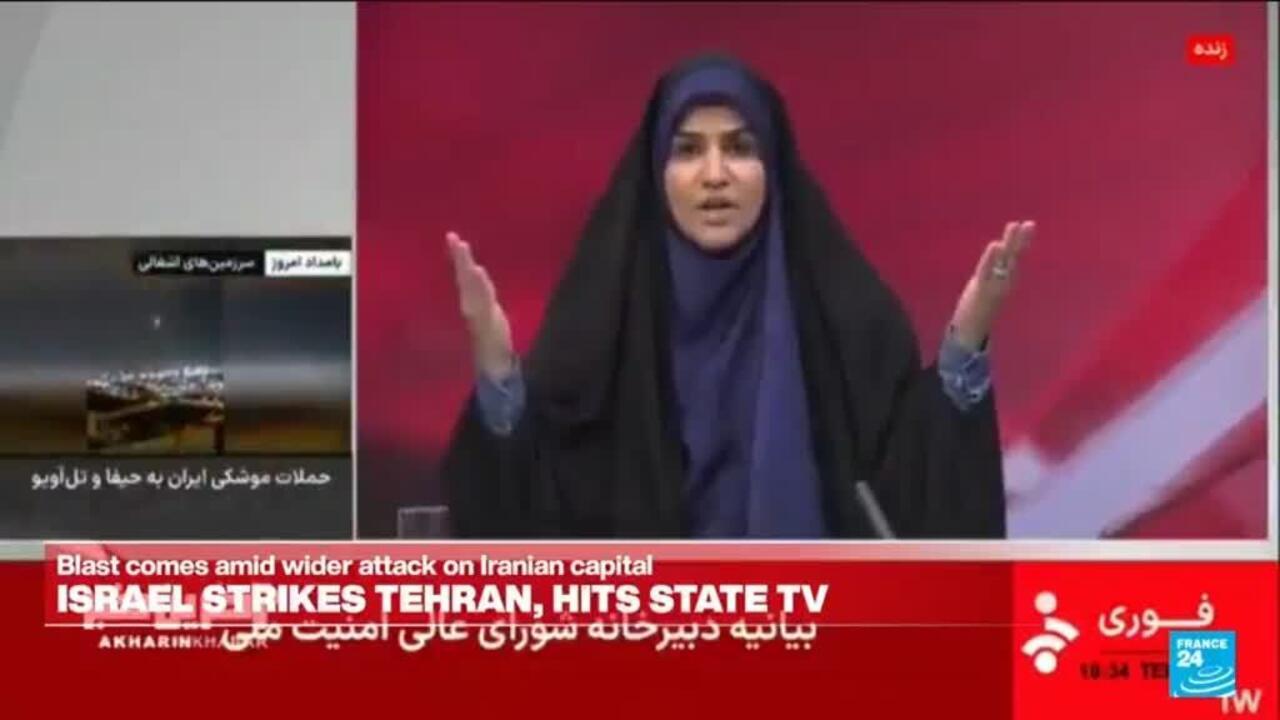
Strikes on political buildings and the targeting of the state-run TV during a live broadcast could be seen as a way to signal to the Iranian opposition that “[they] can exploit the opportunity to stand up against the regime”, Poniscjakova explained.

09:40© France 24

Most tellingly, Netanyahu issued a direct appeal to Iranians as the Israeli offensive began on Friday, saying he hoped the military operation will “clear the path for you to achieve your freedom”.

"This is your opportunity to stand up [to the regime]," he added.

Netanyahu’s “social media post aimed at the Iranian people, in which he effectively says Israel is paving the way and targeting a regime that has kept you repressed”, Jones said, adding that the post made it pretty clear the Israeli premier is hoping for regime change.

But whether an internal revolt is something that can be encouraged by a competing regional power that has long been at odds with Iran is far from certain.
An 'existential war' for Iran

Israel’s bombing of Iranian police headquarters in Tehran and its subsequent attacks on the ministry of intelligence and security “could degrade the regime’s ability to maintain internal security and social control” on a practical level, according to a report published by the Institute for the Study of War on Monday.

But it remains to be seen whether Iranian leadership can be weakened to the point where it is no longer capable of halting an uprising.

“That’s the ultimate question that nobody can really answer, at least for now,” Jones said.

Any interference from abroad could also backfire.

“External interference in the political affairs of a country rarely has the effect of simply provoking a reaction against the leadership,” Dionigi said. “Interference could have the opposite outcome and awaken a sense of national awareness, national pride and regrouping.”

In other words, in positioning himself as a supporter of the Iranian opposition, Netanyahu could actually strengthen the regime – at least for the duration of the war.

The Israeli prime minister is taking a “huge risk” by going beyond his initial aim of dismantling Iran’s nuclear programme.

“When countries are under attack, there is a tendency for people to rally around the flag, even if they dislike the regime,” Jones said.

“For the Iranian regime, this is an existential war,” Dionigi added. “They will use all of their military capacity for as long as necessary to guarantee their existence.”

For Netanyahu there is also the looming threat of greater escalation that could lead to “a higher number of civilian fatalities [in Israel], which could put more political pressure on the government”, Modarres said.

“It all depends on how [Netanyahu] ends this war. Either he dismantles the Islamic Republic’s nuclear programme and manages to conduct a regime change, or it backfires and his political career ends,” he added.

This article was translated from the original in French by Lara Bullens.


Climate change indicators are all in uncharted territory, 60 top scientists warn


More than 60 top scientists warned Thursday that climate change indicators are in uncharted territory, saying the planet will "rapidly reach a level of global warming of 1.5°C" – the cap set by the 2015 Paris Agreement to stave off the worst effects of climate change. Earth's surface temperature surpassed the 1.5°C threshold over pre-industrial levels for the first time last year.


Issued on: 19/06/2025 -
By: FRANCE 24


Dire future climate impacts worse than what the world has already experienced are already baked in over the next decade or two. © David Swanson, AFP


From carbon pollution to sea-level rise to global heating, the pace and level of key climate change indicators are all in uncharted territory, more than 60 top scientists warned Thursday.

Greenhouse gas emissions from burning fossil fuels and deforestation hit a new high in 2024 and averaged, over the last decade, a record 53.6 billion tonnes per year – that is 100,000 tonnes per minute – of CO2 or its equivalent in other gases, they reported in a peer-reviewed update.

Earth's surface temperature last year breached 1.5°C over pre-industrial levels for the first time, and the additional CO2 humanity can emit with a two-thirds chance of staying under that threshold long-term – our 1.5°C "carbon budget" – will be exhausted in two years, they calculated.

Investment in clean energy outpaced investment in oil, gas and coal last year two-to-one, but fossil fuels account for more than 80 percent of global energy consumption, and growth in renewables still lags behind new demand.


Included in the 2015 Paris climate treaty as an aspirational goal, the 1.5°C limit has since been validated by science as necessary for avoiding a catastrophically climate-addled world.

The hard cap on warming to which nearly 200 nations agreed was "well below" two degrees, commonly interpreted to mean 1.7°C to 1.8°C.

With the 1.5°C level now expected to be breached in the coming years, "we are already in crunch time for these higher levels of warming", co-author Joeri Rogelj, a professor of climate science and policy at Imperial College London, told journalists in a briefing.

"The next three or four decades is pretty much the timeline over which we expect a peak in warming to happen."
'The wrong direction'

No less alarming than record heat and carbon emissions is the gathering pace at which these and other climate indicators are shifting, according to the study, published in Earth System Science Data.

Human-induced warming increased over the last decade at a rate "unprecedented in the instrumental record", and well above the 2010-2019 average registered in the UN's most recent Intergovernmental Panel on Climate Change (IPCC) report, in 2021.


A shrinking carbon budget. © Jonathan Walter, Valentina Breschi, Sabrina Blanchard, AFP

The new findings – led by the same scientists using essentially the same methods – are intended as an authoritative albeit unofficial update of the benchmark IPCC reports underpinning global climate diplomacy.

They should be taken as a reality check by policymakers, the authors suggested.

"If you look at this year's update, things are all moving in the wrong direction," said lead author Piers Forster, head of the University of Leeds' Priestley Centre for Climate Futures.

The rate at which sea levels have shot up in recent years is also alarming, the scientists said.

After creeping up, on average, well under two millimetres per year from 1901 to 2018, global oceans have risen 4.3 mm annually since 2019.

Read moreThe Maldives, a paradise threatened by rising sea levels
What happens next?

An increase in the ocean watermark of 23 centimetres (9 inches) over the last 125 years has been enough to imperil many small island states and hugely amplify the destructive power of storm surges worldwide.

An additional 20 centimetres of sea level rise by 2050 would cause $1 trillion in flood damage annually in the world's 136 largest coastal cities, earlier research has shown.

Another indicator underlying all the changes in the climate system is Earth's so-called energy imbalance, the difference between the amount of solar energy entering the atmosphere and the smaller amount leaving it.

So far, 91 percent of human-caused warming has been absorbed by oceans, sparing life on land.

But the planet's energy imbalance has nearly doubled in the last 20 years, and scientists do not know how long oceans will continue to massively soak up this excess heat.

Dire future climate impacts worse than what the world has already experienced are already baked in over the next decade or two.

But beyond that, the future is in our hands, the scientists made clear.

"We will rapidly reach a level of global warming of 1.5°C, but what happens next depends on the choices which will be made," said co-author and former IPCC co-chair Valérie Masson-Delmotte.

The Paris Agreement's 1.5°C target allows for the possibility of ratcheting down global temperatures below that threshold before century's end.

Ahead of a critical year-end climate summit in Brazil, international co-operation has been weakened by the US withdrawal from the Paris Agreement.

"Governments, financiers, and businesses must put this (report) in focus in the run-up to COP30 in Brazil," said David King, former UK Chief Scientific Advisor and Chair of the Climate Crisis Advisory Group.

"If today's data tells us anything, it's that we do not have time to delay any further."

(FRANCE 24 with AFP)
Budapest mayor says Pride march will go ahead despite police ban


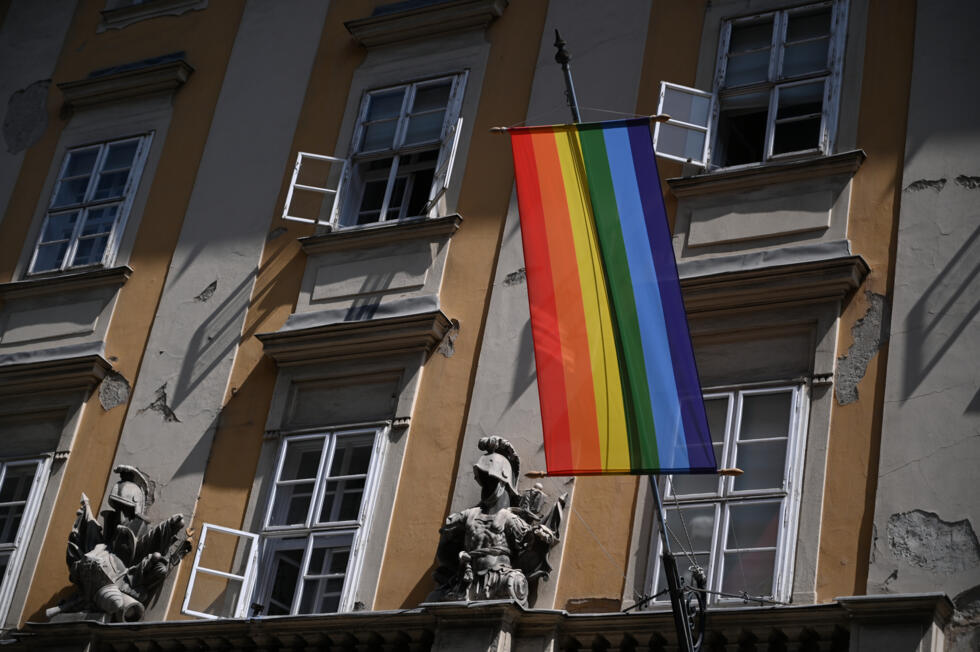
Budapest's liberal Mayor Gergely Karacsony vowed the city's Pride march would go ahead on June 28 despite a police ban on the event announced on Thursday. Police said they could ban the event under a Hungarian law that bans the promotion of same-sex relationships to under-18s.


Issued on: 19/06/2025 
By: FRANCE 24


People take part in the Pride Parade in Budapest, Hungary, on July 15, 2023. © Attila Kisbenedek, AFP


Hungarian police on Thursday banned the country's main Pride march from taking place in Budapest on June 28 but the capital's mayor defied them, vowing it would still go ahead.

Since Prime Minister Viktor Orban returned to power in 2010, Hungary has passed a series of laws which have been criticised at home and across the European Union for curtailing the rights of the country's sexual and gender minorities in the name of "child protection".

"The police, acting within their authority over public assemblies, prohibit the holding of the assembly at the aforementioned location and time," the police said on their website.

Police said the ban was necessary under recent legislation that bans the promotion of same-sex relationships to under-18s.


Read more

They said any appeal against the decision must be lodged with the central European country's supreme court within three days.

Budapest's liberal Mayor Gergely Karacsony vowed to hold the gathering despite the ban.

He said the police decision had "no value" because the march did not require official authorisation anyway, as it was an event organised by the city council.

"Budapest city hall will organise the Budapest Pride march on June 28 as a city event. Period," he wrote on Facebook.

On Monday he had announced that Budapest city hall would organise the march in an attempt to sidestep the recently adopted law.

In mid-March, the Hungarian parliament passed a bill aimed at banning any gathering that violates an anti-LGBTQ law adopted in 2021.

The 2021 law prohibits the "display or promotion of homosexuality" to under-18s.


Pro-LGBTQ protests

In its decision published on Thursday, police said that the march "by its very nature cannot be held without the representation" of people belonging to the LGBTQ community and that under-18s could be present along the route.

"If it cannot be stated with absolute certainty that the display is not taking place in the presence of persons under 18 years of age, the assembly would be in breach of the ban," the police said.

Hungarian lawmakers in April overwhelmingly backed constitutional changes that strengthened the legal foundations for banning the Pride march.

The government said the annual event could be held at an enclosed location like a stadium, out of sight of children.

The conflict over the Pride march has already sparked protests in Hungary. © Attila Kisbenedek, AFP

The conflict over the Pride march has already sparked protests in Hungary.

Thousands of people blocked bridges in the capital, demanding the ban be repealed.

Several members of the European Parliament have said they will attend the parade.

European equalities commissioner Hadja Lahbib is also due to attend the march, as are ministers from several European Union countries, the organisers said.

Attendees risk a fine of up to 500 euros ($570), which the Hungarian authorities say will be channelled into "child protection" projects.

Police may use facial recognition technology to identify them.

(FRANCE 24 with AFP)


'Turkish salmon': the Black Sea's new rose-coloured gold

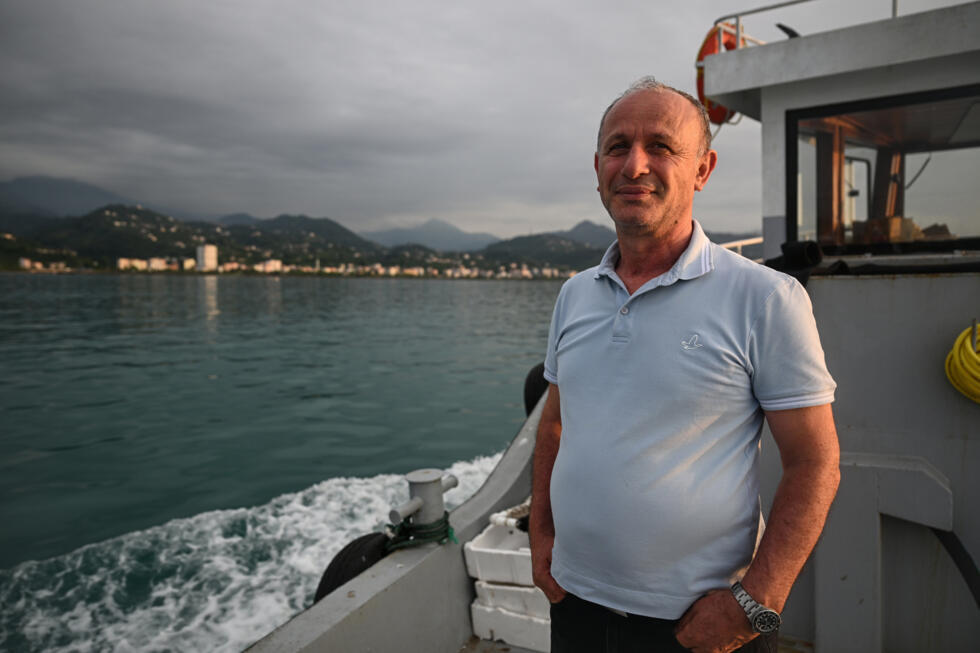
Turkey (AFP) – Sitting in his spacious office with a view of the Black Sea, Tayfun Denizer smiles: his rainbow trout, raised in submerged cages, have made him a wealthy man.


Issued on: 20/06/2025 - 

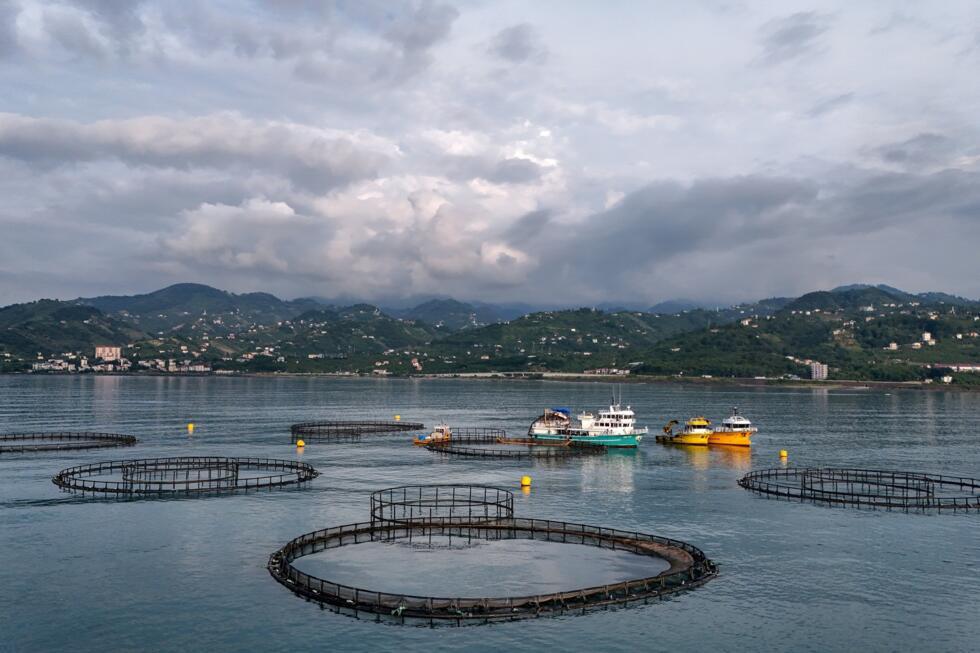
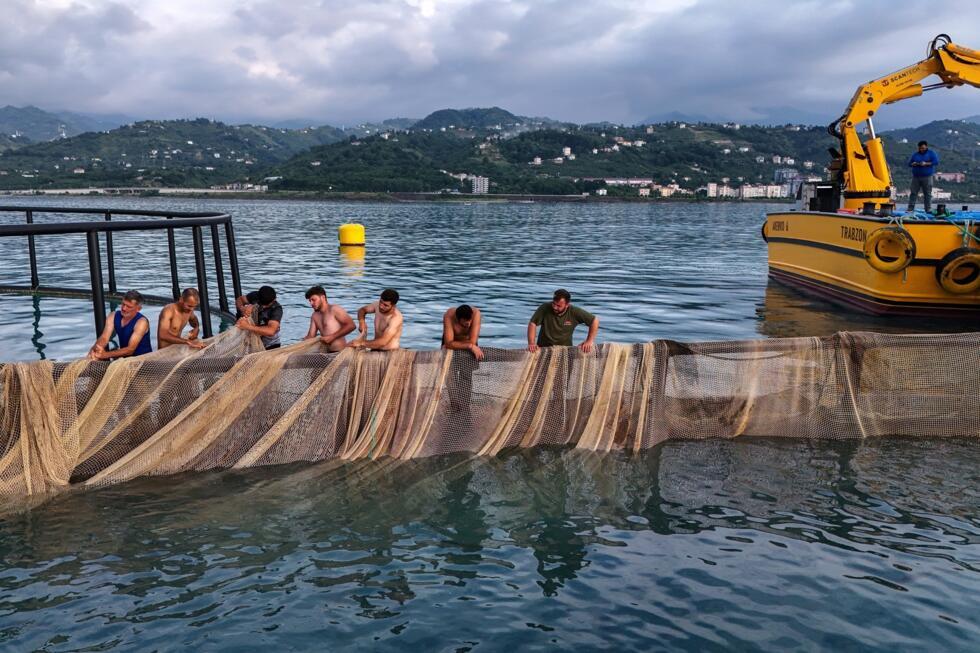
Trout processing in Trabzon, on the Black Sea Coast, where the industry is surging thanks to export demand © Ozan KOSE / AFP

"Our exports surged from $500,000 in 2017 to $86 million last year, and this is just the beginning," said Denizer, general manager of Polifish, one of the Black Sea's main producers of what is marketed as "Turkish salmon".

In its infancy just a decade ago, production of trout -- which in Turkey is almost exclusively farmed for export -- has exploded in line with the global demand for salmon, despite criticism of the intensive aquaculture required to farm it.

Last year, the country exported more than 78,000 tonnes of trout raised in its cooler northern Black Sea waters, a figure 16 times higher than in 2018.

Turkey exported over 78,000 tonnes of trout raised in its Black Sea waters last year, 16 times more than in 2018 © Ozan KOSE / AFP

And it brought in almost $498 million for Turkish producers, a number set to increase but is still far from the $12.8 billion netted by Norwegian salmon and trout giants in the same year.

Russia, which banned Norwegian salmon in 2014 after the West imposed sanctions over its annexation of Crimea, accounts for 74.1 percent of "Turkish salmon" exports, followed by Vietnam with 6.0 percent, and then Belarus, Germany and Japan.

'Spectacular success'

Stale Knudsen, an anthropologist at Norway's Bergen University and a specialist on Black Sea fishing, said Russia offered "an available market that was easy to access, near Turkey".

For him, the "spectacular success" of trout is also down to Turkey's experience and the technology used in farming sea bass and sea bream, a field in which it leads Europe.

Turkish producers have also benefitted from the country's large number of reservoirs where the fish are a raised for several months before being transferred to the Black Sea.

There, the water temperature -- which stays below 18 degrees Celsius (64.4 Fahrenheit) between October and June -- allows the fish to reach 2.5 to 3.0 kilogrammes (5.5-6.6 pounds) by the time they are harvested.

Last, but not least, is the price.

'Our fish is superior to Norwegian salmon, according to our Japanese clients,' says Ismail Kobya of Akerko © Ozan KOSE / AFP

"Our 'salmon' is about 15 to 20 percent cheaper than Norwegian salmon," said Ismail Kobya, deputy general manager of Akerko, a sector heavyweight that mainly exports to Japan and Russia.

"The species may be different but in terms of taste, colour and flesh quality, our fish is superior to Norwegian salmon, according to our Japanese clients," Kobya told AFP at Akerko's headquarters near the northeastern town of Trabzon, where a Turkish flag flies alongside those of Russia and Japan.

Inside, a hundred or so employees in long blue waterproofs, green head coverings and rubber boots behead, gut, clean and debone trout that has an Aquaculture Stewardship Council (ASC) certification for responsible farming practises.

- Disease risks -

"Over the last two years, many Turkish producers have moved to get those certifications," said Knudsen, though he does not believe such labels are always a guarantee of sustainability.

"I think the rationale behind that is not only to become more sustainable, but is more importantly a strategy to try to enter the European markets... where the Norwegians have some kind of control," he said.

In a 2024 study, researchers from a Turkish public institute raised concerns that "the rapid growth of the trout farming sector... led to an uncontrolled decline in the survival rate" of the fish.

Pointing to the "spread of diseases" and "improper breeding management", the researchers found that nearly 70 percent of the trout were dying prematurely.

Polifish, which also has an ASC certification, acknowledged a mortality rate of around 50 percent of their fish stocks, predominantly in the reservoirs.

"When the fish are small, their immune systems aren't fully working," said its deputy general manager Talha Altun.

Akerko for its part claims to have "reached a stage where we have almost no disease".

"In our Black Sea cages, the mortality rate is lower than five percent, but these are farming operations and anything can happen," Kobya said.

- 'Fake fish' -


Visible from the shore, the fish farms have attracted the wrath of local fishermen worried about the cages, which have a 50-metre (165-foot) diameter, being set up where they cast their nets to catch anchovy, mackerel and bonito.

Some local fishermen say the intensive trout farming is driving away other Black Sea species © Ozan KOSE / AFP

Mustafa Kuru, head of a local fishermen's union, is a vocal opponent of a farming project that has been set up in his fishing zone just 70 kilometres (45 miles) from the Georgian border.

"The cages block the movement of the fish and what happens then? The fish start leaving the area," he said, accusing the trout farmers of pumping chemicals into their "fake fish".

He said a lack of fish stocks in the area had already forced two boats from his port to cast their nets much further afield -- off the western coast of Africa.

"If the fish leave, our boats will end up going to rack and ruin in our ports," he warned.


© 2025 AFP
Stephen Miller: how an anti-immigrant crusade is remaking US policy

Long read

Top adviser Stephen Miller has urged US President Donald Trump to take a harsh line on immigration starting with the infamous "Muslim ban" of his first administration. Now, Miller's insistence that ICE triple arrests to 3,000 a day has sparked mass protests while border patrols are forced to prioritise rounding people up off the streets over targeting criminals – just to make the quota.


Issued on: 19/06/2025 
By: Paul MILLAR   
FRANCE24


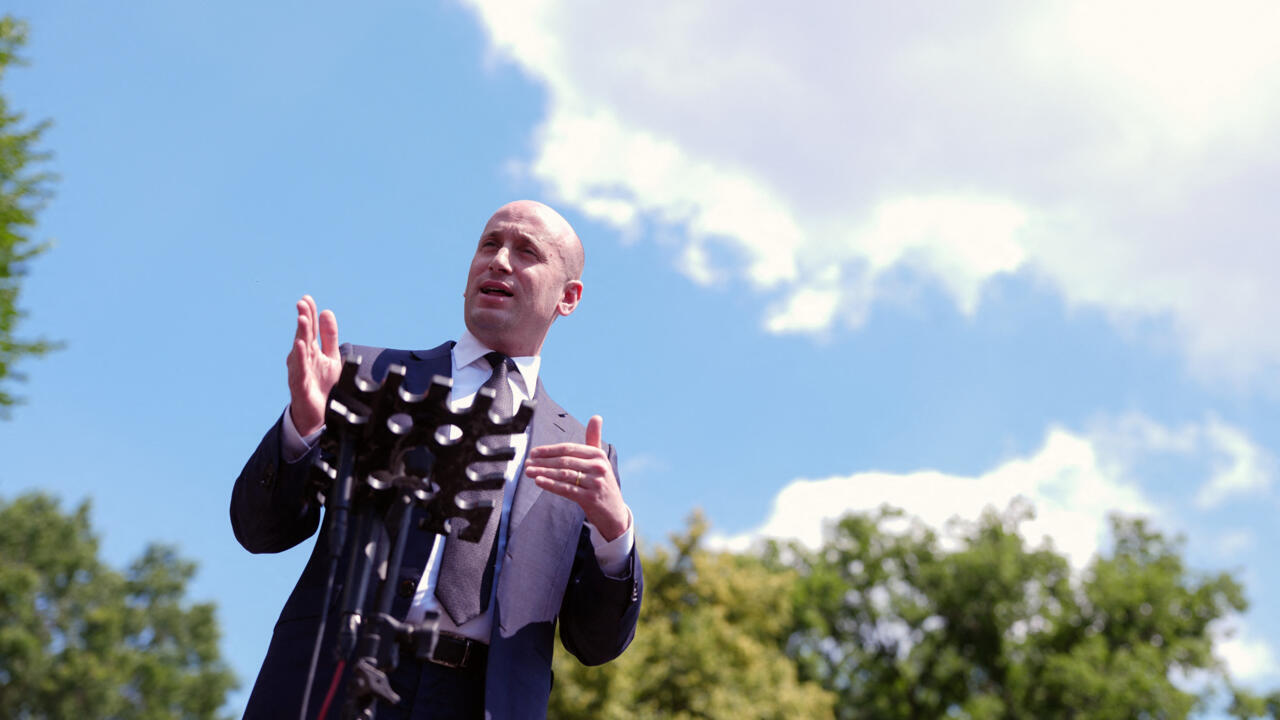
White House Deputy Chief of Staff Stephen Miller speaks to the media outside the White House on May 30, 2025 in Washington, DC. © Getty Images via AFP


Stephen Miller no longer feels at home in his country. As tens of thousands of people across Los Angeles took to the streets last weekend to protest against a wave of immigration enforcement raids on workplaces and warehouses in the city’s garment district, the deputy White House chief of staff took to social media to square off against Californian Governor Gavin Newsom.

“Huge swaths of the city where I was born now resemble failed third world nations,” he wrote. “A ruptured, balkanised society of strangers.”

Miller has become the face of US President Donald Trump’s anti-immigration policies at their most militant. He is a figure who increasingly frames his calls for mass deportations as a public safety measure to keep the West free from foreign invaders pouring in from the global South – despite the government's own findings that even illegal immigrants commit crimes at dramatically lower rates than US-born nationals.

During Trump’s first term in the White House, Miller was the key architect of the president's “Muslim ban”, a 2017 executive order that banned people from six Muslim-majority countries from entering the US.

Miller was also a vocal supporter of the policy of deliberately separating children from their parents at the Mexican border to discourage families from trying to seek asylum – a practice that reached new heights as a deliberately punitive measure under Trump.

Miller has hardly softened since his return to the halls of the White House. Weeks before the wave of armed US Immigration and Customs Enforcement (ICE) raids on workplaces set off mass demonstrations in Los Angeles, Miller hammered the agency’s leadership for its failure to make arrests at a rate that would allow Trump to keep his pledge to deport a million undocumented migrants in his first year.

What the country needed, he said, was 3,000 arrests each and every day – a dizzying increase from the daily average of about 650 in the president’s first five months in office. As of 2023, more than 13.7 million people were believed to be living in the US without legal authorisation, according to the Migration Policy Institute.

The mass demonstrations that greeted this rise in arrests has so far not deterred the administration. Echoing Miller’s warnings of degenerating inner cities overrun with foreign invaders, Trump on Monday called on ICE to ramp up their raids in Democratic-run cities such as Los Angeles, New York and Chicago, accusing the Democratic Party – without evidence – of using millions of undocumented migrants to artificially bloat their voter base and steal elections.

“I have directed my entire Administration to put every resource possible behind this effort, and reverse the tie of Mass Destruction Migration that has turned once idyllic Towns into scenes of Third World Dystopia,” he wrote on social media.

Rut Bermejo Casado, associate professor in politics and public policies at the Universidad Rey Juan Carlos, said that Miller had played a powerful role in changing the public debate around immigration during the Trump interregnum.

“I think he's key,” she said. “He has had time to strategically plan his policies from the first administration to the second one, and he has refined the coherence of the discourse – a cultural nativist discourse. During the first administration, [the Muslim ban] or the policy about separating families were just initiatives, not very well planned in advance. He has since had time to plan the discourse and the methods very well, to do it in a more rational way, and also to make it more difficult to … stop all of them.”
Enfant terrible

Miller, 39, rose quickly from being a congressional staffer to sit at the right hand of the president of the United States. Born and raised in the wealthy liberal enclave of Santa Monica in southern California, Miller found himself thrust into the state school system after an earthquake devastated a number of rental properties managed by his family’s real estate business.

In high school, Miller quickly made a name for himself as an arch-contrarian with a taste – and talent – for provoking his liberal peers. In a school divided between largely working-class Latinos and children from wealthier White families, he railed against his classmates’ supposed lack of “basic English skills” and the school’s policy of making announcements in both Spanish and English.

Classmates recall a young Miller ostentatiously leaving his garbage lying around for custodial workers to clean up, at one point standing up to deliver a now-infamous speech calling on his classmates to throw their leftovers on the ground, according to Jean Guerrero's book, "Hatemonger: Stephen Miller, Donald Trump, and the White Nationalist Agenda."

“Am I the only one who is sick and tired of being told to pick up my trash when we have plenty of janitors who are paid to do it for us?” he said.

Warming to his role, the teenage Miller became an unrelenting critic of the school administration’s allegedly liberal leanings and soon caught the attention of Larry Elder, a right-wing radio host who would have the ferociously articulate Miller on as a guest more than 70 times.

At North Carolina's elite Duke University, Miller quickly leveraged his growing media presence and ties with right-wing ideologues such as David Horowitz to land a gig as a bi-weekly columnist for the campus newspaper. Flourishing in the tense climate of the US War on Terror, he was the national campus coordinator of Horowitz’s Terrorism Awareness Project, designed to warn students of "Islamofascism", the threat of Islamic jihad and “mobilise support for the defence of America and the civilisation of the West”.

His big break came when three White lacrosse players were accused of raping a Black woman who had been hired to strip for them. Miller’s outspoken support for the three men became a constant refrain across the national right-wing media landscape, with the college junior appearing on the Bill O’Reilly Show and Nancy Grace to denounce what he called “the moral bankruptcy of the left’s politically correct orthodoxy and the corruption of our culture”.

When the players were found not guilty after a four-month secret investigation by the state attorney general, Miller championed it as a vindication of his view that the US had become a hostile place for White Americans.

“Three of our peers faced a devastating year-long persecution because they were White and their accuser Black,” he wrote.
Rising star

Miller’s newfound national celebrity catapulted him into the fast-radicalising world of Republican politics, where he landed his first job as press secretary first to Tea Party heavyweight Michelle Bachmann and then Alabama senator Jeff Sessions.

While working for Sessions, Miller played a key role in torpedoing a bipartisan immigration bill that would have tightened border security while providing a pathway to citizenship for millions of undocumented migrants in the US. The proposed legislation’s collapse would mark an abrupt end to the Republican party’s efforts to reach a compromise on undocumented migration, wilting before the onslaught of rising far-right calls for mass deportations.

It was during these formative years that Miller would deepen his contacts with far-right figures such as Steve Bannon, frequently lobbying his publication Breitbart to cite reports from the explicitly anti-immigration Centre for Immigration Studies, a think-tank founded by the eugenicist John Tanton.


THE SMIRK
01:40© France 24


In leaked emails, he enthusiastically encouraged the publication to draw comparisons between US immigration policy and Le Camp des Saints, a French dystopian novel popular across the far right that imagines refugees from the global South flooding the West and overwhelming its White population.

When Trump announced his presidential bid with a promise to crack down on irregular immigration and build a wall on the Mexico border, Miller launched himself into the campaign.

Bermejo Casado said that Miller and his allies had been instrumental in the growing militarisation of immigration policy in the US.

“If they say that we are in a crisis, we are in an exceptional time, we need exceptional measures, that brings onto the table methods and tools that were unpalatable or would be considered draconian if we were in another moment,” she said.
No more half-measures

During Trump’s first term, Miller led the fight to dismantle Obama’s Deferred Action for Childhood Arrivals, a programme giving short-term renewable protections to undocumented migrants who had been brought to the US as children. He fought for, and won, a sharp reduction in the number of refugees accepted by the US each year – despite the fact that Miller’s own family fled to the US at the turn of the century to escape anti-Semitic pogroms in the Russian Empire.

Kathleen Bush-Joseph, a lawyer and policy analyst with the Migration Policy Institute’s US Immigration Policy Program, said that the US’s longstanding gridlock over immigration reform had given Trump a powerful platform on which to call for drastic action.

“The fact that the US immigration system is so outdated and overwhelmed and under-resourced means that yes, Trump has been able to exploit some of these really long-standing problems,” she said. “In terms of the politics, even under the Biden administration there were leaders of so-called sanctuary jurisdictions who were calling for more federal action. They wanted coordination of new arrivals, they wanted help with the reception of tens of thousands of people who didn’t have community ties that were trying to go into these city shelters – which are not designed for receiving immigrant families in such large numbers. So some of this is really a reflection at the end of the day of congressional inaction.”

She said that the relentless spectacle of armed ICE raids and military planes packed with shackled deportees were designed to send a very clear message to Trump’s base.
'Manufactured crisis of the nation: Stephen Miller depicting L.A. protests as an existential fight'

18:36
FRANCE 24 © 2025


“There’s rhetoric, and there are images,” she said. “And there are these high-profile moves like Alien Enemies Act deportations, putting people in jail in El Salvador, sending people to Guantanamo Bay, using military planes for deportations. These are a very calculated part of the administration’s rhetoric and narrative, and the story that they're trying to tell about immigration. And while those moves are happening, they've been laying the groundwork for doing the things that will actually lead to the deportation of large numbers of people over time – because the high-profile ones are not that.”

Despite Miller’s zeal, though, the ICE raids that set off the Los Angeles protests reveal the extent to which the Trump administration has been hard-pressed to deliver on its promised mass deportations. Liam Haller, a researcher at the German Centre for Integration and Migration Research, said that ICE just didn’t have the means to make Miller’s dream a reality.

“While immigration hawks such as Miller have certainly achieved short-term policy implementations such as increased ICE raids, long-term or fundamental reforms remain elusive,” he said. “Although the ICE raids have garnered much attention and significant blowback, the agency is fundamentally constrained. They still do not have the manpower to enact deportations on the scale originally envisioned – which is largely why deportation numbers under Trump's second term still fall near where they were under Obama.”

With Trump’s “Big Beautiful Bill” potentially devoting more than $150 billion to immigration enforcement, including the hiring of 10,000 new ICE agents and the construction of new detention centres capable of housing 100,000, Miller’s dream of mass deportations may soon find itself on surer footing. In any case, Bermejo Casado said, the architect of Trump’s most hardline immigration policies had already succeeded in taking the debate around migration into muddier waters.

“I think there has been a change – before, the discourse was to control borders, to focus on irregular migrants, but I think that focus has blurred in the last years, and particularly with the far-right discourse against migration,” she said. “But it's very different, because in one case you are focusing on ‘They are not law-abiding people’ and this other one your focus is that ‘They are not like us – they are different, they are not culturally integrated’. And that is also part of the discourse of Miller.”
SPACE/COSMOS

France becomes biggest shareholder in Eutelsat, EU rival to Musk's Starlink

France on Thursday became the biggest shareholder in satellite company Eutelsat, which is widely regarded as a potential European rival to Elon Musk's Starlink. France chose to act now to avoid depending on "other powers" in the future, said President Emmanuel Macron.


Issued on: 19/06/2025 - 
By: FRANCE 24

A photograph showing the Eutelsat's logo displayed on its headquarters in Issy-les-Moulineaux, southwest of Paris, on June 19, 2025. © Martin Lelievre, AFP


The French state is set to become Eutelsat's biggest shareholder following a 1.35 billion-euro ($1.55 billion) investment that the financial ministry said will help the satellite company compete with Elon Musk's Starlink.

Debt-laden Eutelsat has garnered unprecedented attention this year from European governments seeking alternatives to reliance on US satellite companies.

"The race is on. That's why we have to take a position now and invest now. Otherwise, the whole market will be occupied and France and Europe will depend on other powers in future," Macron's office told AFP.

The 717 million-euro capital injection by the French state, which was part of an overall deal with other investors worth 1.35 billion euros, will make Paris Eutelsat's largest shareholder, raising its stake from 13 percent to just under 30 percent.


The announcement comes as competition heats up in the satellite communications sector, where Elon Musk's Starlink is a dominant player, but some governments would prefer sovereign solutions.

Eutelsat boasts more than 600 satellites since merging with British firm OneWeb in 2023, making it the world's second-largest operator of low Earth orbit (LEO) satellites, behind Starlink, and the obvious candidate as a European champion.

The company has in the past called itself "the only LEO alternative to Starlink".

"Eutelsat is a strategic asset contributing to European strategic autonomy," French Finance Minister Éric Lombard's office said.

But it remains far smaller than the American heavyweight, which has 6,000 satellites lofted into orbit by Musk's comparatively cheap, reusable SpaceX rockets.

Set to be completed by the end of this year, the capital increase is "a pivotal step in Eutelsat's strategic and financing roadmap, enabling the execution of its strategic vision", it said.

The new investment will fund a renewal of Eutelsat's satellite fleet and improve its financial situation, including through a debt restructuring.

Eutelsat is also gearing up to contribute to the Iris² network of European satellites in multiple orbits, supposed to offer communication services from 2030.
Rush for connectivity

"The war in Ukraine has shown the importance of space infrastructure for resilient communications infrastructure, whether civilian or military," Lombard's office said.

"It has also spotlighted Europe's dependence on non-European technology."

Musk has called Starlink the "backbone" of the Ukrainian army because of its wide use defending against Russia's invasion since 2022 – and warned that "their entire front line would collapse if I turned it off", sending Europeans scrambling for alternatives.

Eutelsat had already this week signed a 10-year, billion-euro deal at the Paris Air Show to provide military communications for the French armed forces.

And presenting its latest quarterly results last month, the firm said it was in active sales talks with governments both inside and outside Europe.

Major shareholders stumping up money alongside Paris are shipping giant CMA CGM, Indian telecoms operator Bharti Airtel and the FSP investment fund, owned by seven French insurance companies.

The two-stage plan includes a "reserved" capital increase open only to the four named investors, with a second round open to others.

"Discussions are ongoing" with other investors including the British government, "which could join the capital raise in due course", Eutelsat said.

(FRANCE 24 with AFP)