Tuesday, July 01, 2025


The EU’s Black Sea Strategy: A Neighbourhood Reassessment
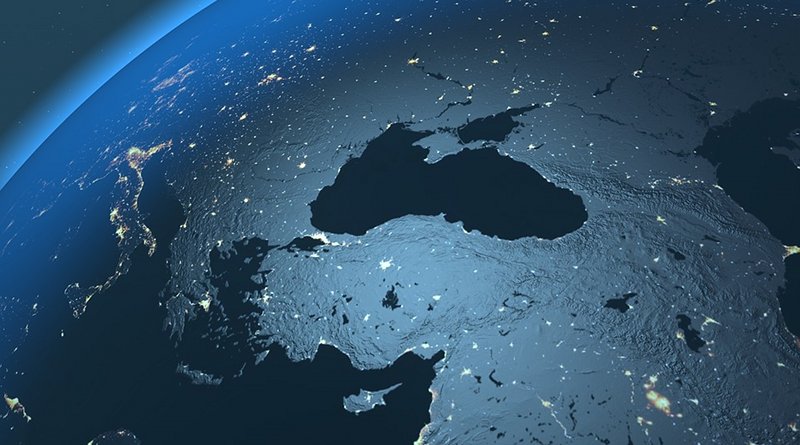
the black sea satellite globe map


By 

The current state of unpredictability and hostility in international affairs is forcing actors to modify their approaches to their neighbours. As the new international order, based on multi-polarity and regional cooperation continues to take shape, the Eurasian continent remains firmly at the heart of this transformation.


One of the key actors affected by this process is the European Union and its member states. In recent months, politicians in Brussels have looked ‘East’, re-engaging with Central Asia and the South Caucasus through separate cooperation initiatives but also through connectivity projects which facilitate interregional integration. However, over the last several years, a combination of both internal issues and an increasingly challenging geopolitical situation have weakened the EU’s grip in its neighbourhood.

The EU is confronted with new realities at both the regional level but also on a systemic, international level, a challenge which will test the ability of member states to act as ‘one’ in external engagements. This calls for a strategic re-evaluation and an acknowledgment that previous concepts and approaches are no longer sufficient, especially if the EU’s goal is to develop the strategic actorness necessary to maintain its influence beyond traditional European borders. 

The new status-quo 

Despite the heavy emphasis on military investment and the building of war-time readiness, the EU maintains normative and soft power tool mechanisms which, if applied fairly and reciprocally, can stimulate regional economic growth and promote mutually beneficial cooperation. This includes the Caspian region, with various projects linking the EU to the East via the region.

At the same time, significant commitments to boosting war-time readiness and improving member state coordination are underway and now inevitable, with various European states re-committing themselves to meeting what they believe is a “generational challenge” in the face of Russia’s actions in Ukraine. This is precisely what is echoed throughout the UK government’s recently published Strategic Defence Review, which argues that current levels of military readiness in Europe are insufficient for the current status-quo.  

However, decision-makers in Brussels should not abandon alternative sources of influence in international affairs. This is particularly relevant in the context of the rapidly growing and widening geopolitical competition in regions like Central Asia, where China, the United States and Russia are actively working to maintain their influence through a range of initiatives. In Russia’s case, the over-extension of its resources in Ukraine has led to a weakening of its influence in regions like the South Caucasus. A new strategic reality following Azerbaijan’s restoration of its territorial integrity and the country’s growing role in transregional projects have weakened Russia’s previously assertive position in the region. Therefore, to take advantage of and keep up with newly emerging regional frameworks, the EU must ensure its neighbourhood policy is adequately equipped. 


This requires the EU to ensure that the foreign policy identity and vision it stands for remains appealing enough for its neighbours, something which has proven to be a major challenge in recent years. This cannot be achieved by prioritising leadership in one specific element or sphere. Any effective ‘soft power’ must be recognized as a power with credibility. Hence, before directing attention to a specific region or project, the EU needs to address issues at the core of its ‘personality’ as an actor. However, the war in Ukraine has undoubtedly complicated this, with several of the EU’s bilateral neighbourhood projects stalling as a result. Member state division on Ukraine itself but also on how to proceed with the accession programme has presented the EU as a fragmented unit, a symptom which goes directly against the rapidly evolving cooperation spirit in the Eurasian (and Caspian) region.

Essentially, if the EU is to cooperate with Central Asian and South Caucasus countries, take a leading role in transregional projects such as the Middle Corridor and maintain its economic prestige, it must find a way to restore its appeal as a decisive, uniting and consistent actor. This challenge has, fortunately, been accepted in Brussels. The re-formatting of its approach to its neighbours has begun and serves as a crucial first step to boosting its soft power reputation. 

The Eastern Neighbourhood

The tension at the heart of the EU’s weakening appeal and also influence is its largely inconsistent approach to relations with its neighbours. For better or worse, the EU systematically institutionalized its relationship with its immediate geographic neighbours. This includes the wide-reaching European Neighbourhood Policy (ENP) concept, consisting of 16 countries, but also the narrowed down Eastern Partnership (EaP) which serves as the “Eastern dimension” of the ENP.

The goal of both programmes was to bring the EU closer to its “partners” which are non-members but are either striving to accede to the EU or are tied to Brussels through extensive economic and geopolitical cooperation. Based originally on the principle of conditionality and incentives in exchange for alignment with the EU’s vision and key values, the programmes were launched in pursuit of mutual interests which would, a priori, lead to economic development and security. The primary tool was political dialogue and the adoption of Agreements in the “Association Agreement” or “Partnership & Cooperation Agreement” format, which would serve as roadmaps for the relationship between the sides. 

This format of institutionalized cooperation and financial assistance was designed to achieve more than just bringing close partners even ‘closer’. The EU was keen to expand the scope of its influence beyond its traditional borders. This, in a way, is a form of ‘soft power’, which ties closely with the normative power literature that in the early 2000s shaped the global understanding of the EU’s foreign policy identity. However, even if an actor’s soft power arsenal is extensive and supported by economic power, this does not always translate into the final objective of “getting others to want the outcomes you want”.

This, in the words of the late Joseph Nye, was the ultimate aim of any actor seeking to influence international affairs through non-military means, as was the case with the EU for many years. Essentially, effective soft power without credibility, which is measured by the extent of acceptance of the given actor’s normative stance and broader vision, is deemed to fail. There are numerous examples of countries that began widespread cooperation with the EU and even entered the complex accession ladder. However, more often than not, this momentum has cooled, diverting the essence of the relationship away from prioritising rapid approximation to pragmatic cooperation. 

Even though some of these instances have originated from decisions made at the domestic level, the scope of the EU’s broader ‘pull’ factor has undoubtedly deteriorated. First, the EU has been unable to consolidate itself as a leader vis-à-vis Ukraine. Despite positioning itself at the heart of the effort to uphold Ukrainian territorial integrity through financial and military assistance, member states regularly show division on the scale and type of military support that should be provided. Moreover, it is a widely accepted fact that without American support, EU resources are insufficient if the objective is to force Russian withdrawal from Ukrainian territories. 

In the South Caucasus, the EU has, more often than not, acted in an inconsistent and highly divisive manner. Despite officially calling for and supporting peace and championing international law, the EU failed to adequately influence the reality on the ground and address the three-decade long Armenian occupation of Azerbaijani territory. In addition to the organization of military assistance for the country via the European Peace Facility, the deployment of a border mission has on several occasions destabilized the peace track and contributed to an increase in suspicion between the two actors. 

The ‘Black Sea’ factor 

Nevertheless, in recent months, one can detect a swift and assured attempt to address the rapidly changing geostrategic realities in the EU’s neighbourhood. With the war in Ukraine showing no signs of slowing down, the European Commission has made formal steps to upgrade and strengthen its influence in the Black Sea region. Surrounded by six countries and, most notably, from the perspective of geopolitical competition, Russia and Turkey, this region possesses vital importance for European security. It serves as a bridge between Europe, the South Caucasus and Central Asia, precisely the two regions which have in recent months received special attention from the EU. 

In late May, the European Commission’s Directorate for Enlargement and the Eastern Neighbourhood announced a new Black Sea Strategy. The aim of this newly prepared concept is to continue the challenge of bringing the EU closer with the region’s countries whilst taking into account new realities, underpinned by the war in Ukraine. The strategy makes a special emphasis on stability, security, and growth, with the first two being the most repeated terms in the concept. With armed conflict breaking out at an increasingly rapid pace and the dangers this poses, the EU has expressed a clear desire to increase the resilience of regional trade routes, protecting mutually beneficial interconnectedness from the potential of new and unpredictable conflicts. This reflects a growing sense of threat which specific EU members are feeling, with countries like Finland and Lithuania actively preparing their populations for the possibility of a Russian attack on their territory. 

The EU’s plan to upgrade the role of the Black Sea in its strategic outlook is, therefore, a deliberate step. This, however, is not an isolated policy. As part of a broader campaign to increase the Union’s preparedness and crisis response coordination, the EU also announced a ‘preparedness union strategy’ in March 2025 which is expected to enhance civil-military cooperation and establish a European centre of expertise on research security.

Moreover, the EU also announced a new European Internal Security Strategy in April 2025, designed to institutionalize regular threat analyses, improve the ability of the Union to anticipate military threats and act as a platform for the coordination of a new EU “security culture” which would improve implementation procedures and strengthen collaboration. Described as a ‘common endeavour’ as opposed to the task of just one body or institution, politicians in Brussels are signalling that protection and security should be the mutual concern of member states but also the Union’s neighbours. The EU has accepted considerable responsibility in ensuring that in addition to its members, its neighbours are also sufficiently prepared and aligned with its vision. 

The damage delivered to the credibility of the EU’s actorness in its neighbourhood required more than just ambitious pledges and commitments. It required a systematic and strategic change of tone, targeted at incorporating the interests of neighbouring countries into EU strategy in a way which aligned with their national interests. In addition to institutional factors, this change was made possible through political will and high-profile changes in the Union’s foreign policy leadership.

The arrival of Kaja Kallas to replace Josep Borrel at the position of the Union’s High Representative for Foreign Affairs and Security Policy was followed by an assured approximation with both Central Asia, as evidenced by the hosting of the first EU-Central Asia summit and the mobilization of new resources through the EU’s Global Gateway, but also with the South Caucasus. In the case of the latter, the new High Representative has specifically focused on restoring trust and harmony in EU-Azerbaijan relations, a mutually beneficial partnership from a strategic and economic perspective but one which was for too long hijacked by individuals seeking to undermine Azerbaijan on the international stage. 

Going forward: strategic actorness 

An indispensable first step to restoring the EU’s credibility is the consolidation of mutual trust with its neighbours. By modifying its approach and correcting previous misconceptions, the EU can contribute to economic growth, prosperity and security in its neighbourhood, of which the Black Sea region is a key element. If the EU was to succeed in institutionalizing this change, one would notice a definitive shift away from previous practices to new ones – from excessive and selective intervention into regional affairs to building mutually beneficial cooperation which is reciprocal and considerate of the interests of the other side. 

Uniting neighbours over common goals, as those outlined in the Black Sea Strategy, demonstrates acceptance on the EU’s behalf that reality ‘on the ground’ has changed. The era of imposition of views and ideals, which were implemented inconsistently by the EU itself, is in the past. The new and increasingly consolidated ‘mode’ of conduct is bilateral and multi-lateral cooperation in various formats which enables all sides in the relationship to have equal degree of agency. The growing influence of neighbouring regions like the South Caucasus has forced the EU into adapting its mindset, requiring the introduction of new visions which are directly  “in synergy” and incorporate new trends and regional realities. If the EU manages to maintain this positive momentum and succeed in restoring trust, it can finally aspire for the strategic actorness and global leadership which has for so long evaded it. 


Huseyn Sultanli

Huseyn Sultanli is a media specialist at the Center of Analysis of International Relations (AIR Center). In 2017-2021, he studied International Relations at the University of St Andrews. In 2021-2022, he obtained a Master’s degree in International Relations from the London School of Economics and Political Science (LSE).

Russia’s War Economy Is Heading To Recession: It Probably Won’t Slow Down The War – Analysis

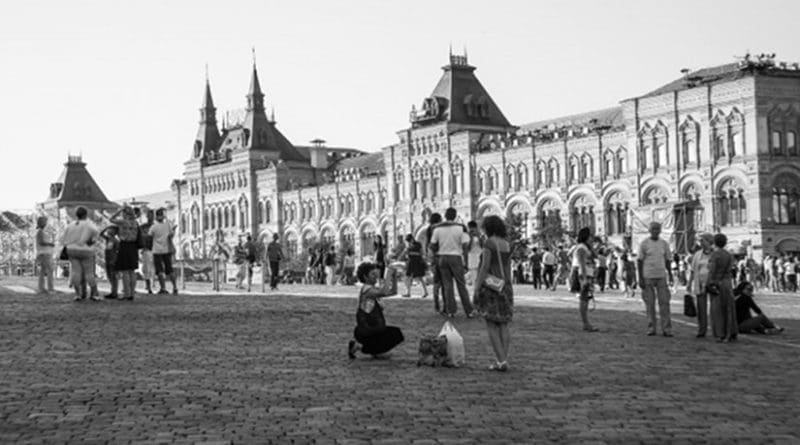
Red Square, Moscow, Russia.

By 

By Mike Eckel


(RFE/RL) — At Russia’s annual marquee event for business investment, a Kremlin-funded bubbly celebration of promise and opportunity, the country’s top economic minister poured cold war on the party.

“According to the numbers, yes, we’ve got a cooling down now,” Maksim Reshetnikov said at the St. Petersburg International Economic Forum. “Based on current business sentiment, it seems to me we are on the brink of transitioning into recession.”

If that wasn’t enough of a damper, the head of the Russian Central Bank seconded the downbeat sentiment.

“We have been growing for two years at a fairly high rate due to the fact that free labor resources were used,” Elvira Nabiullina said during the same panel discussion on June 19. “But we need to understand that many of these resources have really been exhausted. We need to think about a new model for growth.”

And there was also this from German Gref, the head of the state-owned banking giant Sberbank, on the sidelines of the forum: “We are colliding with a large number of problems, which today we can call a perfect storm.”


For more than 40 months now, since the start of the all-out invasion of Ukraine, Russia’s economy has been on a war footing, growing at a robust — at times torrid — rate, and showing resilience — unexpected to many Western experts — in the face of punishing sanctions.

The Kremlin has retooled the economy to power its war, pouring money into defense industries to churn out guns, tanks, drones, and uniforms. It’s poured money into wages for defense industry workers and paid soldiers sky-high salaries and benefits to entice them to fight in Ukraine.

That’s transformed local economies in many of the country’s poorer, remote regions, and also bought support for the conflict.

But high wages have fueled inflation, and Nabiullina hiked the key interest rate to 21 percent in October to try and tamp it down. Despite public complaints from the country’s industrial lobby, she has held firm, committed to slowing inflation and downshifting the economy.

It’s working, and now Russia is facing the first significant economic slowdown since the start of the full-scale war.

“I think a lot of indicators point to growth stopping, or close to it,” said Iikka Korhonen, head of research at the Bank of Finland’s Institute for Emerging Economies. “Manufacturing is still growing, but most other things are not.”

“For two years [the] Russian economy was overheated and growing at a pace way above its normal growth rate,” said Alexander Kolyandr, an economics expert with the Center for European Policy Analysis in Washington. “So what’s happening now is the economy returns to where it should be. For the moment it stands as a correction, coming back to the long-term growth rate.”

“The main challenge for the government at this point is to make this a soft landing, rather than a complete collapse,” he said.

What Comes Next?

Russia’s gross domestic product grew by 1.4 percent in the first three months of the year, compared with the same period in 2024, according to government statistics. In the last six months of 2024, however, the economy was humming along — with average growth of around 4.4 percent.

Official estimates now forecast GDP growth at around 2 percent in 2025. The International Monetary Fund predicts even lower growth — 1.5 percent.

The unemployment rate stands at a historic low of around 2.3 percent, underscoring how distorted the labor market has become as men are drawn away from civilian jobs to fight in Ukraine.

Faced with inflation running at over 10 percent in the first half of 2025, Nabiullina has warned repeatedly about an “overheated economy.” In early June, she engineered a small rate cut, to 20 percent, which experts called largely symbolic.

But the impact of the high interest rate is showing up in official statistics,according to data and forecasts from the Center for Macroeconomic Analysis and Short-Term Forecasting, a government-linked research group.

For some in the Kremlin, a soft landing would be a welcome correction to the two torrid previous years. The danger is if it becomes a hard landing.

“By keeping the key rate very high, despite the state continuously pumping money into the economy, they have been able to achieve economic slowdown,” said Maria Snegovaya, a senior fellow in the Russia program at the Washington-based Center for Strategic and International Studies.

“It’s unclear how sustainable the situation is for the Kremlin if the economy is actually declining. It’s not something that they want either,” she said during an online discussion on June 17. “In general, the Russian macroeconomic team seems to be quite concerned.”

What this means politically is harder to predict.

So far, President Vladimir Putin has given Nabiullina and other top economic officials his blessing for their handling of the economy.

A day after the panel discussion at the St. Petersburg forum, Putin weighed in himself, with a cautionary note in a speech at the business forum:

“Some specialists, experts, point to the risks of stagnation and even recession,” he said. “Of course, this should not be allowed under any circumstances.”

“Our most important task this year is to transition the economy to balanced growth,” Putin said.

With other parts of the economy crimped by sanctions, Kremlin coffers are even more heavily dependent on oil and gas revenues than they have been in the past. But oil prices have fallen since the beginning of the year, and the Finance Ministry haslowered its forecast for oil-linked revenues for 2025.

“Unless we see a decline in oil prices, [or] some significant increase in sanctions enforcement, and an overall decline in civilian production, then I think there will be a soft landing,” Kolyandr said.

Balanced — or slower — growth will ripple through the economy, putting a brake on wage growth. It will also crimp household budgets at a time when Russians have been accustomed to fatter wallets, which could fuel discontent.

A growing number of companies and factories are also falling behind in wage and salary payments to workers, according to the newspaper Nezavisimaya Gazeta. And a growing number of regions have started cutting recruitment bonuses for new volunteer soldiers — a trend that reflects worsening economic conditions on a local level.

Still, Putin seems determined to push forward in the war — even faced with eyewatering casualty rates that are approaching 1 million men killed or wounded. The government plans on spending about 13.1 trillion rubles ($144 billion) on defense- and security-related expenditures in 2025. That’s 6.3 percent of its GDP, one of the highest levels since the Soviet era.

“Unfortunately, yes, this war will not stop for economic reasons, and Russia can continue to produce [weaponry] at the current level for quite a while,” Korhonen said. “The only economic factor that could really hamper Russia’s war effort is the price of oil.”

  • Mike Eckel is a senior international correspondent reporting on political and economic developments in Russia, Ukraine, and around the former Soviet Union, as well as news involving cybercrime and espionage. He’s reported on the ground on Russia’s invasion of Ukraine, the wars in Chechnya and Georgia, and the 2004 Beslan hostage crisis, as well as the annexation of Crimea in 2014.

Azerbaijan arrests Russian journalists as Yekaterinburg victims' bodies return home for fresh autopsy

Azerbaijan arrests Russian journalists as Yekaterinburg victims' bodies return home for fresh autopsy
The FSB killings of two Azerbaijani brothers triggered a strong diplomatic response from Baku. / Orkhan Musayev via Unsplash
By Cavid Aga in Sarajevo July 1, 2025

Azerbaijan arrested two Russian journalists on June 30 and ordered fresh autopsies on two Azerbaijani brothers killed by the Russian Federal Security Service (FSB) in Yekaterinburg, escalating diplomatic tensions with Moscow as both sides traded accusations over the killings that shocked Azerbaijan.

FSB forces killed the brothers and arrested nine others during violent raids on Azerbaijani homes in connection with a murder investigation in Yekaterinburg on June 27. The raids triggered a strong diplomatic response from Azerbaijan, after relations between Baku and Moscow were previously soured by the downing of an Azerbaijani AZAL aircraft by Russian air defences.

The bodies of brothers Ziyaddin and Husein Safarov arrived in Azerbaijan on June 30 and were handed over to relatives. The victims will undergo new medical examinations before burial in Agjabadi, according to the APA news agency.

Seyfaddin Huseynli, brother of the killed men and a prominent journalist, announced Azerbaijan would conduct independent medical examinations. "We are certain that Russia's fabricated autopsy report does not reflect the truth, so the bodies will undergo fresh medical examination in Azerbaijan, and it will become clear what really caused our brothers' deaths," he told reporters, according to APA.

Huseynli expressed gratitude for Azerbaijan's exposure of what he termed Russia's "intelligence network" in the country. "The exposure of Russia's spy network in Azerbaijan these days brought water to our family's heart. For all our compatriots, this was consolation. I thank the Azerbaijani state both on my own behalf and on behalf of people who suffered from Russia's merciless regime," he said.

Tit-for-tat arrests

Hours after the bodies' return, Azerbaijan's interior ministry conducted operations at Sputnik Azerbaijan's Baku office, arresting executive director Igor Kartavykh and chief editor Yevgeny Belousov. The Russian state media outlet's operations were suspended in February 2025, though staff continued working illegally, according to a statement from the ministry.

The interior ministry said investigations began based on operational intelligence that the agency continued activities through illegal financing despite accreditation suspension. "On June 30, search operations were conducted at the branch office, and there are detainees," the ministry confirmed to APA.

Russia immediately summoned Azerbaijan's ambassador Rahman Mustafayev over what Moscow termed "unfriendly actions" and "illegal detention of Russian journalists". Foreign ministry spokeswoman Maria Zakharova expressed concern that Russian diplomats in Baku could not contact the journalists for several hours and were denied consular access. 

"The detainees are Russian citizens of Azerbaijani origin. They were arrested as part of an investigation into serious crimes committed in previous years. The investigation is ongoing," she said, according to JAMnews. She confirmed that Russia's chargé d'affaires provided clarification to the Azerbaijani foreign ministry on June 28.

Unprecedented media condemnation

Azerbaijani state media’s has launched its harshest ever criticism of Russian President Vladimir Putin personally. In an evening news broadcast on June 29, state channel AzTV described Russia as a "prison of nations”, according to JAMnews.

"What's wrong, Mr. Putin? Are you so disturbed by the fact that Azerbaijan has become a strong regional power, has returned its territories for the first time in 200 years, and defended its national interests?" the anchor declared, referring to Azerbaijan’s recovery of Nagorno Karabakh after decades under Armenian control. 

"You are used to ruling over people forcibly absorbed into your empire. In tsarist and Soviet times, Russians were treated as a superior race," he said. "This is a systematic policy directed by Vladimir Putin," the AzTV presenter stated, drawing parallels with Russian actions in Ukraine.

Later broadcasts compared current Russian policy to 1930s Germany, whilst state agency Azertag published commentary directly accusing Putin of systematic persecution. 

European Union ambassador to Azerbaijan Peter Michalko became the first senior Western diplomat to condemn the Yekaterinburg killings. "I am deeply concerned by reports of violence, torture and inhuman treatment by Russian security forces against ethnic Azerbaijanis, even resulting in deaths. My thoughts are with the victims and their families," he wrote on social media.

Opposition leader Ali Karimli of the Azerbaijani Popular Front Party delivered one of the strongest reactions to the Yekaterinburg killings. Speaking to JAMnews, he argued the incident was directly ordered by Putin rather than a law enforcement initiative. "Moscow wants to see Azerbaijan as a fully submissive vassal and seems confident it has already achieved that," Karimli stated. He attributed this confidence to "Azerbaijan's internal weaknesses: corruption, economic monopolies, the collapse of democratic institutions, and the concentration of political power in the hands of one man."

Karimli issued a direct challenge to Azerbaijan's leadership: "Either submit to the demands of the Russian Empire and effectively accept the role of its governor, or open up to the people and the international community, and show political will to defend independence and citizens' rights," he said.

Political analyst Shahinoglu connected the incident to Azerbaijan's February closure of the Russian House cultural centre in Baku and restrictions on Sputnik's activities. This suggests the Yekaterinburg killings represent retaliation for Azerbaijan's efforts to limit Russian soft power influence.

Historian Altay Goyushov told JAMnews the incident highlights structural problems forcing Azerbaijanis to seek work in Russia. "People go there not for prosperity, but simply to have the opportunity to work freely," he argued, noting that Azerbaijan lacks sufficient economic freedoms for its own citizens. "For comparison: I recently learned that the Azerbaijani government lifted visa requirements for Chinese citizens long ago, but China still hasn't lifted visas for Azerbaijanis. Why? Because they know Azerbaijanis are ready to accept anything and go anywhere, just to escape the problems in their own country," Goyushov said.

Sputnik Azerbaijan previously targeted Azerbaijani journalists working for AbzasMediaToplum TV and Meydan TV, accusing them of working for Western intelligence. Arrests of the journalists started after this targeted attack. Commenting on this, Goyushov told bne IntelliNews that “[Azerbaijani President Ilham] Aliyev’s regime had just told them to write [the article], so they did." Goyushov believes that Aliyev used Sputnik for his own interests. "It’s their old habit. Finding a scapegoat never causes any difficulty — there’s always some housing office manager they can throw under the bus," he concluded.

Russian criminal allegations

Russian authorities provided their first detailed justification for the FSB operation, claiming the Safarov brothers led an ethnic criminal organisation active since the late 1990s. TASS quoted law enforcement sources alleging the group engaged in "illegal activities selling drugs, alcoholic and tobacco products, gambling, supervising prostitution and distributing pornographic materials."

The sources claimed one victim was an entrepreneur who refused to pay protection money and was murdered by the group. They also suggested possible links to mass alcohol poisoning in Yekaterinburg in 2021 and ownership of kiosks selling counterfeit goods.

Russia's Investigative Committee has opened criminal cases under multiple articles, including group murder, contract killing and attempted contract murder relating to incidents in 2001, 2010 and 2011. Six suspects were charged, with three Safarov family members receiving 22-day detention orders.

The timing and nature of Russia's criminal allegations raise significant credibility concerns. No charges were filed against the family during 24 years of alleged criminal activity, despite Russian authorities claiming detailed knowledge of their operations since the late 1990s.

The decision to conduct lethal raids rather than standard arrests for historical crimes appears disproportionate, particularly given torture allegations from defence lawyers. According to pro-government outlets in Azerbaijan, the operation's timing — immediately following Azerbaijan's demands for accountability over the AZAL aircraft downing — suggests political rather than criminal motivation.

Russian authorities have not explained why two suspects were killed rather than arrested, nor addressed allegations of torture and property theft during the raids. Defence lawyers report that the only evidence comprises confessions obtained under duress and testimony from unnamed witnesses.

Escalating diplomatic crisis

The journalists' arrests are Azerbaijan's most direct retaliation against Russian interests since independence. Unlike previous diplomatic protests, Baku has now demonstrated a willingness to target Russian state media operations and personnel.

This follows Azerbaijan's cancellation of cultural events and parliamentary cooperation, suggesting a coordinated strategy to impose costs on Russia across multiple sectors. The foreign ministry has yet to respond to Russia's diplomatic protest, indicating Baku intends to maintain pressure. 

The crisis occurs against the backdrop of the exposure of Russia's intelligence network in Azerbaijan, which Huseynli referenced as providing "consolation" to affected families. This suggests broader Azerbaijani counterintelligence operations targeting Russian influence networks. In May 2025, Ramid Namazov, head of the Azerbaijani parliamentary commission on hybrid threats, openly accused Russia of orchestrating the intrusion, citing digital fingerprints linked to Russian intelligence infrastructure.

Earlier in April 2025, Azerbaijani ruling party MP Azer Badamov, travelling as part of an official delegation to Astrakhan for commemorations of former Azerbaijani president Heydar Aliyev’s 102nd anniversary, was detained at Moscow’s Vnukovo Airport. Russian authorities informed him he was banned from entering the country. He was denied boarding for his internal connecting flight and returned to Baku without explanation. 

As of June 30, President Aliyev had issued no public statement on the FSB killings, despite his established personal alliance with Putin.