Putin hits Ukraine with largest barrage of war after Trump call
By AFP
July 4, 2025

Flames and smoke billow from buildings during a mass Russian drones and missile strike on the Ukraine's capital - Copyright AFP OLEKSII FILIPPOV
Victoria LUKOVENKO and Barbara WOJAZER
Russia launched its largest-ever drone and missile attack on Ukraine overnight on Friday just hours after a telephone call between US and Russian presidents ended without any breakthrough.
AFP journalists in the capital heard drones buzzing over Kyiv and explosions ringing out as Ukrainian air defence systems fended off the attack.
President Donald Trump said he had made no progress with Vladimir Putin on ending the war in a call, as the Kremlin insisted Russia would pursue its war aims.
Ukrainian President Volodymyr Zelensky said the air alerts had begun echoing out across the country as reports of the presidents’ call emerged.
“Yet again, Russia is showing it has no intention of ending the war and terror,” Zelensky said on social media.
“All of this is clear evidence that without truly large-scale pressure, Russia will not change its dumb, destructive behaviour,” he added, urging the United States in particular to ramp up pressure on Moscow.
He said that 23 people were wounded in the Russian barrage that the air force said included 539 Russian drones of various types and 11 missiles.
A representative of Ukraine’s air force told Ukrainian media that the attack was the largest of the Russian invasion.
– ‘Complete disregard’ –
Overnight Russia attacks have escalated over recent weeks. An AFP tally shows Moscow launched a record number of drones and missiles at Ukraine in June, as direct peace talks between Kyiv and Moscow appeared to stall.
“Putin clearly shows his complete disregard for the United States and everyone who has called for an end to the war,” Ukrainian Foreign Minister Andriy Sybiga wrote on social media after the attack.
In Kyiv, AFP journalists saw dozens of residents of the capital taking shelter in a metro station.
Russian attacks escalated as concerns mount in Kyiv over continued delivery of US military aid, which is key to Ukraine’s ability to fend off the drone and missile barrages.
The US announced this week that it was reducing some deliveries of military aid to Ukraine, in what EU chief Ursula von der Leyen said was a clear signal that the bloc needed to “step up”.
Trump’s view of the call with Putin was unusually bleak. After most of his previous five calls with Putin since returning to power in January he has given optimistic reports of progress towards a deal.
But he has shown increasing frustration with Putin after an early pivot towards the Russian leader.
Ukraine has also ramped up its drone strikes in Russia, where a woman was killed when a Ukrainian drone crashed into an apartment building, the region’s acting governor said.
Zelensky says Russia's record aerial attack on Ukraine shows Putin's 'disregard' for US, peace
Russian drones pummelled Kyiv in an all-night attack that wounded at least 23 people, set buildings and cars ablaze and damaged railway infrastructure across the city, Ukrainian authorities said Friday. Ukrainian President Volodymyr Zelensky said the massive aerial assault shows Putin's "disregard" for the US and for peace.
Issued on: 04/07/2025 -
By: FRANCE 24

Firefighters work at the site of the Russian drone and missile strike, amid Russia's attack on Ukraine, in Kyiv, Ukraine July 4, 2025.
© Press service of the Ukrainian state emergency services in Kiev via Reuters.
Russia pummelled Kyiv with drones in an all-night attack, injuring at least 23 people, damaging railway infrastructure and setting buildings and cars on fire throughout the city, authorities in the Ukrainian capital said early on Friday.
Air raid alerts lasted more than eight hours overnight with several waves of attacks, with Russia launching a total of 539 drones and 11 missiles targeting the Ukrainian territory, Ukraine's Air Force said.
"The main target of the strikes was the capital of Ukraine, the city of Kyiv!" the Air Force said in a post on the Telegram messaging app.
Fourteen of the injured were hospitalised, Kyiv's Mayor Vitaly Klitschko said on Telegram.
The Polish embassy was also damaged, though nobody was hurt.
"In a massive (Russian) attack on Kyiv, the building of our embassy's consular section was damaged," Polish Foreign Minister Radoslaw Sikorski wrote on X. "I just spoke with Ambassador Lukasiewicz; everyone is safe and sound. Ukraine urgently needs air defence resources."
Sikorski also called on US President Donald Trump to restore supplies of anti-aircraft ammunition to Ukraine.
"President Trump, Putin is mocking your peace efforts," Sikorski wrote on X. "Please restore supplies of anti-aircraft ammunition to Ukraine and impose tough new sanctions on the aggressor."
The attacks were the latest in a series of Russian air strikes on Kyiv that have intensified in recent weeks and included some of the deadliest assaults of the war on the city of three million people.
US President Donald Trump said that a phone call with Russian President Vladimir Putin on Thursday resulted in no progress at all on efforts to end the war in Ukraine, while the Kremlin reiterated that Moscow would keep pushing to solve the conflict's "root causes".
"I'm very disappointed with the conversation I had today with President Putin, because I don't think he's there, and I'm very disappointed," Trump told reporters on his return to Washington from a trip to Iowa.
"I'm just saying I don't think he's looking to stop, and that's too bad."
A decision by Washington earlier this week to halt some shipments of critical weapons to Ukraine prompted warnings by Kyiv that the move would weaken its ability to defend against intensifying airstrikes and battlefield advances.
Ukrainian President Volodymyr Zelensky said the massive aerial assault shows Putin's "disregard" for the US and for peace.
"For every such strike against people and human life, they must feel appropriate sanctions and other blows to their economy, their revenues, and their infrastructure," Zelensky said on X, calling the attack "deliberately massive and cynical".
"Yet again, Russia is showing it has no intention of ending the war and terror," he added.
The Ukrainian leader is expected to speak to Trump by phone about the supply of US weapons on Friday afternoon, a senior Ukraine official told AFP.
Ukraine's state-owned railway Ukrzaliznytsia, the country's largest carrier, said on Telegram that the attack on Kyiv damaged railway infrastructure in the city, diverting a number of passenger trains and causing delays.
Reuters witnesses heard strings of explosions and constant barrages of fire in Kyiv overnight as air defence units tried to down the drones.
Social media videos showed people running to seek shelter, firefighters fighting blazes in the dark and ruined buildings with windows and facades blown out.
Ukraine's Air Force said that it had destroyed 478 of the air weapons Russia launched overnight. Enemy air strikes were recorded in eight locations across the country with nine missiles and 63 drones, it added.
Late on Thursday, Russian shelling killed five people in and near the eastern Ukrainian city of Pokrovsk, a key target under Russian attack for months, Ukraine said.
Both sides deny targeting civilians in the war that Russia launched with a full-scale invasion on Ukraine in February 2022.
But thousands of civilians have died in the conflict, the vast majority of them Ukrainian.
(FRANCE 24 with Reuters and AFP)
Russia pummelled Kyiv with drones in an all-night attack, injuring at least 23 people, damaging railway infrastructure and setting buildings and cars on fire throughout the city, authorities in the Ukrainian capital said early on Friday.
Air raid alerts lasted more than eight hours overnight with several waves of attacks, with Russia launching a total of 539 drones and 11 missiles targeting the Ukrainian territory, Ukraine's Air Force said.
"The main target of the strikes was the capital of Ukraine, the city of Kyiv!" the Air Force said in a post on the Telegram messaging app.
Fourteen of the injured were hospitalised, Kyiv's Mayor Vitaly Klitschko said on Telegram.
Damage was recorded in six of Kyiv's 10 districts on both sides of the Dnipro River bisecting the city and falling drone debris set a medical facility on fire in the leafy Holosiivskyi district, Klitschko said.
The Polish embassy was also damaged, though nobody was hurt.
"In a massive (Russian) attack on Kyiv, the building of our embassy's consular section was damaged," Polish Foreign Minister Radoslaw Sikorski wrote on X. "I just spoke with Ambassador Lukasiewicz; everyone is safe and sound. Ukraine urgently needs air defence resources."
Sikorski also called on US President Donald Trump to restore supplies of anti-aircraft ammunition to Ukraine.
"President Trump, Putin is mocking your peace efforts," Sikorski wrote on X. "Please restore supplies of anti-aircraft ammunition to Ukraine and impose tough new sanctions on the aggressor."
The attacks were the latest in a series of Russian air strikes on Kyiv that have intensified in recent weeks and included some of the deadliest assaults of the war on the city of three million people.
US President Donald Trump said that a phone call with Russian President Vladimir Putin on Thursday resulted in no progress at all on efforts to end the war in Ukraine, while the Kremlin reiterated that Moscow would keep pushing to solve the conflict's "root causes".
"I'm very disappointed with the conversation I had today with President Putin, because I don't think he's there, and I'm very disappointed," Trump told reporters on his return to Washington from a trip to Iowa.
"I'm just saying I don't think he's looking to stop, and that's too bad."
A decision by Washington earlier this week to halt some shipments of critical weapons to Ukraine prompted warnings by Kyiv that the move would weaken its ability to defend against intensifying airstrikes and battlefield advances.
Ukrainian President Volodymyr Zelensky said the massive aerial assault shows Putin's "disregard" for the US and for peace.
"For every such strike against people and human life, they must feel appropriate sanctions and other blows to their economy, their revenues, and their infrastructure," Zelensky said on X, calling the attack "deliberately massive and cynical".
"Yet again, Russia is showing it has no intention of ending the war and terror," he added.
The Ukrainian leader is expected to speak to Trump by phone about the supply of US weapons on Friday afternoon, a senior Ukraine official told AFP.
Ukraine's state-owned railway Ukrzaliznytsia, the country's largest carrier, said on Telegram that the attack on Kyiv damaged railway infrastructure in the city, diverting a number of passenger trains and causing delays.
Reuters witnesses heard strings of explosions and constant barrages of fire in Kyiv overnight as air defence units tried to down the drones.
Social media videos showed people running to seek shelter, firefighters fighting blazes in the dark and ruined buildings with windows and facades blown out.
Ukraine's Air Force said that it had destroyed 478 of the air weapons Russia launched overnight. Enemy air strikes were recorded in eight locations across the country with nine missiles and 63 drones, it added.
Late on Thursday, Russian shelling killed five people in and near the eastern Ukrainian city of Pokrovsk, a key target under Russian attack for months, Ukraine said.
Both sides deny targeting civilians in the war that Russia launched with a full-scale invasion on Ukraine in February 2022.
But thousands of civilians have died in the conflict, the vast majority of them Ukrainian.
(FRANCE 24 with Reuters and AFP)
Putin says he won't back down from Ukraine goals in hour-long call with Trump
Russian President Vladimir Putin on Thursday told his US counterpart Donald Trump that Moscow would not give up on its war aims in Ukraine during a lengthy phone call – their sixth publicly disclosed chat this year – that also touched on Iran and the Middle East.
Issued on: 03/07/2025 -
By: FRANCE 24

Russian President Vladimir Putin told US President Donald Trump in a phone call on Thursday that Moscow wants a negotiated end to the Ukraine war but will not step back from its original goals, a Kremlin aide said.
In a wide-ranging conversation that also covered Iran and the Middle East, Trump "again raised the issue of an early end to military action" in Ukraine, the aide, Yuri Ushakov, told reporters.
"Vladimir Putin, for his part, noted that we continue to seek a political and negotiated solution to the conflict," Ushakov said.
Putin briefed Trump on the implementation of agreements reached between Russia and Ukraine last month to exchange prisoners-of-war and dead soldiers, Ushakov said, and told him that Moscow was ready to continue negotiations with Kyiv.
Advertising
"Our president also said that Russia will achieve the goals it has set: that is, the elimination of the well-known root causes that led to the current state of affairs, to the current acute confrontation, and Russia will not back down from these goals," he added.
There was nothing in the Kremlin readout to suggest that Putin had made any shift in Moscow's position during the conversation with Trump, who took office with a promise to end the war swiftly but has voiced frequent frustration with the lack of progress between the two sides.
The phrase "root causes" is shorthand for the Kremlin's argument that it was compelled to go to war in Ukraine to prevent the country from joining NATO and being used by the Western alliance as a launch pad to attack Russia.
Ukraine and its European allies say that is a specious pretext for what they call an imperial-style war, but Trump in previous public comments has shown sympathy with Moscow's refusal to accept NATO membership for Ukraine.
Putin and Trump did not talk about the US decision to halt some shipments of critical weapons to Ukraine, Ushakov said.
On Iran, he said, "the Russian side emphasised the importance of resolving all disputes, disagreements and conflict situations exclusively by political and diplomatic means".
Trump last month sent US military bombers to strike three Iranian nuclear sites, in a move condemned by Moscow as unprovoked and illegal.
(FRANCE 24 with Reuters)
Russian President Vladimir Putin on Thursday told his US counterpart Donald Trump that Moscow would not give up on its war aims in Ukraine during a lengthy phone call – their sixth publicly disclosed chat this year – that also touched on Iran and the Middle East.
Issued on: 03/07/2025 -
By: FRANCE 24
File photo of the Russian and US leaders attending a G20 summit in Hamburg in July 2017, during President Donald Trump's first term in office. © Saul Loeb, AFP
Russian President Vladimir Putin told US President Donald Trump in a phone call on Thursday that Moscow wants a negotiated end to the Ukraine war but will not step back from its original goals, a Kremlin aide said.
In a wide-ranging conversation that also covered Iran and the Middle East, Trump "again raised the issue of an early end to military action" in Ukraine, the aide, Yuri Ushakov, told reporters.
"Vladimir Putin, for his part, noted that we continue to seek a political and negotiated solution to the conflict," Ushakov said.
Putin briefed Trump on the implementation of agreements reached between Russia and Ukraine last month to exchange prisoners-of-war and dead soldiers, Ushakov said, and told him that Moscow was ready to continue negotiations with Kyiv.
Advertising
"Our president also said that Russia will achieve the goals it has set: that is, the elimination of the well-known root causes that led to the current state of affairs, to the current acute confrontation, and Russia will not back down from these goals," he added.
There was nothing in the Kremlin readout to suggest that Putin had made any shift in Moscow's position during the conversation with Trump, who took office with a promise to end the war swiftly but has voiced frequent frustration with the lack of progress between the two sides.
The phrase "root causes" is shorthand for the Kremlin's argument that it was compelled to go to war in Ukraine to prevent the country from joining NATO and being used by the Western alliance as a launch pad to attack Russia.
Ukraine and its European allies say that is a specious pretext for what they call an imperial-style war, but Trump in previous public comments has shown sympathy with Moscow's refusal to accept NATO membership for Ukraine.
Putin and Trump did not talk about the US decision to halt some shipments of critical weapons to Ukraine, Ushakov said.
On Iran, he said, "the Russian side emphasised the importance of resolving all disputes, disagreements and conflict situations exclusively by political and diplomatic means".
Trump last month sent US military bombers to strike three Iranian nuclear sites, in a move condemned by Moscow as unprovoked and illegal.
(FRANCE 24 with Reuters)
Trump says ‘didn’t make any progress’ with Putin on Ukraine
.png)
By AFP
July 3, 2025
Danny KEMP
US President Donald Trump said he made no progress with Vladimir Putin on ending the Ukraine war in a call Thursday, as the Kremlin insisted the Russian president would stick to his aims in the conflict.
Trump’s grim assessment came as US-led peace talks on ending the more than three-year-old conflict in Ukraine have stalled, and after Washington paused some weapons shipments to Kyiv.
“It was a pretty long call, we talked about a lot of things including Iran, and we also talked about, as you know, the war with Ukraine. And I’m not happy about that,” Trump told reporters.
Asked if he had moved closer to a deal to end the war, Trump replied: “No, I didn’t make any progress with him at all.”
Trump’s view of the call was unusually bleak. After most of his previous five calls with Putin since returning to power in January he has given optimistic reports of progress towards a deal.
But he has shown increasing frustration with Putin after an early pivot towards the Russian leader. In recent weeks he knocked back Putin’s offer to mediate in the Iran-Israel conflict, telling him to focus on the Ukraine war instead.
In Moscow, the Kremlin said the call lasted almost an hour and said that Putin had insisted he would not give up on Russia’s goals.
“Our president said that Russia will achieve the aims it set, that is to say the elimination of the root causes that led to the current state of affairs,” Kremlin aide Yuri Ushakov told reporters.
“Russia will not give up on these aims.”
Moscow has long described its maximalist aims in Ukraine as getting rid of the “root causes” of the conflict, demanding that Kyiv give up its NATO ambitions.
– Zelensky in Denmark –
Moscow’s war in Ukraine has killed hundreds of thousands of people since it invaded in February 2022, and Russia now controls large swathes of eastern and southern Ukraine.
Even so, Putin told Trump that Moscow would continue to take part in negotiations.
“He also spoke of the readiness of the Russian side to continue the negotiation process,” Ushakov added. “Vladimir Putin said that we are continuing to look for a political, negotiated solution to the conflict.”
Moscow has for months refused to agree to a US-proposed ceasefire in Ukraine.
Kyiv and its Western allies have accused Putin of dragging out the process while pushing on with Russia’s advance in Ukraine.
The Kremlin said that Putin had also “stressed” to Trump that all conflicts in the Middle East should be solved “diplomatically”, after the US struck nuclear sites in Russia’s ally Iran.
The conversation came days after Washington announced a decision to pause some weapons shipments in a blow to Kyiv, which has been reliant on Western military support.
Kyiv said that Russian strikes on Thursday killed at least eight people in Ukraine.
Ukrainian President Volodymyr Zelensky was visiting ally Denmark on Thursday to meet leading European Union officials.
Zelensky told EU allies in Denmark that doubts over US military aid reinforced the need for greater cooperation with Brussels and NATO.
He also stressed again that Kyiv had always supported Trump’s “unconditional ceasefire”.
A senior Ukrainian official told AFP that Trump and Zelensky planned to speak to each other on Friday.
On Wednesday, Kyiv scrambled to clarify with Washington the implications of announcements by the White House and Pentagon on pausing some weapons shipments.
“Continued American support for Ukraine, for our defence, for our people is in our common interest,” Zelensky had said on Wednesday.
Russia has consistently called for Western countries to stop sending weapons to Kyiv.
.png)
By AFP
July 3, 2025
Danny KEMP
US President Donald Trump said he made no progress with Vladimir Putin on ending the Ukraine war in a call Thursday, as the Kremlin insisted the Russian president would stick to his aims in the conflict.
Trump’s grim assessment came as US-led peace talks on ending the more than three-year-old conflict in Ukraine have stalled, and after Washington paused some weapons shipments to Kyiv.
“It was a pretty long call, we talked about a lot of things including Iran, and we also talked about, as you know, the war with Ukraine. And I’m not happy about that,” Trump told reporters.
Asked if he had moved closer to a deal to end the war, Trump replied: “No, I didn’t make any progress with him at all.”
Trump’s view of the call was unusually bleak. After most of his previous five calls with Putin since returning to power in January he has given optimistic reports of progress towards a deal.
But he has shown increasing frustration with Putin after an early pivot towards the Russian leader. In recent weeks he knocked back Putin’s offer to mediate in the Iran-Israel conflict, telling him to focus on the Ukraine war instead.
In Moscow, the Kremlin said the call lasted almost an hour and said that Putin had insisted he would not give up on Russia’s goals.
“Our president said that Russia will achieve the aims it set, that is to say the elimination of the root causes that led to the current state of affairs,” Kremlin aide Yuri Ushakov told reporters.
“Russia will not give up on these aims.”
Moscow has long described its maximalist aims in Ukraine as getting rid of the “root causes” of the conflict, demanding that Kyiv give up its NATO ambitions.
– Zelensky in Denmark –
Moscow’s war in Ukraine has killed hundreds of thousands of people since it invaded in February 2022, and Russia now controls large swathes of eastern and southern Ukraine.
Even so, Putin told Trump that Moscow would continue to take part in negotiations.
“He also spoke of the readiness of the Russian side to continue the negotiation process,” Ushakov added. “Vladimir Putin said that we are continuing to look for a political, negotiated solution to the conflict.”
Moscow has for months refused to agree to a US-proposed ceasefire in Ukraine.
Kyiv and its Western allies have accused Putin of dragging out the process while pushing on with Russia’s advance in Ukraine.
The Kremlin said that Putin had also “stressed” to Trump that all conflicts in the Middle East should be solved “diplomatically”, after the US struck nuclear sites in Russia’s ally Iran.
The conversation came days after Washington announced a decision to pause some weapons shipments in a blow to Kyiv, which has been reliant on Western military support.
Kyiv said that Russian strikes on Thursday killed at least eight people in Ukraine.
Ukrainian President Volodymyr Zelensky was visiting ally Denmark on Thursday to meet leading European Union officials.
Zelensky told EU allies in Denmark that doubts over US military aid reinforced the need for greater cooperation with Brussels and NATO.
He also stressed again that Kyiv had always supported Trump’s “unconditional ceasefire”.
A senior Ukrainian official told AFP that Trump and Zelensky planned to speak to each other on Friday.
On Wednesday, Kyiv scrambled to clarify with Washington the implications of announcements by the White House and Pentagon on pausing some weapons shipments.
“Continued American support for Ukraine, for our defence, for our people is in our common interest,” Zelensky had said on Wednesday.
Russia has consistently called for Western countries to stop sending weapons to Kyiv.
Arms deliveries, sanctions loopholes: How Trump's recent moves benefit Russia
Two recent decisions by US President Donald Trump have directly benefitted Russia, both in the war in Ukraine and in its economic standoff with Europe. The White House halted a planned shipment of arms to Kyiv and deliberately bypassed existing sanctions to offer economic relief to Russia’s nuclear giant Rosatom and to Hungary’s Prime Minister Viktor Orban.
Issued on: 03/07/2025 -
FRANCE24
By: Sébastian SEIBT
According to economist Kirill Shakhnov of the University of Surrey, this shift is also closely tied to US domestic politics. Trump likely delayed the shipment to appease the more "America First" wing of the Republican Party, which opposed the US military operation in Iran. Isolationist voices in Congress are pressuring Trump to stick to his pledge "to withdraw from conflicts in which the United States plays a role", Shakhnov added. In that light, Ukraine is being used as a bargaining chip while Trump pursues other goals, notably Iran.
A gift to Viktor Orban
If Europe can hope to offset the missing American weapons, it has fewer options when it comes to the economic favour Trump just handed Vladimir Putin. The exemption that allows Rosatom and other Russian nuclear firms access to global financing comes as a surprise to many.
"This clearly won’t have a major impact on the Russian economy," said Shakhnov.
"Gas and oil exports are far more important than uranium," added Chloé Le Coq, an energy policy expert at Paris-Panthéon-Assas University who specialises in Russian hydrocarbons.
Still, analysts point to two likely motives behind Trump’s decision. First, by targeting a relatively minor domain for the Kremlin, the Trump administration may be testing the waters to see if such a move sparks backlash. So far, there’s been little reaction… apart from Ukrainian media outlets.
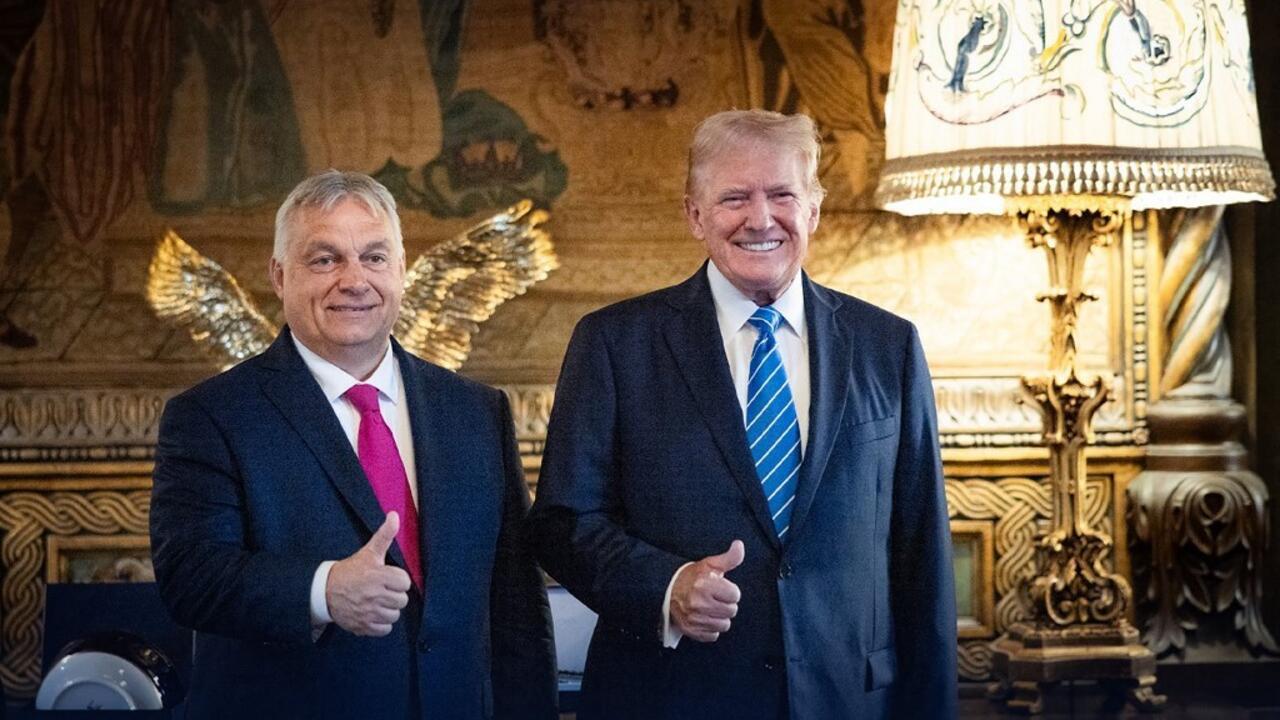
Second, it's useful to consider who benefits. Rosatom, of course, but also Hungary, led by Trump ally Viktor Orban. Just two days after the exemption was announced, Hungarian authorities revealed that the waiver would allow them to restart the stalled construction of the Paks-2 nuclear power plant, a multibillion-euro project largely funded by Rosatom.
"Donald Trump may have made this decision to please Viktor Orban, one of his main allies in Europe," said Shakhnov.
In short, it appears to be a cosy deal between Hungarian, American and Russian interests at the expense of the sanctions enforcement. Orban had been furious last November when one of Joe Biden’s final decisions put his nuclear plant project on hold after Gasprombank, a Rosatom partner, was placed under US sanctions.
A Russian foothold in Europe’s future energy market?
Paks-2 is one of the Hungarian government’s flagship infrastructure projects. The plant was to be funded with €10 billion from Rosatom and Russian banks.
Trump’s decision explicitly reopens the door for Gazprombank to fund civil nuclear projects. But the question remains: why is Rosatom willing to lose money by investing so heavily in a project unlikely to yield much profit?
"When a company is willing to take such a financial loss, it suggests there’s another motive," said Le Coq. That’s especially true of Rosatom, which often serves as a foreign policy tool for the Kremlin.
One possible explanation, she suggested, lies in the European project to build a single electricity market. "If a Russian actor holds even a small part of that market, it becomes a strategic concern," she said. "Unlike oil or gas, it’s hard to find a substitute energy source once a nuclear plant is plugged into the grid."
In other words, Trump’s decision is not only a win for Russia and Hungary, it’s also a blow to European interests.
This article has been translated from the original in French by Anaelle Jonah.
Two recent decisions by US President Donald Trump have directly benefitted Russia, both in the war in Ukraine and in its economic standoff with Europe. The White House halted a planned shipment of arms to Kyiv and deliberately bypassed existing sanctions to offer economic relief to Russia’s nuclear giant Rosatom and to Hungary’s Prime Minister Viktor Orban.
Issued on: 03/07/2025 -
FRANCE24
By: Sébastian SEIBT
Hungary's Prime Minister Viktor Orban and US President Donald Trump pose for a photo at Trump's estate in Mar-a-Lago in Palm Beach, Florida, on July 11, 2024. © AFP
Fewer US weapons for Ukraine, more financial leeway for Moscow – two decisions out of Washington in recent days have laid bare how Trump’s return to the White House is already reshaping the war in Ukraine and Western pressure on Moscow.
Washington announced on Tuesday it would suspend deliveries of certain military equipment to Ukraine. The White House said it was simply following the Pentagon’s recommendations amid concerns about maintaining sufficient reserves for America’s own defence needs.
Just a week earlier, another Trump administration decision opened up new commercial avenues for Russian companies in the nuclear sector, most notably Rosatom. The US Treasury introduced an exemption to a Biden-era ban on doing business with Russian banks.
While narrowly tailored to civil nuclear energy financing, this marks the first formal breach in US sanctions against Russia under Trump – sanctions that had steadily intensified since Washington’s initial response to Moscow’s annexation of Crimea in 2014.
Air defences and artillery shells
"These are two signals from the United States confirming what many had suspected: that Washington is no longer fully committed to standing with Ukraine, and that defeating Russia is not central to Donald Trump’s understanding of American interests," said Mark Harrison, emeritus professor of economics and Russia expert at the University of Warwick.
The decision to halt the next shipment of weapons leaves little room for ambiguity. Even if the Pentagon's concerns about strategic reserves are legitimate, Harrison argued the decision clearly shows that "logistical support for Ukraine is no longer a priority for the United States".
Although Washington did not disclose the shipment’s full contents, the New York Times reported it included artillery ammunition, air defence systems, and missiles – all critical to Ukraine’s defence against Russian bombardments and drone attacks.
These are vital in a war where fortified Russian positions must be shelled and air threats – from drones to missiles – must be intercepted.
"The immediate effect will be limited, as other deliveries from the US and Europe are still in the pipeline,” Harrison said. “But the long-term impact could be serious, especially if Europe fails to fill the gap left by waning American support."
Fewer US weapons for Ukraine, more financial leeway for Moscow – two decisions out of Washington in recent days have laid bare how Trump’s return to the White House is already reshaping the war in Ukraine and Western pressure on Moscow.
Washington announced on Tuesday it would suspend deliveries of certain military equipment to Ukraine. The White House said it was simply following the Pentagon’s recommendations amid concerns about maintaining sufficient reserves for America’s own defence needs.
Just a week earlier, another Trump administration decision opened up new commercial avenues for Russian companies in the nuclear sector, most notably Rosatom. The US Treasury introduced an exemption to a Biden-era ban on doing business with Russian banks.
While narrowly tailored to civil nuclear energy financing, this marks the first formal breach in US sanctions against Russia under Trump – sanctions that had steadily intensified since Washington’s initial response to Moscow’s annexation of Crimea in 2014.
Air defences and artillery shells
"These are two signals from the United States confirming what many had suspected: that Washington is no longer fully committed to standing with Ukraine, and that defeating Russia is not central to Donald Trump’s understanding of American interests," said Mark Harrison, emeritus professor of economics and Russia expert at the University of Warwick.
The decision to halt the next shipment of weapons leaves little room for ambiguity. Even if the Pentagon's concerns about strategic reserves are legitimate, Harrison argued the decision clearly shows that "logistical support for Ukraine is no longer a priority for the United States".
Although Washington did not disclose the shipment’s full contents, the New York Times reported it included artillery ammunition, air defence systems, and missiles – all critical to Ukraine’s defence against Russian bombardments and drone attacks.
These are vital in a war where fortified Russian positions must be shelled and air threats – from drones to missiles – must be intercepted.
"The immediate effect will be limited, as other deliveries from the US and Europe are still in the pipeline,” Harrison said. “But the long-term impact could be serious, especially if Europe fails to fill the gap left by waning American support."
Beyond the battlefield, the decision also offers a morale boost to Moscow. “It’s a very different challenge to fight a Ukrainian army backed fully by the United States,” Harrison said. “That’s no longer the case.”
According to economist Kirill Shakhnov of the University of Surrey, this shift is also closely tied to US domestic politics. Trump likely delayed the shipment to appease the more "America First" wing of the Republican Party, which opposed the US military operation in Iran. Isolationist voices in Congress are pressuring Trump to stick to his pledge "to withdraw from conflicts in which the United States plays a role", Shakhnov added. In that light, Ukraine is being used as a bargaining chip while Trump pursues other goals, notably Iran.
A gift to Viktor Orban
If Europe can hope to offset the missing American weapons, it has fewer options when it comes to the economic favour Trump just handed Vladimir Putin. The exemption that allows Rosatom and other Russian nuclear firms access to global financing comes as a surprise to many.
"This clearly won’t have a major impact on the Russian economy," said Shakhnov.
"Gas and oil exports are far more important than uranium," added Chloé Le Coq, an energy policy expert at Paris-Panthéon-Assas University who specialises in Russian hydrocarbons.
Still, analysts point to two likely motives behind Trump’s decision. First, by targeting a relatively minor domain for the Kremlin, the Trump administration may be testing the waters to see if such a move sparks backlash. So far, there’s been little reaction… apart from Ukrainian media outlets.
Second, it's useful to consider who benefits. Rosatom, of course, but also Hungary, led by Trump ally Viktor Orban. Just two days after the exemption was announced, Hungarian authorities revealed that the waiver would allow them to restart the stalled construction of the Paks-2 nuclear power plant, a multibillion-euro project largely funded by Rosatom.
"Donald Trump may have made this decision to please Viktor Orban, one of his main allies in Europe," said Shakhnov.
In short, it appears to be a cosy deal between Hungarian, American and Russian interests at the expense of the sanctions enforcement. Orban had been furious last November when one of Joe Biden’s final decisions put his nuclear plant project on hold after Gasprombank, a Rosatom partner, was placed under US sanctions.
A Russian foothold in Europe’s future energy market?
Paks-2 is one of the Hungarian government’s flagship infrastructure projects. The plant was to be funded with €10 billion from Rosatom and Russian banks.
Trump’s decision explicitly reopens the door for Gazprombank to fund civil nuclear projects. But the question remains: why is Rosatom willing to lose money by investing so heavily in a project unlikely to yield much profit?
"When a company is willing to take such a financial loss, it suggests there’s another motive," said Le Coq. That’s especially true of Rosatom, which often serves as a foreign policy tool for the Kremlin.
One possible explanation, she suggested, lies in the European project to build a single electricity market. "If a Russian actor holds even a small part of that market, it becomes a strategic concern," she said. "Unlike oil or gas, it’s hard to find a substitute energy source once a nuclear plant is plugged into the grid."
In other words, Trump’s decision is not only a win for Russia and Hungary, it’s also a blow to European interests.
This article has been translated from the original in French by Anaelle Jonah.




 A refinery is seen in Burnaby, B.C., on Monday, June 30, 2025. THE CANADIAN PRESS/Darryl Dyck

.jpg)

