GESTAPO U$A
ICE defies court, says journalist Mario Guevara ‘not releasable’
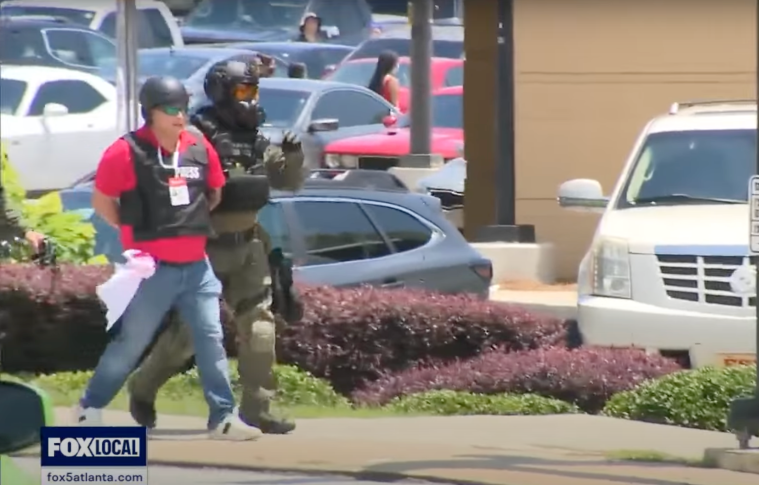
Atlanta-based journalist Mario Guevara is arrested on June 14, 2025
. (Screenshot: Fox 5 Atlanta/YouTube)
July 7, 2025
CPJ
Washington, D.C., July 7, 2025—
July 7, 2025
CPJ
Washington, D.C., July 7, 2025—
The Committee to Protect Journalists calls on United States Immigration and Customs Enforcement (ICE) authorities to respect an immigration court ruling and release on bail journalist Mario Guevara, a native of El Salvador who has been legally in the U.S. for the past 20 years.
On Monday, ICE denied Guevara’s bail and listed him as “Not Releasable,” though a judge on July 1 ruled that Guevara could be released on a $7,500 bond, according to a copy of the denial reviewed by CPJ.
At around 4:30 p.m. local time on Monday, Floyd County jail officials told CPJ that Guevara had been taken by ICE from the Floyd County Jail in Rome, Georgia, though they said they did not know where he was being taken.
Timeline:
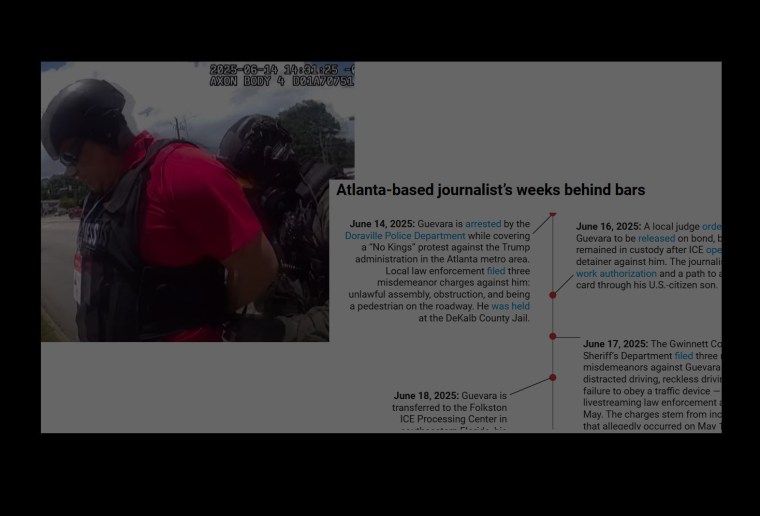
Atlanta-based journalist Mario Guevara’s weeks behind bars
Telemundo Atlanta reported on Monday morning that the activist group Indivisible had scheduled a protest for 6 p.m. that day at the jail.
“We are dismayed that immigration officials have decided to ignore a federal immigration court order last week granting bail to journalist Mario Guevara,” said CPJ U.S., Canada and Caribbean Program Coordinator Katherine Jacobsen. “Guevara is currently the only jailed journalist in the United States who was arrested in relation to his work. Immigration authorities must respect the law and release him on bail instead of bouncing him from one jurisdiction to another.”
The journalist, who was initially arrested while covering a June 14 “No Kings” protest in the Atlanta metro area and charged with three misdemeanors, which local officials declined to prosecute due to insufficient evidence. A local judge ordered Guevara to be released on bond, but he remained in custody after ICE opened a detainer against him.
The Department of Homeland Security headquarters and the department’s Atlanta field office did not immediately respond to CPJ’s emailed request for comment.
Timeline: Reporter Mario Guevara’s arrest and ICE detention
On Monday, ICE denied Guevara’s bail and listed him as “Not Releasable,” though a judge on July 1 ruled that Guevara could be released on a $7,500 bond, according to a copy of the denial reviewed by CPJ.
At around 4:30 p.m. local time on Monday, Floyd County jail officials told CPJ that Guevara had been taken by ICE from the Floyd County Jail in Rome, Georgia, though they said they did not know where he was being taken.
Timeline:
Atlanta-based journalist Mario Guevara’s weeks behind bars
Telemundo Atlanta reported on Monday morning that the activist group Indivisible had scheduled a protest for 6 p.m. that day at the jail.
“We are dismayed that immigration officials have decided to ignore a federal immigration court order last week granting bail to journalist Mario Guevara,” said CPJ U.S., Canada and Caribbean Program Coordinator Katherine Jacobsen. “Guevara is currently the only jailed journalist in the United States who was arrested in relation to his work. Immigration authorities must respect the law and release him on bail instead of bouncing him from one jurisdiction to another.”
The journalist, who was initially arrested while covering a June 14 “No Kings” protest in the Atlanta metro area and charged with three misdemeanors, which local officials declined to prosecute due to insufficient evidence. A local judge ordered Guevara to be released on bond, but he remained in custody after ICE opened a detainer against him.
The Department of Homeland Security headquarters and the department’s Atlanta field office did not immediately respond to CPJ’s emailed request for comment.
Timeline: Reporter Mario Guevara’s arrest and ICE detention
(Collage: 11Alive/Youtube (left), CPJ)
July 7, 2025 5:12 PM EDT
Spanish-language reporter Mario Guevara, who has covered immigrant issues in the Atlanta metro area for the past 20 years, was detained by local law enforcement while livestreaming a local “No Kings” protest in mid-June. He was charged with three misdemeanors and then denied bond when Immigration and Customs Enforcement (ICE) issued a detainer against him, despite being in the country legally at the time of his arrest.
Guevara arrived legally in the United States from El Salvador in April 2004, and applied for asylum in 2005 due to the dangers he faced as a journalist in El Salvador. Over the next twenty years, Guevara developed a large following in the Atlanta area, as well as national recognition, for his reporting on immigration issues.
Below is a timeline of events in Guevara’s case.
Atlanta-based journalist’s weeks behind bars
June 14, 2025: Guevara is arrested by the Doraville Police Department while covering a “No Kings” protest against the Trump administration in the Atlanta metro area. Local law enforcement filed three misdemeanor charges against him: unlawful assembly, obstruction, and being a pedestrian on the roadway. He was held at the DeKalb County Jail.
June 16, 2025: A local judge ordered Guevara to be released on bond, but he remained in custody after ICE opened a detainer against him. The journalist had work authorization and a path to a green card through his U.S.-citizen son.
June 17, 2025: The Gwinnett County Sheriff’s Department filed three new misdemeanors against Guevara — distracted driving, reckless driving, and failure to obey a traffic device — related to livestreaming law enforcement activity in May. The charges stem from incidents that allegedly occurred on May 13 and May 20, nearly a month prior.
June 18, 2025: Guevara is transferred to the Folkston ICE Processing Center in southeastern Florida, his lawyer told CPJ.
June 20, 2025: CPJ and a coalition of civil society and media groups send a letter to Department of Homeland Security Secretary Kristi Noem calling for Guevara’s release due to concerns that his initial arrest violated Guevara’s First Amendment rights as a journalist.
June 25, 2025: DeKalb County declined to prosecute the three misdemeanor charges against Guevara that initially led to his arrest due to insufficient evidence. The charges are dropped.
June 27, 2025: CPJ urged a local Georgia solicitor-general to investigate the charges from the Gwinnett County Sheriff’s Office against Guevara.
July 1, 2025: At a bond hearing, a federal judge rules that Guevara can be released on $7,500 bond. During the hearing, the government counsel argued that livestreaming — an activity that Guevara and many other journalists frequently engage in as part of reporting — compromises the integrity and safety of law enforcement activities.
July 2, 2025: ICE refused to comply with the judge’s release order and did not accept the bond payment. His lawyer stated in an Instagram Live video that officials began the process to transfer Guevara to Gwinnett County, stating they will not clear his immigration bond until he secures bail there.
July 3, 2025: Guevara arrived at the Gwinnett County jail and was booked on three misdemeanor traffic violations that were filed on June 17. Bond was paid for the traffic violation charges, and he was released from Gwinnett custody, according to a Facebook post from the county sheriff’s department and jail records.
July 3, 2025: Guevara is transferred to the Floyd County Jail in Rome, Georgia, and is held on ICE detainer with no bond, according to the Floyd County Jail online booking system and social media posts on Guevara’s professional social media pages.
July 5, 2025: Guevara was confirmed to be in medical holding, according to a jail official who spoke to CPJ by phone.
July 7, 2025: Immigration officials denied Guevara’s bail and listed him as “Not Releasable,” according to a copy of the denial reviewed by CPJ.
July 7, 2025: At around 4:30 p.m. local time, Floyd County Jail officials told CPJ that Guevara had been taken by ICE from the Floyd County Jail in Rome, Georgia, and said they did not know where he was being taken.
Chart: Charlie Spicer
July 7, 2025 5:12 PM EDT
Spanish-language reporter Mario Guevara, who has covered immigrant issues in the Atlanta metro area for the past 20 years, was detained by local law enforcement while livestreaming a local “No Kings” protest in mid-June. He was charged with three misdemeanors and then denied bond when Immigration and Customs Enforcement (ICE) issued a detainer against him, despite being in the country legally at the time of his arrest.
Guevara arrived legally in the United States from El Salvador in April 2004, and applied for asylum in 2005 due to the dangers he faced as a journalist in El Salvador. Over the next twenty years, Guevara developed a large following in the Atlanta area, as well as national recognition, for his reporting on immigration issues.
Below is a timeline of events in Guevara’s case.
Atlanta-based journalist’s weeks behind bars
June 14, 2025: Guevara is arrested by the Doraville Police Department while covering a “No Kings” protest against the Trump administration in the Atlanta metro area. Local law enforcement filed three misdemeanor charges against him: unlawful assembly, obstruction, and being a pedestrian on the roadway. He was held at the DeKalb County Jail.
June 16, 2025: A local judge ordered Guevara to be released on bond, but he remained in custody after ICE opened a detainer against him. The journalist had work authorization and a path to a green card through his U.S.-citizen son.
June 17, 2025: The Gwinnett County Sheriff’s Department filed three new misdemeanors against Guevara — distracted driving, reckless driving, and failure to obey a traffic device — related to livestreaming law enforcement activity in May. The charges stem from incidents that allegedly occurred on May 13 and May 20, nearly a month prior.
June 18, 2025: Guevara is transferred to the Folkston ICE Processing Center in southeastern Florida, his lawyer told CPJ.
June 20, 2025: CPJ and a coalition of civil society and media groups send a letter to Department of Homeland Security Secretary Kristi Noem calling for Guevara’s release due to concerns that his initial arrest violated Guevara’s First Amendment rights as a journalist.
June 25, 2025: DeKalb County declined to prosecute the three misdemeanor charges against Guevara that initially led to his arrest due to insufficient evidence. The charges are dropped.
June 27, 2025: CPJ urged a local Georgia solicitor-general to investigate the charges from the Gwinnett County Sheriff’s Office against Guevara.
July 1, 2025: At a bond hearing, a federal judge rules that Guevara can be released on $7,500 bond. During the hearing, the government counsel argued that livestreaming — an activity that Guevara and many other journalists frequently engage in as part of reporting — compromises the integrity and safety of law enforcement activities.
July 2, 2025: ICE refused to comply with the judge’s release order and did not accept the bond payment. His lawyer stated in an Instagram Live video that officials began the process to transfer Guevara to Gwinnett County, stating they will not clear his immigration bond until he secures bail there.
July 3, 2025: Guevara arrived at the Gwinnett County jail and was booked on three misdemeanor traffic violations that were filed on June 17. Bond was paid for the traffic violation charges, and he was released from Gwinnett custody, according to a Facebook post from the county sheriff’s department and jail records.
July 3, 2025: Guevara is transferred to the Floyd County Jail in Rome, Georgia, and is held on ICE detainer with no bond, according to the Floyd County Jail online booking system and social media posts on Guevara’s professional social media pages.
July 5, 2025: Guevara was confirmed to be in medical holding, according to a jail official who spoke to CPJ by phone.
July 7, 2025: Immigration officials denied Guevara’s bail and listed him as “Not Releasable,” according to a copy of the denial reviewed by CPJ.
July 7, 2025: At around 4:30 p.m. local time, Floyd County Jail officials told CPJ that Guevara had been taken by ICE from the Floyd County Jail in Rome, Georgia, and said they did not know where he was being taken.
Chart: Charlie Spicer
Source:
Get the data
Embed Created with Datawrapper

Frustrated judge blasts Trump team over deportation plans for Kilmar Abrego Garcia: ‘Like trying to nail Jell-O to a wall’
ICE plans to arrest and deport the Salvadoran dad, again, if he’s released from pretrial detention in criminal case
Kilmar Abrego Garcia can't be deported to country where he will be tortured, lawyer says
Alex Woodward
in New York
The federal judge overseeing Kilmar Abrego Garcia’s legal challenge over his arrest and removal from the United States is hauling Trump administration officials to court to get to the bottom of the government’s plans for the wrongfully deported Salvadoran immigrant.
Abrego Garcia, whose case has been at the center of Donald Trump’s mass deportation agenda, is currently locked up in federal custody ahead of a trial on smuggling charges.
If he’s released from pretrial detention, immigration officials intend to arrest and deport him, again, before a trial even begins, according to the Department of Justice.
After government lawyers and top Trump administration officials gave a series of conflicting statements about the fate of Abrego Garcia in recent weeks, District Judge Paula Xinis is ordering officials from the Department of Homeland Security to testify about their plans for his removal — answers that may reveal whether the criminal charges against him had anything to do with complying with court orders for his return.
She scheduled a hearing on July 7. Abrego Garcia could be released from federal custody and turned over to Homeland Security as soon as July 16.

open image in galleryKilmar Abrego Garcia’s supporters rally on July 7 outside a federal courthouse in Maryland, where a judge ordered Trump administration officials to testify in court about plans for the wrongly deported Salvadoran immigrant (AP)
During a hearing in Maryland on Monday, Justice Department lawyer Jonathan Guynn said the administration doesn’t intend to hold Abrego Garcia in “limbo” with Immigration and Customs Enforcement while waiting for his criminal trial.
“He will be removed, as would any other illegal alien in that process,” he said.
His remarks are the latest in a series of conflicting public statements from the administration after Abrego Garcia was abruptly returned to the United States from prisons in El Salvador.
Abrego Garcia had been living in Maryland with his wife and child, both U.S. citizens, along with two other children from a previous relationship, when he was arrested and deported to El Salvador on March 15 — what government lawyers admitted was an “administrative error” that defied an immigration judge’s 2019 order preventing his removal.
But the administration spent weeks battling court orders from federal judges and the Supreme Court to “facilitate” his return, claiming that they were powerless to return him while administration officials publicly asserted he would never again step foot in the United States.
Last month, he was flown back to face a criminal indictment accusing him of illegally transporting immigrants across the country. He has pleaded not guilty.
“Our plan is, he will be taken into ICE custody and removal proceedings will be initiated,” Guynn said during a court hearing last week.
But that same day, a spokesperson for the Justice Department told the Associated Press that the government will try Abrego Garcia on the charges against him before deporting him from the country. The White House also called the Justice Department’s in-court statements “fake news.”
On Monday, Justice Department said they don’t know where the government plans to deport him.
“It’s like trying to nail Jell-O to a wall trying to figure out what’s going to happen,” Xinis said at one point on Monday.
“For three months, your clients told the world they weren’t going to do anything to bring him back,” she said, pointing to statements from Attorney General Pam Bondi, Homeland Security Secretary Kristi Noem and the president himself.
“Am I really supposed to ignore all that?” she said.

open image in galleryAttorney Simon Sandoval-Moshenberg says Abrego Garcia is owed due process to challenge his removal from the United States if the Trump administration tries to deport him again (AP)

open image in galleryAbrego Garcia’s attorneys said he experienced “severe beatings, severe sleep deprivation, inadequate nutrition, and psychological torture” at a brutal prison in El Salvador. (AP)
She also said she finds it “highly problematic” that the Justice Department can’t seem to answer whether government lawyers knew about the criminal investigation against him while battling in court over his wrongful removal.
ICE plans to arrest and deport the Salvadoran dad, again, if he’s released from pretrial detention in criminal case
Kilmar Abrego Garcia can't be deported to country where he will be tortured, lawyer says
Alex Woodward
in New York
THE INDEPENDENT
Monday 07 July 2025
Monday 07 July 2025
The federal judge overseeing Kilmar Abrego Garcia’s legal challenge over his arrest and removal from the United States is hauling Trump administration officials to court to get to the bottom of the government’s plans for the wrongfully deported Salvadoran immigrant.
Abrego Garcia, whose case has been at the center of Donald Trump’s mass deportation agenda, is currently locked up in federal custody ahead of a trial on smuggling charges.
If he’s released from pretrial detention, immigration officials intend to arrest and deport him, again, before a trial even begins, according to the Department of Justice.
After government lawyers and top Trump administration officials gave a series of conflicting statements about the fate of Abrego Garcia in recent weeks, District Judge Paula Xinis is ordering officials from the Department of Homeland Security to testify about their plans for his removal — answers that may reveal whether the criminal charges against him had anything to do with complying with court orders for his return.
She scheduled a hearing on July 7. Abrego Garcia could be released from federal custody and turned over to Homeland Security as soon as July 16.
open image in galleryKilmar Abrego Garcia’s supporters rally on July 7 outside a federal courthouse in Maryland, where a judge ordered Trump administration officials to testify in court about plans for the wrongly deported Salvadoran immigrant (AP)
During a hearing in Maryland on Monday, Justice Department lawyer Jonathan Guynn said the administration doesn’t intend to hold Abrego Garcia in “limbo” with Immigration and Customs Enforcement while waiting for his criminal trial.
“He will be removed, as would any other illegal alien in that process,” he said.
His remarks are the latest in a series of conflicting public statements from the administration after Abrego Garcia was abruptly returned to the United States from prisons in El Salvador.
Abrego Garcia had been living in Maryland with his wife and child, both U.S. citizens, along with two other children from a previous relationship, when he was arrested and deported to El Salvador on March 15 — what government lawyers admitted was an “administrative error” that defied an immigration judge’s 2019 order preventing his removal.
But the administration spent weeks battling court orders from federal judges and the Supreme Court to “facilitate” his return, claiming that they were powerless to return him while administration officials publicly asserted he would never again step foot in the United States.
Last month, he was flown back to face a criminal indictment accusing him of illegally transporting immigrants across the country. He has pleaded not guilty.
“Our plan is, he will be taken into ICE custody and removal proceedings will be initiated,” Guynn said during a court hearing last week.
But that same day, a spokesperson for the Justice Department told the Associated Press that the government will try Abrego Garcia on the charges against him before deporting him from the country. The White House also called the Justice Department’s in-court statements “fake news.”
On Monday, Justice Department said they don’t know where the government plans to deport him.
“It’s like trying to nail Jell-O to a wall trying to figure out what’s going to happen,” Xinis said at one point on Monday.
“For three months, your clients told the world they weren’t going to do anything to bring him back,” she said, pointing to statements from Attorney General Pam Bondi, Homeland Security Secretary Kristi Noem and the president himself.
“Am I really supposed to ignore all that?” she said.
open image in galleryAttorney Simon Sandoval-Moshenberg says Abrego Garcia is owed due process to challenge his removal from the United States if the Trump administration tries to deport him again (AP)
open image in galleryAbrego Garcia’s attorneys said he experienced “severe beatings, severe sleep deprivation, inadequate nutrition, and psychological torture” at a brutal prison in El Salvador. (AP)
She also said she finds it “highly problematic” that the Justice Department can’t seem to answer whether government lawyers knew about the criminal investigation against him while battling in court over his wrongful removal.
“This time, Judge Xinis was not willing to let government lawyers say, ‘We don’t really know,’” Abrego Garcia’s attorney Simon Sandoval-Moshenberg told reporters on Monday.
“If they want to deport him to a third country, they need to name that country, and they need to describe the process by which they’re going to give him due process,” he said.
The Supreme Court has paved the way for the Trump administration to deport immigrants to so-called third nations that aren’t their home countries after a legal battle involving a group of deportees sent to war-torn South Sudan, where attorneys said the men face torture, abuse and death.
Last week, Abrego Garcia’s attorneys said he experienced “severe beatings, severe sleep deprivation, inadequate nutrition, and psychological torture” at a brutal prison in El Salvador, where the Trump administration has deported dozens of alleged gang members.
Abrego Garcia must receive an opportunity to make a case before an immigration judge to explain why he shouldn’t return there or any other country where he faces risk of torture and abuse, Sandoval-Moshenberg said.
“Since day one of this case, the government’s strategy has been to send lawyers to court with no information or insufficient information,” he added. “It’s the result of a deliberate strategy not to communicate with lawyers in court.”
“If they want to deport him to a third country, they need to name that country, and they need to describe the process by which they’re going to give him due process,” he said.
The Supreme Court has paved the way for the Trump administration to deport immigrants to so-called third nations that aren’t their home countries after a legal battle involving a group of deportees sent to war-torn South Sudan, where attorneys said the men face torture, abuse and death.
Last week, Abrego Garcia’s attorneys said he experienced “severe beatings, severe sleep deprivation, inadequate nutrition, and psychological torture” at a brutal prison in El Salvador, where the Trump administration has deported dozens of alleged gang members.
Abrego Garcia must receive an opportunity to make a case before an immigration judge to explain why he shouldn’t return there or any other country where he faces risk of torture and abuse, Sandoval-Moshenberg said.
“Since day one of this case, the government’s strategy has been to send lawyers to court with no information or insufficient information,” he added. “It’s the result of a deliberate strategy not to communicate with lawyers in court.”