Tuesday, July 08, 2025


US should not fight Israel's ‘forever war’, Iran's Pezeshkian tells Carlson
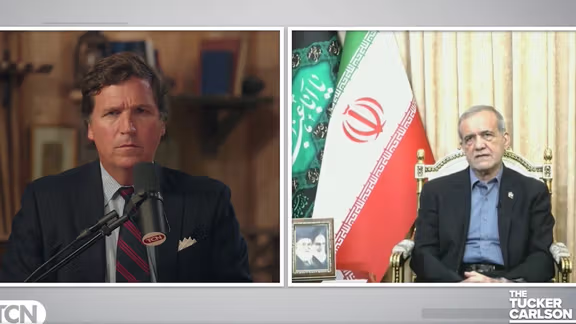


Iranian President Masoud Pezeshkian told US right-wing commentator Tucker Carlson that Israel was seeking to embroil the United States in a Mideast 'forever war', in his first international interview since US and Israeli attacks on Iran.

“Netanyahu, as I said, has his own agenda. He wants to drag the US into forever wars… and to bring more insecurity and unrest to the whole region," Pezeshkian told Carlson in the virtual discussion, referring to the Israeli Prime Minister.

Carlson is an outspoken critic of US military action against Iran and a top dissenter from among President Donald Trump's populist base. The US President dismissed his views as "kooky".

Pezeshkian, a relative moderate, has advocated for greater engagement with Washington but hardline Supreme Leader Ali Khamenei ultimately decides policy.

Responding to a question on whether two senior clerics had issued a fatwa to kill Trump, Pezeshkian said, “To the best of my knowledge, they have not issued decrees or fatwas against any individual or against Donald Trump. It has nothing to do with the Iranian government or the Supreme Leader of Iran."

"What they actually meant by the fatwa was the condemnation of an insult to a religion or religious personalities … It should not be construed or considered as a threat against an individual.”

Last month, Alireza Panahian, a hardline Iranian cleric close to Iran’s Supreme Leader called on Muslims to kill Trump and Netanyahu in response to their threats against Khamenei, citing fatwas that declare him a mohareb, or “enemy of God.”

Najmuddin Tabasi, a member of the Society of Seminary Teachers of Qom, said Trump “must be executed” and warned that “the same hand that fired a shot past his ear can put a bullet through his throat.”

Referring to recent fatwas by Ayatollahs Naser Makarem Shirazi and Hossein Nouri Hamedani, Tabasi said he was confident that “brave youth will deprive Trump of security.”

Pezeshkian also denied Iran had sought to kill Trump in an alleged plot detailed by US law enforcement last year.

'No problem' with reviving talks

Iran has never pursued nuclear weapons, Pezeshkian said, citing religious prohibitions and cooperation with international inspectors.

“We have never been after developing a nuclear bomb—not in the past, not presently or in the future—because this is wrong. And this is in contrast to the religious decree or the fatwa which has been issued by the Supreme Leader … so it is religiously forbidden for us to go after a nuclear bomb.”

Ongoing conflict with Israel had sabotaged nuclear negotiations, he said, adding that talks with the US had been progressing when Israel launched attacks on Iran.

“We were sitting at the negotiating table when it happened. And by doing this, they totally ruined and destroyed diplomacy.”

“We see no problem in reentering the negotiations. But how are we going to trust the United States again? We reentered the negotiations. Then how can we know for sure that in the middle of the talks, the Israeli regime will not be given the permission again to attack us?”

White House envoy Steve Witkoff is planning to meet Iranian Foreign Minister Abbas Araghchi in Oslo next week to relaunch nuclear talks, Axios reported on Thursday, citing two sources familiar with the preparations.

The meeting would mark the first direct engagement since President Trump ordered strikes on Iran’s nuclear facilities last month. Neither side has publicly acknowledged the planned talks.

Alleged Israeli assassination attempt

Pezeshkian said Israel had attempted to assassinate him, describing a strike on a meeting he attended. There was no immediate Israeli or independent corroboration of his claim.

“They did try, yes, and they acted accordingly, but they failed. I am not afraid of sacrificing myself in defense of my country."

Israeli escalation would only deepen regional instability, he warned.

“Will it bring peace and tranquility and stability to the region? It was not the US that was behind the attempt on my life. It was Israel. But as I told you before, it is God who wills when a person will die.”

Pezeshkian framed the conflict as a product of Israeli ambitions and urged Washington to avoid becoming entangled.

“My proposal is that the US administration should refrain from getting involved in a war that is not America’s war. It is Netanyahu’s war that is having its own agenda … an inhuman agenda, and that is having forever wars, wars that go on and on.”

'Death to America' misunderstood

The Iranian president said that “Death to America” slogans were misunderstood. “They don’t mean death to the people of the United States, or even to the officials. They mean death to crime, death to killing and carnage, death to supporting killing others.”

Pezeshkian also said Ali Khamenei has no objection to the operation of US businesses in Iran even under the currency circumstances, and there has never been any limitation from Tehran’s side, attributing barriers to American sanctions.

"The Supreme Leader told me American investors are welcome in Iran. There is no limitation and there's nothing preventing the US investors from coming to Iran to make investments, even presently," he said.

“It is not to be in the interest of the United States to be involved in any kind of war in my region,” he said. “It is up to the United States president to choose … whether to replace war mongering and bloodshed with peace and tranquility.”

HAITI


Here is what we know four years after Jovenel Moise’s assassination

Dual investigations in Haiti and the U.S. have led to few answers, as key suspects remain at large and the case drags on without a trial.


Jul. 07, 2025
Haitian Times
Late Haitian President Jovenel Moise speaks during an interview at his home in Petion-Ville, a suburb of Port-au-Prince, Haiti, Friday, Feb. 7, 2020. Moise was a former banana farmer who won 56 percent of the vote against three opponents in 2016 elections. Moise was assassinated on July 7 at his home. AP Photo/Dieu Nalio Chery.

Overview:

Four years after a death squad assassinated Haitian President Jovenel Moïse in his bedroom, justice in Haiti remains elusive. The case has stalled in the country’s courts, with key suspects still at large and no trial in sight. Meanwhile, the U.S. has prosecuted and convicted several individuals tied to the crime, underscoring Haiti’s institutional paralysis amid a process mired by worsening

PORT-AU-PRINCE — Four years after a deadly raid claimed the life of President Jovenel Moïse in his Pèlerin home, justice remains elusive in Haiti. While U.S. prosecutors have secured six convictions in connection to the killing, Haiti has yet to hold a single trial and dozens of key suspects remain at large.s.

“Four years after the assassination of Jovenel Moïse, the Haitian justice system is still unable to determine the whereabouts of the president’s phone,” said Windy Phèle, a criminal law and forensic science specialist.

Despite the investigation process being largely opaque, the case currently sits before Haiti’s Court of Appeal, which must decide whether to uphold or modify the investigative order issued by Judge Walther Wesser Voltaire in February 2024. Voltaire, the fifth Haitian prosecutor assigned to the case, indicted 51 individuals—including prominent political and security figures—yet no trial date has been set.


Nearly 50 accused in a plot that allegedly entailed Martine Moise and former PM Claude Joseph being president at different points
by Juhakenson Blaise Feb. 20, 2024


Recent hearings have included testimonies from the 17 detained Colombian mercenaries, lead suspect Joseph Félix Badio, and former Prime Minister Claude Joseph. The court is now expected to summon more high-profile individuals, including former First Lady Martine Moïse, former National Palace Security Unit (USGPN) chief and fugitive Dimitri Hérard and former police director Léon Charles—further delaying proceedings.

While there is no clear information about Hérard’s whereabouts, the former first lady, who lives in the U.S., has refused to return to Haiti for hearings, citing safety concerns. As for Charles, he has been out of public view since resigning from the Haitian National Police (PNH) last year after being indicted in the presidential assassination.


“Four years after the assassination of Jovenel Moïse, the Haitian justice system is still unable to determine the whereabouts of the president’s phone.”Windy Phèle, Criminal law and forensic science specialist

Since 2021, five investigative judges have cycled through the case, each stepping down due to threats, health issues, a lack of resources, or being dismissed outright. That instability has resulted in long stretches where no judge was assigned, contributing to the prolonged delays.

“No judge has access to the surveillance server from the presidential residence, as the PNH authorities handed the device over to the Americans. It’s sad,” Phèle lamented.

Compounding the crisis is Haiti’s worsening insecurity, which has disrupted judicial operations and allowed key suspects to remain at large or evade questioning. Hérard escaped during a gang-led prison break earlier this year. Judge Wendelle Coq Thélot, who was also indicted as one of the key suspects, died before she could be deposed.

Meanwhile, U.S. authorities have charged 11 individuals in connection with the killing and have already convicted and sentenced six of them after they pleaded guilty. Of those six, five—including Haitian-Chilean businessman Rodolphe Jaar, ex-Haitian Senator John Joël Joseph, retired Colombian army officer Germán Alejandro Rivera García, Haitian-American and former DEA informant Joseph Vincenta and former Colombian soldier Mario Antonio Palacios—have been sentenced to life in prison, while one, American Frederick Bergmann, received nine years for illegally exporting tactical gear to Haiti.


“No judge has access to the surveillance server from the presidential residence, as the PNH authorities handed the device over to the Americans. It’s sad.”Windy Phèle, Criminal law and forensic science specialist

The remaining five suspects—director of the Miami-based security firm CTU, Antonio Intriago; financier from South Florida-based company Worldwide Capital Lending Group, Walter Veintemilla; Haitian-American James Solages; Haitian-American pastor and physician, Christian Emmanuel Sanon; and Colombian-American former agent, Arcangel Pretel Ortiz—are scheduled to stand trial in March 2026. The trial, initially set for September this year, was postponed because of the large amount of evidence submitted by the U.S. government to the defense.

Here’s a breakdown of key developments in the ongoing effort to bring justice in the Moïse case in the past fours, both in Haiti and the U.S.:
No trial yet in Haiti, despite 51 indictments

Although Judge Voltaire issued numerous indictments in February 2024, naming prominent figures like former First Lady Martine Moïse, former Prime Minister Claude Joseph and former police chief Léon Charles—no trial date has been scheduled. The case now rests with the Court of Appeal after several defendants challenged Voltaire’s ruling.
Five Haitian judges have withdrawn from the case

Between July 7 and mid-September, more than 40 suspects were arrested and detained in connection to President Moïse’s murder, including Haitian law enforcement officials and 18 former Colombian soldiers. Since then, five judges—including notably Bed-Ford Claude who issued a travel ban against then Prime Minister Ariel Henry, named just two days before the killing, on Sept. 14 for his suspected involvement —have either stepped down, dismissed or refused the case, citing threats, poor security or lack of resources. At times, the case sat idle for months, highlighting Haiti’s fragile judicial system.


Charges against PM Henry, now banned from leaving Haiti, requested in Moïse murder
The chief prosecutor in charge of investigating of the assassination of President Jovenel Moïse has called for charges against Haitian Prime Minister and de facto leader Ariel Henry for his alleged role in the killing.
by Sam BojarskiSep. 14, 2021


Key suspects are still missing or in hiding

Several individuals indicted in the case, such as former presidential security chief Dimitri Hérard and others, remain at large. Hérard escaped from the National Penitentiary during a gang-led attack in February 2024. Another key suspect and fugitive, Judge Wendelle Coq Thélot, died before she could be heard.
U.S. courts have already convicted six

In sharp contrast to Haiti’s stalled case, U.S. federal courts have convicted six men:Rodolphe Jaar, Haitian Chilean businessman, sentenced to life in prison.

John Joël Joseph, former Haitian senator, sentenced to life.

Germán Rivera, Colombian ex-soldier, sentenced to life.

Joseph Vincent, Haitian American ex-Drug Enforcement Administration (DEA) informant, sentenced to life.

Mario Palacios, Colombian ex-military, sentenced to life.

Frederick Bergmann, U.S. citizen, sentenced to 9 years.

Their charges range from providing logistics and weapons to directly participating in the plot.
Five more await U.S. trials, now postponed to March 2026

The U.S. trial for five additional defendants—including CTU Security’s Antonio Intriago and financier Walter Veintemilla—was postponed from September 2025 to March 2026 due to the extensive evidence submitted.
Haiti’s investigation has lacked critical evidence

According to legal experts like Windy Phèle, Haitian authorities have yet to retrieve Moïse’s phone or gain access to the surveillance server from his residence. The device was reportedly handed over to U.S. authorities, further limiting Haiti’s ability to investigate independently.
Insecurity and refusal to appear are ongoing issues

Ongoing violence in Port-au-Prince has disrupted court operations. Some key figures—including the slain president’s widow Martine Moïse—have refused to return to Haiti for hearings, citing saty concerns and stalling the case even further.
Timeline of major events

2021: Initial arrests, but no trial. Several Haitian judges refuse the case over security concerns.


Haiti President Jovenel Moise was assassinated at his home in Pelerin, Port-au-Prince overnight July 7, according to interim Prime Minister Claude Joseph. Moise’s wife First Lady Martine Moise was wounded and was being treated at a hospital.
by Onz Chéry and Sam BojarskiJul. 07, 2021

2022: U.S. indicts suspects arrested or transferred from multiple countries while Haiti’s judicial process remains stagnant.


2023: U.S. courts sentence Jaar, Joseph and Rivera. Haiti sees the arrest of Badio, main suspect in the president’s slaying.


2024: U.S. courts sentence Vincent, Palacios and Bergmann. Judge Voltaire indicts 51 suspects. Hérard escapes prison. Still no trial.

2025: Court of Appeal hears challenges. U.S. trial moved from September 2025 to March 2026.


Ex-Haitian PM Claude Joseph rejects indictment in Moïse assassination before court of appeal
Haiti’s Court of Appeal concludes a series of hearings on Claude Joseph’s alleged involvement in President Jovenel Moïse’s killing, with a final ruling pending
by Juhakenson BlaiseJul. 03, 2025

International spotlight remains on Haiti’s failures

Colombian President Gustavo Petro publicly apologized to Haiti for the involvement of Colombian nationals. Legal analysts, human rights groups and diaspora organizations continue to pressure Haitian officials to act decisively.


Colombian President Petro apologizes to Haiti for his compatriots’ role in Jovenel Moïse’s assassination amid controversial visit
The Haitian government spent over $3.8 million for Gustavo Petro’s visit, during which he apologized for Colombia’s role in Moïse’s assassination and pledged stronger bilateral cooperation.
by Guest Author and Juhakenson BlaiseJan. 24, 2025


Yet, justice remains elusive as the nation waits.

Four years on, Moïse’s killing remains an unresolved puzzle in Haiti. As the U.S. legal system advances, the Haitian public continues to wait—amid deepening insecurity and political instability—for justice to be served.
Countering China’s Expansionism: 
Japan-India Synergy in Africa Amidst US Aid Retrenchment

FPRI
JULY 7, 2025

Introduction

The Japan-India-Africa Business Forum, held on February 26, 2025, marked a strategic step in strengthening the India-Japan partnership, reflecting a shared commitment to fostering collaboration and promoting economic growth in Africa and beyond. Convened by Japan’s Ministry of Economy, Trade and Industry and Nikkei, this forum comes at a critical juncture when the United States is retreating from its aid diplomacy, while China continues to leverage strategic and extractive financing to entrench economic dependencies and expand its Sino-centric world order. This shift challenges the liberal rules-based order by promoting a power-based system, with Africa as a key geopolitical arena.

To understand why Africa is central to these competing geopolitical and economic visions, we can apply Rufus Miles’ statement: “Where one stands depends on where one sits.” Africa sits at the crossroads of the global power system, giving it strategic leverage in shaping the current international order — politically, economically, militarily, strategically, environmentally, and developmentally. It provides Africa with the action space to be part of any agenda on security, peace, and development. However, Africa’s capacity and ability to influence global affairs depend on how effectively it engages with major powers and develops a comprehensive, coherent strategy that enables African states and institutions to coordinate policies, enhance economic resilience, and improve the livelihoods of African people.

What Africa needs is a transparent and responsive partnership that acts as an enabler for sustainable growth and development — one that aligns with African priorities and needs. Such a partnership must be constructive and inclusive, working alongside like-minded reliable nations while promoting openness and transparency to ensure clarity in intent and action. A secure and stable Africa is not only vital for the continent’s sustainable development but also essential for global peace and security, aligning with India and Japan’s shared vision of a free, open, and rules-based international order.

Africa is extremely important for maintaining and strengthening a free and open international order based on the rule of law, as its 54 countries collectively account for more than a quarter of UN members. Furthermore, as the world’s second-largest continent, Africa spans 43 million km², covering one-fifth of the Earth’s total surface. Its coastline, including its islands, stretches over 26,000 nautical miles, with 38 African nations classified as either coastal or island states. This vast maritime and territorial expanse further amplifies Africa’s geopolitical significance, making it a focal point in the India-Japan strategy to counter China’s extractive expansionism amidst the retraction of US aid.


China’s Extractive Expansionism Amidst US Aid Retrenchment

China’s flagship One Belt, One Road initiative, which is not popularly known as the Belt and Road Initiative (BRI) represents Beijing’s grand strategy to create a Sino-centric world order by expanding China’s sphere of influence, particularly in Africa. Through the BRI, China aims to fosters closer economic integration with countries across the globe, aligning their interests with Beijing’s long-term strategic goals. The initiative enables Chinese state-owned enterprises to export industrial overcapacity — notably in cement, steel, and construction — while simultaneously creating investment opportunities for its vast financial reserves and securing employment for Chinese workers.

However, China’s engagement in Africa is not merely political or economic; it is deeply strategic and extractive. Beijing’s polarizing financing model—marked by predatory lending and debt-trap diplomacy—has created long-term economic dependencies, giving China significant leverage over policy decisions in African states. This approach allows Beijing to expand its hegemonic influence in Africa’s resource-rich regions while justifying its permanent military presence in the Indian Ocean Region to which it has no direct access, through infrastructure projects, port acquisitions, and its military base in Djibouti — China’s first overseas military installation.

China’s Expanding Economic Footprint in Africa

China has emerged as Africa’s largest trading partner and creditor, with bilateral trade surpassing $295 billion in 2024 — a figure greater than the combined India-Africa ($100 billion), US-Africa ($71.6 billion), and Japan-Africa ($24 billion) trade. Beijing’s predatory lending and development finance from 2000 to 2022 amounted to an estimated $170.08 billion, of which $134.01 billion came from Chinese development finance institutions — the China Development Bank (CDB) and the Export-Import Bank of China (CHEXIM). These funds were primarily directed toward energy, mining, transport, information technology, financial services, industry, trade, and services, fueling Beijing’s strategic ambitions. Additionally, during the 2023 China-Africa Forum, China pledged $51 billion in loans, investments, and aid to Africa, further deepening economic dependencies.

As an infrastructure-deficient continent, Africa relies heavily on external collaboration to develop its infrastructure. China has capitalized on this need, becoming the largest foreign investor in African infrastructure, significantly outpacing the US, India, Japan, and Europe. In 2022, 31 percent of all major African infrastructure projects (valued at $50 million or more) were undertaken by Chinese firms, compared to just 12 percent by Western firms. Chinese companies have become a one-stop solution for African needs — providing labor, materials, technology, and financial resources, all originating from China. Through the BRI, China has rapidly constructed railways, highways, hydroelectric dams, bridges, and ports, gaining strategic control over Africa’s transportation, energy, manufacturing, industrial parks, healthcare, trade, e-commerce, and legal and commercial sectors. In Sub-Saharan Africa alone, Chinese investments in infrastructure totaled $155 billion over the past two years, providing Beijing with substantial leverage over African governments. Over the past three decades, China has completely reversed Western dominance in African infrastructure — where once the US and European firms controlled 85 percent of contracts, China now leads in construction and multiple other sectors.

China’s role in Africa’s maritime connectivity and critical infrastructure is particularly striking. Chinese state-owned firms are active in 78 ports across 32 African countries as builders, financiers, or operators — a larger presence than anywhere else in the world. China’s economic engagement with Africa has yielded significant returns, particularly in port infrastructure investments. The African Continental Free Trade Area (AfCFTA), on the other hand, creates a single market projected to grow to 1.7 billion people and $6.7 trillion in consumer and business spending by 2030, offering a massive market base for Chinese goods. Furthermore, for every $1 invested in African ports, China reportedly gains as much as $13 in trade revenues, reinforcing China’s neo-colonial presence in Africa as it continues to drain the continent’s wealth. This underscores Africa’s strategic importance in Beijing’s grand strategy, as many of these ports are dual-use facilities capable of supporting Chinese naval operations when required, providing Beijing with strategic depth in a region where its core interests are concentrated. Thus, China’s economic expansion in Africa is not purely commercial and transactional — it is deeply strategic. By controlling Africa’s critical infrastructure, energy systems, and extractive industries, Beijing secures long-term access to raw materials, safeguards its trade routes, and legitimizes its growing military presence in the Indian Ocean Region.

The Impact of US Aid Retrenchment under Trump 2.0

The announcement by the Trump 2.0 administration of an 83 percent cut in American aid on March 10 will significantly impact many African countries, particularly in Sub-Saharan Africa, which is the largest recipient of American aid funds after Ukraine, receiving 40 percent of total aid. These funds are critical for various sectors essential to the continent’s prosperity and development, with five major priorities: education, food security, humanitarian aid, health, and economic development.

Historically, the United States was one of Africa’s primary trade and investment partners. However, Washington’s gradual disengagement will create space for China — which had faced economic headwinds slowing its African engagement in recent years — to regain lost ground and fill the vacuum. In 2021, total US foreign direct investment in Africa stood at just $44.8 billion, dwarfed by Chinese investments. While China actively strengthens its presence, the Trump administration’s decision to withdraw aid will further alienate African nations, eroding support for the liberal rules-based international order and reinforcing China’s influence. The impact of US aid retrenchment will be particularly felt in strategically positioned countries like Sudan, Ethiopia, Somalia, Uganda, the Democratic Republic of Congo, Tanzania, South Africa, and Mozambique, creating tailwinds for Beijing’s deeper engagement in Africa. Washington’s aid withdrawal strategy is counterproductive, as it pushes African nations closer to China, undermining US strategic interests on the continent.

However, all is not well with Beijing’s African adventures. Growing discontent over poor-quality infrastructure, lack of transparency, and exploitative practices has led to increasing criticism and even contract cancellations by African governments. Several African nations have raised concerns about shoddy construction, lack of local employment, and opaque contract terms associated with Chinese projects. Many of these projects suffer from corruption, substandard work, and hidden financial conditions, raising alarms about their long-term viability. In a notable legal case, on February 11, 2022, South Africa’s Department of Employment and Labor filed a case against China’s Huawei Technologies for failing to comply with the country’s Employment Equity Policy. This reflects broader concerns across Africa about Chinese firms prioritizing Chinese labor over local employment, thereby undermining economic benefits for host nations.

Despite these criticisms, China’s financial footprint in Africa remains extensive. Between 2000 and 2019, China signed 1,141 loan agreements worth $153 billion with African governments and state-owned enterprises. These loans, often tied to resource-backed lending and opaque contractual terms, have contributed to Africa’s growing debt distress and increased China’s leverage over key African economies.

As China’s predatory economic model faces growing resistance, Africa’s need for responsive, transparent, and sustainable partnerships prioritizing African needs becomes even more pressing. This further underscores the urgency for like-minded partners such as India and Japan to step in, offering an alternative that prioritizes mutual growth, capacity building, and economic self-sufficiency for African nations.

Japan-India-Africa Business Forum: A Timely Initiative

The Japan-India-Africa Business Forum is a timely initiative, especially considering the lackluster traction of the Asia-Africa Growth Corridor, which was initiated by India and Japan in November 2016. The convening of this forum renews the shared commitment to promoting development and economic growth in Africa and beyond. It will help deconflict initiatives and avoid fragmentation of efforts by like-minded, reliable, and responsible partners working toward the shared goal of a rules-based international order. By pooling public- and private-sector resources, Japan and India can fully utilize the enormous growth potential of African markets.

As the Global South emerges as the future driver of economic growth, with Africa at its core, it is imperative that India and Japan ensure that Africa’s priorities, aspirations, and interests are fully represented on the global stage. New Delhi has consistently “championed this cause, whether through the Voice of the Global South Summits, its G20 Presidency — where it successfully secured full membership for the African Union in the G20, or through platforms like the Forum for India-Pacific Islands Cooperation (FIPIC) and the India-Africa Forum Summit (IAFS).”

Similarly, Japan has engaged with Africa through multiple platforms, including the Japan-Africa Public-Private Economic Forum and Japan’s Partnership for Business Development in Africa. At the G7 Hiroshima Summit in May 2023, G7 leaders reaffirmed their commitment to strengthening partnerships with African countries, pledging continued support for peace, stability, and prosperity on the continent. To gain African support, Japan and India must actively contribute to Africa’s peace and prosperity through aid, investment, and military support.

Japan’s Engagement with Africa

Since hosting the first Tokyo International Conference on African Development (TICAD) in 1993, Japan has focused on encouraging economic development across the continent, particularly in sub-Saharan Africa. At the 8th TICAD, Japan has announced its intention to invest $30 billion in public and private financial investment over the next three years into Africa to strengthen a free and open international economic system, green growth, healthcare, education, climate, conflict prevention, and democratization. Over the past 30 years, Japan has cultivated strong diplomatic and economic ties with African nations, positioning itself as a partner in maintaining a free and open international order based on the rule of law.

However, Japan’s Official Development Assistance to Africa is declining due to its aging population, fiscal constraints, and economic stagnation. With gross public debt at 261 percent of GDP in 2022, it is virtually impossible for Japan to increase assistance to African countries at levels that compete with China’s growing presence. Recognizing this, the Japanese government has shifted its African diplomacy toward partnered engagement, where public- and private-sector investment from partner countries contributes to sustained economic growth and quality infrastructure exports in the targeted region, in this case Africa.

India’s Deep-Rooted Engagement with Africa

India’s engagement with Africa dates back centuries, with deep-rooted historical and trade linkages. India’s interaction with Africa is guided by the Kampala Principles enunciated by Prime Minister Narendra Modi in 2018, which emphasize a shared vision of prosperity and universal values of liberty, dignity, equality, and opportunity for all. Towards this end, India’s constructive maritime policy of Security and Growth for All in the Region (SAGAR) advances a holistic and inclusive security and development framework that will act as an enabler for sustained growth and peace. This approach aims to build capabilities and enhance security in Africa’s maritime neighborhood and beyond. In this regard, India has taken proactive steps in strengthening Africa’s defense capabilities through initiatives such as the India–Africa Defence Ministers Conclave, the Africa-India Field Training Exercise, and the gifting of military assets and training of African personnel. Beyond defense and security, India has also prioritized capacity building and human resource development as a core aspect of its Africa engagement through programs such as the Indian Technical and Economic Cooperation Program, the Pan-African e-Network Project, and the High-Impact Community Development Projects. Moreover, in 2019 India launched e-VidyaBharti and e-ArogyaBharti, providing high-quality virtual education and medical services to African partners, catering to their educational and healthcare needs.

India is also Africa’s fourth-largest trading partner, with bilateral trade reaching nearly $100 billion and growing steadily. India has made a significant commitment of over $12 billion in concessional credit to develop Africa’s infrastructure, aimed at enhancing connectivity. To date, India has completed more than 200 projects across the continent, spanning railways, power generation, agriculture, water supply, and industrial infrastructure, contributing to local employment and long-term economic growth. India’s development projects in drinking water, rural solar electrification, power plants, cement and textile factories, technology parks, and railway infrastructure have transformed African communities and remain critical pillars of India’s engagement with Africa.

Conclusion

In today’s geopolitical context, countering authoritarianism and power-based systems that challenge the liberal rules-based order requires responsible and reliable partners to join forces. Amidst the vacuum left by US aid withdrawal, China has gained ample space to create a polarized, dependent, and Sino-centric regional order — one in which it dictates the terms of engagement and monopolizes Africa’s trade, politics, security, and digital corridors. This not only undermines liberal interests but also erodes Africa’s autonomy, fostering unsustainable dependencies. As Africa is central to China’s expansionist strategy — serving as both a resource hub and a geopolitical gateway to a Sino-centric world order — it is critical for India and Japan to step in.

India and Japan can play a transformative role in Africa by counterbalancing these trends through a model based on sustainability, transparency, and mutual growth. By combining Japanese technology, investment, and expertise with India’s soft power, industrial base, and digital capabilities, and Africa’s vast talent pool and consumer market, the three regions can create a mutually beneficial framework that fosters and preserves the rules-based order. A key aspect of this partnership would be strengthening resilient supply chains in critical and emerging sectors such as renewable energy, digital infrastructure, and advanced manufacturing. These efforts would not only transform lives and livelihoods but also reinforce Africa’s economic sovereignty and long-term stability.

As Africa’s growth and prosperity will benefit not only its people but also broader geopolitical stability, economic progress, and global security, India and Japan — through their complementary strengths — are well-positioned to support the continent’s development in a sustainable and inclusive manner. This forum, therefore, marks the beginning of a new chapter — one that corrects the shortcomings of the Asia-Africa Growth Corridor and sets a precedent for two nations working together to engage with an entire continent. This unique and ambitious model offers a fresh approach to economic and strategic partnerships, reinforcing the vision of a free, open, and inclusive Indo-Pacific and Africa. It transcends geographical boundaries, promotes a rules-based order, and provides a viable alternative to China’s growing dominance in Africa.

Ultimately, filling the vacuum left by US aid retrenchment is not just an economic necessity — it is a strategic imperative in safeguarding Africa’s sovereignty and global stability. Through sustainable financing, capacity building, and responsible investments, India and Japan must work together to ensure Africa’s future is defined by self-reliance and shared prosperity, rather than dependency and coercion.

Image credit: Chinese President Xi Jinping and South African President Cyril Ramaphosa attend the 2018 Beijing Summit Of The Forum On China-Africa Cooperation – Round Table Conference at the Great Hall of the People in Beijing, China September 4, 2018. Lintao Zhang/Pool via REUTERS
Indian state’s proposed misinformation law opens door to criminalizing press

 
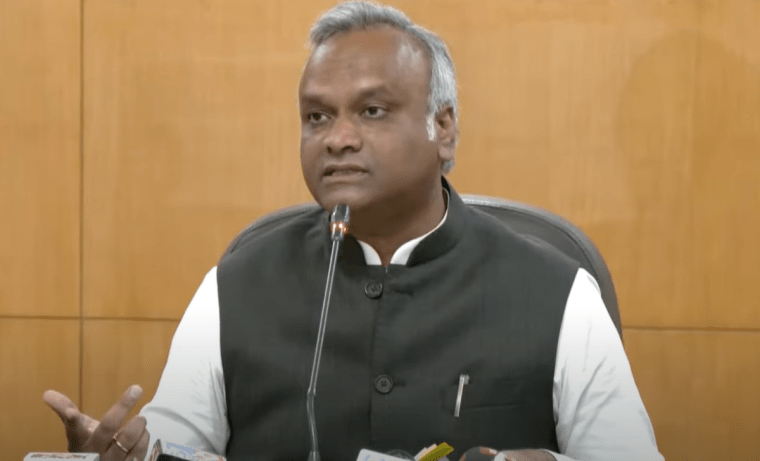
State Information Technology Minister Priyank Kharge claimed the bill aims to counter harmful misinformation, especially during elections. (Screenshot: ANI News/YouTube)

New Delhi, July 7, 2025—Authorities in the southern Indian state of Karnataka must ensure that a proposed law to curb misinformation and fake news does not infringe on press freedom or criminalize journalism, the Committee to Protect Journalists said Thursday.

“Criminalizing vague and undefined forms of ‘fake news’ without proper judicial oversight risks silencing critical journalism and creates a chilling effect among journalists,” said Kunāl Majumder, CPJ’s India representative. “The Karnataka government must ensure that any legal measures to address misinformation fully safeguard press freedom and uphold journalists’ right to report without fear of reprisal.”

According to several media reports, the draft bill, parts of which were reportedly leaked, proposes penalties of up to seven years in prison and fines of 1 million rupees (US$12,000) for those found guilty of spreading “fake news” online. It also outlines broad categories of prohibited content, including material deemed “anti-feminist” or “disrespectful of Sanatan (Hindu) symbols.” The bill proposes a state-appointed authority, led by politicians and government officials, to determine what qualifies as misinformation. It stipulates the creation of special courts and limits anticipatory bail for those accused.

State Information Technology Minister Priyank Kharge said the bill’s current version is an early internal draft, and that broader consultation will occur before any formal introduction. Kharge claimed that the law aims to counter harmful misinformation, especially during elections, and invited input from journalism groups.

Despite these assurances, the proposed law has drawn strong criticism from civil society groups.

“The bill provides no clear methodology or standards for how the authority or special courts will fact-check and discern false content,” Apar Gupta, founder and director of the Internet Freedom Foundation, an Indian digital rights nonprofit, wrote in an op-ed for the Karnataka-based Deccan Herald newspaper.

The state government’s proposed law has drawn comparisons to the Indian federal government’s controversial Information Technology (Intermediary Guidelines and Digital Media Ethics Code) Rules of 2021, particularly provisions that allow government authorities to unilaterally label online content as “fake” and compel its removal. These rules were partly struck down by the Bombay High Court in January 2024, and later stayed by the Supreme Court that March.

Kharge did not respond to CPJ’s email and text message requesting comment.
“Completely Illegal”: Dr. Feroze Sidhwa on Israel’s “Outrageous” Attacks on Gaza Hospitals & Staff


Story July 07, 2025


GuestsFeroze Sidhwa
surgeon who volunteered at Nasser Medical Complex in Khan Younis, Gaza.

Links"Hospital Attacks in Gaza and Israel: What Counts as a War Crime?"
Image Credit: UNICEF (photo right)


As Israeli Prime Minister Benjamin Netanyahu visits the White House on Monday to discuss a possible new ceasefire in Gaza, we speak with Dr. Feroze Sidhwa about the humanitarian disaster in the Palestinian territory, where Israel has damaged or destroyed much of the health infrastructure since the start of the war in October 2023. Sidhwa is a trauma surgeon in California who volunteered at Nasser Hospital in Gaza. He says Israel’s impunity in attacking hospitals across Gaza is “outrageous behavior” that blatantly violates the rules of war. “Literally every attack on a healthcare facility in Gaza has been justified by … a willful misunderstanding of international law or just outright lies.”


Transcript
This is a rush transcript. Copy may not be in its final form.


AMY GOODMAN: This is Democracy Now!, democracynow.org. I’m Amy Goodman.

Israeli Prime Minister Benjamin Netanyahu has arrived in Washington, D.C., for talks with President Trump. It’s Netanyahu’s third trip to Washington since Trump’s inauguration in January. Once again, the U.S. not enforce an International Criminal Court warrant seeking Netanyahu’s arrest for war crimes and crimes against humanity committed in Gaza.

Ahead of the meeting, Trump predicted there’s a good chance Israel and Hamas will reach a deal on a new U.S.-promoted Gaza ceasefire framework, which Trump has called his “final proposal” for the Palestinians. Israeli attacks on the Gaza Strip have killed at least 24 people so far today, following another bloody weekend that saw scores of Palestinians slaughtered — among the dead, at least six people killed when Israel bombed a medical clinic in Gaza City housing displaced Palestinians; at least 15 others were wounded.

Separately, Doctors Without Borders, Médecins Sans Frontières, known as MSF, is condemning the killing of Abdullah Hammad, a former MSF worker shot dead by Israeli forces July 3rd. Colleagues say Hammad was part of a group of Palestinians seeking to collect flour from an aid truck in Khan Younis when Israeli forces attacked without warning, killing at least 16 people. Dr. [sic] Hammad is the 12th member of Doctors Without Borders killed by Israel’s military since October 2023.

Attacks on health facilities and medical workers in Gaza have been a repeated and defining aspect of Israel’s assault on Gaza. The World Health Organization reports 94% of hospitals in Gaza have been damaged or destroyed over the past 20 months, despite the fact hospitals are supposed to have protections under international law. In May, the Safeguarding Health in Conflict Coalition reported attacks on healthcare facilities worldwide have become more frequent over the last decade, and in 2024 a quarter of all the attacks on health facilities worldwide occurred in Gaza. Israel almost always justifies attacks on hospitals by accusing Hamas of militarizing these facilities. An incredible 609 healthcare workers in Gaza have been killed.

Our next guest has witnessed the consequences of these attacks firsthand. Dr. Feroze Sidhwa is a trauma, general and critical care surgeon who volunteered in March at Nasser Medical Complex in Khan Younis, Gaza, with Med Global. Last year, he volunteered at the European Hospital during Israel’s assault on Gaza. His new piece for the Council on Foreign Relations’ Think Global Health is co-authored with attorney Leonard Rubenstein. It’s headlined, “Hospital Attacks in Gaza and Israel: What Counts as a War Crime?”

Well, Dr. Feroze Sidhwa, what counts as a war crime? Explain what has happened after, what — in the latest news, we hear about this healthcare worker, this doctor [sic], who has just been killed on line for food, and the director of the Indonesian Hospital, the leading cardiologist just killed, as well, in Gaza.

DR. FEROZE SIDHWA: Yeah, Dr. Sultan. Actually, at this point, if I’m correct — I hope I’m right about this, but I’m pretty sure at this point that the director of every hospital north of the Netzarim Corridor, so in the northern half of Gaza, has either been killed or is in Israeli detention. The reason Len and I wrote this article is because we hadn’t really seen anything that brought together the fact that the attacks on healthcare in Gaza are really a defining feature of the U.S.-Israeli attack on the territory. And it’s so widespread as to be really kind of unique in history.

AMY GOODMAN: So, talk about the story of your 16-year-old patient, Ibrahim, the story you tell in your piece for the Council on Foreign Relations.

DR. FEROZE SIDHWA: Sure, yeah. On March 18th, that’s when the widespread bombing of Gaza resumed, since the January 19th ceasefire. And the last operation I did that day was on a 16-year-old boy named Ibrahim. He had injuries to his colon and rectum. I operated on him, stopped him from dying. And by March 23rd in the evening, he was ready to go home. And I walked — I was on my way down to his room. We lived on the fourth floor of the hospital, and the men’s surgical ward at that time was on the second floor. And on my way down the stairs, his room exploded. The Israelis fired a — probably a drone-fired missile into his room, because they wanted to kill the other fellow in the room, a 56-year-old man who was also wounded and in the hospital receiving treatment, named Ismail Barhoum. They were distant cousins, from what I understand, so the family — or, the nurses had put them in the same room to make family visits easier and things like that.

Well, you know, that’s a pretty shocking crime for a few reasons. Firstly, the Israelis said that Ismail, the target of the attack, was Hamas’s prime minister in Gaza. Well, OK, nobody thinks you can blow up a hospital to kill Benjamin Netanyahu in Israel. That’s just completely insane. Nobody would ever make such a claim. And, of course, if Hamas did that, probably all of Gaza would be nuked. So, there’s no situation where you can treat people this way.

Furthermore, it’s completely illegal under international law. Wounded combatants who are receiving treatment at a hospital are not targets of attacks. In fact, they’re a specifically protected class of people under international law. And the Geneva Conventions — I think it’s Article 19 of the Fourth Geneva Convention of 1949, if I’m remembering correctly — specifically state that the presence of wounded combatants or their sidearms is not considered an act harmful to the enemy, as long — in a hospital if they’re receiving treatment there. So, even if you thought that this man was a combatant, which, again, is ridiculous, even if somebody were to claim that, it’s just completely outrageous to think that he can be attacked while in a hospital. So, that’s — you know, there’s two war crimes right there.

Next, the firing of explosive weapons into a surgical ward packed to the brim with people just — you know, the mass casualty on March 18th alone, we saw 221 patients — just packed to the brim with sick and wounded patients, with healthcare staff and with a 16-year-old wounded boy in the same room, just there’s no scenario where that satisfies the requirement of international law to make all feasible precautions not to destroy the hospital, not to kill healthcare workers, not to hurt patients, etc. So that’s also a war crime.

And then, thirdly, you know, the just such reckless firing into a hospital that you almost kill an international healthcare worker like me — again, I was two minutes away from the room — this is just all outrageous behavior, and it’s not something that we should be supporting.

AMY GOODMAN: You talk about the Iranian bombing of Beersheba in Israel and the horror people felt, and you say, “One war crime never justifies another. But Israeli leaders — and their American supporters — cannot feign outrage over Iranian war crimes when their own forces disregard the law with such impunity and constantly dissemble and obscure the truth while carrying out one of the most direct and systematic attacks on a health-care system in recent memory.” Can you talk about your conclusions from this, and then the significance of this conversation today as Netanyahu meets with Trump? There’s discussion of a possible 60-day ceasefire, as Hamas and Israeli officials are meeting in Doha to supposedly hammer out a ceasefire.

DR. FEROZE SIDHWA: Yeah, it’s important for people to realize, the attack on March 23rd and the lies told to justify it, the mangling of international law told to justify it, none of that is unique. We give several examples in the piece, if anyone wants to read it. But literally, every attack on a healthcare facility in Gaza has been justified by just — it’s just either a total misunderstanding — I should say a willful misunderstanding — of international law or just outright lies.

And, you know, there have been some pretty extreme examples. Like, one thing we didn’t talk about in the piece was something else that happened on March 23rd, the same day Ibrahim was killed in his room. That’s the day that the 15 paramedic Civil Defense workers and the U.N. worker were killed in Tel al-Sultan, near Rafah. The Israelis initially said that they fired on Hamas approaching them in an ambulance. Well, when they dug up the mass grave of those 15 paramedics a few days later, they found one of their cellphones, and they found that absolutely nothing of the sort had happened. The guy had — I think his name was Refaat — he had videotaped the entire thing, and literally everything the Israelis had said was a lie. Well, OK, fine. Now the Israelis said, “Well, we have to investigate to appease people. The New York Times is saying, oh, maybe we lied about something.” So, they wrote an — or, they wrote up an investigation, which the Israeli media reported didn’t even take account of the findings that the investigative team found. When they did a scenario — or, they did a recreation of the scenario in the West Bank, they found that what the commander had said was complete lies. They found that the commander literally endangered his own troops just to go and destroy these ambulances for no reason. None of this was in the report. And furthermore, the complete misunderstanding of international law, that you don’t just get to attack ambulances because you think they might possibly pose a threat to you, this is completely outrageous. So, this is a widespread problem. It’s not just, you know, one example.

And what it means for these ceasefire negotiations, it’s difficult to say. But the problem with the ceasefire is that under no circumstances are Israel or the United States going to take — under no circumstances are they going to lift the blockade of Gaza. And the blockade of Gaza is exactly what led to October 7th. Well, OK, I mean, if we’re just going to put the Gazans back into a concentration camp and let them continue to languish and die there, that’s not a ceasefire. That’s just — you know, you can call it a piece of the graveyard, if you like. But it’s certainly not — it’s not a step towards peace. I hope I’m wrong, and I hope the Trump administration has a miraculous turnaround, but I don’t see that happening, unfortunately, unless Americans put pressure on it.

AMY GOODMAN: And what do you want to see happen right now, Feroze? You have Netanyahu coming for a series of days. He’s meeting with President Trump today. He’s meeting with Vance and Republican leaders tomorrow. He’s meeting with Marco Rubio. What do you want to see come out of this meeting and what’s happening in Doha, the Hamas, Israeli negotiators?

DR. FEROZE SIDHWA: Well, just like under the Biden administration, I’d like the United States to be a country where the law matters. Benjamin Netanyahu is an accused war criminal. So should Donald Trump. So was Joe Biden. But, you know, the United States should be a place where we apply our laws to ourselves. That’s the whole purpose of the law. It’s completely illegal to continue to arm chronic and obstinate human rights abusers like Israel, and we should stop doing that. So, you know, I don’t expect the Trump administration will all of a sudden think that the law matters, given its behavior.

AMY GOODMAN: Ten seconds.

DR. FEROZE SIDHWA: The Biden administration also never came to this reasonable conclusion. But the American people don’t have to accept that we live in a lawless country where the government can just do whatever it wants. It’s not the case. We have the power to act. We have the power to pressure the administration. We have the power to pressure our own congresspeople and senators.

AMY GOODMAN: We have to leave it there, Dr. Feroze Sidhwa.

DR. FEROZE SIDHWA: And we don’t have to elect [inaudible] —

AMY GOODMAN: I want to thank you so much for being with us, surgeon who volunteered in Gaza. We’ll link to your piece for the Council on Foreign Relations.

This is viewer supported news. Please do your part today. Donate

“Most Massive Transfer of Wealth Upward in American History”: John Nichols on Trump’s Budget Law


This is viewer supported news. Please do your part today.Donate

Guests John Nichols
national affairs correspondent for The Nation.

Links"Republicans Just Voted to Do Immoral and Irreparable Harm to the United States"
Image Credit: X/@WhiteHouse


President Donald Trump and his allies are celebrating the passage of his sweeping tax and spending bill, which he signed into law on July 4 after a monthslong effort to shepherd it through Congress. Ultimately, just three Republicans in the Senate and two in the House voted against the legislation. The so-called Big, Beautiful Bill includes about $1 trillion in federal cuts to Medicaid and could kick 17 million people off their healthcare. It makes the largest-ever cuts to food assistance benefits, could cause the closure of nursing homes and rural hospitals across the country, raises housing and energy costs, and supercharges the Trump crackdown on immigrants — all while delivering massive tax benefits for the wealthiest people in the country. “This is the most massive transfer of wealth upward in American history,” says John Nichols, national affairs correspondent for The Nation.


Transcript
This is a rush transcript. Copy may not be in its final form.


AMY GOODMAN: This is Democracy Now!, democracynow.org, The War and Peace Report. I’m Amy Goodman.

President Donald Trump signed his sweeping tax and spend bill into law on July 4th, after a monthslong push that saw just three Republicans in the Senate and two in the House break away to oppose how it slashes the social safety net while extending tax cuts to the rich and ballooning the deficit. That left room for the measure to pass with the final vote mostly along party lines.


SPEAKER MIKE JOHNSON: On this vote, the yeas are 218, the nays are 214. The motion is adopted.

AMY GOODMAN: As House Speaker Mike Johnson announced that the measure had passed, he was surrounded by Republican lawmakers who mimicked Trump’s thumbs-up pose and danced to his unofficial anthem, ”YMCA,” that played in the chamber.

What critics are calling Trump’s “big, ugly bill” includes some $1 trillion in federal cuts to Medicaid and could kick 17 million people off healthcare. It makes the largest-ever cuts to food assistance benefits, could cause the closure of nursing homes and rural hospitals across the country, raises housing and energy costs and supercharges Trump’s crackdown on immigrants, all while extending Trump’s tax cuts for the rich and delivering massive new tax benefits for the wealthiest Americans.

New York Congressmember Alexandria Ocasio-Cortez said Democrats will campaign against Republicans who voted for the bill.


REP. ALEXANDRIA OCASIO-CORTEZ: There have to be consequences to these votes, and we have to decide if this is just a joke or just for TV, or if this is our real lives. And I hope people vote like it’s our real life.

AMY GOODMAN: Since Thursday’s vote, TV ads are already already running in swing districts currently represented by Republican supporters of the budget package, like Congressmember David Valadao in California’s 22nd Congressional District, where more than 60% of its constituents reportedly rely on Medicaid.


SAVE MY CARE AD: Republicans in Congress promised not to cut Medicaid. But then?


SPEAKER MIKE JOHNSON: The bill is passed.


SAVE MY CARE AD: It’s the biggest cut to Medicaid in history. And Congressman David Valadao just voted for it. More than 13 million Americans could lose healthcare — seniors, veterans and children with disabilities. Why did he do it? To give another huge tax break to billionaires and big corporations. Tell Congressman Valadeo we can’t afford to have our healthcare taken away, not now, not ever.

AMY GOODMAN: For more, we’re joined by John Nichols, national affairs correspondent for The Nation. His new piece is headlined “Republicans Just Voted to Do Immoral and Irreparable Harm to the United States: The GOP chose to betray both morality and economic common sense by approving Trump’s one big, ugly bill.”

John, welcome back to Democracy Now! Can you talk about the significance of what took place? I mean, interestingly, while the tax cuts go into effect immediately — is this correct? — the Medicaid cuts will happen after the midterms.

JOHN NICHOLS: That’s exactly right. This bill was drawn as a political document. There’s no question of what Donald Trump and the Republicans in congressional leadership wanted to do. They wanted to do what Republicans have done in every circumstance where they’ve gotten the White House in recent decades. And that is a massive tax cut for the wealthy, in this case, roughly three-point — I hope I’ve got the number right. It keeps kind of moving up and down, but, you know, it’s in the multiple trillions of dollars over the period of what we’re talking about here. But they also had to figure out some ways to, quote-unquote, “pay for this.” And as you suggest, they put the tax cut for the wealthy up front. I mean, that’s going to come across the board. And then they put a lot of damaging, you know, almost poison pills into the document as regards all of these safety net programs. And so, a lot of the cuts will come over time. People won’t feel them immediately.

And yet, this is the bottom line: In states across the country, not according to liberal Democrats, not according to progressive think tanks, but according to Republicans who are on the ground in these states, and one Republican in the U.S. Senate, Thom Tillis, this is going to have a devastating impact on Medicaid, on access to healthcare, so that we will get to a point where roughly 5% of Americans are at threat of losing their healthcare. That’s a massive, massive shift. In addition, you’ve got roughly 11.8, 12 million people at risk of losing SNAP anti-hunger benefits. And when we look at all the numbers here, because of the way the tax cuts are massively weighted toward the wealthy, you have members of Congress, who are pretty serious analysts of all this, telling us that roughly 40% — going to underline that, 40% — of Americans will end up worse off under this. They won’t get a significant tax cut. They will lose health benefits. They will lose anti-hunger benefits and a lot of other benefits, as well. This is the most massive transfer of wealth upward in American history, and yet it’s designed to create a circumstance where Republicans can run in 2026 and claim that they didn’t do the damage.

I’ll give you one more set of facts that are just useful. This comes from Governor Andy Beshear in Kentucky. Kentucky is a state that votes quite Republican in federal elections. Beshear is a Democrat, but he’s had to work with a Republican Legislature. He’s a very kind of facts and numbers guy. He says this is the worst piece of federal legislation in his lifetime. He says that 200,000 Kentuckians — this is just one state — 200,000 Kentuckians will lose healthcare, 20,000 healthcare workers will lose their jobs, and as many as 35 rural hospitals are now in danger of closing in that one state. And that doesn’t even take in the devastating impact to nursing homes, especially in small towns.

AMY GOODMAN: I want to ask you about the Republican Congressmember Derrick Van Orden of Wisconsin, who voted for Trump’s budget bill even as he called on your governor, Wisconsin Governor Tony Evers, to sign the state budget before Trump signed the federal budget bill into law on July 4th. He wrote in a letter, quote, “Delaying the state budget enactment beyond July 3rd risks losing vital opportunities for the state’s healthcare system and the Wisconsinites who rely on it. Healthcare and rural healthcare, in particular, is vital to us in Wisconsin. We cannot leave anything on the table.” Explain what’s going on here.

JOHN NICHOLS: Sure. This new law has all sorts of draconian components to it that are incredibly damaging to the way in which states have set up their healthcare systems. Remember, states across the country get federal funding, and then they establish a state-based healthcare system for working people who can’t afford the high cost of healthcare. And those systems often have an intermingling of federal and state money. The way that what — what this bill does, it created a circumstance where states that didn’t have a budget locked in with a program for spending that state and federal money by July 1st ran the risk of — or by, you know, the — before the bill was passed, I should say, before the federal bill was passed, ran the risk of losing substantial amounts of money.

So, to give you an example, in Wisconsin, Governor Tony Evers, knowing that this was indeed a real risk, signed the bill after 1 a.m. the other day. You know, literally, it was up into the middle of the night. So, as soon as it got through the Legislature, they signed the new Wisconsin budget. And that is because this federal bill, as it implements, is going to make it dramatically harder for the states to establish and maintain healthcare programs for working people who can’t afford. And if I can just give you one more factoid on that, if we can use that word, Thom Tillis, the senator from North Carolina, Republican senator from North Carolina, a former Republican legislative leader, said what this bill does is sort of, kind of blow apart the systems that states have set up to establish their healthcare programs.

AMY GOODMAN: And, John, just very finally, you had Lisa Murkowski saying what’s good for Alaska is not necessarily good for the country; this bill is not good for many Americans in the country. They got carve-outs — right? — to get them to say — that was Murkowski. Thune himself, the Senate majority leader in South Dakota — they got carve-outs to protect their, for example, rural hospitals.

JOHN NICHOLS: They did in some cases. But I will emphasize to you that while there were some techniques, some tricks kind of put in here to help rural hospitals, they will not be sufficient. And more damaging here, not discussed at nearly the level it should have been, is rural nursing homes. And the way that this bill is written, it poses a dramatic threat to nursing homes across the country. There is a real possibility that millions of families that go through that devastating challenge of trying to figure out how to care for an elder or a person with disabilities are going to be put into one of the most devastating circumstances that the government has ever imposed on folks as regards healthcare.

AMY GOODMAN: John Nichols, I want to thank you for being with us, national affairs correspondent for The Nation. His new piece, we’ll link to at democracynow.org, “Republicans Just Voted to Do Immoral and Irreparable Harm to the United States,” speaking to us from Madison, Wisconsin.
The original content of this program is licensed under a Creative Commons Attribution-Noncommercial-No Derivative Works 3.0 United States License. Please attribute legal copies of this work to democracynow.org. Some of the work(s) that this program incorporates, however, may be separately licensed. For further information or additional permissions, contact us.

Opinion...

The refugees we see and the ones we don’t


Refugees from war-torn Sudan hold a sit-in seeking support in front of the United Nation High Commissioner for Refugees (UNHCR) offices in Tripoli
 [MAHMUD TURKIA/AFP via Getty Images]

by Maya El Jundi
MEMO

July 7, 2025 

Just three years ago, Europe opened its arms wide open for refugees fleeing Ukraine due to the Russian Ukrainian war. Today, it’s turning a blind eye to more than four million Africans starving just across the Mediterranean.

There is this huge contrast that exposes a painful double standard on how the world shows compassion. On paper, and in the cute, crafted statements of humanitarian agencies, showered with the humanitarian principles of neutrality and impartiality, every refugee deserves dignity and help. But in reality, who actually gets support often depends on where they come from, the colour of their skin, and whether the world’s attention is still on their crisis.

If we take a look at the numbers: In 2024, countries donating aid spent around $28 billion to support refugees within their own borders, covering things like housing, healthcare, and schooling during the first year of displacement. While these funds aren’t divided by nationality in reports, it is obvious that most of that money went to Ukrainian refugees. Right now, Europe hosts about 4.4 million Ukrainians under temporary protection which is the largest refugee population there since World War II. This means, on average, each Ukrainian refugee benefits from about $6,200 in aid every year.


Now if we were to compare that to the situation in Sudan, over 1.2 million Sudanese refugees have fled to Chad, and the World Food Programme (WFP) says it needs $77 million just to provide half-rations for six months. That breaks down to roughly $770 per person per year. Across other neighbouring countries like Egypt, Ethiopia, the Central African Republic, and Libya, funding is so low that WFP warns food aid could stop completely within weeks. WFP also say that they urgently need $200 million to prevent widespread hunger and malnutrition in the region.

This gap is shocking and quite embarrassing: $6,200 per Ukrainian refugee versus only $770 per Sudanese refugee, with some Sudanese refugees facing the possibility of receiving no aid at all in the coming months.

It’s not that Ukrainian refugees don’t deserve help. Of course they do, they absolutely do. The comparison is not undermining the Ukrainian suffering. The question is why Sudanese families, fleeing one of the deadliest and least visible wars on Earth, don’t receive the same outpouring of solidarity. This isn’t about money because $200 million to save millions of lives in Africa is less than what some countries spend on Ukraine aid in a single week, or less than the cost of one fighter jet.

Unfortunately, what this shows is a harsh truth that some lives are seen as more worthy of grief, more visible, more valuable. There’s an unspoken hierarchy in the global response to suffering. Ukrainians flashed policy changes, budget increases, and public support across Europe. On the other side, Sudanese refugees are met with cuts, donor exhaustion, and silence.

One might ask: why the difference? Race plays a role. So does geography as Europe feels closer to Ukraine’s war. But media coverage and political will are highly necessary. Ukraine dominates headlines, summits, and conversations, especially in Western media. Sudan barely makes the news. The war there has dragged on for almost three years, causing over 4 million refugees to flee into seven neighbouring countries and displacing more than 10 million inside Sudan. Also, the UN warns of forthcoming and worsening famine, widespread and brutal atrocities, in addition to increasing gender-based violence. Yet, global attention is fading fast.


The fallout is real and heartbreaking especially that malnutrition is constantly and exponentially rising among Sudanese refugee children. At the same time, humanitarian workers are forced to scale back or shut down aid programs. Drastically speaking, entire communities could soon be left to survive in some of the harshest conditions on Earth, all because the world’s attention has moved on.

I don’t believe that this is just a war crisis anymore, I believe it’s a crisis of apathy. What happens when the world forgets a war? A very brutal, bloody war? Over four million Sudanese refugees are about to find out.

If we truly believe in humanitarian values, they can’t switch on only when cameras are rolling or when geopolitics favours the cause. Compassion, aid, advocacy, state-building, ending crisis, all must reach the refugees in Africa, in forgotten crises, even when no one is watching.

Sudanese communities need the world’s focus, funding, and urgent action. That $200 million to keep them fed for six months is definitely achievable. What’s missing is a sense of urgency. What’s missing is outrage.

We can’t afford to pick and choose who deserves our empathy. The next time we say, “never again,” let it be a promise kept for all refugees, no matter their passport or skin colour.