Tuesday, July 08, 2025

A Sacked Russian Transport Minister, A Body In A Moscow Suburb, A Growing List Of Suspicious Deaths

July 08, 2025
By Mike Eckel and Wojtek Grojec


Russian investigators examining the car belonging to former Russian Transport Minister Roman Starovoit. Investigators say his body was found with a gunshot wound.

Hours after being sacked by President Vladimir Putin as Russia’s transport minister, Roman Starovoit was found in his Tesla, parked in a Moscow suburb, dead from a gunshot wound, investigators said.

Suicide was the most likely explanation for Starovoit’s death, officials said.

Russia being Russia, however, untimely deaths are almost always fodder for rampant speculation, with suggestions of foul play.

Two of Starovoit’s deputies, from when he served as governor of the Kursk region, bordering Ukraine, have been implicated in embezzlement of budget funds earmarked for border defenses. Ukrainian troops quickly overran the border in August 2024 when they invaded Kursk, embarrassing the Kremlin.

Still, it is exceedingly rare for topmost Russian government officials to commit suicide, even if they might be ensnared in scandal.

Here's a look at just a few of the untimely, eyebrow-raising deaths of high-level Russian officials-- and executives of energy industry companies -- that have grabbed attention in recent years:

Russia's Deadly Corporate (And Government) Ladder

A growing number of Russian business executives and government officials have died under suspicious circumstances since 2022. Causes include falls from windows and gunshot wounds.

Table with 6 columns and 9 rows. (column headers with buttons are sortable)
roman-starovoitRoman StarovoitFormer transport minister *Dead of gunshot in a Moscow suburb parking lotJuly 7, 202553
Andrey BadalovAndrey BadalovVice president of Transneft, a state-owned oil pipeline companyFell from window of Moscow apartmentJuly 4, 202562
Vitaly RobertusVitaly RobertusVice president of Lukoil, Russia's largest private oil companyFound hanged in Moscow officesMarch 1, 202453
Vladimir NekrasovVladimir NekrasovChairman of board of directors, LukoilReported heart failureOctober 1, 202366
Sergey ProtosenyaSergey ProtosenyaFormer manager at Novatek, Russia's second-largest natural gas producerFound hanging at his villa in SpainApril 19, 202255
Ravil MaganovRavil MaganovChairman of board of directors, LukoilFell from a window at a Moscow hospitalJanuary 30, 202267
Leonid ShulmanLeonid ShulmanHead of transport service for Gazprom Invest, a unit of state-owned gas giant GazpromFound dead in bathtub of Leningrad region country houseJanuary 30, 202260
Aleksandr SubbotinAleksandr SubbotinFormer chief accountant at Novatek, Russia's second-largest natural gas producerFound dead of reported heart failure in Moscow suburb houseMay 8, 202243
Vladimir MakarovVladimir MakarovFormer major general, Interior Ministry counter-extremism unitFound dead in Moscow suburb homeFebruary 13, 202372


Pakistan dispatch: latest floods push judiciary and legislature to press for disaster management improvements


Syeda Aamna Hasan is a recent Pakistani law graduate and LLM student currently working as a legal researcher. 

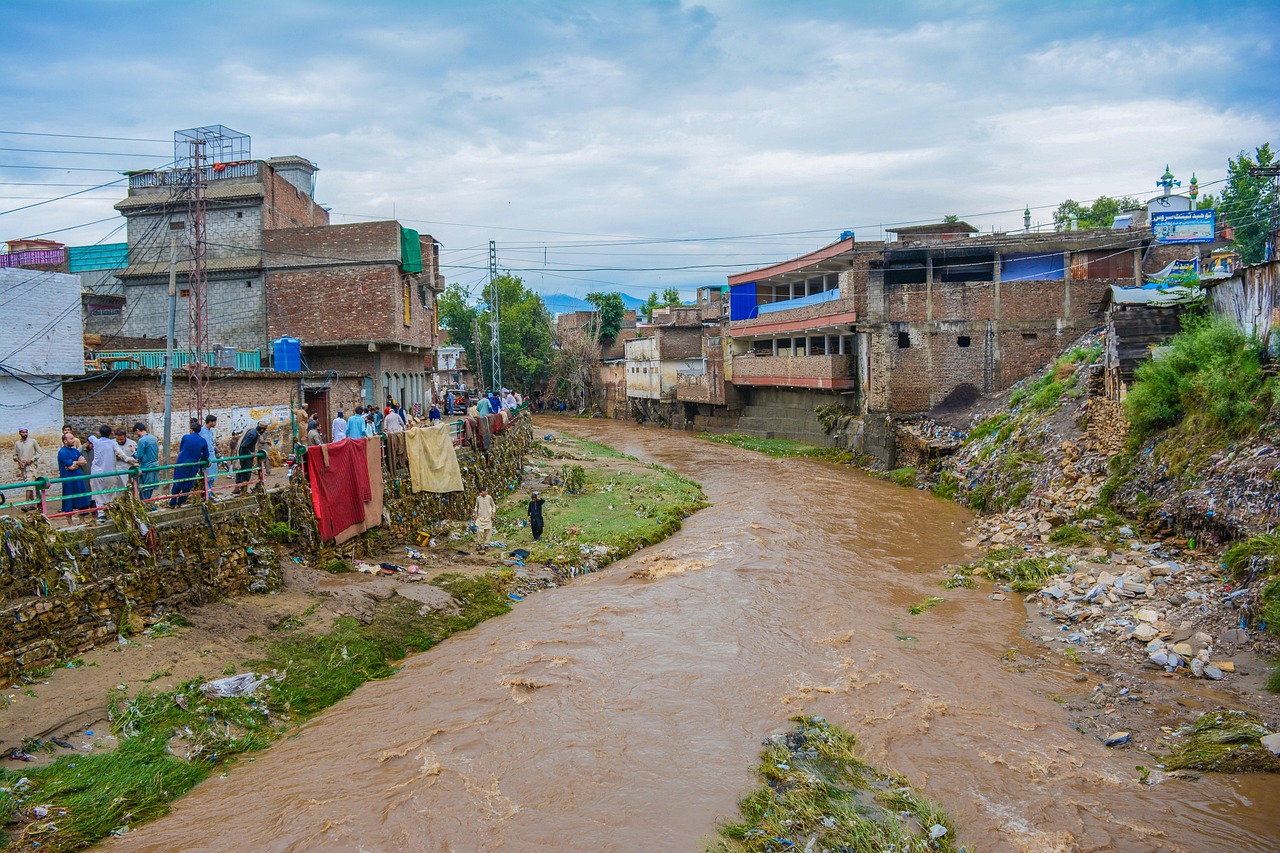
Torrential monsoon rains have triggered devastating floods across Pakistan in recent days, leaving at least 18 people dead and dozens missing, as the country scrambles to contain the humanitarian fallout of yet another climate-induced disaster. The worst-hit regions include the picturesque Swat Valley in Khyber Pakhtunkhwa (KP), parts of Punjab, and Sindh region, still recovering from the catastrophic floods of 2022.

According to the Provincial Disaster Management Authority (PDMA), flash floods in the Swat Valley swept away vehicles and tourists last weekend, killing eight people and leaving more than 13 missing from the same family. Rescue teams saved 58 individuals, but operations remain ongoing. Monsoon rains, which began intensifying in late June, are forecast to continue through September, raising fears of further destruction in flood-prone districts.

The floods have disrupted major highways, inundated rural villages, and destroyed hundreds of homes. Casualties were also reported in Southern Punjab and Sindh, where rapid urbanization and fragile infrastructure have amplified the damage.

The Punjab PDMA issued urgent flood directives this week, activating 24/7 emergency operation centers in vulnerable districts including Sialkot, Gujranwala, Rajanpur and Dera Ghazi Khan. Local administrations were ordered to ban swimming in rivers, enforce the use of life jackets for tourists, install warning signboards, and maintain mobile rescue patrols.

At the federal level, the National Disaster Management Authority (NDMA) released its 2025 Monsoon Infrastructure Guidelines, instructing all provinces to inspect dams, drainage systems, and urban flood barriers. The guidelines emphasize pre-disaster planning and post-flood reconstruction standards.

In the Senate, the Committee on Economic Affairs convened a key session in February to review ongoing flood rehabilitation efforts. Lawmakers scrutinized fund allocations and called for expedited disbursement to rebuild housing, roads, and livelihoods in affected provinces.

Pakistan’s institutional responses to disasters is governed by the National Disaster Management Act of 2010, which outlines the roles of the NDMA, PDMAs, and District Disaster Management Authorities (DDMAs). However, a recent policy analysis published in Water Policy revealed that many DDMAs remain inactive or under-resourced until emergencies strike, operating without sustainable budgets, trained personnel, or effective forecasting tools.

Pakistan’s judiciary has stepped in to push for accountability. Supreme Court of Pakistan Justice Mansoor Ali Shah, in a landmark speech, declared that government delays in implementing climate and disaster reforms amount to a violation of citizens fundamentals rights. He called for a dedicated Climate Change Commission, improved hazard zoning laws, and district-level emergency preparedness teams.

Adding to the momentum, Parliament recently passed an amendment introducing Article 9A to the Constitution, establishing the right to a “clean, healthy, and sustainable environment” as a fundamental right.

In response to back-to-back climate disasters, Pakistan has pivoted toward ecosystem-based and climate-resilient infrastructure. At COP29 in Dubai last year, Pakistan launched its flagship Recharge Pakistan initiative, aimed at restoring wetlands, hill torrents, and forest landscapes to act as natural buffers against monsoon flooding. Supported by $ 4.4 million in international funding, the program is expected to benefit over 62 million people by enhancing groundwater recharge, biodiversity, and water quality.

In urban centers like Karachi, architects and city planners are piloting “sponge city concepts” including permeable pavements, stormwater gardens, and rainwater harvesting wells. The movement, spearheaded by architect Yasmeen Lari, promotes low-tech, climate-smart infrastructure that reduces runoff and enhances soil absorption.

Also, at the macroeconomic level, Pakistan secured $400 million in funding from the World Bank and Asian Development Bank for flood reconstruction in Baluchistan. The Executive Committee of National Economic Council also approved Rupees 296 billion in flood relief for Sindh and Rupees 11.2 billion for Balochistan under the 2024-25 development plan.

Moreover, In 2023, Pakistan unveiled the 4RF (Resilient Recovery, Rehabilitation, and Reconstruction) at the Geneva Conference, securing over $ 9 billion in pledges from global partners. The framework has guided post disaster efforts ever since, though disbursement has been uneven.

Environmental experts stress that adaptation needs are still underfunded. Pakistan is finalizing its National Adaption Plan, aligning with its National Determined Contributions (NDCs) to access global climate finance and emerging loss and damage funds.

Despite the legislative progress and improved planning, significant hurdles remain, local authorities lack funding, trained staff and autonomy especially at the district level. Hazard zoning laws are poorly enforced, allowing illegal construction in flood-prone zones. Early warning systems remain outdated and ineffective often failing to reach vulnerable populations in time, and especially in local languages. Corruption and political disputes, such as the controversial Cholistan Canal Project, continue to fuel distrust. Critics claim it violates the 1991 Indus Water Accord and threatens downstream ecosystems.

The way forward for dealing with the floods in monsoon, as stated by the experts with whom civil society agrees, is that the road to resilience lies in strengthening and decentralizing institutions like DDMAs. enforcing climate zoning and land use regulations, improving impact-based forecasting and early warnings and enhancing transparency and judicial oversight over climate funds. Pakistan’s 2025 flood crisis is yet another warning from nature. With the climate clock ticking, the country stands at a critical crossroads between catastrophe and climate resilience.

UN expresses concerns over use of violence in recent Kenya protests

The United Nations (UN) Office of the High Commissioner for Human Rights (OHCHR) expressed concerns on Tuesday regarding the violence and death toll during popular protests that occurred in Kenya on July 7. The office urged Kenyan authorities to investigate the violent incidents that resulted in fatalities among civilians, and called for adherence to international human rights laws regarding the use of force by law enforcement officials.

The OHCHR highlighted the number of deaths and injuries among protesters as well as the looting and destruction of property by unidentified individuals during clashes with security forces in the capital, Nairobi, and other cities. The OHCHR indicated that at least 10 people were killed and over 80 were injured, including both civilians and police officers. Additionally, the UN office noted that security forces employed lethal ammunition, along with rubber bullets and tear gas, to control the protests.

UN High Commissioner for Human Rights, Volker Türk, called on Kenyan authorities to investigate the reported deaths and the violent incidents that occurred during the protests. He emphasized the importance of holding accountable those responsible for the violence and urged the Kenyan government to refrain from using force, in accordance with international human rights laws governing the use of force by law enforcement agents. Finally, Türk stressed the need for the government to uphold the rights to freedom of expression and peaceful assembly, while addressing the root causes of the protests. He reminded the Kenyan authorities that the OHCHR stands ready to support them in addressing these challenges and investigating the reported violence.

According to the UN Basic Principles on the Use of Force and Firearms by Law Enforcement Officials, authorities and law enforcement agencies must carefully assess and control the deployment of non-lethal weapons. The fourth principle states that law enforcement officials may use firearms only when strictly necessary and if other means would be ineffective. In such cases, officials are required to follow the guidelines outlined in the fifth principle, which includes the obligation to act proportionately to the severity of the offense and to minimize damage and injury to individuals.

The OHCHR’s statement came one day after a mass demonstration took place in Kenya, commemorating the July 7, 1990 protest, which called for the end of the one-party state. This event was the latest in a series of violent protests that have escalated since the death of activist Albert Ojwang, who was found dead in police custody in June. His death sparked mass protests reminiscent of the 2024 demonstrations against tax increases proposed by the government in the 2024 Finance Bill, which have expanded to include police violence and the corruption of government officials.


Kenya dispatch: 35th anniversary of Saba Saba protests marked by demonstrations, deaths in Nairobi and beyond
© NTV Kenya
Kenya dispatch: 35th anniversary of Saba Saba protests marked by demonstrations, deaths in Nairobi and beyond
Yesterday the country woke up to yet another day of commemoration, marking 35 years since the famous Saba Saba Movement, first held on July 7, 1990. The movement began as a protest, demanding multiparty democracy against the then-government’s autocratic regime. Despite the protest being banned, key opposition leaders still convened in Nairobi. This resulted in police retaliation, which was characterised by arbitrary arrests and fatalities from police brutality.

Thirty-five years later, history is repeating itself with people rallying in widespread discontentment with the current government.  Yesterday began with the blocking and barricading of the major roads leading to the Nairobi Central Business District (CBD) ahead of the planned protests. The protesters were not relentless, as this move was countered by the generation of a navigation app that would give live updates on the active barricades and police formation maps within Nairobi. Groups of people started gathering in various estates within Nairobi, and by 11 am, reports of face-offs between the police and the protesters started hitting different newsrooms. The Secretary General of the Kenya Medical Association soon thereafter issued a statement condemning the blocking of roads as medics were unable to reach casualties from the protests.

The protests were infiltrated by unknown assailants who were seen looting shops not only in Nairobi but also in other parts of the country. As the day went on, the degree of police measures turned extreme, with the police not only using teargas cannisters and water cannons, but live bullets as well which is only permitted as measures of last resort. This resulted into quite a good number of fatalities as the first casualty was caught by a stray bullet while on his way back from work. By sundown, 19 deaths were reported with close to 44 injuries and 34 arrests. A 14 year-old b0y was reported to have succumbed to gunshot wounds during the police confrontation.

A group of individuals with unmarked vehicles who were believed to be police officers in plain clothing were seen entering the streets and shooting directly at protesters. This move was in total disregard of the High Court  judgement that was issued in 30th April this year that declared that the use of plain clothes police officers to manage protests defeats the ends of Article 37 of the Constitution of Kenya 2010 – on exercising the right to assembly, demonstration, picketing and petition a public Authority, and subsequently cannot be used to subdue persons exercising such rights. According to local news, the vehicles were termed as ‘Death Squard in Subarus’

Goons who were seen infiltrating the protests were also believed to have been state sponsored with a Kenyan CNN news reporter confirming that a Nairobi politician offered the paid goons a bonus if they attacked him while covering the protests. The reporter also stated that pro-government voices were calling for his arrest.

At this point, human rights atrocities in Kenya are beyond mere sporadic events, as they tend to follow a certain sequence. When the country commemorated the June 25th finance bill protests last monh, the same set of events took place and the number of deaths has even doubled this time around. All of these are taking place in the backdrop of existing legal frameworks that are supposed to protect the people. The question that now lingers is that when the duty-bearer has turned against the right-holder, where should the people turn?

CAT OUTTA DA BAG

‘We're getting close to finding countries’ – Netanyahu and Trump on ‘relocation’ of Palestinians

Human rights groups condemned the plan as ethnic cleansing.


Israel's prime minister Benjamin Netanyahu. Photo: Reuters


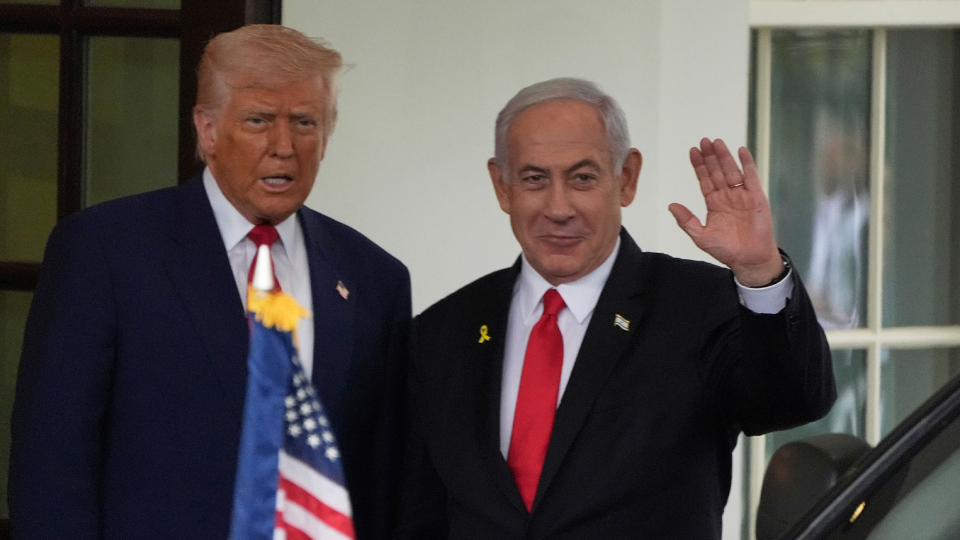
U.S. President Donald Trump, hosting Israeli Prime Minister Benjamin Netanyahu at the White House on Monday, said the United States had scheduled talks with Iran and indicated progress on a controversial effort to relocate Palestinians out of Gaza.


Speaking to reporters at the beginning of a dinner between U.S. and Israeli officials, Netanyahu said the United States and Israel were working with other countries who would give Palestinians a "better future," suggesting that the residents of Gaza could move to neighbouring nations.

"If people want to stay, they can stay, but if they want to leave, they should be able to leave," Netanyahu said.

"We're working with the United States very closely about finding countries that will seek to realise what they always say, that they wanted to give the Palestinians a better future. I think we're getting close to finding several countries."

Trump, who initially demurred to Netanyahu when asked about the relocating of Palestinians, said the countries around Israel were helping out. "We've had great cooperation from... surrounding countries, great cooperation from every single one of them. So something good will happen," Trump said.

The president earlier this year floated relocating Palestinians and taking over the Gaza Strip to turn it into the "Riviera of the Middle East." Gazans criticised the proposal and vowed never to leave their homes in the coastal enclave. Human rights groups condemned the plan as ethnic cleansing.

Trump and Netanyahu met for several hours in Washington while Israeli officials continued indirect negotiations with Hamas aimed at securing a U.S.-brokered Gaza ceasefire and hostage-release deal. Netanyahu returned to the Blair House guest house late on Monday, where he is due to meet Vice President JD Vance at 9:30 EDT on Tuesday.


An image depicting U.S. President Donald Trump and Israeli Prime Minister Benjamin Netanyahu is displayed as people attend the Napoli Pride parade in Naples, Italy, July 5, 2025, REUTERS/Matteo Ciambelli

Netanyahu's visit follows Trump's prediction, on the eve of their meeting, that such a deal could be reached this week. Before heading to Washington, the right-wing Israeli leader said his discussions with Trump could help advance negotiations under way in Qatar between Israel and the Palestinian militant group.

It was Trump's third face-to-face encounter with Netanyahu since returning to office in January, and came just over two weeks after the president ordered the bombing of Iranian nuclear sites in support of Israeli air strikes. Trump then helped arrange a ceasefire in the 12-day Israel-Iran war.

Trump said his administration would be meeting with Iran. "We have scheduled Iran talks, and they... want to talk. They took a big drubbing," he said.

Trump's Middle East envoy Steve Witkoff said the meeting would take place in the next week or so.


Trump said he would like to lift sanctions on Iran at some point. "I would love to be able to, at the right time, take those sanctions off," he said.

Iranian President Masoud Pezeshkian said in an interview released on Monday that he believed Iran could resolve its differences with the United States through dialogue.

Trump and his aides appeared to be trying to seize on any momentum created by the weakening of Iran, which backs Hamas, to push both sides for a breakthrough in the 21-month Gaza war.

The two leaders, with their top advisers, held a private dinner in the White House Blue Room, instead of more traditional talks in the Oval Office, where the president usually greets visiting dignitaries.


Demonstrators hold a banner featuring images of Israeli Prime Minister Benjamin Netanyahu, Finance Minister Bezalel Smotrich and National Security Minister Itamar Ben-Gvir, during a protest to demand the immediate release of hostages held in Gaza since the October 7, 2023 attack on Israel by Hamas, in Tel Aviv, Israel, July 5, 2025. REUTERS/Ronen Zvulun

Outside, hundreds of protesters, many wearing Palestinian keffiyeh scarves and waving Palestinian flags, gathered near the White House, waving banners that read "Stop Arming Israel" and "Say No to Genocide". They also called for Netanyahu's arrest, referring to the International Criminal Court's arrest warrant against the Israeli leader over alleged war crimes in Gaza.

Netanyahu met earlier on Monday with Witkoff and Secretary of State Marco Rubio. He planned to visit the U.S. Capitol on Tuesday to see congressional leaders.

During their meeting, Netanyahu gave Trump a letter that he said he had used to nominate the U.S. president for the Nobel Peace Prize. Trump, appearing pleased by the gesture, thanked him.

Ahead of their visit, Netanyahu told reporters Israeli negotiators were driving for a deal on Gaza in Doha, Qatar's capital.

Israeli officials also hope the outcome of the conflict with Iran will pave the way for normalization of relations with more of its neighbours such as Lebanon, Syria and Saudi Arabia.

Second day of Qatar talks

Witkoff, who played a major role in crafting the 60-day ceasefire proposal at the centre of the Qatar negotiations, will travel to Doha this week to join discussions there, White House press secretary Karoline Leavitt told reporters earlier on Monday.

In a sign of continued gaps between the two sides, Palestinian sources said Israel's refusal to allow the free and safe entry of humanitarian aid into Gaza remains the main obstacle to progress in the indirect talks. Israel insists it is taking steps to get food into Gaza but seeks to prevent militants from diverting supplies.

On the second day of negotiations, mediators hosted one round and talks were expected to resume in the evening, the Palestinian sources told Reuters.

The U.S.-backed proposal envisages a phased release of hostages, Israeli troop withdrawals from parts of Gaza and discussions on ending the war entirely.

Hamas has long demanded a final end to the war before it would free remaining hostages; Israel has insisted it would not agree to halt fighting until all hostages are released and Hamas dismantled.

Trump told reporters last week that he would be “very firm” with Netanyahu on the need for a speedy Gaza deal and that the Israeli leader also wanted to end the war.

Some of Netanyahu's hard-line coalition partners oppose halting military operations but, with Israelis having become increasingly weary of the Gaza war, his government is expected to back a ceasefire if he can secure acceptable terms.

A ceasefire at the start of this year collapsed in March, and talks to revive it have so far been fruitless. Meanwhile, Israel has intensified its military campaign in Gaza and sharply restricted food distribution.

Gazans were watching closely for any sign of a breakthrough. “I ask God almighty that the negotiating delegation or the mediators pressure with all their strength to solve this issue, because it has totally became unbearable,” said Abu Suleiman Qadoum, a displaced resident of Gaza city.

The Gaza war erupted when Hamas attacked southern Israel in October 2023, killing around 1,200 people and taking 251 hostages. Some 50 hostages remain in Gaza, with 20 believed to be alive.

Israel's retaliatory war in Gaza has killed over 57,000 Palestinians, according to the enclave's health ministry. Most of Gaza's population has been displaced by the war and nearly half a million people are facing famine within months, according to United Nations estimates.

Trump has been strongly supportive of Netanyahu, even wading into domestic Israeli politics last month by criticising prosecutors over a corruption trial against the Israeli leader on bribery, fraud and breach-of-trust charges that Netanyahu denies.

Palestinians have no rights in Trump-Netanyahu Gaza deal

July 8, 2025
 People’s World


President Trump and Israeli Prime Minister Netanyahu at a White House meeting during which Netanyahu nominated Trump for the Nobel Peace Prize and the two discussed, among many other things, the option of moving the people of Gaza out to surrounding countries rather than backing the idea of an independent Palestinian state.| AP

Israeli Prime Minister Benjamin Netanyahu and President Donald Trump were closer together on key issues more than ever at their White House meeting on Gaza this week, as the Israeli warmaker nominated the American warmaker for the Nobel Peace Prize.

After the meeting, they discussed how, among other things, there were talks going on that could result in the removal of Palestinians from Gaza to surrounding countries. “The Palestinian people should have a choice,” Netanyahu declared, “about whether to stay or to move out.” Not included in the choice he or Trump is offering them, of course, was the right to form an independent Palestinian state and remain in what has been their homeland for thousands of years.

No credible journalists or lawmakers anywhere in the world report even a scintilla of evidence that other countries in the region are even willing to take in Palestinians. The choice Trump and Netanyahu, his accomplice in war crimes in the region, are offering Palestinians is to either stay in a devastated country facing starvation and death at the hands of military occupiers or a massive transfer of an entire people out to surrounding countries that have no interest in taking them in.

In explaining his call for Trump to be nominated for the Nobel Peace Prize, Netanyahu cited the “unmitigated success” of the recent joint U.S.-Israeli strikes on Iran’s nuclear facilities.

The two leaders sat down with their top aides for a dinner in the White House Blue Room to mark the Iran operation and allegedly to discuss efforts to push forward with a 60-day ceasefire proposal to pause the 21-month conflict in Gaza.

“He’s forging peace as we speak, one country and one region after the other,” Netanyahu said as he presented Trump with a nominating letter he said he sent to the Nobel committee.

In a move that, instead, endangered peace in the region and the world, Trump ordered U.S. forces to drop “bunker-buster” bombs and fire a barrage of Tomahawk missiles on three key Iranian nuclear sites.

“Coming from you in particular, this is very meaningful,” Trump told Netanyahu as the prime minister handed him the nomination letter for the peace prize.

Other than being a meeting enabling Netanyahu and Trump to celebrate a supposed “victory” this week, the session at the White House yielded nothing when it comes to concrete plans for Israel to end its genocidal war against Palestinians. It also left the widespread perception around the world that Trump is not at all seriously pushing for an end to the conflict but instead orchestrating, from behind the scenes, its continuation.

Nothing was done to change the fact, for example, that continued pumping in of armaments to Israel by Washington enables the war against the Palestinians to continue.

Trump is also claiming that Iranian officials have reached out to the U.S. to schedule talks about Iran’s nuclear program. Negotiations had started in April but were scuttled after Israel and then the U.S. began bombings last month.

Contrary to Trump’s assurances, Tehran has yet to confirm that it has agreed to restart talks with the U.S.

But Iran’s President Masoud Pezeshkian, in an interview published Monday, said the U.S. airstrikes so badly damaged his country’s nuclear facilities that Iranian authorities still have not been able to access them to survey the destruction.

Pezeshkian added in the interview with right-wing journalist Tucker Carlson that Iran would be willing to resume cooperation with the U.N. nuclear watchdog but cannot yet commit to allowing its inspectors unfettered access to monitor the sites.

The Associated Press contributed to this article.

As with all news-analysis and op-ed articles published by People’s World, the views reflected here are those of the author.


We hope you appreciated this article. At People’s World, we believe news and information should be free and accessible to all, but we need your help. Our journalism is free of corporate influence and paywalls because we are totally reader-supported. Only you, our readers and supporters, make this possible. If you enjoy reading People’s World and the stories we bring you, please support our work by donating or becoming a monthly sustainer today. Thank you
!

Abrego Garcia tortured while held in El Salvador mega-prison, say lawyers


July 8, 2025 
 People’s World


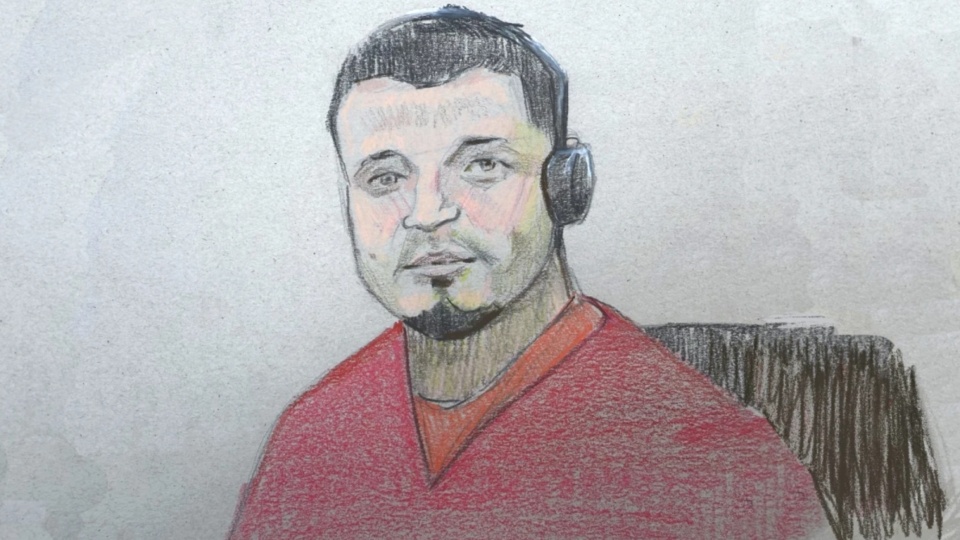
Sketch artist's depiction of Kilmar Abrego Garcia in the courtroom on June 25. | Diego Fishburn via AP


NASHVILLE—The never-ending travails of Kilmar Abrego Garcia continue unabated. On Wednesday, July 2, he alleged in an amended complaint filed in federal court that he “was subjected to severe mistreatment” while being held in the notorious El Salvador mega prison, CECOT, after being illegally deported from the United States to that country.

Abrego Garcia is currently held in Tennessee awaiting trial on human smuggling charges after being returned to the United States in June following an indictment by a Tennessee grand jury. He has pleaded not guilty to the charges and has another court hearing on July 16.

In April, a federal judge ruled that the Trump administration had illegally deported Abrego Garcia and ordered the government to return him to the U.S. The Supreme Court upheld that decision and ordered that the Trump government “facilitate” Abrego Garcia’s return, but the administration would not do so until he was indicted on human smuggling charges in May.

Lawyers for Abrego Garcia alleged in the July 2 filing that he was the subject of “severe mistreatment” at the prison. In this case, the term “severe mistreatment” is an obvious euphemism for torture.

The allegations include severe beatings, severe sleep deprivation, being “forced to kneel” in a cell from 9 pm to 6 am, and being struck by guards if he fell over from exhaustion. According to the filing: “During this time, Plaintiff Abrego Garcia was denied bathroom access and soiled himself.”

When Abrego Garcia, as alleged in the filing, first arrived at CECOT, he was “repeatedly struck by officers when he attempted to raise his head” and “was kicked in the legs with boots and struck on his head and arms to make him change his clothes faster” when issued a prison uniform.

He was then “frog-marched to his cell” while “being struck with wooden batons along the way.” Further, “Screams from nearby cells would…ring out throughout the night without any response from the prison guards.”

In addition to outright physical abuse, Abrego Garcia was confined, along with other detainees to metal bunks with no mattresses in an overcrowded cell with no windows and bright lights that were on 24 hours a day. There was also minimal access to sanitation.

Also, Abrego Garcia suffered from inadequate food, losing over 30 lbs in weight during his first two weeks at CECOT, according to the complaint.

Assuming all these allegations to be credible (and there is no reason to assume otherwise), it is quite plausible that all of this torture took place with the knowledge, at the instigation of, and with the encouragement and connivance of the Trump regime.


CONTRIBUTOR

Albert Bender
Albert Bender is a Cherokee activist, historian, political columnist, and freelance reporter. He is currently writing a legal treatise on Native American sovereignty and working on a book on the war crimes committed by the U.S. against the Maya people in the Guatemalan civil war He is a consulting attorney on Indigenous sovereignty, land restoration, and Indian Child Welfare Act (ICWA) issues.

Canadian tourism market reaffirms its preference for the Cuban destination Guardalavaca

HOLGUIN, Cuba, Jul 8 (ACN) Canadian tourism market reaffirms its preference for the Gran Muthu Almirante Beach hotel complex, located in the beach resort of Guardalavaca, in the eastern province of Holguin, during the current summer season, when high occupancy is expected for the coming months.

With a five-star all-inclusive service, the hotel currently reaches around 92 % of its total capacity, with more than a thousand guests.

Therefore, it went into a sales halt at the beginning of summer due to high demand, Raul López Portelles, hotel's deputy general manager, explained exclusively to the Cuban News Agency.

Through the work of tour operators such as Sunwing, Air Transat, and Hola Sun Holidays, the majority of the clients come from the North American country, so priority is given to holding events tailored to their needs, focused on attracting and increasing repeat visitors.

To date, they have confirmed reservations from more than 700 guests for the remainder of the month and a figure exceeding 400 for August, with expectations for an increase, which is similar to the previous year and forecasts a higher occupancy rate that will not decline until September.

Managed by MGM Muthu Hotels in conjunction with the Cubanacán Group, the Almirante, as it is also known, boasts among its awards the Best Luxury Beachfront Hotel in Cuba at the Luxury Lifestyle Awards; the Tripadvisor Travel Choice; and the Luxury Family All-inclusive at the World Luxury Hotel Awards; and the French Breeam for environmental management.

Located on the beachfront, this distinctive property in the tourist destination of Holguin also boasts awards for combining its economic work with coastal care, including the French Breeam for environmental management; and the Territorial Environmental Recognition awarded by the provincial delegation of the Ministry of Science, Technology and Environment for the promotion of sustainable tourism.

President Lula greets his Cuban counterpart Diaz-Canel at 17th BRICS Summit


HAVANA, Cuba, Jul 7 (ACN) Brazilian President Luiz Inácio Lula da Silva, host of the 17th BRICS Summit, effusively greeted his Cuban counterpart, Miguel Diaz-Canel, in Rio de Janeiro with a hug and handshake that spoke volumes.

On the opening day of the forum, held for the first time on South American soil with the participation not only of the bloc's five founding members, but also of invited countries beyond boundaries of the Global South.

Among them, Cuba, playing a leading role for its resilience, tested daily under the longest blockade in history, according to Prensa Latina in Rio de Janeiro.

For many at Rio's Museum of Modern Art, Lula's gesture was not a simple greeting, but a political statement, dating back to the years when he shared the stage with the historic leader of the Cuban Revolution, Fidel Castro, in Porto Alegre or at the meetings of the São Paulo Forum.

The founder of the ruling Workers' Party has seen in Cuba not only a symbol of firmness, but also an unavoidable voice for the Caribbean and Latin America in multilateral forums.Without speaking, Lula's greeting suggested that Cuba, a victim of an unjust blockade for more than six decades, is here, standing, speaking for many people.
Analysts believe that inviting the Caribbean island to this summit was an act of diplomatic sovereignty, but also a vindication of regional integration.

Havana, beyond its internal challenges, remains the most influential political force in the Caribbean islands, with a history of international solidarity that earns it respect in Africa, Asia, and Latin America.

While the great powers of the Brics—China, India, Russia, Brazil, and South Africa—discuss alternative currencies, energy transitions, and new global balances, Cuba's presence serves as a reminder that the geopolitics of the South is also written with insular and Caribbean accents.

And in line with Lula's gesture, the BRICS countries' final declaration condemned the use of these measures (trade sanctions and unilateral tariff increases) as political instruments.

BRICS rejects these measures, as unilateral and secondary economic punishments, which "have profound negative implications for human rights, including the right to development, health, and food security of the general population of the affected states."

BRICS Summit calls for more attention to the Global South

 Havana, July 6 (ACN) The leaders of the 11 member countries of the BRICS adopted a Declaration sealing the group’s commitment to strengthening multilateralism and emphasizing the importance of the Global South.

Released by the Brazilian Ministry of Foreign Affairs, the final text of the 17th Summit of the organization summarizes year-long diplomatic discussions and establishes key positions on hot international issues, including the reform of the global governance system and a negotiated solution to the Palestinian-Israeli conflict based on recognized borders and peaceful dialogue.

One of the key points of the document is a "comprehensive reform" of the United Nations, with an emphasis on the modernization of the Security Council in order to make it more democratic, representative, and effective through a greater presence of developing countries, especially from Africa, Latin America, and the Caribbean.

As to economic issues, the Declaration promotes the use of local currencies in transactions between the members, as well as the strengthening of its financial tools, namely the New Development Bank and the Contingent Reserve Arrangement.

The document welcomes the plans to launch, and encourages the funding of, the Tropical Forest Forever facility, designed to preserve biodiversity and support a just ecological transition with shared contributions.

Likewise, the signatories also acknowledge the expansion of the group’s membership from five to 11 full members with the inclusion of countries such as Egypt, Iran, Ethiopia, and Saudi Arabia.

The Declaration reaffirms BRICS, initially made up of Brazil, Russia, India, China, and South Africa, as a collective force in favor of a more just, inclusive, and multipolar international order that responds to global challenges from a cooperative rather than hegemonic perspective.

'Leave Bolsonaro alone!' Trump furious as Brazil's ex-leader faces coup trial

FEELING THE FEAR POST JAN. 6

David Edwards
July 7, 2025 
RAW STORY


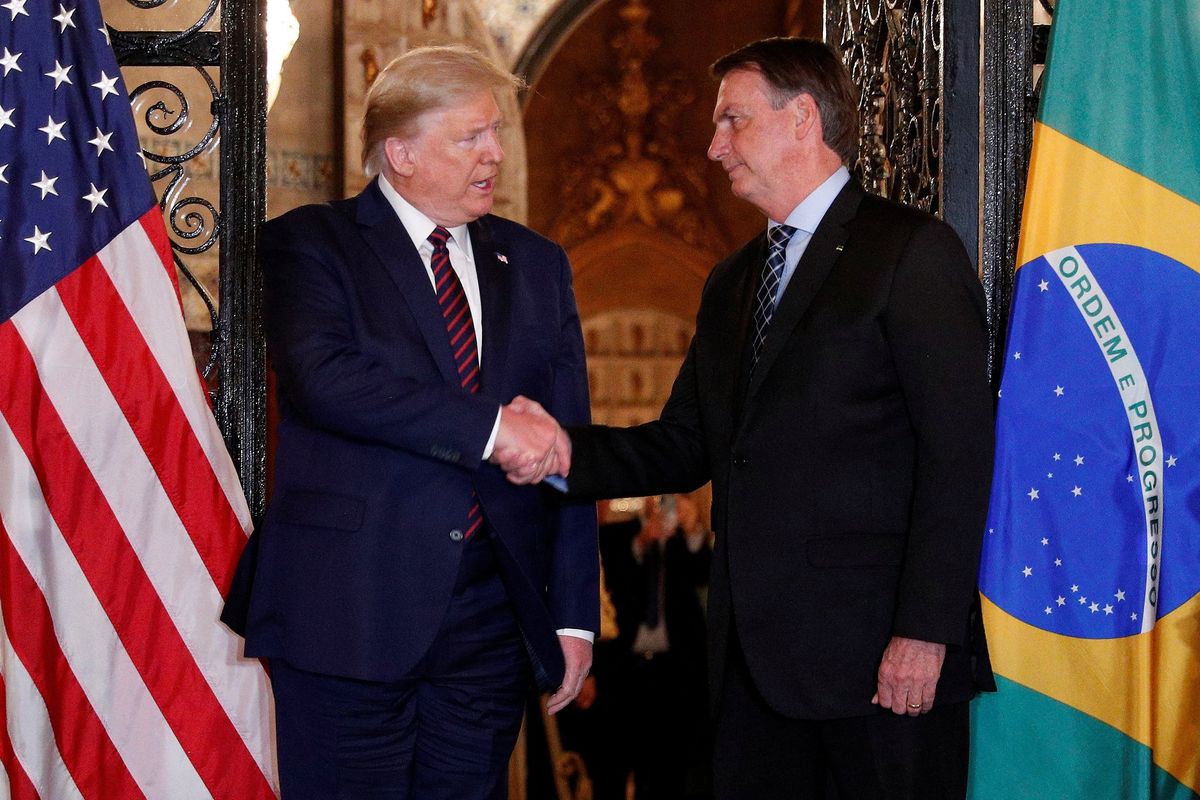
FILE PHOTO: U.S. President Donald Trump shakes hands with Brazilian President Jair Bolsonaro before attending a working dinner at the Mar-a-Lago resort in Palm Beach, Florida, U.S., March 7, 2020. Picture taken March 7, 2020. REUTERS/Tom Brenner/File Photo

President Donald Trump took time on Monday to lament the trial of Jair Bolsonaro, Brazil's former president, on charges of money laundering, criminal conspiracy related to undeclared diamonds and an attempted coup.

"I have watched, as has the World, as they have done nothing but come after him, day after day, night after night, month after month, year after year!" Trump exclaimed in a post on Truth Social. "He is not guilty of anything, except having fought for THE PEOPLE."

The U.S. president said he had "gotten to know Jair Bolsonaro, and he was a strong Leader, who truly loved his Country," and insisted he was "leading in the Polls."

"This is nothing more, or less, than an attack on a Political Opponent — Something I know much about! It happened to me, times 10," Trump continued. "The Great People of Brazil will not stand for what they are doing to their former President."

He added: "I'll be watching the WITCH HUNT of Jair Bolsonaro, his family, and thousands of his supporters, very closely. The only Trial that should be happening is a Trial by the Voters of Brazil — It's called an Election. LEAVE BOLSONARO ALONE!"


Bolsonaro's charges involve alleged conspiracy to maintain power after losing the 2022 election, and suggest he plotted to stage a coup. He was formally accused in 2024.