The Critical Impact Of Extreme Heat On Rice Production In Southeast Asia – Analysis
By ISEAS - Yusof Ishak Institute
By Elyssa Ludher
Southeast Asia’s food production has faced mounting challenges in recent years from increasingly severe climate events such as heat waves, droughts, floods, and storms. However, the looming threat of extreme heat is poised to overshadow these other impacts, based on climate modelling in Singapore’s Third Climate Change Study (V3).
As the region grapples with agricultural adaptation strategies for flood resistance, drought tolerance, and salinity management, the urgent reality is that extreme heat could impose even more devastating consequences on food supply. Southeast Asia needs to prioritise adaptation measures to develop heat-tolerant agriculture, particularly rice.
Rice is a staple food crop for nearly 700 million Southeast Asians, constituting approximately 50 per cent of caloric intake.[1] Any rice shortage is a cause of concern for Southeast Asian governments due to its outsized impact on public health, welfare, and social stability.
The purpose of this article is to present the nature of extreme heat, highlight its impact on rice supply, and identify measures that countries could adopt to build resilience to rising heat.
WHAT IS EXTREME HEAT AND HOW IS IT IMPACTING THE REGION?
There is as yet no universally accepted definition of “extreme heat”. The United States Department of Homeland Security identifies it as a “period of high heat and humidity with temperatures above 90 degrees Fahrenheit (or 32.2oC) for at least two to three days.[2] In Singapore, heat stress is measured by the Wet-Bulb Globe Temperature (WBGT).[3] Days in Singapore are considered as “high heat stress” based on high WBGT readings exceeding 33oC for at least one hour. This usually involves the presence of high humidity, low windspeed, and high solar radiation.[4] While both air temperature and WBGT are measured in degree Celsius (oC), they are not interchangeable. Also, heat stress differs from heat waves, which typically refer to periods of hot weather abnormally deviant from the norm for that period and lasting for a few consecutive days.
Southeast Asia is already experiencing more frequent episodes of extreme heat. For the past two years, the region has endured prolonged and record-breaking periods of heat, with air temperatures repeatedly exceeding 40oC. In an extreme example, the Heat Index (HI, another measure of heat stress used by some countries that differs from WBGT in its calculation and applications) exceeded 52oC in Bangkok in April 2024.[5] Between January and early May 2024, 61 people in Bangkok and elsewhere in Thailand perished from heat-related causes, and hundreds more sought hospital care for heat stress; this was nearly double the fatalities from heat in the whole of 2023.[6] Based on the Climate Shift Index, 27 April 2024, was reported to be among the hottest days in Southeast Asia. It brought between +0.5oC and +10oC higher temperatures than historical norms to much of Southeast Asia.
The Centre for Climate Research Singapore (CCRS)’s Third National Climate Change Study[7] (V3), has modelled that extreme heat will be the dominating concern in tropical and sub-tropical Southeast Asia. V3 produced downscaled high-resolution information based on the Intergovernmental Panel on Climate Change’s (IPCC) climate models. Its simulations suggest that the projected number of high heat days (based on the WBGT definition) in 2050 and 2100 will increase multi-fold. This is due to the region’s location near the equator and proximity to the sea, which results in a combination of both high temperature and high humidity levels. V3 provides climate change modelling to 2100 based on 3 IPCC scenarios: SSP1-2.6, SSP2-4.5, SSP5-8.5 — the low, intermediate and high emissions pathways.[8] Taking Singapore as an example, under the SSP2-4.5 (intermediate) scenario, the number of such high heat stress days will increase from the current 24 days to an average of 87 and 142 days per year by 2050 and 2100 respectively.[9] Furthermore, under the SSP 5-8.5 scenario, an average of three out of four days will be having a daily max WBGT exceeding 33oC in a year; and at the upper end, nearly every day will be such a day (Table 1).
Extreme heat projections for Thailand, Vietnam and Indonesia have yet to be modelled; however, it is expected that these nations will experience similar proportions of the year with extreme heat, as annual average temperatures are expected to increase over the next decade throughout Southeast Asia (Figure 1). This could mean high heat stress days can make it very difficult and potentially dangerous for humans to engage in sustained outdoor activities, reducing the number of productive days per worker. The potential implications of CCRS’ climate projections for outdoor workers are consistent with a report by The Lancet that the world will see a five-fold increase in heat-related deaths by 2050, and a 50 per cent increase in labour capacity loss, based on current trajectories.[10]
Table 1: Number of days with daily maximum WBGT equal to or exceeding 33oC annually for Singapore.
| Scenario | Number of days with daily max WBGT equal to or exceeding 33oC annually | |
| Observed (based on historical average) | 24 days | |
| Future | Mid-century (by 2050) | End Century (by 2100) |
| SSP1-2.6 | 75 (53 to 112) days | 81(54 to 135) days |
| SSP2-4.5 | 87 (61 to 131) days | 142 (107 to 205) days |
| SSP5-8.5 | 113 (86 to 155) days | 270 (207 to 326) days |
Figure 1: Mean daily maximum air temperature in Southeast Asia, annual average, under SSP2-4.5 scenario (left) and SSP 5-8.5 scenario (right).

HOW EXTREME HEAT WILL IMPACT RICE SUPPLY
Extreme heat is projected to cause crop yield decline, loss of arable land, farmer health impairment and food spoilage increase. As Indonesia, Vietnam and Thailand produce two-thirds of the region’s total rice production,[13] this section will examine the impacts of extreme heat based on these geographies.
Yield declines from plant stunting
Rice plants (or paddy) are sensitive to high temperatures. Studies have found that rice grain yields decrease by 7 per cent for every 1°C increase in nighttime temperatures (22°C as optimum) and decrease by 6 per cent for every 1°C increase in daytime temperatures (28°C being the optimum).[14] Timing of heat events is important; when exposed to high temperature during critical growth stages such as flowering and grain filling, yields decline significantly. Another study found that high temperatures (35°C daytime/30°C nighttime) alongside high relative humidity increase sterility of rice plants, depressing grain formation.[15] Another study calculated that a 1°C rise in maximum daily temperature potentially causes a decline in rice yield by 10%.[16][17] Furthermore, high temperatures affect the nutritional quality of rice grains, affecting the market price and incomes of farmers.
V3 projects all three countries will see an increase in average daily temperatures (Figures 2, 3 and 4). In the SSP5-8.5 scenario, the median annual daily maximum temperature by 2080-2099 (far future) would be approximately 34oC in Indonesia, 36.5oC in Thailand and 33oC in Vietnam. As this is the median, it would imply that there are a large number of days – possibly half the year – where the temperature would be higher than those median temperatures. As the optimal temperature for rice cultivation is generally considered to be 25-35°C,[18][19] rice crops will sustain damage. Moreover, prolonged exposure to such temperatures for three or more consecutive days can exacerbate damage to rice.[20][21]
V3 findings align with another climate model used in IPCC reporting, the Coordinated Regional Climate Downscaling Experiment- Southeast Asia (CORDEX- SEA) climate model, which has projected that the number of days with maximum temperatures above 35oC will increase over the decades throughout Southeast Asia (Figure 5). An increasingly larger area in North, Central and north-eastern Thailand, Mekong and Red River Delta in Vietnam, and Java Island and South Sulawesi in Indonesia – all major rice growing regions (Figures 6-8) – will see more than a hundred days where maximum temperatures will exceed 35oC (shown in black in Figure 6) in the near-, medium- and long-term.
Figures 2, 3 and 4: Annual daily maximum temperature projection based on V3, for Indonesia, Thailand and Vietnam.

Source: National Environment Agency, Singapore.[22] Note: Time series of annual Daily Max Temperatures (oC) for Indonesia, Thailand and Vietnam under the SSP scenarios. The side panel shows the model spread of the 2080-2099 climatology in annual Daily Max Temperature averaged over Indonesia, Thailand and Vietnam for each SSP. Solid coloured lines represent median value.
Figure 5: Days with maximum temperature above 35oC, based on moderate scenario RCP4[23]

Figure 6, 7, and 8: Annual rice production regions and relative quantity for Thailand, Vietnam, and Indonesia. Darker green indicates areas with higher rice production.

Loss of arable lands
Climate change causes topsoil loss by floods and storms, soil moisture loss from drought, and saline creep from sea level rise. Extreme heat will exacerbate soil degradation contributing to cracking, compacting and loss of soil biodiversity. One study has calculated that cropland suitable for rice will result in a 19 per cent and 7 per cent decline in rice production in Vietnam and Thailand, respectively, by 2028, relative to 2021 levels.[26]
Farmer productivity decline
Indonesia, Thailand and Vietnam have 13.1 million,[27] 4.3 million[28] and 8.9[29] million rice farming households respectively. Most live in rural areas with high exposure to extreme heat. High temperatures and humidity impact the body’s ability to cool with sweat, leading to weakness, fatigue, headache, swelling, heat exhaustion, dehydration, muscle cramps, dizziness, heatstroke, and, over time, heart rate and blood pressure deterioration.[30] Prolonged exposure can lead to cardiovascular disease, muscle and nerve dysfunction, and organ failure, and if not addressed, this can be fatal. For this reason, some have termed these temperatures “lethal heat” or “lethal humidity”.
While rice farmers could switch to working after dark or have shortened working hours during dawn or dusk, a lack of light could lead to a greater risk of accidents and injury. Furthermore, the current average age of farmers in Southeast Asia is between 45 and 60.[31] Many are women and children, all of whom are considered high risk.
Extreme heat has also been linked to a rise in vector-borne diseases such as malaria and dengue. An increase of 0.2°C per decade in the highlands of Ethiopia and Colombia has shown a greater spread of malaria in higher elevations.[32][33] These too will impact rice farmer health and well-being, leading to lower productivity.
Losses along the food value chain
Heatwaves and droughts have been associated with increased proportions of oddly shaped crops and fruits which may be rejected by retailers and consumers.[34] Heat and humidity can also accelerate rice spoilage in storage, transportation, and distribution, due to enhanced bacterial growth, especially if supply chains are disrupted. This results in higher rates of loss and waste.
Next, the cumulative impact of extreme heat on rice must also be overlaid with other climate impacts including intensifying storms, floods, and sea level rise; this makes it impossible to calculate the potential losses on rice production. Yield projections are further complicated by studies suggesting that in the short term, increased CO2 levels may initially enhance rice yields due to greater photosynthesis effects.[35]
Ultimately, however, the projections suggest a troubling future. If a substantial portion of the rice growth cycle is affected by extreme heat as projected by climate models, it will result in sizable declines in rice yields, endangering the region’s food security, and livelihoods in rural communities.
ARE CURRENT ADAPTIVE ACTIONS SUFFICIENT?
While the vulnerability of rice production to prolonged exposure to extreme heat is relatively understudied in Thailand, Vietnam, and Indonesia, each nation has already begun integrating climate change considerations into agricultural development plans, however these have been largely based on known climate impacts of drought, floods, storms and sea level rise.
Thailand has a Twenty-year Agriculture and Cooperative Strategy (2017-2036) and a Five-year Agriculture Development Plan (2022 to 2027), which is part of the 13th National Economic and Social Development Plan (NESDP). The aim is to transform the agricultural sector. Key objectives include climate-smart agriculture, technology and innovation, sustainable practices and improving market linkages (including supply chain infrastructure). The Thai Rice Department has also recently introduced 10 new climate-resilient and sustainable rice cultivars, though it is unclear what the heat tolerance levels of these cultivars are.[36]
Vietnam has a National Action Plan to Transform a Transparent, Responsible and Sustainable Food System in Vietnam by 2030. Its main actions are to build resilience to shocks and challenges, promote sustainable food production and develop inclusive and equitable food value chains. It includes provisions for improved seeds adapted to climate change, climate-smart agriculture, value chain improvement to reduce waste, technical assistance and extension programmes to strengthen the resilience of food stakeholders, and actions to decarbonise rice.[37] Many programmes have already started and have borne fruit, but these too are not stress-tested against scenarios of prolonged exposure to extreme heat.
Indonesia is currently developing its Food and Nutrition Action Plan 2025-2029. It is part of the country’s Long-Term National Development Plan (RPJPN) 2025-2045 and Medium-Term National Development Plan (RPJMN) 2025-2029. The plan is projected to integrate climate change mitigation and adaptation interventions. The previous Strategic Plan of the Indonesian Ministry of Agriculture 2020-2024 included provisions for sustainable production and value chain infrastructure development. The upcoming plan is expected to integrate more climate change considerations; this is very urgent as Indonesia is the largest producer and consumer of rice in the region.
On the ASEAN level, the grouping is finalising its Food, Agriculture, and Forestry Strategic Plan 2026-2030, which also includes action items on climate-smart and sustainable agriculture,improving digitalisation, value chains, and food safety. Considerations for extreme heat needs to be integrated in these plans for effectiveness.
CONCLUSIONS AND RECOMMENDATIONS
V3’s climate simulations suggest that high temperatures and heat stress will be the foremost climate impact. The region’s governments have been creating climate adaptation plans for the agriculture sector to address drought, storms and floods. With the newly recognised predominant threat of extreme heat, governments should now prioritise plans to adapt rice production to a warmer reality.
Rice production, a key staple for Southeast Asians, will be severely impacted. Major rice producers Thailand, Vietnam, and Indonesia will see a multi-fold increase in the number of days with high temperatures that will damage rice crops, resulting in lower yields, impaired farmer health, impoverished soil, and increased wastage along the supply chain. As these countries supply much of the region’s rice, Southeast Asia’s food security will be endangered, which may also impact social stability. A case in point is Japan’s recent rice crisis brought on by an abnormally hot summer resulted in rice prices doubling compared to the previous year, raising the ire of its citizens. Even after releasing stockpiles, the government is still struggling to stabilise prices ahead of elections.[38]
There is, however, still time to act.
It requires immediate action to decarbonise as soon as possible and work towards net zero by 2050. Furthermore, access to advanced information such as from V3 could be utilised by decision-makers to identify risks and opportunities, and better justify mitigation and adaptation actions.
Even as Thailand, Vietnam and Indonesia are already experiencing the burgeoning effects of extreme heat, there needs to be more awareness of the looming critical risk that is extreme heat, and this needs to be urgently integrated into adaptation action plans relating to climate-resilient, smart agricultural practices. Key strategies must include developing and adopting high heat-resistant rice crop varieties, improved irrigation systems, regenerative soil management practices, supply chain infrastructure improvement, and enhancing early warning systems.
These efforts should not be limited to the three key rice-producing countries, but should extend to all of Southeast Asia. Regional cooperation is key to hastening the creation of robust solutions for food resilience, including enhanced cooperation on R&D on heat-tolerant rice varieties, and improved cross-border cooperation on water security. Countries should also enhance collaborations with research institutes such as the International Rice Research Institute, which has deep expertise in cultivation practices and technologies, and is also home to the Rice Genebank – the world’s largest repository – crucial to the breeding of heat resilient rice varieties.
Climate change will have varying impacts on different locations. An extreme heat event in the north would not necessarily be felt in the south. As such, it will be prudent for regional collaboration to enhance emergency rice reserves, including by buttressing the ASEAN Plus Three Emergency Rice Reserves (APTERR) into a more active, dynamic mechanism. The latter can be achieved by streamlining accessibility to the reserve, developing decentralised stockpiles in ASEAN countries with purchasing mechanisms that are digitally synchronised, strengthening enforcement and monitoring to secure stocks, stabilise prices, and manage stockpiles for emergencies.
The region’s 600 million residents will also need to be prepared for a shift away from a diet predominantly based on rice, for greater nutrition resilience. Alternative staples that are more heat tolerant, such as sorghum, millets and cassava, should be incorporated. Early education to incorporate these alternative staples is crucial; it can be introduced in school meal programmes, health programmes, and encouraged in cuisines. Governments need to work with the private and people sectors to promote this.
Extreme temperature and heat stress poses an increasingly critical threat to rice production and food security in Southeast Asia, with far-reaching consequences for the region’s economy, society, and environment. The V3 study provides a forewarning, and it is in Southeast Asia’s interest to heed it to avoid an unliveable and food-insecure future.
* This work acknowledges the contributions from the Centre for Climate Research Singapore, National Environment Agency for producing Singapore’s Third National Climate Change Study (V3) and making the data available for use, which is shared under the terms of the Singapore Open Data Licence version 1.0, https://data.gov.sg/open-data-licence. The author also gratefully acknowledges the scientific insights and guidance provided by Dr. Anupam Kumar and Dr. Aurel Moise, and the valuable support from the Department of Climate Research, Centre for Climate Research Singapore.
- About the author: Elyssa Kaur Ludher is Visiting Fellow at the Climate Change in Southeast Asia Programme at ISEAS – Yusof Ishak Institute, Singapore. Prior to joining, Elyssa contributed to food policy research at the World Bank, Centre for Liveable Cities Singapore, and the Singapore Food Agency.
- Source: This article was published by ISEAS – Yusof Ishak Institute
For endnotes, please refer to the original pdf document.

ISEAS - Yusof Ishak Institute
The Institute of Southeast Asian Studies (ISEAS), an autonomous organization established by an Act of Parliament in 1968, was renamed ISEAS - Yusof Ishak Institute in August 2015. Its aims are: To be a leading research centre and think tank dedicated to the study of socio-political, security, and economic trends and developments in Southeast Asia and its wider geostrategic and economic environment. To stimulate research and debate within scholarly circles, enhance public awareness of the region, and facilitate the search for viable solutions to the varied problems confronting the region. To serve as a centre for international, regional and local scholars and other researchers to do research on the region and publish and publicize their findings. To achieve these aims, the Institute conducts a range of research programmes; holds conferences, workshops, lectures and seminars; publishes briefs, research journals and books; and generally provides a range of research support facilities, including a large library collection.
Hungary faces renewed drought threat, jeopardising already fragile growth outlook
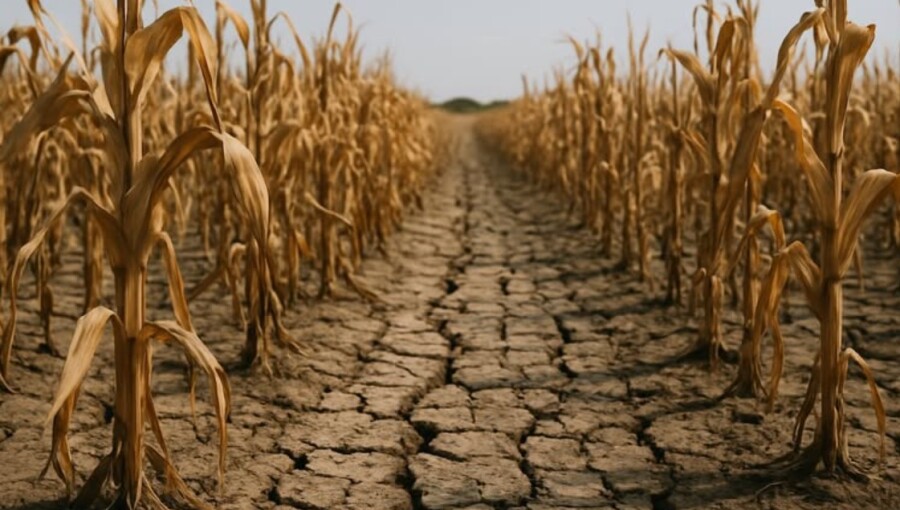
Hungary is on the brink of a severe summer drought, as soil desiccation has accelerated in the recent heatwave following a dry winter and spring. Conditions resemble the summer of 2022, when record drought coupled with heatwaves caused widespread crop damage and took a heavy toll on GDP.
June, typically one of the wettest months, has remained largely rainless outside of the far west, leaving soils critically dry. Satellite imagery shows that over 90% of Hungary experienced either severe or extreme drought before the cold front arrived on Monday, June 7, which is above levels seen in August 2022.
Three years ago, Hungary's agricultural output fell 16%, with maize yields collapsing by 57%, forcing Hungary to import for domestic use. The damage in crops led to a loss HUF650bn (€1.6bn) for farmers.
Agriculture, typically a minor GDP contributor, subtracted approximately 1.6pp from GDP in 2022, and analysts warn of a similar scenario unfolding this year. Whilst a strong harvest might have helped offset the weak growth outlook, extreme dryness threatens to undermine that hope.
Major sectors like industry and construction are still struggling to rebound, with investments still deep in negative territory, whilst retail sales, seen as the magic bullet by the government to spur growth, is underperforming given the 5-6% growth in real wages.
The government has already slashed its growth forecast from 3.4% to 2.5%, but analysts say that is overly optimistic. The MNB projects 0.8% growth this year, in line with market consensus, but analysts say a deepening drought could erode even these modest projections and GDP could hover between 0-0.5% this year.
Hungary's economy has struggled to regain momentum since mid-2022, alternating between marginal gains and contractions. Seven of the past 11 quarters have recorded negative growth, including four of the last six.
To add insult to injury, the heatwave ended on Monday with an extreme storm, which caused the biggest damage to grid infrastructure in three decades, leaving 350,000 without power. The storm led to major disruptions in rail and air traffic as well. On the positive side, heavy precipitation in Central and Western Hungary is offering a lifeline to maize, sunflower and sugar beet farmers in these regions, but the Great Plains region remained largely unaffected.
Over the longer term, Hungary is facing disproportionately severe impacts from climate change compared to other European countries.
Whilst Ireland's average summer temperature has risen by just 0.9°C over the past 50 years, the increase in Hungary and the Balkans has reached 3-4°C, significantly above the global average.
The pace of warming has accelerated since the 1990s, with a temporary slowdown between 2005 and 2010, but has picked up again in the 2020s. This year's data further support the view that the effects of continental climate change will continue to intensify in the coming decades, one researcher said.
The OECD has also identified Hungary, alongside the Czech Republic and Slovakia, as amongst the worst-hit developed countries in terms of rising drought frequency and severity.
The crisis is exacerbated by neglected water infrastructure. Once-functioning irrigation channels have become overgrown and dry, whilst pumping stations have been dismantled or looted. Even farmers willing to invest in irrigation cannot access water. A state-appointed drought commissioner was named after the 2022 disaster, but despite promises, rehabilitation efforts have stalled.
Experts are calling for urgent adaptation strategies, warning that the growing severity of climate trends will make such measures increasingly costly and difficult to implement. Reintroducing wetlands and retaining inland water, rather than draining it, could also be part of a long-term solution, which would require sacrificing some farmland. There is little political will to implement change, analysts say, adding that Hungarian farmers have benefited greatly from land-based subsidies from CAP since the country's EU accession.