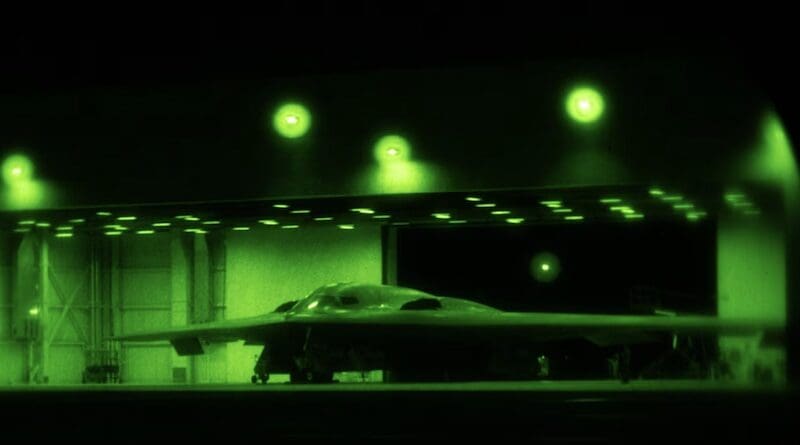
“Depending on who you ask, the U.S. bombing of Iran’s nuclear facilities in Fordow, Natanz and Isfahan was either a smashing success that severely crippled Tehran’s nuclear programme, or a flashy show whose results were less than advertised … In the grand scheme of things, all of this is just drama”.
The big issue – second only to ‘what next in Iran’ and how they might respond – says Michael Wolff (who has written four books on Trump), is “how the MAGA is going to respond”:
“And I think he [Trump] is genuinely worried, [Wolff emphasises]. And I think he should be worried. There are two fundamental things to this coalition – Immigration and War. Everything else is fungible and can be compromised. It’s not sure those two elements can be compromised”.
The signal from Hegseth (‘we are not at war with the Iranian people – just its nuclear programme’) clearly reflects a message being ‘walked back’ in the face of MAGA pushback: ‘Pay no attention. We’re not really doing war’ is what Hegseth was trying to say.
So, what’s next? There are basically four things that can happen: First, the Iranians can say ‘okay, we surrender’, but that’s just not going to happen; the second option is protracted war between Iran and Israel with Israel continuing to be attacked in a way that it has never been attacked before. And thirdly there is attempted regime change – although this has never been successfully achieved by air assault alone. Historically, America’s regime changes have been accompanied by mass slaughter, years of instability, terrorism and chaos.
Lastly, there are those who warn that nuclear Armageddon is on the table with the aim of destroying Iran. But that would be a case of self-harm, since it likely would be Trump’s Armageddon too – at the midterm elections.
“Let me explain”, says Wolff;
“I have been making lots of calls – so I think I have a sense of the arc that got Trump to where we are [with the strikes on Iran]. Calls are one of the main ways I track what he is thinking (I use the word ‘thinking’ loosely)”.
“I talk to people whom Trump has been speaking with on the phone. I mean all of Trump’s internal thinking is external; and it’s done in a series of his constant calls. And it’s pretty easy to follow – because he says the same thing to everybody. So, it’s this constant round of repetition …”.
“So, basically, when the Israelis attacked Iran, he got very excited about this – and his calls were all repetitions of one theme: Were they going to win? Is this a winner? Is this game-over? They [the Israelis] are so good! This really is a showstopper”.
“So again, we’re in the land of performance. This is a stage and the day before we attacked Iran, his calls were constantly repeating: If we do this, it needs to be perfect. It needs to be a win. It has to look perfect. Nobody dies”.
Trump keeps saying to interlocutors: “We go ‘in-boom-out’: Big Day. We want a big day. We want (wait for it, Wolff says) a perfect war”. And then, out of the blue, Trump announced a ceasefire, which Wolff suggests was ‘Trump concluding his perfect war’.
And so, suddenly – with both Israel and Iran apparently co-operating with the staging of this ‘perfect war headline’ – “he gets annoyed that it doesn’t run perfectly”.
Wolff continues:
“Trump, by then, had already stepped into the role that ‘this was his war’. His perfect war. Television drama at the highest level: War to create a headline. And the headline is ‘WE WON’. I’m in charge now and everybody is going to do what I tell them. What we saw subsequently was his frustration at the spoiling of an outstanding headline: They’re not doing what he tells them”.
What is the broader ramification to this mico-episode? Well, Wolff for one believes Trump is unlikely to get sucked into a long complex war. Why? “Because Trump simply does not have the attention span for it. This is it. He’s done: In-boom-out”.
There is one fundamental point to be understood in Wolff’s analysis for its wider strategic import: Trump craves attention. He thinks in terms of generating headlines – each day, every day, but not necessarily the policies that flow from that headline. He seeks daily headline dominance, and for that he wants to define the headlines via a rhetorical posture – moulding ‘reality’ to give his own showstopping Trumpian ‘take’.
Headlines then become, as it were, a sort of political dominance which can subsequently metamorphose into policy – or not.
Nonetheless, it will not be quite as easy as Wolff suggests for Trump to simply ‘move the spotlight on’ from Iran – although Trump is a master at finding a new point of contention. For fundamentally, Trump has committed himself to the ancillary headline of ‘Iran will never have a bomb’. Note that he does not define that in policy terms, but gives himself wiggle-room for a possible later victory claim.
Yet, there is another fundamental point here: The Israeli attack on Iran on 13 June was supposed to collapse Iran like a house-of-cards. That is what Israel expected – and what Trump clearly expected too: “[Trump’s phone calls on the eve of the Israeli surprise attack] were all repetitions of one theme: Were they going to win? Is this a winner? Is this game-over? [The Israelis] are so good! This is really a show–stopper”. Trump foresaw the possible collapse of the Iranian State.
Well … it wasn’t ‘game over’. Israelis may be hugging themselves in excitement at the Mossad pièce de théâtre on 13 June; at the ‘professionalism’ of Mossad-led decapitations; the assassinations of scientists, the cyber and the sabotage attacks. Mossad is acclaimed by many in Israel – yet all were tactical achievements.
The strategic objective – the ‘be all’ and ‘end all’ of it – was a bust: The ‘House-of-Cards’ did not implode. Rather, it powerfully rebounded. Instead of Iran being rendered weaker, the attack succeeded in firing-up Shia and Iranian national identities. It has ignited a largely dormant national fervour and passion. Iran will be the more resolute in the future.
So, if the Israeli 13 June assault didn’t succeed, why would the plan go any better second time around and with Iran fully prepared? A long attritional war with Iran may be Netanyahu’s preference to fuel his own hoped-for ‘Great Victory’ headline. But Netanyahu cannot now pursue such delusions (neither can Israel survive an attritional war) – without substantive American help (which might not be forthcoming).
Though Trump’s very evident queasiness (as painted by Wolff’s interlocutors) over whether the Israeli sneak attack would prove to be a quick win or not, is suggestive of Trump’s inner temper: “Is this a winner? Is this game-over? It needs to be a win: It has to look perfect: In-boom-out”.
These repetitive enquiries to those around him spell more a lack of self-confidence, rather than suggest that he wants – or has the attention span – for a long-drawn out slug-match, bereft of a clear ‘game over’ moment.
Too, he will be rightly fearful of the effect on his MAGA base of a long war, as well as on young Trump voters (who are already beginning to drift away from Trump – as focus group polls suggest). Trump’s majorities in both Houses are incredibly precarious. $300m could tip them either way.
Recall too, the second fundamentally important point is that Israel was attacked in a way that it has never been attacked before. Israel still hides the extent of the damage inflicted by Iranian missiles; but even senior Israeli security watchers – as they digest the incrementally exposed extent of damage done to Israel – are drawing the bitter lesson that the Iranian ‘programme’ may not be able to be destroyed by military means. But only through a diplomatic agreement of some sort – if at all.
Regime Change also has been revealed as a chimaera. Iran has never been as united and as steadfast as it is now. The threat to kill the Supreme Leader also completely backfired. Four Shia leading religious authorities (Marja’iyya), including the celebrated Grand Ayatollah Sistani in Iraq, have issued rulings that any attack on the Supreme Leader would trigger a jihad fatwa obligating all of the Ummah (community) to join with religious war on America and Israel.
Negotiations between the U.S. and Iran reaching an agreed outcome seem far off. The IAEA has made itself a major part to the problem, rather than forming any part of a solution. Trump’s attention span on the Ukraine ‘ceasefire’ ploy seems to be ebbing – and this possibly might be the eventual outcome with Iran too. Long negotiations leading nowhere, as Iran quietly re-starts its enrichment programme. And presumably Israel launching further assaults on Iran, leading to Iran’s inevitable response – and escalation.