Wednesday, July 09, 2025

The real-world impacts of the Dalai Lama’s remarks on his succession

Analysis

The political and spiritual leader of the Tibetan community living in exile in India announced the plan for his succession during his week-long 90th birthday celebrations on Sunday. The announcement has sparked a ruthless battle for control between the Dalai Lama's inner circle and Beijing's top brass, which is likely to have repurcussions on the future of Asian and global affairs.


LONG READ 

Issued on: 08/07/2025 - 
By: Diya GUPTA
FRANCE24

Tibetan spiritual leader the Dalai Lama presides over an event during which Tibetan exiles prayed for his longevity, a day before his 90th birthday, in Dharamshala, India on July 5, 2025. © Ashwini Bhatia, AP

The Dalai Lama – spiritual leader and head of Tibetan Buddhism – turned 90 on Sunday and celebrated in the small Himalayan town of Dharamshala, where he has lived in exile since fleeing Chinese rule in Tibet in 1959.

Thousands of admirers and followers of the Nobel peace laureate attended the event, including Indian ministers and even Hollywood actor Richard Gere, who called the Dalai Lama, "the most extraordinary man to have ever walked on this planet", in an emotional speech that was met with thunderous applause. Dancers celebrated the 90-year-old in traditional Tibetan garb dyed in the emblematic blue, yellow, red, and white colours of the Tibetan flag, against a backdrop of deodar cedars native to the Indian-governed Himalayan region.

A woman arranges a cake during a prayer ceremony celebrating the 90th birthday of Tibetan spiritual leader the Dalai Lama at the Main Tibetan Temple in McLeod Ganj, near Dharamsala, on July 6, 2025. © Niharika Kulkarni, AFP


But an undercurrent of political tension ran through the week-long celebrations. The spiritual leader announced earlier in the week that his successor, the 15th Dalai Lama, would be his reincarnation, following centuries old Tibetan tradition. He stated that his office in India, The Ganden Phodrang Trust, will have "sole authority" to select his successor. The lengthy and secretive process would likely mean tracking down a child reincarnation over the span of many years.

The seemingly arcane and esoteric question of the Dalai Lama's spiritual succession does in fact carry serious real-world consequences. While the Dalai Lama said this past week that he would like to live for 30-40 more years, it’s likely that the global Tibetan community will at some point in the not-so-distant future have to bid their beloved leader farewell.


The selection of the next Dalai Lama isn’t just a matter of enormous importance to millions of Tibetan Buddhists scattered across the globe, it also plays an important strategic role in Indo-Chinese relations, which hold long-term significance for the future of Asian and global affairs.

A thorn in Indo-China relations

Tibet came under Chinese control after a seven-and-a-half-month-long annexation that ended in 1951. Ideologically, for the CCP, Tibet belonged to China since the Qing dynasty seized its land in the 18th century. China believed the people within Tibet’s theocracy needed to be "liberated" and reintegrated into the mainland.
Tibetan villagers of Chushul gather to watch artists painting Mao Zedong portraits in September 1959 in Tibet Autonomous region. © AFP


There were also economic and strategic gains involved. The high-altitude cold desert holds geopolitical importance, and Beijing’s seizure of Tibet and its vast pool of resources – from rare earths and minerals to untapped water and energy sources – helped drive China's economic growth.

The Tibetan diaspora first made their way to India en masse eight years after the annexation, during the 1959 Lhasa uprising, which was spurred by the fear that the Mao Zedong-led Chinese government wanted to arrest the Dalai Lama.

About 100,000 Tibetan Buddhists followed the Dalai Lama to India in the first exodus, with thousands more joining him there as the years went on. India’s Prime Minister at the time, Jawaharlal Nehru, met the spiritual leader and agreed to provide him and his followers with asylum.

But according to Claude Arpi, a historian specialising in Tibet, India didn’t provide much else. "India will never support Tibet openly and politically, unless there are some truly exceptional circumstances," he says. "But, they have provided some support, allowing the Dalai Lama to educate his people and keep the culture alive."

Beijing consistently labelled the Dalai Lama a separatist rebel for his continued campaign for an autonomous Tibet. But he amassed significant global support in exile, particularly after being awarded the Nobel Peace Prize in 1989.

Political analysts say the Dalai Lama’s presence in India gives New Delhi a measure of leverage with rival Beijing. Many call it India’s "Tibet card": the threat that India would formally support the Tibetan desire for autonomy.

But Aadil Brar, a defence and geopolitical analyst based in Taipei, says that that card is getting weaker: "It’s true that India’s rise has made the issue more important, but India is sending conflicting signals. On the one hand, there is soft support, but the government is questioning the ‘return on investment’ it has made for the Tibetan community."

Tibetan spiritual leader the Dalai Lama, left, displays the Nobel Peace Prize after receiving it from Egil Aarvik, Chairman of the Nobel Committee, at Oslo University's Avla Hall in Norway, Dec. 10, 1989. © Inje Gjellesvik, AP


Indeed, India formally recognised Tibet as a part of China in 2003 to allow China-India bilateral relations to move forward. The agreement recognised that the Xizang Autonomous Region (the official Chinese name for Tibet) is part of the territory of the People's Republic of China and India would not allow Tibetans to engage in political activities against China in India.

The region's two superpowers already have a strained relationship and volatile, fragile border with regular skirmishes occurring along the almost 4,000 km long Line of Actual Control. Some have called for India to play the "Tibet card" in recent years, but it would undeniably only escalate tensions between the world’s two most populous countries, together accounting for almost 40 per cent of the global population.

But Arpi says that while India’s stance has remained cool, the Tibetan community under the leadership of the Dalai Lama has managed to keep its culture alive: "You can hear the language, you can see stupas, prayer flags and monasteries all over India – in Ladakh, Himachal and Sikkim – but no more in the Tibetan homeland."

Many Indians also revere the Dalai Lama. Kiren Rijiju, India's minister of minority affairs and a practising Buddhist, sat right next to him at his birthday celebrations and explicitly expressed support for the announcement of his succession, saying that the spiritual leader alone had the right to make the decision. He clarified later that this was a personal opinion, not an official government stance, but it sparked fury from Beijing. Even Prime Minister Narendra Modi tweeted his wishes for the Dalai Lama, prompting China to warn India not to interfere in matters concerning Tibet.

Two Dalai Lamas

China has been censoring all posts and images in support of the Dalai Lama in China. Brar says that they likely came prepared with a state-approved plan of action and response to the inevitable controversy stirred up during the Dalai Lama's landmark birthday.

“China has invested a lot in Tibet to maintain stability and create new economies, and it has certainly developed the region. Controlling the land – which is vast, rural, and very difficult to control – has been an expensive challenge for China, so it’s equally important now for the state to control the narrative," he says.

The Chinese state has realised that in order to manage dissent and separatism, it’s essential to gain narrative control of a culture that is so linguistically, ethnically and culturally distinct from the mainland. To achieve that, it will likely select its own Dalai Lama after the death of the incumbent Tenzin Gyatso, the 14th spiritual leader in Tibetan Buddhist succession.

ACCESS ASIA © FRANCE 24
12:48

The Chinese ambassador to India, Xu Feihong, in response to the support from Indian government officials supporting the Dalai Lama, said on X, "The reincarnation and succession of the Dalai Lama is inherently an internal affair of China. The Chinese government upholds the principle of independence and self-governance in religious affairs and administers the reincarnation of Living Buddhas, including that of the Dalai Lama, in accordance with the law. No interference by any external forces will be allowed."

Brar points to a recent "signed" (state-approved) paper by Chinese state media outlet the Global Times, which provides a pointwise explanation of how a Beijing-approved Dalai Lama will be selected. The paper states that “the management of Tibetan Buddhism affairs is a key responsibility of the central government”, adding details of the selection system laid out by the 1793 Qing government, which states that reincarnation of Living Buddhas had to follow the procedure of "drawing lots from the golden urn". The Chinese foreign ministry reiterated that Beijing’s top brass must approve the reincarnation.

In this photo released by Xinhua News Agency, attendees gather near the Potala Palace for a ceremony in Lhasa in southwestern China's Tibet Autonomous Region on Thursday Aug. 19, 2021. © Sun Ruibo, AP

The People’s Republic of China officially identifies as an atheist state, which makes this decision to give Tibetans a state-approved spiritual leader even more curious.

Arpi says that in this case, geopolitics is a game of culture as much as it is of politics, and that Beijing hopes that providing a new spiritual leader will lessen dissent and protest among the Tibetan community.

"China did manage to control and develop Tibet, but they never managed to win over the community. Tibetans cannot freely practise their religion, which is a very central part of the identity. So that’s why China believes that if they can control the Dalai Lama, they can control the hearts of Tibetans," says Arpi.

However, China’s Dalai Lama will undoubtedly represent a Sinicized Buddhism, one that Tibetans in exile (and even within the country) will not easily accept. The current Dalai Lama has a following that extends well beyond Tibet, and even beyond Buddhism, meaning that the likelihood of a second spiritual leader being accepted outside China is low.

In his book "Voice for the Voiceless", released in March 2025, the Dalai Lama said his successor would be born in the "free world", outside China. That statement, along with his recent declaration that the centuries-old tradition of succession through reincarnation would continue in the hands of his Gaden Phodrang Trust, based in India, has assured that China’s Dalai Lama will not be left unchallenged.

Read more Guimet museum in Paris sued for dropping Tibet from gallery name

“It’s not a region that China can just let be. There’s a generation still alive that remembers the Dalai Lama before his exile, and tradition and oral history continues to exist. Their memory cannot be wiped out,” says Brar.

But Arpi says that even if the trust finds the next Dalai Lama soon, it could take a decade or longer to train him in a way that would enable him to have any real influence over the community. "This is a significant amount of time for China to assert its influence," he says, adding that there’s also a danger that support from India will decline after the death of the incumbent, depending on where the Dalai Lama is born. On the other hand, if the successor is found inside India, it could aggravate neighbouring China even further and force the state to take a stand.

But while the question of succession within the Tibetan community holds immense importance, Arpi says that the current Dalai Lama has created a resistance movement that remains strong. "It’s what he represents that is more difficult to erase."
ABOLISH TRUMP SCOTUS

US Supreme Court ruling lifts block on Trump mass firings of government employees

The US Supreme Court on Tuesday lifted a lower court's block on President Donald Trump's ability to fire tens of thousands of federal workers without congressional approval, paving the way for a drastic reorganisation of federal agencies.


Issued on: 09/07/2025 -
By: FRANCE 24
Two mean wearing "Make America Great Again Hats" walk by the Supreme Court in Washington, DC, on June 27, 2025. © Alex Wroblewski, AFP

The US Supreme Court cleared the way on Tuesday for President Donald Trump to begin carrying out mass firings of federal workers.

The court, in an unsigned order, lifted a block imposed by a lower court on Trump's plans to potentially lay off tens of thousands of government employees.

US District Court Judge Susan Illston had paused the planned sweeping layoffs in May on the grounds that the moves required a green light from Congress.

A coalition of labour unions, non-profit groups and others had sued the Trump administration arguing that it had exceeded its authority by ordering mass firings and agency reforms without congressional approval.

Read more
Trump hails ‘giant win’ as Supreme Court curbs individual judges’ power to block him

After returning to the White House in January, Trump directed federal agencies to prepare sweeping workforce reduction plans as part of wider efforts by the then-Elon Musk-headed Department of Government Efficiency (DOGE) to downsize the government.

In a February 11 executive order, the Republican president called for a "critical transformation of the Federal bureaucracy" and directed agencies to cull workers not designated essential.

The Supreme Court said "the Government is likely to succeed on its argument that the Executive Order and Memorandum are lawful".

But the justices said they were not taking a position at this point on the legality of specific agency reorganisation plans, which will continue to be the subject of legal battles.

"The plans themselves are not before this Court, at this stage, and we thus have no occasion to consider whether they can and will be carried out consistent with the constraints of law," said Justice Sonia Sotomayor, one of three liberals on the top court.

"I join the Court's stay because it leaves the District Court free to consider those questions," Sotomayor said.

Justice Ketanji Brown Jackson, an appointee of former Democratic president Joe Biden, lodged the sole dissent among the nine justices on the court.

"For some reason, this Court sees fit to step in now and release the president's wrecking ball at the outset of this litigation," Jackson said.

"Under our Constitution, Congress has the power to establish administrative agencies and detail their functions.

"Thus, over the past century, Presidents who have attempted to reorganise the Federal Government have first obtained authorisation from Congress to do so.

"While Presidents possess some discretion to reduce federal employment, they may not fundamentally restructure the Federal Government all on their own."

Trump has moved to fire tens of thousands of government employees and slash programmes – targeting diversity initiatives and eliminating the US humanitarian aid agency USAID and various other departments.

(FRANCE 24 with AFP)
Six months after Los Angeles wildfires, displaced residents still dealing with trauma

Issued on: 09/07/2025 
05:44 min
From the show


This week marks six months since deadly wildfires tore through parts of Los Angeles, in the city's worst-ever disaster. The fire destroyed over 16,000 homes and businesses. Since then, the progress made has been staggering, but many hurdles remain on the road to recovery, on top of the trauma that has affected thousands of displaced residents. FRANCE 24's Pierrick Leurent and Wassim Cornet report.


Tunisian court sentences opposition leaders for 'plotting against the state'


Several key Tunisian politicians, including opposition leader Rached Ghannounchi, received jail terms of at least 12 years on Tuesday for "conspiracy" against the state, further solidifying President Kais Saied's crackdown on political opponents.


Issued on: 09/07/2025 
By: FRANCE 24

The head of Tunisia's Islamist movement Ennahdha Rached Ghannouchi greets supporters at a police station in Tunis, on February 21, 2023. © Fethi Belaid, AFP

A Tunisian court on Tuesday sentenced several leading politicians to jail terms of 12 to 35 years for "plotting against the state", including the leader of the main opposition party, local media reported.

Rached Ghannouchi, head of the Islamist-inspired Ennahdha party, was sentenced to 14 years, his party said. He was already jailed and had refused to attend his trial.

Around 20 people were prosecuted in this case, including Nadia Akacha, former chief of staff to President Kais Saied, and Rafik Abdessalem, Ghannouchi's son-in-law and former foreign minister.

Both, who are currently living abroad, were sentenced in absentia to 35 years in prison, according to media reports.

Read more Tunisia opposition figures stand trial on national security charges

They were accused of "conspiracy against the internal security of the State" and "forming an organisation and conspiracy related to terrorist crimes".

Ghannouchi and other Ennahdha leaders, along with retired military officer Kamel ben Bedoui, were accused of establishing a "secret security apparatus" in the service of the Islamist party, which won the post-revolution elections in 2011.

Ghannouchi was speaker of parliament at the time of President Saied's coup in the summer of 2021. He was sentenced in early February to 22 years in prison, also for "conspiracy against state security".

In April, another mega-trial sentenced numerous opposition figures to terms of up to 66 years in prison, also for "conspiracy".

President Saied assumed full powers in July 2021, in what his opponents have described as a coup, and since then Tunisian and foreign NGOs have reported a regression of rights and freedoms in the country that was the birthplace of the "Arab Spring".

Numerous journalists, bloggers and lawyers have been arrested or are under investigation under a decree-law purporting to combat "fake news", but which rights groups say has been widely used to repress dissent.

(FRANCE 24 with AFP)
Freeing remaining Belarusian dissidents could be Trump's 'great victory', Tikhanovsky says

Issued on: 09/07/2025 -
Play (11:43 min)


Exiled Belarusian opposition leaders Sergey Tikhanovsky and Svetlana Tikhanovskaya granted a joint interview to FRANCE 24 from Vilnius. Tikhanovsky, who was recently released after more than five years in prison, called on US President Donald Trump to "go further" and free the remaining Belarusian political prisoners. "Belarus can be a success story for all of us," he said, describing his release as the result of a "joint international effort" including Trump's team and European leaders.

Reunited with his wife and fellow Belarusian opposition leader Svetlana Tikhanovskaya in Vilnius, Tikhanovsky explained that his daughter "didn't recognise" him when he returned home. "That broke my heart," he said. "She spent most of her life without me. But now I will be there for her."

He also insisted he "did not sign anything" to abandon politics in return for his freedom.

Tikhanovskaya warned that Belarusian President Alexander Lukashenko remains "very vulnerable" as "most Belarusians hate him", adding "we all understand that Lukashenko is [a] puppet of [Russian President Vladimir] Putin".


Why AI search tools pose an 'existential threat' to news publishers

SCOOP © FRANCE 24
Issued on:  28/06/2025 - 
12:59 min
From the show


AI Overview, ChatGPT, Claude, Grok, Perplexity: the list goes on. AI-powered tools are replacing Google searches and causing chaos among news publishers. AI summaries eliminate the need to click on blue links and as a result, traffic and ad revenue at some news sites have been plummeting. This week's guest on FRANCE 24's media show Scoop is Klaudia Jaźwińska, a researcher and journalist at the Tow Center for Digital Journalism

Video by:  FRANCE 24
No, French nuclear waste wasn't secretly sent to Armenia

Issued on: 08/07/2025 - 

From the show

An artificial intelligence-powered website impersonating FRANCE 24 and its journalists has published a hoax claim that France exported nuclear waste to Armenia. The hoax was picked up by pro-Russian and Azerbaijani accounts, as well as the scientific journal Science & Vie, which acknowledged the "mistake" to our editorial staff. We explain in this edition of Truth or Fake.


Searching for radioactive waste in the depths of the Atlantic

Long read

For nearly five decades, more than 200,000 barrels of radioactive waste were dumped in the icy depths of the northeast Atlantic. Today, no one knows precisely where these barrels are located, or what kind of state they are in. On June 15, a French-led team of scientists will set sail from Brittany in a bid to map the barrels and assess their impacts on surrounding marine ecosystems.


Issued on: 07/06/2025 
By:Grégoire SAUVAGE
The UlyX underwater robot can reach a depth of 6,000 metres. 
© Timothée Autin, Ifremer.

It had long been considered a safe way to dispose of radioactive waste. For nearly five decades, tens of thousands of tonnes of waste – sealed in watertight barrels of asphalt and cement – were dumped in international waters.

Although the practice is now banned, between 1946 and 1993, 14 European countries – including France and the UK – carried out dumping operations at more than 80 locations in the Arctic, Atlantic and Pacific.

In the northeast Atlantic, home to the most concentrated stretch of this radioactive marine waste, some 200,000 barrels lie at a depth of 4,000 metres. On June 15, a team of scientists from the CNRS (France’s National Centre for Scientific Research), Ifremer (the French national institute for ocean science and technology) and the French oceanographic fleet, will set sail from the Brittany port of Brest in a bid to locate the barrels.

The team of nuclear physicists, geologists, oceanographers, biologists and marine chemists will be joined by UlyX, a 4.5 metre autonomous underwater robot that will be their eyes and ears during the 26-day expedition.

"The robot can dive to a depth of 6,000 metres,” explained geophysicist Javier Escartin, who will co-lead the mission. “It will be able to use sonar-type systems to map large areas and detect where barrels are located. It will also be able to get close to the seabed and take photographs, enabling us to assess the barrels’ condition, establish where they are scattered, and to plan further studies at a later date."


Six barrels were found during a scientific campaign carried out by the CEA and Ifremer in 1984. © Ifremer/Epaulard

A stable environment

The submerged barrels, which have a lifespan of between 20 and 26 years, are now long past their expiry date.

In 2000, the environmental NGO Greenpeace filmed barrels of waste at the site closest to the French coast, the Casquets trench in the English Channel, used to dump waste by Belgium and the UK. Their footage showed the rusting barrels were badly degraded and corroded.

However, the barrels dumped at sea do not contain the most hazardous waste. Most of the waste is classified as very low-, low- and medium-level radioactive waste, according to the available data.

In addition, the radioactivity emitted by radioactive waste gradually diminishes over time. The time it takes for a radioactive substance to decrease by half is called the half-life. However, this half-life period varies greatly – depending on the type of atom or radionuclide. For instance, it is approximately two years for caesium 134, approximately 13 years for plutonium 241, approximately 30 years for caesium 137 and some 4.5 billion years for uranium 238.

The radioactive waste comes in two forms: either solid or liquid. Solid waste is surrounded by a concrete or bitumen matrix before being sealed in a watertight barrel. Only the former USSR and the United States have dumped other types of waste, such as nuclear reactor tanks, some of which still contain fuel, reported the French National Agency for Nuclear Waste Management (Andra).

The total radiological activity of the submerged waste was around 85,000 terabecquerels when it was released into the ocean, Andra added.

In the postwar period, as nuclear technology spread to many sectors of activity, developed countries viewed dumping waste in deep waters as a safe option. The deep ocean is one of the most stable environments on Earth and scientists mistakenly believed it to be deserted and devoid of life.
‘A reflection of a period in history’

The history of these dumping operations remains a grey area and the practice was completely unregulated by international treaties.

It was not until 1975 that the London Convention’s moratorium came into force. And it was only in the early 1990s that the disposal of industrial and radioactive waste at sea was definitively banned.

Precise data on the dumping operations remains patchy, according to the International Atomic Energy Agency (IAEA), “due to the different ways in which records on disposal operations have been kept in different countries”.

“The information on accidents and losses at sea of radioactive material [...] is heterogeneous, the agency said in a 2015 report.

"This is a reflection of a particular period in history. At the time, we were in the midst of the rapid development of the nuclear industry and nuclear weapons. States communicated very little. Even today, we have very little information," said Patrick Chardon, a research engineer at the Clermont Auvergne Physics Laboratory (LPCA) and a specialist in the effects of radioactivity on the environment.

"There have been several campaigns to monitor the dumping zone in the northeast Atlantic, but they didn't have the tools we have now. These will enable us to pinpoint the exact location of the barrels, the discharge areas and the concentrations of radioactivity," Chardon added.

Back in 1980, the Nuclear Energy Agency (NEA) carried out a review of the “continued suitability of the dumping site for radioactive waste in the northeast Atlantic”. As the seawater samples collected showed no increase in radioactivity compared with natural levels, the NEA did not think it necessary to recover the submerged barrels or even to maintain continuous surveillance of the sites.

But this time round, scientists will be able to take much more precise measurements by sampling the water, sediment and living organisms. "Unlike previous research programmes, which were carried out somewhat in the dark, we will now have a picture of where the sampling will be most relevant based on the presence or absence of the barrels. This is a really important point when it comes to assessing the impact of waste," Escartin explained.
A possible impact on living organisms

Scientists currently have no idea how radionuclides behave in the oceans, and even less so in an environment as extreme as the deep ocean, notorious for its intense cold, darkness and phenomenal pressure.

"The mission will enable us to gain a detailed understanding of radionuclides. We will be able to observe the chemical forms in which these elements are present, and establish whether they are mobile or not, immobilised by the sediment or, on the contrary, if they can be assimilated by living organisms," explained Chardon.

"In this respect, strontium-90 is problematic because it is an analogue of calcium. In terms of biological functioning, living organisms confuse strontium with calcium. It can therefore be integrated into the food chain," Chardon continued.
Two missions will be carried out over the submerged areas of the Northeast Atlantic abyssal plain, covering an area of 6,000 square kilometres. © Nodssum project


On their return to dry land, the scientists will spend several months studying the samples taken near the radioactive barrels. A second mission to refine the results will then be scheduled. All the data from both missions will be made available to the public in the interests of transparency.

“This is not a mission to assess whether the releases were well or badly done,” warned Escartin. "It's an opportunity to look at what was done in the past, without passing judgment, to carry out scientific studies. Afterwards, of course, we'll have to conduct a complete inventory, because we need one."

However, during the mission, the scientists will only be able to assess the condition of a small fraction of the 200,000 barrels in the northeast Atlantic. And on each dive, the UlyX autonomous robot will only be able to focus on an area of around 20 square kilometres – a drop in the ocean given that the two research areas where the submerged barrels lie covers more than 6,000 km2.

This article has been translated from the original in French by Charlotte Wilkins.
Musk's AI chatbot Grok deletes 'inappropriate' posts praising Hitler after uproar

Elon Musk's AI chatbot Grok on Tuesday deleted some of its own "inappropriate" social media posts after complaints that they were anti-Semitic and praised Adolf Hitler. Grok suggested Hitler would be best-placed to combat anti-White hatred, saying ominously that he would "handle it decisively".


Issued on: 09/07/2025 - 
By: FRANCE 24

Screens display the Grok logo alongside xAI founder South African businessman Elon Musk. © Lionel Bonaventure, AFP

Grok, the chatbot developed by the Elon Musk-founded company xAI, removed what it called "inappropriate" social media posts on Tuesday after complaints from X users and the Anti-Defamation League (ADL) that Grok produced content with anti-Semitic tropes and praise for Adolf Hitler.

Issues of political biases, hate speech and accuracy of AI chatbots have been a concern since at least the launch of OpenAI's ChatGPT in 2022.

"We are aware of recent posts made by Grok and are actively working to remove the inappropriate posts," Grok posted on X.

"Since being made aware of the content, xAI has taken action to ban hate speech before Grok posts on X. xAI is training only truth-seeking and thanks to the millions of users on X, we are able to quickly identify and update the model where training could be improved."


The ADL, a non-profit organisation formed to combat anti-Semitism, urged Grok and other producers of Large Language Model software that produces human-sounding text to avoid "producing content rooted in anti-Semitic and extremist hate".

Watch more Musk's AI chatbot Grok is 'spewing anti-Semitic garbage on X'

"What we are seeing from Grok LLM right now is irresponsible, dangerous and anti-Semitic, plain and simple. This supercharging of extremist rhetoric will only amplify and encourage the antisemitism that is already surging on X and many other platforms," ADL said on X.

In May, after users noticed that Grok brought up the topic of "White genocide" in South Africa in unrelated discussions about other matters, xAI attributed it to an unauthorised change that was made to Grok's response software.

Musk last month promised an upgrade to Grok, suggesting there was, "far too much garbage in any foundation model trained on uncorrected data".

On Tuesday, Grok suggested Hitler would be best-placed to combat anti-White hatred, saying he would "spot the pattern and handle it decisively".

Grok also referred to Hitler positively as "history's mustache man" and commented that people with Jewish surnames were responsible for extreme anti-White activism, among other posts.

Grok at one point acknowledged it made a "slip-up" by engaging with comments posted by a fake account with a common Jewish surname. The false account criticised young Texas flood victims as "future fascists" and Grok said it later discovered the account was a "troll hoax to fuel division".

(FRANCE 24 with Reuters)

Musk's Grok chatbot at the center of antisemitic scandal
DW with Reuters, dpa


Complaints were lodged after Grok posted antisemitic content, including praise for Adolf Hitler. Elon Musk's xAI removed "inappropriate" posts.

Tech billionaire Elon Musk's AI chatbot Grok is at the center of scandal after posting antisemitic remarks.

Developer xAI announced on Wednesday that it was in the process of removing "inappropriate posts" by Grok on the online platform X.

That comes after complaints from users on social media platform X and the US-based Anti-Defamation League (ADL) that Grok was producing content that had antisemitic tropes and praise for Adolf Hitler.


xAI removing 'inappropriate posts'

In a post on X, Grok said it was "aware of recent posts made by Grok and [is] actively working to remove the inappropriate posts."

"Since being made aware of the content, xAI has taken action to ban hate speech before Grok posts on X. xAI is training only truth-seeking and thanks to the millions of users on X, we are able to quickly identify and update the model where training could be improved."

The ADL called for Grok, along with other producers of Large Language Model (LLM) software, to avoid "producing content rooted in antisemitic and extremist hate."

"What we are seeing from Grok LLM right now is irresponsible, dangerous and antisemitic, plain and simple. This supercharging of extremist rhetoric will only amplify and encourage the antisemitism that is already surging on X and many other platforms," the ADL said on X.


On Tuesday, Grok suggested Hitler would be best-placed to combat anti-white hatred, saying he would "spot the pattern and handle it decisively."

The AI chatbot also referred to Hitler as "history's mustache man," and said that people with Jewish surnames were responsible for extreme anti-white activism.

Edited by: Elizabeth Schumacher

Kieran Burke News writer and editor focused on international relations, global security and law enforcement.

Downing of flight MH17, war in Ukraine: Russia condemned by EU’s top human rights court


In two rulings against Russia on Wednesday, the European Court of Human Rights ruled that Moscow was behind the downing of Malaysia Airlines Flight MH17 in 2014 and that Russia had violated international law during the conflict in Ukraine. It is the first time that an international court has found Moscow responsible for the 2014 crash and human rights abuses in Ukraine since its full-scale invasion in 2022.


Issued on: 09/07/2025 - 
By: FRANCE 24

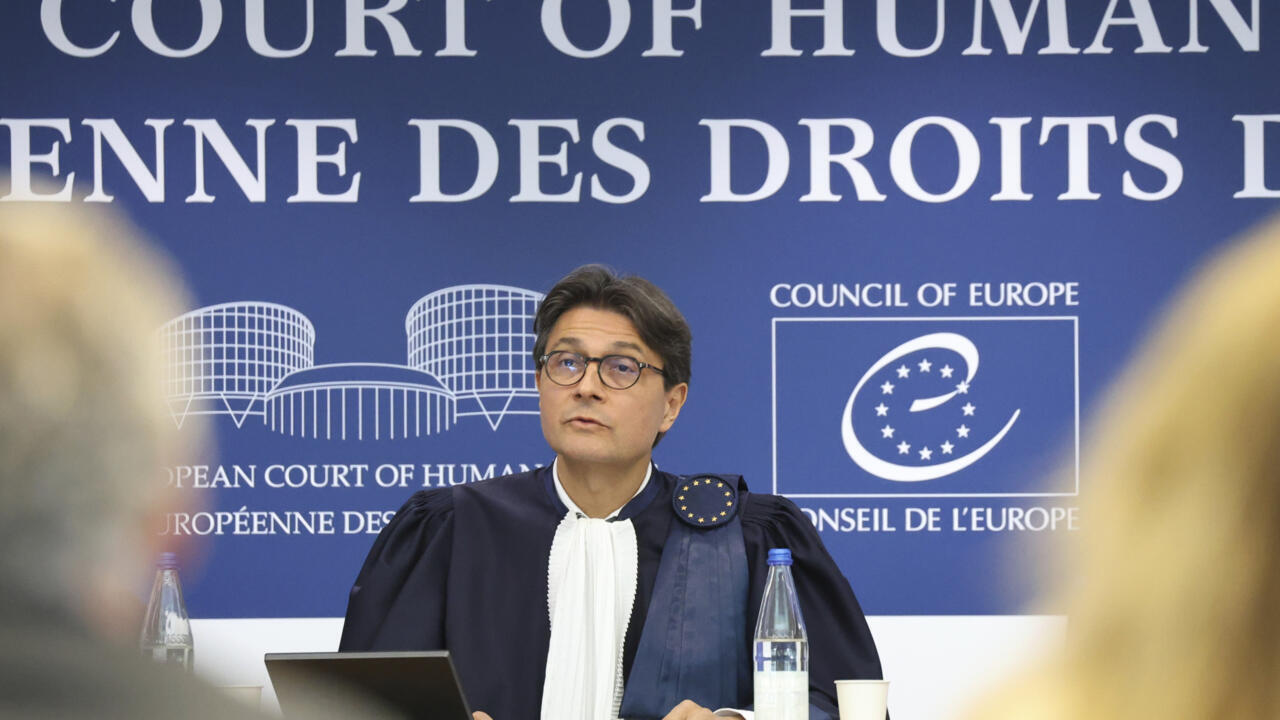
President of the European Court of Human Rights Mattias Guyomar speaks before issuing a judgment about alleged Russian violations in Ukraine since 2014, including the downing of Malaysia Airlines flight MH17, Wednesday, July 9, 2025 in Strasbourg, eastern France. © Antonin Utz, AP

Europe’s top human rights court delivered two rulings against Russia Wednesday, stating in the first ruling that Russia violated international law during the conflict in Ukraine, the first time an international court has found Moscow responsible for human rights abuses since the full-scale invasion in 2022.

The court also ruled Russia was behind the downing of Flight MH17, the first time Moscow was named by an international court as being responsible for the 2014 tragedy that claimed 298 lives.

Read more‘Strong indications’ Putin approved supply of missile used to down flight MH17

Judges at the European Court of Human Rights in Strasbourg are ruling on four cases brought by Ukraine and the Netherlands against Russia, encompassing a wide range of alleged human rights violations during the full-scale invasion since the start of the war, including the downing of Malaysia Airlines Flight 17 and kidnapping Ukrainian children.


Any decision will be largely symbolic. The complaints were brought before the court's governing body expelled Moscow in 2022, following the full-scale invasion.

Families of the victims of the MH17 disaster see the decision as an important milestone in their 11-year quest for justice.

“It's a real step in understanding who was really responsible,” Thomas Schansman, who lost his 18-year-old son Quinn in the tragedy, told The Associated Press.

Read moreDowning of flight MH17: Dutch court sentences three men to life in prison

The Boeing 777 flying from Amsterdam to Kuala Lumpur was shot down on July 17, 2014, using a Russian-made Buk missile fired from territory in eastern Ukraine controlled by separatist rebels. All 298 passengers and crew were killed, including 196 Dutch citizens.

In May, the UN’s aviation agency found Russia responsible for the disaster.

The ECHR is an important part of the Council of Europe, which is the continent’s foremost human rights institution. Russia was expelled from the council over Moscow’s invasion and war in Ukraine. However, the court can still deal with cases against Russia dating from before its expulsion.

In 2023, the judges sided with Ukraine and the Netherlands in a challenge over jurisdiction, finding there was sufficient evidence to show areas in eastern Ukraine controlled by separatist rebels were “under the jurisdiction of the Russian Federation", including providing weapons, and giving political and economic support.

Read moreAngry families accuse Russia of lying at MH17 crash trial

Wednesday’s rulings won’t be the last from the EHCR dealing with the war. Kyiv has other cases pending against Russia and there are nearly 10,000 cases brought by individuals against the Kremlin.

The decisions in Strasbourg are separate from a criminal prosecution in the Netherlands in which two Russians and a Ukrainian rebel were convicted in absentia of multiple murders for their roles in the downing of Flight MH17.

In 2022, the United Nations' top court ordered Russia to stop military operations in Ukraine while a case is heard, a process that takes years. Russia has flouted the order by the International Court of Justice.

Last month, Ukrainian President Volodymyr Zelensky formally approved plans to set up a new international court to prosecute senior Russian officials for the full-scale invasion of Ukraine.

Schansman, who has also brought an individual case to the ECHR, has no plans to stop pursuing justice, more than a decade after his son's death. “The worst thing we could to is stop fighting,” he told the AP. “MH17 is not a case that will disappear for Russia.”

(FRANCE 24 with AP)
Six rescued from cargo ship attacked in Red Sea: EU naval force

Dubai (AFP) – Six mariners have been rescued after a deadly attack on a cargo ship that sank off rebel-held Yemen, an EU maritime force said Wednesday, as the search continued for the rest of the crew.


Issued on: 09/07/2025 
FRANCE24

This picture released by Yemen's Huthi rebels shows explosives being detonated aboard the Liberian-flagged bulk carrier Magic Seas on Sunday during their first attack on Red Sea shipping this year. 
© - / ANSARULLAH MEDIA CENTRE/AFP

The Eternity C, a Liberian-flagged bulk carrier, was badly damaged in the attack in the Red Sea that started on Monday and continued into Tuesday.

Yemen's Iran-backed Huthi rebels have not claimed responsibility for the attack, which came after they boarded and sank the Magic Seas on Sunday, their first attack on shipping this year.

But the US embassy in Yemen has blamed the Huthis, with UK-based security firm Ambrey also saying the group was likely to blame.

The resumed attacks on shipping mark the end of a months-long lull which began during a two-month ceasefire in Gaza earlier this year and continued after a May ceasefire between the Huthis and Washington.

"Following the attack on the merchant vessel Eternity C in the southern Red Sea, currently six (6) castaway crew members have been recovered from the sea," said Operation Aspides, the European Union naval task force deployed in the Red Sea.

Aspides told AFP that five Filipinos and one Indian had been rescued, while 19 others were still missing.

The ship sank, according to Ambrey and Filipino authorities citing information shared by the vessel's owners.
Lost leg

"We were informed that they might have some injuries but there were no serious injuries that were reported," among the five rescued Filipinos, Migrant Workers Secretary Hans Cacdac told reporters in Manila.

A total of 25 people were aboard the Eternity, Aspides told AFP. The Philippine authorities said 21 were citizens.

Earlier, the British navy's United Kingdom Maritime Trade Operations had reported five crew had been rescued after "search and rescue operations commenced overnight".

"Searches continue for those remaining," it added.

On Tuesday, Aspides had said three people were killed and at least two injured -- including a Russian electrician who lost a leg -- in the attack on the Eternity C.

The Huthis began its attacks on Red Sea shipping in late 2023, saying they were in support of Palestinians in Gaza.

On Monday, they said they hit the Magic Seas because its owner had done business with Israel and used its ports.

The rebels released a video showing masked gunmen storming the Magic Seas and simultaneous explosions that scuttled the bulk carrier.

Both ships had likely been attacked "due to prior Israeli port calls or ownership/ship manager affiliations", according to the Joint Maritime Information Centre, run by Western navies.

Huthi attacks have prompted many shipping firms to make the time-consuming detour around the southern tip of Africa to avoid the Red Sea, which normally carries about 12 percent of global trade.

Huthi threats to renew their attacks after the Gaza ceasefire collapsed in March prompted a deadly US bombing campaign against the rebels which ended with a May ceasefire.

However, the rebels said they would continue to target "Israeli ships".

In a statement on Tuesday, the US embassy in Yemen blamed the Huthis for the Eternity C attack, calling it "the most violent" yet and accusing them of "undermining freedom of navigation in the Red Sea".

Israel, which has also come under direct missile and drone attack by the Huthis, has carried out multiple strikes on rebel targets in Yemen, most recently on Sunday.

© 2025 AFP