Confessions of a Vinyl Collector – Aesthetic Luddism in the Cyborg Era
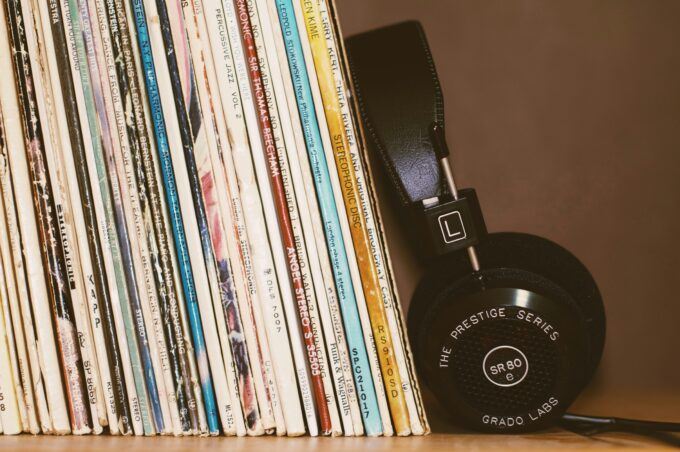
Image by blocks.
“The outlaws had us pinned down at the fort—
Cisco came in blastin’, drinkin’ port”
-War, The Cisco Kid
I like all kinds of different music, but I don’t love music indiscriminately. Some of it I hate.
I love blues music that sounds like it bubbled up from the bottom of a swamp. I love country music that sounds like whiskey, lonely nights, and betrayal. I love rap that sounds like the revenge of funk music, and I love all funk music… so long as it’s real. I love jazz that sounds like bordellos and broken hearts, techno that sounds like car chases and all-night dance parties, and rock that sounds like an orgy or a riot waiting to happen. I love salsa dancing, but when it comes to tunes I prefer cumbia and ranchera. I love reggae that crushes Babylon with heavy bass and ill rhythms. Sometimes I even like whiny white boy bands who sound like they’re trying to resurrect New Wave for the fourth or fifth time. If we can all agree to stop calling european orchestral music “classical,” then I even like that. I love Turtle Island prayer songs, African drumming, and all their bastard children from Rio de Janeiro to Veracruz.
I hate machine music. I don’t mean music made with synthesizers, or even stupid noise rock programmed on weird analog contraptions by gear nerds—I mean the shit they manufacture in Corporate Laboratories, counterfeit culture crooned by photogenic clones like Ariana Grande or Bruno Mars or any of dozens of other sub-mediocre assholes you’ll forget about next week, pumping out mindworms saturated with anti-life audio vapors and masquerading as pop music. You know it when you hear it… if you’re lucky enough to have developed some discernment in musical taste, probably because you’re either over forty or were introduced to real music by someone who was over forty.
You might be able to correctly identify drone music, but be careful because it’s programmed to turn your brain off and fill you with The Fear—the effects are subconscious and cannot be avoided. Twenty years ago I wouldn’t have thought it was possible to hear a song, hate it immediately, and then two verses later realize that I’m still listening to it and hadn’t noticed. This is evil corporate sorcery—another weapon in the war to crush truth and beauty and the human spirit. In discussing music, I’ve tried explaining to people born in the 21st century that “easily gets stuck in your head” and “good” are not the same thing, but it’s a wasted effort.
I hate autotune and every song that’s ever used it… but as inescapable soundtracks go, it’s only right for the Cybernetic Apocalypse Era that we all be constantly bombarded—regardless of language or geography—with voices that sound like they’ve been run through a ‘90s telephone modem.
Sometime in the last ten years I turned into a vinyl DJ. I didn’t plan it, and these things always start small—you buy a 12-inch single here, an instrumental album there, a stack of used Commodore albums for fifty cents a pop at the latest record shop to go out of business, back in the mid-2000s before hipsters decided that Vinyl Was Cool and drove up the prices on anything manufactured prior to yesterday. Pretty soon people find out that you’re into these quaint old relics of pre-digital-everything, and they start dropping off bins of records at your house, or inviting you over to raid their dad’s collection of moldy warped records in the garage, or offering to sell you the collection they pulled out of storage after decades, or you find fifteen or twenty dusty records at Goodwill that you absolutely cannot live without… Vinyl spawns and multiplies like a virus, and next thing you know your living room is overflowing, the attic is stuffed, all these damn records and when will I ever listen to them all and I surely cannot part with this Grateful Dead, let alone this collection of Mozart or Hawaiian traditional music or goddamn a first printing of the Beatles’ Abbey Road or Shakespeare audio plays or holy shit a Jelly Roll Morton boxed set; back away slowly.
I’ve only played records at a public venue one time. It was at a brewery a couple of miles from my house—they offered me $70 and infinite beer to spin for three hours; all I had to do was bring two turntables, a mixer, the box that holds them, a thousand miles of cords, three crates of records, and two big-ass speakers. A good deal for everyone. I was poised to have a monthly gig there—second Tuesdays, as if anyone in the universe would remember that and show up on purpose—but then I fractured my ankle doing drunken sparring, and then a month later there was a pandemic (remember?), and that pretty much ended that.
My DJing has mostly been limited to parties and barbecues at my house, and you’ll never know what my sets sounded like because no phones, photos, or videos are allowed at my goddamn functions, you cybernetic twat!
The worst thing about playing music for people is that too many motherfuckers aren’t capable of even nodding their heads to a song they haven’t heard five million times on Skynet radio. If these funky-ass Rick James and Temptations and Ohio Players songs that never made it to the top one percent can’t get your hips moving, there’s no hope for you—sad but true; we’ll mourn the loss of your soul later. I’m certain that Otis Redding and Minnie Ripperton would wrestle each other for the opportunity to throw people like that in front of a train, God Rest Them.
Believe it or not, I heard Pink Floyd’s Dark Side of the Moon for the first time in 2018… because someone gave me the record. There is no better way to hear an album like that, or any other album worth listening to. A record is more than just a way to listen music—it is an experience… experience being a thing that is sorely lacking in this virtual-reality dystopia. You’ve gotta find the record in the crates and dust it off with that ancient felt-covered device that your parents got at Montgomery Ward last century, then it goes on the turntable and for awhile the cover gets to live with its face to the world—how many records have I acquired just because I liked the covers? There’s never been anything like the gatefold cover of Isaac Hayes’s Black Moses album—six 12inch x 12inch panels showing a single photograph of him looking sexy in a robe and sunglasses—and there never will be again. It’s been living on my wall in whatever room I’ve occupied for almost twenty years now; I’ve long since lost both records that came with it, but that icon of eros has watched over plenty of hook-ups, love affairs, and nights of despair.
I own five (!) turntables; three of them work. One has a “repeat” function, so I usually listen to one side of a record many times before I finally get around to flipping it over. Teddy Pendergrass has been living on that deck for weeks now, singing with silky sultriness that has dropped countless panties since it came out in 1979. I was at a lover’s house the other day and I mentioned the record; she immediately dove into her cyberphone, found it on some insipid streaming service, then started beaming it through her wifi speakers. How easy, how cheap, how devoid of meaning—I, on the other hand, had to drive 70 miles from Oakland to Manteca and spend two hours digging through an old black lady’s storage bin to acquire the Teddy record in question.
During that same trip to Manteca I also got a Sly & the Family Stone greatest hits album, which sparked a conversation with the lady about Sly, and his inexplicable ability to continue to be alive despite spending hella years cracked out and living on the street. Two weeks later he was dead. By the way, that’s not the only spooky experience I’ve had with dead black musical geniuses; I once had a rather vivid dream about hanging out with Tina Turner, woke up and went to the grocery store, where I walked inside right as the store speakers started playing We Don’t Need Another Hero—the song from a Mad Max movie I’d just watched the week before. Tina died the next day.
The lady who sold me this latest pile of old records is the mother of a high school buddy of mine. She knew I was into records because last December, at his request, I agreed to DJ her 70th birthday party. My buddy didn’t offer to pay me and I didn’t ask, which gives you a good sense of how little these skills are valued nowadays, even for those of us who have them. Instead, I agreed on two conditions: one, that I would only be playing vinyl—anyone who strolls up and asks me to plug a motherfucking aux cord into the mixer and play something from their phone is getting kicked in the junk—and two, that I was going to play whatever I wanted and would take Absolutely No Requests; I’m a DJ, not a fucking jukebox. He was supposed to communicate this information to the attendees, which of course he didn’t do, and I spent the entire gig ignoring requests for whatever shitty music constitutes the latest illness to be floating around in the heads of bourgeois negroes.
My buddy agreed to let me bring two of my lady friends with me to help me move gear and retain sanity. We loaded up speakers and turntables and crates, sat in traffic for three hours driving out to the country club where the party was held, unloaded and set everything up, then spent the whole evening being treated like The Help by all party attendees. This was bogus and insulting, but the three of us got free drinks and meals out of it, and the inexhaustible pleasure of being The Weirdos in a room full of squares. That’s right guys, me and my two queer autistic goth girls are going to drink too much and dance and laugh and when it’s all over we’re going to load everything up and drive home and unload everything and then probably get naked together, so there! It is the sovereign right and duty of all musicians to treat life like it’s worth living by partying way too hard and generally behaving like scallywags. In a world full of cybernetic drones whose humanity has essentially been deleted, we’re some of the last real motherfuckers around.
A few years ago, while drinking brandy and smoking in front of a friend’s apartment building, I met a tall dreadlocked dude who mentioned that he was a DJ. The next time I had a barbecue I invited him to come, and, if he cared to do so, to bring a crate of records to spin. What I didn’t know is that he isn’t just a DJ—he’s one of the last REAL DJ’s. He executed mixes and blends that I’ve never heard or even imagined, slowing or speeding up records by hand to match beats. I’ve invited him to every function since, and he’s usually the only one there who actually appreciates the shit that I play. I later found out that his converted-warehouse apartment is practically a shrine to vinyl; he probably has over 10,000 records. Fun fact about DJs: no matter how chaotic those shelves and piles look, we all know exactly where any given album is located.
Most of the miscreants calling themselves DJ’s in This Cursed Year of White Jesus 2025 have never even touched a vinyl record. They use digital controllers and laptops to play music, with software programs that will do all the mixing and blending for you—their track list is infinite, requires minimal effort to acquire, and thus the skill of curation withers. Making a profession foolproof is a guaranteed way to ensure that most of the people doing it will be fools, and DJing is no exception. I’ve been to clubs and bars and, on one occasion, a party boat cruise, that were digital-DJed by dimwits who were so wack that I had to talk myself out of knocking them down and taking over. Knowing that these people were getting paid good money to completely suck makes me contemplate the virtues of explosives.
So yeah, I’m a vinyl collector. Someday I’ll probably thin down the collection, but there’s plenty of albums that motherfuckers will have to pry out of my cold, dead hands.
And as for the Parliament and the J. Dilla records… y’all can bury me with those.