Monday, July 14, 2025

Extreme weather to become the UK's new normal, Met Office warns


Monday 14 July 2025 

The UK's average temperature is increasing by 0.25C each year.Credit: PA


Extremes of heat and rainfall are becoming the new normal in the UK, the Met Office has warned in its latest report looking at Britain's changing climate.

In its latest State of the Climate report, which covers the year 2024, it also confirms for the first time that sea level rise in the UK is higher than the global average, increasing risks of coastal flooding and erosion.

The report's lead author said the UK's climate "is now notably different to what it was just a few decades ago."

The report highlights how the trend of the UK's average temperature has been going up roughly 0.25C each year, with some cooler years mixed in, since the 1980s.

Responding to the report, Energy Secretary Ed Miliband said Britain’s way of life is “under threat” from climate change.

He said: "Whether it is extreme heat, droughts, flooding, we can see it actually with our own eyes, that it’s already happening, and we need to act."


Rare 'roll cloud' amazes beachgoers and weather experts in Portugal


From Antarctica: Emperor penguins could be extinct by end of century


The last three years have been in the UK's top five warmest on record, with 2024 being the warmest since records began in 1884.

The report comes as the UK comes to the end of its third heatwave of the year, with much of the country experiencing temperatures above 30C on Friday and over the weekend.

Amber and yellow heat health alerts, which have been in place across England, warning of the potential for a rise in deaths, particularly among those aged 65 and over or with health conditions, ended at 9am on Monday morning.

The report also examines how much of the change within the wider trends is caused by more extreme days during the peak of winter and summer, rather than a more gradual change across the entire year

 .
Earlier Springs have led to frogs producing frogspawn earlier in the year.Credit: PA

When comparing the most recent decade, 2015-2024, to 1961-1990, the hottest summer days and coldest winter nights have warmed around twice as much as average summer days and winter nights have in some parts of the UK.

At the same time, the frequency of the coldest nights we experience has also dropped dramatically.

Met Office Climate Scientist and Lead Author of the State of the UK Climate report, Mike Kendon, said: “Every year that goes by is another upward step on the warming trajectory our climate is on.

"Observations show that our climate in the UK is now notably different to what it was just a few decades ago.

"We are now seeing records being broken very frequently as we see temperature and rainfall extremes being the most affected by our changing climate."

Flooded caravans at Billing Aquadrome Holiday Park near Northampton, Northamptonshire in November 2024.

He also said the changes were not part of the "natural variation" of Earth's climate but were a result of greenhouse gas emissions.

The report also said the UK's natural environment is adapting to the warmer weather, particularly with spring starting sooner.

On average, there are two fewer weeks of morning frosts than there were between 1931-1990.

Records collected by volunteers showed that in 2024, frogspawn appeared and blackbird nesting happened the earliest since this kind of recording began in 1999.

Subscribe free to our weekly newsletter for exclusive and original coverage from ITV News. Direct to your inbox every Friday morning

Increased rainfall to lead to more flooding

The report said rainfall was increasing, although this has much more variability.

For the most recent decade, the number of months where counties are recording monthly rainfall totals of at least twice the 1991-2020 monthly average has increased by over 50% compared to the number in 1961-1990.

Extreme flooding is becoming more likely.Credit: PA

The Met Office also noted that the increased rainfall falls almost entirely in the winter half of the year (October-March), with it up 16% in the last decade compared to 1961-1990.

It said this has often led to more flooding, noting the severe rainfall from recent storms, with October 2023 to March 2024 being the wettest winter half-year on record for England and Wales in over 250 years.

The Met Office did note that despite an increased threat of flooding from named storms, their analysis did not indicate the UK was becoming windier or stormier.


Miliband says UK’s way of life ‘under threat’ amid extremes of heat and rainfall


14 Jul 2025 NATION CYMRU
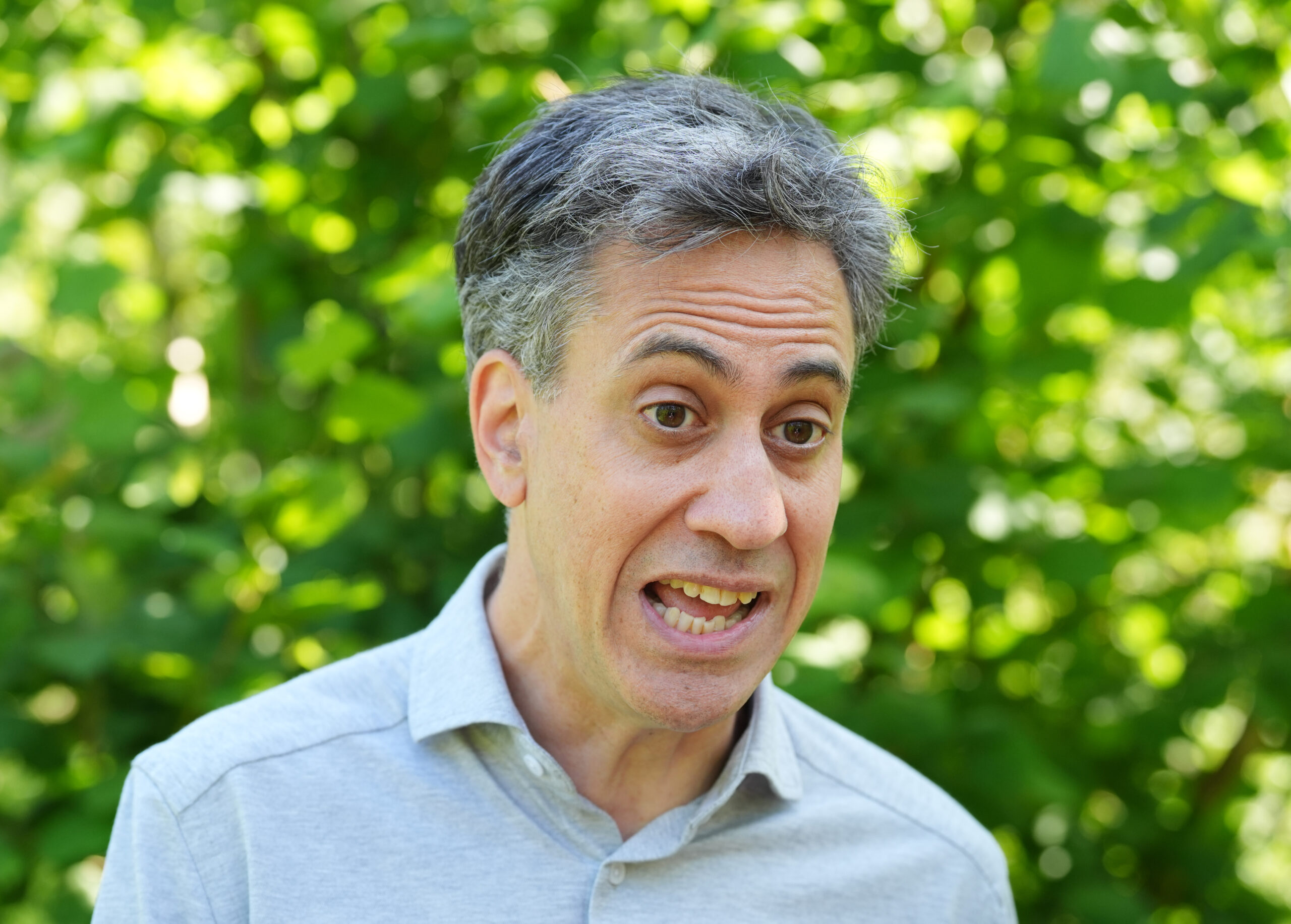
Energy Security and Net Zero Secretary Ed Miliband during a visit to the Ock and Thame Farmers floodplain restoration project, ahead of the State of the Climate report. Photo credit: Jonathan Brady/PA Wire

Energy Secretary Ed Miliband said Britain’s way of life is “under threat” from climate change as the Met Office said extremes of heat and rainfall are becoming the norm.

The latest state of the UK climate report, published in the Royal Meteorological Society’s International Journal of Climatology, shows the impact of human-caused global warming on the UK’s weather, seas, people and wildlife.

From earlier spring events in nature to record warm periods in 2024, which have already been beaten again this year, Met Office experts say the UK’s climate is “notably different” from just a few decades ago.


Sea levels

The report details the climate in 2024, and over the longer term, highlighting how the UK has warmed at a rate of about 0.25C a decade and is now about 1.24C warmer than from 1961 to 1990.

For the first time, the report also found UK sea levels to be rising faster than the global average.

The Energy Secretary called the findings “a stark warning” to take action on climate and nature.

“Our British way of life is under threat,” Mr Miliband told the PA news agency.

“Whether it is extreme heat, droughts, flooding, we can see it actually with our own eyes, that it’s already happening, and we need to act.

“That’s why the Government has a central mission to make Britain a clean energy superpower and tackle the climate crisis.”

On those who oppose Labour’s green policies, he said: “(U)nless, we act on the cause of what is happening, the cause of what is changing our climate, then we will be betraying future generations.”

He spoke during a visit to a project restoring a rare alkaline fen at Hinksey Heights, Oxfordshire, with Environment Secretary Steve Reed, ahead of the report’s release.

Conservationists told the ministers how the fen, which is part of a national effort to expand the country’s best freshwater habitats, was helping to boost wetland biodiversity and sequester planet-heating carbon in the atmosphere.

Responding to the report, Mr Reed told PA it “lays absolutely bare the damaging impact of climate change on people living in this country”.

But he said that through projects like the fen, “we’re tackling the problem of nature loss and also we’re tackling the problem of climate change at the same time”.

Criticised

One year in, Labour has been fiercely criticised over its approach to the environment, including concerns around planning reforms sidelining nature in pursuit of growth.

The Environment Secretary defended the Government’s actions, pointing to boosting funding for sustainable farming and developing the nature restoration fund so that money from house builders goes towards more impactful landscape-scale projects.

“We’d become one of the most nature-depleted countries on earth,” he said. “This Government is calling time on that decline.”

Elsewhere, the report said that the last three years have been in the top five warmest on record for the UK.

Last year was the fourth warmest in records dating back to 1884, while the year had the warmest May and warmest spring on record – already beaten by 2025’s record hot spring.

But Mike Kendon, Met Office climate scientist and lead author of the report, said: “It’s the extremes of temperature and rainfall that is changing the most, and that’s of profound concern, and that’s going to continue in the future.”

The hottest summer days have warmed about twice as much as average summer days have in the past decade in some parts of the UK, according to new analysis in the report.

And as the UK’s climate warms, it is also getting wetter, with extremes of rainfall, floods and storms in 2024, as in recent years.

Wet winter

England and Wales had the wettest winter from October 2023 to March 2024 on record in more than 250 years, as floods hit Derbyshire, Nottinghamshire, the West Midlands and eastern Scotland.

But while red warnings were issued for storm Isha in January and storm Darragh in December, observations do not currently suggest the UK is becoming stormier or windier.

Overall, however, the country’s weather is changing because of rising greenhouse gases pushing up global temperature, Mr Kendon said, with records being broken “very frequently”.

“Every year that goes by is another upward step on the warming trajectory our climate is on,” he said.

“Observations show that our climate in the UK is now notably different to what it was just a few decades ago.”

The report also said tide gauge records since the 1900s show sea level rise around the UK is speeding up, with two-thirds of the rise of that time taking place in just the last three decades.

Dr Svetlana Jevrejeva, from the National Oceanography Centre, said the UK’s coasts would start to see more events where rising sea levels combined with high tides would lead to coastal inundation, even without storms.

“This extra sea level rise contribution is leading to an increase in the frequency of extreme sea levels and an intensification of coastal hazards,” she said.

To highlight the impact of the UK’s warming climate on wildlife, the report drew on Nature’s Calendar, a volunteer-fed database of the natural signs of the changing seasons managed by the Woodland Trust.

Records for 2024 show that spring was earlier than average for 12 of the 13 spring events monitored, and the earliest in the data running back to 1999 for frogspawn appearing and blackbirds nesting.

The period of the year in which leaves were on trees from spring to autumn was also longer than average, mostly because of the earlier spring in 2024.

Chief executive of the Royal Meteorological Society, Professor Liz Bentley, said the report reinforced the “clear and urgent signals of our changing climate”.



Climate & Energy

Revitalising Nuclear: The UK Can Power AI and Lead the Clean-Energy Transition


TONY BLAIR POLICY INSTITUTE
Paper2nd December 2024
By multiple experts 

Executive Summary


Artificial intelligence is ushering in a new era of infrastructure and energy.

As data centres and compute are built at scale, they are driving an unprecedented demand for energy. In turn, the world is witnessing a massive mobilisation of capital towards clean technology. Geothermal, solar, wind and new forms of ocean power are being developed. But one of the most significant implications is that nuclear is back. Countries such as the United States, South Korea, Canada, France and Japan have all committed to new nuclear programmes, while the US is moving at speed to fulfil its ambition to be the pre-eminent AI superpower. If the United Kingdom wants to remain competitive, it needs to build at pace.

On 20 September 2024, Microsoft announced it was paying to reopen the Three Mile Island Unit 1 nuclear reactor.
[1]Link to footnote It was a symbolic announcement. The partial meltdown of the reactor’s counterpart, Unit 2, in 1979 was the beginning of the decline of nuclear power. After the Chernobyl catastrophe that followed, the world witnessed a slowdown of nuclear. The price of this slowdown is now clear: if the world had not turned away from nuclear after Chernobyl, energy-related CO2 emissions could have been 6 per cent lower in 2023, the same as taking 450 million passenger vehicles off the road for a year.


Renewed interest in nuclear is being driven by giant AI companies seeking to build vast data centres – using hundreds of megawatts of clean, firm power – in one place. However, in most geographies, connections are constrained and access to reliable power has become one of the primary bottlenecks to future AI growth. To resolve AI’s energy problem, large hyperscalers are turning to nuclear energy. As a source of clean power with high energy density that is always available, nuclear power has the qualities that AI companies are looking for.

In addition to Microsoft’s announcement, Google has committed to buying seven new small modular reactors (SMRs) from Kairos Power; Amazon
[2]Link to footnote has signed three deals to deploy SMRs across the US; and Oracle has committed to building three SMRs to power a gigawatt-scale data centre.
[3]Link to footnote These announcements come just weeks after White House officials met with leaders from AI and associated infrastructure companies to “ensure the United States continues to lead the world in AI”
[4]Link to footnote and pushed to triple the country’s nuclear-power capacity by the middle of the 21st century.
[5]Link to footnote


This new dawn for nuclear energy represents a significant opportunity for the UK. The country was the first to split the atom, pioneered the development of civil nuclear technology and hosted the world’s first commercial nuclear-power station. In 1965, there were 21 nuclear reactors within the country’s borders, compared to 19 in the rest of the world combined.

But this is not a story of decline; the UK has maintained strong expertise that can provide hope for the future. Nuclear is the most cost-effective way for the country to deliver net zero and, with the right action, it can be a leader in the next era of the nuclear industry.

The UK can harness innovative nuclear technologies to power its AI future, help decarbonise its industries and deliver low-cost electricity for its grids. It could become a leader in nuclear technology and expertise, providing good jobs and economic growth across the country, and forming strategic geopolitical relationships with the US and beyond.

For the UK to benefit, it needs a bold new strategy – designed for the future of the nuclear industry – with action across three core areas.

First, the UK should create a modernised, streamlined and efficient planning and regulatory regime for new nuclear technologies. This would reduce delays and enhance the standardisation required to unlock new low-cost projects at scale.

Recommendations to achieve this include:

Introducing new “AI growth zones” around the country, with simplified planning and environmental permitting applied to new nuclear plants for AI data centres.


Recognising new design approvals for nuclear technology from trusted international regulators such as the US, Canada, France and South Korea, to enable faster approvals of new designs through the UK regulatory process.


Requiring the Office of Nuclear Regulation (ONR) to regard approval of a single reactor as the basis for fleet approval as standard, to standardise design across deployment.
[6]Link to footnote


Introducing a two-year limit for the ONR, Environment Agency and Planning Inspectorate to approve nuclear-reactor construction if the proposed reactor is similar to previously licensed designs.

Second, the UK government should use the conclusion of its ongoing SMR competition to help kick-start the SMR pipeline. This would create options for government procurement of SMR capacity for the grid or public compute.

Recommendations to achieve this include:

Having Great British Nuclear partner with AI hyperscalers to create a single entity that pools data-centre demand for a small fleet of Gen III and Gen IV reactors, and provides financing for their deployment.

Third, the government should deepen the UK-US partnership on SMR and the deployment of advanced modular reactors (AMRs), also known as Gen IV reactors, including cooperation on fuels, financing and supply-chain development.

Recommendations to achieve this include:

Developing a co-financing partnership with the US to drive an international orderbook of a particular SMR or AMR design or set of designs, expanding the potential pool of offtakers and investors, and aggregating a broader suite of private and public financing tools. Such cooperation can mitigate risk, pool sufficient capital to drive an orderbook and stimulate private investment in supply chains and workforce skills.


Establishing ways for the UK and US governments to work together to provide industry assurances of a robust transatlantic fuel supply chain, through trade agreements promoting procurement of fuel services.


READ ON:
Bhutan focusing on cryptocurrencies to boost tourism (and pay government salaries

The small Himalayan kingdom is focusing on virtual currencies to modernise its economy and attract digital nomads. The government is generating its reserves (the sixth largest in the world) with hydroelectric power, an abundant and sustainable resource in the country. However, challenges remain, related to digital market volatility, the need for training, and fraud.


07/14/2025, 
BHUTAN

Thimphu (AsiaNews) – Bhutan is considering attracting new tourists with its own cryptocurrency, produced by its abundant hydroelectric power, and use it to fund public sector salaries.

The small Himalayan kingdom nestled between India and China raised public sector salaries by 50 per cent in 2023 to prevent the flight of qualified people, a step that effectively curbed job losses in the following months, to just over 500, from nearly 1,900 in the same period the previous year.

Bhutan's digital revolution does not stop there. In May, the country introduced a national system to pay for tourism services via cryptocurrency: from visas and flights to hotels and monastery entrance fees.

The system is supported by Binance Pay and Bhutan’s fully digital DK Bank, with more than a thousand merchants already involved.

In Bhutan, the system is simple, secure, and stable: payments are made in cryptocurrency, and merchants receive immediate settlements in the local currency, ngultrum.

The initiative is part of a strategy to revive tourism, a key sector for Bhutan's economy, based on a “high-value, low-volume” ethos.

After tourism declined during the COVID-19 pandemic, the government halved the daily tourist tax to US$ 100 until 2027, aiming to double arrivals by 2026 and increase their contribution to the economy by 5-20 per cent. Last year, 145,065 people visited the country.

The authorities now hope to attract digital nomads as well. According to a study by Binance and Travala, those who pay in cryptocurrencies tend to spend twice as much as other tourists and stay longer. However, the project also requires more training.

“We’re a small nation becoming a smart nation,” said Rinzin Lhamo, general manager of Zhiwaling Heritage Hotel in Paro, speaking to the South China Morning Post. “But we still need more training from the government to fully understand the application of cryptocurrency and cryptocurrency payment.”

Bhutan began mining bitcoin in 2018 thanks to its large availability of clean, cheap, and abundant hydroelectric power.

According to Arkham Intelligence, a data-sharing platform, the country currently holds approximately US$ 1.28 billion in bitcoin holdings, the sixth government-held bitcoin reserves.

This model could inspire other countries with access to low-cost energy production.

Implementing the project faces some obstacles linked to the volatility of cryptocurrencies, while some experts also fear scams and the circulation of untrustworthy tokens.

For this reason, the Gelephu Mindfulness City, a mega infrastructure project under construction near the Indian border, will serve as a laboratory, where only trustworthy digital currencies will be allowed.

“The way we regulate is from a very practical perspective,” said Hobeng Lim, managing director of financial services at the GMC Authority. “We identify the risk and then impose controls.”


Cuba hails anniversary of the Puebla Group


HAVANA, Cuba, July 13 (ACN) In a post on X, Cuban Minister of Foreign Affairs Bruno Rodríguez Parrilla saluted the 6th anniversary of the Puebla Group and congratulated its members on their progressive commitment to the defense of the peoples of Latin America and the Caribbean.

The Puebla Group is a political and academic forum founded by representatives of the Ibero-American political left on July 12, 2019, in the city of Puebla, Mexico.

Composed of presidents, former presidents, secretaries of state, political party leaders, and prominent politicians, its goal is to assemble progressive leaders with a vocation for change and political action with a view to regional integration and development.


The Group’s 100-plus members intend to design programs in support of future progressive governments seeking inclusive economic growth models focused on access to jobs, education, healthcare, and decent housing as pillars of social development, as well as on the promotion of equal rights for men and women, environmental protection, and respect for diversity.

Vietnam will ban fossil-fuel motorcycles from central Hanoi over pollution concerns

2 WHEELERS DOMINATE TRANSPORTATION IN ASIA

People wearing face masks wait at a traffic signal in Hanoi, Vietnam, on Nov. 14, 2024. (AP Photo/Hau Dinh) 

By Aniruddha Ghosal and Hau Dinh - Associated Press - Monday, July 14, 2025

HANOI, Vietnam — Vietnam will ban fossil-fuel motorcycles and mopeds in the heart of the capital, Hanoi, starting July 2026, as part of a nationwide effort to curb air pollution, state media reported.

The directive issued by Vietnamese Prime Minister Pham Minh Chinh applies to the area inside and along the main ring road that encircles the center of Hanoi. The local government has been tasked with phasing out the two-wheelers by the deadline.


Like the rest of Vietnam, motorcycles are the main mode of transport for most of Hanoi’s 8 million residents. The city has nearly 7 million motorcycles and just over a million cars. But as incomes rise and more people switch to private vehicles, air pollution from traffic has become a growing concern. Hanoi is often enveloped in thick smog, ranking among the most polluted cities worldwide.

Vietnam also wants to switch from fossil-fuel to electric vehicles to cut pollution and tackle climate change. Local EV maker VinFast is leading the shift by holding nearly a fifth of the market share, according to the European Chamber of Commerce. But it still has only a small share of the two-wheeler market.

But many are concerned about the unclear plan for phasing out the vehicles.

Nguyen Van Hung, 62, has spent three decades driving a motorcycle taxi in Hanoi, now working with Grab, a ride-hailing app widely used across Southeast Asia. He worries the ban will hit the working class hardest. “It will affect people who rely on motorbikes to earn a living,” he said, pointing to delivery drivers, commuters and ride-hailing services. “How can people just discard their vehicles?”

Others said that the timeline was unrealistic. Hoang Duy Dung, 32, an office clerk who works in the city center, said he supports cleaner air but believes it is too soon. “We need better public transport and more support before such a big change.”

Central Hanoi is home to much of the city’s business activity, including offices, government buildings and commercial hubs.

A second phase, set to begin in January 2028, will expand the ban to a wider area and include all fossil-fuel two-wheelers, while also restricting some gasoline-powered cars.

Other measures include upgrading waste-treatment plants, using digital tools to monitor pollution and introducing stricter penalties for violators. Whistleblowers could be rewarded for reporting environmental breaches.

___

Associated Press climate and environmental coverage receive support from several private foundations. See more about AP’s climate initiative here. The AP is solely responsible for all content.


Vietnam to ban gas-powered motorbikes in central Hanoi next year

The decree, which officials say is aimed at reducing pollution, would curb many residents’ main mode of transport.


A man rides a motorcycle in Hanoi, Vietnam, on May 31, 2021.
A man rides a motorcycle in Hanoi, Vietnam, on May 31, 2021. (Hau Dinh/AP)

Vietnam will ban fossil-fuel-powered motorcycles and mopeds in the heart of Hanoi starting in July 2026 in an effort to reduce air pollution, state media reported on Monday, curbing the main mode of transport for many of the city’s 8 million residents.

Issued by Prime Minister Pham Minh Chinh, the directive applies to the area within the main ring road around central Hanoi, home to much of the city’s business activity. The city has nearly 7 million motorbikes and a million cars.

A man transports orchids on his motorcycle in Hanoi, Feb. 5, 2024.
A man transports orchids on his motorcycle in Hanoi, Feb. 5, 2024. (AFP)

Some residents say that the move will disproportionately impact low-income residents.

“It will affect people who rely on motorbikes to earn a living,” Nguyen Van Hung, who has spent three decades driving a motorcycle taxi and now works with Grab, a ride-hailing app used widely across Southeast Asia, told the Associated Press. “How can people just discard their vehicles?”

Others said that the timeline for the change was too aggressive to make financial sense for residents.

“The life cycle of a car lasts for several decades, not just a few years or a few months,” Pham The Anh, an economics professor, wrote on his personal Facebook page. “The policy roadmap must be announced long enough before being applied so that people can proactively choose” their mode of transportation.

The Vietnamese government aims to replace gas-fueled motorbikes with electric vehicles in what it says is an effort to cut pollution and tackle climate change. Local EV maker VinFast holds nearly a fifth of the market share, according to the European Chamber of Commerce, but its share of the two-wheeler market is still small.

A second phase, set to begin in January 2028, would expand the ban’s geographic area and include some gas-powered private cars.

Includes reporting from the Associated Press.


UK

'Girls on period skipping school over toilet rules'


Emma Glasbey
BBC News, Yorkshire
JULY 14, 2025

BBC
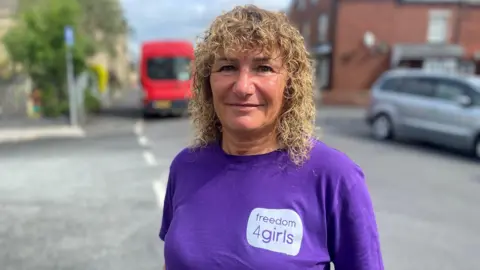
Tina Leslie, from the Freedom4Girls charity, says some students are missing a month of education each year due to the issue


Girls have been absent from school during their periods because of fears they will not be allowed out of class to go to the toilet, a charity has said.

The West Yorkshire-based Freedom4Girls said students had reported being refused permission to leave class and were unable to concentrate because they were worried about leaking.

"They've been telling us that they're missing school because the toilets are locked during lessons and they're embarrassed about asking to go," charity founder Tina Leslie said.

The Department for Education said it was for schools to decide when pupils take toilet breaks, but they were expected to be mindful of their duty of care responsibilities.


A 17-year-old girl from Leeds, who did not want to be named, said she had avoided school at the start of her period.

"I wouldn't want to go in because I didn't want teachers to tell me that I can't go," she said.

Freedom4Girls, which provides period products to schools in Leeds, said it had received emails from worried parents for several years on the subject.

"Girls are missing up to a month of education every year and it's not acceptable," said Ms Leslie.

"Their attainment levels are dropping, their truancy levels are going up.

"Girls want to go to school to learn, they don't want to go to school and worry that they're going to leak."


Wania, a member of the Youth Parliament for Leeds, says students should always be allowed to use bathrooms when required

ADVERTISEMENT


Leeds Youth Parliament member Wania, 15, took part in a period dignity debate at the House of Commons and said the issue was a priority for her.

"I think simply taking bathroom access away is taking away human rights from young people," she said.

"They have a right to access a bathroom when they need it and they should be able to do that."

Wania said the impact of toilets being locked during lessons affected the whole school day.

"These measures are put in place because of schools thinking it will either disrupt lessons or students will skip lessons and hide in bathrooms, but blanket banning it doesn't address the problem."

Lisa McCall, head teacher at Wales High School in Sheffield, says the school wants to have a "culture whereby the stigma around periods is gone"


Individual schools have their own policies on using bathrooms during lessons, with some providing passes to students and others locking toilets until break times.

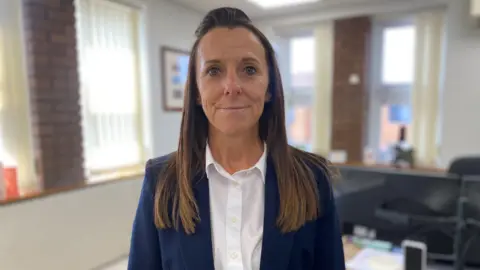
Wales High School in Sheffield said it had enough staff to ensure students could always be escorted to bathrooms whenever they needed to use them.

"It's discreet," said head teacher Lisa McCall.

"Boys and girls can ask for a toilet request and it's part of the culture that students ask for it.

"As soon as the request is put through, that student is picked up and escorted."

Ms McCall said period products were provided in bathrooms and education about periods was a priority for the school.

"We want to have a culture whereby the stigma around periods is gone," she said.

"Although we do some work with girls on their own, most lessons and assemblies will be everybody together because it's important that the boys also hear it and talk about it."


Watersports disturbing marine mammals in Scotland

New research has revealed that kayakers, paddleboarders and speedboats are frequently disturbing whales, dolphins and seals around Scotland's coasts.

The study undertaken by Heriot-Watt University in partnership with Whale and Dolphin Conservation recorded hundreds of interactions between vessels and marine mammals over more than 400 hours of land-based observation at five coastal sites, including Marine Protected Areas.


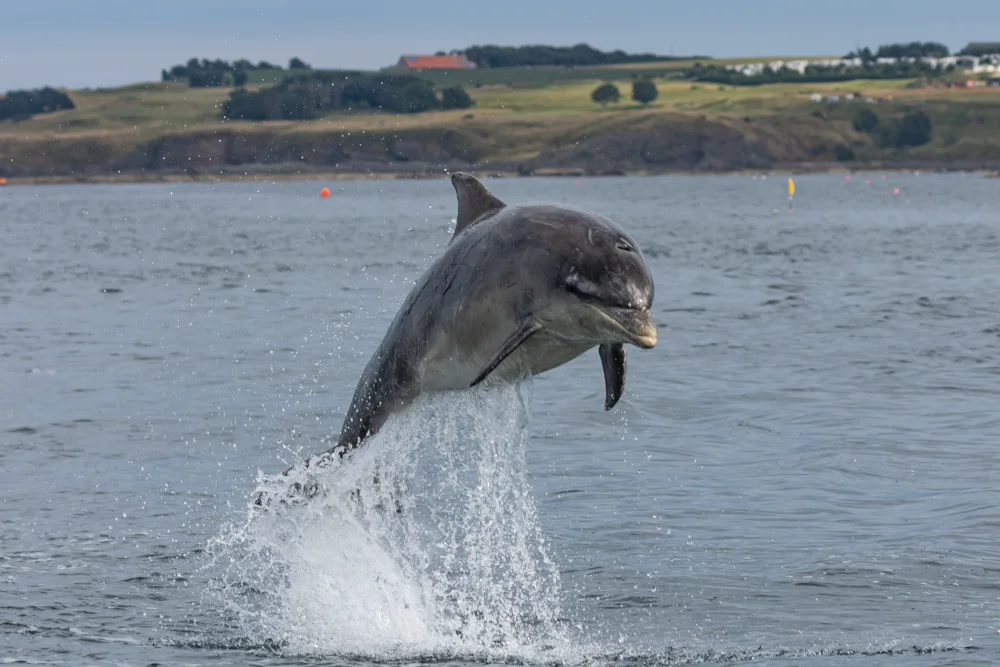
Marine mammals such as Common Bottlenose Dolphin are faced with disturbance from watersports, even in protected Scottish waters (Keith Simpson).


Widespread disturbance

Disturbance events from kayaks and paddleboards were documented in the Moray Firth, Clyde, Forth and Tay. Speedboats were also a source of disruption at all sites surveyed.

Lead researcher Dr Emily Hague said: "The truth is that all of Scotland's coastline is important habitat for marine mammals. Whether you're paddling off the coast of Fife or sailing around Skye, you're likely sharing the water with sensitive species.

"We want people to enjoy Scotland's waters, but to do so responsibly by keeping up to date on how best to respond should you spot marine wildlife. With a little more awareness and a few small changes, we can all help ensure that sharing the sea doesn’t come at a cost to the animals that call it home."


Code of conduct for marine mammals

NatureScot's Scottish Marine Wildlife Watching Code provides advice for minimising disturbance to marine mammals:

  • Keep at least 100 m away from marine mammals;
  • Avoid sudden changes in direction, speed, or noise, especially with engine-powered craft;
  • Avoid surrounding animals;
  • Limit encounters to a maximum of 15 minutes and move on if animals appear disturbed;
  • Do not use fast-moving craft for wildlife watching due to their noise, speed and collision risk;
  • Give seals hauled out on land a wide berth.

The study highlights the need for better awareness among recreational users and and stronger adherence to wildlife codes to protect Scotland's marine species.

The research can be read in full on ScienceDirect.com.

‘First past the post is corroding trust in politics. The government must make all elections fit for the future’


Before the last general election, the Labour Party officially recognised that First Past the Post (FPTP) is a driver of now record levels of distrust and alienation in politics. On Thursday, the Government acted on this understanding for the first time.

The newly announced English Devolution and Community Empowerment Bill will scrap FPTP for mayoral and Police and Crime Commissioner (PCC) elections. It will reinstate the preferential ‘Supplementary Vote’ system, used until the Tories changed it to FPTP in 2022, , which allows people to rank both their first and second choices.

This is a significant win for Labour MPs who have been lobbying for this change – and for mayors like Sadiq Khan and Andy Burnham who have come out against the imposition of FPTP. It’s also a wise and welcome step in the right direction by the Government, who have clearly understood that FPTP is a problem.

In the last set of English mayoral elections held under the old system, in 2021, all seven mayors were elected with the support of a majority of local voters. Fast forward to 2024, the first mayoral elections held under FPTP, and just five of the ten combined authority mayors won a majority of the vote. One was elected on just 35%. This year, things got even worse. Not one of the six mayors elected in May got a majority, with one candidate winning on just 25%. On average, this year’s elected mayors got less than one in three votes cast.

When elections can be won with such tiny shares of the vote it erodes the trust of voters, the vast majority of whom end up with a representative they didn’t vote for. It also undermines the mayors themselves, who need a strong mandate to be able to speak and govern with confidence on behalf of their communities.

The Government understands this. The supporting documentation to the new bill explains that FPTP, “can lead to individuals being elected with only a small proportion of the total votes cast,” and that the candidates, “should be elected with a greater consensus among their electors.” The new system, it says, “gives the local electorate an increased voice” and “will better support the democratic mandate of people elected to such positions”.

This is all true. But the criticism the Government has levelled against FPTP applies every bit as much to general elections. Last year, 85% of all MPs were elected with less than half the vote – and more than 40% of MPs were elected with less than 40%. One MP won with the support of just 27% of constituents. As a consequence, FPTP delivered the most unrepresentative election result in British history – with seats wildly mismatching the popular vote.  Six in ten voters ended up with an MP they didn’t vote for. Worse still, this is just the latest low point from a voting system in decades-long decline. With politics more fragmented and volatile than ever, experts are warning it is only going to deteriorate further, with chaotic consequences.

When it comes to general elections, the solution is not a preferential voting system but Proportional Representation – a form of which is used in most modern democracies, including Scotland, Wales, Northern Ireland and almost every country in Europe. Last month the latest British Social Attitudes survey revealed record public support for changing to such a system, at 60% – including a majority of voters for all the major parties. Support for changing the voting system is highest amongst those who trust politics the least – backing up Labour’s analysis that Westminster’s broken voting system drives distrust.

In addition to the Devolution Bill, the Government will soon bring forward proposals for an Elections Bill. This will include important changes such as lowering the voting age to 16 and reforming political finance rules. With the Government taking aim at FPTP and a spokesperson for Angela Rayner declaring “we are determined to make our elections fit for the future,” it’s hard to see how they could justify inaction on the voting system for Westminster. It would look like double standards: fairer elections for mayors, no such worry for MPs.

With the All-Party Parliamentary Group for Fair Elections now the largest all-party group in Westminster (and Labour making up most of its membership), there is pressure inside Parliament to match historic public demand for change. The solution advocated by the APPG is for the Government to set up a ‘National Commission on Electoral Reform’, to get to grips with our general elections and propose a fair, representative way forward.

Labour is right that FPTP is corroding trust in politics and is right to address this in mayoral and PCC elections. When the Government sets out its proposals for political reform, it must do the right thing again – and make our general elections “fit for the future”.

One Year of Starmer: Is Labour's refugee policy a shift or a continuation?

by Kate Reardon 
(Voice Community)
JULY 13, 2025;

From harmful rhetoric to the Rwanda scheme, the Tory government was criticised for its approach to the refugee crisis. 17-year-old Kate Reardon explores Keir Starmer's new policy approach and whether it's really a break from the past.

Inheriting a half-baked refugee policy from the Conservative Party was not ideal for Sir Keir Starmer. The Tory plan to send illegal immigrants by plane to the East African nation of Rwanda to have their asylum claims processed was, in my view, inhumane, uncalculated and frankly absurd. Sending people away, again, from somewhere they thought would be home is cruel. I am not the only one who thinks this: the first flight to Rwanda was stopped on the runway after the European Court of Human Rights appealed. This shows the extent of how wrong the Tories got it. Throwing money, in the Tories' case £120 million, has not solved the problem.

The number of people – that’s babies, children, girls and boys the same age as me, parents, anyone – who have crossed the channel has passed 160,000 people since 2018. That’s like filling London’s O2 Arena eight times over. Clearly, then, Starmer had to have a plan on how to deal with this – hopefully from a more humane angle than Boris Johnson and Rishi Sunak.

On Labour’s official website, it says: “The small boats crisis, fuelled by dangerous criminal smuggler gangs, is undermining our security and costing lives.” Starmer himself wrote on Facebook: "If you're one of the smugglers putting people in small boats across the channel – we're coming after you."

Using quite threatening social media posts shows Starmer’s imperative for action. However, has he actually physically done anything to help ‘smash’ the gangs and the small boats crisis? Or is he just flexing his muscles?

This year, Labour has funded a new unit of “elite officers” to increase presence on the Northern coast of France. A new specialist intelligence unit has also been installed in Dunkirk to help detect people smugglers.

Keir Starmer has vowed to work with police to take on criminal gangs
(Credit: Simon Dawson/10 Downing Street)

He also scrapped the Rwanda scheme immediately and closed the Bibby Stockholm – a boat used to ‘house’ asylum seekers, described as “an unsafe, frightening and isolated place” by those on board. Both of these actions were viewed positively by refugee rights organisations. Therefore reversing, or in his own words “resetting”, the approach and actions of the previous government was at the top of Sir Keir’s to-do list.

** Read more: Looking back at Labour's all-important missions **

In May, Starmer made his first official visit to Albania. The plan was to secure ‘return hubs’ for asylum seekers who failed the UK application process. But is this not the same as the Rwanda policy set out by the Conservatives? Well, kind of. But this time, the people sent to these hubs would have no possible routes to the UK, as opposed to having their asylum applications processed in Rwanda before possibly being allowed to seek asylum in the UK.

However, the plan to make a deal with Albania was refused and the trip has been criticised by many Tory politicians – including shadow home secretary Chris Philp – as “an embarrassment”. This plan still involves a degree of the process taking place outside of the UK, adding more time and uncertainty to asylum seekers' journeys to safety. So Starmer is adopting the idea of providing a deterrent for migrants just like Sunak, but I think they will come regardless.

Meanwhile, Reform UK leader Nigel Farage is promising to freeze non-essential immigration and return the small boats back to France. So it’s France’s problem. Pushing the problem away, again. Reform's policies argue, somewhat absurdly, that "zero illegals will resettle in the UK" and call for "offshore processing centres in British Overseas Territories". I find this shocking.


Reform UK leader Nigel Farage (R)  trades in harsh rhetoric against refugees


Again, refugees are being forgotten about. Again, they are not being humanised. Being referred to as “illegals” is, in my view, derogatory. Also, Farage has argued for leaving the European Court of Human Rights – just like the Conservatives wanted to when they tried to push through the Rwanda policy. This mass shipment of people is against their basic fundamental human rights.

So, all in all, Starmer’s first year as prime minister has been productive in the sense that he’s on a path to helping solve the issue. Compared to the other parties' refugee policies, he seems to take into account the basic human rights of these refugees.

Although, it does show that there is a long, winding road to reach a humane agreement as to how to help asylum seekers. I’d like to see Starmer seeking more advice from humanitarian organisations, who have a direct connection to these people and know how best to help them.

How UK-France 'one in, one out' migration deal will work – and what the challenges could be


Written by
 
Matilde Rosina, Brunel University of London. Originally published on The Conversation
Date of Publication:

After weeks of rising Channel crossing figures, the UK government has agreed on a long-awaited migration deal with France. Keir Starmer and Emmanuel Macron announced a "one in, one out" pilot – and the UK prime minister said the "groundbreaking" scheme could start returning migrants to France within weeks. The deal was announced alongside a separate agreement to coordinate the use of French and British nuclear weapons.

The migration agreement will allow the UK to return selected numbers of small boat arrivals to France. In exchange, the UK will admit an equal number of asylum seekers with legitimate ties to the UK (such as family), who have not previously attempted to enter the country illegally.

The plan will start as a pilot, with initial reports suggesting the UK could return up to 50 people per week (2,600 per year). That is roughly 6% of small boat arrivals in 2024. The remaining arrivals will continue to be processed under the UK's existing system.

The "one in, one out" system appears similar to an agreement in 2016 between the EU and Turkey. Under that scheme, for every irregular migrant returned from the Greek islands to Turkey, one Syrian refugee who had stayed in Turkey could be legally resettled in the EU. Under the EU–Turkey deal, only 2,140 migrants were returned to Turkey by 2022, compared with over 32,000 who were resettled in the EU.

The British government's hope is that this pilot will lay the groundwork for a broader EU-UK return framework that would allow it to return more people. Before Brexit, the UK was part of the EU's asylum framework, the Dublin regulation. This allowed any EU country, including the UK, to return asylum seekers to the first EU country they entered or passed through.

From 2008 to 2016, the UK was a net sender of asylum seekers: it returned more people to EU states than it accepted, receiving fewer than 500 people annually. The trend reversed after 2016, with the UK accepting more migrants than it returned.

But southern EU countries could complicate any expansion or permanent implementation of the pilot. Italy, Spain, Greece, Malta and Cyprus have opposed a UK–France agreement, fearing it would lead to more people being sent back to them – southern European states are where migrants typically arrive in the EU first.

Challenges ahead

The deal is a significant step for a UK government that has struggled to control the narrative on migration. Losing ground to Reform, the government has recently proposed tightening legal immigration rules, including by making it harder and longer to acquire British citizenship, and by cutting legal migration routes.

It also marks a notable shift in the UK's post-Brexit migration strategy. But questions remain about the details and implementation.

The French president hailed it as a "major deterrent" to Channel crossing, as migrants would not remain in the UK but be returned to France. Macron said that one-third of arrivals in France are heading towards the UK. So it follows that any deterrent from Channel crossings would also lead to a reduction in people coming to France.

Yet, as I have shown in my research, deterrence is rarely effective. This is because information about deterrence factors does not necessarily reach the asylum seekers or stop smugglers. It also does not address the underlying drivers of migration, such as poverty, conflict and corruption.

Moreover, returns are notoriously difficult to enforce. Many asylum seekers lack documentation, and complex legal processes raise administrative and financial costs.

Scalability also poses a challenge, given EU countries' divided stances on an EU-wide deal.

It is, however, promising that the UN refugee agency has given the agreement its backing, stating: "If appropriately implemented, it could help achieve a more managed and shared approach, offering alternatives to dangerous journeys while upholding access to asylum."

The last UK government's attempts to deter Channel crossings, such as the Rwanda scheme, had led to the agency raising serious concerns.

How many asylum seekers does the UK take?

This deal comes amid an increase in asylum applications in the UK. Annual applications rose from 38,483 in 2018 to over 108,000 in 2024.

In just the first half of 2025, small boat arrivals increased 48% compared with the same period in 2024, exceeding 20,000. By contrast, irregular arrivals to the EU decreased by 20% in the first half of 2025, mainly driven by a drop in arrivals to Greece and to Spain's Canary Islands.

When accounting for population, the UK receives fewer asylum applications – 16 for every 10,000 people living in the UK – than the EU average (22 per 10,000).

Data shows that between 2018 and 2024, 68% of small boat asylum applications processed in the UK were approved, indicating that most were made by people in genuine need.

UK–France migration cooperation dates back to the 1990s, but since 2019, the focus has been on addressing the rise in Channel crossings.

A significant step was the UK-France joint declaration of March 2023, under which the UK committed €541 million (approximately £476 million) between 2023 and 2026. Funds were allocated for assets including drones, helicopters and aircraft, and for the creation of a migration centre in France. Importantly, the agreement sought to increase surveillance along the French border, rather than return migrants.

This cooperation deepened in February 2025, when both countries agreed to extend their partnership to 2027 and reallocate €8 million for new enforcement measures.

Joint maritime activities have played a role too: since October 2024, UK Border Force vessels have entered French waters on three occasions to assist boats in distress and return people to the French coast.

Overall, this new agreement represents a milestone in UK–France migration cooperation, and the UK's first significant post-Brexit returns scheme with an EU country. While questions remain over its scalability – given the modest return numbers, legal and logistical hurdles, and European political divides – it is a crucial step in cross-Channel cooperation on migration and asylum, making progress on what has been an intractable problem for UK governments.