Monday, July 14, 2025

Health-impaired world leaders raise nuclear war fears, study suggests


JULY 14, 2025

Many former leaders of the world's nine nuclear-armed nations were impaired by health conditions while in office, raising concerns over their decision-making abilities while they had access to nuclear weapon launch codes, a study from the University of Otago, New Zealand, has found.

The study analyzed the health information of 51 deceased leaders of nuclear-armed countries: China, France, India, Israel, North Korea, Pakistan, Russia, the United Kingdom and the United States. Eight of the leaders died from chronic disease while still in office, five from heart attacks or strokes. Many of the leaders had multiple serious health issues while in office, including dementia, personality disorders, depression and drug and alcohol abuse.

The research was led by Professor Nick Wilson, from the Department of Public Health at the University of Otago, Wellington—Ōtākou Whakaihu Waka, Pōneke, with Associate Professor George Thomson and independent researcher Dr. Matt Boyd.

Professor Wilson says that of the leaders who left office while still alive, 15 had confirmed or possible health issues which likely hastened their departure. "Probably all of this group of 15 leaders had their performance in office impaired by their health conditions. In some cases, the degree of impairment was profound, such as in the case of two former Israeli Prime Ministers: Ariel Sharon, who became comatose after suffering a stroke in office, and Menachem Begin, whose depression was so severe he spent his last year as leader isolated in his home.

"Impairment during crises was also seen in the case of Richard Nixon's bouts of heavy drinking—including during a nuclear crisis involving the Middle East. There have also been occasions where health information about leaders has been kept secret at the time."

This was the case for multiple US presidents, including Dwight D Eisenhower, whose doctor described his 1955  as a digestive upset; John F Kennedy, whose aides lied about him having Addison's disease, a serious, chronic condition; and Ronald Reagan, whose administration hid the extent of his injuries after he was shot in 1981, and the likely signs of his dementia near the end of his term.

Professor Wilson says Kennedy was in poor health during his first two years in office in 1961 and 1962, with his performance likely impaired from Addison's disease, back pain, and his use of anabolic steroids and amphetamines. It was in 1961 that he authorized the failed CIA-backed Bay of Pigs invasion of Cuba and that his poor performance at a Cold War summit with Soviet leader Nikita Khrushchev in Vienna was noted. In turn, Khrushchev's poor mental health probably contributed to him triggering both the Berlin Crisis and the Cuban Missile Crisis.

In France, long-serving President François Mitterrand clung onto power until the end of his term in 1995, despite keeping secret his  and after his doctor had concluded in late 1994 that he was no longer capable of carrying out his duties.

This latest study follows previous research involving Professor Wilson on the health of former New Zealand prime ministers. It found the performance of at least four of the leaders was impaired, in three cases by poor health, and, in the case of Robert Muldoon, by his heavy drinking.

Professor Wilson says with the rise in international instability following the Russian invasion of Ukraine in 2022 it has become even more important to ensure there is good leadership and governance in those countries with . "This is particularly the case for the United States, where a leader can in principle authorize the release of nuclear weapons on their own, a situation referred to as a 'nuclear monarchy.'"

He says there are a range of measures which could reduce global security risks from leaders whose judgment is in question. They include removing nuclear weapons from 'high alert' status, adopting 'no first use' policies where nations refrain from using nuclear weapons except as a retaliatory second strike, ensuring any weapon launches need authorization by multiple people, and progressing nuclear disarmament treaties.

Professor Wilson says democracies could consider introducing term limits for their leaders, as well as recall systems, so voters could petition for politicians to step down. Requirements for medical and psychological assessments could be introduced for leaders before they take office, and during their terms. "Maintaining a strong media with investigative journalists can also help expose impairment in leaders."

Professor Wilson says politicians in general are exposed to high levels of stress, which can affect their mental well-being. A study of UK Members of Parliament has found they were 34% more likely to experience mental health problems than other high-income earners.

"Finding ways to reduce stress on politicians and better address their mental health needs is another way global security risks can be reduced."

More information: Nick Wilson et al, The frequently impaired health of leaders of nuclear weapon states: an analysis of 51 deceased leaders, BMC Research Notes (2025). DOI: 10.1186/s13104-025-07351-8


Provided by University of Otago Nuclear arms more prominent amid geopolitical tensions: Researchers


Graphic Truth: Trump increases tariff threats on top trade partners

Graphic Truth: Trump increases tariff threats on top trade partners
 Lizzy Yee

US President Donald Trump is threatening to impose 30% tariffs against the United States’ top two trading partners, the European Union and Mexico, demanding that Europe open its markets more to US products and that Mexico combats local drug cartels. Without new trade deals, the levies would come into effect on Aug. 1, and are higher than the previous duties that Trump had threatened. The announcement has put both Mexico and the European trading bloc on their heels: they have each now scrapped earlier plans to retaliate, favoring negotiations to smooth things over in the next two weeks. However, as Trump continues to drive an extremely hard bargain with even the US’s closest trading partners, he increases the risk that they will look elsewhere for alliances – for some, this process has already begun.

The (Untimely) Death Of Roman Starovoit Has Rattled Russia’s Elites. Why?

July 14, 2025 
By RFE/RL,
Mike Eckel and Mykyta Peretiatko


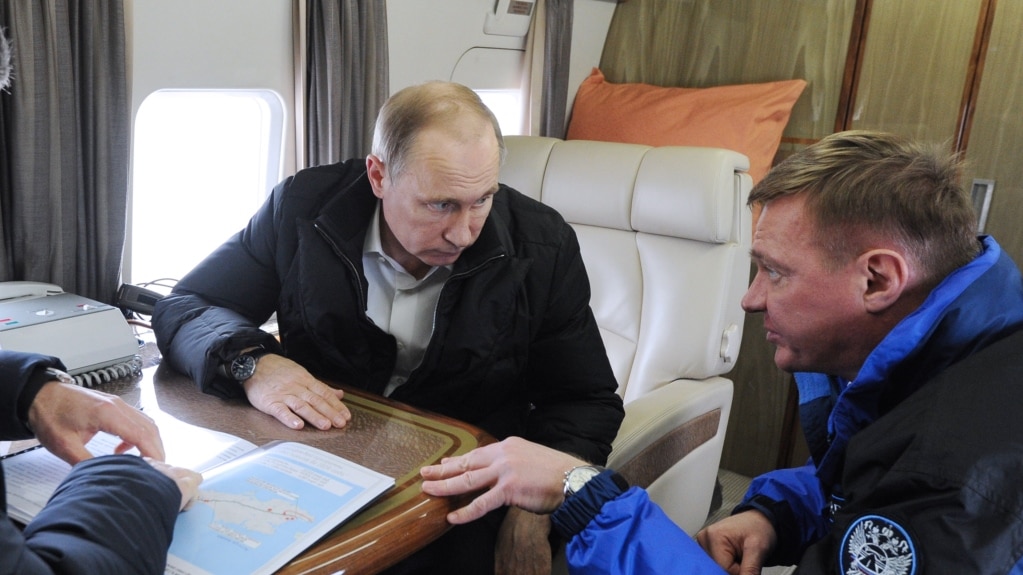
Hours after being fired by President Vladimir Putin, Russian Transport Minister Roman Starovoit was found dead from a gunshot wound in a parking area in a Moscow suburb. A week later, the circumstances of his death are still unclear. But the event has spooked Russia’s political elite in a way not seen in a very long time. Here’s why.

Environmental impact of pesticides underestimated, new study finds

The new study highlights the severe and extensive environmental implications pesticides can have. Image: Shutterstock

Nine pesticides, used in grape cultivation, exceed the threshold levels set for chemicals in the atmosphere

14 July 2025
By Victoria Heath
GEOGRAPHICAL.COM

Each year, three billion kilograms of pesticides are used worldwide. Without the use of these chemicals, there would be a 78 per cent loss of fruit production, a 54 per cent loss of vegetable production and a 32 per cent loss of cereal production.

As such, these chemicals play a vital role in ensuring food reaches the mouths of our eight-billion-strong population.

Enjoying this article? Check out our related reads:
Bee-killing pesticides polluting the vast majority of English rivers
New study finds toxic pesticides in commercial baby food
UK fails to ban 36 pesticides including 13 classed as highly hazardous
The world water map – accounting for every drop
Paraquat: banned in Europe, on sale in Indonesia

However, new research published last week has shown the damaging role pesticides may be playing in our environment. In laboratory experiments, nine pesticides used for the growing and harvesting of grapes and on other crops far exceeded thresholds set by the Stockholm Convention for the half-life of chemicals in the atmosphere. Currently, this threshold sits at two days. If a pesticide exceeds this, it is considered prone to what is known as long-range atmospheric transport, a key factor in classifying it as a more persistent organic pollutant.

Modern food production systems rely heavily on pesticides, but these chemicals are far from environmentally friendly. Image: Shutterstock

To find out this, researchers placed a thin layer of these pesticides onto atmospheric particles, exposing them to ozone and hydroxyl radicals to simulate how they would behave in the earth’s lower atmosphere (troposphere). None of the compounds studied had a half-life within a two-day limit. Instead, they ranged from three days (Cyprodinil) to more than one month (Folpet). As such, these chemicals could be reclassified as persistent organic pollutants, far more harmful than previously thought.

In addition, when researchers studied how the pesticides broke down and degraded in the atmosphere, they also found several unknown molecules present.

‘These pesticides should be considered as persistent organic compounds with potential for long-range transport, and the models used to test their safety do not go far enough,’ said researcher Boulos Samia.

During the study, researchers carried out further experiments on how temperature and humidity affect pesticide molecules, finding discrepancies between their findings and the current models of their behaviour.

What impacts do pesticides have?

While vital to maintain the high levels of food production across the world, overuse or incorrect use of pesticides can contribute to both biodiversity loss – such as a significant decline in insect populations – and impacts on public health. Continued use of pesticides can also lead to resistance among crops, while human-related effects include symptoms from stinging eyes to rashes and blisters, and even neurological and developmental toxicity in cases of severe exposure.


Since 1990, global use of pesticides has increased by about 90 per cent. So widespread is their use that a large-scale study conducted between 2014 and 2021 in five European countries found at least two pesticides were present in the bodies of 84 per cent of participants.


The European Ocean Pact: Laying the Groundwork for an “Ocean Union”?


In


The European Ocean Pact, adopted by the European Commission in June 2025 and presented at the United Nations Ocean Conference in Nice, is the most comprehensive EU initiative on ocean governance to date.

*****

The European Ocean Pact: Laying the Groundwork for an “Ocean Union”?

The European Ocean Pact, adopted by the European Commission in June 2025 and presented at the United Nations Ocean Conference in Nice, is the most comprehensive EU initiative on ocean governance to date. Consolidating the EU’s ocean-related strategies into one overarching framework, the Pact is framed around six strategic priorities: ocean health, blue economy competitiveness, coastal resilience, maritime innovation and ocean literacy, maritime security and defence, and ocean diplomacy. The European Ocean Pact represents a significant step toward enhancing the EU’s leadership and coherence in addressing global ocean challenges.


Introduction

The Pact underscores the European Union’s renewed leadership in global ocean governance. With nearly €1 billion pledged toward 57 new voluntary commitments, the Pact demonstrates the EU’s determination to implement a rules-based maritime order rooted in UNCLOS (UN Convention on the Law of the Sea), the recently adopted BBNJ Agreement (High Seas Treaty), and SDG 14 (Sustainable Development Goal 14: Life Below Water). By aligning these commitments with the European Green Deal and the 2030 Agenda, the EU reinforces its role in promoting sustainable and cooperative ocean governance. But beyond its environmental ambitions, the Pact is a response to a changing geopolitical landscape.

The Ocean Pact is not merely environmental policy; it is a geopolitical instrument. Oceans have become arenas of strategic competition, marked by competition over trade routes, energy access, and security infrastructure. In this context, the Pact positions the EU to assert itself within the global maritime order, where actors like China and the United States are already reshaping the dynamics, while the EU aims to establish itself as both a normative and strategic actor. It offers the EU an opportunity to recalibrate its ocean strategy in response to assertive moves by global competitors, while laying the foundation for what some, including Commissioner Costas Kadis, describe as a future “Ocean Union.”


Competitiveness and Innovation: Is the EU Falling Behind?

According to the European Commission, over the last two decades, Europe has not kept pace with other major economies due to a persistent gap in productivity growth. As emphasized in the Draghi report, and in line with the Competitiveness Compass presented by the Commission earlier this year, the EU needs to boost its competitiveness and speed up strategic transitions in both traditional and emerging blue economy sectors. Particular focus is needed on decarbonisation and scaling up innovation.

A core pillar of the Ocean Pact is its commitment to fostering a competitive sustainable blue economy development at the heart of EU economic resilience. The ocean economy is a critical driver of Europe’s future growth, spanning sectors such as fisheries, aquaculture, shipping, offshore renewable energy, and marine biotechnology. The Pact stresses the importance of investing in innovation and research to increase the EU’s competitiveness by supporting the development of sustainable and innovative industries, and to bridge the technology gap with global competitors. By fostering emerging ocean technologies like underwater robotics, sustainable aquaculture, blue bioeconomy, AI-powered marine monitoring, and clean shipping, the EU aims to position itself as a global leader in a regenerative blue economy that balances economic growth with environmental stewardship. Through these integrated measures, the Pact seeks to revitalize marine resources, generate new jobs, and secure long-term economic resilience for Europe’s ocean-based sectors.

Equally important is the Pact’s strong focus on ocean literacy. By promoting ocean research, public engagement, and the use of advanced digital monitoring tools, e.g., the Digital Twin of the Ocean initiative, the Pact aims to cultivate a better-informed society capable of ensuring the sustainable and responsible use of ocean resources. Enhancing ocean literacy is seen as essential to supporting the sustainable development of the blue economy and ensuring long-term environmental resilience.

The EU faces growing pressure in the maritime domain, as geopolitical tensions, technological change, and the accelerating effects of climate change reshape global maritime dynamics. Although the blue economy already accounts for 4.9 million jobs (2.4% of total EU employment) structural gaps remain in maritime skills and research capacity. While the EU Ocean Pact acknowledges the value of maritime human capital, progress in this area has been slow and inconsistent. As highlighted in the Draghi report and reflected in U.S. efforts such as the Ships for America Act, investing in maritime skills is crucial to boosting Europe’s resilience and competitiveness at sea.


Addressing Gaps in Maritime Security

Climate change is redefining maritime geography: melting Arctic routes, rising sea levels, and shifting coastlines are transforming the very nature of maritime space. Shifting sea routes could fundamentally reshape global trade, with major implications for the EU’s blue economy and maritime security. At the same time, the strategic landscape of maritime connectivity is also evolving, along with the balance of economic and political power.

China has long recognized the strategic value of maritime economic power, using economic tools to shape geopolitical influence across key regions. China has strategically invested in upgrading its maritime industries and integrating into global value chains, enabling domestic firms to play a central role in expanding its maritime influence. This approach effectively converts economic development into geopolitical leverage. Evidence of this strategy can be seen in the rapid growth of maritime education and research in China, where the number of maritime students and research centers increased substantially between 2012 and 2022. In contrast, the U.S. has traditionally lagged in multilateral ocean governance, refusing to ratify UNCLOS, for example, but has recently re-engaged in response to Chinese advances. Meanwhile Russia’s sustained focus on becoming a top maritime power, particularly in the Arctic and Black Sea regions, reflects its strategic aim to protect global interests and strengthen its naval capabilities amid growing geopolitical rivalry. At the same time, the increasing U.S. military and scientific presence in the Arctic, including discussions over strategic assets in Greenland, shows a growing awareness of maritime competition.

The growing complexity of maritime threats, including attacks on underwater infrastructure, cyber risks, and strategic competition over maritime spaces, demands a coordinated response. To meet these challenges, the Ocean Pact prioritizes stronger coast guard cooperation and enhancing maritime domain awareness. It also calls for investing in cutting-edge maritime technology, expanding naval defence capabilities, and reinforcing Europe’s presence and partnerships worldwide, mirroring efforts such as the U.SIndo-Pacific Strategy. The Ocean Pact’s emphasis on maritime security, critical infrastructure protection, and new defence tools suggests a shift toward more geopolitical thinking in EU maritime affairs.


From Pact to policy: What comes next?

Without effective implementation, the EU risks falling behind in an emerging maritime order increasingly shaped by actors who leverage control over critical maritime infrastructure and networks to secure long-term strategic advantage.

One recurring concern is the perceived weakness of the Ocean Pact’s enforcement mechanisms. As a political declaration, it does not impose binding commitments on Member States. Much will depend on the follow-up Ocean Act, which the Commission plans to propose by 2027. This Ocean Act will serve as the single framework for implementing the Ocean Pact, providing the legislative backing and streamlining the implementation of existing ocean policies. Building on a revised Maritime Spatial Planning Directive, the Act will improve coordination across sectors at the national level and promote a more coordinated and sustainable use of marine resources, to facilitate the implementation of the Pact.

Yet internal fragmentation remains a barrier. Divisions between Member States over fisheries policy, offshore energy development, and coastal management could dilute the Pact’s ambitions. Furthermore, ocean governance must compete with other foreign policy priorities, from the war in Ukraine to energy security and migration, which often dominate the EU agenda.

The Ocean Pact could still become a turning point, if it delivers on its promise of coherence and ambition. The proposed Ocean Act, along with the creation of a high-level Ocean Board and public EU Ocean Pact Dashboard, are efforts to ensure that this is not just another strategy lost in EU bureaucracy. The regional focus on the Baltic, Black Sea, Mediterranean and Arctic, each with its own strategic challenges, signals a more tailored and regionally responsive strategy.


Conclusion

As Commissioner Costas Kadis put it, “The core of the Ocean Pact is to coordinate and to bring together, to promote collaboration, to promote synergies.” The coming years will determine whether that collaborative vision can translate into real influence on the world stage or remain a well-meaning but incomplete maritime ambition.

By promoting sustainable ocean governance and a regenerative blue economy, the Pact aligns with broader goals of climate resilience, economic competitiveness, and international security. However, ambition must now translate into execution. The proposed Ocean Act (2027) will be a litmus test of the EU’s seriousness: can it turn political declarations into binding action?


(Photo credit: iStock.com/solidcolours)

Nearly every worker at the US Institute for Peace is fired via a weekend email from DOGE

Now backed by an appeals court, DOGE completes shuttering of agency meant to stop conflict zones from exploding into violence


John Bowden
in Washington, D.C.
Monday 14 July 2025
The Independent 

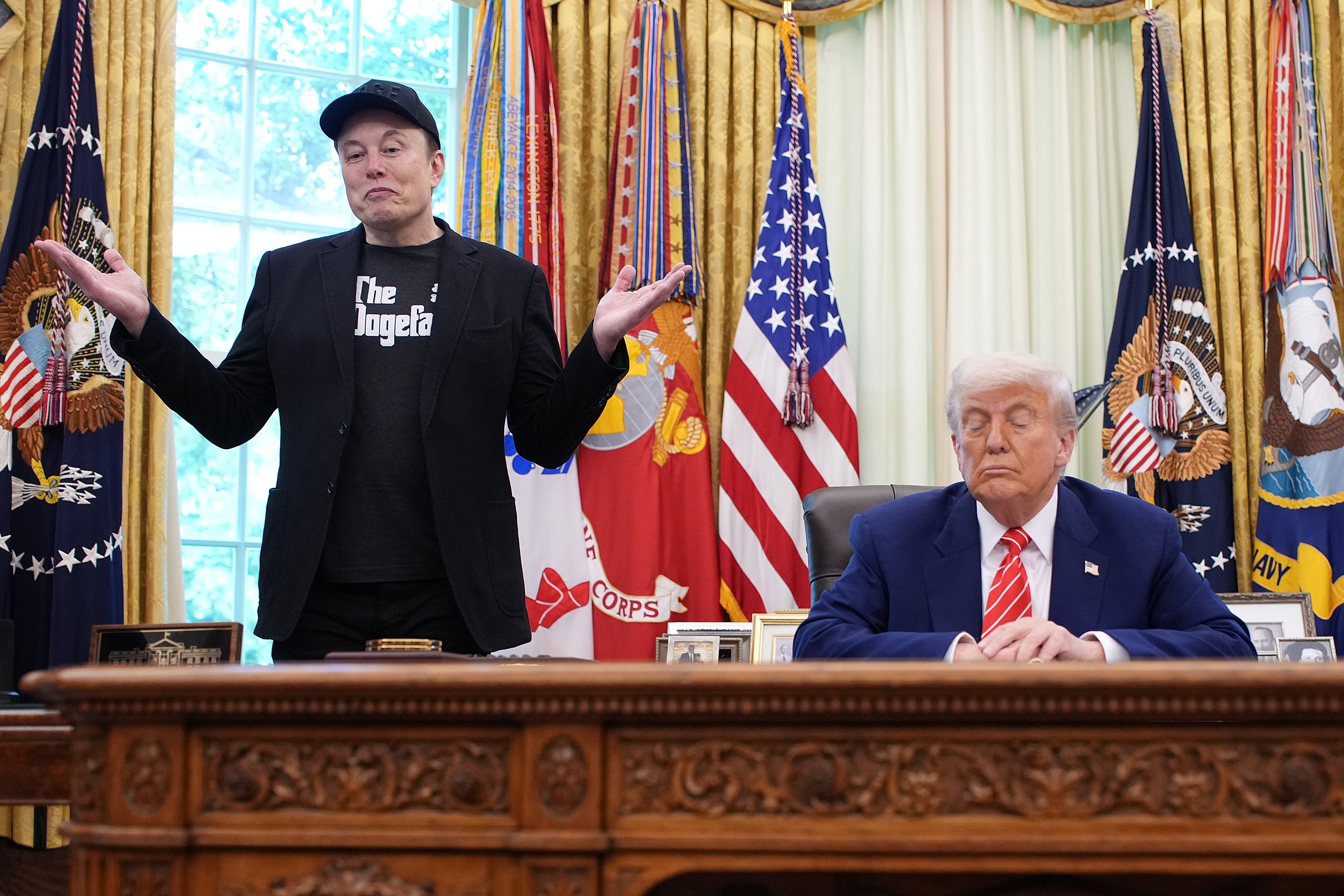
The White House and the remnants of Elon Musk’s DOGE initiative ordered the shutdown of the U.S. Institute of Peace over the weekend via email telling staff they are fired, this time with the backing of a federal court.

CNN and WUSA9 reported the firings Saturday, when emails were sent out to between 200 to 300 people at the agency’s headquarters in Washington, D.C. — nearly the entire staff in the building. A handful remained to close out the institute’s operations, per the reports.

The shuttering of the D.C. office marks the apparent end of a federally-funded nonprofit whose mission involved work in key conflict zones around the world, including South Sudan, Iraq and Afghanistan. It’s also the second time the Trump administration has attempted to axe the agency, the first effort having been launched in March.

That initial DOGE-ing of the institute was blocked by a federal judge, but the order was reversed in late June by an appeals court. A second order of mass firings was expected after that ruling was stayed by the U.S. Court of Appeals for the D.C. circuit, and like the first round was issued in a late Friday evening email to all staff.

Reports after the first attempt at mass firings indicated that the office was left unmonitored as employees were left in limbo, with vermin including mice and roaches attracted to the unkept headquarters and the sudden halting of cleaning services.

"These actions reflect a cruel indifference toward USIP's dedicated workforce," former agency spokeswoman Liz Callihan told WUSA9 in a statement. "Beyond the harm to these committed professionals, such reckless actions will immediately end the important training, education, facilitation and research work that USIP does around the world."


She added to CNN: “We joked about it, but ‘Friday night massacre 1.0,’ and last night was ‘Friday massacre 2.0.’ So the intention is very much mental torture and emotional anguish, whether that’s inflicted on the partners and individuals in these conflict environments that so desperately need our help and support, but also the staff.”

Callihan further condemned the shutdown of the institute as an example of constitutional overreach. The U.S.Institute of Peace, founded in 1984, is a nonprofit authorized and funded by Congress — not the Executive Branch. A law establishing the agency was signed by President Ronald Reagan.


But the Executive Branch under Donald Trump’s second administration has tested its constitutional authority to scale back or in some cases wholly dismantle agencies that owe their existence to congressionally-passed legislation. Aiding the president’s team is Congress itself, which under GOP control has given DOGE’s federal cuts its blessing, even given the scale of those cuts and the precedent it could set regarding the use of presidential power.

Trump and the former head of his DOGE initiative, Elon Musk, underwent a very public breakup in June. The two viciously attacked each other over social media, with Musk even tweeting and deleting an accusation claiming that the president was “in the Epstein files.” The cause of their falling out was allegedly the deficit spending contained in the Republicans’ budget reconciliation package.

Though Musk left the administration, the efforts of the White House and the remnants of DOGE to tear apart the government have continued.


Reports after the first attempt at mass firings indicated that the office was left unmonitored as employees were left in limbo, with vermin including mice and roaches attracted to the unkept headquarters (AFP via Getty Images)

“Having regained control of USIP, DOGE is renewing its mistreatment of USIP employees and its systematic dismantling of an institution authorized by Congress to promote peacebuilding efforts around the world,” Callihan told CNN.

The institute is far from the only agency to suffer this fate. The Trump administration has sought to shutter the entire Department of Education as well as the Federal Emergency Management Agency and the Consumer Financial Protection Bureau, a watchdog for unfair economic practices affecting U.S. consumers.

Those orders were met with mixed levels of success, as the plans to scale back or shutter FEMA has been met with political controversy and courts have so far blocked the order to shut down the Education Department — which, unlike the Institute of Peace, is a Cabinet-level agency.

One employee told the Washington Post in March that shuttering the agency would have a real immediate effect in conflict zones.

“We put mediators in place to help stitch these communities back together,” they said. “So it does have a dramatic effect on violence on the ground immediately by just pulling these assets out.”


LOCO PARTENTIS IS STATE CENSORSHIP

EU paves way to ban social media for minors

National governments increasingly ring the alarm about social media harms to minors’ health.


High-risk services like porn platforms and online alcohol shops are also recommended to verify users' ages. | iStock


July 14, 2025
By Eliza Gkritsi
POLITICO EU

The European Commission on Monday said countries can implement their own national bans for minors on social media, in new guidelines under its powerful Digital Services Act.

The EU executive has been under pressure in recent months to roll out measures to protect minors online. National governments in France, Denmark, Spain and elsewhere have called for social media restrictions, with some criticizing the EU for not acting quickly enough.

France and the Netherlands have supported an outright ban of social media for minors under 15Greece has said it thinks parental consent should be required for children under a certain age. Denmark, which currently helms work in the Council of the EU, is pushing for stronger EU-level actions.

Tech giant Meta has also come out suggesting legal restrictions that would require parents to consent for their kids being on social media below a certain age.

"Age verification is not a nice to have. It's absolutely essential," said Denmark's digital minister Caroline Stage Olsen, who presented the guidelines alongside the Commission's tech chief Henna Virkkunen.

The Commission's new guidelines for minor protection online seek to make sure platforms face a similar set of rules across Europe under the Digital Services Act (DSA), the bloc's landmark social media regulation. The guidelines are non-binding and set the benchmark for companies to interpret requirements under the DSA.

The Commission on Monday also released technical specifications for an age verification app that could help verify if users are over 18 by using IDs and even facial recognition. The app is set to be tested in France, Greece, Spain, Italy and Denmark, five countries that are also pushing for restrictions and are working on their own age verification solutions.

EU countries can also use the app should they decide to implement national restrictions for social media use at a different age threshold, a senior Commission official said, granted anonymity to disclose details of the plan ahead of its release.

High-risk services like porn platforms and online alcohol shops are also recommended to verify users' ages.

"It's hard to imagine a world where kids can enter a store to buy alcohol, go to a nightclub by simply stating that they are old enough, no bouncers, no ID checks, just a simple yes, I am over the age of 18," but this is what "has been the case online for many years," said Stage Olsen.

Monday's guidelines cover how platforms should adapt their systems to better protect kids along a range of services.

The text suggested that platforms do not use browsing behavior in their recommender systems; that they turn off features like streaks and read receipts to decrease the addictiveness of platforms; that they set privacy and security by default in settings, for example making their accounts invisible to other users not in their networks; and that they consider turning off some features like camera access.

The guidelines follow a risk-based approach, meaning platforms can evaluate what possible threats they pose to minors and adopt measures accordingly.

Tech firms launched a last-minute lobbying push arguing that the guidelines still allow for cumbersome fragmentation.

This article was updated.


EU presents new guidelines, age verification app prototype to enhance child online safety

'Platforms have no excuse to be continuing practices that put children at risk,' official says


Melike Pala |14.07.2025 - TRT/AA


BRUSSELS

The European Commission on Monday introduced new guidelines and unveiled a prototype age verification app as part of broader efforts to enhance online safety for minors under the Digital Services Act (DSA).

The guidelines detail how digital platforms can better shield children from online risks such as addictive design features, cyberbullying, harmful content, and unsolicited contact. They also clarify when and how age verification should be conducted, particularly for high-risk services like adult content platforms.

In a statement, the EU Commission announced a key element of the initiative: a prototype age verification app developed to uphold user privacy. The app enables users to prove they are over 18 without revealing personal information such as their date of birth or identity.

The app will initially be piloted in Denmark, France, Greece, Italy, and Spain. Trials will be carried out in cooperation with online platforms, including adult content providers. Depending on the results, the tool could be adapted for other age thresholds or sectors, such as alcohol sales.

This collaborative project represents a significant step in implementing the DSA and fostering a consistent, privacy-conscious approach to age verification across the EU.

"Making sure our children and young people are safe online is of paramount importance to this Commission," said Henna Virkkunen, executive vice president for tech sovereignty, security and democracy. "Platforms have no excuse to be continuing practices that put children at risk."

Teamsters blow whistle, urge members to reject UPS buyouts

July 11, 2025  
 PEOPLES WORLD
 By Mark Gruenberg


Teamsters for a Democratic Union posted this anti-buyout ad on their website | via TDU.org

WASHINGTON—The Teamsters have disclosed, and blew a sharp whistle against, a plan by their members’ biggest employer, United Parcel Service, to offer individual buyouts to full-time drivers, violating the union’s master contract.

In a hard-hitting video on July 7 to a YouTube town hall, union President Sean O’Brien urged his members to “ignore and reject it,” when bosses come around touting what the company claims is a “voluntary” plan to help in UPS’s “reconfiguration” to meet “changed circumstances.”

“They’re s—tting you,” O’Brien said of company “lies.” He said the buyouts illegally violate the contract, three years after it was reached.

UPS was caught off guard by the union’s disclosure of its buyout scheme, which it intended to roll out at the end of July, O’Brien said. Now they’re speeding it up, he added in the video to the union’s UPS members. The 340,000 Teamsters who work for UPS make up approximately 25% of the Teamsters’ total membership.

“UPS is obligated to establish tens of thousands of new full-time jobs under the agreement,” creating 22,500 new delivery driver jobs and promoting 7500 part-timers to full-time, O’Brien said. Instead, the firm is “trying to weasel its way out of” that job-creation commitment via the buyouts and outsourcing.

“CEO Carol Tomé and UPS’s corporate managers are hoping if they offer paltry severance packages to enough workers, no one will notice the company is setting the union’s contract on fire. UPS Teamsters work too damn hard to be treated with such disrespect.”

The company retorted anyone taking the buyout would get health care, but the union said UPS offers “paltry severance packages.” Under the contract, retirees with 30+ years of service get lifetime company-paid health care and a good pension.

“We need to be prepared…to call out UPS for what they are: Another greedy, profit-driven corporation,” O’Brien told Zoom viewers. Figures from the AFL-CIO’s Paywatch website back him up.

They show Tomé earned $23.39 million in pay, stock options, and bonuses in 2023, the last year data was available, according to federal records. That’s 436 times the median pay of a UPS worker, including the drivers. The median is the point where half of the group is above and half below. UPS profits then totaled $9.9 billion, 11% of its worldwide revenues.

The union adds that UPS did not meet a July 1 deadline for information on achieving a goal of 28,000 new and air-conditioned delivery trucks by 2028. With the eastern U.S. gripped in a “heat dome” and the globe sweltering from record high temperatures due to global warming, air conditioning is important.

“Our members are not prostitutes. They cannot be bought,” O’Brien vowed. “UPS either wants to pay fewer workers or pay workers less than” the contract “calls for. That’s what this sham program comes down to. I urge you to ignore and reject these cheap buyouts. We want managers to get off our backs and let us do our jobs.”


CONTRIBUTOR

Mark Gruenberg
Award-winning journalist Mark Gruenberg is head of the Washington, D.C., bureau of People's World. He is also the editor of the union news service Press Associates Inc. (PAI). Known for his reporting skills, sharp wit, and voluminous knowledge of history, Mark is a compassionate interviewer but tough when going after big corporations and their billionaire owners.
National Education Association votes to cut ties with Anti-Defamation League

July 9, 2025 
PEOPLES WORLD


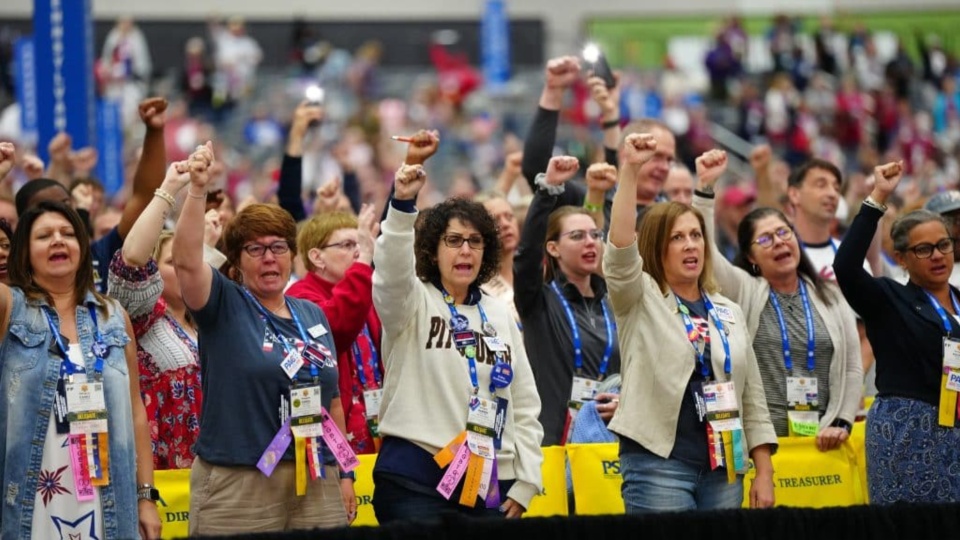
Delegates raise solidarity fists at the National Education Association’s 2025 Representative Assembly. | Photo via NEA

On July 6th, the National Education Association (NEA), the largest labor union in the United States, voted to cut all ties with the Anti-Defamation League (ADL).

The NEA represents public school teachers and higher education staffers across the country. The decision, taken by the union’s 7,000-member Representative Assembly, deepens the NEA’s growing commitment to anti-racism and international solidarity. It also continues the union’s principled opposition to Israel’s genocidal war on Gaza, as the NEA was among the first U.S. unions to call for a ceasefire.

The ADL, originally founded in 1913 to protect Jews from antisemitic persecution, once played a vital role in American life. From the 1920s through the ’40s, it was a strong voice against antisemitism and U.S. Nazism. In the McCarthyite 1950s, the ADL condemned the antisemitic overtones of the Red Scare, which often targeted Jewish Americans under the guise of fighting “Judeo-Bolshevism.”

But in recent decades, the ADL has veered away from that legacy. Its central mission today is not the protection of Jews, but the defense of the policies of the Israeli state at all costs, often through the weaponization of the charge of antisemitism.

Rather than combat actual antisemitism, the ADL has increasingly used its historical reputation to spread hasbara—pro-Israel propaganda—and to defame critics of Israeli policy. Over the last two years of Israel’s genocidal assault on Gaza, the ADL has gone into overdrive, branding all protests—Jewish-led or otherwise—as antisemitic.

Jewish organizations like Jewish Voice for Peace, IfNotNow, and Neturei Karta have all been smeared by the ADL simply for standing in solidarity with Palestinians. Their Jewishness, apparently, does not exempt them from the label of “Jew-hating antisemite” when they challenge Israeli apartheid.

Nowhere has the ADL’s influence been more insidious than in the education sector. For 40 years, the ADL has been a ubiquitous presence in U.S. schools—pushing curriculum, programming, and teacher trainings under the banner of “anti-bias” education. But that influence has often come at the expense of Palestinian voices and broader anti-racist organizing.

In one recent example, the Massachusetts Teachers Association (MTA) began internally developing educational resources on the history of Palestine. The ADL seized on these materials, cherry-picked parts of them in order to misrepresent them, and accused the union of “glorifying terrorists” and “promoting antisemitism.” These attacks resulted in dangerous backlash against the MTA, including doxxing, death threats, and anti-labor attacks.

The ADL’s smear campaign didn’t stop at the MTA. The organization has attacked independent schools for inviting human rights speakers like Suzanne Barakat and Ruha Benjamin. It has published so-called “report cards” on universities based on their willingness to repress pro-Palestinian protests. And it has pressured administrations into implementing punitive measures that equate anti-Zionism with antisemitism—all while claiming to be a partner in civil rights education.

The ADL’s mislabeling of antisemitism has had the effect of trivializing real antisemitic threats. By crying “antisemite” at every critic of Israel, the ADL has played the role of the proverbial boy who cried wolf. When white nationalists and neo-Nazis actually do target Jews—as they did in Charlottesville and Pittsburgh—the word “antisemitism” now too often lands on deaf ears. In attempting to shield Israel from scrutiny, the ADL has made Jews less safe, not more.

The NEA’s vote marks a break from this dangerous dynamic. It’s a worker-led movement, standing up to the pro-war narrative that comes down from the ruling class.

The resolution approved by the union’s Representative Assembly declared that its members “will not use, endorse, or publicize materials” issued by the ADL, like curricular materials or statistics. It declared, “Despite its reputation as a civil rights organization, the ADL is not the social justice partner it claims to be.”

NEA delegate speaking in support of the resolution ahead of the final vote criticized ADL’s abuse of antisemitism charges against critics of Israeli policy and said it uses hyperinflated hate crime statistics to inflame and inflate fears around Jewish safety. Specifically, they called out the ADL’s false characterization of any and all expressions of solidarity with Palestinians as “antisemitic hate speech.”

One delegate, Stephen Siegel, said, “Allowing the ADL to determine what constitutes antisemitism would be like allowing the fossil fuel industry to determine what constitutes climate change.”

Though the delegates passed the measure and he fight isn’t over, however. NEA lawyers have designated the approved resolution a “boycott,” a categorization that automatically sends the measure to the union’s Executive Committee before it can be implemented.

The ADL and its allies have already launched retaliatory campaigns against the teachers and their organization. Predictably, the ADL has declared that the NEA’s vote itself as antisemitic by falsely claiming Jewish teachers were “jeered” and “mocked” during the debate.

A group allied to the ADL, the North American Values Institute (formerly known as the Jewish Institute for Liberal Values) mixed accusations of antisemitism on the part of the union with right-wing messaging attacking the NEA for standing up to Trump’s assaults on DEI, calling teachers “lemmings” for disagreeing with the president.

But union educators have made their position clear: The ADL is not a partner in justice. It is a reactionary institution whose primary function today is to police speech, protect Israeli impunity, and punish solidarity.

The NEA’s decision weakens the ADL’s grip on education policy and begins to restore the meaning of antisemitism by refusing to let it be wielded as a weapon against human rights advocacy. In doing so, it strengthens the fight for both Palestinian liberation and Jewish safety.

As with all news-analysis and op-ed articles published by People’s World, the views reflected here are those of the author.


J.E. Rosenberg grew up in an extremist, religious Zionist household in the U.S. After moving to Israel as a young adult, he changed his world views. He left Israel and is now a member of the Communist Party.

July 14, 2025 
PEOPLES WORLD
By Victor Grossman
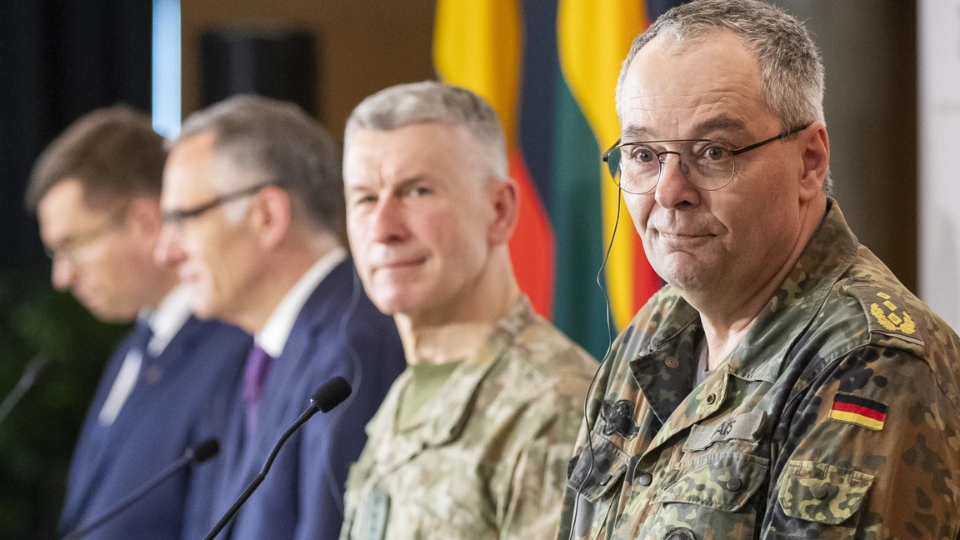

German Army Chief Lt. Gen. Alfons Mas listens to a question during a media joint conference with Lithuanian Chief of Defence Gen. Valdemaras Rupsys and Lithuanian Defense Minister Laurynas Kasciunas as members of the Headquarters initial command element of the Bundeswehr's 45th Brigade Lithuania arrival by plane at a airport in Vilnius, Lithuania, April 8, 2024.| AP/Mindaugas Kulbis

BERLIN—Warmakers like Trump in Washington and Merz in Berlin are in charge of their respective governments, causing heightened worry around the world about the dark clouds of war.

This is not to say there aren’t bright spots on both sides of the Atlantic, like the victory of Zohran Mamdani in New York, my hometown, where an amazingly courageous, even defiant platform, is causing the wealthy spenders to move heaven and earth to stop him.

Far bigger geographically, more than five million Americans marked “No Kings Day”—Trump’s birthday—in over 2,100 cities and towns, even in Guam, Puerto Rico, and the Virgin Islands.

Resistance is urgent against Trump’s frightening domestic plans. His foreign policy also is dangerous and unpredictable; I‘d bet he personally hasn’t a clue about the outside world, hardly knows Liberia from Siberia, except where golden Trump towers or golf courses are involved or fat contracts for the family. Dangerous elements around him, however, know exactly what they are doing. Trump’s actions include crazy, merry-go-round tariff plans, criminally illegal air raids, the murder of undesirable generals, and brutal genocide in Gaza.

Have you noticed? Many who condemn Trump’s dangerous plans talk less about what he intends to do in the Ukraine war. With some folks, I suspect that the main worry for many in Germany is that some peaceful solution might indeed be found, and words like war-readiness, security-defense, or armament-buildup give way in media headlines to reconciliation or rapprochement. How fearful!

In Germany, when it comes to war preparations, I hear too many echoes from the past! For those pushing German expansion, some with the same bloody corporate names as in 1939, 1914, even the 1860s, their big victory was “German unification” (still called “annexation” or “colonization” by many affected). Combined with similar victories elsewhere in eastern Europe, all barriers were down, all gates wide open to investment, exploitation, and control, the latter most obviously in the land-by-land extension of NATO, despite the promises of 1990 “not to move one inch further eastward.”

This eastward “Sturm und Drang” has meant permanently stationing a brigade of German soldiers in Lithuania, almost within spitting distance of St. Petersburg. It has also meant NATO domination of the Baltic Sea, Russia’s key exit to world trade and world economy, with a new naval control center in Rostock (once the main GDR seaport, built up with rocks collected voluntarily by young people all over the republic).

Orchestrated media barrage

A clearly orchestrated media barrage insists: “Putin threatens Germany, we need a powerful war machine! Urgently!” Constitutional budget limits on German debt have been scrapped; for weapons, the sky’s the limit!

It is all a myth; Russia would not dream of attacking Germany: NATO outnumbers Russia in aircraft 22,377 to 4,957, in naval power 1,143 ships to 339, in battle tanks 11,495 to 5,750. NATO surrounds Russia geographically, north, west, and mostly south, with Georgia, Moldova, and Ukraine meant to close the circle.

France and Britain have atomic weapons. Some twenty U.S. nuclear missiles are polished and ready to fly eastward with swift German planes from Büchel Air Base.

But the threat still works, and training for it is on full blast. Corporate TV news demands ever more admiration for dashing young men (and women) in full uniform and painted faces charging bravely through the woods, or tanks splashing across rivers. There is a new “Soldiers’ Day” and a “Veterans Day”—to honor the lucky and less lucky ones (after waiting for survivors from 19391945 to die out and avoid confusion as to which veterans were being honored) and give little boys and girls a chance to climb into a tank or fighter plane.

The message is clear: “Be patriotic! Join in the fun!” and the war fever increasingly recalls, with modern variants, the heel-clicking and barked Prussian commands of past years! “Intelligence experts” who predicted 2030, maybe 2027, as the year “when Putin’s army will be fit enough to fight us after his losses in the Ukraine war” now say such dates offer a “false sense of security” and even speak of 2026.

Marching in the vanguard, with military bands for background music, is the new chancellor, Friedrich Merz. He seems more genteel, more intelligent than his new friend Trump in Washington, and avoids loud-mouthed agitation, but his texts go even further: He has already concluded that “we are already under attack from Russia…the dividing line between war and peace is a fluid one.”

There are loud dissonances, however. For decades, economically proud and powerful, Germany is stagnating. The is a halt on inexpensive Russian gas, thanks to the liquefied fracking gas lobby in the U.S. and the strangely predicted (by Biden) explosions on the Baltic Sea floor. There is also higher costs, cheaper but high-quality competition from China, especially in the key auto industry. Add to that the uncertainty of Mertz’s friend Trump’s high tariffs.

Economic depression was not handled well in Germany’s past. Hitler’s answer to the Depression was clear: build armaments, from tanks to U-Boats. His solutions, the military budget and the concentration camps, ended unemployment, but then ended in war.

In that context, there is need to fear what is happening in the European Union. EU members have agreed to spend—no longer 2%, not just 3.5% but an impossible 5% of their Gross Domestic Product (GMP) on war preparations. That seems a low sum, but would mean over €215 billion for Germany alone.
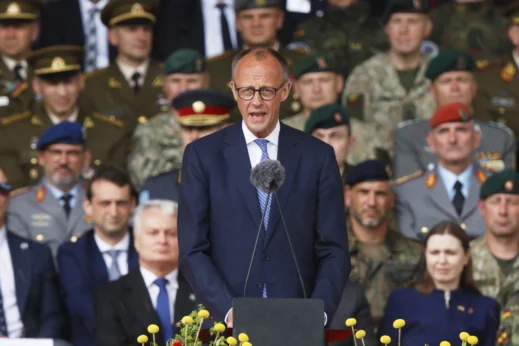
German Chancellor Merz speaks in Vilnius, Lithuania at event announcing permanent placement of German troops in that country.| AP

1.5% would be for “infra-structure”- with a stress on reinforcing highways and bridges, ports and rail lines to carry tons of tanks and artillery, all heading eastward, openly aimed at Russia! Dilapidated schools, too few pre-K facilities to teach kids good German or swimming pools to teach them to swim, shutting down hospitals and clinics, miserly care for the elderly, cuts in aid to music schools, theaters, and youth clubs? Oh, let them wrangle over what each can squeeze out of tight budgets! For Merz & Co.—first things first! Defense, Security, Safeguarding Freedom and Democracy from Putin and a host of other imaginary enemies.

Who loves these virtues most? If we go by reward, a top candidate would be Rheinmetall. Founded in 1889 to build weapons for the Kaiser, it gained huge wealth in World War I. Forced by the Versailles Treaty in 1919 to end armament production, it began again in 1921.

A top weapons maker for Hitler, using 500,000 slave laborers in concentration camps, it then shut down after defeat in 1945. It had to wait until 1956 in the so-called democratic West Germany before starting up again. It had been permanently banned in the German Democratic Republic, East Germany.

As a result of the Ukraine war it is now Germany’s biggest weapons-maker. Shareholders’ value jumped from €4 billion in 2022 to more than €91 billion today.

Orders for its tanks and other weapons surpass €55 billion, and its CEO, Armin Papperger, boasts: “With 50% sales growth in defense, Rheinmetall is transitioning from a European systems supplier to a global leader.” It plans new factories in Ukraine, one for armored vehicles, one for munitions. The last time we checked, Papperger’s salary stood at €8,000,000 a year. We do not know how he feels about a cease-fire and peace in Ukraine. But we can guess.

An even bigger fish

Possibly sharing such feelings in a happy swarm is an even bigger fish. BlackRock, with 70 offices in 30 countries, is the world’s largest manager of assets, now worth over $10 trillion. Its sharp fangs bite into economic innards everywhere, from Exxon Mobil and Fox Broadcasting to the Deutsche Bank.

In May 2024, after a clearly well-informed insider deal, BlackRock became the biggest stockholder and influencer of Rheinmetall! And who was Asset Management Chairman for BlackRock in Germany at the time? None other than Joachim-Friedrich Martin Josef Merz, today Germany’s chancellor!

Those were good years for Merz. “I was happy working for this enterprise,” he has said. That’s understandable. He was making €5000 a day, even Saturdays and Sundays, €1.980.000 a year, even for a bad year. But bad years for clever lobbyists were rare. According to the German Enterprise Alliance, his income “approaches the upper limits but is not unusual.”

He had to suspend that job when he moved back into politics. His income as chancellor is still comfy, but much lower. Not as low as those on jobless assistance, a sort of home relief providing €563 a month for food and other such necessities. 1.3 million senior men, 2.1 million senior women, and over 2 million children are under or near the poverty danger level.

Most leading politicians blame Germany’s growing woes not on horrendous military spending or gaping loop-holes in taxing such as Rheinmetall and Blackrock—and definitely not on “the system”—but rather on refugees greedily storming the gates of “our Europe” or the children and grandchildren of those who once made it across “overly porous” frontiers.

With Merz, these gates are being shut so tightly, at the cost of border commuters and retailers, that some are retaliating like Poland, sending armed soldiers to check vehicles 7-24 at the borderline “Bridge of Friendship” over the Oder.

That supposed German ability, efficiency and, yes, assumption of its superiority, once frightfully cited against allegedly “non-German” Jews, is now deployed against people of different color, language or religion, most loudly by the far-right Alternative for Germany (AfD), aided by a media which stresses any felony if an “Ausländer” is involved.

The AfD now leads in three East German states, is second in the other two, and holds second place in national polls, only a few points behind the Merz-CDU. The others, running scared, loudly attack the AfD as fascist, demand it be forbidden as anti-constitutional – but also move in the same “anti-foreigner”-“over-full boat!” direction.

Merz, nastily capping this off, denounced those foreigners “who sit on the dental chairs and get new teeth made while German citizens can’t even get appointments.” There are whispers that some Christian politicians might break their taboo against joining in a coalition with the AfD, despite the so-called “fire-wall.”

But for now, nationally, the Social Democrats remain as junior partners. After the worst election results in their history and worsening figures in recent polls, they hold far weaker cards in any coalition quarrels.

But aside from a currently murky squabble on approving or rejecting a new top-level judge because she favors freer abortion laws, and a cover-up scandal about a Christian big shot who wasted 3 or 4 billion euros on a buddy’s surplus, faulty COVID masks, there are no major disagreements.

For many years the SPD was divided (unofficially). The stronger faction was more conservative, friendlier toward big business, loud on labor rights and gains before elections, useless or worse after them, and as bellicose as the other parties in blindly supporting a Bush or Blair, a Netanyahu or Zelensky.

Weaker wing clung to tradition

But a weaker wing clung to a few ancient SPD traditions (mostly buried back in 1914). In June one hundred Social Democrats, led by the courageous caucus chair Rolf Mützenich, dared to publish a manifesto calling for a new policy, leading away from the growing war fever and toward peaceful solutions in conflict situations, like Ukraine. Though many rank-and-filers agreed fully, this upset major apple carts, with apples as poisonous as in the Grimm Tale of “Snow White and the Dwarfs.”

Nearly every leader of the Christians, the Greens and most especially Mützenich’s own party was enraged and called him everything: stupid, naive, obsolete or treacherous. Leading the angry pack was ambitious right-winger Lars Klingbeil, who immediately grabbed the party reins, pushing out Scholz, Mützenich and his quiet erstwhile co-chair, Saskia Esken, the most prominent woman in the party, a modest left-winger hitherto suppressed by the SPD-rightists for demanding higher taxes on the super-wealthy, less police brutality, and fewer privileges for rich car-makers.

Klingbeil ousted her in such a nasty, misogynist way that, in the party congress which soon followed, he received not the usual nearly unanimous approval but an exceedingly embarrassing low, 64.9% while his little-known new co-chair, Bärbel Bas, got a normal 95% approval.

And yet he won—and became vice-chancellor and finance minister with Merz. The only minister he saved from the previous Scholz cabinet was the popular but bellicose Boris Pistorius, who can now buy all the weapons he wants, in support of Merz with war or genocide from Gaza to Donbas or Tehran about which he approved the Merz words, “They (the Israelis) did our dirty work for us.” Though not close buddies, the two coalition partners agree on “essentials”.

What about the other parties? The AfD, too crudely far-right, is still ostracized nationally. Clearly pro-capitalist, rabidly nationalist, backward on social questions, homophobic, strongly pro-Netanyahu (who also hates Muslims), otherwise hateful against foreigners, but also against any assistance to Ukraine, and leaning toward pro-Russian positions.

Is one potential partner the Bündnis Sahra Wagenknecht (BSW)? (Its leader has promised to change that embarrassing name.) Many in the media love to predict Alice Weidel and Sahra getting together. Although her alliance is a breakaway from the LINKE (or Left) party, presumably further to the left, Sahra surprised everyone by rejecting as undemocratic any ban on the AfD and a firewall against a party supported by 24% in the polls.

Was this a hint of a possible alliance? Sahra said No! It was the right-wing “Christians” who were really close! A ban would help, not hurt the fascists. But agreement between Alice Weidel’s AfD and Sahra’s BSW on rejecting aid to Zelensky, on opposing sanctions against Russia, and on tough rules on immigration left room for speculation.

But it also left room for speculation on the life of Sahra’s BSW. After an impressive upward start last year, above all in the eastern states, its ratings sank lower and lower, even in the east, where for some it has become part of the establishment.

Nationally, a heartbreaking result of 4.95 % in February left them less than 9,600 votes short of 5% (with 60 million voters) and not one single seat in the Bundestag. The result seemed falsified, but now, nearly six months later, they seem all but glued to 4% in the national polls. Despite brave words, their future looks far from rosy.

Which leaves the LINKE. For a long time it was also glued to that useless 4% figure, and seemed doomed even in its home bases in the East German states.

Until late 2074! Then, unlike the other parties, the LINKE did a self-analysis and changed its feathers.

A turn to the people

With a new election approaching, it turned to the people, sent out thousands of newly-trained, often newly-won campaigners to ring or knock at over 100,000 doors and ask what people wanted from a new government. Most common wishes were a halt to high prices for groceries, affordable housing and utilities and, above all, an end to steep rent increases.

And that’s what the LINKE stressed, in meetings, speeches, and actions. New advisory centers where created where tenants could check on whether they were being cheated by landlords, and if so, how they could end the cheating.

Other parties blamed immigrants, the LINKE blamed the big real estate robbers. And it worked! Within two-three months the LINKE jumped from the stick-in-the-mud 4% loser status to nearly 9% percent and in Berlin an astounding first place, 19.9%, more than any of the other 6 main contestants. Its membership has jumped to over 100,000!

Part of this was due to its new party co-chair Ines Schwerdtner and its new caucus co-chair Heidi Reichinnek, both young, youthfully attired, and Heidi with bare arms full of tattoos, a high-velocity speech pattern with a vigor appealing above all to young people. The LINKE, almost alone in moving upwards, stands in the polls at 11%, now tied with the increasingly meaningless Greens. It leads them all with young women voters!

But caution is advisable. Its big gains were due in part to an obvious agreement within the party to avoid quarrels or controversial debate on military and foreign policy issues. This basic compromise was largely retained, at least for the media and broader public, during the early May congress in Chemnitz.

But important differences remain. Will the LINKE go the way of the SPD and the Greens, planed down to gently critical but polite acceptance of systemic status quo with an ever more frightening acceptance of a huge military build-up, masked as security, but clearly a plan for aggression?

Top level pressure for conformity is turning increasingly to repression aimed at protests against NATO expansion and above all regarding Palestine, with all opposition to Netanyahu-led genocide labeled ”anti-Semitism.” A majority of LINKE officialdom, while opposing German support and the sending of more weapons, has been wobbly on these decisive questions.

Some critics in the party have presented it this way: Is the war in Ukraine, though violating international law, Russian aggression would never have taken place if the NATO had not broken its promise not to expand eastwards, thus violating a Russian need for security? Does the death of 27 million Soviet victims of German-fascist aggression during the World War deserve only abstract recollections or forgetfulness – or rather also a reflection on current policy?

Is the Federal Republic of Germany in danger of being attacked or is the current alarm campaign really the ideological basis for rearmament and militarization of all fields of society worse than ever since 1945? Does German membership in NATO and leadership in militarizing the European Union represent a growing menace to world peace? Would a military draft—now being planned—and military units stationed outside Germany—long since in practice—improve or endanger peace?

These questions are being debated within the LINKE. How they are resolved and how many can be activated, also on closely related issues like rent, jobs, social assistance and, definitely, environment—will not only affect Germans. Rheinmetall and Blackstone, Amazon and Springer, Lockheed, Bezos, Musk and all their billionaire ilk but also many on our side.

We have won some tough struggles but there are many ahead that will also have to be won.


As with all op-eds published by People’s World, the views reflected here are those of the author.

We hope you appreciated this article. At People’s World, we believe news and information should be free and accessible to all, but we need your help. Our journalism is free of corporate influence and paywalls because we are totally reader-supported. Only you, our readers and supporters, make this possible. If you enjoy reading People’s World and the stories we bring you, please support our work by donating or becoming a monthly sustainer today. Thank you!


CONTRIBUTOR

Victor Grossman is a journalist from the U.S. now living in Berlin. He fled his U.S. Army post in the 1950s in danger of reprisals for his left-wing activities at Harvard and in Buffalo, New York. He landed in the former German Democratic Republic (Socialist East Germany), studied journalism, founded a Paul Robeson Archive, and became a freelance journalist and author. His latest book, A Socialist Defector: From Harvard to Karl-Marx-Allee, is about his life in the German Democratic Republic from 1949 – 1990, the tremendous improvements for the people under socialism, the reasons for the fall of socialism, and the importance of today's struggles.