Tuesday, July 15, 2025


New research helps narrow down uncertainties in near-term precipitation projections for the Asian Water Tower


Institute of Atmospheric Physics, Chinese Academy of Sciences
Precipitation in the Qinghai-Xizang Plateau region is crucial for the ecosystem. 

image: 

Precipitation in the Qinghai-Xizang Plateau region is crucial for the ecosystem.

view more 

Credit: Yin ZHAO


The Qinghai-Xizang Plateau (QP), often referred to as the "Asian Water Tower", is a vital source of water for nearly two billion people. Understanding how precipitation patterns in this region will change in the coming decades is crucial for water resource management and climate adaptation. However, projecting near-term precipitation changes has been challenging due to significant uncertainties in climate models.

A new study published in Atmospheric and Oceanic Science Letters addresses this issue by analyzing near-term (2026–2055) precipitation projections for the QP using 100 ensemble members from the MPI-ESM climate model. The research team—from the Chinese Academy of Meteorological Sciences, China—found that while the QP is expected to experience an overall wetting trend, there is considerable uncertainty in precipitation trends across the southern QP.

"The southern Qinghai-Xizang Plateau exhibits a complex east–west dipole pattern in precipitation changes, which is strongly influenced by the phase transition of the Interdecadal Pacific Oscillation," explains the corresponding author of the study, Prof. Jian Li. "A positive Interdecadal Pacific Oscillation phase transition tends to enhance precipitation in the eastern part of the southern QP while suppressing it in the western part, and a negative phase transition has the opposite effect."

This uncertainty has made it difficult for policymakers to make informed decisions about water resource management. To address this, the researchers applied a method to adjust the Interdecadal Pacific Oscillation phase transition in the simulation members, which significantly improved the consistency of precipitation projections.

"By aligning the Interdecadal Pacific Oscillation phase transitions across the ensemble members, we were able to increase the consistency of our projections from 50% to 70% and 55% for positive and negative Interdecadal Pacific Oscillation phase transitions, respectively," says Dr. Yin Zhao, lead author of the study.

The findings of this study have important implications for adaptive water resource management in the QP region. "Accurate simulation of Interdecadal Pacific Oscillation phase transitions is critical for improving near-term precipitation projections," emphasizes Prof. Jian Li.


Medieval medicine was smarter than you think – and weirdly similar to TikTok trends


New research transforms our understanding of the Dark Ages


Binghamton University

Medieval medicine 

image: 

Medieval manuscripts like the Cotton MS Vitellius C III highlight uses for herbs that reflect modern-day wellness trends.

view more 

Credit: The British Library


It turns out the Dark Ages weren’t all that dark! According to new research, medieval medicine was way more sophisticated than previously thought, and some of its remedies are trending today on TikTok. 

A new international research project featuring faculty at Binghamton University, State University of New York reveals that people in the Middle Ages weren’t cooped up in castles, wallowing in superstition. They were developing health practices based on the best knowledge they had at the time – some of which mirror modern wellness trends.

“People were engaging with medicine on a much broader scale than had previously been thought,” said Meg Leja, an associate professor of history at Binghamton University who specializes in the political and cultural history of late antique and medieval Europe. “They were concerned about cures, they wanted to observe the natural world and jot down bits of information wherever they could in this period known as the ‘Dark Ages.’”

The Corpus of Early Medieval Latin Medicine (CEMLM), funded by the British Academy, has collected hundreds of medieval manuscripts containing medical material predating the 11th century. Countless manuscripts that have been left out of previous catalogs were included, nearly doubling the number of known medical manuscripts from the Dark Ages.

Some of the recipes resemble health hacks promoted by modern-day influencers, from topical ointments to detox cleanses. Have a headache? Crush the stone of a peach, mix it with rose oil and smear it on your forehead. It might sound odd, but one study published in 2017 showed that rose oil may actually help alleviate migraine pain. 

Then there’s lizard shampoo, where you take pieces of lizard to help your hair become more luscious and flowing – or even to remove it, a modern-day parallel to waxing.

“A lot of things that you see in these manuscripts are actually being promoted online currently as alternative medicine, but they have been around for thousands of years,” said Leja.

Leja spent the last two years with the rest of the team preparing the new catalogue (which was just released online), reviewing manuscripts from throughout Europe, and editing and formatting the catalog. She had previously written about medieval medicine in her first bookEmbodying the Soul: Medicine and Religion in Carolingian Europe.

Many of the writings were found within the margins of books totally unrelated to medicine—manuscripts on grammar, theology, poetry , etc. Leja said that this speaks to a preoccupation with the body's health and figuring out ways to control it.

“It's true that we do lack a lot of sources for the period. In that sense, it is ‘dark.’ But not in terms of any kind of ‘anti-science’ attitudes — people in the early Middle Ages were quite into science, into observation, into figuring out the utility of different natural substances, and trying to identify patterns and make predictions” said Leja.

The research team will continue to update the catalog with new manuscripts and are working on new editions and translations of medical texts that could be used in teaching. Leja noted that while previously catalogs focused on texts  from well-known authorities like Hippocrates, this isn’t necessarily material that people in the Dark Ages would have prioritized, and a more comprehensive catalog will allow historians to show medicine in its fullness.

The Corpus of Early Medieval Latin Medicine (CEMLM) is available online, produced by team members from Binghamton, Fordham, St. Andrews, Utrecht, and Oslo.

Depiction of the herb sorrel and description of its medical uses, from a collection of various herbals in The Hague, Museum Meermanno, Ms 10.D.7, fol. 6r.

Credit

The Hague, Museum Meermanno


This manuscript features a curious recipe in the margins -- for lizard shampoo. The note reads "For flowing hair. Cover the whole head with fresh summer savory and salt and vinegar. [Then] rub it with the ashes of a burnt green lizard, mixed with oil."

Credit

The British Library.


USA

Cracks in Trump’s MAGA Movement


Sunday 13 July 2025, by Dan La Botz


A few months ago, President Donald Trump’s Make America Great Again or MAGA movement seemed to be a solid monolith from Republican Party legislators at the top to rank-and-file activists at its base. Today MAGA is riven with fissures caused by personal rivalries, and the increasingly visible incompetence of cabinet members, and while MAGA is not yet splitting or crumbling, it is clearly cracking.

Most famously, billionaire Elon Musk who seemed a few months ago to be practically a co-president, broke with Trump, then criticized his “big beautiful” budget bill, calling it a “disgusting abomination” because of its failure to make deeper cuts. Musk than went on to launch a new political party. According to a Quantus poll, Musk’s America Party would win the support of 40% of U.S. voters and 57% of Republican voters, especially men. If the new party is up and running by November 2026, it could split the Republicans and threaten Trump’s control of both the Senate and the House.

Then there’s the case of Jeffrey Epstein, the banker and stock broker who claimed to be “Trump’s best friend for ten years,” who was convicted in Florida of procuring a child for prostitution and sex trafficking and later of sex trafficking minors in Florida and New York. Epstein’s associate Ghislaine Maxwell was sentenced to 20 years in prison for helping him to sexually abuse children. Epstein reportedly committed suicide while in jail on August 20, 2019, though some believe he was murdered.

Rightwing conspiracy theorists have claimed for years that Epstein, members of the economic elite, the “deep state,” and the Democratic Party leadership were engaged in a pedophilia cult. They demanded that the Justice Department’s Epstein files be released, together with the Epstein client list. Trump’s Attorney General Pam Bondi at first said she had the list, but now says there is no list in the files. The MAGA base is furious with Trump and Bondi for failing to release the Epstein file, some saying Trump is now part of the “deep state.”

Cabinet failures are also threatening to undermine MAGA and Republican unity.
In addition to Pam Bondi, who has caused such a storm, Secretary of Health Robert Kennedy, a vaccine skeptic, is failing to prevent the spread of measles and has lost support. Most recently, Secretary of Homeland Security Kristi Noem’s handling of the Central Texas flood has also been a failure and a human tragedy that weakens Trump.

The flooding of the Guadalupe River that began on July 4, sent a 26-foot-high wall of water that arose in 45 minutes and left 129 dead and 170 missing, including a score of girls at summer camp. Noem, who is responsible for the Federal Emergency Management Agency (FEMA) that spends billions on disaster relief for wildfires, hurricanes, and floods, created a new policy that required her personal approval of any funding over $100,000, virtually paralyzing FEMA. She also delayed the deployment of FEMA search and rescue teams to the flood for three days. Trump praised Noem for being on television right away, and stood by her despite her failure to respond to the flood in a timely way.

Finally, Trump’s immigration policies are losing favor. For several months now Americans have watched as agents arrested workers and separated families. Last week there were military style round ups in Los Angeles’ McArthur Park and on local farms, with armored vehicles and officers on horseback, officers armed with military weapons, and using flash-bang grenades and tear gas. There was mass protest by the community and the public support for the policies is declining. The latest Gallup poll shows that a record-high 79% of Americans consider immigration good for the country while support for the border wall and mass deportation is declining.

The job of progressives and the left is to keep the resistance growing, to keep the pressure on, and to deepen the cracks. We have to bring about Trump’s fall.

13 July 2025


Attached documentscracks-in-trump-s-maga-movement_a9082.pdf (PDF - 904.5 KiB)
Extraction PDF [->article9082]


Dan La Botz was a founding member of Teamsters for a Democratic Union (TDU). He is the author of Rank-and-File Rebellion: Teamsters for a Democratic Union (1991). He is also a co-editor of New Politics and editor of Mexican Labor News and Analysis.

International Viewpoint is published under the responsibility of the Bureau of the Fourth International. Signed articles do not necessarily reflect editorial policy. Articles can be reprinted with acknowledgement, and a live link if possible.

On compromises with the ruling class and ‘lesser evil’ politics


[Editor’s note: Filipino socialist activist Merck Maguddayao, from the Partido Lakas ng Masa, will be speaking at Ecosocialism 2025, September 5-7, Naarm/Melbourne, Australia. For more information on the conference visit ecosocialism.org.au.]

From time to time, it is worth returning to the works of Karl Marx and Vladimir Lenin to analyse and compare them with the situation we face today.

One particularly useful text is Lenin’s “Left-Wing” Communism: An Infantile Disorder. In it, he discusses the compromises socialists and revolutionary movements must sometimes make to advance their struggle at decisive moments of class conflict.

According to Lenin, “left-wing communism” suffered from political immaturity — an unwillingness to engage with the messy, contradictory and concrete world of class struggle.

For Lenin, “political compromise” meant dropping certain positions in order to reach an agreement with another force. Many translate this as kompromiso, which in Filipino carries the connotation of being coerced (for example, “I was compromised by the fact I received a bribe”). Konsesyon (concession) would perhaps be a more accurate term, but we shall use compromise, in the way Lenin did.

A socialist party committed to social transformation and systemic change will inevitably have to make compromises, especially when dealing with reformist forces in electoral alliances, coalitions and mass campaigns. It would be naive to reject compromise on principle — doing so would be, as Lenin said, a form of political infantilism.

Adopting a purist stance and refusing to participate in certain political arenas (such as elections, negotiations and alliances), means we risk isolating ourselves from the masses and their struggles. But if we simply tail bourgeois and liberal forces, we will end up being coopted — a far more serious mistake.

The challenge is to engage in independent political struggle, while maintaining the freedom to criticise any errors or excesses made by bourgeois and liberal allies.

On compromises

Guided by Lenin’s writing, let us now look at two main types of compromises. The first question we can ask ourselves is: is it acceptable for a revolutionary socialist movement to compromise with a ruling regime in order to unite against one of its rival factions?

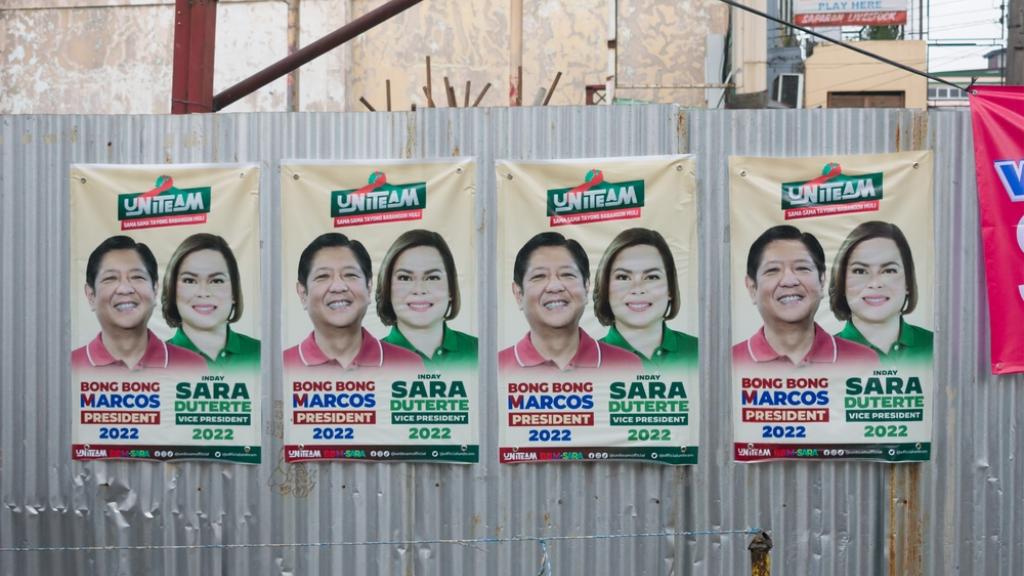
This question arises today in the context of reports that Senators Bam Aquino and Kiko Pangilinan may join President BongBong Marcos Jr’s Senate majority in the name of unity against the Duterte camp. Their goal is to secure key portfolios or committee posts to advance their “progressive” agenda.

But this example does not apply to the question above. While Aquino and Pangilinan are known liberal reformers, their record in the senate (Bam served 6 years from 2013–19; Kiko served 18 years from 2001–13, and then again between 2016–22) is one of consistently supporting neoliberal policies that are pro-market, pro-private investment and pro-Public-Private Partnerships (PPP) over state-led industrialisation and redistributive reform. The question above applies to socialist parties that stand for the overthrow of neoliberalism and the capitalist system.

It is not acceptable for a socialist party to compromise with a ruling regime — even if it does so for the purposes of opposing a more brutal faction. Doing so undermines the party’s purpose, violates its class independence, and erases the line between socialist and bourgeois politics.

Even the call to impeach Vice President Sara Duterte, which is being pushed by the Marcos camp, should not be supported merely as a matter of “good governance.” This reduces the critique of corruption to campaigning for a band-aid solution, rather than promoting a systemic approach. Socialists understand that corruption is rooted in the class character of the ruling regime, not just in the personal failings of individual politicians.

As socialists, we must expose all factions of the ruling class and their representatives, even when they are at war with each other. The idea that we should ally with one faction in order to gain some kind of advantage is an opportunist perspective. Instead, we must use their factional crisis to call for the overthrow of the corrupt elites and build a Gobyerno ng Masa (Government of the Masses).

We must learn from previous bitter experiences in which certain progressive parties supported or joined ruling regimes. Some even accepted cabinet positions in neoliberal governments whose very function was to preserve the dominance of the elite in the state, economy, and political institutions. This practice must end.

A socialist party must only represent the working class and the exploited, and never any faction of the ruling class. Compromise with the ruling elite blurs class lines, confuses the masses and misleads them about who their real enemies and allies are.

In the end, such compromise will lead to the defeat of the socialist movement, internal division and the disintegration of any united struggle against the ruling class and the system.

Lenin recognised that under certain conditions, the left could be forced into compromises by the concrete balance of forces — for example, where the very survival of the socialist movement is at stake.

He dramatises it as such:

Imagine that your car is held up by armed bandits. You hand them over your money, passport, revolver and car. In return you are rid of the pleasant company of the bandits. That is unquestionably a compromise. “Do ut des” (I “give” you money, fire-arms and a car “so that you give” me the opportunity to get away from you with a whole skin). It would, however, be difficult to find a sane man who would declare such a compromise to be “inadmissible on principle”, or who would call the compromiser an accomplice of the bandits (even though the bandits might use the car and the firearms for further robberies).

Lenin gives the example of the Treaty of Brest-Litovsk (1918), where the newly formed Bolshevik government ceded large parts of its territory to Germany in return for ending the war. This allowed the revolution to survive and consolidate.

This cannot be compared to compromising with a ruling regime merely to gain positions on committees or “leverage for reforms.” That is not a matter of survival — it is purely driven by political opportunism. In many cases, these kinds of actions can lead to a loss of support, collapse, or even the complete disappearance of political forces involved in such “tactics”.

On ‘lesser evil’ politics

The second question we should ask ourselves is: is it acceptable for a socialist movement to support a “lesser evil” candidate against a “greater evil” in elections? If so, when and under what conditions?

According to Lenin, it is possible in certain cases to form an alliance with a “lesser evil” candidate in elections. For example, he advised British socialists to tactically support reformist Labour candidates against reactionaries such as David Lloyd George and Winston Churchill. But he likened this support to the way “the rope supports the hanging man.“

The point of this support was not to strengthen the reformist leaders, but to expose their inevitable failure as many still had illusions in these politicians. Such support would allow the masses to learn through experience the futility of supporting such reformist leaders and that genuine change can only come from their own strength and organisation — not from elite allies.

“Lesser evil” politics is not a fixed doctrine. It is not based on the personalities or moral traits of the candidate; rather it is a strategy for exposing the elite’s class character. Moreover, supporting a “lesser evil” must always depend on the existence of an independent movement with the freedom to criticise liberal or bourgeois allies. And it can never be a permanent strategy.

Examples of the “lesser evil” approach in the Philippines include certain progressives supporting Noynoy Aquino against Gloria Macapagal-Arroyo in 2010, supporting Fernando Poe Jr against Arroyo in 2004, and supporting Joseph Erap Estrada against Jose de Venecia Jr in 1998.

In 2022, the Partido Lakas ng Masa (Party of the Labouring Masses, PLM) rejected this approach and ran its own candidates for national office. Instead of pursuing a “lesser evil” politics, the PLM supported an independent and alternative ticket composed of Ka Leody de Guzman for president and Walden Bello for vice president.

There were two main reasons for this. First, while independent candidate Leni Robredo did not belong to one of the political dynasties and had a reputation for good governance, she was a leader of the Liberal Party, which implemented neoliberal policies under Noynoy Aquino (for example, privatisation, PPPs, etc).

Second, supporting her as a “lesser evil” would have only reinforced illusions in the idea that elite democracy can deliver genuine solutions, rather than help build mass-based, working-class organisations for true systemic change.

In contrast to recent elections, the Ka Leody–Walden campaign was able to present a clear alternative platform, on a mass scale, which included issues such as a living wage, ending contractualisation, taxing the rich, and fighting dynasties and oligarchs.

In place of “lesser evil” politics, the PLM advanced a new tactic of genuine alternative politics that could gain the attention and support of the masses. This same tactic was used in the 2025 elections and may be further expanded in 2028.

Towards the 2028 elections

Continuing this new tactic will depend on the conditions we face going into 2028.

To go beyond the liberal opposition, we must help build a Grand Alliance Against Dynasties in the 2028 elections.Such a broad opposition to Marcos-Duterte rule and dynastic domination should be based on the following principles:

  • Removing all political dynasties from national office;
  • Repealing neoliberal policies and ending alliances with imperialist forces;
  • Building a mass-based platform for government;
  • Opening spaces for mass organisations within the state; and
  • Maintaining political independence and freedom to criticise within any alliance

All this is in line with the lessons Lenin shared in “Left-Wing” Communism: An Infantile Disorder.

Genuine revolutionary tactics require the ability to enter into compromises without surrendering principles, and strengthening mass-based independent struggle while retaining the right to criticise liberal forces rather than be absorbed by them, all in order to advance the goal of dismantling elite and dynastic rule.

Sonny Melencio is the Chairperson of Partido Lakas ng Masa.


Trump, Netanyahu and the reordering of the Middle East


Trump Netanyahu

First published in Arabic at Al-Quds al-Arabi. Translation from Gilbert Achcar's blog.

Despite all the evidence to the contrary, too many commentators in the international media continue to portray Donald Trump as eager for a peaceful settlement to the ongoing war in the Gaza Strip. They even expect him to arm-twist Benjamin Netanyahu into accepting terms that the latter dislikes. The truth is that unofficial reports of differences in viewpoints between the two men, and of the US president imposing “peace” on the Israeli Prime Minister are, at best, false rumours suiting both of them: the former to maintain the image of a “peacemaker” that he markets to the “isolationist” segment of his electoral base, which opposes the United States engaging in wars that they believe it has no interest in (not to mention his dream of winning the Nobel Peace Prize, a product of his childlike jealousy of Barack Obama); the latter, Netanyahu, in order to invoke pressure from his US patron to silence his extremist coalition partners and the more extreme segment of his electoral base, whenever he deviates from their desire to unequivocally complete the 1948 Nakba’s “ethnic cleansing” on the whole land between the Jordan River and the Mediterranean Sea.

One of the ironies of the irrational belief in Trump’s peaceful intentions is that delusional commentators still portray him as having imposed “peace” with Iran on Netanyahu, despite his decision to participate in the aggression against that country, thus complementing the war waged by the Zionist state. The complementarity of roles between Trump and Netanyahu should be clear to everyone. Israel was in dire need of the ceasefire that followed the “Twelve-Day War” due to depleted weapons stockpile, rising costs, and exhaustion. Furthermore, there is no doubt that the aftermath of the war is nothing more than a truce during which the Trump administration seeks to continue pressuring the “Islamic Republic” to surrender to the terms dictated by Washington. Since the truce went into effect, Trump has repeatedly declared that Iran has suffered a major defeat and has no choice but to surrender. This is the primary concern behind Netanyahu’s third visit to Washington since Trump’s re-election, as he wants to ensure that the new administration maintains its insistence on strictly limiting Tehran’s military and nuclear activities.

As for the Palestinian issue, the other major concern surrounding Netanyahu’s visit, one of the oddities of the aforementioned belief is that a large number of media commentators continue to portray Trump as someone who will clip the wings of the Israeli government and force it to make “peace” with the Palestinians, when in fact, it is Trump who has allowed this government to freely and openly plan to deport Palestinians from the Gaza Strip. Reuters monitored Trump’s statements on this matter and counted at least twelve occasions since his return to the White House in which he called for the deportation of Gazans, sometimes accompanied by veiled threats to Egypt and Jordan to receive the displaced.

There is no more striking example of how some people cling to the wind and insist on projecting their desires onto reality than Hamas leaders’ continued betting on Trump, relying on Bishara Bahbah, the Palestinian-American academic who founded the Arab Americans for Trump group and who previously served as a political advisor to Yasser Arafat and participated in the negotiations that followed the 1993 Oslo Accords. As if Hamas is determined to fall in the same trap twice, if not more, it is repeating the scenario of the previous truce that followed Trump’s second inauguration at the beginning of this year. Israel quickly ended the truce after its first phase, which included a prisoner exchange with the Palestinian movement, and resumed its advance in the Gaza Strip to further its destruction and the displacement of its population.

Hamas is once again clinging to its demands, including most importantly a definitive ceasefire guaranteed by the United States and the Israeli army’s evacuation of the Gaza Strip. These demands are portrayed by the Trump administration and Netanyahu as impossible conditions intended to prevent an agreement. In reality, they are but the product of Hamas leaders’ delusions that the US administration is prepared to impose such conditions on Israel. According to US press reports, the negotiations between Netanyahu and Trump and his administration include their joint project to gather Gazans in a “humanitarian city” in the southern Gaza Strip, on the ruins of Rafah. This would pave the way for the deportation of those who could be transported outside the Strip and for the remainder to be caught in what would constitute an open-air concentration camp, much worse than the one that has existed throughout the Strip since the Israeli army occupied it in 1967, and particularly since Hamas seized power there in 2007.

In this regard, a larger variety of options is being negotiated not only between the US and Israeli governments, but also with Washington’s allies among the Arab Gulf states, along with Egypt and Jordan. Trump’s goal, shared by his buddy Netanyahu, is to reach a purported settlement to the Palestinian issue based on the creation of a “Palestinian entity” (to use the term of former US President Ronald Reagan in 1982), comprising Palestinian population enclaves in the West Bank and Gaza Strip, surrounded by Israeli military bases and settlements, similar to what is currently in place in the West Bank. Among the topics under negotiation is which Palestinian “authority” will be entrusted with overseeing the residents of these enclaves: the current Ramallah-based Palestinian Authority or a modified version of it (as most Arab countries hope), or some other formula (which Israel would like to achieve in cooperation with the United Arab Emirates and their Palestinian client Mohammed Dahlan)? Another topic is who will directly control the Gazans: the Israeli army (a prospect rejected by a large segment of its command, who have learned since the 1988 Intifada how difficult it is to control a rebellious population), or Arab forces on a temporary mission until local forces of Palestinian agents of the new regional order are empowered? This is the Middle East that Trump and Netanyahu envision, with the Saudi kingdom — and even the new Syrian government — joining the “normalization” process, thus realizing the comprehensive regional alliance under US hegemony that Washington has sought to achieve since its first war on Iraq in 1991.

The ‘Economy of Genocide’ Report: A Reckoning Beyond Rhetoric

by  | Jul 15, 2025 | 

Francesca Albanese, the United Nations Special Rapporteur on the situation of human rights in occupied Palestine, stands as a testament to the notion of speaking truth to power. This “power” is not solely embodied by Israel or even the United States, but by an international community whose collective relevance has tragically failed to stem the ongoing genocide in Gaza.

Her latest report, ‘From Economy of Occupation to Economy of Genocide,’ submitted to the UN Human Rights Council on July 3, marks a seismic intervention. It unflinchingly names and implicates companies that have not only allowed Israel to sustain its war and genocide against Palestinians, but also confronts those who have remained silent in the face of this unfolding horror.

Albanese’s ‘Economy of Genocide’ is far more than an academic exercise or a mere moral statement in a world whose collective conscience is being brutally tested in Gaza. The report is significant for multiple, interlocking reasons. Crucially, it offers practical pathways to accountability that transcend mere diplomatic and legal rhetoric. It also presents a novel approach to international law, positioning it not as a delicate political balancing act, but as a potent tool to confront complicity in war crimes and expose the profound failures of existing international mechanisms in Gaza.

Two vital contexts are important to understanding the significance of this report, considered a searing indictment of direct corporate involvement, not only in the ongoing Israeli genocide in Gaza, but Israel’s overall settler-colonial project.

First, in February 2020, following years of delay, the UN Human Rights Council (UNHRC) released a database that listed 112 companies involved in business activities within illegal Israeli settlements in occupied Palestine. The database exposes several corporate giants – including Airbnb, Booking.com, Motorola Solutions, JCB, and Expedia – for helping Israel maintain its military occupation and apartheid.

This event was particularly earth-shattering, considering the United Nations’ consistent failure at reining in Israel, or holding accountable those who sustain its war crimes in Palestine. The database was an important step that allowed civil societies to mobilize around a specific set of priorities, thus pressuring corporations and individual governments to take morally guided positions. The effectiveness of that strategy was clearly detected through the exaggerated and angry reactions of the US and Israel. The US said it was an attempt by “the discredited” Council “to fuel economic retaliation,” while Israel called it a “shameful capitulation” to pressure.

The Israeli genocide in Gaza, starting on October 7, 2023, however, served as a stark reminder of the utter failure of all existing UN mechanisms to achieve even the most modest expectations of feeding a starving population during a time of genocide. Tellingly, this was the same conclusion offered by UN Secretary-General António Guterres, who, in September 2024, stated that the world had “failed the people of Gaza.”

This failure continued for many more months and was highlighted in the UN’s inability to even manage the aid distribution in the Strip, entrusting the job to the so-called Gaza Humanitarian Foundation, a mercenary-run violent apparatus that has killed and wounded thousands of Palestinians. Albanese herself, of course, had already reached a similar conclusion when, in November 2023, she confronted the international community for “epically failing” to stop the war and to end the “senseless slaughtering of innocent civilians.”

Albanese’s new report goes a step further, this time appealing to the whole of humanity to take a moral stance and to confront those who made the genocide possible. “Commercial endeavors enabling and profiting from the obliteration of innocent people’s lives must cease,” the report declares, pointedly demanding that “corporate entities must refuse to be complicit in human rights violations and international crimes or be held to account.”

According to the report, categories of complicity in the genocide are divided into arms manufacturers, tech firms, building and construction companies, extractive and service industries, banks, pension funds, insurers, universities, and charities.

These include Lockheed Martin, Microsoft, Amazon, Palantir, IBM, and even Danish shipping giant Maersk, among nearly 1,000 other firms. It was their collective technological know-how, machinery, and data collection that allowed Israel to kill, to date, over 57,000 and wound over 134,000 in Gaza, let alone maintain the apartheid regime in the West Bank.

What Albanese’s report tries to do is not merely name and shame Israel’s genocide partners but to tell us, as civil society, that we now have a comprehensive frame of reference that would allow us to make responsible decisions, put pressure on, and hold accountable these corporate giants.

“The ongoing genocide has been a profitable venture,” Albanese writes, citing Israel’s massive surge in military spending, estimated at 65 percent from 2023 to 2024 — reaching $46.5 billion.

Israel’s seemingly infinite military budget is a strange loop of money, originally provided by the US government, then recycled back through US corporations, thus spreading the wealth between governments, politicians, corporations, and numerous contractors. As bank accounts swell, more Palestinian bodies are piled up in morgues, mass graves, or are scattered in the streets of Jabaliya and Khan Yunis.

This madness needs to stop, and, since the UN is incapable of stopping it, then individual governments, civil society organizations, and ordinary people must do the job, because the lives of Palestinians should be of far greater value than corporate profits and greed.

Dr. Ramzy Baroud is a journalist, author and the Editor of The Palestine Chronicle. He is the author of six books. His latest book, co-edited with Ilan Pappé, is Our Vision for Liberation: Engaged Palestinian Leaders and Intellectuals Speak Out. His other books include My Father was a Freedom Fighter and The Last Earth. Baroud is a Non-resident Senior Research Fellow at the Center for Islam and Global Affairs (CIGA). His website is www.ramzybaroud.net.