Thursday, July 24, 2025


5G, AI convergence holds key to transformative growth in ASEAN

5G, AI convergence holds key to transformative growth in ASEAN
/ Igor Omilaev - Unsplash Cropped
By bno - Taipei Office July 23, 2025

A new report from the Lee Kuan Yew School of Public Policy (LKYSPP) has called on ASEAN governments to seize a narrowing window of opportunity to drive transformative economic growth through the convergence of 5G and artificial intelligence (AI), the Vietnam Investment Review (VIR) reports.

Titled Leveraging 5G to Accelerate AI-Driven Transformation in ASEAN: Imperatives, Policy Insights, and Recommendations, the study outlines a framework to unlock the region’s digital potential and secure its position in the future global economy. The report draws on survey responses and interviews with over 400 professionals across eight ASEAN member states.

It forecasts that 5G alone could contribute up to $130bn to the Asia-Pacific economy by 2030. However, adoption across ASEAN remains patchy, with Singapore reporting 48.3% penetration, while several other countries lag significantly behind with rates below 1%.

Without coordinated intervention, the report warns, the region risks entrenching existing digital divides and falling behind as other economies accelerate their adoption of next-generation technologies.

The convergence of 5G and AI is viewed not viewed merely as a technical upgrade, but as the foundational infrastructure for the region’s future digital economy, enabling smart manufacturing, precision agriculture, and autonomous transport. The LKYSPP stresses the urgency of regional leadership in what it terms “intelligent connectivity,” cautioning that the window to establish such leadership is rapidly closing.

To address fragmentation and drive progress, the study also identifies ten critical imperatives for ASEAN’s 5G-AI transformation. Chief among these is the need for coordinated digital leadership and national-level strategies that integrate both technologies, moving beyond incremental improvements towards transformative innovation.

The report urges member states to treat 5G as a strategic enabler of AI VIR adds, not simply a telecommunications upgrade. Addressing skills gaps, particularly those hindering enterprise adoption, is also viewed as a priority.

The findings also highlight real-world examples of early success. Singapore’s 5G-powered smart port system has achieved a 50% reduction in latency, while Thailand has rolled out AI-enhanced disaster management systems. In Malaysia, a wholesale network model has brought 5G coverage to 82% of the population.

Such examples, the report notes, demonstrate the scale of potential impact when well-coordinated strategies are implemented at both national and regional levels.

The LKYSPP further emphasises the role of private 5G networks in driving the fourth industrial revolution, particularly in advanced manufacturing, logistics, and infrastructure. Fixed wireless access, meanwhile, is highlighted as an effective solution to bridge connectivity gaps in rural and underserved areas.

Looking ahead, the report positions current 5G deployment as essential groundwork for the 6G era expected to emerge by the end of the decade. Decisions made now will shape the region’s competitiveness for years to come.


Russia’s HIV crisis accelerates due to wartime strains

Russia’s HIV crisis accelerates due to wartime strains
Wartime conditions have seen an explosion of new HIV infections in Russia. By the end of 2022 it had grown thirteen times. And by the beginning of 2023, peak growth was recorded of more than fortyfold. / bne IntelliNews
By bne IntelliNews July 23, 2025

Russia’s HIV epidemic, already severe before the invasion of Ukraine, has worsened dramatically under the pressures of war, with health authorities now facing what may become one of the country’s gravest long-term demographic crises – and Russia was already facing a sever demographic crisis thanks to the collapse of the Soviet Union in 1991.

“In the first year of the war,” Deutsche Welle correspondent Andrey Shashkov writes for Carnegie Endowment for International Peace, “the recorded incidence of HIV among military personnel soared by more than forty times,” citing Defence Ministry data. By early 2023, the rate of new cases among soldiers had jumped to nearly twenty times pre-war levels.

The implications are far-reaching. “The demographic and economic losses Russia will suffer as a result of this outbreak will have repercussions for decades,” warns Shashkov. “They may ultimately even exceed the damage it has sustained from its invasion of Ukraine.”

The scale of the epidemic is already stark. Russia passed the threshold of 1mn people living with HIV in 2016, or roughly 1.5-2% of working-age adults. Anything over 1% is considered to be a bridge density where the virus will transition from high-risk groups such as homosexuals and intravenous drug abusers into the general population.

Even at this late stage, the epidemic could still have been brought under control if there had been the political will, but the Kremlin is distracted by the war in Ukraine and all resources have been channelled into that effort, further undermined by the state’s propaganda. Instead of introduce proven methods of prevention the Kremlin’s message has relied on outdated and harmful ideas about family life and “moral staples” that is tied into the justification for Russia's aggression against Ukraine.

“The wartime wave of repression against civil society proved to be the final nail in the coffin of Russia’s already weak system of assistance for people living with HIV,” Shashkov says.

Less than half of those infected are now receiving antiretroviral therapy (ART) – the standard, lifelong treatment for the disease. Wartime austerity has exacerbated shortages of essential medicines, with regions increasingly unable to fund even domestic generic alternatives to Western drugs.

“The proportion of HIV patients receiving treatment has now fallen below 50% in Russia for the first time in many years,” Shashkov reports.

Meanwhile, the war has accelerated the collapse of civil society support. The Russian government has branded the Elton John AIDS Foundation – one of the largest global HIV NGOs – an “undesirable organisation”, and criminalised links with LGBT groups, deepening stigma and limiting outreach.

Military life has compounded the risks. In trench conditions, “the uninterrupted supply and administration of ART is hardly realistic,” Shashkov writes. Disruptions can lead to drug resistance, increasing the danger to both individuals and public health.

Field conditions exacerbate the likely hood of transmission thanks to the reuse of needles and less than sterile conditions in battlefield medial stations. Drug taking amongst soldiers and unprotected sex adds to the problem.

 “Unprotected sexual contact and sharing needles to inject drugs have not disappeared,” he notes. “On the contrary… both are thriving in a fighting army of men who live every day as if it were their last and are earning decent money.”

And the number of infections are exploding. The problem is so grave that it has been officially acknowledged even by Defence Ministry doctors. The number of new HIV cases detected in the armed forces grew fivefold from the first quarter of 2022 to the fall of the same year. By the end of 2022, it had grown thirteen times. And by the beginning of 2023, peak growth was recorded of more than fortyfold. By the end of that same year, the HIV detection rate among military personnel was about twenty times higher than before the war.

Russia’s rules officially bar HIV-positive individuals from military service. But on the front line, those rules are often ignored. “Commanders on the ground [are] refusing to let soldiers leave the front, no matter what condition they are in,” says Shashkov.

The virus’s spread is not confined to the armed forces. Pregnant women in fourteen regions now test positive at rates exceeding 1% – a sign, according to the World Health Organization, of a generalised epidemic.

According to UNAIDS, since 2022 Russia has been among the top five countries in terms of new HIV cases, accounting for 3.9% of the 1.5mn new infections worldwide. Only South Africa (14% of all new cases), Mozambique (6.5%), Nigeria (4.9%) and India (4.2%) have more new cases, and the latter two have significantly larger populations than Russia.

While most of the world has halved new HIV cases since the mid-1990s, Russia continues to record between 50,000 and 100,000 new cases annually. Globally, new tools such as long-acting injectable treatments and preventive vaccines are advancing. In contrast, Russia maintains bans on substitution therapy and sex education – policies Shashkov describes as “purely political.”

“There is no objective reason why HIV should be decreasing across the world – except in Russia,” he writes. “Those who have contracted HIV during Russia’s war against Ukraine will need expensive lifelong treatment… a burden on the Russian budget and healthcare system, and a blow to the labour market and demography throughout the second and third quarters of the twenty-first century – long after the war in Ukraine and Vladimir Putin’s rule come to an end.

Lack of Accessible Hospitals and Spread of HIV Infections Rather than Cold Climate Behind Increase in Tuberculosis Cases in Siberia and the Russian Far East, ‘To Be Precise’ Says

Paul Goble

Thursday, July 24, 2025

            Staunton,  – Having achieved some real success in reducing the number of cases of tuberculosis in the first two decades of this century, the Russian Federation now faces an upsurge in their numbers especially east of the Urals. Moscow officials have blamed this on that region’s cold climate, but the real reasons lie elsewhere, a To Be Precise study says.

            It identifies three main culprits: the rise of strains of tuberculosis resistant to treatment, the spread of HIV across Siberia and the Russian Far East, and especially the lack of easily accessible hospitals which mean that people don’t get or continue the treatment they need (tochno.st/materials/zabolevaemost-tuberkulezom-v-rossii-za-10-let-snizilas-v-dva-raza-no-epidemiia-vic-i-rezistentnost-k-lekarstvam-tormoziat-progress).

            The increasing number of people who have strains of tuberculosis not easily treated by anti-biotic treatment is a worldwide phenomenon; but it is most common in countries, like the Russian Federation where the number of TB infections are higher and where many people remain undiagnosed or untreated.

            But the other two factors involved are the direct result of Putin government policies. Moscow has cutback on its earlier and more aggressive treatment of HIV infections; and in the case of Siberia, it has closed, under Putin’s “healthcare optimization program,” many hospitals and medical points in smaller population centers.

            It has done so to save money so that Putin will have it to spend on his war; but the consequences for the Russian population are dire: East of the Urals, the number of medical points has declined precipitously over the last three years; and the absence of decent roads mean that those who need treatment often can’t get to places where they might receive it.

            As a result, many infected with tuberculosis either never get care or break it off when the difficulties of reaching hospitals are too great. They remain ill and both become breeding grounds of strains that are far more difficult to treat and a growth in the numbers of TB infected people in the region, yet more collateral damage in Russia of Putin’s war in Ukraine.


WAR COMMIZAR

Zelenskiy faces EU backlash over bill that guts Ukraine’s anti-corruption efforts

Zelenskiy faces EU backlash over bill that guts Ukraine’s anti-corruption efforts
President Zelenskiy immediately signed into law a controversial bill that will gut Ukraine's anti-corruption reforms as protestors literally shouted outside his office windows. / bne IntelliNews
By Ben Aris in Berlin July 23, 2025

The mood has shifted fast as European leaders lined up to criticise, albeit in mild tones, Ukrainian President Volodymyr Zelenskiy’s decision to sign into law a controversial bill rammed through the Rada on July 23 that will gut Ukraine’s anti-corruption efforts and could threaten its EU membership bid. 

Zelenskiy immediately signed the bill into law after it was passed by Zelenskiy’s Servant of the People Party, which has an absolute majority in the Rada.

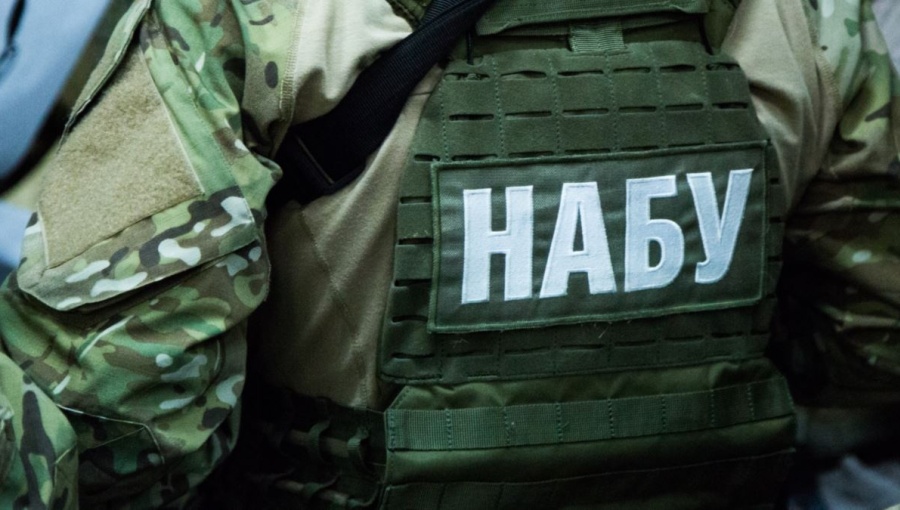
The removing the EU-mandated independence of Ukraine’s main anti-corruption bodies, the triumvirate of the National Anti-Corruption Bureau of Ukraine (NABU), the Specialized Anti-Corruption Prosecutor’s Office (SAPO) and the Anti-Corruption Court (ACC) that are the backbone of the fight against corruption. Both bodies will be subordinated to the presidentially appointed Prosecutor General Ruslan Kravchenko, a Zelenskiy loyalist.

The new law instantly sparked the first anti-government protests the country has since it was invaded by Russia over three years ago. “We chose Europe, not autocracy,” read one protestor’s banner. Another protester held a sign that said, “My father did not die for this.” The well-respected ANTAC anticorruption NGO published a statement condemning the law and an AI generated picture of half Zelenskiy face mirrored by the face of the notoriously corrupt former president Viktor Yanukovych who was ousted in the 2014 Euromaidan revolution.

The scandal comes at a time when the otherwise heroic wartime president has begun to lose support and has been accused of growing increasingly authoritarian. The crisis adds fuel to the speculation that this is the beginning of the end for Zelenskiy’s government and its war against Russia. Things have changed with the Trump administration, as following US President Donald Trump)’s “big announcement” on July 14, Zelenskiy has to convince his western allies to not only continue weapons supplies, but now to pay for them too.

In a televised address on July 23, Zelenskiy tried to deflect criticism by framing the law as necessary to purge the agencies of “Russian influence”.

“There is no rational explanation for why criminal proceedings worth billions have been ‘hanging’ for years.” The agencies, he added, “would still work” but needed to be made more effective.

This line was undermined by the fact that a string of raids and arrests of NABU officers by the Ukrainian Security Service (SBU), which is also directly under the president’s control was to investigate things like tariff abuses and not their work, which includes investigating the government and presidential executive for corruption, NABU said in a statement. Both the new law and the SBU raids on NABU and SAPO offices in the last weeks are widely seen as politically motivated.

New rallies against the law are planned for the coming days in Kyiv, Dnepropetrovsk and Lviv, the publication Zerkalo Nedeli reports. Sporting one of the strongest civil societies in the Former Soviet Union (FSU) that has already ousted two presidents, Ukrainian people are not known for backing down when they feel their rights are threatened.

EU backlash

People in Ukraine are back on the streets but Ukraine’s European partners were caught unawares by the new bill. However, as the implications started to sink in, the rebukes began to flow, albeit using muted language. Some analysts have already speculated that the controversy could endanger Ukraine’s EU accession bid, which as bne IntelliNews reported stalled last week after member states refused to open negotiations on the first cluster.

joint statement from G7 ambassadors in Kyiv said they were “closely following” the situation and had raised concerns with Ukrainian government officials.

German Foreign Minister Johann Wadephul, Ukraine’s strongest supporter in Europe, was more outspoken and specifically noted that this “complicates” Ukraine’s European integration.

"Limiting the independence of Ukrainian anti-corruption bodies complicates Ukraine's path to the EU. I expect Ukraine to consistently continue the fight against corruption. That is why I also met in Kyiv with the heads of NABU and SAPO," Wadephul said in a statement published by the German foreign ministry on X on July 23.

European Commissioner for Enlargement Marta Kos also came out strongly against the law, calling it a "serious step backwards." She also linked the law to Ukraine’s EU accession bid, stressing that the rule of law remains at the very heart of Ukraine's EU accession negotiations as part of the Fundamental Cluster, that Kyiv was already having trouble with in the EU screening process that just ended.

Later, after talking with Prime Minister Yulia Svyrydenko and Deputy Prime Minister for European and Euro-Atlantic Integration of Ukraine Taras Kachka, Kos stated that the EU would continue to work "with Ukraine on the necessary reforms in the area of the rule of law and progress on the path to the EU," Interfax reports.

The Czech Foreign Minister Jan Lipavsky, another normally ardent Ukraine supporter, lambasted the bill in public comments the day after it was signed.

"Fighting corruption is a vital part of the EU accession path. Ukraine belongs in Europe and our support goes to its people. But our support has never been and will never be a blank cheque for any actions of the government. I reminded [Ukrainian Foreign] Minister Andrii Sybiha of that today," he said on X.

EU Defence Commissioner Andrius Kubilius, also on X, noted: "In war, trust between the fighting nation and its leadership is more important than modern weapons - difficult to build and to keep, but easy to lose with one significant mistake by the leadership."

The Ukrainian branch of Transparency International stated the parliament´s voting through the bill undermines “one of the most significant reforms since 2014,” and will “damage trust with international partners” by "dismantling" the country’s anti-corruption architecture.

Andy Hunder, the chairman of The American Chamber of Commerce in Ukraine that represents a large number of foreign companies already working in Ukraine, urged Zelenskiy in a statement not to sign the proposed legislation.

“We were disappointed to see today's vote in @ua_parliament dismantle key safeguards protecting the independence of @nab_ukr and the Specialized Anti-Corruption Prosecutor's Office (SAPO). The adopted Draft Law 12414 threatens the independence of Ukraine's anti-corruption infrastructure and undermines trust in the country's anti-corruption efforts. We call on President @ZelenskiyUa to continue supporting the independence of anti-corruption institutions in Ukraine and not sign the proposed legislation,” he said in a post on social media.

The Kremlin was gleefully making hay from the controversy, and claimed a large amount of money from US and European taxpayers has been embezzled in Ukraine, Kremlin Spokesman Dmitry Peskov told reporters.

"It is obvious that a significant share of the financial assistance provided to Ukraine was stolen. Corruption is widespread in the country, meaning that the money of US and European taxpayers was misappropriated in Ukraine. This can be said with a high degree of confidence," the Kremlin spokesman said.


Why Ukraine's new anti-corruption law spells trouble for its EU accession hopes

Ukraine's new law risks imperilling its ambitions to join the European Union.
Copyright Omar Havana/Copyright 2025 The AP. All rights reserved.


By Jorge Liboreiro
Published on 

Ukraine's new law undermining the independence of two anti-corruption agencies spells trouble for its desire to join the European Union.

For the past three years, the European Union has invoked the mantra of "as long as it takes" to reaffirm, time and time again, its unyielding, all-encompassing support for Ukraine as it fights against Russia's brutal full-scale invasion.

That pledge was not merely rhetorical. It translated into financial assistance, weapons and ammunition, energy security, roaming services, a free-trade deal and temporary protection for refugees. The bloc's proposed seven-year budget features a separate, tailor-made fund worth €100 billion to help the country's long-term reconstruction.

But this week, that unbroken front cracked for the first time when the European Commission slammed, in no uncertain terms, a new law in Ukraine.

The law, passed through parliament at a speed that appeared to catch Brussels off guard, is designed to bring two anti-corruption bodies – the National Anti-Corruption Bureau of Ukraine (NABU) and the Specialised Anti-Corruption Prosecutor's Office (SAPO) – under the direct oversight of the prosecutor general, a political appointee.

The prosecutor general will now be allowed to select cases handled by NABU and SAPO and reassign them to other state entities, which critics say risks empowering the executive branch to sway and possibly derail high-profile investigations. The prosecutor general will also be able to give written instructions to the agencies.

The fact that the vote in parliament took place a day after the security services raided the NABU offices over allegations of Russian espionage added to the outrage.

Marta Kos, the European Commissioner for Enlargement, who is tasked with assessing the progress made by candidate countries, was the first to express her disapproval.

"Seriously concerned over today's vote in the Rada. The dismantling of key safeguards protecting NABU's independence is a serious step back," Kos said on social media.

The warning was stark, but futile. A few hours later, amid growing uproar from protesters across Ukraine, President Volodymyr Zelenskyy signed the bill into law.

"The anti-corruption infrastructure will work, only without Russian influence – it needs to be cleared of that. And there should be more justice," Zelenskyy said in his evening address, referring to the recent raids into the NABU offices.

"It is important that the Prosecutor General is determined to ensure that in Ukraine, the inevitability of punishment for those who go against the law is actually ensured. This is what Ukraine really needs."

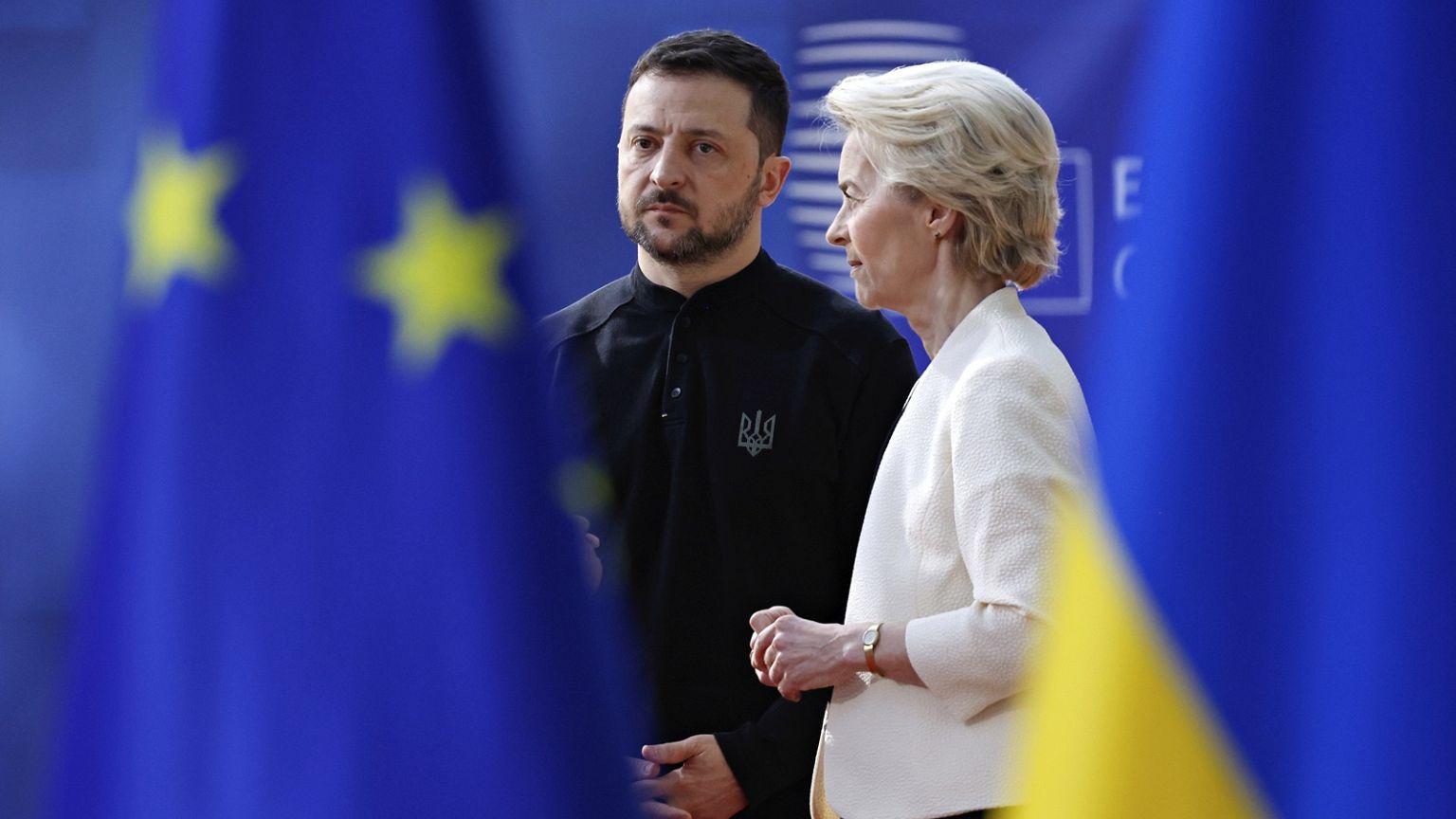
The following day, the extraordinary clash escalated when Ursula von der Leyen called Zelenskyy and demanded explanations about the contentious legislation.

"President von der Leyen conveyed her strong concerns about the consequences of the amendments," a spokesperson said. "The respect for the rule of law and the fight against corruption are core elements of the European Union. As a candidate country, Ukraine is expected to uphold these standards fully. There cannot be a compromise."

A few hours after the phone call, Zelenskyy promised to submit a new bill to "ensure the strength of the rule of law system", without giving further details.

Separation of powers

The hands-on interventions signal the high-risk gamble that Kyiv is taking.

The fight against corruption has been central to Ukraine's ambition to join the bloc. It was among the first issues raised by reporters and analysts when Zelenskyy, in the first days of Russia's war, submitted the membership application and remained a prominent subject as the debate among capitals gained traction.

Corruption has been a notoriously persistent problem in Ukraine since the collapse of the Soviet Union, when oligarchs and organised crime rushed to exploit the chaos of the political transition and pillaged the up-for-grabs sectors of the economy. Corruption has been detected in elections, the judiciary, the public administration, the education system and the business sector, creating an impression of widespread penetration.

Transparency International has consistently ranked Ukraine among Europe's worst performers on corruption. Although the country's score has moderately grown over the last decade, it remains outside the top 100.

Mindful of the formidable challenge, the Commission made strengthening the fight against corruption one of the seven prerequisites that Ukraine had to fulfil before formally starting accession negotiations.

Leaders agreed to launch talks in December 2023, despite Kyiv having made only partial progress on anti-corruption, de-oligarchisation and the rights of minorities.

Since then, Brussels has encouraged Ukraine to continue its efforts, which are essential to convince international donors and investors to bring capital into the nation.

The latest edition of the enlargement report, released in October 2024, found that Ukraine had "further improved" the credibility of its anti-corruption framework and had "strengthened the independence and the institutional capacity" of NABU and SAPO, which were created in response to the 2014 revolution.

NABU investigates top-level corruption, and its cases are overseen and prosecuted by SAPO. The cases are then tried by the High Anti-Corruption Court.

"NABU and SAPO have maintained their operational effectiveness and remain important institutional pillars in the anti-corruption infrastructure," the Commission said.

The report highlighted the fact that SAPO had become a "separate legal entity" from the prosecutor general's office and recommended that the head of SAPO be allowed to open investigations into members of the parliament "independently" from the prosecutor.

These elements are rendered null by the new law, which places the prosecutor general at the top of both agencies as the ultimate arbiter.

Conscious uncoupling?

The apparent backsliding threatens to worsen the already precarious state of Ukraine's European integration.

Hungarian Prime Minister Viktor Orbán has imposed an unassailable veto that prevents the country from opening the first cluster of accession negotiations, known as Fundamentals. That cluster also covers the fight against corruption.

Orbán has focused his opposition on the fact that Ukraine is a country at war and, in his view, fails to respect the rights of its Hungarian minority. The prime minister has branded the results of a national consultation as a "strong mandate" to freeze the bid.

In response to Orbán's actions, the Commission came forcefully to Kyiv's defence, arguing there were "no objective reasons" to block the first cluster.

"Things are really clear: as we speak, Ukraine is delivering on reforms in the most difficult circumstances that one can imagine," a spokesperson said earlier this month.

The row over the anti-corruption reform provides Orbán and other sceptics with a fresh argument to derail the accession process and, perhaps inevitably, fuels speculation about a potential decoupling of Ukraine's and Moldova's bids.

The two Eastern countries applied for EU membership shortly after Russia launched the full-scale invasion and were declared candidates on the same day in June 2022. Since then, they have moved together as a "couple".
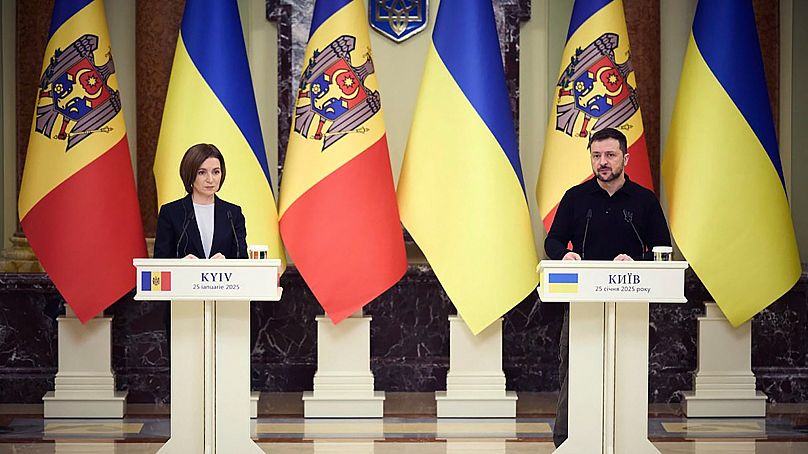

The accession bids of Ukraine and Moldova are considered coupled. AP Photo

The Commission considers both equally ready to open the first cluster and is waiting for member states to give their unanimous go-ahead. Notably, Orbán has not voiced any reservations about Moldova's ambitions, which means Chișinău could unlock the next stage of negotiations while Kyiv waits for the veto to be lifted.

Until now, member states have been reluctant to decouple the bids, fearing that doing so would amount to a big victory for Orbán and a stinging defeat for Ukraine. The dispute over the anti-corruption legislation could now prompt a change of mindset.

"Events in Ukraine are extremely worrying and risk undermining Ukraine's EU accession process, which is already stalled due to Hungary’s veto on opening the fundamentals cluster," said Amanda Paula, a senior policy analyst at the European Policy Centre (EPC).

"I believe it will give momentum to discussions about uncoupling Moldova from Ukraine. It would be unfair to hold back Moldova because of developments in Ukraine."

The fight against corruption is pivotal not only to Ukraine's accession – it is also ingrained in the commitments the country made to the European Commission as a condition for receiving gradual payments under a dedicated €50 billion fund.

These payments, crucial to sustaining public services and paying for salaries, represent a powerful leverage should Brussels decide to escalate the showdown until Kyiv reverses the legal changes and restores the independence of NABU and SAPO.

A Commission spokesperson said it was premature to speculate about a possible freezing of funds at this stage.

TWO TYRANTS

Syria’s transitional government requests support from Turkey in strengthening defence capabilities

Syria’s transitional government requests support from Turkey in strengthening defence capabilities
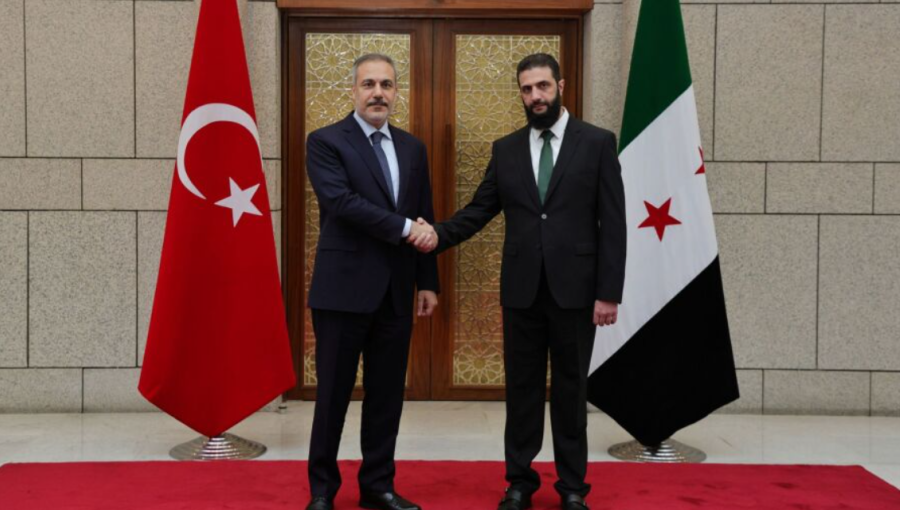
Hakan Fidan (left), Turkey's top diplomat, meets Syria's new leader Ahmad al-Sharaa in Damascus in December, two weeks after the fall of long-time president Bashar al-Assad. / Syrian transitional government
By bne IntelliNews July 24, 2025

Syria's transitional government has asked for Turkey's support in strengthening its defence capabilities, Turkish officials said on July 24, the Associated Press (AP) reported.

The reported request comes in the wake of sectarian violence experienced by the post-Assad country over the past two weeks, with clashes in the south leading to Israeli airstrikes, purportedly to protect a Druze population clashing with Bedouin tribes in Suwayda province. Those airstrikes included the bombing of the defence ministry and military General Staff HQ in Damascus and forces of the interim government. 

Turkey has accused Israel of wanting a "fragmented" Syria on its doorstep in line with selfish Israeli interests, while Israel has accused Turkey of wanting to make a "protectorate" out of Syria. 

Syria was seeking assistance also to counter "terrorist organisations," including Islamic State, said the quoted defence officials, who, the AP reported, spoke only on condition of anonymity because they were not authorised to discuss the issue publicly.

Turkey, which closely supports the transitional government in Damascus, was working toward providing training, advisory services and technical support to help bolster Syria’s defense capacity, the officials reportedly added.

"As long as our brotherly country, Syria, requests it, Turkey will continue to stand firmly by its side," Omer Celik, spokesman for Turkish President Recep Tayyip Erdogan´s ruling party, told reporters when asked to comment on the Syrian request.

"The heroic Turkish armed forces will fulfill this both to assist our Syrian brothers and to prevent instability there, which is vital for Turkey´s national security," he said.

Turkey, though, has been somewhat embarrassed by Israeli actions in Syria since the toppling of long-time Syrian president Bashar al-Assad in December in a military offensive led by jihadist militia supported by Ankara. When Israel got wind of Turkish plans to take over some Syrian air bases, it bombed the bases.

In an interview with the AP earlier this week, the US envoy to Syria and ambassador to Ankara Tom Barrack said Washington has "no position" on the prospect of a defence pact between Syria and Turkey, a Nato member.

"It's not in the US business or interest to tell any of the surrounding nations with each other what to do," he said.

Ankara has also got behind an agreement struck between the interim Syrian administration and the Kurdish-led Syrian Democratic Forces, or SDF, who control the northeast of Syia, for the latter to integrate into Syria's new national army. However, implementation of the deal appears to have stalled. A major sticking point seems to be whether the SDF will remain a cohesive unit in Syria's army or be dissolved entirely. Turkey has cautioned that the SDF must stick to the deal.

On July 24, Turkish Foreign Minister Hakan Fidan repeated past warnngs to Kurdish and other groups in Syria against exploiting tensions to pursue autonomy. He cautioned that any such attempts to divide Syria would be taken as a direct threat to Turkey's national security, which could spark an intervention.

AUSTERITY HANGOVER

Annual UK cost of mental health disorder PTSD likely tops £40 billion


But figures based on 2020-21 data and don’t include all indirect costs; Societal and financial impacts of increasingly common condition “gravely” undervalued


BMJ Group


The annual UK cost of the mental health disorder PTSD is likely to top £40 billion, but the figures are based on 2020-1 prevalence rates—the most recently available—and don’t include many indirect costs, such as family support services, finds a cost analysis published in the open access journal BMJ Open.

The societal and financial impacts of this increasingly common condition have been “gravely” undervalued, conclude the researchers. 

Post-traumatic stress disorder, more commonly referred to as PTSD, usually develops after witnessing or experiencing a traumatic event or being subjected to a more systematic pattern of trauma or abuse, explain the researchers. 

Those experiencing physical violence, life-threatening injury, sexual abuse, active military combat, first responders and aid workers in humanitarian disasters may all be at risk.

Yet, despite an anticipated rise in cases of 77,000 a year, primarily due to the COVID-19 pandemic, PTSD continues to be misunderstood, stigmatised, and often misdiagnosed, say the researchers. Evaluating its economic toll is therefore crucial to inform policymakers about the importance of PTSD and the provision of care, they add.

They calculated an overall lifetime prevalence of around 4% for 2020-21—equivalent to 6,665,000 people who are expected to develop PTSD at some point in their life—from available military and civilian data. 

And they searched databases for all types of quantitative studies evaluating the economic and societal costs associated with PTSD, published in English between 1990 and 2023.

Five studies involving millions of people were eligible for the analysis. From these they extracted and pooled direct cost components: hospital stays; drug treatment; family doctor (GP) and specialist (psychiatrist) time; treatment for alcohol and/or substance misuse; costs of counsellors and psychologists.

Similarly, they extracted and pooled indirect cost components: homelessness; disability living allowance; unemployment allowance; lost productivity at work (absenteeism and presenteeism); domiciliary care; social worker costs (mental health); and premature death.

At 2020-1 prices, they estimated the annual average direct excess costs for a patient with PTSD in the UK to be around £1,118, and the annual average indirect costs to be around £13,663, adding up to a total of £14,781, but ranging from around £11,373 to £16,797. 

Based on the prevalence figures for 2020-1, this comes to more than £40 billion a year, they calculate.

The researchers acknowledge that PTSD is often present with other mental health conditions, and disentangling the costs due to PTSD alone is difficult. The severity of the condition (and therefore associated treatment costs) also varies.

“Certain costs are hard to measure, such as stigma and discrimination, for which we have provided only a qualitative analysis. These in turn may lead to indirect costs, such as reduced income and higher dependence on social security assistance,” they write. 

But they say: “Recognising the hidden costs of PTSD (eg, in criminal justice, family support services and education) for which we were unable to provide estimates, suggests the actual economic burden is higher than estimated here,” adding: “we are gravely underquantifying the cost of this increasingly prevalent condition.”

They suggest: “The UK would do well to consider the need for the collection of high-quality cost data to more accurately assess the different costs associated with this condition. These include the involvement of individuals affected by PTSD in criminal activities, the stigma and discrimination they face, leading to social exclusion, the impact on personal relationships, and the effect on education, potentially limiting future opportunities.”

And they conclude that their findings underscore: “the need for increased awareness of PTSD, the development of more effective therapies, and the expansion of evidence-based interventions to alleviate the substantial disease and economic burden of PTSD in the UK.”


Early warning system could prevent a stink when it comes to street tree roots blocking sewer pipes


Tree roots the most common cause of pipe failures worldwide


SCIENCE FOR EVERYDAY LIFE


University of South Australia


Researchers at the University of South Australia are calling for a major shift in how cities manage tree root intrusions into household sewer systems that cost millions of dollars in repair bills each year.

new study by UniSA’s Sustainable Infrastructure and Resource Management (SIRM) team reveals that current maintenance strategies are falling short, resulting in repeated pipe blockages, environmental contamination, and mounting damage bills.

Instead, the engineering researchers propose a smarter, preventative approach using predictive analytics to identify high-risk areas before damage occurs.

In a new paper published in Sustainability, the UniSA team reviewed global literature and maintenance practices, concluding that removing tree roots using mechanical and chemical measures is not the best solution. Roots can grow back, and the damage is costly to fix.

In Adelaide alone, SA Water reported more than 30,000 cases of tree root intrusion in 2020, accounting for nearly 60% of all sewer failures. Each year, the utility spends approximately $5 million on repair works and maintenance caused by blocked sewer pipes.

Tree root intrusions are a global headache, costing countries millions of dollars each year. Worldwide, remediation options include mechanical and chemical techniques to clear pipe systems and control root growth, as well as proactive approaches such as planting trees well clear of pipes.

But the traditional responses are only temporary fixes, according to UniSA Water Science and Engineering Professor Chris Chow, a senior author on the paper.

“Tree roots are the most common cause of pipe failures in many cities around the world,” Prof Chow says.

“The challenge is that cutting roots or applying chemicals are not permanent solutions. The chemicals can contaminate the soil, and the roots often grow back more aggressively.”

Instead, his team is advocating for a predictive approach, analysing key risk factors – such as pipe age, material, diameter, soil type, tree species and climate conditions – so that water utilities can model where tree root problems are most likely to occur.

“It’s essentially an early warning system,” says lead author Oliver Yang, a Master of Research graduate at UniSA.

“We can map out high-risk zones and guide smarter planting choices, better pipe materials and targeted maintenance,” Yang says.

While predictive models already exist for pipe failures based on material or age, few incorporate environmental or vegetation factors. This gap is significant, the researchers say, given the complex interactions between roots, soil, moisture and infrastructure.

Fast growing species such as eucalyptus, poplars, willows, jacarandas and desert ash are particularly aggressive, with root systems that can spread many metres in search of water – especially in dry or compacted soils.

Trees such as hackberry, varnish or lacquer species, brush box, willow myrtle and kurrajong trees are less intrusive and better choices for street planting.

“Globally, cities are spending millions each year fixing the same problems over and over,” says Yang. “With the right data and modelling, we can address this, saving money, protecting infrastructure and still enjoying the benefits of urban greenery.”

The researchers are calling for more region-specific studies and the development of locally-calibrated predictive tools that incorporate tree, pipe, soil and environmental factors.

Review of Root Intrusions by Street Trees and Utilising Predictive Analytics to Improve Water Utility Maintenance Strategies’ is published in Sustainability. DOI: 10.3390/su17125263