Thursday, July 24, 2025

Will An Iran Cyber Attack Panic  Usher In A New Patriot Act? – OpEd


By 

By Nicholas DeSimone


In a 2007 interview, retired General Wesley Clark revealed that the Pentagon had a plan to “take out seven countries in five years”—Iraq, Syria, Lebanon, Libya, Somalia, Sudan, and Iran. Over the following two decades, the first six were bombed, destabilized, or collapsed into civil war. Only Iran remains standing—resistant to Western central banking, culturally hostile to global usury, and guarding some of the world’s most ancient archeological sites.

Now, major media outlets such as Fox News and the Independent warn of a looming cyberwar, and we’re told to brace for a potential Iranian cyberattack on the US or its allies, aimed at critical infrastructure such as power and water systems. But rather than ask how to defend against it, we should ask something more: Is Iran really the culprit? Or is it the designated scapegoat for an event designed to advance elite control both abroad and at home?

Recent history provides a clear pattern: When crises erupt, state and corporate power rapidly consolidate. After 9/11, the US government ushered in the Patriot Act, warrantless surveillance, and indefinite detention, all in the name of security. The 2008 financial collapse delivered historic bank bailouts and accelerated economic consolidation. In 2020, the covid pandemic normalized lockdowns, QR-code health passes, and calls for digital identity systems tied to medical records. In the wake of the Capitol riot, proposals exploded for increased censorship, AI-powered surveillance, and policing of online speech. As the author Naomi Klein outlined in her seminal work, The Shock Doctrine, elites routinely exploit crises to fast-track policies that populations would otherwise reject.

The current cyber panic fits the mold. If a catastrophic digital event were to hit—disabling hospitals, banks, or energy systems—the solution being quietly preloaded into public discourse is the rollout of global “Digital ID” infrastructure. The World Economic Forum has explicitly highlighted how global digital IDs for people and objects are essential for trade digitization and establishing a global digital economy. In its Digital Identity Blueprint, the WEF outlines a framework linking online activity, financial services, travel permissions, and even behavioral data to a single identity. But what’s sold as “security” is, in fact, the foundation of a technocratic control grid.

If implemented, Digital ID would function as a master key to everything: your money, health records, online access, and even your ability to travel. In time, it could merge with carbon quotas and social credit scoring systems like those piloted in China. An algorithm, not a constitution, would govern your rights. One wrong opinion, and you risk being shut out of society, not by police, but by code. In a world where social media mobs enforce ideological purity, public humiliation becomes the new policing mechanism. You self-censor, you self-surveil, and eventually, you self-govern—on someone else’s terms.


But there’s a core problem with the “Iran did it” cyberattack narrative: Iran lacks the capability. Iran’s cyber warfare infrastructure is far less sophisticated than that of the US, Israel, Russia, or China. The Harvard Belfer Center’s National Cyber Power Indexplaces Iran low in its global rankings. While Iran may be able to execute nuisance-level hacks, it is not in a position to disable critical US infrastructure. So if a major cyberattack does occur, blaming Iran may serve a political purpose—not reflect reality.

Iran is a convenient villain, but there are deeper reasons why it is a strategic target for regime change. It remains one of the few nations that has long resisted integration into the Western-led financial system. In 1983, Iran converted its entire banking system to comply with sharia law, meaning interest (riba) is officially banned. Unlike other Muslim-majority countries that broadly follow AAOIFI standards, Iran enforces its own system, diverging significantly from global Islamic banking norms.

Like Gaddafi’s Libya—which was invaded after proposing a pan-African currency backed by gold—Iran represents a break from IMF-led global monetary policy. Moreover, its Islamic banking system bans charging interest on loans—a core feature of Western debt finance.

Iran is also home to some of the oldest archeological sites on earth, including Persepolis and Elamite ruins that predate much of recorded history. When the US invaded Iraq in 2003, within weeks, the Iraq Museum was raided and over 15,000 artifactsvanished—many never recovered. Some believe these invasions are not just about oil or politics but about seizing control over ancient artifacts.

A war with Iran would serve two goals simultaneously. On the foreign front, it would install a Western-aligned central bank, crack open Iranian markets, and gain access to cultural and historical treasures. At home, a cyberattack blamed on Iran would be used to justify Digital ID rollouts, tighter control of online spaces, and the erosion of civil liberties—all in the name of “security.” This dual agenda mirrors what happened with Libya, Iraq, and even post-9/11 America: a foreign enemy is defeated, and domestic populations quietly lose more freedom.

Iran may not launch a cyberattack; it may not even want to. But if such an attack occurs, and the media rushes to blame Tehran, we should look deeper. Who truly benefits? Who has the capability? Who’s been laying the groundwork for decades?

The real question isn’t, will Iran hack us? It’s this: Will you surrender your freedom when they say Iran did?


  • About the author: Nicholas DeSimone is a Public Relations Associate with Young Voices. He holds a BA in PPE from the University of Pennsylvania and has worked with free-market think tanks including Reason Foundation, Independent Institute, and the Grassroot Institute of Hawaii. His work has appeared in the Washington Examiner, The Daily Caller, and Foundation for Economic Education. You can follow him on X at @nickyd8181.
  • Source: This article was published by the Mises Institute

MISES

The Mises Institute, founded in 1982, teaches the scholarship of Austrian economics, freedom, and peace. The liberal intellectual tradition of Ludwig von Mises (1881-1973) and Murray N. Rothbard (1926-1995) guides us. Accordingly, the Mises Institute seeks a profound and radical shift in the intellectual climate: away from statism and toward a private property order. The Mises Institute encourages critical historical research, and stands against political correctness.
CAPITULATION TO FASCIST THREAT


Columbia University agrees to pay more than $220M in deal with Trump to restore federal funding


Copyright AP Photo

By Euronews with AP
Published on 24/07/2025 - 

Also in the settlement is an agreement to ask prospective international students “questions designed to elicit their reasons for wishing to study in the United States,” and establishes processes to make sure all students are committed to “civil discourse.”

Columbia University said on Wednesday it had reached an agreement with the Trump administration to pay more than $220 million (€186.76 million) to resolve a dispute over federal research funding pulled amid accusations of antisemitism on campus.

Under the agreement, the Ivy League school will pay a $200 million (€169.79 million) settlement over three years, the university said.

It will pay an additional $21 million (€17.83 million) to settle alleged civil rights violations against Jewish employees that have occurred following the October 7, 2023 Hamas attack on Israel, according to the White House.

“The agreement marks an important step forward after a period of sustained federal scrutiny and institutional uncertainty,” acting university president Claire Shipman said.

The university had been threatened with the potential loss of billions of dollars in government support, including more than $400 million (€339.62 million) in grants cancelled earlier this year.

Columbia’s alleged failure to address antisemitism on campus during the Israel-Hamas war was cited as the reason behind the funding being pulled.

Since then, Columbia has agreed to a series of conditions including a revision of its student disciplinary process and the adoption of a contentious, federally endorsed definition of antisemitism. This would apply not only to teaching but also to a disciplinary committee that has been investigating students critical of Israel.
RelatedDetained Columbia University student calls arrest ‘anti-Palestinian racism’
US arrests and seeks to deport Columbia University pro-Palestinian student protest leader

Wednesday’s agreement – which does not include an admission of wrongdoing – codifies those reforms while preserving the university’s autonomy, according to Shipman.

The agreement also includes a review of Columbia’s Middle East curriculum to make sure it was “comprehensive and balanced” and appointing new faculty to its Institute for Israel and Jewish Studies.

It also promised to end programmes “that promote unlawful efforts to achieve race-based outcomes, quotes, diversity targets or similar efforts.”

In a post Wednesday night on his Truth Social platform, President Donald Trump said Columbia had “committed to ending their ridiculous DEI policies, admitting students based ONLY on MERIT, and protecting the Civil Liberties of their students on campus.”

He also warned, without being specific, “Numerous other Higher Education Institutions that have hurt so many, and been so unfair and unjust, and have wrongly spent federal money, much of it from our government, are upcoming.”

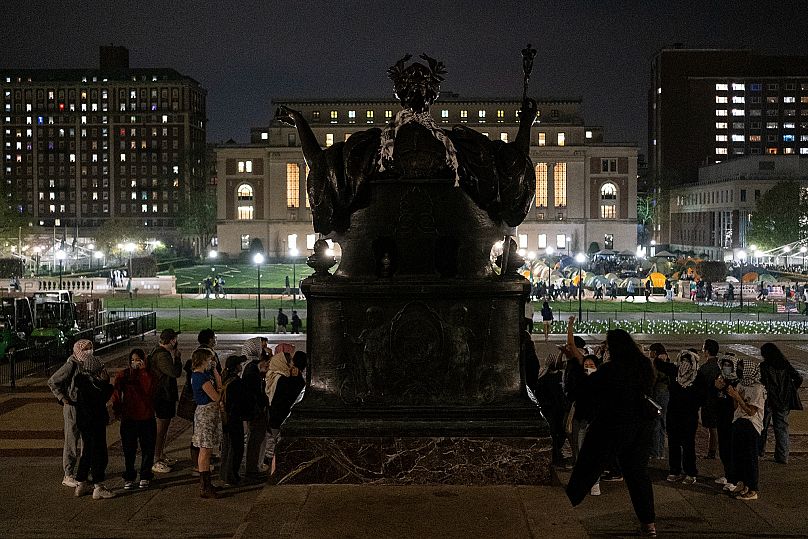
Student protesters with the Gaza Solidarity Encampment place a keffiyeh on Columbia University's Alma Mater on Tuesday, April 30, 2024 in New York. AP Photo


Crackdown following Columbia protests

The agreement between the leading US university and the Trump administration follows months of negotiations at the more than 270-year-old university.

It was among the first target of Trump’s crackdown on pro-Palestinian campus protests and on universities that he alleges have allowed Jewish students to be harassed and threatened.

Columbia’s own antisemitism task force had found that Jewish students had faced verbal abuse and ostracism during the 2024 demonstrations.

However, other Jewish students taking part in the rallies as well as protest leaders said they weren’t targeting Jews but instead criticising the Israeli government and its war in Gaza.
Exclusive: Elon Musk’s X fails to deal with Russian disinformation, breaching EU rules, study says


Copyright AP Photo/Rick Rycroft, File

By Pascale Davies
Published on 23/07/2025 -

Some 125 reports of Russian disinformation were reported to X, but only one was removed. The rest went largely ignored.

More than 100 pieces of content published on X from Russian state media and disinformation actors that fail to comply with European rules still appear on the social media platform despite being reported to X, according to a new report.

The report commissioned by pan-European non-profit group WeMove Europe, which was shared exclusively with Euronews, found “125 clear sanction-violating posts” on the Elon Musk-owned platform.

Some of the posts included programmes from the Russian state broadcaster Russia Today (RT), which has been banned by the European Union since the 2022 invasion of Ukraine.

In one instance, the Russian Ministry of Foreign Affairs account on X shared an excerpt from a documentary produced by RT, which shared a false narrative about an Adolf Hitler collaborator who was “elevated to the rank of national hero by the Kyiv regime”. The post also provided a link to bypass sanctions and access the full film on Telegram.

The researchers behind the paper had reported to X all the content deemed illegal under Europe’s Digital Services Act (DSA), the bloc’s digital transparency rules. The report found that only 57 per cent of the reports of illegal content received acknowledgement receipts, which breaches the DSA.

Among the 125 reports, only one post was removed by X. The company said that there was no violation of EU law.

Related Elon Musk’s X says French probe into algorithm is ‘politically motivated’

In some cases, X responded to the researchers' complaints within two minutes, the report said, suggesting that automation is playing a big role in X’s content moderation.

The European Commission, the EU’s executive body, launched a formal investigation into X this year for breaching the DSA and said it would finalise the investigation before the summer recess, which begins on July 25.

However, the Financial Times reported last week that the Commission will miss this deadline as it aims to conclude trade talks with the United States.

Commission spokesperson Thomas Regnier told Euronews Next that it is continuing to investigate potential violations by X of the DSA's illegal content rules.

"The Commission is aware of these reports and is continuously assessing incoming information," Regnier said.

Earlier this month, the Commission told X it appeared to be in violation of other parts of the DSA, including "areas linked to dark patterns, advertising transparency and data access for researchers," Regnier added.

In January, French prosecutors also launched an investigation following allegations that X’s algorithm was being used for the purposes of foreign interference.

The researchers filed the reports to X on July 8 and 9, 2025. While they were met with automatic replies in most cases that X would look into their complaints, in the majority of them, they did not hear back.

Euronews Next has also contacted X for comment about the report but did not receive a reply at the time of publication.

Russia’s online war

Under the EU sanctions regime, it is prohibited to offer content hosting services for sanctioned entities, such as broadcasters or sanctioned individuals.

Russia has intensified its disinformation campaign in Europe since it invaded Ukraine in 2022, the researchers said.

Along with official Russian government accounts spreading fake news, there were also accounts likely operated by the “Social Design Agency,” a Russian company known to produce Russia’s influence campaign “Operation Doppelgänger,” as well as anonymous users repeatedly posting such material.
Related'Threat is ongoing' as Russian Doppelganger operation continues on X and Meta despite EU probe

“Overall, the volume indeed exploded [since the war]. It's much more significant,” said Charles Terroille, a project and investigative research officer at the fact-checking group Science Feedback who worked on the paper.

“A lot of the posts that we flagged to X are for instance, documentaries, if you can call them that, so 40-minute videos hosted on X that are Russia Today showing, for example, how Ukraine deserved it all or how [President] Zelenskyy and all the government people and officials in Ukraine are just fans of Nazi figures and all these widely false and reported stories that Russia is propping,” he told Euronews Next.

Terroille said another Russian method is to fabricate pages that look like well-known Western media outlets and spread them on X.

He added that fake news about public health and misinformation about COVID-19 vaccines are still running, among other topics, such as misinformation about the environment and are “absolutely weaponised” by Russia.

For Taïme Smit Pellure, a digital campaigner at WeMove Europe who led the report, the most shocking part of the research was that the content is also translated into people’s home languages, such as French, and is “everywhere” on X.

Related Does Ukraine’s first-in-Europe internet deal with Starlink mean more dependence on Elon Musk?

She told Euronews Next that both the Commission and X should be acting faster and that her organisation has reached out to the Commission but it has not had a “positive response yet”.

“We know they are working on this, we know they are, it's not like they're looking away completely, just taking their time because they want to do it right and we completely understand that,” she said.

Another recommendation for the Commission is for European governments to work together in a more coordinated manner to address this issue, said Saman Nazari, lead researcher of civic campaign group Alliance4Europe, who also worked on the paper.

“As long as we stay only working in our own little bubbles, we do not stand a chance against a multi-billion euro influence apparatus,” Nazari said.

His recommendation for X is that “there is not that much nuance. It's straight-up illegal content,” and that “it doesn’t take much time” to find such content and address it.

“This is incredibly low-hanging fruit,” he added.

Updated July 23: This story has been updated with comment from the European Commission.


France's first couple sue right-wing influencer over claims Brigitte Macron is transgender

SAME CLAIM MADE AGAINST HILARY CLINTON AND MICHELLE OBAMA
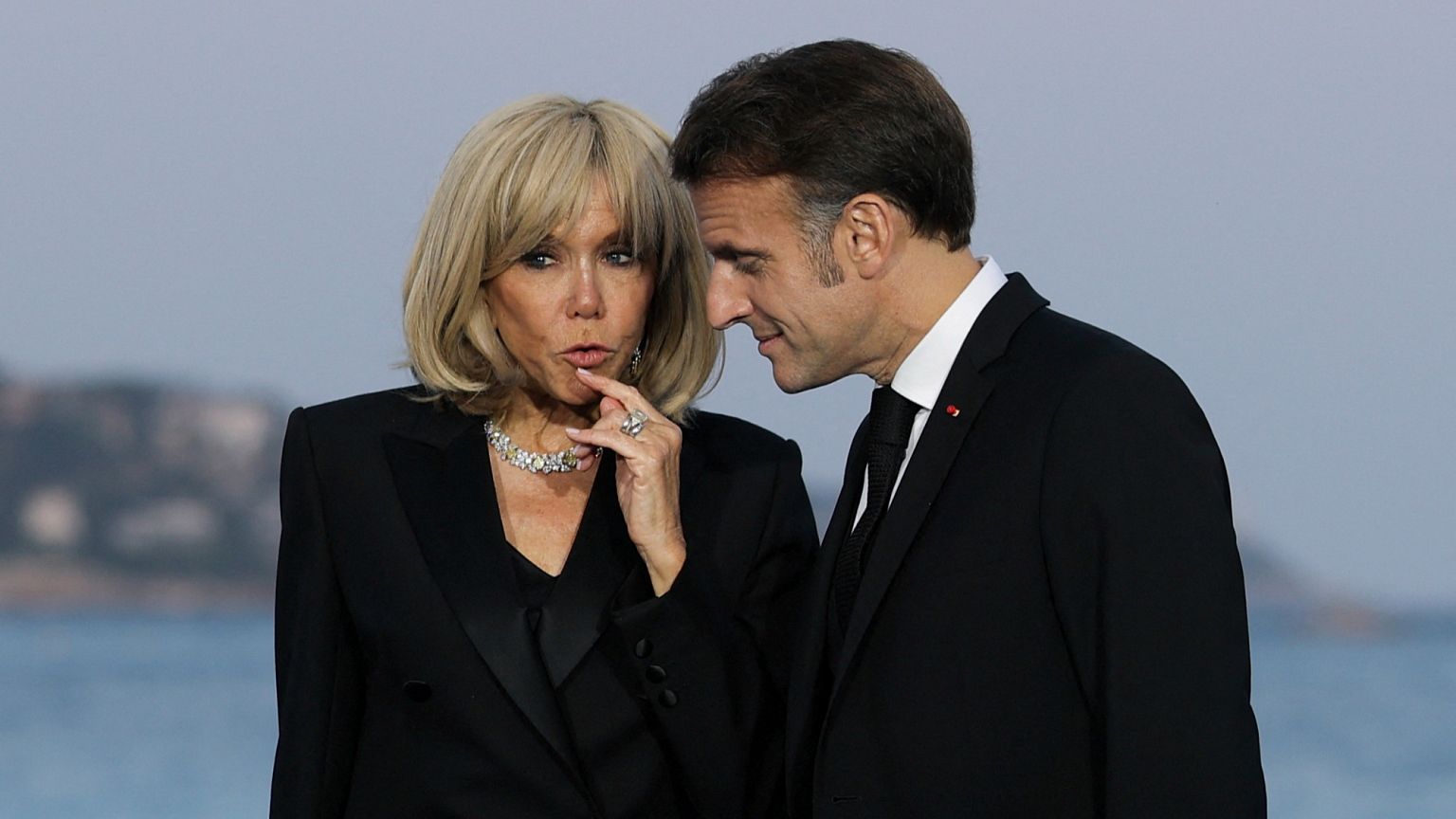
France's President Emmanuel Macron and his wife Brigitte photographed in Nice, 8 June, 2025
Copyright AP Photo

By Nathan Joubioux & Gavin Blackburn
Published on 

In the suit filed in the Delaware Superior Court, the Macrons said Owens had waged a "campaign of global humiliation" for personal gain to promote her podcast.

France's President Emmanuel Macron and his wife, Brigitte, filed a defamation lawsuit in the United States on Wednesday against right-wing podcaster Candace Owens, accusing her of spreading false rumours that the first lady is transgender.

In the suit filed in the Delaware Superior Court, the Macrons said Owens had waged a "campaign of global humiliation" and "relentless bullying" for personal gain to promote her podcast.

The Macrons said one of the lies repeated by Owens includes that Brigitte Macron was born Jean-Michel Trogneux, which is the name of her brother.

It also accuses Owens of falsely claiming that Emmanuel Macron was installed as president of France as part of a secret CIA plot


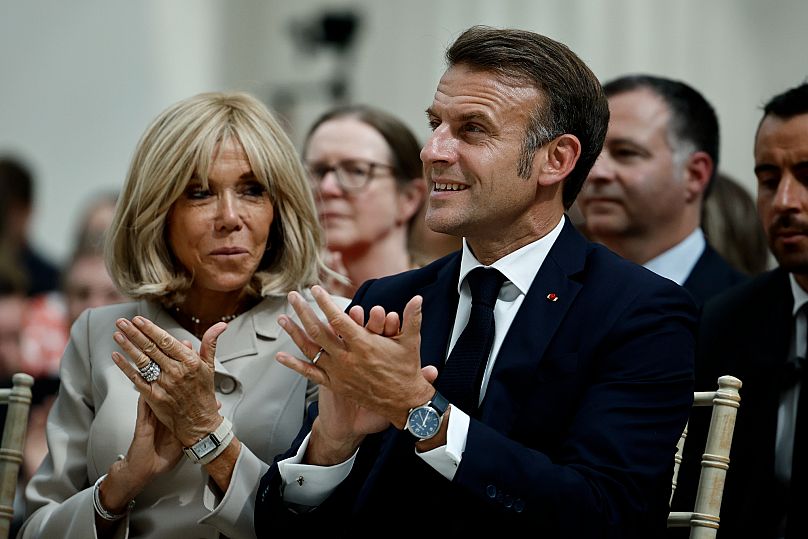
France's President Emmanuel Macron and his wife Brigitte during a visit to The British Museum in London, 9 July, 2025 AP Photo

"These outlandish, defamatory, and far-fetched fictions included that Mrs Macron was born a man, stole another person’s identity, and transitioned to become Brigitte; Mrs Macron and President Macron are blood relatives committing incest; President Macron was chosen to be the President of France as part of the CIA-operated MKUltra program or a similar mind-control program; and Mrs Macron and President Macron are committing forgery, fraud, and abuses of power to conceal these secrets," the lawsuit says.

The 22-count complaint is also seeking unspecified damages.

The suit is a rare instance of a world leader suing for defamation. US President Donald Trump has filed multiple defamation lawsuits, including one last week against The Wall Street Journal.

To win a defamation case in the US, public figures like the Macrons must be able to show that defendants engaged in "actual malice," meaning they knew that comments they had published were false.

Candace Owens speaks before President Donald Trump arrives during the Young Black Leadership Summit at the White House, 4 October, 2019 AP Photo

Neither Owens nor the Macrons have commented on the lawsuit.

This is not the first time Brigitte Macron has sued for defamation over claims she was born male

In 2021, she filed suit against two women, Amandine Roy and Natacha Rey, for spreading the transgender rumours online which subsequently went viral.

A lower court ordered both women to pay damages to both Macron and her brother, but that case ended up back in the headlines earlier this year after Macron took the case to the country’s highest appeals court after the Paris appeals court overturned the conviction.


EU Commission accused of mining secrecy in scramble for raw materials

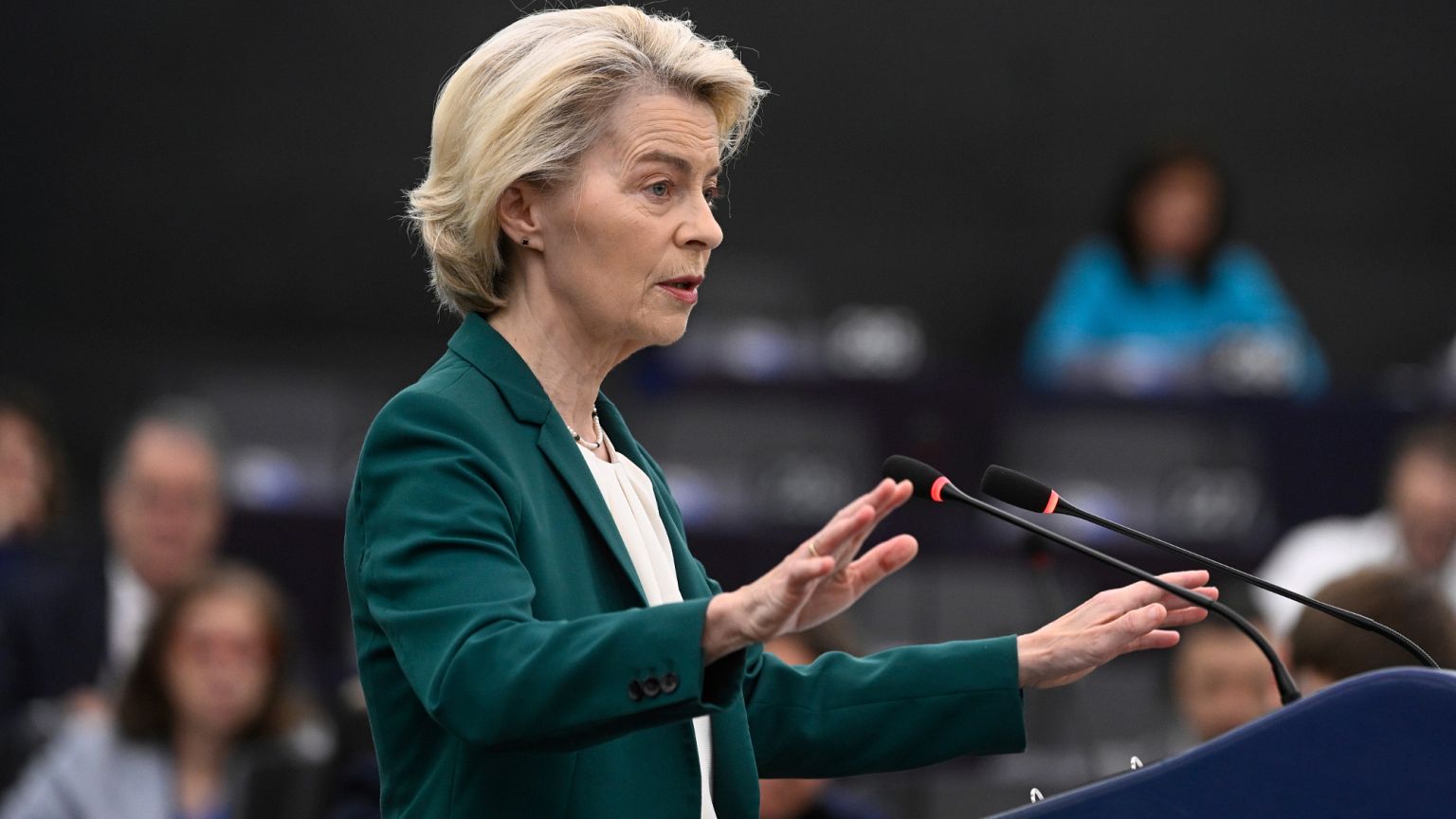
European Commission president Ursula von der Leyen delivers her speech during a statement on the preparation for the EU–China Summit, Tuesday, July 8, 2025.
Copyright AP Photo/Pascal Bastien


By Eleonora Vasques
Published on 

Green EU lawmakers say they cannot access impact assessments for ‘strategic’ mining projects approved under the Critical Raw Materials Act, accusing the European Commission of lacking transparency and accountability.

The European Commission has failed to ensure adequate public consultation in its scramble to approve projects to mine critical raw materials, according to four Green MEPs who claim the executive has rebuffed requests for information and that they are mulling legal action against the executive.

The EU adopted a Critical Raw Materials Act (CRMA) last May, listing minerals such as lithium and cobalt essential for electric cars and other clean energy applications, as well as digital and weapons technology.

The EU is attempting to reduce dependency on single suppliers for these - such as China and the US - with the implementation of 60 extraction projects: 47 in the EU soil and 13 outside the Union. 

China's leadership in raw material extraction and production offer fierce competition to EU ambitions for production of electric vehicles and clean tech products.

MEPs Maria Ohisalo, Sara Matthieu, Majdouline Sbaï and Ana Miranda, sought information on mining projects they considered problematic

“Despite several requests by MEPs and NGOs we have not been given access or provided information about the assessments of selected or upcoming projects,” the MEPs told Euronews, adding: “We believe that transparency in these matters is not only a legal obligation, but an integral part of institutional accountability."

Monitoring group has become an 'empty shell', claims MEP

“While the European Parliament has observer status in the CRM board, relevant information on the choice of projects has not reached us,” the French MEP Majdouline Sbaï from Les Ecologistes told Euronews.

The Critical Raw Material (CRM) board is a monitoring group (MG) within the European Parliament committee for international trade established to offer MEPs access to confidential Commission information regarding trade. 

“Since the start of the mandate, at least in the CRM MG, but I would say in all the monitoring groups we followed, the Commission keeps repeating information that is already made public. These MGs have thus become empty shells,” Sbaï told Euronews.

The four MEPs sent a letter to the Commission in early May, seen by Euronews, asking access to the impact assessments of the mining projects.

In addition, they also requested the names of the independent experts who conducted the assessments to verify their impartiality, the exact geographical locations of the projects, and details on how the Commission plans to monitor their progress.

The MEPs told Euronews they received a response later in May from Kerstin Jorna, the European Commission’s Director-General for Internal Market, Industry, Entrepreneurship and SMEs, which they described as vague and evasive.

Euronews reached the Commission for a comment without receiving a reply at the time of publication.

The projects

The six projects eyeballed by the MEPs are: the Mina Doade in Spain; the Barroso mining project in Portugal; the Sakatti project in Finland; another in the Allier region of France, and two outside the EU, in Serbia and New Caledonia.

Recursos Minerales de Galicia initially had its 2018 mining project for the “Alberta I” area rejected by regional authorities in 2020. In 2024, the company resubmitted the project under the name “Mina Doade”, and it has since been approved by the European Commission under the CRM.

Another project approved by the Commission is located in protected marshlands in Viiankiaapa, Finland. The site forms part of the EU Natura 2000 network of sites designated for bird and biodiversity conservation.

“Mining does not belong to protected areas,” Finnish MEP Maria Ohisalo told Euronews, claiming that mining such an area “destroys the very basis of nature conservation”.

A €1 billion lithium project in France’s Allier region, set to be the country's largest mining operation in decades, is sparking local controversy. Over five months of public debates, residents have raised concerns about water contamination, high energy use, and chemical risks.

“Fast-tracking extraction without pursuing strategies to moderate demand for raw materials and seeking consent of local communities is a recipe for disaster,” Belgian MEP Sara Matthieu told Euronews.

Similar concerns were raised for a project in Serbia where a year ago, the Jadar mining project was unblocked to become the EU’s largest supplier of lithium, amid strong protests.

Exclusive: Commission has change of heart on anti-discrimination directive

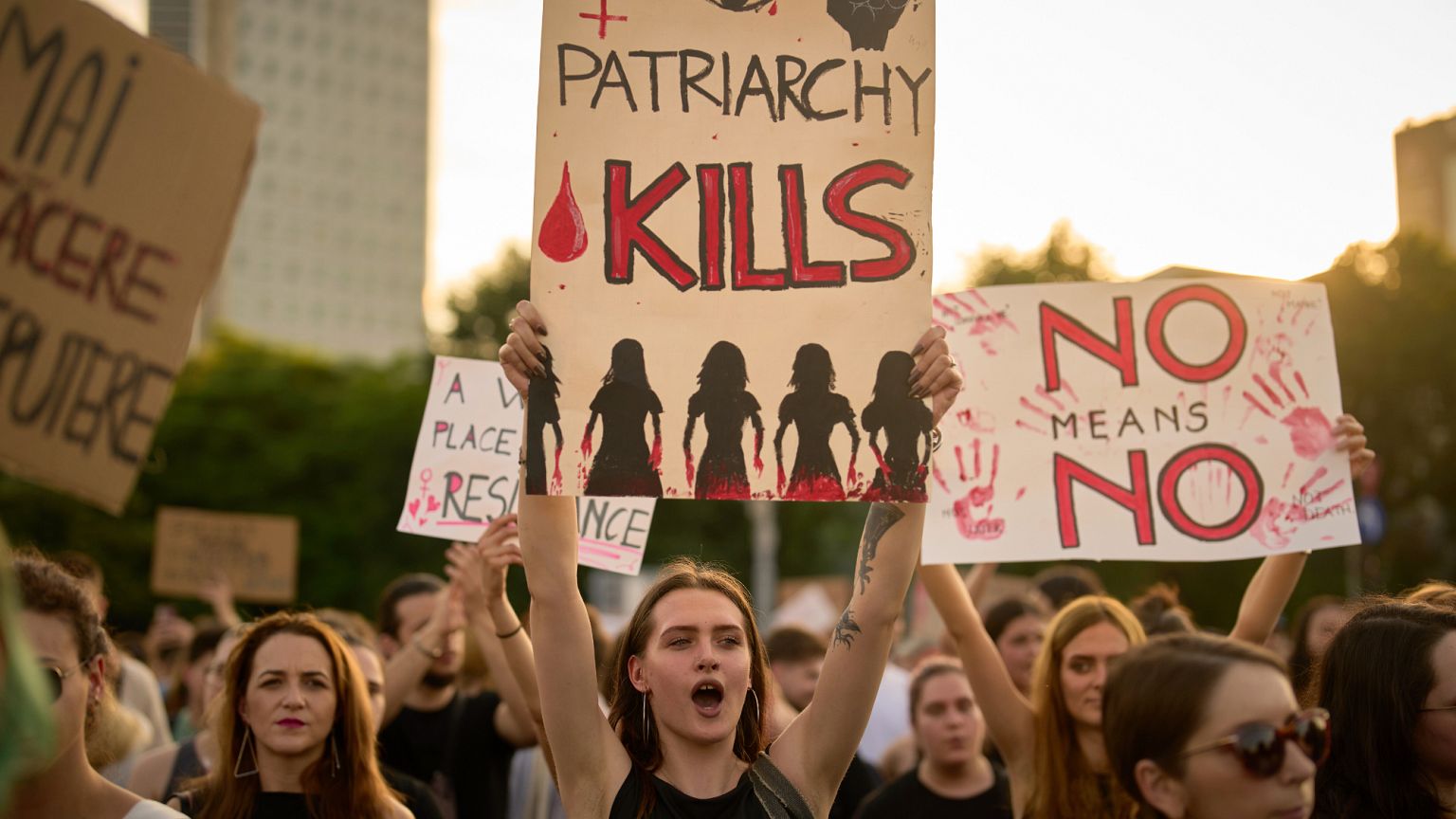
People hold banners during a protest joined by thousands of women's rights activists the government headquarters in Romania.
Copyright Copyright 2025 The Associated Press. All rights reserved.


By Marta Iraola Iribarren & Paula Soler
Published on 

The European Commission has revived its equal treatment directive after initially removing it from its 2025 plans. However, the proposal remains stalled in the Council, where there is still no unanimity.

The European Commission has revived its proposal for an Equal Treatment Directive, aimed at extending anti-discrimination protections beyond the workplace, after giving up on the idea earlier this year. 

“This directive would fill a major gap in the EU legislation on non-discrimination by expanding the protection against discrimination on the grounds of religion or belief, disability, age, and sexual orientation beyond the area of employment,” a Commission spokesperson told Euronews.  

First proposed by the Commission in 2008, the directive has remained stalled in the Council of the EU, despite progress in the European Parliament. 

In February, the EU executive proposed to withdraw the proposal from its work programme for 2025 as they saw “no foreseeable agreement”. 

The decision took civil society and other EU institutions by surprise, prompting swift criticism. 

At the time, Alice Bah Kuhnke (The Greens/Sweden), rapporteur on the file at the Parliament, called it “a scandal”, urging the EU to step up and push for fresh, ambitious legislation in the face of global backsliding on diversity and equality following decisions of Donald Trump’s administration. 

“This week’s decision severely undermines the EU’s commitment to building a Union of Equality at a time when marginalised communities require greater protection than ever,” read an open letter from civil society organisations working on anti-discrimination in Europe.  

Now, the EU executive has brought the talks back “having considered the supportive position expressed by the European Parliament and by a large majority of member states in the Council”. 

For the anti-discrimination proposal to advance to interinstitutional negotiations between the Parliament, the Commission, and the member states, the Council, which has so far remained divided on the proposal, much reach unanimity.

As Euronews reported in June, three member states — Czechia, Germany, and Italy — still oppose the draft compromise text. 

Despite making it a priority, the Polish Presidency failed to secure an agreement during its six-month term. 

As previously reported, a leaked document dated 6 June and seen by Euronews stated: “In the absence of any additional drafting suggestions from the Member States with outstanding concerns, the Presidency has not been able to propose a new compromise text.” 

According to a report by the European Parliamentary Research Service (EPRS), adopting a "horizontal equality directive" could generate up to €55 million per year, improving health outcomes, educational attainment, and social cohesion for individuals at risk of discrimination. 

It now falls to the Danish Presidency to reinitiate the discussions. Denmark has confirmed it will seek the required unanimity in the Council and that the directive will be discussed at the social affairs ministerial meeting in December.

Wildfire kills 10 firefighters and rescue workers in Turkey


Copyright Cengiz Malgir/AP

By Anil Can Tuncer
Published on 24/07/2025 -

The fatalities bring Turkey's wildfire death toll this year to 13, as experts warn that deadly blazes fuelled by strong winds, extreme heat and dry conditions will become more common due to climate change.

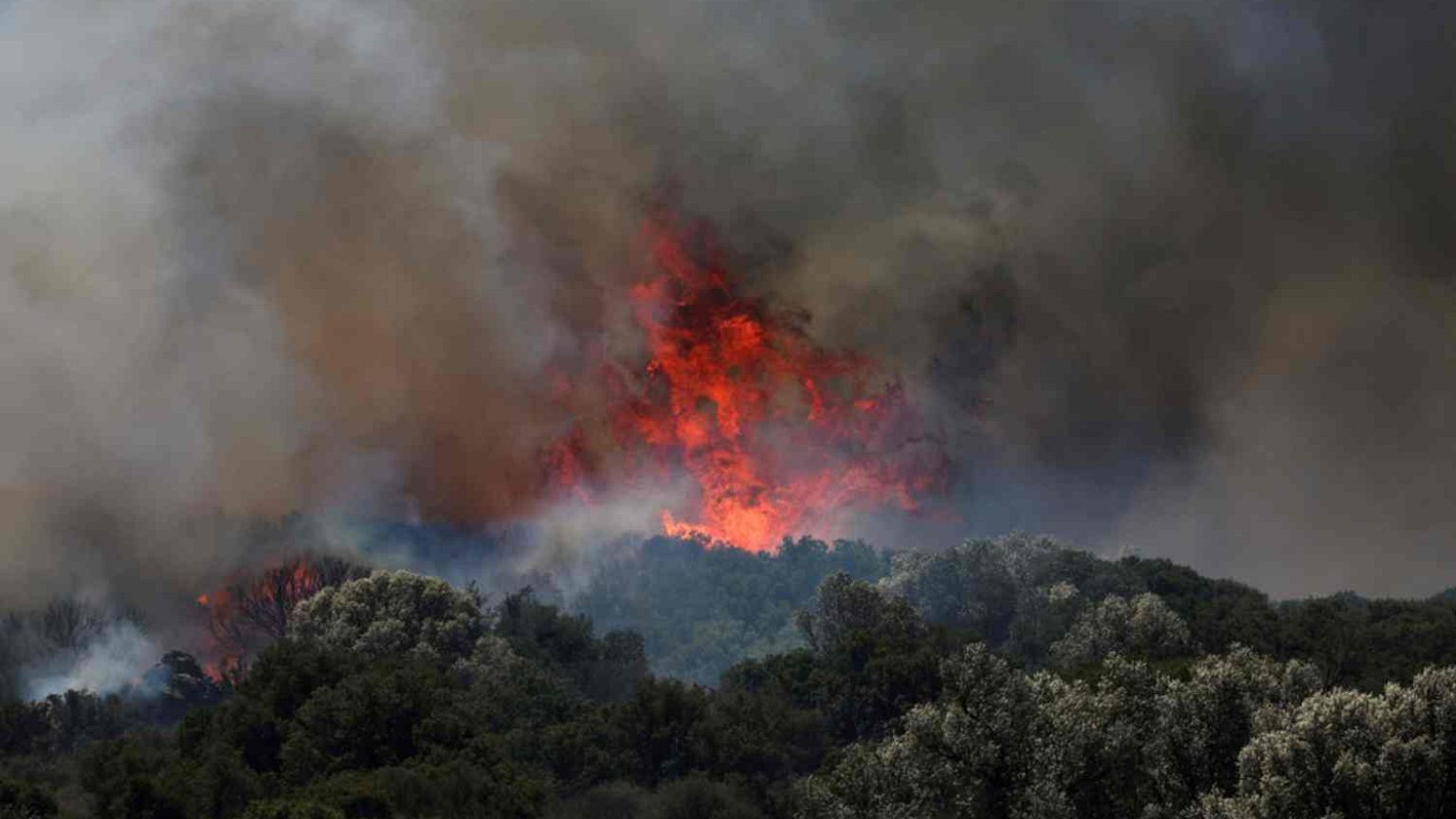
At least ten firefighters and rescue workers were killed and 14 others injured on Wednesday while trying to contain a wildfire in north-western Turkey, the country's forestry minister said.

The fire broke out in a forested area of Eskisehir province. Forestry Ministry Ibrahim Yumakli said five of the dead were forestry personnel and five were members of the AKUT rescue organisation.

The fatalities bring Turkey's wildfire death toll this year to 13, as blazes fuelled by strong winds, extreme heat and dry conditions continue to spread.

Yumakli said a sudden shift in wind direction caused the flames to engulf the group. The cause of the fire was not immediately known.

"Starting tomorrow, we are facing extraordinary temperatures and extreme wind shifts. Once again, I call on all 86 million citizens to be vigilant and exercise extra caution," he said.

Turkish President Recep Tayyip Erdogan said the victims had fought "to protect our forests at cost of their lives."

The country's justice minister said two prosecutors had been assigned to investigate the incident.

A wildfire rages across a forested area near Cavuslar village, in Karabuk district, northwest Turkey, Wednesday, July 23, 2025 AP Photo

Turkey has been battling wildfires since June 26. Earlier this month, an elderly man and two forestry workers were killed in a blaze near the town of Odemis in Izmir province.

Authorities said seven wildfires were still active across the country on Wednesday.

Turkey often faces forest fires in the summer months amid rising temperatures. Particularly in Central Anatolia, the Aegean and Mediterranean regions, fires threaten both natural and human life. In 2021, largest forest fires destroyed hundreds of thousands of hectares of land there.

Experts warn that such fires are becoming both more frequent and more destructive due to climate change.B.


India gets ready for the worst

India gets ready for the worst
/ Giorgos Barazoglou - Unsplash
By bno - Mumbai Office July 24, 2025

India’s Reliance Industries Ltd. is facing renewed scrutiny over its crude procurement practices following the European Union’s latest round of sanctions targeting diesel derived from Russian oil, Bloomberg reported.

In an unusual move, Reliance recently acquired a cargo of Murban crude from Abu Dhabi—a premium variety it rarely buys—shortly after the EU rolled out its latest sanctions package last week. Traders noted that the purchase came swiftly in response to the upcoming restrictions, which will ban diesel produced from Russian-origin crude, even if refined outside of Europe. The sanctions are set to take effect on January 21, 2026.

Reliance, led by billionaire Mukesh Ambani, typically sources discounted Russian Urals and heavier Middle Eastern grades. However, people familiar with the company’s plans told Bloomberg that Reliance has now begun exploring alternative suppliers to reduce its dependence on Russian barrels, which have accounted for nearly half of its imports this year, according to data from Kpler.

Since Russia’s invasion of Ukraine in 2022, Indian refiners—particularly Reliance—have capitalised on European avoidance of Russian oil, purchasing it at steep discounts and refining it into products such as diesel for re-export, including to Western markets. Roughly 20% of Reliance’s refined product exports are shipped to Europe, placing the company in direct focus under the EU’s incoming rules.

While the recent Murban crude purchase hints at an early pivot, it remains uncertain how Reliance plans to substitute the nearly 600,000 barrels per day of crude it typically processes. Traders cited by Bloomberg said that the company has started to examine more supply options from the Middle East but acknowledged that securing long-term, competitively priced alternatives at that scale would be a significant logistical and financial undertaking.

Further intrigue emerged when an Airbus jet owned by Reliance Industries was tracked landing at Moscow’s Vnukovo airport on July 23 morning—its first flight to Russia since December, according to FlightRadar24. The nature of the visit and whether Ambani was aboard remain unconfirmed. A Reliance spokesperson declined to comment on either the flight or the company’s evolving crude strategy.

Meanwhile, the Indian government has voiced reservations about the new EU measures. India’s Foreign Secretary Vikram Misri stated earlier this week that there must be “balance” when implementing secondary sanctions on Russian oil and gas.

As the January 2026 deadline approaches, Reliance’s sourcing strategy and its ability to adapt to changing geopolitical and regulatory pressures will be closely watched by the global energy market, Bloomberg noted.