Friday, August 01, 2025


Swan Hellenic Regains Ship After Long Legal Battle Over Russian Sanctions

SH Minerva expedition cruise ship
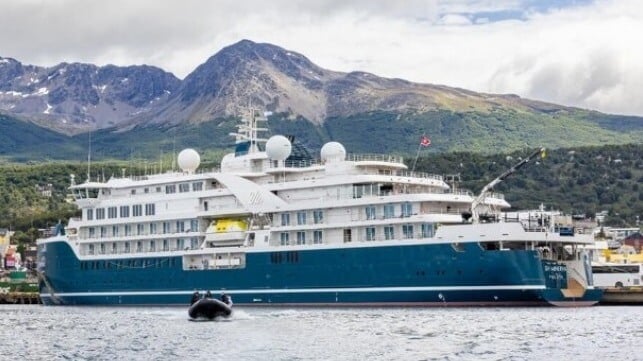
Expedition cruise ship SH Minerva has been idle since the spring of 2022 caught in the sanctions against Russian companies (Swan Hellenic)

Published Jul 30, 2025 2:56 PM by The Maritime Executive


Expedition cruise line Swan Hellenic has finally been able to regain its flagship, the SH Minerva, after an exasperating three-year legal battle related to the sanctions placed on Russian companies after the invasion of Ukraine. The ship has been laid up in Uruguay since the spring of 2022 while lawyers sought to find a solution to free the ship from an unintentional legal trap.

The expedition cruise ship, which was delivered in 2021, was built at the Helsinki Shipyard as the first of ultimately three ships used to restart the famed Swan Hellenic brand, which was known as a pioneer in expeditions dating to the 1950s. The company used a common legal structure with the ships being built for a single purpose finance company, which in turn was leasing them long-term to Swan Hellenic.

The leasing deal was with an Irish subsidiary of Russian financial giant GTLK. After the invasion of Ukraine and the imposition of sanctions, Swan Hellenic was barred from making lease payments on the ship, but due to the legal structure and sanctions also could not buy the ship. Norway’s Havila found itself in a similar situation with its fleet of coastal cruise ships being built in Turkey and also financed by a subsidiary of GTLK. Havila was able to complete is refinancing in July 2023 to free its ships, but it would take Swan Hellenic two more years of legal battles.

“We’re delighted to welcome back our flagship SH Minerva,” said Swan Hellenic CEO Andrea Zito, announcing a deal has finally been completed. “It’s a moment of immense pride for us.”

Swan Hellenic in March 2022 had declared its intent to buy the leasing companies, but that too was caught in the legal entanglement of the sanctions. To free Swan Hellenic’s second and third ships from the legal trap, Helsinki Shipyard ultimately declared the construction agreements void and auctioned the incomplete ships, making it possible for the company to buy the ships. However, the process of freeing SH Minerva proved more complicated and became even more involved in May 2023 when the GTLK subsidiary was declared insolvent and placed in the hands of liquidators.

Swan Hellenic reports that the liquidators who had control of GTLK Europe and its subsidiaries obtained compliance with all the applicable sanctions for the sale of the assets, including SH Minerva. After lengthy negotiations, Swan Hellenic has now been able to acquire the cruise ship in accordance with all applicable sanctions. The transaction was completed on July 25 using shareholders’ funds.

The cruise ship remains at Fray Bentos, Uruguay. The company reports it will undergo routine maintenance and preparations for its return to service in November 2025. It has been in Uruguay since April 2022, when it completed its Antarctic cruise season while the company proceeded with operations of its sister ship SH Vega, introduced in July 2022, and the larger SH Diana, introduced in April 2023.

SH Minerva is a Polar Code PC 5 expedition cruise ship with an ice-strengthened hull. She accommodates 152 passengers in 76 suites. Swan Hellenic reports she will join the fleet with all three ships operating the 2025-2026 Antarctic cruise season. Then, in March 2026, SH Minerva will launch the company’s first-ever Asia-Pacific season. She will sail to the Solomon Islands, Papua New Guinea, Raja Ampat, Indonesia, the Philippines, and Japan.


Sri Lanka Seeks Compensation as Debris From MSC Elsa 3 Washes Ashore

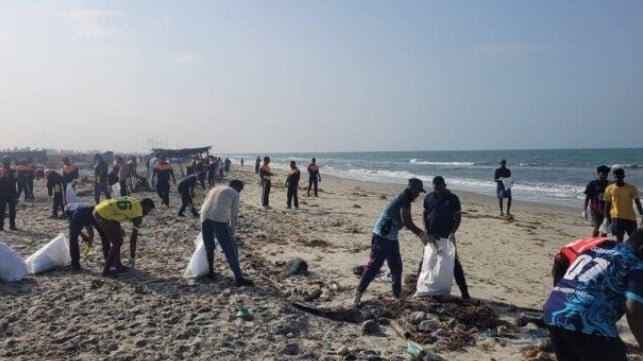
Beach clean up Sri Lanka
Volunteers clearing the beaches as part of the Clean Sri Lanka campaign are finding debris believed to be coming from the MSC Elsa 3 casualty more than 500 miles away (MEPA Sri Lanka)

Published Jul 30, 2025 1:45 PM by The Maritime Executive


Sri Lanka’s Marine Environment Protection Authority (MEPA) confirmed that it has begun negotiations with MSC Mediterranean Shipping Company seeking compensation for environmental damage related to the MSC Elsa 3 casualty. The government is considering legal action, although a representative said MSC has accepted responsibility in the ongoing discussions.

The containership sank in late May, southwest of the Indian state of Kerala on the west coast. The direct distance is over 300 miles from Sri Lanka, but approximately 500 miles following the ocean currents around the southern tip of the Indian continent. Despite the distance, Sri Lankan authorities report they are clearing plastic beads (nurdles) from the beaches daily.  Officials declined to identify the quantity of material retrieved, but did confirm that so far, no oil from the wreck has reached the shores of Sri Lanka.

Officials told the media that plastic pellets have been found washed ashore in areas such as Jaffna, Kalpitiya, and Delft. They said the debris is being collected and will be used as evidence in the demand for compensation and a possible insurance claim.

They are discussing the best course of action while the Lankasara news outlet reports initial discussions are underway with MSC. It reports that the damage assessment is ongoing. The report says in addition to the nurdles, packing materials, plastic fragments, damaged consumer goods, and other debris believed to be from the MSC Elsa 3 have been washing up along the shore as far south as the Hambantota District at the southern tip of the island. On July 29, Sri Lanka alerted residents as part of its "Clean Sri Lanka" coastal clean-up campaign.

Reports from India have said that so far, MSC’s lawyers have denied claims of widespread environmental damage from the casualty. India’s Directorate General reported that approximately 60 containers washed ashore and were recovered. As of July 17, it says 557 metric tons of nurdles have been collected from the affected shoreline areas. Its priority, however, is now on the second phase of the recovery operation, which was due to start in the coming days. Equipment has been moved to the site for a campaign of saturation diving as part of the effort to pump the fuel and oils from the wreck. In June, divers were successful in capping the tanks to stop a slow seepage of oil.

Sri Lanka looks to the recent court decision from the 2021 casualty of the X-Press Pearl as a model for its compensation claims. The country’s highest court ordered the shipping company and its agents to pay nearly $1 billion in compensation for what was termed the worst environmental incident in the Indian Ocean. 

India has also launched legal actions for compensation from MSC for the impact of the casualty. The Indian courts impounded the containership MSC Akiteta II, which is being held until the company posts a bond in the case. The initial court filing made at the beginning of July lists a total claim for $1.1 billion, with the bulk, $1 billion, for damages as a result of pollution. It is also seeking $44 million to restore the environment and a further $61.3 million in economic loss for the fishing community.

Greenpeace Calls for MSC to Pay for Sunken Boxship's Cleanup

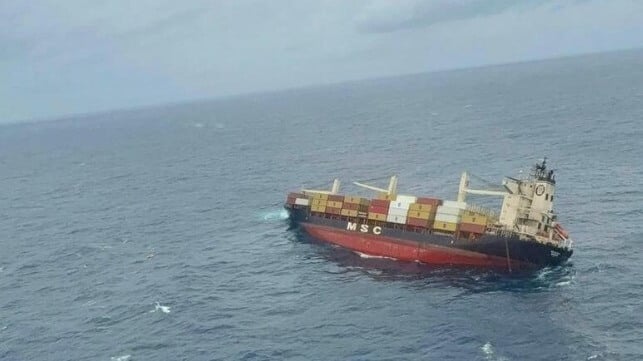
MSC Elsa 3
MSC Elsa 3, seen shortly before capsizing (Indian Ministry of Defense)

Published Jul 29, 2025 8:27 PM by The Maritime Executive


Greenpeace India is demanding more action from Mediterranean Shipping Company (MSC) in the wake of the sinking of the MSC Elsa 3, the small boxship that went down off Kochi in late May. The operator is engaged in litigation with the state of Kerala, and has so far declined to pay compensation for pollution or interruption in economic activity along the coastline.

On May 25, the feeder MSC Elsa 3 was under way from Vizhinjam to Kochi with a cargo of 640 containers on board. The ship developed a list, and the crew sent out a distress signal and abandoned ship. The vessel capsized and went down with about 450 tonnes of fuel aboard, along with various chemicals and a substantial cargo of nurdles (plastic pellets). The salvor's plans for fuel removal are expected to begin in August, and cleanup of nurdle contamination is ongoing. In court, MSC's counsel has denied that the sinking has resulted in pollution. 

As a precautionary measure, the Indian government banned fishing within 20 nautical miles of the wreck site, and Greenpeace reports that fears about seawater pollution have reduced public demand for fish in the region. This has led to a loss of income for local fishing communities, Greenpeace says, only partially offset by hardship payments from the Indian government. 

In addition to concerns about fuel oil, the NGO reports that large volumes of nurdles (plastic pellets) have washed ashore on the coast of Kerala, the Gulf of Mannar and even the coast of Sri Lanka, far to the southeast. Nurdles have a negative effect on fish, birds, turtles and other wildlife, as the pellets are often mistaken for food and consumed. Kerala's Directorate General of Shipping reported that as of the beginning of July, an estimated 450 to 500 tonnes of nurdles have been collected from the shoreline.

Greenpeace called for the pursuit of a legal action against MSC to secure damages; three cases are currently under way. A public-interest suit filed at the High Court of Kerala has already resulted in the arrest of two other MSC vessels at Indian ports, held as collateral under admiralty jurisdiction while litigation moves ahead. Separately, the Fort Kochi Police have also registered a first information report - an initial allegation of criminal wrongdoing - against MSC, the vessel's master and the crew. Kerala's state government later filed its own admiralty suit to recover costs of the cleanup and damages, and its claims total more than $1 billion. 

MSC Elsa 3 was a small feeder ship built in 1997. The 28-year-old vessel had a history of port state control deficiencies, including issues with her auxiliary engines, electrical systems, lifeboats and firefighting provisions, among others. The cause of the casualty has not yet been definitively identified, but Indian officials have alleged that the ship's ballast system suffered a malfunction. 


MSC Aims to Deepen Relationship with China Despite Looming U.S. Fees

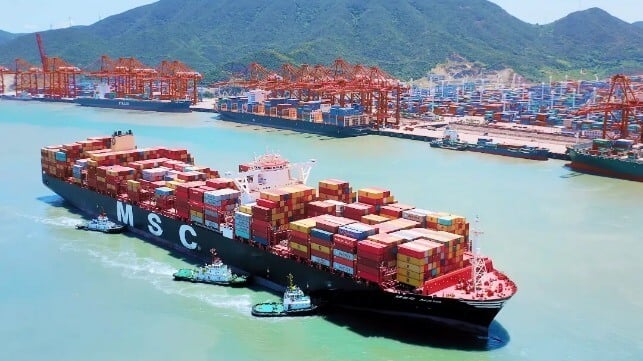
Ningbo China container port
MSC, which is already a major presence in Ningbo, is adding an office for ship management services and crewing (Ningbo-Zhoushan Port)

Published Jul 29, 2025 4:31 PM by The Maritime Executive


MSC Mediterranean Shipping Company is expanding its relationship with China on multiple fronts as the company continues its unrelenting drive to expand and pull away from the pack in container shipping. The company celebrated last week the launch of a new ship management operation to be based in Ningbo, China, and is reported to have more than 70 vessels on order from Chinese shipyards, all despite the looming move by the U.S. Trade Representative to impose fees on Chinese-built ships calling in U.S. ports.

In an exclusive interview with the Ningbo Daily, Prabhat Jha, CEO of the newly launched MSC Ship Management (Ningbo) and MSC Crewing Services (China), highlighted the company’s deep relationship with Ningbo, which he also highlights as a center of the Chinese shipping industry. He calls the company “a big user” of the Ningbo port, noting MSC has a 16 percent market share in containers. 

He reiterates that the company is looking to build new locations and needs new sources of crew and locations for crew training to support its growth plans. He says MSC currently employs about 700 Chinese seafarers and by 2026 it looks to grow this to 2,000 seafarers.

Historically, MSC has maintained its ship management operations in Cyprus and its headquarters in Switzerland. It manages chartered ships and a portion of its fleet of nearly 1,000 ships from Cyprus. The unrelenting drive of the past few years has seen the company surpass Maersk and now has a nearly 50 percent larger capacity, or over 6.7 million TEU.

The new Chinese companies will provide full services to support the fleet beyond just its operations in China. In addition to a location for crew recruitment and training, they will provide ship management services. Jha also notes China’s efforts to meet the shipping industry’s needs to achieve decarbonization.

As a private company, MSC rarely announces its shipbuilding plans, but multiple reports from brokers have tied the carrier to yet another round of large ship orders. In recent weeks, MSC has been linked to orders for six 22,000 TEU containerships to be built at two Chinese yards and another order, 3 + 3, for 21,000 TEU vessels. Chinese shipyards are believed to represent approximately half of the company’s total newbuild containership orders.

Alphaliner calculates that MSC has a total of 131 new vessels on order. They report that this represents 2.2 million in TEU capacity.

Jha told the Ningbo Daily that the company’s decision to set up the management and crewing operation in Ningbo was “closely tied to the scale, efficiency, and strategic location of the Ningbo-Zhoushan Port.”

All of this comes as the USTR is moving to finalize its plans for fees on Chinese-built ships. MSC seems unfazed by the U.S. efforts to break China’s dominance in shipbuilding and role in global shipping as it continues its own growth.


MSC Group’s Cruise Division Publishes 2024 Sustainability Report

MSC Group
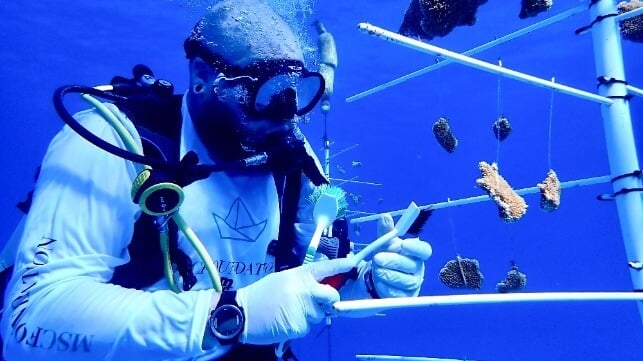
Coral Trees, Ocean Cay

Published Jul 31, 2025 7:55 AM by The Maritime Executive


[By: MSC Cruises]

MSC Group’s Cruise Division today published its 2024 Sustainability Report reaffirming its commitment to achieving net-zero greenhouse gas (GHG) emissions by 2050, accompanied by an independently verified Energy Transition Plan (ETP) to clearly show how it is working to achieve this ambition.

The report, now in its sixth edition, highlights milestones in environmental innovation, responsible tourism, and social impact. It reflects MSC Group’s Cruise Division’s integrated approach to sustainability for its MSC Cruises’ and Explora Journeys’ brands.

Pierfrancesco Vago, Executive Chairman, MSC Group’s Cruise Division, said, “As a family business, we do not operate ships just for tomorrow. We sail them for future generations, designed for fuel flexibility, guided by innovation, and powered by people who share our long-term vision.

“The Cruise Division in 2024 reaffirmed its commitment to advancing a bold and transparent sustainability strategy that balances environmental stewardship, social responsibility, and economic resilience.”

Report highlights include: 

  • Launching of the Energy Transition Plan for the fleets of MSC Cruises and Explora Journeys, outlining interim absolute emissions reduction targets. This is a published roadmap to achieving net-zero GHG emissions from marine operations by 2050.
  • Avoiding 50,000 tonnes of CO? emissions through fleet-wide optimisation tools (OptiCruise and Oceanly Performance) which support real-time operational efficiency and itinerary planning.
  • An increase in shore power connections from 44 in 2023 to 142 in 2024, across 13 ports. All new ships since 2017 are shore-power ready with retrofitting continuing across the fleet, and the Cruise Division remains committed to using shore power wherever it's available.
  • An increase in crew retention rate to 89 per cent, up from 83 per cent in 2023, demonstrating the commitment of the Cruise Division to employee engagement and development.
  • The formation of a Diversity & Inclusion Advisory Committee, underlining a strong commitment to workforce equity across more than 140 nationalities.
  • Continued investment in destinations like Ocean Cay, where environmental stewardship has enabled marine wildlife to thrive and coral restoration is underway.
  • Whale strike prevention training for 469 key crew members in conjunction with marine protection charity ORCA to understand more about the species of whale at risk, how to identify them, and take steps to reduce the risk.
  • More than 4,500 shore excursions offered in 84 countries, including 284 “Protectours”, low-impact experiences.

The report also shows that in 2024 the fleets of MSC Cruises and Explora Journeys together carried 4.6 million guests and sailed to 341 itineraries in 90 countries.

Looking Ahead
As MSC Group’s Cruise Division looks to the future, it remains focused on scaling clean energy solutions, retrofitting existing ships, advocating for port infrastructure investments, and collaborating across the maritime sector to accelerate the global energy transition.

Mr. Vago added, “There is no single solution to decarbonisation. It is a puzzle we solve piece by piece - with new technology, operational excellence, strong partnerships, and a shared commitment to move forward,”

The full 2024 Sustainability Report is available at: https://www.msccruises.com/int/sustainability

The products and services herein described in this press release are not endorsed by The Maritime Executive.


Philippines and Cosmoship Call for Release of Crew After Houthi Video

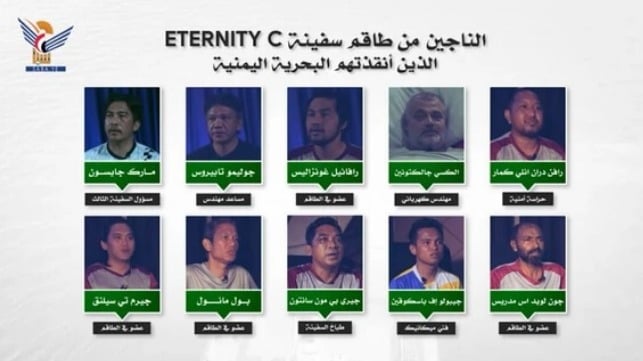
Eternity C crew in Yemen
Image released by Houthi media showing the 10 crewmembers of the Eternity C

Published Jul 29, 2025 1:44 PM by The Maritime Executive


Following the release of a video by the Houthis parading and interviewing crewmembers from the bulker Eternity C in front of cameras, government officials in the Philippines immediately called for support from other countries to gain the release of the individuals. Cosmoship Management, which was managing the vessel when it was attacked, also issued a statement calling on all parties to assist in the repatriation of the crewmembers held in Yemen.

“I do not want to use the term ‘hostage.’ At least we know they are alive,” said Philippine Foreign Undersecretary Eduardo De Vega, according to the Philippine media. However, he said, “We’re not going to talk directly with the Houthis. We’re going to seek help from friendly countries.”

At the same time, the Philippines’ Department of Migrant Workers confirmed that nine of the individuals seen in the video are Filipino seafarers from the Eternity C. They said, according to family members who had received calls, the men are in good health and have received medical treatment. The department said that it was working in coordination with the Department of Foreign Affairs and international partners for the safe release of the crewmembers.

Two weeks ago, eight other Filipino seafarers arrived back in the Philippines. They had been rescued by the salvage teams hired by the shipping company and were flown home with the support of the government and Cosmoship. 

The shipping company also released a statement saying it is “deeply relieved” to see the images of the crew. It, too, said it is calling on “all parties to assist in reuniting” the crew currently in Yemen. Cosmoship Management said it will continue to work through “every available channel to support their continued care and to facilitate their safe and swift return.”

The company said there are a total of 10 crewmembers and one of the vessel’s security guards, a total of 11 people, in Yemen. The Houthis, through their news channels, also confirmed they “rescued” 11 people from the sea in what they described as a two-day search and rescue operation. Their report said two individuals were injured and received medical care. In the video, a Russian electrician is in bed, with news reports that he lost his leg during the attack, and one of the Filipinos is seen in bandages. The Houthis only showed 10 people, although they also say they have 11 from the ship in Yemen. 

The Houthi report said that they boarded the ship before it sank and found a body which was transferred to the hospital morgue. Cosmoship Management confirmed that two seafarers died during the attack. It says two others remain missing and are “now sadly feared dead.”

During the video, the Houthis showed crewmembers saying they had been told the vessel was going to go to Eilat to load fertilizer. The Houthis then made threats against other ships that might go to Israel and used the crewmembers as a warning.

The Philippines worked for a prolonged period in 2024 to free the crewmembers of the Galaxy Leader after it was seized by the Houthis. Government officials expressed their frustration, noting the negotiations were politically charged. The Houthis ended up holding that crew for 14 months before their release was completed.


Houthis Renew Threats to Israeli Shipping, Put Eternity C Captives on Video

naval protection for merchant ship
EU continues its protection mission as the Houthis made new threats against shipping (EUNAVFOR Aspides)

Published Jul 28, 2025 2:17 PM by The Maritime Executive


Citing what it called “rapid developments,” the Houthis announced a renewed escalation of their blockade against ships and shipping companies supporting Israel. Hours after releasing its latest threats, the group released a six-minute propaganda video with the crew from the Eternity C dry bulk carrier, which the militants attacked and sank last month. It also issued a direct threat against three other vessels from the same management.

A spokesperson for the militant group said it was warning “all companies to cease their dealings with Israeli ports.” The group went on to say, “Otherwise, their ships, regardless of their destination, will be targeted anywhere that can be reached or within the reach of our missiles and drones.”

The Houthis said they were calling on all countries, “if they want to avoid this escalation,” to pressure Israel to stop the aggression and permit humanitarian aid to reach the citizens of Gaza. The group also said there was “shameful silence” among the Arab, Islamic, and international world.

The move came as the United States and Israel said they had walked away from negotiations with Hamas, with each side blaming the other for the latest failure in the ceasefire talks. Israel, however, said it would take a tactical pause and promised efforts to get more aid into Gaza. Speaking during his trip to Scotland, Donald Trump also called for more efforts to get humanitarian aid into Gaza.

The Houthis are calling this escalation the “fourth phase” of their naval blockade. They, however, have repeatedly said they would be blockading Israeli ports and targeting ships and the companies sending ships to Israel. 


In the so-called Yemeni War Media account on X, the group ratcheted up the threats specifically against Cosmoship Management, the operator of the Eternity C. With dramatic music, they flash the names and profiles of three other ships and highlight tracking of their moments.

In today’s other propaganda video, the reported crewmembers of the Eternity C are "interviewed" by their captors and heard to say that they were told by the master of the ship that they were going to stop in Eilat to load fertilizer. The undated video appears to have been shot in part in the hospital room of one of the individuals, the Russian crewmember, who is in bed, and several others can be seen with bandages. Another scene shows the crew given a cellphone to make video calls home.

The Associated Press is reporting that the Houthis have taken captive 11 crewmembers from the Eternity C, with the company having acknowledged the death of four crewmembers. The others were rescued by salvage vessels sent by the vessel’s operators and reportedly taken to Saudi Arabia. In the video, however, only ten people appear to be included. The Houthis have repeatedly asserted that they “successfully rescued” an unspecified number of crew, who were taken to a “safe location” and provided medical care. The group previously held the crew of the car carrier Galaxy Leader for 14 months despite repeated international calls to release the civilian crewmembers from the merchant ship, which was the first the Houthis attacked in November 2023.


After the two ships were sunk and the crewmembers killed aboard the Eternity C, there were reports that the Israelis asked the United States to resume its assaults on the Houthis. Donald Trump had declared that the group had been stopped when the U.S. suspended its attacks in May after two months. Trump has not responded to the killing of the crewmembers and the sinking of the two ships.

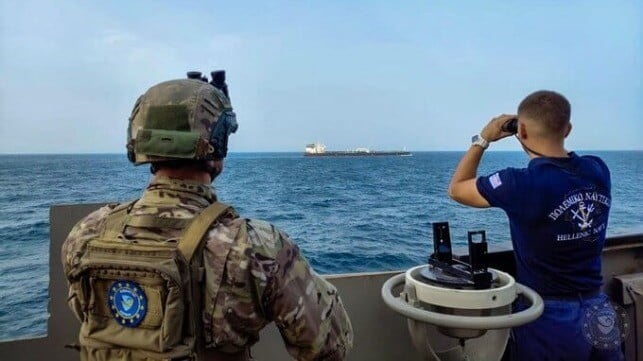
EUNAVFOR Aspides released another picture, this time of the Greek HS Psar, which it said has completed another protection mission for merchant ships in the Red Sea region. It continues to escort ships through the region as part of its defensive mission, which the EU extended till early 2026.


Ukraine Prepares to Sell Seized Cargo Ship Accused of Looting Grain

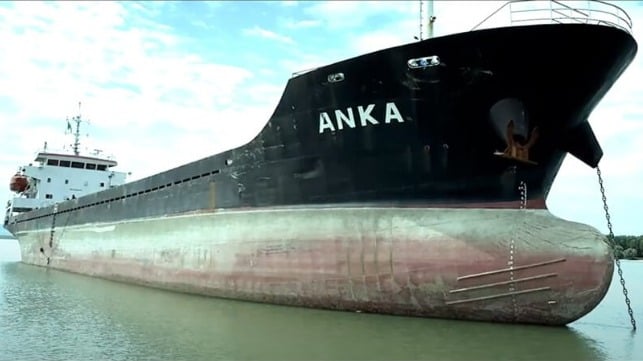
seized cargo ship
Ukraine is preparing to auction the seized cargo ship Anka (ARMA)

Published Jul 30, 2025 1:06 PM by The Maritime Executive


Ukraine’s National Agency for Tracing and Asset Management (ARMA) reports it is preparing to sell another seized cargo ship, at least the third it has moved to sell this year to bolster the state’s finances. Like the previous sales, the vessel, a 5,100 dwt cargo ship named Anka, is accused of transporting goods stolen from Ukraine and violating the ban on entering occupied Crimea.

ARMA has increased its efforts and accelerated plans for the sale of seized assets. The latest move, however, comes as the agency itself is also involved in a controversy. The director of the agency either resigned or was fired, depending on the various reports from Ukraine. Olena Duma reports she resigned after spending the past two years firmly establishing the agency, and now that its role has been strengthened under the laws of Ukraine.

The agency reports it has built a strong working relationship with the courts. Last week, the courts awarded custody of the Anka to the agency so that it can proceed with the sale of the confiscated vessel.


Ukraine released a video showing the ship as it prepares of the auction


The Anka was initially impounded by the Security Service of Ukraine and the State Border Guard Service in April, and its crew detained. The vessel, which was built in 2005 and operating at the time under the flag of Tanzania, was stopped while it was traveling on the Danube. Reports said it had departed Moldavia and was heading to the Turkish port of Gemlik.

The Ukrainian authorities searched the vessel and reported they found information confirming that it had been used to transport grain stolen from Crimea. They charged that the ship had exported 5,000 tonnes of wheat from Sevastopol in late 2024, violating Ukraine’s embargo on the port in occupied Crimea. 

Details for the ship are murky, with ownership believed to be in Turkey, although registration papers show a company in the Marshall Islands, and other reports place the owners in Montenegro. The ship has a spotty history, including long lists of deficiencies during Port State inspections in 2024 and 2023. For a time, it was claiming registry in Mongolia.

ARMA reports that it has completed a technical inspection of the vessel and that it was found to be in good condition and ready for future use. As part of the sale process, it also released a video showing the condition of the vessel, which is currently anchored in the Danube near Reni.

The sales are conducted online after valuations of the vessels are completed. According to media reports, the estimated value of the vessel is $420,000.

Media reports from Ukraine state that Russia has exported over 400,000 tonnes of grain from Crimea since 2022, according to an analysis by. United24 Media reports that more than 20 bulk carriers, primarily Russian-flagged, have transported grain from Crimea.


London P&I Club Warns Industry Over Incorrect Loading of Jumbo Bags

The London P&I Club

Published Jul 31, 2025 6:51 AM by The Maritime Executive


[By: The London P&I Club\

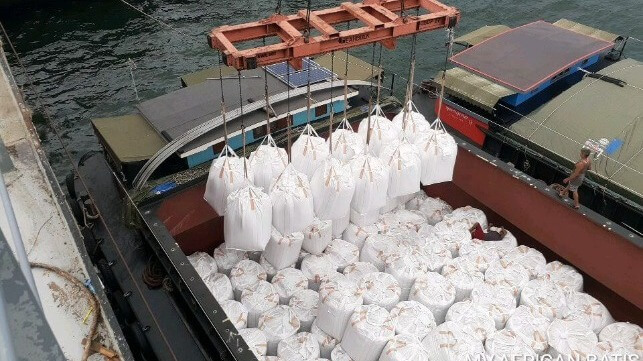
The London P&I Club has renewed calls on ship owners, operators and charterers to address potential risks when loading Flexible Intermediate Bulk Containers (FIBCs) containing dry chemicals. The warning follows a number of incidents reported across the industry including hold fires and cargo damage in bulk carriers and general cargo ships. The issue is particularly common with vessels loading in Chinese ports.

Claims resulting from the incorrect storage and handling of FIBCs, also known as ‘jumbo bags’, can lead to significant claims, the Club notes. The Club also warns that failure to strictly comply with all relevant International Maritime Organization (IMO) regulations and guidance governing the storage and handling of jumbo bags could even prejudice P&I cover.  

To help industry to understand the risks associated with incorrect handling and stowage of jumbo bags, the Club has developed a detailed video case study of a fictional bulk carrier MV Calm Sea, which can be used by vessel owners, operators and charterers, crew and port agents as a training resource for identifying risks, liabilities and best practices.

The video can be viewed or downloaded from here. A version in Chinese can be viewed or downloaded here.

Ian Barr, Chief Claims Officer at The London P&I Club said: “Given prevailing market conditions, assureds operating bulk carriers and general cargo vessels are receiving frequent requests to load jumbo bags in the same holds as breakbulk and steel cargoes or to store different bagged chemicals in the same hold. In cases of different bagged chemicals being stowed together, chemical contamination and reactions can lead to on-board vessel fires, which can result in the total loss of the entire contents of the hold and large claims. Serious problems also occur when FIBCs are stored incorrectly with breakbulk or steel cargoes, which can damage the integrity of the jumbo bags and cause significant spillage leading to delays, fines or claims.

“These cargoes may look harmless, but can be potentially very dangerous if not stowed and handled appropriately. We want to support the wider industry by raising awareness and helping operators globally to mitigate the risk of incidents and claims. We strongly urge owners, operators, charterers and Masters to use this resource and to be extra vigilant when developing stowage plans and loading FIBCs and other big bags onboard. They should alert their P&I Club so that assistance can be sought from qualified industry experts before proceeding.”

P&I cover may be prejudiced in the case of non-compliance with applicable regulations as adopted by the Flag State in relation to the storage of jumbo bags. This includes the International Maritime Organization’s (IMO) International Convention for the Safety of Life at Sea (SOLAS), the Cargo Securing Manual (CSM), the Code of Safe Practice for Cargo Stowage and Securing (CSS) Code and the International Maritime Dangerous Goods Code (IMDG) Code.

The products and services herein described in this press release are not endorsed by The Maritime Executive.


ABS Supports Ammonia Safety Through a Comprehensive Approach

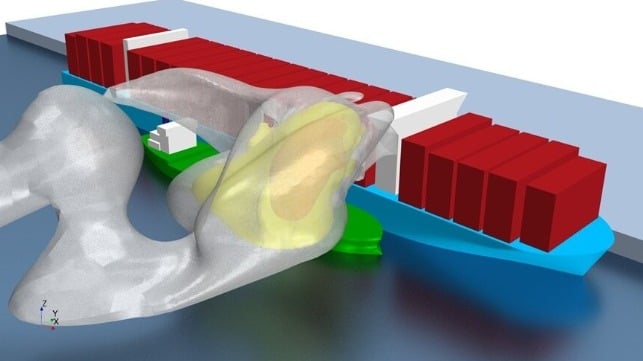
Simulated ammonia plume from a theoretical bunkering mishap, created for safety planning (ABS illustration)

Published Jul 31, 2025 12:50 PM by Gu Hai


Understanding and learning ammonia’s behavior through advanced simulation is key to enhancing safety and building the confidence needed to support broader adoption, writes Gu Hai, VP, Technology (Pacific), ABS

The maritime industry is seeking to accelerate its transition to alternative fuels to meet global decarbonization targets. From LNG and methanol to ammonia and hydrogen, each offers unique advantages in the quest for decarbonization.

Among these, ammonia stands out as one of the leading candidates for achieving net-zero emissions due to its carbon-free combustion and potential scalability.

However, its adoption hinges on addressing critical safety challenges such as toxicity, flammability and corrosive properties. ABS is at the forefront of this transition, developing advanced frameworks to support ammonia’s safe integration into maritime operations while enabling compliance with evolving regulations.

Ammonia’s Challenges

Ammonia's toxicity is probably the most significant barrier to its widespread adoption, with health risks even at low concentrations. The transition to ammonia fuel will require comprehensive retraining of maritime personnel, as existing seafarer competencies do not address ammonia's unique hazards.

While ammonia handling expertise exists in specialized industries like refrigeration and fertilizer production, scaling this knowledge across global shipping presents significant challenges.

The International Convention on Standards of Training, Certification and Watchkeeping for Seafarers (STCW) is the training standard for alternative fuels but rules for ammonia are designed around experience with LNG as fuel. These will require revision to address ammonia's toxicity, material incompatibilities and specific emergency response protocols.

This combination of risks creates a challenge to the processes employed in shipboard safety management. The optimum multistep approach will utilize well-established techniques and potentially combine these with a new approach that draws data from the initial process and uses new agentic tools to analyze behaviors and responses in emergency situations.

Safety management baseline approaches

Ammonia safety management begins with systematic hazard identification through structured methodologies that have proven effective across industrial applications. Hazard Identification (HAZID) and Hazard and Operability study (HAZOP) workshops serve as collaborative platforms where multidisciplinary teams systematically map potential failure modes across the entire ammonia fuel system lifecycle.

These workshops employ structured brainstorming techniques, historical incident analysis, and expert knowledge to identify risks spanning from routine bunkering operations to emergency scenarios in confined engine room spaces.

The effectiveness of HAZID/HAZOP workshops is particularly evident in ammonia applications where the acute toxicity requires comprehensive risk understanding before system deployment. These sessions identify not only equipment-related hazards but also human factors risk, such as crew exposure during routine maintenance or emergency response procedures. The workshops produce detailed risk identification that serve as the foundation for subsequent quantitative analysis and mitigation strategy development.

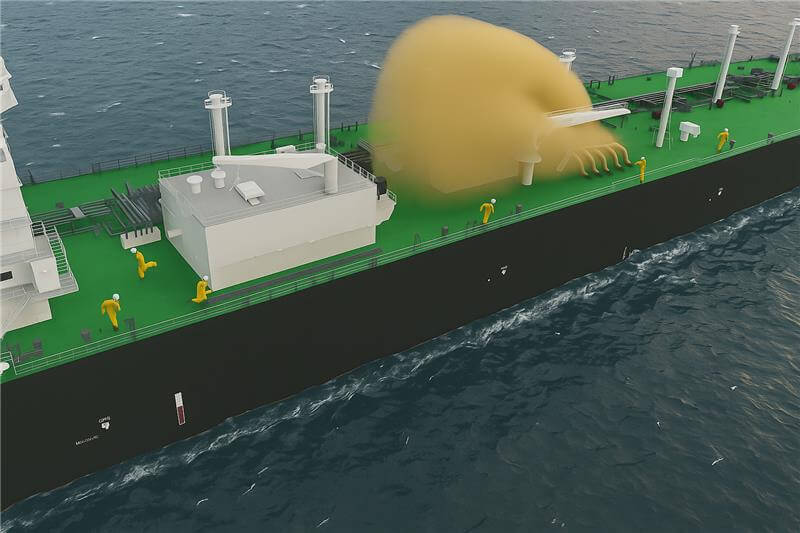
In addition, Computational Fluid Dynamics (CFD) simulations represent a critical methodology in understanding ammonia plume behavior during accidental releases, providing high-fidelity predictions that inform safety system design. These simulations model complex physical phenomena including liquid ammonia vaporization, vapor cloud formation, and dispersion patterns under different environmental conditions.
Courtesy ABS

The technology enables engineers to visualize how ammonia plumes evolve in real-world scenarios, whether during ship-to-ship bunkering operations or within confined spaces like engine rooms and fuel preparation areas.

The sophistication of CFD analysis extends to real-time environmental factors, incorporating wind patterns, temperature variations, and atmospheric stability conditions. For maritime applications, simulations are used to model dispersion from releases via the venting mast, considered to be one of the major potential risks to crew, adjacent vessels and shoreside personnel.

The critical insights generated from CFD simulations directly inform the development of emergency response plans. Live drills and exercises remain essential for validating emergency response plans, providing valuable experience to support tabletop exercises. These exercises offer realistic testing of procedures and comprehensive evaluation of physical resources and infrastructure including emergency exits, communication systems, and medical equipment.

However, live drills have limitations including high costs, resource intensity, and potential safety risks when simulating hazardous scenarios. Therefore, simulation technology plays a crucial role in overcoming the limitations of live drills while providing safe environments for testing emergency procedures under diverse conditions and can be done prior to the ship’s construction.

Agent-based emergency response plan evaluation

While existing frameworks provide a structural foundation, ammonia's unique characteristics require significant adaptations to address specific hazards and toxicity concerns. Traditional emergency response plans designed for oil spills focus primarily on environmental contamination and fire risks, whereas ammonia incidents present immediate life-threatening toxic exposure risks that demand fundamentally different response priorities.

ABS's development of advanced ‘agent-based’ probabilistic risk analysis represents a significant advancement in emergency response plans by accounting for uncertainties in both ammonia plume behavior and human factors during emergency situations. This approach integrates CFD results, human behaviors, findings from HAZID/HAZOP workshops, with realistic leakage scenarios to simulate crew responses and consequences under various identified hazards.

Agent-based modelling represents a sophisticated computational approach for simulating complex systems through the interaction of entities, known as agents, each possessing distinct behavioral characteristics, properties, and decision-making capabilities. These agents operate as independent entities within a defined environment, where they can perceive their surroundings, process information, and execute actions based on predefined rules and adaptive behaviors.

The fundamental advantage of this methodology lies in its ability to capture emergent behaviors that arise from the interactions of individual agents such as human. It enables stakeholders such as shipowners, port operators, or bunkering facility owners to simulate realistic evacuation scenarios.

This approach allows for the examination of how individual differences and local interactions may lead to large-scale patterns in evacuation flows, bottleneck formation, and overall evacuation and mitigation performance.

Agent-based modelling provides a framework to include agents such as human behavior within simulations. The human factors such as decision-making process are then integrated into the agent-based modelling through Monte Carlo simulation techniques. This approach acknowledges that human behavior during emergencies is inherently stochastic, with individuals responding differently and unpredictably to similar situations based on factors such as location, moving speed, and stress levels.

By employing Monte Carlo methods – applying computational algorithms that use repeated random sampling to model the probability of different outcomes in a process with uncertain variables - the simulation can account for the variability in human responses and generate statistical distributions of outcomes rather than deterministic predictions.

An integrated approach

The integrated approach facilitates dynamic risk assessment, where event probabilities evolve as response operations progress, incorporating real-time changes in environmental conditions, resource availability and operational constraints. This temporal dimension is crucial for emergency response planning, as the effectiveness of interventions and the risks faced by responders and evacuees change continuously throughout an incident.

The framework considers time constraints that are fundamental to emergency scenarios, where delayed decisions or actions can have chain effects on overall system performance and safety outcomes. Environmental variables such as weather conditions and hazard propagation are integrated into the models, allowing for more realistic assessments of how external factors influence both agent behavior and system-wide emergency response effectiveness.

The integration of traditional emergency response frameworks with advanced simulation such as CFD and simulation-based quantitative risk analysis helps create a more robust, system-wide and time-dependent emergency response strategy. This comprehensive approach can help to enable identification of risk hotspots, evaluation of evacuation procedures, and improved co-ordination among emergency response participants.

Gu Hai is VP, Technology (Pacific) at ABS.

The opinions expressed herein are the author's and not necessarily those of The Maritime Executive.
 

NTSB: Experienced Towboat Pilot Hit a Bridge on the Mississippi

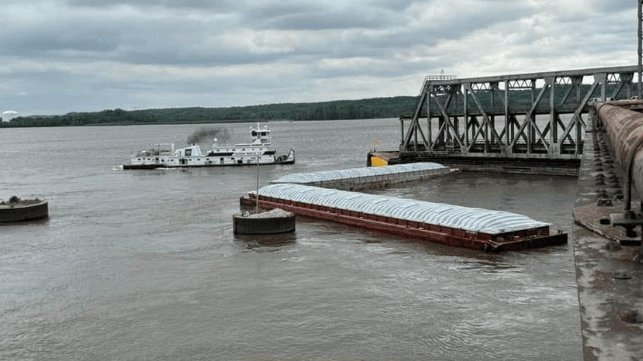
Joe B. Wyatt (background) and two barges after the allision (NTSB)

Published Jul 29, 2025 4:43 PM by The Maritime Executive


A towboat pilot's improper compensation for a river cross-current resulted in an allision with a bridge at Fort Madison, Iowa last year, according to the NTSB. 

On May 9, 2024, the towboat Joe B. Wyatt was pushing 15 barges down the Mississippi near Fort Madison, Iowa. As the pilot rounded Dutchman Island and lined up on the main span of the Fort Madison Bridge, an old swing bridge with a 200-foot-wide main channel, he intentionally steered to starboard of the charted sailing line. Based on 24 years of experience and 15 transits of this particular route, he expected to encounter a cross-current from around the other side of the island, which he believed would set the tow to port. The effects of that cross-current did not materialize, leaving the towboat off course and headed at eight knots for a bridge piling protection cell. The pilot had about 1,900 feet of forward travel distance remaining to react.

He increased power and attempted to swing the head of the tow to port, back into the center of the channel. Though he avoided a head-on allision - which could have seriously affected the two deckhands up at the head of the tow - the maneuver was not quite successful, and the third barge on the starboard side hit the protection cell fendering system. The tow broke up and about a dozen barges drifted off downriver, with two deckhands aboard. One barge eventually sank and was later refloated.

No injuries or pollution were reported. Damage to the bridge fenders, the barges and the Joe B. Wyatt was estimated at about $3.3 million. 

"There was no evidence that the pilot was fatigued, impaired, or distracted before or during the casualty," NTSB found. "Given the vessel’s speed at the time, the following current, and the number of barges, there was likely not time for the pilot to prevent the contact with the protection cell by backing the tow."

The agency concluded that the pilot overcompensated for the expected crosscurrents. It advised that a charted sailing line is a safe route when used as a guide, "along with the mariner’s own experience and assessment of the existing circumstances."