CHRISTIAN NATIONALISM
The Trump admin just gave Texas megachurch pastors more power than ever
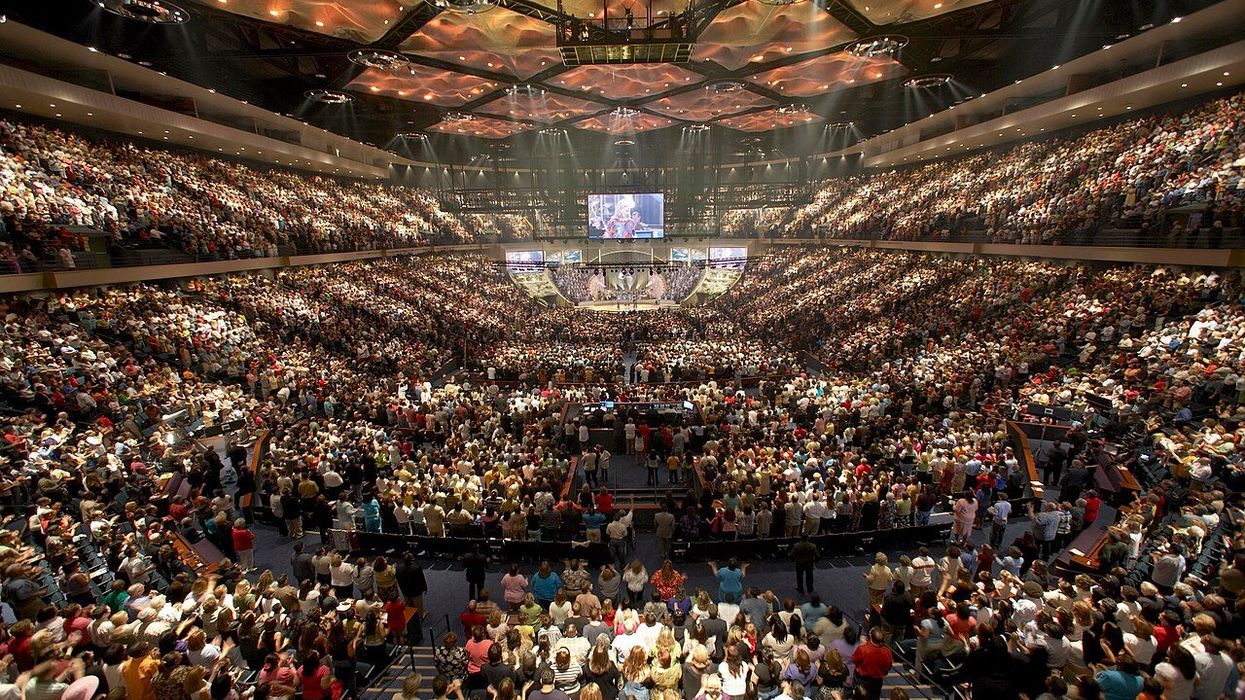
A megachurch in 2013 (Creative Commons)
August 04, 2025 | 05:57AM E
Texas Rep. Nate Schatzline recently stood before a gathering of conservative activists just outside Fort Worth, recapping legislative wins and previewing what’s next at the Capitol. On this day, however, he was speaking not only as a lawmaker but also as a pastor.
ProPublica is a Pulitzer Prize-winning investigative newsroom. Sign up for The Big Story newsletter to receive stories like this one in your inbox.
A week earlier, the Internal Revenue Service decided to allow religious leaders to endorse political candidates from the pulpit, effectively upending a provision in decades-old tax law barring such activity. Schatzline, a longtime pastor at Mercy Culture Church in Fort Worth, was excited. The IRS affirmed “what we already knew,” he said at the July 14 meeting: The government can’t stop the church from getting civically engaged.
“There is absolutely no reason that a politician should be more vocal about social issues than your pastor, and so I need pastors to stand up,” Schatzline told the crowd made up of members of True Texas Project, a Tarrant County-based organization that is a key part of a powerful political network pushing lawmakers to adopt its hard-line opposition to immigration and LGBTQ+ rights and to advance conservative education policies.
“We need pastors to be bold.”
For decades, pastors like him have fought for the right to speak on political issues and actively endorse candidates in their capacity as religious leaders. Now, before a judge has weighed in on whether to allow the IRS policy change, some religious leaders are already calling on congregations to demand greater political involvement from their churches.
While the tax agency’s stance applies to churches nationwide, Texas is expected to be where it will matter most, said Ryan Burge, a political and religious expert at Washington University in St. Louis.
More than 200 megachurches call Texas home. In the Lone Star State, pastors seem to have a larger profile in social, political and religious discussions. “Texas will be the epicenter for testing all these ideas out,” he said.
Schatzline said as much in a follow-up interview with Fort Worth Report. A nonprofit that Mercy Culture Church previously created to help elect candidates to political office is working with President Donald Trump’s National Faith Advisory Board to expand that work and to mobilize churches and pastors to get them more civically engaged, the state representative said.
Officials from the White House and the advisory board did not respond to a request for comment.
While Schatzline said pastors can choose not to be vocal about candidates, congregations like his may feel differently. “Especially our conservatives across America, they have an expectation that their pastor is going to speak to the issues of truth,” he said.
For more than 70 years, churches and other religious institutions in the United States were told to steer clear of “any political activity” or risk losing their tax-exempt status. That federal measure, the Johnson Amendment, was added into IRS tax law in 1954 and named after its author, Lyndon B. Johnson, then a Texas congressman.
In August 2024, during the last months of the Biden administration, an association of religious broadcasters and two East Texas churches sued the IRS, arguing that the Johnson Amendment infringed upon their freedom of speech and religion.
Nearly a year later, the IRS, now under Trump, and the plaintiffs filed a proposed joint settlement outlining in the agreement that when a house of worship speaks to its congregation about “electoral politics viewed through the lens of religious faith,” it neither participates nor intervenes in a political campaign and so doesn’t violate the amendment. The court must now consider their proposal.
IRS officials did not respond to a request for comment on what prompted its decision.
The biggest implication of the proposed legal agreement is a push on pastors to be “more political than they want to be,” said Burge, a former Baptist pastor who is now a professor of practice at Washington University’s John C. Danforth Center on Religion and Politics.
“It all comes down to the 5% of people on each side of the political spectrum who are the loudest and are trying to drag you into their fervor,” said Burge, adding that congregants could threaten to leave a church if their pastor doesn’t talk about their political stances.
A previous investigation by ProPublica and The Texas Tribune highlighted 20 examples of churches that were seemingly violating the Johnson Amendment. That was more than what the IRS itself had investigated in the previous decade. Thirteen of those congregations were in the North Texas area, including Mercy Culture, where Schatzline was ordained a pastor in 2024.
The tax agency largely abdicated enforcing the amendment, the newsrooms previously reported.
For example, in the mid-2000s, the IRS investigated a little more than 100 churches, including 80 for endorsing candidates from the pulpit, after citing an increase in allegations of church political activity leading up to the 2004 presidential election. Agency officials didn’t revoke the tax-exempt status of any churches, instead sending warning letters.
Following the filing of the proposed settlement in July, the Fort Worth Report identified at least three churches in Texas whose leaders openly praised the IRS decision, including Mercy Culture and Sand Springs Church, one of those involved in the lawsuit that sparked the IRS change.
The day after the court filing, Mercy Culture Church posted a screenshot on Instagram and Facebook of The New York Times article detailing the news and noting it was “time for the church to get loud!”
“We will not be silent on issues of righteousness, life, liberty, or leadership. We don’t endorse parties — we stand for the Kingdom!” the post read.
In Athens, less than 100 miles south of the Dallas-Fort Worth area, Sand Springs Church senior pastor Erick Graham told congregants during a July 9 Bible study that the IRS ruling is “encouraging.”
He told congregants during the teaching, which was livestreamed on Facebook and reviewed by the newsroom, that the church was not going to comment on the IRS court filing until the judge’s final ruling approving or denying the proposed settlement.\\\
Texas Rep. Nate Schatzline recently stood before a gathering of conservative activists just outside Fort Worth, recapping legislative wins and previewing what’s next at the Capitol. On this day, however, he was speaking not only as a lawmaker but also as a pastor.
ProPublica is a Pulitzer Prize-winning investigative newsroom. Sign up for The Big Story newsletter to receive stories like this one in your inbox.
A week earlier, the Internal Revenue Service decided to allow religious leaders to endorse political candidates from the pulpit, effectively upending a provision in decades-old tax law barring such activity. Schatzline, a longtime pastor at Mercy Culture Church in Fort Worth, was excited. The IRS affirmed “what we already knew,” he said at the July 14 meeting: The government can’t stop the church from getting civically engaged.
“There is absolutely no reason that a politician should be more vocal about social issues than your pastor, and so I need pastors to stand up,” Schatzline told the crowd made up of members of True Texas Project, a Tarrant County-based organization that is a key part of a powerful political network pushing lawmakers to adopt its hard-line opposition to immigration and LGBTQ+ rights and to advance conservative education policies.
“We need pastors to be bold.”
For decades, pastors like him have fought for the right to speak on political issues and actively endorse candidates in their capacity as religious leaders. Now, before a judge has weighed in on whether to allow the IRS policy change, some religious leaders are already calling on congregations to demand greater political involvement from their churches.
While the tax agency’s stance applies to churches nationwide, Texas is expected to be where it will matter most, said Ryan Burge, a political and religious expert at Washington University in St. Louis.
More than 200 megachurches call Texas home. In the Lone Star State, pastors seem to have a larger profile in social, political and religious discussions. “Texas will be the epicenter for testing all these ideas out,” he said.
Schatzline said as much in a follow-up interview with Fort Worth Report. A nonprofit that Mercy Culture Church previously created to help elect candidates to political office is working with President Donald Trump’s National Faith Advisory Board to expand that work and to mobilize churches and pastors to get them more civically engaged, the state representative said.
Officials from the White House and the advisory board did not respond to a request for comment.
While Schatzline said pastors can choose not to be vocal about candidates, congregations like his may feel differently. “Especially our conservatives across America, they have an expectation that their pastor is going to speak to the issues of truth,” he said.
For more than 70 years, churches and other religious institutions in the United States were told to steer clear of “any political activity” or risk losing their tax-exempt status. That federal measure, the Johnson Amendment, was added into IRS tax law in 1954 and named after its author, Lyndon B. Johnson, then a Texas congressman.
In August 2024, during the last months of the Biden administration, an association of religious broadcasters and two East Texas churches sued the IRS, arguing that the Johnson Amendment infringed upon their freedom of speech and religion.
Nearly a year later, the IRS, now under Trump, and the plaintiffs filed a proposed joint settlement outlining in the agreement that when a house of worship speaks to its congregation about “electoral politics viewed through the lens of religious faith,” it neither participates nor intervenes in a political campaign and so doesn’t violate the amendment. The court must now consider their proposal.
IRS officials did not respond to a request for comment on what prompted its decision.
The biggest implication of the proposed legal agreement is a push on pastors to be “more political than they want to be,” said Burge, a former Baptist pastor who is now a professor of practice at Washington University’s John C. Danforth Center on Religion and Politics.
“It all comes down to the 5% of people on each side of the political spectrum who are the loudest and are trying to drag you into their fervor,” said Burge, adding that congregants could threaten to leave a church if their pastor doesn’t talk about their political stances.
A previous investigation by ProPublica and The Texas Tribune highlighted 20 examples of churches that were seemingly violating the Johnson Amendment. That was more than what the IRS itself had investigated in the previous decade. Thirteen of those congregations were in the North Texas area, including Mercy Culture, where Schatzline was ordained a pastor in 2024.
The tax agency largely abdicated enforcing the amendment, the newsrooms previously reported.
For example, in the mid-2000s, the IRS investigated a little more than 100 churches, including 80 for endorsing candidates from the pulpit, after citing an increase in allegations of church political activity leading up to the 2004 presidential election. Agency officials didn’t revoke the tax-exempt status of any churches, instead sending warning letters.
Following the filing of the proposed settlement in July, the Fort Worth Report identified at least three churches in Texas whose leaders openly praised the IRS decision, including Mercy Culture and Sand Springs Church, one of those involved in the lawsuit that sparked the IRS change.
The day after the court filing, Mercy Culture Church posted a screenshot on Instagram and Facebook of The New York Times article detailing the news and noting it was “time for the church to get loud!”
“We will not be silent on issues of righteousness, life, liberty, or leadership. We don’t endorse parties — we stand for the Kingdom!” the post read.
In Athens, less than 100 miles south of the Dallas-Fort Worth area, Sand Springs Church senior pastor Erick Graham told congregants during a July 9 Bible study that the IRS ruling is “encouraging.”
He told congregants during the teaching, which was livestreamed on Facebook and reviewed by the newsroom, that the church was not going to comment on the IRS court filing until the judge’s final ruling approving or denying the proposed settlement.\\\

“A Powerful Tool”
Megachurches with the means to livestream services online or by broadcasting “could be a powerful tool for promoting political candidates,” said David Brockman, a nonresident scholar at Rice University’s Baker Institute for Public Policy and an adjunct professor at Texas Christian University and Southern Methodist University.
In North Texas, First Baptist Dallas draws about 16,000 members to attend worship in person or through several streaming methods, according to the church’s website. Nondenominational Mercy Culture Church draws thousands of worshipers to its flagship location in Fort Worth, The Washington Post has reported. Since its inception, the church has formed other campuses in east Fort Worth, Dallas, Waco and Austin.
First Baptist Dallas’ lead pastor, Robert Jeffress, an avid Trump supporter, thanked the president on Facebook for the IRS’ recent interpretation of the Johnson Amendment.
“This would have never happened without the strong leadership of our great President Donald Trump! Honored to get to thank him personally today in the Oval Office,” Jeffress wrote in his July 9 post. “Government has NO BUSINESS regulating what is said in pulpits!”
Religion News Service reported this spring that Jeffress was one of multiple pastors who told Trump during a White House Easter service in April that the IRS had investigated their churches for their political endorsements. Jeffress told The New York Times he believed the conversation was a “tipping point,” in the new IRS interpretation of the Johnson Amendment, something Trump himself promised to do during his 2016 presidential campaign.
He did not respond to requests from the Fort Worth Report for comment. A spokesperson for the church said he was out of town.
Different religious traditions may respond to the policy change in distinct ways, said Matthew Wilson, a religious and politics professor at Southern Methodist University.
The U.S. Conference of Catholic Bishops and the United Methodist Church, for example, both announced they would maintain their stances on not endorsing or opposing political candidates. The Freedom From Religion Foundation, a national nonprofit advocating for separation between church and state, announced July 30 it is joining others in condemning efforts to ignore or weaken the Johnson Amendment.
While some religious leaders may be reluctant to engage in politics, white conservative churches, which generally support Republican candidates, and African American churches, which historically have favored Democrats, have “come right up to the line” of the provisions in the Johnson Amendment — “if not sometimes crossing it,” Wilson said.
“Those religious organizations have spoken in more explicitly political terms for a long time, and this [IRS decision] frees them even more to do that,” he said.
Mansfield Mayor Michael Evans, who has been pastor for 30 years at Bethlehem Baptist Church, southeast of Fort Worth, said he doesn’t plan to endorse candidates for the congregation because it could only lead to more division. At his predominantly African American church, congregants come from both ends of the political spectrum, he said.
While the candidates put forth by political parties and their philosophies may change, Evans said, “the word of God remains the same.”
Mercy Culture Church is already well down the path of exerting its political influence. Schatzline launched its nonprofit For Liberty & Justice in 2021 after a church elder unsuccessfully ran to become the mayor of Fort Worth. The organization partners with local churches in grassroots campaigning efforts to “promote Godly candidates for local government,” according to its website.
The nonprofit created an online program called “Campaign University,” designed to train people of faith on how to run for office. The organization’s “liberty rallies” have “influenced the decisions of local school boards and city councils to lead with Christian values in Tarrant County,” according to its website.
For Liberty & Justice has supported 48 candidates since its inception. One was Schatzline.
Cecilia Lenzen of the Fort Worth Report contributed reporting.
Marissa Greene is a Report for America corps member, covering faith for the Fort Worth Report. Contact her at marissa.greene@fortworthreport.org.
"The Trump administration's radical reinterpretation of this federal law is a flagrant, self-serving attack on church-state separation that threatens our democracy," said one supporter of the Johnson Amendment.
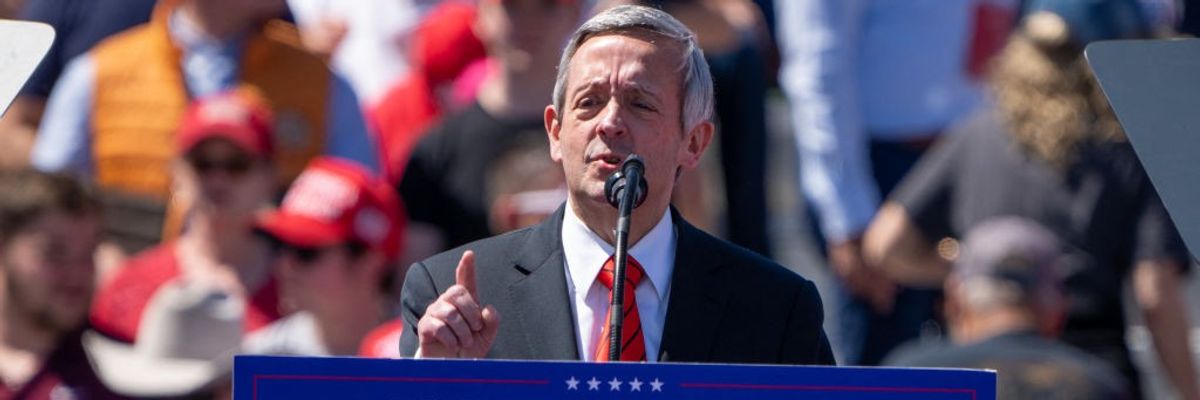
Pastor Robert Jeffress spoke at a campaign rally for then-former U.S. President Donald Trump in Waco, Texas, on March 25, 2023. The New York Times reported on July 30, 2025 that after Jeffress dined with Trump, his church urged the administration to end the Johnson Amendment.
(Photo: Suzanne Cordeiro/AFP via Getty Images)
Jessica Corbett
Jul 30, 2025
COMMON DREAMS
As The New York Times reported on how an Easter dinner may have given "Christian conservatives their most significant victory involving church political organizing in 70 years," over 1,000 charitable nonprofits on Wednesday collectively urged President Donald Trump not to allow churches to endorse political candidates.
A provision of the U.S. tax code named for former President Lyndon B. Johnson conditions tax-exempt status on an organization not participating or intervening in campaigns for public office. However, in a bid to settle a federal lawsuit earlier this month, the Internal Revenue Service (IRS) proposed an exemption for houses of worship.

As the proposed exception to the Johnson Amendment awaits court approval, groups including the American Humanist Association, Americans United for Separation of Church and State (AU), Freedom From Religion Foundation, Independent Sector, Interfaith Alliance, National Council of Nonprofits, and Public Citizen on Wednesday launched the sign-on letter to Trump.
"For more than 70 years, it has ensured that all tax-exempt charitable nonprofits—including houses of worship—do not become conduits for partisan politics, protecting public trust in religious institutions and preserving the integrity of elections," the letter says of the Johnson Amendment. "Weakening the provision threatens to erode public trust, risk policy capture by special interests, and dilute regulatory oversight."
The letter warns that "if the court approves this settlement, houses of worship would be subject to intense political pressure to engage in electoral politics from downballot races and primaries to the presidency, distracting them from their missions. It would also create a loophole for the political donors to enjoy tax-deductible donations for their political campaign contributions, exploiting houses of worship for political gains."
As Public Citizen co-president Lisa Gilbert put it in a Wednesday statement, "We are witnessing in real-time the creation of a new and dangerous dark money channel."
The coalition warned that "weakening the Johnson Amendment would jeopardize the integrity of the entire nonprofit community," not just houses of worship.
"This is not a matter of religious freedom or speech. It is about fundamentally reshaping how political money flows through our system," the letter states. "Charitable nonprofits are among the last institutions where people from all walks of life come together to tackle local challenges. Undermining the legal safeguards that preserve their neutrality could seriously erode public trust and compromise the sector's ability to carry out its mission."
The groups urged the Trump administration "to immediately end its attempt to ignore the Johnson Amendment, reaffirm clear limits on partisan politicking in houses of worship, ensure impartial enforcement across sectors, and protect civil society."
Although the IRS already often does not enforce the Johnson Amendment against houses of worship, killing it has long been "one of the biggest political goals for conservative Christian activists," as the Times detailed Wednesday.
The Times reported that Robert Jeffress, pastor of First Baptist Dallas, attended an April dinner with the president and evangelist Billy Graham's son, Franklin Graham. According to the newspaper:
At Mr. Trump's request, Mr. Jeffress' church sent the White House Faith Office a seven-page letter outlining what it called "wrongful weaponization" of the law and the "unlawful targeting of our church." The letter, obtained by The New York Times, included recommended actions, and a mention of a Texas lawsuit, which offered a vehicle to declare that the law was wrong.
Three months later, conservative Christians scored a major victory.
In a signal of how the new letter may be received, a White House spokesperson told the Times that "President Trump is very proud of this victory for leaders of faith across the country protecting their First Amendment rights."
Still, nonprofits that oppose weakening the Johnson Amendment are working on various fronts to stop the settlement. In addition to promoting the letter, AU has requested to intervene in the case in the U.S. District Court for the Eastern District of Texas.
"This long-standing, commonsense rule protects the integrity of both our elections and nonprofits, including houses of worship. The majority of Americans don't want their charities and churches embroiled in the corrupting influence of partisan politics," the group's president and CEO, Rachel Laser, said Wednesday.
"The Trump administration's radical reinterpretation of this federal law is a flagrant, self-serving attack on church-state separation that threatens our democracy by plunging houses of worship into partisan battles," Laser added. "AU is committed to fight the administration's brazen ploy to use our houses of worship as political campaign tools."
The letter comes two days after the Trump administration issued a memo allowing federal employees to proselytize in the workplace, widely seen as another move to further erode the separation of church and state. Responding on social media, the American Humanist Association said that "this is what Christian Nationalism looks like."
Trump's new victory for religious freedom is the exact opposite: analysis
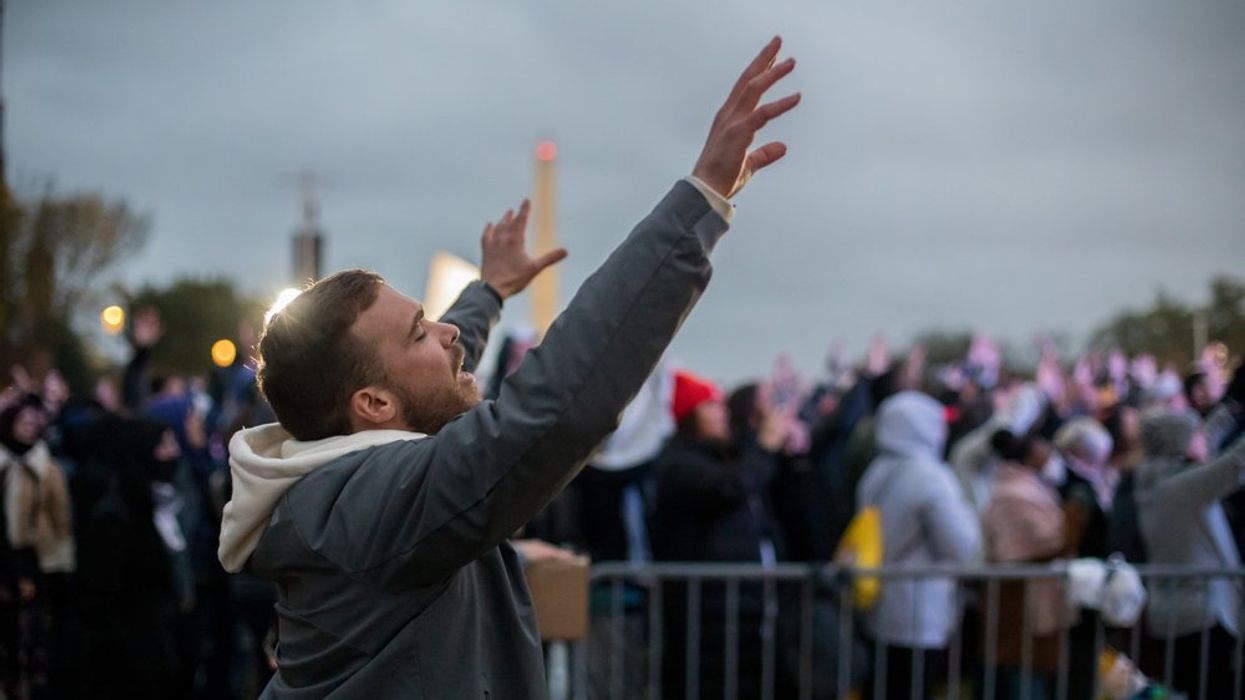
Christian singer Sean Feucht hosts a "Worship Protest" on the National Mall in Washington, DC on October 25, 2020 (Nicole Glass Photography/Shutterstock.com)
Christian singer Sean Feucht hosts a "Worship Protest" on the National Mall in Washington, DC on October 25, 2020 (Nicole Glass Photography/Shutterstock.com)
August 02, 2025 |
AKTERNET
On Monday, July 28, the U.S. Office of Personnel Management (OPM) unveiled new Trump Administration guidelines for discussing religion in the workplace. The OPM memo encourages federal government workers to "engage in conversations regarding religious topics with fellow employees, including attempting to persuade others of the correctness of their own religious views."
The Trump Administration and its evangelical Christian nationalist allies are touting this policy as a triumph for freedom of religion. But Salon's Amanda Marcotte, in a biting article published on August 1, lays out some reasons why it is, in reality, detrimental to religious freedom.
"For most Americans, it's common sense: You don't harangue your coworkers because of personal beliefs and behaviors, just because they're different from yours," Marcotte explains. "Depending on your workplace, lecturing your colleagues because they are or aren't married, do or don't have kids, or spend their weekends woodworking instead of surfing could be recorded as anything from a 'basic etiquette violation' to an 'HR matter.' Minding your own business is generally considered morally righteous and also, a best practice, to make life easier for everyone."
Marcotte adds, "But to hear Republicans tell it, being required to leave people alone is the 21st Century equivalent of feeding Christians to the lions."
The OPM's July 28 memo, Marcotte warns, "explicitly allows bosses to use their work hours to pester people they're supervising with appeals to come to Jesus, or sermons on how their sinful lifestyles will send them to hell."
"First Amendment issues aside, in the eyes of most people, it’s considered obnoxious, offensive and oppressive to tell a gay coworker they're damned for eternity, or to harangue a Jewish colleague into reciting the Lord's Prayer," Marcotte argues. "According to the memo, however, expecting basic respect in the workplace is 'discrimination' against 'employees of faith.' Donald Trump is quoted as saying this change is necessary to protect 'America's unique and beautiful tradition of religious liberty.' In reality, this policy does the opposite."
Marcotte continues, "It allows Christian conservatives to deprive their colleagues of religious freedom by pressuring them to participate in religious rituals they don't believe in or practice. As the Freedom from Religion Foundation argued in their response to the guidance, when 'someone's job security and promotions are at stake, employees will feel they must go along with the religious conversation or attend that Easter service.'"
According to Marcotte, the far-right Christian nationalist ideology promoted by Project 2025's Russell Vought — who now heads the U.S. Office of Management and Budget (OMB) — does not encourage "religious freedom" but rather, a "form of Christian theocracy."
"Having all these non-Christians around is perceived as an assault on his freedom," Marcotte explains. "So (Vought) would like to deprive everyone else of their rights, in the name of freedom. This lack of logic shares much DNA with the rationales of abusers everywhere, who claim that having a boundary is actually abusing them, and therefore, the word 'no' justifies whatever beatdown they inflict on the victim."
Amanda Marcotte's full article for Salon is available at this link
On Monday, July 28, the U.S. Office of Personnel Management (OPM) unveiled new Trump Administration guidelines for discussing religion in the workplace. The OPM memo encourages federal government workers to "engage in conversations regarding religious topics with fellow employees, including attempting to persuade others of the correctness of their own religious views."
The Trump Administration and its evangelical Christian nationalist allies are touting this policy as a triumph for freedom of religion. But Salon's Amanda Marcotte, in a biting article published on August 1, lays out some reasons why it is, in reality, detrimental to religious freedom.
"For most Americans, it's common sense: You don't harangue your coworkers because of personal beliefs and behaviors, just because they're different from yours," Marcotte explains. "Depending on your workplace, lecturing your colleagues because they are or aren't married, do or don't have kids, or spend their weekends woodworking instead of surfing could be recorded as anything from a 'basic etiquette violation' to an 'HR matter.' Minding your own business is generally considered morally righteous and also, a best practice, to make life easier for everyone."
Marcotte adds, "But to hear Republicans tell it, being required to leave people alone is the 21st Century equivalent of feeding Christians to the lions."
The OPM's July 28 memo, Marcotte warns, "explicitly allows bosses to use their work hours to pester people they're supervising with appeals to come to Jesus, or sermons on how their sinful lifestyles will send them to hell."
"First Amendment issues aside, in the eyes of most people, it’s considered obnoxious, offensive and oppressive to tell a gay coworker they're damned for eternity, or to harangue a Jewish colleague into reciting the Lord's Prayer," Marcotte argues. "According to the memo, however, expecting basic respect in the workplace is 'discrimination' against 'employees of faith.' Donald Trump is quoted as saying this change is necessary to protect 'America's unique and beautiful tradition of religious liberty.' In reality, this policy does the opposite."
Marcotte continues, "It allows Christian conservatives to deprive their colleagues of religious freedom by pressuring them to participate in religious rituals they don't believe in or practice. As the Freedom from Religion Foundation argued in their response to the guidance, when 'someone's job security and promotions are at stake, employees will feel they must go along with the religious conversation or attend that Easter service.'"
According to Marcotte, the far-right Christian nationalist ideology promoted by Project 2025's Russell Vought — who now heads the U.S. Office of Management and Budget (OMB) — does not encourage "religious freedom" but rather, a "form of Christian theocracy."
"Having all these non-Christians around is perceived as an assault on his freedom," Marcotte explains. "So (Vought) would like to deprive everyone else of their rights, in the name of freedom. This lack of logic shares much DNA with the rationales of abusers everywhere, who claim that having a boundary is actually abusing them, and therefore, the word 'no' justifies whatever beatdown they inflict on the victim."
Amanda Marcotte's full article for Salon is available at this link

"The Trump regime just handed Christian nationalists a loaded weapon: your federal workplace," said one critic.
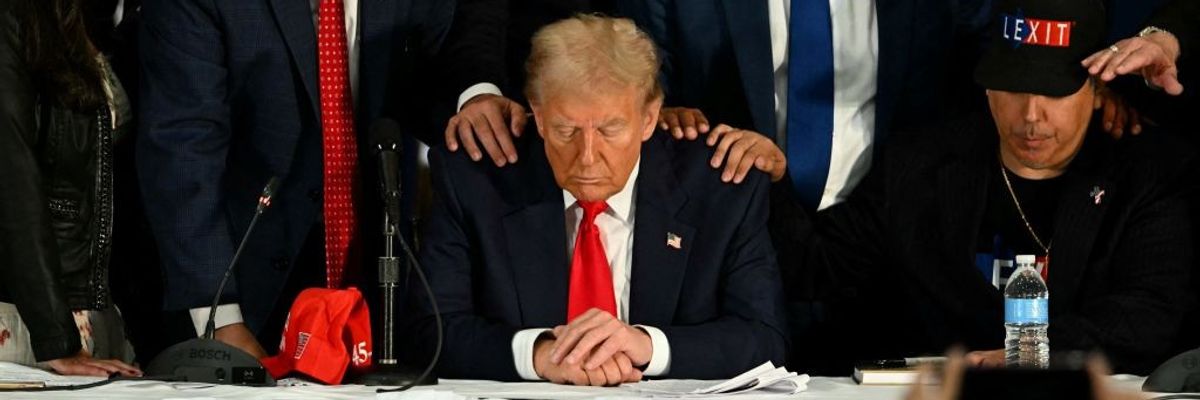
Republican presidential candidate and then-former U.S. President Donald Trump prays during a roundtable discussion with Latino community leaders at Trump National Doral Miami resort in Miami on October 22, 2024.
(Photo: Chandan Khanna/AFP via Getty Images)
Brett Wilkins
Jul 28, 2025
COMMON DREAMS
The Trump administration issued a memo Monday allowing federal employees to proselytize in the workplace, a move welcomed by many conservatives but denounced by proponents of the separation of church and state.
The U.S. Office of Personnel Management (OPM) memo "provides clear guidance to ensure federal employees may express their religious beliefs through prayer, personal items, group gatherings, and conversations without fear of discrimination or retaliation."
"Employees must be allowed to engage in private religious expression in work areas to the same extent that they may engage in nonreligious private expression," the memo states.
Federal workers "should be permitted to display and use items used for religious purposes or icons of a religiously significant nature, including but not limited to bibles, artwork, jewelry, posters displaying religious messages, and other indicia of religion (such as crosses, crucifixes, and mezuzahs) on their desks, on their person, and in their assigned workspaces," the document continues.
"Employees may engage in conversations regarding religious topics with fellow employees, including attempting to persuade others of the correctness of their own religious views, provided that such efforts are not harassing in nature," OPM said—without elaborating on what constitutes harassment.
"These shocking changes essentially permit workplace evangelizing."
"Employees may also encourage their coworkers to participate in religious expressions of faith, such as prayer, to the same extent that they would be permitted to encourage coworkers participate in other personal activities," the memo adds.
OPM Director Scott Kupor said in a statement that "federal employees should never have to choose between their faith and their career."
"This guidance ensures the federal workplace is not just compliant with the law but welcoming to Americans of all faiths," Kupor added. "Under President [Donald] Trump's leadership, we are restoring constitutional freedoms and making government a place where people of faith are respected, not sidelined."
The OPM memo was widely applauded by conservative social media users—although some were dismayed that the new rules also apply to Muslims.
Critics, however, blasted what the Freedom From Religion Foundation (FFRF) called "a gift to evangelicals and the myth of 'anti-Christian bias.'"
FFRF co-president Laurie Gaylor said that "these shocking changes essentially permit workplace evangelizing, but worse still, allow supervisors to evangelize underlings and federal workers to proselytize the public they serve."
"This is the implementation of Christian nationalism in our federal government," Gaylor added.
The Secular Coalition for America denounced the memo as "another effort to grant privileges to certain religions while ignoring nonreligious people's rights."
Monday's memo follows another issued by Kupor on July 16 that encouraged federal agencies to take a "generous approach" to evaluating government employees who request telework and other flexibilities due to their religious beliefs.
The OPM directives follow the U.S. Supreme Court's 2023 Groff v. DeJoy ruling, in which the court's right-wing majority declared that Article VII of the Civil Rights Act of 1964 "requires an employer that denies a religious accommodation to show that the burden of granting an accommodation would result in substantial increased costs in relation to the conduct of its particular business."
The new memo also comes on the heels of three religion-based executive orders issued by Trump during his second term. One order established a White House Faith Office tasked with ensuring religious organizations have a voice in the federal government. Another seeks to "eradicate" what Trump claims is the "anti-Christian weaponization of government." Yet another created a Religious Liberty Commission meant to promote and protect religious freedom.
The Trump administration issued a memo Monday allowing federal employees to proselytize in the workplace, a move welcomed by many conservatives but denounced by proponents of the separation of church and state.
The U.S. Office of Personnel Management (OPM) memo "provides clear guidance to ensure federal employees may express their religious beliefs through prayer, personal items, group gatherings, and conversations without fear of discrimination or retaliation."
"Employees must be allowed to engage in private religious expression in work areas to the same extent that they may engage in nonreligious private expression," the memo states.
Federal workers "should be permitted to display and use items used for religious purposes or icons of a religiously significant nature, including but not limited to bibles, artwork, jewelry, posters displaying religious messages, and other indicia of religion (such as crosses, crucifixes, and mezuzahs) on their desks, on their person, and in their assigned workspaces," the document continues.
"Employees may engage in conversations regarding religious topics with fellow employees, including attempting to persuade others of the correctness of their own religious views, provided that such efforts are not harassing in nature," OPM said—without elaborating on what constitutes harassment.
"These shocking changes essentially permit workplace evangelizing."
"Employees may also encourage their coworkers to participate in religious expressions of faith, such as prayer, to the same extent that they would be permitted to encourage coworkers participate in other personal activities," the memo adds.
OPM Director Scott Kupor said in a statement that "federal employees should never have to choose between their faith and their career."
"This guidance ensures the federal workplace is not just compliant with the law but welcoming to Americans of all faiths," Kupor added. "Under President [Donald] Trump's leadership, we are restoring constitutional freedoms and making government a place where people of faith are respected, not sidelined."
The OPM memo was widely applauded by conservative social media users—although some were dismayed that the new rules also apply to Muslims.
Critics, however, blasted what the Freedom From Religion Foundation (FFRF) called "a gift to evangelicals and the myth of 'anti-Christian bias.'"
FFRF co-president Laurie Gaylor said that "these shocking changes essentially permit workplace evangelizing, but worse still, allow supervisors to evangelize underlings and federal workers to proselytize the public they serve."
"This is the implementation of Christian nationalism in our federal government," Gaylor added.
The Secular Coalition for America denounced the memo as "another effort to grant privileges to certain religions while ignoring nonreligious people's rights."
Monday's memo follows another issued by Kupor on July 16 that encouraged federal agencies to take a "generous approach" to evaluating government employees who request telework and other flexibilities due to their religious beliefs.
The OPM directives follow the U.S. Supreme Court's 2023 Groff v. DeJoy ruling, in which the court's right-wing majority declared that Article VII of the Civil Rights Act of 1964 "requires an employer that denies a religious accommodation to show that the burden of granting an accommodation would result in substantial increased costs in relation to the conduct of its particular business."
The new memo also comes on the heels of three religion-based executive orders issued by Trump during his second term. One order established a White House Faith Office tasked with ensuring religious organizations have a voice in the federal government. Another seeks to "eradicate" what Trump claims is the "anti-Christian weaponization of government." Yet another created a Religious Liberty Commission meant to promote and protect religious freedom.