Wednesday, August 06, 2025

Tariffs on fertilizer cause drop in shipments to US, Mosaic says

Image: Mosaic

Mosaic Co., the world’s leading producer of two key crop fertilizers, said US tariffs are weighing on shipments.

Phosphate deliveries to the US are “tracking well below last year” with levies applicable to most sources of the fertilizer, the company said in its earnings release. Meanwhile, farmers have less to spend on nutrients as corn and soybean prices fall on “global trade uncertainty” and the anticipation of large harvests.

Demand elsewhere in the world is absorbing some of the volumes no longer bound for the US, Mosaic said. The company posted an $8 million loss in its phosphate earnings in the second quarter. China is the world’s biggest producer of the crop input.

Mosaic said rising prices for phosphate and potash, another key fertilizer, boosted second-quarter net potash sales up from the prior year, while offsetting lower phosphate volumes to keep sales flat. Potash, largely produced in Canada, is among the goods exempt from US tariffs under a North American trade agreement.

The Tampa-based company reported second-quarter sales volumes for phosphate and potash that trailed analyst estimates. Earnings per share missed even the lowest of analyst estimates compiled by Bloomberg, reflecting extensive maintenance.

Still, the company said it remains optimistic as “any demand deferral or reduction exiting 2025 sets the stage for strong demand in 2026, as nutrients removed from this year’s crops need to be replenished.”

Shares slumped more than 6% after regular-trading hours in New York.

(By Ilena Peng)

Copper market to feel impact of accident in Chile as plants shut

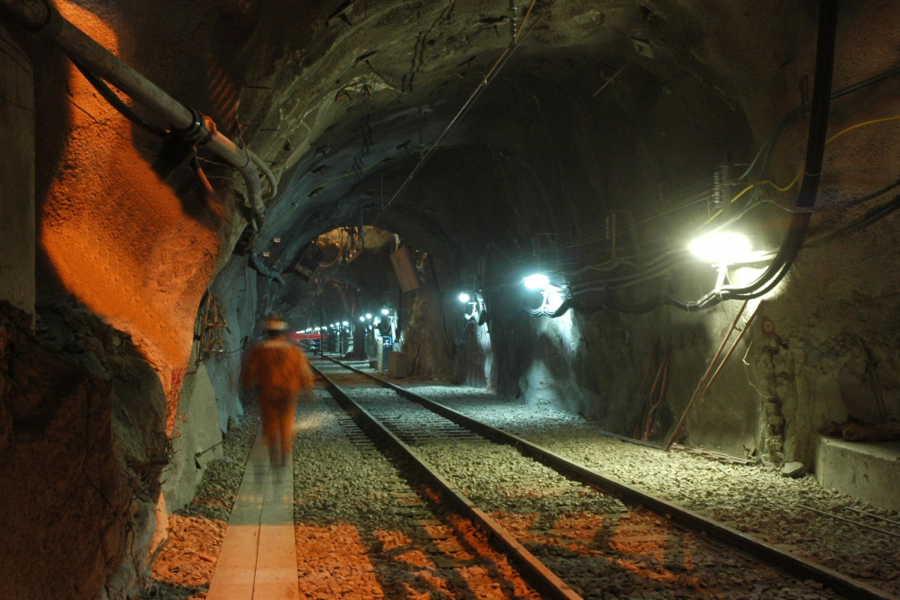
El Teniente is the world’s largest underground copper operation. Credit: Codelco

Codelco stopped processing ore at its biggest copper mine in Chile after a deadly tunnel collapse last Thursday prompted a halt of underground activities.

The El Teniente complex ran out of stockpiled ore and had to put its plants, including the Caletones smelter, on care and maintenance, the state-owned company said Tuesday. About 5,000 workers were brought in to the ground-level facilities to check that equipment isn’t damaged and is ready to restart.

That means ripples from last week’s collapse that killed six workers will start to reach global markets soon. The shutdowns will reduce output of the metal used in wiring, electronics and construction by about 30,000 metric tons a month, a quarter of Codelco’s production.

“The situation is very delicate and an investigation is underway,” said Michael Cuoco, head of metals at StoneX Financial Inc. “As long as it’s ongoing, I find it extremely unlikely that the mine will be able to reopen.”

Copper prices haven’t delivered a major reaction to the Chilean outage so far, with investors also grappling with the fallout from US tariffs. The metal on the London Metal Exchange rose 0.4% by 10:04 a.m. London time to $9,680.50 a ton.

Codelco is committed to resuming operations as soon as conditions allow, it said in a filing on Monday. The company is convening an international panel of experts to audit the mine and establish what happened.

The main union at El Teniente is hoping to have an agreement in place in the coming days that would allow a gradual return to work in areas not directly affected by the collapse. Still, any resumption would have to be cleared by mines regulator Sernageomin.

(By James Attwood)

Why did copper escape US tariffs when aluminum did not?

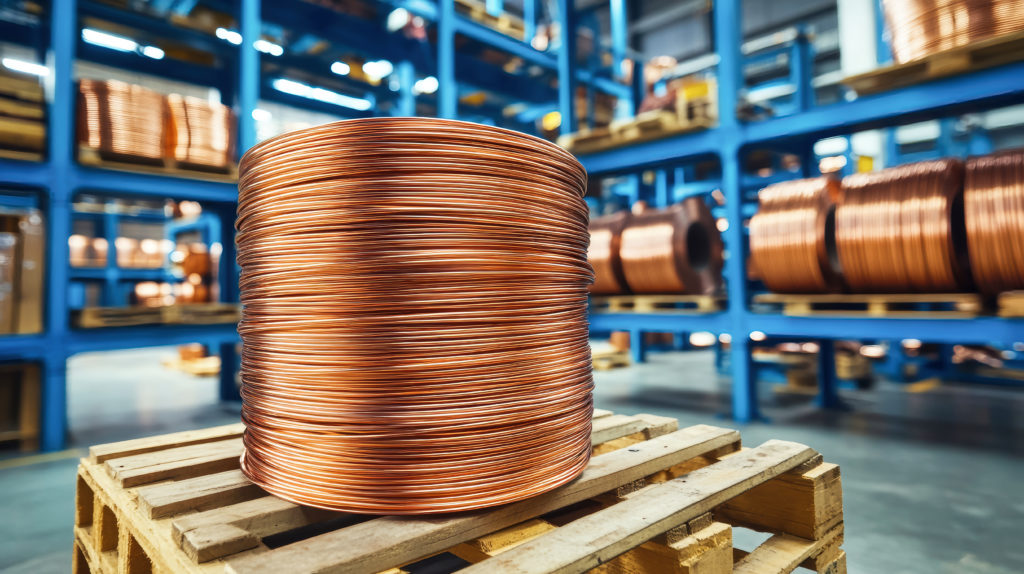
Stock image.

A US decision last week to exempt refined copper metal from import duties is in contrast to an earlier move to levy steep duties on aluminum, and highlights the central importance of electricity costs and the lobbying dynamics shaping US policy.

The United States stunned the copper market with its decision to only tax imports of semi-finished products such as wire, tube and sheet. Copper prices on Comex are down more than 20% since the announcement on Wednesday.

Since June, aluminum metal shipped to the US, where smelters face higher electricity bills than copper producers, has attracted 50% tariffs.

Taxes on metal production are part of a broader US effort to revive domestic smelting capacity and cut reliance on imports.

US aluminum producer Century Aluminum has been vocal in its support of tariffs that it says are essential to protect what remains of the US aluminum smelting industry.

“Century Aluminum Company applauds President Trump’s unwavering defence of the nation’s domestic production of critical metals by increasing aluminum tariffs to 50%,” the company said in a June release.

The waiver for refined copper reflects its importance to US manufacturing and the influence of the industry, including major producer Freeport-McMoRan, which earlier this year said a global trade war would undermine US copper production.

“A global trade war could result in slower economic growth,” Freeport said in a submission to a US government request for comment on its investigation into copper import tariffs.

“Slower growth in the US or globally would negatively impact copper prices, which could threaten the viability of the domestic copper industry due to its elevated cost structure.”

The case for tariffs on US aluminum imports includes the energy proportion of smelting costs in the United States. Macquarie’s ballpark estimate for energy costs for producing primary aluminum and copper is 50% and 30% respectively.

“There is no economic case for building any greenfield aluminum smelting capacity without substantial intervention. Even then, intervention may not be sufficient,” said Macquarie analyst Marcus Garvey.

Analysts say one major difficulty for potential investors in US aluminum smelting capacity is getting long-term power purchase agreements at competitive prices, when power costs are higher in the US compared with other producing countries such as United Arab Emirates, Bahrain and the world’s biggest producer China.

The cost of electricity is the main reason why there are only four active US aluminum smelters down from 23 in 1995.

According to US Geological Survey, the United States produced 3.35 million metric tons of primary aluminum in 1995, 1.6 million tons in 2015 and 670,000 tons last year.

(By Pratima Desai; Editing by Barbara Lewis)

Trump’s copper tariffs apply to $15 billion of goods so far

Stock image.

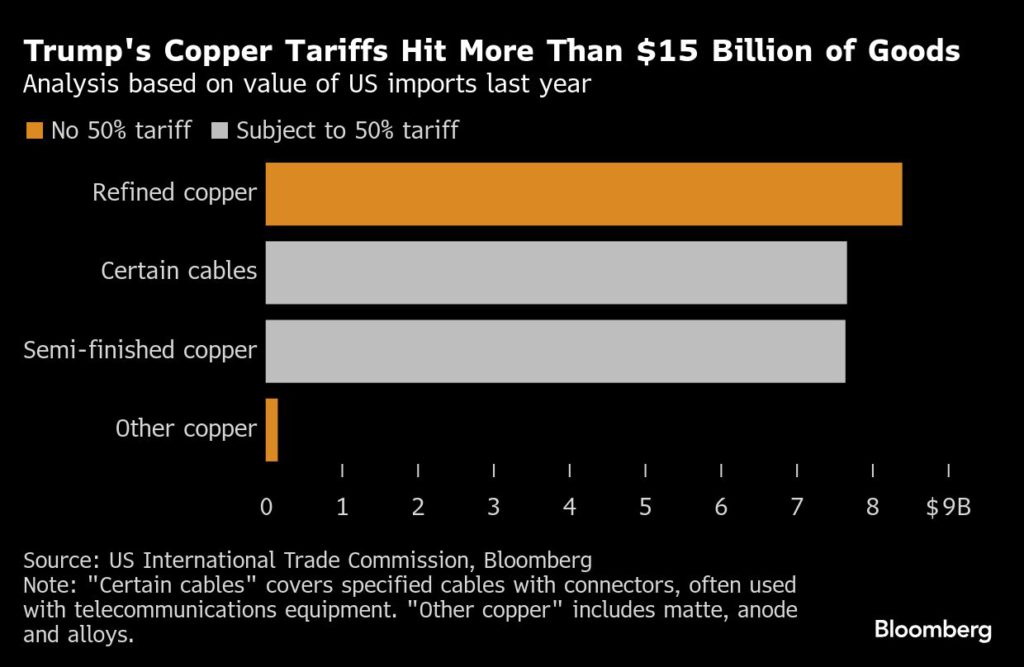
US President Donald Trump’s first wave of copper tariffs will hit imports valued at more than $15 billion last year, highlighting the potential inflationary impact on American buyers.

Details of the 50% import duties sparked turmoil in the global copper market last week — including a record slump for US futures — because Trump handed a surprise exemption to key forms of the wiring metal. But that still leaves significant trade volumes subject to tariffs.

On Monday, the US Federal Register published a list of exactly what will fall under the 50% levy. It includes semi-processed products — like wires, tubes and rods — worth $7.7 billion last year, plus cabling typically used for phone or internet connections with almost the same value, according to Bloomberg News calculations.

And it doesn’t stop there. The White House ordered officials to come up with a plan in 90 days to slap tariffs on an array of other copper-intensive manufactured goods. Trump dramatically expanded the scope of US aluminum and steel tariffs earlier this year by adding derivative products.

The US copper market is scrambling to understand the implications of Trump’s tariffs, which the president said will help boost domestic output of semi-processed and copper-containing products. He stopped short of tariffs on refined metal — an omission that shocked investors but reflects deep US reliance on imports and a pushback by key American buyers, who feared the duties would drive up costs significantly.

Still, the US took in at least 600,000 tons of semi-finished copper last year, according to the US International Trade Commission. About 35% came from Canada, followed by Germany, South Korea and Mexico each at less than 10%. Refined copper, spared from the levies, amounted to about 900,000 tons and was worth about $8.4 billion.

Tariffs will be levied according to the value of the copper content. That means the “semis” that are almost pure copper will attract a much higher effective duty rate than, say, internet cables where the copper wiring is only a part of the product.


First Quantum scores $1B streaming deal with Royal Gold


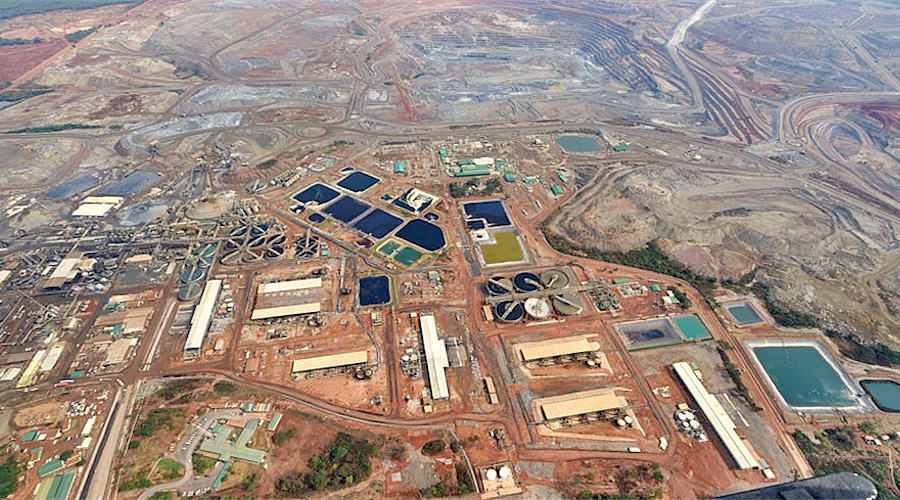
Kansanshi is Zambia’s largest copper mine by output. (Image courtesy of First Quantum.)

Canadian miner First Quantum Minerals (TSX: FM) has secured a $1 billion gold streaming deal with a subsidiary of Royal Gold (NASDAQ: RGLD), the companies announced Tuesday.

The agreement provides First Quantum with the full sum upfront in exchange for future gold produced as a by-product at its Kansanshi copper mine in Zambia. In a gold streaming arrangement, the buyer pays upfront for the right to purchase a portion of future gold production, usually at a predetermined, discounted rate.

First Quantum will deliver gold to Royal Gold based on copper output: 75 ounces per million pounds of recovered copper until 425,000 ounces are reached, then 55 ounces per million until a further 225,000 ounces, and finally 45 ounces per million pounds thereafter.

In addition to the upfront payment, First Quantum will receive 20% of the spot gold price per ounce delivered, which may increase to 35% if specific credit or leverage targets are met.

Royal Gold expects to receive around 12,500 ounces from the stream in 2025 and projects an average annual delivery of 35,000 to 40,000 ounces over the next decade. The company said the deal offers immediate cash flow from a long-life, large-scale asset.

For First Quantum, the deal allows it to increase gold exposure over time and boosts its financial flexibility as it advances the $1.3 billion S3 expansion at Kansanshi. The mine’s combined copper and gold output makes it especially well-suited to streaming deals, enabling the company to monetize gold by-product production without diluting its copper focus.

The transaction is set to close Wednesday.

BAN DEEP SEA MINING

US courts Cook Islands for deep-sea mining


Rarotonga tropical island Muri beach, part of the Cook Islands. (Stock image by Helena Bilkova.)

The United States has begun talks with the Cook Islands for research on seabed mineral exploration and development, just months after the South Pacific nation inked cooperation pacts with China that included undersea mining.

The US State Department announced Tuesday that the deal would involve mapping the Cook Islands’ Exclusive Economic Zone (EEZ), calling it “one of the most promising regions for deep-sea mineral deposits.”

The Cook Islands, a self-governing country in free association with New Zealand, consists of 15 islands and atolls located between New Zealand and Hawaii. Officials from the Cook Islands signed a five-year strategic partnership with China in February, covering cooperation in seabed mining, education, the economy, infrastructure, fisheries and disaster management.

That move strained relations with Wellington. In June, New Zealand suspended millions in budget support after the Cook Islands’ prime minister signed the deals without consultation. Under their constitutional arrangement, New Zealand and the Cook Islands are expected to coordinate on security, defence and foreign policy.

New Zealand’s foreign ministry responded cautiously this week, saying it was aware of the US initiative and respected “the rights and responsibilities of states to manage their mineral resources.”

Geopolitical move

The US push for seabed mining reflects a broader geopolitical strategy. In April, President Donald Trump issued an executive order to accelerate American licensing for deep-sea mining, describing it as a “gold rush” to counter China’s growing influence. The order marked a sharp departure from decades of US deference to the UN Convention on the Law of the Sea (UNCLOS), a treaty Washington has never ratified but largely followed.

Legal experts warn that the unilateral approach risks undermining global maritime norms. Mining lawyer Scot Anderson, who specializes in energy and natural resources at Womble Bond Dickinson, told MINING.COM that Trump’s order marked a dramatic shift that “could create both legal and diplomatic risks” and encourage other countries to expand maritime claims unilaterally.

Despite the controversy, Canada’s the US subsidiary of Canadian-registered The Metals Company (Nasdaq: TMC) submitted the first application to mine the seabed in international waters under a 1980 law within days of Trump’s order. This week, TMC released the first probable mineral reserves for its NORI-D polymetallic nodule project in the Clarion Clipperton Zone of the Pacific Ocean.

Seabed mining advocates claim the practice has a smaller environmental footprint than land-based operations. Critics argue the science is far from settled. The deep ocean remains largely unexplored, and disrupting its ecosystems could unleash cascading effects throughout the marine food chain.

_________________________________________
RELATED: The geopolitical race to mine the deep-sea floor (Podcast)


TMC releases PFS, publishes first probable mineral reserves for deep-sea nodules


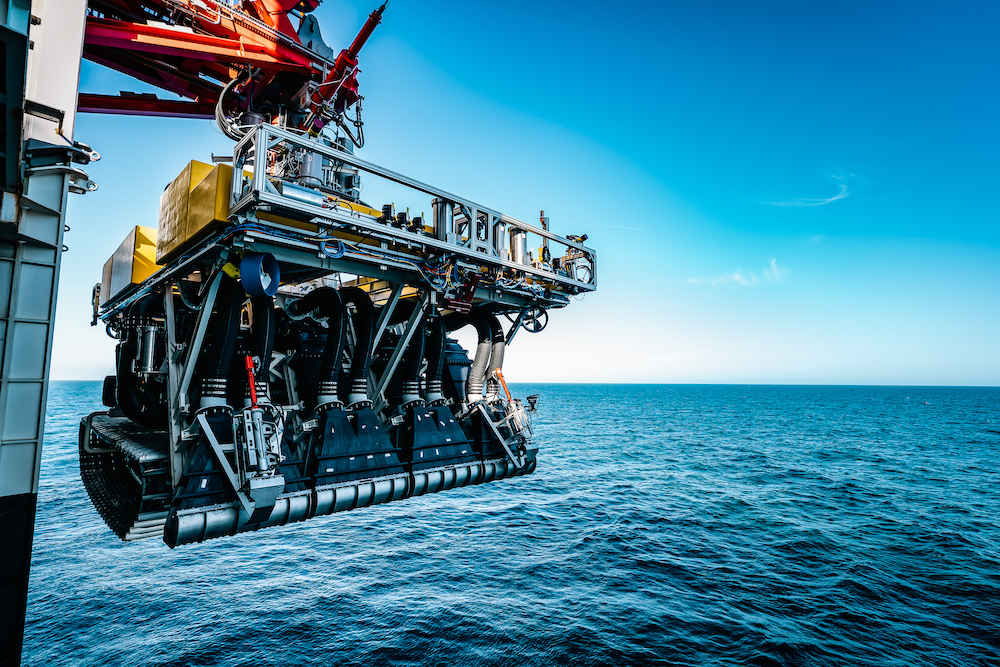
Pilot collector vehicle at NORI. (Image by The Metals Company)

The Metals Company (Nasdaq: TMC) released Monday a technical report summary (TRS) of the pre-feasibility study (PFS) for its proposed NORI-D polymetallic nodule project in the Clarion Clipperton Zone (CCZ) of the Pacific Ocean.

The report — prepared in accordance with SEC Regulation S-K (SK-1300) — marks a world-first declaration of probable mineral reserves for deep-sea polymetallic nodules.

The Canadian miner, which has exclusive access to the Nori Clarion-Clipperton Zone, in March formally initiated a process under the US Department of Commerce to apply for exploration licenses and permits to extract minerals from the ocean floor.

Mining international waters is in the spotlight as companies and countries are looking at minerals concentrated on the ocean floor that can be used in batteries for smart phones and electric vehicles.

Alongside the PFS, TMC announced the publication of an initial assessment (IA) for the remainder of its resource in the NORI and TOML blocks in the CCZ, with a measured and indicated mineral resource of 73 million tonnes grading 1.30% nickel, 0.20% cobalt, 1.2% copper and 30.2% manganese with an abundance of 12.8 kg/m2, and an inferred mineral resource of 1.2 billion tonnes grading 1.30% nickel, 0.20% cobalt, 1.1% copper and 28.7% manganese with an abundance of 11.6 kg/m2. The resource supports an after-tax net present value of $18.1 billion and internal rate of return of 35.6%. 

The mineral resource reports follow TMC USA’s April submission of an application for a commercial recovery permit under the US Deep Seabed Hard Mineral Resources Act (DSHMRA), along with two exploration license applications.

The reports also follow an $85 million investment from Korea Zinc in June. The deal gives Korea Zinc a 5% stake in TMC through the purchase of 19.6 million shares at $4.34 each. It also includes a three-year warrant allowing the South Korean refiner to acquire an additional 6.9 million shares at $7 apiece.

TMC’s stock was down 6.2% in mid-afternoon trading on the Nasdaq, with a $2.2 billion market capitalization.

TMC’s bid to become the first company to gain approval to develop deep sea minerals has been controversial. Environmental groups are calling for all activities to be banned, warning that industrial operations on the ocean floor could cause irreversible biodiversity loss.

Despite the opposition, TMC CEO Gerard Barron has declared the debate over.

“The combined net present value of $23.6 billion of the two studies should give investors a better idea of the economic potential of our total estimated resource,” Barron said in a news release Monday.

“The PFS takes our NORI-D project economics up the confidence curve and contains the declaration of mineral reserves — these are our first 50+ million tonnes with a potential commercially viable path to production, with more to follow as we advance our mine planning work,” Barron said.

The phased project development plan will target initial production from the Hidden Gem vessel, with an estimated $113 million of development capital expenditure each from TMC and Allseas.

The company said first production is targeted for the fourth quarter of 2027.


AI Pilot-Assist Technology Has Arrived on the Mississippi River

Touscany
John Touscany / iStock

Published Aug 5, 2025 2:37 PM by The Maritime Executive


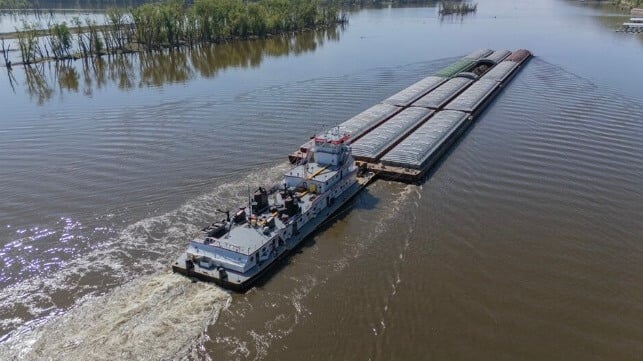
The maritime autonomy developer Mythos AI has installed a pilot-assist system designed for inland waterway navigation on a working towboat operated by Southern Devall. The system will help with collision-avoidance on the busy Mississippi River, and it is the first deployment of its kind on the waterway. 

"This technology represents a step change in how we think about safety and operational control on the river," said Sam Lewis, Vice President of Sustainability at Southern Devall. "Our top priority is keeping our crews, vessels, and cargo safe in increasingly complex navigation environments. Mythos AI’s system gives us a new level of foresight — and we believe it will increase safety gains and fuel savings."

The system's current configuration supports specific safety needs for towboat pilots, like spotting floating logs, identifying nearby vessels, and determining when a buoy or navigation aid might be displaced from its proper location. It also calculates approximate stopping distances for the vessel based on current river conditions, with alerts to the operator. On the fuel-economy side, it logs consumption and propulsion data, and recommends the best performance throttle settings for each specific towboat. In deep-sea shipping, these cost savings have been a driving force behind adoption of advanced fuel-tracking software. 

Southern Devall is among the larger operators on the Intracoastal Waterway and the Mississippi, with 70 towboats in operation. Based on the success of the Mythos AI system, it may install more units across the fleet. 

The Mississippi is notoriously variable, with shifting shoals and changing water levels, and Southern Devall COO Bob Thomas says that Mythos' system does a good job keeping up. "The Mythos AI system shows real promise in its ability to learn the navigational constraints of our routes and vessels and assist with real-time decision-making," he said in a statement. 


Austal Launches Defense Shipbuilding Australia with Government Nod

ALL CAPITALI$M IS $TATE CAPITALI$M

Austal Henderson Australia
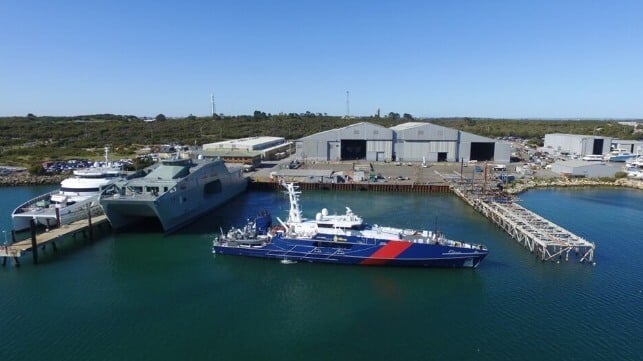
Austal gains a Strategic Shipbuilding Agreement with Australia for its Henderson yard (Austal)

Published Aug 5, 2025 6:28 PM by The Maritime Executive


In what management is calling a “defining moment” for the company, Austal and the Government of Australia have agreed on terms for a Strategic Shipbuilding Agreement. It took nearly two years to reach terms for the agreement, which sets the company up as a major supplier to the military, and in turn, Austal will launch a new subsidiary, Austal Defence Shipbuilding Australia.

Under the agreement, which has an initial maximum term of 15 years, Austal Defence Australia becomes a prime contractor, ultimately responsible for all aspects of the design and integration, construction, installation, integration, testing, delivery/acceptance of vessel programs for Australia. According to the company, the new agreement will establish a management framework and common terms through which it will deliver surface shipbuilding programs under shipbuilding contracts using a variety of key contractors and suppliers.

The government, in announcing the agreement, says it is securing a continuous pipeline of shipbuilding work in Western Australia. It highlights that Henderson in Western Australia, where Austal is headquartered, is one of two major shipbuilding hubs in Australia. Through the agreement, they look to establish a Defence Precinct in Henderson, which will support a wide range of subcontractors and service providers.

“For too long, the Australian shipbuilding industry has lacked the consistent work needed to develop a competitive and reliable shipbuilding capability,” says the Ministry for Defence. “This has had a flow-on effect of hindering the development of Australian-made Defence capabilities and resilience in our shipbuilding industry.”

The agreement will be supported by two pilot programs that were previously announced and which will provide Austal with many years of steady work. First is the Landing Craft Medium program, which is expected to be 18 vessels. It is intended to be the first pilot project, and Austal reports it expects the contract will be finalized in the first quarter of 2026. Work is projected to last for eight years, with the program costing A$1 to $1.3 billion (approximately US$650 to $775 million). The final delivery is expected in 2032.
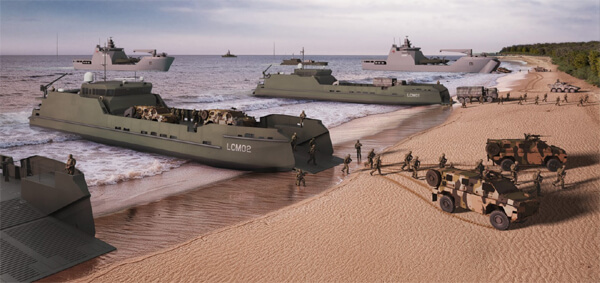
 

The Landing Craft Medium will be the pilot project and Austal expects to build 18 by 2032 (Austal)


The second project is the Landing Craft Heavy, initially announced in November 2024. It calls for building eight Damen-designed LST100 Landing Craft for the Australian Army. The goal is to put this under contract before the end of 2025.

The government will receive a single “Sovereign Share” in the new company along with an associated call option. Under the terms of the call option, the government could move to acquire Austal Defence Australia at a “fair market value” should a new shareholder or third party acquire more than 20 percent of Austal. Existing shareholders of Austal have a higher threshold to trigger the call option. 

This is seen as a direct move in response to the repeated attempts by South Korea’s Hanwha Group to buy Austal. After the group’s initial proposal was rejected by Austal, which said due to its strategic nature, it did not believe the government would approve a takeover, Hanwha has made new approaches. The South Koreans purchased Austal shares on the open market and hold an option on shares while it has applied to Australia for permission to increase its holding in Austal to 19.9 percent.

Austal started operations in 1988 in Henderson and this new government agreement secures Austal’s role as a military supplier in Australia. It comes as the company has also established itself as a major builder for the U.S. government with programs for the Navy and the Coast Guard.
 

UK Funds Demonstration of Ammonia-Fueled High Temperature Engine

NH3
Taras Artemenko / iStock

Published Aug 5, 2025 6:28 PM by The Maritime Executive


A demonstration project for the development of an ammonia-fueled engine has been selected for the UK's Clean Maritime Demonstration Competition, according to sponsor MOL. The project is led by Carnot Ltd., developer of an uncooled, ultra-high-temperature engine that can be adapted to run on most renewable fuels. 

Carnot Ltd.'s engine is made out of industrial ceramics, and is not limited by temperature in the way that steel and cast iron engines are. Metallic engine components have to be cooled constantly so that they do not fail, and the removed heat means a power efficiency loss. By getting rid of cooling, Carnot Ltd.'s design keeps efficiency higher and reduces the amount of ancillary equipment surrounding the engine (coolant pumps, radiators/heat exchangers, piping, etc.). Running on diesel, the Carnot Ltd. engine is about 70 percent efficient, or twice as efficient as the average automotive engine. 

The company has secured several UK R&D grants for marine engine development, and the latest is aimed at an ammonia-fueled auxiliary engine version. For the project, Carnot Ltd. will have combustion simulation support from University of Southampton, integration support from engineering firm Houlder, and marketing research support from De Courcy Alexander. MOL will advise from a vessel operations perspective. 

The project is funded by the UK's robust maritime R&D support policy. The Department for Transport (DfT) has awarded more than $300 million over the last seven years for green maritime technological research.