Wednesday, August 06, 2025


New study links 2023 Maui wildfire to spike in suicide, overdose


University of Hawaii at Manoa


Link to video and sound (details below): https://spaces.hightail.com/receive/YDQA0P5cJ7

Deaths by suicide and drug overdose significantly increased in the aftermath of the August 2023 Maui wildfire, according to a new study published in the Journal of the American Medical Association (JAMA).

The study, led by Alex Ortega, dean of the Thompson School of Social Work and Public Health, and Keawe‘aimoku Kaholokula, chair of the Department of Native Hawaiian Health, in the John A. Burns School of Medicine, both at the University of Hawaiʻi at Mānoa, along with Jonathan Purtle, associate professor at New York University’s School of Global Public Health, is one of the first to show that wildfires can lead to immediate deaths from suicide and drug overdose. 

"Nationally and globally, we have seen an increase in devastating wildfires, and these fires can have a tremendous impact on the health and well-being of communities,” said Ortega. “Public health must be adequately prepared to respond to serious mental health consequences of wildfires and other climate-related disasters that are increasing in both frequency and severity." 

Death rates increased statewide

The researchers analyzed death records from all of Hawai‘i’s counties from 2014 through 2023, focusing on suicides and drug overdoses. They compared the death rates before, during and after the wildfires.

The study showed that in August 2023, suicide and overdose death rates increased by 46% statewide. However, the impact was much greater in Maui, where there was a 97% increase in suicide and overdose deaths compared to prior months. When limiting their analysis to just suicides in August 2023, they found that the suicide rate was 182% higher in Maui than other islands in the state.

“Prior research has found similar effects in the months after wildfires and other disasters. But the immediacy of the effects on suicide rates that we observed in Maui are unique and troubling,” said Purtle.

Researchers suggest that both direct exposure to the wildfires and indirect effects, such as concern for loved ones, may have contributed to the rise in death rates. The findings also show that residents who fled Maui for other islands could have contributed to the increase in state-wide suicide and overdose deaths.

In an earlier study led by the UH researchers, the team documented a 41% rise in 988 Lifeline calls after the Lahaina wildfires, exposing critical gaps in Hawaiʻi’s mental health infrastructure.

A call to action 

This recent study emphasized the importance of early behavioral health intervention during disaster responses and recommends including suicide and overdose prevention in wildfire response and recovery plans.

Kaholokula noted disaster recovery must address more than just rebuilding physical infrastructure. “Plans should also focus on the psychological and emotional impacts communities face—including hopelessness, cultural disconnection and stigma,” he said. “There needs to be a plan for suicide and substance abuse prevention, and other mental health support.”

The study used the most recent death data available from the CDC. Researchers will use 2024  data when it becomes available to see if there is was an increase in suicides and/or overdoses over the course of 2024, as more time elapsed since the wildfires. 

This study is part of the NIH-funded Maui LOA (Learnings to Overcome Adversities) project, a five-year effort led by UH researchers to understand how disasters like the Lahaina wildfires affect community, healthcare, and emergency response system resiliency. The research focuses on vulnerable populations and aims to strengthen health system resilience and improve access to care.
____________

Link to soundbites (details below): 
https://spaces.hightail.com/receive/YDQA0P5cJ7

SOUNDBITES:

Alex Ortega, UH Thompson School of Social Work & Public Health Dean

(18 seconds)
This is really a call for increasing mental health services capacity in Hawaiʻi in general, but more specifically in Maui, because even a year after the wildfire or two years after now, we're still seeing devastating mental health impacts as a result of the wildfire.

Keawe‘aimoku Kaholokula, JABSOM Dept. of Native Hawaiian Health Chair

(19 seconds)
“It’s a significant event that takes a significant toll on our communities emotionally, physically, financially, and we do need to better understand and learn from these experiences so we can do a better job of mitigating these impacts in the future through policies and practices.”

Jonathan Purtle, New York University Public Health Associate Professor

(14 seconds)
“What we found was that the highest suicide and overdose death rate in that 10 year period occurred in Maui and also in other Hawaiian islands. It was the highest in the same month as the wildfires in August of 2023.”

______________________


Microearthquakes in New Zealand's Southern Alps more common during spring and summer


Australian National University


Changes in water levels beneath Earth’s surface caused by glacier snowmelt and rainfall could be responsible for triggering small but frequent earthquakes in New Zealand’s central Southern Alps, according to new research led by The Australian National University (ANU).

The scientists found the frequency of the microearthquakes – small quakes that are typically too weak to be felt by humans – that occurred in parts of the central Southern Alps increased during warmer periods in spring and summer, indicating a seasonal pattern. 

According to the study’s lead author Dr Konstantinos Michailos, as temperatures rise during spring and summer months, meltwater from glaciers and seasonal snow from high elevations runs down the mountain and infiltrates the “highly fragmented” mountain bedrock.

This leads to seasonal elevated groundwater levels beneath Earth’s surface, which can cause fluid pressure to change in the upper crust.

“Our findings highlight the role of extreme rainfall and glacier dynamics in triggering shallow earthquakes and could provide scientists with a better understanding of the potential drivers of seismic activity in other alpine regions around the world,” Dr Michailos said.

The central Southern Alps – an active mountain range that contains almost all of New Zealand's glaciers – is prone to extreme weather events, including intense rainfall. Dr Michailos said the region can receive upwards of 300 millimetres of rain in just three days.

Dr Michailos said seasonal snowmelt, combined with heavy rainfall events, could elevate water levels beneath the surface and increase pore-fluid pressure in the crust, which in turn could be responsible for triggering frequent microquakes in the region.

“New Zealand’s central Southern Alps is a tectonically active region and lies next to the Alpine Fault, the South Island’s most significant source of seismic hazard,” Dr Michailos said.

“We found that some of these shallow-depth earthquakes, occurring at depths of between three to six kilometres below sea level, were more frequent during spring and summer. These events correlated with periods of heavy rainfall and were most common near the terminals of glaciers, particularly near the Murchison Glacier.

“We found that a lot of these earthquakes were happening within hours or a day after large rainfall events there – a pattern also documented in other parts of the world such as the European Alps.

“Much like other parts of the world, human-induced climate change has caused the central Southern Alps’ glaciers to shrink in recent decades. This glacial mass loss, combined with seasonal fluctuations of snow accumulation and melt, can redistribute stress in Earth’s crust beyond what tectonic forces alone would cause.”

By collecting seismic data from an array of seismometers that have been operating in the central Southern Alps since 2008, the researchers detected more than 8,000 microearthquakes in the region over a period of 11 years, from 2009 to 2020.

The researchers were especially interested in examining seismic activity detected near four major glaciers: Murchison Glacier, Tasman Glacier, Franz Josef Glacier and Fox Glacier.

The research team plans to visit the central Southern Alps in October of this year to deploy additional seismometers and collect denser seismic data to further expand on the study’s findings. Rainfall gauges and temperature sensors will also be installed.

This new infrastructure is designed to complement existing local seismometers and enhance scientists’ ability to record earthquakes, as well as landslides, avalanches and rockfalls.

The research is published in the journal Geochemistry, Geophysics, Geosystems. This work involved scientists from ANU in collaboration with researchers from New Zealand and Switzerland. 


Scared of giving birth? You’re not alone, but stay positive to ease the fear


University of South Australia


Up to 60% of women experience some fear about giving birth, especially for the first time, but a new study shows why some women are more likely to stay calm and confident in the lead-up to childbirth.

In a global first, researchers from Robert Gordon University in Scotland and the University of South Australia (UniSA) investigated the factors that help ease childbirth fears, rather than stoke them.

They surveyed 88 pregnant women in their third trimester before attending antenatal classes in north-east Scotland.

Researchers used the Warwick-Edinburgh Mental Wellbeing Scale to measure the link between mental wellbeing, a woman’s belief in her ability to manage the challenges of labour, and fear of childbirth.

While 12% exhibited ‘severe’ fear of childbirth (FOC), those who were more positive, confident and in meaningful relationships reported fewer concerns.

The findings are published in the Journal of Psychosomatic Obstetrics & Gynaecology.

Lead author Dr Katrina Forbes-McKay says the results provide valuable insights into how antenatal care could be improved to foster confidence, enhance positive emotions and ultimately support healthier births for mothers and babies.

“While many studies have explored the negative effects of childbirth fear, including prolonged labour, emergency caesareans and postpartum mental health issues, there has been little research into what protects women from experiencing those fears,” Dr Forbes-McKay says.

“Our findings highlight the need for antenatal care that doesn’t just teach women what to do during labour but also empowers them to believe they can do it.”

Co-author UniSA Professor Tracy Humphrey says the study found that a woman’s sense of mental wellbeing was the strongest predictor of how fearful she felt about giving birth.

“This includes having a sense of purpose, emotional positivity, and meaningful social relationships – all things that are often overlooked in maternity care,” Prof Humphrey says.

“The second key predictor was childbirth self-efficacy – particularly whether women believed they could apply coping strategies when the time came.”

The study calls for antenatal programs to shift from a solely medical model to one that builds self-belief. Specifically, it recommends that childbirth education:

  • Fosters confidence in the use of labour techniques such as breathing, visualisation and relaxation
  • Enhances psychological wellbeing by supporting social connection, purpose and satisfaction
  • Embraces an approach that focuses on wellness rather than the risks

Although this study was restricted to women in the third trimester, further research has been undertaken on the role of antenatal relaxation practices in improving maternal well-being and childbirth experiences.

Robert Gordon University midwifery lecturer Dr Mo Tabib led the study as part of her PhD, under the supervision of Dr Forbes-McKay and Professor Humphrey.

“Women who incorporated these relaxation techniques reported “significant improvements” in their mental wellbeing and confidence in approaching childbirth; improvements which remained stable until 4-8 weeks after birth,” Dr Tabib says.

“The findings align with global priorities from the World Health Organization to promote the mental and physical health of women during pregnancy.

“By addressing fear of childbirth through psychological and educational interventions, we not only support women to have more positive birth experiences but potentially reduce medical interventions and improve outcomes for mothers and infants,” she says.

The researchers are now calling for larger, multi-site studies to validate these findings across diverse populations.

‘Predicting fear of childbirth during pregnancy, the positive role of self-efficacy and mental wellbeing: a cross-sectional study’ is co-authored by Katrina Forbes McKay, Mo Tabib and Tracy Humphrey. DOI 10.1080/0167482X.2025.2527658


Denison Mines Secures Key Approval for Wheeler River Uranium Project

Tipranks - Wed Aug 6, 6:22AM CDT

Denison Mines ( (TSE:DML) ) has issued an announcement.

Denison Mines Corp. has received provincial environmental assessment approval for its Wheeler River Project, allowing it to proceed with developing Canada’s first In-Situ Recovery uranium mine. This milestone positions Denison to advance toward construction, with remaining regulatory approvals pending, and highlights Saskatchewan’s role as a leader in sustainable mining practices, potentially boosting local economies and enhancing Canada’s energy sector.

The most recent analyst rating on (TSE:DML) stock is a Buy with a C$2.60 price target. To see the full list of analyst forecasts on Denison Mines stock, see the TSE:DML Stock Forecast page.

Denison Mines’ overall stock score reflects significant challenges in financial performance due to ongoing losses and cash flow inefficiencies. However, the company’s strong equity position and proactive corporate events, such as advancing key projects and strengthening governance, provide a positive outlook for future strategic growth. Technical indicators suggest a cautious approach due to a lack of upward momentum. Valuation metrics indicate the stock is not currently attractive for traditional investors, as reflected by the negative P/E ratio and absence of a dividend yield.

To see Spark’s full report on TSE:DML stock, click here.

More about Denison Mines

Denison Mines Corp. operates in the uranium mining industry, focusing on the development and operation of uranium projects. Its primary product is uranium, and it is involved in the Wheeler River Project, which is the largest undeveloped uranium project in the eastern Athabasca Basin region of northern Saskatchewan. The company is a major player in uranium mining, with a significant market focus on sustainable and innovative mining practices.

Average Trading Volume: 3,010,607

Technical Sentiment Signal: Strong Buy

Current Market Cap: C$2.52B

For detailed information about DML stock, go to TipRanks’ Stock Analysis page.

Disclaimer & DisclosureReport an Issue

Australia pledges $87M to rescue Trafigura’s Nyrstar smelters in critical minerals push

ALL CAPITALI$M IS $TATE CAPITALI$M


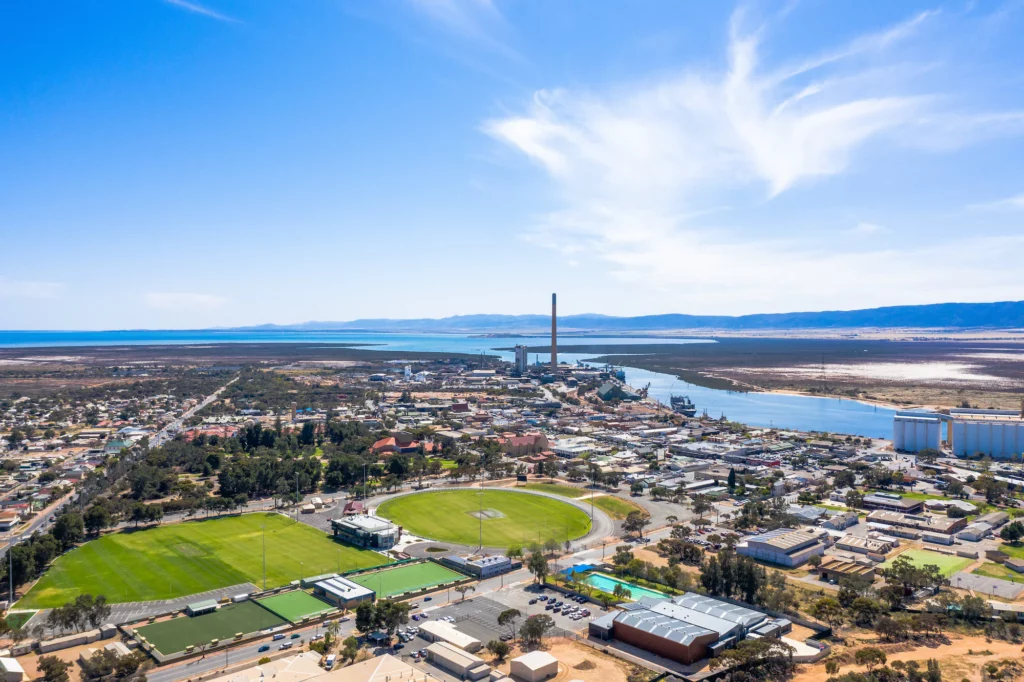
The Port Pirie multi-metals processing facility has been in continuous operation for more than 130 years. Credit: Nyrstar

Australia said on Tuesday that it will provide A$135 million ($87.4 million) in financial support for two smelters owned by Trafigura unit Nyrstar, as part of its strategy to become a key supplier of critical minerals to Western allies.

The funding, announced by federal and state governments and supported by investment by Nyrstar, comes amid growing worries about supply chain vulnerabilities tied to China that have ramped up pressure on Western nations to secure access to critical minerals vital for the energy transition and defence.

Australia aims to position itself as a main player in this shift, but its metals processing sector is under strain from high energy and labour costs, while oversupply from top producer China continues to depress prices.

Earlier this year, Nyrstar put its troubled Port Pirie lead smelter in South Australia and Hobart zinc processing operations in Tasmania under strategic review, citing high energy prices and lower processing fees.

The support package will now allow Nyrstar to maintain operations while it explores modernization of both facilities and accelerates studies to produce critical minerals – germanium and indium in Hobart and antimony and bismuth in Port Pirie.

The initial focus will be on fast-tracking an antimony pilot plant in Port Pirie, Nyrstar said. It first told Reuters in May that it was considering production of the metal used in ammunition and lead-acid batteries at the site.

But modernizing Australia’s ageing smelters will require significantly more capital, potentially testing the government’s, and taxpayers’, resolve.

China, which dominates global processing of many critical minerals, has over the past year imposed restrictions on antimony and rare earths exports, disrupting supply chains for industries including automotive and defence and underscoring the geopolitical risks of over-reliance on Chinese refining.

Bolstering an alternative supply chain has become a top priority for Western governments and for the Trump Administration.

South Australia Premier Peter Malinauskas warned that without Western intervention, China could hold all the world’s smelting capacity. “That’s an unacceptable risk, particularly in the current geostrategic environment,” he told broadcaster ABC.

Australia’s minister for industry and innovation, Tim Ayres, told the ABC that he expected Port Pirie would be capable of producing 15,000 metric tons of antimony metal.

Antimony is an alloy hardener for other metals in ammunition and batteries and is critical for the manufacturing of semi-conductors found in electronics and defence applications. It is also used in flame retardant materials.

Meanwhile, the bailout of Nyrstar may trigger a flurry of aid-seeking calls to government officials from other struggling processing companies.

Last week IGO said it was assessing the future of its loss-making lithium hydroxide plant on the outskirts of Perth, run by joint venture partner Tianqi Lithium.

Glencore has asked for government assistance to support its Mount Isa copper smelter in Queensland state, while Rio Tinto has repeatedly flagged a tough outlook for its Tomago aluminum smelter in New South Wales, the state’s biggest energy user, given costly power.

BHP already pulled the trigger on its Western Australian nickel operations, putting them on ice a year ago.

($1 = 1.5451 Australian dollars)

(By Melanie Burton and Christine Chen; Editing by Tom Hogue, Stephen Coates and Himani Sarkar)

Guinea strips EGA of bauxite rights, hands asset to state firm

ALL CAPITALI$M IS $TATE CAPITALI$M

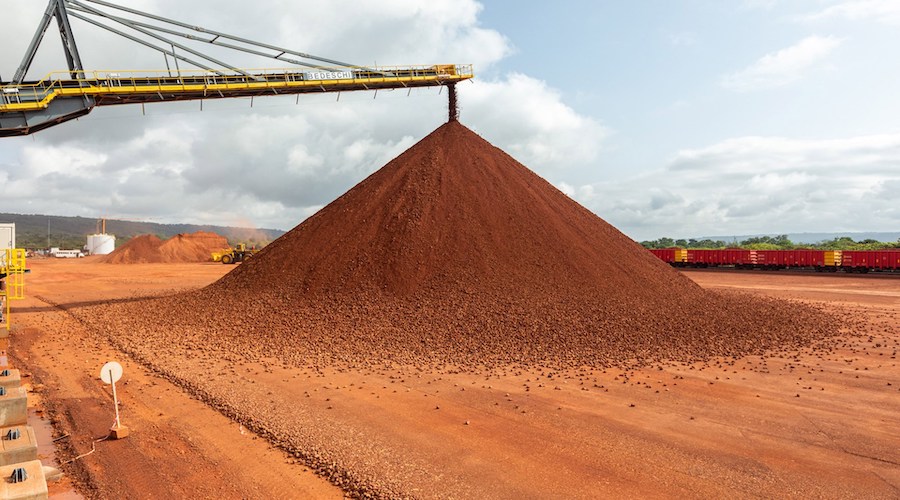
ERA’s Guinea Alumina Corporation bauxite mine in Guinea. (Image courtesy of Emirates Global Aluminium.)

Guinea has revoked a major bauxite mining concession from Emirates Global Aluminium’s (EGA) local subsidiary and reassigned it to a newly created state-owned company, citing violations of the mining code.

The move follows the military government’s termination of the original agreement with Guinea Alumina Corporation (GAC) in July. Exports from the site had been suspended since October due to GAC’s failure to build a promised alumina refinery. Originally due in 2022, the deadline was later pushed to September 30, 2026.

The concession has now been transferred to Nimba Mining Company, a state entity that will oversee both bauxite extraction and refinery development, according to a decree read on state broadcaster Radio Television Guineenne late Monday.

The new company will hold the concession for a renewable 25-year term and must maintain sufficient funding to ensure stable operations.

Guinea’s decision signals a broader trend across West Africa, where military-led governments are tightening control over natural resources and seeking greater revenue from mining deals.

In June, Mali’s junta placed one of Africa’s largest gold mines, operated by Canada’s Barrick Mining (TSX: ABX)(NYSE: B), under state control for six months following disputes over back taxes and a new mining code.

That same month, Niger’s military government seized Orano’s uranium mine, accusing the French company of exceeding its ownership limits and hinting at a future sale.

Guinea remains the world’s top producer of bauxite, which is used to make alumina and ultimately aluminum.

Production at the EGA unit’s site located in the northwest of the country began in 2019, nearly two years behind schedule. Bauxite exports from the mine fell to 10.8 million tonnes in 2024, down from 14 million tonnes the previous year due to the suspension.

(With files from Reuters, Bloomberg)


Zimbabwe platinum miners owed millions in unpaid export earnings

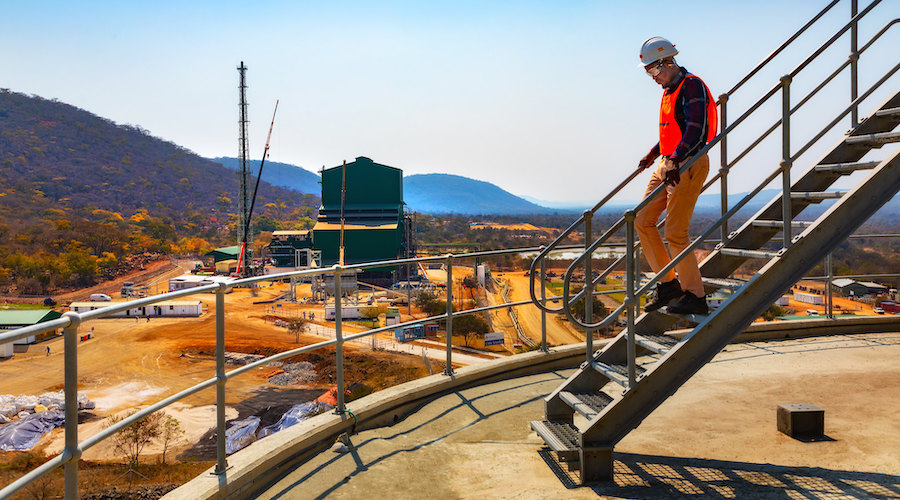
PGM mine in Zimbabwe. (Image courtesy of Anglo American | Flickr.)

Zimbabwe’s platinum miners are owed millions of dollars in unpaid exports income under the government’s foreign currency retention rules, the mining chamber has said, hurting operations in a sector battling to recover from a price collapse.

The southern African country requires all exporters to retain only 70% of their proceeds in foreign currency, with the balance being converted to local currency.

The world’s third largest producer of platinum group metals after neighbour South Africa and Russia, says it needs the foreign currency to fund vital imports and repay foreign loans.

Platinum producers in Zimbabwe, who include Valterra Platinum, Impala Platinum’s Zimplats, and Mimosa, a joint venture between Impala and Sibanye Stillwater, exported PGM mattes and concentrates worth $690 million in the first half of this year, government data shows.

However, the government has not been paying the miners the local currency equivalent of their export earnings since January, an official at the mining chamber told Reuters.

Deputy finance minister Kuda Mnangagwa confirmed that the government had fallen behind on paying the miners.

“There were issues of cash flow constraints, particularly in the first quarter of the year when our revenue collections are at their lowest,” Mnangagwa told Reuters on Tuesday.

He added that the government was talking to platinum miners to ensure “that these delays don’t burden their operations”.

Platinum group metals, used to make catalytic converters that curb vehicle emissions, are Zimbabwe’s second most valuable mineral export, behind gold.

Zimbabwe exported gold worth $1.8 billion during the first half of 2025, up from $870 million during the same period last year, thanks to record high bullion prices.

Gold producers have also complained about Zimbabwe’s foreign currency retention rule, which they say eats into their income when part of their export proceeds are converted into an overvalued local currency.

(By Chris Takudzwa Muronzi; Editing by Emelia Sithole-Matarise)