Friday, August 08, 2025


Coscso Seeks 20% of Hutchison Deal as US Calls for Ouster from Panama
Panama Canal
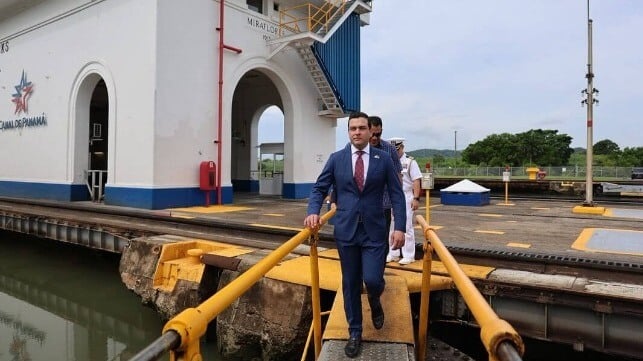
U.S. Ambassador Cabrera visiting the Panama Canal earlier this year (US Embassy photo)

Published Aug 8, 2025 11:19 AM by The Maritime Executive


The political “tug-of-war” surrounding controls of the port terminals at the Panama Canal and CK Hutchison’s larger portfolio of 41 port operations worldwide continues with China exerting pressure and the U.S. reiterating its position to end the Panama concession. CK Hutchison confirmed last month that talks were ongoing and that a Chinese company would be invited into the discussions after the lockup period on the original deals expired in late July.

China’s Cosco, which is already a large port operator, is seeing at least a 20 to 30 percent share of the deal, according to a new report in today’s Financial Times. The paper cites two unnamed sources that said China has only permitted Cosco to enter the talks to maintain its leverage over the deal. China has made it clear that its position is that a Chinese company must be part of the deal to protect Chinese trade interests.

The Financial Times says several options are being discussed, including the possibility that Cosco would participate in the one deal that acquires Hutchison’s 41 global ports outside China and excluding the two terminals in Panama. The original agreement set parallel deals, one for the 41 ports, which is believed to be led by MSC’s Terminal Investments (TiL), while the second deal, led by BlackRock and with MSC as a minority investor, would acquire the Panama Ports Company, which operates the terminals in Balboa and Cristobal under long-term concessions.

Donald Trump had hailed the deal in March, saying it was returning the Panama Canal to the United States. A friend of the CEO of BlackRock, Larry Fink, Trump said the American company was acquiring many ports. Since then, the U.S. has remained largely quiet on its views of the deal.

U.S. Ambassador to Panama Kevin Marino Cabrera, on Wednesday, August 6, however, spoke out against CK Hutchison. He supported the legal actions taken by Panama’s Comptroller General to void the concession. He said that the U.S. was “excited” that Hutchison would soon be no longer operating the ports in Panama.

“Our position is that they are a bad operator; they haven't done a good job,” Cabrera told reporters during an event in Colon. “They are a company of the Chinese Communist Party…  We are excited that those ports will soon be out of operation, and that good operators willing to contribute to the Panamanian people will come to the country.”

The Panama Ports Company dates to 1997 and was set up with CK Hutchison holding 90 percent, with Panama owning 10 percent. The company’s concession was renewed for an additional 25 years in 2021 in what is now a contested process.

Cabrera asserted that the Panama Ports Company (PPC) has not honored its agreements and owes Panama money. He also linked the company to the Communist government, although Hutchison is based in Hong Kong. Founder, Li Ka-shing, a Hong Kong billionaire, has frequently been at odds with the Chinese government, and this year it accused him of being disloyal and not acting in the interest of the state after the deals were announced to sell the port terminals.

Hutchison has defended its operations in Panama, saying the company has followed all the legal requirements. It asserts that it has contributed to the Panama economy. The company said in a statement in April that PPC has made significant investments that exceed $1,695 million, surpassing not only the $50 million investment required under the original concession contract, but also the $1,000 million agreed under the addendum, as confirmed by the Comptroller General of Panama.

The shipping industry continues to watch the developments as well. CMA CGM confirmed that it would be interested in some of the assets, and Maersk said it is also watching the deal closely. The Financial Times says none of the shipping companies have been invited into the negotiations, and it notes any bidder would need to involve the Chinese to win approval for an acquisition.

Panama to Require Full Traceability for Offshore Oil Transfers
Panama Maritime Authority

Published Aug 8, 2025 9:11 AM by The Maritime Executive


[By: Panama Maritime Authority]

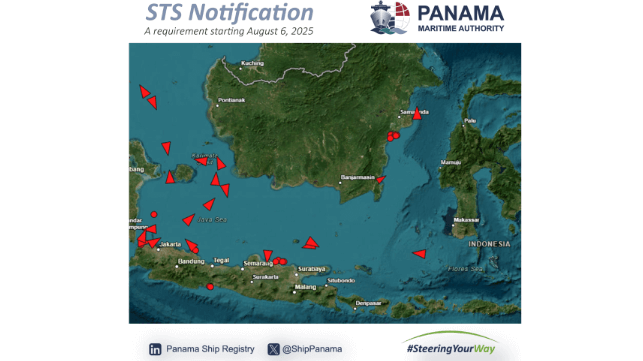
The Panama Ship Registry has become the first naval registry in the world to implement stricter controls and mandatory traceability for offshore ship-to-ship (STS) transfers of hydrocarbons. This new measure, which came into effect on August 6, 2025, is outlined in Resolution No. 106-035-DGMM issued by the Directorate General of Merchant Marine. According to Article 9 of the resolution, non-compliance—depending on its severity—may lead to the cancellation of a vessel’s Panamanian registration.

The regulation requires all Panamanian-flagged oil tankers with a gross tonnage of 150 or more to notify the Panama Maritime Authority (PMA) at least 48 hours in advance, providing full technical and logistical details of each STS operation.

The mandatory information includes:

  • Name, flag, call sign, IMO number, and estimated time of arrival (ETA) of all vessels involved
  • Date, time, and geographical coordinates of the operation’s start
  • Type of maneuver: at anchor or underway
  • Type and quantity of hydrocarbons to be transferred
  • Estimated duration of the operation
  • Contact information for each vessel’s Designated Person Ashore (DPA)
  • Confirmation of an STS plan in accordance with Regulation 41 of the MARPOL Convention

If the estimated arrival time at the transshipment point varies by more than six hours, the vessel’s captain, owner, or DPA must update the notification to the PMA.

This measure responds to the increasing use of vessels in illicit activities such as covert crude transport, sanctions evasion, and operations lacking environmental controls—practices often associated with the so-called “shadow fleet.”

It aligns with International Maritime Organization (IMO) regulations and underscores Panama’s commitment as a responsible flag State, promoting maritime safety, operational integrity, and protection of the marine environment.

With this move, Panama reaffirms its global leadership in maritime regulation—enhancing trust in its registry, ensuring compliance with international standards, and contributing to the fight against the misuse of flags of convenience.

The products and services herein described in this press release are not endorsed by The Maritime Executive.


Panama is First Registry to Enforce Rules to Crack Down on STS Actions

tankers involved in transfer at sea
Panama started it rule cracking down on STS transfers targeting the shadow fleet (MMEA)

Published Aug 7, 2025 7:00 PM by The Maritime Executive


The Panama Ship Registry started its new rules as of August 6, requiring reporting of planned ship-to-ship (STS) offshore oil transfers as the latest step in a series of crackdowns targeting the shadow tanker fleet. Panama had announced plans for the new rules in May, and highlights that with the rule now in effect, it has become the first registry in the world to implement stricter controls and mandatory traceability for offshore ship-to-ship (STS) transfers of hydrocarbons.

“This measure responds to the increasing use of vessels in illicit activities such as covert crude sanctions evasion, and operations lacking controls, practices often associated with the so-called “shadow fleet,” the Panama Ship Registry says in its announcement. It warns that “non-compliance—depending on its severity—may lead to the cancellation of a vessel’s Panamanian registration.”

The regulation requires all Panamanian-flagged oil tankers with a gross tonnage of 150 or more to notify the Panama Maritime Authority (PMA) at least 48 hours in advance, providing full technical and logistical details of each STS operation. In addition to the details on the vessels involved, they must supply the location, the type of transfer, and the quantity to be transferred. If the operation varies by more than six hours, the captain or shipping company must update the details reported to the PMA.

The shipping companies are also required to supply contact details for a designated person ashore. They must also confirm that the STS plans are in accordance with the IMO’s MARPOL Convention.

Putting the STS rule into effect follows another move by the registry this week, also targeting the shadow tanker fleet. It said it will no longer accept the registration of tankers (and bulkers) that are more than 15 years old. It said an analysis of data showed the older vessels accounted for most of the detentions. 

Panama, under pressure from the U.S. and others, has moved to purge its registry and enacted new rules to make it faster and less complicated to remove ships that are sanctioned or have other violations. Demonstrating this, Panama reported this week it had removed 17 tankers sanctioned days earlier by the United States in a crackdown on an Iranian shipping network.

Panama is the latest in a growing number of jurisdictions seeking to tighten enforcement against the shadow tanker fleet. Greece, last year, closed a bay favored by tankers in the Russian oil trade. Last week, Malaysia, which is already known for its enforcement against illegal anchoring, announced new rules on another key area favored by shadow tankers to make transfers. Malaysia created new anchoring regulations and closed the area to most tankers. In Europe, efforts have focused on the enforcement of the requirements for insurance and proper certification. 

Despite this, the shadow tanker fleet continues to grow. The latest estimates put it at over 1,100 vessels, although the EU and UK sanctions have driven some tankers from the trade. 

The efforts to reduce STS will impact tankers both in the Russian oil trade and those supporting Iran. Both are known to use STS and other efforts to hide the origins of the oil or to mix it with other sourced oil to make the blend less identifiable.


World's Largest Carrier Calls at Marseille, Boosting French Economy

Marseille
USS Gerald R. Ford arrives in Marseille, August 2025 (USN)

Published Aug 7, 2025 10:53 PM by The Maritime Executive


The nuclear-powered USS Gerald R. Ford (CVN-78), the largest aircraft carrier in the world, arrived in Marseille for a port visit on August 4, accompanied by Arleigh Burke Class guided missile destroyer USS Winston S. Churchill (DDG-81). Both vessels are scheduled to be in port for five days, leaving on August 9.

Both vessels have recently taken part in Exercise Neptune Strike 25-2, alongside NATO ships from Croatia, Finland, France, Germany, Greece, Italy, Lithuania, Norway, Poland, Romania, Spain, Slovakia and the United Kingdom.

From the Sixth Fleet, Arleigh Burke-class guided missile destroyers USS Bainbridge (DDG 96), USS Mahan (DDG 72), and USS Winston S. Churchill (DDG 81) took part in the exercise.

As well as ships from other NATO nations, the Spanish Expeditionary Combat Group fielded the Santa Maria Class frigate ESPS Canarias (F86), helicopter carrier ESPS Juan Carlos I (LHD-7), Álvaro de Bazán Class frigate ESPS Blas de Lezo, amphibious ship ESPS Galicia (L51) and replenishment oiler ESPS Cantabria (A15). At this point, if the Russian Kilo Class submarine RFS Novorossiksk (B261) or Project 864 intelligence collector Viktor Leonov were monitoring the exercise, they may have been tempted to give up counting the number of NATO ships involved. A feature of the exercise were long-range strikes carried out from the central Mediterranean on training ranges in Croatia, Slovakia and Romania.

The port call at Marseille by the USS Gerald R. Ford and USS Winston S. Churchill will see over 5,000 US sailors and aviators ashore during the five days of the visit, both in Marseille and Monaco along the French Riviera and on excursions as far away as Paris. The economic benefit will therefore be spread across France, with private expenditures in the millions (in addition to US Navy expenditures). Marseille missed out on a first visit from USS Gerald R. Ford in 2023 when it was diverted to the Gulf instead, but enjoyed a visit from USS Harry S Truman (CVN-75) in 2024.


LA REVUE GAUCHE - Left Comment: Search results for PERMANENT ARMS ECONOMY


Costamare Boxship Rescues Crew from Burning Tanker off Vietnam

abandon ship
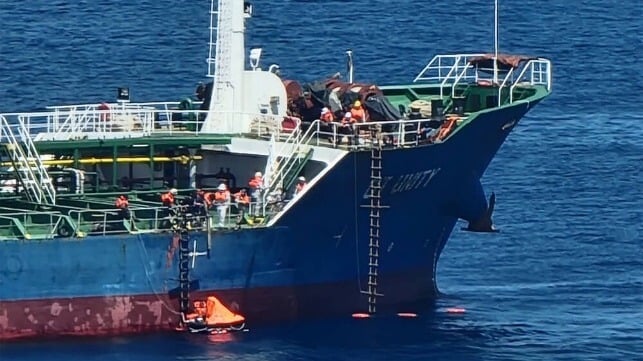
Crew abandoning the burning tanker off Vietnam (Vietnam Maritime Search and Rescue Coordination Center photos)

Published Aug 8, 2025 12:56 PM by The Maritime Executive


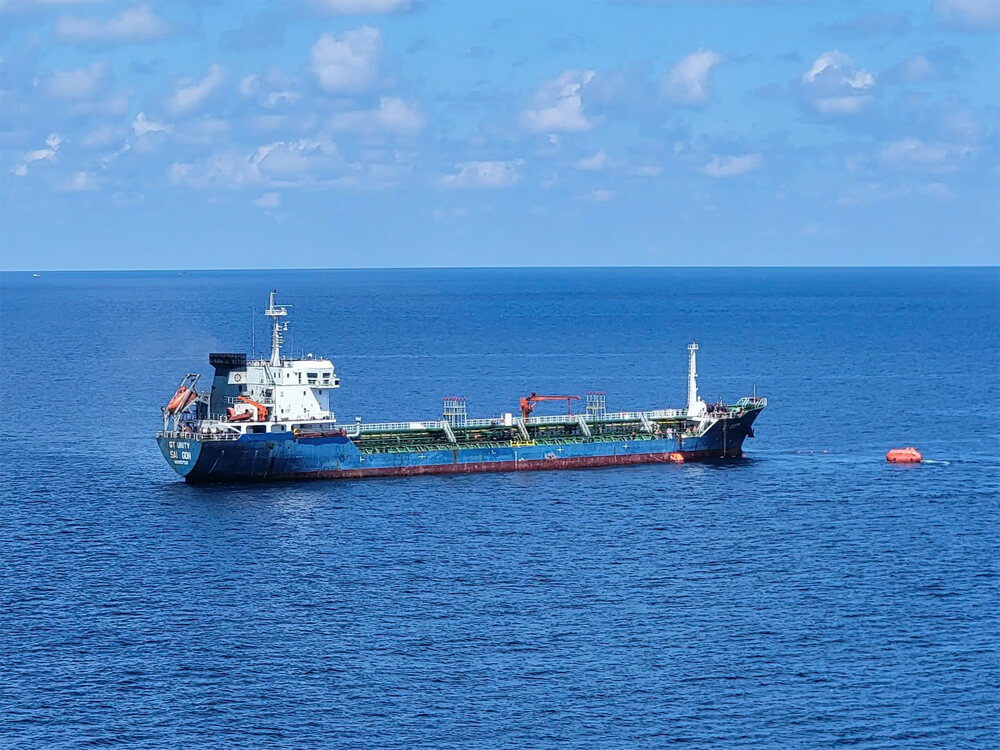
The Vietnam Maritime Authority is reporting a successful search and rescue operation for 20 crewmembers from a burning tanker off its coast. The notification came in at midday on Friday, August 8, that the Vietnamese-flagged tanker GT Unity (7,631 dwt) was experiencing an electrical fire with 20 crewmembers aboard.

The tanker, which was built in 2008, was carrying 3,872 tons of crude oil. It was sailing from Malaysia to the Vietnamese port of Dung Quat. Its position was placed between 104 nautical miles southwest of Con Dao and 191 nautical miles from the Vang Tau cape in southern Vietnam, in the region of Ho Chi Minh City.

The Costamare-owned containership Androusa (53,439 dwt) was in range and was asked by the Vietnamese authorities to assist. The vessel, which is operating under charter, was sailing from China bound for Singapore.

The Vietnamese authorities also alerted the Navy and Coast Guard. A patrol boat was dispatched from Vung Tau. They also asked the crew of a drilling rig near the site to participate in the rescue.


The containership reached the burning tanker and reports that 16 of the 20 crewmembers have abandoned ship. The containership was able to rescue all 20 of the crewmembers.

The patrol boat was due to reach the scene and was going to be used to evacuate the injured crewmembers. One person was reported in critical condition.

The director of the Vietnam Maritime and Waterways Administration, Le Do Muoi, said they would be awarding a certificate of merit to the captain and crew of the Androusa for promptly recognizing the need and their responsible actions in this incident. The owner of the GT Unity has been instructed to arrange for vessels to extinguish the fire and salvage the drifting vessel.


'One child called the robot "my little brother"': Can assistance tech become part of the family?


Frontiers
Luka the Robot 

image: 

Luka the robot. Image by Dr Zhao Zhao, University of Guelph.

view more 

Credit: Dr Zhao Zhao, University of Guelph.


What happens to a social robot after it retires? 

Four years ago, we placed a small owl-shaped reading robot named Luka into 20 families’ homes. At the time, the children were preschoolers, just learning to read. Luka’s job was clear: scan the pages of physical picture books and read them aloud, helping children build early literacy skills. 

That was in 2021. In 2025, we went back — not expecting to find much. The children had grown. The reading level was no longer age-appropriate. Surely, Luka’s work was done. 

Instead, we found something extraordinary. 

18 of 19 families still had their robot. Many were still charging it. A few used it as a music player. Some simply left it on a shelf—next to baby books and keepsakes—its eyes still glowing gently. Luka had stayed. 

This finding wasn’t just cute. It told us something deeper about how families relate to technology — not as tools that come and go, but as companions that take on new meaning over time. 

In our interviews, parents and children described Luka in touching ways. One child called the robot “my little brother”. Another said Luka was the “only pet I ever had”. Some parents admitted they kept it more for themselves than for their kids — a nostalgic reminder of bedtime stories and early milestones. 

The robot’s original purpose, reading aloud, had faded. But its emotional role had deepened. Families cared for it, joked about it, and in one case, passed it along to a younger cousin in what felt like a retirement ceremony. This wasn’t just long-term use, it was a long-term attachment. 

In the research field of Human-Computer Interaction (HCI) and Human-Robot Interaction (HRI), we often focus on novelty, engagement metrics, and task performance. But our study shows that even a relatively simple robot — one that doesn’t move or speak freely — can become part of a family’s symbolic life. Like a favorite stuffed animal or a framed piece of childhood art, Luka transitioned from function to memory. One parent told us: “We don’t really use it anymore, but we couldn’t throw it out. It’s like part of our history.” Another joked that the robot would probably follow their child to college. 

Even the robot’s placement in the home had meaning. Luka sat on bookshelves, desks, or bedside tables. One family added a doily underneath it. Another gave it a hand-drawn name tag. These weren’t gadgets stored away. They were artifacts on display. 

What does this mean for designers and researchers? 

It means we should think about a robot’s life not just in months — but in years. We should imagine transitions from tutor to companion, from helper to keepsake. We should consider how emotional attachment outlasts novelty, and how children's relationships with robots evolve, not disappear, with age. 

Our participants taught us that children don’t always discard the ‘babyish’ robot — they reinterpret it. Some began ‘teaching’ Luka in return. Others made up bedtime stories for it or used it to soothe a younger sibling. 

And when a robot is finally ready to leave, we might need better rituals — graceful exits that acknowledge the bond. After all, if a robot has been part of your child’s early years, you don’t just unplug it. You say goodbye. 

As more families bring AI-powered companions into their homes, we’ll need to better understand not only how they’re used — but how they’re remembered.  

Because sometimes, the robot stays. 

US Child mental health crisis tied to immigration enforcement


UC Riverside psychiatrists call for reform to protect families from trauma


University of California - Riverside


RIVERSIDE, Calif. -- Aggressive immigration practices — such as detention, deportation, and workplace raids — are contributing to widespread emotional trauma among both immigrant and U.S.-born children living in mixed-status households, according to a report published by a team of mental health professionals in the School of Medicine at the University of California, Riverside.

Published in Psychiatric News, the report warns that immigration enforcement in the United States is a public health emergency for millions of children.

“Psychiatry, as both a clinical discipline and a social institution, cannot remain on the periphery,” the authors write. “The current moment calls for a reexamination of how structural and intergenerational trauma are diagnosed, understood, and treated.”

The report explains how U.S.-born children in mixed-status families face constant anxiety about their parents being detained or deported. It notes that both pre- and post-migration family separations harm children’s emotional development and academic performance. Immigrant caregivers, especially mothers, often suffer from trauma, which limits their ability to support their children emotionally, the authors write.

As national debates around immigration continue, the report urges the media, policymakers, and clinicians to confront the human costs of enforcement-driven immigration systems and to prioritize the emotional wellbeing of the youngest and most vulnerable.

“We are witnessing the effects of chronic fear, disrupted attachment, and intergenerational trauma on a massive scale,” said Dr. Lisa Fortuna, professor and chair of psychiatry and neuroscience at the UCR School of Medicine and the lead psychiatrist behind the report. “The threat or reality of separation from a caregiver fundamentally reshapes a child’s development and mental health.”

The report includes clinical case studies and community-based data that reveal how trauma is transmitted across generations and shaped by conditions such as poverty, discrimination, and fear of enforcement. It also outlines emerging models of care that are proving more effective and ethical than traditional mental health interventions.

“Psychiatry must take an active role — not just in treatment, but in advocacy,” said coauthor Dr. Kevin Gutierrez, an assistant clinical professor of health sciences in the UCR Department of Psychiatry and Neuroscience. “The mental health of immigrant children is inseparable from the systems that shape their lives.”

In the following Q&A, Fortuna and Gutierrez, who are also providers at UCR Health, answer some questions pertinent to the report.

Q: What inspired you to explore the mental health effects of immigration enforcement on children and families?

Fortuna: As chair of the APA Council on Children, Adolescents, and Their Families, I was drawn to this issue due to its growing urgency nationwide. Children and families affected by immigration enforcement are especially vulnerable to trauma, and we wanted to address the psychiatric impact beyond politics, focusing on how policy shapes mental health and how psychiatrists can respond.

Gutierrez: When Dr. Fortuna invited me to join the project, I saw it as a chance to reframe psychiatry’s role — not just diagnosing but addressing the broader social forces causing harm. We aimed to challenge the systems behind these policies and highlight our responsibility to engage beyond the clinic, especially in advocating for vulnerable children.

Q: Is there a clinical example that illustrates what this trauma looks like in practice?

Fortuna: In our article, we share a composite case called “Ana,” based on real clinical experiences. It highlights the intense anxiety children face, such as fearing parental deportation, avoiding school or therapy, and feeling unsafe even when seeking help.

Clinicians often help families create safety plans in case of separation, which, while necessary, reinforces the deep instability they’re living with. Even those pursuing legal immigration paths feel unsafe, and U.S. citizen children worry they could be targeted too, leading to constant fear and withdrawal.

Q: How are caregivers coping with this?

Fortuna: Many are experiencing intense anxiety, stress, and depression. Some are even reporting suicidal thoughts — feeling hopeless and helpless about their situation. There’s significant fear within families: children worry their parents won’t come back from work, and parents are terrified of being separated from their children. This fear leads to tension and emotional strain at home.

Gutierrez: In my practice with adults, I’ve had patients share concerns about how their children are coping. One parent told me their sons were being bullied at school by kids wearing MAGA hats, who threatened to call ICE on them. These boys are Latino, and although this kind of threat might sound abstract to some, it’s rooted in real incidents.

Children are dealing with separation anxiety not as a developmental phase, but as a daily reality. One parent asked me what to do when their child came home asking, “Are they going to call ICE on us?” The parent didn’t have an answer and neither did I. That’s part of the trauma: not having answers, not knowing what’s safe or predictable anymore. Kids need stability to thrive. When their world feels uncertain and parents can’t guarantee safety, it creates chronic anxiety that harms emotional and brain development.

Fortuna: False reassurance, for example, telling a child everything is fine, can backfire. Children sense when things aren’t okay. It’s better to be honest in an age-appropriate way and validate their fears. We help families make practical plans — who the child can turn to, where they’ll be safe, how to stay in touch — to give them some sense of control amid the chaos.

Q: Are there specific age groups where the mental health impact is particularly severe, or is it affecting children across the board?

Fortuna: It affects all age groups, but differently depending on development. When infants and toddlers suffer from disrupted attachment, it can lead to issues like sleep or eating problems. School-age kids are more aware and show anxiety or fear, even if they can’t fully express it. Adolescents often take on adult roles, suppressing their emotions and facing depression or anxiety.

Gutierrez: Adolescents in particular face “parentification,” taking on adult responsibilities like caregiving or running errands due to fear of enforcement. This is common even in mixed-status or citizen families because fear affects everyone, regardless of legal status.

Fortuna: Many teens fear losing their parents or being forced into foster care. Even kids not directly affected feel the impact when their communities are disrupted, creating a sense of collective trauma and loss of safety.

Q: How should immigration policy and mental health policy intersect going forward?

Gutierrez: It’s hard to see how current enforcement can ever be humane. These practices create chronic stress and trauma in children and meet criteria for PTSD. The harm is systemic, not isolated, and affects even those not directly targeted.

Fortuna: Mental health professionals must recognize policy as a key driver of mental health. Enforcement decisions are violating children’s basic rights: safety, family, education, and identity. Until we connect policy choices with health outcomes, especially for marginalized kids, we’re overlooking the full impact.

Q: If nothing is done to address these mental health impacts, what are the long-term consequences?

Fortuna: Unaddressed childhood trauma can lead to lifelong issues like PTSD, anxiety, and depression. When kids withdraw from school, healthcare, or relationships due to fear, they miss key developmental milestones. These effects can even be passed down through generations.

Gutierrez: Children learn by watching their caregivers. When that stability is disrupted, it impacts how they relate to others and see the world. Without safe, nurturing environments, we limit their potential emotionally, socially, and cognitively.

Q: Given what you have learned in writing this report, what gives you hope?

Fortuna: I find hope in communities, their resilience, their support for each other, and their refusal to give up. I’m also inspired by my colleagues and the next generation of professionals who are deeply committed to change.

Gutierrez: The kids themselves give me hope. Despite everything, they survive, and their communities build support systems long before we show up. Our job is to strengthen those systems. Even small interventions can change a child’s future, and that keeps me going.

US uses war rhetoric, Superman to recruit for migrant crackdown

Los Angeles (United States) (AFP) – From Uncle Sam to Superman, the US government is deploying patriotic icons and increasingly warlike rhetoric to recruit Americans into enforcing Donald Trump's immigration crackdown.


Issued on: 07/08/2025 - FRANCE24

IDIOT

Former Superman actor Dean Cain has pledged he will 'be sworn in as an ICE agent ASAP' © CHRIS DELMAS / AFP/File

Job ads promising $50,000 signing bonuses to new "Deportation Officers" have flooded social media over the past week, accompanied by jingoistic rallying slogans that declare "America Needs You."

White House officials have shared World War I-style posters, including one with Uncle Sam donning an Immigration and Customs Enforcement (ICE) baseball cap, while a former Superman actor has pledged he will "be sworn in as an ICE agent ASAP."

"So many patriots have stepped up, and I'm proud to be among them," Dean Cain, who starred as the Man of Steel in 1990s TV series "Lois & Clark: The New Adventures of Superman," told FOX News.

ICE, the agency chiefly responsible for the recent, divisive masked raids on farms, factories and Home Depot parking lots across the nation, is pulling out all the stops to hire new officers at a staggering rate.

Flush with $75 billion in extra funding -- making it the highest-funded US law enforcement agency, ahead of even the FBI -- ICE has been tasked by Trump with deporting one million undocumented immigrants per year.

To do so, Homeland Security Secretary Kristi Noem has pledged to hire 10,000 new officers, in a process that would swell ICE's ranks by a whopping 50 percent.

On Wednesday, Noem scrapped pre-existing age caps that prevented over-40s from becoming deportation officers.

Student debt forgiveness, generous overtime pay and enhanced retirement benefits are all being flouted -- alongside language about the opportunity to "Fulfill your destiny" and "Defend the Homeland."

"Your nation needs you to step into the breach. For our country, for our culture, for our way of life. Will you answer the call?" read one post on Department of Homeland Security social media accounts.

'All-hands-on-deck'


DHS officials say they have received 80,000 applications since the recruitment campaign began less than a week ago.

But critics have quickly highlighted evidence that the aggressive drive may not be working as effectively as officials claim.

Dozens of officials at FEMA -- a separate agency that deals with emergency disaster response -- have been reassigned to ICE and threatened with losing their jobs if they do not move, the Washington Post reported.

DHS Assistant Secretary Tricia McLaughlin told the Post the move was part of "an all-hands-on-deck strategy to recruit 10,000 new ICE agents."

An ICE pilot program offering agents additional cash bonuses for deporting people quickly was scrapped less than four hours after it was announced, when its existence was leaked to the New York Times.

And some local law enforcement agencies that have cooperated with the federal immigration crackdown have complained that they are now seeing their own officers poached.

"ICE actively trying to use our partnership to recruit our personnel is wrong," a Florida sheriff's office spokesperson told CNN.


THE NEW WOKE SUPERMAN


-'Kryptonite' -


Perhaps the highest profile and most scathing response has come from "South Park," the popular animated TV satire that is becoming a thorn in the Trump administration's side.

In a recent episode, hapless school counselor Mr Mackey is offered an ICE job after a seven-second-long interview, immediately handed a gun and sent on a raid of a children's concert.

"If you're crazy, or fat and lazy, we don't care at all," says a fictional ICE job advert.

"Remember, only detain the brown ones. If it's brown, it goes down," orders Noem's character during a satirical sequence set during an immigration raid in heaven.

ICE raids have been accused using racial profiling by rights groups.

Meanwhile, the recruitment drive has been hailed by conservative outlets.

Fox News celebrated the news that Superman actor Cain had enlisted with the headline banner "Illegals, meet your Kryptonite."

Supportive comments on the channel's Facebook page included "Now that's a REAL Superman."

Several others pointed out that Superman, a beloved comic book hero who is closely associated with American patriotism, is "quite literally an alien immigrant."

© 2025 AFP


US judge orders temporary halt to new 'Alligator Alcatraz' construction

Miami (AFP) – A US federal judge ordered a temporary pause on Thursday to further construction of the migrant detention center in the Florida Everglades known as "Alligator Alcatraz" in a case filed by conservation groups.


Issued on: 07/08/2025 - 


US President Donald Trump tours the migrant detention center dubbed 'Alligator Alcatraz' © ANDREW CABALLERO-REYNOLDS / AFP

District Judge Kathleen Williams issued the temporary restraining order in a lawsuit filed against the Trump administration by Friends of the Everglades and the Center for Biological Diversity.

The detention center, built on the site of an abandoned airfield in the Big Cypress National Preserve, can continue to house immigration detainees, but the Miami-based judge ordered an immediate two-week halt to new construction while the suit proceeds.

Friends of the Everglades and the Center for Biological Diversity are arguing that the detention center threatens the sensitive Everglades ecosystem and was hastily built without conducting the required environmental impact studies.

President Donald Trump, who has vowed to deport millions of undocumented migrants, visited the center last month, boasting about the harsh conditions and joking that the reptilian predators will serve as guards.

The name "Alligator Alcatraz" is a reference to Alcatraz Island, the former prison on an island in San Franciso Bay that Trump recently said he wanted to reopen.

The conservation groups that filed the lawsuit welcomed the judge's ruling.

"We're pleased that the judge saw the urgent need to put a pause on additional construction, and we look forward to advancing our ultimate goal of protecting the unique and imperiled Everglades ecosystem from further damage caused by this mass detention facility," Eve Samples, executive director at Friends of the Everglades, said in a statement.

Elise Bennett, an attorney at the Center for Biological Diversity, said it was a "relief that the court has stepped in to protect the Everglades' sensitive waters, starry skies and vulnerable creatures from further harm while we continue our case."

"We're ready to press forward and put a stop to this despicable plan for good," Bennett said.

The ruling was also welcomed by the Miccosukee Tribe of Indians of Florida, which joined the case.

"The detention facility threatens land that is not only environmentally sensitive but sacred to our people," tribal chairman Talbert Cypress said. "While this order is temporary, it is an important step in asserting our rights and protecting our homeland."

The detention center is also the subject of a lawsuit filed in another federal court claiming that detainees are not being given access to attorneys and are being held without charges.

© 2025 AFP


Trump demands new US census as redistricting war spreads

Washington (AFP) – US President Donald Trump on Thursday ordered officials to work on a new census excluding undocumented immigrants, as the White House presses Republican states to draw more favorable voter maps ahead of the 2026 midterm elections.


Issued on: 07/08/2025 - 


Republicans hope to gain as many as five more House seats by reworking the legislative map in Texas © Brendan SMIALOWSKI / AFP

Trump called for a "new and highly accurate" census that he wanted based on unspecified "modern day facts and figures" gleaned from the 2024 election.

"People who are in our Country illegally WILL NOT BE COUNTED IN THE CENSUS," he said in the social media post.

The US Constitution since 1790 has required a census every 10 years that counts the "whole number of persons in each state" -- including people in the country illegally.

The next one is not due until 2030, although preparations for the enormous task are already underway.

Trump did not make clear if he was referring to the regularly scheduled population count or if he wanted a special survey undertaken earlier.

The census is used to determine how many members of Congress are elected from each state, and the Pew Research Center estimates that ignoring unauthorized migrants in 2020 would have deprived California, Florida and Texas of one House seat each.

It is also used for apportioning votes in the state-by-state "electoral college" that decides presidential elections and for allocating trillions of dollars in federal funding.

Trump attempted similar moves in his first term, including the addition of a citizenship question to the census, but was blocked by the Supreme Court.

The justices declined to rule on whether the millions of people in the country without legal status should be excluded.

Trump's call for a new census comes with state-level lawmakers and officials in Texas locking horns over a new electoral map that would likely net Republicans up to five extra House seats in 2026.

Threats to lawmakers

More than 50 Texas Democratic lawmakers have fled to multiple Democratic states in an effort to block the passage of the proposed blueprint during a special legislative session © Daniel SLIM / AFP/File

More than 50 Texas Democratic lawmakers have fled to multiple Democratic states in an effort to block the passage of the proposed blueprint during a special legislative session.

Texas Republicans have threatened to arrest them, and US Senator John Cornyn announced he had successfully petitioned the FBI to help state and local law enforcement locate them.

Republican governors in several other states are exploring new maps in a bid to protect the party's razor-thin majority in the House, which would flip next year with three Democratic gains.

Vice President JD Vance was scheduled to visit Indiana on Thursday to discuss redistricting with Governor Mike Braun and press local Republicans to eke out another seat for the party.

Politico reported that Republicans could draw as many as 10 new seats ahead of the midterms and are targeting Ohio, Missouri, New Hampshire, South Carolina and Florida.

In Indiana, Braun said any redistricting conversation would be "exploratory," as the state's maps were drawn fairly in 2021, Indianapolis public broadcaster WFYI reported.

Democrats have vowed to retaliate with their own proposals, possibly in New York and California, the country's largest states.

Texas legislators were evacuated from their suburban Chicago hotel on Wednesday morning following an unspecified threat.

Democratic Illinois Governor JB Pritzker authorized state police to guard the group, and insisted that the FBI -- which investigates federal crime -- and Texas authorities had no power to return them.

"They're all allowed to visit Chicago or Illinois and take in the great view of our lake and our city and enjoy the the the great restaurants that we have," he told the leftist MeidasTouch podcast.

"But they won't be taking anybody home with them or away from the state. We are protecting those Texas House Democrats, and they are protecting, frankly, the entire country, in what they do."

© 2025 AFP


Flame retardant TDCPP binds membrane thyroid hormone receptor, impairing neurodevelopment


KeAi Communications Co., Ltd.
THE SCHEMATIC DIAGRAM OF ZEBRAFISH NEURODEVELOPMENTAL TOXICITY MEDIATED BY TDCPP-BOUND INTEGRIN AVB3 

image: 

The schematic diagram of zebrafish neurodevelopmental toxicity mediated by TDCPP-bound integrin avb3

view more 

Credit: Li, J., et al.


Tris (1,3-dichloropropyl) phosphate (TDCPP) is a high-production-volume organophosphate ester flame retardant, with maximum concentrations of several tens of micrograms per liter (μg/L) in ambient water. Despite that, its neurodevelopmental toxicity mechanisms remain poorly understood.

In a study published in the KeAi journal Environmental Chemistry and Ecotoxicology, a group of researchers from China reveal that TDCPP in zebrafish, at environmentally relevant doses, binds specifically to the membrane thyroid hormone receptor, integrin αvβ₃. This binding rewires MAPK and calcium signaling pathways, causing motor neuron developmental defects and locomotor behavioral impairment, thereby laying the groundwork for the development of a novel adverse outcome pathway.”

“We documented that TDCPP stimulates neurodevelopmental toxicity by binding to the membrane thyroid hormone receptor, integrin αvβ₃,” says corresponding author Prof. Jian Li from Beijing Normal University. “Given that integrin αvβ₃ may serve as a specific target for organophosphate esters, this pilot finding necessitates a paradigm shift: the role of this membrane receptor should not be overlooked in evaluating the neurotoxicity of TDCPP, and even other organophosphate esters, in contrast to focusing on the traditional nuclear receptors.”

The team established a quantitative pathway mapping from TDCPP’s specific binding to integrin αvβ3, triggering activation of MAPK and calcium signaling cascades, which subsequently cause motor neuron development defects and ultimately lead to locomotor dysfunction.

“These quantitative relationships provide a predictive framework for extrapolating apical adverse outcomes based on preceding molecular responses, facilitating chemical hazard screening, testing prioritization, and comprehensive risk assessment,” adds Li. “For example, through rigorous quantitative analysis, the benchmark dose lower confidence limit values for TDCPP were determined to range from 3.83 to 82.56 μg/L.”

Notably, the lower threshold of this range aligns closely with environmental concentrations detected in surface waters and wastewater effluents, suggesting a potential risk elevation for aquatic organisms and warranting heightened environmental concern.

 “By establishing quantitative response-response relationships, this work serves as a foundation for developing a novel quantitative adverse outcome pathway framework,” says Li

###

Contact the author: 

Jian Li, Engineering Research Center of Groundwater Pollution Control and Remediation, Ministry of Education, College of Water Sciences, Beijing Normal University, Beijing 100875, China, lijian@bnu.edu.cn

Bingli Lei, Institute of Environmental Pollution and Health, School of Environmental and Chemical Engineering, Shanghai University, Shanghai 200444, China, leibingli@126.com

The publisher KeAi was established by Elsevier and China Science Publishing & Media Ltd to unfold quality research globally. In 2013, our focus shifted to open access publishing. We now proudly publish more than 200 world-class, open access, English language journals, spanning all scientific disciplines. Many of these are titles we publish in partnership with prestigious societies and academic institutions, such as the National Natural Science Foundation of China (NSFC).


New UC Irvine survey reveals shifting work landscape


UCI-OC Poll studies Orange County employee views


University of California - Irvine


The University of California, Irvine School of Social Ecology today released the results of its latest UCI-OC Poll, shedding light on the changing nature of work in Orange County two years after the official end of the COVID-19 pandemic.
 
Conducted from June 20 to July 1, 2025, the survey of 800 Orange County adults offers insights into remote work preferences, attitudes toward artificial intelligence and overall job satisfaction – providing valuable insights for business leaders and policymakers navigating the county’s evolving work landscape.
 
Results include:

  • 74 percent of Orange County workers are satisfied with their work.
  • 52 percent of workers desire a hybrid work schedule most or all of the time.
  • 71 percent of workers find AI helpful, with 57 percent saying it makes them more productive.
  • 70 percent of residents believe AI needs more regulation.

 
“Our findings indicate that Orange County’s workforce is adapting to the new normal, with a strong preference for flexibility in work arrangements,” said Jon Gould, dean of the School of Social Ecology and director of the UCI-OC Poll. “While remote work isn’t feasible for all jobs, it’s clear that employees value the option when available.”
 
The poll also reveals that while many workers are comfortable with their current positions, there’s a willingness to relocate for remote work opportunities.
 
“Interestingly, 41 percent of those who work in person or hybrid would leave Orange County if they got a remote job,” Gould noted. “This highlights the importance of work flexibility in talent retention for local businesses.”
 
Regarding AI, the poll shows a mix of optimism and concern.
 
“While most workers find AI helpful and productivity-enhancing, there’s a widespread belief that it could lead to job losses,” Gould explained. “This tension underscores the need for thoughtful integration of AI in the workplace and potential policy considerations.”
 
Despite economic concerns at the national and state levels, Orange County residents remain cautiously optimistic about local conditions.
 
“We’re seeing a disconnect between how people view their personal economic situation versus the broader economy,” Gould said. “This local resilience is a positive sign for Orange County’s business climate.”