It’s possible that I shall make an ass of myself. But in that case one can always get out of it with a little dialectic. I have, of course, so worded my proposition as to be right either way (K.Marx, Letter to F.Engels on the Indian Mutiny)
Friday, August 08, 2025
Italy Approves Plan to Build Bridge to Sicily
The bridge as seen from the Sicilian side (handout rendering courtesy Messina Strait Company)
In difficult news for Sicily's ferry operators, the government of Prime Minister Giorgia Meloni has approved a much-debated suspension bridge from Villa San Giovanni to Messina. If completed, the two-mile-long bridge would be the biggest of its kind in the world.
The planned bridge would have two rail tracks in the center and three lanes of traffic in each direction (six total), ample space to absorb the car and walk-on passenger capacity of the cross-strait ferries that carry thousands of people per day. Longer-distance routes could also be affected if truck operators and tourists determined that a drive down the coast to the bridge is preferable to a long ferry ride from Naples or Salerno.
The impact on ferry runs is still far off, however. Bureaucratic procedures and courtroom debates will have to be completed before the first shovel goes in the ground, and success is far from guaranteed. Similar plans have been proposed many times since the 1970s, and have run into too many difficulties to get off the drawing board. In addition to the engineering challenge of building such a long span, it will have to be constructed to survive the region's seismic activity and high winds. The $15 billion price is also much higher than it was in the previous two attempts in 2006 and 2011, and unaffordable costs sank both of those earlier initiatives.
Local communities are also opposed to the project, in particular for the land purchases and expropriations that it would require at each end - all of which could end up in court. Land seizures will begin in September and October, Italian transport minister Matteo Salvini said Wednesday, and project completion is slated for 2033.
Mafia involvement in the construction sector is another known project-management risk in Sicily and Calabria. In 2015, Italian police seized $1.75 billion from construction company leaders with ties to organized crime in the town of Corleone, where the Cosa Nostra has deep roots. According to prosecutors, Cosa Nostra members provided local government officials with guidance and incentives for the selection of contractors, resulting in revenue for all parties involved in the arrangement (at the expense of competing contractors).
Houthis Level a Threat at 64 Shipowners for Violating Israeli “Blockade”
Eternity C was the last ship sunk but the Houthis are now "warning" 64 shipowners of the consequences of continuing to trade with Israel (Houthi media)
The Houthi militants in Yemen are continuing their pressure campaign, reporting they have warned 64 shipowners of the consequences of continuing to call in Israeli ports. The group’s media officer sent a message to major news outlets reporting that they have served sanction notices on the shipping companies.
According to the notice, the sanction notices were sent to the shipowners in late July after the Houthis resumed their campaign against shipping. At the beginning of the month, the campaign began with two Greek-owned bulkers, targeted and sunk, with several seafarers killed. It largely dashed hopes in the shipping community that some resumption of sailing through the Red Sea would be possible.
The group says the companies that were notified of the sanctions were because their vessels “violated the naval blockade” imposed on Israel. “These vessels are hereby prohibited from transiting the Red Sea, Bab al-Mandeb Strait, the Gulf of Aden, and the Arabian Sea, and will be subject to targeting when they fall within the reach,” the Houthis said.
The sanction notices, the group says, were warnings, and the “companies of the violating vessels shall bear the consequences.” They write that the notices were to help companies “avoid the risks” of violating the Houthis’ ban on Israel.
The Houthis, however, warn that the sanctions “may be expanded to include entities engaged in dealings with” the companies violating their sanctions.
They have issued these types of propaganda warnings before to the shipping companies, but 20 months after the first attack, the threat remains against shipping in the region. The EUNAVFOR operation Aspides remains active in the region and over the weekend highlighted that a French frigate had completed another protection mission with a photo of a large CMA CGM containership as well as a command visit photo aboard the Greek frigate supporting the efforts.
The Houthis’ military arm posted an online warning this week, highlighting that it was tracking ship movements between Egypt, Turkey, and Israel and citing by name nine ships it said were violators of the embargo. It included ships of Maersk, MSC, and Yang Ming among the list of vessels that it said had called at Israeli ports.
There have been no further reports of attacks after the sinking of the Magic Seas and the Eternity C in early July.
Reports: EU Sanctions Hit Russian-Owned Refiner Nayara's Tanker Charters
The Russian-owned Indian refiner Nayara is having shipping difficulties after the ne EU sanctions on its operations, and not just internationally. It is dependent upon seagoing transport for domestic deliveries as well, and domestic shipowners no longer want to carry its cargoes on coastwise routes, according to PTI, Bloomberg and Times of India.
"The firm typically requires three ships to maintain its fuel supply chain. But since the EU sanctions came into effect, it has managed to get only one [tanker]," a source familiar with the matter told PTI.
Reuters has named two firms, Seven Islands Shipping and Great Eastern Shipping, as the owners of three vessels that call at Nayara on domestic routes. The companies have reportedly asked for the release of their vessels from charter parties because of sanctions risks.
Part of the issue lies with marine insurance, Times of India reports. EU sanctions on Nayara mean that tankers serving the refinery cannot obtain insurance cover from EU insurers, nor from other Western firms that honor EU sanctions. The overwhelming majority of the marine insurance business happens in the UK and EU, so exclusion from these markets makes it difficult to obtain legitimate cover.
To solve this problem, Nayara is seeking help from the Indian government to create a domestic marine insurance scheme for its tankers, supported by Indian insurance agencies, reports TOI.
The impact of the sanctions has been significant. Nayara has reportedly reduced its run rate by a reported 20-30 percent because its refined-product storage is filling up. The senior members of its management team who have European ties have departed, including three board members, one senior VP, and the CEO, Alessandro Des Dorides.
Nayara is majority Russian-owned; Rosneft holds 49 percent of the firm, and Russia-based United Capital Partners (UCP) is a partner in the JV that owns another 49 percent. The refiner is among the largest Indian buyers of Russian crude oil, the source of underlying friction in trade talks between the U.S. and India. President Donald Trump has ordered an additional 25 percent tariff on all Indian goods starting August 27 if New Delhi does not cease buying Russian crude.
Change blows over the Baltic Sea as Poland bets on offshore wind energy
Poland’s energy transition gains pace as renewables surpass coal and offshore wind becomes a priority.
The energy transition is one of the most important challenges the European Union is facing. While the goal is clear – to achieve climate neutrality by 2050 – the road to get there is sometimes bumpy.
The struggles of the energy transition are particularly evident in the wind energy sector, which, despite its dynamic development, still faces numerous barriers.
Poland, being one of the largest CO₂ emitters in the EU, is an example of both the opportunities and the difficulties of this transition. Coal is losing its dominance in Poland
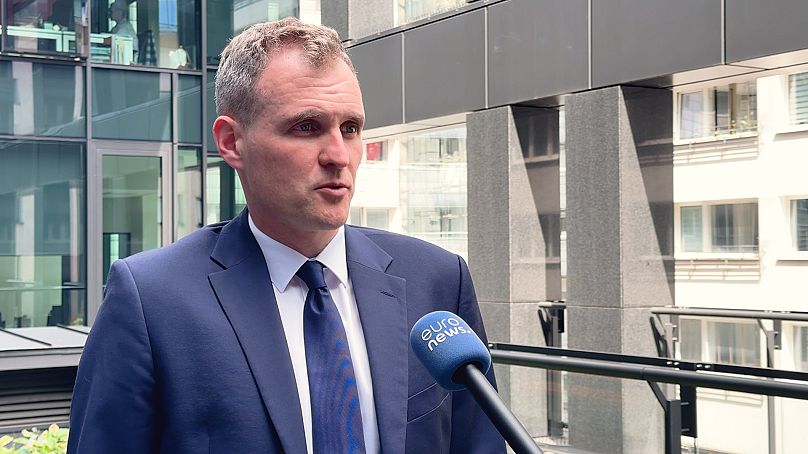
"Every day, during daylight hours, we have much more energy from RES than from coal," comments Piotr Czopek, vice president at the Polish Wind Energy Association, emphasising that the country is just entering a new chapter in its energy transition.
Renewable energy, as the cheapest source available today, can become the foundation for the future competitiveness of Polish industry in the European and global arena. Offshore wind energy plays a special role as a sector that is just coming to life.
Poland has significant wind energy potential, especially in Pomerania and the central part of the country. According to the Polish Wind Energy Association (PWEA), the installed capacity of wind farms in Poland exceeded 9 GW at the beginning of 2025.
However, the development of onshore wind turbines has been blocked for years by the '10H rule' - a regulation requiring wind turbines to be built no closer than ten times their height from the nearest buildings.
Although a 2023 amendment softened these restrictions and gave the sector a much-needed investment boost, experts warn that further reforms are still necessary to unlock the full potential of wind energy. Wind from the Baltic is a stable source of energy
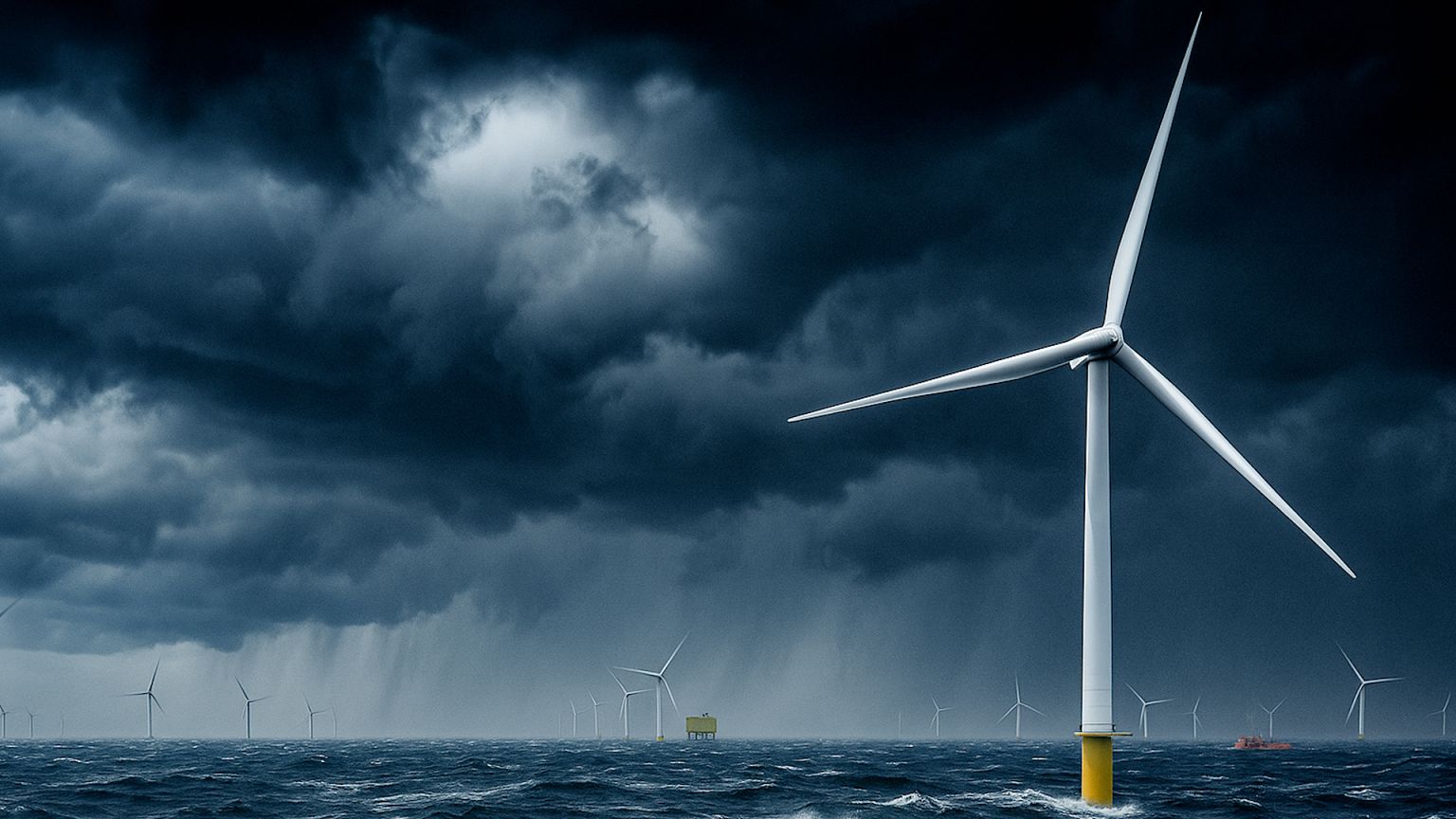
"Offshore wind energy? From the point of view of these renewables, it's the most stable source," says Czopek.
"Anyone who has been to the Baltic Sea knows that it always blows properly there."
"This makes this power industry very stable, it produces a lot of energy, on top of that, it is far away from human settlements, so no one is bothered by it. Secondly, the Baltic Sea is a relatively shallow sea, which facilitates investment," he adds.
Piotr Czopek, vice president of the Polish Wind Energy Association. Euronews/Pawel Glogowski
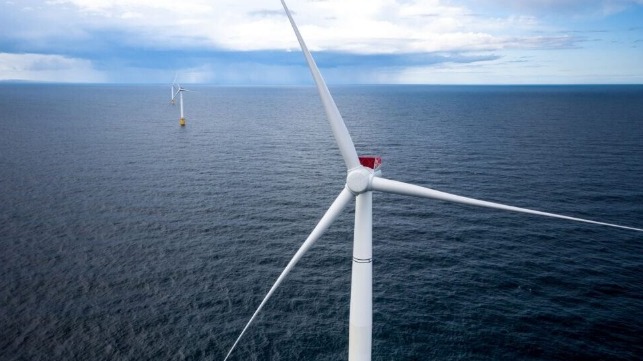
Although no offshore wind farm in Poland is yet fully operational, the first turbines are already standing in the Baltic Sea. Construction by the Baltic Power consortium (Orlen and Canada's Northland Power) aims to create a 1200 MW farm.
Further projects will start next year, and by 2030, Poland plans to reach 6,000 MW of energy from offshore wind farms.
As experts emphasise, this is not only an energy investment – it is also an opportunity for the industry.
"We are at the initial, ascending stage. Already today, many large factories are being built in Poland – in Szczecin, in Gdansk and in other cities," Czopek says. Baltic Towers in Gdansk is just one example of a growing manufacturing base.
Importantly, Poland is attracting not only domestic companies but also global players who are opening production facilities here.
"No one will invest hundreds of millions of euros in Poland if they don't see that they can make money from this business," he emphasises.
Offshore wind energy is also an export opportunity, as turbine components, infrastructure, or design services can go to markets all over the world.
Europe: A race against time and rising costs
At the European level, wind energy is also growing in strength. According to WindEurope, EU countries installed a total of 18 GW of new wind capacity in 2024, mainly in Germany, Spain and the Netherlands.
However, the EU faces rising component costs, inflation and global competition, above all from China, which dominates turbine production.
Brussels plans to counter these trends through the European Act on Carbon Neutral Industries and strategic raw material partnerships. The aim is to increase Europe's technological and energy independence, especially given the ongoing geopolitical crisis.
Social challenges are also not insignificant. In many regions – both in Poland and Western Europe – residents are protesting against the construction of wind farms, concerned about noise, landscape aesthetics or the impact on local ecosystems. Social acceptance is playing an increasingly important role, which, as research shows, can be increased through the participation of local communities in investments and a fair distribution of profits.
Wind turbines have become a symbol of a green future and the fight against CO₂ emissions. However, questions are increasingly being asked about how much it really costs to build wind farms and whether their carbon footprint contradicts the idea of 'green energy'?
Millions of euros for clean energy
The construction of a wind farm – whether onshore or offshore – is a financially intensive undertaking. According to WindEurope, the cost of installing one wind turbine on land ranges from €1.2 to €1.6 million for each megawatt of energy-producing capacity.
For offshore or marine farms, the costs are even higher, as much as €3 to €5 million per megawatt.
The total cost includes manufacturing and transporting the turbines, the construction of the foundations, network connections (often tens of kilometres of cables), engineering and maintenance work.
Experts point out that, although wind energy is 'free', the infrastructure needed to generate it involves huge investment and technical costs.
A typical wind turbine requires around 200-300 litres of specialised oil every 1.5-2 years. For offshore farms, the logistics and labour costs can far exceed the price of the lubricant itself.
The industry is now looking for ways to reduce oil consumption or change lubrication technology altogether. Ideas are also emerging for the use of greener bio-liquids. Poland is at a turning point
On 18-19 November, the largest offshore wind energy conference in Poland, and also the largest in Central and Eastern Europe, will be held in Warsaw.
As the organisers, the Polish Wind Energy Association, point out, the event is intended to bring together investors and supply chain companies.
"It's a space to discuss investments and to do business – because that's what it's all about, to be able to meet and talk about what we can do together," it says.
Poland is at a turning point today. Although only a few years ago coal dominated the domestic energy sector indivisibly, today it is wind, both literally and figuratively, that is blowing in the sails of the transformation.
Renewable energy is not only changing the way we produce electricity. It is also changing the way we think about the future – greener, more competitive and more independent.
German Tender for Offshore Wind Without Subsidy Attracts No Bids
The German agency that oversees the country’s offshore wind energy development confirmed that there were no bids in the most recent auction. It was Germany’s second auction of the year, but unlike the first, which TotalEngeries won the site, this one failed to receive interest from investors.
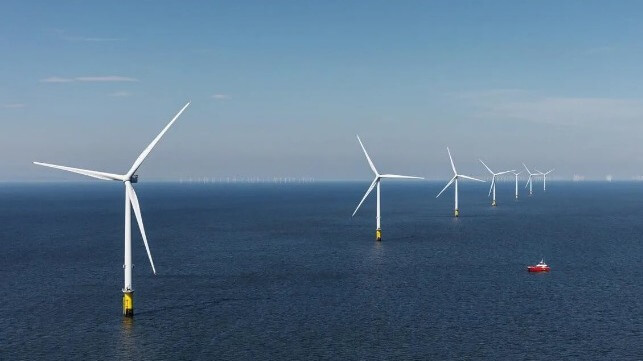
Germany was offering two North Sea sites, which combined would have a capacity of 2.5 GW. The country currently has 9.2 GW of offshore wind capacity operational in the North Sea and Baltic Sea, according to BNetzA, with ambitious goals to reach 30 GW by 2030, 40 GW by 2035, and 70 GW by 2045. It added just .7 GW in 2024.
“The auction result must be a wake-up call for the German government,” said Viktoriya Kerelska, Director of Advocacy & Messaging at the trade group WindEurope. “It’s time to amend the auction model so Germany can deliver on its offshore wind targets and industrial competitiveness.”
Analysts note that investors’ mood changed as they face rising costs and challenging supply chains. A few years ago, investors were driving down the level of subsidies, and countries such as Germany and the Netherlands celebrated the first subsidy-free agreements. Now, the major developers are citing the increased risks they face and costs, saying they must have protection. Even in some cases, such as the UK’s Hornsea 4 project, developer Ørsted said the economics had changed to the point that it would not proceed in the current form, even with its government contract.
WindEurope highlights that most countries in Europe have introduced two-sided Contracts for Difference (CfDs) as a revenue stabilization mechanism for offshore wind development. Countries that have not moved forward with this model experienced the same challenges. Denmark in December 2024 also received no bids, and even the UK, which offered CfDs, had an unsuccessful round in September 2023, with the companies saying the support was too low. The current UK government has moved to increase the CfD levels and improve the structure, and it has been receiving stronger interest.
Germany’s Federal Minister for Economic Affairs and Energy, Katherina Reiche, admitted during a press conference that the results were sending a message. She said it would be “beneficial” for the regulator to look at adjusting the tender going forward.
The German Offshore Wind Energy Association (BWO) noted that it has repeatedly called for the introduction of the CfD approach. It says that Germany must also provide long-term power purchase agreements.
“The result sends a clear message,” said BWO’s managing director, Stefan Thimm. “The German offshore wind market is currently not attractive to investors. The federal government is thus missing the opportunity for significant value creation and employment in Germany and Europe.”
The authorities reported that under the terms of the tender, the two sites will be re-tendered with a new bid deadline of June 1, 2026.
UK Opens First Step of Seventh Offshore Wind Solicitation
UK is launching its next round for offshore wind allocation (Orsted)
The window officially opened today, August 7, for the first phase of AR7, the UK’s next solicitation for renewable energy. This round is viewed as the most consequential in the UK’s energy goals, and the government has taken key steps to support the industry and to create strong interest.
Round 7 begins with a 20-day period for eligible developers to submit their initial applications, which will be assessed in September against the qualifications. The final timing for submitting bids may change based on the current consultation process and potential challenges, but the program anticipates bidding may conclude at the end of October or the latest, by early January 2026. Results will be announced approximately a month after the close of bidding.
The UK highlights that through its Contracts for Difference (CfD) scheme, it has already delivered more than 10 GW of capacity, which is in operation – the UK has a total of 14.7 GW of offshore wind capacity currently installed, making it the largest in Europe and second only to China. In July, the government highlighted that for the first time, more than 50 percent of the country’s electricity was coming from renewable energy. An additional 23 GW from offshore wind is contracted to become operational by 2030 as the UK moves toward a goal of 50 GW.
Analysts have warned that this round is critical in the UK’s efforts to meet its goals for renewable energy. The UK stumbled in 2023 when round 5 attracted no bidders, and the industry warned that the support mechanisms did not balance the risk. The government of Sir Keir Starmer responded in 2024 and again in 2025, taking steps to increase the support as part of its efforts to accelerate the transition.
The Government has committed a budget of over £544 million ($730 million) to the program to provide long-term support. Among the key steps is lengthening the span of the CfD contracts from 15 to 20 years. They said the longer contracts would provide greater financial certainty for developers. The strike price for both fixed-bottom and floating wind projects was also increased to reflect current market conditions.
“It’s good that the UK is adjusting its AR7 auction parameters to reflect current market conditions,” said Viktoriya Kerelska, Director of Advocacy and Messaging at the trade group WindEurope. “Fit-for-purpose auction design that allows for viable projects is what gets wind farms built. And this is for the benefit of national and European energy security, employment, and competitiveness.”
The results of this round will be closely watched by the industry, especially following yesterday’s news that a German solicitation received no bids. The UK has also faced setbacks despite its efforts to support the industry. Ørsted in May said it had decided to discontinue the Hornsea 4 project in its current form. The company reported that since the Contract for Difference (CfD) award in allocation round 6 (AR6) in September 2024, the 2,400 MW Hornsea 4 project has seen several adverse developments relating to continued increase of supply chain costs, higher interest rates, and an increase in the risk to construct and operate Hornsea 4 on the planned timeline for a project of its scale.
WindEurope has called for the UK to set a long-term schedule for future auctions. It says this would help developers plan and allocate capital. They said it would also increase the confidence of the supply chain companies. Problems in the supply chain and increasing costs have been some of the biggest challenges to the industry’s development.
German Divers Begin Testing Retrieval System for Seabed Ordnance
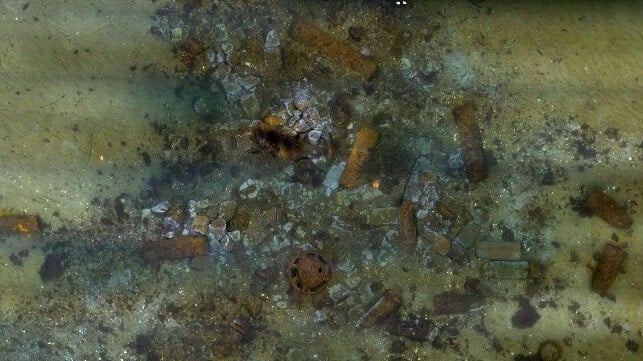
Unexploded German ordnance on the bottom, Kolberger Heide dump site (BMUKN / GEOMAR Helmholtz Centre for Ocean Research Kiel)
Sponsored by a German government environmental program, a Baltic Sea diving and salvage company has begun an extended trial of new techniques to clean up decaying ammunition from the seabed. Germany has a pressing need to solve the problem because the aging munitions in its coastal waters are beginning to leak into the environment, spreading undesirable toxins that could affect fisheries and enter the human food supply chain.
The problem began during World War II, when Germany made explosive devices by the millions. All too many were used, but many more outlasted the German defeat. After the war, Germany was forced to disarm, and an estimated 1.6 million tonnes of its grenades, shells, bombs and rockets were dumped into the waters of the Baltic and the North Sea. This was a rapid and cost-effective disposal method, if lacking in environmental controls, and was widely used by other militaries at the time.
These disposal sites lay dormant for decades, out of sight and out of mind, but are now coming back to haunt German regulators. In the Baltic, where seawater exchange with the open ocean happens only very slowly, concerns about chemical pollution are taken seriously - and these aging explosive devices are now leaking TNT into the water. TNT is considered a possible carcionogen, and animal studies suggest that high levels can cause damage to various organs. In water, it rapidly degrades to trinitrobenzene, an environmentally-persistent compound that can cause liver and nervous system damage in humans. The U.S. NIH classifies trinitrobenzene as "very toxic to aquatic life with long lasting effects."
To reduce the risk, the Federal Ministry for the Environment, Nature Conservation, Nuclear Safety, and Nuclear Safety (BMUKN) is sponsoring research on cleanup methods in the most heavily-contaminated regions. Its "immediate program" has a federal funding budget of about $115 million, aimed at developing a floating munitions recovery and destruction unit that can do the whole process at sea. Waters of the Bay of Lübeck and Bay of Mecklenburg were picked for initial testing because of the high concentration and the variety of old munitions on the seabed in these dump sites.
This week, the Baltic Diving and Recovery Company began a trial-scale project to remove 15 tonnes of aging ordnance from the bottom off the coast of Boltenhagen, about 30 nautical miles to the west of Rostock. Working from a dive support barge, dive teams will work round the clock sorting the munitions under water, loading them into transport crates, and getting them back up to the surface with purpose-built elevators for hoisting, according to local media. Some of the ordnance is highly corroded, and much of it is concentrated in piles on the bottom.
After loading on the barge, the ordnance will be taken back to shore and disposed of. The Boltenhagen trial will cost about $5 million.
"[This trial] is the most ambitious munitions recovery project to date in German marine waters," said Mecklenburg-Western Pomerania's Environment Minister, Dr. Till Backhaus. "We are demonstrating that Mecklenburg-Western Pomerania is taking responsibility – technically, ecologically, and politically."
It is one of several initiatives funded under the program. The German government has also selected Rostock as the home of a new national competence center for munitions recovery, and will be a hub for research on the subject.
Senators Introduce Bill to Clear Barriers to Naval Shipyard Hiring
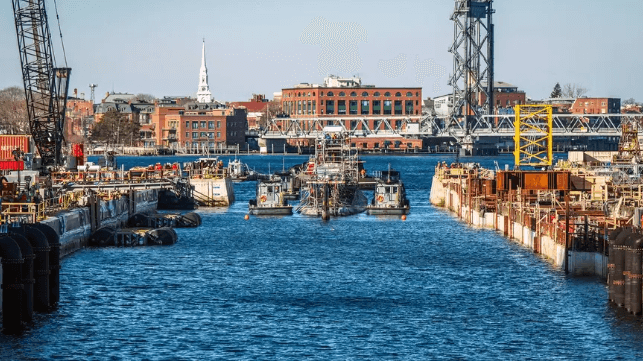
USS Hampton enters drydock at Portsmouth Naval Shipyard, March 2025 (USN)
Four senators from New England have introduced a bill that would compel the administration to speed up hiring for production roles at the Navy's four public shipyards, which provide maintenance for the service's nuclear-powered subs and carriers.
The Trump administration rolled out a comprehensive hiring freeze on its first day in office. Ever since, the public yards have had a hard time onboarding new welders and fitters - personnel whose skills are tough to find and critically needed.
Blue-collar shipyard positions were supposed to be exempt from the freeze, according to Defense Secretary Pete Hegseth - but that memo does not seem to have gotten through, the senators said in a letter accompanying the bill. One part of the bottleneck may be located at the administration's Office of Personnel Management (OPM), a non-defense HR agency for the federal government, which has reportedly held up new shipyard hires - even though these hirings are approved by the Secretary of the Navy and by Pentagon policy.
According to the senators, the Navy has a hiring cap of 1,550 civilians per month for all of its operations worldwide, enough to cover 8 percent annualized workforce turnover. This is too little to fill vacant shipyard roles, the senators say: Portsmouth Naval Shipyard alone needs about 50 new people a month to meet maintenance demands.
“Our shipyard workforce represents an essential component of our national defense and preparedness – they should have never been subjected to this administration’s ill-considered hiring freezes,” said Senator Jeanne Shaheen (D-NH). “The Portsmouth Naval Shipyard workforce is supposed to be exempt from the hiring freeze, but there continues to be issues with implementation."
The senator's new bill would require the Pentagon to exempt public shipyards from workforce reductions, and it removes hiring limits on shipyard positions. It would make it unlawful to shrink the shipyard payroll for fiscal purposes, banning "workforce reductions related to spending cuts, reprogramming of funds, or the probationary status of employees." The bill's success would require passage by Congress, a signature from the president, and the Pentagon's cooperation. The Navy, which desperately needs better performance out of its submarine maintenance yards, appears to agree with the bill's intent: Vice CNO Adm. Jim Kilby told a Senate committee in March that public shipyard employees were exempt from the hiring freeze.
"Our bipartisan bill enshrines that [hiring] exemption in federal law and ensures that no public shipyard is subjected to such chaos and uncertainty in the future, allowing them to focus instead on the vital role they play in our national security," said Sen. Shaheen.
Coscso Seeks 20% of Hutchison Deal as US Calls for Ouster from Panama
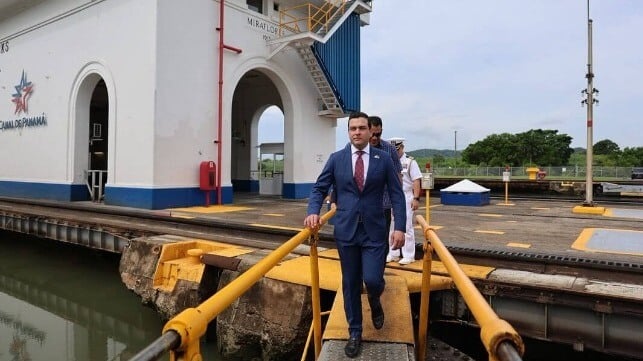
U.S. Ambassador Cabrera visiting the Panama Canal earlier this year (US Embassy photo)
The political “tug-of-war” surrounding controls of the port terminals at the Panama Canal and CK Hutchison’s larger portfolio of 41 port operations worldwide continues with China exerting pressure and the U.S. reiterating its position to end the Panama concession. CK Hutchison confirmed last month that talks were ongoing and that a Chinese company would be invited into the discussions after the lockup period on the original deals expired in late July.
China’s Cosco, which is already a large port operator, is seeing at least a 20 to 30 percent share of the deal, according to a new report in today’s Financial Times. The paper cites two unnamed sources that said China has only permitted Cosco to enter the talks to maintain its leverage over the deal. China has made it clear that its position is that a Chinese company must be part of the deal to protect Chinese trade interests.
The Financial Times says several options are being discussed, including the possibility that Cosco would participate in the one deal that acquires Hutchison’s 41 global ports outside China and excluding the two terminals in Panama. The original agreement set parallel deals, one for the 41 ports, which is believed to be led by MSC’s Terminal Investments (TiL), while the second deal, led by BlackRock and with MSC as a minority investor, would acquire the Panama Ports Company, which operates the terminals in Balboa and Cristobal under long-term concessions.
Donald Trump had hailed the deal in March, saying it was returning the Panama Canal to the United States. A friend of the CEO of BlackRock, Larry Fink, Trump said the American company was acquiring many ports. Since then, the U.S. has remained largely quiet on its views of the deal.
U.S. Ambassador to Panama Kevin Marino Cabrera, on Wednesday, August 6, however, spoke out against CK Hutchison. He supported the legal actions taken by Panama’s Comptroller General to void the concession. He said that the U.S. was “excited” that Hutchison would soon be no longer operating the ports in Panama.
“Our position is that they are a bad operator; they haven't done a good job,” Cabrera told reporters during an event in Colon. “They are a company of the Chinese Communist Party… We are excited that those ports will soon be out of operation, and that good operators willing to contribute to the Panamanian people will come to the country.”
The Panama Ports Company dates to 1997 and was set up with CK Hutchison holding 90 percent, with Panama owning 10 percent. The company’s concession was renewed for an additional 25 years in 2021 in what is now a contested process.
Cabrera asserted that the Panama Ports Company (PPC) has not honored its agreements and owes Panama money. He also linked the company to the Communist government, although Hutchison is based in Hong Kong. Founder, Li Ka-shing, a Hong Kong billionaire, has frequently been at odds with the Chinese government, and this year it accused him of being disloyal and not acting in the interest of the state after the deals were announced to sell the port terminals.
Hutchison has defended its operations in Panama, saying the company has followed all the legal requirements. It asserts that it has contributed to the Panama economy. The company said in a statement in April that PPC has made significant investments that exceed $1,695 million, surpassing not only the $50 million investment required under the original concession contract, but also the $1,000 million agreed under the addendum, as confirmed by the Comptroller General of Panama.
The shipping industry continues to watch the developments as well. CMA CGM confirmed that it would be interested in some of the assets, and Maersk said it is also watching the deal closely. The Financial Times says none of the shipping companies have been invited into the negotiations, and it notes any bidder would need to involve the Chinese to win approval for an acquisition.
Panama to Require Full Traceability for Offshore Oil Transfers
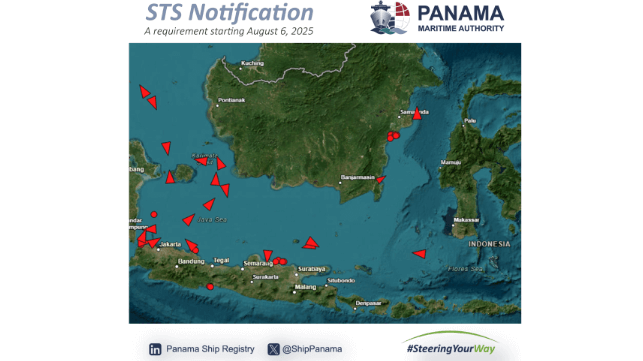
The Panama Ship Registry has become the first naval registry in the world to implement stricter controls and mandatory traceability for offshore ship-to-ship (STS) transfers of hydrocarbons. This new measure, which came into effect on August 6, 2025, is outlined in Resolution No. 106-035-DGMM issued by the Directorate General of Merchant Marine. According to Article 9 of the resolution, non-compliance—depending on its severity—may lead to the cancellation of a vessel’s Panamanian registration.
The regulation requires all Panamanian-flagged oil tankers with a gross tonnage of 150 or more to notify the Panama Maritime Authority (PMA) at least 48 hours in advance, providing full technical and logistical details of each STS operation.
The mandatory information includes:
Name, flag, call sign, IMO number, and estimated time of arrival (ETA) of all vessels involved
Date, time, and geographical coordinates of the operation’s start
Type of maneuver: at anchor or underway
Type and quantity of hydrocarbons to be transferred
Estimated duration of the operation
Contact information for each vessel’s Designated Person Ashore (DPA)
Confirmation of an STS plan in accordance with Regulation 41 of the MARPOL Convention
If the estimated arrival time at the transshipment point varies by more than six hours, the vessel’s captain, owner, or DPA must update the notification to the PMA.
This measure responds to the increasing use of vessels in illicit activities such as covert crude transport, sanctions evasion, and operations lacking environmental controls—practices often associated with the so-called “shadow fleet.”
It aligns with International Maritime Organization (IMO) regulations and underscores Panama’s commitment as a responsible flag State, promoting maritime safety, operational integrity, and protection of the marine environment.
With this move, Panama reaffirms its global leadership in maritime regulation—enhancing trust in its registry, ensuring compliance with international standards, and contributing to the fight against the misuse of flags of convenience.
The products and services herein described in this press release are not endorsed by The Maritime Executive.
Panama is First Registry to Enforce Rules to Crack Down on STS Actions
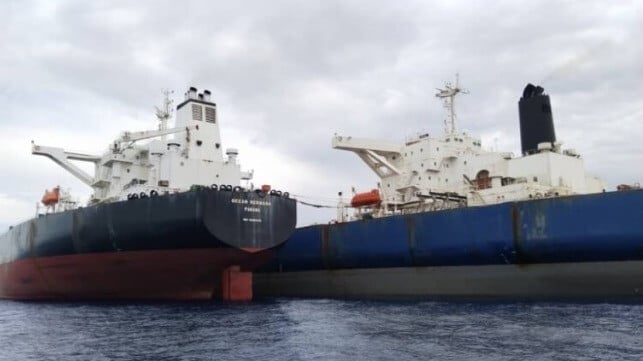
Panama started it rule cracking down on STS transfers targeting the shadow fleet (MMEA)
The Panama Ship Registry started its new rules as of August 6, requiring reporting of planned ship-to-ship (STS) offshore oil transfers as the latest step in a series of crackdowns targeting the shadow tanker fleet. Panama had announced plans for the new rules in May, and highlights that with the rule now in effect, it has become the first registry in the world to implement stricter controls and mandatory traceability for offshore ship-to-ship (STS) transfers of hydrocarbons.
“This measure responds to the increasing use of vessels in illicit activities such as covert crude sanctions evasion, and operations lacking controls, practices often associated with the so-called “shadow fleet,” the Panama Ship Registry says in its announcement. It warns that “non-compliance—depending on its severity—may lead to the cancellation of a vessel’s Panamanian registration.”
The regulation requires all Panamanian-flagged oil tankers with a gross tonnage of 150 or more to notify the Panama Maritime Authority (PMA) at least 48 hours in advance, providing full technical and logistical details of each STS operation. In addition to the details on the vessels involved, they must supply the location, the type of transfer, and the quantity to be transferred. If the operation varies by more than six hours, the captain or shipping company must update the details reported to the PMA.
The shipping companies are also required to supply contact details for a designated person ashore. They must also confirm that the STS plans are in accordance with the IMO’s MARPOL Convention.
Putting the STS rule into effect follows another move by the registry this week, also targeting the shadow tanker fleet. It said it will no longer accept the registration of tankers (and bulkers) that are more than 15 years old. It said an analysis of data showed the older vessels accounted for most of the detentions.
Panama, under pressure from the U.S. and others, has moved to purge its registry and enacted new rules to make it faster and less complicated to remove ships that are sanctioned or have other violations. Demonstrating this, Panama reported this week it had removed 17 tankers sanctioned days earlier by the United States in a crackdown on an Iranian shipping network.
Panama is the latest in a growing number of jurisdictions seeking to tighten enforcement against the shadow tanker fleet. Greece, last year, closed a bay favored by tankers in the Russian oil trade. Last week, Malaysia, which is already known for its enforcement against illegal anchoring, announced new rules on another key area favored by shadow tankers to make transfers. Malaysia created new anchoring regulations and closed the area to most tankers. In Europe, efforts have focused on the enforcement of the requirements for insurance and proper certification.
Despite this, the shadow tanker fleet continues to grow. The latest estimates put it at over 1,100 vessels, although the EU and UK sanctions have driven some tankers from the trade.
The efforts to reduce STS will impact tankers both in the Russian oil trade and those supporting Iran. Both are known to use STS and other efforts to hide the origins of the oil or to mix it with other sourced oil to make the blend less identifiable.
World's Largest Carrier Calls at Marseille, Boosting French Economy
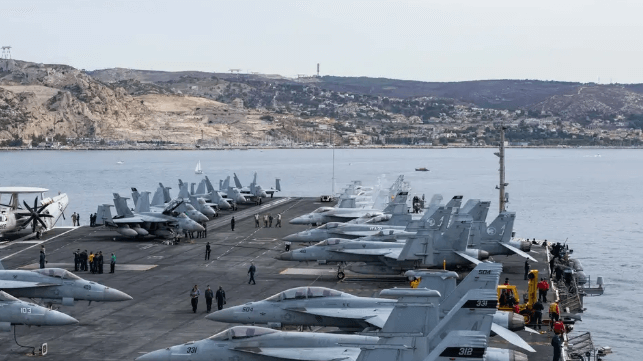
USS Gerald R. Ford arrives in Marseille, August 2025 (USN)
The nuclear-powered USS Gerald R. Ford (CVN-78), the largest aircraft carrier in the world, arrived in Marseille for a port visit on August 4, accompanied by Arleigh Burke Class guided missile destroyer USS Winston S. Churchill (DDG-81). Both vessels are scheduled to be in port for five days, leaving on August 9.
Both vessels have recently taken part in Exercise Neptune Strike 25-2, alongside NATO ships from Croatia, Finland, France, Germany, Greece, Italy, Lithuania, Norway, Poland, Romania, Spain, Slovakia and the United Kingdom.
From the Sixth Fleet, Arleigh Burke-class guided missile destroyers USS Bainbridge (DDG 96), USS Mahan (DDG 72), and USS Winston S. Churchill (DDG 81) took part in the exercise.
As well as ships from other NATO nations, the Spanish Expeditionary Combat Group fielded the Santa Maria Class frigate ESPS Canarias (F86), helicopter carrier ESPS Juan Carlos I (LHD-7), Álvaro de Bazán Class frigate ESPS Blas de Lezo, amphibious ship ESPS Galicia (L51) and replenishment oiler ESPS Cantabria (A15). At this point, if the Russian Kilo Class submarine RFS Novorossiksk (B261) or Project 864 intelligence collector Viktor Leonov were monitoring the exercise, they may have been tempted to give up counting the number of NATO ships involved. A feature of the exercise were long-range strikes carried out from the central Mediterranean on training ranges in Croatia, Slovakia and Romania.
The port call at Marseille by the USS Gerald R. Ford and USS Winston S. Churchill will see over 5,000 US sailors and aviators ashore during the five days of the visit, both in Marseille and Monaco along the French Riviera and on excursions as far away as Paris. The economic benefit will therefore be spread across France, with private expenditures in the millions (in addition to US Navy expenditures). Marseille missed out on a first visit from USS Gerald R. Ford in 2023 when it was diverted to the Gulf instead, but enjoyed a visit from USS Harry S Truman (CVN-75) in 2024.
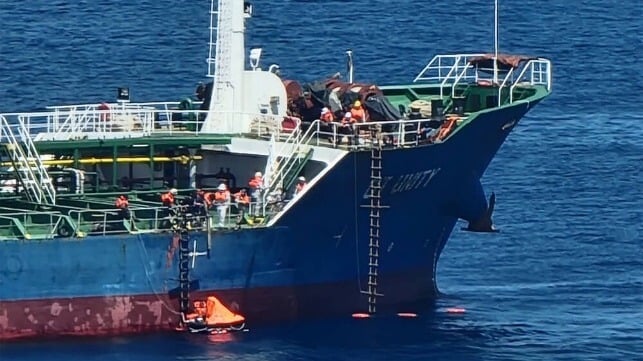
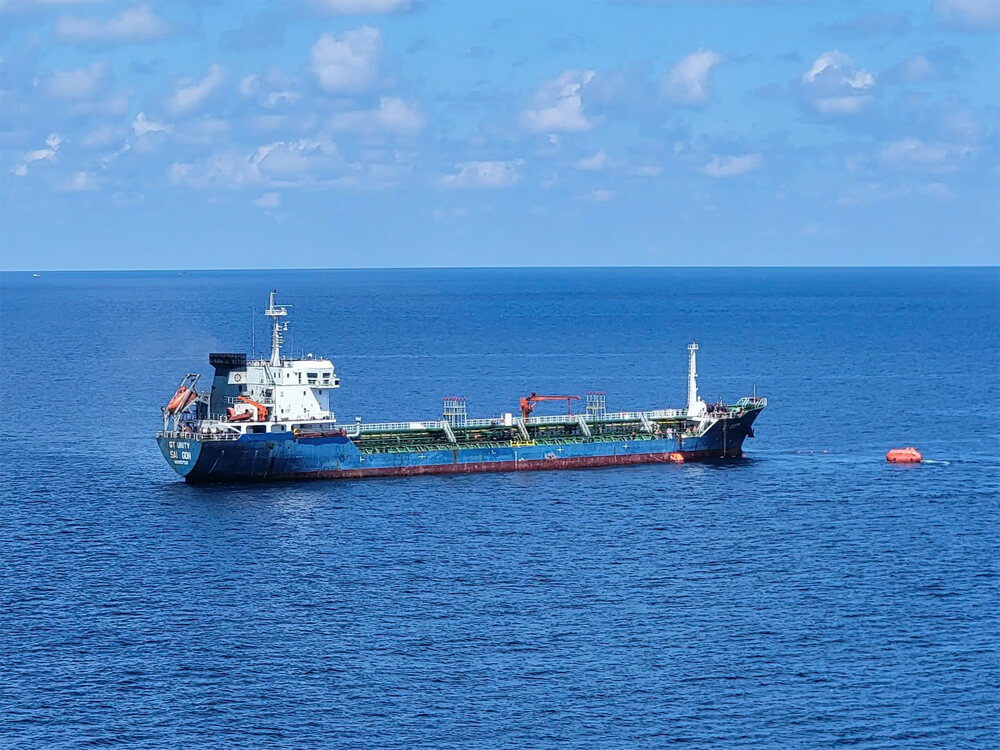
The Vietnam Maritime Authority is reporting a successful search and rescue operation for 20 crewmembers from a burning tanker off its coast. The notification came in at midday on Friday, August 8, that the Vietnamese-flagged tanker GT Unity (7,631 dwt) was experiencing an electrical fire with 20 crewmembers aboard.
The tanker, which was built in 2008, was carrying 3,872 tons of crude oil. It was sailing from Malaysia to the Vietnamese port of Dung Quat. Its position was placed between 104 nautical miles southwest of Con Dao and 191 nautical miles from the Vang Tau cape in southern Vietnam, in the region of Ho Chi Minh City.
The Costamare-owned containership Androusa (53,439 dwt) was in range and was asked by the Vietnamese authorities to assist. The vessel, which is operating under charter, was sailing from China bound for Singapore.
The Vietnamese authorities also alerted the Navy and Coast Guard. A patrol boat was dispatched from Vung Tau. They also asked the crew of a drilling rig near the site to participate in the rescue.
The containership reached the burning tanker and reports that 16 of the 20 crewmembers have abandoned ship. The containership was able to rescue all 20 of the crewmembers.
The patrol boat was due to reach the scene and was going to be used to evacuate the injured crewmembers. One person was reported in critical condition.
The director of the Vietnam Maritime and Waterways Administration, Le Do Muoi, said they would be awarding a certificate of merit to the captain and crew of the Androusa for promptly recognizing the need and their responsible actions in this incident. The owner of the GT Unity has been instructed to arrange for vessels to extinguish the fire and salvage the drifting vessel.