Sunday, August 10, 2025

FASCISTS OF A FEATHER...

Slovak ruling party lawmakers criticised for meeting far-right influencer Andrew Tate

Slovak ruling party lawmakers criticised for meeting far-right influencer Andrew Tate
Richard Glück posted a picture on Facebook of his meeting with the Tate brothers alongside MEP Erik Kaliňák. / Richard Glück via Facebook
By Albin Sybera in Prague August 8, 2025

Legislators from the Slovak ruling Smer party led by populist Prime Minister Robert Fico face a wave of criticism for meeting with far-right online influencer Andrew Tate and his brother Tristan Tate.

The Tate brothers face several criminal investigations in the United Kingdom and Romania, including investigations into rape and human trafficking. Both brothers deny wrongdoing.

Smer politicians have become increasingly radical amid the party’s faltering popularity, which has sunk below 20%.

News of the meeting broke after MEP Erik Kaliňák and MP Richard Glück, both young members of Smer, shared a photo from the meeting with the Tate brothers on their social media profiles.

“What Mr. Kaliňák and Mr. Glück did is a clear signal to young voters, particularly men [who] often roam on social networks which promote to them very negative and toxic content,” editor of the leading Slovak daily SME, Soňa Jonášová, said of the meeting.

Glück Jonášová made the comments during an SME-organised discussion which also included social media expert Jakub Goda, who highlighted that “young people, particularly those who spend time on TikTok know the Tate brothers very well.”

Andrew Tate has over 10mn followers on X (formerly Twitter), where he was previously blocked before Elon Musk’s takeover of the platform. Andrew Tate also has a record of producing content involving violence against women and making misogynistic statements such as that “women should be responsible for rape”.

Other parties in Fico’s left-right ruling coalition, which also includes conservative centre-left Hlas and ultranationalist SNS, have a record of meeting controversial online figures.

As bne IntelliNews reported, last year, Minister of Interior Matúš Šutaj Eštok of the Hlas party shocked the liberal media for taking part in an online discussion with Slovak right-wing extremist and online influencer Daniel Bombic.

In a closely followed development, Bombic was extradited from the United Kingdom to Slovakia in January after facing three warrants, and in February, Bombic was ordered to wear a monitoring bracelet during his prosecution.

Bombic was released from custody in an April 19 Special Criminal Court (STS) ruling in the town of Banská Bystrica, as bne IntelliNews also covered.

Bombic’s lawyer is David Lindtner, who is a former aide to Minister of Justice Boris Susko from the Smer party. Lindtner is also an aide to Fico after the latter returned to the helm of the government in the autumn of 2023.

 Syria withdraws from Paris talks on integrating Kurds

Syria will not take part in Paris talks on incorporating the Kurdish semi-autonomous administration into the Syrian state, a Syrian government official said Saturday. The decision comes a day after the Kurdish administration, which governs large parts of the north and northeast, hosted a conference involving several Syrian minority communities.

Issued on: 09/08/2025 
By: FRANCE 24

Mazloum Abdi (C), commander-in-chief of the Syrian Democratic Forces (SDF), and Hamid Darbandi (R), envoy of Iraqi Kurdish politician Masoud Barzani (leader of the Kurdistan Democratic Party), attend the pan-Kurdish "Unity and Consensus" conference in Qamishli in northeastern Syria on April 26, 2025. © Delil Souleiman, AFP

A Syrian government official said Saturday that authorities would not participate in planned talks in Paris on integrating the Kurdish semi-autonomous administration into the Syrian state and demanded future negotiations be held in Damascus.

The move came a day after the Kurdish administration, which controls swathes of the north and northeast, held a conference involving several Syrian minority communities, the first such event since Islamists overthrew longtime ruler Bashar al-Assad in December.

Participants included the head of the Kurdish-led Syrian Democratic Forces (SDF) Mazloum Abdi, who on March 10 signed a deal with President Ahmed al-Sharaa to integrate the Kurds' civil and military institutions into the state.

The conference's final statement called for "a democratic constitution that... establishes a decentralised state", guaranteeing the participation of all components of Syrian society.

Damascus has previously rejected calls for decentralisation.

"This conference was a blow to current negotiating efforts, and based on this, (the government) will not participate in any meetings scheduled in Paris," state news agency SANA quoted an unidentified government official as saying.

The government "calls on international mediators to move all negotiations to Damascus, as this is the legitimate, national location for dialogue among Syrians", the official said.

Late last month, Syria, France and the United States said they agreed to convene talks in Paris "as soon as possible" on implementing the March 10 agreement.

Recent sectarian clashes in south Syria's Druze-majority Sweida province and massacres of the Alawite community on Syria's coast in March have deepened Kurdish concerns as progress on negotiations with Damascus has largely stalled.

The event also saw video addresses from an influential spiritual leader of Syria's Druze community in the country's south, Hikmat al-Hijri, and from prominent Alawite spiritual leader Ghazal Ghazal.

Damascus has strongly criticised Hijri after he called last month for international protection for the Druze and appealed to Israeli Prime Minister Benjamin Netanyahu for assistance during the sectarian clashes.

The government will not "sit at the negotiating table with any party that seeks to revive the era of the former regime under any cover", the official told SANA, condemning the hosting of "separatist figures involved in hostile acts".

"The government sees the conference as an attempt to internationalise Syrian affairs" and invite foreign interference, the official added.

(FRANCE 24 with AFP)


Druze spiritual leaders in Suwayda unite in opposition to Syrian government

Druze spiritual leaders in Suwayda unite in opposition to Syrian government
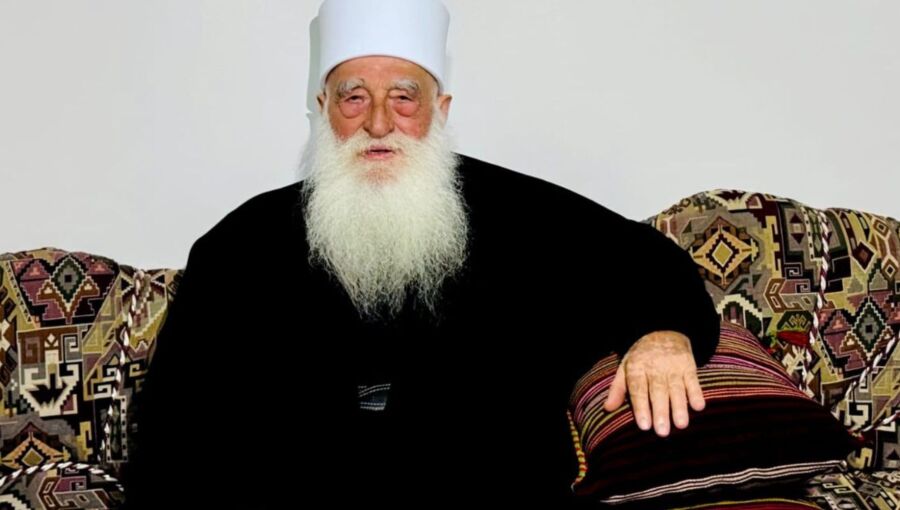
Syrian Druze leader fights against the new Turkish-backed Syrian regime. / CC: Enab Baladi
By bna Cairo bureau August 10, 2025

The three leading sheikhs of the Druze community in Syria’s Suwayda province have issued statements taking a clear stance against the Turkish-backed Damascus government in a sign of worsening tensions.  

Sheikhs Yusuf al-Jarbou and Hammoud al-Hanawi have now aligned themselves with the position long held by Sheikh Hikmat al-Hijri, as reported by Enab Baladi on August 10.

The three sheikhs—al-Hijri, al-Jarbou, and al-Hanawi—are the top spiritual leaders of the Druze in Suwayda. While al-Hijri has consistently been critical of Damascus during the recent unrest, Jarbou has fluctuated between cooperation with and condemnation of the government, and Hanawi had remained silent until now.

At least 1,013 people were killed amid violent clashes in Suwayda in mid-July, according to the Syrian Network for Human Rights. Local factions, government forces, tribal fighters, and Bedouin groups were involved in the clashes, with Israel intervening militarily against Syrian government forces.

In a video statement released by the Spiritual Leadership of the Druze Community on August 9, al-Hijri, the most outspoken critic of Damascus, said, “Suwayda has witnessed in recent days a series of crimes that can only be described as systematic genocide carried out in cold blood.”

He described a “suffocating siege lasting weeks, including the cutting of water, electricity, and food, in an attempt to break the will of an unbreakable people.”

“What happened is not isolated incidents but a silent plan of extermination carried out in full view of the world,” al-Hijri said, calling the use of starvation against civilians “not just a violation, but a war crime.” He denounced “propaganda campaigns led by official media and channels supportive of the de facto government.”

Israel has said its intervention was to protect the Druze, citing strikes against government forces near Suwayda and targeting Syria’s Defence Ministry headquarters and the presidential palace in Damascus.

Al-Hijri expressed gratitude to countries “that refused to remain silent, first and foremost the US,” adding, “We value the positions of states that stood by the oppressed, foremost among them President Trump.”

He also praised “the position of Israel, its government, and its people for its humanitarian intervention to reduce massacres against the people of Suwayda out of moral and humanitarian duty.”

Al-Hijri called on the UN Security Council to “act immediately and open an independent international investigation into the crimes committed in Suwayda,” urging the prosecution of those responsible at the International Criminal Court and the deployment of international monitoring missions to protect civilians.

Sheikh Hammoud al-Hanawi said in his video statement on August 9, “There is no covenant and no pact between Suwayda and the government in Damascus,” marking a clear break from his earlier stance.

“We have been afflicted with an authority with no honour, that sold the homeland and betrayed its people before betraying its borders, an authority that has been a drawn sword against innocent civilians with extremist ideas that permit the spilling of blood,” Hanawi declared.

Sheikh Yusuf al-Jarbou echoed these sentiments in a parallel statement: “We stand today to see the consequences of this aggression, which came under the pretext of ‘asserting state control’ but in reality provided cover and protection for an ‘army of Tatars’ who corrupted the land and killed unarmed civilians without justification.”

He described these acts as “sectarian barbarity” amounting to “an attempt at systematic ethnic cleansing.” He called them “a true betrayal of the Syrian people as a whole, stripping this clique of any legitimacy to rule the state.”

Jarbou held “the states that supported this clique (the Syrian government) responsible” and urged them to change course, thanking the Druze spiritual leader in Israel, Sheikh Mowafaq Tarif, for his support.

Diplomacy over dispute: Indonesia and Malaysia seek peaceful path in Ambalat Sea standoff

Diplomacy over dispute: Indonesia and Malaysia seek peaceful path in Ambalat Sea standoff
The Ambalat Sea region / bno IntelliNews - Google Maps - sc
By bno - Surabaya Office August 10, 2025

As regional tensions rise in Southeast Asia, the long-standing maritime dispute between Indonesia and Malaysia over the resource-rich Ambalat Sea has resurfaced in diplomatic discussions, with both nations affirming their commitment to a peaceful resolution. Amid public concern and political pressure, leaders from both countries have recently reiterated that military confrontation is off the table, differentiating this situation starkly from the escalating border conflict between Thailand and Cambodia.

During a visit to Jakarta on July 29, Malaysian Prime Minister Anwar Ibrahim stated unequivocally that the dispute over the Ambalat block would not evolve into an armed conflict. "What should we do? Go to war? If we don’t want war, we must seek a peaceful resolution," said Anwar, following discussions with Indonesian President Prabowo Subianto, as reported by Detik.

Political pressures and public sensitivities

Anwar's remarks came in response to public unease triggered by a spike in military tensions between Thailand and Cambodia on July 24. He emphasised that Malaysia would continue to resolve the Ambalat issue via diplomacy, not militarisation, despite pressure from opposition factions in the Malaysian parliament urging a firmer stance, especially regarding territorial claims off Sulawesi.

The Ambalat region, located in the Sulawesi Sea, has long been contested due to overlapping claims and its strategic importance for oil and gas exploration. According to a Tempo report referencing an academic journal, the roots of this dispute trace back to the colonial era, when boundaries in Southeast Asia were often vaguely defined. Indonesia bases its claim on the 1982 United Nations Convention on the Law of the Sea (UNCLOS), asserting its rights as an archipelagic state and citing historical maps and agreements.

Conversely, Malaysia’s claim relies heavily on its unilateral 1979 maritime map, which includes parts of Ambalat within its maritime boundaries. It also references geographical proximity to Sipadan and Ligitan Islands, territories awarded to Malaysia by the International Court of Justice (ICJ) in 2002, as further justification. Malaysian officials, including Foreign Minister Mohamad Hasan, have refused to use the term "Ambalat," instead referring to the contested region as part of Malaysia’s Blok ND-6 and ND-7 in the Sulawesi Sea. As stated in Malay Mail, Hasan argued that the name “Ambalat” reflects Indonesia’s framing of the dispute and is not recognised by Malaysia.

Prabowo's stance: Calm and cooperation

President Prabowo, speaking on August 7, maintained Indonesia’s preference for a calm and collaborative approach. “We want a peaceful solution, there’s good faith from both sides,” he told reporters in Bandung, as cited by Detik. Although Indonesia continues to refer to the area as Ambalat, it has acknowledged that constructive dialogue with Malaysia is essential to avoid unnecessary escalation.

Tensions in the region have flared periodically over the past four decades. The situation peaked in 2009 when Malaysia announced plans to explore oil and gas in the disputed waters, prompting a strong diplomatic protest from Indonesia and increased naval patrols. Despite such flare-ups, no definitive resolution has been reached, though both nations have engaged in bilateral talks and even floated the idea of joint resource exploitation.

Still no final agreement

In recent consultations, particularly the 13th Annual Consultation held on July 29, both governments reaffirmed their mutual intention to find common ground. However, Anwar later clarified in Kota Kinabalu that no final agreement had been reached and that discussions were ongoing. "We will negotiate properly without surrendering anything. We are protecting every inch of Sabah,” said Anwar in a statement quoted by Malay Mail and Channel News Asia, underscoring the Malaysian government’s intent to defend its territorial integrity, especially amid rising concerns from MPs representing the state of Sabah.

Interestingly, Anwar has framed the dialogue with Indonesia as a symbol of strong bilateral relations. He described President Prabowo as a personal friend, suggesting that this unique rapport could help defuse tensions. "This is a border issue between two countries. Indonesia is an ally. Prabowo is my personal and family friend. I want this to be a good relationship," Anwar stated on August 3, as reported by Detik.

Behind the scenes, however, there are political realities at play. In both nations, nationalist sentiment and strategic interests in energy security place pressure on leaders to uphold their respective claims. Ambalat, with its estimated hydrocarbon reserves, is more than a symbol of sovereignty, it is a potential economic asset. Both sides are walking a tightrope between maintaining domestic political support and ensuring long-term regional stability.

Still, the commitment to diplomacy prevails. Indonesian and Malaysian officials have repeatedly cited UNCLOS as the primary legal framework guiding negotiations. While Malaysia leans on the ICJ’s 2002 ruling and its 1979 map, Indonesia stands firm on UNCLOS and the recognition of archipelagic baselines.

In sum, the Ambalat dispute remains unresolved but is being managed with mutual restraint. Rather than descending into military conflict, as seen in other parts of the region, Jakarta and Kuala Lumpur appear determined to set a regional example by prioritising legal norms and bilateral cooperation over nationalistic posturing.

As Southeast Asia navigates rising geopolitical tensions, the Ambalat negotiations serve as a litmus test for ASEAN's capacity to manage internal disputes peacefully. For now, the tone is one of diplomacy over drama, a hopeful sign for regional stability.

Marcos says Philippines would be dragged ‘kicking and screaming’ into Taiwan war

TAIWAN IS AN AUTNOMOUS CHINESE PROVINCE LIKE HONG KONG


AFP
August 10, 2025


Philippine President Ferdinand Marcos speaks during a press conference at Malacanang Palace in Manila on August 11 - Copyright AFP Jam STA ROSA

Philippine President Ferdinand Marcos warned Monday that his country would be dragged “kicking and screaming” into any war over Taiwan, but must prepare for it.

China considers self-ruled Taiwan, Manila’s closest neighbour to the north, to be part of its territory and has threatened to seize it by force.

“If there’s a war over this it is near us. What are we supposed to do?” Marcos told a news conference, adding: “We can’t ignore it.”

“So inevitably, despite our fervent wish to avoid any confrontation with anybody, anywhere, a war over Taiwan will drag the Philippines, kicking and screaming into the conflict,” he said.

“I hope it doesn’t happen… But if it does we have to plan for it already,” he said, citing the large numbers of Filipinos working in Taiwan.

In an interview with Indian news agency Firstpost during a state visit to New Delhi last week, Marcos said that in the event of a confrontation between China and the United States over Taiwan, “there is no way that the Philippines can stay out of it simply because of our physical geographic location”.

“If there is an all-out war, then we will be drawn into it,” Marcos said in the interview, which was uploaded on YouTube.

The reported comments angered Beijing, with the the Chinese foreign ministry lodging a diplomatic protest and accusing Marcos of “playing with fire” over the issue.

China and the Philippines have engaged in a series of confrontations in the South China Sea, which Beijing claims almost entirely despite an international ruling that the assertion has no legal basis.

Since his election in 2022, Marcos has boosted cooperation between the former US colony and the United States, with which Manila has a mutual defence treaty.
Op-Ed: How to pre-lose a new ultra-expensive War on Drugs, starring the Pentagon


By Paul Wallis
August 10, 2025
DIGITAL JOURNAL


Mexico says it no longer wants helicopter gunships and other weapons from the United States to fight drug cartels, calling for a new approach - Copyright AFP/File PAUL J. RICHARDS

If you thought the Vietnam War was fun, this will be much worse and far more expensive. The US military could not possibly be less suited to fighting a bag-by-bag war across the Americas.

Mexico is not at all happy with the idea of a “US invasion”. Neither is anyone else. America’s new hobby of endless impractical threats to neighbors impresses nobody, and it won’t work, anyway. This is Manifest Decrepitude, not Manifest Destiny. It’s also Manifestly Dumb.

FOX News and the rest of America’s plodding brain-dead political illiterati seem happy about yet another war, a surefire symptom of impending disaster.

The theory is that the US military, in white hats, presumably, will take on the cartels. The US military also clearly has nothing better to do. There are obviously no other issues requiring its attention. You’d achieve more with a few properly targeted RICO charges.

It’s a recipe for an Apocalypse Now scenario, more like an Apocalypse Sometime Or Other When We Figure Out What The Fondue We’re Supposed To Be Doing. Exactly like Vietnam, there are no clear objectives.

Let’s get out the old stone tablet for a checklist:

The mere mention of the US military instantly translates to “billions of dollars,” regardless of what it does. Fuel and time alone, for any single operation, would be unbelievably expensive.

If the problem is drugs getting into the US, the cartels are far less of a problem than the third parties who do the actual importing. The cartels don’t work like that anymore and haven’t done business like that for well over a decade. Things are done at arm’s length, preferably other people’s arms. They source and sell drugs. They don’t do the heavy lifting because they don’t have to do it.

Any amount of daily fentanyl or cocaine can get into the US with almost no involvement from anyone but the buyers. They do the importing, and all the cartels need to do is collect the money, not handle the drugs or anything else.

The entire drug trade could be defined as the result of a few phone calls. Are you going to be constantly firing Tomahawks at phones for decades?

The money doesn’t hang around in convenient locations, either. Are you going to send Delta Force to raid a Swiss bank account?

Opioids, in particular, can come from anywhere. Targeting the Americas in general is beyond absurd.

This is modern organized crime, not some comic book. You need very high level intelligence to track it. You’ve just fired nearly all of your experts.

The cartels can afford to disappear whenever they feel like it. They can dodge any move and pop up anywhere. They say Norway’s nice this time of year.

Does anyone really think that people with all those billions of dollars are just naturally going to sit around waiting to get shot at?

Imagine a gigantic military with nothing worth shooting at, running around two continents pretending to be achieving something.

Forget World War 3. This will be like World War 10, with genius commentary.
What Is Global Health in a Time of Excess and Despair?

The essence of global health is neither charity nor rescue—but partnership.


Doctors Without Borders staff examine a baby at a field clinic in the town of Vahibe, on the outskirts of Mamoudzou, on the French Indian Ocean territory of Mayotte, on December 24, 2024, a week after the cyclone Chido's passage over the archipelago.
(Photo by Patrick Meinhardt / AFP via Getty Images)

Navid Madani
Aug 10, 2025
Common Dreams


In a world where excess is celebrated and sadness is rampant, the term “global health” can sound abstract, something belonging to the realm of institutions, policy briefs, or international conferences. But to those of us doing this work on the ground, global health is not a concept. It is a daily act of defiance against despair. A belief that every person, regardless of where they’re born, has the right to health, dignity, and a future worth fighting for.

That belief came alive again this week in July. During four intense and joy-filled midsummer days, our team trained over 300 students from across the Middle East and North Africa (MENA) region. They came to learn about scientific writing, oral presentation, and mentorship—but what they left with was something even more powerful: a sense of being seen, supported, and valued. We had participants from places fractured by conflict and chronic instability. Students who have lived through wars, economic collapse, and deep personal loss. Yet they showed up with open hearts, brilliant minds, and an eagerness to learn and contribute. In their eyes, I saw hope—not the passive kind, but the determined kind that refuses to give up. I’ve never been on stage as a rock star, but for those few days, the energy in the room made me feel like Bono. Not because of me, but because of them. Their hunger for knowledge and connection was electric. Their gratitude, humbling. It was a reminder that teaching and creation—not destruction—should be the rule of the world.

This is what global health looks like: not just vaccines and data, but relationships. Empowerment. Investing in the minds and futures of those too often left out of the global conversation. For years, our team has worked to train and mentor young scientists across the MENA region, building bridges between disciplines, cultures, and countries. Our goal is simple: to ensure that science and health are tools for peace, not privilege. To counter the politics of division with the ethics of care. The disparities in global health are not just about disease, they are about access, voice, and visibility. Who gets to do research? Who gets published? Who gets mentored? Who gets to ask questions, and who is allowed to answer? When I look at our students, brilliant, resilient, determined, I see the future of medicine, science, and advocacy.

I see young people who are not just waiting for opportunity but are ready to build it. And I wonder: in a time when bombs fall more often than grants are awarded, when fear outpaces funding, and when youth are too often dismissed or displaced; what if we chose to invest in training instead of tanks? What if we prioritized creation over conquest? That is the essence of global health. Not charity, not rescue—but partnership. A shared belief that the most sustainable change happens not when we speak for others, but when we help them speak for themselves.

In four days this July, I witnessed that change begin, student by student, story by story. It felt like midsummer magic. But really, it was just what happens when we finally give people the tools they’ve been waiting for all along.


Our work is licensed under Creative Commons (CC BY-NC-ND 3.0). Feel free to republish and share widely.


Navid Madani
Dr. Navid Madani is an Iranian-born scientist, educator, and advocate based at Harvard Medical School and the Dana-Farber Cancer Institute. She directs the SHE Center, working to expand access to science and healthcare across the Middle East and North Africa. She is also living with Stage 4 cancer. The views expressed in this piece are solely those of the author.
Full Bio >
Trump removes Billy Long as IRS commissioner, names Scott Bessent acting chief

Trump has fired IRS Commissioner Billy Long just two months after his confirmation, with Treasury Secretary Scott Bessent stepping in as acting head. Long is expected to be nominated for an ambassador role.


Trump has fired IRS Commissioner Billy Long just two months after his confirmation.
(Reuters Photo)

India Today World Desk
UPDATED: Aug 9, 2025 

In Short

Scott Bessent appointed acting IRS commissioner

Long confirmed less than two months ago

Long likely to be nominated as ambassador


US President Donald Trump has removed Billy Long from his role as commissioner of the Internal Revenue Service, less than two months after his confirmation, news agency Reuters reported, citing a White House official and a source familiar with the matter.

Treasury Secretary Scott Bessent will serve as acting commissioner while the administration searches for a permanent replacement.

Long, a former Republican congressman from Missouri, is expected to be nominated for an ambassadorship, The New York Times reported.
advertisement

The change marks another leadership shake-up at the IRS, which has seen several commissioners during Trump’s second term. Long was sworn in as the 51st Commissioner of the IRS in June this year, with a term scheduled to last through November 2027.

- Ends


'The Clown Show Continues': Billy Long Out at IRS, But Probe to Persist

Senate Finance Committee Ranking Member Ron Wyden said that "my investigators have obtained alarming information pertaining to Long's conduct at the IRS that we have begun to investigate."


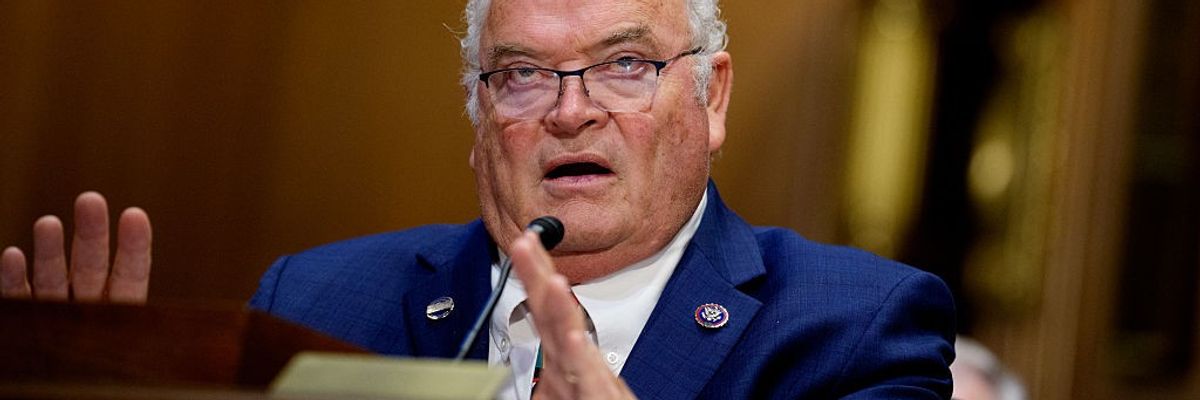
Billy Long, then U.S. President Donald Trump's nominee to be Internal Revenue Service commissioner, spoke during a Senate Finance Committee nomination hearing on May 20, 2025 in Washington, D.C.
(Photo: Andrew Harnik/Getty Images)

Jessica Corbett
Aug 08, 2025
COMMON DREAMS

Less than two months after U.S. Senate Republicans confirmed Billy Long as head of the Internal Revenue Service, the scandal-plagued commissioner confirmed on Friday that he is leaving the IRS to serve as President Donald Trump's ambassador to Iceland.

U.S. Senate Finance Committee Ranking Member Ron Wyden (D-Ore.)—who opposed Long's IRS nomination with the rest of the chamber's Democrats—pledged in a Friday statement that a probe of the outgoing commissioner will continue.

"From the minute Trump announced Billy Long as his IRS pick it was obvious this would end badly, but every Senate Republican voted to confirm his nomination anyway," said Wyden. "He didn't even last two months on the job. Let's not forget that there wasn't a vacancy at the time Trump announced Long's nomination. Danny Werfel, a skilled leader with fans among Democrats and Republicans, had years left on his term."

The senator pointed out that "in just a handful of months, Trump and his crew have already gutted taxpayer service, weaponized IRS data against innocent taxpayers, and set us up for disaster when next year's filing season comes around. This is what Trump does—pick incompetent, unserious people for serious jobs, and sit back as the damage piles up."

"Billy Long left Congress a few years ago and went straight into the tax fraud industry, his only real experience in tax before his nomination," he added. "My investigators have obtained alarming information pertaining to Long's conduct at the IRS that we have begun to investigate, and that process will continue regardless of whether Trump stashes Long away in some foreign embassy."

The ouster was initially reported by The New York Times, which noted that "Treasury Secretary Scott Bessent will serve as acting commissioner until a permanent replacement takes office," according to a senior Trump administration official.

Long then confirmed the development on his personal social media account, saying that "it is a honor to serve my friend President Trump and I am excited to take on my new role as the ambassador to Iceland. I am thrilled to answer his call to service and deeply committed to advancing his bold agenda. Exciting times ahead!"


He later added a joke about Immigration and Customs Enforcement: "I saw where former Superman actor Dean Cain says he's joining ICE so I got all fired up and thought I'd do the same. So I called Donald Trump last night and told him I wanted to join ICE and I guess he thought I said Iceland? Oh well."


A spokesperson for Bessent's department, which includes the IRS, said in a statement: "Treasury thanks Commissioner Long for his commitment to public service and the American people. His zeal and enthusiasm to bring a fresh perspective to the federal government was evident in both the House of Representatives and as part of the Trump administration. A new candidate for commissioner will be announced at the appropriate time."

Long previously represented Missouri in the U.S. House, where Ways and Means Committee Ranking Member Richard Neal (D-Mass.) responded to the IRS commissioner's exit with a statement blasting Trump.

"We don't even need more details on Trump's latest scuttle to know how damaging his presidency has been for the IRS," Neal said. "With nearly a new commissioner each month and weakened customer service from his mass firings, the rampant instability comes at the expense of all who rely on it. One thing is for sure: Secretary Bessent should focus on his own job before collecting more responsibility."

Several critics, including Neal, highlighted that Long was preceded by several IRS leaders this year. As retired Adm. Mike Franken, a former Democratic U.S. Senate candidate from Iowa, put it on social media: "IRS Commissioner Billy Long is removed, the sixth change this year, by the guy who only hires 'the very best people.' The clown show continues."


Long's firing prompted widespread speculation that he was leaving the IRS because he refused to comply with an order from the president. Journalist Josh Marshall wondered, "How bad did the ask have to be for a Trumpy sleazebag like Billy Long to say no?"


Trump is burning through IRS heads at a rate of almost 1 a month. Here's who's held the job, and why they left.

BUSINESS INSIDER
Aug 8, 2025,

President Donald Trump has gone through six IRS leaders so far this year. Getty Images


The IRS is about to have its seventh leader this year.

IRS Commissioner Billy Long is leaving the agency less than two months after his confirmation.

It's a time of significant turnover at the IRS, from top to bottom.


President Donald Trump is over six and a half months into his second term. In that time, he's averaged a new IRS leader roughly every month.

There have been six acting or confirmed commissioners in 2025, counting former Commissioner Danny Werfel, who resigned just as Trump took office, even though his term lasted until 2027.

On Friday, IRS Commissioner Billy Long wrote on X that he was leaving his post less than two months after being confirmed to become the US Ambassador to Iceland. Treasury Secretary Scott Bessent will serve as acting commissioner.

The unprecedented turnover at the top — President Joe Biden had just three IRS commissioners over his four-year term — extends throughout the IRS workforce. More than 25,000 employees have left the agency since Trump took office.


Danny Werfel: Resigned before Trump took office

IRS Commissioner Danny Werfel Kevin Dietsch/Getty Images

Danny Werfel was chosen by Biden to serve as IRS commissioner and took on the role in March 2023. Though his term was set to last until 2027, Werfel announced on January 17, days before Trump's inauguration, that he was resigning.

"While I had always intended to complete my full term as Commissioner, the President-elect has announced his plan to nominate a new IRS Commissioner," Werfel wrote in a letter at the time, adding, "After significant introspection and consultation with others, I've determined the best way to support a successful transition is to depart the IRS on January 20, 2025."

Prior to Werfel's resignation, Trump had said he planned to nominate Long to replace him. Typically, IRS commissioners serve five-year terms and remain in their roles even when the president changes.


Douglas O'Donnell: January 20 to February 28


Douglas O'Donnell (far right), seen here with then-Treasury Secretary Janet Yellen, served as acting IRS commissioner for a little over a month. AP

Douglas O'Donnell, the IRS deputy commissioner, took over as acting IRS commissioner at the start of Trump's term, after Werfel resigned.

A little over a month later, the IRS announced O'Donnell planned to retire after decades with the agency.


Melanie Krause: February 28 to April 16

IRS building Associated Press

Melanie Krause was the IRS's acting commissioner for less than two months. Previously the agency's chief operating officer, she became the deputy commissioner and acting head of the agency in February.

She resigned in April under the administration's deferred resignation program.


Gary Shapley: April 16 to April 18

Gary Shapley (second from right) briefly led the IRS in an acting capacity after rising to fame due to his work on the agency's investigation of Hunter Biden. Getty Images

A longtime IRS investigator, Gary Shapley, became a whistleblower and testified to Congress about what he saw as the agency's mishandling of its investigation into Hunter Biden, then the sitting president's son.

Shapley's testimony was frequently discussed on conservative media, and Republicans celebrated his return to the IRS. Trump took it a step further when he named Shapley acting commissioner on tax day.

The New York Times reported that Elon Musk, then the de facto leader of the White House DOGE office, supported the move, while Treasury Secretary Scott Bessent did not. Still, in a post on X after Shapley stepped down, Bessent said Shapley "remains among my most important senior advisors at the @USTreasury as we work together to rethink and reform the IRS."


Michael Faulkender: April 18 to June 16

Deputy Treasury Secretary Michael Faulkender led the IRS on an acting basis before Long's confirmation. Getty Images

Deputy Treasury Secretary Michael Faulkender stepped in to lead the IRS on an acting basis for just under two months.

Faulkender stepped aside once Long was confirmed. His tenure was most notable for bringing the IRS closer to Bessent, who reportedly did not approve of the Musk-backed Shapley.


Billy Long: June 16 to August 8

Former Congressman Billy Long looks on during his confirmation hearing to become IRS commissioner. Getty Images

Former Congressman Billy Long lasted less than two months atop the IRS.

Long, a Republican who represented Missouri for six terms, was confirmed in June on a party-line 53 to 44 vote. Senate Democrats opposed him due to his lack of tax-related experience. Long previously supported legislation to abolish the IRS.

As commissioner, Long became known for cheerfully emailing IRS employees to tell them to take off work early on Fridays. "With this being Thursday before another FriYay, please enjoy a 70-minute early exit tomorrow," Long wrote Thursday in an email to his staff, per CNN. "That way you'll be well rested for my 70th birthday on Monday."

The New York Times reported that he clashed with the Treasury Secretary, who will now lead the tax agency as Long's acting replacement.

"It is a honor to serve my friend President Trump and I am excited to take on my new role as the ambassador to Iceland. I am thrilled to answer his call to service and deeply committed to advancing his bold agenda," Long wrote Friday on X. "Exciting times ahead!"

Trump announced his intent to nominate Long after the 2024 election, even though there was already a commissioner at the time.