Monday, August 11, 2025


Hiroshima Lives On – in Gaza


 August 11, 2025

Photograph Source: WAFA (Q2915969) – CC BY-SA 3.0

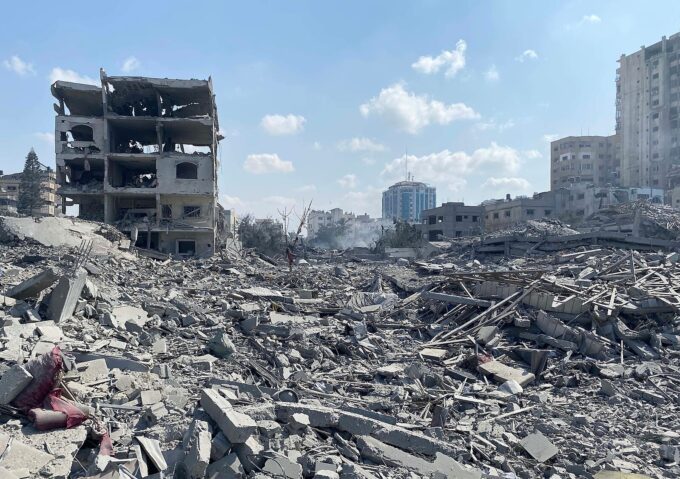
This year marks another solemn anniversary of the atomic bombings—80 years since the U.S. dropped nuclear bombs on Hiroshima and Nagasaki. Over 120 national representatives gathered in Hiroshima this year to solemnly declare their pro-peace positions. Among them will be delegates from Israel and, for the first time, Palestine. The irony could not be starker: in just the past 20 months, Israel has dropped six times more explosives on Gaza than the U.S. dropped on Japan in 1945.

But unlike the preserved black-and-white images of Hiroshima, the scenes from Gaza are not historical—they are part of our daily reality. And if we dare to compare, the number of victims is not so different: those in 1945 mostly died instantly (along with those who endured agony before their last breath); those in Gaza die slowly—by bombs, bullets, starvation, or while trying to get some food.

The official American justification for the atomic bombings has never held up to serious scrutiny. We are told the bombs were necessary to force Japan’s surrender and end World War II. But even then—and certainly now—it is clear that Hiroshima and Nagasaki were test sites, chosen to showcase U.S. supremacy to the world. Richard Falk puts itrightly: “This use of atomic bombs against defenceless, densely populated cities remains the greatest single act of state terror in human history, and had it been committed by the losers in World War II surely the perpetrators would have been held criminally accountable and the weaponry forever prohibited.” The message was unmistakable: we are the masters of life and death. Other powers soon joined the nuclear club. The nuclear arms spiral never stopped.

If Hiroshima and Nagasaki were sacrificed in the name of ending one world war, what, then, are the people of Gaza—and now the West Bank—being destroyed for? The beginning of the next? Actually, some people believe we are already in a global war nightmare, but we are in denial.

A schoolboy in Hiroshima—great-grandson of a survivor—guides foreign visitors through the city’s tragic history. On camera, he sayssomething deeply moving: The most dangerous thing is to forget what happened long ago. What he doesn’t say—but what many of us adults whisper—is this: the danger is here. The memories of Hiroshima and Nagasaki are fading and they have become ceremonial symbols in front of which today’s war criminals—from Washington to Tel Aviv—shed crocodile tears.

Have we forgotten the horrors of nuclear weapons? Recent events suggest yes. Two global figures—Donald Trump and Dmitry Medvedev—flex their nuclear machismo on social media, leading to submarine deployments and heightened tensions near Russia.

But even more alarming are two events that could take us from theatrics to tragedy: Ukraine’s “Spiderweb” operation, targeting Russian nuclear facilities, and U.S. and Israeli attacks on Iran’s civilian nuclear infrastructure. The first was a provocation—dangerous, reckless, and left unanswered only thanks to restraint in Moscow. The second confirms a disturbing logic: if a country wants to avoid being bombed, it must possess a nuclear deterrent. This is precisely the reasoning embraced by North Korea—and increasingly, Iran. Some experts already describe Iran as an undeclared nuclear state. Its strategic priority now seems clear: build a bomb. But indeed the U.S. attack on Iran has made the most compelling case for nuclear proliferation.

Just months before Hiroshima’s global commemoration, the Doomsday Clock ticks closer to midnight. And yet—what is the point of commemorations, speeches, and rituals when genocide unfolds in real time?

The horror of 2025 is not nuclear, but no less apocalyptic. Without dropping a single atomic bomb, a people can be tortured, starved, erased—with full impunity. In Gaza, the killing is not indiscriminate; it is deliberate, systemic, and unapologetic. In such a world, Palestine does not need just sympathy. It demands outrage, including immediate trade/economic embargo, sanctions and intervention.

Let’s remember a precedent the West proudly cites: In 1999, NATO, led by the U.S., launched a military intervention against the Federal Republic of Yugoslavia—ostensibly to protect civilians in Kosovo. The action violated the UN Charter, yet was later reframed as a moral necessity. Chomsky coined the concept of new military humanism. Under that logic, NATO helped draft a new constitution and lay the groundwork for Kosovo’s statehood.

From this emerged the UN-supported doctrine of Responsibility to Protect (R2P)—a vision of global order where sovereignty could be overridden to stop atrocities. It was the West’s post-Westphalian blueprint for humanitarian intervention.

So where is R2P now? As a professor, I could list countless books and papers lauding this doctrine. Yet today, not a single Western power dares to invoke it for Gaza.
Quite the opposite: you can kill civilians, destroy cities, and pursue a “final solution” with conventional weapons—and the world looks away. Governments remain silent, although I suspect most ordinary people (outside of Israel) do not support this slaughter.

Between Hiroshima’s ceremonies and the upcoming UN General Assembly, there is renewed talk of recognizing Palestine as an independent state. For a moment, it seems conscience stirs in the West, unable to stomach the daily horrors resembling Auschwitz or Hiroshima. But even this appears to be political theatre. By September, the bombing will likely continue—with no sanctions, no accountability, no end.

And let’s not forget: over 170 countries already recognize Palestine. So what? If they cannot enforce sanctions or intervene diplomatically—or even humanely—what good is recognition?

In truth, the global order cares more about trade, tech, and territorial alliances than it does about people being systematically erased. Even among Arab states, Palestinians are treated as a burden—an inconvenience to regional deals and diplomatic normalization.

The dead of Hiroshima and Nagasaki—and the few survivors who still bear witness—can never rest while Gaza looks like it has suffered six Hiroshimas, and nearly a million people face starvation beyond return. What is a Palestinian state worth if there are no Palestinians left?

And what does it say about the Israeli state and military—armed, protected, and celebrated in the West—that it can bomb, starve, and invade neighboring countries without consequence?

As the anniversaries of August 6 and 9 pass, the global chorus will echo once more: “Never again.”

But the truth is sobering: The world has learned nothing from the most horrifying crime against humanity in modern history.

Hiroshima horrors still live in the cries from Gaza.

This article was produced by Globetrotter.

Australia to recognise State of Palestine in September, PM Anthony Albanese says


Copyright AAP IMAGE

By Jerry Fisayo-Bambi with AP
Published on 11/08/2025 - 


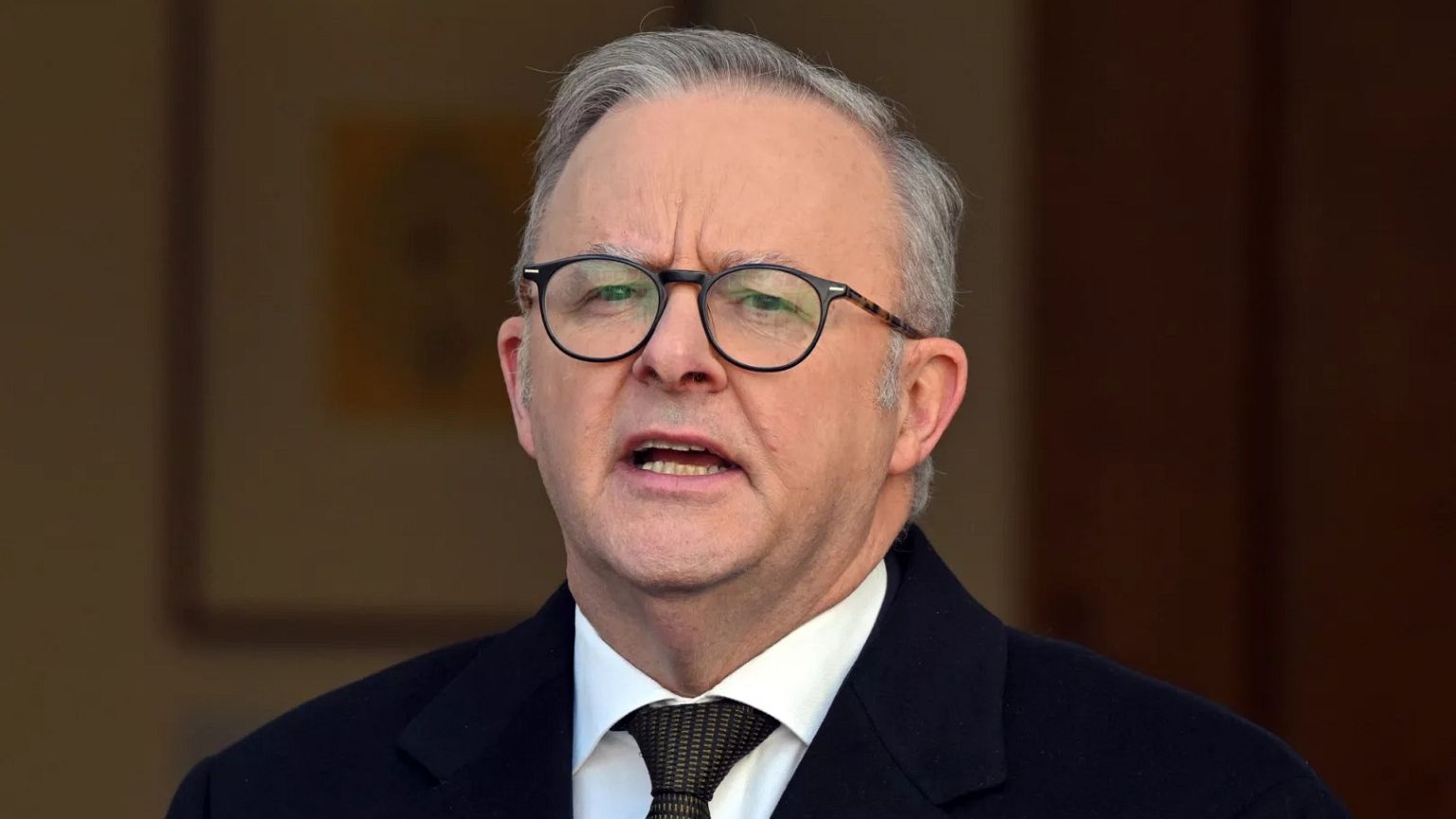
Speaking to reporters after a Cabinet meeting on Monday, Albanese said that Australia’s decision to recognise a Palestinian state will be formalised at the United Nations General Assembly in September.

Australia will recognise a Palestinian state, Prime Minister Anthony Albanese said Monday, joining the leaders of France, Britain, and Canada in signa they would do so.

Speaking to reporters after a Cabinet meeting on Monday, Albanese said that Australia’s decision to recognise a Palestinian state will be formalised at the United Nations General Assembly in September.

The acknowledgement was “predicated on commitments Australia has received from the Palestinian Authority,” Albanese said.

Those commitments included no role for Hamas in a Palestinian government, demilitarisation of Gaza, and the holding of elections, he said.

“A two-state solution is humanity’s best hope to break the cycle of violence in the Middle East and to bring an end to the conflict, suffering, and starvation in Gaza,” Albanese said.

Situation in Gaza beyond words, Albanese says

“The situation in Gaza has gone beyond the world’s worst fears,” he said. “The Israeli government continues to defy international law and deny sufficient aid, food and water to desperate people, including children.”

Albanese's announcement comes after weeks of pressure from his Cabinet and many Australians to recognise a Palestinian state, as well as mounting criticism from his government's officials over the suffering in Gaza, something he called a "humanitarian catastrophe."

On Sunday, ahead of Albanese’s announcement, Israeli leader Benjamin Netanyahu criticised Australia and other European countries that have moved to recognise a Palestinian state.

“To have European countries and Australia march into that rabbit hole ... this canard is disappointing and I think it’s actually shameful,” the Israeli leader said.

Australia’s government has also criticised plans announced in recent days by Netanyahu for a sweeping new military offensive in Gaza.

Albanese reiterated his government's demands that Hamas return Israeli hostages held since 7 October 2023, citing Australia's designation of Hamas as a terrorist organisation on Monday.

Palestinian statehood has already been acknowledged by about 150 of the 193 UN members, the majority of which did so decades ago.

The United States and other Western nations have refrained, arguing that a final deal settling the long-running Middle East conflict should include Palestinian statehood.
Palestine solidarity - Britain

Palestine Action ban is an attack on fundamental freedoms

Saturday 9 August 2025, by Collective


A letter signed by 52 academics and writers, including Tariq Ali, Judith Butler, Angela Davis, Naomi Klein and Avi Shlaim.


As scholars dedicated to questions of justice and ethics, we believe that Yvette Cooper’s recent proscription of Palestine Action represents an attack both on the entire pro-Palestine movement and on fundamental freedoms of expression, association, assembly and protest. We deplore the repressive consequences that this ban has already had, and are especially concerned about the likely impact of Cooper’s ban on universities across the UK and beyond.

We therefore applaud the growing campaign of collective defiance that aims to overturn the ban. We commend the courageous stand taken by Defend Our Juries, and the exemplary recent motion adopted by Derry City and Strabane district council that “supports all those who have protested the ban on Palestine Action and calls for charges against them to be immediately dropped”.

In alliance with thousands of trade unionists, teachers and students throughout the UK and abroad, we affirm our own solidarity with all those who are campaigning against the proscription. We fully share the aim of ending the flow of weapons from Britain to Israel and the belief that all participants in the pro-Palestine movement should be free to make our own decisions about how best to achieve that goal. We remind the UK government that its own most urgent priorities should already be determined by its binding obligation “to prevent and to punish” genocide.

As the organisers of massive national demonstrations face prosecution, as hundreds of people again risk arrest by joining street protests on 9 August, and as students and teachers prepare for the start of another turbulent academic year, we express our full solidarity with those mobilising on their campuses or in their workplaces and communities to put an immediate stop to the escalating genocide and to end all UK complicity with Israel’s crimes.

Signatories
Gilbert Achcar Emeritus professor of development studies and international relations, Soas University of London
Anne Alexander Senior research associate, Cambridge Digital Humanities, University of Cambridge
Tariq Ali Writer and historian
Sandra Babcock Clinical professor of law, Cornell Law School
Étienne Balibar Professor emeritus of philosophy, University of Paris X, Nanterre
Chetan Bhatt Anthony Giddens professor of social theory, London School of Economics
Wendy Brown UPS Foundation chair, school of social science, Institute for Advanced Study, Princeton
Susan Buck-Morss Distinguished professor, CUNY Graduate Centre
Judith Butler Distinguished professor in the graduate school, department of comparative literature, University of California, Berkeley
Alex Callinicos Emeritus professor of European studies, King’s College London
John Chalcraft Professor of Middle East history and politics, London School of Economics
Emilios Christodoulidis Chair of jurisprudence, University of Glasgow
Rebecca Comay Professor of philosophy and comparative literature, University of Toronto
Angela Davis Distinguished professor emerita, University of California, Santa Cruz
Alex de Waal Executive director, World Peace Foundation
Jodi Dean Professor of politics, Hobart and William Smith Colleges, Geneva, New York
Elsa Dorlin Professor of contemporary political philosophy, Université Toulouse Jean Jaurès
Jennifer Doyle Professor of English, University of California, Riverside
Haidar Eid Associate professor of postcolonial literature, Al-Aqsa University, Gaza, Palestine
Roberto Esposito Professor of philosophy, Scuola Normale Superiore, Pisa
John Bellamy Foster Professor emeritus, sociology, University of Oregon
Verónica Gago Professor of social sciences, University of Buenos Aires
Neve Gordon Professor of international law, Queen Mary University of London
Greg Grandin Peter V and C Vann Woodward professor of history, Yale University
Penny Green Professor of law and globalisation, Queen Mary University of London
Peter Hallward Professor of modern European philosophy, Centre for Research in Modern European Philosophy, Kingston University
Michael Hardt Professor of literature, Duke University
Robin DG Kelley Professor of history, University of California, Los Angeles
Rashid Khalidi Edward Said professor emeritus of modern Arab studies, Columbia University
Naomi Klein Associate professor of climate justice, University of British Columbia
Elena Loizidou Professor in law and political theory, Birkbeck, University of London
Frédéric Lordon Research director, Centre National de la Recherche Scientifique, France
Tracy McNulty Professor of comparative literature and Romance studies, Cornell University
Angela McRobbie Professor emeritus, Goldsmiths, University of London
Sandro Mezzadra Professor of political theory, University of Bologna
China Miéville Salvage
Abdaljawad Omar Assistant professor of philosophy and cultural studies, Birzeit University, Palestine
Ilan Pappé Professor of history and Middle Eastern studies, and director of the European Centre for Palestine Studies, University of Exeter
Paul Patton Emeritus professor of philosophy, University of New South Wales
Bruce Robbins Old Dominion Foundation professor in the humanities, Columbia University
William I Robinson Distinguished professor of sociology, University of California, Santa Barbara
Jacqueline Rose Professor of humanities and co-director of the Birkbeck Institute for the Humanities, University of London
Lynne Segal Professor emerita of psychosocial studies, Birkbeck, University of London
Avi Shlaim Emeritus professor of international relations, St Antony’s College, Oxford
Nikhil Pal Singh Chair, department of social and cultural analysis, New York University
Elettra Stimilli Professor of philosophy, Sapienza Università di Roma
Rei Terada Professor emerita of comparative literature, University of California, Irvine
Enzo Traverso Professor in the humanities, Cornell University
Françoise Vergès Senior research fellow, Sarah Parker Remond Centre for the Study of Racism and Racialisation, University College London
Mara Viveros Vigoya Professor in the faculty of human sciences at Universidad Nacional de Colombia, and Simón Bolívar professor, University of Cambridge, 2024-25
Eyal Weizman Founding director of Forensic Architecture and professor of spatial and visual cultures, Goldsmiths, University of London
Jessica Whyte Scientia associate professor of philosophy, University of New South Wales

6 August 2025

Source: The Guardian.

P.S.

If you like this article or have found it useful, please consider donating towards the work of International Viewpoint. Simply follow this link: Donate then enter an amount of your choice. One-off donations are very welcome. But regular donations by standing order are also vital to our continuing functioning. See the last paragraph of this article for our bank account details and take out a standing order. Thanks.

Attached documentspalestine-action-ban-is-an-attack-on-fundamental-freedoms_a9119.pdf (PDF - 910 KiB)
Extraction PDF [->article9119]


Collective


International Viewpoint is published under the responsibility of the Bureau of the Fourth International. Signed articles do not necessarily reflect editorial policy. Articles can be reprinted with acknowledgement, and a live link if possible.

Should the U.S. Recognize North Korea as a Nuclear Weapons Power?

DESPITE IT NOT HAVING NUKES


by  | Aug 11, 2025 | 

The issue of North Korea’s nuclear program has long been the principal stumbling block to the normalization of U.S. relations with that country.  True, Washington has endeavored to make the communist regime a pariah in the international system for a variety of reasons since the Korean War.  Beginning with George H.W. Bush’s administration in the early 1990s, however, U.S. leaders have become obsessed with shutting down Pyongyang’s nuclear program.  Washington has insisted that the so-called Democratic People’s Republic of Korea (DPRK) abandon any ambitions to abandon ambitions to be in the exclusive global nuclear weapons club of the global nuclear weapons club.

Washington should desist. The stakes – avoiding nuclear war – are much too high.

Washington’s continuing refusal to contemplate accepting a nuclear North Korea torpedoed promising signs of an improvement in bilateral relations during Donald Trump’s first term.  Trump conducted two cordial summits with DPRK leader Kim Jong-un, one in June 2018 and the other in June 2019.  The latter (brief, mostly ceremonial) meeting included Trump’s stroll across the Demilitarized Zone (DMZ) between North and South Korea.   Promising signs of a thaw in relations between Washington and Pyongyang faded, though, during the more substantive summit in Hanoi in late February 2019, when hawks in both Congress and Trump’s own administration (most notably ultra-hawkish national security advisor John Bolton) convinced the president not to compromise on the nuclear issue or Pyongyang’s insistence on the immediate lifting of sanctions.

In addition to sabotaging potentially constructive diplomatic initiatives, reckless hawks periodically even have flirted with suggestions that the United States eliminate DPRK nuclear sites with bombing and missile strikes.  In 1994, Bill Clinton’s administration adopted substantive plans to execute such a mission.  Former President Jimmy Carter fortunately helped defuse the impending crisis and prevailed on Clinton to accept his proposal for multilateral negotiations to steer Pyongyang toward the goal of a purely peaceful nuclear program under rigorous international restrictions.  Carter’s efforts likely prevented a horrific war, but they also produced years of fruitless negotiations, since it became obvious that the DPRK had no intention of accepting such restraints.

The U.S. demand that Pyongyang return to nuclear virginity has become increasingly detached from reality as the DPRK has made steady progress on building a small arsenal of nuclear weapons.  Experts at the U.S. Arms Control Association estimate that North Korea has assembled approximately 50 such weapons.  The DPRK also is building an increasingly capable ballistic missile system to deliver such weapons.  Over the past several years, there is growing evidence that Pyongyang already has tested missiles that have sufficient range to reach the continental United States.

It is long past time for Washington to abandon its utopian agenda and accept the reality, however unpleasant, that North Korea is a nuclear weapons power.  Such a shift in policy also would mean moving to normalize the full range of diplomatic and economic relations with Pyongyang and initiating an ongoing security dialogue to minimize the risk of dangerous incidents between the two countries.  It is irresponsibly dangerous to maintain Washington’s current approach of trying to isolate Pyongyang and force the regime to comply with demands that North Korea be a non-nuclear member of the international system.

DPRK leaders no longer even bother pretending that they are willing to negotiate about rescinding or limiting their country’s nuclear program.  In April, Kim Yo-jong, North Korea dictator Kim Jong-un’s sister and powerful adviser, warned: “If the U.S. and its vassal forces {Washington’s East Asian allies] continue to insist on anachronistic ‘denuclearization,’ it will only give unlimited justness and justification to the advance of the DPRK aspiring after the building of the strongest nuclear force for self-defense.”

In late July, she softened her comments a little, contending that her brother’s personal relationship with President Trump was “not bad,” but she also stated:  “Any effort to leverage personal relations to deny North Korea status as a nuclear power ‘will be thoroughly rejected.’”  She added: “It is worth taking into account the fact that the year 2025 is neither 2018 nor 2019.”  Specifically, the North’s “capabilities and geopolitical environment have radically changed.”   She was especially referring to Pyongyang’s growing military ties to Russia and the prospect of Moscow’s greater support for the DPRK’s nuclear aspirations in exchange for the military aid that Pyongyang already is giving to Russia in its war against Ukraine.

Trump apparently tried to improve the atmosphere slightly on July 31 when he stated that he remained open to meeting with Kim Jong-un again.  Such a statement at least should ease fears that the president might try to apply his “Iran model” to North Korea and bomb the DPRK’s nuclear installations.  Such a move would be extraordinarily perilous since, unlike Iran, North Korea already has an operational nuclear arsenal.  However, Trump vitiated most of the beneficial potential of his conciliatory diplomatic gesture when he emphasized that the purpose of  a new summit meeting would be to continue “the dialogue on denuclearization.”

U.S. officials must adjust their policies on nuclear proliferation to make them correspond to current and looming global realities.  Israel is and has been for many years an undeclared nuclear-weapons state.  That status is hardly a secret.  North Korea has now also barged into the ranks of such powers.  It does no good to deny such obvious realities.  Indeed, it is worse than useless to ignore the larger implications of Pyongyang’s new capabilities in the nuclear arena.

Policymakers in Washington have some urgent issues that must be addressed, and reducing the danger of a disastrous military collision with the DPRK should be at the top of the list.  A more sustainable policy will require some big changes on the part of the United States.  The first step should be to sign a peace treaty with Pyongyang to replace the 1953 armistice that halted the fighting during the Korean War.  After 62 years of a twilight “frozen conflict,” it is time for both sides to move on.

A full peace treaty will require the establishment of formal diplomatic relations between the United States and the DPRK.  If Kim’s regime is wise, it will also use that occasion to face reality and officially establish relations with the government in Seoul.  Even if Pyongyang foolishly declines to do so, Washington still must move to develop a steady, more constructive relationship with its longtime adversary.  Lifting economic sanctions as soon as possible would be another essential step.  Establishing a communications hotline between the military commands in the two countries also is imperative to prevent a tragic accident or miscalculation that could lead to a nuclear clash.

Even under the best of circumstances, establishing decent relations between the United States and North Korea’s bizarre, horridly repressive government will not be easy.  However, the alternative of stubbornly persisting in Washington’s current, utterly impractical policy is a blueprint for catastrophe.


Dr. Ted Galen Carpenter is a contributing editor to 19FortyFive and a senior fellow at the Randolph Bourne Institute and the Libertarian Institute.  He also served in various senior policy positions during a 37-year career at the Cato Institute.  Dr. Carpenter is the author of 13 books and more than 1,300 articles on defense, foreign policy and civil liberties issues.  His latest book is Unreliable Watchdog: The News Media and U.S. Foreign Policy (2022).


Water on Mars, Blood on Earth


Mars Missions vs Earth’s Thirst: NASA’s Perseverance rover cost $2.7 billion. The global space economy exceeds $500 billion annually. Meanwhile, the UN estimates $11 billion per year could provide clean water and sanitation for everyone on Earth. In Somalia, over 8 million people face water scarcity, while Cape Town nearly ran dry in 2018 due to mismanagement and climate stress.

UN Peacekeeping & Global Paralysis: The UN Peacekeeping Force has no standing army and relies on member states. It often lacks the mandate to intervene in active genocide or occupation. In Gaza, over 30,000 Palestinians have been killed since October 2023—many of them children. The UN has condemned the violence but remains politically paralyzed.

“Civilized Apes” & Technological Brutality: Tomahawk missiles are “smart,” but their targets are often not. Civilian casualties in drone strikes remain high—up to 90% in some operations, according to leaked Pentagon data. The U.S. dropped 7,423 bombs in Afghanistan in 2019 alone, despite declaring peace talks.

The Myth of Chosenness: The idea of “God’s chosen people” has been used to justify conquest, apartheid, and exclusion. Yet many theologians argue that chosenness should mean greater responsibility—not superiority. Rabbi Abraham Joshua Heschel, a Holocaust survivor, said:

“God is not in the machinery of war, but in the cry of the oppressed.”

What is the United Nations Peacekeeping Force for? If they—and the so-called superpowers—stand by and look away while Palestinians—women and children—are slaughtered by the Israeli Jews?

What kind of deity chooses one people to dominate another? What kind of deity watches in silence while children are bombed in their sleep?

God Mother of “us” all—are you watching?

I have seen this part of the world. And I have seen the other side. And I have come to realize: There is neither truth nor justice in this world. Only greed. And more greed.

Sammy Attoh is a Human Rights Coordinator, poet, and public writer. A member of The Riverside Church in New York City and The New York State Chaplains Group, he advocates for spiritual renewal and systemic justice. Originally from Ghana, his work draws from ancestral wisdom to explore the sacred ties between people, planet, and posterity. Read other articles by Sammy.