Monday, August 11, 2025

INDIAN MEDIA PROPAGANDA  
Nuke blast: Pakistan’s army chief vows to wipe out ‘half the world’ in a war with India

Field Marshal Asim Munir conjures vision of global Armageddon as he taunts India at black-tie Florida dinner. Also issues separate, combative warning over Indus Waters Treaty, throws taunts about Four-Day War

Paran Balakrishnan 
Published 11.08.25,
TELEGRAPH, INDIA


Chief of Army Staff of Pakistan Asim Munir visits the Tilla Field Firing Ranges to witness the Exercise Hammer Strike, a high-intensity fi
eld training exercise conducted by the Pakistan Army's Mangla Strike Corps, in Mangla
Reuters

Pakistan Army Chief Asim Munir issued a dire warning that his country would be ready to unleash a nuclear war and destroy half the world if it ever faced an existential threat from India.

Extraordinarily, the field marshal made this threat at a formal black-tie dinner in Tampa, Florida. “We are a nuclear nation. If we think we are going down, we’ll take half the world down with us,” he declared, conjuring a vision of global Armageddon.


Munir, who has already made several outspoken and belligerent speeches in his short tenure, has consistently directed his rhetoric at India. On Saturday, he spoke at a dinner hosted by Pakistan’s consul general in Tampa, a Pakistani-American. The Print pieced together his remarks after speaking to several guests at the dinner, where mobile phones were not allowed.

The field marshal also issued a separate, combative warning over the Indus Waters Treaty, vowing to destroy any dam India might build on the Indus River. “We will wait for India to build a dam, and when it does so, phir 10 missile sey faarigh kar dengey [we will destroy it with 10 missiles],” he said.

He argued that the treaty was vital for Pakistan, and that its abrogation could leave 250 million Pakistanis facing starvation, The Print reported.

“The Indus is not the Indians’ family property. We have no shortage of missiles. Praise be to god,” Munir added, leaving little doubt about his intentions.


In Tampa, he also taunted India over the recent Four-Day War, which ended in a ceasefire. Munir calls the conflict Bunyaanum Marsoos — a phrase from the Quran likening those who fight for god to a solid wall. “The Indians should accept their losses,” he said, adding that Pakistan would reveal its own losses if India did the same. Quranic references, often woven into his speeches, are a signature of Munir’s style.
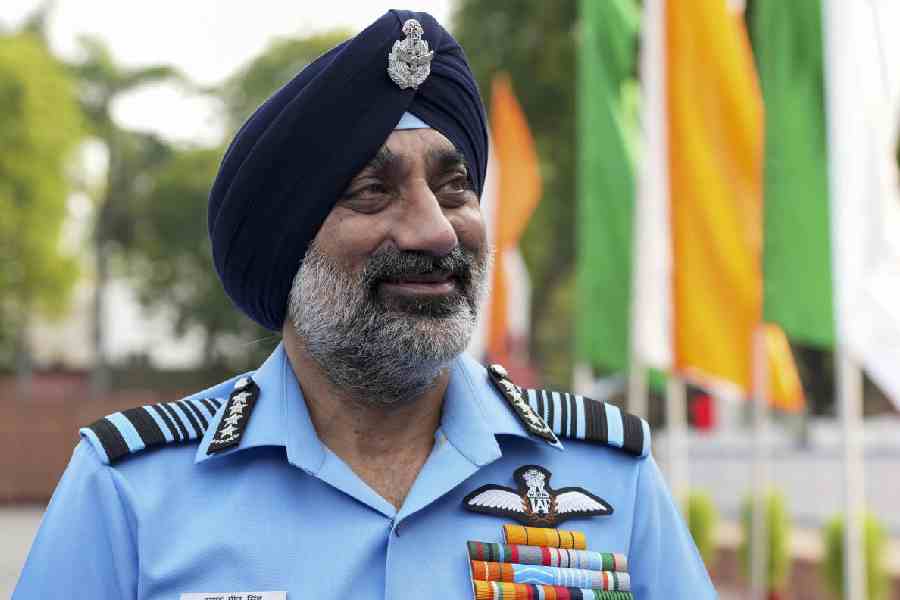

Munir was in the US for the farewell party of Centcom chief Gen. Michael Kurilla; South Asia falls within the US Army’s Centcom area of responsibility. After years of Washington accusing Pakistan of being a terrorist breeding ground, at a congressional hearing, Kurilla described Pakistan as “a phenomenal partner in the counter-terrorism world.


The remark that infuriated India, coming just weeks after the Four-Day War in May. Munir insisted the US should treat both India and Pakistan as strategic partners.

In June, Munir became the first-ever Pakistan Army chief to have lunch with US President Donald Trump at the White House. Pakistan’s Prime Minister, Shehbaz Sharif, was notably absent from the lunch.

Munir’s hard line is not new. but these are his most hawkish remarks yet.

In April, during a fiery speech in Islamabad just before the outbreak of hostilities between India and Pakistan, he declared that Kashmir was Pakistan’s “jugular vein” and insisted that “Hindu” India and Muslim Pakistan were fundamentally different nations.

“Our religion is different, our customs are different, our traditions are different, our thoughts are different, our ambitions are different. That’s where the foundation of the two-nation theory was laid,” he said. “Our forefathers gave immense sacrifices for the creation of Pakistan. We know how to defend it.”

Days later, at an army passing-out parade in Abbottabad, he returned to the theme, saying the two-nation theory was based on the “fundamental belief that Muslims and Hindus are two separate nations… distinct in all aspects of life — religion, customs, traditions, thinking, and aspirations.”

The Print reported that about 120 people, mostly Pakistani-Americans, attended the Tampa dinner, where Western, rather than subcontinental, fare was served. The dishes were all marked as being “halal,” according to The Print.

There is still speculation over whether the Trump administration had any inkling that Munir would launch such a blistering verbal assault on India during his US visit.


Pakistan Army chief Asim Munir says he is waiting for India to build a dam on Indus River to blow it up

Asim Munir devoted a major part of his speech to an anti-India tirade, and threatened that Pakistan would “take half the world down with us” if it ever collapsed

August 11, 2025
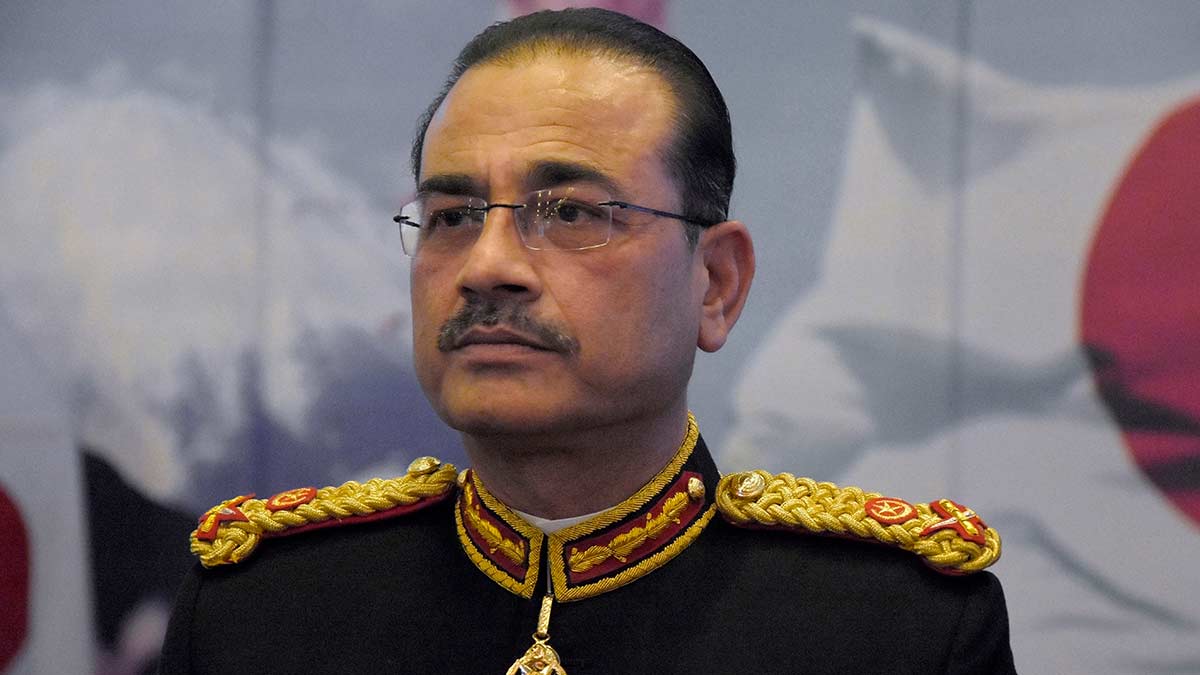
War over peace: General Asim Munir | AP

Pakistan Army chief Asim Munir has issued another reckless statement in the US, wherein he threatened to blow up any dam India builds in the Indus River. Munir’s statements come soon after the Indian Air Force chief said India downed six Pakistani jets during the Operation Sindhoor, much to the embarrassment of the Pakistani Air Force.

Munir, on his second visit to the US, said to a crowd of Pakistani expatriates: “We will wait for India to build a dam, and when they do so, we will destroy it,” he told members of the Pakistani-American community in Tampa, Florida. “The Indus River is not the Indians’ family property. We have no shortage of resources to undo the Indian designs to stop the river.”
He was referring to India’s decision to put the Indus Waters Treaty, an agreement brokered by the World Bank, in the Indus River and its tributaries, after the Pahalgam attack. Despite Pakistan’s constant protests, India had refused to budge from its decision to suspend the treaty.

Munir also made another startling comment, stating Pakistan was a nuclear nation and if it went down, it would “take half the world down with us." He also went on to devote a substantial part of his speech to an anti-India tirade. "The Indians should accept their losses...Sportsman spirit is a virtue," said Asim Munir, who didn’t make any mention about Pakistani losses, including the attack on Rawalpindi’s Nur Khan air base.

However, Munir also inadvertently admitted his country’s current situation, calling it a dump truck. "India is shining, a Mercedes coming on a highway like a Ferrari, but we are a dump truck full of gravel. If the truck hits the car, who is going to be the loser?" he said, much to the amusement of the cyber world.

He then went on to claim that overseas Pakistanis were not brain drain but brain gain, hailing their “commitment to the homeland”. Ironically, statistics reveal that more Pakistanis are looking to flee the country, driven by economic hardship and a lack of opportunities. Data published by the International Organisation for Migration last November claimed that 40 per cent of the Pakistanis wished to flee their country.

But Asim Munir, in his speech, urged Pakistanis to “remain confident in Pakistan’s bright future” and actively attract investment. He claimed social media, while powerful, was often exploited by anti-state actors to spread “manufactured chaos”.


Source: The Wire India

In 1974, at the end of a three-hour long talk given by me to a civil society gathering in Madison, Wisconsin, I was asked a truly profound, if troubling, question:

“Sir, keeping in mind the incredible diversities of cultural identity and expression in India straddling myriads of languages, castes, religious faiths, colours of skin, economic classes, gender divides, how might I find a true Indian were I to visit there?”

Unanswerable as the question was, I came up with a formulation that may, with apologies, indeed still be the only valid one.

I heard myself say: “whoever in India, regardless of all the diversity, says two things to you, know that you have found your true Indian:

  • one, whatever be the issue at hand, ‘I know, I know’;
  • and two, whatever be the merits of a case in hand, ‘not my fault’.

That was then.

It is to the credit of the governance over the last decade or more that we now can draw up a detailed catechism that must define “a true Indian.”

So, here’s a bare sketch, that needs constantly to be pressed home and consolidated by custodians of truth if citizens are to be prevented from asserting fake diversities and undesirable pluralities:

Any “true Indian” must hold these articles of faith as supreme, overriding all other inauthentic catechisms, including the Constitution of India:

—that Prajapati created Bharat as Vishwaguru;

—that Bharat’s unique and providential birth was testified to by golden birds who crowded the branches of trees, by milk and honey that copiously ran down her rivers and cataracts;

—that by the epical evidence Bharat had knowledge of flying aircraft, of plastic surgery, of distant, digital viewing et al long millennia before western nations had their birth;

—that Sanskrit is the mother of all languages, and Arabic and Latin liturgies only bowdlerised corruptions of the same;

—that being Hindu does not mean being religious, but being the only human species held in reverence by the gods;

—that the Partition of India was a Gandhian conspiracy, abetted by Nehru;

—that Shyama Prasad Mukerje, not Nehru and Sheikh Abdullah, was responsible for the accession of Kashmir to India;

—that Nehru was actually Muslim;

—that all battles before Operation Sindoor, i.e. Kashmir 1947-8, 1965, 1999, Goa 1962, East Pakistan 1971 etc- were not won but actually lost by India, and because of Nehru’s indifference to the army;

—that no cruelties or internecine betrayals were ever committed by home-grown Kings and Princes, but only by the Sultans and the Mughals;

—that women committed Sati not by social coercion driven by patriarchal lust for property but because a divine fire within called them to sanctify their marriages to the profane world;

—that the making of the secular Constitution was a deep-rooted anti-Sanatan, pro-Muslim conspiracy wrought upon a civilizational and ahistorical land by slaves of the wicked West;

—that what matters in good governance is not the credibility of institutions, the provable soundness of official data where it does exist, the accountability of leaders to “we the people” and to a non-discriminatory rule of law, but the shasvat (truthful by divine sanction) word of the supremo whose birth has been non-biological;

—that free expression granted by the secular constitution must at all times remain subservient to the needs of government;

–that government equals nation;

—that the government, if led by Sanatan, must remain above and beyond constitutional or any other form of citizen-driven questioning;

—that such questioning must be deemed incontestable proof of treasonous proclivities funded by the likes of George Soros etc

—that investigating agencies are meant primarily to collar those who oppose the government;

—that in fact it is mere propaganda that the 60% electorate who are represented by the political opposition are genuine Indians;

—that this percentage is in fact made up of Bangladeshis, Rohingyas, and sundry other species of Mussalmans, although there may be no proof of this;

—that “a true Indian” must at all times believe that the entire world sings praises of Sanatan, that no country supports Pakistan, that all encounters are always genuine;

—that the Media has been for long decades misled by the pretence that the constitution requires it to watch over executive excess when in fact the Media in a Sanatan nation can only be true if it never tires of packing facts and events in Sanatan capsules;

—that the supreme leader of the nation has no call to interact with the Media, or take queries form parliamentarians, or to attend parliament;

—that the supreme leader is supreme because it is his call only to lecture the nation on any subject under the sun in a one-sided social contract, and to be broadcast by all channels, or else;

—that no “true Indian” may believe that the citizens’ right to peaceful assembly and collective protest is absolute; unlike the plethora of yatras taken out by “true Sanatan Bharatis.”

And so forth.

It will be up to the cyber cell of the powers-that-be to formulate the aforesaid catechism into a capsule that can be readily administered to citizens – after due verification of their credentials, of course.

Badri Raina taught at Delhi University.

This piece was first published on The India Cable – a premium newsletter from The Wire & Galileo Ideas – and has been updated and republished hereEmail

avatar

Badri Raina is a well-known commentator on politics, culture and society. His columns on the Znet have a global following. Raina taught English literature at the University of Delhi for over four decades and is the author of the much acclaimed Dickens and the Dialectic of Growth. He has several collections of poems and translations. His writings have appeared in nearly all major English dailies and journals in India.


LA REVUE GAUCHE - Left Comment: Hinduism Is Fascism


Source: Jacobin

If there’s one thing Democratic and Republican politicians can agree on, it’s that childcare is the workforce behind the workforce. “Our child care workers are the workforce behind the workforce, risking their health and safety on the front lines to ensure that parents can go to work,” then House Speaker Nancy Pelosi said in 2020. Republican representative Ashley Hinson echoed Pelosi in 2024, asserting that childcare staff “are the workforce behind the workforce, and I don’t want to see parents having to make that choice between working or staying home because of the availability” of slots.

Yes, childcare helps the economy hum. But childcare does so much more than just keep parents participating in the labor force. It is an essential piece of social infrastructure. As social cohesion declines, so too does the American quality of life — and this trend hits parents hard, with two-thirds of parents reporting feeling socially disconnected. Childcare centers are one of the few supports available to connect parents of young children to each other and their broader communities, easing the burden of isolation. The “workforce behind the workforce” line misses that richness and sets the childcare system on the path to corporatization.

According to former US surgeon general Vivek Murthy, the country is going through an epidemic of loneliness, and parents in particular are struggling. Their “disproportionately high levels of loneliness,” Murthy has said, “compound the day-to-day challenges they face.” When people become isolated and disconnected, community bonds fray and it becomes much harder to forge the solidaristic movements needed to improve conditions for all.

Childcare programs stand out as a potential beacon amid this dark forecast. Sociologist Mario Luis Small studied childcare centers in New York City and found that they “tend to be a remarkably effective broker for the mothers whose children they service. They broker both social and organizational ties, and their brokerage is associated with greater material and mental well-being.” In his analysis, Small found that among mothers who utilized centers, “about 60% made at least one friend, and more than 40% made three or more friends in centers.”

Childcare educators frequently function as a source of stability that keeps families from spiraling into crisis. They can offer emotional attunement and practical help, like connecting parents to food programs, keeping children’s routines steady during family upheaval, or stepping in with extra guidance when a child struggles emotionally or academically. In the childcare documentary Make a Circle, preschool educator Dan recalls how important his childcare providers were as he grew up with a single mother and struggled with learning disabilities. “My mom was both my parents, and my other parent was my preschool teachers,” Dan says, voice thick with emotion. “They helped my mom when she needed assistance. They helped me. They helped my family. They, in essence, I feel, saved my life.”

Childcare also helps keep families rooted in their communities rather than having to move away in search of viable care options, which can be scarce in both rural and urban areas. As Qweyonoh Parker, a public-school teacher and mother of three in the Minneapolis region, wrote in a 2024 letter to the Minneapolis Star Tribune, “I can either sideline my career to care for my three children or go into debt to pay for child care. . . . I am seriously considering moving to Illinois, where I have family, not because I want to, but because I cannot see a path that allows me to work and raise my children in Minnesota.”

Childcare programs can even be key players in disaster relief efforts. A 2023 report from the US Early Years Climate Action Task Force recounts the story of one such provider:

Susan Gilmore runs North Bay Children’s Center, a California child care network with 13 locations. Her network contended with wildfires and their effects. She and her staff tracked children and families: who was evacuated, who lost their homes, and who needed resources. They set up a command center and created a spreadsheet to track every family—a difficult feat since many of the families they serve don’t own their home, or had evacuated, or were staying with relatives. Many families lacked power and food. Staff linked them to food banks and, when it was safe, brought resources to them.

Seeing all of the different ways childcare programs contribute to healthy families and communities makes it all the more concerning that the system is under so much strain, facing widespread closures and high staff turnover while profit-seeking investors like private equity firms circle overhead.

Many politicians and advocates have responded to this strain by doubling down on the economic case, defending childcare programs on the basis that they ensure companies have workers and workers have paychecks. Yet perhaps counterintuitively, overemphasizing the economic benefits of childcare can get in the way of the larger mindset shift needed to reposition care in American thought and policy. Valuing childcare slots primarily for their function in attaching parents to the labor force can breed indifference to how those slots are supplied.

For instance, big investor-backed companies like KinderCare and Bright Horizons are regularly welcomed by Democratic politicians despite the fact that their business models inherently rely on a market-based, commodified view of care — and the fact that they have actively worked against goals of universal childcare. These chains are clear in their financial filings that they benefit from the existing market system with sliding-scale government subsidies and few guardrails on profit-seeking (a design present in the dominant Democratic childcare bill, the Child Care for Working Families Act) while being threatened by any governmental guarantee for free or low-cost care. If the argument is simply that the economy needs more available childcare slots, regardless of the particular characteristics of providers, then KinderCare and Bright Horizons are unobjectionable.

There is an inherent tension in speaking of childcare as a public good deserving of large outlays from the public purse while reducing it to an instrumental enabler of work. If its only utility is to help people participate in the workforce, then people might be expected to secure it themselves, the same way people buy cars to get to their jobs. As sociologist and Canadian childcare advocate Susan Prentice has written, “Economic reframing displaces the justice-based rationale for child care. . . . The business case for child care builds an ideological/conceptual bridge to contemporary wealth production, not to social transformation.”

This may also be why the fastest-growing part of the childcare sector is large for-profit chains backed by institutional investors, or why policymakers are increasingly turning to voluntary employer-provided benefits as a would-be solution. If the guiding principle of childcare is merely to help parents work, then there is little value in cultivating excellent programs with well-compensated, trained, reliable educators; little value in foregrounding community-based programs with deep attachments to the neighborhoods they serve.

Proponents of corporate childcare provision often argue that there is value in standardized brand-name trust, and that economies of scale help chains maintain supply in a financially difficult sector. Yet as the writer Noelle Bodick has written, “Altogether, corporate day care reverses the natural order of human allegiances: you can’t trust in fickle individuals, but you can trust in LLCs, vast systems, corporate oversight and the cameras.” While chain sites can be high-quality and at times do integrate themselves into the community, many aren’t and don’t. Either way, it’s difficult to square a form of care that was in its early days compared to fast-food chains with what a truly abundant and community-driven childcare system should look like.

This is a moment to step back and alter course. There is no reason to continue pushing the same workforce-behind-the-workforce messaging or embracing overly means-tested, technocratic policies that have little resonance with the public and frequently exclude relative caregivers and stay-at-home parents. It’s notable that not only did New York City mayoral candidate Zohran Mamdani win his primary with an agenda that includes universal, tax-funded, free-at-the-point-of-service childcare, but that other candidates were falling over themselves to offer big, bold childcare plans. Mamdani’s stated rationale has less to do with the city economy and more with allowing families with children to stay in the city they love.

To be clear: the economic and workforce arguments for childcare are valid and have their place. But they need to be nested properly within a values-laden, family- and community-centered vision. We won’t get the childcare system American families need and deserve until we loudly make the case that childcare is as much a part of a community’s social infrastructure as schools, libraries, and parks, and equally deserving of public support for the same reasons. The good news is that when you let the full benefits of childcare come into focus, it’s a rather easy case to make.

This piece is adapted from Raising a Nation: 10 Reasons Every American Has a Stake in Child Care For All by Elliot Haspel (Oxford University Press, released August 11, 2025).

How Trump Helps Companies Save a Pittance at the Risk of Workers’ Lives

Source: Originally published by Z. Feel free to share widely.

Dart Taft praised the district office of the U.S. Mine Safety and Health Administration (MSHA) for stepping in a couple of years ago to address a pressing maintenance issue at the Galena mine in Idaho’s Silver Valley.

Officials there collaborated with workers and management to develop an innovative plan for upgrading a hoist—a device used to transport the miners—while ensuring miner safety and keeping production of silver, lead, and copper on track.

“MSHA showed some flexibility in working with the company to solve the problem. They certainly didn’t have to do that,” said Taft, chair of United Steelworkers (USW) Local 5114-03, noting the project required carefully planned adjustments to the mine’s evacuation plans.

It’s the kind of expertise that Taft values from MSHA officials on the ground in one of the nation’s most important mining communities.

And it’s exactly what he stands to lose as Donald Trump’s Department of Labor (DOL) prioritizes profits over people and abandons the workers he was elected to protect.

The agency announced plans to slash more than 60 regulations essential to health and safety in numerous industries in July. Among those on the chopping block are rules that afford district MSHA managers input into mining companies’ roof controlventilation, and safety training programs.

The DOL—overseeing MSHA and other safety agencies—says it wants to cut “red tape” for employers and ban district managers from requiring additional safeguards they consider necessary.

Taft, one of more than 100 union miners at Galena, knows what changes like these are really about—helping companies save a dollar at workers’ expense.

“If they’re not forced to do it, they won’t,” he said of the mining conglomerates, adding that depriving district MSHA officials of their discretion “certainly isn’t going to make things any better. We need to have regulations.”

Cutting safety puts all miners at risk. But it’s an especially sharp slap in the face to people in the Silver Valley, where 91 miners perished in a 1972 fire at the Sunshine Mine.

The disaster, blamed partly on a ventilation system that spread lethal gases during the fire, led Congress to pass the groundbreaking Mine Safety and Health Act in 1977. That law established MSHA and empowered it to inspect mines, oversee safety training, and keep miners safe.

Taft, who worked at the Sunshine Mine early in his career and attends an annual memorial service for the fallen, said even miners sometimes get aggravated with detail-oriented MSHA officials.

“But we need them,” he said.

Marshal Cummings, president of USW Local 13214, has spent years advocating for even stronger protections, including an MSHA standard to reduce and monitor miners’ exposure to toxic dust.

It infuriates him that Trump now intends not only to delay long-awaited new safeguards like this but also drag the industry backward. It’s cruel, he said, to roll back even one provision that helps miners return home safely after their shifts.

“All these rules have been written in blood,” said Cummings, noting that injuries and deaths in the decades since the Sunshine tragedy all contributed to the body of regulations that the DOL wants to cut.

Miners want “responsible mining companies to attain permits and leases to create good-paying union jobs,” Cummings added. “But doing so at the cost of safety and health is a recipe for disaster.”

Cummings and his coworkers produce trona, a mineral 1,600 feet below ground that’s used to make baking soda, soap, glass, and other important products.

Trona production, decades-old and the heartbeat of the local economy, forges some of the world’s most skilled miners. It also produces highly qualified regulators, some of whom not only walked in miners’ boots but also came out of the very mines they now oversee at MSHA.

“One of the inspectors I trust the most is a Steelworker,” Cummings said, noting this official formerly oversaw safety as a local union activist at a nearby mine and now performs a similar role for thousands of miners in the region.

It’s this caliber of person—not DOL and MSHA employees in Washington, D.C.—that Cummings wants to see making decisions about ventilation, roof integrity, and geological issues in southwestern Wyoming.

“I don’t understand how a person in a suit and tie can make decisions for the people who are running the bolts and hauling the stuff out,” he said, contrasting bureaucrats in the nation’s capital with coworkers who secure the mine roof and remove trona from the mine.

As the industry expands and adopts new technology, miners’ need for a strong MSHA, with district representatives empowered to leverage their knowledge of local conditions, will only increase.

That’s clear in places like the Asarco mine in Arizona’s Copper Triangle.

Miners there not only bargained strong health and safety language into their contract but also take pride in enforcing those provisions every day.

“We run a tight ship with the company. We don’t let them get away with anything,” said Rick Sosa, vice president and safety chair for USW Local 5252.

Yet Sosa and his coworkers still look to MSHA for support. For example, they want agency representatives to set baseline safety requirements as autonomous vehicles roll onto the job, posing new and unique risks at their mine.

“There’s got to be new regulations written,” Sosa said.

Cummings talks about the Sunshine disaster while leading mine safety trainings.

He explains how the miners lost back then still help to protect those working today. And he describes safety as a daily quest and shared responsibility, one in which workers, unions, employers, federal agencies, and MSHA’s district offices all play vital and irreplaceable roles.

“The regional managers are there for a reason. There’s a reason they have that authority,” he said, calling officials like these “the last line of defense.”

David McCall is the international president of the United Steelworkers Union (USW).

This article was produced by the Independent Media Institute.

David McCall is the international president of the United Steelworkers Union (USW).