Monday, August 25, 2025


US EPA’s controversial Climate Crisis report is full of lies and mistakes
US EPA’s controversial Climate Crisis report is full of lies and mistakes
A Trump sponsored report on the effects of the Climate Crisis, being used to gut the EPA of its authority, is full of lies and errors, a fact check by Carbon Brief found. / bne IntelliNews]]]]Feedly
By Ben Aris in Berlin August 25, 2025

The US Environmental Protection Agency (EPA) released a controversial report in July claiming the effects of the Climate Crisis were overblown and is using the “critical review” to justify gutting the EPA of its Obama-era "endangerment finding”. A fact check of the report by Carbon Brief found the report to be full of lies and errors.

The 140-page report – “A critical review of impacts of greenhouse gas emissions on the US climate” – was published by the US Department of Energy (DoE) on 23 July, just days before the government laid out plans to revoke a scientific finding used as the legal basis for emissions regulation.

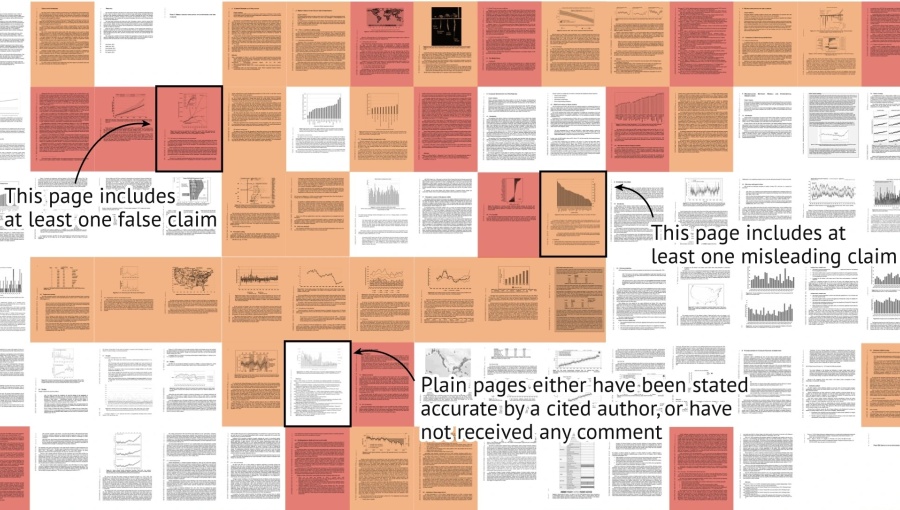
Carbon Brief invited a wide range of scientists, including some whose work was cited in the review, to assess its claims. Their responses—highlighting inaccuracies in red and misleading statements in orange—paint a picture of a document riddled with flaws.

Not only has US President Donald Trump taken the US out of the 2015 Paris Agreement for a second time, he campaigned on the slogan “drill, baby, drill” at a time when emissions are at record highs and rising. The US is the second largest emitter of emissions and unlike China and India, the first and third largest, has already blown through its carbon budget and fuelling trillions of dollars in environmental damage. The United Nations’ Intergovernmental Panel on Climate Change (IPCC) has already said that the Paris target to hold temperature rises to 1.5 °C above the pre-industrial benchmark has been missed, but the world is now on course for a catastrophic 2.7C-3.1C temperature increase.

The report is clearly intended to justify rolling back emissions regulations and contains at least 100 false or misleading statements, according to the Carbon Brief factcheck involving dozens of leading climate scientists.

The report’s executive summary asserts that “CO2-induced warming might be less damaging economically than commonly believed” and claims that “excessively aggressive [emissions] mitigation policies could prove more detrimental than beneficial.” Both statements were singled out by scientists as wrong.

“Compiled in just two months by five ‘independent’ researchers hand-selected by the climate-sceptic US secretary of energy Chris Wright, the document has sparked fierce criticism,” Carbon Brief reported. Experts highlighted factual errors, misrepresentation of existing research, disorganised citations and selective use of data.

The assessment also revealed that of the 350 references included, almost 10% were authored by the report’s own contributors. “Experts have also noted the authors’ track record of promoting views at odds with the mainstream understanding of climate science,” Carbon Brief noted.

The DoE has insisted the review underwent an “internal peer-review period amongst [the] DoE’s scientific research community.” Critics argue this falls short of the independent, transparent scrutiny expected for documents intended to guide regulatory decisions – especially on such an important subject as a policy briefing covering what is an existential crisis for humanity.

At stake is the Obama-era endangerment finding, enacted in 2009, which concluded that six greenhouse gases endanger public health and welfare and therefore must be regulated under the Clean Air Act.

That decision has since been bolstered by the non-binding conclusion by the world’s top court, the International Court of Justice (ICJ) that ruled in July that a sustainable environment is a human right. This provides a legal precedent for holding governments and companies liable for the trillions of dollars of Climate Crisis damage by extreme weather. Both have a legal obligation to contain and reduce emissions, the ICJ found.

The Trump administration has argued that “updated studies and information” set out in the new report would “challenge the assumptions” of that finding, according to a July 29 statement from the EPA.

Amid growing concern about political interference in science, some researchers who participated in the factcheck requested anonymity. The DoE did not respond to Carbon Brief’s request for comment.

Trump’s commitment to fighting the Climate Crisis

Trump has never been committed to tackling the Climate Crisis. The previous controversial head of the EPA is Scott Pruitt, who served under President Donald Trump from 2017 to 2018. His tenure was marked by extensive ethics scandals, including allegations of misusing agency resources, first-class travel, and cozy relationships with lobbyists. Pruitt resigned amid at least 14 federal investigations and a widespread pattern of questionable conduct. The current head, Lee Zeldin, is no better.

The report was commissioned by the Trump administration's Department of Energy to provide a scientific justification for the EPA's proposal to repeal the 2009 endangerment finding.

The finding, established by the EPA under the Obama administration, declared that greenhouse gases endanger human health and welfare, which is the basis for many federal climate regulations.

Mainstream scientists, like Zeke Hausfather of Berkeley Earth, criticized the report as a "farce" for cherry-picking data to create a misleading narrative and for bypassing the traditional peer-review process.

The report was released on the same day the EPA proposed rescinding the endangerment finding, leading to claims of a coordinated effort to undermine established climate science, according to Politico Pro.

The authors of the controversial Department of Energy report, "A Critical Review of Impacts of Greenhouse Gas Emissions on the US Climate," which was commissioned to support the EPA's proposal to rescind the endangerment finding, are five prominent sceptics of the climate consensus: Steven E. Koonin, John Christy, Judith Curry, Richard Epstein, and Robert H. Balling Jr. All of these authors are known Climate Crisis sceptics, handpicked to undermine the US climate policies and justify a walk back from its commitment to reducing emissions.

The report has been heavily criticized for lacking peer review and selectively using fringe studies to support its contrarian conclusions.

Main findings of Carbon Brief's fact check

Main findings of Carbon Brief's fact check of EPA report

Section

Claim

Critique

Brief Explanation

Executive Summary (Page 0)

Elevated CO2 enhances plant growth, contributing to global greening and agricultural productivity.

MISLEADING

Overstates CO2 benefits, ignores climate-driven losses (e.g., extreme weather, reduced crop nutrients). Cites non-peer-reviewed co2science.org; benefits overstated per Ainsworth & Long (2021).

Executive Summary (Page 0)

Climate models offer little guidance on CO2 response, exaggerating warming projections.

FALSE

IPCC AR6 integrates models, observations, and paleoclimate data. CMIP6 ensemble mean aligns with observed warming (within 0.2°C). Claim misrepresents robust methodology.

CO2 as a Pollutant (Page 2)

Rising CO2 promotes plant growth and neutralizes ocean alkalinity.

MISLEADING

Ignores climate impacts (e.g., warming, nutrient loss in crops). Ocean acidification reduces calcium carbonate, harming marine life, not neutralized (Honisch et al., 2011).

CO2 and Global Greening (Page 3)

CO2 drives 30% increase in photosynthesis since 1900, exceeding model predictions (Haverd et al., 2020).

FALSE

Haverd et al. focuses on natural ecosystems, not crops. Climate stressors (e.g., droughts) threaten yields; socioeconomic impacts not transferable.

CO2 and Global Greening (Page 3)

Greening continues with no slowdown (Piao et al., 2020; Chen et al., 2024).

MISLEADING

Chen et al. (2024) shows greening slowdown; Chen (2022) notes reversal in 90% of vegetated areas post-2000. Piao et al. attributes Arctic greening to warming, not CO2.

CO2 and Global Greening (Page 4)

Plant growth ceases below 180 ppm CO2; C3 plants benefit greatly.

MISLEADING

Lab studies (Gerhart & Ward, 2010) not representative of natural conditions. Nutrient limits and climate stressors reduce CO2 benefits; ecosystem disruptions ignored.

CO2 and Global Greening (Page 6)

IPCC minimally discusses global greening and CO2 fertilization.

FALSE

IPCC AR6 WG1 and WG2 extensively cover CO2 effects (e.g., WG2 Chapter 5, 136 mentions), including nutrient declines and ecosystem impacts, contrary to claim.

Alkaline Oceans (Page 6)

Ocean life evolved in acidic conditions (pH 6.5–7.0), implying resilience.

MISLEADING

Ancient ocean pH irrelevant to modern ecosystems. Rapid CO2-driven acidification harms shell-forming species by reducing calcium carbonate (Honisch et al., 2011).

Alkaline Oceans (Page 7)

Ocean pH was 7.4–7.5 during last glaciation, rising to present levels.

MISLEADING

Refers to deep Southern Ocean, not surface. Surface pH was higher than today during glaciation (Shao et al., 2019), contradicting claim.

Alkaline Oceans (Page 8)

Ocean acidification has negligible impact on fish behavior (Clements et al., 2021).

MISLEADING

Clements et al. applies to fish behavior, not other species or ecosystems. Acidification harms shellfish and corals; claim overgeneralizes findings.

Human Influences (Page 11)

IPCC downplays solar role; plausible reconstructions suggest solar contribution to warming.

MISLEADING

IPCC uses robust TSI models (SATIRE, NRLTSI). Connolly et al. (2021) cherry-picks outdated, flawed reconstructions (e.g., Hoyt & Schatten, 1993), inflating solar role.

Radiative Forcing (Page 13)

ACRIM-gap in TSI data (1989–91) is a thorny issue.

MISLEADING

Overstates ACRIM-gap significance. Recent studies (e.g., Amdur & Huybers, 2023) show no TSI increase, contradicting claim of major uncertainty.

Emission Scenarios (Page 15)

IPCC emission projections overstate actual emissions.

FALSE

Some scenarios (e.g., RCP8.5) overestimate, others (e.g., RCP6.0) underestimate. Total CO2 emissions align with SSP2-4.5, not consistently overstated.

Carbon Cycle (Page 17)

Atmosphere has ~850 GtC; land/ocean exchanges 80/120 GtC annually.

MISLEADING

Outdated (850 GtC ~2010; 877 GtC in 2020). Reverses land/ocean fluxes (land: 120–175 GtC; ocean: 90 GtC). Misleads on net vs. gross emissions.

Urbanization (Page 21)

UHI biases land temperature records upward, not fully corrected.

FALSE

Homogenized data (Hausfather et al., 2013) show minimal UHI bias. Satellite and USCRN data confirm warming trends, unaffected by UHI.

Volcanic Forcing (Page 13)

Uncertainty in Hunga Tonga volcano forcing sign.

MISLEADING

Jenkins et al. (2023) omitted aerosols, suggesting warming. Recent studies (e.g., Stenchikov et al., 2025) confirm slight cooling.

Climate Sensitivity (Page 27)

AR6 did not rely on climate models for ECS estimates.

FALSE

AR6 used models, observations, and paleoclimate data (Sherwood et al., 2020). Claim contradicts report’s later acknowledgment of model use.

Extreme Weather (Page 46)

Most extreme weather shows no long-term trends.

MISLEADING

Cherry-picks low-confidence IPCC statements. AR6 confirms increased frequency/intensity of heatwaves, heavy precipitation, and strong hurricanes globally.

Wildfires (Page 70)

US wildfire area burned increased only until 2007.

MISLEADING

Western US forest fire area tripled over 40 years, with record-breaking 2020–21 fires. Claim ignores regional trends and fire suppression failures.

Sea Level (Page 75)

Sea level rise is below IPCC AR6 projections.

FALSE

Ignores observed acceleration. Satellite data (74 mm by 2025) align with AR6 projections (~9–10 cm by 2030), consistent with expected rise.

Global Sea Level Rise (Page 75)

Sea level rise began 1820–1860, before most anthropogenic GHG emissions.

MISLEADING

Unfairly compares start of rise with "most" emissions. CO2 rise began ~1820–1860, coinciding with sea level rise (Keeling curve; Nature Communications, 2019).

Attribution of Global Warming (Page 84)

Natural drivers changed global temperature by ±0.1°C since 1850–1900, with no net impact.

MISLEADING

Misrepresents AR6 Fig. SPM.2, which shows net effect, not max changes. Natural variability caused ±0.5°C fluctuations, but net contribution is ~±0.1°C.

Attribution of Global Warming (Page 84)

Minimal natural variability contribution disputed by studies questioning solar and ocean circulation impacts.

MISLEADING

Relies on cherry-picked, discredited TSI reconstructions (e.g., Hoyt & Schatten, 1993). Chatzistergos et al. (2023) shows these are scientifically flawed.

Attribution of Global Warming (Page 84)

AR5 estimated small solar radiative forcing (0.05 W/m², 1750–2011).

MISLEADING

Imprecise wording; AR5 range was 0–0.1 W/m². AR6 uses full solar cycles, not minima, causing confusion in DoE report comparisons.

Attribution of Global Warming (Page 84)

AR6 cites TSI increase of 0.7–2.7 W/m² from Maunder Minimum to late 20th century.

MISLEADING

Vague; conflates TSI differences with radiative forcing. AR6’s 2.7 W/m² is a theoretical upper bound, not historical trend; most reconstructions show smaller trends.

Attribution of Global Warming (Page 84)

IPCC minimally discusses solar influences on climate.

FALSE

IPCC AR5, AR6 extensively discuss solar impacts (e.g., AR6 WG1 Chapter 7). Claim ignores comprehensive solar forcing assessments.

Attribution of Global Warming (Page 84, Section 8.3.1)

IPCC AR6 inadequately assesses natural climate variability.

MISLEADING

Overstates uncertainty. AR6 confirms GHG-driven warming dominates; ocean warming patterns (top-down) contradict ocean circulation as primary driver.

Attribution of Global Warming (Page 85)

High solar activity (Modern Maximum, 1959–1990s) supports significant solar role.

MISLEADING

Cites Chatzistergos et al. (2023) out of context; sunspot-based Modern Maximum doesn’t imply large TSI trend. Recent reconstructions show minimal trend.

Attribution of Global Warming (Page 85)

CMIP6 uses low-variability TSI datasets, dismissing high-variability reconstructions.

MISLEADING

AR6’s 2.7 W/m² is a theoretical maximum, not historical. CMIP6 uses robust SATIRE, NRLTSI models; high-variability reconstructions are outdated.

Attribution of Global Warming (Page 85)

AR6 shows greater solar impact than AR5, but solar forcing remains small.

MISLEADING

Vague; confuses TSI and radiative forcing. AR6’s solar forcing estimate (0.01 W/m²) is lower than AR5’s (0.05 W/m²), contradicting claim.

Attribution of Global Warming (Page 85)

Solar impact on climate is uncertain, not evident in IPCC reports.

MISLEADING

AR6 discusses TSI uncertainty (e.g., Yeo et al., 2020). Connolly et al. (2021) uses discredited reconstructions; IPCC addresses solar adequately.

Attribution of Global Warming (Page 85)

TSI datasets disagree on 1986–96 trend (ACRIM-gap).

MISLEADING

Overstates ACRIM-gap impact. Recent studies (e.g., Amdur & Huybers, 2023) show minimal TSI trend, undermining significant solar contribution claims.

Attribution of Global Warming (Page 85)

TSI satellite record calibrates proxy models for past solar variations.

MISLEADING

Overlooks physics-based models (e.g., SATIRE); Velasco Herrera et al. (2015) is unreliable. TSI reference has minor impact on long-term trends.

Attribution of Global Warming (Page 85)

High-variability TSI datasets explain >70% of temperature variability since 1750.

MISLEADING

Cites flawed studies (Scafetta, 2013; Stefani, 2021) using discredited Hoyt & Schatten (1993) TSI. Modern reconstructions show small solar impact.

Attribution of Global Warming (Page 85)

TSI satellite record choice significantly affects climate attribution.

MISLEADING

Exaggerates TSI record impact. Physics-based models (e.g., SATIRE) show minimal effect of reference TSI on trends; high-variability models are discredited.

Attribution of Global Warming (Page 85)

~80% of solar influence on climate from non-TSI mechanisms.

FALSE

Scafetta (2023) relies on discredited Hoyt & Schatten (1993) TSI. Non-TSI effects (e.g., cosmic rays) shown negligible (CLOUD experiment, Pierce, 2017).

Attribution of Global Warming (Page 85)

Non-TSI solar effects (e.g., UV, cosmic rays) are significant, not in climate models.

MISLEADING

Exaggerates non-TSI effects; CLOUD experiment (Pierce, 2017) shows negligible cosmic ray impact. Many CMIP6 models include spectral irradiance, ozone effects.

Attribution of Global Warming (Page 87)

Early 20th century warming (1901–50) had little CO2 impact (298–310 ppm).

MISLEADING

Faulty; 12 ppm CO2 caused ~0.2°C warming, offset by aerosols. Bayesian analysis (Hegerl et al., 2017) shows ~50% forced warming, not “somehow” inferred.

Attribution of Global Warming (Page 88)

Great Pacific Climate Shift attributes ≥40% of late 20th century warming to natural variability.

MISLEADING

Relies on Tung & Zhou (2013); other studies show lower AMO contribution. AR6 notes natural variability has little effect on centennial warming.

Attribution of Global Warming (Page 89)

Vostok ice core shows temperature drives CO2, not vice versa.

MISLEADING

Vostok data are regional, not global. Shakun et al. (2012) shows CO2 leads global temperature in deglaciation; CO2 drives ice-age cycles (Broccoli, 2000).

Declining Planetary Albedo (Page 90)

0.5% albedo reduction since 2015 caused 1.7 W/m² increase in absorbed solar radiation.

MISLEADING

Incomplete comparison; albedo decline is a mix of forcing and response. GHG warming dominates energy imbalance (Hodnebrog et al., 2024).

Declining Planetary Albedo (Page 90)

Arctic sea ice declined by ~5% since 1980.

FALSE

September sea ice declined 34–35% (OSISAF, NSIDC); annual mean ~14%. Misleadingly cites Antarctic data for Arctic claim.

Declining Planetary Albedo (Page 90)

Pause in Arctic sea ice decline since 2007.

MISLEADING

True but lacks context; England et al. (2025) note pause is temporary due to variability, not a cessation of human-induced decline.

Declining Planetary Albedo (Page 90)

No significant Antarctic sea ice trend (1979–2020).

MISLEADING

Omits dramatic decline since 2015 with record lows; recent studies show unprecedented lows (Nature Climate Change, 2022).

Declining Planetary Albedo (Page 90, Section 8.4)

Overemphasizes natural variability in albedo decline.

MISLEADING

Downplays low-cloud feedback and aerosol effects; overstates natural variability’s role in albedo changes (Goessling, Allan).

Declining Planetary Albedo (Page 90)

Sharp temperature and albedo increase questions short-term drivers.

MISLEADING

Overemphasizes abruptness; temperature and albedo rise steadily with ENSO variability (Loeb et al., 2024). Feedbacks amplify warming.

Declining Planetary Albedo (Page 91)

Cloud cover decline main cause of albedo reduction; aerosols not mentioned.

MISLEADING

Omits indirect aerosol effects, a key driver of cloud cover decline (Hodnebrog et al., 2024), overemphasizing natural variability.

Declining Planetary Albedo (Page 91)

Surface albedo changes contribute weakly to planetary albedo decline.

MISLEADING

Understates surface albedo role; sea ice decline significantly reduces albedo (Loeb et al., 2024), not just clouds.

Declining Planetary Albedo (Page 91)

Low- and mid-level cloud decreases drive albedo decline.

MISLEADING

Misrepresents Loeb et al. (2024); cloud fraction, reflection, and surface albedo (ice melt) all contribute, plus aerosol effects.

Declining Planetary Albedo (Page 92)

No obvious trigger for positive low-cloud feedback since 2015.

MISLEADING

Strawman; no specific trigger needed. SST pattern changes drive cloud decline (Andrews et al., 2022), consistent with warming feedbacks.

Declining Planetary Albedo (Page 92)

Natural variability (e.g., El Niño, PDO) drives cloud cover changes.

MISLEADING

Overemphasizes natural variability; ignores aerosol reductions and cloud feedback. Hunga Tonga impact minor (Goessling).

Declining Planetary Albedo (Page 92)

1–2% cloud cover change has greater radiative impact than doubling CO2.

MISLEADING

Unfairly compares short-term cloud fluctuations with long-term CO2 forcing. Albedo decline is a feedback to GHG warming (Forster et al., 2021).

Extreme Event Attribution (Page 96)

Outlier at data series end biases event probability estimates.

FALSE

Suggests bias is unmanageable; Barlow et al. (2020) and Miralles & Davison (2023) provide statistical methods to address bias.

Extreme Event Attribution (Page 96)

Single extreme event at series end makes return period estimation unreliable.

MISLEADING

Miralles & Davison (2023) suggest avoiding return periods but recommend stating uncertainty, not avoiding attribution entirely.

Extreme Event Attribution (Page 97)

Methods overstate heatwave rarity, biasing climate change perception.

MISLEADING

Zeder et al. (2023) quote taken out of context; short records overestimate return periods, but warming increases heatwave probability.

Econometric Analyses (Page 104)

Conventional models show negative warming effects on French farmland values.

FALSE

Bareille & Chakir (2023) show positive impacts, consistent with Ricardian approach; no negative effects found.

Econometric Analyses (Page 104)

Repeat sales data show climate change very beneficial for French agriculture.

FALSE

Bareille & Chakir (2023) show positive effects across all methods, not a reversal from negative to positive impacts.

Econometric Analyses (Page 104)

Climate change benefits French agriculture, generalizable to other contexts.

MISLEADING

Benefits specific to France (e.g., vineyard expansion); not applicable to diverse climates like the US.

Econometric Analyses (Page 104)

Warming benefits French agriculture 2–20 times more than estimated.

MISLEADING

Repeat-Ricardian approach untested elsewhere; US studies show negative impacts (Deschênes & Greenstone, 2007).

Econometric Analyses (Page 105)

Econometric studies omit CO2 fertilization effects.

MISLEADING

Studies implicitly include CO2 effects via temperature/precipitation correlations. Hultgren et al. (2025) show partial offset of negative impacts.

Field Studies of CO2 Enrichment (Page 105)

FACE experiments show 18% yield increase for C3 plants with 200 ppm CO2 rise.

MISLEADING

Ignores negative effects of ozone, temperature, and extreme weather; overall GHG-driven changes reduce yields (Long).

Crop Modelling Meta-Analyses (Page 107)

Complete data show constant or increased crop yields with warming.

MISLEADING

Regression analyses miss non-linear effects (e.g., extreme heat). IPCC AR6 shows yield declines with warming (Deryng).

CO2 Fertilisation and Nutrient Loss (Page 107)

Nutrient dilution in C3 crops sometimes occurs with CO2 rise.

MISLEADING

Consistently seen in C3 crops (e.g., 10% protein decline); ignores toxin increases (Ebi et al., 2021).

CO2 Fertilisation and Nutrient Loss (Page 107)

Rising temperatures offset nutrient dilution; dilution not solely due to CO2.

MISLEADING

Mixed evidence; some studies show no compensation (Jayawardena et al., 2021). Ziska (2022) confirms CO2 drives protein decline.

CO2 Fertilisation and Nutrient Loss (Page 108)

Selective breeding is a proven strategy to address nutrient dilution.

MISLEADING

Biofortification targets few nutrients, not CO2-induced declines or toxins (Ebi et al., 2021). Not proven for this purpose.

CO2 Fertilisation and Nutrient Loss (Page 108)

Nutrient fortification and supplements are effective solutions.

MISLEADING

Supplements fail to address current deficiencies (e.g., 30% US women iron-deficient); cannot mitigate CO2-induced toxin increases.

CO2 Fertilisation and Nutrient Loss (Page 108)

Strategies for nutrient dilution are location-specific.

MISLEADING

Developing cultivars is costly, time-consuming, and not local; impractical for widespread application (CGIAR).

CO2 Fertilisation and Nutrient Loss (Page 108)

High-emission scenarios eliminate poverty, enabling supplement affordability.

MISLEADING

Wealth doesn’t solve nutrient deficiencies (e.g., US deficiencies persist). Toxin increases unaddressed by supplements.

CO2 Fertilisation and Nutrient Loss (Page 108)

CO2-induced warming benefits US agriculture.

MISLEADING

Cherry-picks productivity; ignores yield declines (Hultgren et al., 2025) and toxin increases. Consensus predicts harm to US agriculture.

CO2 Fertilisation and Nutrient Loss (Page 108)

Incorrect citation date for Deryng et al. (2016).

FALSE

Cited as 2021; correct year is 2016. Not referenced in chapter text.

Mortality from Temperature Extremes (Page 111)

Cold-related mortality far exceeds heat-related mortality.

MISLEADING

True but irrelevant; warming increases heat-related deaths, offsetting cold reductions (Gasparrini, 2017; Masselot, 2025).

Climate Change and Economic Growth (Page 116)

No negative effect of warming on global growth; poor countries may benefit.

FALSE

Tol (2024) finds negative global economic impacts; no evidence poor countries benefit. Claim lacks references.

Climate Change and Economic Growth (Page 117)

Warming has negligible or positive effects on US banks and finance sector.

MISLEADING

Mohaddes et al. (2023) show broad negative impacts across US sectors, including finance; not small or positive.

Social Cost of Carbon (Page 120)

SCC models rely on damage functions and discount rates.

MISLEADING

Omits key studies (e.g., Moore et al., 2024); cherry-picks literature, missing high SCC estimates ($283/tCO2).

Social Cost of Carbon (Page 123)

Private benefit of carbon outweighs social cost.

FALSE

Tol (2017) unpublished, rejected for comparing average benefit to marginal cost; comparison invalid.

Social Cost of Carbon (Page 125)

Tipping points add ~25% to SCC, deemed unlikely by IPCC.

MISLEADING

Dietz et al. find 27% median, 42% mean SCC increase; 10% chance of doubling. IPCC notes low likelihood, but risk exists.

source: Carbon Brief

Do Carbon Taxes Work?


  • Austria introduced a carbon tax with regional rebates but eliminated payouts in 2024 to reduce spending during a recession.

  • Canada’s federal carbon tax, modeled on British Columbia’s system, was repealed in 2025 amid political backlash and public misunderstanding.

  • Both cases show that while carbon pricing can support emission cuts, public acceptance and clear communication are crucial for long-term success.

In recent years, several countries have introduced carbon taxes as a way of making consumers change their habits to support a green transition. However, it remains unclear whether carbon taxation and rebates can have a lasting impact on the reduction of greenhouse gas (GHG) emissions and consumer spending.

Austria introduced a range of carbon taxes aimed at encouraging consumer decarbonisation. In the Austrian model, the money raised from the tax gets returned directly to taxpayers. This was aimed and encouraging higher levels of public spending while reducing emissions, to bolster the national economy. The central European country aims to achieve net-zero carbon emissions by 2040, a whole decade ahead of the European Union’s deadline and its carbon tax is expected to help it achieve this aim. 

In Austria, around 69.3 percent of GHG emissions were subject to a positive Net Effective Carbon Rate (ECR) in 2023, according to OECD estimates. Fuel excise taxes covered around 52.8 precent of emissions that year. The research showed that ECRs were $93 per tonne of CO2e on average, while explicit carbon prices stood at an average of $48, fuel excise taxes amounted to $57 on average, and fossil fuel subsidies averaged $12 per tonne of CO2e.

The carbon tax is not only aimed at companies but also individuals, encouraging people to drive less and take public transport more, alongside several other habit changes. The rebate, known as the Klimabonus, varied by region depending on access to public transport networks and other factors, and in 2024, the annual payment ranged from $169 to $338 for an adult resident.

There was a mixed response from Austrians when the initiative was first proposed, although it received wide enough support to keep it. However, this year, the new Austrian government decided to change the initiative by eliminating the rebate payments to taxpayers.

The decision was made after assessing the total cost of the scheme in the face of a national recession. Austria has been forced by the EU to reduce its budget deficit by cutting spending, introducing higher taxes, and stimulating economic activity. Cutting the rebate is expected to save around $2.3 billion a year.

While Austria has been successful in reducing its carbon emissions in recent years – although it is uncertain just how closely this is linked to the carbon tax and rebate scheme – its efforts to encourage higher levels of consumer spending were less successful. Austria’s chancellor, Christian Stocker, explained, “It was also a compensation payment to maintain disposable income. And when it was sent to Austrians, the money remained in savings accounts at banks. It did not go into consumption. And therefore, the effect we expected was not achieved.”

In North America, Canada also introduced a carbon tax scheme, although there are mixed feelings about its success rate. In 2018, the then Prime Minister Justin Trudeau introduced the “pan-Canadian climate framework”, which was modelled on British Columbia’s pioneering carbon tax. As in Austria, the scheme aimed to collect the carbon tax and return the funds to consumers in the form of a quarterly rebate. The government said that a family of four in Ontario would receive around $811, while a family in a rural region could expect $973, and a family in Alberta province would get around $1,564.

However, in October, the new Conservative government said it wanted to hold a referendum on the tax, suggesting that the initiative increased the economic burden on Canadians at a time when they were facing rising consumer costs. However, not everyone agrees with this assessment of the tax.

Kathryn Harrison, a political scientist at the University of British Columbia, explained, “The current political discourse means a lot of Canadians misunderstand how the policy affects them. They don’t think it works. They think they’re paying more than they are. And that’s a very distressing thing for me, from not just a climate policy perspective, but a democratic perspective.” Harrison added, “This isn’t a debate about how much emphasis to put on one issue or another. The unpopularity of the carbon tax is, to a large degree, driven by voters misunderstanding it and having the facts wrong.”

In April this year, the Conservative government axed the carbon tax, with wide support from Canadians who did not want to pay an additional tax. However, Werner Antweiler, an economist from the University of Sauder, believes this could have a negative impact on both emissions and consumer wealth.

Antweiler explained, “Carbon pricing was poorly understood and poorly communicated. Although most of the revenue was returned to households—through rebates or tax cuts in places like B.C.—many people only noticed higher fuel prices and ignored the money coming back. The policy felt like a tax, and that made it unpopular. Ironically, now that it’s gone, many lower-income households will be worse off.”

Carbon taxes in Austria and Canada have faced different challenges. In the Central European country, tax rebates were ultimately deemed too costly to keep up during a time of recession, while in the North American state, many taxpayers were less open to paying an additional tax, even if it could provide a long-term economic benefit. However, the two initiatives demonstrate that a carbon tax and rebate system has the potential to help change consumer habits and reduce GHG emissions. 

By Felicity Bradstock for Oilprice.com


Trump administration halts Orsted's Rhode Island wind project, shares sink 17%

 
The logo for Orsted can be seen on the jacket worn by an employee at Orsted's offshore wind farm near Nysted · Reuters


Stine Jacobsen
Sun 24 August 2025 


COPENHAGEN (Reuters) -Orsted said on Monday it would continue with a plan to raise capital after the Trump administration ordered the offshore wind farm developer to stop construction on a near-completed project off Rhode Island, sending its shares down 17%.

The company, 50.1% owned by the Danish state, said earlier this month it would seek to shore up its finances through a $9.4 billion emergency rights issue.


"The planned rights issue had been sized to provide the required strengthening of Orsted's capital structure to execute its business plan, even when taking into account the impact of this uncertainty on Orsted's U.S. offshore wind portfolio," it said in a statement.

The Trump administration's Bureau of Ocean Energy Management (BOEM) published its stop-work order late on Friday, forcing suspension of a project that was 80% complete with 45 out of 65 wind turbines installed.

The timing of the halt to Revolution Wind off Rhode Island was particularly damaging to Orsted, which announced earlier this month a plan to raise 60 billion Danish crowns ($9.42 billion) through a rights issue.

Orsted's shares, already down 30% since announcing its plan on August 11, fell as much as 17% in early trading on Monday.

"This is a huge hurdle with regards to raising capital," Sydbank analyst Jacob Pedersen told Reuters, adding he was "stunned."

AlphaValue analyst Pierre-Alexandre Ramondenc said the U.S. move could jeopardise the success of the rights issue.

"The news came as a major shock and amounts to nothing less than political hostage-taking by the U.S. administration, given the project's advanced stage," Ramondenc said.

On his first day in office in January, President Donald Trump suspended new offshore wind leasing pending environmental and economic review of projects. He has repeatedly criticised wind energy as ugly, unreliable and expensive.

($1 = 6.3685 Danish crowns)

(Reporting by Stine Jacobsen; Editing by Terje Solsvik, Lincoln Feast, Bernadette Baum and Louise Heavens)

Ørsted Pushes Ahead With DKK 60 Billion Rights Issue Despite U.S. Setback

In a company announcement on August 25, Ørsted confirmed it will proceed with preparations for the rights issue and named BNP Paribas, Danske Bank, J.P. Morgan SE, and Morgan Stanley as Joint Global Coordinators, with BofA Securities and Goldman Sachs as Joint Bookrunners. The syndicate will underwrite roughly 49.9% of the offer not covered by Denmark’s state guarantee. An extraordinary general meeting is set for September 5 to finalize mechanics ahead of launch.

What prompted it

The Bureau of Ocean Energy Management (BOEM) issued a stop?work order for Revolution Wind, Ørsted’s 50/50 JV with Skyborn (BlackRock), after full federal permitting—including the Construction and Operations Plan—had been secured. Ørsted said it is seeking a swift resolution with agencies and, if needed, via legal channels, while targeting commercial operations in H2 2026. Project construction is 80% complete; Ørsted estimates about DKK 5 billion of remaining capex for its 50% stake and a run?rate EBITDA contribution near DKK 1 billion once online.

Why it matters

The stop?work order underscores rising regulatory uncertainty for U.S. offshore wind. Ørsted says the rights issue has been sized to reinforce its balance sheet and provide flexibility to execute its plan even under a tougher U.S. permitting backdrop.

Financial context and guidance

Ørsted reiterated 2025 guidance and medium?term targets despite the order. The company says 8.1 GW of offshore wind projects under construction should add DKK 11–12 billion of annual EBITDA by end?2027. For its two U.S. projects under construction—Revolution Wind (50% share) and Sunrise Wind (100% share)—Ørsted expects around DKK 4.5 billion in combined run?rate EBITDA. Total investment in the two projects on a 100% basis is approximately DKK 100 billion, with about DKK 45 billion remaining. Carrying value of Revolution Wind and Sunrise Wind as of June 30, 2025 was ~DKK 17 billion.

Sector and deal backdrop

After a wave of cost inflation, supply?chain pressure and permitting delays, European developers have been recalibrating U.S. ambitions. Ørsted’s planned equity raise—first signposted on Aug. 11—aims to strengthen capital structure and fund higher capex and non?recourse financing needs linked to Sunrise Wind and other projects. The Danish state has already committed to backstopping about half the issue, with banks underwriting the remainder, providing execution certainty that investors typically seek in volatile markets.

Project timeline and next steps

Ørsted continues construction at Revolution Wind and is working with stakeholders to secure a path to completion that would supply power to more than 350,000 homes, with COD still targeted for the second half of 2026. The company will “in due course” provide further details on the rights issue timetable following the Sept. 5 EGM.

21st  CENTURY ALCHEMY

Revolutionary ‘Breathing’ Crystal Could Transform the Clean Energy Industry

  • Scientists in South Korea and Japan created a man-made crystal (SrFe0.5Co0.5O2.5) that absorbs and releases oxygen repeatedly at moderate temperatures without breaking down.

  • The discovery could revolutionize clean energy by advancing solid oxide fuel cells, smart windows, and oxygen-based electronics.

  • Early tests show applications ranging from boosting electric vehicle range to dramatically improving building energy efficiency.

A new man-made crystal that can “breathe” oxygen may be a game changer for energy efficiency and the clean energy transition. The material is made from an oxide of strontium, iron, and cobalt, and when heated in a simple gas environment, the thin film crystal has been observed to release and then reabsorb oxygen, much like a human lung. Moreover, it can repeat the action over and over without breaking down. The potential applications of such a material are vast, and could be instrumental in the clean energy transition.

"It is like giving the crystal lungs and it can inhale and exhale oxygen on command," says Professor Hyoungjeen Jeen. Jeen, a physics professor at  Pusan National University in South Korea, co-authored the study along with Professor Hiromichi Ohta from the Research Institute for Electronic Science at Hokkaido University in Japan. Their remarkable findings of the crystal, which has the formula SrFe0.5Co0.5O2.5were published in a scientific paper in the journal Nature Communications earlier this month.

It is not unusual for natural substances to bond with and release oxygen, which is a highly reactive element. This is why oxygen is such a critical building block for human and plant life – it’s a relatively low-hanging fruit in evolutionary terms. But replicating such processes in science isn’t always easy. The process frequently degrades materials quickly, or requires extreme temperatures to cause the absorption or release, making such processes inconvenient for any potential commercial application. 

This is what makes this newest breakthrough so exciting – the oxygen absorption and release cycle is sustained without breaking down the crystal at moderate temperatures –  approximately 752 °F (400 °C). “This finding is striking in two ways: only cobalt ions are reduced, and the process leads to the formation of an entirely new but stable crystal structure,” Jeen explained. And, when oxygen is reintroduced, the original crystal structure is restored. 

“This tackles the challenge of operating in harsher conditions involving much higher temperatures for oxygen control, and replaces other materials used in this process that were too fragile to use repeatedly,” reports New Atlas.

Due to these characteristics, these man-made crystals could be extremely useful in technologies such as solid oxide fuel cells, which can be used to produce electricity from hydrogen with minimal emissions if oxygen is controlled. The solid oxide fuel cells could be instrumental in extending the range of electric cars, especially if they are able to operate at relatively low temperatures. 

The ability to control oxygen “also plays a role in thermal transistors—devices that can direct heat like electrical switches—and in smart windows that adjust their heat flow depending on the weather,” according to Phys.org. These smart windows can help to maintain indoor temperatures, greatly enhancing buildings’ energy efficiency. This could have an enormous impact on climate goals – at present, incredibly, buildings consume more energy than transportation and industry combined.The research team has already tested out the application of the crystal in smart windows. “They’ve found out that the material changes transparency based on its oxygen content, with the oxygen-rich version appearing less transparent while the oxygen-depleted version showing increased transparency,” reports Design Boom. The scientific team also foresees potential applications in electronics, including oxygen sensors and gas separation systems. 

"This is a major step towards the realization of smart materials that can adjust themselves in real time," says Professor Ohta. "The potential applications range from clean energy to electronics and even eco-friendly building materials."

For now, however, next steps for the scientific process are to continue to refine the crystals’ composition and processing methods to optimize performance and durability. The team is continuing to test different metal ratios to see if they can improve upon SrFe0.5Co0.5O2.5. 

By Haley Zaremba for Oilprice.com


Contract worker dies in Rio Tinto mine in Guinea

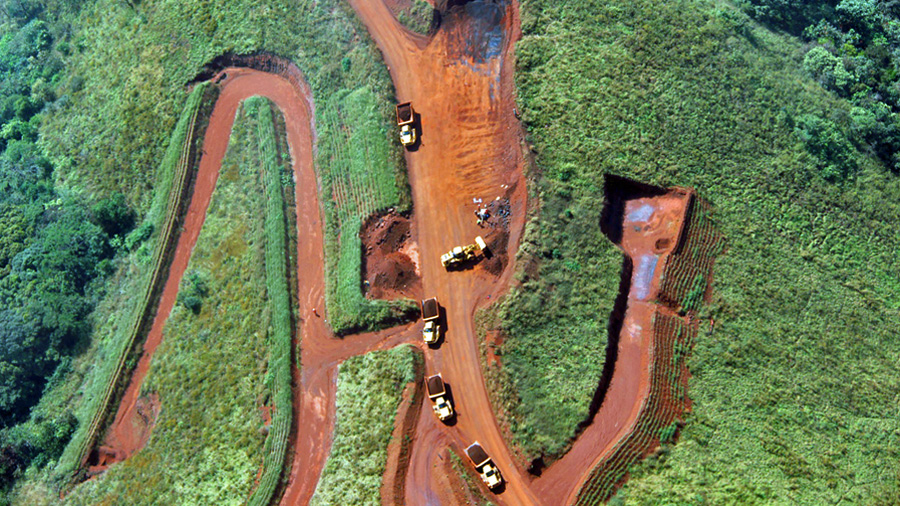
Simandou iron ore project. (Image courtesy of Rio Tinto Simandou)

A contract worker died following an incident in Rio Tinto’s SimFer mine site in Nzerekore, Guinea on Friday, the mining company said.

All activity at the SimFer mine site is currently suspended, the iron ore miner said in its statement on Saturday.

Incoming chief executive Simon Trott said he will be traveling to Guinea, and that measures will be taken to ensure the safest possible work environment.

“A thorough investigation will take place together with the relevant authorities to establish the causes of this tragic incident,” Rio Tinto chief executive Jakob Stausholm said.


Codelco approved to reopen two sections of El Teniente  copper mine

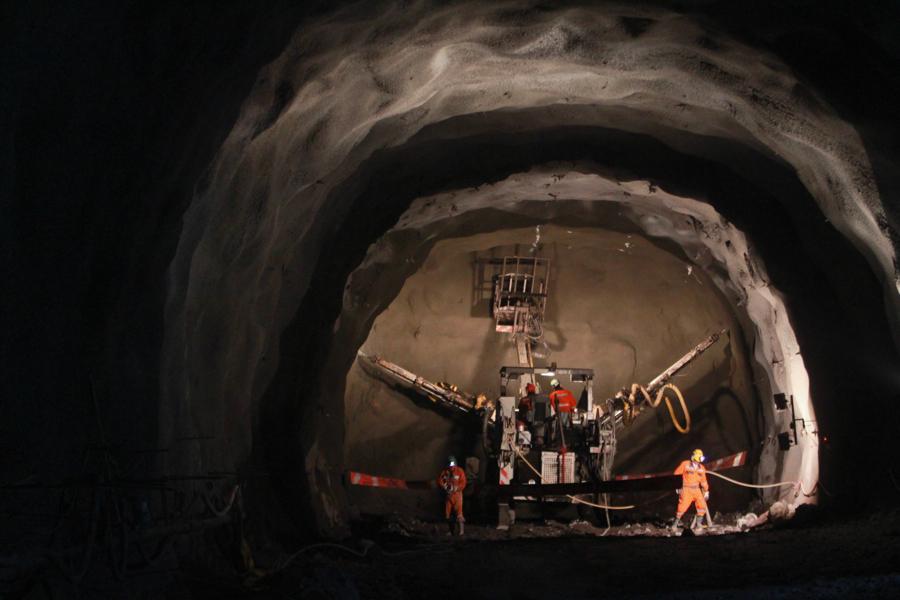
A snapshot of El Teniente’s underground dimensions. Credit: Codelco

Chilean miner Codelco on Sunday said mining regulator Sernageomin has approved the restart of the Andes Norte and Diamante divisions of its El Teniente copper mine, after an accident on July 31 that forced a suspension of operations.

Codelco added that the labor inspection office has still only approved a partial return to those units of the mine, and that operations at the Recursos Norte and Andesita sections remain closed.

(By Daina Beth Solomon)


Coast Guard Arrests Intoxicated MSC Boxship Captain After Ship Docks

containership docking
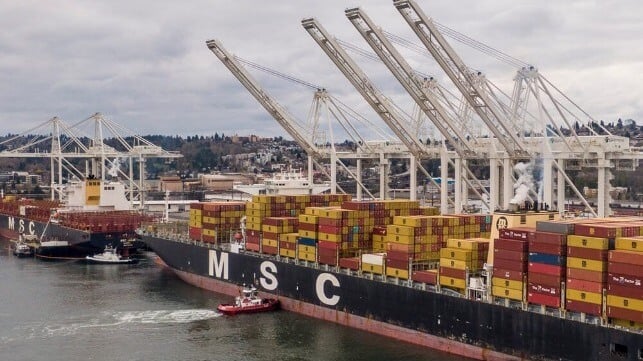
USCG arrested the captain after the vessel docked in Seattle (Northwest Seaport Alliance file photo)

Published Aug 23, 2025 4:26 PM by The Maritime Executive


The US Coast Guard arrested the master of a containership this week after the pilot guiding the ship to port reported the captain was exhibiting signs of intoxication. A field sobriety and breathalyzer test administered by the USC after the vessel docked found the captain was impaired more than six times the legal limit for commercial mariners.

The vessel, the MSC Jubilee IX, is a 108,770 dwt containership with a capacity of 8,800 TEU. The ship had arrived in the anchorage near Everett, Washington, coming from Busan, South Korea, with a stop in Vancouver, Canada. Built in 2008, the vessel, which is registered in Liberia, appears to have joined the MSC fleet in March 2025.

A Puget Sound pilot boarded the MSC Jubilee IX on August 20 to guide the ship to port in Seattle and reported to the US Coast Guard Sector Puget Sound that the vessel’s captain was exhibiting signs of intoxication. The pilot and first mate operated the vessel during the transit from an anchorage to Terminal 5 at the Port of Seattle without incident.

After the vessel docked, a Coast Guard boarding team and the Coast Guard Investigative Service boarded the ship and commenced a port state control examination. During the investigation, they administer the sobriety test.

The captain was arrested and transported to the King County Jail, where charges were referred to the King County Prosecutor for boating under the influence. 

The vessel was detained by the Coast Guard until a relief captain was identified and confirmed. The vessel was later cleared to resume operations and departed Seattle on August 22 for Prince Rupert, Canada, and a return trip to Yantian, China.

The incident is similar to a January 2024 arrest when the captain of another MSC containership, a Polish national commanding MSC Roshney V, was also detained after the pilot in Felixstowe in the UK also suspected the master was intoxicated. Tests revealed his blood alcohol level was nearly four times over the limit. The master pleaded guilty in a UK court and was given a suspended sentence and a small fine. He told the court he was sorry for his actions and that his career at sea was over.


Le Groupe ALMACO to Outfit Canadian Coast Guard’s Polar Max Icebreaker

ALMACO
Polar Max Icebreaker, Helsinki Shipyard

Published Aug 23, 2025 2:24 PM by The Maritime Executive


[By: ALMACO]

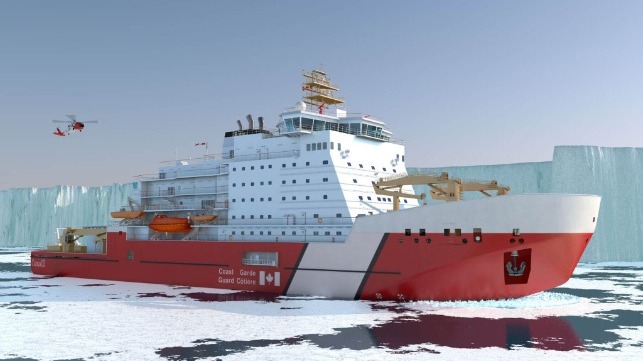
Le Groupe ALMACO, a proudly Canadian subsidiary of ALMACO Group, today announced it has signed an over 100M CAD Engineering, Procurement and Construction (EPC) contract with Chantier Davie Canada Inc. (Davie), Canada’s premier shipbuilder, for the outfitting of the Polar Max Icebreaker – a flagship project under the National Shipbuilding Strategy (NSS) and a cornerstone of the Canadian Coast Guard’s (CCG) future fleet. The move supports Le Groupe ALMACO and Davie’s shared vision of building local capabilities and fostering long-term industrial growth in the Canadian marine sector.

Polar Max: a Unique Project Executed Across Continents
The execution plan for Polar Max is a truly international collaboration between Davie and ALMACO, spanning both Canada and Finland. The hull will be constructed at Davie-owned Helsinki Shipyard, with Le Groupe ALMACO delivering interior accommodation spaces and other essential areas during this stage. In parallel, in Québec, Davie’s skilled shipbuilders and Le Groupe ALMACO will lead the design, procurement, and fabrication of the 1,400-ton superstructure – the top part of the ship.

This dual-build approach not only leverages expertise across two continents but also accelerates the project timeline by allowing major work to proceed simultaneously in both locations and guarantee the timely delivery of the ship to the Government of Canada. Once the hull is transported from Finland to Canada, the superstructure will be integrated at Davie’s facility in Lévis, Québec. This approach follows a proven process, successfully used for the delivery of Combat Support Ship (CSS) Asterix to the Royal Canadian Navy (RCN). Work on the superstructure begins in late summer, with final integration and vessel delivery to Canada by 2030.

Expanding ALMACO Group’s Presence in Québec
To support the Polar Max project and to create a long-term presence, ALMACO is expanding its operations in Canada. ALMACO set up operations in Québec already in 2022 and will open a new Le Groupe ALMACO office in Québec City in September 2025.

Québec’s role in the Polar Max program further reinforces its position as a global shipbuilding hub, recognized for innovation, technical excellence, and a highly skilled workforce. In delivering the project, Davie and ALMACO intend to collaborate extensively with subcontractors across Québec and Canada’s broader shipbuilding industry, ensuring that expertise and economic benefits are shared nationwide. As part of this effort, ALMACO’s role in the Polar Max will generate new jobs in Québec, creating opportunities for local talent and driving long-term growth in the province’s advanced marine sector.

The company has launched a major recruitment program, combining the know-how of ALMACO’s Europe-based employees with the skills of Canadian professionals. Le Groupe  ALMACO is committed to employing local talent in all functions – from engineering and project management to manufacturing and other roles.

A Shared Commitment to Canada’s Maritime Future
“Working with Davie again is a proud moment for us,” said Vilhelm Roberts, Executive Chairman of the Board and Co-owner of ALMACO Group. “We’ve maintained a close relationship with their team ever since the Asterix Project, and this new contract confirms our shared ambition to deliver world-class vessels while growing local expertise and capacity. We’re not just outfitting a ship—we’re helping to build the future of Canadian shipbuilding together.”

“Polar Max is a once-in-a-generation project that demands the very best from every partner involved, said Davie co-owner and CEO, James Davies. “Our work with ALMACO on Asterix proved that when we combine their world-class expertise with Canadian ingenuity, we deliver faster, better and with greater impact. This is a lasting partnership which will not only help deliver Polar Max on time and to the highest standard – it will also create jobs and develop skills and industrial capability here in Canada.”

Davie is a key player in Canada’s National Shipbuilding Strategy. ALMACO is honoured to support this important national initiative and looks forward to continuing its collaboration with Davie on Polar Max, and beyond.

“This is great news that ALMACO has chosen Québec to expand its activities and partner with Davie on the Polar Max Icebreaker project. The National Shipbuilding Strategy continues to generate exciting opportunities for Canada’s shipbuilding industry, creating high-value jobs and strengthening our economy while advancing shipbuilding expertise in Québec and across the country,” said the Honourable Mélanie Joly, Minister of Industry and Minister responsible for Canada Economic Development for Québec Regions.

“The Polar Max project is an excellent example of how Canadian industry and international partners can collaborate to deliver world-class capabilities while creating good-paying jobs here at home. With ALMACO expanding its footprint in Québec, we can expect more skilled jobs, greater shipbuilding expertise, and a stronger, more resilient Canadian marine sector. As a key project under the National Shipbuilding Strategy, the Polar Max icebreaker will contribute to a more modern, capable Canadian Coast Guard fleet and secure long-term economic growth and shipbuilding capacity for our country,” said the Honourable Stephen Fuhr, Secretary of State for Defence Procurement, Canada.

“Davie’s leadership in the Polar Max project is a powerful driver of economic growth for Québec,” said Christopher Skeete, Minister for the Economy. “The collaboration between Davie and the ALMACO Group will generate business opportunities in both jurisdictions’ naval sectors. It will also consolidate Québec’s position as a shipbuilding hub, while recognizing the strategic importance placed on the Arctic in the 21st century.”

A Trusted Partnership Renewed
The Polar Max project represents a significant milestone in the long-standing collaboration between Davie and ALMACO Group. Their previous partnership to deliver the CSS Asterix to the Royal Canadian Navy in 2017 created lasting impact on the Canadian and international maritime industries. The Polar Max contract highlights the trust and shared commitment to delivering top-tier marine outfitting and advancing shipbuilding excellence in Canada.

Introducing Mobile Cabin Factory for Modular Cabins
A local “cabin factory” will be established in Québec. This facility, a first of its kind in Canada, will allow Le Groupe ALMACO to produce pre-fabricated modular cabins on site, significantly improving project logistics, efficiency, and quality assurance. The move supports Le Groupe ALMACO and Davie’s shared vision of building local capabilities and fostering long-term industrial growth in the Canadian marine sector.

The products and services herein described in this press release are not endorsed by The Maritime Executive.


Eastern Libya Set to Approve Turkey’s Mediterranean Gas Exploration Deal

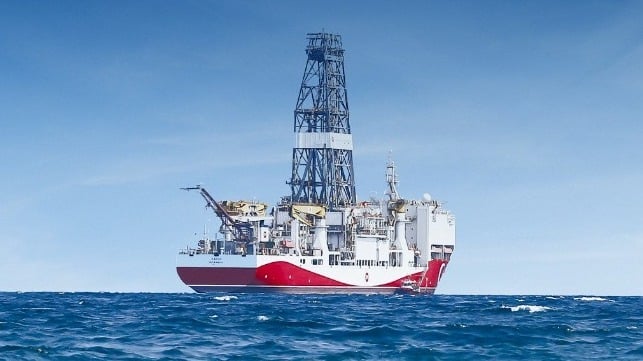
TPAO drillship
Drillship Fatih, just one of a growing fleet of Turkish offshore exploration assets (File image courtesy Turkii Petrolerii)

Published Aug 24, 2025 6:25 PM by The Maritime Executive


Turkey is poised to strengthen its exploration rights in the Mediterranean region. Reports have emerged that Libya’s eastern-based government is likely to approve a 2019 maritime pact, which allows Turkey to explore for oil and gas in Libyan waters. The agreement had only been signed by the Tripoli-based government in Western Libya, which has strong ties with Ankara.

However, the eastern side in Benghazi seems to have softened its opposition to Turkey. According to Bloomberg, the Parliament in Benghazi is expected to approve the maritime pact with Turkey in coming weeks. The approval will give Turkey unfettered access to Libyan waters, where the Turkish Petroleum Corporation (TPAO) is about to begin geological and geophysical surveys.

The ratification of the pact is seen as a major milestone for Turkey’s ongoing diplomatic efforts to unify Libya’s two rival governments. Early this week, the Turkish navy vessel TCG Kinaliada made a port visit in Tripoli. The vessel is also expected in Benghazi, an indication of the warming relations between Turkey and eastern Libya. The de facto leader of eastern Libya, Field Marshal Khalifa Haftar, has been at odds with the Tripoli government over control of Libya’s oil revenue. The possibility of the two sides reaching a consensus on the exploration rights offers a glimmer of hope to Libya’s stability.

But the prospect of enacting the Turkey-Libya pact is likely to exacerbate ongoing maritime disputes in the Eastern Mediterranean. The agreement opens up the expansive Libyan EEZ to exploration by Turkish vessels, an area that overlaps with maritime claims of Greece and Cyprus. Both countries accuse Turkey of wanting to control the disputed waters, known for significant oil and gas reserves.

The hydrocarbon blocks near the Greek island of Crete are among the most contested. In June, the Tripoli-based Libyan government objected to Greece’s tender call for hydrocarbon exploration south of Crete. The Libyan government argued that some of the areas in the region constitute its maritime zone.

It remains to be seen how energy politics in the Eastern Mediterranean will pan out, especially at a time Turkey appears to be gaining influence in the region. As Turkey pushes to become a regional energy hub, the Mediterranean Sea presents significant potential in achieving the ambition. Recently, Turkey bought two drillships, which will boost its exploration capacity in the Mediterranean region.