Tuesday, August 26, 2025


Simpler models can outperform deep learning at climate prediction


New research shows the natural variability in climate data can cause AI models to struggle at predicting local temperature and rainfall


Massachusetts Institute of Technology


CAMBRIDGE, MA -- Environmental scientists are increasingly using enormous artificial intelligence models to make predictions about changes in weather and climate, but a new study by MIT researchers shows that bigger models are not always better.

The team demonstrates that, in certain climate scenarios, much simpler, physics-based models can generate more accurate predictions than state-of-the-art deep-learning models.

Their analysis also reveals that a benchmarking technique commonly used to evaluate machine-learning techniques for climate predictions can be distorted by natural variations in the data, like fluctuations in weather patterns. This could lead someone to believe a deep-learning model makes more accurate predictions when that is not the case.

The researchers developed a more robust way of evaluating these techniques, which shows that, while simple models are more accurate when estimating regional surface temperatures, deep-learning approaches can be the best choice for estimating local rainfall.

They used these results to enhance a simulation tool known as a climate emulator, which can rapidly simulate the effect of human activities onto a future climate.

The researchers see their work as a “cautionary tale” about the risk of deploying large AI models for climate science. While deep-learning models have shown incredible success in domains such as natural language, climate science contains a proven set of physical laws and approximations, and the challenge becomes how to incorporate those into AI models.

“We are trying to develop models that are going to be useful and relevant for the kinds of things that decision-makers need going forward when making climate policy choices. While it might be attractive to use the latest, big-picture machine-learning model on a climate problem, what this study shows is that stepping back and really thinking about the problem fundamentals is important and useful,” says study senior author Noelle Selin, a professor in the MIT Institute for Data, Systems, and Society (IDSS) and the Department of Earth, Atmospheric and Planetary Sciences (EAPS).

Selin’s co-authors are lead author Björn Lütjens, a former EAPS postdoc who is now a research scientist at IBM Research; senior author Raffaele Ferrari, the Cecil and Ida Green Professor of Oceanography in EAPS and director of the MIT Program in Atmospheres, Oceans, and Climate; and Duncan Watson-Parris, assistant professor at the University of California at San Diego. Selin and Ferrari are also co-principal investigators of the Bringing Computation to the Climate Challenge project, out of which this research emerged. The paper appears today in the Journal of Advances in Modeling Earth Systems.

Comparing emulators

Because the Earth’s climate is so complex, running a state-of-the-art climate model to predict how pollution levels will impact environmental factors like temperature can take weeks on the world’s most powerful supercomputers.

Scientists often create climate emulators, simpler approximations of a state-of-the art climate model, which are faster and more accessible. A policymaker could use a climate emulator to see how alternative assumptions on greenhouse gas emissions would affect future temperatures, helping them develop regulations.

But an emulator isn’t very useful if it makes inaccurate predictions about the local impacts of climate change. While deep learning has become increasingly popular for emulation, few studies have explored whether these models perform better than tried-and-true approaches.

The MIT researchers performed such a study. They compared a traditional technique called linear pattern scaling (LPS) with a deep-learning model using a common benchmark dataset for evaluating climate emulators.

Their results showed that LPS outperformed deep-learning models on predicting nearly all parameters they tested, including temperature and precipitation.

“Large AI methods are very appealing to scientists, but they rarely solve a completely new problem, so implementing an existing solution first is necessary to find out whether the complex machine-learning approach actually improves upon it,” says Lütjens.

Some initial results seemed to fly in the face of the researchers’ domain knowledge. The powerful deep-learning model should have been more accurate when making predictions about precipitation, since those data don’t follow a linear pattern.

They found that the high amount of natural variability in climate model runs can cause the deep learning model to perform poorly on unpredictable long-term oscillations, like El Niño/La Niña. This skews the benchmarking scores in favor of LPS, which averages out those oscillations.

Constructing a new evaluation

From there, the researchers constructed a new evaluation with more data that address natural climate variability. With this new evaluation, the deep-learning model performed slightly better than LPS for local precipitation, but LPS was still more accurate for temperature predictions.

“It is important to use the modeling tool that is right for the problem, but in order to do that you also have to set up the problem the right way in the first place,” Selin says.

Based on these results, the researchers incorporated LPS into a climate emulation platform to predict local temperature changes in different emission scenarios.

“We are not advocating that LPS should always be the goal. It still has limitations. For instance, LPS doesn’t predict variability or extreme weather events,” Ferrari adds.

Rather, they hope their results emphasize the need to develop better benchmarking techniques, which could provide a fuller picture of which climate emulation technique is best suited for a particular situation.

“With an improved climate emulation benchmark, we could use more complex machine-learning methods to explore problems that are currently very hard to address, like the impacts of aerosols or estimations of extreme precipitation,” Lütjens says.

Ultimately, more accurate benchmarking techniques will help ensure policymakers are making decisions based on the best available information.

The researchers hope others build on their analysis, perhaps by studying additional improvements to climate emulation methods and benchmarks. Such research could explore impact-oriented metrics like drought indicators and wildfire risks, or new variables like regional wind speeds.

###

This research is funded, in part, by Schmidt Sciences, LLC, and is part of the MIT Climate Grand Challenges team for “Bringing Computation to the Climate Challenge.”


Expert on catfishes publishes updated volume on catfish biology and evolution


University of Kansas
Critically endangered catfish 

image: 


The beauty of Hypancistrus zebra (Loricariidae), a critically endangered species, heavily demanded by the aquarium trade and threatened by the Belo Monte hydropower plant in Brazil.

view more 

Credit: Leandro Sousa


LAWRENCE — Few people on Earth know as much about catfishes as University of Kansas researcher Gloria Arratia, who serves as editor and contributor to the just-published first volume of “Catfishes: A Highly Diversified Group” (CRC Press, 2025), a two-volume reference. While the first volume focuses on the fascinating anatomy of catfishes, the second will focus on their evolution and genetic relationships.

Arratia’s new work, co-written by Roberto Reis of Pontifícia Universidade Católica do Rio Grande do Sul in Brazil, reflects the latest understanding of the family tree of Siluriformes (the scientific name for catfishes), incorporating genetic data from the most recent molecular studies to better represent phylogenetic relationships and including species from understudied areas like Africa and Asia.

Arratia said catfishes have long captured the popular imagination.

“Curiously, catfish often attract people’s attention because of their unusual and sometimes ‘ugly’ appearance,” Arratia said. “This fascination isn’t limited to specialists; ordinary people are also drawn to stories about catfish. Hearing about a fish that has ‘barbels,’ like whiskers, or that lives at night — it gives catfish an air of mystery. People are especially intrigued when they learn that many catfish appear on certain nights, often with the rising of the moon, and others produce sounds and ‘talk’ to each other.”

The first edition of Arratia’s "Catfishes" came out in 2003, but new scientific methods and understanding compelled the researcher to compile a new edition.

“Copies sold out soon, and I began receiving requests from people around the world asking for a second edition,” she said. “Given the many changes in catfish research over 20 years, I proposed a new edition. A colleague, Roberto Reis from Brazil, home to the largest number of catfish species in the world, joined me as co-editor. Brazil has become the global center of ichthyology, with specialists in morphology, molecular biology, parasitology and many other areas. It was logical to bring this expertise into the new book.” 

Arratia said the result is not simply an updated edition but an entirely new book, larger than the first, with expanded chapters and a dedicated section on phylogenetic relationships.

“Our understanding of the group has advanced so much that a new work was essential,” she said.

Arratia’s scholarly interest in catfishes stems from first studying them in her home country of Chile, where the two catfish species that dominate freshwater ecosystems are the most ancient of the fish group worldwide.

“I was born in Chile, where there are two catfish groups considered among the most primitive families in the world,” she said. “One family is Diplomystidae, which is endemic to Argentina and Chile. The other, Nematogenyidae, is found only in Chile. As a young researcher, this uniqueness caught my attention, and I dedicated much of my academic work to studying these fishes, which appear and act like ancient catfish would have.”

“I even produced three monographs on Diplomystidae, publishing descriptions of more than 300 pages,” Arratia said. “Anyone studying catfish anywhere in the world — whether in Asia, Europe or South America — must understand these two families to grasp the evolutionary history of catfish as a group. That is how I became deeply interested in them.”

Asked what she found most interesting about the biology of catfishes, Arratia mentioned the “Weberian apparatus,” also found in a larger group of fishes that includes the Cypriniformes (for example, carps), Characiformes (like tetras) and Gymnotiformes or Neotropical electric fishes.

“Located just behind the cranium, the first four to six vertebrae are highly modified,” she said. “In most fishes, vertebrae are relatively simple, consisting of a centrum and associated processes. But in catfish, these vertebrae are modified in connection with the gas bladder. The result is a specialized organ that enhances hearing and balance. Sound vibrations from the gas bladder are transmitted through the modified vertebrae to the inner ear, allowing catfish to detect and interpret sounds more effectively than most other fishes. This system not only improves hearing but also plays a role in buoyancy control. Some catfish can even produce sounds and communicate with one another using the Weberian apparatus and its connection to the gas bladder.”

Arratia said her new work would incorporate research from understudied areas like Africa and Asia, where fieldwork and sampling have been limited, leading to gaps in catfish knowledge.

“Looking ahead, our expectation is that Africa and Asia will produce many new discoveries,” she said. “Research there is only beginning. In Asia, most studies so far have been molecular, with very little work on morphology, even though those catfish are quite different and deserve close study. The same is true in Africa. Most of the research has been concentrated in South Africa and especially on one family, while we know very little about species across the rest of the continent. In general, we still don’t know much about the anatomy of catfish where many areas are just beginning to be explored, like the nervous system and reproductive system, as well as strategies in reproduction and early development. There’s a lot of work to do, especially with species from Asia and Africa — two continents where our knowledge is limited.”

Next up is Arratia’s second volume of the updated edition, due out this October.


Mount Sinai scientists identify three potent human antibodies against mpox, paving the way for new protective therapies


The Mount Sinai Hospital / Mount Sinai School of Medicine
Coelho 

image: 

Mount Sinai scientists identified antibodies from a recovered mpox patient that specifically recognize the viral protein A35. These antibodies not only neutralize the virus and protect animal models from disease but also mirror protective immune responses in humans, establishing A35 as a key target for future antiviral strategies.

view more 

Credit: Raianna Fantin, PhD, Postdoctoral Fellow, Coelho Lab at Mount Sinai


A team from the Microbiology Department at the Icahn School of Medicine at Mount Sinai has discovered three powerful monoclonal antibodies from a person who had previously been infected with mpox (formerly known as monkeypox).

These antibodies, which target the viral protein A35, blocked viral spread in laboratory in vitro tests and, most importantly, protected rodents from severe disease and fully prevented death. The findings, published August 22 in Cell, also reveal that humans previously infected with mpox carry high levels of these protective antibodies in their blood, and that their presence is associated with milder symptoms and the absence of hospitalization.

Mpox is a viral disease caused by an orthopoxvirus (the family of viruses that causes smallpox, which killed more than 300 million people in the 20th century alone). This virus spreads mainly through close contact with an infected individual. The virus causes a painful rash, enlarged lymph nodes, and fever. It can make people very sick and leave scars.

A global outbreak of mpox began in 2022 and continues to this day. In the last three years, the World Health Organization twice declared the disease a public health emergency of international concern, yet effective treatment for this virus family is lacking. Recent human clinical trials for the leading candidate therapy did not show it to have efficacy. Thus, there is currently no approved drug to treat mpox. This study from Mount Sinai might change that.

“A previous study published in 2023 by our team showed that human antibodies targeting the viral protein A35 were unusually increased in sera in response to mpox infection compared with vaccination for smallpox or antibodies against other viral proteins,” said Camila Coelho, PhD, MBA, Assistant Professor of Microbiology at the Icahn School of Medicine and senior author of the paper. “Based on this earlier finding, we hypothesized that antibodies targeting A35 from mpox-infected individuals would be highly protective against orthopoxviruses, since the viruses in this family share high genetic similarity. We aimed to address the urgent unmet need for effective treatments for orthopoxviruses, and with the help of our outstanding collaborators, I am very proud to say that we are close to achieving that goal.”

The newly discovered antibodies bind to a region that is highly conserved across not only the orthopoxvirus genus, to which MPXV belongs to, but also the entire poxvirus family, which means the region is conserved among different viruses and is not prone to mutations or antibody escape. The ability of these antibodies to block viral spread, protect from severe disease, and fully prevent death suggests that they are promising drug candidates that could be tested in humans for the prevention or treatment of mpox. The antibodies have been patented by the Icahn School of Medicine at Mount Sinai.  

“Ours is the first report of the crystal structure of a human antibody bound to an mpox virus protein, providing a detailed map of a vulnerability in the virus,” said Raianna Fantin, PhD, the postdoctoral researcher who is the first author of the study. “It is also the first time that monoclonal antibodies against orthopoxviruses were quantified in human sera. We were surprised by how consistently people recovering from mpox infection produced antibodies targeting the same A35 epitope of the virus as the antibodies we discovered.”

While the researchers see this as a promising next-generation therapy against mpox in humans, it is important to note that this is still in the research stage. Future testing in human clinical trials is needed to evaluate how the antibodies behave in the body, how long they last, where they go after being administered to the human body, and how well they prevent orthopoxvirus infection.

The research team plans to move the newly discovered antibodies into advanced preclinical safety and efficacy testing. Simultaneously, they are using the structural and immunological insights from the study to guide future work on understanding and enhancing the human immune response to mpox.

The study was conducted by the following laboratories from Mount Sinai’s Department of Microbiology: Coelho, Schotsaert, Simon, Bajic, and Krammer.

About the Mount Sinai Health System
Mount Sinai Health System is one of the largest academic medical systems in the New York metro area, with 48,000 employees working across seven hospitals, more than 400 outpatient practices, more than 600 research and clinical labs, a school of nursing, and a leading school of medicine and graduate education. Mount Sinai advances health for all people, everywhere, by taking on the most complex health care challenges of our time—discovering and applying new scientific learning and knowledge; developing safer, more effective treatments; educating the next generation of medical leaders and innovators; and supporting local communities by delivering high-quality care to all who need it.

Through the integration of its hospitals, labs, and schools, Mount Sinai offers comprehensive health care solutions from birth through geriatrics, leveraging innovative approaches such as artificial intelligence and informatics while keeping patients’ medical and emotional needs at the center of all treatment. The Health System includes approximately 9,000 primary and specialty care physicians and 10 free-standing joint-venture centers throughout the five boroughs of New York City, Westchester, Long Island, and Florida. Hospitals within the System are consistently ranked by Newsweek’s® “The World’s Best Smart Hospitals, Best in State Hospitals, World Best Hospitals and Best Specialty Hospitals” and by U.S. News & World Report's® “Best Hospitals” and “Best Children’s Hospitals.” The Mount Sinai Hospital is on the U.S. News & World Report® “Best Hospitals” Honor Roll for 2025-2026. 

For more information, visit https://www.mountsinai.org or find Mount Sinai on Facebook, Instagram, LinkedIn, X, and YouTube.

###

UK

Nigel Farage’s vow to scrap Human Rights Act leads to stark warnings about how it would undermine all of our rights

Today
Left Foot Forward 

"The Human Rights Act protects everyone. Including you. He wrecked your economy with brexit, don't let him wreck your freedoms with this.”


Our hard fought for rights could be under threat if Reform wins the next election, after its leader Nigel Farage vowed to scrap the Human Rights Act, so that he can deal with small boat crossings.

During a press conference earlier today, Farage pledged to leave the European Convention on Human Rights, scrap the Human Rights Act, and vowed to deport all illegal immigrants, saying that even women and children would be detained. As part of his policy offer, he also said he would be fine with Britain funding despotic regimes in Iran and Afghanistan, in order to negotiate return agreements to take refugees fleeing their regimes.

His pledge to scrap the Human Rights Act has resulted in widespread condemnation, with progressives warning that it would have disastrous consequences for all of our human rights.

Labour MP Stella Creasy posted on X: “Farage says trust in politicians never been lower, so his answer is to remove the protection you have from Governments abusing your rights.

“The Human Rights Act protects everyone. Including you. He wrecked your economy with brexit, don’t let him wreck your freedoms with this.”

Peter Stefanovic posted on X: “The ECHR has protected British people from abuses of power by its own government. Will Nigel Farage be mentioning that fact today when he announces his proposals for mass deportations, Prison camps, leaving the European Convention on Human Rights & scrapping the Human Rights Act, quitting the Refugee Convention and the UN Convention against Torture?”

Peter Tatchell also condemned Farage’s proposals, posting on X: “Nigel Farage would begin mass deportations of migrants & refugees, including children

“He would send them back to countries where they could face torture & execution

“He wants to tear up the Human Rights Act, which protects us all against state repression.”

Basit Mahmood is editor of Left Foot Forward

 Think Tanker Demands for AUKUS: What Australia Should do with US Submarines


The moment the security pact known as AUKUS came into being, it was clear what its true intention was. Announced in September 2021, ruinous to Franco-Australian relations, and Anglospheric in inclination, the agreement between Washington, London and Canberra would project US power in the Indo-Pacific with one purpose in mind: deterring China. The fool in this whole endeavour was Australia, with a security establishment so Freudian in its anxiety it seeks an Imperial Daddy at every turn.

To avoid the pains of mature sovereignty, the successive Australian governments of Scott Morrison and Anthony Albanese have fallen for the bribe of the nuclear-powered Virginia Class SSN-774 and the promise of a bespoke AUKUS-designed nuclear-powered counterpart.  These submarines may never make their way to the Royal Australian Navy. Australia is infamously bad when it comes to constructing submarines, and the US is under no obligation to furnish Canberra with the boats.

The latter point is made clear in the 2023 National Defense Authorization Act, which directs the US President to certify to the relevant congressional committees and leadership no later than 270 days prior to the transfer of vessels that this “will not degrade the United States underseas capabilities”; is consistent with the country’s foreign policy and national security interests and furthers the AUKUS partnership.  Furthering the partnership would involve “sufficient submarine production and maintenance investments” to meet undersea capabilities; the provision by Australia of “appropriate funds and support for the additional capacity required to meet the requirements”; and Canberra’s “capability to host and fully operate the vessels authorized to be transferred.”

In his March confirmation hearing as Undersecretary of Defense Policy, Eldridge Colby, President Donald Trump’s chief appointee for reviewing the AUKUS pact, candidly opined that a poor production rate of submarines would place “our servicemen and women […] in a weaker position.” He had also warned that, “AUKUS is only going to lead to more submarines collectively in 10, 15, 20 years, which is way beyond the window of maximum danger, which is really this decade.”

The SSN program, as such unrealised and a pure chimera, is working wonders in distorting Australia’s defence budget. The decade to 2033-4 features a total projected budget of A$330 billion. The SSN budget of A$53-63 billion puts nuclear powered submarines at 16.1% to 19.1% more than relevant land and air domains. A report by the Strategic Analysis Australia think tank did not shy away from these implications: “It’s hard to grasp how unusual this situation is. Moreover, it’s one that will endure for decades, since the key elements of the maritime domain (SSNs and the two frigate programs) will still be in acquisition well into the 2040s. It’s quite possible that Defence itself doesn’t grasp the situation that it’s gotten into.”

Despite this fantastic asymmetry of objectives, Australia is still being asked to do more. An ongoing suspicion on the part of defence wonks in the White House, Pentagon and Congress is what Australia would do with the precious naval hardware once its navy gets them. Could Australia be relied upon to deploy them in a US-led war against China? Should the boats be placed under US naval command, reducing Australia to suitable vassal status?

Now, yet another think tanking outfit, the Washington-based Center for Strategic and International Studies (CSIS), is urging Australia to make its position clear on how it would deploy the Virginia boats. A report, authored by a former senior AUKUS advisor during the Biden administration Abraham Denmark and Charles Edel, senior advisor and CSIS Australia chair, airily proposes that Australia offers “a more concrete commitment” to the US while also being sensitive to its own sovereignty. This rather hopeless aim can be achieved through “a robust contingency planning process that incorporates Australian SSNs.” This would involve US and Australian military strategists planning to “undergo a comprehensive process of strategizing and organizing military operations to achieve specific objectives”.  Such a process would provide “concrete reassurances that submarines sold to Australia would not disappear if and when needed.” It might also preserve Australian sovereignty in both developing the plan and determining its implementation during a crisis.

In addition to that gobbet of hopeless contradiction, the authors offer some further advice: that the second pillar of the AUKUS agreement, involving the development of advanced capabilities, the sharing of technology and increasing the interoperability between the armed forces of the three countries, be more sharply defined. “AUKUS nations should consider focusing on three capability areas: autonomy, long-range strike, and integrated air defense.” This great militarist splash would supposedly “increase deterrence in both Europe and the Indo-Pacific.”

In terms of examples, President Trump’s wonky Golden Dome anti-missile shield is touted as an “opportunity for Pillar II in integrated air defense.” (It would be better described as sheer science fiction, underwritten by space capitalism.) Australia was already at work with their US counterparts in developing missile defence systems that could complement the initiative. Developing improved and integrated anti-missile defences was even more urgent given the “greatly expanding rotational presence of US military forces in Australia”.

This waffling nonsense has all the finery of delusion. When it comes to sovereignty, there is nothing to speak of and Australia’s security cadres, along with most parliamentarians in the major parties, see no troubles with deferring responsibility to the US imperium. In most respects, this has already taken place. The use of such coddling terms as “joint planning” and “joint venture” only serves to conceal the dominant, rough role played by Washington, always playing the imperial paterfamilias even as it secures its own interests against other adversaries.

Binoy Kampmark was a Commonwealth Scholar at Selwyn College, Cambridge. He lectures at RMIT University, Melbourne. Email: bkampmark@gmail.comRead other articles by Binoy.


Israel approves settlement project that could divide the West Bank

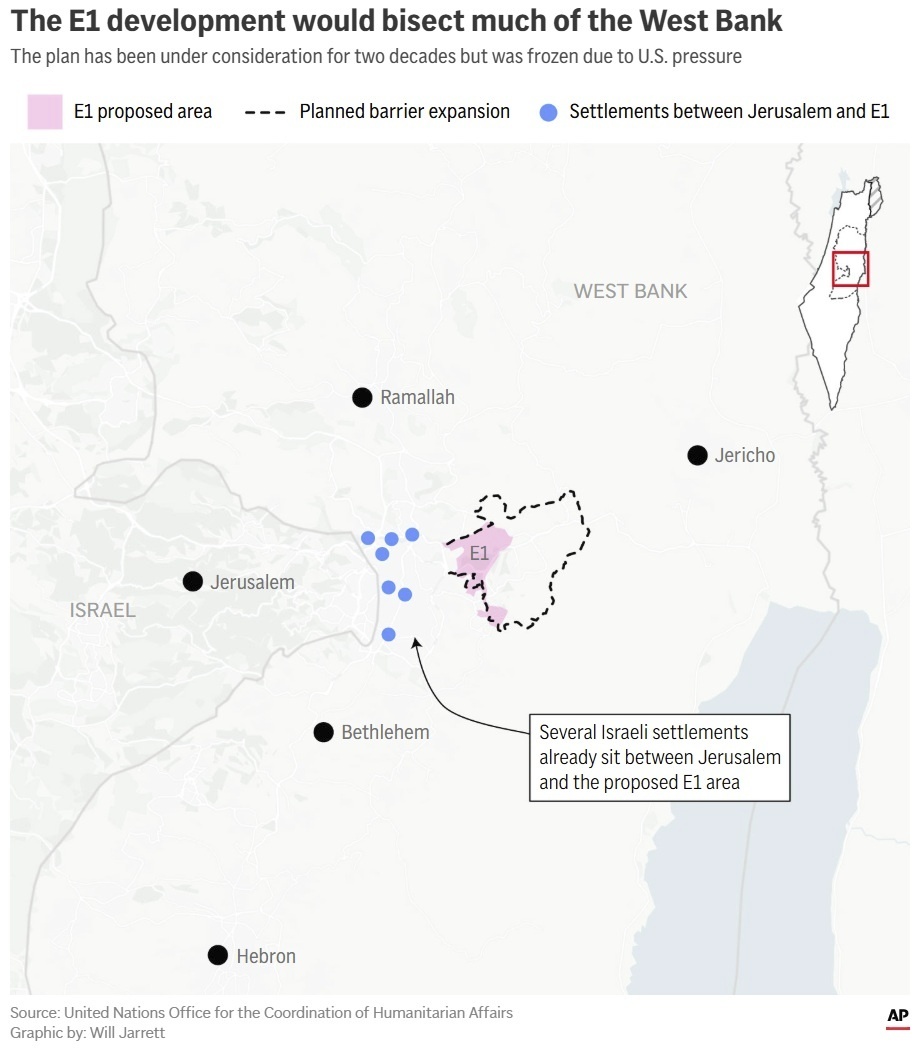
TEL AVIV, Israel (AP) — Settlement development in E1, an open tract of land east of Jerusalem, has been under consideration for more than two decades, but was frozen due to U.S. pressure during previous administrations.


Melanie Lidman
August 20, 2025


TEL AVIV, Israel (AP) — Israel gave final approval Wednesday for a controversial settlement project in the occupied West Bank that would effectively cut the territory in two, and that Palestinians and rights groups say could destroy hopes for a future Palestinian state.

Settlement development in E1, an open tract of land east of Jerusalem, has been under consideration for more than two decades, but was frozen due to U.S. pressure during previous administrations. The international community overwhelmingly considers Israeli settlement construction in the West Bank to be illegal and an obstacle to peace.

Far-right Finance Minister Bezalel Smotrich, a former settler leader, cast the approval as a rebuke to Western countries that announced their plans to recognize a Palestinian state in recent weeks.

“The Palestinian state is being erased from the table not with slogans but with actions,” he said on Wednesday. “Every settlement, every neighborhood, every housing unit is another nail in the coffin of this dangerous idea.”

Israeli Prime Minister Benjamin Netanyahu rejects the idea of a Palestinian state alongside Israel and has vowed to maintain open-ended control over the occupied West Bank, annexed east Jerusalem, and the war-ravaged Gaza Strip — territories Israel seized in the 1967 war that the Palestinians want for their state.

Israel’s expansion of settlements is part of an increasingly dire reality for Palestinians in the occupied West Bank as the world’s attention focuses on the war in Gaza. There have been marked increases in attacks by settlers on Palestinians, evictions from Palestinian towns, Israeli military operations, and checkpoints that choke freedom of movement, as well as several Palestinian attacks on Israelis.

More than 700,000 Israelis settlers now live in the West Bank and east Jerusalem.

The location of E1 is significant because it is one of the last geographical links between the major West Bank cities of Ramallah, in the north, and Bethlehem, in the south.

The two cities are 22 kilometers (14 miles) apart, but Palestinians traveling between them must take a wide detour and pass through multiple Israeli checkpoints, spending hours on the journey. The hope was that, in an eventual Palestinian state, the region would serve as a direct link between the cities.

“The settlement in E1 has no purpose other than to sabotage a political solution,” said Peace Now, an organization that tracks settlement expansion in the West Bank. “While the consensus among our friends in the world is to strive for peace and a two-state solution, a government that long ago lost the people’s trust is undermining the national interest, and we are all paying the price.”

If the process moves quickly, infrastructure work in E1 could begin in the next few months and construction of homes could start in around a year. The plan includes around 3,500 apartments that would abut the existing settlement of Maale Adumim. Smotrich also hailed the approval, during the same meeting, of 350 homes for the settlement of Ashael near Hebron.

Israel’s government is dominated by religious and ultranationalist politicians, like Smotrich, with close ties to the settlement movement. The finance minister has been granted Cabinet-level authority over settlement policies and vowed to double the settler population in the West Bank.
Samaritan's Purse joins Gaza Humanitarian Foundation's aid efforts in Gaza

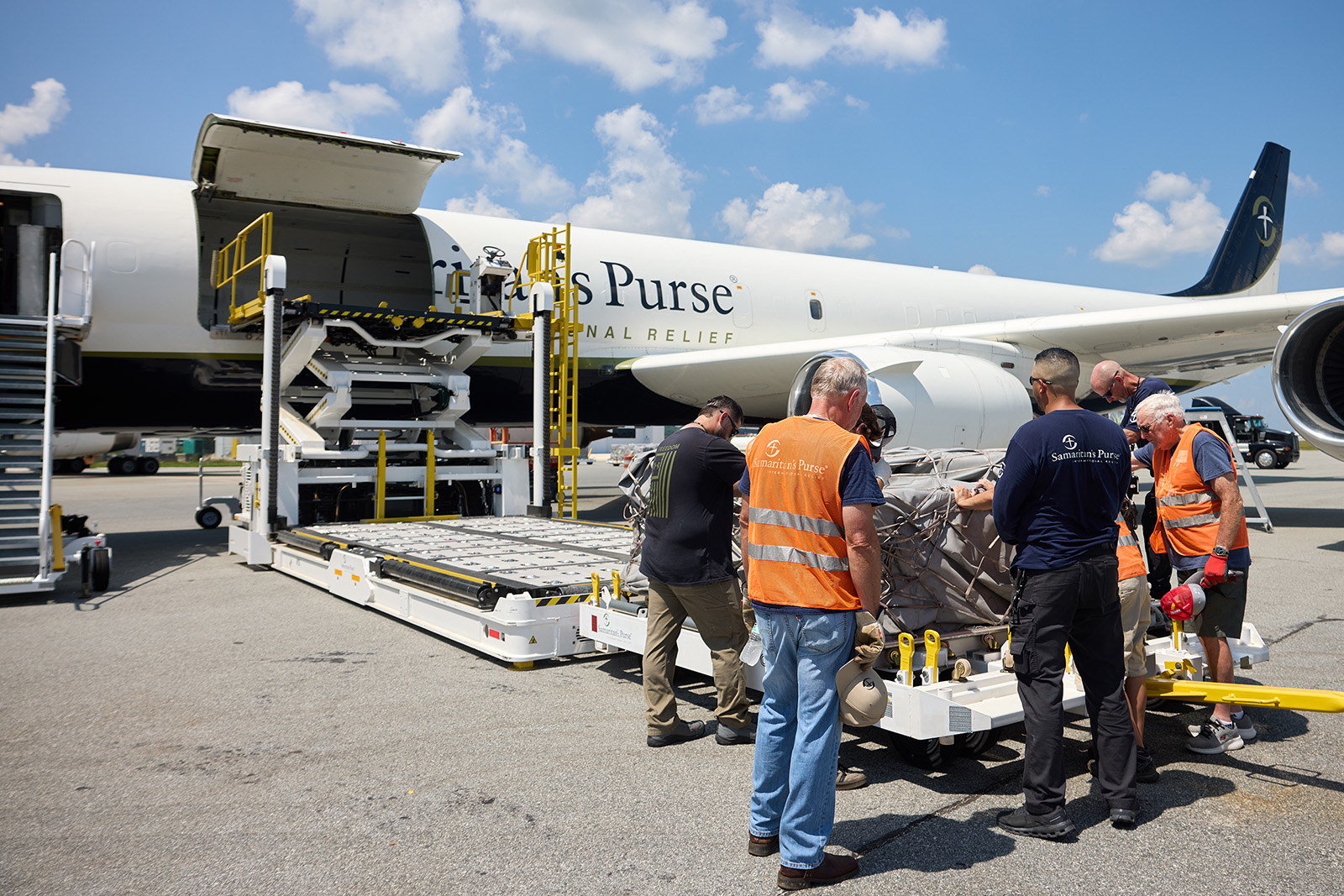
(RNS) — Since July 26, Samaritan’s Purse has sent eight relief flights and a medical team to Gaza — one of the only faith-based groups to join the Gaza Humanitarian Foundation’s efforts.


Samaritan’s Purse staff load humanitarian aid onto a plane bound for the Middle East in late July 2025.
(Photo courtesy of Samaritan’s Purse)

Yonat Shimron
August 21, 2025

(RNS) — After struggling for months to find partners to help them deliver aid to Gaza, the embattled Gaza Humanitarian Foundation has picked up a collaborator — Samaritan’s Purse, the international Christian disaster relief organization headed by the Rev. Franklin Graham.

Since July 26, Samaritan’s Purse has sent eight relief flights for Gaza
carrying 169 tons of supplemental food packets that have been distributed through the Gaza Humanitarian Foundation’s four Gaza-based hubs. In addition, Samaritan’s Purse has sent a medical team of six nurses and paramedics to provide first aid treatment at these distribution sites, a spokesperson for the organization confirmed.

The GHF is a private, Israel-and U.S. backed project staffed with U.S. security contractors and financed with $30 million in U.S. tax dollars, and a matching commitment from Israel. It was created to displace the United Nations’ various humanitarian relief efforts, which Israel has prevented from functioning.

But since the GHF began its operations in mid-May, more than 1,400 unarmed Palestinian civilians have reportedly been killed by Israel Defense Forces while seeking food aid at or near the GHF distribution sites, known as Safe Distribution Hubs, located in remote militarized zones.

Aid groups and governments around the world have condemned the operation and accused it of violating humanitarian standards and putting civilians at risk at a time when the region is experiencing mass starvation.

The GHF’s chairman, the Rev. Johnnie Moore, a prominent evangelical and a onetime faith adviser to President Donald Trump, has pleaded with various international aid groups to join the effort. Many faith-based aid groups, such as Catholic Relief Services, have expressed deep skepticism of GHF and its methods and have rejected collaborations with it.


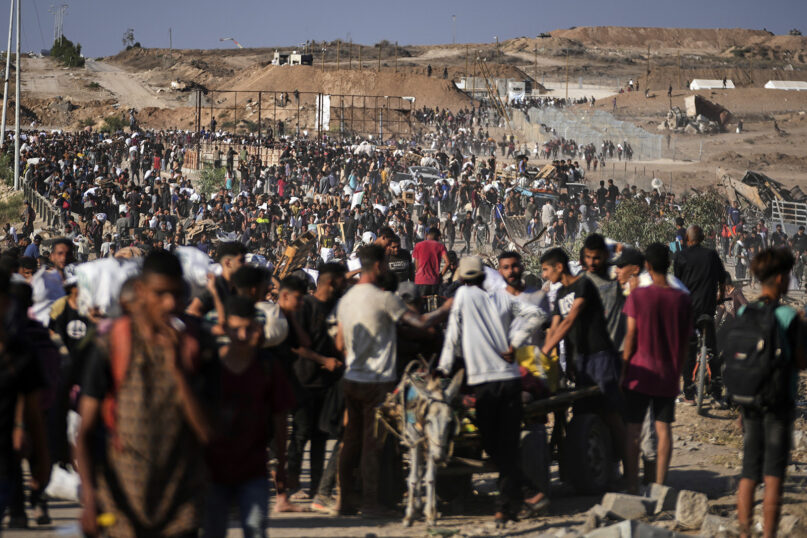
FILE – Palestinians carry humanitarian aid packages near a Gaza Humanitarian Foundation distribution center operated by the U.S.-backed organization in Khan Younis, southern Gaza Strip, June 26, 2025. (AP Photo/Abdel Kareem Hana)

But Ken Isaacs, vice president of programs and government relations for Samaritan’s Purse, said his organization, based in North Carolina, said he was satisfied with GHF’s operations.

“I visited several Gaza Humanitarian Foundation sites and was impressed with how they were secured and the professionalism of the GHF staff,” Isaacs said. “They are working in a very difficult situation, and I am grateful that Samaritan’s Purse has the opportunity to collaborate with GHF and other partners. We want to help as many people as we can.”

A GHF spokesperson said the outfit works with other non-governmental organizations but declined to name them, saying, “many are afraid to say so because of fear from Hamas.”

Israel’s nearly two-year war of retribution against Hamas in the Gaza Strip has killed 62,000 people and earned it international censure across the world, with leading human rights organizations concluding that Israel is engaged in a genocide.

In early March, Israel cut off all aid for Gaza, a move that Israeli officials said was taken to pressure Hamas into making concessions in ceasefire talks. That cutoff ended in May, when the GHF began a limited distribution of aid in Gaza. It may have been too late; international observers said starvation had set in. The Gaza Health Ministry has said that at least 271 people, including 112 children, have died of starvation to date.

International observers say that not enough aid is being allowed in and that the distribution system is deeply flawed and unable to reach the poorest people who desperately need it.


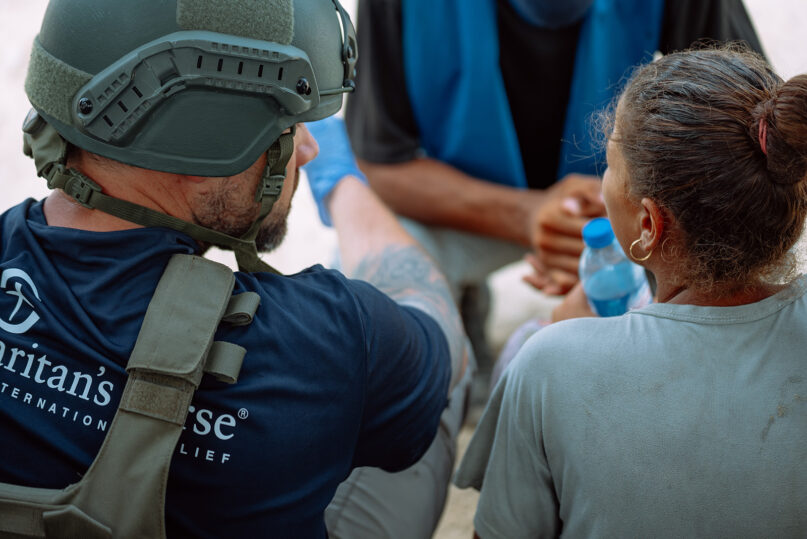
Samaritan’s Purse staff offers medical care to Gazans.
 (Photo courtesy of Samaritan’s Purse)

“They call them secure distribution sites,” said Alex de Waal, executive director of the World Peace Foundation at Tufts University and the author of a book on mass starvation. “Well, the people aren’t secure. A lot of them get killed. But the rations aren’t secure either. No voluntary agency would ever hand out food in this way. You simply don’t know who’s coming to get it and people are getting multiple boxes because they’re strong. The strongest get the most.”

On Aug. 7, Mike Huckabee, the U.S. ambassador to Israel, announced a U.S. plan to expand aid distribution operations in Gaza to as many as 16 points. But since then, Israel announced its plan to invade Gaza City, the most populous city in the strip, forcing hundreds of thousands of residents to once again uproot themselves. It’s not clear whether the expanded sites will be opened during a full-scale military incursion of the type the government of Israel has now approved.

A GHF spokesman said it recently piloted a direct-to-community distribution program.

This is not the first time Samaritan’s Purse has provided aid in this conflict. The After the Oct. 7, 2023, Hamas attack on Israel, Samaritan’s Purse pledged 42 ambulances to Magen David Adom, Israel’s national emergency medical service; of those, 22 have already been provided.

In Gaza, it has also worked with other partners to provide Palestinians with medicine, shelter materials and clean water.

A spokesperson added, “We anticipate being able to do more in the future.”
Twelver Shiism – a branch of Islam that serves both as a spiritual and political force in Iran and beyond

(The Conversation) — Twelver Shiites believe in a continuous line of 12 imams, all regarded as descendants of the Prophet Muhammad

.

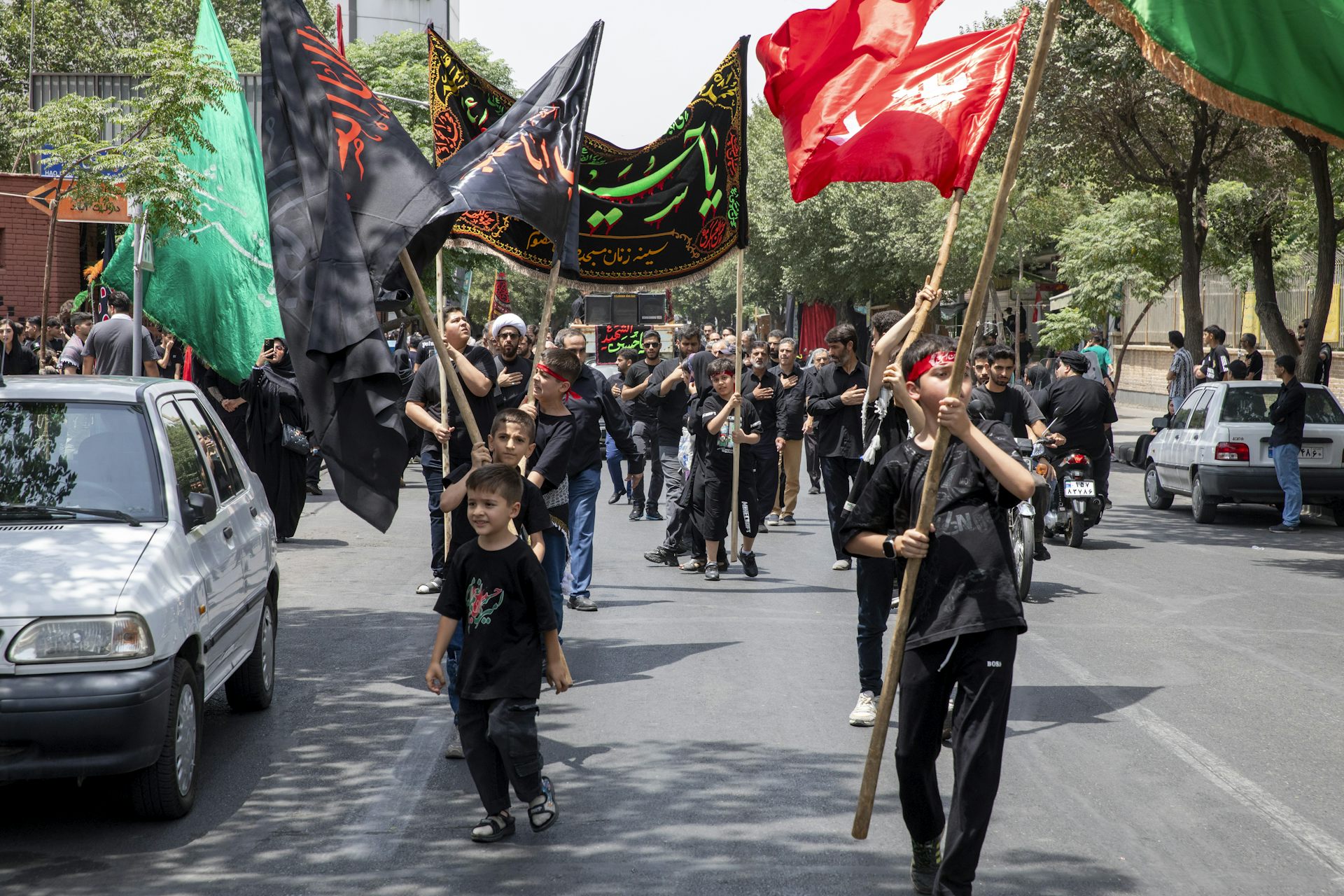
Iranian Shiite mourners during Ashura, the 10th day of Muharram, on July 6, 2025, in Tehran. (Photo by Majid Saeedi/Getty Images)

Massumeh H. Toosi
August 25, 2025

(The Conversation) — Twelver Shiism is the largest branch within Shiism – one of the two major sects within Islam. Shiism is the second-largest tradition within Islam overall, following the Sunni tradition.

Iran is the only country to have Twelver Shiism as its official religion. In this tradition, religious leaders known as the marājiʿ al-taqlīd – the highest-ranking cleric within Twelver Shiism – and other high-ranking clerics, including ayatollahs, are regarded as moral and spiritual authorities whose guidance extends to both religious and political matters.

The second-largest population of Twelvers after Iran is in Iraq. Other major communities live in Pakistan, India, Lebanon, Azerbaijan and other countries of the Persian Gulf, such as Bahrain and Kuwait. There are also Twelver communities in some Western countries.

I am a practicing Twelver and have worked for an anthropological research project that highlights the rich cultural traditions of ethnic groups across Iran, based on written historical documents that cover various topics. This experience deepened my appreciation for Iran’s diversity, including the many ways in which Twelver Shiism is practiced and understood. Twelver Shiism is deeply rooted in a spiritual, theological and ethical tradition with over a millennium of history.

In Twelver Shiism, these values touch many aspects of daily and communal life. They are present in traditions and rituals, such as during Muḥarram, the first month of the Islamic calendar. They are also reflected in art, architecture and philanthropy as moral and religious obligations.

History and core beliefs


According to the Shiite tradition, the Prophet Muhammad’s family holds a special, divinely guided role in both religious and political leadership of the Muslim community.

Twelver Shiites, however, believe in a continuous line of 12 imams, considered to be descendants of the prophet through his daughter Fatima and son-in-law Ali. These imams represent moral integrity and spiritual authority and have a deep knowledge of the Quran and Islamic law.

The origin of Shiite identity traces back to the period following Muhammad’s death in A.D. 632. One group of Muslims supported Abu Bakr, a close companion of the prophet, as the first caliph – the successor to Muhammad and the leader of the Muslim community. This group later came to be known as Sunnis. Others believed that Ali, the prophet’s cousin and son-in-law, had been designated to lead. This group became known as Shi‘at Ali – the Party of Ali – which eventually evolved into the Shiite branch of Islam.

In the following years, Imam Hussein ibn Ali – the grandson of Muhammad – refused to recognize the authority of the Umayyad caliph Yazid, the ruler of the Umayyad dynasty from 680 to 683. Yazid’s rule marked the beginning of dynastic succession in the caliphate, a change many Shiites criticized as a departure from earlier Islamic principles of leadership. Hussein objected to Yazid’s claim on both political and moral grounds. He questioned Yazid’s legitimacy and refused to pledge allegiance to a ruler he believed was unjust.

Accompanied by a small group of companions and family members, Hussein embarked on a journey toward Kufa, Iraq, where he was intercepted and ultimately killed at the Battle of Karbala in 680. In Twelver Shiism, this death is revered as martyrdom, and the event holds enormous historical and religious significance, as it stands as a symbol of resistance to injustice when faced with tyranny. The remembrance of Karbala stands at the heart of the Shiite worldview. Within the Twelver tradition, it affirms the right to resist injustice.

In the following centuries, further differences over succession led to divisions within Shiites. Twelver Shiites recognize 12 imams, while other groups, such as the Ismailis and Zaydis, follow different descendants of Ali and have formed their own interpretations of religious authority.

Mourning and reflection

The battle of Karbala is mourned as a tragedy but remembered as a moral triumph among Shiite Muslims.

During the month of Muḥarram, the first 10 nights are set aside for reflection on the martyrdom of Hussein. This period culminates on the 10th day known as Āshūrā.


The observances of Ashura, the 10th day of Muharram, on July 6, 2025, in Tehran.
Majid Saeedi/Getty Images

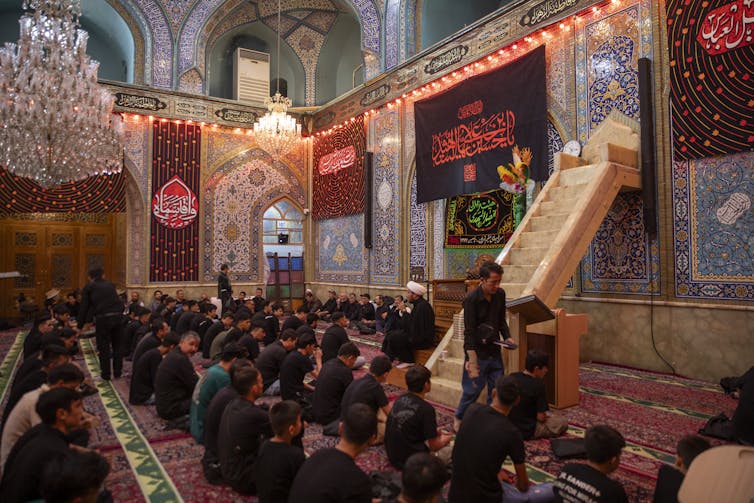
During these nights, Shiite families and communities create spaces of grief and remembrance. In many neighborhoods, shrines and mosques – grand or modest – are adorned with black flags, handwritten prayers, chains and candles.

Taziyyah – elegies and processions – enact the story of the martyrdom of Hussein as a symbol of resistance and sacrifice.

During those 10 days, people often turn living rooms, basements or alleyways into mourning spaces. They hang black, red and green cloth on the walls, and they light candles. Families and neighbors gather to recite poetic elegies and serve tea and food. These moments bring mourning into the rhythm of daily life.

The ritual and the art of the Taziyyah.

Culture and art


Love for the prophet’s family, and a continuing search for justice and spiritual meaning, has inspired poetry, architecture, ritual and daily practice among Twelver Shiites across generations.

In Twelver contexts, especially in Iran and Iraq, grief is expressed through shrine design. Holy shrines are decorated with mirror mosaics, glowing tiles and engraved prayers. This architecture has symbolic and spiritual significance that deepens the sense of awe and respect in visitors, conveying a sense of hope for divine light and inviting reflection on martyrdom as the most honored form of death, or ashraf al-mawt.

Decorative ceiling of the Imam Hussein Shrine in Karbala, Iraq.

There are other examples of how the spiritual memory of Karbala has inspired Twelver Shiites across generations: Artists in the the Saqqakhana movement, an Iranian art movement that emerged in the 1950s and ‘60s, drew inspiration from devotional structures and other popular rituals of Shiite piety. The word saqqakhanan – house of the water-giver – refers to small shrinelike fountains installed on neighborhood corners, where water is offered in remembrance of Hussein’s thirst at Karbala.

These structures, often decorated with chains, candles, mirrors and handwritten prayers, serve as modest devotional spaces where passersby pause for reflection or prayer. The artists used materials such as calligraphy, amulets, talismans, prayer beads and cloth, and combined them with techniques from modern painting and sculpture. Their goal was not to depict faith directly but to translate its emotional and symbolic language of devotion into visual expression. This movement carried into modern art galleries.


Philanthropic practices

This living tradition also shapes how Twelver Shiism understands generosity and philanthropy as a moral and religious obligation.

Philanthropy in Twelver Shiism evolved under the guidance of contemporary “marāji,” the highest-ranking religious scholars, who interpret the obligations of giving in light of present-day realities.

Like all Muslims, Twelvers are required to give zakat, a key Islamic philanthropic tradition and an obligatory act of giving. In addition, Shiite tradition uniquely includes Khums, a 20% religious obligation on annual savings and surplus income, which Twelvers pay directly to recognized Shiite religious authorities or their appointed representatives. Half is allocated to the needy descendants of the prophet, while the other half is entrusted to religious authorities to support religious, educational and charitable initiatives.

Shiite communities also sustain charitable giving through the institution of waqf, or charitable endowment, which supports mosques, religious schools and aid for the poor.

According to Islamic scholar Seyyed Hossein Nasr, the diversity within Islam, including the Shiite tradition, reflects the richness of Islam. Twelver Shiism, in this view, stands as a profound spiritual path within the broader Islamic tradition.


(Massumeh H. Toosi, PhD Student in Philanthropic Studies, Indiana University. The views expressed in this commentary do not necessarily reflect those of Religion News Service.)


The Conversation religion coverage receives support through the AP’s collaboration with The Conversation US, with funding from Lilly Endowment Inc. The Conversation is solely responsible for this content.