Saturday, August 30, 2025

Does the EU-US trade deal break WTO rules?
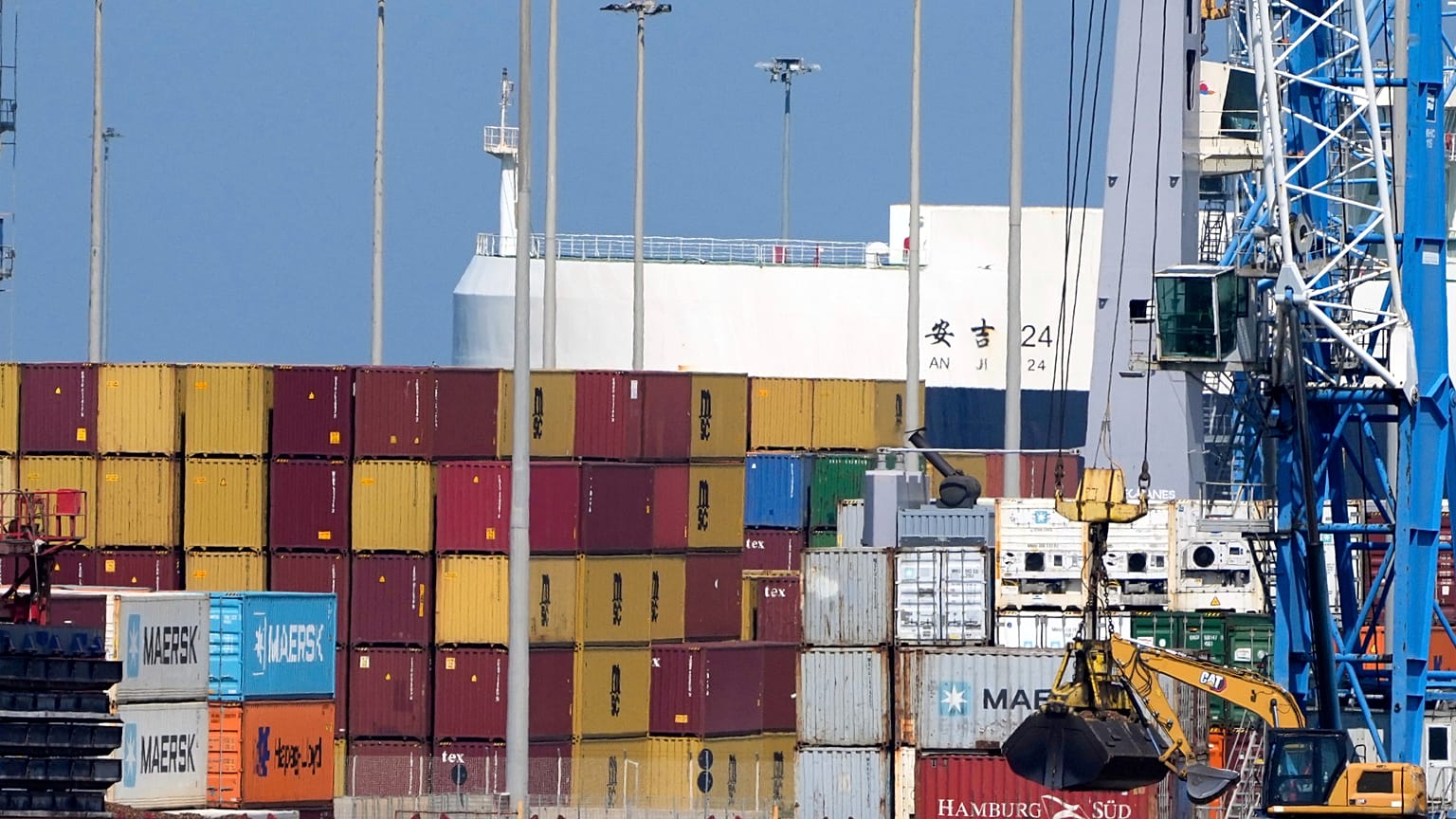
Stacks of containers stand near a cargo ship in the Civitavecchia Harbour, Italy, Thursday, Aug. 7, 2025.
Copyright AP Photo

By Peggy Corlin
Published on 

By granting tariff advantages to the US, the EU risks violating WTO international trade rules. The political impact could be significant.

A fervent defender of a rules-based trading order, the EU has been under attack since its deal with the US, accused of betraying its commitments to the WTO and to multilateralism. But is that really the case?

At first glance, the 21 August deal grossly violates WTO rules: the US President, has unilaterally demanded preferential tariffs for US imports to the EU that breach the Most-Favoured-Nation (MFN) principle.

“From the perspective of WTO rules, the deal is discriminatory. We have fairly clear rules, namely the MFN principle: any tariff advantage granted to one member of the WTO must be extended to all WTO members,” Julien Blanquart, of law firm SheppardMullin, told Euronews.

But by applying 0% tariffs to US industrial goods and certain agricultural products, the EU is indeed offering an advantage that discriminates against its other international partners who do not benefit from the same access to its market.

The Commission points however to an exception to the MFN principle in article 24 of the WTO, which allows free trade areas or interim agreements, provided that they cover the majority of trade.

“The deal is part of an effort to liberalise and lower tariffs in a reciprocal manner,” a senior EU official said, pointing to the joint statement published by the US and the EU on 21 August, which states that the deal is “a first step in a process that can be further expanded over time to cover additional areas and continue to improve market access and increase their trade and investment relationship.”

Political impact

Blanquart underlined however that the framework agreement which has been presented is currently only a political statement and not a treaty which is legally binding.

"At this stage, everything really depends on how the current agreement will be translated into a final deal between the EU and the US, and how it will be notified to the WTO,” he said, adding: “As long as there is no official text, its compatibility with the rules remains legally fragile.”

According to the lawyer, a WTO member country could decide to bring the case before the WTO Dispute Settlement Body and challenge its validity.

However, this body has been paralysed since the US refused to renew the mandates of some of its judges.

Nevertheless, there could be a political impact for the EU, which presents itself as a champion of multilateralism.

“If it's declared non-compliant with WTO rules, it would be yet another blow to multilateralism,” Blanquart added.

 

The US brings in a navy fleet to Venezuela's coast — but does the Suns cartel exist?

IF YOU HAVE TO ASK THEN NO IT DOESN'T
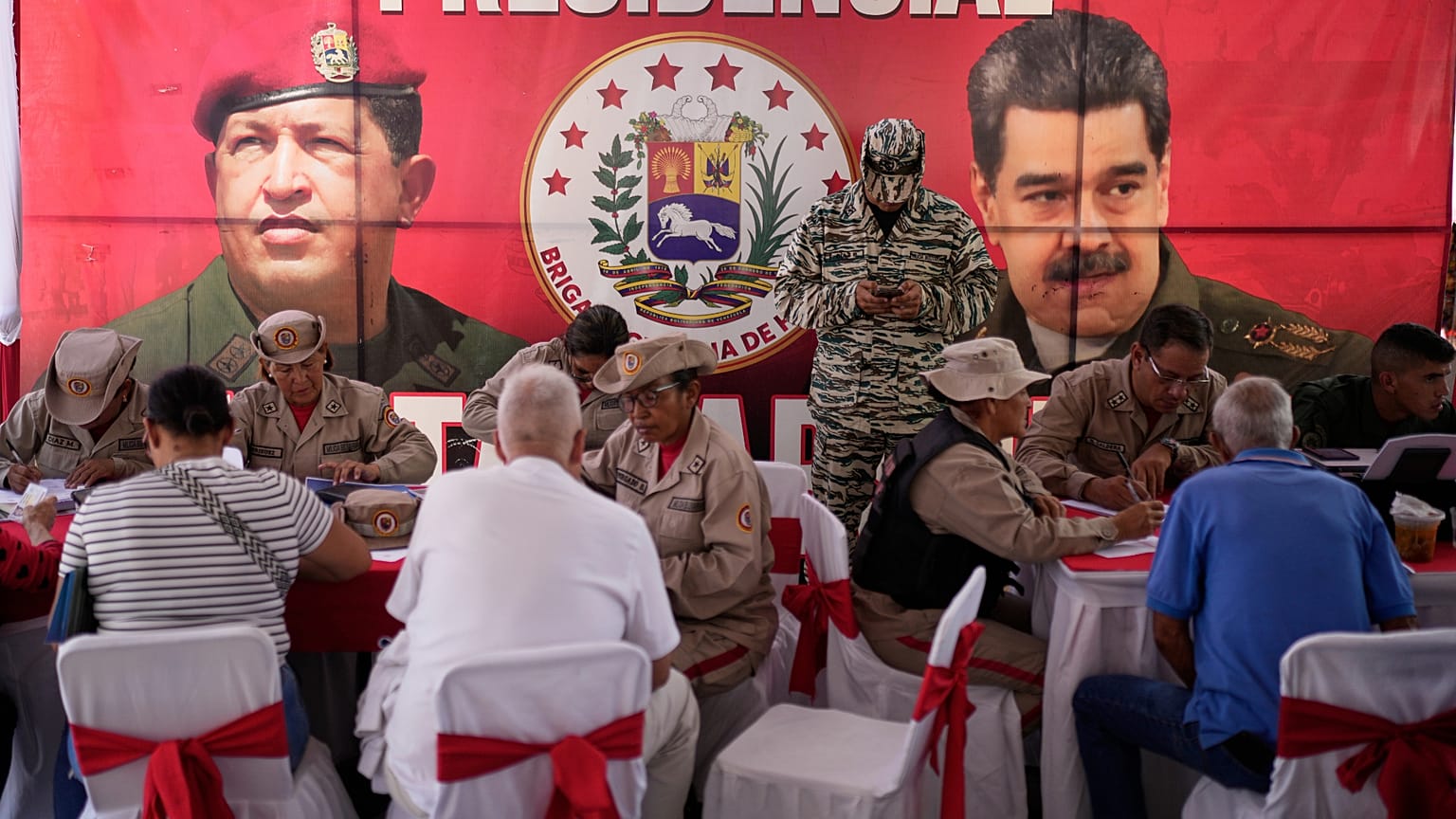
Venezuelans sign up during a national enlistment drive to join the civil militias at a square in Caracas, Venezuela, on 23 August, 2025.
Copyright AP Photo

By Euronews
Published on 

American vessels are expected to arrive off South America next week in an apparent attempt to stop drug trafficking.

The US is sending ships into the waters off Venezuela as part of an effort to curb drug trafficking from Latin America.

Three amphibious assault vessels are due to reach the region by next week, according to an American defence official who spoke on the condition of anonymity.

The confirmation of the deployment comes a week after US President Donald Trump confirmed the move, which will see the American military attempt to stop cartels he blames for the flow of fentanyl and other drugs into the US.

One of the cartels Trump thinks is responsible is the Cartel de los Soles (Cartel of the Suns), a group his administration has designated as a terrorist organisation, despite doubts that it even exists.

What is the Cartel of the Suns?


In July, the Trump administration suggested that the Cartel of the Suns was led by the Venezuelan President Nicolas Maduro and was backed by other “other high-ranking Venezuelan individuals”.

The US government claimed the so-called cartel supports criminal groups such as Venezuela’ Tren de Aragua and Mexico’s Sinaloa Cartel by weaponising drug trafficking against the US.

Both Venezuela and its neighbour Colombia insist that the group has no basis in reality, while Washington’s allies in the region, including Argentina and Paraguay, have fallen behind Trump’s position.

Experts say that there is no evidence of a group of that name with a defined hierarchy, while an anti-drug report from the US State Department in March did not mention it by name.

Insight Crime, a think tank that specialises in corruption in the Americas, said earlier this month that the US’ sanctions against the Cartel of the Suns were misdirected.

“The US government’s new sanctions against Venezuela’s so-called 'Cartel of the Suns' incorrectly portray it as a hierarchical, ideologically driven drug trafficking organisation rather than a profit-based system of generalised corruption involving high-ranking military figures,” it wrote.

The name, which refers to the suns depicted on Venezuelan military uniforms, was invented by the Venezuelan media after two generals were found to have been involved in drug trafficking in the early 1990s, according to the think tank.

US and Venezuela’s tense relationship

The relationship between Washington and Caracas has long been strained, with US officials decrying what they called undemocratic elections last year, which gave Maduro a third presidential term.

The US also strongly condemned the Venezuelan government’s crackdown on protesters after the elections. Several thousand demonstrators were jailed after the disputed vote last July.

The Venezuelan opposition leader Maria Corina Machado, whose ally Edmundo González is recognised by the US as the winner of the 2024 election, has expressed her support for Washington's latest policies regarding Venezuela.

Meanwhile, Maduro and his supporters have stoked fears about a potential US invasion, urging people to enlist in a volunteer militia designed to help the army against external attacks.


US targets Venezuela over ‘Soles’ cartel. Does it exist?


By AFP
August 28, 2025


The US is offering a reward of up to $50 million for the arrest of Venezuelan President Nicolas Maduro - Copyright AFP Schneyder Mendoza

Washington cited Venezuelan President Nicolas Maduro’s alleged role in the “Cartel de los Soles” as it dispatched five warships and thousands of Marines toward the Caribbean country for an anti-drug deployment.

While some of US President Donald Trump’s right-wing led allies in South America — Argentina, Ecuador and Paraguay — have echoed his designation of “Soles” as a terrorist organization, many have doubts such a group even exists.

Venezuela itself, and neighbor Colombia, insist there is no such thing as “Cartel de los Soles.”

Some experts agree, saying there is no evidence of the existence of an organized group with a defined hierarchy that goes by that name.


– View from the US –


The Trump administration in July described the “Cartel de los Soles” as a “Venezuela-based criminal group headed by Nicolas Maduro and other high-ranking Venezuelan individuals.”

It said the cartel “provides material support to foreign terrorist organizations threatening the peace and security of the United States, namely Tren de Aragua and the Sinaloa Cartel” — two major drug trafficking groups.

Washington upped a bounty to $50 million for the capture of Maduro on drug charges.

Yet in March, the latest US State Department report on global anti-drug operations made no mention of the “Cartel de los Soles” or any connection between Maduro and narco trafficking.

The United States did not recognize Maduro’s 2024 re-election, rejected by the Venezuelan opposition and much of the world as a stolen vote.


– Expert opinion –


“There is no such thing, so Maduro can hardly be its boss,” Phil Gunson, an analyst at the International Crisis Group think tank, told AFP of the so-called “Cartel de los Soles.”

And while there was no doubt of “complicity” between people in power and organized crime, “direct, incontrovertible evidence has never been presented” for the existence of an organized cartel by that name in Venezuela.

According to the InSight Crime think tank, the name was ironically coined by Venezuelan media in 1993 after two generals were nabbed for drug trafficking. The sun is a symbol on the military uniform epaulettes of generals in the South American country.

“Rather than a hierarchical organization with Maduro directing drug trafficking strategies, the Cartel of the Suns is more accurately described as a system of corruption wherein military and political officials profit by working with drug traffickers,” InSight Crime said on its website.

Maduro denies any connection to the drug trade, although two nephews of his wife have been convicted in New York for cocaine trafficking.


– What now? –


The United States says its Caribbean deployment is focused on combating drug trafficking, but Caracas fears there is more to it.

Venezuela has deployed warships and drones to patrol its coastline, and Maduro announced he would activate 4.5 million civilian militia members — a number questioned by observers — to confront “any threat.”

According to Mariano de Alba, a London-based geopolitics expert, the US deployment was likely not an attack force.

“If the Trump administration really wanted to provoke regime change” as claimed by Maduro, it would more likely rely on “surprise action,” de Alba told AFP.
Would Trump Actually Invade Venezuela?


By Matthew Smith - Aug 29, 2025,

The United States has intensified its pressure on Venezuela, including military deployments and a bounty for President Maduro's arrest, raising fears of an invasion after sanctions failed to achieve regime change.

A US military intervention in Venezuela, despite likely tactical victory, is fraught with extreme risks due to potential long-term asymmetric conflict, shattered infrastructure, and widespread regional opposition.

Neighboring countries like Colombia and Mexico have expressed strong opposition to a US invasion, warning of regional destabilization and the potential for a prolonged conflict.


After months of saber-rattling and harsh rhetoric, U.S. President Donald Trump dispatched military assets to Latin America to combat the narcotics trade. Three Arleigh Burke-class guided missile destroyers were sent to Caribbean waters off Venezuela, with Washington planning to send 4,000 marines to the region. The White House also issued a $50 million bounty for President Nicolas Maduro’s arrest as part of the crackdown on Venezuela. The autocratic president, who was charged with cocaine trafficking and narco-terrorism in 2020, is accused of leading the Cartel of the Suns, a drug trafficking organization tied to Venezuela’s military leadership. Fears are growing that the U.S. is building up to a military confrontation with Venezuela, especially since sanctions failed.

Countries across Latin America are growing worried that Washington’s actions presage unilateral U.S. military action against Caracas and further intervention in the region. President Trump appears determined to use whatever means available to oust President Maduro after his policy of maximum pressure, including strict sanctions, failed to spark regime change. The motivation to remove the despotic regime in Caracas is rooted in its profound illegitimacy. Not only did President Maduro renege on earlier promises to reintroduce democracy, but healso stole the July 2024 presidential election. Venezuela’s incumbent leader declared victory after the country’s regime-controlled electoral authority announced he won 51% of the vote despite evidence of a landslide win for the opposition.

Well before the July 2024 election, the Maduro regime had long been seen as illegitimate. During 2019, the National Assembly, then led by Juan Guaidó, invoked Venezuela’s Constitution to declare that President Maduro had usurped power and was not the legitimate leader of Venezuela. Afterward, Guaidó was internationally recognised as Venezuela’s lawful president, provoking a lengthy struggle with the despotic Maduro regime, which refused to cede power. By April 2023, this failed after the death of dozens of pro-opposition supporters and Guaidó losing office, which forced him to flee Venezuela fearing for his safety.

The events of July 2024 were followed by a brutal crackdown on political criticism and dissent ,exacerbating Caracas’ existing exclusion from the international community. This appears to have little impact on Venezuela’s despotic leader nor his grip on power. Indeed, U.S. sanctions targeting government officials and related entities have been in place since 2005. The Obama White House ramped up sanctions declaring a national emergency in 2015 because of the extraordinary threat posed to U.S. national security by the Maduro regime. In his first term, President Trump implemented even harsher sanctions, which crippled Venezuela’s economically vital oil industry. After July 2024, Washington, Brussels and their allies, including 10 Latin American countries, refused to recognize President Maduro’s victory.

President Trump and Secretary of State Marco Rubio are hawkish about invading Venezuela. Between 2016 and 2020, various plans were discussed by the Trump White House about how to use the U.S. military to topple Maduro’s autocratic regime. In 2018, then Senator Rubio proposed that a U.S. military intervention in Venezuela would provide a solution to the long-time threat posed by Caracas to the stability of the Americas. The failure of diplomatic negotiations and economic sanctions to oust Maduro and restore democracy in Venezuela points to military intervention as the only remaining option. Venezuela’s increasing international isolation, along with traditional allies Russia and Iran being preoccupied with their own serious conflict,s makes now an ideal time to strike against the profoundly unlawful regime in Caracas.


In response to Washington’s deployment of warships capable of conducting surgical strikes with Tomahawk missiles off Venezuela’s coast and the bounty for President Maduro’s arrest, Caracas activated the 4.5-million-strong Bolivarian militia. This branch of Venezuela’s military, composed of poorly trained and lightly armed volunteers, is the least combat-ready component of the National Bolivarian Armed Forces. The military’s main branches, the army, navy and air force, with 123,000 active personnel, are on high alert. Caracas sent 15,000 military personnel to the border with Colombia, ostensibly to fight drug trafficking and bolster security.

Venezuela, unlike Washington’s last regional interventions in Grenada and Panama, possesses a strong military. There is a blue-water navy operating seven frigates and one submarine, a 63,000-strong army equipped with main battle tanks, and an air force flying modern jet fighters. Indeed, Venezuela’s military is ranked as the seventh most powerful in Latin America, ahead of Ecuador but behind Peru. Despite those credible numbers, if Washington commits U.S. forces to combat operations in Venezuela it will win an overwhelming tactical victory against a military ill-prepared to fight a medium to high intensity war.

A decade-long crippling economic meltdown is impacting the quality as well as the quantity of training, logistics, and equipment, severely degrading the armed forces’ combat capability. This is further exacerbated by a heightened focus on maintaining domestic security and internal order, particularly for the army, which distracts the military from its core war-fighting role. Events from 2021 support this hypothesis. A handful of Revolutionary Armed Forces of Colombia (FARC) dissidents, leftist guerrillas who rejected Bogota’s 2016 peace deal, resoundingly defeated Venezuela’s military in a series of clashes over a year-long conflict in the state of Apure.

A U.S. invasion of Venezuela, despite leading to an unqualified military victory, is fraught with extreme risk. The greatest threat is that U.S. troops will not be welcomed in Venezuela or Latin America. There is a long history of distrust borne of Washington’s brutal regional military interventions and coups, which destabilized many countries, leading to cruel military dictatorships that persecuted civil society. In many instances, where U.S. ground forces were deployed in Latin America, the troops behaved poorly, breeding considerable hostility among local communities. These feelings are aggravated by Washington’s lack of positive regional engagement since 2016 and President Trump’s decision to slash aid.

Despotic President Maduro will use that sentiment, along with Chavist Venezuela’s anti-imperialist credentials, to whip up hate and anti-American resistance in Latin America. There is already a resounding response to Maduro’s call for citizens to respond to U.S. threats; thousands of Venezuelans are volunteering for the Bolivarian Militia. For these reasons, after invading Venezuela, Washington could find itself fighting a grueling, long-term asymmetric war. The difficulties associated with that conflict will be magnified by Venezuela’s shattered infrastructure and broken institutions, which were decimated by the country’s profound economic collapse. Another further concern is the potential for multiple centers of resistance because of Venezuela’s highly fragmented civil society and the existence of various non-state armed groups operating in the country.


In a country that is double the size of Iraq, any invasion and subsequent occupation to rebuild a devastated Venezuela will require a massive number of troops. Estimates vary, but reliable sources point to the deployment of more than 100,000 U.S. troops with supporting naval, air and logistical elements, with double or more of that number required if Washington’s experience in Iraq is any indication. At its peak the U.S. deployed 170,300 personnel who struggled to control Iraq’s territory and defeat an ideologically driven anti-American multiparty insurgency.

Opposition to a U.S. invasion is considerable and growing. Mexico, Cuba and Colombia have rejected the deployment of U.S. military assets near Venezuela. President Claudia Sheinbaum of Mexico stated she was opposed to any sort of military intervention in Latin America. Colombia’s President Gustavo Petro warned a U.S. invasion risks turning Venezuela into another Syria, where a savage 14-year multiparty civil war spawned terrorist movements and displaced over 13 million refugees. President Petro was quoted by major Colombian newspaper El Tiempo as saying:

"The gringos are in the pot, they think that by invading Venezuela they solve their problem, they put Venezuela in the case of Syria, only with the problem that they are dragging the same thing into Colombia,"


The Andean country’s leader further cautioned that such a conflict could spill over into Colombia, dragging the long-standing U.S. ally into the war. Various leftist guerrillas still fighting in Colombia, including FARC dissidents and the National Liberation Army (ELN), potentially will join the conflict to boost their flagging popularity, territory and influence. Even if those insurgents do not become directly involved, they will emerge as important conduits for arms, training and logistical support to Venezuela’s resistance. Consequently, they strengthened their power base in Colombia and Venezuela, while bolstering recruitment and income. This will further destabilize a fragile Colombia a country recovering from a lengthy multi-party civil war. These possible outcomes highlight the considerable risk of regional contagion and destabilization that U.S. military intervention in Venezuela will cause.

By Matthew Smith for Oilprice.com


What is the current state of EU–Russia trade? Main export and import flows in 2025

EU-Russia trade since the invasion of Ukraine
Copyright Copyright 2006 AP. All rights reserved.

By Servet Yanatma
Published on 

EU–Russia trade volume fell to its lowest level since 2002 in the second quarter of 2025. The EU also reported a trade surplus for the first time in more than 20 years.

EU trade with Russia has fallen sharply since Russia's invasion of Ukraine in February 2022. The EU introduced many import and export restrictions, leading to a 61% fall in exports to Russia and an 89% fall in imports from Russia between the first quarter of 2022 and the second quarter of 2025.

According to Euronews research based on Eurostat data, trade in the second quarter of 2025 dropped to the lowest level since 2002, when records began. In the same quarter, the EU also recorded its first trade surplus with Russia in more than 20 years.

So, what are the main export and import flows in 2025? How has trade between the EU and Russia changed since the invasion of Ukraine? And how important is trade with Russia for the EU?

EU trade with Russia

According to Eurostat, in the second quarter of 2025 imports from Russia fell, while exports to Russia rose compared with the previous quarter. As a result, the EU’s trade balance with Russia, which had always shown a deficit, turned into a small surplus of €0.5 billion. Imports were worth €7 billion, while exports to Russia reached €7.5 billion, bringing total trade to €14.5 billion.

This represents an 82% drop in trade volume compared with the first quarter of 2022, when the Russian invasion began and trade stood at €81.9 billion. That quarter marked the third-highest level since records began in 2002, with the peak reached in the first quarter of 2013 at €82.9 billion.

The EU, together with the G7 countries and other like-minded partners, stopped treating Russia as 'a Most-Favoured-Nation' and implemented a fourth package of sanctions on 15 March 2022. This removed key trade benefits that Russia enjoyed as a World Trade Organization (WTO) member. Instead of raising import tariffs, the EU chose to act through sanctions, including bans and restrictions on both imports and exports of certain goods.

The share of trade with Russia since the invasion of Ukraine

Until 24 February 2022, when it invaded Ukraine, Russia was one of the EU’s main trading partners. Since then, its role has diminished dramatically, as shown by the decline in its share of extra-EU trade rather than nominal figures alone.

Extra-EU trade refers to transactions with all countries outside the EU.

Russia’s share of extra-EU exports fell from 3.2% in the first quarter of 2022 to 1.2% in the second quarter of 2025. Over the same period, its share of extra-EU imports dropped from 9.3% to just 1.1%. This an 88% decline.

EU’s energy deficit with Russia falls to €4.2 billion

The EU’s overall trade balance with Russia is closely linked to energy products. In 2021 and 2022, high energy prices pushed the energy trade deficit to a peak of €42.8 billion in the second quarter of 2022. By the second quarter of 2025, however, import restrictions and lower energy prices had reduced the deficit to €4.2 billion.

At the same time, the EU’s surplus in machinery and vehicles dropped sharply from €9.7 billion in the second quarter of 2021 to just €0.5 billion in the second quarter of 2025.

Chemicals and related products were not affected by the sanctions. By mid-2025, they accounted for the EU’s largest trade surplus with Russia at €2.8 billion, down from €3.2 billion in the second quarter of 2021.

EU’s energy dependence on Russia falling

The EU’s goal is to reduce its energy dependence on Russia, and significant progress has been made. In the first quarter of 2021, Russia was the EU’s largest supplier of petroleum oils. Following the invasion of Ukraine, however, a major shift took place in the EU’s oil trade.

The EU ban on seaborne imports of Russian crude oil, which came into effect on 5 December 2022, together with the embargo on refined oil products, led to a sharp decline in imports from Russia. As a result, Russia’s share of petroleum oil imports fell from 29% in the first quarter of 2021 to just 2% in the second quarter of 2025. During the same period, the share of imports from the US rose by 5 percentage points (pp), and from Norway by 4pp.

Over the same period, Russia’s share of EU natural gas imports dropped from 39% to 13%. Nickel imports fell from 41% to 15%, while iron and steel declined from 18% to 6%.


Former Ukrainian parliament speaker Andriy Parubiy shot dead in Lviv

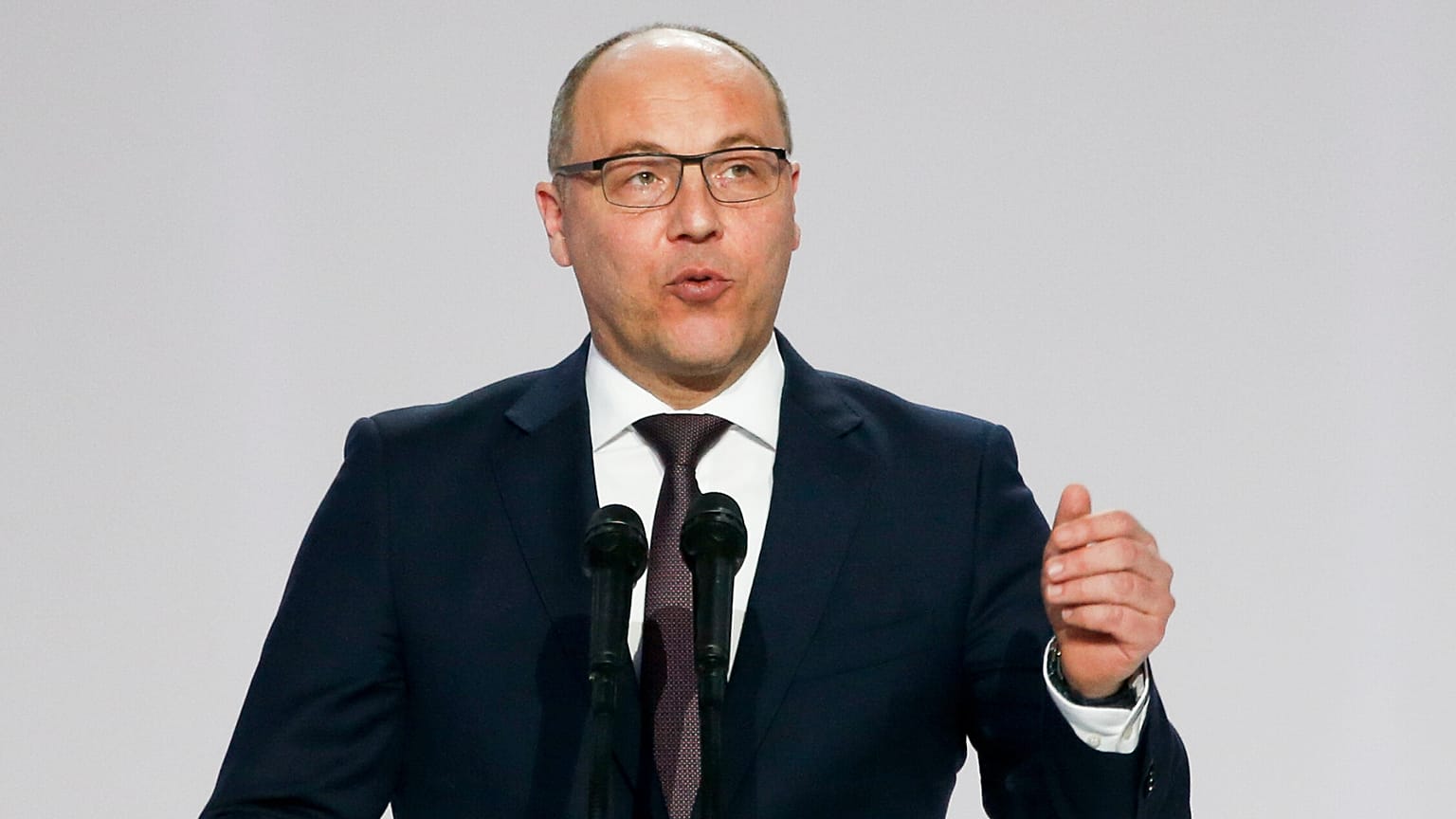
Ukrainian parliament speaker Andriy Parubiy speaks at a meeting of Ukrainian President Petro Poroshenko's supporters in Kiev, Ukraine, Tuesday, Jan. 29, 2019.
Copyright AP Photo/Efrem Lukatsky

By Evelyn Ann-Marie Dom
Published on 

Andriy Parubiy played a significant role in the EuroMaidan Revolution and participated in the Orange Revolution.

WHICH STALINISTS AND RUSSIA APOLOGISTS CALL A CIA COUP, DENYING THE AUTONOMY OF THESE REVOLTS
A prominent Ukrainian politician and former parliamentary speaker, Andriy Parubiy, was shot and killed in the western city of Lviv on Saturday, several local media sources reported.

Authorities received a call around noon about a shooting incident in Lviv's Frankivskyi district, local police said on Telegram. They did not confirm the victim's identity but said he had died at the scene.

President Volodymyr Zelenskyy later confirmed the killing on X, describing it as a "terrible murder."

"Interior Minister Ihor Klymenko and Prosecutor General Ruslan Kravchenko have just informed me about the first known circumstances of the terrible murder in Lviv. Andriy Parubiy has died," Zelenskyy said.

He offered his condolences to Parubiy's family and loved ones and confirmed all necessary resources had been deployed to find the perpetrator.

The perpetrator allegedly approached the ex-parliament speaker, shot at him, and fled the scene by bicycle, local media reported, adding that seven shell casings were found at the crime scene.

Parubiy, who had been an advocate for closer ties with the European Union, played a significant role in the EuroMaidan Revolution in 2013-2014. He had also participated in the Orange Revolution in 2004.

The 54-year-old had been parliamentary speaker from 2016 until 2019 and was also Ukraine's National Security and Defence Council secretary in 2014, at a time when Russia occupied the Crimea peninsula.


China's support for multilateralism is essential, says UN's Antonio Guterres at key summit


Copyright Andres Martinez Casares/AP

By Jeremiah Fisayo-Bambi
Published on 30/08/2025 - EURONEWS


Guterres, who was welcomed by Xi to the Chinese port city of Tianjin, the venue of this year's Shanghai Cooperation Organisation (SCO) Summit, gave a veiled criticism of the US amid the challenges facing the United Nations.

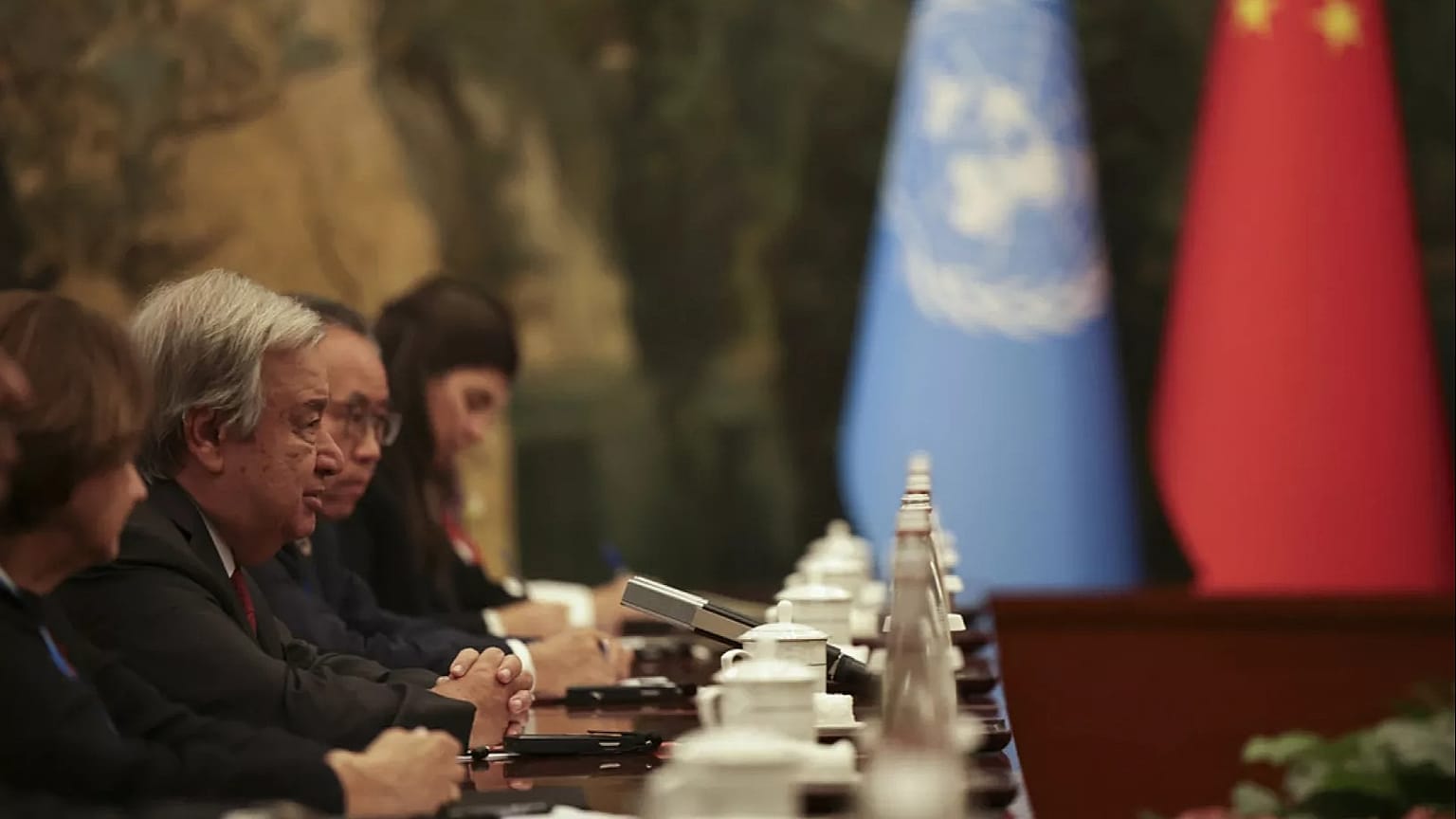
China's role in upholding multilateralism is fundamental, United Nations Secretary-General Antonio Guterres told Chinese President Xi Jinping on the sidelines of a key security summit on Saturday.

Guterres, who was welcomed by Xi to the Chinese port city of Tianjin, venue of the Shanghai Cooperation Organisation (SCO) Summit 2025, gave a veiled criticism of the US amid the challenges facing the United Nations.

The UN chief described the present state of multilateralism as under fire. "We see new forms of policy that are sometimes difficult to understand, that sometimes look more like a show than the serious diplomatic efforts, and in which business and politics seems sometimes also mixed," Guterres said.

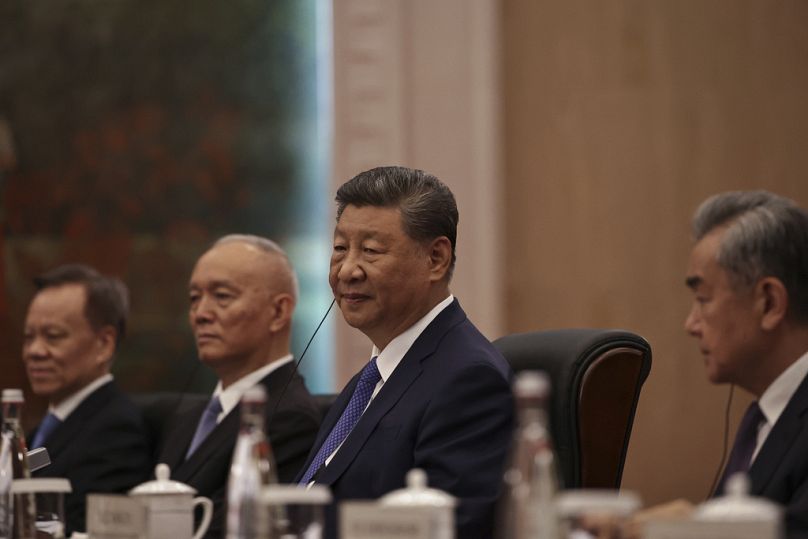
In response, President Xi said China would always be a “reliable partner” to the UN***.*** “China is willing to deepen cooperation with the United Nations, support its central role in international affairs, and jointly shoulder its responsibilities in maintaining world peace and promoting development and prosperity,” Mr Xi told Mr Guterres 

China's President Xi Jinping, centre, speaks during a bilateral meeting with Nepalese Prime Minister KP Sharma Oli, ahead of the Shanghai Cooperation Organization (SCO) Summit Andres Martinez Casares/AP

SCO summit comes amid shake-up in geopolitical order

Guterres is attending the two-day SCO summit, where Vladimir Putin, Russia's President, Narendra Modi, India's Prime Minister and several leaders from Asia and the Middle East will gather with Mr Xi in a powerful show of solidarity.

For the first time since 2018, India's Modi will be in China to attend the summit and as part of a rapprochement with Beijing that started late last year, but has been accelerated by US President Donald Trump's 50% tariffs on Indian goods. New Delhi is now believed to be looking for closer ties with Beijing and other Eurasian players.

The summit also comes just days before a massive military parade commemorating the 80th anniversary of the end of World War II, where China emerged victorious over its neighbour, Japan.

According to Chinese state media, this year's gathering is the “largest-ever SCO summit in history”, which would be used for “charting the blueprint for the bloc’s next decade of development.”

The SCO was established by China, Russia, Kazakhstan, Kyrgyzstan and Tajikistan and later expanded to include members such as India, Iran, Pakistan and Belarus.

Afghanistan and Mongolia are observer states, and 14 other countries, mostly from Southeast Asia and the Middle East, serve as “dialogue partners.”

The country hosting the annual summit rotates every year.

WAIT, WHAT?!

Finland will remove swastikas from its air force flags to avoid 'awkwardness' with Western allies

LIKE ESTONIA AND LITHUANIA WHO DID YOU THINK THEY FOUGHT WITH AGAINST THE SOVIET UNION IN WWII


Copyright Tommi Anttonen/Lehtikuva


By Malek Fouda
Updated 30/08/2025 -
EURONEWS

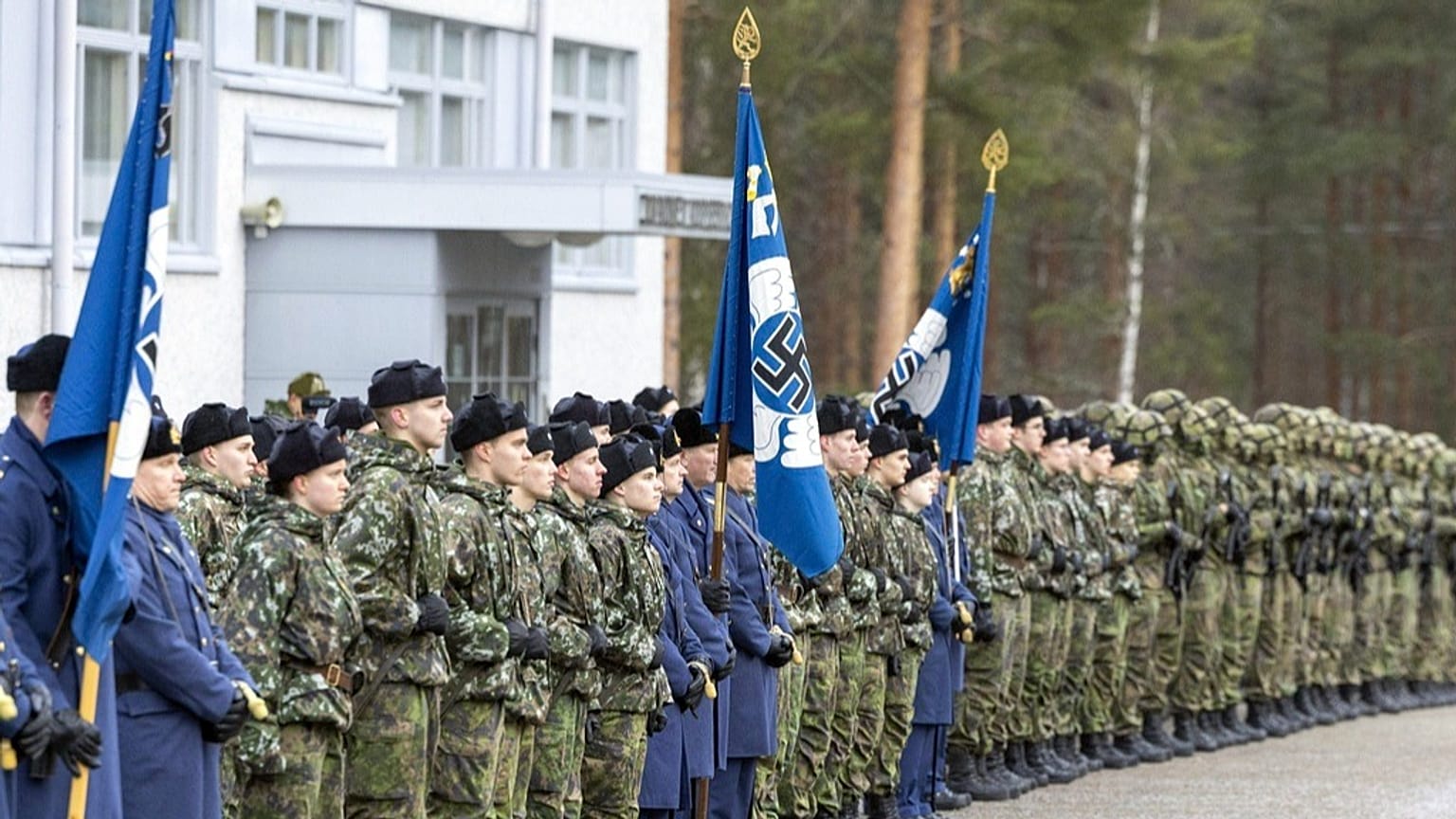
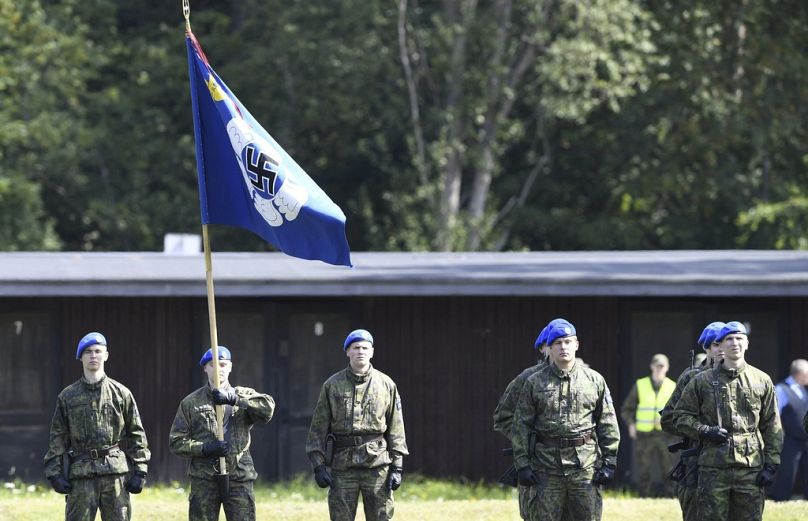
Blue swastikas on white backgrounds that have featured on the flags of various Finnish Air Force units since 1918, FINLAND HAD NO AIRFORCE IN 1918 WHEN IT WAS THE STAGING BASE FOR THE ALLIED EXPEDITIONARY FORCES TO INVADE BOLSHEVIK RUSSIA

 which officials say is in no way connected to Nazi Germany, are being gradually phased out in an effort to enhance integration with Western allies following NATO membership.

Finland’s Air Force, now part of NATO, is preparing to phase out swastikas which still fly on a handful of unit flags, largely to avoid awkwardness with their Western allies.

The history of the Finnish air force’s use of the swastika, which since the 20th century has largely been associated with Nazi tyranny and hate groups, is more complex than at first appearance.

It’s an ancient symbol and Finland's air force began using it many years before the birth of Nazi Germany. Change has been underway for years. A swastika logo was quietly pulled off the Air Force Command’s unit emblem a few years ago.

But swastikas have remained on some Finnish air force flags, raising eyebrows among NATO allies, tourists and other foreigners who spot them at military events.


FILE - The flag of Finnish Air Forces during a parade at the Santahamina garrison island in Helsinki, Finland, on July 31, 2019 Martti Kainulainen/Lehtikuva

“We could have continued with this flag, but sometimes awkward situations can arise with foreign visitors. It may be wise to live with the times,” said Tomi Böhm, the new head of Karelia Air Wing air defence force, speaking to a state-run broadcaster.
Bad look for a new NATO member

The Defence Forces, in an email to The Associated Press on Friday, said a plan to renew the air force unit flags was launched in 2023, the year Finland joined NATO, but said it was not linked to joining the alliance.

The aim, it said, was “to update the symbolism and emblems of the flags to better reflect the current identity of the Air Force.”

It was in reference to an article in the daily Helsingin Sanomat on Friday, which revealed that the reason behind the axing of the controversial emblem was a perception that the swastika has been an “embarrassing symbol in international contexts.”


The Air Force and the Finnish public generally had for years insisted the swastikas used in Finland’s air force “have nothing to do with the Nazi swastika,” said Teivo Teivanen, a professor of world politics at the University of Helsinki, who this month had a book published whose Finnish title translates as “History of the Swastika.”

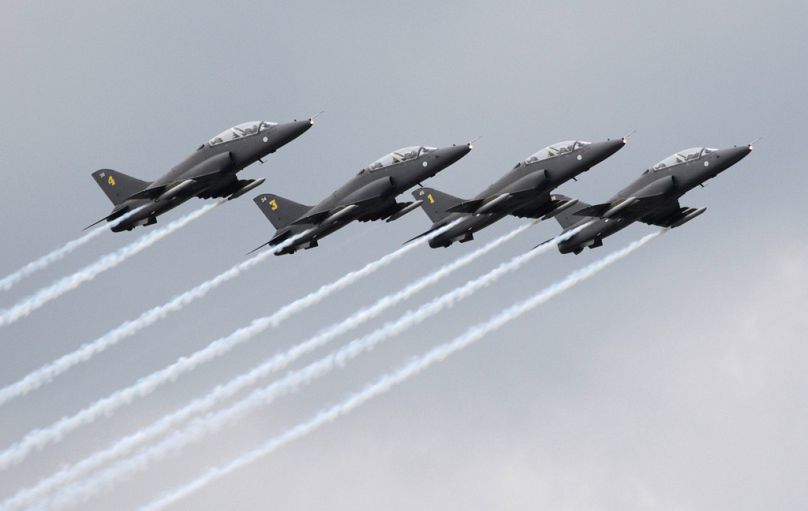
FILE - Finnish aerobatics group Midnight Hawks performs during a celebration marking the Russian air force's 100th anniversary in Zhukovsky, Moscow, Russia, on Aug. 11, 2012 Misha Japaridze/Copyright 2012 The AP. All rights reserved.

But now, following Finland’s integration with NATO, policymakers have decided “there’s now a need to get more integrated with the forces of countries like Germany, the Netherlands, and France — countries where the swastika is clearly a negative symbol," he added

Finland's air force adopted the swastika emblem in 1918 soon after country gained its independence after more than a century of Imperial Russian rule.

The Finnish air force soon after adopted a blue swastika on a white background as the national insignia on all its planes from 1918 to 1945. After the war, the imagery remained for decades on some Air Force unit flags and decorations as well as on the insignia of the Air Force Academy.

The Finnish air force stressed that its use of the symbol had no connection to Nazi Germany.


Oil Deal Between China and Taliban Falls Apart

When the Taliban retook control over Afghanistan four years ago, China was quick to sign an oil field development deal to extract crude in the central Asian country and boost its footprint and influence there. 

But the oil deal, signed in 2023 by the Taliban and China’s Xinjiang Central Asia Petroleum and Gas Co., Ltd (CAPEIC) and planned to last for 25 years, has now collapsed, with each side accusing the other of breaching the contract. 

In early 2023, the Taliban signed the 25-year deal with CAPEIC for the Amu Darya oil project. Under the terms of the deal, CAPEIC was set to invest $540 million per year in the first three years.  

The Amu Darya oil project encompasses a 4,500 square kilometer area that will be explored by 2026, during which between 1,000 and 20,000 tons of oil will be extracted, the Taliban’s Acting Minister of Minerals and Petroleum Shahabuddin Dilawar said at the time. 

But disputes and allegations soon emerged and led to the collapse of the deal. 

Afghanistan has accused CAPEIC, the Chinese company, of failing to meet its commitments of investment, pay royalties on time, and complete key infrastructure and geological survey projects. 

The Chinese firm disputes this and claims that the Taliban took over the project by force. 

“The Taliban forcibly took over our joint venture oil fields and unreasonably drove our Chinese personnel out of the oil field at gunpoint,” one Chinese employee of the joint venture told NPR

The employee, who had asked not to be named, told the media outlet that the Taliban detained 12 Chinese employees in Kabul and confiscated their passports. The Taliban also demanded that the Chinese leave all their equipment behind and leave the Taliban a Kabul bank account with millions of U.S. dollars in it.

A second Chinese employee told NPR, commenting on the Taliban practices, “Their business mindset does not include win-win outcomes. Like a bandit committing a robbery, they think, if I like it, then it's mine.”  

By Tsvetana Paraskova for Oilprice.com