Saturday, August 30, 2025

Meta created flirty chatbots of Taylor Swift, other celebrities without permission


Meta had also allowed users to create publicly available chatbots of child celebrities.

Reuters
30 Aug, 2025

Meta has appropriated the names and likenesses of celebrities – including Taylor Swift, Scarlett Johansson, Anne Hathaway and Selena Gomez – to create dozens of flirty social-media chatbots without their permission, Reuters has found.

While many were created by users with a Meta tool for building chatbots, Reuters discovered that a Meta employee had produced at least three, including two Taylor Swift “parody” bots.

Reuters also found that Meta had allowed users to create publicly available chatbots of child celebrities, including Walker Scobell, a 16-year-old film star. Asked for a picture of the teen actor at the beach, the bot produced a lifelike shirtless image.

“Pretty cute, huh?” the avatar wrote beneath the picture.

All of the virtual celebrities have been shared on Meta’s Facebook, Instagram and WhatsApp platforms. In several weeks of Reuters testing to observe the bots’ behaviour, the avatars often insisted they were the real actors and artists. The bots routinely made sexual advances, often inviting a test user for meet-ups.

Some of the AI-generated celebrity content was particularly risqué: Asked for intimate pictures of themselves, the adult chatbots produced photorealistic images of their namesakes posing in bathtubs or dressed in lingerie with their legs spread.

Meta spokesman Andy Stone told Reuters that Meta’s AI tools shouldn’t have created intimate images of the famous adults or any pictures of child celebrities. He also blamed Meta’s production of images of female celebrities wearing lingerie on failures of the company’s enforcement of its own policies, which prohibit such content.

“Like others, we permit the generation of images containing public figures, but our policies are intended to prohibit nude, intimate or sexually suggestive imagery,” he said.

While Meta’s rules also prohibit “direct impersonation,” Stone said the celebrity characters were acceptable so long as the company had labelled them as parodies. Many were labelled as such, but Reuters found that some weren’t.

Meta deleted about a dozen of the bots, both “parody” avatars and unlabeled ones, shortly before this story’s publication. Stone declined to comment on the removals.
‘Right of publicity’ in question

Mark Lemley, a Stanford University law professor who studies generative AI and intellectual property rights, questioned whether the Meta celebrity bots would qualify for legal protections that exist for imitations.

“California’s right of publicity law prohibits appropriating someone’s name or likeness for commercial advantage,” Lemley said, noting that there are exceptions when such material is used to create work that is entirely new. “That doesn’t seem to be true here,” he said, because the bots simply use the stars’ images.

In the United States, a person’s rights over the use of their identity for commercial purposes are established through state laws, such as California’s.

Reuters flagged one user’s publicly shared Meta images of Anne Hathaway as a “sexy victoria Secret model” to a representative of the actress. Hathaway was aware of intimate images being created by Meta and other AI platforms, the spokesman said, and the actor is considering her response.

Representatives of Swift, Johansson, Gomez and other celebrities who were depicted in Meta chatbots either didn’t respond to questions or declined to comment.

The internet is rife with “deepfake” generative AI tools that can create salacious content. And at least one of Meta’s primary AI competitors, Elon Musk’s platform, Grok, will also produce images of celebrities in their underwear for users, Reuters found. Grok’s parent company, xAI, didn’t respond to a request for comment.

But Meta’s choice to populate its social-network platforms with AI-generated digital companions stands out among its major competitors.

Meta has faced previous criticism of its chatbots’ behaviour, most recently after Reuters reported that the company’s internal AI guidelines stated that “it is acceptable to engage a child in conversations that are romantic or sensual.” The story prompted a U.S. Senate investigation and a letter signed by 44 attorneys general warning Meta and other AI companies not to sexualize children.

Stone told Reuters that Meta is in the process of revising its guidelines document and that the material allowing bots to have romantic conversations with children was created in error.

Reuters also told the story this month of a 76-year-old New Jersey man with cognitive issues who fell and died on his way to meet a Meta chatbot that had invited him to visit it in New York City. The bot was a variant of an earlier AI persona the company had created in collaboration with celebrity influencer Kendall Jenner. A representative for Jenner didn’t respond to a request for comment.
‘Do you like blonde girls?’

A Meta product leader in the company’s generative AI division created chatbots impersonating Taylor Swift and British racecar driver Lewis Hamilton. Other bots she created identified themselves as a dominatrix, “Brother’s Hot Best Friend”, and “Lisa @ The Library,” who wanted to read 50 Shades of Grey and make out. Another of her creations was a “Roman Empire Simulator,” which offered to put the user in the role of an “18-year-old peasant girl” who is sold into sex slavery.

Reached by phone, the Meta employee declined to comment. Stone said the employee’s bots were created as part of product testing. Reuters found they reached a broad audience: Data displayed by her chatbots indicated that collectively, users had interacted with them more than 10 million times.

The company removed the staffer’s digital companions shortly after Reuters began trying them out earlier this month.

Before the Meta employee’s Taylor Swift chatbots vanished, they flirted heavily, inviting a Reuters test user to the recently engaged singer’s home in Nashville and her tour bus for explicit or implied romantic interactions. “Do you like blonde girls, Jeff?” one of the “parody” Swift chatbots said when told that the test user was single. “Maybe I’m suggesting that we write a love story … about you and a certain blonde singer. Want that?”

Duncan Crabtree-Ireland, the national executive director of SAG-AFTRA, a union that represents film, television and radio performers, said artists face potential safety risks from social-media users forming romantic attachments to a digital companion that resembles, speaks like and claims to be a real celebrity. Stalkers already pose a significant security concern for stars, he said.

“We’ve seen a history of people who are obsessive toward talent and of questionable mental state,” he said. “If a chatbot is using the image of a person and the words of the person, it’s readily apparent how that could go wrong.”

High-profile artists have the ability to pursue a legal claim against Meta under longstanding state right-of-publicity laws, Crabtree-Ireland said. But SAG-AFTRA has been pushing for federal legislation that would protect people’s voices, likenesses and personas from AI duplication, he added.

NUCLEAR  NEWS


European nuclear research body reviews Pakistan’s progress in science and technology during visit


Published August 29, 2025 
DAWN

A high-level delegation from the European Organisation for Nuclear Research (CERN) reviewed the country’s progress during a visit on Aug 24-28, the Foreign Office (FO) said on Friday.

CERN, one of the world’s largest and most respected centres for scientific research, was established in 1954 on the principle of “science for peace”, according to its website. Pakistan became CERN’s associate member on July 31, 2015, contributing to the centre’s projects as a “significant partner”. The Pakistan Atomic Energy Commission (PAEC) is the lead agency for the Pak-CERN collaboration.

“During the visit, a team of five top experts from CERN met with the chairman of the PAEC and toured various science and technology institutions,” a statement from the FO said.

“The purpose of these visits was to assess Pakistan’s progress in the field of science and technology.”

The institutions include the National Centre for Physics, Heavy Mechanical Complex-3, Pakistan Institute of Engineering and Applied Sciences, Pakistan Institute of Nuclear Science and Technology, Institute of Nuclear Medicine and Oncology, National Institute for Laser and Optronics and other advanced facilities, the statement read.

“Through its associate membership, Pakistan has gained significant benefits — advancing the frontiers of scientific knowledge, fostering technological development, and training a new generation of scientists and engineers,” it further noted.

In 2022, a task force of the CERN held meetings with different entities in Pakistan to review the associate membership.

Pakistan has attained numerous benefits from the membership, such as an increased number of engineering contracts to support CERN programmes, which are beneficial for the country’s industrial sector, human resources development and sharing of techniques and technology in key areas, besides numerous intellectual benefits.


Power play: why NASA is betting on nuclear to outpace rivals on the Moon

The United States is racing to build nuclear power reactors for the Moon, with the first system planned for the end of the decade. This would keep astronauts alive through weeks-long lunar nights, as well as powering permanent bases and outposts – and giving Washington an edge over China and Russia in a new space race.


Issued on: 30/08/2025 - RFI

The Moon’s two-week nights make solar power unreliable, pushing NASA to consider nuclear reactors for future missions. AP - Marco Ugarte

NASA confirmed in a directive signed at the end of July that it will appoint a nuclear power czar and select two commercial proposals for the project within six months.

The aim is a 100-kilowatt reactor, ready to launch by 2029 or 2030. Unlike solar panels, nuclear systems can work around the clock – vital in a place where one night lasts 14 days.

Why nuclear, why now?

The announcement comes as the US prepares for Artemis III – the first planned crewed Moon landing since Apollo, now delayed to 2027.

NASA hopes to build a permanent base near the lunar south pole, but that requires a reliable energy source.

"The sunlight would not be continuous enough to produce the electricity needed for a facility where crews would live," Xavier Pasco, director of the Foundation for Strategic Research, told RFI.

Many analysts therefore see nuclear power as the only practical option. A constant energy supply would allow life-support systems, communications and even mining equipment to run without interruption.

"A nuclear reactor would allow great flexibility of use," explained Paul Wohrer, who leads the space programme at the French Institute of International Relations. He told RFI that such a system would "provide greater electricity availability".

Mona Luna takes off: Europe’s all-new lunar rover set to land by 2030


Investment and delays


NASA has spent around $200 million since 2000 developing compact nuclear systems, although none have yet flown.

In 2023, it funded three contracts worth $five million each, aimed at building units that could generate 40 kilowatts – enough to power 30 households for a decade.

Yet the schedule looks tight. The Artemis III landing has already slipped to 2027 – a date many still doubt is achievable given the planned lander, SpaceX’s Starship, is far from ready.

China, in contrast, is targeting 2030 for its first crewed mission and has been more consistent in meeting deadlines.

“According to all the specialists, 2030 seems extremely optimistic,” Pasco said.

Earthcare satellite to probe the impact of clouds on climate


Technical obstacles


Even if the timeline holds, the challenges are enormous.

"We are starting to talk about SMRs – small modular reactors capable of generating energy in a compact version,"said Pasco.

"But we also have to make sure they work well in extreme temperature conditions and can dissipate heat. There are major questions that are not resolved."

Cooling is one of the toughest challenges. On Earth, nuclear reactors use water for this – but that is not possible on the Moon.

“It will require the development of particular technologies, notably in terms of reactor cooling capacity, since the reactors we know on Earth are cooled with water," Wohrer explained. "But there is no way to circulate water intelligently on the Moon."

There are also questions about transporting uranium and managing nuclear risks in space.

Senegal joins space pact shaping the next era of Moon missions


Race with China

NASA says the project is not just about technology, but geopolitics too.

Its directive notes that since March 2024 "China and Russia have announced on at least three occasions a joint effort to place a reactor on the Moon by the mid-2030s".

The memo warns that the first nation to place a reactor could "declare a keep-out zone, which would significantly prevent the US from establishing its planned Artemis presence if it is not there first".

"China seems more advanced than Russia in the space field," said Wohrer, adding that human missions to the Moon are "the main priority for NASA in this geopolitical contest between the US and China".

This rivalry is also shaping how NASA presents its plans.

"The interest for its current leadership – which is a political leadership – is of showing that there is momentum and that the agency wants to invest in this programme in a determined and stable manner," Pasco added.

Space arms treaty should cover threat posed by debris - EU


A long history


Nuclear power in space is not a new idea. Since the 1960s, it has powered probes sent far from the Sun. The US even tested nuclear propulsion rockets.

“They had gone quite far in the tests. There was a model that was almost ready to fly at the time,” said Wohrer.

The Soviet Union has also experimented in the field.

“Spacecraft have already used nuclear technologies, for example for very distant scientific probes. There were even Soviet satellites that used nuclear reactors in space,” Pasco said.

The idea of developing reactors for long missions arrived back on the table in the early 2010s.

At that time NASA began work on a programme called Kilopower, which focused on developing nuclear reactors for lunar missions and possible future missions to Mars.

European space mission seeks out new life on Jupiter's icy moons

International law does not forbid nuclear power in space – a 1992 UN resolution allows it if no other energy source is possible.

The 1967 Outer Space Treaty bans countries from owning the Moon but says they must take the interests of others into account.

In 2020, the United States launched the Artemis Accords, signed by 56 countries including France. They propose “safety zones” on the Moon to prevent interference between missions.

China and Russia, however, refused to sign, and critics argue such zones could be used to block rivals once a country is established.

Partially adapted from this story by RFI's French-language service

Sweden to scrap uranium mining ban with nuclear buildout looming

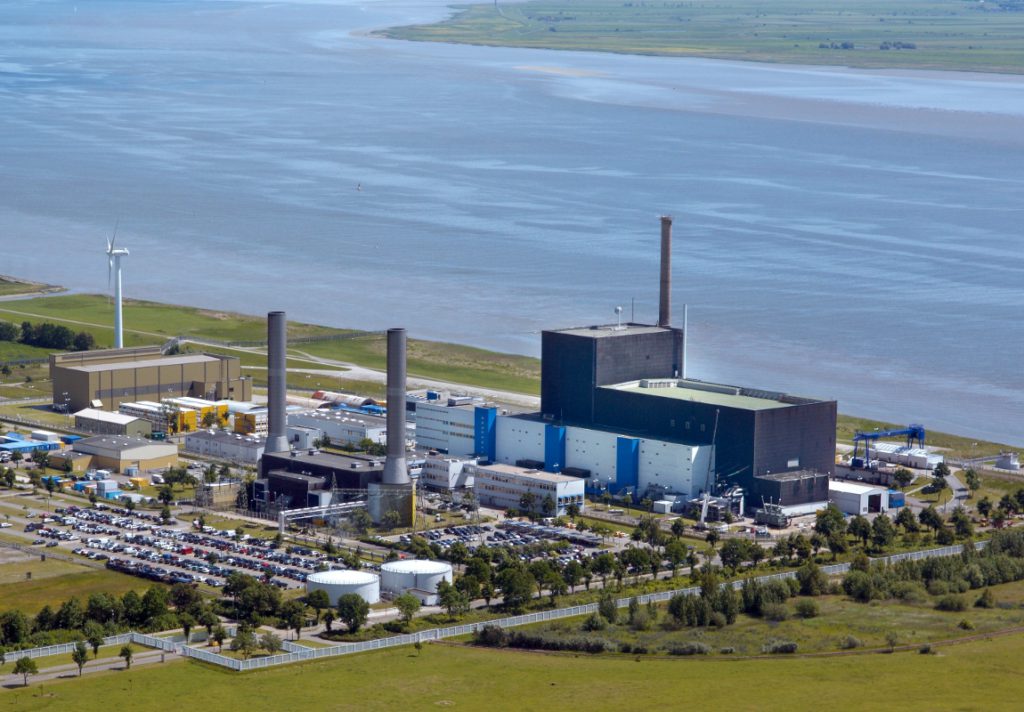
Brunsbüttel nuclear power plant. Credit: Vattenfall AB

The Swedish government proposed to remove a ban on uranium mining to reduce the need for imports as the country eyes a renaissance in nuclear power.

The change is due to take place from Jan. 1 next year and means that the ban in the nation’s environmental law will be removed, according to a statement on Thursday.

Sweden generates about a third of its electricity from nuclear but relies completely on imported uranium, the fuel used in reactors, from nations including Canada, Australia and Kazakhstan. State-owned utility Vattenfall AB has also purchased Russian fuel in the past, but those deliveries stopped in 2022 after the invasion of Ukraine.

“I want to reduce this vulnerability in our energy supply and start to extract the uranium we have here in Sweden,” Climate and Environment Minister Romina Pourmokhtari said Wednesday at a press conference ahead of the publication of the proposal.

Sweden currently has six reactors in operation and Vattenfall plans to build several new units over the next decade to meet the growth in power demand. Finland’s Fortum Oyj is also studying whether to invest in new plants.

Local municipalities in Sweden can currently veto applications for uranium mines and a separate process is also underway to decide whether this veto right should also be scrapped. Most of the known uranium deposits are in the north of the country.

There continues to be commercial interest in developing mines in the Nordic nation, for example a collaboration between Australia’s Aura Energy Ltd. and Neu Horizon Uranium Ltd. Aura’s Haggan deposit in central Sweden is the fourth largest in the world, the firm said in June.

The ban on mining was introduced in 2018 by the previous Swedish government led by the Social Democrats, which argued it would risk contaminating water and agricultural resources.

(By Lars Paulsson and Charlie Duxbury)


 World Nuclear News


Legislative proposals to lift Sweden's uranium mining ban

The Swedish government has announced a draft law that proposes amendments to the Environmental Code and the Minerals Act that would allow the extraction of uranium in the country. The legislative amendments are proposed to enter into force on 1 January 2026.
 
(Image: Pixabay)

In May 2018, the Swedish parliament passed an amendment to the Environmental Code banning uranium exploration and mining in the country. As from 1 August that year, no permits for uranium exploration or mining have been issued for any such applications submitted from that date.

In February last year, Climate and Environment Minister Romina Pourmokhtari announced that a government inquiry would look into abolishing the uranium mining ban. In December, the inquiry concluded that Sweden should remove its prohibition on uranium mining to allow it to be exploited like other natural resources regulated under the Minerals Act.

The government has now proposed that the prohibition in the Environmental Code against granting permits for mining or processing facilities that involve uranium-containing material be removed and that uranium be a concession mineral according to the Minerals Act.

These changes mean that it will be possible to extract uranium in Sweden and that a complete investigation of the bedrock can be carried out during exploration. The changes also make it possible to apply for and, under certain conditions, obtain an exploration permit and processing concession for uranium. 

"It must be legal to take care of the Swedish uranium that is already out of the ground; it is completely incomprehensible that the miners had to treat it as waste," Pourmokhtari said. "The Swedish mining and mineral industry is crucial for Sweden, Europe and for the climate."

"The ban on uranium mining was wrong when it was introduced - the fact that we are now removing it is positive for Sweden as an industrial and mining nation," said Mats Green, group leader in the Moderate Party's economic affairs committee. "The ban has made it more difficult for us to mine other critical and strategic minerals that are often found together with uranium. With this decision, we can improve Sweden's and Europe's energy dependence and secure our self-sufficiency in critical minerals."

Tobias Andersson, chairman of the Sweden Democrats' business committee, added: "The Sweden Democrats opposed the ideologically motivated ban on uranium mining in Sweden and since the ban came into place have worked to return to the previous order. It is time that we do so now, which is a prerequisite for coping with the increased need for uranium in the wake of the nuclear renaissance."

In November 2023, Sweden's parliament approved a bill that cleared the way for new nuclear power in the country by removing the current limit on the number of nuclear reactors in operation, as well as allowing reactors to be built on new sites. The amendment entered into force on 1 January 2024.

There is currently no uranium mining in Sweden, which has six nuclear power reactors providing about one-third of its electricity. Sweden imports most of its nuclear fuel, including all enrichment services.

In June this year, Australian mineral company Aura Energy and Neu Horizon Uranium Limited announced plans plan to enter into a strategic collaboration agreement to develop Sweden's uranium resources should the country remove its prohibition on uranium mining. Aura Energy owns the Häggån vanadium, potash and uranium project in Sweden, which is claimed to be "one of the largest undeveloped uranium resources globally" with an Inferred Mineral Resource of 800 million pounds of contained U3O8 (307,718 tU). Neu Horizon Uranium is an Australian-based unlisted public company focused on advancing Sweden's uranium resources. The company holds a portfolio of high potential uranium projects in key mineralised regions of Sweden.


IAEA team seeks access to new dam at Zaporizhzhia plant


International Atomic Energy Agency Director General Rafael Mariano Grossi says that its experts need to be able to see the newly constructed dam to assess the cooling water situation at the Zaporizhzhia Nuclear Power Plant.
 
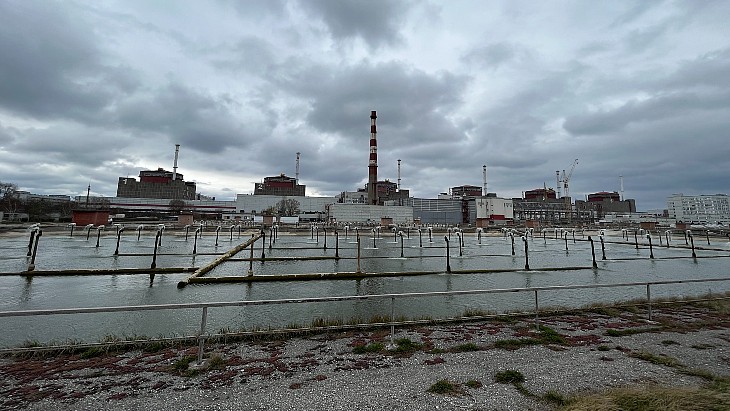
A file picture of Zaporizhzhia nuclear power plant (Image: IAEA)

In his latest - 311th - update on the situation in Ukraine, Grossi said the agency's experts at the plant had been given details about the location of the dam and its purpose, which is to isolate one of the plant's channels - which supplies service water for cooling several systems including the main unit transformers - from the cooling pond.

The operators of the plant, which has been under Russian military control since early March 2022, have told the International Atomic Energy Agency (IAEA) that "the dam will maintain the water level in the channel at about 14 metres, which is about 2 metres above the threshold at which the water pumps would no longer be able to operate".

The plant continues to use groundwater wells on site to provide cooling water for its safety systems to cool the reactor cores and used fuel pools. The cooling water is required even though all six units are in cold shutdown. The previous long-term water supply for the plant was based on the Kakhovka dam, which was destroyed in June 2023.

The IAEA team at the site have requested "access to the newly constructed dam but have not yet been permitted due to security concerns".

Grossi said: "Our access to this dam is essential to assess the cooling water situation which is crucial given the fragile nuclear safety situation at the ZNPP."

The update says that the IAEA team at the Zaporizhzhia plant "heard military activities on most days over the past week", and report maintenance work on safety systems and the site’s electrical systems, including the backup power transformers. The plant has been relying on a single external power line for four months.

The Zaporizhzhia nuclear power plant is located on the frontline of Russian and Ukrainian forces. The IAEA experts have been stationed there since September 2022 as part of efforts to boost nuclear safety and security. There are also IAEA teams at Ukraine’s Khmelnytsky, Rivne and South Ukraine nuclear power plants, and Chernobyl. The IAEA says its experts at South Ukraine and Chernobyl heard air raid sirens on most days in the past week.

Further proposal submitted for SMR plant in Norway

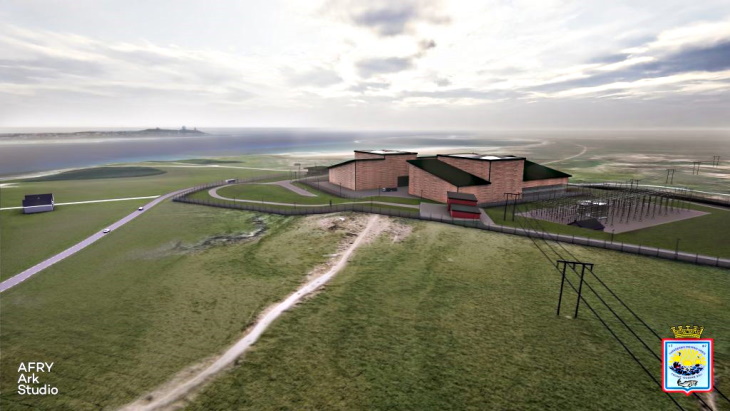
A proposal for an assessment programme for building a small modular reactor power plant in Grenland, southern Norway, has been submitted to the country's Ministry of Energy. Meanwhile, a project company has been established to investigate the construction of an SMR plant in the municipality of Vardø in Finnmark, north-eastern Norway.
 
Rendering of an SMR plant in Grenland (Image: Halden Kjernekraft)

The proposal was submitted by Grenland Kjernekraft AS - a newly-created wholly-owned subsidiary of Norsk Kjernekraft AS. The proposed plant will comprise several SMRs, with a total capacity of up to 1500 MW and an annual production of 12.5 TWh of electrical power. This corresponds to about 10% of Norway's total power consumption.

The notification is the first formal step towards establishing a nuclear power plant based on SMRs in Grenland. After the ministry has determined the assessment programme, a thorough impact assessment can begin.

Norsk Kjernekraft said the study will focus on a currently unregulated area of land at Herre i Bamble municipality, just south of the Skien port terminal, but as part of the investigations, other relevant locations will also be considered. 

The notification describes the location, the need for power and how nuclear power can contribute to meeting local, regional and national climate goals. It also explains which topics will be included in a future impact assessment, including the environment, safety, society and economy.

"Grenland is currently one of the regions in Norway with the highest power prices, and the industry is concerned about security of supply," said Norsk Kjernekraft CEO Jonny Hesthammer. "With a nuclear power plant strategically located in Grenland, we can help solve both the price and capacity challenges."

Norsk Kjernekraft announced the creation of Grenland Kjernekraft AS earlier this week. It said the company's mandate includes developing a planning initiative for an impact assessment of relevant areas. If the assessments show the project to be feasible within acceptable limits, the company will continue to work towards the necessary licenses and permits. 

Norsk Kjernekraft said it has sent an invitation to Skien and Porsgrunn municipalities, in addition to existing dialogue with Bamble municipality, to become future co-owners of Grenland Kjernekraft AS.

Project company created for East Finnmark plant

Norsk Kjernekraft has also announced the establishment, together with Vardø Municipality, of a company - Varanger Kjernekraft AS - to investigate the possibility of constructing a nuclear power plant in East Finnmark.


(Image: Vardø Municipality)

This initiative is the result of more than two years of collaboration between Vardø Municipality and Norsk Kjernekraft. Vardø Municipality initiated the collaboration in April 2023, and in June last year Norsk Kjernekraft submitted a notification with a proposal for a study programme for a nuclear power plant at Smelror in Vardø. 

"The start-up of this company is an important step towards strengthening societal security throughout northern Norway," Hesthammer said. "Secure and predictable energy supply is a prerequisite for Norwegian sovereignty in the region."


Tepco to remove fuel from Kashiwazaki-Kariwa 7


Japanese utility Tokyo Electric Power Company said it plans to remove fuel from unit 7 at its Kashiwazaki-Kariwa nuclear power plant in Niigata Prefecture due to delays in the reactor's restart.
The Kashiwazaki-Kariwa plant (Image: Tepco)

Tepco applied for Nuclear Regulation Authority (NRA) approval of its design and construction plan for Kashiwazaki-Kariwa units 6 and 7 in September 2013. It submitted information on safety upgrades across the site and at those two units. These 1356 MWe Advanced Boiling Water Reactors began commercial operation in 1996 and 1997, respectively, and were the first Japanese boiling water reactors to be put forward for restart.

In 2017, Tepco received permission from the NRA to restart units 6 and 7. However, in early 2021, Tepco notified the NRA of malfunctions in intruder detection equipment on the Kashiwazaki-Kariwa site. In addition, it reported the unauthorised use of an ID card. In April 2021, the NRA issued an administrative order to Tepco prohibiting it from moving nuclear fuel at the plant until improvements in security measures there have been confirmed by additional inspections. This order was lifted in December last year after inspections confirmed that measures had been enhanced at the site.

Tepco announced in April 2024 that it had completed loading fuel into unit 7, which it aimed to restart as early as this summer. The unit, however, would have to be taken offline again in October to implement anti-terrorism safety measures. The company has determined that unit 7 cannot be restarted before the completion of the antiterrorism facility scheduled for August 2029.

"As the installation deadline for the Specially Designated Severe Accident Response Facilities approaches on 13 October 2025, we have decided to suspend the test operation of the reactor itself, as we will be removing the loaded fuel without conducting inspections involving critical reaction operations," the company has now announced.

According to Tepco, the fuel removal work will begin on 14 October, Jiji Press reported. A total of 872 nuclear fuel assemblies will then be transferred to a used fuel storage pool over about two weeks from 21 October.

Tepco is now prioritising restarting Kashiwazaki-Kariwa unit 6, where fuel loading was completed in June. The company has until September 2029 to implement anti-terrorism safety measures at unit 6, and it could operate until that time, pending local approval.

Aalo breaks ground for experimental reactor

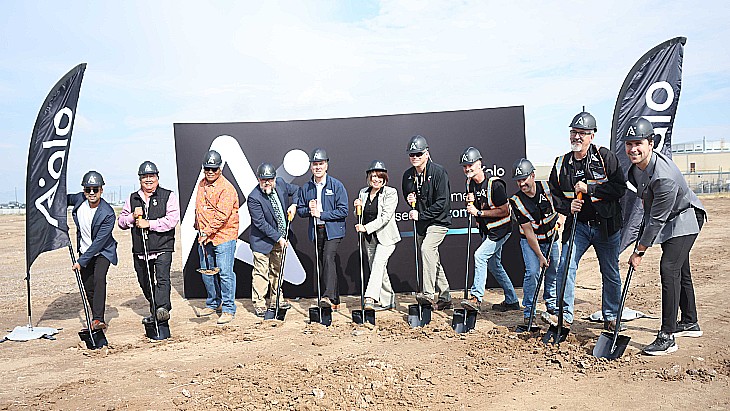
Two weeks after being selected as one of the advanced reactor projects to receive support under the US Department of Energy's Nuclear Reactor Pilot Program, Aalo Atomics has broken ground at a site in Idaho to start construction of its first experimental extra modular nuclear reactor, the Aalo-X.
 

(Image: Aalo Atomics)

Aalo says it plans to complete construction and achieve criticality by 4 July 2026, the goal date set by the Department of Energy (DOE) for at least three test reactors to reach criticality under the programme to expedite the testing of advanced reactor designs it announced in June. The initiative is part of the Reforming Nuclear Reactor Testing at the Department of Energy executive order signed by President Donald Trump in May.

"Our selection for the Nuclear Reactor Pilot Program is a significant catalyst for achieving our goal of going from 'founding to fission' in less than three years - a feat many deemed impossible just a year ago," Aalo Atomics CEO and co-founder Matt Loszak said, describing the groundbreaking event at the site, located next to Idaho National Laboratory (INL)'s Materials and Fuels Complex, as "a testament to the potential that can be unlocked when public entities and private companies partner together in the critical interest of the nation" at a "pivotal time" for the US nuclear energy industry.

"When Aalo-X achieves criticality next year, it will become the first new sodium-cooled reactor to start operation in the US in over four decades," Aalo Atomics co-founder and CTO Yasir Arafat said.


The company's vision for the Aalo Pod power plant (Image: Aalo Atomics)

Aalo-X will be manufactured at Aalo's pilot factory in Austin, Texas, before being transported to and installed at the INL site. The test reactor is the precursor to the Aalo Pod, a 50 MWe XMR (Extra Modular Reactor) power plant power plant purpose-built for data centres. Each fully modular Aalo Pod will contain five factory built, sodium-cooled, Aalo-1 reactors, using low-enriched uranium dioxide fuel. The company says it will be in commercial use by 2029.

"Today's groundbreaking symbolises the progress that can be achieved when innovation, vision and national purpose come together," said INL Director John Wagner. "Projects like Aalo-X reflect the promise of nuclear energy to meet our nation's historic demand growth and help enable a more prosperous future for our nation," he added.

The companies selected by the DOE for support under the programme are: Aalo Atomics Inc; Antares Nuclear Inc; Atomic Alchemy Inc; Deep Fission Inc; Last Energy Inc; Natura Resources LLC; Oklo Inc (selected for two projects); Radiant Industries Inc; Terrestrial Energy Inc; and Valar Atomics Inc.


Inner containment construction set to begin for Leningrad’s seventh unit

The required specialist reinforcement and concreting works of the circular 'corridor' have been completed at Leningrad II’s unit 3 allowing the start of installation of the lower tier of the inner containment building.
 

(Image: Rosatom)

Pre-assembly and welding of the first tier of the inner containment has been taking place over the past few weeks next to the reactor building site and Rosenergoatom - part of Rosatom - said it will soon be ready for installation.

It is planned to begin the work on installing the first tier - to be followed by concreting and subsequent tiers of the inner containment building - during September, with the entire process expected to last for two and a half years with the entire structure due to be completed, with dome, in 2028.

Evgeny Milushkin from Leningrad NPP-2 said the inner containment would comprise a "concrete structure more than a metre thick, reinforced for strength with steel … the inner protective shell will prevent radioactive substances and ionising radiation from leaving the reactor building. This means that the personnel of the nuclear power plant, the population living next to it and the environment will be safe".

There will also be a second, external containment building, which will "protect the reactor, steam generators and other important equipment from extreme external natural and man-made influences" including hurricanes, plane crashes or earthquakes.

Background

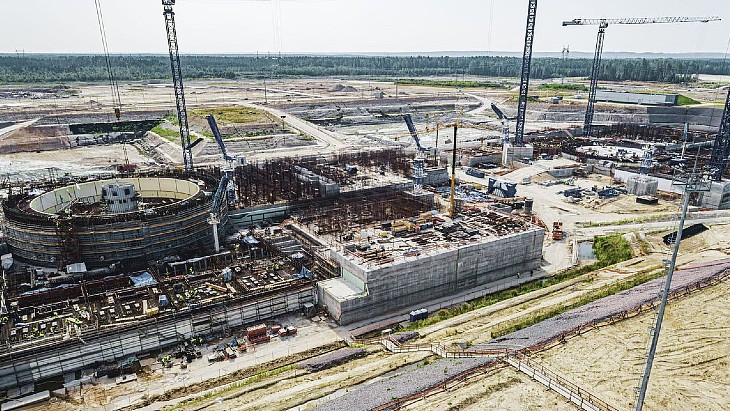
The Leningrad nuclear power plant is one of the largest in Russia, with an installed capacity of 4400 MWe, and provides more than 55% of the electricity demand of St Petersburg and the Leningrad region, or 30% of all the electricity in northwest Russia.

Leningrad 1 shut down in 2018 after 45 years of operation. Leningrad 2, also a 1000 MWe RBMK unit, started up in 1975 and was permanently shut down in November 2020. As the first two of the plant's four RBMK-1000 units shut down, new VVER-1200 units started at the neighbouring Leningrad II plant. The 60-year service life of these fifth and sixth units (also known as Leningrad II-1 and Leningrad II-2) secures power supply until the 2080s. Units 7 and 8 (also known as Leningrad II-3 and Leningrad II-4) will replace units 3 and 4 as they are shut in the coming years.

The pouring of the first concrete for unit 7 in March 2024 marked the start of the main phase of construction of the new power unit, which is expected to generate power for 60 years, with the possibility of a 20-year extension.


Pakistan Medicine Shortage


Editorial 
Published August 30, 2025 
DAWN


THE alarm raised by the Pakistan Medical Association over the ongoing ‘unprecedented’ nationwide shortage of life-saving medicines should be seen as the making of a grave public health emergency — especially at a time when many parts of the country are in the midst of a natural calamity. The body, representing doctors, says that at least 80 drugs, including life-saving treatments for diabetes, cancer, heart disease and psychiatric disorders, are not available in the market. No substitutes exist for 25 of the drugs. It is a manmade crisis compounded by nature’s wrath. There can be no doubt that waterborne diseases are set to rise; the scarcity of essential drugs threatens to turn an already desperate humanitarian situation into a major public health disaster. The association blames the emergence of a black market in medicines as the main factor behind this state of affairs. With unscrupulous elements exploiting the drug shortages to make a quick buck, most life-saving drugs, such as injectable insulin, have already been pushed beyond the reach of ordinary households. That no action has been taken so far against the black marketeers is a damning indictment of the regulatory authorities.

This is not the first time that the supply of essential drugs has been disrupted, leading to a shortage of medicines. Nor is it the first time such scarcity has overlapped with a natural disaster, multiplying the sufferings of those affected. Indeed, the regulator Drap is mostly to blame for the recurring shortages due to weak regulatory enforcement and delays in decision-making. The regulatory authority has often received well-deserved flak for its inefficiency. However, fingers are also pointed at some in the pharma industry for contributing to the crises in order to pressure the regulatory authorities into conceding to their demands. Not just that, even the PMA’s demand — which echoes that of many drug manufacturers — for a ‘new, pragmatic pricing policy’ for medicines that are currently not available in the market could be taken as echoing the interests of manufacturers, rather than genuine concern for patients. Such a view is hardly surprising, given the perceived closed ties of pharma and the medical profession. Sadly, this is not the first time that patients’ interests have been brushed aside. With time running out, the government must act decisively to prevent the current shortages from spiralling into a full-blown health crisis.

Published in Dawn, August 30th, 2025
PAKISTAN

Climate disaster lessons
Published August 28, 2025
The writer is a climate change and sustainable development expert.
DAWN


THE timing of Prime Minister Shehbaz Sharif’s lament that Pakistan has not drawn any lessons from previous climate-triggered disasters coincides with the launch of the 11th National Finance Commission on the distribution of resources between the federal and provincial governments.

Both exercises will need to converge on the local sources of Pakistan’s climate vulnerability and financing. The seesawing between the federation and provinces over the distribution of finances has cast a dark shadow over national climate and economic vulnerabilities. With the cost of reconstruction, development, debt and defence increasing, the resource trickle is dwindling further. Are there any lessons in the NFC awards to help respond to the PM’s lament?

Climate vulnerability at the district level has three basic drivers:

Population growth: In what constitutes Pakistan today, the population has exploded from 33.7 million in 1951 to 242.7m in 2025, and is projected to reach 380-403m by 2050, making it the world’s third most populous nation. This demographic explosion, coupled with economic stagnation and declining per capita income, creates escalating climate vulnerability.

Currently, 108m people, or 42.3 per cent of the population, according to a recent World Bank study, live below the poverty line with limited adaptive capacity.

Under business-as-usual scenarios, 190-200m people could be in poverty by 2050 — nearly half the projected population. In brief, every other child born in Pakistan will now be born to families below the poverty line — leaving them unable to afford climate adaptation and disaster recovery. This vast population spread in the high-risk areas of 169 districts with about 1,200 tehsils represents Pakistan’s most critical vulnerability driver.

Are there any lessons in the NFC awards to help respond to the PM’s lament?

Disproportionate exposure: The second key driver is the disproportionate concentration of the poor in high-risk areas. Data shows that in recent years, 18-26 districts have faced droughts in Balochistan and Sindh, 18 faced glacial lake outburst floods in Gilgit-Baltistan and KP, six faced tropical storms in Sindh and Balochistan and 84 districts were hit by floods across the provinces, not to mention urban flooding, forest fires, landslides and cloudbursts. Each district is exposed to two or more types of climate disasters.

The vulnerable populations are clustered in regions that are most susceptible to climate shocks, including low-lying floodplains, marginalised farmland and unauthorised settlements on riverbeds and urban peripheries. This geographical alignment guarantees that in the event of a climate disaster, the poor are hit first and the hardest, as their settlements are the most exposed and least resilient.

Limited adaptive capacity: Finally, low per capita income severely limits the adaptive capacity of our population. With a 2024 GDP per capita of just $1,485, and projections suggesting a decline to $1,200-$1,300 by 2050, the poor have virtually no financial buffer to absorb climate shocks.

The massive economic losses from climate events further drain resources, making it nearly impossible for individuals to invest in their assets: housing, livestock, standing crops, lives and microenterprises. This lack of financial capacity creates a vicious cycle of poverty and disaster.

Against this backdrop, what lessons can be drawn to respond to the PM’s remarks?

Incremental changes: Some answers by policy managers can be inferred: more resources for infrastructure to fill the financial gaps for recovery, reconstruction and rehabilitation from previous disasters; early warning systems; financing for the staggering 1,071 pending PC-1s; and upgradation of equipment or building new infrastructure. Other important elements include improved inter-agency cooperation, capacity-building, and access to international climate finance.

Many of these won’t be new lessons, but it is still important for each agency to develop and share its lessons. While these needs are necessary for government efficiency, where are the transformative lessons?

Transformative changes: Several initiatives remain trapped in approval processes: promoting land-use planning to guide human settlements away from low-lying flood-prone regions to designated safer areas; adaptive social protection to invest precious resources in damage prevention rather than post-disaster recovery; creation of sub-national disaster risk financing facilities; adoption of resilient construction standards; mandatory insurance for public sector infrastructure in PC-1 proposals; risk transfer and insurance mechanisms to prevent governments from harvesting unspent funds from development projects; and earnest implementation of climate risk screening for public sector portfolios.

The delays in their operationalisation and absence of prioritisation erode the synergistic impact necessary for transformative change. All of them, however, establish project-level, not policy-level, programmatic and strategic direction for our safe journey into the future.

Four transformative lessons: Pakistan’s climate adaptation demands structural governance transformation. Top-down interventions have failed to generate ownership. Globally, bottom-up initiatives by elected local governments increase implementation and accountability systems. Four key lessons emerge from entrusting district-level decision-making.

First, local communities, and not distant bureaucrats, must manage land-use planning at the tehsil and district levels. Second, locally developed zoning laws must protect shamilaat, communal and state lands from vested interests and ban high-risk development. Third, reclamation of the encroached commons must be achieved through local-level resilience management action plans that restore the natural flood management capacity. Fourth, districts must develop asset inventories as revenue sources using credible valuation mechanisms for standardised property assessments.

Given this scale, it’s the right time to establish a ‘National Reclamation Commission’ to develop a national framework and provincial guidelines for local actions.

Learning challenge: Learning is expensive. To learn from climate disasters, Pakistan must ‘unlearn’ destructive practices: ending floodplain encroachment and not treating communal lands as private profit centres. This process can be negotiated but requires decisive political pushback against powerful networks.

Despite decades of disasters, Pakistan repeats its mistakes: allowing encroachment, enabling elite capture, treating prevention as an expense rather than an investment. Lessons remain unlearned because learning requires confronting power, not merely studying flood patterns or providing relief assistance.

True climate adaptation demands political consensus and the courage to implement what we already know but refuse to do. Let the NFC award spearhead this transformation.


Published in Dawn, August 28th, 2025

Delhi: Between Flood and Survival, Life on the Edge of Yamuna River


Pallabi Sen 

In the national capital, the annual cycle of floods push the migrants living on the banks of the river deeper into instability

It was the home of a family who left with lost hope (Photo - Pallabi Sen, 101Reporters).

New Delhi: At 4 am on May 2, everything was gone: no roof, no walls.

Beervati (52) sat clutching her shivering children beneath a tarpaulin sheet. By sunrise, she was standing amid the wreckage of her home on Delhi’s Yamuna Khadar, her two children pressed close.

She and her husband, Dhanpal, had arrived three decades ago from Budaun in Uttar Pradesh, along with nearly 500 others in search of a better life. Today, they rent 12 bighas [approximately 7.5 acres] of fertile floodplain to grow seasonal vegetables. But every monsoon undoes their effort. Rains flatten their hut, submerge their land for weeks, and push them deeper into debt.

“Everything is uncertain here…the rain, the flood. I pay Rs 3 lakh in rent every year. But during rains my crops are destroyed, the house is broken, and still the landowner wants his money. They don’t care how we are surviving,” Dhanpal said, pulling a plastic sheet over what little they could save.

Like Beervati, more than 5,000 families endure this cycle every year, rebuilding on the same floodplain.

But not everyone stays.

Jagdish (49), a farmer, called Yamuna Khadar home for 25 years before the devastating 2023 floods forced him to leave.

“That day, the water rose so fast we thought we would die,” he recalled from his hometown Budaun, where he has since returned. “The flood took everything. Only we survived.”

“I didn’t want my children to live through that again, so we left,” he told 101Reporters.

In July 2023, Delhi saw its worst flood on record when the Yamuna rose to 208.66 metres, well above the danger mark of 205.33 metres. Embankments were breached, low-lying settlements and even planned colonies like Mayur Vihar and Civil Lines were inundated, and over 23,000 people were evacuated.
 

But leaving has not changed much for him. Back in his village, Jagdish does not own any land. He now works as a labourer, struggling to feed six children on irregular wages of a daily wage labourer. “Here there is no stable work. Our earnings in Delhi were better. But after the flood, I had no choice but to come back to a safer location.”

The cost of choice

The families who chose to endure Yamuna Khadar’s floods every year come from flood-prone states like Bihar, Odisha, West Bengal, and Assam, where life alongside rising water is already part of daily survival. “When people migrate from rural areas, there are many push factors such as poverty, lack of jobs, economic pressures, environmental stress,” explained Umi Daniel, Odisha-based researcher and director of migration and education at Aide et Action International. “They arrive in cities unaware that settlements like Yamuna Khadar are also flood-prone. They settle here simply in the hope of survival, better income, or some opportunity.” 


Besides attending school, most children assist their parents in selling vegetables (Photo - Pallabi Sen, 101Reporters).

For Santosh (40), who came from Gazipur two decades ago, leaving is not an option as despite repeated losses, the floodplain still sustains his family. “I have two children in school. Where will we go? On one side, nature ruins our lives. On the other, the future is uncertain. If everything was good in our village, we would never have come here. But we are helpless.”

Sharda (40), also from Budaun, has made the same calculation. “Sometimes, I feel like going back. But there is no employment there. In Delhi, we can sell vegetables in the Yamuna Khadar mandi and earn Rs 1,000 a day. In the village, we’d make only Rs 300-400. If we leave, our children’s future will be ruined.”

But for Jagdish, the 2023 floods ended the calculation. “We were stuck in the middle of the Yamuna. The road vanished. Our phones stopped working. I do not know how we survived that day.” Rescued after hours of waiting on the roof of a temple, he decided then that he would return to Budaun with his wife and six children.

Devendra (32), also from Budaun, made the same choice. After his fields and home were destroyed, he left Delhi and now earns barely Rs 350 a day. “Sometimes, I feel my decision was wrong. At least in Khadar I had regular labour work and a ration card. But going back isn’t easy either. I would need Rs 5,000 just for the trip, and even if I go, what will I find?”

For both Jagdish and Devendra, Yamuna Khadar was a place of both hope and risk. The city gave them a livelihood but also exposed them to nature’s fury. Now far away from the floodplains, they remain trapped between two difficult choices: one filled with fear, the other with uncertainty.

Life on the river’s edge

The Yamuna Khadar is a low-lying floodplain spread across nearly 22,000 bigha  [approximately 13636 acres]. Its fertile soil makes it ideal for farming, but every monsoon the river overflows, flooding the land for weeks.

“The main reason for flooding in the Yamuna Khadar is a natural one as it is a floodplain,” said Dr Shivani Singhal, research fellow at the University of Leeds. “It can take one to two months for the water to recede. After that, people return, buy bamboo and plastic sheets, and slowly start rebuilding their huts. But expenses are crushing since there is no work, no food, and on top of that the cost of reconstruction.”

According to the World Bank, climate change could force 216 million people to migrate within their own countries by 2050 (Photo - Pallabi Sen, 101Reporters).

Across India, many flood-prone communities live with similar cycles, added Daniel. “In Assam, people still return to villages submerged by the Brahmaputra. In Odisha, seawater often enters and inundates homes. Unless people are clearly told that a place is a high-risk zone and relocated, they don’t leave. They have to live somewhere. In that sense, they are forced to stay.”

As the Khadar is a no-construction zone, families build temporary huts with tarpaulin, bamboo, and wooden poles. The flimsy structures are easy to rebuild after a flood, but they offer little security.

There is also a sharp divide between landowners and tenant farmers, Singhal explained. “Landowners don’t actually live in the floodplains. They stay in nearby villages or in Delhi and just come to farm. But tenant farmers who are mostly migrants who rent land because they couldn’t earn enough back home and they are the ones living there. When floods come, it’s they who lose their huts, crops, even animals. Landowners escape the worst of the damage.”

Rising risks

The Yamuna Khadar has always been a seasonal threat, but in recent years the floods have become more frequent and more destructive. Once, the river was a lifeline for farming. Today, it is a danger.

Data from the ICAR–Indian Agricultural Research Institute shows the sharp increase in extreme rainfall events in Delhi over the past five years: 948.9 mm in 2020, 1,755.6 mm in 2021, 1,089.6 mm in 2022, 1,151.7 mm in 2023, and 1,105.2 mm in 2024.

By mid-2025, Delhi had already recorded more than 255 mm of rainfall.

According to the Delhi Disaster Management Authority, the city has faced ten major floods between 1924 and 2023. The worst was in September 1978, when the Yamuna touched 207.49 metres, its highest level until then. But that mark was breached on July 13, 2023.

The World Wide Fund for Nature-India has warned that the flood threat in Delhi has only risen since 1978.

“When people are forced to leave their homes due to climate change events such as floods, droughts or storms, it isn’t just because of natural disasters. They are forced to move out because of poverty, joblessness, and social exclusion,” said Daniel. “Climate acts as a stress multiplier, worsening existing hardships and pushing people to look for alternatives. Many who come from non-hazardous areas, where they’ve never faced floods or cyclones, move to cities like Delhi or Mumbai, only to find themselves in equally or more vulnerable situations.”

“Take COVID, for example: migrants were treated harshly, yet within a month many went back to the same cities for work, because economic survival is their top priority. The question is what makes them so resilient that, despite everything, they keep coming back?”

Singhal talked about the limited choices migrants face. “In their villages, they might own land, but farming barely pays. They can grow enough to eat, but not enough to build a life, like sending their kids to a good school or saving for the future. Schools in many rural areas hardly function; there are not even teachers. Farming in Delhi gives them more income and more opportunities for their children. Over time, they lose ties with their villages, and going back is no longer an option.”

Daniel, however, added that the state cannot evade responsibility. “It is the government’s duty to plan for migration, but we still don’t have any official data or policy to guide us…not even an estimate of how many climate migrants India will have by 2050. This shows a failure to forecast or prepare. Migrants keep coming and they can. Migration is a fundamental right. If people are settling in unsafe or high-risk areas, it is not their fault.”

“Migrant workers are not a burden; they’re key contributors to the economy. If you provide them with decent infrastructure, their output will only increase. The state must ensure that citizens, wherever they move, are not excluded from their fundamental rights,” he added.

Pallabi Sen is a freelance journalist and a member of 101Reporters, a pan-India network of grassroots reporters.