Tuesday, September 02, 2025


enCore’s Dewey Burdock uranium project gains US fast-track approval


The Dewey Burdock project site in South Dakota. (Credit: Azarga Uranium)

enCore Energy Corp.’s (NASDAQ: EU; TSXV: EU) Dewey Burdock uranium project in South Dakota has been approved for inclusion in the Fast-41 Program by the US Federal Permitting Improvement Steering Council.

The program is part of the implementation of President Trump’s Executive Order on Immediate Measures to Increase American Mineral Production.

Under the executive order, the Permitting Council identifies priority infrastructure and critical minerals projects to receive accelerated permitting review. Dewey Burdock is the first critical minerals project in South Dakota to be added to the federal fast-track system.

enCore is currently the only uranium producer in the United States. It operates the 100%-owned Rosita central processing plant (CPP) in South Texas as well as the Alta Mesa CPP in a joint venture with Boss Energy (ASX: BOE).

enCore plans to advance Dewey Burdock into development and production using the In-Situ Recovery (ISR) process. The method employs a chemical-free, water-based solution in the wellfield to dissolve uranium minerals underground, before pumping the uranium-bearing solution to a central processing plant for recovery. Compared to conventional open-pit or underground mining, ISR significantly reduces surface disturbance.

The project, wholly owned by enCore, is located in Custer and Fall River counties and will recover uranium from subsurface sandstone ore bodies.

The Dewey Burdock project hosts an estimated 17.1 million pounds of Measured and Indicated uranium resources at an average grade of 0.12% U₃O₈, with an additional 712,600 pounds classified as Inferred resources at 0.06% U₃O₈.

Shares of enCore slipped 1% in early Tuesday trading in Toronto to C$3.24 ($2.35), valuing the company at C$608 million ($441 million).

GNOMES OF ZURICH

SolGold shifts to Swiss tax base as it fast-tracks Cascabel


Cascabel copper-gold project in northern Ecuador. (Image courtesy of SolGold.)

Ecuador-focused SolGold (LON: SOLG) has moved its tax domicile to Switzerland as it pushes its flagship Cascabel copper-gold project into development.

The shift, effective August 28, includes the relocation of chief executive Dan Vujcic to Europe. SolGold delisted from the Toronto Stock Exchange in June, but kept its primary listing in London and is weighing an additional listing as part of its corporate overhaul.

A key element of the restructuring is the consolidation of full ownership of Cascabel under SolGold Finance AG, its Swiss subsidiary. The move brings the project in line with existing royalty and stream agreements, placing 100% ownership under one entity.

“As we advance Cascabel into development, we are not only simplifying and improving our execution plan, but also our corporate structure with the express aim of unlocking substantial value for our shareholders,” Vujcic said.

The executive added that establishing a Swiss base would generate a “sizable uplift to post-tax cash flow over the life of mine,” making the project more financeable and improving its already strong economics.

The shift comes as the company,  backed by some of the biggest names in the industry, including BHP (ASX: BHP) and Newmont (NYSE: NEM), is working on options to bring Cascabel into production three to four years ahead of schedule. The company sees the mine as a potential multi-generational asset, ranking among the 20 largest copper-gold operations in South America.

The new structure aims to sharpen financial performance, enhance shareholder value through tax efficiency, and attract investors amid geopolitical uncertainty and shifting global supply chains.

China’s aluminum factories are changing to escape a crushing price war


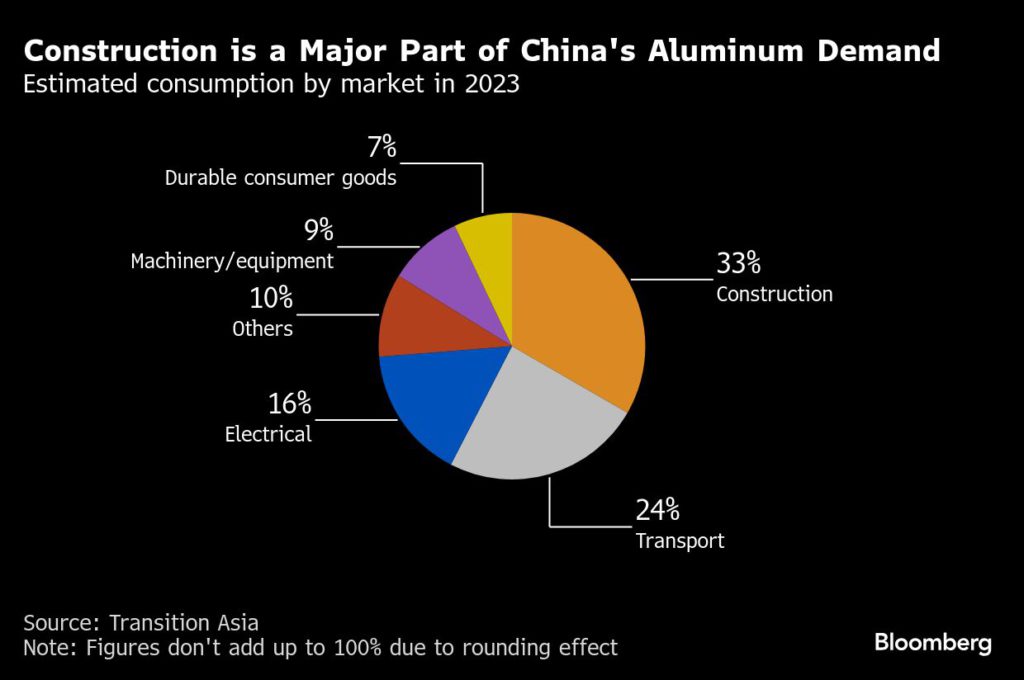
For Liang Zhu, who runs an aluminum factory about 100 kilometers north of Hong Kong, there is only one way out of China’s vicious spiral of excessive competition: shift away from inexpensive metal for window frames and door handles, and toward the specialized alternatives needed for iPads and airplanes.

Guangdong province has long been a powerhouse of light manufacturing. Today, though, many companies like Liang’s are battling to survive in the era of “involution”, a term commonly used to describe the country’s intense, self-harming industrial race. China’s property boom is over, and has left behind small to medium-sized manufacturers saddled with overcapacity, evaporating margins and a relentless struggle for customers.

“Without sufficient profits, there will be no funds to invest in innovation, research or in finding solutions for society,” said Liang, general manager at Guangdong Mingzhu Metal Material Technology Co., a company he founded after returning from a spell working in Australia. “That’s a dilemma for us, so we look for ways to get out of this so-called involution.”

Producers of aluminum to be used in railings or furniture thrived in Guangdong from the early reform years of the 1980s up until the country’s real estate crisis began in earnest five years ago. Since then, the region has seen a wave of consolidation.

In July, Mingzhu Metal started up its first production line making items with “7-series” aluminum, a more complex product that’s harder to rework and weld, more resistant to heat and easier to crack when cooling. Most importantly, it has lucrative buyers in China’s emerging higher-value industries — from aerospace to electric vehicles and consumer goods.

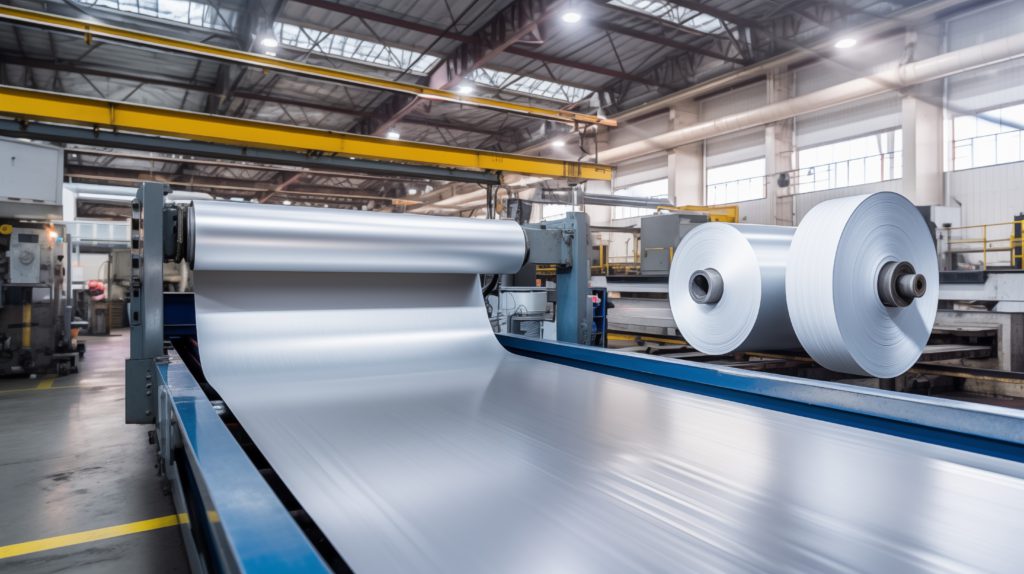
Aluminum is arguably the world’s most versatile metal because it’s lightweight, durable and doesn’t rust. Extruders, as companies like Liang’s outfit are known, take thick bars of semi-finished metal and work it through several phases to form different shapes and profiles, from car frames to supports for solar panels.

This corner of the sector has long relied on real estate and infrastructure, so the collapse of construction activity since the start of the pandemic has been devastating. Operating rates for aluminum processors are at about 60% to 70% for the best-performing companies, and at only 40% to 50% for the weaker ones, according to researcher Shanghai Metals Market, or SMM. Both are below the 80% level deemed a healthy minimum.

Midstream aluminum producers are “facing complex situations such as weak domestic demand, increased uncertainty in foreign trade, and intensified internal competition in the industry,” the China Nonferrous Metals Industry Association said in July. “The price competition situation is quite severe, and overall processing fees have reached an historic low.”

Shandong Nanshan Aluminum Co., a major producer of extrusions in eastern China, is a case in point. The firm said last week it’ll close 120,000 tons of its total 320,000 tons of capacity after recording utilization rates of just 59%. It plans to shift its focus to higher-end products for industry and autos.

President Xi Jinping has said he wants to “break involution,” which means reducing the excessive competition and capacity levels blamed both for a cycle of domestic deflation and raising tensions with trade partners.

The campaign is taking different forms across industries. Nationwide coal output declined in July from a year ago, after government inspectors targeted mines that produce too much. Oil refining and petrochemicals are set for a sweeping overhaul. And bosses from electric vehicle companies and some tech giants have been called before regulators and warned about over-competition.

An hour’s drive from Mingzhu Metal is China’s “aluminum capital” of Foshan, known for its panoply of extruders, fabricators and wholesale markets. Here, Foshan Golden Source Precision Manufacturing Co. has passed through several phases of specialization and technological upgrades since it was founded in the early 1990s.

Its showroom exhibits include trailer ramps and bathroom fittings to hard disk components and parts for the Harmony trains that pioneered China’s high-speed rail. The firm has hewn closely to the technological path prescribed by Xi’s Made in China 2025 plan that was launched a decade ago.

Most recently, Golden Source has developed components for EV charging points and lightweight fittings for airplane trolleys. When General Manager Rain Tam took over the business from her father, its founder, she raised spending on technological research in order to cut costs and to improve product quality.

Even then, there is intense competition.

“Technological innovation helps profit margins for some products, but overall our margins will be a lot worse this year than last,” said Wang Shunli, deputy general manager. “Right now, when it comes to pricing, I feel the pressure is extremely high.”

China’s last round of industrial supply reforms after 2015 heralded changes across the sector, from the smelters that produce aluminum to the factories that handle the metal. For extruders, strict new controls on carbon emissions and energy consumption put the squeeze on smaller, less efficient firms.

That’s left an environment that is complex, but also modestly positive. Chinese demand for the metal is set to grow 3.4% this year, according to Bloomberg Intelligence. China Hongqiao Group Co., the biggest primary aluminum producer, gave an upbeat outlook after it reported a rise in first-half earnings.

“Overall aluminum consumption is trending upward, but the main issues are rapid capacity expansion and severe product homogenization,” said SMM analyst Liu Xiaolei. “The aluminum industry is shifting toward new energy sectors, but these are also experiencing clear overcapacity.”

In Guangdong, managers and factory workers are settling in for a long battle. Unlike Xi’s last round of supply-side reforms, there’s little prospect of massive stimulus or a renewed construction boom to restore the growth rates of the past.

“The whole industry is experiencing a test,” said Golden Precision’s Wang. “For now, we need to survive first, so that we can advance more in five, seven, eight years.”


The U.S. and China Are Battling for Control of the World’s Bauxite Supply

  • The global alumina and bauxite market is projected to grow from $84.5 billion in 2025 to $125.9 billion by 2033 at a 5.11% CAGR.

  • The U.S. and China are vying for global bauxite supply, with China consuming over 60% of traded bauxite and the U.S. importing 75% of its needs.

  • Guinea’s concession revocation, Rio Tinto’s $180M expansion, and stable Q2 2025 prices highlight both opportunities and risks for the sector.

Despite a few hiccups and occasional worries of oversupply, the global bauxite market has been growing steadily. Much of this expansion has been fueled by rising demand in the aluminum market, especially from automotive, aerospace and renewable energy sectors.

About 60% of EV manufacturers and over 70% of aerospace materials use aluminum in one form or another. Moreover, about 85% of bauxite is used for alumina production. Because of these facts, the global alumina and bauxite market is projected to grow from US $84.51 billion in 2025 to US $125.91 billion by 2033, at a CAGR of 5.11%. This means opportunity, but also the potential for volatility. Steps to manage the downstream volatility which can occur as a result of these supply chain disruptions are covered in MetalMiner’s Weekly Newsletter.

The U.S. and China Now Vying for Global Supply

Sector analysts believe the bauxite market, and by extension the aluminum market, is undergoing a strategic transformation. This hinges on the fact that the U.S. is expanding in domestic mining capacity, while the other major player, China, is vying for control over global bauxite resources.

The latter is the world’s largest aluminum producer, consuming over 60% of globally traded bauxite, much of it sourced from Guinea and Australia. On the other hand, the U.S. largely imports its bauxite, to the tune of about 75%. As aluminum market demand heads up, the United States wants to reduce this reliance on foreign supply.

The U.S. and the rest of North America have long relied on the Asia-Pacific region for bauxite. That area currently dominates the global market, with a 45% share of reserves. However, Africa and the Middle East follow closely. Guinea, for example, has about 24% of global reserves. And while Australia leads in exports, China is still numero uno in refining, followed by Saudi Arabia and the UAE. 

Guinea’s Recent Moves

In a decisive move to assert control over its mineral resources, Guinea recently revoked a major bauxite concession from the UAE’s Guinea Alumina Corporation (GAC), citing failure to build a promised alumina refinery. The decree transferred the Boké concession from Emirates Global Aluminium (EGA) to a new state-owned entity, Nimba Mining Company, for a duration of 25 years.

GAC, which exported 18 million tons in 2024, plans to challenge the decision through international arbitration, calling it a wrongful termination. Some experts believe this could also change some of the dynamics where the U.S. is concerned, since the country relies on Guinea for at least some part of its bauxite supply. 

More Investments

Even as the U.S. goes about expanding mining capacity, major aluminum market players like Rio Tinto are making moves to add to the overall bauxite supply. That company recently invested a significant amount of resources into its Australian operations, committing US $180 million to expand bauxite access at the Amrun mine in Queensland. Initial production is expected in 2027, with a full ramp-up by 2028.

Price Range

The sturdiness of the bauxite and aluminum market is reflected in global bauxite prices, which have remained relatively stable in Q2 2025. This is mainly the result of a complex interplay of supply chain disruptions, environmental regulations, and robust demand from the aluminum sector.

In the U.S., Q2 prices held at $82/MT thanks to consistent demand from aluminum smelters and refractory industries. Meanwhile, import reliance and freight delays pushed up landed costs, while environmental rules and labor shortages strained mining logistics. In China, Q2 prices rose to $99/MT amid strong industrial demand and domestic supply disruptions. Simultaneously, tight import availability and shipping delays from Southeast Asia and West Africa further constrained sourcing.

With aluminum demand accelerating and countries like the U.S. and Australia investing in strategic supply chains, the bauxite market seems poised for long-term expansion. But certain challenges do lie in its path. These include environmental constraints like red mud disposal, which adds up to 50% in operational costs, as well as certain geopolitical risks and the resulting price volatility.

By Metal Miner


Germany urges Europe to stop China buying so much copper scrap


Europe needs to help its copper smelters by stemming “huge” flows of scrap metal to China, Germany’s Economy Minister Katherina Reiche said, potentially opening up a new front in trade tensions.

“The Chinese are buying copper scrap from the market in huge quantities,” Reiche said at a Siemens Energy AG event in Berlin on Monday. “Large German copper smelters are no longer getting any raw materials.”

The unease about shipping raw materials to China highlights a growing politicization of global commodities supplies, which has accelerated under US President Donald Trump’s protectionist agenda. Any European Union moves to stem supplies would add to trade issues — including China’s exports of electric vehicles — that have strained ties between Brussels and Beijing.


Reiche said there should be Europe-wide policies to ensure China cannot simply outbid European smelters to get scrap metal out of the region, without specifying what restrictions could be implemented. This topic should be part of a wider concept around resilience of European economies, she said.

China has boosted purchases of copper scrap over the past five years as its own smelters ramp up output and supplies of mined copper ore become more costly. But this year has seen an additional dynamic with China seeking supplies from many other countries after a collapse in direct scrap shipments from the US, typically the single biggest origin.

In the first seven months of the year, China took in about 204,000 tons of copper scrap from European Union nations, up 3.5% from a year earlier. Still, its supplies were still a relatively small part of China’s total imports, at about 15%.

Reiche also called for measures to promote mining of lithium and rare earths in Germany.


Codelco warns Chile’s copper output may stall at 5.5Mtpa


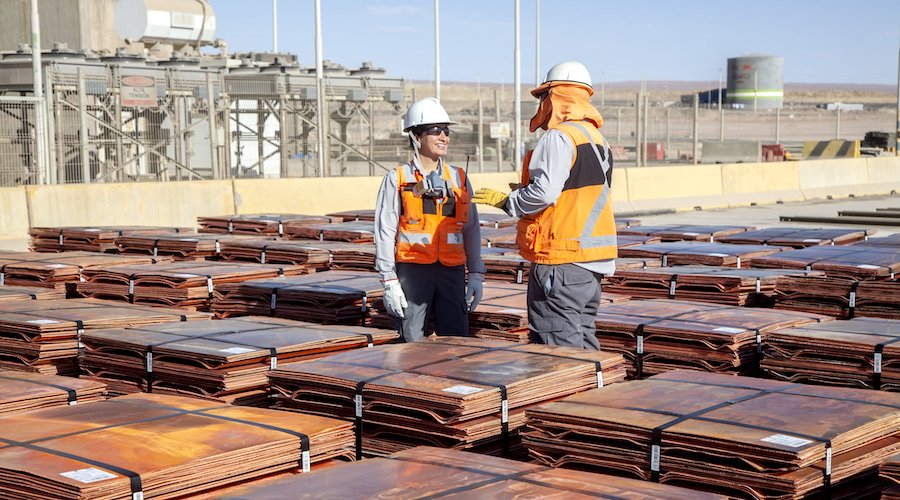
Copper cathodes at Gabriela Mistral mine. (Image courtesy of Codelco.)

Chile’s state-owned copper giant Codelco is warning that national production could stagnate at about 5.5 million tonnes per year as the industry faces mounting challenges.

Chairman Máximo Pacheco said at the Ecos de la Minería summit in Santiago the sector faces “enormous difficulties,” citing deeper mining operations, falling ore grades and rising costs. Chile is the world’s top copper supplier, and a prolonged plateau in output could tighten global markets just as demand from the energy transition accelerates.

Despite the challenges, Pacheco said Codelco is pressing ahead with upgrades and new ventures. He confirmed the company remains committed to a lithium partnership with SQM in the Salar de Atacama. He also said an exploration agreement with BHP (ASX: BHP) for the Anillo copper project will be signed this week, while a joint mining plan with Anglo American (LON: AAL) could be finalized in the coming weeks.

SQM President Gina Ocqueteau told local paper La Tercera she is optimistic the deal with Codelco will be ratified before Chile’s next government takes office in March. She noted the partnership’s details could be finalized sooner but warned delays would postpone revenues needed for government projects.

Two hurdles remain before the lithium deal can be sealed: completion of an indigenous consultation process and approval from China’s antitrust regulator, SAMR. Ocqueteau said the consultation, led by state agency Corfo, is well advanced. On SAMR, she noted “good news and a growing sentiment” but acknowledged concerns in Beijing over global lithium supply.

Awaiting minister’s blessing

Chile’s Energy and Mining Minister Aurora Williams confirmed the special contract underpinning the SQM-Codelco venture has already cleared reviews by the Comptroller General and state copper agency Cochilco. “The only thing left for us to do is sign it,” she said.

The contract sets terms for exploration, exploitation, environmental safeguards and economic conditions. It is slated to give Codelco majority control of SQM’s lithium production in northern Chile. If approved, it would cement a landmark partnership in one of the world’s most strategic lithium assets.

Some presidential contenders have said they would review the deal or scrap it altogether if it does not come through before President Gabriel Boric leaves office, putting pressure on his administration to finalize the key pillar of its vow to boost the state’s role in lithium production.


Damen Launches latest Island Class for BC Ferries

Damen Shipyards Group
The second in a series of four fully electric-ready ferries

Published Sep 1, 2025 10:33 PM by The Maritime Executive


[By: Damen Shipyards]

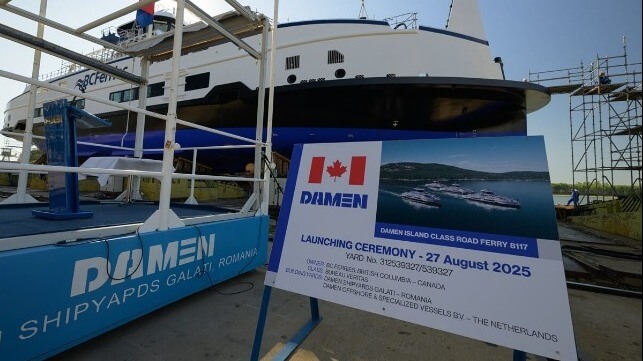
On 27 August, Damen Shipyards Group launched the latest Island Class ferry for Canada’s BC Ferries. The vessel is the second of four Island Class vessels currently under construction at Damen Shipyards Galati in Romania. Once operational, the ferries will provide low emission services connecting coastal communities along the coast of British Columbia.

Forward steps
When delivered, the ferry will be the eighth Island Class vessel that Damen has built for BC Ferries. The Island Class is based on the design of the Damen 8117 Electric Ferry (E3). The Galati shipyard has seen a lot of activity on all four Island Class vessels under construction over the past few weeks. In early July, the yard also marked the grand block assembly of the ninth vessel, and the keel laying of the tenth, on the same day.

These ferries will transport passengers between Nanaimo and Gabriola Island, and Campbell River and Quadra Island. Damen is outfitting the vessels with diesel-electric hybrid propulsion. In the future, once the relevant electrical infrastructure is in place, BC Ferries intends to operate the ferries on 100% electric power.

Long-term collaboration
Damen Executive Director Global Sales Leo Postma said, “There’s been a lot of movement on the various Island Class vessels over the past few months and it’s very exciting for our team to see progress unfolding at such a rate. We continue to enjoy an excellent cooperation with BC Ferries. We are very grateful for the quality of this relationship, which is undoubtedly a significant factor in the ongoing success of the project.”

Damen is also supplying BC Ferries with onshore charging equipment and will, via its BC-based Service Hub, continue to provide its client with support during the vessels’ operational phase.

A new generation
In a further step forward for sustainable public transport operations, the four Island Class vessels currently undergoing construction are being modified to reduce underwater radiated noise. Together, Damen and BC Ferries undertook a series of underwater noise measurements on the Island Class vessels already in operation. Damen, working with its suppliers, has put the findings from these measurements into reducing underwater radiated noise in this next generation of Island Class vessels. This is in line with BC Ferries’ Long Term Underwater Management Plan. The company has developed this Management Plan minimise impacts on marine life in the areas in which it operates, most notably the endangered Southern Resident Killer Whale.

Measures taken include hull drag reduction via towing tank testing after a number of computational fluid dynamics (CFD) simulations. Additionally, the adaptations were made to the vessels’ propulsion system including a new quieter and more efficient propeller blade design. A short video about the launch is available here.

The products and services herein described in this press release are not endorsed by The Maritime Executive.


Oil Exports Resume After 14 Years from Syria’s Tartus Port

oil tanker in Syria
Nissos Christiana moored for loading Syria's first oil exports in 14 years (Syrian Energy Ministry)

Published Sep 2, 2025 11:38 AM by The Maritime Executive


The first cargo of Syrian crude oil to be exported from the port of Tartus since the Syrian civil war was lifted on September 1. The Greek-owned tanker Nissos Christiana (114,264 dwt), loaded 600,000 barrels of heavy crude oil according to the Syrian Ministry of Energy. The cargo has been purchased by BB Energy, a global oil-trading firm, for an unknown final customer.

The vessel, which was built in 2015, is managed by Kyklades Maritime and registered in Greece. According to its AIS signal, it has yet to depart Syria, but the Ministry is calling it an important step in revitalizing the oil sector and broadening international cooperation.


KURDS CONTROL OIL IN SYRIA AND IRAQ

Given the volume of oil lifted, most if not all the crude must have come from oil fields in Rojava, the Kurdish-controlled territory in the north east of Syria controlled by the Democratic Union Party (PYD). The PYD as part of its reconciliation with the new government in Damascus permitted oil exports to recommence in February, although supply may have been disrupted recently by renewed tensions between the PYD and the government.

In 2010, the last full year before production was disrupted, Syria exported a modest 380,000 barrels of oil per day. Shell had developed and operated the largest Syrian oil field in conjunction with government interests, but suspended production in 2011 when EU sanctions were imposed. The second-largest foreign operator was France’s Total, also government-tied.

The revival of Tartus as a crude export terminal comes as DP World has signed an $800 million agreement with the Syrian government under which it will develop and manage the port. DP World replaced the previous Russian operator OAO Stroytransgaz who had operated the port since 2019. 


The Russian Navy appears to have finally closed its links with Tartus, previously the supply and maintenance base for its Mediterranean Flotilla. Earlier this month, without docking the Russian Kilo Class submarine RFS Novorossiksk (B261) was active off Tartus for several weeks, the last remnant of the Mediterranean Flotilla still operating in the Mediterranean.

In an extraordinary reversal of fortunes, the open source analyst italmilradar has plotted what appears to be the imminent departure of the Novorossiksk and its accompanying Goryn Class tug Yakov Grebelskiy through the Straits of Gibraltar - which would mark the end of the permanent Russian presence in the Mediterranean - albeit further visits can be expected.


China is Set to Unveil a Full Set of New Hypersonic Missiles

A YJ-17 captured in low-resolution nighttime footage during preparations for the Beijing parade (Chinese social media)

Published Sep 1, 2025 9:48 PM by The Maritime Executive


China is set to unveil its new hypersonic anti-ship missile at a parade in Beijing to celebrate the 80th anniversary of the end of the Second World War. The YJ-17 has previously been kept under wraps.

The YJ-17, from the Eagle Strike missile family, is reported to be able to reach Mach 8, or over 6,000 mph, and to be able to hit targets at a range of 750 miles. It is believed to have an evasive maneuver capability in its terminal flight phase, and can be vertically-launched from ships.

The previously unseen YJ-17 has been seen alongside a number of other new recently introduced missiles in the mounting areas in Beijing where Wednesday’s parade is being rehearsed. These include the YJ-19 and YJ-20, both hypersonic anti-ship cruise missile, with the YJ-19 capable of being fired from ships.

The YJ-17 missile in particular - when operational on board Chinese ships - will be a new threat to US carriers operating in the Pacific, which the US Navy is seeking to counter by introducing new missile systems of its own. The AGM-158C LRASM long-range cruise missiles can be launched from carrier-borne aircraft. Block V Maritime Strike Tomahawk cruise missiles with a range of over 1,000 miles are programmed to be operationally-ready aboard US destroyers by the end of this month. Both the US Navy and the Air Force are also engaged in a rapid procurement project known as MACE to acquire a cheaper and longer ranged air-launched missile, capable of being launched from stealth aircraft. No doubt the effectiveness of US defensive anti-missile systems will also need to be reevaluated to determine if they are capable of dealing with the hypersonic closing speed of the YJ-17. Also part of the strategy to counter the developing threat is the use of forward islands in the western Pacific, from which the US Marine Indo-Pacific Long Range Fires Battalion can launch SM-6 based Typhon missiles, a tactic rehearsed during the recent Exercise Talisman Sabre in Northern Australia.

On the basis of equipment seen parked up for rehearsals, the 80th anniversary parade is likely to mark an uprating on China’s part of its aggressive stance towards the United States, Japan and Taiwan, probably also to be reflected in the speech which will be made by Chinese leader President Xi Jinping during the parade. Also attending the parade will be Russia’s President Putin and North Korean Supreme Leader Kim Jong-un.

As a political event, the parade will mark the revival of President Xi’s ascendancy, after a period when it was thought that internal opposition to his martial leanings had diminished his standing. A meeting of the Shanghai Co-operation Organization preceded the parade, attended by Indian Prime Minister Narendra Modi – a sign of an Indian-Chinese rapprochement amidst pressure from Washington - as well as leaders of two NATO countries, Recep Erdogan of Turkey and Robert Fico of Slovakia.


Royal Navy Uses Drone Deliveries for STS Transfers for the First Time

Drone delivery
Courtesy Royal Navy

Published Sep 1, 2025 10:05 PM by The Maritime Executive


The Royal Navy carrier HMS Prince of Wales has debuted the service's first operational use of cargo drones for ship to ship transfers while on deployment to the Indo-Pacific. Prince of Wales and her crew used a Malloy T-150 quadcopter drone to transfer goods from the carrier to the destroyer HMS Dauntless, eliminating the need to use a helicopter or small craft for small-package flights. 

The drone flew a short one-mile transit from one ship to the other, and a crew aboard Dauntless guided it in for each landing. "This is a key milestone for the trial, achieved by all the hard work that everyone has put in. I’m proud to have achieved this first for the Royal Navy and excited to progress further over the duration of the deployment," said Lieutenant Matt Parfitt, 700X Pioneer Flight Commander.

The service has been experimenting with drone delivery services for a long time. Five years ago, the Royal Navy and Royal Marines began testing the Malloy T-150 for shoreside ammunition drops and combat supply deliveries during amphibious assault exercises, and also began work on testing the larger T-400 for bigger payloads. In 2023, a Royal Navy team trialed a much larger fixed-wing cargo drone for shore-to-carrier deliveries, the W Autonomous Systems HCMC, which has a payload of 100 kilos and a range of more than 850 nautical miles. The Malloy T-150 fills a sweet spot for small ship-to-ship transfers, and does not require a big deck for landing on each end of the trip. 

"This milestone in the Malloy trials is a step toward the vision of a fully integrated hybrid carrier air wing. By taking some of the logistics burden, Malloy will allow our naval helicopters to concentrate on their core outputs," said Captain Colin McGannity, Commander Air Group, UK Carrier Strike Group. "The really exciting bit is that we then plan to incorporate these lessons to be able to use UAVs for many other roles, including options for warfighting."