Monday, September 08, 2025


Is AI a canary in the coal mine and should we really fear AI taking jobs in Europe?

Labour market analysts say its too early to see how AI is impacting the labour market
Copyright Canva

By Anna Desmarais
Published on 

Early studies from the US show that young workers are being replaced in AI-vulnerable jobs such as software engineering and are instead pivoting to vocational fields like nursing or retail. Is the same thing happening in Europe?

There are already fewer younger workers aged between 22 and 25 being hired in AI-vulnerable jobs, such as software engineering, customer service, and marketing in the United States, according to a study. 

Young people are more likely to see employment growth in fields less exposed to risk, such as nursing, industrial labour, or retail,  found the Stanford University study, titled ‘Canaries in the Coal Mine? Six Facts about the Recent Employment Effects of Artificial Intelligence.’

The study “provide(s) early, large-scale evidence consistent with the hypothesis that the AI revolution is beginning to have a significant and disproportionate impact on entry-level workers in the American labour market,” it reads.

Labour market experts told Euronews Next it’s too early to see a similar trend happening in Europe and that there is still a shortage in vocational jobs, such as construction and manufacturing, that predates AI by about a decade.

So what impact is AI already having on Europe’s labour market

Companies looking for ‘focused experts’ as AI evolves

Adam Tsakalidis, a skills intelligence and foresight expert with the European Centre for the Development of Vocational Training (CEDEFOP), collects online vacancies available in the European Union to find the digital skills that are sought after. 

Tsakalidis said in his analysis that AI competencies are coming up in domains that would be expected, such as AI engineering or developer roles, but also for jobs at risk of automation, such as authors, writers, and translators.

He said companies are looking for niche specialists within these high-skilled jobs that can bring something that AI cannot, which is skilled expertise.

“Cognitive skills, the ability to process social context, these remain human advantages,” Tsakalidis said, noting that this is likely to continue even as the large language models (LLMs) that enable AIs become more “sophisticated.”

Tsakalidis said that CEDEFOP’s 2035 forecasting still shows that there will be an increased demand for digital roles despite the rise of AI.

 Employers are also looking for a mix of human skills, like problem-solving, teamwork and communication, alongside traditional AI competencies,  said Konstantinos Pouliakas, skills and labour market expert with CEDEFOP.

 The key question is, how will workers at all skill levels be asked to use AI and adapt to how it will change their positions, he said. 

History has shown that those in high-skill positions are also more likely to adapt successfully to technological changes, boosting their productivity and income, according to Ulrich Zierahn-Weilage, associate professor of economics at Utrecht University

“That is why I would refrain from saying ‘become a farmer,’ there aren’t too many jobs there,” Zierahn-Weilage said. “It’s too broad of a statement because … you still need the human that has critical thinking, while the machine helps you get the dirty work done more quickly.”

​Yet, Tsakalidis and Pouliakas said there’s still a risk that some professions become completely automated between now and then, but which ones are hard to predict.

4 in 10 Europeans need AI training, report shows

CEDEFOP’s 2024 AI skills survey found that 4 in 10 EU workers say they need to develop AI-related skills, yet only 15 per cent have taken AI-focused training.

Pouliakas said it’s not clear from their report which AI skills workers are lacking, nor which ones are the most in-demand from employers.

A study of thousands of people from seven countries by German engineering company Bosch found that effective use of AI tools is the most important skill that workers are expected to have, followed by critical thinking and cybersecurity analysis.

To meet the skills gap challenge, Anastasia Pouliou, CEDEFOP’s specialist on qualifications and vocational training, said there’s a need for more flexible courses for workers that are industry-specific.

“In healthcare, for instance, you might have formal qualifications but [learn how to] use AI tools for workflow automations,” she said.

The EU’s new AI Act includes measures to boost AI literacy across the workforce, but implementation will take time, Pouliou added.

These efforts also aren’t uniform across the EU, with some countries moving faster than others, she added.

For example, Pouliou pointed to Spain’s launch of a national AI agency and Poland’s partnership with Google for vocational AI training for professionals in cybersecurity and energy as examples where these countries are leaping ahead.

For individuals who are worried about how AI could change their jobs, Pouliou says the key is to learn how it works. 

“Never stop learning,” she said. “With AI, you definitely need to be aware and be informed but keep on being trained”.


 

AI psychosis: Why are chatbots making people lose their grip on reality?

There have been increased reports of AI-powered chatbots such as ChatGPT causing delusional and distorted thinking.
Copyright Canva

By Amber Louise Bryce
Published on 

Amidst reports of AI-powered chatbots causing distorted thinking, there’s growing concern over their potential risks and impact on mental health.

Warning: This story contains discussion of suicide and mental health. 

The first time Amelia used ChatGPT, she just wanted to find the motivation to take a shower.

Signed off work with depression, the 31-year-old from the United Kingdom - who requested their name be changed for this article - initially found reassurance in the chatbot’s “sweet and supportive” responses. 

But as her mental health deteriorated, her exchanges with the bot began to take a darker turn. 

“If suicidal ideation entered my head, I would ask about it on ChatGPT,” Amelia told Euronews Next. 

“It would give me a table [of information] if I wanted, and all I had to do was frame it in a certain way. Because if you outright say that you want to kill yourself, it will share the suicide hotlines,” she continued. 

I had never researched a suicide method before because that information felt inaccessible... But when I had [ChatGPT] on my phone, I could just open it and get an immediate summary.
 Amelia 

ChatGPT, created by OpenAI, is programmed with safeguards designed to steer users away from harmful queries, including providing numbers for suicide hotlines. However, Amelia discovered that by framing her queries as academic research, she could bypass some of these barriers. 

In a series of screenshots viewed by Euronews Next, Amelia asked ChatGPT about the most common suicide methods in the UK for her “university work”, followed by: “I’m interested in hanging. Why is it the most common I wonder? How is it done?” 

The chatbot responded with a list of insights, including a clinical explanation of “how hanging is carried out”. This section was caveated: “The following is for educational and academic purposes only. If you’re personally distressed, or this content is difficult to read, consider stepping away and speaking to someone”. 

While ChatGPT never encouraged Amelia’s suicidal thoughts, it became a tool that could reflect and reinforce her mental anguish. 

“I had never researched a suicide method before because that information felt inaccessible,” Amelia explained. “But when I had [ChatGPT] on my phone, I could just open it and get an immediate summary”.

Euronews Next reached out to OpenAI for comment, but they did not respond. 

Now under the care of medical professionals, Amelia is doing better. She doesn’t use chatbots anymore, but her experiences with them highlight the complexities of navigating mental illness in a world that’s increasingly reliant on artificial intelligence (AI) for emotional guidance and support. 

The rise of AI therapy

Over a billion people are living with mental health disorders worldwide, according to the World Health Organization (WHO), which also states that most sufferers do not receive adequate care.

As mental health services remain underfunded and overstretched, people are turning to popular AI-powered large language models (LLMs) such as ChatGPT, Pi and Character.AI for therapeutic help. 

“AI chatbots are readily available, offering 24/7 accessibility at minimal cost, and people who feel unable to broach certain topics due to fear of judgement from friends or family might feel AI chatbots offer a non-judgemental alternative,” Dr Hamilton Morrin, an Academic Clinical Fellow at King’s College London, told Euronews Next. 

In July, a survey by Common Sense Media found that 72 per cent of teenagers have used AI companions at least once, with 52 per cent using them regularly. But as their popularity among younger people has soared, so have concerns. 

“As we have seen in recent media reports and studies, some AI chatbot models (which haven't been specifically developed for mental health applications) can sometimes respond in ways that are misleading or even unsafe,” said Morrin. 

AI psychosis

In August, a couple from California opened a lawsuit against OpenAI, alleging that ChatGPT had encouraged their son to take his own life. The case has raised serious questions about the effects of chatbots on vulnerable users and the ethical responsibilities of tech companies. 

In a recent statement, OpenAI said that it recognised “there have been moments when our systems did not behave as intended in sensitive situations”. It has since announced the introduction of new safety controls, which will alert parents if their child is in "acute distress".

Meanwhile, Meta, the parent company of Instagram, Facebook, and WhatsApp, is also adding more guardrails to its AI chatbots, including blocking them from talking to teenagers about self-harm, suicide and eating disorders. 

Some have argued, however, that the fundamental mechanisms of LLM chatbots are to blame. Trained on vast datasets, they rely on human feedback to learn and fine-tune their responses. This makes them prone to sycophancy, responding in overly flattering ways that amplify and validate the user's beliefs - often at the cost of truth. 

The repercussions can be severe, with increasing reports of people developing delusional thoughts that are disconnected from reality - coined AI psychosis by researchers. According to Dr Morrin, this can play out as spiritual awakenings, intense emotional and/or romantic attachments to chatbots, or a belief that the AI is sentient. 

“If someone already has a certain belief system, then a chatbot might inadvertently feed into beliefs, magnifying them,” said Dr Kirsten Smith, clinical research fellow at the University of Oxford. 

“People who lack strong social networks may lean more heavily on chatbots for interaction, and this continued interaction, given that it looks, feels and sounds like human messaging, might create a sense of confusion about the origin of the chatbot, fostering real feelings of intimacy towards it”. 

Prioritising humans

Last month, OpenAI attempted to address its sycophancy problem through the release of ChatGPT-5, a version with colder responses and fewer hallucinations (where AI presents fabrications as facts). It received so much backlash from users, the company quickly reverted back to its people-pleasing GPT‑4o.

This response highlights the deeper societal issues of loneliness and isolation that are contributing to people’s strong desire for emotional connection - even if it’s artificial. 

Citing a study conducted by researchers at MIT and OpenAI, Morrin noted that daily LLM usage was linked with “higher loneliness, dependence, problematic use, and lower socialisation.” 

To better protect these individuals from developing harmful relationships with AI models, Morrin referenced four safeguards that were recently proposed by clinical neuroscientist Ziv Ben-Zion. These include: AI continually reaffirming its non-human nature, chatbots flagging anything indicative of psychological distress, and conversational boundaries - especially around emotional intimacy and the topic of suicide.  

“And AI platforms must start involving clinicians, ethicists and human-AI specialists in auditing emotionally responsive AI systems for unsafe behaviours,” Morrin added. 

Just as Amelia’s interactions with ChatGPT became a mirror of her pain, chatbots have come to reflect a world that’s scrambling to feel seen and heard by real people. In this sense, tempering the rapid rise of AI with human assistance has never been more urgent. 

"AI offers many benefits to society, but it should not replace the human support essential to mental health care,” said Dr Roman Raczka, President of the British Psychological Society. 

“Increased government investment in the mental health workforce remains essential to meet rising demand and ensure those struggling can access timely, in-person support”.

If you are contemplating suicide and need to talk, please reach out to Befrienders Worldwide, an international organisation with helplines in 32 countries. Visit befrienders.org to find the telephone number for your location.


LSD shows promise for reducing anxiety, shows drugmaker's study

This photo provided by Catalent shows Catalent's MindMed's formulation of LSD.
Copyright Catalent via AP

By AP, Euronews
Published on  

The psychedelic drug LSD showed positive results for easing symptoms in people with generalised anxiety disorder, a recent study has shown.

LSD reduced symptoms of anxiety in a mid-stage recent study, paving the way for additional testing and possible medical approval of a psychedelic drug that has been banned in the US for more than half a century.

The results from drugmaker Mindmed tested several doses of LSD in patients with moderate-to-severe generalised anxiety disorder, with the benefits lasting as long as three months. The company plans to conduct follow-up studies to confirm the results and then apply for Food and Drug Administration approval.

Beginning in the 1950s, researchers published a flurry of papers exploring LSD's therapeutic uses, though most of them don't meet modern standards.

“I see this paper as a clear step in the direction of reviving that old research, applying our modern standards and determining what are the real costs and benefits of these compounds,” said Frederick Barrett, who directs Johns Hopkins University’s psychedelic centre and was not involved in the research.


Psychedelic research is rebounding

Psychedelics are in the midst of a popular and scientific comeback, with conferences, documentaries, books and medical journals exploring their potential for conditions like depression, anxiety and post-traumatic stress disorder.

The FDA has designated psilocybin, MDMA and now LSD as potential “breakthrough” therapies based on early results.

Still, the drugs have not had a glide path to the market.

Last year, the FDA rejected MDMA — also known as ecstasy — as a treatment for PTSD, citing flawed study methods, potential research bias and other issues.

The new LSD study, published by the Journal of the American Medical Association, addresses some of those problems.

MDMA, like many other psychedelics, was tested in combination with hours of talk therapy by trained health professionals. That approach proved problematic for FDA reviewers, who said it was difficult to separate the benefits of the drug from those of therapy.

The LSD study took a simpler approach: Patients got a single dose of LSD — under professional supervision, but without therapy — and then were followed for about three months.

The paper does not detail how patients were prepared for the experience or what sort of follow-up they received, which is crucial to understanding the research, Barrett noted.

“In many cases, people can have such powerful, subjective experiences that they may need to talk to a therapist to help them make sense of it,” he said.

Anxiety eased, but questions remain

For the study, researchers measured anxiety symptoms in nearly 200 patients who randomly received one of four doses of LSD or a placebo. The main aim was to find the optimal dose of the drug, which can cause intense visual hallucinations and occasionally feelings of panic or paranoia.

At four weeks, patients receiving the two highest doses had significantly lower anxiety scores than those who received placebo or lower doses. After 12 weeks, 65 per cent of patients taking the most effective LSD dose — 100 micrograms — continued to show benefits and nearly 50 per cent were deemed to be in remission. The most common side effects included hallucinations, nausea and headaches.

Patients who got dummy pills also improved — a common phenomenon in psychedelic and psychiatric studies — but their changes were less than half the size those getting the real drug.

The research was not immune to problems seen in similar studies.

Most patients were able to correctly guess whether they’d received LSD or a dummy pill, undercutting the “blinded” approach that’s considered critical to objectively establishing the benefits of a new medicine. In addition, a significant portion of patients in both the placebo and treatment groups dropped out early, narrowing the final data set.

It also wasn’t clear how long patients might continue to benefit.

Mindmed is conducting two large, late-stage trials that will track patients over a longer period of time and, if successful, be submitted for FDA approval.

“It’s possible that some people may need retreatment,” said Dr. Maurizio Fava of Mass General Brigham Hospital, the study's lead author and an adviser to Mindmed. "How many retreatments, we don’t know yet, but the long-lasting effect is quite significant".

Interest from the Trump administration

Health Secretary Robert F. Kennedy Jr. and other administration officials have expressed interest in psychedelic therapy, suggesting it could receive fast-track review for veterans and others suffering psychological wounds.

Generalised anxiety disorder is among the most common mental disorders, affecting nearly 3 per cent of US adults, according to the National Institutes of Health. Current treatments include psychotherapy, antidepressants and anti-anxiety drugs like benzodiazepines.

The possibility of using LSD as a medical treatment isn’t new.

In the 1950s and 1960s, more than 1,000 papers were published documenting LSD's use in treating alcohol addiction, depression and other conditions. But a federal backlash was in full swing by the late 1960s, when psychedelics became linked to counterculture figures like Timothy Leary, the ex-Harvard professor who famously promoted the drugs as a means to “turn on, tune in and drop out”.

A 1970 law classifying LSD and other psychedelics as Schedule 1 drugs — without any medical use and high potential for abuse — essentially halted U.S. research.

When a handful of nonprofits began reassessing the drugs in the 1980s and 1990s, they focused on lesser-known hallucinogens like MDMA and psilocybin, the main ingredient in magic mushrooms, to avoid the historic controversies surrounding LSD.

“LSD was right there in front of everybody, but Mindmed is the first company that actually decided to evaluate it,” Fava said.


LA REVUE GAUCHE - Left Comment: Search results for psychedelics


Cloud seeding, flash floods, and a thirsty city: The UAE’s fragile relationship with rain

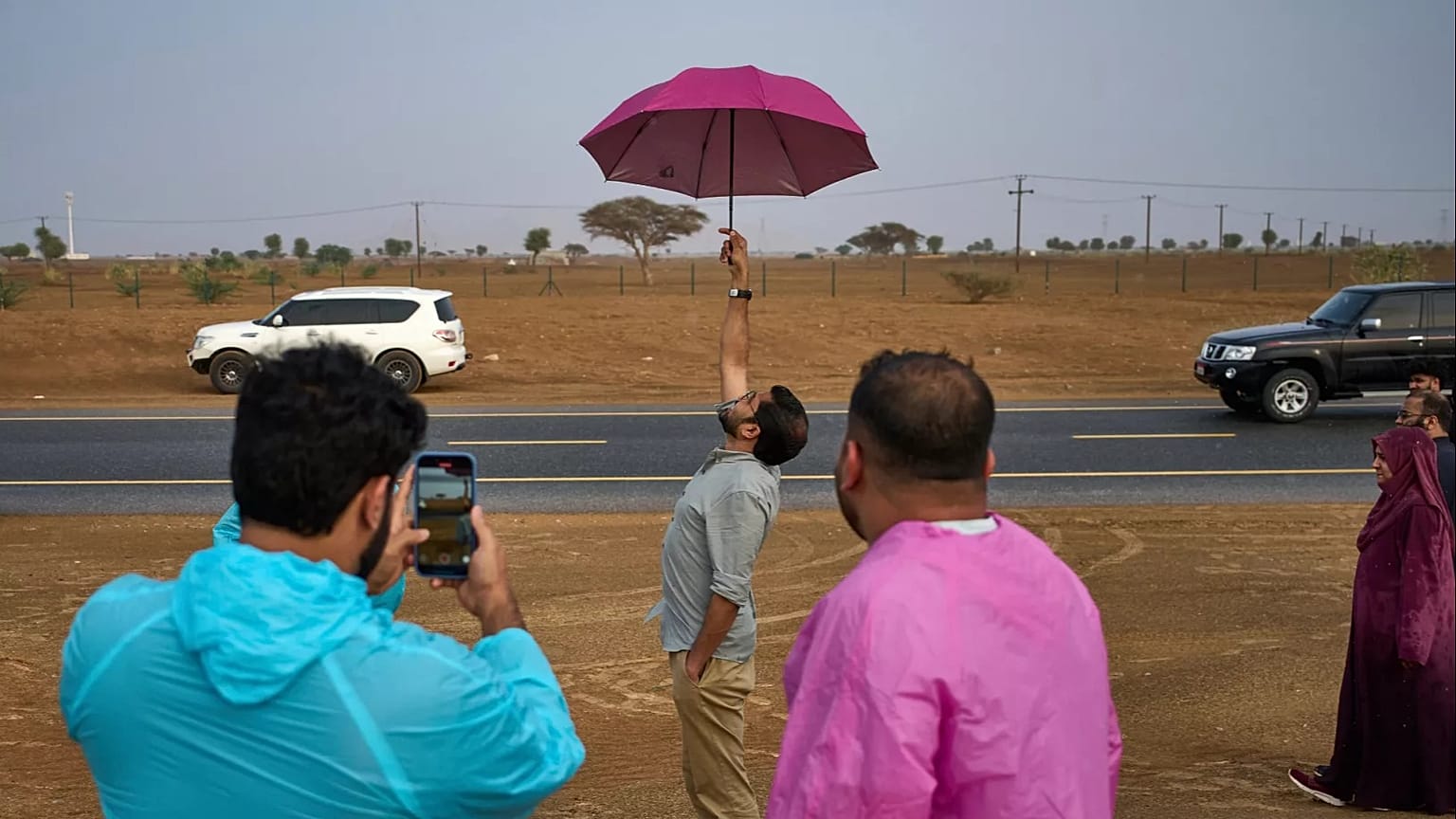
People stand in the rain as they chase rain showers at Fujairah, United Arab Emirates.
Copyright AP Photo/Fatima Shbair

By JON GAMBRELL with AP
Published on 

As the UAE grapples with water scarcity and flash floods, rain is both a blessing and a warning.

Outside of a mountain village in the northern outskirts of the United Arab Emirates, clouds on a recent weekend suddenly crowded out the white-hot sun that bakes this desert nation in the summer months. Fierce winds blew over planters and pushed a dumpster down the street.

And then came the most infrequent visitor of all: rain.

Rainfall has long fascinated the people of the Emirates. That includes both its white-thobed locals crowding into the deserts for any downpour and its vast population of foreign workers, many coming from homes in the Indian subcontinent who grew up with monsoon deluges.

But rain also carries with it promise and peril to the nation of seven sheikhdoms on the Arabian Peninsula.

With some 4 million people now estimated to be living in Dubai alone, compared to around 255,000 in 1980, pressure on water consumption continues. Meanwhile, as weather patterns change with global warming, the country saw the heaviest recorded rainfall ever last year, which disrupted worldwide travel and now has its leaders reconsidering how to build, as residents nervously look to the skies

“Out here, rain is almost like a firework event,” said Howard Townsend, an unofficial weather forecaster in Dubai with a Facebook following.

“It’s too hot to go outside. When you get a rain event, it’s like a blessing, a release.”

An ever-present thirst in a growing nation

The UAE, home to an estimated 10 million people, sits along both the Persian Gulf to its north and west and the Gulf of Oman to the east. The stone Hajar Mountains separate it from neighbouring Oman. Along the southern borders of the peninsula, monsoon rains can hit seaside areas of Oman and Yemen.

But the vast desert stretch of the peninsula, known as the Empty Quarter, has a weather pattern that keeps the clouds out.

That means little to no rain, sometimes for years at a time, in some areas. For the Emirates, that has meant relying heavily on some 70 water desalination plants to supply drinking water, as well as drip irrigation for plants that can rely on recycled wastewater. Dams have also been built in recent years to catch and store water runoff.

Even then, the UAE ranks seventh worldwide for being at risk for water scarcity, according to the World Resources Institute. Groundwater reservoirs have been known to be under pressure for years. The UAE has also been “cloud seeding” for years, flying aircraft to release chemicals into clouds to try to induce rain.

“Water is more important than oil,” Sheikh Mohammed bin Zayed Al Nahyan, the leader of the UAE and ruler of Abu Dhabi, reportedly said back in 2011.

That's particularly true in Dubai, where its booming population strains its roadways. The government-owned utility, the Dubai Electricity and Water Authority, reported producing 683.7 billion litres of water last year alone through desalination, with water demand continuing to grow alongside the city-state.

Yet Emirati government statistics suggest residents use around 550 litres of water per day, which is among the highest usage around the world.

Future flooding remains a concern

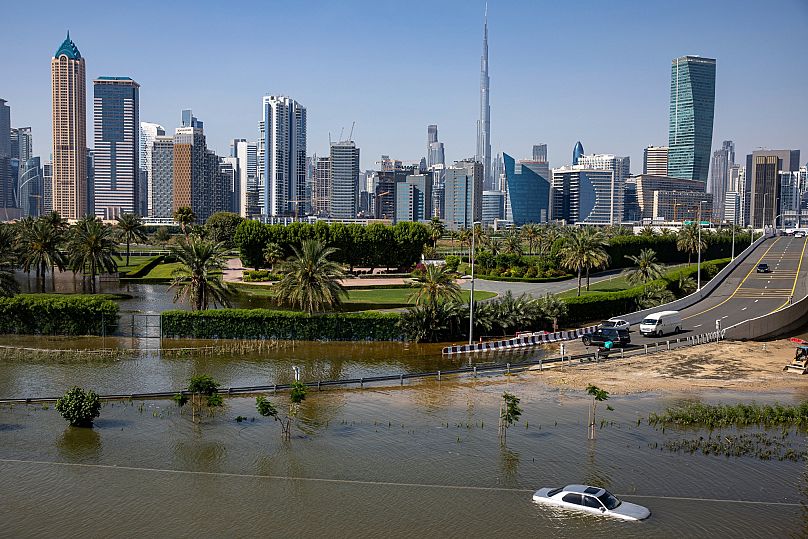
But for all the fascination with rain, there's fear now as well for many after the April 2024 floods that swept across Dubai. In one day, more rain fell than ever recorded since 1949, when the officials in what became the UAE first began taking statistics.

More than 142 millimetres of rainfall had soaked Dubai over 24 hours. An average year sees 94.7 millimetres of rain at Dubai International Airport, the world's busiest for international travel.

And while that might not seem like much to a major city elsewhere, Dubai's deserts could only take so much water. Meanwhile, its urban core had nowhere for the water to go.

An analysis later conducted by scientists associated with World Weather Attribution, which studies weather and its relationship to climate change, found 85 per cent of the population and 90 per cent of the city-state's infrastructure were “vulnerable to rising sea levels and extreme weather events.”

“It’s not a question of has the rain increased; it’s where has the rain to go?” Townsend said, something he called an increasingly pressing concern as Dubai builds further out into its desert outskirts.

An abandoned vehicle stands in floodwater caused by heavy rain with the Burj Khalifa in the background in April 2024. AP Photo/Christopher Pike, File

In the time since, government utility vehicles and ambulances increasingly sport snorkels to avoid water getting into their engines, something residents also have installed on their own vehicles. Insurance losses have been estimated to be as high as $4 billion (€3.42 billion).

Dubai's ruler, Sheikh Mohammed bin Rashid Al Maktoum, also announced an $8 billion (€6.8 billion) plan to build a massive rainwater drainage system for the city using underground tunnelling equipment.

The project represents “the largest rainwater collection project in a single system in the region,” Sheikh Mohammed said in a statement in June.

“The initiative will increase the capacity of the drainage network in the emirate by 700 per cent, ensuring the emirate’s readiness to face future climate-related challenges.”

But the rains can also bring joy to this desert.

Storm chasing in the Emirates

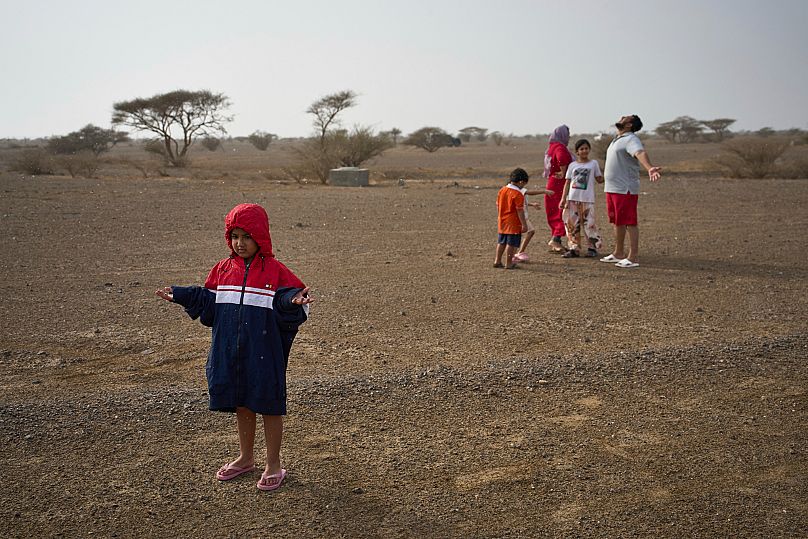
On a recent Saturday, Muhammed Sajjad Kalliyadan Poil looked to the skies in the eastern deserts of the UAE. Directly above him was a cumulonimbus cloud, looking rain-heavy and ready to drop. That was the one, he said.

Leading others, Kalliyadan Poil drove to the outskirts of Masafi, a village in the Hajar Mountains nestled between Fujairah and Ras al-Khaimah, two of the Emirates' seven sheikhdoms. He has grown famous over time as the “UAE Weatherman" on Instagram.

People stand in the rain as they chase rain showers in Fujairah, United Arab Emirates. AP Photo/Fatima Shbair

Kalliyadan Poil, like other Indians from Kerala on the trip, make up a large number of the foreign workers here in the Emirates. And their memories of home have them gather together to chase the weather on days like this.

As Kalliyadan Poil and his colleagues pulled up to an area against a mountain road under construction, the first drops fell on their windshield. He got out, standing in the sudden shower as others with him did the same.

“We come from an area where the rain is happening every day,” Kalliyadan Poil said. “When the drop hits us, I return back to my childhood.”


Turning point, apocalypse or renewal: what will the blood moon bring to Europe?

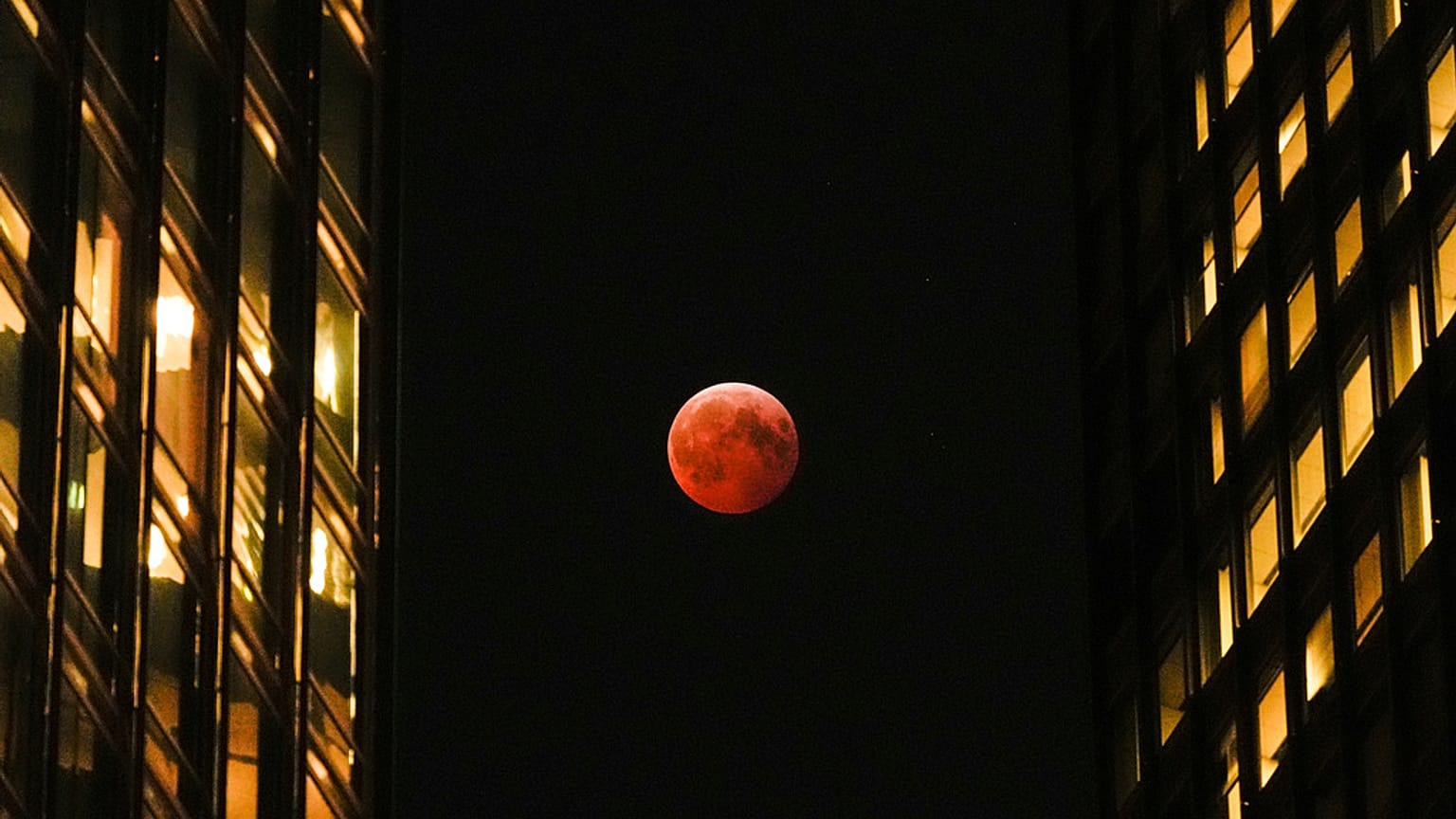
A total lunar eclipse, known as a "blood moon", between the skyscrapers in downtown Chicago, on Friday, 14 March 2025
Copyright Kiichiro Sato/Copyright 2025 The AP. All rights reserved

By Nela Heidner
Published on 

The moon has fascinated people since time immemorial. This weekend it's that time again: a blood-red full moon appears in the night sky.

The blood moon, otherwise known as a total lunar eclipse, has been surrounded by superstition for centuries - often with dark or apocalyptic connotations.

In many cultures - from Babylon to China to Central America - the blood moon was interpreted as a threatening sign: for the death of rulers, impending wars, natural disasters or "divine punishments".

In some African cultures, on the other hand, it is seen as a sign of "renewal". The Batammaliba, a West African ethnic group in Togo and Benin, interpret a lunar eclipse - especially a "blood moon" - as a symbolic battle between the sun and the moon. They try to resolve conflicts - and "reconcile the sun and the moon" - by creating peace in their communities.

For astronomers and astrologers of our time, this event is equally interesting - even if opinions are divided here again.

Longest lunar eclipse in years


On Sunday, we are now facing a total lunar eclipse - at around 82 minutes, the longest since 2022.

The Earth will be exactly between the sun and the moon. Its shadow will fall completely on the moon, darkening it. Only red-coloured light penetrates the Earth's atmosphere and falls refracted onto the moon - hence its reddish appearance and the popular term "blood moon".

Dr Florian Freistetter, an astronomer and science writer says from a scientific point of view, there is not much left to observe about the eclipses: "Astronomy has researched everything that can reasonably be researched in the last century. But that also means that I can enjoy the sight of an eclipse in peace without having to worry about science."

Keyword "science": In antiquity and the Middle Ages, astrology and astronomy were not separate - both were concerned with the observation of celestial bodies and existed side by side with their different interpretations. Astrology was practised from Babylon to Greece, India and the Arab world and was an integral part of medicine, philosophy, the church and politics.

The Age of Enlightenment brought about a turning point

This changed with the Age of Enlightenment, an era that lasted from around the 16th to the 18th century. It originated in Europe and later spread worldwide.

French philosopher René Descartes (1596-1650) played a key role in this intellectual movement, which above all declared reason to be the basis of thought: "I think, therefore I am". Astrology, which deals with the significance of the position of celestial bodies for earthly events, contradicted a view of nature in which there was nothing that could not be explained physically and therefore no longer fitted in with the dominant view of science.

Rousseau: an outdated image of women today

Incidentally, many Enlightenment thinkers, including Kant, Rousseau and Voltaire, also held the idea that women were inherently less rational and therefore better suited to the family and raising children. For Rousseau, women were primarily mothers and companions, not equal citizens.


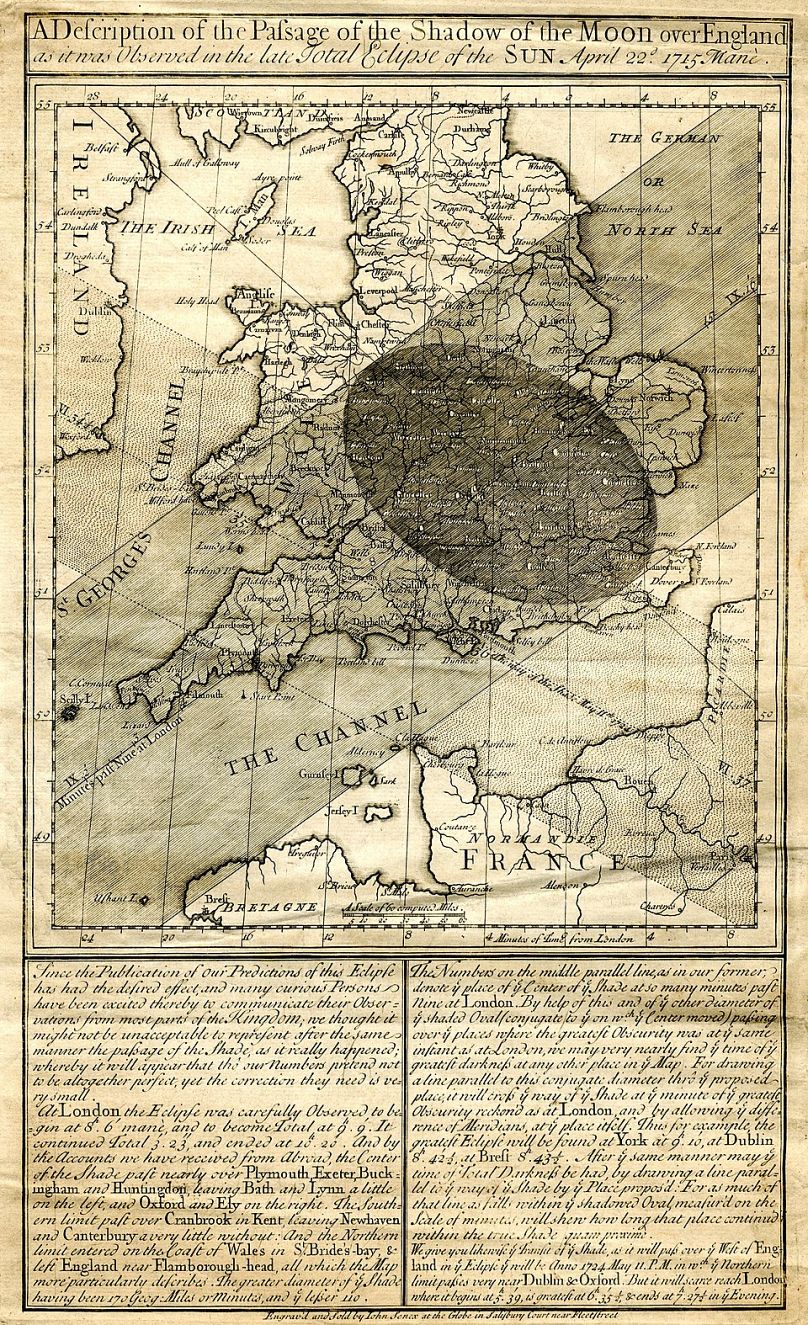
Image of the Moon’s shadow over England during a total solar eclipse on the morning of April 22, 1715. University of Cambridge, Institute of Astronomy Library (Edmond Halley, astronomer, mathematician, cartographer, geophysicist, and meteorologist, 1656–1742)

Dr. Gerhard Meyer, a qualified psychologist and researcher in the Department of Empirical Cultural and Social Research at his Institute for Frontier Areas of Psychology in Freiburg, explains that this was an era in which man's relationship with nature changed significantly. "The idea that the world can be understood as a machine that functions according to mechanical principles became dominant for science - with physics as a leading science."

At the same time, however, a parallel current emerged at the end of the 17th century: the age of Romanticism. Its followers rejected a mechanistic view of the world and were interested in the soul, the unconscious and also the invisible and only tangible.

Dr Meyer believes that astrology can be scientifically investigated, as "the underlying planetary movements are regular and predictable. The problem is the high complexity of the interrelationships." He hopes that artificial intelligence (AI) will help to better deal with this complexity in the future.

"Esoteric nonsense"

For the astronomer Freistetter, astrology is simply esoteric nonsense: "There is absolutely no reason why the whole thing should work and why the apparent position in the sky of a few spheres of rock, metal and gas millions of kilometres away should somehow say something about our personal lives and our future."

Astrology cannot work because it is completely inconsistent: "There are no astrological rules that say which celestial bodies play a role in the horoscope and which do not," emphasises Freistetter.


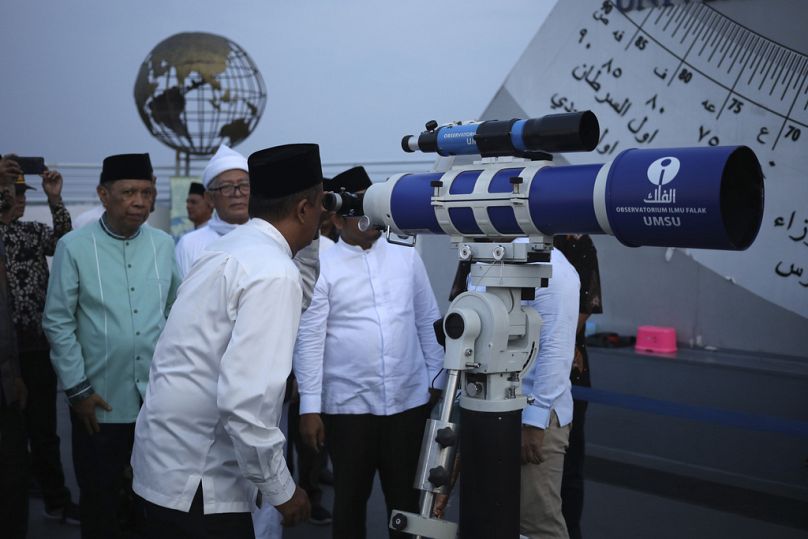
Islamic clerics look for the new moon that marks the beginning of Ramadan at the observatory of Muhammadiyah University in Medan, Indonesia. 10 March 2024 Binsar Bakkara/Copyright 2024 The AP. All rights reserved.

Silke Schäfer, one of the best-known astrologers in the German-speaking world, who runs her own astrology school, disagrees: "This is a classic statement that often comes from astronomers who only have a superficial knowledge of astrology."

The rules of astrology are by no means arbitrary, but are learnt step by step in comprehensive specialist studies. For Schäfer, this is a cultural heritage that has existed "for over 2000 years with a clearly structured system of symbols". The basis is the zodiac with its 12 signs, which are based exactly on the ecliptic, i.e. the orbit of the earth around the sun. "There are clearly defined planetary rulers, aspect angles (conjunction, square, trine, etc.) and house systems."

Astrology vs. astronomy

And why should this work?

"Astrology describes correlations of meaning, not causal mechanics," explains Schäfer. "The planets don't 'cause' anything in the physical sense, but reflect rhythms, cycles and archetypes that can be observed in nature, history and biography."

The principle of analogy should not be confused with the causal logic of physics.

Psychologist Markus Jehle from Berlin, author of several specialised books on astrology, goes one step further: "We use planetary data from NASA for our software and the calculations we make are highly precise." The astronomers would use their arguments again and again to attract attention.

"After all, you can also measure air temperature in Celsius and Fahrenheit, so it doesn't negate the accuracy of the other unit of measurement."

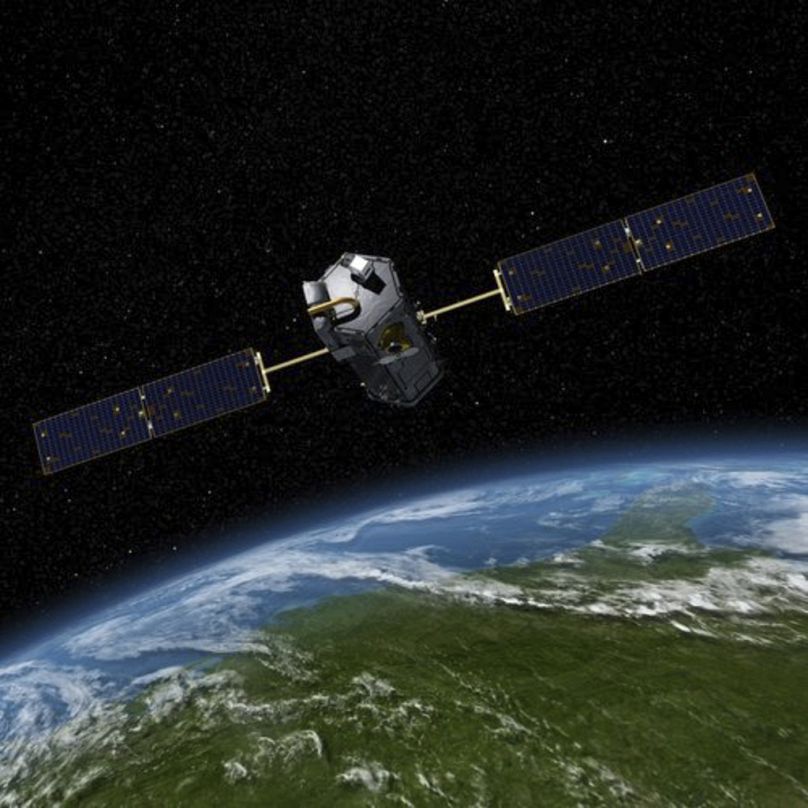
This artwork provided by NASA shows the Orbiting Carbon Observatory 2 (OCO-2).
This artwork provided by NASA shows the Orbiting Carbon Observatory 2 (OCO-2). AP/AP

Astronomers generally don't understand much about a "knowledge system of astrology", says Dr Mayer. "The ignorance here is on the part of the astronomers, because astrologers have known since ancient times that there is a precession of the vernal equinox: Astrology doesn't work with constellations, but with signs of the zodiac, which form a fictitious annual cycle divided into 30° sections."

Astrology is not a scientific experiment, adds Silke Schäfer, but a "hermeneutic", an art of interpretation. As with literary studies or psychotherapy, there are rules, but also room for interpretation.

"Instead of devaluing each other, it would be fruitful to recognise each other: Astronomy and astrology both deal with the heavens. Astronomy with the measurable facts, astrology with the meanings for us humans and evolution as a whole. The two complement each other and belong together. They always have."

France's ex-President Mitterand went to an astrologer

Are there any examples of contemporary politicians who have gone to astrologers? François Mitterrand, the longest-serving French president to date (1981-1995), regularly sought advice from Swiss astrologer Élizabeth Teissier - both on personal issues such as his health and on decisions relevant to the state, such as the Gulf War or the timing of the Maastricht referendum.

This Sunday, 7 September, the blood moon will be a total lunar eclipse that will be clearly visible in many parts of Europe. Some astrologers regard this event as a powerful full moon that can bring individual turning points. That which has had its day in life would clearly show itself so that it can be left behind. In their opinion, this has nothing to do with superstition.

For Dr Freistetter, eclipses are interesting and fascinating, but for a different reason: "Above all, it is an aesthetically impressive natural event and we are lucky to live on a planet where we can observe something like this. The Earth is in a unique position so that the sun and moon appear exactly the same size in our sky - coincidentally - and can therefore obscure each other."

One thing is certain: You can relax and enjoy this Sunday's lunar eclipse as a natural event: statistical studies show no connection between blood moons and (natural) disasters.