Showing posts sorted by relevance for query Psychedelic. Sort by date Show all posts

Wednesday, December 28, 2022

Psychedelic chaplains: In clinical trials, a new form of spiritual guide emerges

Spiritual care practitioners are being trained to support patients undergoing psychedelic therapy in clinical trials and decriminalized settings.

Photo by Raimond Klavins/Unsplash/Creative Commons

(RNS) — Moana Meadow was 22 when her grandmother died in a hospital room, sitting up, eyes open, gripping the hands of her family members.

“Her spirit left her body like that. In an instant,” she said. “I wasn’t religious, but her spirit felt like it was hovering in the room for 15 minutes. There was this energy, pulsating. I’ve never experienced anything like that before.”

The event, though painful, left an imprint on Meadow and convinced her to pursue the life of an interfaith chaplain so she could accompany others who were dying.

Now, the hospice chaplain is interested in helping people through other transitions — the perceptual changes brought on by psychedelic drugs. “Being with people in altered states of consciousness” can be similar to pivotal moments like marriage, childbirth or death, Meadow said, and she is on a mission to bridge chaplaincy and the work of accompanying people who are under the influence of psychedelics.

“Psychedelic experiences, particularly at higher dosages, can feel like dying,” said Sam Shonkoff, assistant professor of Jewish studies at Graduate Theological Union in Berkeley, California. “One can feel as if they’re being born. One can feel a sense of existential rupture. To have a chaplain there, who maybe has a lot of experience with sitting with people who are facing death, that can be really applicable to accompanying people who are having these experiences with psychedelics.”

Since the mid-aughts, a tidal wave of scientific research on psychedelics has flooded academic journals with evidence that these substances may be able to provide relief for everything from smoking addiction to anxiety and depression. These benefits arise at least in part, some psychedelic researchers argue, from the mystical or spiritual encounters the drugs can induce.
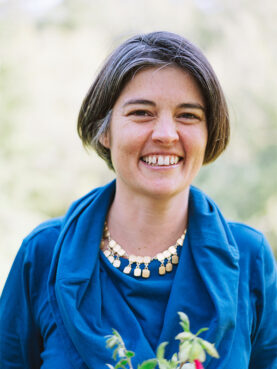
Moana Meadow. Photo by Julia Maryanska

Moana Meadow. Photo by Julia Maryanska

“As the scientific research on spiritual experience with psychedelics has started to come out so strongly,” said Meadow, “I think people are beginning to understand or admit the importance of religious training and knowledgeability in psychedelic work.” 

As a result, academic institutions across the U.S. are launching training programs in which spiritual practitioners can become qualified psychedelic facilitators, paving the way for a new field of psychedelic chaplaincy.

Current opportunities for these roles are limited in the U.S., as the use of the drugs themselves is considered experimental. Ketamine, a powerful but relatively safe anesthetic, is legal for medical use, and some health care chaplains act as facilitators for ketamine-assisted therapy, which has shown promise for relieving depression. As researchers have begun conducting clinical trials for psychedelic treatments, too, they are recruiting chaplains.

The Rev. Caroline Peacock, an ordained Episcopal priest and a chaplain for Emory Healthcare in Atlanta, will be serving as a spiritual health clinician in a clinical trial assessing whether psilocybin might help treat anxiety, depression and chronic pain experienced by cancer survivors.

In these settings, psychedelic chaplains are asked to provide spiritual care for clients before, during and after a psychedelic dose, aiding them as they work to elicit meaning from the experience. 

“Some of the questions psychedelic chaplaincy is bringing to the table are some of the oldest questions of all,” said Shonkoff, who pointed out that Indigenous shamans, medicine women and elders have been doing this work for centuries. But the presence of a psychedelic chaplain on these scientific teams is something new.
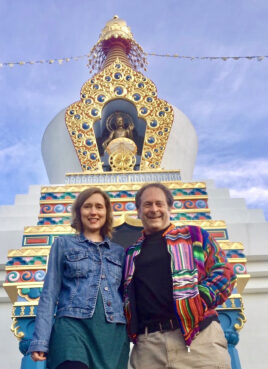
Jamie Beachy, left, with Rick Doblin, the founder of MAPS, at the MAPS MDMA training center in Red Feather Lakes, Colorado, in May 2019. Courtesy photo

Jamie Beachy, left, with Rick Doblin, the founder of MAPS, at the MAPS MDMA training center in Red Feather Lakes, Colorado, in May 2019. Courtesy photo

Jamie Beachy, a chaplain by training and the director of education for the Center for Psychedelic Studies at Naropa University in Boulder, Colorado, joined a study looking at MDMA, also known as the recreational drug ecstasy, as an aid for treatment-resistant post-traumatic stress disorder. The research, led by the Multidisciplinary Association for Psychedelic Studies, shows that 67% of participants taking MDMA no longer meet the criteria for PTSD, compared with 32% of participants in the placebo group.

“I have been compelled to see how people are able to move through traumas in a way that I wasn’t seeing in the hospital or the trauma settings I was working in,” said Beachy, a former health care chaplain.

Beachy said chaplains, who are often “present to traumas unfolding in real time,” can help clients navigate events that could disrupt their existing belief systems, something psychedelic therapy patients may face. “In one of the Johns Hopkins studies of DMT — another powerful psychedelic — people that went into the study reporting that they were atheists apparently came out of the study feeling less connected with atheism,” Beachy told RNS.

Beachy is developing a degree concentration in psychedelic care for the Master of Divinity program at Naropa, which already offers a psychedelic-assisted therapies certificate for professionals. 

Meadow, meanwhile, is program director of a new psychedelic facilitator certification program at the UC Berkeley Center for the Science of Psychedelics, aimed at people who are already professionals in spiritual care and health care. Graduates may be eligible to apply for a Psilocybin Facilitator License in Oregon or Colorado, which recently decriminalized psilocybin. Religious professionals would be able to act as psychedelic chaplains in health care or research settings where regulations permit.

“At the program that I’m running at UC Berkeley, there’s a clear value on the spiritual aspects of psychedelic work,” said Meadow. “So we’re attracting chaplains to our training program and promoting their expertise in this field as well.”
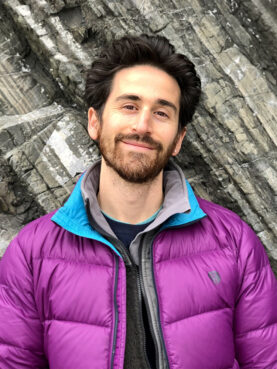
Sam Shonkoff. Courtesy photo

Sam Shonkoff. Courtesy photo

At both UC Berkeley and Naropa, the programs emphasize the Indigenous roots of many psychedelic practices, which Shonkoff celebrates. “There has been a tendency in this burgeoning field of psychedelic study to try to talk about the so-called mystical aspects of psychedelics without reference to particular cultural and spiritual traditions that have used these substances,” he said.

As states decriminalize psychedelics, said Ron Cole-Turner, professor emeritus at Pittsburgh Theological Seminary who often writes on theology and psychedelics, recreational, ceremonial and religious uses for psychedelics will likely expand. 

“Give us a decade, and I can’t imagine we won’t have well-established opportunities in multiple parts of the United States, definitely Oregon, very likely Colorado and other places … where there will be open, out, legal and reasonably well-supervised and therefore safe pathways for people who just simply want to see if this enriches their spiritual lives,” he told Religion News Service.

Chaplains will be necessary for these grassroots uses as well, said Celina De Leon, founder and director of the Circle of Sacred Nature 501(c)3 Church, based in California’s Bay Area, for which taking ayahuasca is a “sacramental practice” that is a “fundamental expression of our religious beliefs,” De Leon told RNS.


While De Leon views these substances as having “beautiful potential,” she readily acknowledges that not all psychedelic experiences are positive. “Sometimes psychedelic experiences can be very challenging, and people can really benefit from having support in their meaning making process,” she said. “I think chaplains can be very well suited for that on a community level, outside of clinical contexts.”

Some people, De Leon adds, have destabilizing encounters — the colloquial “bad trip” — and because of a person’s vulnerability during psychedelic therapy, there can also be safety risks.

Currently, there’s no standard pathway for becoming a psychedelic chaplain. Beachy would like to see nondegree programs like Naropa’s be complemented by a national advanced certification for psychedelic chaplains, similar to those that certify chaplains in palliative care or ethics consultation.

The first wave of psychedelic chaplains is already here, however, reconnecting the link between psychedelics and religion, as science reconnects the link between the drugs and health.

“Psychedelics have traditionally been medicines that were used for spiritual growth, healing and prayer,” said Meadow. “If we’re not thinking about them that way, we are missing something very important.”


Tuesday, April 22, 2025


Predicting long-term psychedelic side-effects


Schizotypal traits may not be caused by taking LSD or magic mushrooms


PNAS Nexus


Psychedelic drugs are seeing a surge of interest from mainstream medicine, and initial results suggest that psychedelic-therapy can be a safe and effective treatment for some mental health conditions. However, the side-effect profile is still incompletely understood. In particular, the use of psychedelics has been posited to carry a risk of triggering latent psychotic disorders or persistent visual hallucination, known as Hallucinogen Persisting Perception Disorder (HPPD). In order to better understand the prevalence and risk factors of such side-effects, Katie Zhou and colleagues surveyed 654 people online who were planning to take psychedelics through their own initiative. Of those, 315 people were resurveyed two weeks after their experience and 212 people were resurveyed again four weeks after their experience. The sample was 74% male, and 77% university educated. About one third had been diagnosed with at least one psychiatric condition. The authors found a weak correlation between lifetime psychedelic use and both delusional ideation and magical thinking. However, on average, delusional ideation was slightly reduced one month after psychedelic use. These results suggest that schizotypal traits may not be caused by taking LSD or magic mushrooms, in keeping with the principle that correlation does not imply causation. About a third of individuals surveyed at the four-week mark did have some lingering hallucinatory sensory experiences, such as intensified colors and afterimages. However, the majority of those who experienced this did not report being distressed by it. The strongest predictors of persistent visual aftereffects were the personality trait absorption—the tendency to be easily immersed in sensory or imaginative experiences—and younger age. This corroborates previous findings showing that young people and adolescents may be at a particular risk of HPPD. According to the authors, empirical scrutiny of the potential risks of psychedelics should accompany changes in policy and access to psychedelic drugs.

Thursday, January 29, 2026


Healing Hearts, Changing Minds awards $566,260 to seven projects to advance psychedelic-assisted end-of-life care


Healing Hearts, Changing Minds


Derry, NH, January 27, 2026 — Healing Hearts, Changing Minds (HHCM) today announced the seven awardees of Walking Each Other Home: A Fund to Promote Psychedelic Compassion for End-of-Life Care, a $566,260 philanthropic initiative supporting innovation, compassion, and dignity for people at life’s end.

Anxiety when facing serious, life-threatening illnesses is a significant issue for society. In fact, it is often so painful that it prevents patients from living fully. Research has shown that psychedelic therapy can be extremely effective in reducing anxiety and helping people to live fully and meaningfully. HHCM recognized that more research is needed to identify the best ways to deliver the therapy to people in need.

Following an extensive listening tour with over two dozen leaders across palliative care, hospice medicine, spiritual care, psychedelic research, and end-of-life advocacy, HHCM launched this funding round in July 2025 to catalyze bold, field-defining work. The response was extraordinary: 59 proposals requesting a total of $4.8 million. 

The proposals were reviewed by six independent subject matter expert reviewers in psychedelic end-of-life care. using a scoring rubric that assesses the criteria in the RFP and aligns HHCM’s values of compassion, integrity, and community empowerment. HHCM selected seven outstanding grantees whose work exemplifies the fund’s mission and values. This represents an acceptance rate of 12% in a competitive group of submissions, underscoring both the strength of the submissions and the growing capacity in the field of psychedelic end-of-life care.

2026 ‘Walking Each Other Home’ Grantees

The following seven projects received grants. More information about each of them is available on our webpage Grantees.

1. End of Life Psychedelic Care (EOLPC), Ashland, Oregon — $75,025
Collaboration between EOLPC, Institute for Rural Psychedelic Care (IRPC) in Arcata, California, and Ligare in Savannah, Georgia. The pilot program will deliver home-based ketamine therapy integrated with spiritual care for hospice and palliative patients across three sites in the US. The team includes Christine Caldwell; Michael Fratkin, MD; Hunt Priest; Gayle Bereskin, DO; Catherine Durkin Robinson; Sherika Newman, DO; Aubrey Gates; and Diana Noyes.

2. Mayo Clinic, Rochester, Minnesota — $82,405.70
Brain cancer has one of the highest mortality rates of all cancers, causing many patients who face the diagnosis deep distress. Using an integrative oncology approach, the Mayo Clinic will run the first-ever clinical trial of psilocybin-assisted therapy for patients with brain tumors and existential distress. The research team includes Stacy D’Andre, MD; Ken Olivier, MD; Maria Lapid, MD; Andrea Randall. PharmD; and Ugur Sener, MD.

3.  PRATI & Pravan Foundation, Colorado and Puerto Rico — $75,000

Through this grant, 20 hospice workers, palliative care providers, and doulas will be trained to deliver psychedelic-assisted therapy for existential distress in Puerto Rico, which has independent authority to reschedule psychedelic medicines., The teaching team includes Christine Pateros, MA, RN; Wilhelmina De Castro, LCSW;  Mary Cosimano LMSW; Darren Fisher RN, BSN; Charlotte Charfen, MD; Carmen Amezcua MD; and German Ascani, MD.

4. Red Willow Hospice, Taos, New Mexico — $100,000
This grant to a leading hospice provider in New Mexico will train hospice staff and provide ketamine-assisted psychotherapy (KAP) to terminally ill patients. Red Willow Hospice serves historically underserved rural populations integrating care for the mind, body, and spirit in their holistic care model. The research team includes Robyn Chavez, RN, BSN, CHCM; Justin Babin; Joanna Hooper, MD; Lynn Nauman; Felicia Cardenas; Jennifer Johnson; Melissa Martinez; Katrina Lucero; Lisa Stolarzyc, MD; Rev. Dr, Ted Wiard; Emma Okamoto; and Lisa Cheek.

5. Heal Ukraine Trauma, Cambridge, Massachusetts and Kyiv, Ukraine — $46,130
This project will expand trauma-informed group KAP training and services for veterans and their families affected by the devastating physical and emotional effects of war in Ukraine. The research team includes Amy Goodrich; Oksana Gryschenko, PhD; and Iryna Holub. 

6. University of Washington, Seattle, Washington — $100,000
This grant will fund a pilot that uses psilocybin therapy for cancer-related anxiety and depression in a group setting during a multi-day retreat. Findings from the project will offer insights into how a group setting might make psilocybin therapy more accessible to terminally ill patients. The research team includes Anthony Back, MD, and Bonnie McGregor, Ph.D.

7. Institute for Rural Psychedelic Care, Arcata, California — $87,700
This project will provide KAP and narrative medicine programs to terminally ill patients in rural communities. Patients treated with KAP will engage in interviews with a documentary filmmaker and photographer, answering open-ended questions aimed at helping them make meaning of their lives and end-of-life, and creating a legacy that helps ease death anxiety. The research team includes Michael Fratkin, MD; Carrie Griffin, MD; and Justin Maxon.

“At Healing Hearts, Changing Minds, we aim to support research and therapies that help people live fully and meaningfully, even as they face serious, life-threatening illness. Psychedelic assisted therapy has enormous and largely untapped potential to improve the care and support we provide to them,” said the organization's founder Robert Ansin. ”Taken together, these seven projects reflect the heart of HHCM’s trust-based philanthropic model: listening closely to community needs, supporting locally rooted organizations, and strengthening the ecosystem of psychedelic-assisted care. Together, they exemplify our Ripple Model of Good Effects—advancing healing at the individual, community, and systemic levels—while upholding HHCM’s commitment to employing gold-standard methodologies.”

About Healing Hearts, Changing Minds
HHCM is a 501(c)(3) nonprofit foundation dedicated to expanding access to compassionate, culturally responsive psychedelic-assisted therapy. Through trust-based philanthropy, HHCM partners with frontline organizations that support healing, dignity, and empowerment across diverse communities.


by Timothy Leary, Ralph Metzner & Richard Alpert. Page 2. General ... The Tibetan Book of the Dead, or the Bardo Thodol, is a book of instructions ...

* Leary, Timothy, Metzner, Ralph & Alpert, Richard. The Psychedelic Experience. A Manual Based on the. Tibetan Book of the Dead. New Hyde Park: University.


 AUDIOBOOK


The Tibetan Book of the Dead is a two-part series that explores ancient teachings on death and dying. It was filmed over a four-month period on location in the ...


Apr 5, 2022 ... The Tibetan Book of the Dead is an exemplar of Tibetan literary prose and a compelling commentary on the universal experience of death and dying from a ...


Nov 4, 2017 ... Book Title: Tibetan book of the dead Book Author: Evans-Wentz, WY Book Language: English Number of Pages: 346 Publisher: Oxford University Press; London; 1957