Tuesday, September 09, 2025

Study finds critically endangered sharks being sold as food in U.S. grocery stores


University of North Carolina at Chapel Hill
Shark Meat 

image: 

Pictures of shark meat purchased for the study.

view more 

Credit: Savannah Ryburn


A new study from the University of North Carolina at Chapel Hill has uncovered that shark meat sold in U.S. grocery stores, seafood markets, and online vendors often comes from endangered species and is frequently mislabeled. Researchers purchased and DNA barcoded 29 shark meat products to determine their species identity, finding that 93% of samples were ambiguously labeled and included meat from 11 different shark species. 

Among the species identified were the great hammerhead and scalloped hammerhead, both listed as critically endangered by the International Union for Conservation of Nature (IUCN). Despite global declines in shark populations, their meat was being sold to American consumers, sometimes for as little as $2.99 per pound. 

“Mislabeling and ambiguous labeling remove consumers’ ability to choose what they are putting in their bodies,” said Savannah Ryburn, Ph.D., first author of the study and co-instructor of the seafood forensics class that conducted the research. “For example, two species in our study, scalloped hammerhead and great hammerhead, were ambiguously labeled as ‘shark,’ even though they are strongly advised against consumption due to their very high mercury levels. Without accurate and precise labeling, consumers cannot avoid purchasing these products.” 

The researchers found that of the 29 products tested, 27 were labeled simply as “shark” or “mako shark” without a species designation. Even among the two products that were labeled with a species name, one turned out to be incorrect. These findings highlight a major gap in seafood transparency and consumer safety. 

“The United States should require seafood distributors to provide species-specific names for the products being sold,” said John Bruno, Ph.D., distinguished professor and co-instructor of the seafood forensics class. 

Shark meat is known to contain high levels of mercury, which can pose serious risks to human health, particularly for children and pregnant people. The researchers emphasize that accurate labeling is essential not only for conservation but also for consumer protection. 

“Sharks such as great and scalloped hammerheads are the ocean’s equivalent of lions, and we were shocked by how cheaply the meat of these rare, long-lived apex predators was sold,” added Ryburn. “Some samples were only $2.99 per pound.” 

The study, which contributes to a limited but growing body of research using DNA barcoding to investigate the accuracy of shark product labeling in the U.S., calls for stronger regulations and oversight of seafood labeling practices. 

The study is available online in the journal Frontiers in Marine Science at: https://www.frontiersin.org/journals/marine-science/articles/10.3389/fmars.2025.1604454/abstract#supplementary-material 

Meat from critically endangered sharks is commonly sold under false labels in the US


31% of products sold as ‘shark’ in the US are from species at risk of extinction


Frontiers


Sharks have been around for more than 450 million years, but these days they are in deep trouble. Since the 1970s, shark populations have gone down by more than 70% due to unsustainable practices such as shark finning, bycatch, and overfishing, habitat destruction, pollution, and climate change. The International Union for the Conservation of Nature (IUCN) has estimated that of the approximately 550 species of sharks in existence, 14% are vulnerable, 11% endangered, and 12% critically endangered. As a result, 74 species of shark are considered at risk by the  Convention on International Trade in Endangered Species of Wild Fauna and Flora (CITES), meaning that international trade in their products is banned or heavily regulated – at least on paper.

But now, a study in Frontiers in Marine Science has shown that despite bans and regulations, meat from shark species at risk of extinction is commonly available for sale in the US. And because these products are typically sold under generic labels, customers may buy them without being aware.

“We found critically endangered sharks, including great hammerhead and scalloped hammerhead, being sold in grocery stores, seafood markets, and online. Of the 29 samples, 93% were ambiguously labeled as ‘shark,’ and one of the two products labeled at the species level was mislabeled,” said corresponding Dr. Savannah J. Ryburn, a researcher at the University of North Carolina at Chapel Hill.

The study was carried out by students, teaching assistants, and instructors taking part in a course on seafood forensics at the same university in 2021 and 2022. Its organizers bought 30 shark products – 19 raw steaks and 11 packages of shark jerky – from shops and the internet in Washington DC, North Carolina, Florida, and Georgia. The researchers then used DNA barcoding to determine the species of each product. They compared these with the label under which it had been sold.

Misleading labels

29 (97%) of the 30 samples were successfully identified to the species level. One of the two samples labeled other than ‘shark’ had been mislabeled: sold as blacktip shark (classified as vulnerable by the IUCN), it really contained meat from the endangered shortfin mako. Only one sample had been sold under an unambiguous, correct label, namely blacktip shark.

Shockingly, 31% percent of the bought samples turned out to be from four endangered or critically endangered species: great hammerhead, scalloped hammerhead, tope, and shortfin mako shark. The others were from another seven species, including the vulnerable spinner, lemon, common tresher, and blacktip shark, and the near threatened smooth-hound and Pacific angelshark. Only one was from a least concern species, the Atlantic sharpnose shark. Moreover, these products were sold remarkably cheaply, at between $6.56 and $11.99 per kilogram for fresh shark meat, and on average $207.37 per kilogram for shark jerky.

“The legality of selling shark meat in the United States depends largely on where the shark was harvested and the species involved, due to regulations under CITES and the Endangered Species Act,” said Ryburn. “However, by the time large shark species reach grocery stores and markets, they are often sold as fillets with all distinguishing features removed, making it unlikely that sellers know what species they are offering.”

Not only risky for sharks

The authors pointed out that three of the species found in this study – scalloped hammerhead, great hammerhead, and dusky smooth-hound shark – are known to contain high levels of mercury and methylmercury, which damage the brain and central nervous system, and arsenic, which can lead to cancer. All three metals have likewise been implicated in the impaired cognitive development and the death of developing babies.

So what can consumers do to mitigate the risk of consuming toxins and unwittingly contributing to the extinction of species?

“Sellers in the United States should be required to provide species-specific names, and when shark meat is not a food security necessity, consumers should avoid purchasing products that lack species-level labeling or traceable sourcing,” Ryburn counseled.

GREENWASHING

‘Capture strategies’ are harming efforts to save our planet warns scientists


A new study has investigated how corporate industries influence individuals, organisations or governments to not act in the best interest of the environment and human health


University of Portsmouth


Peer-reviewed, literature review

  • Scientists warn that powerful industries are quietly shaping laws, research and public messaging in ways that delay environmental and health action

  • Study brings together real-world examples - from fossil fuel-funded museums to biased science conferences - to expose how ‘capture strategies’ work

  • The study calls for stronger conflict of interest rules and greater transparency in funding

For over 80 years, researchers have documented how powerful industries can exert influence over the very institutions meant to regulate them - a phenomenon known as ‘corporate capture’.

From oil spills to pharmaceutical scandals, history has shown how these close relationships between corporations and decision-makers can have serious, sometimes devastating, consequences for both human and environmental health.

International scientists warn that unless kept in check, ‘corporate capture’ will play an instrumental role in obstructing efforts to address the triple planetary crises of climate change, biodiversity loss and chemical pollution.

A new study, led by Professor Alex Ford from the University of Portsmouth, highlights how a wide range of industries use strategic influence to shape decisions affecting people and the planet, from environmental laws being watered down, harmful products left on the market, or vital research suppressed to protect profits. 

Published in Environmental Science & Technology Letters, the research brings together perspectives and expertise from members of the International Panel on Chemical Pollution (IPCP), of which Professor Ford is the first UK academic to serve on the Board

Using existing evidence from across sectors - such as tobacco, chemicals, fossil fuels, food, pharmaceuticals, and the media - they have created a tactics playbook to help safeguard against negative influence. 

Real-world examples include instances where regulatory agencies have become reliant on industry data, research institutions avoid publishing critical findings to protect funding, and non-governmental organisations (NGOs) or museums accept sponsorships that may shape their messaging.

Professor Ford from the University of Portsmouth’s School of the Environment and Life Sciences and Institute of Marine Sciences, has been investigating the impact of the chemicals on marine environments for several years.

“There’s growing evidence that those tasked with protecting people and the planet can become entangled - sometimes unknowingly - in a web of influence, where funding, data and decision-making are carefully steered by vested interests,” said Professor Ford. “These ‘capture strategies’ don’t always look like outright corruption. They can be subtle, systemic, and deeply embedded, making them all the more important to recognise and call out.” 

First studied in the 1940s, ‘corporate capture’ sees regulators, policymakers, and even scientists swayed to prioritise private interests over public good. 

This latest paper proposes that ‘capture strategies’ should be considered more broadly, beyond just regulatory bodies, to include universities, NGOs, cultural institutions and even intergovernmental panels. 

It describes how academic institutions have accepted funding from the fossil fuel industry - giving rise to the term “Frackademia” - and how some museums have faced criticism for partnering with oil companies. 

Other examples include pesticide companies sponsoring scientific conferences, historical financial backing from the tobacco industry in Hollywood films, and social media platforms amplifying climate change denial and anti-science misinformation.

While the paper focuses on problematic cases of corporate influence, the authors acknowledge that not all relationships between industry and institutions are harmful. 

“In fact, the private sector has played an important role in developing innovative technologies and supporting environmental initiatives,” explained co-author Dr Maria Clara Starling. “Industry voices have a place in public debate, but that involvement must be transparent, accountable, and free from conflicts of interest that undermine public and environmental wellbeing.”

IPCP board members are calling for stronger conflict of interest policies, greater transparency in funding, and improved governance within institutions. It also recommends that university students are trained on disinformation and influence tactics, particularly within the environmental sciences.

This is not the first time Professor Ford has explored the dynamic between science, influence and environmental policy. Earlier this year, he co-authored a paper in Nature Water examining how England’s water industry uses communication tactics to shift attention away from sewage pollution

Professor Ford added: “The idea isn’t to vilify industry - many companies are doing important work in sustainability. It’s about increasing awareness of how some industries operate to slow down positive progress.  

“Commercial interests don’t always align with public or planetary health, and we need the tools to understand and navigate that dynamic.”

‘Microbial piracy’ uncovers new way to fight drug-resistant infections


Imperial College London


Researchers have discovered how ‘pirate phages’ hijack other viruses to break into bacteria, sharing new genetic material for dangerous traits.

Imperial scientists have uncovered how bacteriophages are able to hijack other viruses to break into bacterial cells and spread, through an act of microbial piracy which could potentially be harnessed for medicine.

The discovery, published in the journal Cell, reveals a major route by which bacteria are able to acquire new genetic material, including traits that can make them more virulent or more resistant to antibiotics. The researchers believe it could also open the door to new ways of tackling the global threat of antimicrobial resistance (AMR) and developing rapid diagnostic tools.

Phages (or bacteriophages) are viruses that infect and kill bacteria. They are among the most abundant organisms on Earth and are often highly specific, each tailored to attack just one bacterial species. Structurally, they resemble microscopic syringes: with a ‘head’ section packed with DNA and a tail section tipped with spiky fibres that latch onto bacteria and inject their genetic payload.

But phages themselves are not safe from parasites. They can be targeted by small genetic elements known as phage satellites that hijack the phage’s own genetic machinery to propagate.

In the latest study, Imperial researchers focused on a powerful family of phage satellites called capsid-forming phage-inducible chromosomal islands (cf-PICIs). These genetic elements can spread genes for antibiotic resistance and virulence, and are found across more than 200 bacterial species. Exactly how they managed to move so efficiently, however, was unclear.

First discovered by the team in 2023, cf-PICIs can build their own capsids (the viral ‘heads’), but they lack tails, meaning on their own they produce non-infective particles – i.e. they are not able to infect phages. In their latest work, researchers at Imperial’s Centre for Bacterial Resistance Biology discovered the missing piece of the puzzle: cf-PICIs hijack tails from unrelated phages, creating hybrid “chimeric” viruses. The result is a chimeric phage carrying cf-PICI DNA inside their own capsids but a phage-derived tail attached.

Crucially, some cf-PICIs can hijack tails from entirely different phage species, effectively broadening their host range. Because the tail decides which bacteria are targeted, this piracy gives cf-PICIs the ability to infiltrate new bacterial species, explaining their great abundance in nature.

According to the researchers, the implications could be important for science. By understanding and harnessing this molecular piracy, researchers believe they could re-engineer satellites to target antibiotic-resistant bacteria, overcome stubborn bacterial defences such as biofilms, and even develop powerful new diagnostic tools.

“These pirate satellites don’t just teach us how bacteria share dangerous traits,” explains Dr Tiago Dias da Costa, from Imperial’s Department of Life Sciences. “They could inspire next-generation therapies and tests to outmanoeuvre some of the most difficult infections we face.”

The Imperial team has successfully filed patents to further develop the work and hopes to begin testing the translational applications of the technology.

Professor Jose Penades, from Imperial’s Department of Infectious Disease, said: “Our early work first identified these odd genetic elements, where we found they are effectively a parasite of a parasite. We now know these mobile genetic elements form capsids which can swap ‘tails’ taken from other phages to get their own DNA into a host cell. It’s an ingenious quirk of evolutionary biology, but it also teaches us more about how genes for antibiotic resistance can be spread through a process called transduction.”

Dr Dias da Costa, added: “This experimental work sheds more light on a crucial method of gene transfer in bacteria. If we can harness and engineer cf-PICIs it could provide us with a valuable new tool in the fight against antimicrobial resistance.”

AI co-scientist tool
In a linked project, coordinated through the Fleming Initiative – a partnership between Imperial College London and Imperial College Healthcare NHS Trust – researchers used their experimental work to validate a groundbreaking AI platform developed by Google.

Dubbed the ‘co-scientist’, the platform is designed to help scientists develop smarter experiments and accelerate discovery.

To test the platform, the Imperial team posed the same basic scientific questions that had driven their own work: How do cf-PICIs spread across so many bacterial species?

Armed with this starting point, and drawing on web searches, research papers, and databases, the AI independently generated hypotheses that mirrored the team’s own experimentally proven ideas – effectively pointing to the same experiments that had taken years of work to establish, but doing so in a matter of days.

The researchers say this shows the extraordinary potential of AI systems to ‘super-charge science’, not by replacing human insight, but by accelerating it. They are now working with Google to further develop the platform and explore how it could transform the pace of biomedical research.

‘Chimeric infective particles expand species boundaries in phage inducible chromosomal island mobilization’ by He L & Patkowski JB, et al. is published in the journal Cell. DOI: 10.1016/j.cell.2025.08.019

‘AI mirrors experimental science to uncover a novel mechanism of gene transfer crucial to bacterial evolution’ by Penades JP et al. is published in the journal Cell. DOI: 10.1016/j.cell.2025.08.018


How to find a cryptic animal: Recording the elusive beaked whale in the Foz do Amazonas Basin


While finding the creatures takes a lot of work, the results are worth it.


American Institute of Physics

A beaked whale sighting in the Foz do Amazonas Basin 

image: 

A beaked whale sighting from the researchers’ field study in the Foz do Amazonas Basin.

view more 

Credit: Machado et al.


WASHINGTON, Sept. 9, 2025 – Whale watching is a popular pastime on coastlines around the world. Cetaceans like blue whales, humpbacks, and orcas can be seen in the wild, and their characteristics are well categorized in science and popular culture. Other cetaceans, however, are less outgoing, preferring to stay out of the limelight.

Beaked whales are considered one of the least understood mammals in the world, which is due to their cryptic behavior and distribution in offshore waters. Predation pressure from their predators may be one of the factors driving these whales to exhibit inconspicuous surface behavior. They are also the deepest diving mammal on record, able to dive around 3,000 meters below the surface for over two hours.

In JASA, published on behalf of the Acoustical Society of America by AIP Publishing, researchers from Instituto Aqualie, Juiz de Fora Federal University, Mineral Engenharia e Meio Ambiente, and Santa Catarina State University set out to record these elusive whales.

“The motivation for this research arose from the need to expand knowledge on cetacean biodiversity in Brazilian waters, with particular attention to deep-diving species such as beaked whales,” said author Raphael Barbosa Machado.

Beaked whales, currently represented by 24 species, produce sounds that differ from those of other toothed whales, using echolocation pulses that enable them to perceive their surroundings. However, these pulses are generally not emitted at the surface, posing a challenge for reliably associating the sound with a visually confirmed species.

Machado and his colleagues began their search in 2022 in the Foz do Amazonas Basin off the coast of northern Brazil. Using passive acoustic monitoring, hydrophones, and autonomous recorders operating at 192-384 kilohertz, they were able to capture nine audio recordings, visually spotting the whales four separate times. After analyzing the data, they found they had recorded at least three different beaked whale species.

“This study provides the first documentation of acoustic parameters of beaked whales in Brazilian waters, while also contributing new information on cetacean biodiversity in northern Brazil,” said Machado.

Their results also demonstrated that acoustic monitoring is a viable strategy for categorizing evasive sea creatures. Machado and his team intend to continue studying the biodiversity of the western South Atlantic Ocean, which remains poorly studied to this day.

“As the number of detections increases — particularly simultaneous visual and acoustic records — our ability to reliably associate specific acoustic signals with visually confirmed species will also improve,” said Machado. “Addressing these knowledge gaps is essential for informing public policies and guiding conservation and management efforts aimed at safeguarding these elusive species.”

###

The article “Finding beaked whales in the Foz do Amazonas Basin: Visual and acoustic records of a deep diving cetacean” is authored by Raphael Barbosa Machado, João Pedro Mura, Giovanne Ambrosio Ferreira, Franciele Rezende de Castro, Natália de Souza Rodrigues-Soares, Larissa Kelmer de Lima Kascher, Barbara Stefânea da Silva, Gabrieli Messias Rodrigues, Lúcia Alencar, Yasmin Viana, Daniela Ferro de Godoy, Pedro Volkmer de Castilho, and Artur Andriol. It will appear in The Journal of the Acoustical Society of America on Sept. 9, 2025 (DOI: 10.1121/10.0038973). After that date, it can be accessed at https://doi.org/10.1121/10.0038973.  

ABOUT THE JOURNAL

The Journal of the Acoustical Society of America (JASA) is published on behalf of the Acoustical Society of America. Since 1929, the journal has been the leading source of theoretical and experimental research results in the broad interdisciplinary subject of sound.  JASA serves physical scientists, life scientists, engineers, psychologists, physiologists, architects, musicians, and speech communication specialists. See https://pubs.aip.org/asa/jasa.

ABOUT THE ACOUSTICAL SOCIETY OF AMERICA

The Acoustical Society of America (ASA) is the premier international scientific society in acoustics devoted to the science and technology of sound. Its 7,000 members worldwide represent a broad spectrum of the study of acoustics. ASA publications include The Journal of the Acoustical Society of America (the world's leading journal on acoustics), JASA Express LettersProceedings of Meetings on Acoustics, Acoustics Today magazine, books, and standards on acoustics. The society also holds two major scientific meetings each year. See https://acousticalsociety.org/.

###

Amazon bets on Rappi to take on MercadoLibre in Latam

Amazon bets on Rappi to take on MercadoLibre in Latam
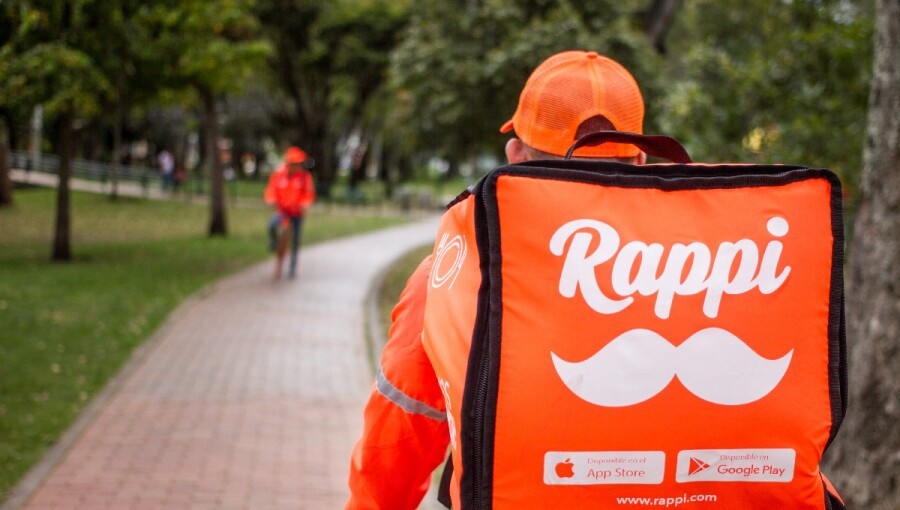
Rappi, known as a "super-App", operates across nine countries from Mexico to Chile, offering 10-minute grocery deliveries and financial services, including credit cards and savings accounts through its fintech branch RappiPay.
By Cynthia Michelle Aranguren Hernández September 9, 2025

Amazon has acquired a stake in Colombian delivery platform Rappi through a $25mn convertible note, Bloomberg reported.

The transaction grants the Seattle-based retailer warrants to purchase up to 12% of Rappi, positioning the US giant to challenge MercadoLibre's long-standing dominance across Latin America's rapidly expanding digital commerce landscape.

The deal represents Amazon's latest effort to penetrate the region's last-mile delivery market, where infrastructure challenges have historically limited international expansion. Rappi, known as a "super-App", operates across nine countries from Mexico to Chile, offering 10-minute grocery deliveries and financial services, including credit cards and savings accounts through its fintech branch RappiPay.

According to PCMI estimates, Latin America's e-commerce market is projected to reach $769bn in 2025, posting 21% growth year-on-year, with Brazil and Mexico alone commanding a combined regional market share of 75.2%. Amazon already operates logistics centres in the region's first and second economies, but lacks the hyper-local delivery infrastructure that has made Rappi ubiquitous in urban centres.

The investment strengthens existing commercial ties, as Rappi utilises Amazon Web Services for cloud computing whilst offering Prime members free deliveries in Mexico. However, regulators may scrutinise the partnership given its implications for both the payments and logistics sectors.

For now, MercadoLibre remains the regional leader with established payment rails through Mercado Pago and logistics network Mercado Envios. The Argentine-founded platform attracted 321mn shoppers in February alone, surpassing Amazon Brasil by 11%.

Rappi co-founder Simón Borrero stated the company is preparing for a New York listing in 2025, having secured a $100mn loan from Santander and Kirkoswald Capital Partners. While the Amazon partnership may complicate these IPO plans, it could potentially accelerate regional consolidation.

For the US tech behemoth, this modest investment provides optionality in a market where traditional warehouse-centric models have struggled against super-app ecosystems that integrate commerce, payments and rapid delivery.

Salvaged shipwreck porcelain gets new life in Malaysia

Ampang (Malaysia) (AFP) – Chinese porcelain shards salvaged from a famous shipwreck are being reimagined in Malaysia, hundreds of years after the Portuguese vessel is said to have sunk in battle.


Issued on: 10/09/2025 - FRANCE24

Smashed crockery from the historic 400-year-old Portuguese Wanli shipwreck was almost consigned to the scrap heap before Malaysian artist Alice Chang saw the potential to transform the shattered plates and cups © Mohd RASFAN / AFP

The smashed 17th-century crockery was almost consigned to the scrap heap before Malaysian artist Alice Chang saw the potential to transform the shattered plates and cups.

After chancing upon a social media post selling the porcelain fragments, the 57-year-old bought about 50 kilograms (110 pounds) for more than 10,000 ringgit ($2,370).

Her recent solo exhibition "Me, Then Blue" at her studio in Ampang, a suburb of the capital Kuala Lumpur, turned the porcelain into sculptures representing submerged dreamscapes.


A creation by Malaysian artist Alice Chang made from shards of porcelain rescued from the historic 400-year-old Portuguese Wanli shipwreck at a gallery in Ampang, Malaysia's Selangor state © Mohd RASFAN / AFP


Her materials are fragments of a once-great cargo of blue-and-white pottery made in Jingdezhen, China's renowned porcelain capital.


The cargo was carried by a Portuguese merchant vessel that sank around 1625, likely due to a battle off Malaysia's coast.

It was discovered in 1998 after pottery appeared in fishermen's nets, with the vessel then named the Wanli after the Ming Dynasty emperor who ruled when the ship sank.

It was hailed as one of the most significant maritime finds in Southeast Asia and is now recognised under UNESCO's Silk Roads Programme.

Smashed crockery from the historic 400-year-old Portuguese Wanli shipwreck was almost consigned to the scrap heap before Malaysian artist Alice Chang saw the potential to transform the shattered plates and cups © Mohd RASFAN / AFP

But while intact porcelain pieces were preserved in museums, Chang said the broken shards were "cast aside as useless".

"The 400 years of broken porcelain tell a story of our past and a look into our future. If nobody wanted them, they would be thrown away, and that is such a waste," said Chang.

She used the shards to create the "ambience of this exhibition like it's immersed in the deep blue sea", Chang told AFP.

"This is part of Malaysia's history... its maritime legacy often goes unrecognised, and this discovery felt like a forgotten chapter waiting to be told," she said.
'Beauty in brokenness'

At the heart of Chang's exhibition stood 11 sculptures, adorned with salvaged shards, accompanied by 20 oil paintings.

Malaysian artist Alice Chang holds shards of porcelain rescued from the historic 400-year-old Portuguese Wanli shipwreck at a gallery in Ampang, Malaysia's Selangor state © Mohd RASFAN / AFP


Working with the broken porcelain pieces was "deeply personal" for Chang, a second-generation Malaysian with Chinese roots who often felt culturally unmoored.

"Through the Wanli shipwreck and working with the pieces, I feel reconnected... I have been told I'm not very Chinese because I'm married to an Italian. So I'm neither here nor there," she chuckled.

"This project reconnected me to my Chinese roots. I actually travelled to China to search and understand my culture."

Some of her sculptures evoked ornate vases while others resembled cascading waves, with mirrors beneath them mimicking the glimmering seabed.

They show "the beauty in brokenness", Chang said.

"Depending on your perspective, you can turn brokenness into something beautiful."

© 2025 AFP
Australia to deploy fleet of underwater strike drones

Sydney (AFP) – Australia said Wednesday it will deploy a US$1.1 billion fleet of "Ghost Shark" underwater attack drones to bolster its firepower in a "threatening" regional landscape.

MAKING IT MORE THREATENING


Issued on: 10/09/2025 - FRANCE24

The first "Ghost Shark" underwater attack drone belonging to the Royal Australian Navy will enter service in January © Rodney Braithwaite / AUSTRALIAN DEFENCE FORCE/AFP

The Royal Australian Navy will arm itself with dozens of the home-developed, cutting-edge autonomous drones, with the first entering service in January, it said.

Australia is in the midst of a major military restructure, equipping its navy with long-range strike capabilities in an effort to balance China's expanding military might in the Pacific.

The government said it had signed a Aus$1.7 billion (US$1.1 billion) five-year contract with Anduril Australia to build, maintain and develop the extra-large, uncrewed undersea vehicles, creating 150 jobs.

"This is the highest tech capability in the world," Defence Minister Richard Marles told a news conference, saying it would have a "very long range" as well as stealth capabilities.


"Australia is leading the world in terms of autonomous underwater military capabilities and Ghost Shark is capable of engaging in intelligence, surveillance, reconnaissance and strike," he said.

'Threatening' landscape


The drones, which can be launched from shore or warships, will complement Australia's strategic enhancements to its submarine and surface fleets, the minister said, declining to provide the exact number to be built.

"Australia faces the most complex, in some ways the most threatening strategic landscape that we have had since the end of the Second World War," Marles said.

"All that we are doing in terms of building a much more capable Defence Force is to deter conflict and to provide for the peace and stability of the region in which we live."

Australia aims to acquire stealthy, nuclear-powered submarines in a multi-decade 2021 AUKUS agreement with Britain and the United States.

In the United States, however, critics have questioned why Washington would sell nuclear-powered submarines to Australia without stocking its own military first.

US President Donald Trump's administration has put AUKUS under review to ensure it aligns with his "America First agenda".

Marles said he was confident that the "Ghost Shark" drones and future nuclear-powered submarines would provide a "fundamentally critical" military capability.

Last month, Australia said it would also upgrade its navy with 11 Mogami-class frigates built by Japan's Mitsubishi Heavy Industries, first entering service by 2030.

Billed as one of Japan's biggest defence export deals since World War II, Australia has agreed to pay US$6 billion over the next 10 years to acquire the fleet of stealth frigates.

Mogami-class warships -- advanced stealth frigates equipped with a potent array of weapons -- are to replace Australia's ageing fleet of Anzac-class vessels.

© 2025 AFP


Seven workers trapped following mudflow at Indonesian mine


/ ISS Crew Earth Observations - PD
FacebookTwitterLinkedInTelegramFlipboardFeedly


By bno - Jakarta Office September 10, 2025


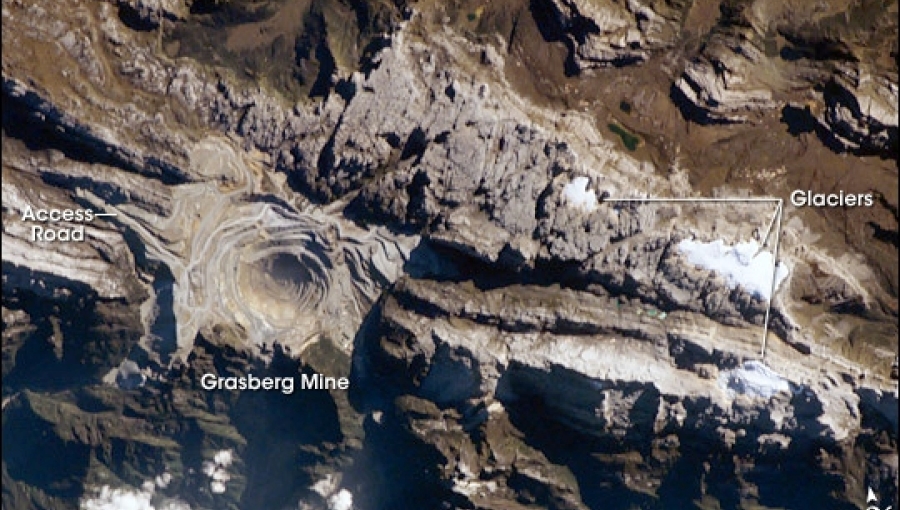
A mudflow struck PT Freeport Indonesia’s Grasberg Block Cave underground mine in Tembagapura, Central Papua, leaving seven workers trapped, according to Kompas. Freeport, one of the world's largest copper and gold mining operators, immediately suspended operations to allow emergency teams to focus on evacuation efforts.

The incident occurred on September 8, at around 10 pm local time. By September 9, rescue teams made up of Freeport’s Emergency Response and Preparedness unit alongside the Underground Mine Rescue team were still working to clear access routes and reach those affected.

According to Katri Krisnati, Vice President of Corporate Communications at PT Freeport Indonesia, the evacuation has been complicated by blocked passages underground. Nevertheless, she stressed that the trapped workers remain safe. Supplies are being delivered while crews attempt to restore access. Katri confirmed that all other employees are unharmed and that operations will not resume until the seven workers are safely evacuated.

Mimika Police Chief, Commissioner Billyandha Hildiario Budiman, stated that his office continues to coordinate closely with the company during the emergency response.

Kompas also reports that similar natural hazards disrupted Freeport’s mining activities in the past. In February 2023, flooding damaged processing plants, conveyor systems, tunnels, and roads, although 14 workers were successfully evacuated without injury. However, two illegal miners outside the company’s concession lost their lives in the disaster. In August 2017, a landslide in the same mining district during heavy rain killed two workers.

These recurring incidents underline the need for Freeport to place equal priority on protecting its workforce and addressing the long-term environmental consequences of decades of large-scale extraction in the region.


Hong Kong legislature to vote on same-sex partnerships bill

Hong Kong (AFP) – Hong Kong lawmakers are expected to vote Wednesday on whether to grant limited rights to same-sex couples, as fears grow in the LGBTQ community that even this narrow equality bid could be sunk by conservative pro-Beijing voices.


Issued on: 09/09/2025 - FRANCE24

A 2023 survey carried out jointly by three universities found 60 percent of those polled in Hong Kong supported same-sex marriage 
© Philip FONG / AFP/File

Hong Kong's government proposed legislation this summer to recognise some rights for same-sex partners, but only for those whose unions are registered abroad.

Despite LGBTQ activists decrying its limitations, the proposal drew near-universal criticism from the pro-Beijing politicians that dominate Hong Kong's legislature.

Only around a dozen lawmakers within the 89-member council have publicly declared their support so far.

"While branding itself as a free, open... world city that attracts global talent, the Hong Kong government has not only failed to keep pace with the regional trend toward equality... it has also proposed a Bill that falls significantly short of international human rights standards," rights group Amnesty International said in a Tuesday statement that nevertheless urged lawmakers to adopt it.

The city's top court ordered the government to create an "alternative framework" for LGBTQ couples when it quashed a bid to recognise same-sex marriage in 2023.

Officials have stressed marriages in Hong Kong will remain between a man and a woman, but in July proposed a registration system for same-sex couples whose partnership is legally recognised abroad.

Registered couples will enjoy more rights in medical-related matters and after-death arrangements -- for example, visiting a partner in hospital or claiming their body after death.

"For same-sex couples like my partner and me, (the bill) offers a much-needed layer of legal recognition and protection," read a letter addressed to legislators, one of more than 10,000 gathered in July.

In another, a writer named Gallam Zhang asked lawmakers to widen the proposal to those not able to go overseas.

"Because of my physical condition, I cannot afford travelling and living abroad for a long period of time," Zhang wrote.

'Stable and harmonious'

The current batch of Hong Kong lawmakers has never shot down a government bill.

But in a rare rift, the proposal has been condemned by the city's top three pro-establishment parties, who say it defies traditional family values.

Same-sex marriage is not legal in China and social stigma is widespread.

Hong Kong is a special administrative region of China with its own legislature and a mini-constitution that guarantees a "high degree of autonomy".

However, the city's once vibrant political opposition and civil society has been effectively silenced since Beijing introduced a sweeping national security law in 2020.

In July, an annual carnival promoting LGBTQ rights was cancelled after organisers were denied a venue "without explanation".


Authorities gave the public seven days to write in with their views on Wednesday's bill, which coincided with a period of line-by-line vetting done by a small committee of lawmakers.

Of the 10,800 submissions received, 80 percent were against, according to the government.

However, advocacy group Hong Kong Marriage Equality said around half the opposing submissions used templates that indicate "strong mobilisation by specific groups".


"(The government) must not allow people with ulterior motives to wield slogans of equality to threaten Hong Kong's stable and harmonious society," read one.

The government's findings contrast with a 2023 survey carried out jointly by three universities that found 60 percent of those polled in the city supported same-sex marriage.

A joint letter issued Monday and signed by 30 Asian LGBTQ rights groups called on the government to "publicly disclose a contingency plan" and introduce a revised proposal if the bill is vetoed.

© 2025 AFP