Friday, September 12, 2025

'Large number of farmers won’t survive this': Trump's new trade moves put growers at risk


Tom Boggioni
September 11, 2025 
RAW STORY


Farmer walking in corn field. (Photo credit: Zoran Zeremski / Shutterstock)

The game of chicken Donald Trump is playing with China as part of his tariff war is reportedly on the verge of doing irreparable harm to America’s soybean farmers with Chinese negotiators holding the upper hand.

According to a report from the Wall Street Journal, soybeans farmers are poised to harvest “tens of millions of tons of soybeans,” but their biggest market, China, is not buying, thereby putting pressure of the Trump administration to make a tariff deal.

As the Journal’s Jon Emont and Patrick Thomas are reporting, China’s buyers are boycotting American soybean crops unless Trump first drops the 20 percent tariff the the president imposed.

Trump’s reluctance to bend now has U.S. farmers on edge, fearing this could be the end for them.

“It is U.S. farmers who are feeling the pain. Nearly a quarter of the more than 4 billion bushels of soybeans American farmers grow each year are exported to China, which is by far the world’s biggest soy importer. The country imported nearly $13 billion of soybeans from the U.S. last year, compared with about $2 billion two decades ago,” the report notes before adding that Caleb Ragland, a Kentucky soybean farmer, lamented, “We have a large number of farmers that won’t survive this.”

At a U.S. soy industry conference in August, Chinese Ambassador Xie Feng laid the blame of the Trump administration and stood up for the U.S. farmers by noting, “After confusion and chaos in the plowing season, our farmer friends may soon have to face new uncertainty in the harvest season.”

According to the Journal, China anticipated the fight with the American president and created stockpiles to lessen the blow in their own country, with China turning to other trade partners, including Argentina and Uruguay, to make up for their own shortfalls.

You can read more here.

Under US pressure, Mexico mulling 50% tariff on Chinese cars


By AFP
September 10, 2025


Several auto giants, including Japan's Toyota, have factories in Mexico - Copyright AFP/File Guillermo Arias

Mexico, under pressure not to serve as a back door for Chinese goods entering the United States, has proposed a 50-percent duty on car imports from the Asian giant — up from 15-20 percent.

The initiative, contained in a bill submitted by the government to Congress, seeks to assuage US President Donald Trump — who has repeatedly urged trading partners to increase duties on China — while also bolstering Mexico’s industrial sector.

The White House has said Chinese producers are abusing a free-trade deal between the United States, Mexico and Canada to send goods northward over the Mexican border tariff-free.

Mexican President Claudia Sheinbaum has also complained of the impact of Chinese imports on domestic manufacturing, and the bill says the increased tariff will seek to protect 19 industrial sectors considered “strategic.”

It also proposes raising tariffs on other countries with which Mexico has no trade agreement.

Mexico replaced China in 2023 as the United States’ largest trading partner, with the Latin American country’s northern neighbor buying more than 80 percent of its exports.

It sends nearly three million automobiles to the United States a year, including cars and trucks assembled by US auto companies in Mexico.


– Improve trade balance –


If the bill is approved, light vehicle imports from China will be subject to a 50 percent tariff, and auto parts between 10 and 50 percent.

The bill, announced by the economy ministry Wednesday, said the changes sought to “protect the national industry in strategic sectors, replace imports from Asia with domestic production” and “improve Mexico’s trade balance.”

The initiative should protect 325,000 jobs in strategic industries and create thousands more, said the ministry.

Two out of every ten light vehicles sold in Mexico are Chinese, according to official data. Sales in the sector grew by 10 percent last year.

Several auto giants, including American General Motors and Ford, German Volkswagen and Japanese Nissan, Honda, and Toyota, have factories in Mexico.

According to the wording of the bill, South Korea, India, Indonesia, Russia, Thailand and Turkey will also be affected by the tariff increases.

Trump has imposed a 25 percent tariff on cars imports, with exemptions for vehicles with US content assembled in Mexico.

Sheinbaum’s ruling party holds a majority in Congress, and the bill is likely to pass.
Top EU court upholds nuclear green label

Environmental groups have challenged the European Commission’s definition of natural gas and nuclear as “green” energy sources.


By AFP
September 10, 2025


CAPITALI$M IS UNSUSTAINABLE

The European Commission in 2022 defied protests from green campaigners and dissent in its own ranks to give a sustainable finance label to investments in both gas and nuclear power - Copyright AFP/File JOEL SAGET

The EU’s top court on Wednesday upheld the European Commission’s decision to give a sustainable finance label to investments in natural gas and nuclear power, dismissing a complaint by Austria.

The European Commission in 2022 defied protests from green campaigners and dissent in its own ranks to give a sustainable finance label to investments in both gas and nuclear power.

The EU argued that both have a role to play as cleaner power sources during the transition to a net-zero carbon future.

But fiercely anti-nuclear Austria challenged the decision in court, with its government highlighting safety concerns and uncertainty over how to deal with nuclear waste.

The Court of Justice of the European Union (CJEU) found that the commission did “not exceed” its power and “was entitled” to the view in its so-called “taxonomy”.

The court “endorses the view that economic activities in the nuclear energy and fossil gas sectors can, under certain conditions, contribute substantially to climate change mitigation and climate change adaptation,” it said in a statement.

Austrian climate minister Norbert Totschnig said in a statement sent to AFP that the court’s decision was “very regrettable”.

Austria has been fiercely anti-nuclear since an unprecedented vote by its population in 1978 prevented its only nuclear plant — meant to be the first of several — from starting operations in the Alpine nation of nine million people.

Environmental groups have also challenged the European Commission’s definition of natural gas and nuclear as “green” energy sources.

ONLY GREEN IN RELATION TO COAL


Viking ships make final high-risk voyage to new Oslo home


By AFP
September 10, 2025


The first to make the move is the Oseberg - Copyright AFP Wojtek RADWANSKI
Pierre-Henry DESHAYES

Three 1,200-year-old Viking ships that have stood the test of time are embarking on their final and possibly riskiest journey to their new forever home in Norway.

The first to relocate is the Oseberg, which on Wednesday slowly began making its way from its current location in the old Viking Ship Museum to a newly built addition that will house the national treasures in optimal conditions.

The extremely fragile oak hull inched forward so slowly its movement was almost undetectable to the human eye, the structure encased in a heavy protective steel rig.

The hundred-metre journey was expected to take over 10 hours, with the ship hanging from a crane moving on a track high above the ground.

“It’s almost like it’s sailing in the air,” museum director Aud Tonnesseen said, visibly exhilarated as she watched the slowly-approaching spiralling serpent’s head that rises up from the ship’s stern.

“There is something deeply moving when you think that these ships — with their long history and all the voyages they have undertaken — will embark on their final journey,” she said.

Named after the places where they were discovered, the Oseberg, Gokstad and Tune — all believed to have been built between 820 and 910 — have been housed in a cross-shaped building considered too small and unsuitable to conserve them properly.

“They’ve been subjected to humidity, vibrations … Over time, the strain became so intense that they started showing signs that they would eventually collapse onto their supports,” Tonnessen said.

A decision was therefore taken to move them to a new climate-controlled facility, built as an extension to the old museum, which should make it possible to maintain the ships in their current condition for at least another century.

The relocation process is perilous.

“We have to complete this operation without causing any further damage to the ships, but we know that each handling is harmful to them,” said curator David Hauer, who has been planning the project for years.

“These are clinker hulls (featuring partially overlapping planks) that are 1,200 years old. At the slightest deformation, they split between the rivets, the wood cracks,” he explained.


– Endless precautions –


Endless precautions have been taken to prevent any breakage or vibrations during the relocation. The ship is being moved very slowly, at a pace of 5.5 minutes per metre.

Among other things, an oil services company experienced in high-precision work — such as positioning massive structures 300 metres below the sea with millimetre accuracy — has been called in.

“But this is yet another level,” Hauer said.

“The level of precision required, for example when it comes to vibrations, is the same as for electron microscopes in hospitals” which require extreme stability, he said.

“Except here, it involves lifting the electron microscope, moving it, and then setting it back down so you can use it again,” he said.

If everything goes as planned, the Gokstad is scheduled to be relocated next during the autumn, and then finally the Tune in the summer of 2026.

All three ships were found in separate burial sites southwest and southeast of Oslo between 1867 and 1904, each one very distinct from the other.

Richly decorated with ornate carvings, Oseberg, the oldest of the three vessels, is considered the best preserved Viking ship in the world.

Gokstad is meanwhile the largest of the three, measuring 23 metres (75 feet) long and five metres wide and with space for 32 rowers.

Tune is much more decomposed than the other two and is believed to have been a particularly fast warship.

The new museum is set to open in 2027.
Australian authorities investigate influencer over croc wrestling


By AFP
September 10, 2025


In a series of videos on his Instagram, Mike Holston, who goes by therealtarzann online, tussles with crocodiles - Copyright AFP/File DAVID GRAY

Australian authorities are investigating an American influencer who filmed himself wrestling wild crocodiles in Queensland, condemning the “extremely dangerous and illegal” activity.

In a series of videos on his Instagram, bare-chested Mike Holston, who goes by therealtarzann online, tussles with saltwater and freshwater crocodiles.

In one post, he dives into the water, emerging holding the crocodile by its throat with blood streaming from his elbow.

“He got a hold of me, but I got a hold of him,” Holston says.

In another, Holston jumps off a boat and into a bushy waterway in pursuit of a crocodile, which he then wrestles.

Holston has said the videos, which have amassed millions of views, were for “educational purposes”.

But the videos prompted outrage in Australia, where the maximum penalty for interfering with a saltwater crocodile is Aus$37,500 (US$24,800).

The state of Queensland said Wednesday it was “actively investigating” the two videos.

“These actions are extremely dangerous and illegal, and we are actively exploring strong compliance action including fines to deter any person from this type of behaviour,” its environment department said.

“Let us be clear: people should not attempt to capture freshwater or saltwater crocodiles in Queensland, unless they are trained and licensed to do so.”

The state’s Premier David Crisafulli also called the influencer a “goose”.

Holston did not respond to requests for comment.

Australia’s famously diverse flora and fauna is highly protected and attempts to interfere with it can face strict penalties.

Another US influencer sparked outrage in March after a video appeared to show her pestering a baby wombat.

And late celebrity “crocodile hunter” Steve Irwin’s father, Bob Irwin, said this week people needed to respect Australia’s wildlife or be deported.

“These posts can have disastrous consequences for both people and wildlife,” Irwin said.

Government figures estimate there are between 20,000 and 30,000 saltwater crocodiles in Queensland in a vast area known as “Croc Country”.

They are a protected and vulnerable species and have been known to attack humans.

Between December 1985 and April 2024, there were 34 non-fatal attacks and 14 fatal attacks by wild saltwater crocodiles in Queensland.


Indonesia seizes part of nickel site over forest violations


By AFP
September 12, 2025


CAPITALI$M IS UNSUSTAINABLE

The Weda Bay Nickel concession spans 45,000 hectares on Halmahera island 
- Copyright AFP/File YASUYOSHI CHIBA

Indonesian authorities have seized a small section of the world’s largest nickel mine for encroaching on forest areas without permission, authorities said Friday.

The Weda Bay Nickel concession, which has long been criticised by environmental and Indigenous rights groups for its effects on the surrounding forest, spans 45,000 hectares on Halmahera island.

Authorities have now seized nearly 150 hectares that encroached into forest areas without obtaining a licence, Anang Supriatna, spokesman for Indonesia’s attorney general’s office, told AFP.

“The taskforce has taken over the area by sealing it, and the land will be returned to the government,” he added.

Weda Bay Nickel is a joint venture of Indonesia’s Antam and Singapore-based Strand Minerals, whose shares are divided between French mining giant Eramet and Chinese steel major Tsingshan.

In a statement, Eramet said the area seized was “a quarry producing rocks for construction materials and maintenance”, and mining operations were not affected.

Weda Bay Nickel said they were working with the authorities to clarify all existing permits.

“We remain committed to taking full responsibility for any potential breaches and to implementing corrective actions,” a company statement said.

The seizure comes as Indonesia’s government examines potential forestry regulation violations across several industries, including the palm oil and mining sectors.

– Criticism over environmental impact –

The concession, which says it accounted for 17 percent of global nickel production in 2023, has long been the target of criticism for its environmental impact.

An AFP investigation this year showed its impact on members of one of the country’s last isolated hunter-gatherer communities — the Hongana Manyawa Indigenous tribe.

The community, parts of which remain uncontacted, says the forest they have long relied on for food and shelter is being destroyed by deforestation and environmental degradation linked to the mine.

Weda Bay Nickel denies the allegations and says it is committed to “responsible mining and protecting the environment”.

Activists said the seizure was unlikely to change the broader concession’s impact on local communities, and urged the government to turn the seized land over to affected residents.

“If the seizure is aimed for the benefit of the people, then the people should be the ones managing it,” Melky Nahar, coordinator of the Mining Advocacy Network environmental group, told AFP.

Nickel is central to Indonesia’s growth strategy. It banned ore exports in 2020 to capture more of the value chain.

The country is both the world’s largest producer and home to the biggest-known reserves.

Mining — dominated by coal and nickel — represented nearly nine percent of its GDP in the first quarter of 2025, government data showed.
Norway sovereign wealth fund drops French miner over environmental fears


By AFP
September 12, 2025


Copyright AFP/File YASUYOSHI CHIBA

Norway’s sovereign wealth fund said Friday it was excluding French mining company Eramet from its portfolio, citing risks that the company was contributing to human rights violations and environmental damage at a nickel mine in Indonesia.

Managed by the country’s central bank Norges Bank and fuelled by Norway’s vast energy revenues, the fund is the world’s biggest, with a value of nearly $2 trillion and investments in more than 8,600 companies across the globe.

“Norges Bank’s Executive Board has decided to exclude the company Eramet SA due to an unacceptable risk that the company contributes to or is itself responsible for serious environmental damage and gross violations of human rights,” the fund said in a statement.

As of June 30, the fund had a 0.44 percent stake in Eramet, valued at around $6.8 million, according to fund data.

The decision was made following a recommendation from the fund’s ethics council, which cited “an unacceptable risk that the company is contributing to, or is itself responsible for, severe environmental damage and serious violation of the human rights of uncontacted indigenous people”.

Specifically the council cited “Eramet’s participation in the PT Weda Bay Nickel Joint venture, which is extracting nickel on the island of Halmahera, Indonesia.”

The mining would result in the deforestation of rainforest areas and “the loss of critical habitats for endangered and endemic species”, the council said, adding it also threatened the survival of indigenous people “in voluntary isolation”.

An AFP investigation earlier this year showed its effects on members of one of the country’s last isolated hunter-gatherer communities — the Hongana Manyawa Indigenous tribe.

The community, parts of which remain uncontacted, says the forest they have long relied on for food and shelter is being destroyed by deforestation and environmental degradation linked to the mine.


Weda Bay Nickel has denied the allegations and says it is committed to “responsible mining and protecting the environment”.
UN expert urges protection for indigenous Botswana people


By AFP
September 12, 2025


President Boko approved the burial of a San elder on his ancestral land last year, ending a long legal battle - Copyright AFP Monirul Bhuiyan

A United Nations human rights expert on Friday urged Botswana’s government to grant constitutional recognition and stronger protections to indigenous communities, citing longstanding discrimination against the San people.

The San are hunter-gatherers who were evicted from their ancestral land in the Kalahari, where there are diamond deposits.

They have lived in southern Africa for tens of thousands of years but are today mostly poor, marginalised and excluded from government welfare services.

“While the government has demonstrated openness and a willingness to engage, constitutional and legal recognition of indigenous peoples remains absent,” the UN’s special rapporteur on the rights of indigenous peoples, Albert Barume told journalists.

“Without such recognition, many communities continue to face systematic obstacles that undermine their cultural survival and participation in national life,” he added.

Barume was speaking after a 12-day visit to Botswana.

Indigenous people in the diamond-rich southern African country reported suffering from “discrimination”, the UN expert said.

They “emphasized that they are the only traditional communities in Botswana whose customary land rights have not been acknowledged, respected, or protected”, he added.

In the late 1990s and early 2000s, Botswana evicted San communities — also known as ‘Bushmen’, a term considered by some as derogatory — from their ancestral lands in the Central Kalahari Game Reserve, after diamonds were discovered there in the 1980s.

In 2006, a court overturned the evictions and in 2011 the tribe’s right to access water in the reserve was restored, leading some people to return.


But “only a limited number” were allowed back, said Barume.

They “have not yet been provided with the essential resources and services to make such return sustainable and attractive”, he added.

A move last year by President Duma Boko to allow the burial of a San elder on his ancestral land in the national park ended a three-year legal battle and raised fresh hopes of change of attitudes towards indigenous groups.
Baby gorilla to return to Nigeria after Istanbul airport rescue


By AFP
September 12, 2025


Zeytin who was just five months old when he was rescued by customs agents at Istanbul airport just before Christmas - Copyright AFP Maya Levin
Hazel Ward with Leslie Fauvel in Lagos

Shinning down a lamp-post, the tiny gorilla almost seems to be laughing as he dodges past his keeper at an Istanbul zoo he’s called home since being rescued from traffickers.

He was five months old when he was discovered, days before Christmas, crammed into a wooden crate in the cargo section of a Turkish Airlines plane en route from Nigeria to Thailand, his terrified face making headlines across Turkey and beyond.

Nearly nine months on and Zeytin (Turkish for olive), as he was named, is an entirely different creature from the traumatised infant brought to Polonezkoy Zoo in the hills outside Istanbul to recover from his trafficking ordeal.

His recovery means he will be soon sent back to Nigeria where he began his journey, Turkish officials say.

Zeytin is believed to be a Western lowland gorilla, a critically endangered subspecies native to the rain forests of central Africa whose numbers have plummeted in recent decades because of deforestation, hunting and disease.

West and Central Africa are major sources of trafficking, with a 2013 UN environment programme report — the latest official figures available — saying 3,174 great apes were lost annually to illegal trade, based on the numbers seized, with a great many more going undetected.

“It was the first time a gorilla has been confiscated at Istanbul airport,” Fahrettin Ulu, regional director of Istanbul’s Nature Conservation and National Parks directorate, told AFP.

“He was found inside a small box and he was terrified: you could see it in his eyes.”

The baby gorilla was moved into a special section within the zoo where he was “nurtured with motherly affection”, he said.

“When he first arrived, he weighed 9.4 kilograms and now he weighs 16. And his height has increased from 62.5 to 80 centimetres. In other words, Zeytin, who was once a baby, has become a young gorilla.”

Inside an open area of the zoo, Zeytin races across the grass like an energetic toddler, swinging from nearby tree branches and playing tag with his keeper, only occasionally slowing down to munch on a piece of cucumber or orange.

Ulu explained that under the CITES treaty limiting the trade of protected species, animals rescued from trafficking must be sent back to the exporting country.

The repatriation process, he said, was being coordinated with the Nigerian authorities and the CITES Secretariat.

“We followed the legal procedures and investigated information regarding the rehabilitation centre in Nigeria, after which we decided to send him back,” he said.


– Gorillas targeted –


According to UK-based monitoring group TRAFFIC, buyers are increasingly looking to acquire baby great apes as pets, or for zoos, circuses, shows — or to use for social media content.

“Gorilla babies can be trafficked easily because they are young, very manageable and easy to transport so the trend is increasing,” said Denis Mahonghol, TRAFFIC’s central Africa director, adding that the trade was “increasingly linked to organised crime networks”.

Although the Turkish authorities have said Zeytin will be repatriated later this month, Mahonghol said the date remained unclear.

He said the Nigerian authorities had told his organisation they were still waiting for Turkey to supply the timeline.

To ensure a safe repatriation process, it was crucial for the country of seizure to work closely with the country of origin, which should have its own rescue facilities in place or support from a suitable local NGO, he said.

“In the case of this gorilla, the first thing is to put him in a quarantine area in a rescue centre, and secondly to carry out DNA testing to confirm his origin,” Mahonghol told AFP.


– Companionship awaits –


An NGO called Pandrillus Foundation will temporarily care for the gorilla, carry out the testing and release him into the wild, he said.

Pandrillus Foundation director Liza Gadsby told AFP they were waiting for Zeytin’s arrival and would house him with another young gorilla of the same subspecies.

“At Drill Ranch we have another gorilla, a three-year-old female named Bili who was confiscated by customs in Lagos two years ago. DNA testing has shown she is a Western lowland gorilla,” she told AFP, saying it was “highly likely” that testing would confirm the same of Zeytin.

“We postponed our plans to transfer Bili to a habitat country sanctuary when we learnt of Zeytin so that he could join her while completing his quarantine. They would both benefit immensely from being together before their next transition,” she explained.

“These two little orphans have suffered so much already in their very young lives.”

burs-hmw-fvl/jxb
Nepal’s first woman chief justice to become next PM

By AFP
September 12, 2025


Known for her insistence on integrity, Sushila Karki has often spoken about the need for transparency and independence in a judiciary frequently under intense political pressure - Copyright AFP Arun SANKAR

Paavan MATHEMA

Nepal’s first woman Supreme Court chief justice Sushila Karki will be sworn in to lead the government in the Himalayan nation after deadly protests ousted the prime minister.

Known for her insistence on integrity, the 73-year-old has often spoken about the need for transparency and independence in a judiciary frequently under intense political pressure.

“President Ram Chandra Paudel will appoint former chief justice Sushila Karki as the prime minister,” presidential press adviser Kiran Pokharel told AFP, ahead of her expected swearing in later on Friday.

Karki emerged as the leading candidate by many “Gen Z” representatives — the loose umbrella title of the protest movement.

She told Nepali media that the Gen Z protesters had told her that “they believe in me” to lead for “a short time for the purpose of doing elections”.

“She is a credible choice to lead the interim government,” Anil Kumar Sinha, a former justice of the Supreme Court who worked with Karki, told AFP.

“Her integrity has never been in doubt, and she is not someone who can be intimidated or easily influenced. She is courageous and not swayed by pressure.”


– ‘In favour of youth’ –


In a speech broadcast on Nepali media earlier this year, she spoke of ingrained corruption.

“We see it everywhere but we don’t speak — now we need the youth to speak up, take the lead and stand in elections”, she said.

“What I have seen in the last 35 years does not work, I am 100 percent in favour of youth coming forward.”

Her tenure as chief justice, from 2016 to 2017, was brief but significant — challenging gender stereotypes and facing down politicians over corruption.

Karki came of age in a society where women rarely entered the legal profession.

Born in 1952 in Biratnagar, an industrial town in eastern Nepal, she earned degrees in political science in India and in law in Kathmandu.

She began her career as a lawyer in 1979, and quickly gained a reputation as a fearless advocate, often taking up cases others avoided.


– Defiant –


In 2012, Karki was one of two presiding Supreme Court judges who jailed a serving government minister for corruption — a first at the time for Nepal in its battle against a culture of graft.

In 2017, the government tried to impeach her as chief justice after she overturned its choice for chief of police.

The United Nations called the impeachment “politically motivated” and the move was blocked. She stepped down from the post at her retirement.

Nepal emerged from a brutal decade-long Maoist insurgency in 2006, and in 2008, the end of the country’s 240-year-old Hindu monarchy.

The transformation to a federal state was marred by political infighting and successive governments have dragged their feet on bringing perpetrators of abuses committed during the civil war to justice.

But it was under Karki’s watch as chief justice that a court in 2017 sentenced three soldiers to 20 years in jail for the murder of a teenage girl, at the time only the second conviction for crimes committed during the war.

She will be Nepal’s first woman prime minister, but not its first woman leader — Bidya Devi Bhandari held the largely ceremonial role of president for two terms from 2015 to 2023.

Nepal seeks new leader as army reclaims streets after protest violence

Kathmandu (AFP) – Nepal's president and army sought on Friday to find a consensus interim leader to fill a political vacuum after deadly anti-corruption protests toppled the government and left parliament in flames.


Issued on: 12/09/2025  RFI

People in Nepal took advantage of a brief lifting of a curfew to stock up on supplies as the president and the army chief met to seek an interim leader in the wake of the worst violence in the Himalayan nation in decades
 © Pedro Pardo / AFP

The Himalayan nation of 30 million people was plunged into chaos this week after security forces tried to crush rallies by young anti-corruption protesters, culminating in widespread violence on Tuesday.

At least 51 people were killed in the worst violence since the end of a Maoist civil war and abolition of the monarchy in 2008.

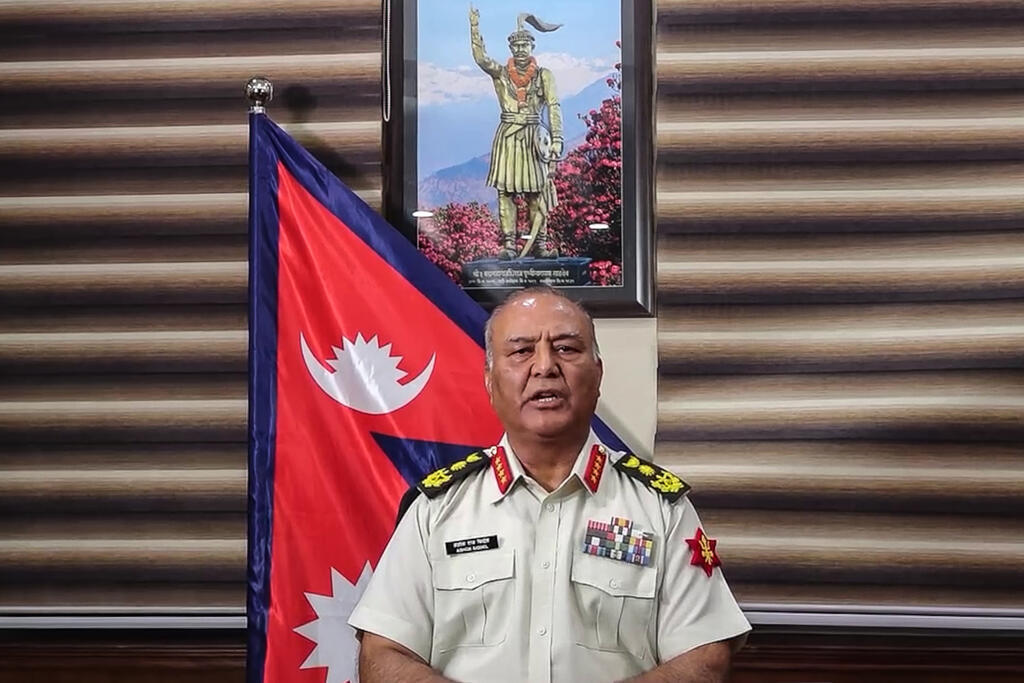
The military took back control of the streets on Wednesday, enforcing a curfew, as army chief General Ashok Raj Sigdel and President Ramchandra Paudel held talks with key figures and representatives from "Gen Z", the loose umbrella title of the youth protest movement.

'Solution being sought'

Disagreements between rival factions remain, although Sushila Karki, 73, Nepal's first woman chief justice, is a leading candidate.

"A meeting has been scheduled for this afternoon with the president, the army chief, former chief justice Sushila Karki, our representative Sudan Gurung and one legal expert," Nimesh Shrestha, who was part of the Gen Z protest, told AFP.

Nepal's army Chief General Ashok Raj Sigdel addressed the nation following unrest that toppled the govermnment and left parliament in flames © Nepali Army Facebook / AFP

Karki has told AFP that "experts need to come together to figure out the way forward", and that "the parliament still stands".

Gurung, the youth activist, told reporters on Thursday that their "first demand is the dissolution of parliament".

Paudel issued a statement to the nation on Thursday saying that "a solution to the problem is being sought, as soon as possible".

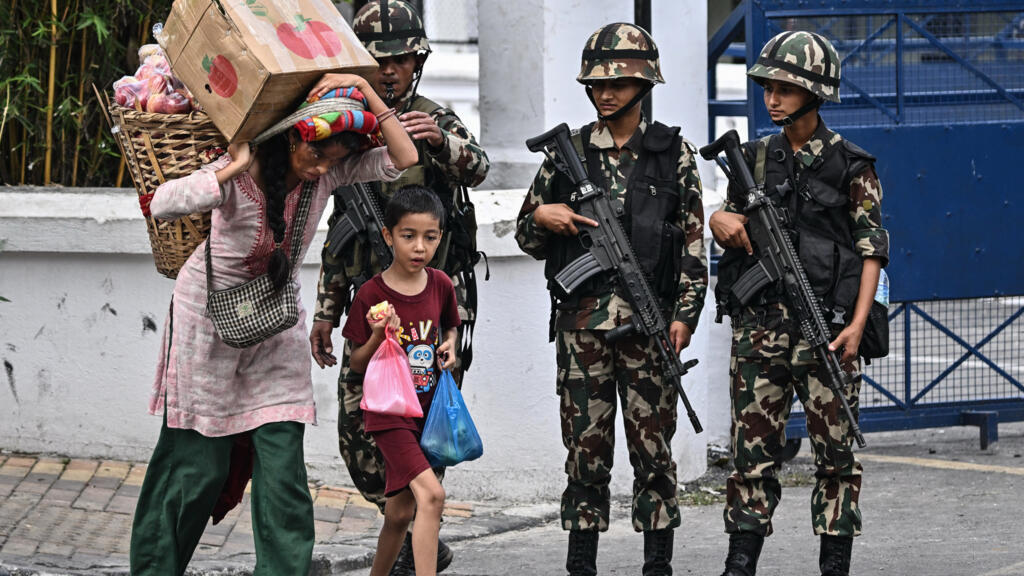
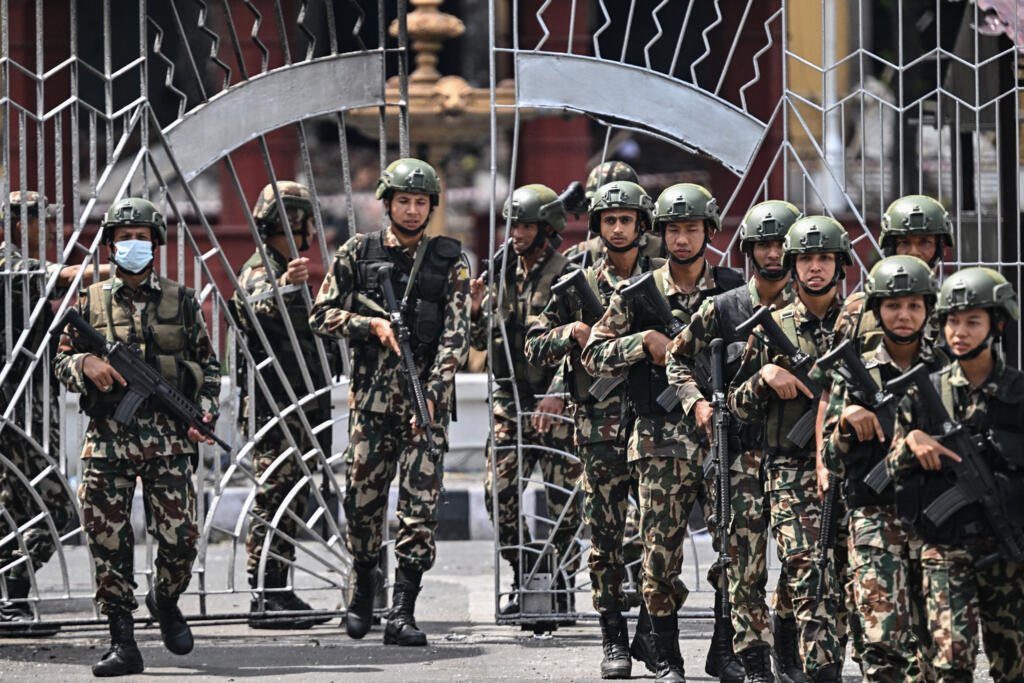
The army patrolled the largely quiet streets of the capital Kathmandu for a third day on Friday, after the protests and nationwide chaos that included a mass breakout of prisoners.

"I was very afraid and stayed locked inside my home with family and didn't leave," said Naveen Kumar Das, a painter-decorator in his mid-40s.

He was among many ordinary residents of Kathmandu who took advantage of a brief lifting of the curfew in the morning to stock up on supplies.

Food stores, tea stalls and pharmacies bustled with customers after people spent days inside.

"It was a really tense time and we just stayed indoors," said Laxmi Thapa, 32, on a motorbike as her husband filled its fuel tank.

"We came out as things have improved."

'Make a better Nepal'

At least 21 protesters were among those killed, mainly on Monday during a police crackdown on demonstrations against corruption and poor governance that was sparked by a ban on social media.


Nepal's president and army chief seek to find a consensus interim leader after deadly anti-corruption protests toppled the government in the worst violence in the Himalayan nation in decades © Pedro Pardo / AFP

Protesters set parliament, major government buildings and a Hilton Hotel on fire on Tuesday, 73-year-old KP Sharma Oli resigned as prime minister, and the army then took charge of the streets.

Nepal's army said on Friday that it had recovered more than 100 guns looted in the uprising, during which protesters were seen brandishing automatic rifles.

More than 12,500 prisoners who escaped from jails across the country during the chaos "are still at large", police spokesman Binod Ghimire told AFP.

Protests fed into longstanding economic woes in Nepal, where more than two-fifths of people are aged between 16 and 40.

Discussions are still heated among Gen Z ranks as they seek a radical political transition.

James Karki, 24, who was among the protesters, said he was hopeful for change.

"We started this movement so we could make a better Nepal," he said. "And I am positive that the army will listen."

© 2025 AFP

From Discord to Bitchat, technology at the heart of Nepal protests

 the government “seriously underestimated the power of social media”

ByAFP
September 12, 2025


A soldier uses a mobile phone during a curfew imposed to restore law and order in Kathmandu on September 12, 2025. From sparking protests to giving young people a platform to discuss their country's political future, social media was key to Nepal's uprising this week - Copyright AFP Pedro Pardo

From sparking protests that toppled the prime minister to giving young people a platform to discuss their country’s political future, social media was key to Nepal’s extraordinary uprising this week.

Fuelled in part by anger over flashy lifestyles flaunted by elites, young anti-corruption demonstrators mainly in their 20s rallied on Monday.

The loose grouping, largely viewed as members of “Gen Z”, flooded the capital Kathmandu to demand an end to a ban on Facebook, YouTube and other popular sites.

The rallies ended in chaos and tragedy, with at least 19 protesters killed in a police crackdown on Monday. The apps were restored, but protests widened in anger.

On Tuesday, other Nepalis joined the crowds. Parliament was set ablaze, KP Sharma Oli resigned as prime minister, and the army took charge of the streets.

Now, many activists are taking to the US group-chat app Discord to talk over their next steps.

One server with more than 145,000 members has hosted feverish debate about who could be an interim leader, with many pushing 73-year-old former chief justice Sushila Karki.

It is just one example of how social media has driven demands for change.

– ‘Fuelled the fire’ –

More than half of Nepal’s 30 million people are online, according to the World Bank.

Days before the protests, many had rushed to VPN services — or virtual private networks — to evade blocks on platforms.

Fears of a wider internet shutdown also drove a surge in downloads for Bluetooth messaging app Bitchat, created by tech billionaire Jack Dorsey.

“Tech played… an almost decisive role,” journalist Pranaya Rana told AFP.

“The whole thing started with young people posting on social media about corruption, and the lavish lives that the children of political leaders were leading.”

Hashtags such as #NepoKids, short for nepotism, compared the designer clothing and luxury holidays shown off in their Instagram posts to the difficulties faced by ordinary Nepalis.

One post liked 13,000 times accused politicians’ children of “living like millionaires”, asking: “Where is the tax money going?”

“NepoKids was trending all the time,” including in rural areas where Facebook is popular, said rights activist Sanjib Chaudhary.

“This fuelled the fire” of anger that “has been growing for a long time”, he said.

– ‘Seriously underestimated’ –

Deep dissatisfaction lies behind the social unrest in the Himalayan nation, among young people exasperated with slow economic development and political instability.

The government’s social media ban “wasn’t trying to suppress” the NepoKids trend, but the timing meant people “saw it as an attack on their freedom of speech”, Rana said.

A week ago, Nepal said it would block access to 26 social media platforms, from Facebook to X and LinkedIn, for failing to meet a deadline to register in the country.

Those that had registered, including TikTok and Viber, remained online.

Nepal has restricted access to online platforms in the past, including Telegram in July.

Last year, the government lifted a nine-month ban on TikTok after it agreed to comply with Nepali regulations.

The government wanted companies to give them the power to “prohibit broad categories of speech such as ‘misinformation’ or content deemed to disrupt ‘social harmony'”, Felicia Anthonio from the US digital rights group Access Now told AFP.

Swiss-based company Proton VPN said Monday that sign-ups from Nepal had shot up 6,000 percent in three days.

Interest rose in Dorsey’s Bitchat platform, which works offline and describes itself as way to resist censorship.

“There when you need it,” wrote Dorsey on X, citing a post describing a “sudden spike” in Bitchat downloads during the protests in Indonesia and Nepal.

Chaudhary said the government “seriously underestimated the power of social media”.