Monday, September 15, 2025


Over-the-counter sales of overdose reversal drug naloxone decline after initial surge


Price is a likely reason sales have been tepid


RAND Corporation


Sales of the overdose reversal medication naloxone increased after it was made available to the public without a prescription but then dipped quickly in the period following debut of over-the-counter sales, according to a new RAND study.


Over-the-counter sales of naloxone peaked during the first month of availability in September 2023, then declined rapidly before stabilizing until August 2024, when there was a small increase, according to the study published in the journal JAMA Internal Medicine. The drug can prevent death among people who have overdosed on fentanyl or other opioids.


While a sales dropoff might be expected for a medication meant to be kept on hand until an emergency, even the peak levels of over-the-counter naloxone sales were only 7.5% as large as the quantity of naloxone sold by prescription.


“While the FDA’s approval of over-the-counter naloxone was intended to facilitate access to this life-saving medication, we found there was only limited uptake for over-the-counter sales,” said Bradley D. Stein, the study’s lead author and a senior physician policy researcher at RAND, a nonprofit research organization.


For the first time in many years, the number of Americans who died from opioid overdoses declined in 2023, attributed in part to the increased availability of naloxone.


Historically, Americans have obtained naloxone through prescription or free distribution programs. But in September 2023, naloxone became available over the counter with the hope it would increase access to the overdose reversal treatment.


Researchers analyzed sales information to calculate the county-level over-the-counter naloxone mean sales price and units sold per million county residents from September 2023 through the last week of September 2024.


They also reviewed pharmacy-dispensed naloxone rates from 2023, and program-distributed naloxone rates from August 2022 to August 2024.


There was considerable variation in the over-the-counter sales of naloxone across states, with Western states generally reporting higher sales. The national average was 396 over-the-counter units sold per million residents from September 2023 through September 2024. The average cost for a two-pack of naloxone nasal spray was nearly $45.   


The amount of naloxone distributed by pharmacies or free programs was much larger than over-the-counter sales. State-level pharmacy-dispensed units per million residents averaged 7,063 in 2023, while program-distributed naloxone averaged 12,015 units per million residents from August 2022 through August 2024.


Biweekly over-the-counter sales of naloxone peaked at approximately 22.5 units per million from Sept. 16 to Oct. 21, 2023, then declined to about 15 units per million in early December 2023. Sales remained between 11 to 15 units per million through September 2024, except for a brief increase in August 2024.


“It’s likely that the relatively high cost of over-the-counter naloxone has contributed to the limited sales,” Stein said. “That cost is likely going to limit over-the-counter sales of this important medication in the fight against the nation’s opioid crisis.”


Researchers say that additional research should examine factors potentially influencing demand for over-the-counter naloxone, such as possibly requiring health insurance coverage for over-the-counter sales and promoting visible placement in retail outlets.


Research reported in this press release was supported by the National Institute on Drug Abuse of the National Institutes of Health under award number P50DA046351. The content is solely the responsibility of the authors and does not necessarily represent the official views of the National Institutes of Health.


Other authors of the study are Rachel K. Landis, Rosanna Smart, Phoebe Levine, Abigail Kessler and Mark Sorbero, all of RAND, and Rosalie Liccardo Pacula of the University of Southern California.


RAND Health Care promotes healthier societies by improving health care systems in the United States and other countries.


 JAMA Network

Global trends and disparities in social isolation


JAMA Network Open


About The Study:

 In this cross-sectional study, social isolation was found to have increased globally after the COVID-19 pandemic, with the initial increase disproportionately seen in lower-income populations and subsequent increases broadening across socioeconomic strata. Targeted interventions for vulnerable groups and research examining country-level policies are urgently needed to mitigate high isolation levels and reduce inequities.


Corresponding Author: To contact the corresponding author, Thomas E. Fuller-Rowell, PhD, email tef0005@auburn.edu.

To access the embargoed study: Visit our For The Media website at this link https://media.jamanetwork.com/

(doi:10.1001/jamanetworkopen.2025.32008)

Editor’s Note: Please see the article for additional information, including other authors, author contributions and affiliations, conflict of interest and financial disclosures, and funding and support.

#  #  #

Embed this link to provide your readers free access to the full-text article

https://jamanetwork.com/journals/jamanetworkopen/fullarticle/10.1001/jamanetworkopen.2025.32008?guestAccessKey=1b34668e-afe8-4888-aa3d-dd05b3b83eff&utm_source=for_the_media&utm_medium=referral&utm_campaign=ftm_links&utm_content=tfl&utm_term=091525

About JAMA Network Open: JAMA Network Open is an online-only open access general medical journal from the JAMA Network. On weekdays, the journal publishes peer-reviewed clinical research and commentary in more than 40 medical and health subject areas. Every article is free online from the day of publication. 

Country of birth, race, ethnicity, and prenatal depression


JAMA Network Open


About The Study: 

Across racial and ethnic groups, prenatal depression diagnosis and moderate to severe depression symptoms varied by maternal nativity in this cross-sectional study. The observed advantage among non–U.S.-born individuals across other maternal and neonatal outcomes may not uniformly apply to prenatal mental health conditions when race and ethnicity are considered. Future research should explore sociocultural factors that may influence this association.


Corresponding Author: To contact the corresponding author, Kendria Kelly-Taylor, PhD, MPH, email kendria.d.kelly-taylor@kp.org.

To access the embargoed study: Visit our For The Media website at this link https://media.jamanetwork.com/

(doi:10.1001/jamanetworkopen.2025.31844)

Editor’s Note: Please see the article for additional information, including other authors, author contributions and affiliations, conflict of interest and financial disclosures, and funding and support.

#  #  #

Embed this link to provide your readers free access to the full-text article 

 https://jamanetwork.com/journals/jamanetworkopen/fullarticle/10.1001/jamanetworkopen.2025.31844?guestAccessKey=1b34668e-afe8-4888-aa3d-dd05b3b83eff&utm_source=for_the_media&utm_medium=referral&utm_campaign=ftm_links&utm_content=tfl&utm_term=091525

About JAMA Network Open: JAMA Network Open is an online-only open access general medical journal from the JAMA Network. On weekdays, the journal publishes peer-reviewed clinical research and commentary in more than 40 medical and health subject areas. Every article is free online from the day of publication. 


 FOREVER CHEMICALS

PFAS presence confirmed in the blood of children in Gipuzkoa


An EHU study has concluded that the levels of PFAS chemicals found do not pose a serious health risk, but it warns of the need to bolster monitoring


University of the Basque Country

children playing 

image: 

children playing

view more 

Credit: file photo. EHU


These chemical compounds are highly stable and linger in the environment. Thanks to their water-, oil- and stain-repellent properties, they are widely found in everyday items, such as non-stick pans, waterproof clothing, food containers and fire-fighting foams. Their widespread use has harmful effects; they can enter the human body during pregnancy via the placenta and continue to build up through breastfeeding, food, drinking water, polluted air, or contact with products containing them.

Due to their impact on health, these chemical compounds have become a focus for concern and research. “They have been linked to endocrine disruption, increased cholesterol, and effects on the liver and development. They can build up both in the body and in the environment. So, exposure to PFAS can be regarded as chronic. What is more, they take years to degrade. This reinforces the need for biomonitoring studies such as ours," explained Anne San Román, co-author of the study.

This joint study by the University of the Basque Country (EHU) focuses on children, as they are a particularly vulnerable group. Exposure at an early age can cause harmful effects at lower doses than in adults and increase the risk of future diseases.

The analysis, carried out on the plasma of 315 minors, detected 18 different compounds among the 42 studied, with detection rates ranging from 70% to 97% for the most common ones. “The data obtained show that we are highly exposed. It is difficult to know whether the levels of PFAS found in children's bodies are high or low because this issue has not been studied sufficiently in order to specify safe limits for humans, but their presence is already a cause for concern and it is important that this type of research be expanded to better understand their effects and find ways of minimising them," explained Professor Nestor Etxebarria.

Regarding the effects of PFAS on health, the study assessed the potential risks to the liver and development and concluded that, in general, there is no evidence of immediate danger. “We have no evidence of worrying concentrations of PFAS in the population studied. However, this does not mean that the risk will decrease in 10 years' time. What does not appear worrying now could be worrying in the future, because it is still unknown whether they could be responsible for future diseases," pointed out Etxebarria and San Román. They added that current methods for assessing risk have significant limitations, as they are based primarily on studies conducted on animals, which reduces their accuracy when extrapolated to humans. So they warned of the need to adjust risk assessment methods and conduct more people-centred studies to obtain more realistic data.

Differences in terms of age

The study is part of the INMA (Childhood and The Environment) project, launched in 2006 with the aim of analysing the impact of environmental pollutants on child development. The EHU research analysed children's exposure to PFAS over time by examining blood samples collected by the INMA project between 2011 and 2022 in the Gipuzkoa cohort. Specifically, in the Goierri and Urola districts, areas characterised by a strong presence of the iron and steel industry. “We analysed the plasma of the children at three key stages of development: at the ages of 4, 8 and 14. This enabled us to assess the evolution and trends in PFAS levels as children grow up, and to confirm that PFAS concentrations decrease with age.” As Etxebarria and San Román went on to explain, “in early childhood, too, levels are mainly related to maternal exposure (through the placenta and breastfeeding), while in adolescence, environmental factors become more important”.

Furthermore, research shows that the presence of PFAS varies according to age. They observed that compounds regarded as classic, such as PFOA or PFOS, which began to be regulated in 2006, predominate in younger children.  By contrast, adolescents have higher levels of emerging PFAS, probably because these compounds began to be used more widely when they were older, and replaced compounds that had already been regulated. San Román and Etxebarria highlighted the fact that “the data most likely reflect the exposure typical of each period. That is why it is so important to repeat these studies periodically to capture the changes that are taking place and to be able to study the consequences they have on our bodies”.

Insufficient and outdated regulation

Based on the data obtained, the research team concluded that current regulations have not been entirely effective, since, despite the restrictions imposed on some PFAS, the restricted compounds are still present in children. Furthermore, they believe that the regulations need to be updated to include emerging compounds, the presence of which has been demonstrated. In this regard, they highlighted the need for further studies on the toxicity of the most recent PFAS, the danger of which has not yet been clearly established.

Further information

Nestor Etxebarria is professor of chemistry in the Department of Analytical Chemistry and deputy director of the Research Centre for Experimental Marine Biology & Biotechnology in Plentzia (PiE-EHU). He leads the IBea research group, which focuses on the development of non-targeted analytical methodologies and their application to environmental and ecotoxicological problems. He lectures on the Degree Course in Chemistry and coordinates the Master's in Environmental Contamination and Toxicology.

Anne San Román, a chemistry graduate who completed the above-mentioned Master's, is currently a pre-doctoral researcher. This article is part of the thesis she is writing up in the field of Environmental Pollution and Toxicology. Etxebarria is supervising San Román's PhD work, which is being carried out as part of a collaboration between the Biogipuzkoa Health Research Institute, the Gipuzkoa Department of Public Health, the Research Centre for Experimental Marine Biology & Biotechnology in Plentzia (PiE-EHU) and the Ibea research group.


Why do people believe lies?


Scientists can predict whether a person is deceived by a peer within seconds of communication because of shared neural activity from distinct brain regions.


Society for Neuroscience


Detecting lies involves processing social information. How do people process social information and evaluate honesty? And do people process this information differently when it comes from a friend versus a stranger? Yingjie Liu, from North China University of Science and Technology, led a study to explore how people assess different kinds of information from friends or strangers. 

As reported in their JNeurosci paper, the researchers used a neuroimaging technique on 66 healthy volunteers as they communicated on computer screens while sitting across from each other. When the information being communicated led to benefits for pairs, this was considered a “gain” and likewise a negative consequence for pairs was deemed a “loss.” Says contributing author Rui Huang, “The key reason we chose ‘gain’ and ‘loss’ contexts is that they illustrate how people adjust decision-making in response to potential rewards or punishments.” Participants believed lies more frequently in “gain” contexts, which was linked to activity in brain regions involved with risk evaluation, reward, and understanding intention. Notably, when the deceiver was considered a friend, the two shared brain activity that varied based on context: “Gain” contexts increased synchrony in a reward-related brain region, while “loss” contexts increased synchrony in a risk evaluation region. The researchers could even use this shared brain activity between friendly pairs to predict whether a person would be successfully deceived. 

According to the researchers, this work suggests that people may be more likely to believe lies when they promise the potential of a “gain” and points to brain activity involved in social information processing between friends that may make truth evaluations less accurate. 

### 

Please contact media@sfn.org for full-text PDF. 

About JNeurosci 

JNeurosci was launched in 1981 as a means to communicate the findings of the highest quality neuroscience research to the growing field. Today, the journal remains committed to publishing cutting-edge neuroscience that will have an immediate and lasting scientific impact, while responding to authors' changing publishing needs, representing breadth of the field and diversity in authorship. 

About The Society for Neuroscience 

The Society for Neuroscience is the world's largest organization of scientists and physicians devoted to understanding the brain and nervous system. The nonprofit organization, founded in 1969, now has nearly 35,000 members in more than 95 countries. 

BAN CLUSTER BOMBS
Cluster bombs kill, wound over 1,200 in Ukraine since 2022: monitor

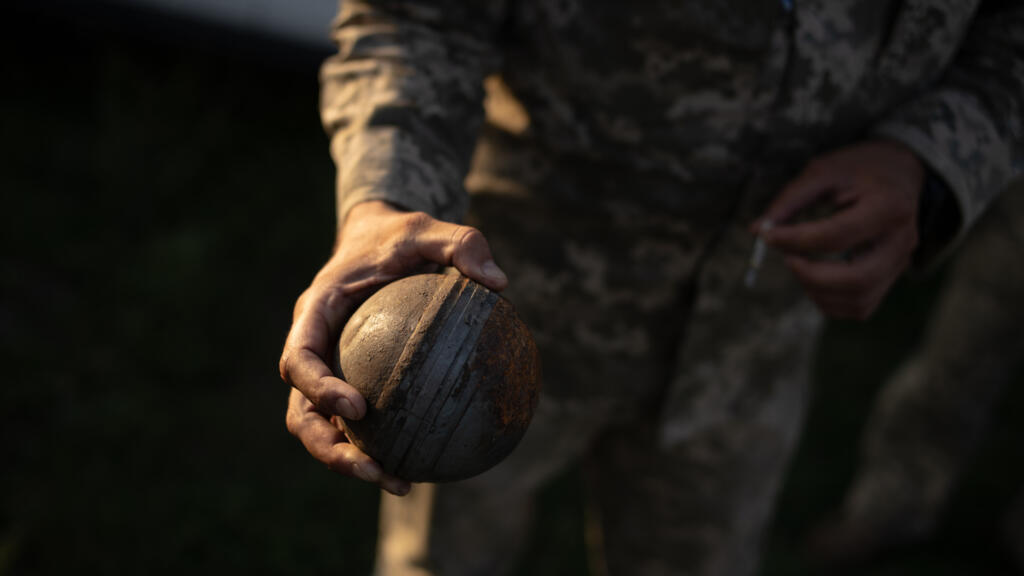
Geneva (AFP) – Cluster munitions have killed or injured more than 1,200 civilians in Ukraine since Russia's full-scale invasion began, a monitor said Monday, decrying "troubling setbacks" in global efforts to eradicate the weapons.


Issued on: 15/09/2025 - RFI

A soldier holds an unexploded Russian cluster bomb in the Khmelnytsky region © Florent VERGNES / AFP/File

Since Russia expanded the invasion of its western neighbour in February 2022, Ukraine has registered the highest number of recorded annual cluster munition casualties worldwide, the Cluster Munition Coalition (CMC) said in its annual report.

Russia has used the widely-banned weapons "extensively" since the first day of the war, it said, adding that Ukraine too had used the weapons, and faces Russian accusations of deploying them inside of Russia.

At least 193 cluster munition casualties were recorded in Ukraine in 2024, out of 314 globally, the report said.

In total, more than 1,200 such casualties have been registered in Ukraine since the start of the war, most of them in 2022.

But the report stressed that the figure was surely a dramatic underestimate, pointing out that last year alone, Ukraine suffered around 40 cluster munition attacks where casualty numbers were not given.

Cluster munitions can be dropped from planes or fired from artillery before exploding in mid-air and scattering bomblets over a wide area.

They pose a lasting threat since many fail to explode on impact, effectively acting as landmines that can explode years later.
'Catastrophic'

Neither Russia nor Ukraine are among the 112 states that are party to the 2008 Convention on Cluster Munitions, which prohibits the use, transfer, production and storage of cluster bombs.

The only other two countries where cluster munition attacks were registered last year -- Myanmar and Syria -- have not joined the convention either.

The United States, also not a party to the treaty, sparked outcry with its 2023 decision to transfer cluster munitions to Kyiv.

It has since transferred the weapons to Ukraine in at least seven separate shipments, CMC said.

Submunitions with Korean language markings have meanwhile been found in Ukrainian-controlled territory this year, but the report said it remained unclear if they had been used by the North Korean forces fighting alongside Russians in the war, or if they had simply been acquired from North Korea by Russia for Russian use.

At a global level, CMC also warned of "troubling setbacks" threatening efforts to establish new international norms stigmatising the use of cluster munitions.

Lithuania in March this year became the first ever country to withdraw from the treaty, six months after it announced it was leaving, citing regional security concerns.

Following that move, Lithuania, along with Poland, Latvia, Estonia and Finland, also said they would quit a treaty banning anti-personnel landmines amid concerns over "Russia's aggression".

Tamar Gabelnick, head of the Cluster Munition Coalition, decried Lithuania's departure, warning that it "undermines the norm created by the convention, with catastrophic implications for the rule of international law protecting civilians".

"We have already seen the impact this decision has had on the Mine Ban Treaty, and states should be extremely wary of a wider domino effect."

© 2025 AFP
Europe at a crossroads as democratic erosion deepens, report warns

As the UN marks the International Day of Democracy on Monday, the global body called for renewed commitment to civic freedoms – but fresh data suggests Europe, long seen as democracy’s safe zone, is now one of the regions where those freedoms are most under strain.


Issued on: 15/09/2025 - RFI

Romanians take part in a protest to demand a commitment to the country's pro-European Union path, in Bucharest on 9 May 2025. © AFP - DANIEL MIHAILESCU

The International Institute for Democracy and Electoral Assistance (IDEA)’s Global State of Democracy 2025 report says 94 countries – more than half of those assessed – have declined in at least one key aspect of democratic performance over the past five years.

It warns of setbacks in judicial independence, press freedom and electoral integrity. Those concerns were echoed at the United Nations.

Marking the International Day of Democracy, UN Secretary-General António Guterres praised “the courage of people everywhere who are shaping their societies through dialogue, participation, and trust”, saying such efforts are vital “at a time when democracy and the rule of law are under assault from disinformation, division, and shrinking civic space”.

Since 2014, more countries have slipped backwards than advanced on civil liberties.

IDEA calls this “modern democratic backsliding” – elected leaders using legal means to weaken checks and balances from within. Freedom of expression has declined in 37 countries over the past five years, while media integrity fell in 33.

By contrast, just 17 and 10 countries respectively improved.

Global decline in freedom of expression over last decade, watchdog warns
Backsliding in central, Eastern Europe

IDEA points to sustained pressure on three pillars of democracy since 2007: representative government, checks on power, and civil liberties. Media integrity is under particular strain.

Across Europe, diversity of voices and critical coverage have dropped, undermining the press’s ability to hold governments to account.

The report identifies Poland, Hungary, Romania, Ukraine and Turkey among the countries with marked democratic decline.

In Poland, government influence over the courts and public broadcasting has drawn criticism at home and abroad. Meanwhile Hungarian Prime Minister Viktor Orbán has tightened restrictions on NGOs and the press, with pro-government interests dominating much of the media sector.

Romania saw mass protests in 2017 against legislation that threatened anti-corruption safeguards, while Ukraine continues to face challenges around judicial independence and corruption, despite some reforms in recent years.

Turkey remains an entrenched case of democratic erosion, with civil liberties and checks on power now among the weakest in the region.

Turkey's embattled civil society fears worst as foreign funding dries up
Western Europe not immune

IDEA warned that even Western European democracies face “downward pressure”.

France, still ranking in the top 30 of IDEA’s scores, shows emerging warning signs. These include policing of protests, pandemic-era restrictions on privacy and movement, and concerns over judicial independence and lobbying rules.

Italy is named among five EU states described as “dismantlers” of democracy, alongside Bulgaria, Croatia, Romania and Slovakia. IDEA uses the term for governments that systematically undermine checks and the rule of law.

From Washington to Warsaw: how MAGA influence is reshaping Europe’s far right
Guardrails and renewal

Representation scores "collapsed to their worst level in over 20 years, with seven times more countries declining than advancing", IDEA researchers wrote.

"Meanwhile, rule of law – the weakest overall performer – fell most strikingly in Europe."

European states accounted for 38 percent of global downturns in the rule of law between 2019 and 2024, underlining the strain on the continent’s institutions.

The report warns that reversing these trends will require stronger safeguards, including independent courts, plural media, and a vibrant civil society.

The UN Democracy Fund, celebrating its 20th year, says grassroots civil society and independent media remain the front line in defending democratic values – the very institutions now under pressure.

“Democracy faces a perfect storm of autocratic resurgence and acute uncertainty, due to massive social and economic changes,” IDEA Secretary-General Kevin Casas-Zamora said.


Qatar PM urges world to end 'double standards' and hold Israel accountable

Qatar’s prime minister urged the international community on Sunday to reject “double standards” and hold Israel accountable after an unprecedented strike on Hamas members in Doha. The attack, condemned even by President Donald Trump, prompted an emergency summit, though Washington sent Secretary of State Marco Rubio to Israel in support.


Issued on: 15/09/2025 - 
By: FRANCE 24

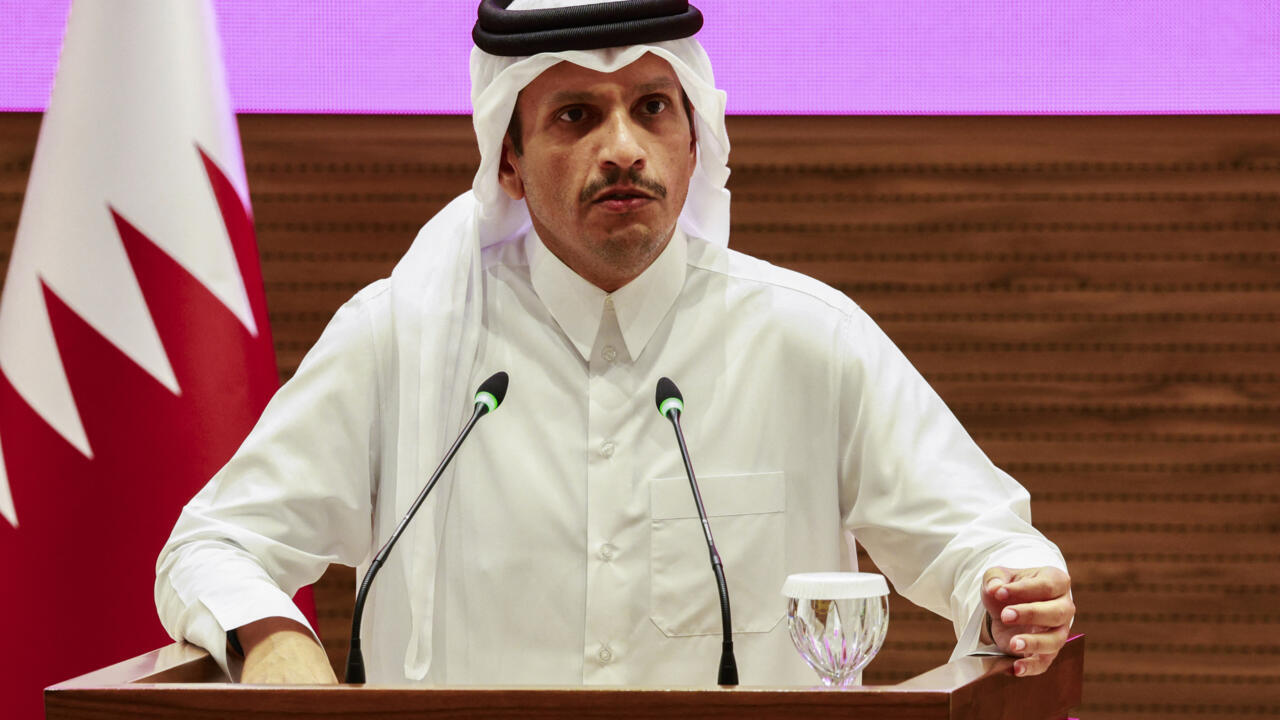
Qatar's Prime Minister and Foreign Minister Mohammed bin Abdulrahman al-Thani addresses a press conference following Israeli strikes in Doha on September 9, 2025. 
© Karim Jaafar, AFP

Qatar's prime minister urged the international community on Sunday to reject "double standards" and hold Israel accountable, speaking on the eve of an emergency summit called in response to an unprecedented Israeli strike on Hamas members in Doha.

The deadly attack -- carried out by one US ally on the territory of another -- sparked a wave of criticism, including a rebuke from President Donald Trump, who nonetheless dispatched Secretary of State Marco Rubio to Israel in a show of support.

Monday's emergency gathering of Arab and Islamic leaders will serve as a pointed show of unity among Gulf countries and seek to pile more pressure on Israel, which is already facing mounting calls to bring an end to the war and humanitarian crisis in Gaza.


© France 24
01:36

"The time has come for the international community to stop using double standards and to punish Israel for all the crimes it has committed," Qatari premier Sheikh Mohammed bin Abdulrahman Al Thani told a preparatory meeting on Sunday, adding Israel's "war of extermination" in Gaza would not succeed.

"What is encouraging Israel to continue... is the silence, the inability of the international community to hold it accountable."

Among the leaders expected at Monday's summit are Iranian President Masoud Pezeshkian, Iraqi Prime Minister Mohammed Shia al-Sudani and Turkish President Recep Tayyip Erdogan.

Palestinian president Mahmud Abbas arrived in Doha on Sunday.

It remains to be seen whether Crown Prince Mohammed bin Salman, Saudi Arabia's de facto ruler, will attend the gathering, though he visited Qatar earlier this week in a show of neighbourly solidarity.
'Rein in Israel'

According to Qatar's foreign ministry spokesman, Majed al-Ansari, Monday's meeting will consider "a draft resolution on the Israeli attack on the State of Qatar".

Elham Fakhro, a fellow of Harvard's Middle East Initiative, said she expected Gulf states to "use the summit to call on Washington to rein in Israel".

"They will also seek stronger US security guarantees, on the basis that Israel's actions expose the inadequacy of current assurances and have undermined US credibility as a security partner," she added.

Middle East lecturer Karim Bitar, of Paris's Sciences Po University, called the gathering a "litmus test" for Arab and Muslim leaders, saying many of their constituents were "sick and tired of the old-style communiques".

"What they are expecting today is that these countries... send a very important signal not only to Israel but also to the United States that time has come for the international community to stop giving this blank check to Israel," he said.

Qatar hosts the largest US military base in the region, and plays a key mediation role in the Israel-Hamas war, alongside the United States and Egypt.

Sheikh Mohammed had dinner on Friday with President Trump while visiting the United States.

Hamas politburo member Bassem Naim said the militant movement, whose October 2023 attack on Israel sparked the Gaza war, hoped the summit would produce "a decisive and unified Arab-Islamic position", as well as "clear and specific measures" on Israel and the war.

(FRANCE 24 with AFP)
Final stage of Spain's Vuelta abandoned after police clash with pro-Palestinian protesters

The final stage of Spain's Vuelta cycling race was abandoned on Sunday afternoon as cyclists were entering Madrid after police clashed with pro-Palestinian protesters in the Spanish capital's centre. Police fired tear gas at the crowds as hundreds of pro-Palestinian protesters knocked down security barriers and surged onto the course.


14/09/2025 -
By: FRANCE 24
Video by: Sarah MORRIS


Police face Pro-Palestinians protesters after security barriers were taken down during the 21st and last stage of the Vuelta a Espana 2025, a 101 km race between Alalpardo and Madrid, in Madrid on September 14, 2025. © Thomas Coex, AFP
02:16


The final stage of the three-week Vuelta cycling race was abandoned Sunday after hundreds of pro-Palestinian protesters invaded part of the course where the cyclists were supposed to pass through. Police fired tear gas at the demonstrators and charged the crowd.

On Gran Via, where cyclists were due to pass multiple times, protesters knocked down barriers and marched into the road, some chanting for a boycott of Israel.

Danish cyclist Jonas Vingegaard of Visma-Lease a Bike was declared the race's winner after organisers cancelled the final stage.

"It is still unknown whether there will be a winning ceremony with the situation as it is, with thousands of protesters filling downtown Madrid. The race has been officially ended and Jonas Vingegaard is the winner," organisers said.

Spanish authorities estimated that more than 100,000 people took part in the protests across Madrid.

Pro-Palestinian protesters knock down security barriers during Stage 21 of the Vuelta in Madrid on September 14, 2025. © Ana Beltran, Reuters


Spanish Prime Minister Pedro Sanchez had earlier said that the pro-Palestinian protests that have rocked the three-week filled him with "pride" as large demonstrations met the race's final stage in Madrid.

The protests, which have targeted the Israel-Premier Tech team over the devastating war in Gaza, have disrupted several stages of one of cycling's three grand tours and cast doubt on whether the 21-day race could be completed.

The activism has forced some stages to be shortened and occasionally caused crashes as demonstrators burst onto the course, prompting criticism for threatening rider safety and harming Spain's image.

In his first public comments on the debate, Sanchez expressed his "recognition and full respect for the athletes, but also our admiration for a people like Spain's which mobilises for just causes, like Palestine".

"Spain today shines as an example and as a source of pride, an example to an international community where it sees Spain taking a step forward in the defence of human rights," he told a Socialist party gathering in Malaga.


Spanish Foreign Affairs Minister José Manuel Albares speaks to FRANCE 24 about Spain's decision to recognise the state of Palestine. © FRANCE 24
10:47

Madrid's Mayor Jose Luis Martinez-Almeida blamed Sanchez for the race's abrupt end.

"(It's) violence that the prime minister is directly responsible for due to his statements today in the morning instigating the protests," Martinez-Almeida said.

"Today is the saddest day since I became mayor of this great city."

Several members of the leftist government have publicly supported the movement in a country where support for the Palestinian cause is strong.

Spain, which recognised a Palestinian state in May 2024, has been a vocal critic of Israel's military campaign in Gaza. Sanchez's government announced new measures targeting Israeli military supplies earlier this month.

Protesters briefly breached reinforced security and attempted to block the road during the penultimate stage in the Guadarrama mountains outside Madrid on Saturday, forcing cyclists to swerve around them.

The right-wing opposition Popular Party (PP), which runs the Madrid region and the Spanish capital's council, also reacted furiously.

Party leader Alberto Nunez Feijoo's response on social media was scathing after the prestigious cycling event ended with police charging at protesters and firing tear gas.

"The government has allowed and induced the non-completion of the Vuelta and, in this way, an international embarrassment televised worldwide," he said.

The PP head of the Madrid region, Isabel Diaz Ayuso, wrote on X that Sanchez "becomes directly responsible for any altercation that happens... what damage to our sport and our country!"

At the other end of the political spectrum, far-left Deputy Prime Minister Yolanda Diaz hailed Spanish society for "giving a lesson to the world".

"Israel cannot compete in any event while it continues to commit a genocide," she wrote on Instagram, days after the Israeli government barred her from entry for her criticism of the war in Gaza.

Israel-Premier Tech, owned by Israeli-Canadian property developer Sylvan Adams, is a private outfit and not a state team, but was hailed by Israeli Prime Minister Benjamin Netanyahu for continuing to compete despite the vehement protests.

(FRANCE 24 with AFP and Reuters)

Spanish Vuelta final stage cut short after more pro-Palestinian protests

Sport
Issued on: 15/09/2025 - 
FRANCE24


Pro-Palestinian protesters interrupted the final stage of the Spanish Vuelta and forced organizers to cut the race short on Sunday, capping a campaign of disruptions to the Grand Tour cycling event.