Monday, September 15, 2025

AI risks overwriting history and the skills of historians have never been more important, leading academic outlines in new paper


AI “essentially ignores” the extent of what Holocaust survivors endured on an emotional level – when put to the test by a Cornell historian


Taylor & Francis Group


Human historians are ever more vital in the age of AI – especially with the crucial need to capture the emotional and moral complexity behind world events.

That’s according to a leading academic Dr Jan Burzlaff, an expert on Nazi Germany from Cornell University, who when tasking ChatGPT to summarize the experiences of Holocaust survivors found the AI tool failed to capture intimate, vital details. 

“With the testimony of Luisa D., a seven-year-old Holocaust survivor, AI overlooked heartbreaking details about her mother cutting her own finger to give her dying child drops of blood – ‘the faintest trace of moisture’ – to stay alive.

“This omission alone demonstrates why human historians remain indispensable in the age of artificial intelligence.

Historical writers possess skills that AI currently lacks – especially the ability to capture human suffering,” Dr Burzlaff, a postdoctoral associate in the Jewish Studies Program in the College of Arts and Sciences, states.

“If historical writing can be done by a machine, then it was never historical enough.”

His findings are published today in the peer-reviewed journal Rethinking Historyin a piece which analyses Chat GPT’s attempts to recapitulate recorded testimonies of Holocaust survivors made in La Paz, Kraków and Connecticut in 1995.

The results expose the limits of AI, which creates new content based on what it learns from existing data. It outlines that whilst AI can identify angles that historians may not have considered, the downside is algorithms may distort history or, as in this instance, try to clarify the Holocaust which he says, “cannot be resolved”.

“Essentially it ignored the extent these individuals suffered on an emotional level,” Dr Burzlaff states.

“A recent study by Microsoft ranked historians as high on the list of jobs that AI could replace. But AI lacks the ability to capture human suffering.

“If it falters with Holocaust testimony — the most extreme case of human suffering in modern history — it will distort more subtle histories too. Holocaust testimony is a litmus test for AI, where smoothing and summarisation run up against the obligation to preserve fracture, silence and ethical weight.”

He adds: “As tools like ChatGPT increasingly saturate education, research, and public discourse, historians must reckon with what these systems can and cannot do.

They summarize but do not listen, reproduce but do not interpret, and excel at coherence but falter at contradiction.

“The problem we historians now face is not whether AI can recognize meaning, but whether we will continue to do so.”

The article shares five guidelines developed for teachers, academics and anyone else writing about history in the modern era – especially for those teaching about trauma, genocide and historical injustice.

The author says his advice will help historians hold on to the ‘ethical, intellectual, and stylistic stakes of historical writing’.

“AI feeds on pattern, frequency, and proximity. Historians should avoid this approach – they should draw from written testimonies, not become a collection of texts,” Dr Burzlaff outlines.

“Essentially, as historians we should not try to ‘outperform the machine’ but to sound nothing like it.

“At stake is not only the memory of the Holocaust, as in this instance, but how societies everywhere will remember and interpret their pasts in the age of prediction.

“The accounts of people from the past differ according to their individual experiences and some are different to categorize. Historians need to embrace this lack of uniformity and moments of human experience that algorithms cannot anticipate.”

Inquiry into the history of science shows an early “inherence” bias


New analysis concludes early scientific theories from physics to biology initially favor built-in properties over external forces—a tendency that continues today


New York University


Early scientific theories—such as those explaining basic phenomena like gravity, burning, and the movement of molecules in water—centered on presumed inherent properties rather than external factors, thereby misleading famous philosophers and scientists, from Aristotle to Scottish botanist Robert Brown, in their theorizing. 

A new study by a team of psychology researchers has now found that this tendency is in fact common in the history of science. Moreover, through a series of experiments and surveys, the paper’s authors conclude these misfires were likely driven by cognitive constraints, among scientists and non-scientists alike, that have acted as a bottleneck to discovery and shaped the trajectory of scientific theories over millennia.

The study, which appears in the journal Proceedings of the National Academy of Sciences, was conducted by researchers at the University of Edinburgh and New York University.

“Early scientific theories across multiple fields share a common pattern, in that they focus too much on built‑in features and too little on interactions with surroundings,” explains Zachary Horne, a lecturer in psychology at the University of Edinburgh and the paper’s lead author. “This bias appears throughout the history of science, and its ‘fingerprints’ can even be seen among scientists today.”

Horne and the paper’s other authors, Andrei Cimpian, a professor of psychology at NYU, and Mert Kobas, an NYU doctoral student, point to early theories of gravity as evidence of this systematic “inherence bias” in scientists’ initial attempts to explain a phenomenon.

Medieval scholars proposed that throwing an object gave a projectile an internal “impetus”—an assumed substance inside the object—that keeps it moving until that impetus runs out. When the substance is exhausted, they theorized at time, the object simply falls to the ground. In the 17th century, Galileo Galilei and Isaac Newton replaced this theory by accurately demonstrating that unless an external force acts on the object, it will keep moving in a straight line at steady speed. 

“Some of the most significant achievements have come about as a result of scientific ingenuity, but our cognitive processes, which favor explaining phenomena in terms of their inherent properties rather than external factors, seem to have historically slowed scientific discovery,” notes Cimpian.  

In their PNAS study, the authors surveyed historians of science in the US, Canada, and the UK and asked them to cite examples of major transitions in the history of science. More specifically, they were asked to draw from the historic record to list an initial explanation for an observation, as well as a subsequent explanation for the same observation—as in this example concerning tides, provided by one of the historians:

  • Observation: “Tidal motions of Earth’s large bodies of water”

  • Initial explanation: “Sloshing due to motion of earth” (Galileo; coded by the researchers as “inherent”)

  • Subsequent (and accurate) explanation: “Gravitational influence of the moon” (Kepler, Newton; coded by the researchers as “extrinsic”)

These responses were coded as “inherent” or “extrinsic” by doctoral students with training in philosophy of science. The results showed that the vast majority of the nearly 80 examples the historians listed were focused on inherent properties in their initial explanations. In contrast, subsequent explanations of the same phenomena showed less of this bias. 

An example of molecular behavior is illustrative. In 1827, Scottish botanist Robert Brown studied pollen grains’ structure. Under a microscope, the grains appeared to move around rapidly when they were suspended in water. Brown and other biologists at the time hypothesized that the motion of these grains was due to a “vital force” present within living matter. However, as Brown pursued this line of reasoning further, he noticed inconsistencies between explanation and the data, indicating the phenomenon was not due to an inherent factor. Decades later, others correctly identified an unseen—and environmental—factor to explain this movement: fast-moving molecules in the surrounding water, an external force, colliding with the pollen grains, which together form the centerpiece of what’s now known as “Brownian motion.” 

These findings led the PNAS authors to another consideration: Is this bias, found among history’s most prominent scientists, also found today among scientists and non-scientists alike? In other words, is it possible that scientists and non-scientists in the 21st century are also affected by these same cognitive bottlenecks when it comes to their theorizing about scientific phenomena? 

To explore this, the researchers conducted a series of experiments with practicing scientists, adult non-scientists, and children (aged 5-9). They provided novices and scientists with real scientific observations—with which both the scientists and non-scientists were unfamiliar—and asked them to explain why these phenomena occurred. For instance, children were asked to explain “why a hammer fell at the same speed as a feather on the moon” while adult non-scientists were asked to explain the presence of sediment in distilled water after it was boiled. By contrast, scientists were asked to explain more complex phenomena as diverse as why the tadpoles of the poisonous Dart frog are not poisonous or why an unfamiliar planet loses mass over time or has a magnetosphere of a certain size. These explanations were then coded for whether they were focused on inherent properties or extrinsic interactions. 

As with scientists from the past, the initial theories of both today’s scientists and non-scientists overweighted internal properties in their explanations. For example, when asked to explain the presence of sediment in distilled water after it was boiled, a non-scientist participant said that “heat caused the water to begin to turn into soil”—an idea reminiscent of Aristotle. Even trained scientists showed similar tendencies, albeit with more sophistication in the mechanisms they hypothesized. When asked to explain why some planets lose mass over time, some scientists cited “ejecta from volcanoes” and “transformation of matter on the planet into gas that dissipates away from the planet,” both of which neglect complex interactions between planets and their stars.

These tendencies demonstrate the difficulty of scientific inquiry—our most successful epistemic enterprise—rather than the incapability of scientists, the paper’s authors observe. This is a difficulty that may have impacted our greatest thinkers, both past and present. 

“The path from initial explanatory intuitions to mature scientific understanding is rarely straightforward,” the authors write in their conclusion. “This work suggests that one systematic source of detours may lie in our cognitive architecture itself—in the basic information processing constraints that guide how we first attempt to make sense of unfamiliar phenomena. Understanding these constraints is crucial not just for advancing cognitive science, but also for improving how we train future generations of scientists.”

# # #

South Korea probes rights violations in US factory raid
DW with Reuters, AFP
15/09/2025 

Trade unions in Seoul demanded an apology from President Trump after some 300 South Korean workers were detained by US immigration police known as ICE. Trump said he does not want to "frighten off" foreign investment.

Footage of the arrests received criticism in South Korea (FILE: September 5, 2025)
Image: ATF Atlanta/ZUMA/IMAGO

South Korea will look at possible human rights violations against Korean nationals working for a Hyundai factory in the state of Georgia, Seoul's presidential spokesperson said Monday.

More than 300 South Korean citizens were held for about a week, before being discharged and making a return home later.

As part of the raid — the largest of its kind since US President Donald Trump's crackdown on migrants — Immigration and Customs Enforcement (ICE) officials arrested some 475 factory workers, most of them from South Korea, allegedly due to overstaying their visas or holding permits that didn't allow them to perform manual labor.

Footage of the arrests resulted in criticism in South Korea, with Seoul repatriating the workers almost a week after their arrest, and South Korean President Lee Jae Myung saying the arrests could discourage future investment in the US.

South Korea's trade unions demanded an official apology from Trump for the arrests. The incident prompted outrage across the country, particularly after Seoul promised to make major investments in the US in July to avoid massive tariffs threatened by Trump.

How did President Trump react?


President Trump said he doesn't want to "frighten off" investors, and that foreign workers sent to the US are "welcome."

"I don't want to frighten off or disincentivize investment," the US leader posted on his Truth Social account, adding the circumstances for temporarily allowing foreign experts in the US to support the development of "extremely complex products" such as chips, semiconductors, computers and trains.

"We welcome (foreign experts), we welcome their employees, and we are willing to proudly say we will learn from them, and do even better than then at their own 'game' sometime in the not too distant future," Trump said, without pointing to specific policy changes that would make the US a less intimidating place for foreign workers.
NGOs call on EU to stop doing business with Israel's 'illegal' settlements

A coalition of over 80 NGOs has launched a campaign urging European countries to stop all commercial or investment activities related to Israel’s settlements in Palestinian territories. Groups like French supermarket giant Carrefour stand accused of directly or indirectly "enabling the humanitarian crisis" driven by Israel’s prolonged occupation.


Issued on: 15/09/2025 - RFI

An Israeli settlement outpost north of the village of Burqa, east of Ramallah in the Israeli-occupied West Bank, 15 July 2025. © Zain Jaafar/AFP

The 84 NGOs, which include Oxfam, Amnesty International, the Human Rights League, and the Platform of French NGOs for Palestine, on Monday launched a campaign calling on states – particularly members of the European Union and the United Kingdom – to ban all commercial or investment activities related to Israel’s settlements.

The European Union is Israel's largest trading partner, accounting for approximately 32 percent of total merchandise trade, or approximately €42 billion annually.

The campaign also calls for a ban on financial institutions providing loans to companies involved in projects within the settlements.

All of Israel's settlements in the West Bank, occupied since 1967, are considered illegal under international law, regardless of whether they have Israeli planning permission.

Widespread poverty, suffering


According to Oxfam, Israel’s settlement project "has fragmented the West Bank and destroyed the Palestinian economy, resulting in widespread poverty and suffering".

In a report published Monday, the NGOs singled out a handful of specific companies, including Carrefour France, which is accused of being "directly involved in the illegal settlements by allowing the sale of its products there".

The supermarket chain signed a franchise agreement in 2022 with Electra Consumer Products and its subsidiary Yenot Bitan, which has "at least nine" stores in the settlements.

Carrefour told French public radio France Inter that the franchise agreement "excludes any stores located in the occupied territories."

British equipment manufacturer JCB is accused of delivering machinery which is used both to destroy Palestinian homes and crops and to build illegal settlements, according to the NGOs.

The Spanish travel company eDreams-Opodo, the German group TUI, Siemens, Danish shipping company Maersk, and Barclays Bank were also called out over their partnerships, transport services, or financial activities linked to Israeli settlements.

France urges EU to reassess Israel trade partnership over Gaza rights abuses

The NGOs note that since being informed of the report, a few companies have changed their practices, including Opodo-eDreams and Maersk.

Currently products originating from the settlements may be imported into Europe, but do not benefit from the preferential tariffs of the EU-Israel Association Agreement and since an EU court ruling in 2019, they must be labelled as originating from Israeli settlements.

The NGOs cite a landmark advisory opinion issued by the European Court of Justice in July 2024 in which it considers member states obligated "to abstain from entering into economic or trade dealings with Israel concerning the Occupied Palestinian Territory" and required "to take steps to prevent trade or investment relations that assist in the maintenance of the illegal situation created by Israel in the Occupied Palestinian Territory".

The NGOs' report follows a previous submission to the UN Human Rights Council in July by the Special Rapporteur on the human rights situation in the occupied Palestinian territories.

More settlement plans

Last week, Israeli Prime Minister Benjamin Netanyahu reiterated Israel's plans to expand its settlements.

Speaking at a signing ceremony for a major settlement project in the occupied West Bank on Thursday, he vowed that there would be "no Palestinian state."

Israel has long had ambitions to build on the roughly 12 square kilometre tract of land known as E1, but the plan had been stalled for years in the face of international opposition.

France condemns Israel’s west bank settlement plan as serious breach of international law

The site sits between Jerusalem and the Israeli settlement of Maale Adumim, near routes connecting the north and south of the Palestinian territory.

Last month, Israel's far-right Finance Minister Bezalel Smotrich backed plans to build around 3,400 homes on the ultra-sensitive parcel of land.

His announcement drew condemnation, with UN chief Antonio Guterres saying the settlement would effectively cleave the West Bank in two and pose an "existential threat" to a contiguous Palestinian state.

Excluding Israeli-annexed east Jerusalem, the West Bank is home to around three million Palestinians, as well as about 500,000 Israeli settlers.
Spain's Sanchez calls for Israel sports ban as cycling authorities slam Vuelta chaos


Spanish Prime Minister Pedro Sanchez on Monday said Israel should be banned from international sport over the Gaza war, just like Russia was penalised over its invasion of Ukraine. His call came as cycling’s governing body condemned mass protests that disrupted the Vuelta race, warning that the chaos "could call into question Spain's ability to host major international sporting events".


Issued on: 15/09/2025 - 
By: FRANCE 24
Video by: Emerald MAXWELL

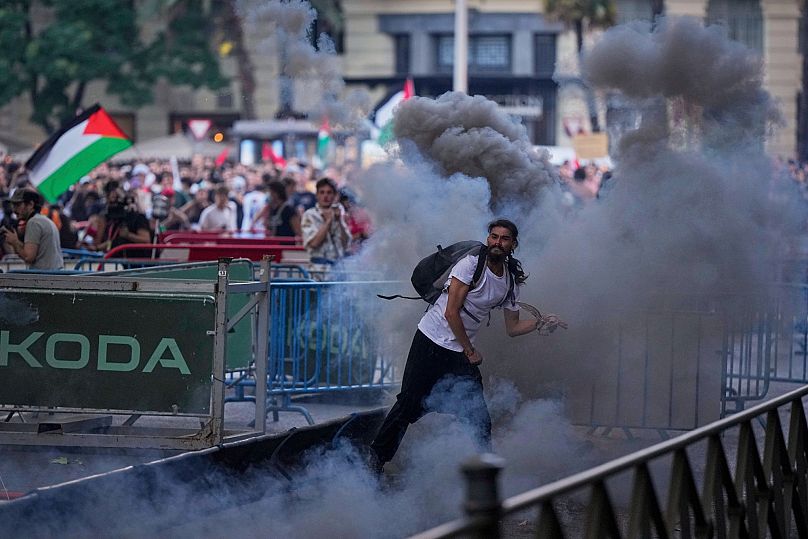
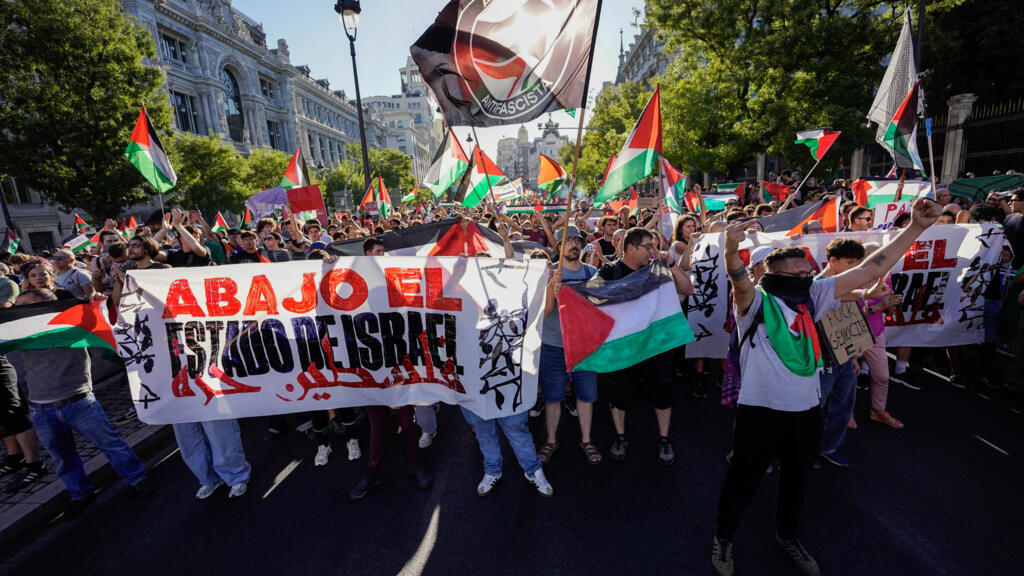
Pro-Palestinian protesters invade the course of the 21st and final stage of the Vuelta in Madrid on September 14, 2025. © Guillermo Martinez, Reuters
02:14


Spanish Prime Minister Pedro Sanchez called Monday for Israel to be barred from international sport over the Gaza war, as it emerged his government had also cancelled an $825 million military contract with the country.

Sanchez expressed "deep admiration" for thousands of protesters who forced the halt of the final stage of the Vuelta a Espana, one of the world's biggest cycling races, in Spain on Sunday.

He said Israel should be penalised just as Russia was over its invasion of Ukraine – angering Israel, which had a team in the race, as well as Spanish conservatives.

“Our position is clear and categorical: as long as the barbarity continues, neither Russia nor Israel should participate in any international competition," said Sanchez.

The Spanish leader has become one of Europe's fiercest critics of Israel's actions in Gaza, where the UN says Palestinians face starvation.

Read moreIn a divided Europe, Spain emerges as a champion of Palestinian statehood

"Sports organizations should ask themselves whether it's ethical for Israel to continue competing internationally," said Sanchez.

"Why was Russia expelled after invading Ukraine, yet Israel faces no expulsion after invading Gaza?"

An official document seen Monday by AFP meanwhile showed the Spanish government had cancelled a contract worth nearly 700 million euros ($825 million) for Israeli-designed rocket launchers.

Last week Sanchez's government announced measures aimed at stopping what it called "the genocide in Gaza".


'Shame for Spain'


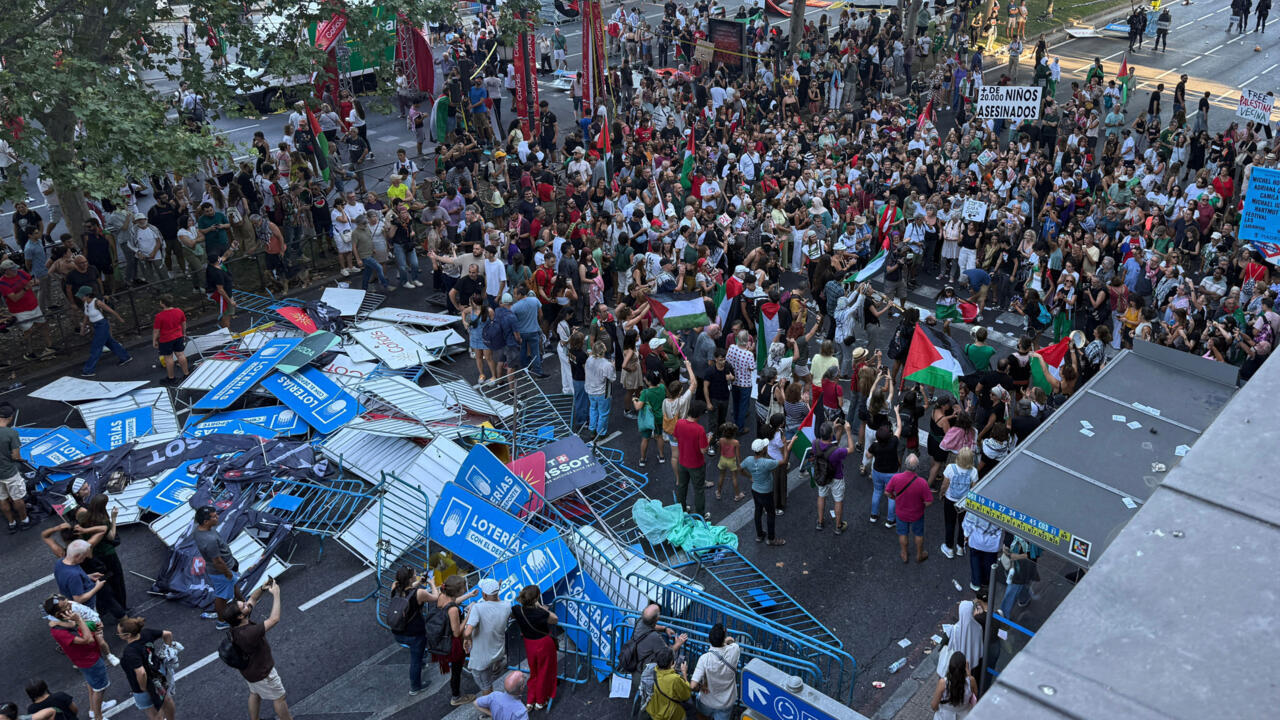
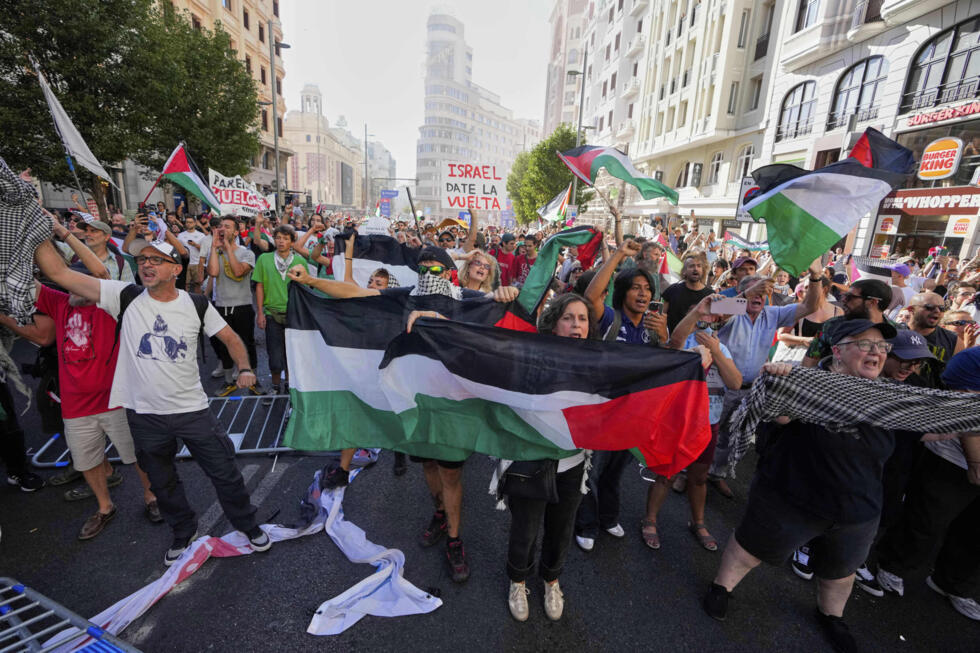
Around 100,000 protestors gathered for Sunday's final stage of the Vuelta which was cut short around 60 kilometres (40 miles) from the finish in central Madrid. There were some clashes with police.

Protesters denounced the participation of the Israel-Premier Tech team, privately owned by Israeli-Canadian property developer Sylvan Adams.

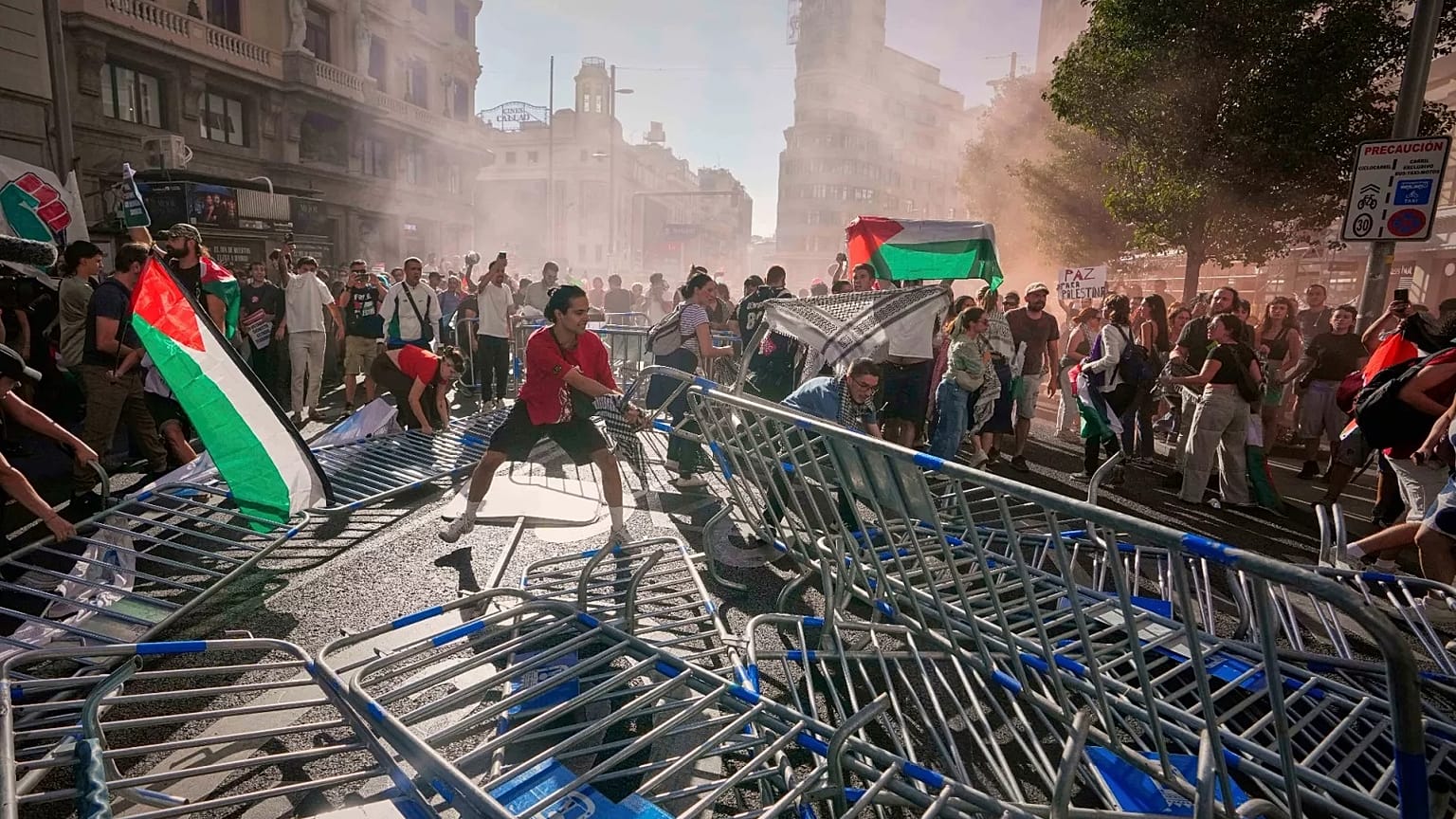
On Sunday protesters pushed over barriers and stood in the road where cyclists were due to pass. Police initially intervened at one point on the route, but ultimately allowed protesters to occupy the road peacefully.


Protesters block the road in an attempt to disrupt the final stage of the Vuelta on September 14, 2025. © Manu Fernandez, AP

Israeli Foreign Minister Gideon Saar on Sunday accused Sanchez of "encouraging protesters to take to the streets", calling his government a "shame for Spain".

His comments mirrored criticism from Spain's conservative opposition Popular Party (PP).

"The government has allowed and induced the non-completion of the Vuelta and, in this way, an international embarrassment televised worldwide," PP leader Alberto Nunez Feijoo wrote on X.

Spain's Federation of Jewish Communities (FCJE) condemned what it called the justification of violence in the protests and the spreading of hostility toward the country's roughly 45,000 Jews.

Tour de France doubts

Javier Guillen, director of the Vuelta race, told a news conference on Monday the disruptions were "absolutely unacceptable. I regret the image it gave (to the world) and it should not be repeated."

Cycling's global governing body (UCI) on Monday said it "regretted" the Spanish government's support for the demonstrations, which "could call into question Spain's ability to host major international sporting events".

The disruptions raised questions about possible changes to the 2026 Tour de France, scheduled to start in Barcelona.

"It's obvious that since this Vuelta, international organisations will have to take decisions," Guillen said.

"I hope it's all sorted (by the Tour de France) and the conflict in Gaza has finished, not just for sport but for humanitarian reasons."


Arms contract cancelled


The war was sparked by Hamas's October 7, 2023 attack on Israel, which resulted in the deaths of 1,219 people, most of them civilians, according to an AFP tally of official figures.

Israel's retaliatory campaign in Gaza has killed at least 64,905 people, also mostly civilians, according to figures from the health ministry that the United Nations considers reliable.

The Spanish measures announced last week over Gaza included a ban on military equipment sales or purchases with Israel.

The cancelled arms contract revealed Monday was awarded to a consortium of Spanish companies and involved the purchase of 12 SILAM rocket launcher systems derived from the PULS platform made by Israeli firm Elbit Systems, according to the International Institute for Strategic Studies' Military Balance.

Spanish Culture Minister Ernest Urtasun said Monday that Spain should boycott next year's Eurovision Song Contest if Israel takes part, joining other European nations threatening to pull out.

(FRANCE 24 with AFP)

Spain's PM Sánchez calls for Israel to be banned from sports events over war in Gaza


"Until the barbarity ends, neither Russia nor Israel should be in any international competition."


Copyright AP Photo

By Javier Iniguez De Onzono & Gavin Blackburn
Published on 15/09/2025 - EURONEWS

Speaking to members of his Socialist Party, Sánchez said Israel, like Russia, should not be allowed to compete in international sports events because of its military campaign in Gaza.

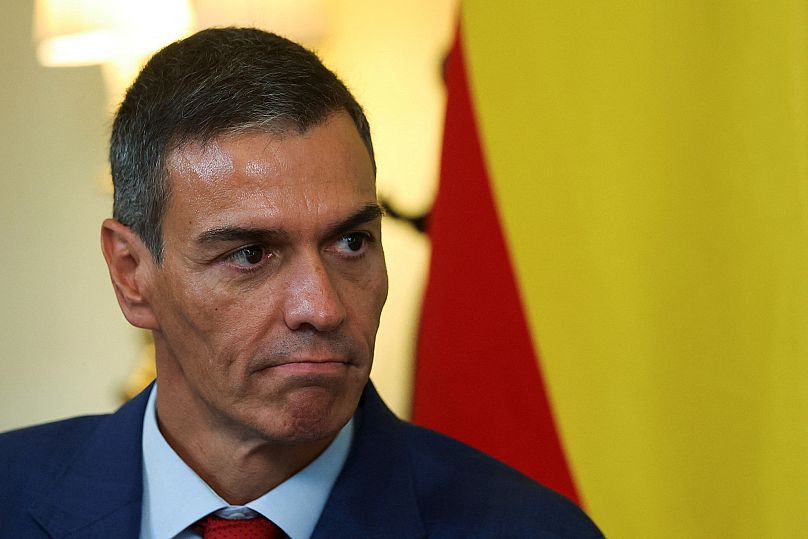
Spain's Prime Minister Pedro Sánchez called for Israel to be banned from sports events on Monday after pro-Palestinian activists disrupted the final stage of the Vuelta cycle race in chaotic scenes in Madrid.

Tensions between the two countries have escalated in recent weeks as Spain's left-wing government expressed support for protesters who interrupted several stages of the Vuelta, including Sunday's final stage in Madrid, because an Israeli team was taking part.

Speaking to members of his Socialist Party, Sánchez said Israel, just like Russia, should not be allowed to compete in international sports events because of its military campaign in Gaza.

"The sports organisations should consider whether it’s ethical for Israel to keep participating in international competitions. Why expel Russia after the invasion of Ukraine and not expel Israel after the invasion of Gaza?" Sanchez asked.

"Until the barbarity ends, neither Russia nor Israel should be in any international competition."

Spanish Prime Minister Pedro Sánchez looks on during a meeting with British Prime Minister Keir Starmer at 10 Downing Street, 3 September, 2025 AP Photo

Sánchez spoke a day after Sunday's final stage of the Vuelta was cut short when pro-Palestinian protesters opposing the participation of Israeli team Israel Premier Tech threw barriers onto the road and clashed with police near the finish line in the Spanish capital.

Authorities said two people were arrested and 22 injured, none of them seriously.

The Spanish government had already expressed sympathy with the protesters and suggested that the Israel Premier Tech team should have withdrawn from the three-week-long race that became a diplomatic battleground.

The team removed its name from its uniforms but remained in the race until the end despite protesters' calls for it to be expelled.

Sánchez slammed by Israel


Israel's foreign minister Gideon Sa’ar responded to Sánchez's comments by calling him an "antisemite and a liar."

"Did Israel invade Gaza on Oct. 7th or did the Hamas terror state invade Israel and commit the worst massacre against the Jews since the Holocaust?" he said in a post on X.

Madrid's conservative mayor, José Luis Martínez-Almeida, also criticised Sánchez and described Sunday's events as a sad day for the Spanish capital.

Danish rider Jonas Vingegaard, who was leading the overall classification going into the final stage, was declared the winner of the Vuelta but the customary podium ceremony was cancelled.

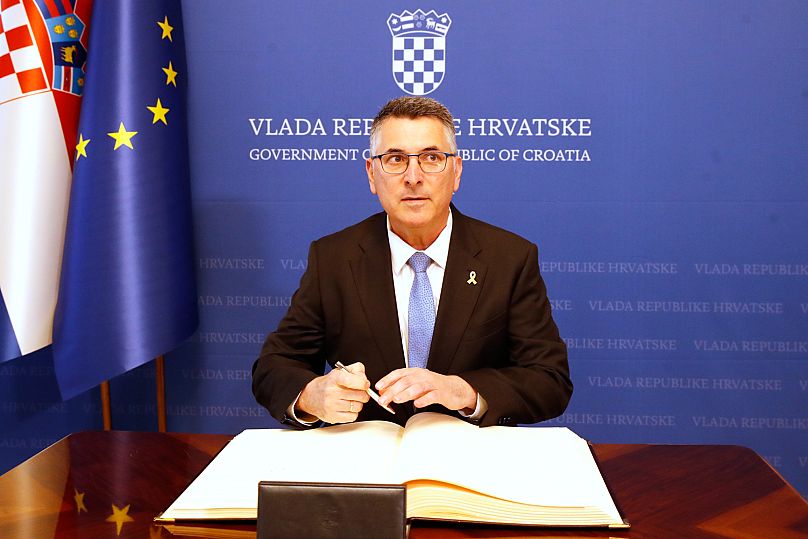
Israels's Foreign Minister Gideon Sa’ar signs a visitors book at the government building in Zagreb, 9 September, 2025 AP Photo

"It's a pity that such a moment of eternity was taken from us," Vingegaard said. "Everyone has the right to protest, but not in a way that influences or endangers our race."

The teams reportedly improvised a private podium ceremony later so riders could celebrate.

Danish Prime Minister Mette Frederiksen also condemned the protesters for "spoiling" the race and criticised Sánchez for "praising" the protests.

"Instead I want to praise the athletes and everyone who doesn't spoil things for others," she wrote on Instagram.

Vuelta race director Javier Guillén defended the decision to let the Israeli team stay in the race.

Protesters block the road in an attempt to disrupt the La Vuelta race, 14 September, 2025 AP Photo

"The Vuelta's position was clear, we had to abide to the norms of the International Cycling Union. It's the UCI that regulates the right of admission to the race," Guillén said at a news conference Monday.

"We never got into any other type of debate. All we wanted to do was to be able to finish the race with normalcy and that wasn't possible."

Spain has been at the forefront of Western efforts to hold Israel to account for the escalating death toll in Gaza.

A number of countries, including the UK and France, have said they plan to recognise a Palestinian state at the UN General assembly and the European Commission's president Ursula von der Leyen called for scaling back Europe’s trade ties with Israel.

But Europe remains divided on its stance toward Israel and its limited sanctions and condemnations so far have had little effect.


Politicians trade barbs as Madrid protests curtail La Vuelta's final fiesta

Political fall-out continued in Spain on Monday after more than 100,000 pro-Palestinian protesters gathered in Madrid, forcing organisers to crop Sunday's final stage of La Vuelta. It was just the latest in a series of interruptions to one of world's most prestigious cycling races after the Tour de France.


Issued on: 15/09/2025 - 

Around 100,000 pro-Palestinain demonstrators took to the streets of Madrid during the final stage of cycling race La Vuelta. AFP - OSCAR DEL POZO

Two people were arrested and around 20 injured in scuffles with authorities as demonstrators occupied the route at several points in the Spanish capital in protest at the presence of the Israel Premier Tech team in the three-week event.

Jonas Vingegaard claimed his first La Vuelta crown as a Visma–Lease a Bike rider after event organisers abandoned the 103.6km 21st stage between Alalpardo and Madrid with 50km remaining.

Vingegaard, a two-time winner of the Tour de France, completed the 3,000km course in 74 hours 20 minutes and 28 seconds.

Joao Almeida from Portugal, a cyclist for the UAE Team Emirates XRG, was 76 seconds behind and Britain's Tom Pidcock was third. The Q36.5 rider finished three minutes and 11 seconds off the pace

The trio celebrated their feats at the 80th edition of the race in a hotel car park away from the crowds in the central plazas.

Jonas Vingegaard added the 2025 La Vuelta – Tour of Spain – to his two crowns at the Tour de France. AFP - OSCAR DEL POZO

"It’s a pity that such a moment of eternity was taken from us," Vingegaard said. "I’m really disappointed about that.

"I was looking forward to celebrating this overall win with my team and the fans. Everyone has the right to protest, but not in a way that influences or endangers our race."

As the riders lamented the disrupted conclusion, politicians from Spain and Israel became embroiled in a row over the behaviour of protesters.

Speaking during a Socialist Workers' party rally in the southern city of Malaga, Spanish Prime Minister Pedro Sanchez said: "Our respect and recognition for the athletes and our admiration for the Spanish people who are mobilising for just causes like Palestine."

Alberto Nunez Feijoo, leader of the opposition Popular Party, lashed out at Sanchez.


Ways to protest

"The head of the government is proud of the behaviour of a few who, to show their support for Gaza, threw barriers at the national police (...) Not me. I defend freedom of expression as long as it does not involve violence or unrest."

Madrid mayor José Luis Martínez-Almeida also criticised Sanchez and described Sunday's events as a "sad day" for the Spanish capital.

Israel's foreign minister Gideon Saar posted on social media that Sanchez and his government were a disgrace to Spain.

"He encouraged demonstrators to take to the streets," Saar said. "The pro-Palestinian mob heard the incitement messages – and wrecked the La Vuelta cycling race."

Yolanda Diaz, Spain's labour minister, also waded into the spat. "Spanish society does not tolerate the normalisation of the genocide in Gaza in sporting or cultural events,’" she said. "Our society is an example of dignity."

Oscar Lopez, the minister of public service, added: "The fact that the people of Madrid are protesting against genocide does not damage Spain's image. On the contrary (...) I regret it for La Vuelta, but I regret it even more for the hundreds of thousands of Palestinians who are being massacred."

The 2025 La Vuelta has been hit by protests since it started in Turin in Italy on 23 August. Protesters carrying Palestinian flags slowed down Israel-Premier Tech riders during the fifth stage in Figueres on 27 August.

Stage chalked off

On 3 September, the 11th stage in Bilbao was chalked off due to protests leading the UCI – world cycling's governing body – to issue a statement calling for calm.

"The UCI reiterates the fundamental importance of the political neutrality of sports organisations within the Olympic Movement, as well as the unifying and pacifying role of sport," it said.

"Major international sporting events embody a spirit of unity and dialogue, transcending differences and divisions.

"In this sense, the UCI reaffirms its commitment to the political neutrality, independence, and autonomy of sport, in accordance with the founding principles of the Olympic Movement.

"The UCI expresses its solidarity and support for the teams and their staff as well as the riders, who should be able to practise their profession and pursue their passion in optimal conditions of safety and serenity."

Despite the plea, incidents continued. On 7 September during the 15th stage between A Veiga/Vegadeo and Monforte de Lemos, a man carrying a Palestine flag caused a crash when he ran towards the road as riders approached. Javi Romo pulled out the next day due to injuries he sustained after his fall.

(With newswires)


GOOD NEWS

UN says ozone layer is healing, hole could disappear within decades


The Earth's protective ozone layer is on track to fully recover by mid-century, according to a UN report released Tuesday. The bulletin hailed the success of international agreements like the Montreal Protocol, crediting them with sharply reducing the use of ozone-depleting chemicals and slowing the annual growth of the Antarctic ozone hole.


Issued on: 16/09/2025 - 
By: FRANCE 24


In this NASA false-color image, the blue and purple shows the hole in Earth's protective ozone layer over Antarctica on Oct. 5, 2022. © NASA via AP


The Earth's protective ozone layer is healing and the hole should fully disappear in coming decades, the UN said Tuesday, hailing the success of concerted international action.

A fresh report from the UN's World Meteorological Organization highlighted that the ozone hole over the Antarctic was smaller in 2024 than in recent years, in what it said was "welcome scientific news for people's and planetary health".

"Today, the ozone layer is healing," United Nations chief Antonio Guterres said in the statement.

"This achievement reminds us that when nations heed the warnings of science, progress is possible."


The WMO said as it published its Ozone Bulletin 2024 that the declined depletion "was partially due to naturally occurring atmospheric factors which drive year-to-year fluctuations".

But, it stressed that the long-term positive trend witnessed "reflects the success of concerted international action".

The bulletin was issued to mark World Ozone Day and the 40th anniversary of the Vienna Convention, which first recognised stratospheric ozone depletion as a global problem.

That 1975 convention was followed by the Montreal Protocol, signed in 1987, which aimed to phase out ozone-depleting substances found primarily in refrigeration, air conditioning and aerosol sprays.

To date, that agreement has led to the phase-out of over 99 percent of the production and consumption of controlled ozone-depleting substances, the WMO said.

"As a result, the ozone layer is now on track to recover to 1980s levels by the middle of this century, significantly reducing risks of skin cancer, cataracts, and ecosystem damage due to excessive UV exposure," it said.

The bulletin determined that the depth of the ozone hole, which appears over the Antarctic every spring, had a maximum ozone mass deficit of 46.1 million tonnes on September 29 last year -- below the 1990-2020 average.

WMO highlighted a relatively slow onset, with delayed ozone depletion observed through the month of September, followed by a relatively rapid recovery after the maximum deficit was reached.

"This persistent later onset has been identified as a robust indication of initial recovery of the Antarctic ozone hole," the bulletin said.

The WMO and the UN Environment Programme co-sponsor a scientific assessment of ozone depletion every four years.

The most recent assessment in 2022 indicated that, if current policies remain in place, the ozone layer should recover to 1980 values -- before the hole appeared -- by around 2066 over the Antarctic, by 2045 over the Arctic, and by 2040 for the rest of the world.

(FRANCE 24 with AFP)
MEPs call on European Commission to drop energy purchase promise in EU-US trade deal


Copyright AP Photo

By Peggy Corlin
Published on 15/09/2025 - EURONEWS

A letter is currently circulating within the European Parliament denouncing the European Commission’s commitment to purchase $750 billion worth of energy products from the US.


A French liberal MEP has gathered signatures from 20 other lawmakers for a letter seen by Euronews calling on the European Commission to review its commitment made under the EU-US trade agreement to purchase US energy.

In the document— soon to be sent to Commission President Ursula von der Leyen, Trade Commissioner Maroš Šefčovič, and Energy Commissioner Dan Jørgensen—the MEPs led by Christophe Grudler of Renew call on the EU executive to reconsider its pledge to buy $750 billion worth of US energy products over the next three years.

These products include liquefied natural gas (LNG), oil, nuclear fuels, and small modular reactors (SMRs). The signatories argue the deal will undermine the EU’s climate goals, industrial competitiveness, and strategic sovereignty.

“Increasing LNG imports from US shale gas directly undermines our climate agenda and our methane emissions regulation,” the letter says, adding: “LNG is highly polluting when liquefied, shipped across the Atlantic and regasified. Such dependence is a climate time-bomb.”

The initiative was launched by Christophe Grudler, a French MEP from the liberal Renew group.

The letter also warns that beyond energy concerns, the deal risks exposing the EU to “political blackmail”, the US demanding changes to EU climate policies, including the Carbon Border Adjustment Mechanism, under which the bloc will apply levies on the carbon footprint of foreign imports from 1 January 2026.

The energy purchase commitment forms part of the EU-US agreement reached over the summer.

Some MEPs view the arrangement as deeply unbalanced, given that the US continues to impose 15% tariffs on EU goods, while the EU has agreed to make major investments in the US, including in the energy and defence sectors.
'Economic imbalance'

In their letter to the Commission, MEPs also slam what they describe as the “economic imbalance” created by the pledge to purchase $250 billion's worth of energy over three years.

The letter describes this figure as “astronomical” adding: “To put this in perspective, the entire Competitiveness Fund proposed in the MFF amounts to €362 billion over seven years. How can we ask European companies to massively buy from the US while urging them to strengthen our competitiveness at home?”

The inclusion of US small modular reactors in the deal has also raised concerns among MEPs.

“At a time when the EU is building its own SMR supply chain, opening the door to US competitors is total nonsense.”

They further stress that commercial decisions “should remain the prerogative of companies, not be preempted by political pledges.”

Trump's fossil fuel agenda challenged in youth climate suit

Missoula (United States) (AFP) – Life, liberty and the right to a stable climate?


Issued on: 16/09/2025 - FRANCE24

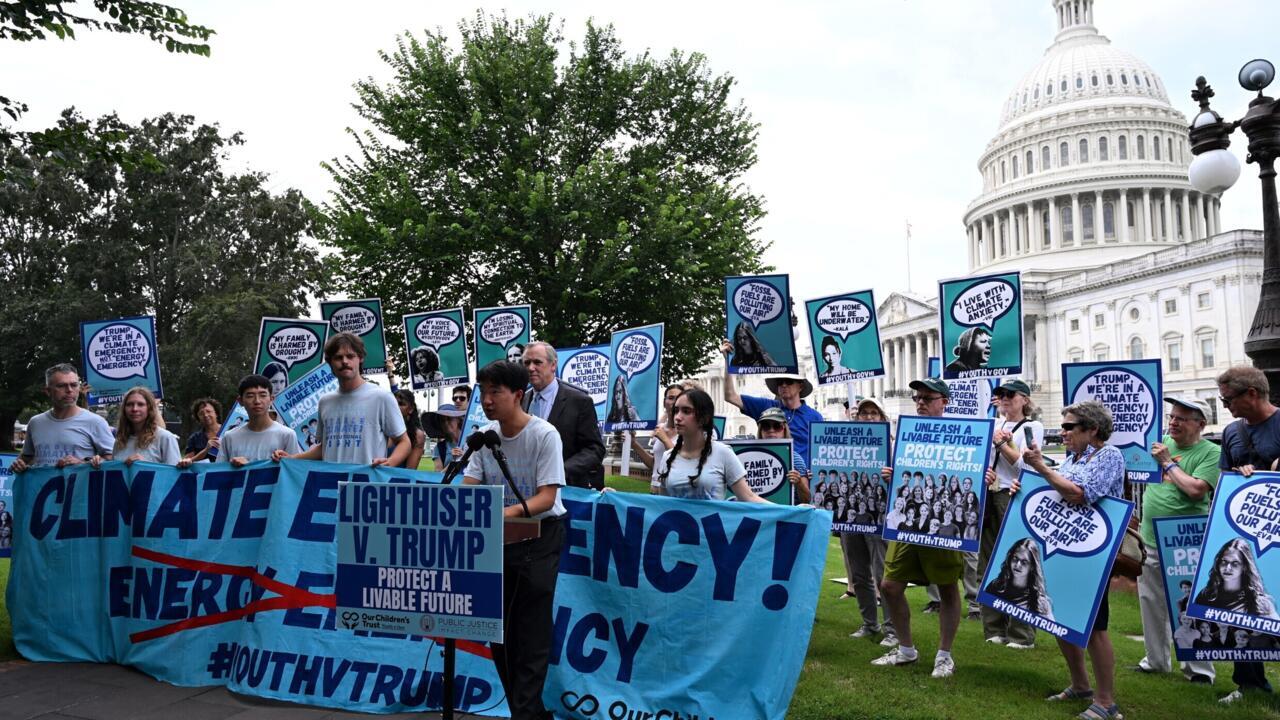
Our Children's Trust hosts a press conference pushing to support a stable climate and to back plaintiffs suing the Trump administration at the US Capitol in Washington, DC, on July 16, 2025 © Alex WROBLEWSKI / AFP/File

A group of young Americans say President Donald Trump is trampling their inalienable rights through an aggressive push for fossil fuels and a crusade against federal climate science -- and on Tuesday, a rural courtroom in Missoula, Montana will be their stage in a closely watched showdown.

Lighthiser v. Trump is emblematic of a growing global trend of legal action as a tool to push action on planetary warming amid political inertia -- or outright hostility.

"It's very intimidating to think about my future," lead plaintiff Eva Lighthiser recently told AFP in Washington, where she and other plaintiffs represented by the nonprofit Our Children's Trust recently traveled to lobby lawmakers.

The 19-year-old from Livingston, Montana, described smoke-choked skies, relentless floods, and her family's climate-driven relocation as "a lot to reconcile with, as somebody who's just entering adulthood."

Over two days of hearings, she and 21 co-plaintiffs -- all young adults or minors -- will testify about their health and other harms they have endured from the Trump administration's actions.

At issue are three executive orders that "unleash" fossil fuel development and curb the electric vehicle market; invoke emergency powers to accelerate drilling; and designate coal a "mineral," granting it priority status for extraction.

The plaintiffs also allege that scrubbing climate science from federal research has obscured the risks from global warming.

Their lawyers have called on several expert witnesses, including climate scientists, a pediatrician and even former senior White House official John Podesta, to weigh in on the legality of the directives at issue.

"This is really the first time plaintiffs have been able to put on live, cross-examined testimony against the federal government about how it is causing the climate crisis and injuring young people," Andrea Rogers, a lawyer with Our Children's Trust, told AFP.

A long road

The plaintiffs are seeking a preliminary injunction that could open the door to a full trial.

The federal government, joined by 19 conservative-leaning states and the territory of Guam, wants the case thrown out.

Most observers give the youths long odds. Judge Dana Christensen, an Obama appointee with a record of pro-environment rulings, is presiding.

But even if the plaintiffs notch a win, the case would then almost certainly land before the conservative-dominated Supreme Court.

"We don't have strong judicial precedent for there being a constitutional right to a clean environment at the federal level," Michael Gerrard, a professor of environmental law at Columbia University told AFP.

"They're trying to frame it as a matter of substance or due process, but that would require novel rulings from the courts to apply that to climate change," he continued, adding: "This Supreme Court is more about taking away rights than granting them, unless you're a gun owner."

Still, the legal team hopes momentum is building in the wake of recent state-level victories.

In 2023, a Montana judge sided with young plaintiffs who argued ignoring climate impacts when issuing oil and gas permits violated their constitutional right to a clean environment.

A year later, youth activists in Hawaii reached a settlement requiring the state to accelerate decarbonization of its transport sector.

But the record has proven bleak at the federal level.

The most prominent case was filed in 2015, Juliana v. United States, and eventually got dismissed after the Supreme Court refused to hear an appeal earlier this year.

The new suit argues that the government is violating due process by stripping citizens of fundamental rights, overstepping executive authority under laws like the Clean Air Act, and breaching its duty under the Fourteenth Amendment by knowingly worsening climate risks.

Gerrard said it would be intriguing to see whether the government will try to contest the factual claims brought by the plaintiffs, or focus instead on legal arguments.

The government is expected to argue these are policy questions for elected officials, not by courts.

But Rogers argued it was the government straying from its lane.

"Whether the executive branch is violating the constitutional rights of young people -- that's precisely the kind of question courts have resolved for decades."

© 2025 AFP
Latest heatwaves, droughts, floods could cost Europe €126 billion by 2029

This summer’s heatwaves, droughts, and floods are expected to cost the European economy more than €120 billion in the long term, according to a new study.


Issued on: 15/09/2025 - RFI

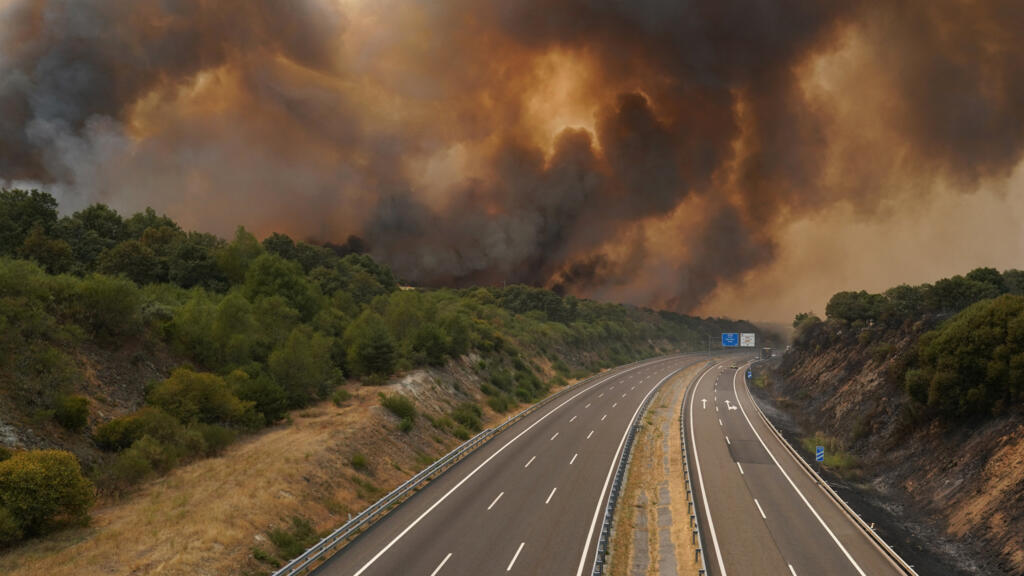
A wildfire burning near a highway in A Gudina, Spain, on 15 August 2025, when the whole country was on a heatwave alert. © Cesar Manso/AFP

"It’s estimated that between June and August 2025, extreme weather events in these regions will cost the economy nearly €43 billion and €126 billion by 2029," Sehrish Usman from the University of Mannheim, the study's lead author, told RFI.

In total, experts calculated that around 100 heat waves, almost 200 droughts and more than 50 floods hit various regions of Europe.

The researchers did not only account for direct losses such as the destruction of roads or crops, they also looked at the long-term impact.

"A heatwave, for example, reduces both working hours and productivity, affects people’s health, and influences investment in the region, employment, demographics – even sectors like tourism," Usman said.


France, Spain, and Italy were some of the worst affected countries, and each already faces over €10 billion of losses this year, which could exceed €30 billion in the medium term.

The study’s authors warn that their figures are likely an underestimate, as they do not fully reflect the compounding effects of simultaneous events – like heatwaves and droughts, which often occur together – nor do they include other impacts of climate change, such as wildfires.

The researchers stress the urgent need for adaptation wherever possible, and they call for a significant reduction in greenhouse gas emissions to try to curb the effects of global warming.

Severe drought across Europe

More than half of Europe and the Mediterranean basin was affected by drought in the first ten days of August, according to an analysis of European Drought Observatory (EDO) data, compiled by French news agency AFP.

The 51.3 percent figure is the highest level registered for the period of 1 - 10 August since data collection began in 2012.

Around half of the area has been affected by drought since mid-April 2025, a situation worse than the severe drought of the summer of 2022.

The Drought Observatory Indicator determined by the EU's Copernicus Climate Change Service uses satellite imagery to measure precipitation or rainfall, soil moisture and the state of vegetation

Last week, Copernicus reported the world's third-hottest August on record.

The average temperature globally for August was 1.29 degrees Celsius above pre-industrial times, marginally cooler than the monthly record set in 2023 and tied with 2024.

Such incremental rises may appear small, but scientists warn that is already destabilising the climate and making storms, floods and other disasters fiercer and and more frequent.

In its monthly bulletin, Copernicus said that western Europe experienced the continent's most pronounced above-average temperatures, with southwest France and the Iberian Peninsula particularly affected.

Spain suffered a 16-day heatwave that caused more than 1,100 deaths, according to the Carlos III Health Institute.

(with newswires)
AMERIKAN GESTAPO

White House vows to take on left-wing 'terror' movement after Kirk killing

NO SUCH A THING 
THEY ARE AFTER ANTIFA AGAIN

Washington (AFP) – Senior White House official Stephen Miller vowed Monday that the Trump administration would dismantle an alleged "vast domestic terror movement" that he linked to the killing of right-wing activist Charlie Kirk.

16/09/2025 - RFI

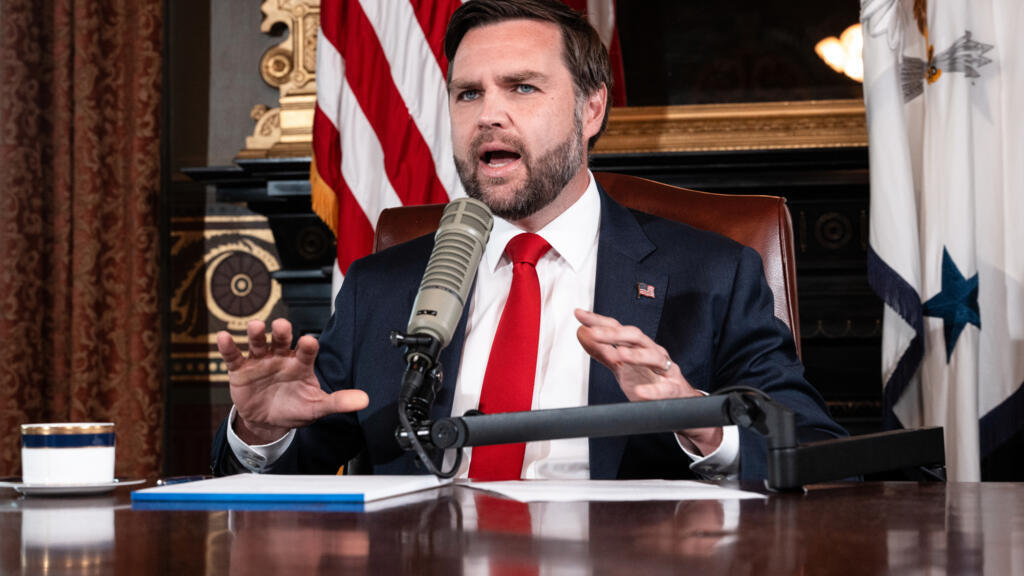
US Vice President JD Vance hosted Charlie Kirk's hugely influential podcast on Monday, showering praise on the right-wing activist © Doug MILLS / POOL/AFP

Miller, the White House deputy chief of staff, made the comments on Kirk's podcast, which Vice President JD Vance hosted on Monday.

"We are going to channel all of the anger that we have over the organized campaign that led to this assassination, to uproot and dismantle these terrorist networks," said Miller.

Miller and Vance both alleged the existence of a rising left-wing extremist movement, which they said the administration would now target.

"We are going to use every resource we have at the Department of Justice, Homeland Security and throughout this government to identify, disrupt, dismantle and destroy these networks and make America safe again for the American people," said Miller.

The remarks, which come before all details of Kirk's killing are fully known, have sparked alarm among some Trump critics that such a campaign could be used to quash dissent.

While Kirk was a vocal conservative, the United States has seen violence targeting members of both political parties in recent years, amid a sharp rise in polarization and easy access to firearms.

US President Donald Trump escaped two assassination attempts on the campaign trail last year, while a Minnesota Democratic lawmaker and her husband were shot dead by a masked gunman in June.

Two months earlier, a man attacked the home of Pennsylvania Governor Josh Shapiro, a prominent Democrat.

Kirk, a close ally of Trump, was shot Wednesday during a speaking event on a Utah university campus. He was the founder of the influential conservative youth political group Turning Point USA.

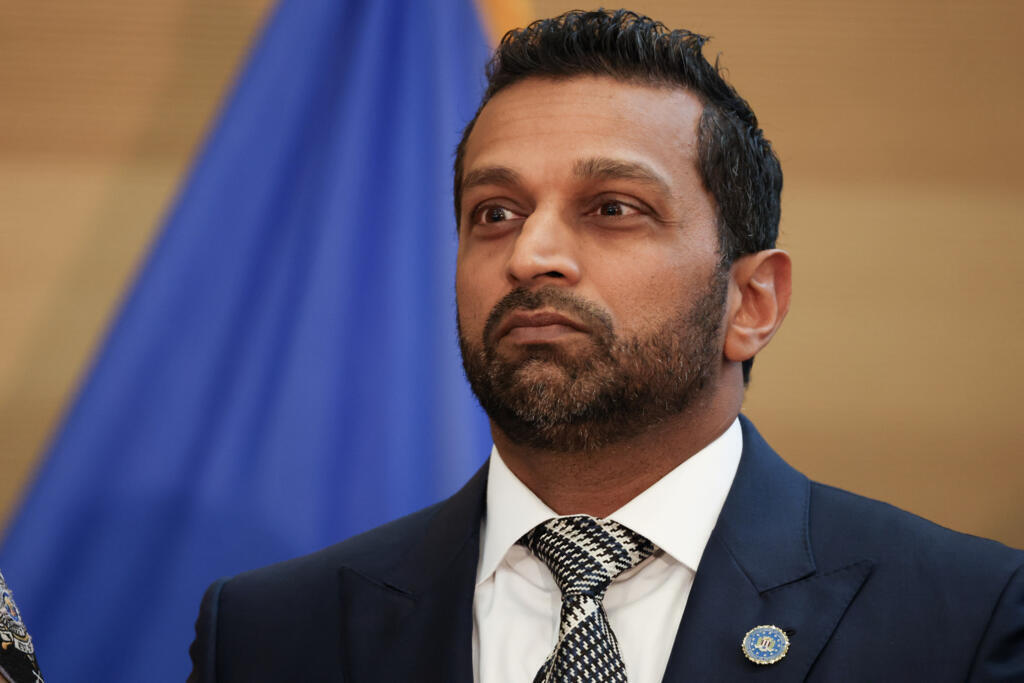
FBI Director Kash Patel has been heavily criticized in the US press for his handling of the investigation in its early hours © Patrick T. Fallon / AFP


On the podcast Monday, Vance was full of praise for a man he called "the smartest political operative I ever met."

"He was a critical part of getting Donald Trump elected as president, getting me elected as vice president," he said.

Trump will attend a memorial service for Kirk on Sunday at a stadium in Arizona.

On Monday, the president said he was considering designating "Antifa" a domestic terrorist organization and bringing organized crime charges against those raising funds for alleged "agitation."

Antifa -- short for "anti-fascist" -- is an umbrella term for diffuse far-left groups, and is often mentioned in right-wing talking points around violence at protests.

Trump has previously threatened to name Antifa a "domestic terrorist organization" in his first term, but never followed through.

While federal law enforcement includes combating domestic terrorism under its purview, the United States does not have a list of designated "domestic terrorist organizations."


DNA evidence

Earlier Monday, FBI Director Kash Patel said that DNA found at the scene of the murder had been matched to suspect Tyler Robinson, who was arrested Thursday after a 33-hour manhunt.

The 22-year-old is expected to be formally charged in the murder on Tuesday.

Authorities said the suspect used a rifle to shoot Kirk with a single bullet to the neck from a rooftop.

Patel also discussed a note that Robinson is believed to have written before the crime and later destroyed.

The note is "basically saying... 'I have the opportunity to take out Charlie Kirk, and I'm going to take it,'" Patel said on Fox News.

Kirk, a father of two, used his audiences on TikTok, Instagram and YouTube to build support for conservative talking points, including strong criticism of the transgender rights movement.

A polarizing figure, he often posted carefully edited clips of his interactions during debates at his many college events.

Utah Governor Spencer Cox on Sunday said Robinson was romantically involved with a transgender roommate and had "leftist ideology."

The Utah Governor's Office released photos of Tyler Robinson, the suspect in the shooting death of right-wing activist Charlie Kirk © - / Utah Governor's Office/AFP

Patel has been heavily criticized for his actions in the immediate aftermath of the shooting, including having quickly announced the arrest of a suspect, only to confirm they had been released two hours later.

On Monday, Patel defended his actions.

"Could I have worded it a little better in the heat of the moment? Sure. But do I regret putting it out? Absolutely not," he said.

Patel is expected at Congress on Tuesday to answer questions from lawmakers.

© 2025 AFP