Wednesday, September 24, 2025

TIK TOK APOCALYPSO

The last day of doomsday: What is the viral ‘RaptureTok’ trend?
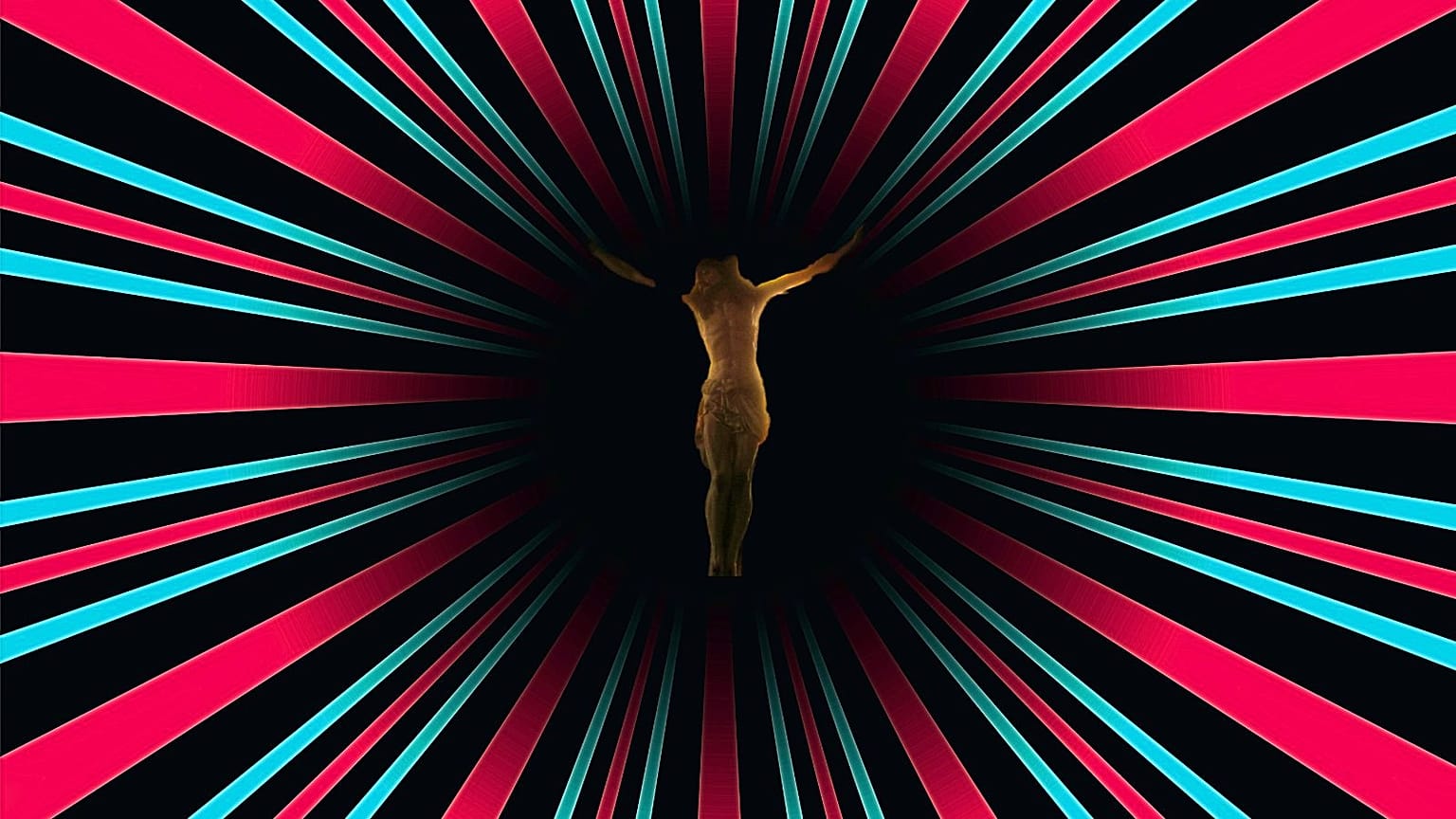
The last day of doomsday: What is the viral ‘RaptureTok’ trend?
Copyright Canva

By David Mouriquand
Published on 

TikTok has found its latest obsession, and if the doomsday prophecy doesn’t hurry up and materialise in the next few hours, there are going to be a lot of very disappointed people tomorrow...

If you’re reading this today, Wednesday 24 September 2025 could be the last day before the end of the world as you know it.

If you’re reading this tomorrow, you weren’t blipped out of existence and good luck with all the rebuilding. Please do better.

Confused? We’ve got you covered.

According to the more holy corners of TikTok, it has been prophesized that yesterday - or today, they couldn’t make their minds up on which one, so just go with it – is the day of the Rapture.

For the filthy heathens among you, that’s the long-awaited end-time event when Jesus Christ returns to Earth, resurrects all dead Christian disciples and brings all believers “to meet the Lord in the air.”

It wasn’t yesterday, clearly, so today’s the day... And turn off that R.E.M. song, this is serious.

This all stems from South African pastor Joshua Mhlakela, who claimed that the Rapture will occur on 23 or 24 September 2025. Mhlakela said that this knowledge came directly from a dream he had in 2018, in which Jesus appeared to him. Mhlakela reiterated all of this on 9 September in an interview with CettwinzTV and since then, the prophesy has become a viral sensation on TikTok.

Many individuals on the social media platform have taken this literally and very seriously, with more than 350,000 videos appearing under the hashtag #rapturenow - leading to the trend / popular subsection dubbed ‘RaptureTok’. 

Some videos mock the prophecy, but you don’t have to scroll for too long to find those who are completely convinced that it’s happening today.

There’s advice on how to prepare; tips on what to remove from your house should certain objects contain “demonic energy”; and testimonies of people selling their possessions. One man, who goes by the name Tilahun on TikTok, shared a video last month, in which he said he was selling his car in preparation for the big day. “Car is gone just like the Brides of Christ will be in September,” he said.

One woman in North Carolina was live recording yesterday from the Blue Ridge Mountains, fervently keeping an eye on any holy activity in the sky. Another claimed that her 3-year-old started speaking in Hebrew, thereby confirming that it’s all legit. 

Some more distressing videos include American evangelicals saying goodbye to their children for the last time... We won't share those, as they're actually quite depressing.

It’s hard to completely blame TikTok users for wanting the final curtain to drop, as things aren’t going too great down here on Earth. That being said, it’s worth noting that the Bible never actually mentions the Rapture; it’s a relatively recent doctrine that originates from the early 1800s, one which has gained traction among fundamentalist theologians – specifically in the US, where everything is finecivil conversation is alive and wellno one’s worried, and they’re all enjoying their “God-given freedoms”.

So, if the Rapture does come to pass, we here at Euronews Culture will be eating a whole concrete mixer full of humble pie. If it doesn’t, see you tomorrow, and do spare a thought for those who are going to be very disappointed on Thursday 25 September. 

And if extra-terrestrial beings followed Tara Rule’s advice (see below), thank you alien visitors for joining in on the fun. And if you could provide some much-needed guidance on how to do better down here, that would be grand.

Only a few more hours left to find out...


Written in Protest


Rapture, again: Why the end times never end

(RNS) — We need theologies that bring us deeper into the society’s pain, not dreams of an escape hatch.



(Photo by Mic Narra/Unsplash/Creative Commons)

Andre Henry
September 24, 2025
RNS

(RNS) — The end is near, again.

Hysteria and mockery rained down in equal measure after a South African pastor proclaimed Tuesday (Sept. 23) as the day of the rapture, a reference to the doctrine that Jesus will suddenly cause millions of Christians to vanish, triggering the final countdown to Judgment Day.

On social media, “#RaptureTok” showed believers selling their cars before the great departure. Others made jokes about Jesus’ punctuality, as the projected date arrived in different time zones.

RELATED: Antichrist or Armageddon? Peter Thiel rethinks apocalypse from Silicon Valley.

The rapture, however, is no laughing matter — not because it’s likely to ever come through for its prognosticators, but because even in its unreality it has serious real-world consequences. Rapture theology is racist theology. It upholds some of the worst injustices of human history. It’s time we left it behind.

Rapture theology became popular in the United States during a time of racial reckoning. Born decades before the Civil War, it didn’t take off in the states until the Reconstruction period, when the theology was championed by the ex-Confederate Cyrus Scofield, who continued to push the racist “Curse of Ham” doctrine long after it had outlived its popularity.

Some Christian leaders interpreted the post-Civil War racial revolution as the destabilization of society — in fact, just the white supremacist order to which they were accustomed — that is said to herald the rapture. The abolition of slavery, the establishment of birthright citizenship and the giving of the franchise to Blacks, along with the rising popularity of Darwinism and more liberal perspectives on the Bible, could all be read as signs of the end times.

The Civil War itself was horrific enough to convince Christians the world was beyond repair and to make the prospect of escape to heaven compelling. But end-times prophecy was also psychologically useful, in that it enabled white Christians to reframe the unpredictable and terrifying advancement of civil rights as something predictable: biblical prophecy. The white world as they knew it, built on the cornerstone of slavery, was ending, but no worries: The world is supposed to get worse before Jesus swoops in to save them, according to doctrine.

They applied the same principle to participating in the work of racial reckoning. In his 2008 book, “Race: A Theological Account,” J. Kameron Carter, a professor of religious studies at Indiana University, writes, “If Christian hope functions as an evacuation plan from history (rather than a call to repair its wounds), it risks colluding with the structures that wound in the first place.”

That seems to be what happened in U.S. history. Evangelical paragons such as Dwight L. Moody used rapture theology to discourage social action that would have further advanced racial reforms.

Moody’s revivals, theologian Nathaniel Grimes wrote, “prompted many to ‘forget earthy concerns.’ As Moody put it, ‘the moment a person becomes heavenly-minded and gets his heart and affection set on things above, then life becomes beautiful. … This shift toward heavenly-mindedness coincided with a drop in support for Reconstruction.”

Moody’s peers and predecessors used the same theological staff to jam the wheels of racial progress. “Only when Christ comes again will the little white children of Alabama walk hand in hand with little black children,” quipped Billy Graham after the Rev. Martin Luther King Jr.’s 1963 speech at the March on Washington.

The late John MacArthur parroted Moody almost verbatim in a 2017 interview about the Black Lives Matter movement, saying that when one becomes a Christian, “The object of life is no longer to fix past injustices, the object of life now is to proclaim Christ … once [people] come to Christ, all other issues fall away … and when the gospel changes your life, you go from social issues to spiritual issues.”

In short, rapture teaching is the bedrock of a theology of irresponsibility, popularized to pardon white Christians from the work of racial repentance and social repair. By this logic, Christian adherents had better stay out of the way of injustice and atrocity in order to hasten Jesus’ coming.

These theological ideas are at play in the genocide in Gaza today. Rapture theology is a pillar of Christian Zionism, which holds that a precondition of the end times is the Jews’ return to Israel, where they will accept Jesus as the true Messiah. Apart from the essential antisemitism of this scheme, rapture theology further perpetuates racism in justifying the ongoing dispossession and genocide of the Palestinian people as a necessary consequence of bringing about the Second Coming.

All of which prompts the question: Why do so many Christians cling so strongly to such a harmful idea?

Many will answer that the rapture is described in the Bible. Most of the passages cited in rapture doctrine, however, are misinterpretations, based on absurdly literal readings of biblical passages taken out of context. When Jesus says “one will be taken and the other left,” in the view of many Bible scholars, he’s talking about the imminent fall of Jerusalem in A.D. 70, not the end of the world. Similarly, the dreaded “mark of the beast” in the New Testament’s Book of Revelation was probably understood by its first-century audience as code for the Roman emperor Domitian, not Presidents Donald Trump or Barack Obama.

The famous Pauline passage that speaks of believers being “caught up” in the air to meet Jesus, even conservative scholars such as N.T. Wright have pointed out, comes as Paul is talking about people welcoming a dignitary and escorting them into town, and says nothing about believers going to heaven.

Those who use the Book of Revelation to prop up the rapture should read the book to the end, where God creates a new heaven and new earth and a new Jerusalem descends on it. Taken literally or figuratively, the text suggests that God’s apocalyptic vision, in the Christian tradition, is the restoration of our planet, not abandonment.

So, where does the rapture come from?


The rapture emerged in the 1830s in the visions of a Scottish girl named Margaret MacDonald, who dreamed that Jesus returned in two phases: first to take faithful Christians to heaven, then to return to Earth to deliver the full extent of divine wrath. Almost immediately, people began predicting when these visions would come true, leading most immediately to “the Great Disappointment” of 1844, when Baptist preacher William Miller led thousands of parishioners to sell their possessions.

RELATED: ‘Is this when we disappear?’ Rapture triggers haunt the Left Behind generation

Nothing good has come from this doctrine since, only disillusionment, trauma, abuse and more justification for systemic oppression. The cost in human suffering to hold on to this fiction is too high.

The earliest rapture teachings may not have intended to oppress anyone. As its history testifies, however, oppressors make quick use of the idea that the best God can do in a broken world is to offer an escape hatch. It excuses oppressors from repentance and those they oppress from struggle, the only real hope we have for social change.

We need theologies that bring us deeper into the society’s pain, that help us undo the lies that convince us that our destinies aren’t bound up together, and that give us a sense of agency to confront the systems of harm we live under together. The end we need isn’t the end of the world, but the end of indifference.



AUM DURGA KALI

What is Navaratri, the Hindu festival of nine nights?

(RNS) — Celebrations of Navaratri, which means ‘nine nights’ in Sanskrit, differ widely across Indian regions.


Indian women wearing traditional attire pose for pictures as they practice the Garba, a traditional dance of Gujarat state, during a rehearsal ahead of Navaratri, or nine night festival, in Ahmedabad, India, Sept. 15, 2025. (AP Photo/Ajit Solanki)

Richa Karmarkar
September 22, 2025


(RNS) — Monday (Sept. 22) marks the start of Navaratri, a vibrant, nine-night Hindu festival dedicated to the Divine Feminine in all her forms. Hindus will dedicate rituals to the goddess Durga — the “Mother Goddess” who embodies the feminine energy known as Shakti — in recognition of her victorious nine-day battle against the buffalo demon, Mahishasura.


In Hindu tradition laid out in the Devi Mahatmya, a third-century sacred text, each night is dedicated to the form of Durga that appeared as the battle raged, as her powers shifted from day to day in ways that helped Durga eventually defeat the demon. Night one’s Shailputri represents Durga’s courage and focus to begin the battle, whereas night seven’s Kalaratri is considered Durga’s most dark, fearsome warrior form.

Some Hindus celebrate all nine of Durga’s manifestations, while others divide the holiday into three parts, dedicated to the triad of goddess Durga, goddess Lakshmi and goddess Saraswati — representing power, prosperity and wisdom, respectively.

In all its iterations, Navaratri is seen as a time for men and women alike to recognize the role feminine power has played in their lives — the loving and compassionate caregiver, the steadfast and devoted supporter and the powerful and fierce protector.

In the Hindu diaspora, dancers and feminists celebrate the modern cultural significance of Navaratri

And just as with most Hindu holidays, celebrations of Navaratri (which means simply “nine nights” in Sanskrit) will differ widely across Indian regions.


A couple performs morning rituals in the River Ganges on the first day of the nine-day Hindu festival of Navaratri on the outskirts of Prayagraj, in the northern Indian state of Uttar Pradesh, India, on April 6, 2019. (AP Photo/Rajesh Kumar Singh)

In the western state of Gujarat, Navaratri is almost synonymous with Garba — the community folk dance that takes place in a circle around a clay lamp symbolizing the divine energy at the center of life. In some southern states, households create Golus, or tiered arrangements of dolls and figurines representing deities and mythological scenes, that they share with their neighbors.

In the north of India, many undergo a fast to deepen their spiritual practice and perform rituals for the young girls in their life known as kanya puja.

As for Bengalis in India’s east, Navaratri is the occasion for one of the region’s grandest festivals, Durga Puja, a community celebration when highly decorative Pandals, or temporary temples, are built to house elaborate idols of Durga and her family.

Shared among Hindus across India’s various regions is the celebration of community, through ritual, art, music and dance. In the Indian diaspora, it’s not uncommon for Navaratri’s rituals to be combined so that groups of different languages and cultures celebrate the holiday together.

For many Hindu women, Navaratri is a special time to connect with their own Shakti to celebrate their sisterhood with other women. Some women have taken to wearing a different color each day, aligning with the symbolic meaning of that day’s goddess. Others also celebrate World Bindi Day on the first day of Navaratri, an initiative that began in 2020 to honor the spiritual and cultural expression of the mark many Hindu women wear on their third eye, or ajna chakra.

At the end of the nine days comes Vijayadashami, also called Dussehra, marking the day Durga finally killed Mahishasura and restored the cosmic order of the universe. Many Hindus also celebrate Dussehra as the day Lord Ram defeated the demon Lord Ravana — the central battle of the Hindu epic Ramayana— and watch dramatic retellings of the epic known as Ramlila.

In both cases, these war stories and their remembrance serve as reminders to Hindu believers that good will always triumph over evil.


DURGA
 

BECOMES KALI


Mural unveiled at St. Patrick's Cathedral sends a message on immigration

NEW YORK (RNS) — ‘Some have asked me, are you trying to make a statement about immigration?’ said Cardinal Timothy Dolan. ‘Well, sure we are.’


People view a new mural painted by artist Adam Cvijanovic at St. Patrick’s Cathedral on Sept. 18, 2025, in New York. (RNS photo/Fiona Murphy)

Fiona Murphy
September 22, 2025

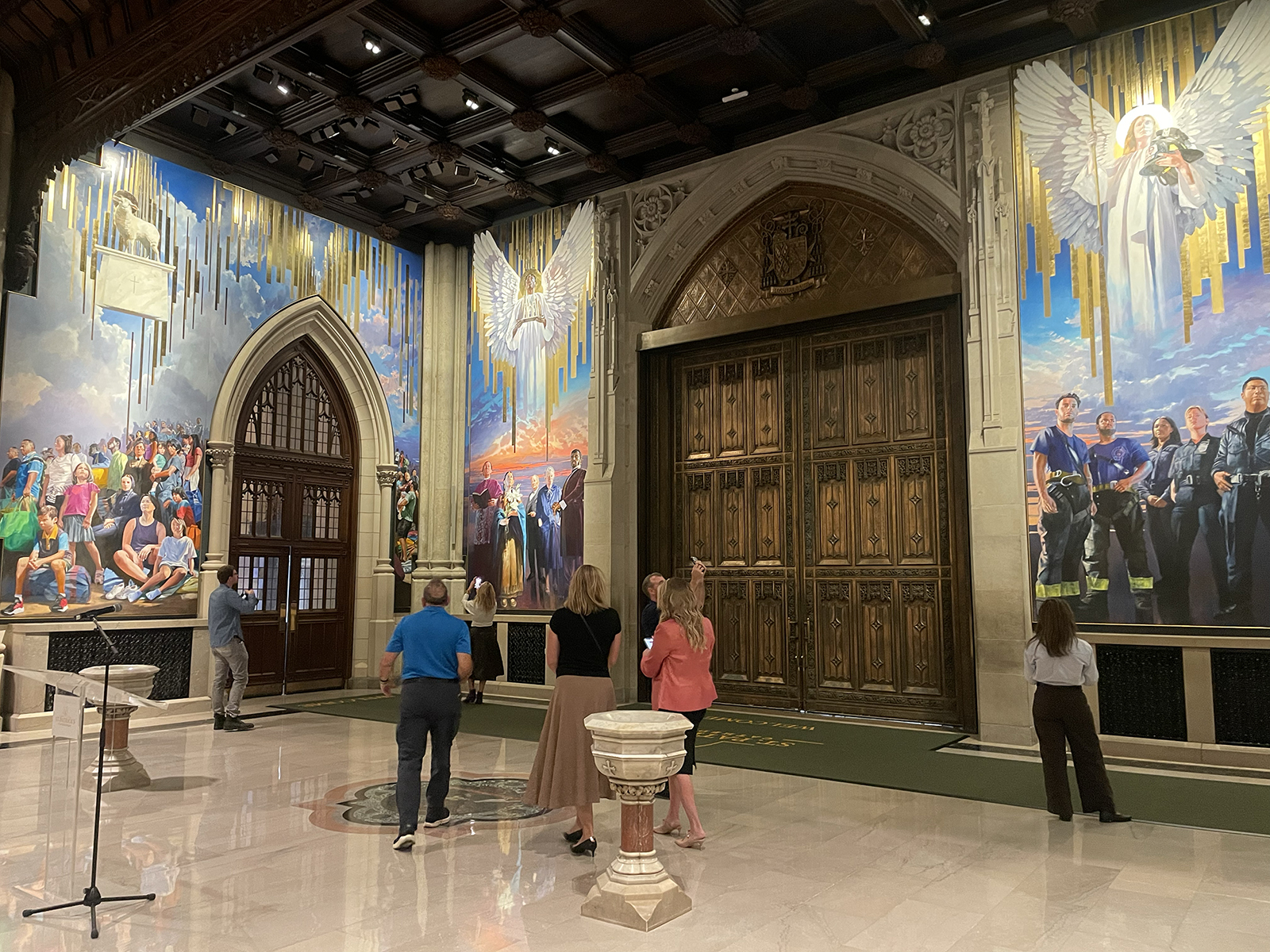
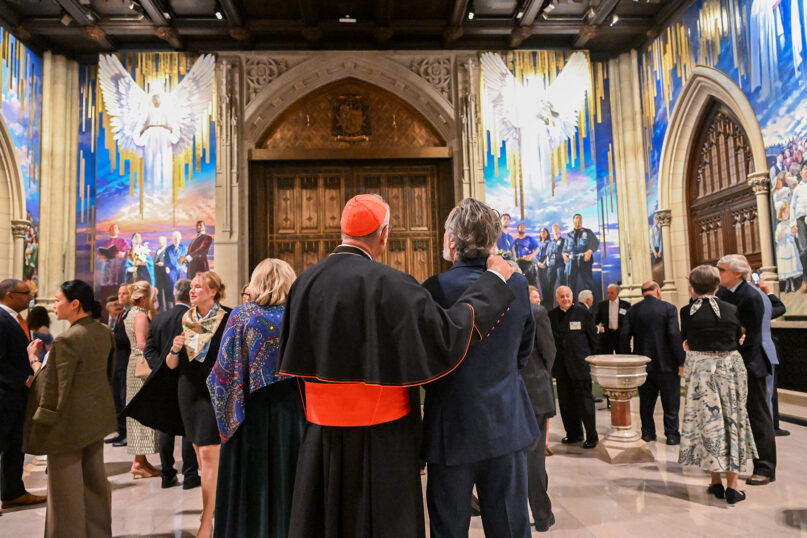
NEW YORK (RNS) — A 25-foot mural at St. Patrick’s Cathedral in Manhattan, unveiled last week and blessed during Sunday Mass (Sept. 21), honors generations of immigrants to New York, taking on a new meaning in today’s political climate.

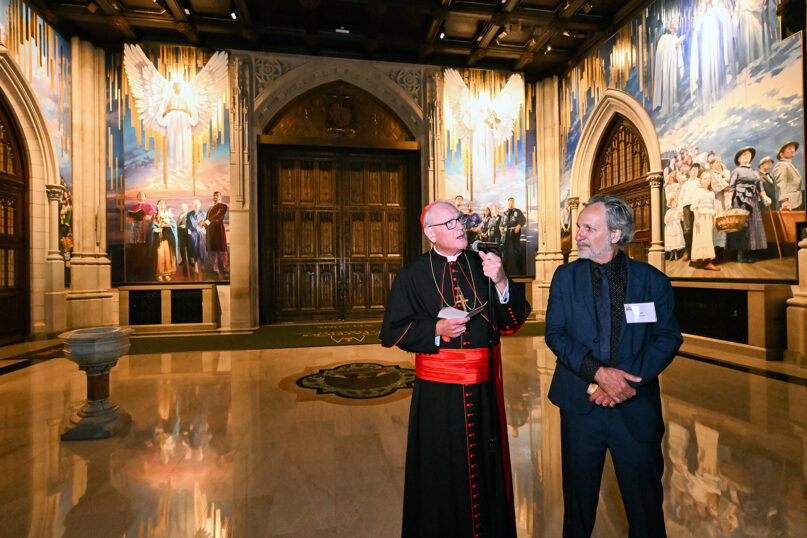
“Some have asked me, are you trying to make a statement about immigration?” said Cardinal Timothy Dolan, archbishop of New York, during a press conference on Thursday. “Well, sure we are.”

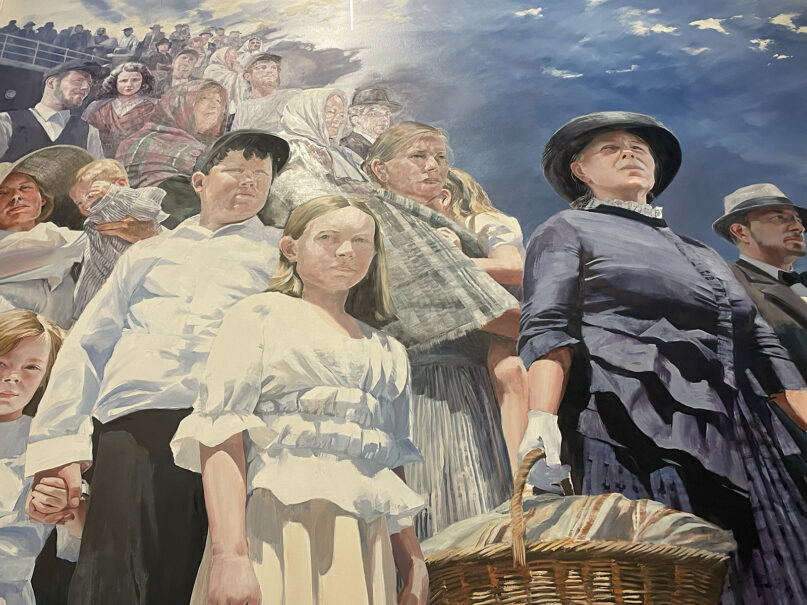
The mural, “What’s So Funny About Peace, Love and Understanding,” was two years in the making and spans the three-wall entrance of the 146-year-old cathedral. Created by Brooklyn-based painter Adam Cvijanovic, it features life-sized, realistic portraits of Irish immigrants fleeing famine in the 19th century, alongside contemporary Latino, Asian and Black immigrants, shown with backpacks and determined expressions. Mother Frances Cabrini, the first American citizen to be canonized and the patron saint of immigrants, is depicted among them.

Reporters from across New York and the United States crowded into St. Patrick’s on Thursday to snap photos of the new mural, a rare art commission for the historic cathedral. It comes as crackdowns on immigration and deportation raids have swept across the country as ordered by the Trump administration. Many people living in New York, a city home to millions of immigrants, wonder about the future of their communities.

Dolan’s mother, Shirley Jean Radcliffe Dolan, is captured in the painting among the Irish immigrants, though it was Dolan’s great-grandparents who arrived to New York from Ireland.

“That was a surprise to me,” Dolan said to reporters. “If you can’t pick her out, she’s the one with the Saks Fifth Avenue bag and the bottle of Jameson in the bag.”


Cardinal Timothy Dolan, archbishop of New York, left, with artist Adam Cvijanovic, unveils a new mural painted by Cvijanovic at St. Patrick’s Cathedral, Sept. 17, 2025, in New York. The mural, which is the largest permanent artwork commissioned for the cathedral in its 146-year history, celebrates the 1879 Apparition at Knock, Ireland, the faith of generations of immigrants to New York and the service of New York City’s first responders. (Diane Bondareff/AP Content Services for the Archdiocese of New York)

One of the panels on the Fifth Avenue side wall portrays five New York City first responders with an angel holding a firefighter’s helmet above them. Another shows historic Catholic leaders such as Archbishop John Joseph Hughes, the first Archbishop of New York, who initiated the construction of St. Patrick’s Cathedral; Dorothy Day, founder of the Catholic Worker movement; Pierre Toussaint, the Haiti-born philanthropist and former slave buried in the cathedral’s crypt; and Kateri Tekakwitha, the first Native American saint.

Dolan said the commission was inspired by the apparition at Knock, an apparition of Mary reported in County Mayo, Ireland, in 1879, a location the archbishop has visited numerous times.

“Immigrants are children of God,” Dolan said during the press conference. “The people of Israel in the Old Testament and the people formed by Jesus Christ have been challenged to always be warm and embracing for the immigrants. So, the fact that the church would mirror that, no surprise at all.”

Dolan has criticized anti-immigrant rhetoric and echoed support of the Catholic Church’s ministry to migrants, although he has seemingly maintained a cordial relationship with President Donald Trump. The cardinal sits on the national Religious Liberty Commission, which Trump established earlier this year.


Immigrants are featured in a panel of a new mural painted by artist Adam Cvijanovic at St. Patrick’s Cathedral, Sept. 18, 2025, in New York. (RNS photo/Fiona Murphy)

“If we look at the people in the pews in daily Mass, most people are immigrants,” the Rev. Enrique Salvo, the rector of St. Patrick’s Cathedral, told RNS. “Therefore, we have to see the dignity of the human person in everyone. No matter what the political viewpoints are, that we put (them) aside when we are encountering one on one.”

Cvijanovic, a self-taught painter from Massachusetts known for creating large historical landscapes, said that although the mural’s concept predates today’s political battles over migration, he is glad it speaks to the present moment.

“We didn’t know that this was going to happen quite like this,” Cvijanovic said. “But now, I feel truly grateful to be able to take a stand about it, and to give a place where people who are being told that they don’t belong, that they belong.”

In the mural, streams of gold leaf oil paint fall down from the heavenly realm onto those below, all of whom were modeled from real people. Even the Lamb of God, painted as a small lamb on the south wall to depict Jesus, was drawn based on a lamb in New Jersey, Cvijanovic said.

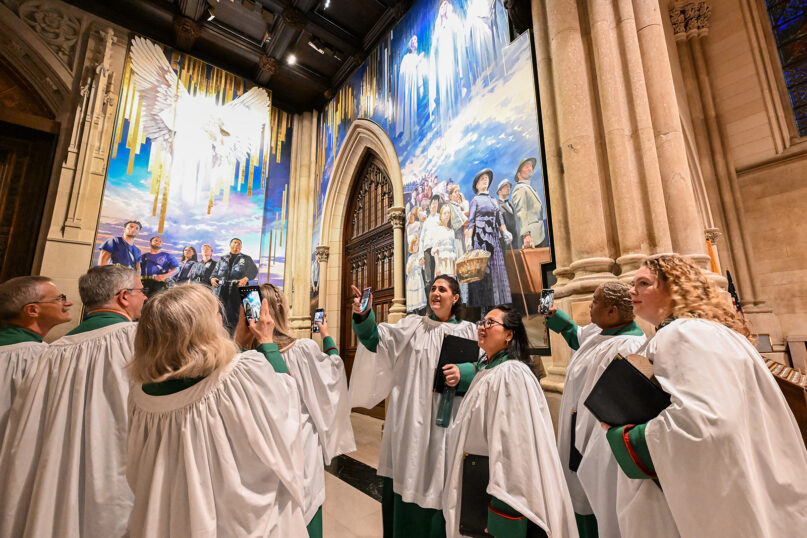
Choir members admire panels of a new mural painted by artist Adam Cvijanovic at its unveiling at St. Patrick’s Cathedral on Sept. 17, 2025, in New York. (Diane Bondareff/AP Content Services for the Archdiocese of New York)

Raised in the Eastern Orthodox tradition, Cvijanovic was inspired by his own religious background for the mural’s style, he said. Golden icon screens from the Byzantine church, which separated altars from congregations, have a clear influence on the piece.

“The Eastern Church influence is there, buried in it, translated into my interpretation of Catholic tradition and my interpretation of what New York needed right at the moment,” Cvijanovic said. The mural incorporates more than 5,000 sheets of gold.

Cvijanovic said that today, he practices his faith through his art. “The painting is a devotional act,” he said. “That’s how I pray, through paint.”

Kevin Conway, vice chairman of a global equity firm and the principal donor behind the mural, said he hopes New Yorkers see themselves reflected in the cathedral’s entrance.

“On a very pedestrian level, it is a wild improvement over what was here before,” Conway told RNS. “I could spend a day looking at that panel. My great-grandparents were immigrants, came over with nothing.”


Cardinal Timothy Dolan, archbishop of New York, left, and artist Adam Cvijanovic view a new mural painted by Cvijanovic at its unveiling at St. Patrick’s Cathedral on Sept. 18, 2025, in New York. (Diane Bondareff/AP Content Services for the Archdiocese of New York)

In response to one of the final questions at the press conference, Dolan emphasized the ambition of the cathedral’s new entrance. “It’s a city, a nation, a world that seems to be tortured by violence and vitriol and misunderstanding and death that’s going on,” he said. “And so, many people have said, ‘Hey, we really needed this, some light on the situation.’”

That light, Salvo said, is also a road map of the immigrant journey in New York.

“We have that gift and that legacy from the generations of the past that lived suffering and made the best out of it,” Salvo told RNS. “Now, we in present generations have the same invitation and responsibility to do the same.”

She came to her ICE check-in backed by an Episcopal bishop and 500 supporters

(RNS) — As immigrants increasingly fear detention at ICE check-ins, many faith groups have doubled down on accompaniment strategies to support them at those appointments.


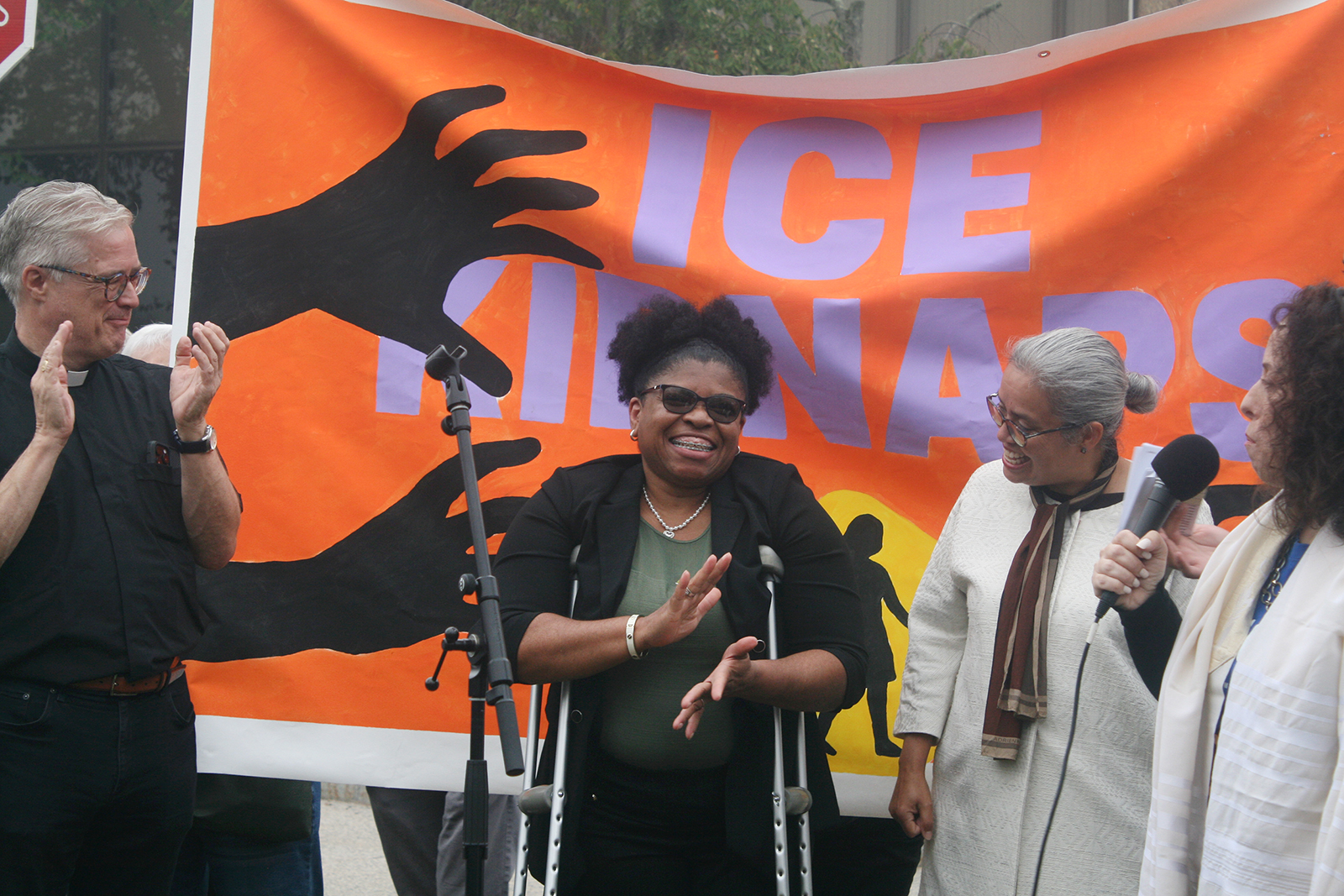
Blanca Martinez, center, smiles to supporters outside an immigration office, Sept. 16, 2025, in Burlington, Mass. (Photo courtesy of the Episcopal Diocese of Massachusetts)

Aleja Hertzler-McCain
September 16, 2025

(RNS) — By dinnertime the evening before her U.S. Immigration and Customs Enforcement check-in appointment, Blanca Martinez knew she probably wasn’t going to sleep much that night.

“It gives me a lot of anxiety,” Martinez said of ICE check-ins during an RNS interview in Spanish, on Monday (Sept. 15). She had experienced a restless night before her Aug. 15 check-in, when she was told to come back a month later, an unusually small window of reprieve.

“I don’t know what’s going to happen tomorrow,” said the Salem, Massachusetts, resident, alluding to the possibility of detention at the appointment.

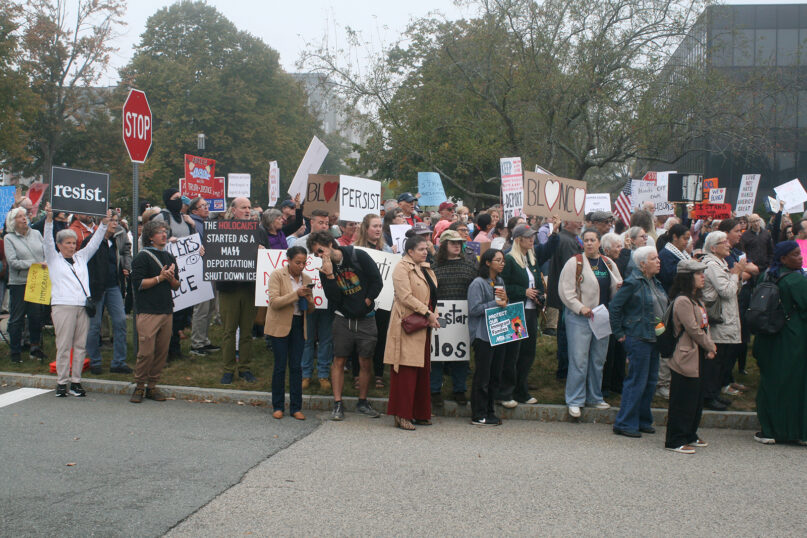
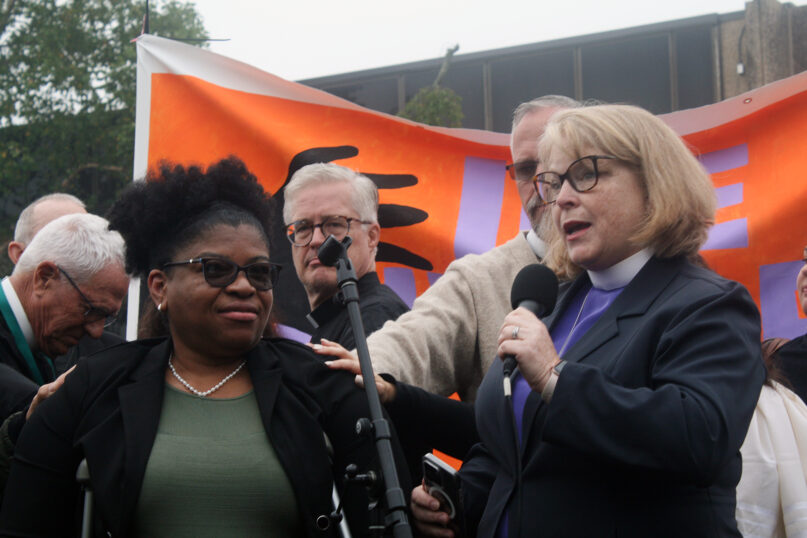
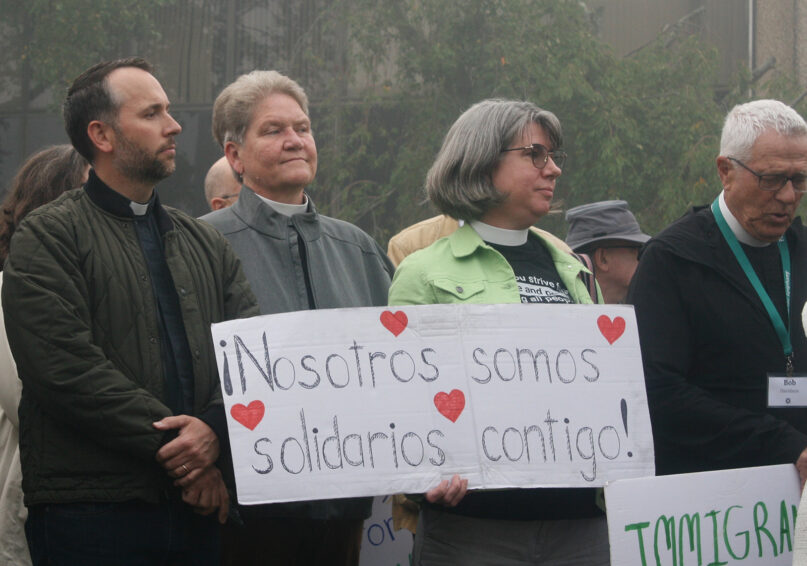
But despite Martinez’s high stress levels, she knew she wouldn’t be alone at the appointment Tuesday. About 500 people came to support her outside the immigration office in Burlington, including Massachusetts state Rep. Manny Cruz, Salem Mayor Dominick Pangallo and Bishop Julia Whitworth of the Episcopal Diocese of Massachusetts, who skipped the end of a national bishops gathering to support Martinez.

“This is something that we as a diocese take really seriously — that when one in our congregation is under threat, we are all under threat, and that we have the capacity to stand up for one another,” Whitworth said.

Across the country, many faith groups have had longtime practices of accompanying immigrants to ICE check-ins. As the Trump administration’s mass deportation campaign has ramped up and immigrants increasingly fear detention at the routine appointments, many such groups have doubled down on that strategy, believing they can at the very least provide spiritual support and, in some cases, influence decisions to allow immigrants a stay of removal.


People rally in support of Blanca Martinez outside an immigration office, Sept. 16, 2025, in Burlington, Mass. (Photo courtesy of the Episcopal Diocese of Massachusetts)

Over a decade ago, Martinez arrived at the United States border fleeing from Honduras for her safety, she said. At the time, a Salem attorney noticed as Martinez — a survivor of childhood polio who used crutches to make her way north — was turned away at the border that day and intervened to help make her case for asylum, said the Rev. Nathan Ives, rector of St. Peter’s-San Pedro Episcopal Church in Salem.

After arriving in Salem, Martinez co-founded a cleaning cooperative, began teaching Spanish and became a leader within the Essex County Community Organization. She also became a beloved member of St. Peter’s-San Pedro.

But her immigration case has not gone as well, Ives said. She’s faced denials on appeal in her asylum case, though so far, she’s been granted stays preventing her deportation.

RELATED: ‘There really is no escape’: Faith leaders help immigrants face court as ICE arrests rise

“ It’s just been this long journey of love and caring both emanating from her, and to her from the community,” said Ives, calling Martinez “ just the kind of person you’d want becoming a U.S. citizen, if you ask me.”

Martinez, who was raised in an orphanage, called Ives her “guardian angel,” saying he was her principal support after she had surgery three years ago. The whole parish community provided food and care.

Last month, they showed up again as part of about 300 supporters who accompanied her to the ICE check-in, including clergy “ from everywhere I could imagine — from my diocese, from other dioceses, from other denominations,” Ives said.

On Tuesday, that number swelled to about 500, according to organizers, which included the National Domestic Workers Alliance, Matahari Women Workers Center, LUCE Immigrant Justice Network, Neighbor 2 Neighbor, Essex County Community Organization, Unitarian Universalist Mass Action, Episcopal City Mission and the Welcome Immigrant Network.

Whitworth prayed over Martinez before she entered her appointment: “Envelop your daughter, Blanca, all who will enter this building today, and all who are in need. Envelop them in your steadfast protection, and fill them with your courage and joy.”

Martinez told RNS that Whitworth’s accompaniment “gives me a lot of strength and a lot of hope.”

Whitworth also prayed for all people fearing deportation, and for the country: “We pray, God, for our nation, that it may be restored to its best ideals, that we shy away from violence of all kinds — state-sponsored, politically motivated, hate-filled.”


Bishop Julia Whitworth of the Episcopal Diocese of Massachusetts, right, speaks in support of Blanca Martinez, left, outside an immigration office, Sept. 16, 2025, in Burlington, Mass. (Photo courtesy of the Episcopal Diocese of Massachusetts)

The bishop told RNS she was encouraging other religious leaders to stand against Christian nationalism, saying, “As a religious leader, I don’t serve political powers, the principalities of this age. I serve Jesus of Nazareth, who came as a stranger, was oppressed by a state system and taught us and told us to welcome the stranger and to stand with all who suffer.”

She also said she knew that “when people who our country might be seeking to disappear are made visible as having a wide network of support,” there is more attention to how they are treated.

For example, in August, the Episcopal Diocese of New York successfully rallied around the daughter of a diocesan priest, Yeonsoo Go, who was detained at her July 31 immigration court appointment, and then eventually released.

But not every faith-based mass mobilization for an immigrant in danger of deportation works out. In Iowa, faith-based organization Escucha Mi Voz sometimes brings up to 150 supporters to stand outside the Cedar Rapids ICE office every Tuesday during immigrant appointments. They have seen both successes and defeats.

When the Rev. Guillermo Treviño Jr., an Iowa Catholic priest, heard his 20-year-old parishioner Pascual Pedro had been detained at a Wednesday immigration appointment he attended by himself on July 1, Treviño immediately went to the county jail for a prayer vigil. The church community made 1,500 calls to the ICE director, Treviño told reporters at a Sept. 11 Georgetown University event. Within a week, Pedro was deported to Guatemala.


Clergy members rally in support of Blanca Martinez outside an immigration office, Sept. 16, 2025, in Burlington, Mass. (Photo courtesy of the Episcopal Diocese of Massachusetts)

RELATED: Catholic bishops call immigration crackdown a ‘category 4 storm’

But in Burlington, Martinez was able to return to the hundreds waiting outside to tell them it would be a year before she had another appointment: She was granted a one-year stay from removal.

She noted that most immigrants face court appointments without a crowd praying for them outside.

“I want to raise my voice for each of the people who are living with the same situation that I am facing — who don’t have a voice because they don’t have a lawyer or someone to represent them,” Martinez said.

Supporting others and her prayer help sustain Martinez. Even as she waited with anxiety the night before, she said there was something to give thanks for every day.

“From the moment I wake up, I give thanks — for my life, for being able to walk, for being able to get up, for food, for having a roof, for having the whole community that supports me,” she said.


Opinion

Rosh Hashana helps us envision a Judaism beyond nationalism

(RNS) — The idea of ‘the Jewish People’ as a unified nation is a modern invention.


(Photo by cottonbro studio/Pexels/Creative Commons)


Andrue Kahn
September 23, 2025

(RNS) — As antisemitism, Zionism and Judaism continue making daily headlines, I frequently find myself in conversations about what it means to be Jewish. The conflict in Gaza has generated a slurry of confusion about Judaism, anti-Judaism, Zionism and anti-Zionism and led to utter chaos with regard to perceptions of Jews, by Jews and by others. Jews are being pressed to define who we are, how we belong and what responsibilities we carry.

The holiday of Rosh Hashana offers a vital place to begin. Other Jewish holidays focus on ancient Israelite history; Rosh Hashana is universal. It celebrates the creation of the universe and humanity. Its prayers describe God as the judge of all life, not only of Jews. The Jewish story is, it tells us, a story about the whole world.

This emphasis on the universal is especially important as much of Jewish discourse in America has become consumed by ethnonationalism. Jewish nationalism (or Zionism) is said by some to be inseparable from Judaism itself. Others, myself included, look to the kind of Jewish universalism found in Rosh Hashana as a call to resist nationalism’s exclusionary and often supremacist logic.

This debate itself is rooted in rich theological and historical questions: What does it mean for Jews to be “chosen,” and how did the modern concept of “Jewish peoplehood” arise from that idea?

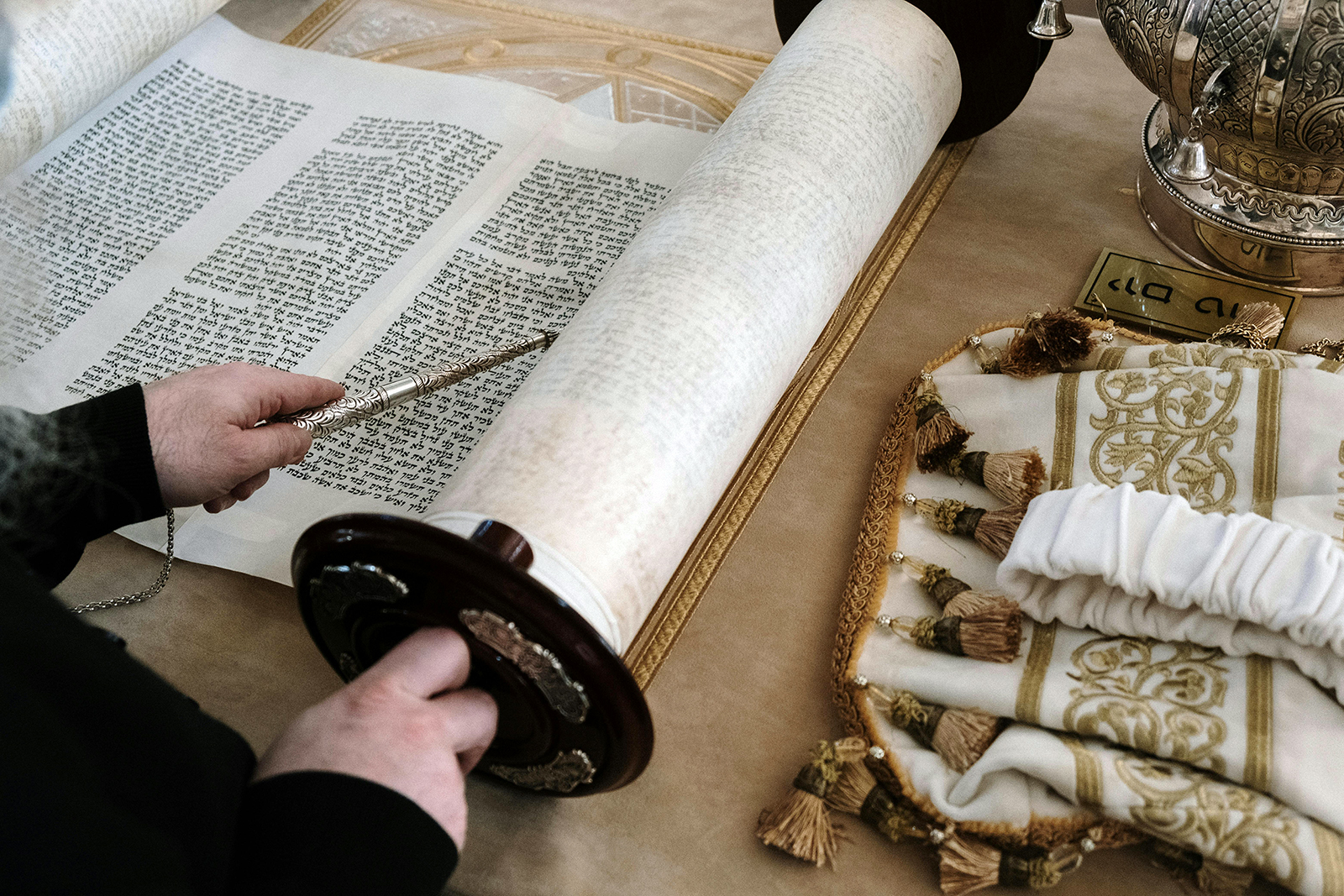
The notion of Jews as “chosen” by God has been interpreted over the centuries as divine favoritism, as a burden, as an aspirational motivation to model justice. Accordingly, Jews have celebrated chosenness as a gift or discarded it as an outdated relic that invited resentment and arrogance. But at its core, chosenness has been about covenant. Jewish teachings and practices, or Torah, provided tools to connect to the divine and humanity’s highest aspirations. Jews, born or by choice, were “chosen” by choosing to take on the commitments of Torah.

In mid-20th-century America, a new idea of “Jewish peoplehood” was popularized by Rabbis Mordecai Kaplan, the founder of Reconstructionist Judaism, and Stephen S. Wise, a major shaper of Reform Judaism. This described Jews as an ethnic collective, and in so doing it adopted the ideas of U.S. Supreme Court Justice Louis Brandeis’ American Zionism. In a 1915 speech, Brandeis said:

A man is a better citizen of the United States for being also a loyal citizen of his state. … Every Irish American who contributed towards advancing home rule (in Ireland) was a better man and a better American for the sacrifice he made. Every American Jew who aids in advancing the Jewish settlement in Palestine, though he feels that neither he nor his descendants will ever live there, will likewise be a better man and a better American for doing so.

The new language of peoplehood proved enormously successful. It embodied Brandeis’ goal of making Jewish difference legible to the American mainstream as a European-style national people with a singular history, language and land. This was attractive in an era when European Jewish immigrants sought to integrate into white ethnic America, while strengthening ideological ties to the emerging state of Israel.

But what was actually on offer was a chosenness remodeled into ethnonational exceptionalism. Kaplan’s basic premise was, as he wrote in his 1955 book, “A New Zionism,” rooted in the “persistence in the Gentile consciousness of Jews as an identifiable group.” The problem with this ideology is that it smuggled into the very heart of Jewish identity a belief central to the most virulent antisemitic views, that Jews are united as a singular, global group with shared nationalist goals. It also flattened the immense diversity of Jewish cultures into a nationalist identity consistent with European, generally Ashkenazi, Judaism.

Building on this premise, Kaplan reframed Judaism as “a non-creedal religious civilization, centered in loyalty to the body of the Jewish People throughout the world.” In “The Religion of Ethical Nationhood,” written in 1970, he made this more explicit: “Judaism … has pioneered in adumbrating man’s potential in achieving that collective religious experience which can motivate men and nations to achieve ethical nationhood.”

“Peoplehood” became a powerful framework. It not only gave American Jews a sense of unity but provided a narrative linking the Holocaust to the state of Israel: Jews were a people nearly destroyed, now restored in their land. It dovetailed neatly with American exceptionalism, casting the U.S. as the rescuer of Jews and the guarantor of Israel, and Israel as the unifying thread linking all Jews. Israel became the necessary “homeland for the Jews,” and support for Israel became the litmus test of belonging. Those who dissent are often accused of betraying “the Jewish People.”

But this framework distorts Jewish history. For most of Jewish existence, there was no unified “Jewish People.” Jews have lived and thrived heterogeneously in places as widespread as Aleppo, Mtskheta, Addis Ababa, Baghdad, Sanaa and Cochin, each with distinct practices, customs and self-understandings. They often disagreed sharply with one another, and rarely imagined themselves a single, homogeneous nation.


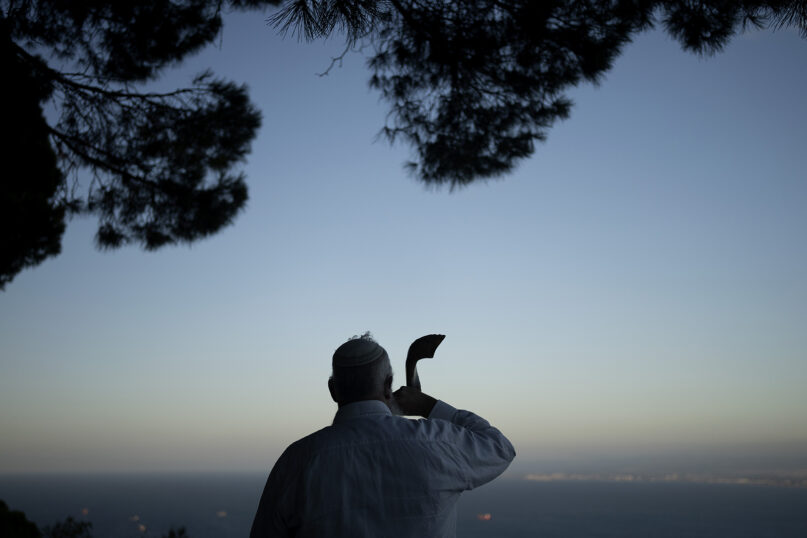
A man blows a shofar, a ram’s horn, marking Rosh Hashana, the Jewish new year, overlooking the port of Haifa, Israel, Oct. 4, 2024. (AP Photo/Maya Alleruzzo)

Instead of nationalism, Jewish collectivity was mythopoetic: a spiritual understanding of covenant via Torah, which expressed itself in many differing, and often mutually exclusive, forms throughout the world.

Rosh Hashana reminds us of this historical reality. On this holiday, Jews do not celebrate the birth of a single people, but the creation of the world. The image is expansive: Every creature passes before the Creator, every being is judged, every life matters.

That vision undercuts the narrowness of a falsely homogenizing peoplehood. It reminds us that the Jewish story is bound up with the story of all humanity — as Jews have dwelled among all humanity. Torah is a wisdom tradition carried in Jewish form and meant to be tested, adapted, shared and lived out in relationship with the rest of the world.

Jewish texts echo this universalism. Classical rabbinic midrash teaches that the Torah was offered to all nations. The medieval rabbinic giant Maimonides wrote to a convert that Abraham’s lineage is spiritual, not genetic. These perspectives affirm what Rosh Hashana proclaims: that Jewish distinctiveness is real, insofar as it complements the distinctiveness of each facet of the whole of humanity.

In her 1991 feminist classic “Standing Again at Sinai,” Judith Plaskow critiques the patriarchal notion of chosenness and sees Jewish identity as one thread in a wider tapestry. Within the Jewish community, diversity is a divine guide to connecting with the non-Jewish world. Jews are called to live fully as themselves and as Jews, always in relation to others, always as part of a larger human ecosystem.

Judith Butler, in their 2013 book “Parting Ways,” develops the idea of “unchosenness,” arguing that Jews live in “irreversible heterogeneity.” Jewish identity arises precisely from the fact that we do not choose our neighbors, our histories or our vulnerabilities. In this, we are inescapably bound to others who are different from us. Diaspora is not a problem to be solved through nationalism, Butler says; it is the essence of Jewish ethical life. To be Jewish is to practice responsibility amid difference, to learn how to cohabitate in a world we share.

Plaskow and Butler, taken together, offer a vision of Judaism that resonates deeply with the spirit of Rosh Hashana. They move us beyond exceptionalism toward interdependence. They remind us that Jewish flourishing requires many communities, locally grounded, engaged with Torah and committed to justice with their neighbors.

This is not an abandonment of Jewish identity. On the contrary, it is a recovery of Judaism’s richest strands. The idea of “the Jewish People” as a unified nation is a modern invention. Jewish flourishing has happened best in conversation with neighbors and by applying ethical practices to daily life.
RELATED: On Rosh Hashana, wishing you a punny new year

Rosh Hashana’s universalism calls us back to this truth. All humanity shares one origin. All life stands before one Creator. If we truly believe this, then the Jewish task is to defy nationalism and live out Torah’s wisdom in ways that build solidarity and justice across boundaries.

This year, as Jews around the world gather for Rosh Hashana, I invite us to let go of myths that no longer serve us. Let us question whether “peoplehood” is the foundation we want. Let us reclaim a Judaism that is at once particular and universal, distinct and connected, local and global. May we not strive to be a singular “People” above others, but communities among communities, committed to the flourishing of all life.

(Rabbi Andrue Kahn is executive director of the American Council for Judaism. The views expressed in this commentary do not necessarily reflect those of Religion News Service.)


How the spiritual sound of the shofar shapes the Jewish new year – a Jewish studies scholar explains

(The Conversation) — The shofar is used on many different occasions in the Bible. But today, for many Jews, it is most associated with the High Holidays: Rosh Hashana and Yom Kippur.


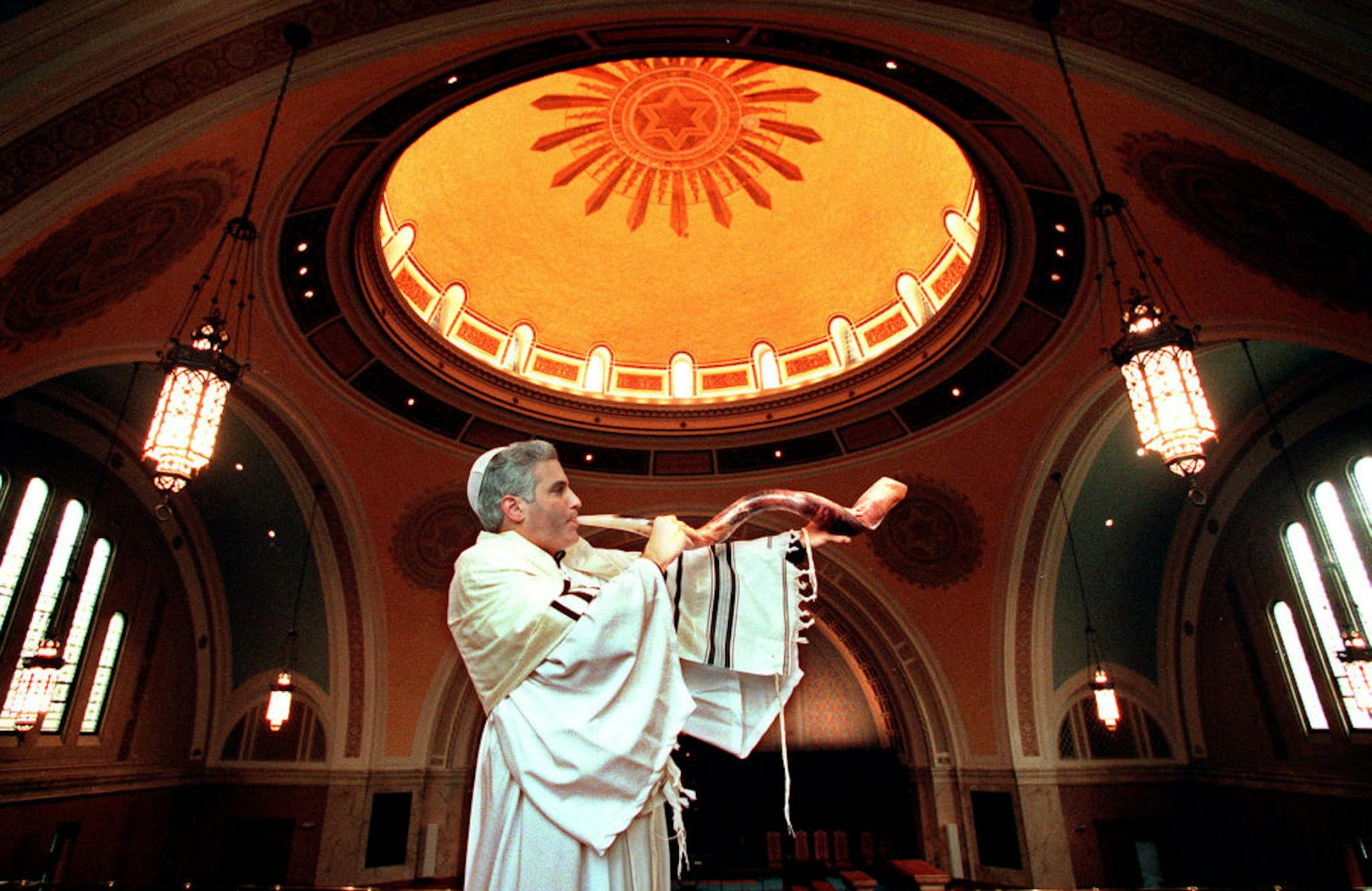
Mark Lipof blows a shofar during the lead-up to Yom Kippur at Temple Ohabei Shalom in Brookline, Mass.
 (Michael Fein/MediaNews Group/Boston Herald via Getty Images)

Sarah Pessin
September 19, 2025

(The Conversation) — It’s the Jewish High Holiday season, and Jews the world over are preparing to visit their local synagogues – for community, for prayer, and to hear the arresting, soulful sounds of the shofar.

An animal horn – typically a ram’s horn – used as a wind instrument, the shofar is featured over 70 times in the Torah. In ancient Jewish tradition, horns were sounded for everything from calls to action to royal coronations. In the spirit of both, the Bible calls upon Jews to raise forth shofar blasts on Rosh Hashana, which literally means the “head,” or start, of the year.

The holiday is a time of communitywide soul-searching. Beyond marking the Jewish new year, it also commemorates the world’s birthday, the creation of humans, and the sovereignty and majesty of God. Marking the start of the High Holiday season, Rosh Hashana kicks off a 10-day period of reflection that culminates in Yom Kippur, the Day of Atonement, whose last moments are also marked by the shofar’s call.

According to the Talmud, a central collection of rabbinic teachings on Jewish law and theology, three divine books are opened on Rosh Hashana. Each person is inscribed into one of the three: one book for the righteous, one for the wicked and one for those in between, who are given till Yom Kippur to set their hearts straight.

Rabbis say the shofar’s sounds cause God to move from his “throne of judgement” to his “throne of mercy.” They also say that shofar sounds can penetrate human hearts, prompting them toward repentance – while mimicking the broken-hearted cries of someone recognizing just how much they need to repent.


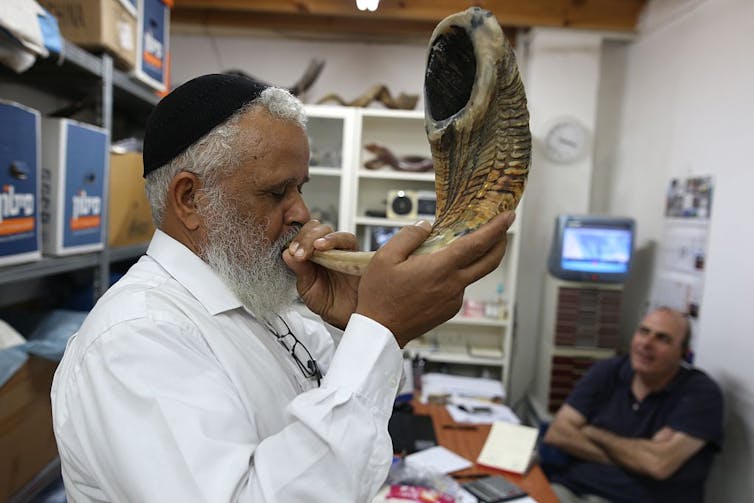
A Jewish man preparing for Rosh Hashana tests the sound of a shofar before buying it.
Menahem Kahana/AFP via Getty Images

As a scholar of Jewish tradition, I’ve worked extensively on the downright esoteric writings of Moses Maimonides, a 12th-century Jewish philosopher. When it comes to the meaning of the shofar’s call, though, Maimonides offers a refreshingly down-to-earth take in the Mishneh Torah, his guide to Jewish law: “Wake up you sleepy ones from your sleep and you who slumber, arise. Inspect your deeds, repent, remember your Creator.”

Sonic-spiritual pause

The sound of the shofar is uniquely rich and searching, somewhere between a human cry and an otherworldly hum. It fills the room as well as one’s entire body – inviting a moment of pause, of existential reckoning.

During the High Holidays there are three varieties of shofar blasts, which are combined into a series of sound constellations throughout the prayer service.

The first kind of blast is a single, solid sounding called “tekiah.” This one also comes in a “tekiah gedolah,” or “big tekiah,” version that stretches on for a longer stint. The second sound pattern is called “shevarim,” made up of three medium blares. And the third is called “teruah,” consisting of at least nine staccato soundings – or, for Jews of Yemenite heritage, another single tone.

The shofar is sounded throughout the two days of Rosh Hashana – in some congregations, 100 times per day. The constancy and repetition enhance the sounds’ capacity to engage participants’ minds, hearts and spirits.


Three types of shofar blasts are combined during High Holiday services.


Sourcing shofars

To make a shofar, a horn is boiled to soften its innards for removal. Using heat to straighten part of the horn, the craftsman carefully drills a hole and carves a mouthpiece at one end. Heat can be used to further straighten the horn, and the finish can range from natural to polished.

As for the species and shape of shofars, there are differences of opinion – and of culture. Amid rabbinic debates over straight shofars or curved ones for Rosh Hashana, Maimonides says only a curved ram’s horn will do. Jews of Yemenite heritage use the kudu antelope, whose spectacularly long horns produce a strikingly deep sound. And the “Moroccan shofar” is said to have emerged during the Spanish Inquisition: Because Jews needed to hide their shofars to avoid persecution, they were crafted to be flat and straight.

The hollowness of the shofar is what produces its unique sound, so it needs to be made of a horn, not an antler. And it will need to come from a kosher animal, an animal permissible to eat under Jewish law – which, for land animals, means having split hooves and chewing its cud.

On both counts, only certain animals will do, including goats, antelopes and rams. And regardless of the kind of shofar it is, it takes some practice to get a sound to come out of it at all.


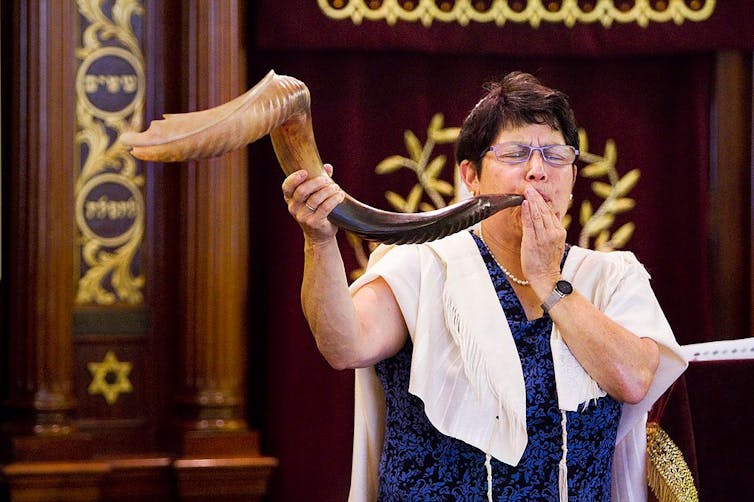
Rabbi Carolyn Braun plays a shofar during a ceremony at The Cedars retirement community in Portland, Maine
Carl D. Walsh/Portland Press Herald via Getty Images


Holy covenant

The popular use of rams’ horns is also a nod to the biblical story of the binding of Isaac, which is traditionally read during Rosh Hashana services.

According to the Book of Genesis, God commanded Abraham to sacrifice Isaac, his beloved son. After nearly going through with the killing, Abraham has a heavenly vision in which he is thanked for his loyalty to God and instructed to spare Isaac after all. Abraham sees a ram caught in a nearby thicket, which he sacrifices to God instead. The next verses describe God blessing Abraham and all his future descendants – which Jews read as a key moment in their identity as a people.

In the Talmud and across a number of other Jewish texts, blowing a ram’s horn for the new year invokes this same redemptive energy: God’s willingness to watch over not just Abraham and Isaac but the entire Jewish community, in a spirit of mercy and blessing.

Using a bull’s horn as a shofar, on the other hand, doesn’t fly. Rabbis rule it out because the term for a cow horn in the bible is “keren,” not “shofar.” The bull’s horn is also seen as too much of a reminder of another key story from the Torah: the Sin of the Golden Calf.

As the Book of Exodus describes it, God led the people of Israel out of slavery in Egypt. He then shares that he would reveal his law to them as a form of everlasting covenant, working through Moses as his spokesperson.

To make the point, God called Moses up to Mt. Sinai, accompanying him in the form of thunder, lightning and fire. Together with pillars of smoke, and louder and louder shofar blasts, the experience left the people awestruck. While details are debated, the text says that they then assented to God’s law – including the commandment not to worship idols.

Yet when Moses heads back to the mountaintop, the Israelites fear he’s abandoned them. Eager for immediate spiritual support, and in spite of having just agreed to God’s law, they built a bovine idol and proceed to worship at its feet.

God considers destroying the people. Yet Moses reminds God of the promise to protect Abraham and his descendants – a direct loop back to the binding of Isaac.
What’s in a word

It appears that the origin of the term “shofar” is “šappāru,” a word in the Akkadian language of the ancient Near East that originally referred to types of rams, deer or wild goats. But there is also a rabbinic commentary connecting the word “shofar” to the Hebrew term for beauty and improvement – suggesting the shofar inspires people to beautify their souls, aligning their actions with their values.

Regardless of the historical etymology of the word, this reading certainly captures the tenor and texture of hearing the shofar during the High Holidays. Its sounds inspire Jews to take spiritual inventory, surveying where the previous year has led them and planning the paths upon which they will next embark.

(Sarah Pessin, Professor of Philosophy, University of Denver. The views expressed in this commentary do not necessarily reflect those of Religion News Service.)

The Conversation religion coverage receives support through the AP’s collaboration with The Conversation US, with funding from Lilly Endowment Inc. The Conversation is solely responsible for this content.

 Opinion


Religious freedom for psychedelic users? Not without Indigenous truth.

If Christianity genuinely wants to engage with psychedelics, it must repent


(RNS) — The doors for the spiritual use of psychedelics were opened by struggles over peyote for Native Americans.


(Photo by Katherine Hanlon/Unsplash/Creative Commons)


Christine McCleave
September 23, 2025


(RNS) — The recent controversy over an Episcopal priest who was dismissed for promoting psychedelics for spiritual awakening raises urgent questions about how organized religion in America relates to psychedelics. The debate has focused on the safety of these drugs and church authority and doctrine, while ignoring Indigenous Americans’ long history with such medicines and the church’s long, painful history of suppressing them.

Concerns about priests and others becoming psychedelic shamans are valid. Ordination does not grant medical or cultural expertise, and clergy are not automatically qualified to lead plant medicine ceremonies. Indigenous communities, on the other hand, hold deep intergenerational knowledge of these medicines, rooted in protocols of respect and responsibility. Without a similar foundation, even well-meaning Christian leaders indeed risk causing harm, and it makes sense to regulate those who promote psychedelics. Yet the question remains: How will organized religion engage with psychedelics without perpetuating appropriation and erasure of Indigenous people?
RELATED: Episcopal Church removes priest who founded Christian psychedelic society

For centuries, Christian institutions, the Episcopal Church included, criminalized, demonized and worked to eradicate Indigenous traditions that relied on these medicines, even as they thrived by absorbing pagan practices to attract members. Their attempts now to consider or adjudicate practices so long associated with Indigenous spirituality betray theological contradictions and spiritual hypocrisy.

For over a decade, I have researched the harm caused by church-run Indian boarding schools on Native children in the U.S. — institutions designed to erase language, culture and ceremonies, leaving deep scars of post-traumatic stress disorder and other trauma that still affect our communities today. My research showed that these traumas were intentional, rooted in the belief that Indigenous spirituality was a threat to be eliminated. These same abuses were perpetrated around the globe, particularly in the Brazilian Amazon, where the psychedelic substance ayahuasca originates. For communities still healing from church-run attempts to erase language and ceremony, sudden clerical enthusiasm for psychedelics can reopen wounds rather than build trust.


Psilocybe mexicana mushrooms in Veracruz, Mexico, on July 2, 2019. 
(Photo by Alan Rockefeller/Wikimedia/Creative Commons)

For churches to embrace psychedelics without acknowledgment, accountability or reparations now is not only culturally insensitive — it worsens these harms and triggers past trauma.

Legally, much of the wider debate about the spiritual use of psychedelics turns on “religious freedom.” Many advocates of psychedelics favor the Religious Freedom Restoration Act model, in which groups seek exemptions for sacramental use. These pathways rely on legal ground first carved out by Indigenous peoples whose traditions were explicitly targeted by federal bans.

Today’s “religious freedom” advocates include syncretic Brazilian ayahuasca churches operating in the U.S. (such as União do Vegetal and Santo Daime) and a growing number of self-described psychedelic churches whose attorneys petition the Drug Enforcement Administration for RFRA exemptions. What they are pushing for through court orders or Drug Enforcement Agency recognition is narrow but powerful: the right to import, possess and administer otherwise prohibited sacraments such as ayahuasca/DMT and sometimes psilocybin or mescaline, as religious exercise.

The RFRA strategy began with a legal case brought by two Native American Church members who were denied unemployment benefits after being fired for sacramental peyote use. In the resulting 1990 U.S. Supreme Court decision, Employment Division v. Smith, the justices held that neutral, generally applicable laws could apply to religious practice without violating the First Amendment. The backlash was bipartisan: Congress enacted RFRA to restore the “compelling interest/least restrictive means” test for burdens on religion (later limited to the federal government).

In 1994, Congress separately amended the American Indian Religious Freedom Act to explicitly protect Native ceremonial peyote. In 2006, in Gonzales v. O Centro, the Supreme Court applied RFRA to uphold a church’s sacramental ayahuasca, requiring the government to justify prohibitions case by case, and today the DEA processes RFRA petitions for religious exemptions.

In short: The legal door newer groups now walk through was opened by struggles over peyote for Native Americans.

That history also reveals a double standard. Indigenous spiritual practices involving peyote or other medicines continue to face stigma, legal barriers and threats to their supply. This reversal of justice benefits new psychedelic religions, while tribal nations in the U.S. remain vulnerable despite treaty rights and the American Indian Religious Freedom Act.

Today, psychedelics are being recognized as tools for spiritual renewal. But for Indigenous peoples, they are not “new frontiers” or experimental sacraments — they are living traditions that survived generations of suppression. The church should honor this legacy. True healing will not come from adopting what was once condemned but from mending relationships and respecting the knowledge of those who kept these traditions alive.

RELATED: After a decade of controversy, clergy psychedelic study is published

If Christianity genuinely wants to engage with psychedelics, it must repent. It needs to confront its history of suppressing Indigenous spiritual practices and take concrete steps toward reconciliation. This includes recognizing the origins of these medicines, supporting Indigenous sovereignty and conservation, and centering Indigenous voices in discussions about law, theology and practice. Anything less risks repeating history — not as healing, but as another chapter of colonial exploitation.

(Christine Diindiisi McCleave, a member of the Turtle Mountain band of Ojibwe who holds a Ph.D. in Indigenous studies, is the former CEO of the National Native American Boarding School Healing Coalition. The views expressed in this commentary do not necessarily reflect those of Religion News Service.)

Magic mushrooms invent active compound twice


A new study shows that different types of mushrooms use completely different methods to produce the psychoactive substance psilocybin


Leibniz Institute for Natural Product Research and Infection Biology - Hans Knöll Institute -

Two different pathways of psilocybin biosynthesis 

image: 

Two paths lead to the same molecule: Independently of each other, different genera of ‘magic mushrooms’ have developed two different enzyme pathways that produce the same psychoactive substance, psilocybin – a rare example of convergent evolution in natural product biosynthesis.

view more 

Credit: Tim Schäfer, Leibniz-HKI


“This concerns the biosynthesis of a molecule that has a very long history with humans,” explains Prof. Dirk Hoffmeister, head of the research group Pharmaceutical Microbiology at Friedrich Schiller University Jena and the Leibniz Institute for Natural Product Research and Infection Biology (Leibniz-HKI). “We are referring to psilocybin, a substance found in so-called ‘magic mushrooms’, which our body converts into psilocin – a compound that can profoundly alter consciousness. However, psilocybin not only triggers psychedelic experiences, but is also considered a promising active compound in the treatment of therapy-resistant depression,” says Hoffmeister.

Two paths, one molecule

The study, which was conducted within the Cluster of Excellence ‘Balance of the Microverse’, shows for the first time that fungi have developed the ability to produce psilocybin at least twice independently of each other. While Psilocybe species use a known enzyme toolkit for this purpose, fiber cap mushrooms employ a completely different biochemical arsenal – and yet arrive at the same molecule. This finding is considered an example of convergent evolution: different species have independently developed a similar trait, but the ‘magic mushrooms’ have gone their own way in doing so.

Searching for clues in fungal genomes

Tim Schäfer, lead author of the study and doctoral researcher in Hoffmeister’s team, explains: “It was like looking at two different workshops, but both ultimately delivering the same product. In the fiber caps, we found a unique set of enzymes that have nothing to do with those found in Psilocybe mushrooms. Nevertheless, they all catalyze the steps necessary to form psilocybin.”

The researchers analyzed the enzymes in the laboratory. Protein models created by Innsbruck chemist Bernhard Rupp confirmed that the sequence of reactions differs significantly from that known in Psilocybe. “Here, nature has actually invented the same active compound twice,” says Schäfer.

However, why two such different groups of fungi produce the same active compound remains unclear. “The real answer is: we don’t know,” emphasizes Hoffmeister. “Nature does nothing without reason. So there must be an advantage to both fiber cap mushrooms in the forest and Psilocybe species on manure or wood mulch producing this molecule – we just don’t know what it is yet.”

“One possible reason could be that psilocybin is intended to deter predators. Even the smallest injuries cause Psilocybe mushrooms to turn blue through a chemical chain reaction, revealing the breakdown products of psilocybin. Perhaps the molecule is a type of chemical defense mechanism,” says Hoffmeister.

More tools for biotechnology

Although it is still unclear why different fungi ultimately produce the same molecule, the discovery nevertheless has practical implications: “Now that we know about additional enzymes, we have more tools in our toolbox for the biotechnological production of psilocybin,” explains Hoffmeister.

Schäfer is also looking ahead: “We hope that our results will contribute to the future production of psilocybin for pharmaceuticals in bioreactors without the need for complex chemical syntheses.” At the Leibniz-HKI in Jena, Hoffmeister’s team is working closely with the Bio Pilot Plant, which is developing processes for producing natural products such as psilocybin on an industry-like scale.

At the same time, the study provides exciting insights into the diversity of chemical strategies used by fungi and their interactions with their environment. It thus addresses central questions of the Collaborative Research Center ChemBioSys and the Cluster of Excellence ׅ‘Balance of the Microverse’ at Friedrich Schiller University Jena, within the framework of which the work was carried out and funded by the German Research Foundation (DFG), among others. While the CRC ChemBioSys investigates how natural compounds shape biological communities, the Cluster of Excellence focuses on the complex dynamics of microorganisms and their environment.


Psilocybe cubensis 

Psilocybe cubensis grows worldwide in tropical and subtropical regions, including Central and South America, Southeast Asia, and Oceania. The mushroom prefers moist, fertilizer-rich soils and contains the psychoactive substance psilocybin, which is currently being researched as an active compound for the treatment of therapy-resistant depression.

Credit

Felix Blei, Leibniz-HKI