Thursday, September 25, 2025

What Does Trump’s Sudden Shift Mean For Russia’s War On Ukraine? – Analysis

Ukraine's President Volodymyr Zelensky with U.S. President Donald Trump. Photo Credit: The White House, X

By 

By Steve Gutterman


In a sudden shift, US President Donald Trump said Ukraine could win back all of its Russian-occupied territory with the help of its European backers.

His remarks in a social media post on September 23, after talks with Ukrainian President Volodymyr Zelenskyy on the sidelines of the UN General Assembly in New York, quickly made waves: In the past, Trump and other US officials have strongly suggested Ukraine would have to cede some land to Russia in any peace deal.

In a tense meeting at the White House in February, Trump told Zelenskyy that Ukraine doesn’t “have the cards” to win the war.

But the post raised crucial questions that it didn’t answer. 

Will Trump walk away from his efforts to end the war? Are new US sanctions against Russia still on the table? Could the rhetorical shift change the Kremlin’s calculus when it comes to the war in Ukraine?


Here’s what to watch.

Are Sanctions Still On The Table?

“Putin and Russia are in BIG economic trouble,” Trump wrote in his Truth Social post, suggesting that the country’s money problems were one of the main reasons for his newly voiced confidence that Ukraine could restore control over its borders with “time, patience, and the financial support of Europe and, in particular, NATO.”

While he has threatened repeatedly to impose new sanctions on Russia and countries that help fuel its invasion of Ukraine, in order to further undermine Moscow’s capacity to fight, he made no mention of punitive measures in the post. Some observers read his remarks as a sign that no new US sanctions are in the offing.

In his address to the General Assembly hours earlier, however, Trump said the United States was “fully prepared to impose a very strong round of powerful tariffs” if Russia isn’t “ready to make a deal to end the war. ” But he repeated his recent condition that Europe take similar action, saying that “for those tariffs to be effective, European nations…would have to join us in adopting the exact same measures.”

Easing Pressure On Ukraine?

For Ukraine, a big concern has been that Trump, who made ending the war a priority when he started his second presidential term in January of this year, might pressure Kyiv to accept a peace agreement that would leave Russia in control of sizable pieces of its territory.

Russia now occupies about 20 percent of Ukraine, and baselessly claims the parts of the Donetsk, Luhansk, Zaporizhzhya, and Kherson regions that it does not control.

Trump’s new remarks suggest that Washington is not about to push Ukraine to make territorial concessions.

Trump “hasn’t said anything like this before,” Sam Greene, a professor of Russian politics at Kings College London, told RFE/RL. “And if it does indeed suggest that he’s willing to countenance an end to this war that does not involve Ukraine making compromises on its sovereignty and territorial integrity, that’s significant.”

Will Trump Walk Away?

On the other hand, Trump’s post was hardly a promise of robust US backing for any bid by Kyiv to recapture Russian-occupied territory. He put the onus on Ukraine and Europe, specifically mentioning the United States only to vow that it “will continue to supply weapons to NATO for NATO to do what they want with them” – an apparent reference to an existing arrangement for NATO members to buy US weapons and deliver them to Ukraine.

“One can certainly interpret that to mean that the US is comfortable with those allies providing more weapons to Ukraine, which isn’t really a change,” Olga Oliker, program director for Europe and Central Asia at the International Crisis Group, told RFE/RL in an e-mailed comment. “A change would be a commitment to get more Patriots…to the Ukrainians and for the US to provide more weapons…to Kyiv.”

The accent on Europe and Ukraine, and the emphasis on what would amount to a potential military solution to the war, led some observers to conclude that the United States may be walking away from its efforts to broker a peace deal.

Parts of Trump’s social media post seemed valedictory: He wrote, “In any event, I wish both Countries well,” and ended by wishing “Good luck to all!” Separately, he told reporters he had thought the war would be easy to end “because of my relationship with Putin, but unfortunately that relationship didn’t mean anything.” And, in other comments on September 23, he said NATO nations should shoot down Russian warplanes that violate their airspace.

But he did not say he was abandoning his efforts to end the war. “I’ll let you know in about a month from now,” he said when asked if he still trusted Putin, suggesting he hasn’t given up his push for peace.

Trump is “clearly not saying the US is prepared to wash its hands of this situation completely and wouldn’t be happy to see the Ukrainians win,” Greene said.

Will Russia Budge?

Predictably, Russia made a show of shrugging off Trump’s comments and suggested they would not lead to a change in its strategy or tactics. Analysts say Putin seems determined to subjugate Ukraine and has shown no interest in a negotiated end to the war on anything other than Russia’s terms.

Putin’s spokesman, Dmitry Peskov, sought to dismiss Trump’s suggestion that Ukraine could regain territory Russia has occupied, saying the battlefield dynamics “show that for those who are unwilling to negotiate now, the position will be much worse tomorrow and the day after.”

Trump has been inconsistent on “which side is to blame, who has the upper hand, and what the US might to do to end the war,” so Russia will likely be watching what Washington does more closely that what it says, said Nigel Gould-Davies, senior fellow for Russia and Eurasia at the International Institute for Strategic Studies.

European leaders, meanwhile, may welcome Trump’s comments “as a signal that if they were to continue to find the fiscal means to support the Ukrainians, the US would allow American arms to be purchased by Europe and provided to the Ukrainians, and that the US would not impede Europe in trying to provide that kind of support to Ukraine,” Greene said.

“But I think that Europe will worry, as will the Ukrainians, that…things could pivot again.”

  • Steve Gutterman is the editor of the Russia/Ukraine/Belarus Desk in RFE/RL’s Central Newsroom in Prague and the author of The Week In Russia newsletter. He lived and worked in Russia and the former Soviet Union for nearly 20 years between 1989 and 2014, including postings in Moscow with the AP and Reuters. He has also reported from Afghanistan and Pakistan as well as other parts of Asia, Europe, and the United States.


COMMENT: Trump is preparing a “back door” plan to blame EU for Ukraine’s failure - FT

COMMENT: Trump is preparing a “back door” plan to blame EU for Ukraine’s failure - FT
Trump just did a dramatic U-turn on Ukraine, saying that it would win back all its occupied territories, but the FT reports this may be a plan to prepare shifting the blame for failing to prevent a Ukranian defeat in the war with Russia from the White House to Brussels. / bne IntelliNews
By bne IntelliNews September 25, 2025

European officials fear that US President Donald Trump’s dramatic U-turn on Ukraine is a back door plan to shift responsibility for the West’s failure to prevent Ukraine’s defeat in its war with Russia or help it recover afterwards, the Financial Times reported on September 24.

The FT noted that for months Trump had argued Ukraine would have to cede territory to end the conflict and has largely backed Russia’s position until this week, where he did a dramatic about-face following a meeting with Ukrainian President Volodymyr Zelenskiy on September 23 in New York. In a post on social media, Trump said Russia was a “paper tiger” and could retake all its occupied territory – if the EU stepped up and paid for sufficient supplies of weapons.

One European official told the FT that Trump’s apparent endorsement of Ukraine’s full territorial restoration was “helping him prepare a back door” to deflect blame if Kyiv falters militarily or loses access to funding. According to the paper, Trump is increasingly seen among European leaders as an unreliable ally, though “in a number of cabinets” his latest comments were welcomed.

Despite Trump’s comments, he left out key details on when, what and how much military aid could be sent to Ukraine. He also did not mention adding new sanctions on Russia that could increase pressure on the budget. Trump is prone to make big gestures, but they are usually sweeping generalisations and couched in vague terms, making it hard to hold him to account for his rhetoric.

On September 24, Reuters reported that Trump’s rhetoric was designed to place primary responsibility for the conflict’s outcome on Europe. Trump made this clear following the coalition of the willing Paris summit on September 4 when the collected EU leaders called him after meeting to win US backing for their plans that included sending peacekeepers to a postwar Ukraine. The call ended in disaster after Trump instead told Europe to stop importing Russian oil and gas.

Following Trump’s comments this week, Secretary of State Marco Rubio made it clear that US support would not be forthcoming unless the EU followed through with bans on Russian hydrocarbons and also imposed sanctions and tariffs on India and China, at Trump’s behest, Russia’s two biggest hydrocarbon customers.

"I am ready to impose serious sanctions on Russia when all Nato countries start doing the same, and when all Nato countries stop buying oil from Russia," Trump said on September 13.

"It's unacceptable, but even Nato countries haven't stopped buying Russian energy resources. I really don't like it. In essence, they are financing a war against themselves," the US president said ten days later.

The EU passed its nineteenth sanctions package this month which brings forward a total ban on Russian gas imports to the start of next year, but it was silent on banning oil imports, most of which go to Hungary and Slovakia. The EU has also rejected imposing any tariffs on China, one of the Union’s biggest trade partners.

Trump’s remarks represent a significant departure from his earlier scepticism about Ukraine’s chances, when he described Zelenskiy as holding a “bad hand” and predicted that territorial concessions were inevitable. But his pivot has left European capitals questioning whether Washington intends to reduce its role in shaping the war’s trajectory, according to the FT.

Ukrainian President Volodymyr Zelenskiy is thought to have followed a similar strategy when he presented his “victory plan” a year ago, that lead with accelerate entry to Nato – a demand he knew would be rejected by all his Western allies. Journalist and bne IntelliNews columnist Leonid Ragozin argued at the time that it was a ploy to prepare the ground for the eventual fading away of Western support and a Ukrainian defeat, as it would allow the president to blame the lack of support by Ukraine’s Western allies for the failure.

Undermining Trump’s own comments that Ukraine can “win” the war, Trump has also denied permission for Ukrainian forces to launch strikes with American weapons deep into Russian territory, The Wall Street Journal ( WSJ ) reported on September 25, citing White House sources.  

Pakistan’s agricultural sector and food security hit hard by flooding

Pakistan’s agricultural sector and food security hit hard by flooding
/ jannet eldhose - Unsplash
By bno - Mumbai Office September 25, 2025

Pakistan is grappling with the most severe flooding in over four decades in parts of Punjab, its agricultural heartland, with far-reaching consequences for food production, rural livelihoods, and the country’s export earnings. A new assessment by the Group on Earth Observations Global Agricultural Monitoring Initiative (GEOGLAM) finds that extensive losses to rice, maize, cotton and livestock, coupled with disruptions to upcoming wheat planting, will weigh heavily on farmers and food markets in the coming months.

Since late June, relentless monsoon rains and water releases from upstream dams in India have combined to inundate vast tracts of eastern Pakistan. Punjab has borne the brunt, with 2.9mn people evacuated and entire riverine communities displaced. Districts including Lahore, Sialkot and Gujrat experienced record water levels as the Chenab, Ravi and Sutlej rivers overflowed simultaneously. Further downstream, floodwaters have surged into Sindh, prompting evacuations of at least 150,000 people and raising the spectre of a “super flood” along the Indus.

Although floodwaters have begun to recede in parts of Punjab, large areas remain waterlogged. Damage to homes, infrastructure, livestock and food stocks is widespread, compounding hardship just two years after the catastrophic 2022 monsoon floods.

Crops under water

The timing of the floods has been particularly damaging for Kharif crops. Satellite analysis shows around 220,000 hectares of rice submerged between August 1 and September 16, mainly in Punjab’s Sialkot and Narowal districts. With Punjab accounting for over 65% of national rice output, losses will hit both rural incomes and export earnings, particularly in the premium Basmati segment.

The flooding struck as rice moved through critical growth stages such as flowering and grain filling, amplifying yield losses. While some crop recovery is visible as waters recede, the overall seasonal damage is likely to exceed estimates, given earlier submergence in June and July when replanting was not always possible.

Other crops have also suffered. Maize fields, vital for poultry feed, have been destroyed, while cotton, sugarcane, vegetables and orchards were left standing in floodwaters. With Punjab and Sindh together producing the bulk of maize and cotton, the economic toll is expected to ripple across value chains.

Attention is now turning to the upcoming Rabi season, which begins in late September with wheat sowing. Wheat is Pakistan’s staple, providing up to 70% of caloric intake, and Punjab produces over three-quarters of the crop. The floods have destroyed irrigation channels, delayed land preparation and washed away seed stocks, leaving many farmers ill-equipped for timely planting.

While wheat reserves from the 2024/25 harvest remain adequate—helped by a crop that was 5% above average—the concern is that disruptions to the 2025/26 season could tighten supply later in the year. Markets are already jittery. Wheat and flour prices in major cities surged by as much as 40% after storage facilities in Punjab were damaged. The provincial government has responded with a temporary ban on diverting wheat to feed mills, aimed at preserving household supplies.

Food security pressures

The floods have struck at a time when Pakistan was showing tentative improvement in food security. According to pre-flood analysis, around 10mn people faced acute food insecurity between April and July 2025, down from 11mn earlier in the year. GEOGLAM now warns of renewed pressures, particularly in rural areas where 60% of the population depends on agriculture.

Losses to rice—a cash crop and export earner—are expected to slash rural incomes, while the destruction of maize fields could drive up poultry feed prices, impacting meat and egg affordability. More than 6,500 livestock deaths, mostly in Khyber Pakhtunkhwa, add to the blow for households that rely on animals for income, food and farm labour.

Still, unlike the devastation of 2022, when 2.6mn hectares of Kharif crops were lost, this year’s floods are expected to cause more localised and short-term food insecurity. Stronger macroeconomic fundamentals—higher foreign exchange reserves, a more stable rupee and easing food inflation—are providing some buffer.

Rainfall data show that eastern Pakistan has endured 150% to 200% of average seasonal rainfall this year, among the highest on record. The deluge has been fed not only by Pakistan’s own monsoon but also by extreme rains in northern India, swelling rivers that flow across the border. Forecasts suggest that while the monsoon is beginning to retreat, elevated rainfall could persist in Sindh and Balochistan into late September, sustaining flood risks.

For farmers and rural households, the floods are both an immediate shock and a long-term challenge. Disruptions to agricultural labour have already reduced incomes, though the Rabi season could bring new opportunities if planting proceeds. Lessons from 2022 suggest that coordinated government and donor support in supplying seeds and fertiliser will be vital to prevent lasting damage to wheat production.

The crisis underscores the fragility of Pakistan’s agricultural system, which remains heavily exposed to climate extremes, the report said. The increasing frequency of catastrophic monsoon floods threatens not only rural livelihoods but also the country’s food security and export competitiveness. With rice, maize and cotton all hit this year, the imperative for climate-resilient infrastructure, improved flood management, and diversified cropping systems has become more urgent.

For now, the scale of recovery will depend on how quickly waters recede, how effectively farmers can access inputs for the Rabi season, and whether relief measures can prevent the displacement of millions from cascading into a deeper food security crisis.

Over 3,000 Punjab schools damaged by floods


Published September 26, 2025 
DAWN

• Education minister details efforts to make up for lost time; semester fees waived for flood-hit students


• Villages in Multan, Lodhran and Bahawalpur submerged after Noraja Bhutta breaches


LAHORE: Punjab Minister for School Education Rana Sikandar Hayat said on Thursday that 3,000 schools had been destroyed in the floods, severely affecting the education of thousands of students.

He was speaking during a meeting with Unicef’s Representative to Pakistan, Pernille Ironside, to discuss progress on various educational plans. The meeting also decided to strengthen cooperation for better outcomes.

The minister informed the Unicef representative that the school education department was facing immense challenges due to floods in the province.

He said that the department had already been facing a shortage of facilities, but the disaster had destroyed thousands of schools, many of which were still under water.

“The department is now confronted with the challenge of rehabilitating these schools,” he said, adding that three shifts were being started in functioning schools to meet the educational needs of displaced students.

The minister said that it would take around three months to rehabilitate the damaged schools. In the meantime, the government planned to rent private buildings and establish tent schools in flood-hit areas to ensure continuity of classes.

He added that the government had waived semester fees for students belonging to flood-hit areas and that scholarships would also be provided to them.

Several villages submerged

Meanwhile, despite official claims of receding floodwaters across Punjab, three breaches at the Noraja Bhutta embankment on the Sutlej River have led to catastrophic ponding, submerging several villages in the districts of Multan, Lodhran, and Bahawalpur for over a week.

The situation remains dire in the eastern areas of Jalalpur Pirwala, Lodhran and Bahawalpur, where villages, including Noraja Bhutta, Basti Lang, Kotla Chakar, Bahadurpur, Mouza Kanu, Kandeer, Jhaiyu, Deepal, Tarut Basharat, Daily Rajanpur, Belaywala, Dunyapur, Jhangra, Muradpur Soiwala and Sabra are surrounded by 8 to 10 feet of stagnant water. The relentless pressure has caused widespread destruction of homes and property.

“The water isn’t going down. About 70 per cent of houses have already collapsed, and the rest will follow if nothing is done,” said Altaf Lang, a distressed local resident. “The standing water has changed colour, and we are now seeing the spread of waterborne diseases. This is a health crisis in the making.”

Residents point to a major infrastructural obstacle: the nearby motorway. They allege that the culverts designed to allow water to pass underneath are insufficient and are instead acting as a dam, trapping the water on one side.

“The motorway isn’t usable for traffic now anyway. The authorities should breach it to let this water drain,” argued Altaf Lang. “The current culverts are not for water passage; they are just for locals and cattle to cross. They are completely blocked.”

NHA General Manager Kashif Nawaz told Dawn that there was no question of breaching the motorway and that water was passing through culverts underneath. He added that efforts were being made to secure the motorway by placing stones around vulnerable points, without closing the culverts.

Published in Dawn, September 26th, 2025

No rest for delivery riders amid Pakistan’s monsoon downpours

Pakistan, where 45pc of people live under poverty line, is among countries most vulnerable to climate change, with limited resources for adaptation.

AFP Published September 25, 2025

Abdullah Abbas waded through Lahore’s flooded streets, struggling to push his motorcycle and deliver a food order on time.

The water had risen to his torso, his jeans soaked and rolled up over sandals, leaving him vulnerable to electrocution and infectious diseases.

Even as monsoon rains deluge Pakistan’s cities, food and grocery orders on the Singapore-based delivery platform Foodpanda pour in.

“If I don’t deliver the orders, my Foodpanda account will get blocked, which would leave me without money,” Abbas told AFP in the old quarter of Lahore, known for its narrow, congested streets.

“I need this money to pay my high school fees,” added the 19-year-old, who is completing his last year of secondary school.

Since June, monsoon rains in Pakistan have killed more than 1,000 people, swelling major rivers and devastating rural communities along their banks.

Urban centres such as Lahore, a city of more than 14 million people, and Karachi, the country’s largest city with more than 25 million people, have also suffered urban flooding in part because of poorly planned development.


Abbas earns around $7 a day, above the average salary, but only when the sun is shining
.

To meet the average monthly pay of around $140, he was to work seven days a week for over 10 hours, fitted around his studies.

“Customers behave rudely and you have to handle all the stress,” added Muhammad Khan, a 23-year-old Foodpanda rider, as he carefully navigated his motorbike through Karachi’s muddy, pothole-ridden roads.

Pakistan, where 45 per cent of people live below the poverty line, is among the countries most vulnerable to climate change, with limited resources dedicated to adaptation.
‘Stressful’

By the middle of August, Pakistan had already received 50pc more monsoon rainfall than last year, according to disaster authorities, while in neighbouring India, the annual rains kill hundreds every year.

While South Asia’s seasonal monsoon brings rainfall that farmers depend on, climate change is making the phenomenon more erratic.


In this photograph taken on August 30, 2025, Abdullah Abbas, a food delivery rider for the Singapore-based company Foodpanda, pushes his bike through a flooded street after heavy rainfall in Lahore. — AFP/ Aamir Qureshi

A report by the Human Rights Commission of Pakistan said brown water inundating city streets is not only the result of climate change but “clogged drains, inadequate solid waste disposal, poor infrastructure, encroachments, elitist housing societies.”

Doctors warn that working repeatedly in damp conditions can cause fungal infections and flu, while exposure to dirty water can spread eye and skin infections.

Gig economy workers attached to delivery apps such as Foodpanda and ride-hailing apps Bykea and InDrive, made up nearly two per cent of Pakistan’s labour force or half a million people in 2023, according to Fairwork, a project by the University of Oxford.

Fairwork rated six digital labour platforms in the country, and all of them have the “minimum standards of fair work conditions”.

The International Labour Organisation, meanwhile, says gig workers lack government protection and face systemic violations of international labour standards.

Motorbike rider Muneer Ahmed, 38, said he quit being a chef and joined Bykea to become “his own boss”.

“When it rains, customers try to take rickshaws or buses, which leaves me with no work,” said Ahmed, waiting anyway on the side of the flooded street.

“Rain is a curse for the poor,” he said, watching the screen of his phone for a new customer.

Daily wage labourers, often working in construction, also see their work dry up.

It has been nearly four days since labourer Zahid Masih, 44, was hired, he told AFP while taking refuge under a bridge with other masons in Karachi.

“Jobs do come up, but only after the rain stops. There is no work as long as it is raining,” says the father of three.

“Sitting idle at home is not an option, as our stoves won’t be lit.”

Header Image: In this photograph taken on August 30, 2025, Abdullah Abbas (C), a food delivery rider for the Singapore-based company Foodpanda, wades through a flooded street under a railway bridge after heavy rainfall in Lahore. — AFP/ Aamir Qureshi


U$ BAILS OUT ARGENTINA,UNHEARD OF


US in talks for $20bn Argentina swap line as Trump gives Milei full backing

US in talks for $20bn Argentina swap line as Trump gives Milei full backing
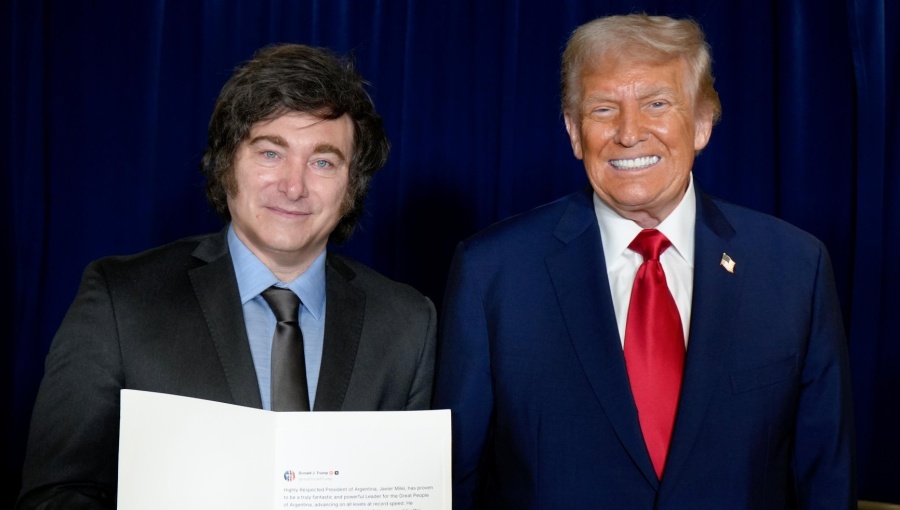
"Highly Respected President of Argentina, Javier Milei, has proven to be a truly fantastic and powerful Leader for the Great People of Argentina, advancing on all levels at record speed," President Trump wrote on Truth social.
By bnl editorial staff September 24, 2025

Washington and Buenos Aires are negotiating a potential $20bn currency swap arrangement as the United States prepares to deploy an array of financial instruments to support Argentina's beleaguered economy, Treasury Secretary Scott Bessent announced on September 24 following high-stakes talks between Presidents Donald Trump and Javier Milei a day prior.

"Yesterday, President Trump and I spoke extensively with President Milei and his senior team in New York," Bessent wrote on X. "As President Trump has stated, we stand ready to do what is needed to support Argentina and the Argentine people.”

The Treasury chief confirmed that American officials stand prepared to acquire Argentine sovereign bonds and provide substantial emergency financing through the Exchange Stabilisation Fund, though final terms remain under discussion following the bilateral summit at the United Nations General Assembly in New York.

This remarkable American commitment to backstop a foreign currency marks a significant departure from conventional US financial diplomacy, driven by mounting speculation against the peso that risks unravelling the Argentine libertarian president's ambitious market-oriented reforms.

Speaking after the presidential meeting, Trump rejected rumours that Argentina required a traditional rescue package. "We're gonna help them but I don't think they need a bailout. He's doing a fantastic job," the American leader said of his ideological ally, whilst offering what he termed his "full endorsement" for Milei's 2027 re-election campaign.

The urgency of American action became apparent after Argentina's monetary authorities exhausted roughly $1bn in hard currency reserves within 48 hours last week, attempting to prevent the peso from breaching its trading ceiling of 1,475 per dollar—a threshold it briefly exceeded on 17 September 17 before further interventions restored order.

Bessent, who made Buenos Aires his inaugural overseas destination as Treasury Secretary in April, praised Argentina's achievements under Milei. "Under President Milei, Argentina has taken important strides toward stabilisation. He has achieved impressive fiscal consolidation and a broad liberalization of prices and restrictive regulations, laying the foundation for Argentina's historic return to prosperity," he stated, whilst warning that "Argentina has the tools to defeat speculators, including those who seek to destabilise Argentina's markets for political objectives." In his X statement, he confirmed that "the Treasury is currently in negotiations with Argentine officials for a $20bn swap line with the Central Bank" and that the US "stands ready to purchase Argentina's USD bonds.”

Since Bessent's initial declaration of support on September 22, government bonds maturing in 2029 have surged from 65 to 71 cents on the dollar whilst Argentine equities listed in New York rallied 12 per cent. According to Ambito, the nation's country risk, as calculated by JPMorgan, compressed by more than 17% to nearly 800 points on September 24, reversing weeks of deterioration.

The intervention reflects Washington's determination to prevent Beijing from expanding its financial footprint in South America, where Argentina represents what Bessent termed a "systemically important" ally. This geopolitical dimension has gained prominence as tensions mount between Washington and leftist Brazilian President Lula da Silva over the coup conviction of former president Jair Bolsonaro, making Argentine alignment increasingly valuable.

Trump's effusive praise for Milei—calling him "a truly fantastic and powerful leader"—and his adoption of the slogan "Make Argentina Great Again" betray the personal chemistry between the two leaders, which has accelerated diplomatic coordination typically requiring months of technical negotiations.

But the financial turbulence requiring American intervention stems from far deeper political vulnerabilities. The Argentine president's party suffered a devastating electoral defeat in Buenos Aires province earlier this month whilst his sister and close advisor Karina faced corruption allegations, triggering legislative rebellions that have successfully overturned presidential vetoes on spending measures—developments that sparked the recent capital flight.

In response to the crisis, Milei's administration has already eliminated export levies on agricultural products until month's end, sacrificing billions in fiscal revenues to encourage farmers to convert their dollar holdings at official rates rather than hoarding grain stocks.

The World Bank simultaneously pledged to expedite $4bn from its existing $12bn Argentine facility, prioritising investments in extractive industries and infrastructure that could generate export revenues.

Yet the proposed American assistance has already provoked US domestic opposition, with Senator Elizabeth Warren challenging Bessent over plans “to use significant emergency funds to inflate the value of a foreign government’s currency and bolster its financial markets," as reported by Reuters.

The intervention has also generated unintended consequences for American agriculture, as Buenos Aires's removal of soybean levies—previously taxed at 26%—has redirected Chinese purchasing toward Argentine suppliers, potentially disadvantaging US farmers already grappling with retaliatory tariffs, according to Axios. Bessent noted that Washington is "working with the Argentine government to end the tax holiday for commodity producers converting foreign exchange," suggesting awareness of these complications.

Market analysts, meanwhile, remain sceptical about whether even generous American support can stabilise Argentina without addressing underlying political fragility. Speaking to The Economist, Buenos Aires-based economist Martín Rapetti suggests anything below $10bn would prove inadequate, particularly given widespread expectations that authorities must modify their managed float system following October's congressional elections. Bessent acknowledged private sector interest, noting he had "been in touch with numerous US companies who intend to make substantial foreign direct investments in Argentina" contingent on positive electoral outcomes.

The electoral stakes are considerable. Opposition forces, emboldened by recent victories, are advancing multiple spending initiatives that threaten the fiscal discipline central to investor confidence. Peronist provincial governor Axel Kicillof, an erstwhile finance minister for former president Cristina Fernandez de Kirchner whose state-interventionist economic views alarm investors, has emerged as a potential presidential challenger after consolidating support in Argentina's most populous region.

Despite achieving monthly inflation rates below 2% for four consecutive periods, Milei's stabilisation has come through severe recession and wage compression, with many workers experiencing declining purchasing power compared to early 2023 levels.

Economy Minister Luis Caputo, who attended the New York discussions alongside Milei's sister Karina and Foreign Minister Gerardo Werthein, hailed the negotiations as "historic" whilst celebrating what he called unprecedented international support for Argentine reforms.

Nevertheless, fundamental vulnerabilities persist. Despite the latest rebound, according to Reuters Argentine eurobonds continue yielding between 16 and 26% across the curve, levels that effectively lock the country out of international capital markets.

Argentina's $44bn programme with the IMF, renegotiated under Milei in April, has seen $14bn in disbursements following July's approval of the first review, which released $2bn. The Fund has recently signalled flexibility on technical targets, acknowledging that reserve buffers were "taking longer to rebuild" than anticipated, though it commended the government's delivery of primary surpluses and success in bringing monthly inflation below 2% for four consecutive months. However, net international reserves remain at what the IMF describes as "critically low" levels, with a further $6bn contingent on meeting year-end targets.

On top of that, Argentina maintains an $18bn currency swap arrangement with China's central bank, of which $5bn remains outstanding from the previous Peronist government. 

Market participants recognise that whilst American financial firepower might temporarily stabilise the peso, Argentina's economic trajectory depends on domestic political dynamics. Should October's elections confirm legislative gridlock and diminish Milei's re-election prospects, even substantial US backing may prove insufficient to prevent renewed crisis, The Economist observes.

Bessent seemed aware of these political dynamics, stating that "immediately after the election, we will start working with the Argentine government on its principal repayments," whilst pointing out that Trump had given Milei "a rare endorsement of a foreign official" demonstrating confidence in "the geopolitical strategic importance of the relationship between the United States and Argentina.”

TACO

US drops tariffs on EU cars to 15%

On 25 September, the US dropped tariffs on EU cars to 15%.
Copyright Martin Meissner/Copyright 2025 The AP. All rights reserved.


By Peggy Corlin
Published on 


The measures concerning cars will apply retroactively from 1 August. Negotiations on aluminium and steel, which remain heavily taxed at 50%, are only just beginning.

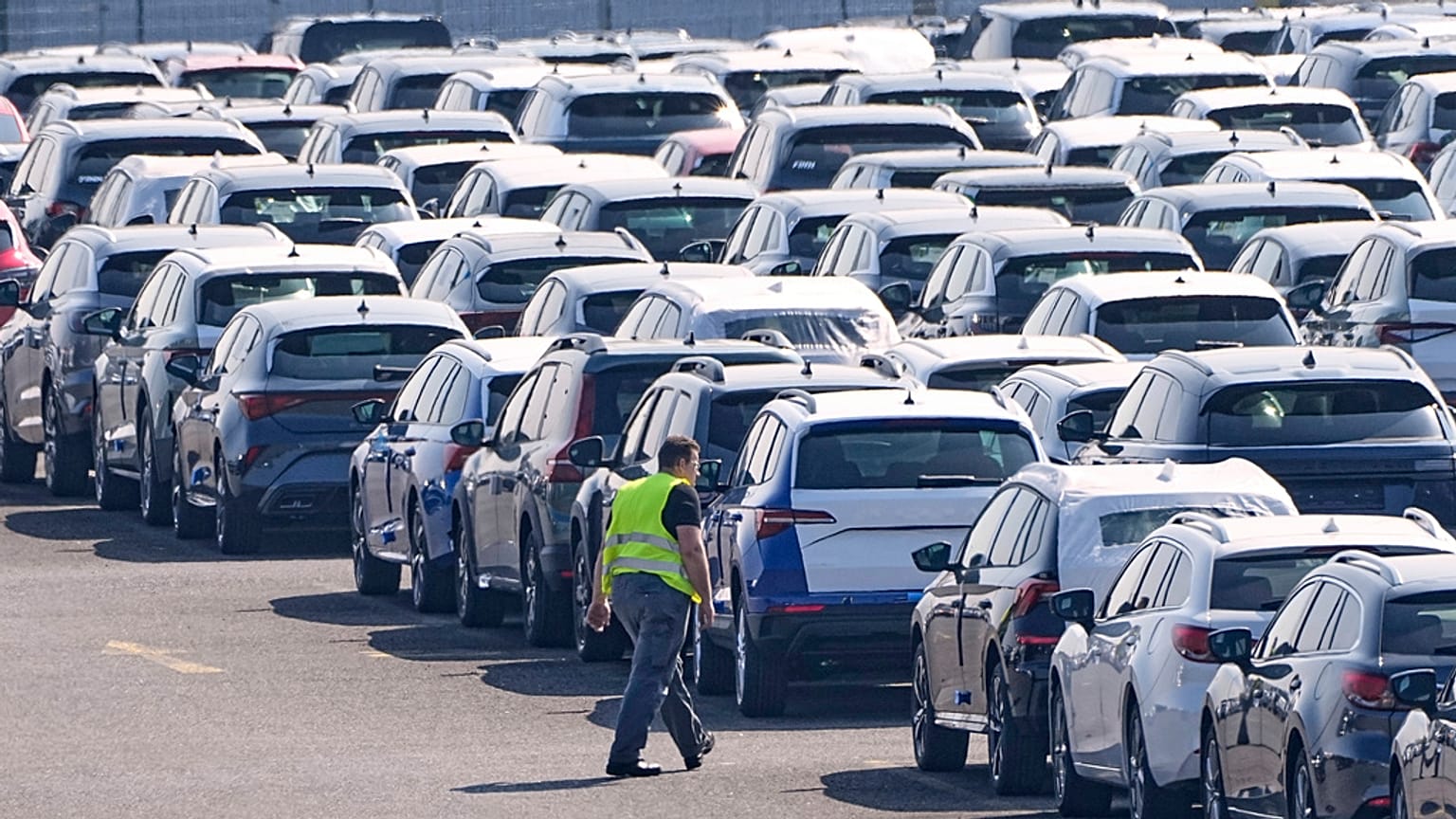
The European automotive industry breathed a sigh of relief on Thursday as the US formally reduced its tariffs from 27.5% to 15%, in accordance with the trade agreement reached in July between the EU and the US.

A notice was published on the US federal register confirming that the measure will apply retroactively from 1 August, in accordance with US promises.

“I appreciate that implementation of our joint commitments is on track: car and parts tariffs down to 15% retroactively Aug 1, key exemptions from the cap Sept 1,” EU Trade Commissioner Maroš Šefčovič wrote on X, after a video call with his US counterpart Jamieson Greer.

The notice also implements tariff exemptions agreed for aircraft, certain pharma products and chemicals, and some natural resources.

Last July, the EU and US reached a trade deal after weeks of dispute which allows Washington to impose 15% tariffs on EU goods.

Talks on steel and aluminium to begin

However, negotiations between Washington and Brussels are far from over.

EU steel and aluminium remain subject to 50% tariffs, to the dismay of the sector, which is already struggling with an influx of overcapacity from Asia.

The tariffs were extended in August to 407 new product categories containing steel and aluminium.

In a joint statement published in August, the EU and the US committed to negotiating tariff rate quotas for the industry and to cooperate on the issue of overcapacities.

“With respect to steel, aluminium, and their derivative products, the European Union and the United States intend to consider the possibility to cooperate on ring-fencing their respective domestic markets from overcapacity, while ensuring secure supply chains between each other, including through tariff-rate quota solutions,” the joint statement said.

However, the talks on steel and aluminium seem just to be starting.

“My next focus: jumpstarting our strategic collaboration on steel,” Šefčovič said on X.

Electric vehicle sales surge across EU as overall car market stalls

Battery-electric and hybrid models are gaining ground in the EU, while diesel and petrol car sales continue to lose momentum.


Copyright AP/Matthias Schrader

By Doloresz Katanich
Published on 25/09/2025
EURONEWS


Battery-electric vehicles (BEVs) are speedily taking over the EU car market, even though the most popular category is still hybrid-electric models, according to the European Automobile Manufacturers' Association (ACEA).

New car registrations in the EU inched down by 0.1% in the first eight months of 2025 compared to last year, but increased by 5.3% in August. From January to August, sales of EVs grew year-on-year by 24.8%.

"The battery-electric car market share for August 2025 YTD held at 15.8%, still below the pace needed at this stage of the transition. The hybrid-electric car market remained the most popular power type amongst buyers," said ACEA in a press release.

The battery-electric car market share increased to the current 15.8%, up from 12.6% a year earlier. The hybrid-electric sales went up 16.4% in the period between January and August 2025.

The number of newly registered petrol and diesel cars collapsed by 19.7% and 25.7%, respectively, for the first eight months of the year.

Among the EU’s four largest economies, Germany registered EV sales up by 39.2% for the period between January and August. In Italy, this segment grew by 28.9% whereas EV sales in Spain almost doubled. France, by contrast, saw a slight decline of 2%, even though in August alone, EV sales jumped by 29.3%.

Which models were the most popular?

Volkswagen led the sales of new cars in the EU in the first eight months of 2025. The German car giant secured 27.5% of the market in this period as its overall sales went up by 4.1% year-on-year. Among its brands, Skoda and Cupra saw the biggest increase in sales, by 10% and 39.1% respectively. Audi, Porsche and Seat sales, in contrast, slumped.

The French Renault Group's sales grew by 5.8% in the same period, with each of its Renault, Dacia and Alpine brands boosting the numbers of new car registrations.

Toyota and Stellantis, together providing nearly one quarter of the market, saw their sales drop, while BMW and Mercedes increased their sales.

Tesla sales continued to drop by more than 42%, cutting its market share to 1.2% from 2.1% last year. Meanwhile, Chinese competitors kept conquering the European market with BYD selling +244% more than last year, and SEIC Motors boosting their sales by 33.1%.