Thursday, September 25, 2025


New study develops culturally-informed food insecurity screener for Navajo Nation patients


A recent study in the Journal of Nutrition Education and Behavior supports the need for future food access initiatives in the Navajo Nation to provide a foundation for a food-secure future


Elsevier

New Study Develops Culturally-Informed Food Insecurity Screener for Navajo Nation Patients 

audio: 

Cassandra J. Nguyen, PhD, Nutrition Department, University of California Davis, discusses how she and co-investigators worked with the Navajo Nation to develop a culturally-informed food insecurity screener using familiar images and traditional foods to improve patient comfort and screening accuracy. This alternative screener reduces stigma, improves patient comfort, and reflects local food traditions and community food access better.

view more 

Credit: Journal of Nutrition Education and Behavior


Philadelphia, September 25, 2025 – new study published in the Journal of Nutrition Education and Behavior, published by Elsevier, highlights the development of a culturally-informed approach to screening for food insecurity among patients at Northern Navajo Medical Center (NNMC) in Shiprock, New Mexico. The alternative screener aims to reduce stigma, improve patient comfort, and reflect local food traditions and community food access better.

American Indian households experience food insecurity at disproportionately high rates—nearly four times that of the general US population. In the Navajo Nation, geographic isolation, limited grocery store access, high food costs, and transportation barriers contribute to this ongoing public health challenge. Standard screening tools, however, were developed without significant input from American Indian communities and may not capture culturally relevant dimensions of food security.

Researchers from the University of Washington and the University of California, Davis, partnered with NNMC to create an alternative screening tool that incorporated community feedback, visual aids of traditional and convenience foods, and a focus on dietary quality and satisfaction—not just quantity. In a two-phase study involving interviews and surveys with 122 adult participants, the new screener revealed different patterns of food insecurity compared to the existing two-item federal measure, suggesting it may capture unique and important aspects of the issue.

“Community members told us that the current questions can feel uncomfortable or stigmatizing. By using familiar images, acknowledging traditional foods, and focusing on strengths, we aimed to create a tool that not only identifies need but also respects cultural values that are reflective of the Navajo community in Shiprock, New Mexico,” said lead author Tia Benally, MPH, Research Coordinator at the Indigenous Wellness Research Institute, and the School of Public Health, University of Washington, Seattle. “Future initiatives should consider the assets present in the Navajo Nation, such as the close-knit family and community connections that can be further supported to provide a foundation for a food-secure future.”

The authors emphasize that while screening is critical, it should be paired with adequate resources and support to address the root causes of food insecurity. They also call for more research to refine culturally grounded screening tools for use in Navajo Nation and other Indigenous communities.


Increased risk of depression and psychosis after childbirth among mothers


Karolinska Institutet
Emma Bränn 

image: 

Emma Bränn

view more 

Credit: Karolinska Institutet


Depression and psychosis are more common in women after childbirth than before, but the risk of suicide attempts decreases. This is shown by two new studies from Karolinska Institutet. The results suggest that national guidelines for screening can help women get help earlier.

Mental ill health in connection with pregnancy and childbirth can have long-term consequences for women's health. During this period, major biological and psychosocial changes occur that can increase vulnerability to depression, anxiety, and other psychiatric conditions. Despite previous research, knowledge has been limited, especially regarding how different psychiatric diagnoses develop before, during, and after pregnancy.

In a new study, researchers have used data from Swedish registers covering all women who gave birth in Sweden between 2003 and 2019 – a total of nearly 1.8 million pregnancies.

The study, published in the journal Molecular Psychiatry, shows that mental ill health has increased over time during this period, especially before pregnancy. During pregnancy itself, the number of new diagnoses decreases, but after childbirth, the risk increases again, especially for depression and psychosis.

“We can see that the risk of depression is about 20 percent higher during weeks 5 to 15 after childbirth, compared to the year before pregnancy. For psychosis, the risk is up to seven times higher during the first 20 weeks after childbirth,” says the study's first author Emma Bränn, researcher, Institute of Environmental Medicine, Karolinska Institutet.

When national guidelines for screening pregnant women for depression were introduced in 2020, it opened up the possibility of detecting mental illness earlier. By comparing women who gave birth before and after 2020, the researchers saw that the peak of depression diagnoses occurred earlier after childbirth in women who gave birth after the guidelines were introduced.

“We don't see that more people are being diagnosed, but screening could mean that women are identified earlier and don't have to suffer as long before they can get the support and help they need,” says Emma Bränn.

The study also shows that the risk of other psychiatric diagnoses, such as anxiety, stress-related conditions, and substance abuse, is lower during pregnancy and after childbirth compared to before. The researchers believe that this may be due to biological changes, lifestyle changes, and increased contact with healthcare during pregnancy.

Another study from the same research group has investigated the risk of suicide in connection with pregnancy and childbirth. In the study, published in Nature Human Behaviour, researchers found that mothers were less likely to attempt suicide during and after pregnancy compared to fathers. This is the opposite of what researchers usually observe in the general population, where women tend to have higher rates of suicide attempts than men. For fathers, the risk decreased in the first ten weeks after childbirth, only to increase again.

“Our results suggest that both mothers and fathers are less likely to attempt suicide immediately after having a child, especially mothers,” says first author Yihui Yang, PhD student at the Institute of Environmental Medicine, Karolinska Institutet. She continues:

“Although suicide attempts during and after pregnancy are rare, they can have devastating consequences and are often preventable. It is therefore important that healthcare providers conduct regular check-ups during and after pregnancy to identify parents who are struggling and offer support to prevent suicide.”

The study in Molecular Psychiatry was funded in part by the Uppsala Medical Faculty Foundation, while both studies were funded by Karolinska Institutet, Forte, and the Swedish Research Council. The researchers state that they have no conflicts of interest.

Publications:

”Maternal psychiatric disorders before, during, and after pregnancy: a national cohort study in Sweden Running title: Maternal perinatal psychiatric disorders”, Emma Bränn, Jerry Guintivano, Yihui Yang, Louise Lundborg, Marion Opatowski, Fang Fang, Unnur A. Valdimarsdóttir, Emma Fransson, Alkistis Skalkidou, Yi Lu, Donghao Lu, Molecular Psychiatry, online September 25, 2025, doi: 10.1038/s41380-025-03212-9

”Sex difference in parental risk of suicide attempt during and after pregnancy in Sweden”, Yihui Yang, Emma Bränn, Emma Fransson, Krisztina D. László, Fang Fang, Fotios C Papadopoulos, Unnur A Valdimarsdóttir, Alkistis Skalkidou, Donghao Lu, Nature Human Behaviour, online September 25, 2025, doi: 10.1038/s41562-025-02311-5.


Ecology: Sunk debris from World Wars provides home for wildlife


Springer Nature


More marine life is living on some World War II munitions disposed of on the Baltic Sea’s seabed than on the sediment surrounding it. The findings, reported in a paper in Communications Earth & Environment, show that some marine organisms can tolerate high levels of toxic compounds if there is a hard surface for them to inhabit. The results also demonstrate how detritus from human conflict can provide habitats for wildlife, which is similarly shown in a Scientific Data study mapping a fleet of World War I shipwrecks in Maryland, USA.

Prior to the signing of the 1972 London Convention on the Prevention of Marine Pollution, explosive munitions were frequently disposed of by dumping them unused at sea. These munitions typically contain chemicals which are highly toxic to marine life, although the hard metal casings may provide a suitable surface for marine life to live on.

Andrey Vedenin and colleagues used a remotely controlled submersible to investigate a newly-discovered munitions dumpsite in Lübeck Bay in the Baltic Sea in October 2024. They filmed the munitions and analysed water samples collected from the site, and also investigated two areas of the surrounding sediment for comparison.

The authors identified the discarded munitions as warheads from V-1 flying bombs, a type of early cruise missile used by Nazi Germany in late World War II. They found that there was significantly more marine life present on the munitions than the sediment — an average of around 43,000 organisms per square metre compared to around 8,200 organisms per square metre. Similar magnitudes of marine life abundance have been recorded on natural hard surfaces in the bay in other studies. The concentrations of explosive compounds (mostly TNT and RDX) in the water varied widely, from as little as 30 nanograms per litre to as much as 2.7 milligrams per litre — a level estimated to be potentially fatally toxic to marine life.

The authors suggest that, compared to the surrounding sediment, the advantages of living on the hard surfaces of the munitions outweigh the disadvantages of the chemical exposure. They note that organisms were mainly observed on the casings rather than uncovered explosive material, and speculate that this may have reflected lifeforms trying to limit their chemical exposure. However, the authors conclude that although the munitions are currently an important habitat in the bay, replacing them with a safe artificial surface would further benefit the local ecosystem.

In a separate study, published in Scientific Data, David Johnston and colleagues present a high-resolution photographic map of all 147 wrecks currently in the so-called “Ghost Fleet” of Mallows Bay, on the Potomac River, Maryland, USA. These ships were built during World War I but were deliberately burnt and sunk in the late 1920s, and their wrecks are now known as a habitat for a wide variety of wildlife, such as ospreys (Pandion haliaetus) and Atlantic sturgeon (Acipenser oxyrinchus). The authors created the map by combining high-resolution photographs (an average of 3.5 centimetres per pixel) of the entire fleet, taken using aerial drones in 2016. They suggest that the map may be useful for future archaeological, ecological, and cultural research into the fleet.

***

Springer Nature is committed to boosting the visibility of the UN Sustainable Development Goals and relevant information and evidence published in our journals and books. The research described in this press release pertains to SDG 14 (Life Below Water). More information can be found here.

Bolivia’s ex anti-drugs chief caught with cocaine lab on his land

Bolivia’s ex anti-drugs chief caught with cocaine lab on his land
Cáceres, a coca producer and union leader, was a central figure in Morales’s left-wing governments between 2006 and 2019.
By Alek Buttermann September 25, 2025

Felipe Cáceres, Bolivia’s former vice-minister of Social Defence and Controlled Substances under former President Evo Morales, was detained after anti-narcotics forces busted a cocaine laboratory on his land in the Chapare, the stronghold of the coca growers’ unions and Morales’s political base. His arrest has intensified scrutiny of the leftist Movement for Socialism party (MAS) and reignited debates over the links between Morales’s allies and drug trafficking.

The operation, carried out at dawn on September 23 in Puerto Villarroel, Cochabamba, led to the destruction of a crystallisation lab for cocaine hydrochloride. The Special Force for the Fight against Drug Trafficking (FELCN) seized 2,000 litres of acetate, 200 litres of petrol and 50 kilos each of activated carbon, bisulphite and permanganate, according to Infobae. 

Interior Minister Roberto Ríos confirmed that the laboratory was located on property belonging to Cáceres, alongside a construction materials business he operates. Ríos denied political motives and said the judiciary will determine his responsibility.

Cáceres, a coca producer and union leader, was a central figure in Morales’s governments between 2006 and 2019. Despite being the architect of anti-narcotics policy, he faced persistent questions about his personal fortune, which rose from BOB1.9mn to more than BOB9mn ($1.2mn) during his time in office. He left his post after Morales resigned in 2019 following allegations of electoral fraud.

Morales, a staunch advocate of legal coca cultivation, has attempted to defend Cáceres, calling the arrest a “set-up” and alleging a government conspiracy to "deflect public attention from their own scandals". He claimed the laboratory was not inside the property and accused President Luis Arce’s administration of fabricating the case to distract from corruption scandals. These assertions directly contradict the government’s statements and the FELCN’s findings.

The case follows the detention of Elba Terán, arrested days earlier with 10 kilos of cocaine. Terán, previously convicted for drug trafficking, is linked to the Chapare unions and has long been associated with Morales’s political network.

Chapare remains Bolivia’s most significant coca-producing region, where the shady overlap between union leadership, MAS politics and narcotrafficking has long raised concerns. 


Young Moldovans face uncertain future as pivotal election approaches

Young Moldovans face uncertain future as pivotal election approaches
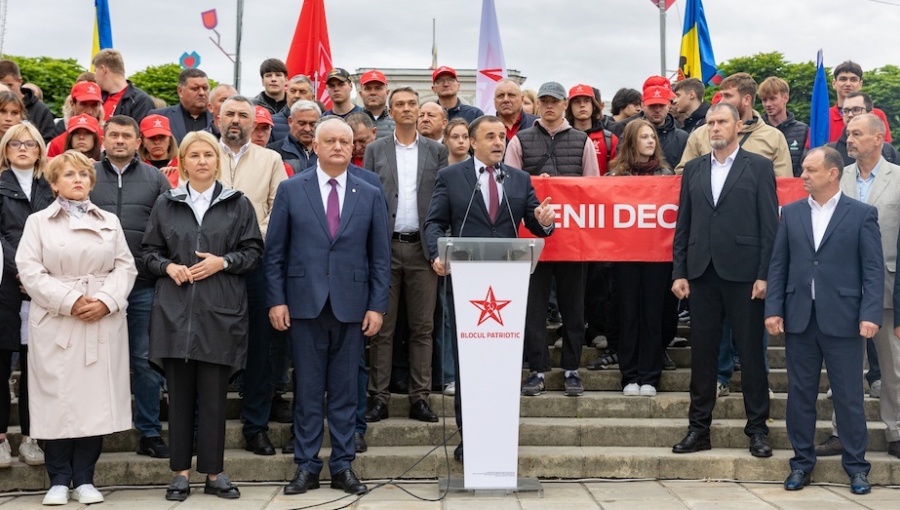
Leaders of the pro-Russian Patriotic Bloc address supporters in Chisinau on September 25. / Frankie Mills
By Frankie Mills in Chisinau and Comrat September 25, 2025

There is a feeling of uncertainty in Moldova’s capital Chisinau ahead of the September 28 parliamentary election that is set to determine the country's future direction between European integration and closer ties with Russia.

In a popular café in the city centre, four young students sit around plates of food and drinks. All are part of Moldova's vast student diaspora, the million-plus citizens who have left their homeland for opportunities abroad.

"Things are different this year because of the coalition," says Cornelia Micleusanu, 20, who left Chisinau to study in Romania, referring to the Patriotic Bloc, a new coalition of pro-Russian parties formed in late August.

"Now we see one side trying to hold on and the other joining together to create a parliamentary majority," she explains, her friends nodding in agreement. "It's going to be scary – a real battle."

The frontrunners are the pro-European Party of Action and Solidarity (PAS), founded by President Maia Sandu, and the Patriotic Bloc. The PAS sees Moldova's future in the European Union, with officials hoping the country could join as early as 2028. Meanwhile the Patriotic Bloc emphasises Moldova's neutrality and sovereignty, presenting EU integration as a threat to national independence, and instead favouring closer relations with Moscow and membership of Russia's Eurasian Economic Union (EEU).

If the PAS loses its majority, Moldova's EU membership drive faces serious jeopardy. Public opinion is razor-thin: a recent poll by Reuters shows the PAS and the Patriotic Bloc are almost even. A turn toward Moscow wouldn't just be symbolic – it would make Moldova a possible conduit for Russian influence in the region, particularly via the breakaway Transnistria region. This would potentially open a geopolitical front with implications for both the war in neighbouring Ukraine and the broader power struggle between the EU and Russia.

When pressed on their predictions, the group exchange glances before Victoria Dosca, 20, who is studying in Italy, takes a guess: "51% to 49%" – with PAS narrowly winning.

The problem, Micleusanu argues, is that Moldovans often vote against what they oppose rather than for a clear vision. "Everybody sees the vote as choosing the best of the worst," she says. "But we have to change what's not working, and we do that by improving the political class, not by choosing the other side just because one did not do the things that we wanted them to."

Diaspora vote

The diaspora's influence has become a controversial issue since last year's referendum on including Moldova’s commitment to EU accession in the constitution. Overseas votes played a significant role in securing a ‘yes’ vote. As a result, Dosca says, resentment grew toward those who left.

"Suddenly there was this fight," she says. “‘Look at the diaspora – the people who left are deciding our country's future.’ But come on, we left for a reason. We've seen how life can be elsewhere, and we want the same for our homeland." 

Financial insecurity, limited opportunities and a hunger for broader horizons drove them abroad. Yet all agree they would return to Moldova if their prospects looked better. Moldova's economy experienced just 0.1% growth in 2024 amid an energy crisis, with inflation still high at 7.3% in August 2025. People also complain the influx of Ukrainian refugees to Chisinau have pushed up rental prices. 

"I live in hope that, one day, I'll come back and feel secure about my country and my place in it," says Mariana Musteata, 20, who is studying in Romania.

A neutral Moldova 

Gathered in the amphitheatre of Chisinau's Cathedral Park beneath a canopy of red flags, the leaders of the Patriotic Bloc assembled to address a several hundred strong crowd on September 25. Supporters held a banner reading; “The people decide the fate of the country”.

19-year-old Alexei Haritonov, deputy chairman of the Young Guard in Moldova, a youth wing of the socialist party now aligned with the Patriotic Bloc, was present at the demonstration. 

Speaking to bne IntelliNews, Haritonov says that the Patriotic Bloc is not about choosing beneath a Russian or European pathway. 

“We are for great communication and cooperation with all countries. First of all, with our neighbours, Romania and Ukraine. Second of all, with the European Union, Russia and China.” 

When asked if he thinks neutrality is possible, Haritonov responds: “Of course. We have it guaranteed in our constitution… it’s not about supporting one side or the other. We want to cooperate. We want projects. We want cultural exchange.”  

Haritonov rejects the notion that the Patriotic Bloc is altogether opposed to joining the EU, and instead says his party is about preserving traditional values. He also says that he believes the results of the 2024 referendum were false. 

“If our path is with the European Union, it will be decided by our people, by elections, clear elections, without any misunderstanding or penetrations from the other countries.” 

Haritonov also rejects the possibility that, should the Patriotic Bloc secure a majority, Russian forces would use Moldova to open a second front in Ukraine or to enter Romania. 

“It’s not possible,” says Haritonov. “Our neutrality is our guarantee.”

Ambivalence in Chisinau 

There are others in Chisinau who feel more ambivalent about Sunday's vote.

Andrey Trager, 25, is originally from Transnistria, a self-proclaimed republic with strong ties to Moscow, where Russian troops have been stationed since the 1990s.

Trager now lives and works in Chisinau. He's happy to be out of Transnistria, a place where he says there are no opportunities. The economy has been brought to its knees after Russia halted its long-standing practice of supplying free natural gas.

Although he has felt strongly disenchanted by Russian politics since the invasion of Ukraine, Trager doesn't see much hope in the pro-EU parties either.

"I feel that these parties are so far from the real situation in the world, and all these promises from both sides, for me, look so abstract," he says. "None of them have a clear political programme, none of them have an economic programme that accords to my personal views.

"Both sides are in this electoral conflict and are absolutely not about democracy, absolutely not about freedom. They are just trying to grab a piece of the country and grab resources in general. From my point of view, there is no big difference between them. For me, what's much more important is: how many possibilities do young people have? How many possibilities do artists have?"

Trager says he won't be voting on September 28, an opinion commonly held in polarised Moldova. Some people say they want independence and don't see either party offering that. Others simply feel that Moldova's small size and level of corruption make the process pointless.

Election fraud 

Russian interference in Moldova's elections through vote-buying, intimidation, propaganda and fraud is well-documented. Moldovan authorities have been dismantling Russian-financed groups preparing to organise civil unrest during the September 28 elections, with 74 people arrested in recent raids.

This year, the government has uncovered evidence of orchestrated Russian interference, disinformation campaigns, vote-buying and efforts to incite unrest aimed at weakening the pro-EU side. Moldova is particularly vulnerable because the Trump administration has slashed at least $50mn in USAID programmes once designed to strengthen Moldova's democratic processes and counter Russian disinformation.

Musteata believes she was targeted by a misinformation campaign. She received a phone call from someone who claimed to be from an official statistics centre surveying opinions. She was then asked a series of questions that Musteata believes were designed to provoke her.

"'What do you believe about the fact that if we enter the European Union, they will make us put into force a law that allows children to change sex?'" she recalls the pollster asking. "Would you still opt for integration?"

Anti-EU sentiment in Gagauzia 

In Gagauzia, Moldova's autonomous region in the south, anti-EU sentiment runs deep. The Gagauz are a Turkic-speaking Orthodox Christian minority with cultural and economic ties to Turkey, yet the region was heavily Russified during the Soviet era and today maintains strong loyalties to Moscow. Most schools teach in Russian rather than Romanian, and residents largely consume Russian media.

The region has been significantly influenced by fugitive oligarch Ilan Shor, who has funneled money through his network to support pro-Russian candidates, including current governor Evghenia Guțul. She was sentenced to seven years in prison in August 2025 for channeling illegal Russian funds to finance Shor's political activities.

In the 2024 EU referendum, Gagauzia voted overwhelmingly against, with 94.84% rejecting the motion. A walk through Comrat, the dusty capital, reveals a jumble of contradictions. There is a statue of Lenin in the centre, but also a poster for an EU orchestra playing at the town's House of Culture. Travel agencies offer trips to Europe. Teenagers play R.E.M. in a coffee shop.

At the Turkish library, bne IntelliNews met with high school students Xenia Gradinar, 17, and Irina Sherban, 18.

Despite the heavy Russian influence, the pair believe they have better chances with the EU and say attitudes are changing.

"We want more than older people. They are used to stability, but we want something crazy. We want something new. And Europe is a good opportunity for it," says Gradinar.

"Some of my classmates still support Russia, and they want to unite with Russia." When asked what they think the difference was between them and their classmates, the pair pause.

"I think they think like their parents, and this is the biggest problem. They don't realise what the European Union is and what opportunities it can give us, because Russia has helped us so many times. They consider Russia to be our mum and dad."

Russia maintains its ties with Gagauzia in multiple ways. Students can study at Russian universities tuition-free, although the appeal has waned as degrees obtained there face limited recognition abroad due to sanctions. Many Gagauz residents migrate to Russia for work, sending remittances home. Moscow has also funded schools, cultural centres, sports facilities and Orthodox churches in the region.

But Gradinar and Sherban believe mentalities are beginning to shift, a process accelerating as people gain access to European opportunities.

"My dad is a bit afraid of Europe, but he also recognises the new job opportunities. Day by day, he is becoming closer to the idea of the European Union. But in the past, he wanted to unite with Russia," says Sherban. "He sees that something is changing, that Russia is becoming truly aggressive."

Back in Chisinau, the group of young students also weigh in on the state of democracy in Moldova. 

When asked how confident she feels in Moldova's democracy, Micleusanu answers: "I think that we're at our most democratic since independence. It's not perfect… we still have a lot of problems, a lot of corruption. But if we compare how we are now to 1991, we are a lot better."