Wednesday, October 01, 2025

Polish population to shrink by 6.6mn by 2060
Polish population to shrink by 6.6mn by 2060
By bne IntelliNews October 1, 2025

Poland’s population will fall by 6.6mn by 2060 compared with 2024, the country’s statistical office GUS said in a report on September 30. 

Last year’s decline in births already confirmed that Poland is in a demographic crisis, a situation last seen temporarily between 1997 and 2007. “The basis for such a conclusion is provided by trends in births, mortality, life expectancy, marriages, divorces and migration,” GUS said.

Births remain the key factor shaping population numbers, GUS also said. For stable demographic growth, there should be at least 210–215 births per 100 women aged 15–49 each year, compared with the current figure of approximately 110. 

Replacement of generations requires a fertility rate of 2.1, but Poland’s fertility rate dropped below that level in 1990 and has stayed under 1.5 since 1997. Persistently low rates below 1.5 bring irreversible changes in the age structure, GUS said.

While the fertility rate is expected to edge upward, the number of potential mothers will fall as today’s small children form the main cohort of women of childbearing age in the 2040s and 2050s. The report estimates births at about 225,000 in 2060.

“The projection shows that by 2060 Poland’s population will decline by 6.6mn people in relation to 2024. The main driver will be mortality, with deaths reaching nearly 490,000 in 2060, as the post-1980s baby boom cohort enters old age,” GUS said.

According to the study, those now in their twenties will begin reaching retirement age in 2060, while the median age will exceed 50.25 years. That would be around seven years higher than in 2024, meaning half of the population will be older than 50. 

In 2024, the median age already stood at over 43 years, more than seven years higher than in 2000. Between 2000 and 2024, the number of Poles past retirement age - which currently is 60 for women and 65 for men - grew by more than 3mn to 8.9mn, with their share of the population rising from under 15% to nearly 24%. 

“Observed demographic changes, seen both individually and socially, present complex challenges not only economically, but also psychologically, medically and socially,” GUS said.

Slovenia confronts its ageing challenge with contested pension reform
Slovenia confronts its ageing challenge with contested pension reform
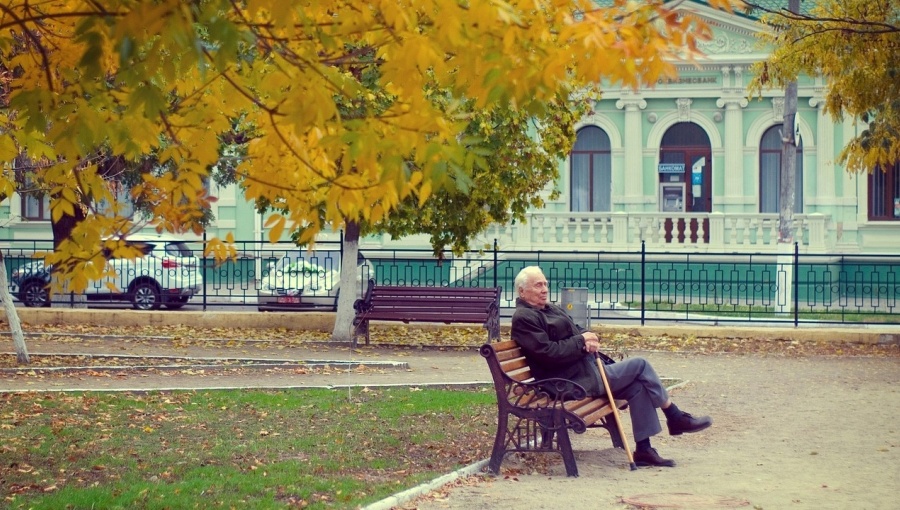
Slovenia's population is ageing rapidly, driven by decades of low fertility and rising life expectancy. / voffka offka from Pixabay
By Valentina Dimitrievska in Skopje October 1, 2025

The battle over the comprehensive reform of Slovenia’s pension system is shaping up to be one of the small country’s defining political struggles of the decade.

The overhaul of the pension system in Slovenia, an EU country with a population of slightly over 2mn, has been discussed for years as a response to the country’s ageing population. However, the reform, hailed by the government as a long-overdue step towards securing sustainable public finances, is seen by critics as an unfair burden on workers. They are now demanding a referendum. 

A system under strain

Pensions are more than just monthly cheques; they are a lifeline for retirees and a promise that decades of work will be rewarded with dignity. Yet, like many European nations, Slovenia is facing the heavy weight of demographic change.

The country’s population is ageing rapidly, driven by decades of low fertility and rising life expectancy. According to OECD projections, public pension expenditure, which accounted for about 10% of GDP in 2019, could climb to nearly 16% by 2050 — making Slovenia the second-highest spender on pensions in the EU after Italy. Without reforms, these costs could strain the state budget, forcing higher taxes, cuts in other public services, or both.

Economist and university professor Mojmir Mrak explained to bne IntelliNews that the reform’s main objective is to address ageing pressures.

“The reform aims to address demographic challenges, ensure the long-term sustainability of the pension system, and provide higher and fairer pensions, especially for those with long careers and for vulnerable groups,” Mrak said in a comment.

Mrak added that the reform increases the retirement age as well as the pension accrual rate, adjusts the indexation formula for increases, and keeps contribution rates unchanged. Implementation will start in 2026 and all major changes should be phased in by 2035.

What will change

At its core, the reform guarantees that workers with 40 years of service will retire with a pension equal to 70% of their average salary, a marked improvement over the current system. Vulnerable groups such as disabled pensioners, widows and those in physically demanding jobs will receive stronger protections, according to the labour ministry.

Other provisions include a gradual increase in the retirement age to 62 for women and 67 for men by 2035, the extension of the pension reference period from 24 to 40 years (excluding the five lowest), and a new winter bonus rising to €250 annually by 2030. Rules for vocational rehabilitation will also be simplified.

Explaining the reasons for the reforms, the ministry said in a Facebook post: “The balance between workers and pensioners is becoming increasingly strained. At present, one in five citizens is over 65, and in 35 years’ time, nearly one in three will be.”

Not everyone welcomed the news. Commenting under the ministry’s post, one woman complained that raising the retirement age by two years would force people to work longer, only to enjoy their pensions for a shorter period.

Prime Minister Robert Golob countered that the reform strikes a fair balance. “The whole pension reform is aimed at ensuring sustainable public finances on the one hand, and on the other hand at ensuring that new pensioners who will retire in the next few years will receive as decent a pension as possible,” he said.

A compromise, not a cure-all

While the reform has been described as historic, experts caution that it is not perfect.

“My overall assessment is that taking into account the demographic trends of Slovenia, it is welcome that the pension reform was finally adopted. As usually happens with politically sensitive structural reforms in Slovenia, the final version of the new pension reform is also a compromise,” Mrak said.

“Personally, I would be in favour of fiscally more ambitious reform and of a reform that would include stimulus for development of the pension system’s second pillar.” 

The second pillar, or supplementary pension savings, remains underdeveloped in Slovenia compared with other EU states. Strengthening it could relieve some pressure on the state system, but it requires political will and public trust.

Workers push back

Not everyone shares the government’s enthusiasm. In May 2025, unions and civil society groups in Slovenia formed the Workers’ Coalition (Delavska koalicija) to oppose the reform. They argue the package unfairly punishes workers while letting employers off the hook.

In a comment to bne IntelliNews, the coalition criticised the reform for raising the retirement age and reducing future pension benefits. Under the proposed changes, the retirement age would gradually increase from 60 to 62 for those with 40 years of service, and from 65 to 67 for those with shorter work records.

“This is unacceptable for workers in many fields. In addition, the reform will punish those precarious workers who have had unequal incomes throughout their careers, as it expands the period for calculating pensions from 24 best years of a worker's career to 35 years, effectively lowering their pensions,” the coalition said.

The coalition also warned that the reform’s mechanism for adjusting pensions over time would erode retirees’ purchasing power. Although the calculation rate is set to rise nominally, future adjustments will be linked more to inflation (80%) than to salaries (20%), resulting in slower growth in pension benefits.

Union representatives accused employers of shirking responsibility for the system’s sustainability. Workers currently contribute 15.5% of their wages into the pension fund, compared to 8.85% paid by employers. According to Delavska koalicija, employers benefited from a government-approved reduction in their share in 1996, which was originally meant to be temporary.

“Had employers restored their contributions to the previous level and contributed equally as labour does, there would be no need for a pension reform at all,” the coalition said.

Calling the reform unfair and imbalanced, the group insisted that workers are being forced to retire later for weaker pensions while capital avoids its share of the burden.

The group has launched a referendum initiative, starting with the collection of 2,500 signatures to file the request, followed by another 40,000 to force a national vote. They are confident that workers, given the chance, will reject the reform at the ballot box.

“So far, they [workers] have not had their voice heard in the matter,” the coalition said.

In the meantime, the Workers’ Coalition said on September 26 that it had completed the first phase of collecting signatures against the pension reform, submitting 10,000 signatures to the parliament, four times the required 2,500. The group described the effort as a joint achievement made possible by the commitment of its supporters. “We have shown that there are many of us and that we are capable of coming together,” the coalition noted.

Comparisons in Europe

Slovenia is not alone in facing this dilemma. Across Europe, countries are pushing through unpopular pension reforms to cope with ageing populations. France, despite months of protests and strikes, raised the retirement age from 62 to 64 in 2023. Austria has tied retirement age increases to life expectancy. Germany and Sweden, with much higher employment rates among older workers, offer models of later retirement combined with strong second-pillar pension schemes.

In comparison, Slovenia’s effective retirement age remains low. Only 25% of Slovenians aged 60 to 64 were employed in 2019, far below the OECD average and countries like Germany (41%) and Sweden (58%). Without measures to encourage longer working lives, the system’s sustainability will remain fragile.

The OECD has repeatedly warned that without reform, Slovenia would face unsustainable pension spending. Its recommendations included raising the minimum retirement age, linking it to life expectancy, and shifting from wage-based to price-based pension indexation. The current reform incorporates some of these suggestions.

A nation divided

For many Slovenians, the debate is not just about percentages and formulas, but about fairness and trust. Workers who have spent decades in factories, hospitals or construction sites fear being forced to work longer despite declining health.

On the other hand, economists argue that without reform, the system could collapse, leaving future retirees with even less security.

The pension reform is set to roll out gradually from 2026 in the next 20 years, but its fate is far from certain. The Workers’ Coalition’s referendum push could stall or reverse it, while demographic and fiscal pressures continue to mount.

Slovenia’s path reflects the broader European challenge: how to preserve intergenerational fairness in an ageing society. The compromise reached in Ljubljana may not satisfy all sides, but it marks a step — however contested — towards confronting one of the country’s most pressing challenges.


ICYMI

Afghanistan grinds to a halt as Taliban cuts off internet

Afghanistan grinds to a halt as Taliban cuts off internet
Taliban’s internet blackout halts trucks at Iran border. / bne IntelliNews
By bnm Tehran bureau October 1, 2025

A sweeping internet shutdown across Afghanistan by the Taliban authorities has paralysed cross-border trade and disconnected millions of web users in what has been described as a disaster for the country.

At the Dogharoun border crossing, nearly 800 Iranian and Afghan lorries were stranded mounting further problems with perishable food items beginning to perish in the heat while emergency items including medical supplies were also held up, according to Iranian media.

The blackout stems from a nationwide order issued by Taliban leader Hibatullah Akhundzada, who cited the need to combat “immorality” as justification. According to official sources, between 8,000 and 9,000 telecommunications towers have been shut down, and the outage is expected to continue “until further notice.”

The border disruption, which began on the night of September 30, has affected only outbound traffic from Iran, while inbound trucks from Afghanistan continue to enter without issue. 

The impact has been far-reaching. Afghanistan’s economy has been severely disrupted, with banking systems, airline operations, and government services grinding to a halt.

Ismail Pourabed, director of the Dogharoun border terminal, confirmed that the outage has severed digital communications with Afghan border authorities, halting customs processing and documentation.

“We are working to resolve the issue by arranging a border meeting with Afghan officials through the Taybad border command,” he said.

Pourabed added that under normal conditions, 600 and 700 trucks exit Iran daily via Dogharoun, with operations running until 11 p.m.

Taliban backtracking on internet outage

The situation at airports is no better with flights operated by carriers such as Ariana and Kam Air cancelled, and citizens have been left unable to contact relatives abroad with mobile signals disconnected.

Following the outcry by Afghans, Taliban spokesman Zabihullah Mujahid has attributed widespread internet outages across Afghanistan to “worn fibre optic cables,” claiming they are being replaced, Shahrara reported on October 1.

Mujahid claimed old internet fibre optic cables throughout Afghanistan have become worn and are being replaced. He dismissed rumours about Taliban-imposed internet restrictions, saying "rumours are being spread that we have banned the internet".

Internet monitoring organisation NetBlocks confirmed that several networks in Afghanistan have been disconnected and telephone services have been affected, resulting in a complete internet shutdown in the country of 43mn people.

Telecom firms confirm internet shutdown

Telecommunications companies in Afghanistan have confirmed the nationwide internet shutdown was carried out under direct orders from the country's top leadership, Khaama reported on September 30.

Telecom operators said they are merely "managing a sensitive and complex situation" and expressed hope that services may resume soon.

The UN Assistance Mission in Afghanistan has expressed grave concern, urging authorities to restore internet access immediately. It warned the blackout has "cut Afghanistan off from the world" and placed people's lives at serious risk.

Richard Bennett, UN special rapporteur on human rights in Afghanistan, stressed on September 30 that without urgent restoration of internet services, daily lives of Afghans, Reuters reported.

He cautioned the blackout is undermining access to education, healthcare and communication for women and girls whilst threatening freedom of expression and access to information.

PANNIER: Quarrelling neighbours – the Taliban and Tajikistan

PANNIER: Quarrelling neighbours – the Taliban and Tajikistan
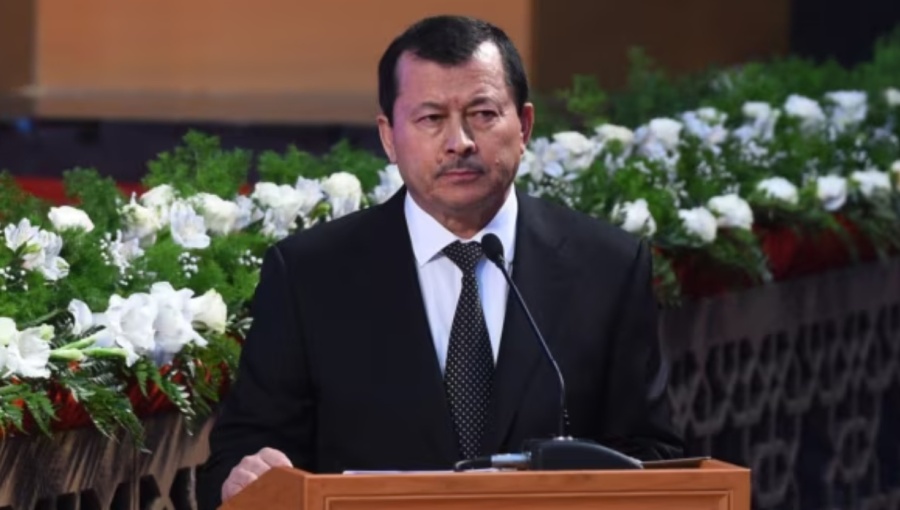
Tajik national security chief Saymumin Yatimov. When word spread of his unpublicised visit to Kabul in September 2024, hopes rose of an improvement in relations between Dushanbe and Kabul. / Official photo
By Bruce Pannier September 30, 2025

Tajikistan’s government has remained antagonistic towards Taliban rule in Afghanistan ever since the militant group first appeared some 30 years ago. And in word and deed, Tajik President Emomali Rahmon has shown that he would prefer not to have to deal with his neighbour’s current government at all, though that has proven impossible.

There are ties that bind the two countries. Slowly but surely, the Tajik authorities are developing a relationship with the Taliban that involves cooperation on local levels and goodwill gestures, but avoids, as much as possible, actually speaking with Taliban officials.

Picking up where they left off

Tensions between the Taliban and Tajikistan erupted right after the Taliban’s return to power in mid-August 2021. It was not surprising. Rahmon was also Tajikistan’s president when the Taliban seized power in the mid-1990s, and the two sides were on bad terms back then.

In September 2021, Rahmon ordered, and attended, several military parades held in the weeks after the Taliban regained control of Afghanistan. One was in Darvaz district, right on the Afghan border.

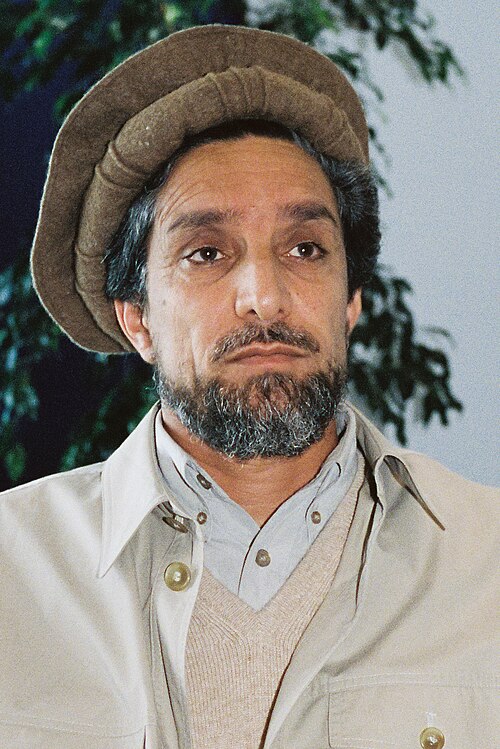
Tajikistan's honouring of assassinated guerilla commander Ahmad Shah Masoud soon after the Taliban retook power is a sore point for the current powers that be in Kabul (© European Union, 1998 – 2025).

At that time, Rahmon also posthumously awarded Afghans Burhanuddin Rabbani and Ahmad Shah Masoud Tajikistan’s highest award, the Order of Ismoili Somoni, 1st degree.

The Taliban ousted Rabbani when they seized Kabul in late September 1996. Masoud, the legendary mujaheddin fighter from the days of the Soviet occupation, was Rabbani’s defence minister. After he and Rabbani were chased from Kabul, Masoud, an ethnic Tajik, led one of the most effective forces battling the Taliban in the late 1990s. The Taliban assassinated him on September 9, 2001.

Tajikistan served as a conduit for delivering weapons and other supplies to Masoud’s forces in Afghanistan during those days. Masoud and Rabbani were often in Tajikistan for short periods of time.

Rahmon’s presentation of the awards was clearly a jab at the Taliban. Having retaken power, they would also have been aware of reports that Tajikistan was supplying the National Resistance Front (NRF) in Afghanistan with weapons.

The NRF continues to wage a guerrilla war against the Taliban. Most of its fighters are ethnic Tajiks who were part of Ashraf Ghani’s foreign-backed government forces. The NRF is led by Ahmad Masoud,  Ahmad Shah Masoud’s son, who, like his father years ago, is also frequently in Dushanbe. In late October 2021, there was a report that the NRF opened an office in the Tajik capital.

Tajikistan reinforced its troops along the Afghan border throughout September 2021.

The Taliban rattled their own sabres, saying in that month that they were dispatching additional special forces to the Tajik border “in order to eliminate potential security threats.”

Among the Taliban’s reinforcements were 130 militants from Jamaat Ansarullah, an extremist group from Tajikistan that allied themselves with the Taliban and joined them in fighting foreign and Afghan government troops. Jamaat Ansarullah’s goal is to topple Rahmon’s government.

By the end of that September, Russia and Pakistan were calling on Tajikistan and the Taliban to lower tensions.

The situation eased, but even now it continues to simmer.

All the other Central Asian governments, meanwhile, established a dialogue with the Taliban, centred mainly on business opportunities.

Taiban representatives occupy Afghan embassies in many countries, including Russia, China, Iran, Pakistan and the Central Asian states, except for Tajikistan. Mohammad Zahir Aghbar remains the Afghan ambassador to Tajikistan. He was appointed to the post in 2020 by the government of Ashraf Ghani. Oddly, however, Taliban representatives occupy the Afghan consulate in Tajikistan’s remote eastern city of Khorog.

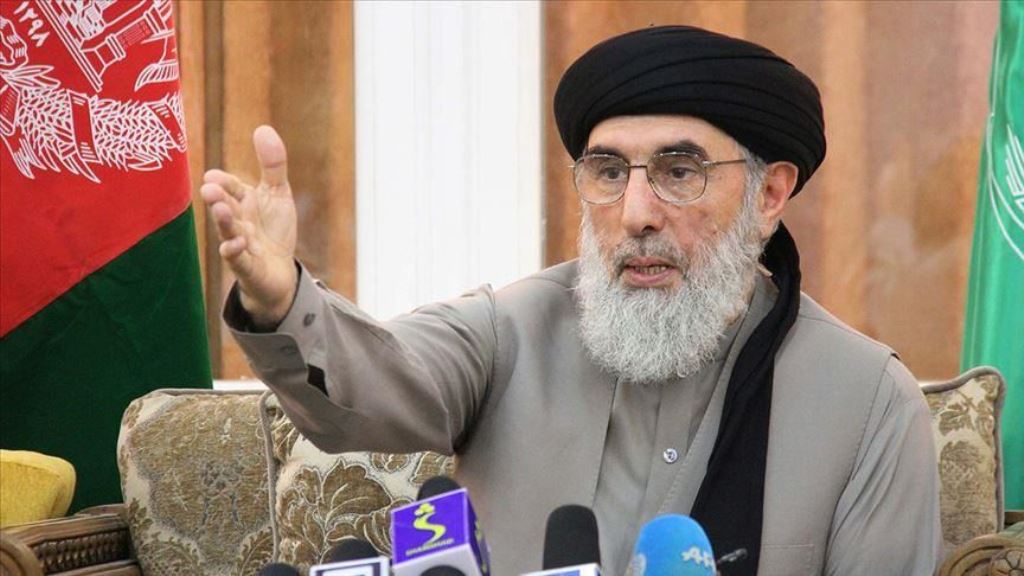
Gulbuddin Hematyar accused Tajikistan of making "a declaration of war against Afghanistan" by giving "shelter" to the NRF (Credit: social media).

In May 2022, Gulbuddin Hematyar, a scourge of Afghanistan’s political world for decades and currently an ally of the Taliban, responded to Tajikistan’s continued support for the NRF. Hekmatyar said the decision of Rahmon’s government to allow the NRF to “shelter” in Tajikistan was a “declaration of war against Afghanistan.”

Tajikistan continues to act against the Taliban internationally.

Since 2012, Afghanistan has had observer status in the Shanghai Cooperation Organisation (SCO). The SCO members are Belarus, China, India, Iran, Kazakhstan, Kyrgyzstan, Pakistan, Russia, Tajikistan, and Uzbekistan. Since their return to power, the Taliban have not been invited to any SCO meetings.

When the SCO Foreign Ministers’ Council met in May 2024, the topic of resuming the work of the SCO-Afghanistan group was discussed, but rejected. Russia’s special representative for Afghanistan, Zamir Kabulov, later explained, “Russia and the majority of participants favoured resuming this contact group's work,” but “our Tajik partners still have certain reservations.”

At a session of the Russian-led Collective Security Treaty Organization’s (CSTO’s) Council of Parliament Assembly in early June 2024, the chairman of Tajikistan’s upper house of parliament (also the son of Rahmon), Rustam Emomali, warned of the dangers still lurking in Afghanistan.

“Afghanistan has again become a centre of terrorism. Dozens of extremist and terrorist groups have strengthened their positions on Afghan soil,” Emomali claimed, “The cultivation and production of narcotics in Afghanistan is increasing.”

In July this year, Tajikistan’s Drug Control Agency said 3,107 kilograms of narcotics were seized in the first half of 2025 and “54.4 percent of these narcotics were seized at the border with Afghanistan.”

Elements of common ground

Tajik electricity exports to Afghanistan were not interrupted by the change in Kabul. The cash-strapped Tajik government did not want to give up the revenue from electricity sales. It was even willing to accept a Taliban promise of eventual payment rather than halt exports.

Eventually the Taliban did pay their bill and in December 2024, Tajikistan and Afghanistan renewed their electricity supplies agreement through 2025. Such a contract must require some level of bilateral communication, but the Tajik government never mentions such interaction.

Power lines running from Tajikistan, Turkmenistan and Uzbekistan to Afghanistan were built during the years the Taliban was out of power. Also, the World Bank announced in February 2024 that construction of the Central Asia-South Asia (CASA-1000) power transmission line, started more than a decade ago, had resumed in Afghanistan after it was halted when the Taliban regained control there.

CASA-1000 aims to bring 1,300 MW of electricity from hydropower plants in Kyrgyzstan and Tajikistan to Afghanistan and Pakistan (300 MW to Afghanistan and 1,000 MW to Pakistan). The project is complete in Kyrgyzstan, Tajikistan, and Pakistan. Afghanistan’s Ministry of Energy said in March that work on CASA-1000 in Afghanistan was 70% completed. Afghanistan’s Ministry of Economy said at the start of April that work on the Afghan section of CASA-1000 was expected to be finished by 2027.

Security is another area that brings Tajikistan and the Taliban together.

Rocket fire from Islamic State of Khorasan Province

Tajik authorities were first compelled to make contact with the Taliban in May 2022 after militants from the Islamic State of Khorasan Province (ISKP, or ISIS-K) fired several rockets from Afghanistan into Tajikistan. There was little damage but the incident prompted the Tajik government to send former security officer Samariddin Chuyanzoda to Kabul. More than two years later, Tajik national security chief Saymumin Yatimov visited the Afghan capital in September 2024.

Keeping it cordial – events in 2025 offer some hope

This year has brought a change in relations between Tajikistan and the Taliban.

In January, the latter’s Deputy Prime Minister for Political Affairs, Maulvi Abdul Kabir, observed that the Sherkhan Bandar border crossing with Tajikistan was open. He said it was a sign of improving cooperation.

In May, Taliban spokesman Zabihullah Mujahid said there were no problems between Tajikistan and Afghanistan. According to Mujahid, “Afghanistan maintains good relations with [Tajik] border officials on the other side and cooperation has taken place—and continues—in preventing smuggling in certain areas.”

However, Mujahid mentioned that “friendly ties must be maintained, especially with Tajikistan, where political opponents of the Islamic Emirate are based. This makes it vital Afghanistan-Tajikistan relations remain cordial."

Not long after, Abdul Bari Omar, head of Afghanistan’s state power utility Da Afghanistan Breshna Sherkat (DABS), attended a meeting of representatives from CASA-1000 countries in Dushanbe.

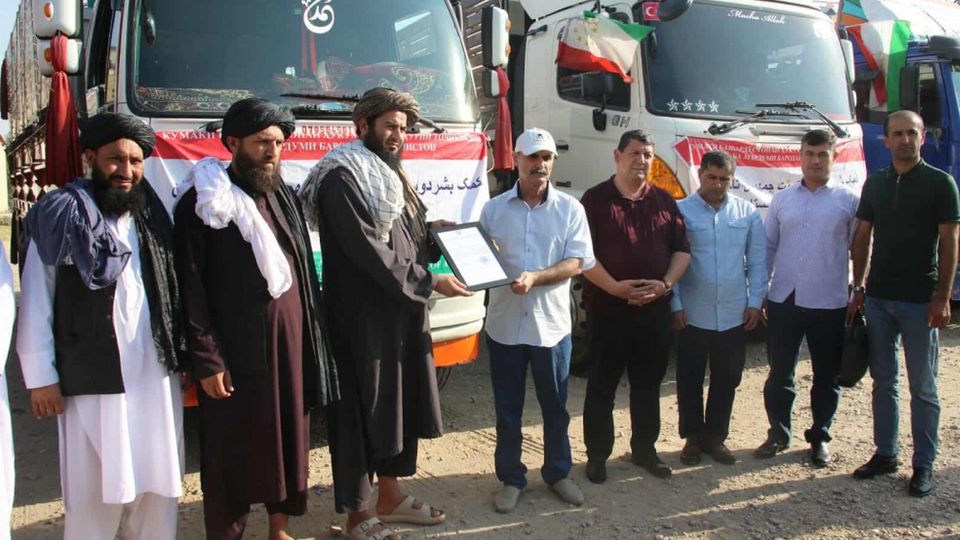
An earthquake that hit Afghanistan on August 31 killed around 2,200 people and left hundreds of thousands in need of help. Neighbouring countries sent humanitarian aid. Uzbekistan shipped 300 tonnes of food, medicines, and medical supplies, and Turkmenistan dispatched unspecified amounts of similar aid. A few days later,  Tajikistan sent 3,000 tonnes of food, tents, blankets and construction materials.

Tajikistan's aid delivery following the deadly end-of-August earthquake that hit Afghanistan was a notable gesture in relations (Nangarhar Governor's Office, official handout).

Since the Taliban re-established their rule, all the Central Asian countries except Tajikistan have sent humanitarian aid in response to earthquakes, floods, droughts and famine, which grips large parts of Afghanistan.  

The only time Tajikistan sent aid to Taliban-ruled Afghanistan previously was after an October 2023 earthquake.

Ironically, a recent deadly incident on the Tajik-Afghan border might offer the clearest proof that relations between Kabul and Dushanbe are improving.

On August 24, Tajik border guards and Taliban fighters exchanged gunfire. At least one of the Taliban was killed, while four others were wounded.

Armed clashes between Tajik border guards and Afghan drug smugglers, some of whom can be Taliban, have occurred for decades. But Tajik troops and Taliban fighters on the border have avoided firing at each another.

What sparked the August 24 conflict is not clear. If this incident had happened in September 2021, the fighting would likely have escalated quickly. Instead, the Tajik border guard commander took a small detachment of troops and went into Afghanistan to meet with local officials to discuss the clash. A photo shows the various parties sitting at a table.

The talks eventually deteriorated into accusations from each side over the harbouring of enemies. But the meeting appears to have at least defused tensions between the two groups in this one area of the 1,357-kilometre (843-mile) Tajik-Afghan border.

The relationship between Tajikistan and the Taliban is a strange one. Neither side trusts the other and there is only contact when the need arises, but lately the need to communicate about mutual problems has been increasing.


Milei to meet Trump at White House as Argentina seeks $20bn swap before election
Milei announced the visit in characteristically terse fashion on X, writing simply: "MEETING AT THE WHITE HOUSE. End." / White House
By Mathew Cohen October 1, 2025

Argentine President Javier Milei will meet US President Donald Trump at the White House on October 14, less than two weeks before congressional elections that could determine the fate of the libertarian leader's economic reforms.

The bilateral meeting, confirmed by Argentina's foreign ministry on September 30, follows a previous one on the sidelines of the UNGA last week and represents the latest sign of deepening ties between the ideological allies as Washington deploys an array of financial instruments to support Buenos Aires's beleaguered economy.

Milei announced the visit in characteristically terse fashion on X, writing simply: "MEETING AT THE WHITE HOUSE. End."

The timing was reportedly set by US Treasury Secretary Scott Bessent, who has been negotiating a potential $20bn currency swap arrangement with Argentine officials since high-stakes talks between the two presidents in New York last month.

Milei will stay at Blair House, the official residence for visiting heads of state—a diplomatic gesture typically reserved for Washington's closest allies, according to Agencia Noticias Argentinas.

Argentina's foreign ministry framed the visit as an opportunity to consolidate what it called the "excellent bilateral relationship" between the two nations, based on "shared values and a shared commitment to freedom, democracy, and the prosperity of our peoples".

But the White House meeting comes at a precarious moment for Milei, whose La Libertad Avanza party suffered a devastating electoral defeat in Buenos Aires province last month whilst his sister and close adviser Karina faced corruption allegations. Legislative rebellions have since successfully overturned presidential vetoes on spending measures, triggering capital flight that forced monetary authorities to exhaust roughly $1bn in hard currency reserves within 48 hours in mid-September.

The proposed US support package would include Treasury purchases of Argentine sovereign bonds and substantial emergency financing through the Exchange Stabilisation Fund. The IMF has expressed support for such an arrangement—a critical development given Argentina's need to continue meeting requirements of its existing $44bn Fund programme.

Yet fundamental vulnerabilities persist. Despite recent market rallies following Bessent's declarations of support, Argentine eurobonds continue yielding between 16 and 26% across the curve—levels that effectively lock the country out of international capital markets. Net international reserves remain at what the IMF describes as "critically low" levels.

The intervention reflects Washington's determination to prevent Beijing from expanding its financial footprint in South America, where Argentina represents what Bessent has termed a "systemically important" ally. This geopolitical dimension has gained prominence as tensions mount between Washington and leftist Brazilian President Lula da Silva, making Argentine alignment increasingly valuable.

Market participants recognise that whilst American financial firepower might temporarily stabilise the peso, Argentina's economic trajectory depends on domestic political dynamics. Should the October 26 elections confirm a legislative gridlock in Congress and diminish Milei's prospects for re-election in 2027, even substantial US backing may prove insufficient to prevent renewed crisis.

Despite achieving monthly inflation below 2% for four consecutive periods, Milei's stabilisation has come through severe recession and wage compression, with many workers and pensioners experiencing declining purchasing power compared to early 2023 levels.