Wednesday, October 01, 2025

The Trust Lives: Moscow Uses Early Soviet Cheka Operations As Model – Analysis


Photo Credit: RIA Novosti


By 

Most people in the West recall the Trust from the dramatization of the life and death of the Odessa-born British intelligence agent Sidney Reilly in the 1983 television program, Reilly, Ace of Spies. The show portrays a 1920s Soviet counterintelligence operation, in which Soviet intelligence agents, known as Chekists, formed a fake anti-Bolshevik organization to lure out and identify genuine members of the resistance within and outside the Soviet Union (seeEDM, September 15, 2022; Simpkins and Dyer, The TrustJuly 1989).


The Trust successfully lured Reilly back to the Soviet Union in 1925, where Soviet secret police arrested, tortured, and eventually executed him. The Trust has had an enduring legacy as a model for understanding Soviet and Russian counterintelligence tactics, as Western intelligence services and Russian diaspora organizations discovered in 1927 that the operation and its supporters in the emigration were not authentic.

Now, more than ever, the Trust mirrors Russian President Vladimir Putin’s approach to the Russian political opposition in exile, which grew following the Kremlin’s full-scale invasion of Ukraine to its largest size since the 1920s (Window On Eurasia, July 2, 2020; Harbin, 2022; Idel Realii, December 9, 2024). Understanding the Trust operation helps to contextualize modern Russian intelligence tactics regarding political opposition in exile and national diaspora populations, most prominently, the Circassians.

The Trust was the code name the Soviets gave to a dissident organization they created in 1920, known as the Monarchist Union of Central Russia (MUCR). Consisting of a mix of some anti-Bolshevik Russians and many intelligence service agents, the Trust claimed it was ready to use violence to overthrow Lenin’s government. In reality, the Soviet secret police—first the Cheka from 1920 to the agency’s dissolution in 1922, and then the State Political Directorate (GPU) from 1922 to 1927 when the Kremlin terminated the operation—completely controlled the organization.

This arrangement advantaged the Soviet intelligence services by splitting the Russian diaspora between those who fell for the Trust’s claim of being the true champion of a free Russia and those who argued for a more cautious approach. The operation also ensured that the Trust’s Soviet handlers always knew the opposition in exile’s plans and allowed the Trust operatives to argue that, since they were on the ground, only they, and not the émigrés, should decide when and where to subvert the Soviet government, neutralizing the influence of the Russian émigrés.

When the Trust was exposed in 1927, almost certainly by the Soviets themselves, those in exile who worked with the organization were discredited in the eyes of others in the diaspora and in Western governments, giving Moscow another positive outcome (see EDM, September 15, 2022).


Upon becoming president, Putin, who began his career as a Soviet Committee for State Security (KGB) officer, used Trust-style operations against Russian nationalists and dissident Russian Orthodox groups inside the Russian Federation (Window on Eurasia, October 26, 2018). More recently, he extended Trust-style tactics to selected non-Russian groups within his country (Window on Eurasia, April 29).

After Putin’s full-scale invasion of Ukraine drove thousands of Russians to flee the country, Putin expanded the “Trust” approach to the Russian opposition in exile as did his Cheka and GPU predecessors with dissidents outside of the Soviet Union in the early 1920s (Window on Eurasia, September 10, 2022; Ekho, September 14, 2024; Window on Eurasia, December 11, 2024).

Few have noticed the return of Trust-style tactics under Putin because his groups, unlike the Trust, often acknowledge, sometimes openly, that they work with the Russian government, and because they operate in an inherently murky environment that allows for plausible deniability about official connections or control.

Dimitry Savvin, editor of the Riga-based conservative Russian Harbin outlet, however, examined the situation closely and concluded that Putin is engaged in the same kinds of operations against the new Russian diaspora that the Cheka used against Soviet emigrants a century ago (Harbin, 2022).

Over the last several weeks, a spate of articles about the Trust on the centenary of Sidney Reilly’s 1925 execution highlights the Kremlin’s fixation on emigration and Soviet efforts to counter it (Gazeta Rassvet, September 19;Komsomolskaya Pravda, September 23; Svobodnaya Pressa;  MKRU, September 25; 73 Online, September 26).

It is no surprise that Russian leaders with a Soviet bent think more about emigration than leaders of other countries, given that Lenin and the Bolsheviks went from a tiny and mostly émigré group at the start of 1917 to the rulers of Russia less than a year later. The surge of pro-regime articles about the Trust, in particular, highlights the Kremlin’s confidence in the operation’s effectiveness during its active and exposed period.

These articles about the Trust feature a hallmark of Russian commentary under Putin: blaming others for Moscow’s actions or plans. In many of the articles, Russian writers of today accuse the West of using Trust-style tactics and argue that Russia must revive these Soviet tactics in response (Sputnik Abkhaziya, September 22; RIA Novosti, September 23).

This pattern strongly suggests that the Kremlin will seek to link any violence against the Putin regime to the Russian opposition in exile and any foreign governments that support them. The Kremlin will continue emphasizing ties between opposition in Russia and dissidents abroad to justify domestic repression at home and pressure other countries to provide less support to the émigrés or even cooperate with Moscow for their extradition (Idel Realii, December 9, 2024).

This strategy was successful a century ago, and it is likely that Putin remembers and expects it to be effective now. The Trust is not just of historical interest, but an active tactic that remains alive. Trust-style tactics are perhaps even more dangerous now than during Soviet times, as the Putin regime has shown itself comfortable working with radical groups shunned by the Soviet system.

Paul Goble

Paul Goble is a longtime specialist on ethnic and religious questions in Eurasia. Most recently, he was director of research and publications at the Azerbaijan Diplomatic Academy. Earlier, he served as vice dean for the social sciences and humanities at Audentes University in Tallinn and a senior research associate at the EuroCollege of the University of Tartu in Estonia. He has served in various capacities in the U.S. State Department, the Central Intelligence Agency and the International Broadcasting Bureau as well as at the Voice of America and Radio Free Europe/Radio Liberty and at the Carnegie Endowment for International Peace. Mr. Goble maintains the Window on Eurasia blog and can be contacted directly at paul.goble@gmail.com .

Death toll rises in Indonesian Islamic boarding school collapse

Death toll rises in Indonesian Islamic boarding school collapse
image for illustration purpose only / Emad El Byed - Unsplash
By bno - Surabaya Office September 30, 2025

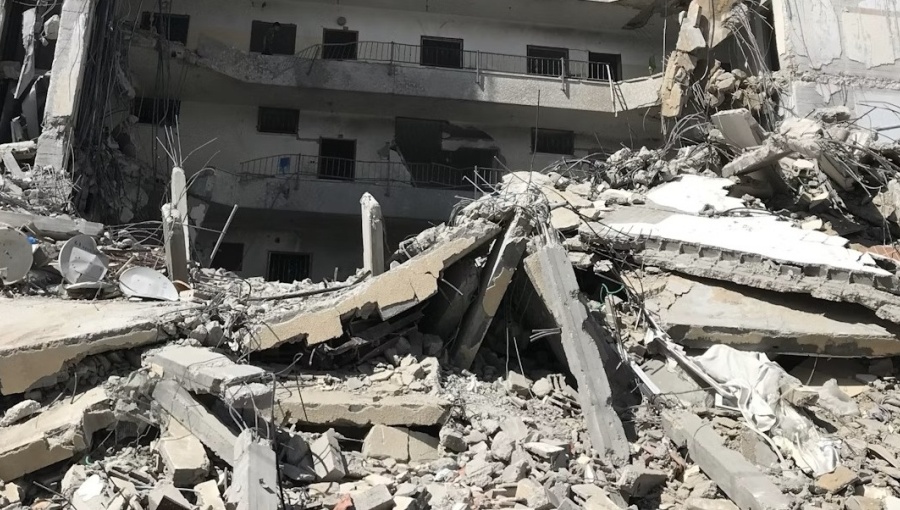
The death toll from the collapse of Al Khoziny Islamic boarding school in Buduran, Sidoarjo, East Java, has climbed to three, local officials confirmed on September 30, detiknews updates.

Authorities said 98 students were affected by the incident, with victims treated at RSUD Sidoarjo, RSI Siti Hajar, and RS Delta Surya hospitals. Two additional fatalities were reported on the morning of September 30: 14-year-old Mochammad Mashudulhaq from Surabaya, and 22-year-old Muhammad Soleh from Bangka Belitung.

Mashudulhaq succumbed to his injuries after being treated at RSUD Sidoarjo, while Soleh, who had suffered severe crush injuries, died despite intensive care.

RSUD director Atok Irawan said emergency procedures included an on-site amputation to save a victim trapped under debris. “The orthopedic and anesthesiology team had to amputate the patient’s left arm at the scene due to life-threatening injuries,” he told reporters.

Rescue efforts remain ongoing, with dozens of students feared trapped beneath the rubble. Officials have not yet disclosed the cause of the building’s collapse.

The three-storey building at Al Khoziny Islamic boarding school in Buduran, Sidoarjo, East Java, collapsed on September 29 in the afternoon, local authorities said. Rescue operations remain underway with more victims feared trapped, Tempo reports.

The incident occurred around 3pm while students were performing afternoon prayers on the second floor, which was being used as a prayer hall. The structure, still under renovation, had undergone fresh concrete work on its roof earlier that day, said the school’s caretaker Abdul Salam Mujib.

“Poured concrete was applied from morning until noon, and by the afternoon the roof suddenly gave way,” Mujib told reporters. He added that the project had been under renovation for about nine months, with plans to complete a three-storey dormitory topped with a cement roof.

Wave of youth protest tests Peru’s fragile political stability

Wave of youth protest tests Peru’s fragile political stability
While Gen Z activists denounce unemployment and precarious opportunities, sectors such as transport workers cite extortion and insecurity as additional motives for mobilisation.
By Alek Buttermann September 30, 2025

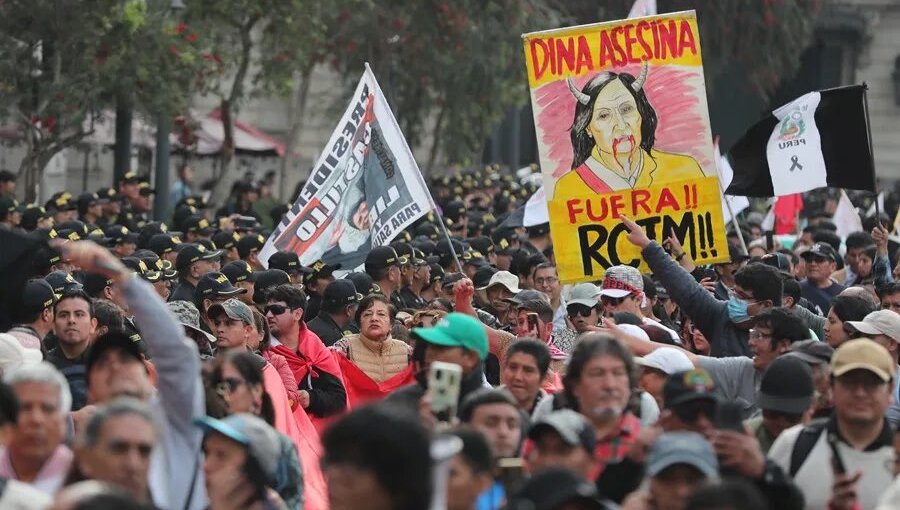
Mass demonstrations spearheaded by young Peruvians have entered a third consecutive week, mirroring a pattern of mobilisation that has also emerged in Paraguay, Nepal and other countries. The protests, which began in Lima on September 13, initially responded to a controversial pension reform but have since expanded to encompass broader grievances over corruption, insecurity, governance and the role of the police.

The original trigger was a controversial reform that sought to make pension affiliation mandatory for all adults from 2027, a measure widely criticised for benefiting private pension funds at the expense of workers. Although Congress later rolled back aspects of the reform, particularly the requirement for self-employed workers, demonstrations persisted. As noted by human rights group Coordinadora Nacional de Derechos Humanos (CNDDHH), demands now centre on repealing the law entirely, rejecting other parliamentary initiatives perceived as self-serving, and denouncing corruption and organised crime.

The movement has drawn not only students but also transport workers and employees from the agroindustry, particularly in regions such as Ica. According to recent polling cited by local media, President Dina Boluarte’s approval stands at a dismal 2%, while the legislature is supported by less than 2% of the population. Analysts argue that this double crisis of legitimacy has reinforced the perception of a political system detached from citizens’ demands.

Police response has seen extensive use of tear gas, rubber bullets and arbitrary detentions. The CNDDHH documented 83 cases of police aggression during the September 21 mobilisation alone, including 16 incidents directed against journalists. Videos circulated on social networks showed tear gas being launched at close range and detentions of individuals not engaged in violence.

Journalist advocacy groups Asociación Nacional de Periodistas (ANP) and the Asociación de Fotoperiodistas del Perú (AFPP) also reported multiple assaults on press workers. Infobae detailed the case of photojournalist John Reyes, who was beaten by at least ten officers despite clearly identifying himself as media. Eight attacks against journalists were recorded during the protests of September 27 and 28, six of them attributed to police agents.

In a bid to quell tensions, Prime Minister Eduardo Arana publicly apologised for what he described as “possible excesses” and announced that penalties could be applied to officers involved. He called for renewed coordination between authorities and the press during demonstrations. Nevertheless, rights groups argue that abuses are not isolated but reflect systemic shortcomings in police training and oversight.

The Lima municipality provided figures indicating 12 arrests and 19 police officers injured, several with severe burns, during recent clashes. One detainee was a 14-year-old, according to CNDDHH data. On the side of protesters, civil society groups recorded at least 24 injured, although the official number remains unclear.

Authorities in Lima estimated daily economic losses of PEN2mn to PEN3mn ($520,000–$780,000) in the historic centre, as the riots impact tourism, commerce and gastronomy. The municipality announced legal action against individuals accused of vandalism, with charges including aggravated damage to property, resistance to authority and disturbance of public order.

The current wave of youth-led protests bears resemblance to mobilisations elsewhere. CNN reported that Paraguayan protesters recently marched under the slogan “Somos el 99,9%”, echoing demonstrations in Nepal and Peru. In several countries, participants have carried images from the Japanese manga One Piece, specifically the skull with straw hat symbol, as a sign of rebellion. Political scientist Luisana Sánchez told CNN that these are “internet-driven phenomena with impact on urban youth”, adding that they rarely resonate in rural areas.

In Peru, the protests are amplified by the digital activism of Generation Z, with reports of doxing on TikTok and alleged mobile phone signal disruptions targeting demonstrators. Activists claim that such measures are designed to stigmatise them as “terrorists”, a tactic reminiscent of earlier authoritarian eras.

Meanwhile, President Boluarte continues to dismiss calls for her resignation. Speaking at an official event on September 29, she insisted she would remain in office until the scheduled 2026 elections, describing mounting demands for her departure and for the closure of Congress as “anarchic voices”. She argued that, under her watch, Peru has achieved “political stability” conducive to foreign investment, pointing to indicators such as low inflation and reductions in multidimensional poverty.

Boluarte also recalled the failed coup attempt by former president Pedro Castillo in December 2022, after which she controversially took office, asserting that her government has since strengthened democracy and order. However, her administration’s growing reliance on Congress, the military and major business groups demonstrates a lack of genuine reform.

The escalation of protests underlines the depth of disaffection among young Peruvians. While Gen Z activists denounce unemployment and precarious opportunities, sectors such as transport workers cite extortion and insecurity as additional motives for mobilisation. Civil society organisations stress that excessive police repression not only violates rights but also risks radicalising otherwise peaceful demonstrations.

The absence of strong and credible opposition leadership complicates prospects for political change, as youth-led protests may express discontent vividly but often struggle to convert mobilisation into sustained political influence. In Peru, this dynamic is further constrained by low institutional credibility and an entrenched culture of impunity.

Observers warn that the current unrest bears ominous similarities to the 2020 and 2022-2023 crises, when mass protests forced resignations and led to dozens of deaths. If the pattern repeats, the country could face renewed instability, which could spook markets and scare away investors just as the country scrambles to attract foreign capital. For now, the combination of deep disapproval ratings, allegations of corruption, and continuing demonstrations suggests that tensions between state institutions and civil society are far from resolved.


US to target Venezuelan cartel land routes after Caribbean strikes, Trump says


Since early September, US forces have conducted at least two strikes on speedboats allegedly carrying drugs in international waters off the Venezuelan coast.
By bnl editorial staff September 30, 2025

US President Donald Trump announced on September 30 that his administration would expand surveillance of drug shipments entering the country by land, following recent military strikes on Venezuelan vessels in the Caribbean.

The measures come amid escalating tensions between Washington and Caracas, with Trump alleging that the Venezuelan government orchestrates an international trafficking network known as the Cartel of the Suns.

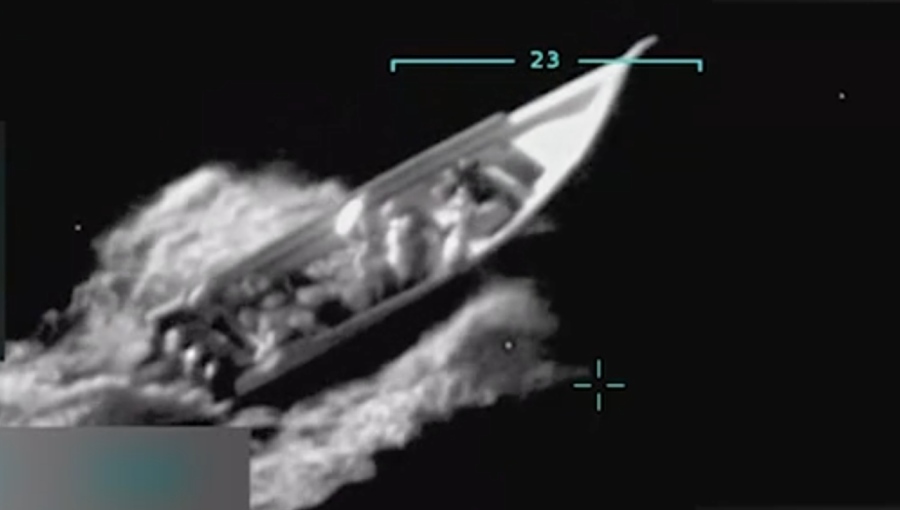
Speaking to reporters whilst travelling to a meeting with military leaders, Trump said operations against several boats had successfully halted maritime drug shipments. "All you have to do is look at the cargo that was scattered across the ocean, large bags of cocaine everywhere," he said, adding that land routes were now the focus of US efforts.

At a separate event with senior armed forces officials, he stated that Washington was actively disrupting Venezuelan drug operations and warned of decisive retaliation against threats to US citizens.

Since early September, US forces have conducted at least two strikes on speedboats in international waters near Venezuela. The latest operation resulted in three fatalities and included footage released by Trump showing a vessel struck in the open sea. He characterised the casualties as suspected traffickers and acknowledged collateral effects on local fisheries, asserting the actions were necessary to prevent drugs from entering the US.

The first strike on September 2 reportedly killed 11 crew members of a vessel linked to the Tren de Aragua gang, according to Secretary of State Marco Rubio, who argued that arrests alone were insufficient. The US maintains a presence of eight warships, including a nuclear submarine, and roughly 4,500 personnel in the southern Caribbean as part of its anti-trafficking strategy.

Venezuelan President Nicolás Maduro condemned the operations as acts of military aggression, asserting that Caracas was exercising its right to self-defence under international law and denouncing what he called Washington's judicial, political, diplomatic and military pressures aimed at unseating him from power.

In response to the escalating crisis, Venezuela activated extraordinary constitutional measures on September 29, granting Maduro sweeping security powers under a "State of External Commotion" decree. The emergency provisions, valid for an initial 90 days, empower the president to mobilise armed forces nationwide and assert government control over critical infrastructure, including the oil industry and public services. Vice-President Delcy Rodríguez denounced the American naval presence as a violation of the UN Charter, whilst Venezuela's military has begun conducting training exercises with civilian militia members in preparation for what officials describe as a possible American invasion.

Venezuela braces for US intervention with sweeping security decree

Venezuela braces for US intervention with sweeping security decree
Relations between Caracas and Washington have become increasingly tense, with the US side deploying several warships near Venezuelan waters under the stated aim of combating drug cartels allegedly headed by President Nicolas Maduro.
By bnl editorial staff September 30, 2025

Venezuela has activated extraordinary constitutional measures granting President Nicolás Maduro sweeping security powers, as tensions with Washington reach new heights following an American military build-up in the Caribbean and reports of potential US strikes on Venezuelan territory.

The decree on "State of External Commotion," one of four emergency provisions under Venezuelan law, empowers Maduro to mobilise the armed forces nationwide and assert government control over critical infrastructure, including the oil industry and public services, should foreign military action materialise.

Executive vice-president Delcy Rodríguez, announcing the measure at a meeting of the National Council for Sovereignty and Peace on September 29, denounced the American naval presence in nearby waters as a "violation of the UN Charter that already constitutes a threat to Venezuelan sovereignty."

The emergency powers, valid for an initial 90-day period with the possibility of a further 90-day extension, come as NBC News reported last week that the Trump administration may be considering military strikes inside Venezuela "in the coming weeks" targeting alleged drug-trafficking operations.

The escalation follows weeks of rising tensions that have seen American forces destroy multiple vessels in Caribbean waters, killing more than a dozen Venezuelans whom Washington claims were transporting narcotics. The White House has not released conclusive evidence confirming the victims' identities.

Despite the military brinkmanship, Maduro has privately sought reconciliation with the Trump administration. In a letter dated September 6 to US Special Envoy Richard Grenell, the Venezuelan leader denied involvement in drug trafficking, calling the allegations "fake news" and proposing "direct and frank conversations."

Maduro cited UN data showing only 5% of Colombian-produced drugs transit through Venezuela, claiming his government has intercepted more than 70% of that volume attempting to cross the 2,200-kilometre Colombian border this year.

The Trump administration has repeatedly accused Maduro of leading the "Cartel de los Soles" and collaborating with Mexican cartels to supply cocaine to the United States. In August, Washington doubled its bounty for information leading to his arrest to $50mn.

The president is now “prepared to use every element of American power to stop drugs from flooding into our country and to bring those responsible to justice,” a senior administration official told NBC News.

Vice-President Rodríguez warned that Venezuelan constitutional law prohibits any party, domestic or foreign, from advocating or supporting external military aggression against the nation — a pointed message to both Washington and the embattled domestic opposition. Violators would face prosecution under national law. She characterised the US actions as part of a broader strategy to access Venezuela's substantial energy and mineral reserves.

According to EFE, the decree would enable immediate border closures — land, sea and air — whilst activating comprehensive economic and political contingency plans to maintain essential services and national stability. Venezuela's military has already begun conducting training exercises with civilian militia members, instructing volunteers in weapons handling as preparation for what officials describe as a possible American incursion.

Trump recently mocked these civilian training exercises in a Truth Social post, sharing widely circulated footage of Venezuelans undergoing military drills. He also warned that Maduro's government would face an "incalculable" price if it failed to readmit migrants previously sent to the United States.

Under Venezuelan constitutional provisions, whilst certain rights may be temporarily restricted during a state of emergency, fundamental protections remain inviolable, including the right to life, prohibition of torture, due process, and access to information.

The measure requires approval from the National Assembly within eight days and constitutional review by the Supreme Court, though it takes immediate effect upon presidential signature. The Chavista-controlled parliament is expected to support the initiative.

Venezuelan human rights organisations, meanwhile, have called for the immediate publication of the decree's full text, noting that citizens need clarity on any potential restrictions to their rights.

Grenell, a former US ambassador to Germany who has met with Maduro several times this year to negotiate prisoner exchanges and migrant repatriations, has publicly advocated for de-escalation, suggesting an agreement remains possible. However, influential administration hawks including Secretary of State Marco Rubio reject dialogue and are said to be pushing for regime change, potentially through military means.