Thursday, October 02, 2025

Hungary has world's second-largest LEGO plant after €140mn expansion

IT ALSO HAS EU ONLY BYD PLANT
Hungary has world's second-largest LEGO plant after €140mn expansion
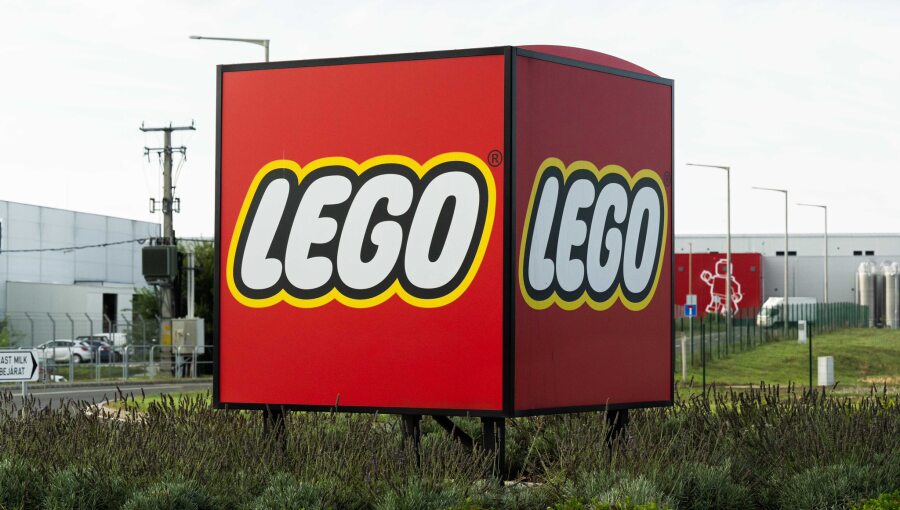
LEGO makes Nyíregyhaza plant in northeast Hungary its second-largest manufacturing hub globally. / Peter Szijjarto via Facebook
By bne IntelliNews October 2, 2025

Danish toy maker LEGO has inaugurated a HUF54bn (€140mn) capacity expansion at its Hungarian base, making the manufacturing base in northeastern Hungary its second-largest plant globally and the largest in Europe, Minister of Foreign Affairs and Trade Péter Szijjártó said at a ceremony on October 2.

The government provided HUF4.3bn grant to the company, which is the region’s largest employer with 4,300 workers. LEGO added 300 new jobs and plans to increase its workforce to 5,000 next year.

Production capacity rose by 30% as the factory’s size grew by 262,000 sqm, and the plant now covers the entire manufacturing process, he added. LEGO installed more than 1,000 injection-molding machines and 73 packaging lines.

The Danish group plans to reduce its reliance on fossil gas and to reduce CO2 emissions by 37% by 2032, compared to 2019 at a global level

The Danish company plans to swap natural gas for geothermal heating to cover its electricity needs, and the capacity of the solar parks will exceed 17 MWp by the end of 2026. The site currently has three solar parks which contain more than 24,000 solar panels. 

LEGO was recognised several times as one of the most attractive workplaces in Hungary.

The company reported a record HUF106bn in revenue last year, up from HUF92bn a year earlier. After-tax profit fell 9% to HUF2.4bn.

At the ceremony, Szijjarto said that bilateral trade between Hungary and Denmark rose to a new record and Hungarian exports to Denmark increased by 15% in 2025. In the past ten years, the government supported investments worth HUF230bn by seventeen Danish companies, creating 4,500 jobs, he added


‘We have the product to play the game’: Can BYD’s meteoric rise in Europe continue?


By Hannah Brown
Published on 

“The conversion rate from test drive to purchase is outstanding in every market,” BYD’s Maria Grazia Davino told The Big Question.

As the popularity of EVs continues to grow in Europe, so too does the strength of Chinese manufacturer BYD. 

The firm's first models, the Atto 3, Han and Tang, officially hit European forecourts in late 2022, though other companies had begun importing them in the preceding years. Since then, their range has grown to offer at least 10 different vehicles.

According to data from the European Automobile Manufacturers’ Association (ACEA), BYD had a 1.1% market share of new vehicle registrations in the EU in July 2025, up from 0.4% in the same period the year before. 

In the first half of 2025, unit sales increased 251.3% compared to the previous year, while EU new car registrations on the whole decreased 0.7% in that same period.

But with increased import tariffs for Chinese manufacturers making it harder to stay competitive, are European fears of a Chinese takeover unfounded?

In this episode of The Big Question, Euronews reporter Hannah Brown sat down with Maria Grazia Davino, senior vice president and regional managing director at BYD Europe, to discuss the firm’s vision for its future in the bloc. 

BYD takes on Europe

Davino, who joined the company earlier this year from Stellantis, spoke with a clear confidence in BYD’s vehicles. Perhaps, in part, due to her own experience.

“People sit in the car and you surprisingly see that the immediate acceptance is there—actually we exceed customers' expectations,” she explained. 

“This is not only my direct experience, [it’s] what I observe, what customers tell me, what dealers tell me. The conversion rate from test drive to purchase is outstanding in every market.”

“BYD comes to Europe with a full commitment to enrich the industry,” Davino told The Big Question. 

“We have superior technology and the product to play the game. There has been some narrative around it—like ‘you want to conquer’—no, it's not about conquering, we can't, we are so small compared to the others. 

“I always say we are fuelled by the challenges that also humble us, and we are here to enrich the industry.”

Tougher competition for non-European companies

Right now in the EU, Chinese manufacturers pay an additional import tariff, on top of the standard 10%. SAIC, once China’s largest auto manufacturers, faces the steepest additional tariff at 35.3%. Geely, the parent company of Volvo, pays 18.8%, and BYD pays 17%. 

Many vehicles made by the US firm Tesla are also manufactured in China, although the company’s additional tariff comes to just 7.8%. Despite this, BYD managed to outsell Musk’s famous EV brand in Europe for the first time in April 2025. 

In addition to these tariffs, France recently announced incentives for consumers to buy EVs assembled in Europe and equipped with a European battery, a move designed to support European manufacturers

“It just makes the competition tougher, but we are okay in competing,” Davino said. 

“That's our company culture, you know. We are there to collaborate and compete, so we'll have to face it, be better, find alternatives so we will continue to compete.”
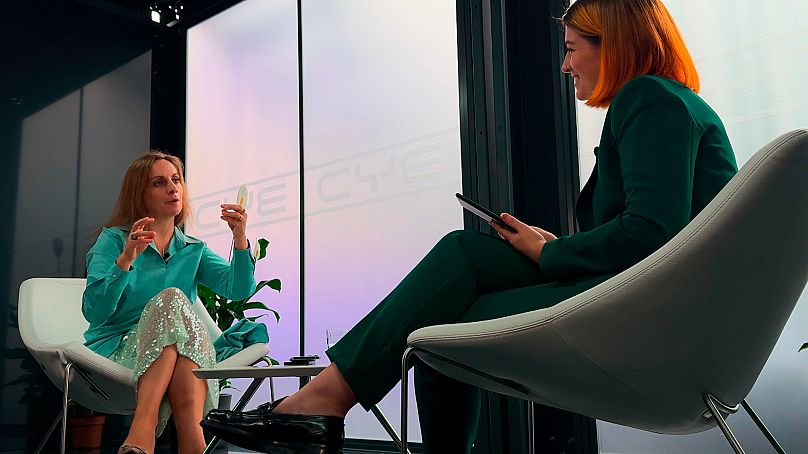
BYD's Maria Grazia Davino chats to Hannah Brown on The Big Question Euronews

In a bid to strengthen the company’s presence in the bloc and boost competitiveness by avoiding import tariffs, BYD has established a manufacturing plant in Hungary. Production is set to begin by the end of the year.

“So the first product we will be producing there is a Dolphin Surf. And that's just a start, because at our plants, we can produce more than one car line, so that makes our productivity very flexible,” Davino told The Big Question. 

“The teams at the dealers are also growing, and our brand in the market requests a certain number of qualified salespeople. So we also contribute to the [training and] qualification of these people.

Will hybrids continue to outperform EVs?

Right now, hybrids are the most popular vehicle by power type, making up 34.8% of all new car registrations in Europe in the first half of 2025. 

The key to their popularity, according to Davino, is that they’re providing a “convenient alternative”.

“You have a true electric vehicle with a 100km range. For example with the Seal 6 DM-i Touring that we have brought on the market now, just launched, you have a vehicle that does not give you any anxiety. With our vehicle, you can go up to 1,350 kilometres range,” She claimed that recent drivers were able to drive from Warsaw to Munich without needing to stop to refuel. 

As technology improves and EV range increases, Davino said she can’t predict if the popularity of full electrics will surpass hybrids, emphasising that it's consumers deciding the fate of the industry. 

The Big Question* is a series from Euronews Business where we sit down with industry leaders and experts to discuss some of the most important topics on today’s agenda.****

MULTIPOLARITY

LONG READ: The GEMIs, the Global Emerging Markets' interlocking institutions

LONG READ: The GEMIs, the Global Emerging Markets'  interlocking institutions
The leading members of the Global Emerging Markets are actively building their own interlocking non-Western Institutions, the “GEMIs”, that are challenging the traditional order, but it’s still early days. / bne IntelliNews
By Ben Aris in Berlin October 2, 2025

The international order is breaking up as the Global Emerging Markets (GEMs) build a raft of new non-Western interlocking international institutions to run their vision of a new multipolar world order. At the same time the incumbent Western-dominated global institutions that have run the world since WWII are falling into disrepair and are becoming increasingly redundant.

The dominance of the Global North is giving way to the rapid rise of what should be dubbed the Global Emerging Markets Institutions, or “GEMIs”, increasingly influential organisations that have little or no Western membership. And the process has been decades in the making; the GEMIs first rose to prominence during the 2008 Global Financial Crisis when a meeting was called, not of the G7 to coordinate a worldwide response to the financial meltdown, but the G20.

Since then, these new bodies have played an increasingly important role. The BRIC moniker was originally coined by legendary Goldman Sachs economist Jim O’Neill in 2001 to sell hot emerging market stocks. Since then it has metamorphosed into a physical geopolitical organisation after its inaugural summit in Yekaterinburg in 2009 and grown from the original four members to 11 full members and another ten candidate countries.

A veritable alphabet soup of organisations has emerged from the “Rise of the Rest” led by China and Russia. The GEMIs are increasingly interlocking with overlapping membership and coordinated agendas based on trade and security. The development is being driven by opposition or rivalry with the West, and has received a major catalytic boost by the aggressive Trump administration tariff policies.

The incumbent system that ran the world for the last eight decades is breaking up. Geography is reasserting itself in a new fractured world. US President Donald Trump is systematically dismantling the “rules based order” and has abandoned “values” in favour of a new transactional based system. Analysts have argued we have entered a new mercantile economic paradigm. The old system was not country or region specific but led by like-minded great powers that emerged after WWII. These ideas are enshrined in things like the post WWI League of Nations, the European Coal and Steel Community that grew into the EU, or the 1975 Helsinki Accords that laid the foundations of the values-based ideology.

Trump’s Liberation Day tariffs are an attack on some of America’s oldest and most loyal allies, and a withdrawal from the US’ role of global policeman by snapping its security umbrella shut and quitting half a dozen UN organisations.

This comes at a time when the GEMs, led by China and Russia, have come of age. Three decades after the collapse of the socialist experiment, they have built new capitalist market economies and taken in enough foreign direct investment (FDI) to learn how to run them efficiently. Their economic development has reached a point where they are now starting to flex their new economic muscles and in China’s case at least, the technological development has caught up with, and is now starting to surpass, that of the West.

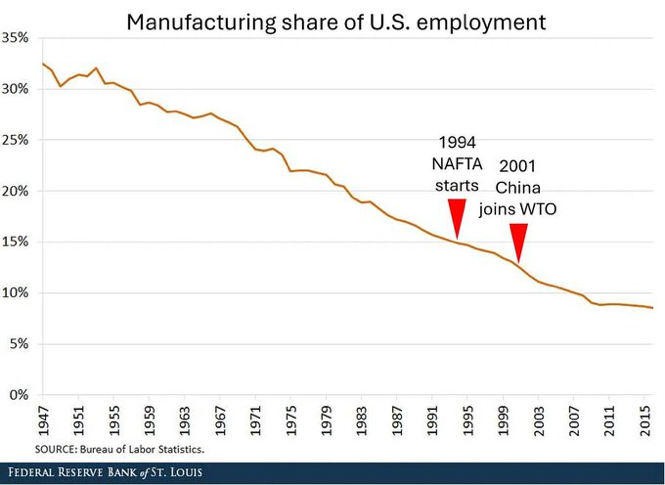
The very term “emerging markets” is seen by these emergent economies as belittling by the so-called developed markets (DMs). Likewise, “globalisations” that was the fad in the 1990s is seen in the Global South as a new form of neo-colonialism – a theme both Xi and Putin play on constantly and that goes down very well in places like India and Africa. It exported massive amounts of wealth to the West, in the form of big wage differentials for human capital, that allowed the Global North to flourish. According to a study published in Nature Communications last year, today Global South workers still account for over 90% of Western manufacturing, which has led to the rapid decline of US manufacturing jobs that Trump is complaining about.

What emerged was a two-tier system where the DMs felt free to dictate to their emerging peers, without any reciprocity, imposing sanctions on the big countries and dropping bombs on the small ones if they misbehaved. The US also took it on itself as a standard foreign policy, to interfere in the domestic elections to ensure the election of US-friendly governments; the Washington Post, amongst many others, reported that the CIA interfered in 72 elections in 30 years during the Cold War. That policy has not changed: Trump slapped Brazil with 50% tariffs, despite the fact that Brazil ran a trade deficit with the US last year, to pressure the government into dropping the prosecution of former far-right president Jair Bolsonaro, a close ideological ally of the US president.

Now the wage differentials with the DMs are closing. Average incomes in Russia are today at a historical high, on a par with average incomes in the EU in adjusted terms, and in the big cities like Moscow in nominal terms too. The value of the Chinese economy has also overtaken the US in PPP (purchase power parity) adjusted terms to become the largest economy in the world, according to the World Bank’s April assessment and both China and India will overtake the US in nominal terms as well by 2070 if current trends persist, say the experts.

Global South leaders like Chinese President Xi Jinping and Russian President Vladimir Putin have demonised the old system as a US-led “unipolar” hegemony and are actively working to break it up; in Putin’s case with the extreme measure of invading Ukraine, after the US refused to listen to his security concerns in the last round of diplomacy in January 2022. Now Russia has flipped the DM’s military tactics and resorted to bombing back.

Putin’s invasion of Ukraine is nominally about securing a no-Nato promise from Ukraine, but his wider agenda is to undermine the unipolar order. He has taken the drastic action of abandoning relations with the West and made a big bet on the Global South Century. And it is going well. Russia has not been isolated. Its economy has not been wrecked. And other GEMs are now flocking to the Sino-Russia banner, albeit cautiously.

Europe is sliding into recession and crisis. The Israeli war on Palestine has acted as second catalyst and fuelling the opprobrium much of the Global South holds for the Western support for Israel’s genocide in Palestine.

Netanyahu was booed during his UN speech on September 25 (video) and spoke to an almost empty hall after delegations from most countries walked out in protest.

“Surrender now, lay down your weapons, free the hostages now! If you do, you will live. If not, Israel will find you and destroy you," Netanyahu said in his UNGA speech on September 2 that was relayed live to speakers on the streets of Gaza.

Of the United Nations' 193 member states, approximately 134-140 (about 70-72%) are considered part of the Global South. Those delegates leaving the hall highlight the increasing cynicism with which the Global South see the developed world countries. It was lost on no one that the International Criminal Court (ICC) has issued an arrest warrant for Netanyahu on war crime charges, yet his ally, the US, allowed him to travel to New York and speak at the UN unmolested. If Putin had gone to the UN, he could have been arrested, even though the US has not signed the Rome Statutes.

Putin has found a natural ally in China, even though China and Russia are not natural allies. Xi has much the same complaints about the West as Putin. The two presidents set out their vision for this order in an 8,000 word essay last year and after more than three years this order is rapidly emerging,

The changing voting patterns in the UN also reflect the growing disillusionment amongst the Global South with the Global North’s campaign to isolate Russia. The first UN votes to condemn Russia’s invasion of Ukraine  in 2022 garnered almost overwhelming support from UNGA (141 votes “for” and a mere five “against” in March 2022), but the latest vote to condemn Russia’s drone incursion into Poland on September 10 only had 46 votes “for” – or roughly the number of countries associated with the Global North, which is the one starting to look isolated, not Russia.

The principles espoused by Xi and Putin are coming up increasingly often amongst other GEM leaders. Argentina’s President Javier Milei made very similar points during his 15-minute speech at the recent United Nations General Assembly (UNGA). Milei proposed four reform principles: focusing resources exclusively on international peace and security, intervening only when nations cannot act independently, demanding institutional efficiency with verifiable results, and simplifying existing regulations.

In the new world order, relations are increasingly breaking up into regional blocs under the GEMIs that are then tying up with each other into a patchwork quilt of international cooperation. 

For example, in just the last few weeks seismic shifts rippled through the Middle East that highlight the changes. The nuclear-armed Pakistan signed off on a Nato Article 5-like nuclear security guarantees with Saudi Arabia on September 19 that will dramatically undermine American influence in the region and boost’s China’s role. The following day, the Trump administration revealed it was in talks with the Taliban for control of Bagram Airbase, and the day after that the US revoked its sanctions waiver for India's Chabahar port project in Iran—a crown jewel for India's Central Asian trade.

“I think that the deeper trend that this revealed is that the map is reasserting itself against the narrative. For decades, we've lived in a world where stories mattered more than geography - where being a “democracy” or an “ally” or part of the “rules-based order” determined your place in the world more than your location, resources, or neighbours,” political commentator and bne IntelliNews columnist Arnaud Bertrand said in a substack post. “But these four events suggest a revenge of the physical world, a return of the law of geopolitical gravity.”  

GEMS vs DMs

The GEMs organisations are truly huge compared to what Russian Foreign Minister Sergei Lavrov has dubbed those of the “golden billion”. Eight out of nine humans on the planet live in one of the GEMs. The largest of the new GEMIs are multiple times bigger than the biggest DM institutions – both in terms of the number of people they represent and the value of their economies.

The EU is home to 450mn people, slightly more than America’s 345mn, but that is still only 5.6% of the global population of circa 8.2bn. There is nowhere in Europe that has a replacement rate above 2.1 children per woman; Europe is suffering from an underreported demographic crisis that will take it back to the early 20th century. Not only is Europe’s share of the global population falling, but its populations are also shrinking.

Many of the GEMs are enjoying population growth, but not all. China and Russia are facing the same demographic problems as Europe. Indonesia’s population growth is at breakeven (replacement rate 2.13) while India’s population growth is in slight decline (1.98). South Africa’s population is growing nicely (2.3) and Africa’s 1bn strong-population is the fastest growing in the world along with Central Asia.

At the same time, despite its wealth and power, the EU only accounts for 16.5% of global GDP in PPP adjusted terms and even in nominal terms it is still only 15.8%, according to the World Bank – the closing wage differentials mean the difference between PPP estimates and nominal is also narrowing of the leading GEMs, which is at the heart of change in the global economic make up and financial manifestation of the rise of the rest. The spread between PPP and nominal amongst the poor members of the GEMs is still much wider.

Expanding the catchment area to the G7, the picture doesn’t improve much. The G7 has a population of 780mn people, or 9.7% of the world’s population, and accounts for 28.4% of adjusted global GDP, and 29.3% in nominal terms in 2024, according to the IMF World Economic Outlook (WEO) data from April 2025.

As the table and maps in this article highlight, nearly all the GEMs bodies represent a far bigger share of the world’s population, land and wealth creation. As bne IntelliNews has reported, from the top five largest economies in the world in PPP terms three of them are now BRICS nations (China, India and Russia) with many others at the top of the rankings rising in the last two years (Brazil, Indonesia) while some developed nation stalwarts continue to fall (Germany, Japan).

While the US is often quoted as the largest and most powerful country in the world in terms of the size of its economy ($27.4 trillion), followed by China ($17.8 trillion), in PPP adjusted terms China has already overtaken the US ($27.4 trillion vs $35.3 trillion respectively).

Less well understood is to make the same comparison in terms of blocs. The BRICS are ahead of the G7 in PPP terms ($79 trillion vs $63 trillion) but behind in nominal terms ($32 trillion vs $53 trillion). However, the G20 is well ahead of the G7 on both counts (PPP: $179 trillion, nominal: $97 trillion).

Even if you take the largest Western group available, the 32-strong Nato, and treat it like an economic entity, then it doesn’t change this picture – ahead in nominal terms, but well behind in adjusted terms.
The big difference is of course that the GEMIs remain immature and highly fragmented, with no real unifying ideology or goals, other than a vague “not-West” mind set, whereas the DMs are high coordinated group, bound together with decades of like-minded thinking, protected by the tight-knit Nato military alliance.

Interlocking relations

So how do the GEMIs work together in practise? It is still very much a work in progress, but trade plays a major and pragmatic role as the glue that binds the GEMs together. India highlights the fluid and difficult nature of the intra-country relations.

Currently, the original four BRIC countries dominate the GEMIs but there are rivalries and different ideas between them of how to organise the war. Jim O’Neill, the Goldman Sachs economist that coined the term, told bne IntelliNews at the EBRD annual meeting this year that he didn’t think that South Africa was a true BRIC country as “It’s too small. The original idea was to pick the biggest emerging markets, and while it makes sense as you need an African country for political reasons, economically, South Africa is an order of magnitude smaller than the others.”

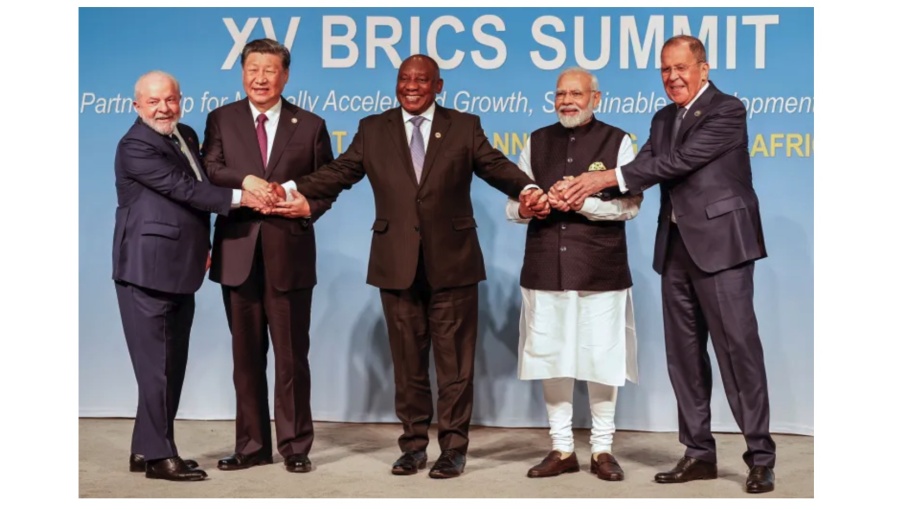
Xi and Putin have become closely aligned and see the BRICS+ group as a geopolitical rival to the G7. However, Prime Minister Narendra Modi and Brazilian President Luiz Inácio Lula da Silva want a much more economic and trade focused group that works with, not against, the G7. As a result, Modi has invested more into the G20, where India leads, while Lula has it easier as Latin America is more geographically isolated form the other GEMs and already dominates Mercosur, the leading trade club in the Americas.

But Lula has also been pushing for a more moderate interaction with the West. This month the EU signed a deal with Mexico and Mercosur and formally launched the ratification process, designed to boost trade and make business ties easier, even as relations between the US and Latin America continue to deteriorate. The EU has had much less luck with doing similar deals in Africa, which is staunchly in the Sino-Russia camp after decades of heavy investment into raw material production, and arms and energy support.

There is also a long-standing tension between India and China who have been clashing regularly on their shared Himalayan border for decades.  The number of interconnections is proliferating. Two years ago the African Union (54 countries) joined the G20 during the India-hosted G20 summit. Modi invited the 54 countries of the African Union to join the organisation (technically making it the G74) and lobbying for a middle ground between East and West with a focus on economic development. Nether Xi or Putin turned up to the meeting.

The same year the BRICS took in several new members to become the BRICS+ and added Indonesia this January in a major expansion. And in May the Gulf Cooperation Council (GCC) tied up with ASEAN (Association of Southeast Asian Nations) to create what is now the biggest trade club in the world bring together the Middle East and SE Asia, accounting for around a third of global GDP and more than half of global growth.

The leading Western nations are being invited to participate in few of these organisations. The only EU member to attend the recent expanded SCO summit in Tianjin in China was Slovak Prime Minister Robert Fico. Modi was a noticeable honoured guest at the summit in Tianjin and China and India are now attempting a very uncomfortable reset.

The SCO, originally established as a regional security bloc, now includes 10 full members and 17 observers and dialogue partners. Its core membership includes China, Russia, India, Kazakhstan, Pakistan, Iran, Uzbekistan, Tajikistan, Kyrgyzstan, and Belarus. Observer states include Mongolia and Afghanistan, with dialogue partners ranging from Sri Lanka and Turkey to Qatar, Egypt, and Laos. The SCO grouping accounts for around 3.96bn people and $62tn in GDP, or 36% of global output. 

Accounting for overlaps between the BRICS and the SCO —such as China, Russia, India, and Iran—the consolidated total is 5.26bn people and $95 trillion in nominal GDP.

UN's special role

From all the old order institutions, the UN plays a special role and even China and Russia would like to see it as the governing umbrella organization that regulates international relations. Someone has to be in charge.

Leading Western-founded institutions that were supposed to coordinate international relations are fading away. The World Trade Organisation (WTO) has become dysfunctional. It still regulates global trade through rules, negotiations, and dispute resolution, but it is only partially functional and its operations are severely impaired.

Even the UN is under pressure as Washington is pulling money and retreating from agencies. US President Donald Trump lambasted the UN during his speech on September 23, criticising the organisation as “not being well run” and ordered reviews of all pending US funding.

Trump has pulled the US out of several key institutions including: WHO, UNHRC, UNESCO, and the Paris Climate Accord. The international institutional infrastructure used to coordinate global action amongst the leading Western powers is slowly falling into disrepair and disuse. For the GEMs, these institutions are becoming increasingly irrelevant.

There is growing pressure to reform the United Nations Security Council (UNSC) to better reflect the new emerging global balance of power. The GEMs argue that the presence of France and the UK on the council is a historical anomaly and they should be replaced by an EU representative. They also argue that Asia should have another seat to China’s and underscore that currently Latin America and Africa have no presentation at all.

However, like European Commission President Ursula von der Leyen’s attempt to end unanimity in the EU voting system, as the five permanent members of the UNSC all also have vetoes, changing the make-up of the council is going to be next to impossible.


APPENDIX: Leading Global Emerging Markets Institutions (GEMIs)

DRC, Zimbabwe and Nigeria ministers set out beneficiation targets at inaugural African mining forum

DRC, Zimbabwe and Nigeria ministers set out beneficiation targets at inaugural African mining forum
African countries are looking to process raw ores and minerals domestically, adding greater value, rather than exporting them unrefined / bne IntelliNews
By Brian Kenety October 2, 2025

Ministers from the Democratic Republic of Congo (DRC), Zimbabwe and Nigeria outlined plans to expand mineral beneficiation and value addition at the ongoing African Mining Week 2025 ministerial forum in Cape Town.

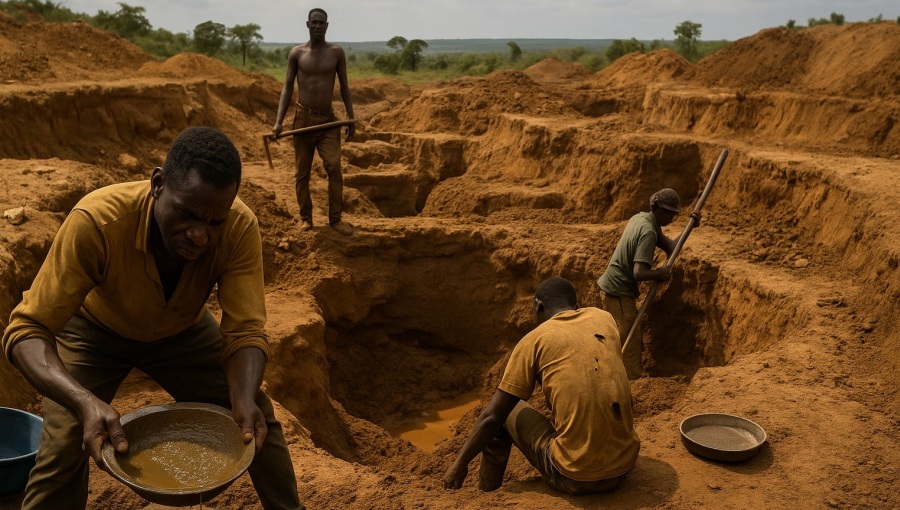
Mineral beneficiation refers to processing raw ores and minerals within the producing country, rather than exporting them unrefined. That can include smelting, refining, value addition and manufacturing, such as turning lithium into batteries for electric vehicles (EVs), platinum into catalytic converters, or copper into wiring.

DRC Mines Minister Louis Watum Kabamba said Kinshasa was prioritising special economic zones to attract investment. He told delegates a “one-stop shop” for fiscal processes had been introduced to ease participation, and the government aims to deploy artificial intelligence to improve mineral exploration, particularly of lithium.

Kabamba also highlighted ambitions to expand copper output, noting the DRC is the world’s second-largest producer after Chile. “We want to use advanced technology to unlock lithium potential. We are also second to Chile in copper production and we want to be first,” he said.

The DRC is prioritising special economic zones and technology investment to boost refining of copper, cobalt and lithium.

Zimbabwe’s Mines Minister Winston Chitando said Harare aimed to commission a base metal refinery within two years. He noted Zimbabwe holds the second-largest platinum reserves globally after neighbouring South Africa and seeks to leverage this to expand domestic employment and manufacturing capacity.

Since 2022, Zimbabwe has imposed a ban on raw lithium exports, while also planning new refineries and industrial parks to expand local processing.

Chitando added that three industrial parks are under construction in Hwange, Beitbridge and outside Harare to promote value addition. “Exporting ore all the way to the port and shipping it internationally does not make economic sense since we are a landlocked country,” he told the forum.

Nigeria’s delegation was led by Yusuf Farouk Yabo, permanent secretary at the Ministry of Mines. He said Abuja aimed to build a $1bn mining economy by 2030 and was reviewing the Mining Act of 2011 to ensure it supports private-sector participation.

Yabo said Nigeria was digitising mining processes to improve data access and traceability. “We want to ensure traceability from mining to monetisation, with Nigerian minerals set to come from licence holders or formalised ASM suppliers,” he added.

The inaugural African Mining Week runs from October 1–3 in Cape Town. The ministerial forum focused on how resource-rich states plan to capture greater value from mineral exports, with officials presenting initiatives to link mining to broader industrial and economic policies.

Beneficiation drive gathers pace across Africa

Turning bauxite into alumina (and eventually aluminium) instead of just shipping ore. Refining gold domestically rather than exporting doré bars. Using lithium for local battery or chemical production. Cutting and polishing diamonds within producing countries... 

The beneficiation agenda features prominently in African Union strategies, including Agenda 2063, a 50-year blueprint for transforming the continent into a more prosperous, integrated, and globally influential region, as governments try to balance investor interest with industrial policy.

Countries in the Sahel – notably three under military rule following recent coups – is also joining this trend. Mali, a top gold producer, is seeking to establish domestic refining capacity instead of relying on exports to Switzerland and the UAE. Burkina Faso is building small-scale refineries to process artisanal gold locally. Niger, which has long exported uranium in raw form, is exploring partnerships to expand downstream processing, though political instability has slowed progress.

Mauritania’s state miner SNIM is modernising iron ore beneficiation plants to upgrade ore quality before export. Further west, Senegal is developing phosphate and zircon processing facilities, with phosphoric acid production aimed at feeding fertiliser plants. Guinea, home to the world’s largest bauxite reserves, is pressing foreign companies to build alumina refineries to reduce raw ore shipments to China. Ghana has introduced policies to promote local refining of gold and bauxite and is planning an integrated aluminium industry.

Southern Africa remains at the forefront of the beneficiation drive. Namibia and Botswana, already experienced in diamond polishing and cutting, are now looking at extending value-addition to other minerals. 


Portugal tightens immigration rules with far-right backing

Portugal’s right-wing government has won parliamentary approval for a new immigration law, passed with support from the far-right Chega party. The reforms set stricter conditions for foreigners seeking to settle in the country.


Issued on: 01/10/2025 - RFI

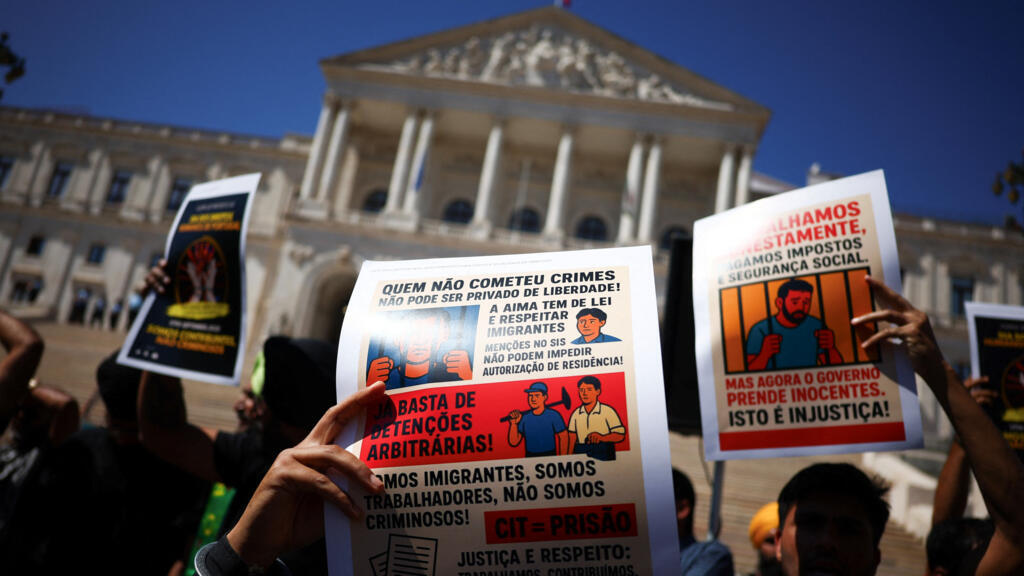
Migrants hold posters during a protest in front of the Portuguese parliament for rights and residency permits, in Lisbon, on 17 September 2025. REUTERS - Pedro Nunes

The centre-right coalition pushed the bill through parliament on Tuesday with support from all right-wing parties. Left-wing parties voted against it.

An earlier version passed in July was blocked by the Constitutional Court. Lawmakers returned with amendments addressing the most critical points found to be in violation of the constitution.

Government spokesman Antonio Leitao Amaro said before the vote that “the time of irresponsible immigration is over”, adding that Portugal needed to control and regulate flows in order to integrate with humanity.

Far right gains in Portuguese polls as PM holds on

Tighter family rules, work visas

The law sets a two-year period of legal residence before immigrants can apply to bring in spouses.

Couples who were together for more than a year before moving can apply after a year. Children under 18 and dependants with disabilities can join regardless of the applicant’s residency period.

Job-search visas will be reserved for highly skilled workers. Another measure ends a pathway that had allowed Brazilians – the country’s largest immigrant group, with over 450,000 people – to regularise their status after entering on tourist visas.

Lawmakers are still debating changes to the rules for acquiring Portuguese nationality.

How Portugal's Carnation Revolution changed the fate of its colonies in Africa


Rights groups angry


“This approval, hand in hand with Chega, is truly another stab in the back for the constitution of the Portuguese republic, for all European human rights conventions, and for the fundamental charter of human rights,” Mariana Carneiro of the non-profit SOS Racismo told RFI.

“It is a blatant attack against the people who choose to live here and work here.”

Amaro said the reform “ensures that the right balance is struck – neither with doors wide open to immigrants, nor closed” as the government seeks to link migration more closely to labour market needs.

Portugal, a country of about 10.5 million people, has seen immigration rise fast in recent years.

Official figures show more than 1.5 million foreign citizens were legally living there by the end of 2024 – about 15 percent of the population.

The reforms reflect a wider trend across Europe, where governments have tightened immigration rules as far-right parties gain influence.