Friday, October 03, 2025


G7 Nations Agree to Ramp Up Pressure on Russia's Energy Exports
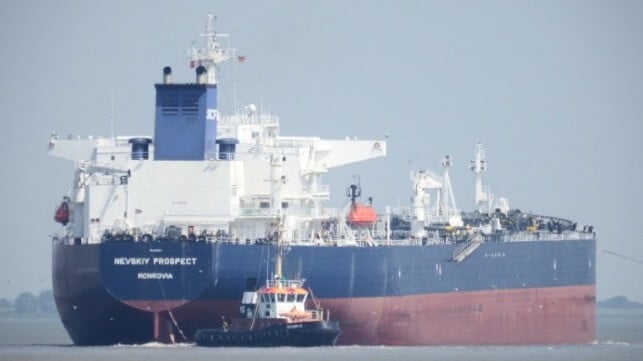
File image courtesy Ian Greenwood / VesselFinder

Published Oct 2, 2025 3:51 PM by The Maritime Executive


The finance ministers of the G7 nations have agreed to increase restrictions and penalties on Russia's energy exports, in hopes of convincing the Kremlin to bring an end to its ongoing war in Ukraine and its repeated violations of NATO airspace. Russia has successfully circumvented previous energy sanctions, but the new G7 measures take aim at its overseas customers in India and China, not at its shadowy and hard-to-regulate transport network. 

"We agreed that now is the time to maximize pressure on Russia’s oil exports, a major source of their revenue. We will target those who are continuing to increase their purchase of Russian oil since the invasion of Ukraine and those that are facilitating circumvention," the finance ministers said in a joint declaration. 

They also agreed to continue phasing out any remaining G7 imports of Russian hydrocarbons - and may take measures to restrict trade in refined products made from Russian oil. Indian refineries are the largest exporters of clean products made from Russian oil, and have sold large volumes into European markets since the beginning of the war, raising concerns about a "back door" for Russian petroleum to get into Western economies. 

In addition, the ministers agreed to take measures to help Ukraine keep financing its defense - including mobilizing the value of Russian state assets that were frozen in G7-based banks at the start of the conflict. In Europe, leaders are actively discussing a plan to use $160 billion worth of frozen Russian assets to underwrite a loan to Ukraine, which would then be used to buy European weapons; as yet there is no consensus on the plan, and some EU member states have concerns about its legality. 

Russian fuel shortages

Ukraine has taken its own measures to target the Russian energy sector, including both export infrastructure and internal refining capacity. Recent hits on loading terminals at Ust-Luga, Primorsk and Tuapse have reduced (or aimed to reduce) Russian petroleum producers' ability to export unrefined oil and condensate. And a constant stream of drone attacks on the largest Russian refineries have cut refining throughput capacity by an estimated 20-40 percent. Even a ban on gasoline exports - freeing up about 15 percent of refining output - has not alleviated a domestic "fuel crisis," which is so widespread that even Russian media outlets have begun to acknowledge it. 

"In some regions, there has been a shortage of petrol for several weeks now," wrote Nezavisimaya Gazeta on September 29, as translated by BBC's Steve Rosenburg. "The continuation of the fuel crisis after the [Kremlin's now-extended] ban on petrol exports comes as a surprise . . . It is no longer possible to deny the signs of petrol shortages in the regions." 

Government-aligned Russian paper Kommersant reported Wednesday that fuel imports from Asia may soon begin to help offset the damage to domestic refining capacity, reversing Russia's former status as a net exporter of refined products. Refineries in China, South Korea and Singapore are on the list of possible suppliers under consideration, Kommersant said. The plan calls for importing foreign fuel into ports in the Russian Far East, subsidizing it to keep costs level. This would free up about 1.3 million barrels a day of gasoline from Siberian refineries for use in western Russia.

The pressure may keep increasing. According to the Wall Street Journal, President Donald Trump has directed U.S. intelligence agencies to begin providing Kyiv with targeting information for long-range strikes deep within Russia, amplifying Ukraine's ability to carry out attacks on refineries, arms factories and military targets. Talks are reportedly under way on a deal that would allow Ukraine to buy America's long-range weapons - like the proven Tomahawk cruise missile - in exchange for U.S. access to Ukraine's highly advanced drone warfare technology. 

Top image: Ian Greenwood / VesselFinder


Despite Sanctions, Russia's Arctic LNG 2 Plant is Up and Running
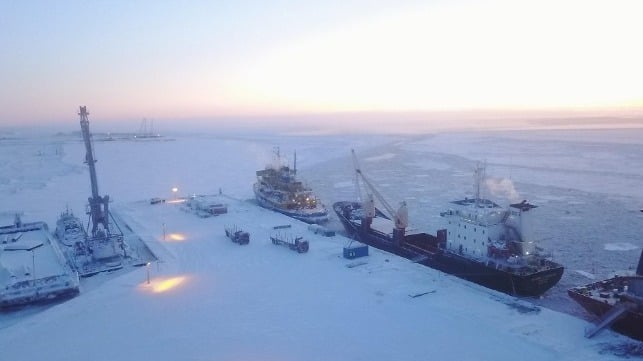
The site for Arctic LNG 2 in the Gulf of Ob, early in construction (Novatek)

Published Oct 2, 2025 10:10 PM by The Maritime Executive


With extensive help from Chinese interests, Russian gas producer Novatek is making headway in its efforts to circumvent Western sanctions on its Arctic LNG 2 plant in the Siberian Arctic. 

The remote Arctic LNG 2 facility was designed to be assembled at a large shipyard in three sections, each built on floating concrete pontoons. One by one, the pontoons would be towed into place at a terminal on the Gulf of Ob, then permanently sunk to rest on the bottom of a specially-prepared berth. This plan was moving smoothly until 2022, when Russia invaded Ukraine and the west imposed stringent sanctions on the plant's construction. Train 1 was installed in 2024, but Train 2 was delayed because of export bans on key parts from Western suppliers. The second train finally started operations just last month. 

China's government (through state-owned enterprises) holds a 20 percent share in Arctic LNG 2. At present, Chinese gas companies are the plant's only customers, drawn by discounted prices - and undeterred by the threat of American sanctions. 

This week, the LNG carrier Arctic Vostok arrived in Beihai and offloaded Arctic LNG 2's seventh cargo. As the winter ice season approaches in the Russian Arctic, it may be among the last this year, but that has not stopped Novatek from reaching for new records. On Wednesday, Bloomberg reported that the plant averaged 18 million cubic meters of gas liquefaction per day during September, about 14 percent above the previous record. The surge may be short-lived, as Arctic LNG 2 will have to shut down when the eastbound navigation season is over.

Novatek had planned to create a wider seasonal window for shipping Arctic LNG 2's product by building a fleet of icebreaking LNG carriers, as it did to enable exports from the neighboring Yamal LNG terminal. Sanctions scuttled this project as well: South Korean shipbuilder Samsung Heavy Industries paused work on a joint 15-ship construction venture with Russian yard Zvezda in February 2022, as soon as Western restrictions began to kick in. Zvezda retaliated by canceling the project and filing a lawsuit, and SHI reciprocated by terminating the contract. Without Korean assistance, the pace of construction at Zvezda has languished, and none of the ships in the series have yet entered commercial service. The first, Aleksey Kosygin, began sea trials this year but was back in drydock again by mid-July, according to Arctic consultant Ben Seligman.  

OCEANS D.E.I.

Op-Ed: A Shared Obligation to Protect Our Oceans

SHE APPEARS TO BE A VULCAN AMBASSADOR

WISTA International President Elpi Petraki

Published Oct 1, 2025 10:06 PM by WISTA International


This year’s World Maritime Day theme – Our Ocean, Our Obligation, Our Opportunity – reminds us of our responsibility to safeguard the ocean and highlights the importance of inclusion in supporting a sustainable maritime future, says WISTA International.


Our Oceans

Generating half of the planet’s oxygen, absorbing around 30% of carbon dioxide emissions, holding nearly 97% of Earth’s water and home to some of the most diverse ecosystems on the planet, the oceans are critical to our survival. Some call them the true lungs of our world.

Oceans connect us all and impact many, if not every, aspect of our lives. They regulate temperature, provide food, energy, and livelihoods to billions of people, and carry around 80% of global trade. They are an important sink for greenhouse gases, and they provide us with water and the oxygen we breathe.

The United Nations regards the oceans as our greatest ally in keeping global warming well below two degrees Celsius above pre-industrial levels, as anticipated in the Paris Agreement.

Yet, these vital ecosystems are also over-exploited as a food source, the end point for much of the pollution generated by humans, the subject of irreversible biodiversity loss and a signifier for the consequences of climate change.

As the largest industry operating across the world’s oceans, a duty of care exists, and we must therefore continue to work together to protect the marine environment and prevent further damage where possible.

“The shipping industry is well placed to lead progress in environmental protection, and by embracing inclusivity, it can demonstrate how diverse talent, and perspectives can drive meaningful change,” says WISTA International President, Elpi Petraki.

Our Obligation

The maritime industry is accustomed to adapting to new regulations, and in recent years resolve has strengthened at the International Maritime Organization (IMO’s) to protect the marine environment.

Speaking ahead of World Maritime Day, Arsenio Dominguez, Secretary General of the IMO, said: “Our oceans are struggling to keep up with human pressure. The ocean’s decline isn't a coincidence; it's driven by human activities. But that also means that we have the power to reverse it. It is our obligation to work collaboratively to reduce pollution, protect marine life, and shift to sustainable habits.”

A robust regulatory framework has been established to safeguard the marine environment from the impacts of shipping. Recent years have seen the introduction of major new instruments – to limit air pollution, ban harmful hull coatings, address the damage done by invasive species in ballast water, and reduce greenhouse gas emissions from ships.

During the upcoming IMO Marine Environment Protection Committee (MEPC) Extraordinary Session, formal adoption of the IMO Net-Zero Framework is also expected, in a decisive step towards achieving IMO’s decarbonization ambitions for shipping.

Our Opportunity

However, the regulatory push is only one piece of the puzzle, says Petraki. The pull of leadership is also required – to show what is possible, to create models for others to emulate, and to encourage and inspire.

“That is why achieving environmental sustainability will also need a deeper cultural change – and I firmly believe it must be one that values diversity, challenges norms and champions inclusive leadership,” says Petraki.

“It is not a coincidence that United Nations goals for Sustainable Development, which in Goal 14 urge us to conserve the oceans, seas and marine resources, also aim to achieve gender equality and empower all women and girls as their fifth goal,” she adds.

Added as annex to resolutions by the UN Conference on Sustainable Development in 2012, ‘The Future We Want’ reaffirms “the need to achieve economic stability, sustained economic growth, promotion of social equity and protection of the environment, while enhancing gender equality, women's empowerment and equal opportunities for all”.

Diversity and inclusion widen the range of perspectives, Petraki notes. “Seeking more views – from women, the younger generation and under-represented groups – creates new opportunities for innovation,” she says.

In the case of the marine environment, it is critical that coastal and island nations are represented in global decision-making when ocean degradation is at stake – not least because local knowledge is likely to be invaluable.  In addition, people are more likely to engage with sustainable goals if they are involved in the process.

The shipping industry is already taking concrete steps to support global decarbonization, working collaboratively across borders and sectors to accelerate progress. As part of its own commitment to the environment, WISTA International established an Environmental Committee, bringing together environmental experts from across its 62 National WISTA Associations (NWAs) in response to the deepening climate crisis.

“Inclusion paves the way for innovation and better outcomes – for people, the industry and the planet – and World Maritime Day reminds us that together, we can all make a real difference to the world we live in,” adds Petraki.

The opinions expressed herein are the author's and not necessarily those of The Maritime Executive.

BAN DEEP SEA MINING

Rare glimpse at understudied ecosystem prompts caution on deep-sea mining


University of Hawaii at Manoa

Deep-sea animals 

image: 

Some of the animals identified in the deep-sea that spend their life in the benthic boundary layer. 

view more 

Credit: Gabrielle Ellis


An enormous but poorly understood region of the global ocean—referred to as the abyssal benthic boundary layer—lies just a few meters above the seafloor and has only been sampled a handful of times. A groundbreaking study by oceanographers at the University of Hawaiʻi (UH) at Mānoa has provided the first in-depth look at this vast, understudied deep-ocean habitat, revealing a dynamic community that may be far more sensitive to seasonal changes than previously understood. The research, published in the journal Limnology and Oceanography, also concluded that deep-sea mining could have significant and unavoidable impacts on biodiversity, regardless of the time of year.

“Given the remoteness of this environment, we have extraordinarily limited knowledge of the animals that inhabit this zone,” said Gabrielle Ellis, lead author of the study and recent Oceanography graduate from the UH Mānoa School of Ocean and Earth Science and Technology (SOEST). “This study represents a significant contribution to our understanding of the benthic boundary layer community, and it starts to unravel temporal dynamics in the abyss.”

Sampling to assess seasonality

This community of organisms, like much of the deep-sea ecosystem, is reliant on organic material that falls from the surface ocean down to great depths. Using seawater pumps attached to an autonomous lander, the research team collected tiny animals from about 10 feet above the seafloor during both spring and fall. Through both genetic and visual analysis, they discovered that the community of zooplankton, such as snails, bivalves and barnacles, changes dramatically between seasons, responding to varying levels of food sinking from the surface ocean.

“We didn’t expect the results to be as stark as they were!” said Ellis. “These animals may be quite sensitive to changes in productivity in surface waters, which ultimately drive these patterns in the abyss.”

The benthic boundary layer is a crucial, interconnected part of the deep-sea ecosystem, serving as a home for unique animals and a vital pathway for the larvae of many species before they settle on the seafloor. The team’s observations highlight the complex behavior of animals across their life cycles, and the connectedness of the deep ocean more broadly.

Vulnerability to deep-sea mining impacts

“In the event of deep-sea mining, the organisms in this region will be impacted via ambient water removal and the generation of sediment plumes that interfere with feeding, in addition to the removal of nodules, which will effectively remove the settling habitat for larvae, likely leading to further declines in local recruitment,” said Erica Goetze, study co-author and oceanography professor.  Goetze and Craig R. Smith, co-author and professor emeritus of oceanography, co-advised Ellis for her doctoral degree.

“These effects will not be isolated to nodule fields where the mining is occurring, but will also impact a variety of deep-sea habitats through the removal of their dispersing larvae that connect populations of wide-ranging abyssal species,” added Jeffrey Drazen, study co-author and oceanography professor. “Based on our findings, it appears that mining during any particular time period is likely to result in impacts to these organisms.”

Future research aims to conduct repeat sampling over several years to better understand what constitutes normal variability in this ecosystem. 

“Our results highlight how much we have to learn about the dynamics of these abyssal ecosystems in order to provide a vital baseline for assessing the impact of both human activity and climate change,” concluded Smith.

Larvae collected from the benthic boundary layer. These animals later settle to the seafloor.  

Credit

Gabrielle Ellis


The autonomous lander used in this study is retrieved by a shipboard crane. The pumps are attached on either side of the lander. A flag used to spot the lander from the ship is found in the lower left corner.


Credit

Gabrielle Ellis

Unique videos show how trawling restrictions brings back life to the sea


OUTLAW DEEP SEA TRAWLERS


University of Gothenburg
AI-model species identification 

image: 

The AI model was trained to recognise 17 different species that live on the sea slope in the Koster Sea. This is what it looks like when the species are identified.  

view more 

Credit: University of Gothenburg


Trawling restrictions not only benefits fish and shellfish; anemones and corals are also becoming more common, according to a new study from the University of Gothenburg. Twenty-six years of underwater videos from the depths of the Koster Sea also show long-term changes in the ecosystem as the water becomes warmer.

The marine wildlife in Kosterhavet National Park has changed rapidly in recent years. The introduction of trawling restrictions in the area for the national park during the last 25 years, brought about a change in the living conditions for the animals that live on the seabed.

“Animals that capture nutrients through filtration, such as mussels, anemones and soft corals, do not thrive when bottom trawls stir up sediment from the seabed. Several of these species have recovered significantly,” says Matthias Obst, researcher on marine ecosystems at the University of Gothenburg and research leader in the project.

Loss at shallow depths

At the same time, the study shows that large and heat-sensitive species are declining at shallow depths in the Koster Fjord or are disappearing completely from the area. The most dramatic decline has been in the football sponge Geodia barretti, while the excavated fileclam Acesta excavata also declined steadily. Both animals are important components of the Koster Sea ecosystems as they build habitats for many other organisms.

The study was made possible thanks to a large treasure of underwater videos taken at a rock wall in Koster Sea. The wall has been filmed with an underwater robot during various study visits, teaching sessions and projects at the Tjärnö Marine Laboratory from 1997 onwards.

Machine learning

“The videos were stored on a number of thick hard drives that were kept on a shelf. We are lucky that the underwater photographers at the Tjärnö Marine Laboratory chose to keep this data until now, when we can use machines to go through it,” says Matthias Obst. 

Without machine learning, it would have been impossible to analyse such a large number of underwater videos with varying quality and count the abundance of 17 different species over 26 years, 1997–2023. Master's student Christian Nilsson reviewed selected parts of the material and taught an AI object detection model to recognise characteristic features of each species.

Good timeline

In the end, the AI model had become so good that the results could be trusted. It took the model only a few hours to analyse 4.4 million images from the selected videos. The National Academic Infrastructure for Supercomputers in Sweden, NAISS, was used for this purpose.

“We now have a good timeline showing how the 17 species have increased and decreased over the 26 years covered by the data, but also how they have responded to increasingly warmer water temperatures. We see that heat-sensitive species are losing their living environment in shallow waters due to the warm temperatures there,” says Matthias Obst.

Driven by climate change

The study is part of the EU-funded program Digital Twin of the Ocean (DTO), which combines marine research with modern technology development for the sustainable management of our marine ecosystems. It shows that the protective measures implemented in the Kosterhavet National Park have been effective and are helping to bring balance to the ecosystem.

“But there are some organisms that may not be saved by the protective measures in the national park. Rising temperatures in the Koster Sea are driven by climate change, which is difficult to stop. For these species, it may be appropriate to find new areas with deeper water where these species can find refuge,” says Matthias Obst.

The distribution of the excavated fileclam has declined as the water in the Koster Sea has become warmer.  

Credit

Tomas Lundälv


AI-model species identification from video [VIDEO] 


The AI model was trained to recognise 17 different species that live on the sea slope in the Koster Sea. This is what it looks like when the species are identified.